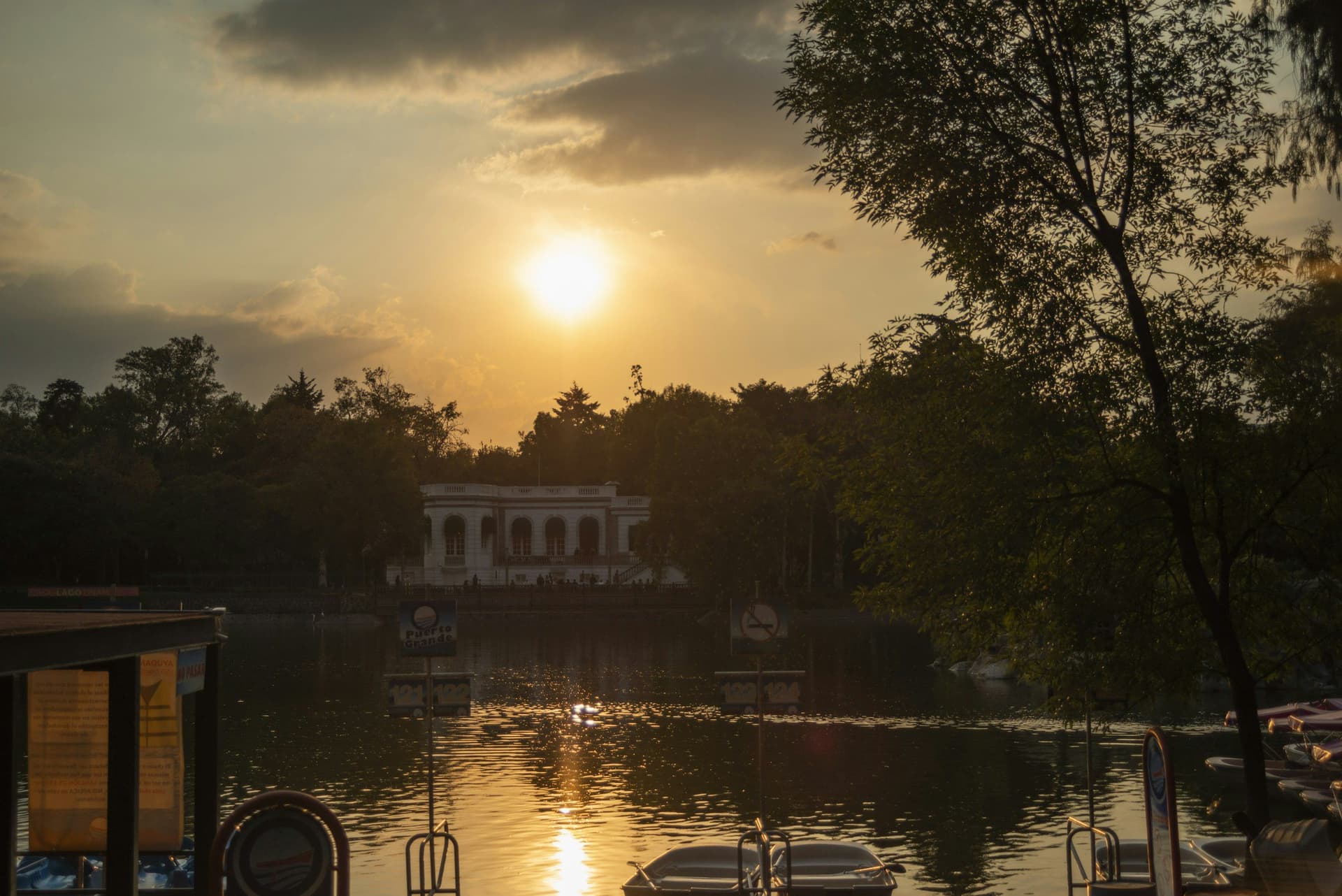
Chapultepec Park in Mexico City is built around an extinct volcano, the Grasshopper Hill, topped by a castle. An oval avenue of about three kilometres circles the area, with the Altar a la Patria at the eastern entrance, two lakes dug around 1900, and the museums of Museum Row to the north. The park is listed as closed on Mondays, so check the day before you go.
Chapultepec reads best as a ring: a volcano and a castle on one side, lakes and museums on the other, and a long avenue of imported and native trees tying them together. This large wooded park in the middle of Mexico City is built around that extinct volcano, so the practical answer to "what do I do here" is to walk the loop: start at the Altar a la Patria at the eastern entrance, follow the hill's foot south, circle the oval avenue, pass the lakes and finish along Museum Row. The park is listed as closed on Mondays, so check the day before you go.
The hill and the castle
The hill is called the Grasshopper Hill, and it is the reason the park exists. An INAH archaeologist says it is an extinct volcano, one of the first cones of the Basin of Mexico. The castle on top began as a viceroy's country house in the late 1780s and later became a military college, the home of an emperor and a palace for presidents. Today it is the Museo Nacional de Historia and has its own ticket. Read more in why Chapultepec means grasshopper hill.
The Altar a la Patria and the hill's foot
Hear a stop from this walk
Altar a la Patria: Where Reforma Ends
The east entrance is marked by the Altar a la Patria, six marble columns in a half circle, opened in 1952 for the Niños Héroes, the cadets remembered for the defence of the castle in September 1847. Around the hill's foot you find the small park museum in the old gate of the Military College, the dead ahuehuete tree known as El Sargento, the Audiorama garden and the Baños de Moctezuma. Two of those have their own articles: El Sargento, the tree with no bark and the bath that was not a bath.
The oval and its trees
On a map the avenue closes into an ellipse close to three kilometres round. The record of who laid it out and when is missing, so we do not give a date. A 2018 survey of about a quarter of the park's green area counted over 14,000 live trees. The most common were privet, ash and Mexican cypress. Ahuehuetes were only about two trees in a hundred, but they hold about eight per cent of the trunk area.
The lakes
The Lago Mayor and Lago Menor are not natural. A commission formed in 1895 to rescue the forest decided to dig lakes, and excavation began around 1901. A causeway runs between them, and the Casa del Lago, built around 1908 as an automobile club, has been a university cultural centre since 1959. Today they are topped up with treated water. Birds are the draw: on iNaturalist the most recorded water bird in this part of the park is the great egret.
Museum Row
North of Paseo de la Reforma are the Museo Nacional de Antropología (opened 1964), the Museo de Arte Moderno (1964) and the Museo Tamayo (1981). In front of the Anthropology Museum stands the huge stone figure known as Tlaloc: see the Tlaloc monolith that crossed the city in 1964. The walk stays outside every museum; for the inside of the Anthropology Museum, see our guide to the Museo Nacional de Antropología.
Practical notes
- Mornings are quietest and coolest. The park is listed as open 5:00 to 18:00, Tuesday to Sunday, and closed on Mondays. Check before you go.
- Jacarandas flower from March to May. Rains run from June to September with afternoon storms, so shelter under a roof, not a tree.
- Mexico City sits about two and a quarter kilometres above sea level and much of the oval is open to the sky: bring water, a hat and sun cream.
- Metro Chapultepec (Line 1) is nearest to the Altar a la Patria. Metro Auditorio (Line 7) is nearest to Museum Row.
- Paseo de la Reforma crosses the ring twice. Use the signalled crossing by the Gandhi bus stop.
- Admission is not included for the castle (210 pesos for foreign visitors, 105 for Mexicans and residents, 2026) or the museums. Check current prices before you go.
- Keep your phone close in crowds on Sundays and watch for cyclists on the wide avenues.
Hearing it on the walk
The Roamer audio guide to Chapultepec is a ring of stops you can take in any order, starting at whichever you reach first. Go at your own pace, with no group, and skip anything you do not want. Each story plays when you reach it. The walk itself stays outside the castle and the museums; two castle stories play only when you tap them inside, with a ticket. Find it here: the Chapultepec Park audio tour. To carry on east, the Paseo de la Reforma walk starts by the park's Puerta de los Leones and follows the avenue in twelve stops to the Monumento a la Revolución.
Cover: sunset over the lake at Chapultepec, photograph by Moises Vargas via Unsplash.
Mexico eSIM· 10% off with ROAMER10
Ready to experience it?
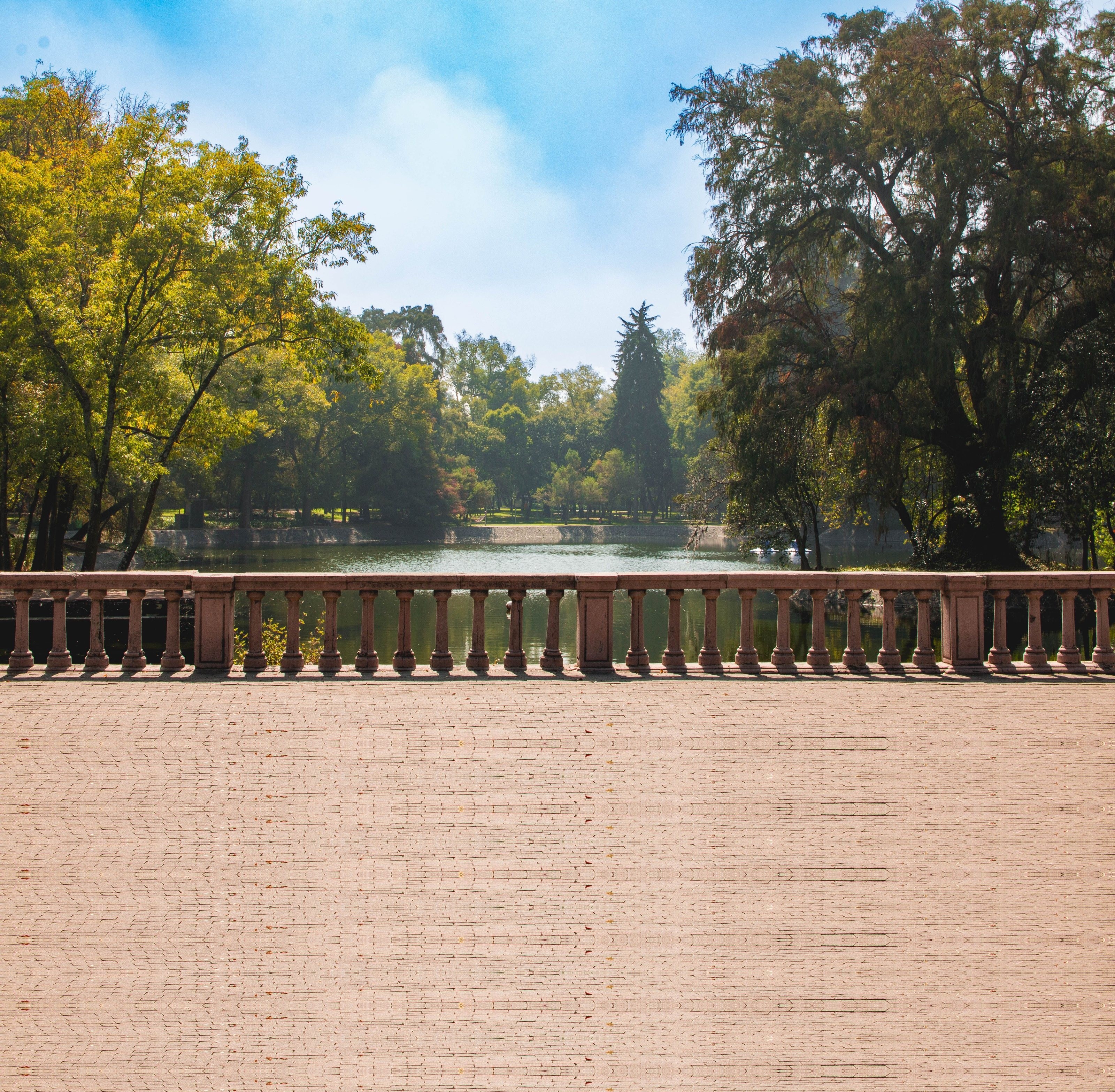
Chapultepec Park: The Hill, the Springs and the Great Oval
120 min · 4.1 km · easy
More from Mexico City
Explore more at your own pace.
Basilica of Guadalupe: Three Churches, One Lakebed, and the Hill Above
Coyoacán in Walls: Churchyards Torn Open, a Blue House Closed In
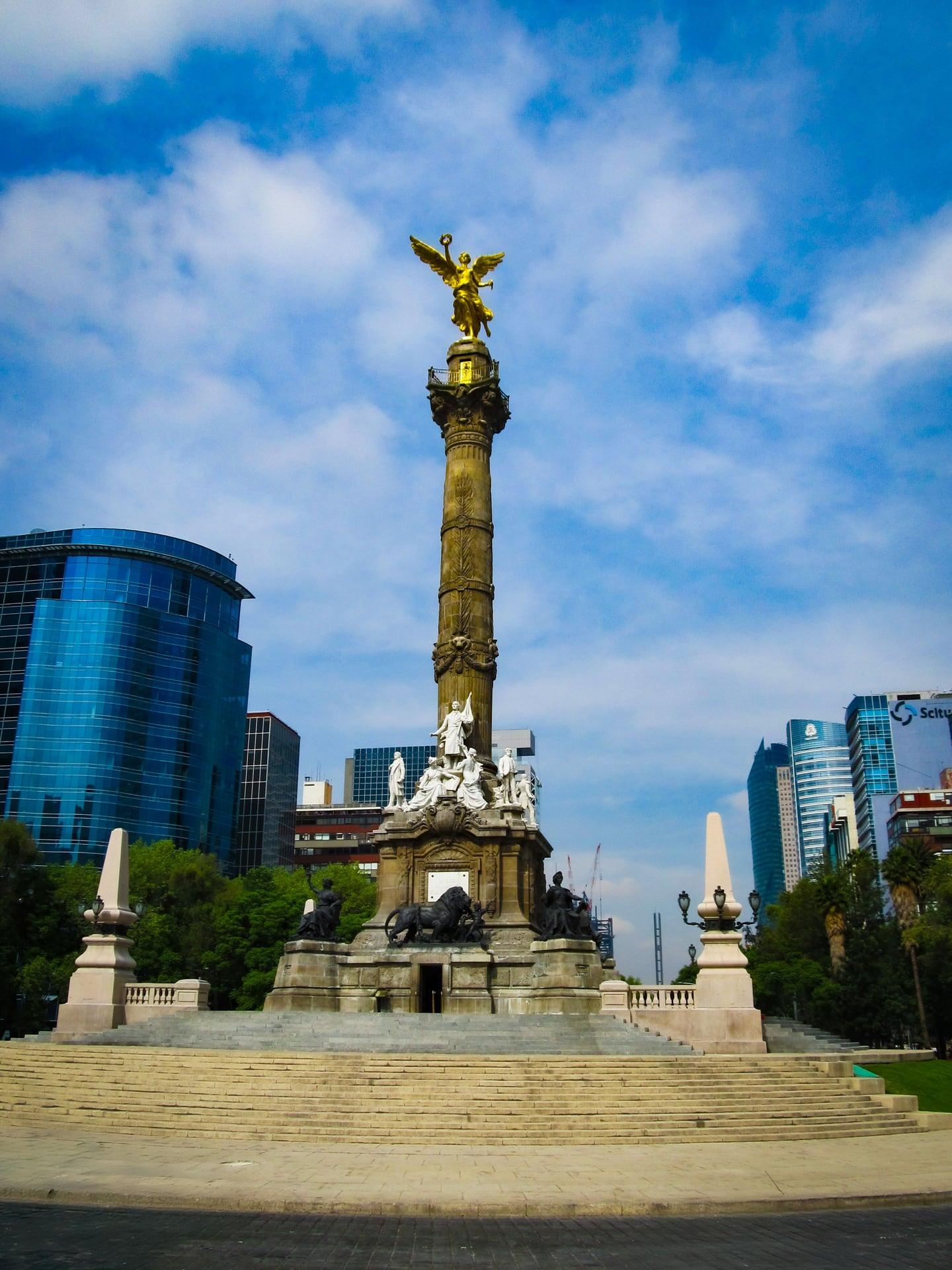
Paseo de la Reforma: Where Mexico Decides Who Gets a Statue
Capilla del Pocito: Red Stone, Tiled Domes and a Spring at the Basilica of Guadalupe
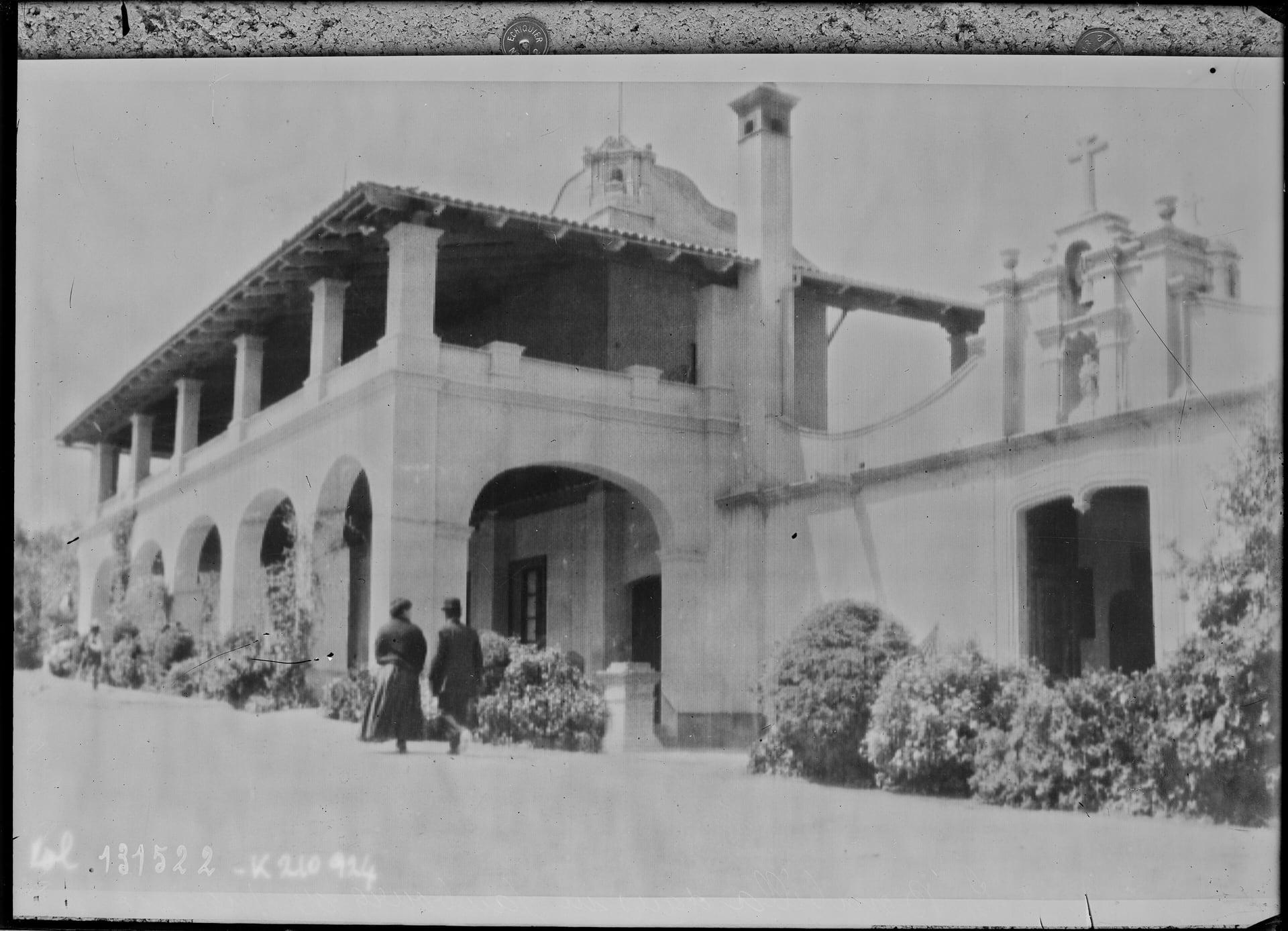
Casa del Risco: The Fountain of Broken China Hidden Behind a San Ángel Wall