Plan about two hours for the highlights of the Museo Nacional de Antropología in Mexico City, and three to four for a comfortable visit. Start at the Tlaloc monolith on the plaza, look up at the Umbrella in the patio, then walk the archaeology halls in the museum's own order to the Mexica hall, where the Sun Stone and Coatlicue stand. Finish with Pakal's jade mask in the Maya hall and, if you have time, the living cultures upstairs.
The Museo Nacional de Antropología stands in Chapultepec, on Paseo de la Reforma, and it is the most visited museum in Mexico. INAH counted 5,048,893 visits in 2025. It opened on 17 September 1964, and it holds two museums in one building: archaeology on the ground floor, and the living peoples of Mexico upstairs. How long does it take? Plan about two hours for the highlights and three to four for a comfortable visit.
A museum built around a patio
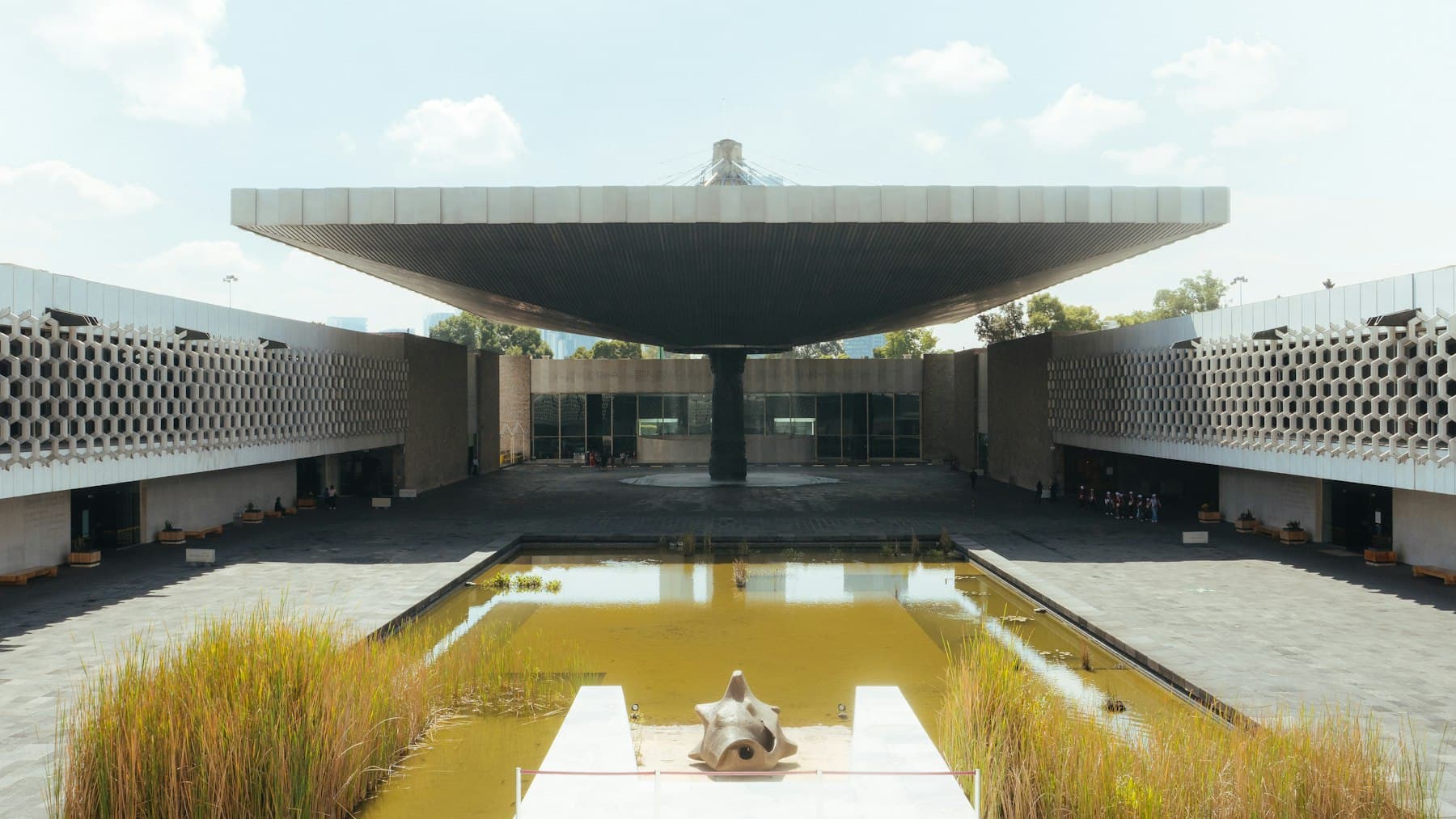
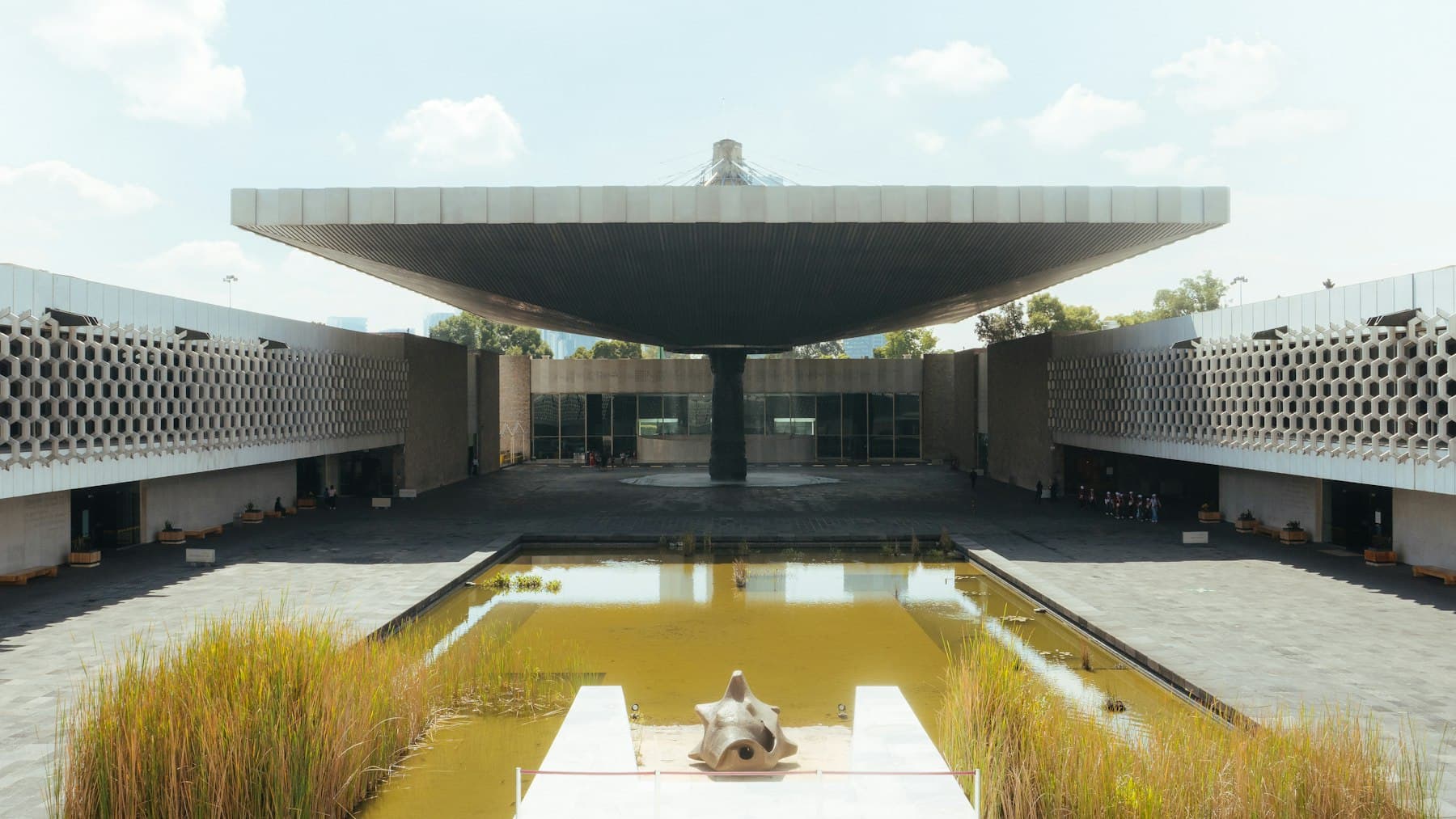
The architect was Pedro Ramírez Vázquez, and work began in February 1963. The idea comes from Maya courtyards such as the Nunnery Quadrangle at Uxmal: halls ring an open square, and everything is arranged so that you can walk the whole circuit or pick a hall. In 2010 Mexico declared the whole building an artistic monument.
So a visit has a shape. You cross the plaza, pass the vestibule and the orientation room, and step out into the patio. Eleven archaeology halls ring it. The numbers run in a loop, and hall 6, the Mexica hall, sits at the far end between the two wings. Upstairs are five halls on living peoples, on a floor that reopened in January 2025.
How the museum is laid out
Hear a stop from this walk
Palacio Nacional: Three Layers of Power
- The plaza. Large glass windows face Reforma, and above them the national emblem, an eagle and a serpent, is carved in white marble by José Chávez Morado. Beside the entrance stands the giant stone figure of the Tlaloc monolith.
- The vestibule and orientation room. The entry hall has a platform modelled on the pyramid at Cuicuilco. Beyond it, on the museum's plan, the orientation room leads on to the patio.
- The patio and the Umbrella. One half of the courtyard lies under the Umbrella, a canopy more than 80 metres long and 54 wide, carried by a single bronze-clad column and cables. The other half is open, with a long reflecting pool that leads toward the Mexica hall.
- The north wing, halls 1 to 5. Introduction to Anthropology, the Peopling of the Americas, the Preclassic of the Central Highlands, Teotihuacan, and the Toltecs. Hall 1 is nearest the entrance.
- The Mexica hall, hall 6. At the far end of the patio.
- The south wing, halls 7 to 11. Oaxaca, the Gulf Coast, the Maya, the West and the North. Hall 11 is nearest the entrance.
- The upper floor, halls 12 to 16. Peoples, Languages and Territories; Food, Production and Consumption; Identities, Histories and Resistances; Festivals and Rituals; and Textiles.
The must-see pieces, hall by hall
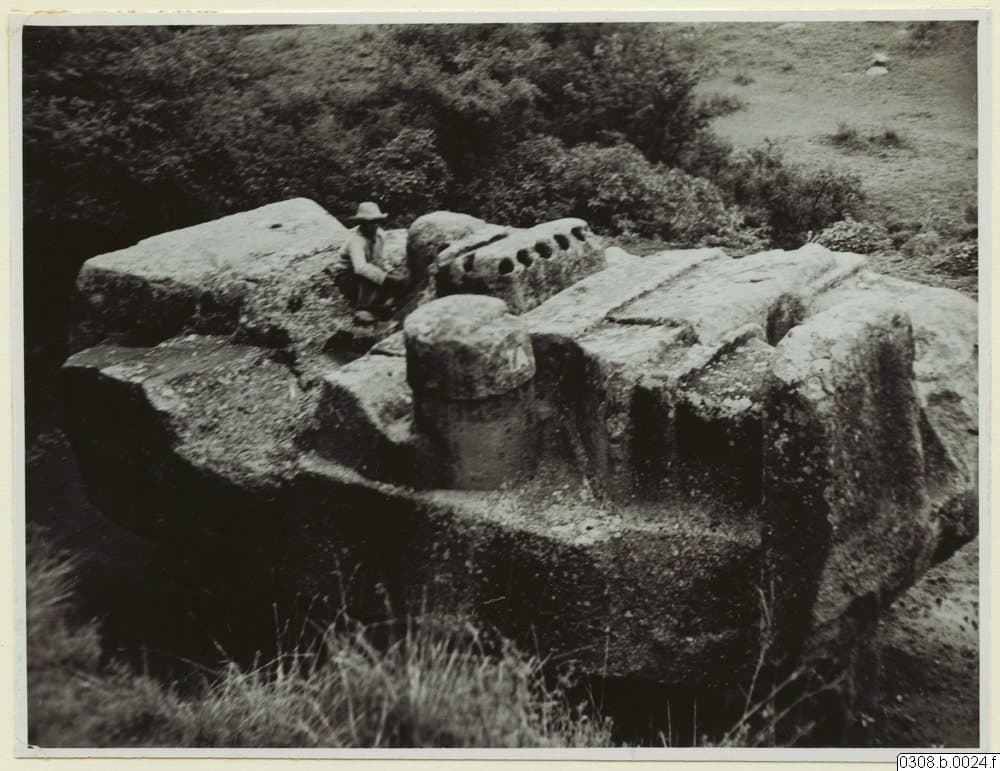
The plaza. Look up at the Tlaloc monolith, a single block about seven metres tall that weighs well over 160 tonnes. It lay in a ravine near the town of Coatlinchan until 16 April 1964, when a platform on 64 tyres carried it here through heavy rain. Scholars still argue about whether it shows the rain god Tlaloc or the water goddess Chalchiuhtlicue.
The patio. Walk all the way around the Umbrella column. Each face of its bronze relief, Image of Mexico by José and Tomás Chávez Morado, tells a different chapter, from the meeting of two worlds to a man offering himself to peace.
Hall 4, Teotihuacan. The Great Goddess monolith, about 3.19 metres tall, has bands of water scrolls on her cape and skirt. Most of what surrounds her in this hall is a replica, including the Feathered Serpent facade section, which is a full-scale copy of part of the pyramid at Teotihuacan.
Hall 5, the Toltecs. The Atlantean warrior from Tula stands about 4.6 metres tall, a basalt column figure carved in four sections, from the top of Pyramid B at Tula. A replica stands in its place at Tula, and traces of yellow, blue, white and red paint remain.
Hall 6, the Mexica. The Sun Stone is a basalt disc of about 24 tonnes and roughly 3.6 metres across, with a face at its centre ringed by the signs of four earlier worlds. Workers found it in December 1790 while paving the main square of the city. Coatlicue, the goddess with two snake heads in place of a head, was found a few months earlier. Nearby are the Stone of Tizoc, carved with fifteen scenes of warriors seizing captives by the hair, and the Teocalli of Sacred War, a stone temple with an eagle on a cactus on its back. The feather headdress shown as Moctezuma's is a replica made in 1940, and the original is in Vienna.
Hall 7, Oaxaca. The jade bat-god mask is a mosaic of 25 pieces of jade, six of shell and three slate pendants, only 17.5 centimetres long. Look at the mouth: the lower part is cut from paler jade.
Hall 8, the Gulf Coast. Colossal Head 6, from San Lorenzo, is about 1.67 metres high and an estimated 8 to 10 tonnes. Look at the frown, the creased forehead and the cap of netting.
Hall 9, the Maya. Pakal's jade death mask is the original, about 25 centimetres tall, a mosaic of roughly two hundred pieces of jade with shell eyes and obsidian irises. The tomb of Pakal beside it is a replica of the chamber at Palenque, lid included. Also look for the Chac Mool from Chichen Itza.
The upper floor. Look for the cuexcomate, a grain store the museum built on the model of the traditional granaries of Chalcatzingo, in Morelos, the Otomi tenango embroidered cloth, the Purépecha troje, a timber house with a granary loft, and the molcajete and tejolote, the stone mortar and pestle.
What to see in two hours
This plan follows the museum's own loop and stops at the pieces that repay the time.
- The plaza (10 minutes). The Tlaloc monolith and the eagle and serpent above the glass.
- The patio (5 minutes). The Umbrella column and the pool.
- Hall 4, Teotihuacan (15 minutes). The Great Goddess and the Feathered Serpent replica.
- Hall 5, the Toltecs (10 minutes). The Atlantean warrior.
- Hall 6, the Mexica (30 minutes). The Sun Stone, Coatlicue, the Stone of Tizoc and the Teocalli.
- Hall 7, Oaxaca (10 minutes). The jade bat-god mask.
- Hall 8, the Gulf Coast (10 minutes). Colossal Head 6.
- Hall 9, the Maya (20 minutes). Pakal's mask and the replica tomb.
Five routes as ready-made plans
The Roamer guide ships five short routes that you can follow in the order given.
- The Museo Nacional de Antropología in an Hour (60 minutes). The rain god at the door, the Umbrella, Teotihuacan's water goddess, a Toltec warrior column, the Sun Stone, Coatlicue, the eagle on the cactus, the Zapotec bat god, an Olmec head and Pakal's jade mask.
- Around the Patio in Two Hours (120 minutes). The whole archaeology circuit in the museum's own order, from the first people and their mammoths to the North.
- Rain, Maize and the Farming Year (55 minutes). A thread from the rain god at the door, through the maize god in Pakal's mask, up the stairs to the granaries and embroidered farming calendars of today.
- Small Things, Close Up (45 minutes). A jade axe the length of your hand, a jade bat god, a notched whale rib, a Maya figure in a flower, a skull in a fibre headdress, a dance mask, a clay tree of life and a darned cloth from Yucatán.
- Mexico Today, Upstairs (45 minutes). The upper floor is about living peoples: a granary, an embroidered farming year, a Purépecha house, the grinding stone, a tree of life, a yarn painting, a dance mask, a shawl and a backstrap loom.
Practical tips
- Hours. The museum is closed on Mondays. Its own map gives 9:00 to 18:00 Tuesday to Sunday, while its information page has shown 9:00 to 19:00. Check before you go.
- Admission. The museum's information page listed 210 Mexican pesos for general admission as of October 2026, with lower or free entry for Mexican nationals and residents, including free Sundays, and for children under 13, students and teachers. Prices and rules change, so check before you go.
- Getting there. The address is Avenida Paseo de la Reforma and Calzada Gandhi, Chapultepec Polanco. The nearest Metro stations are Auditorio on line 7 and Chapultepec on line 1, about 1.3 kilometres away. The Chapultepec park guide has more on the park around it.
- Guided visits. The museum offers free guided visits on request, Tuesday to Saturday, subject to availability.
- Replicas. Many of the biggest things in the archaeology halls are copies. Pakal's tomb, the Feathered Serpent facade section and Moctezuma's headdress are replicas.
- Bring headphones. Phone signal inside is not guaranteed, so save anything you plan to listen to before you arrive.
Combining the museum with Chapultepec
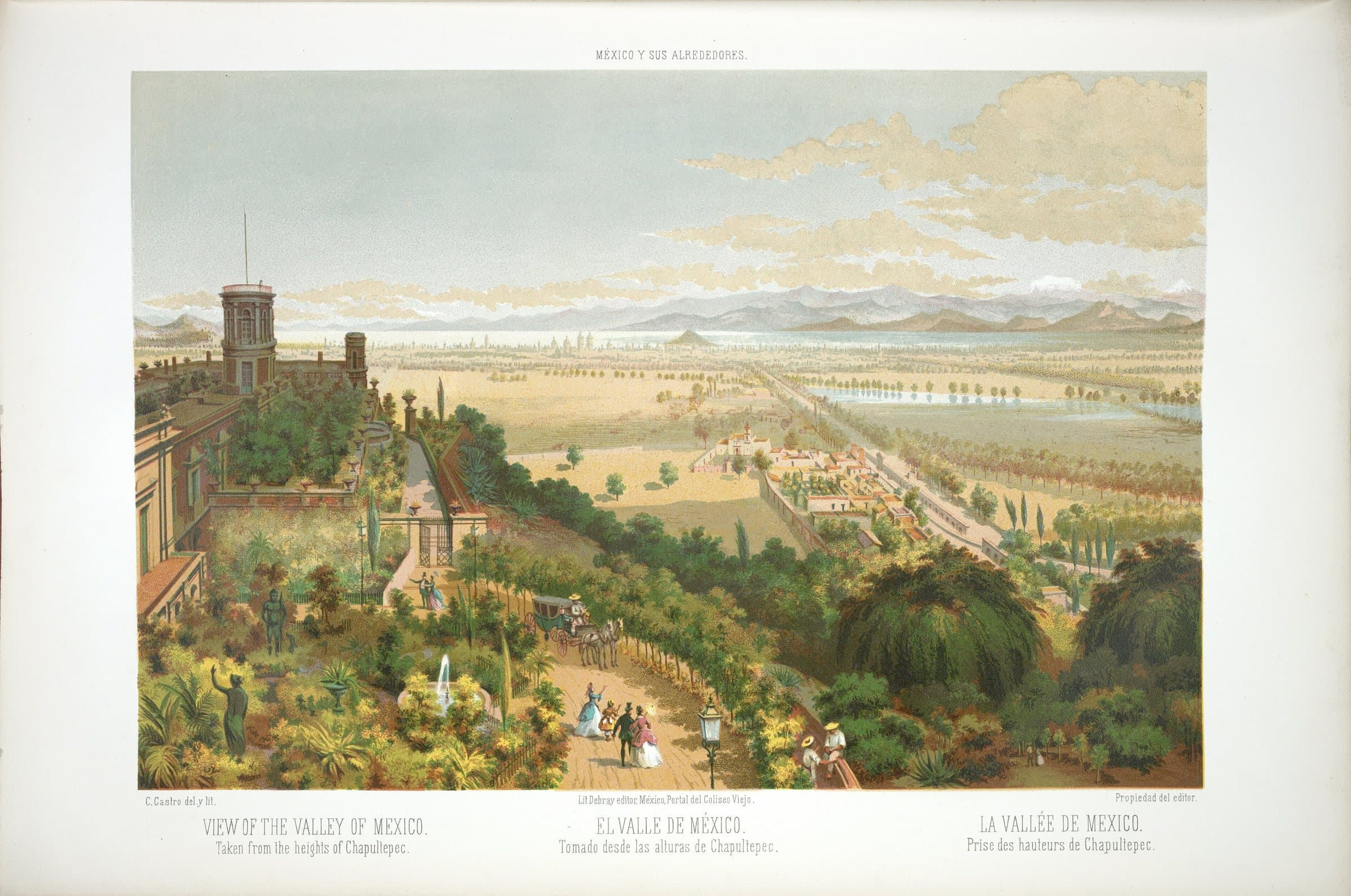
The museum sits in the park, a short walk from the lake and the castle. Roamer's Chapultepec walk covers the park, and the Three Civilizations walk follows the Mexica story into the centre of the city, where the Sun Stone and Coatlicue were found.
How this fits the Roamer guide
Roamer has an independent audio guide to the Museo Nacional de Antropología, not affiliated with the museum or INAH, and museum admission is paid separately. It works hall by hall: open the room you are standing in and play its story, or follow one of the five routes above. It is audio and text only, and it has no photographs of the pieces, because Mexican law requires permission from INAH to reproduce archaeological pieces commercially. The real ones are in front of you. You can find it here: the Museo Nacional de Antropología guide.
Cover: the patio of the Museo Nacional de Antropología. Photo: Sebastian Monroy on Unsplash.
Frequently asked questions
- How long do you need at the Museo Nacional de Antropología?
- Two hours covers the highlights if you keep moving: the plaza, the patio, the Teotihuacan, Toltec and Mexica halls, and a quick look at the Oaxaca, Gulf Coast and Maya halls. Three to four hours is comfortable. The upper floor adds 45 minutes or more.
- What should you not miss at the anthropology museum in Mexico City?
- The Tlaloc monolith on the plaza, the Umbrella in the patio, the Great Goddess monolith in the Teotihuacan hall, the Atlantean warrior from Tula, the Sun Stone and Coatlicue in the Mexica hall, the jade bat-god mask in the Oaxaca hall, Colossal Head 6 in the Gulf Coast hall and Pakal's jade mask in the Maya hall.
- Is the Museo Nacional de Antropología worth visiting?
- Yes. It is the most visited museum in Mexico, with 5,048,893 visits in 2025 according to INAH, and it holds the Sun Stone, Coatlicue and the jade mask of the Maya king Pakal. It is also the best place in the city to understand the cultures that came before and alongside the Mexica.
- Is there an audio guide at the Museo Nacional de Antropología?
- INAH Lugares lists audio guides among the museum's services without giving a price or languages, and the museum offers free guided visits on request, Tuesday to Saturday. Roamer has an independent audio guide that works hall by hall, in audio and text with no photographs of the pieces. It is not affiliated with the museum or INAH.
- What are the opening hours and which day is the museum closed?
- The museum is closed on Mondays. The museum's own map gives 9:00 to 18:00 Tuesday to Sunday, while its information page has shown 9:00 to 19:00, so check the museum's website before you go. This was the position in October 2026.
- What is the best order to see the museum?
- The museum numbers its eleven ground-floor halls in a loop. Start with hall 1 in the wing on your right as you come in, go up that wing to the Mexica hall at the far end, then return down the other wing. If time is short, go straight to the Mexica hall and the Maya hall, and leave the rest.
Mexico eSIM· 10% off with ROAMER10
Ready to experience it?
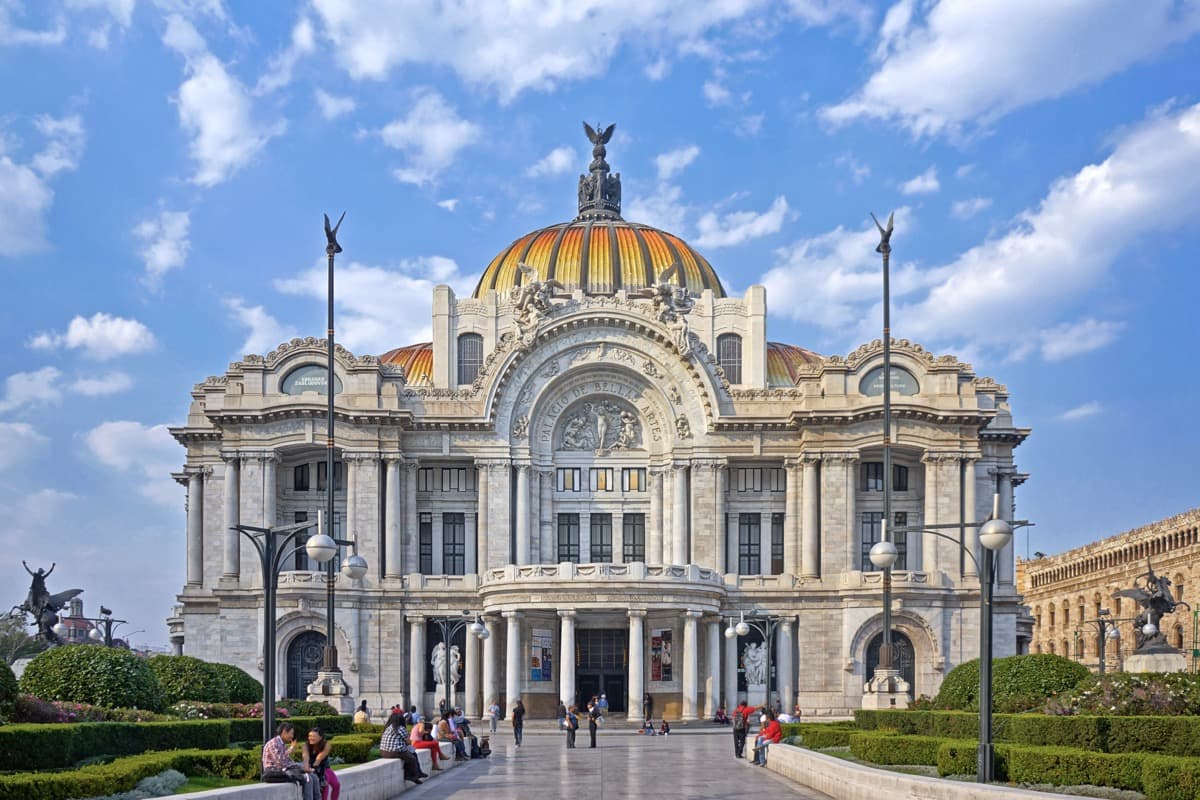
Centro Histórico: Three Civilizations Deep
90 min · 2 km · easy
More from Mexico City
Explore more at your own pace.

Chapultepec Park Guide: Hill, Lakes and Museum Row

Coatlicue: The Statue That Was Buried Twice
El Sargento: The Dead Ahuehuete Tree of Chapultepec
The Baños de Moctezuma: The Bath That Was Never Moctezuma's
The Tlaloc Monolith: The Stone That Crossed Mexico City in 1964