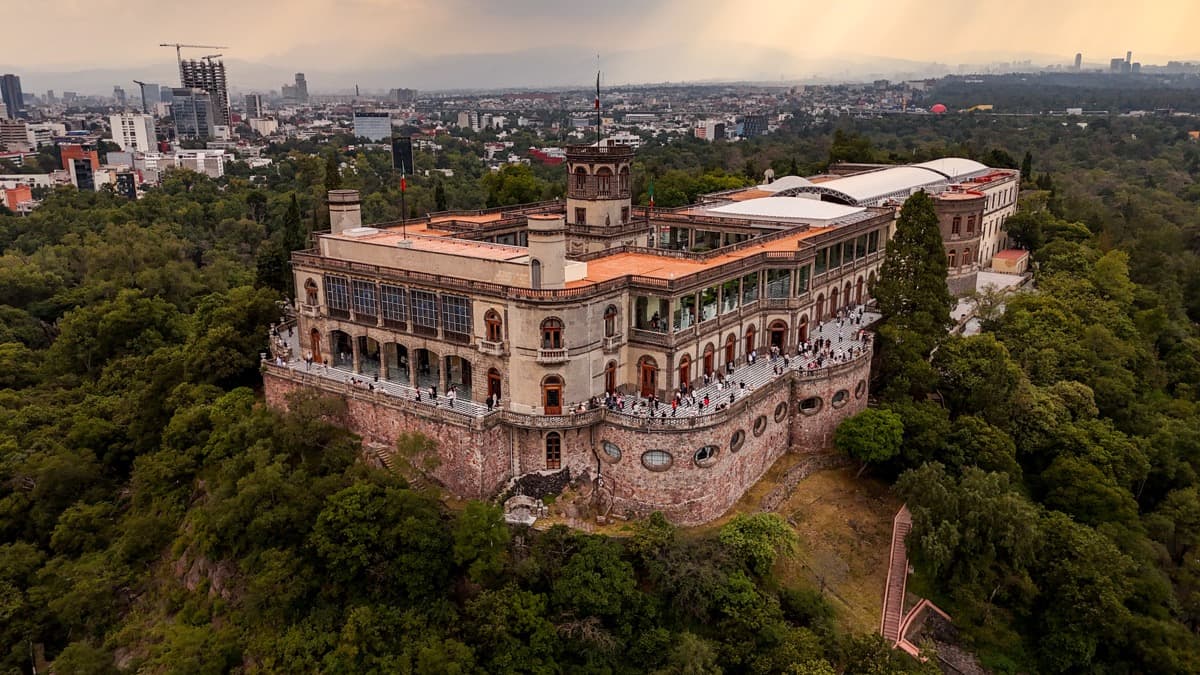
A walk through the Bosque de Chapultepec, the sacred hill that has been the source of the city's water, the seat of its rulers, and the ground of its founding myths for three thousand years. You are inside all of it at once: a Sunday park of balloons and taco carts laid over a Mexica holy site, a European emperor's castle, and a national museum of the deep past.
Start · Altar a la Patria and the Niños Héroes
DirectionsStops
- 1
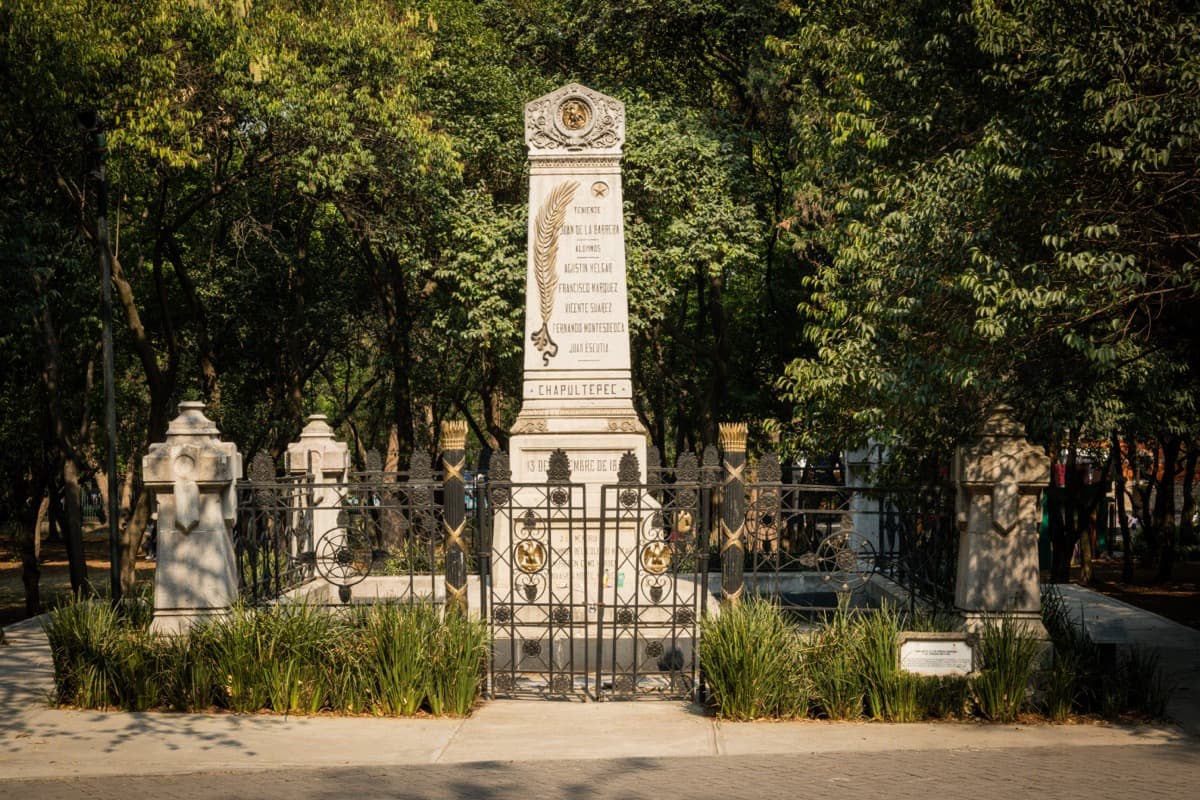
Altar a la Patria and the Niños Héroes
The ceremonial front door to the park: a semicircle of white marble columns raised to six young cadets.
- 2
The Sacred Hill
The oldest thing in the park is the rock under your feet: a Mexica holy site and the city's first water source.
- 3
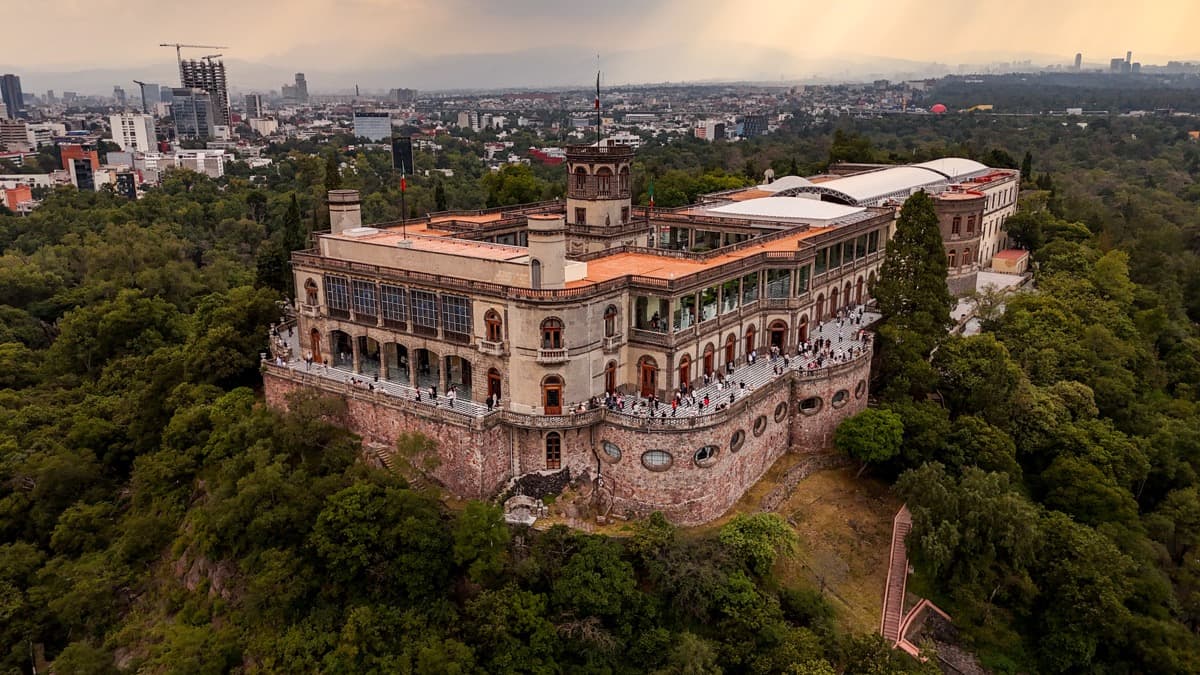
Chapultepec Castle
The crown of the hill: a viceregal castle that became an emperor's home, a president's residence, and now the national history museum.
- 4
The Audiorama
A sunken listening garden at the foot of the hill, where the city drops away.
- 5
The Central Promenade
The park's tree-lined spine, and the living Sunday crowd that is the park doing its job.
- 6
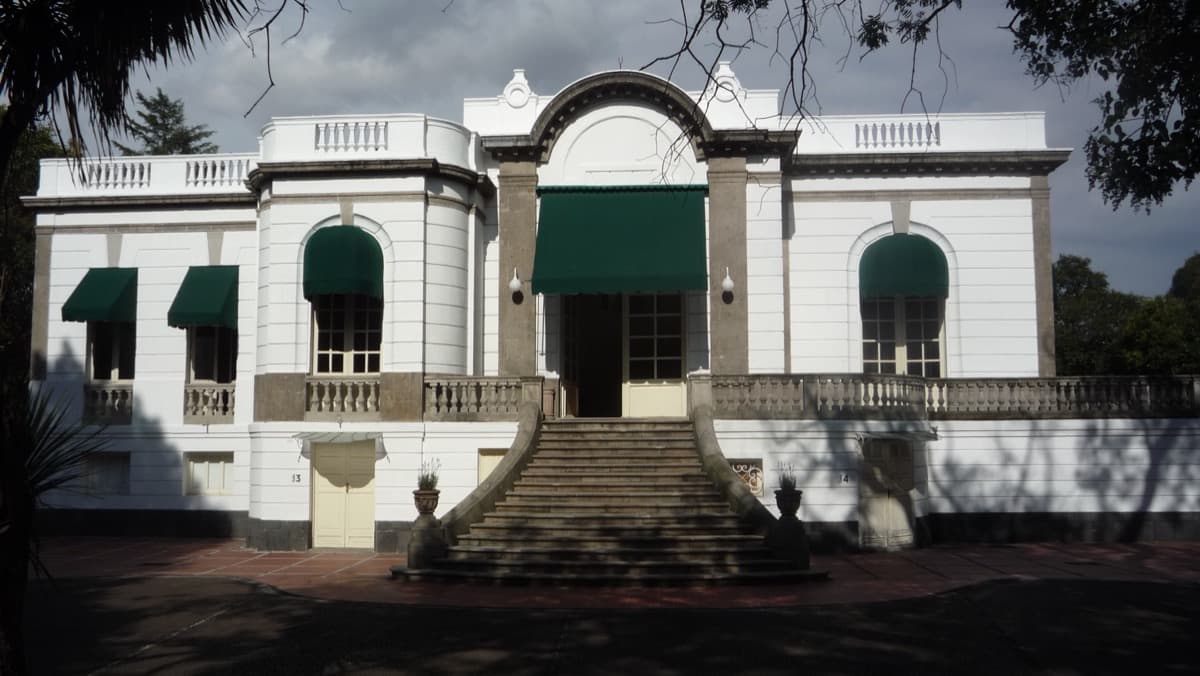
The Lake and Casa del Lago
The park's open water, with one of the city's oldest cultural houses on its shore.
- 7
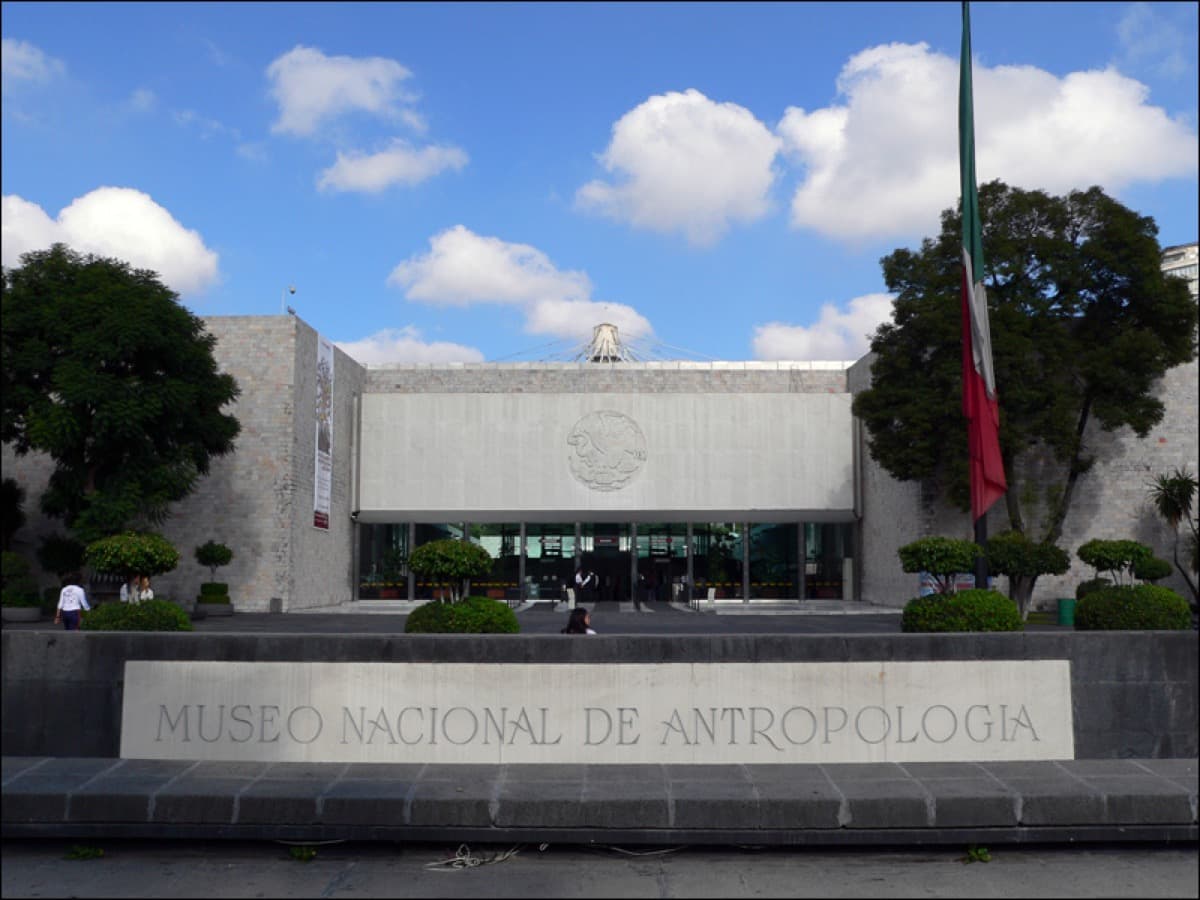
The National Museum of Anthropology
The deep past of the whole country, gathered at the foot of the sacred hill.
Coming Soon — This tour is being finalized. Full audio and polished translations are on the way.
Details
Best Time to Visit
Weekday mornings are the calmest, with cool air under the trees and short museum lines. Come on a Sunday if you want the living park at full volume: families, vendors, and boats on the lake, though the museums are busiest then. Note that both Chapultepec Castle and the Museum of Anthropology are closed on Mondays, so avoid Monday if you plan to go inside either one.
Pro Tips
- •The castle is a genuine climb up the hill on a paved path. Wear comfortable shoes and pace yourself in the altitude.
- •Going inside the castle and the Museum of Anthropology are separate paid, ticketed visits, each worth its own time. This walk works entirely from the outside if you would rather keep moving.
- •Bring water and sun protection. The park sits at over 2,200 meters and shade is patchy on the open avenues.
- •The first section is huge. This route stays in its historic core; save the lake, zoo, and museums you pass for return visits.
Safety & Precautions
- •High-altitude sun is strong even on cool days. Hydrate and use a hat or sunscreen.
- •On busy weekends the central avenue is crowded. Keep bags in front of you and watch children near the boats and roads.
- •Museums and the castle stop admitting visitors well before their posted closing time. Check hours before climbing if you intend to go in.
- •Paths can be uneven near the hill and the lake edge. Watch your footing.
Travel advisory: Exercise Increased Caution (Level 2).
Gallery
Read the walk
The full story of Chapultepec: The Hill Beneath the City, in words. Prefer to listen? Play it narrated, from home or on location.
Introduction
Most parks are a green space with some history dropped into them. Chapultepec is the opposite. It is one hill, and almost everything this city is grew out of it. The name is old Nahuatl, Chapoltepec, the hill of the grasshopper. Springs at its foot watered the Mexica capital and then the colonial city for centuries. Its crown carries the only castle in North America where a crowned emperor actually lived. And the deep past of the whole country is gathered in a museum along its northern edge. Here is the thing to hold as you walk: you are not visiting these places one by one. You are standing inside all of them at once. Today it is also a Sunday park, full of families, balloon sellers, and the smell of frying corn. That is not in the way of the history. That crowd, on this hill, is the oldest thing happening here. People have gathered on this hill and the ground around it for three thousand years, and they still do. This walk is seven stops and about four and a half kilometres, roughly ninety minutes at an easy pace, all inside the first section of the great park here in Mexico City. Take your time. The hill is not going anywhere.
1. Altar a la Patria and the Niños Héroes
Start at the front door. In front of you stands a wide semicircle of white marble columns, tall and pale against the trees. This is the Altar a la Patria, finished in 1952, and it is built around a story every Mexican child learns. In 1847, during the war with the United States, this hill held the national Military College. As foreign troops took the castle above you, six young cadets are remembered as refusing to surrender it. The monument gives each of them a column. Whatever the exact history behind the legend, notice what the city chose to put at the entrance of its favorite park. Not a fountain. Not a founder on a horse. Six teenagers and a defeat, turned into the ground you cross to get in. Keep that in mind as you climb, because the hill above you has been fought over, prayed on, and lived in for far longer than this monument is old.
2. The Sacred Hill
As you climb, look at the hill itself, not the buildings on it. This rock is the reason for everything else. Long before any castle, the Mexica held this hill sacred, and carved images of their rulers into its stone face. At its foot, natural springs ran clear and steady, and that water is why a city grew here at all. It fed the island capital of Tenochtitlan through a stone aqueduct, and it kept feeding Mexico City for centuries after. Rulers came here to bathe in the springs and to be remembered in the rock. So when you touch this hillside, you are at the source, in the plainest sense. Not a monument to the city's beginning. The actual spring, the actual stone, the actual high ground that made the valley livable. Everything ahead of you, the emperor's castle, the great museum, the Sunday crowds, is downstream of this quiet grey rock.
3. Chapultepec Castle
Now look up to the crown of the hill. That castle is unlike anything else in the country. It was begun in 1785 as a retreat for the Spanish viceroy, then became the Military College you just heard about at the entrance. Its strangest chapter came in the 1860s. Mexico was briefly ruled by a European emperor, Maximilian, sent from Austria, and he and the empress Carlota made this castle their home. They laid out the grand avenue that runs straight from here toward the city center so the emperor could ride to his palace. For that reason this is often called the only castle in North America to have actually housed sovereign monarchs. After the empire fell it became the home of Mexican presidents, until 1934, and today it holds the National Museum of History. A practical note: the castle is a real climb up the hill, and going inside is a paid, ticketed museum with its own route through the rooms and gardens. It is worth it, and it is a separate visit. From out here you already have the best of it, the silhouette on the crown of the sacred hill, which is the image the whole city carries in its head.
4. The Audiorama
Step down into this hollow at the east foot of the hill. This is the Audiorama, and the point of it is what happens to the sound. You are inside a bowl of green now, with the rock rising on one side and low walls around you, and the roar of the avenues has gone soft and distant.…
Full narration for this stop unlocks with the tour.
5. The Central Promenade
Come back up and out onto the wide central avenue. Don't stop here. Walk it, because this stop is a stretch, not a spot. As you go, the whole living park moves with you. Vendors line the path with balloons, cotton candy, spinning toys, grilled corn, and paper cups of fruit. On a…
Full narration for this stop unlocks with the tour.
6. The Lake and Casa del Lago
The water opens around you now. This is the park's lake, and on a clear afternoon it is covered with little rowboats, families leaning on the oars, herons standing at the edges. Let yourself be inside this openness for a minute, because it is the one place in the first section…
Full narration for this stop unlocks with the tour.
7. The National Museum of Anthropology
End at the long low building on the park's northern edge. This is the National Museum of Anthropology, opened in 1964, and it is one of the great museums of the world. Walk into its courtyard and you meet the paraguas, the umbrella, a single vast column that holds up a floating…
Full narration for this stop unlocks with the tour.