Paseo de la Reforma is where Mexico decides, in bronze and stone, who it honors. For a century and a half the deciding was done from above: by an emperor who laid out the road, by a president who filled its roundabouts, by a writer who asked every state to send its heroes. In the 2020s that decision began to be made from below, by families, collectives and a city government responding to them. Walk the avenue from the lion gate of Chapultepec to the Monumento a la Revolución and you watch the change happen pedestal by pedestal.
A road, then a gallery
The avenue began in the 1860s as a straight carriage road between Chapultepec Castle and the city, laid out for the emperor Maximilian and named for his wife, Carlota. After the empire fell it was renamed, and by the early 1870s it carried the name of the Liberal reform laws. A road built to serve a palace became a stage for the republic that replaced it.
Notice how much of what you see was made for somewhere else. The two bronze lions at the Puerta de los Leones, by the French sculptor Georges Gardet, were commissioned by the government of Porfirio Díaz for a new Legislative Palace. That palace was never finished, and in 1921 the lions were set at the park's main gate instead. At the far end of the walk you reach what was left of the building they were meant for.
The official layer
Hear a stop from this walk
Frontón México: The Same Pair, the Same Year
The first layer is the state's. The Monumento a Cuauhtémoc, inaugurated in 1887, puts the last ruler of Tenochtitlan on a neo-Aztec base whose forms are borrowed from Mitla, Tula, Uxmal and Palenque, with the official speech given in Nahuatl. In the same year the writer Francisco Sosa asked every state to donate statues of its most notable citizens, two from each, for the pedestals lining the road. The first two arrived in 1889. The avenue became a map of the country told in faces, and every face the states sent was a man.
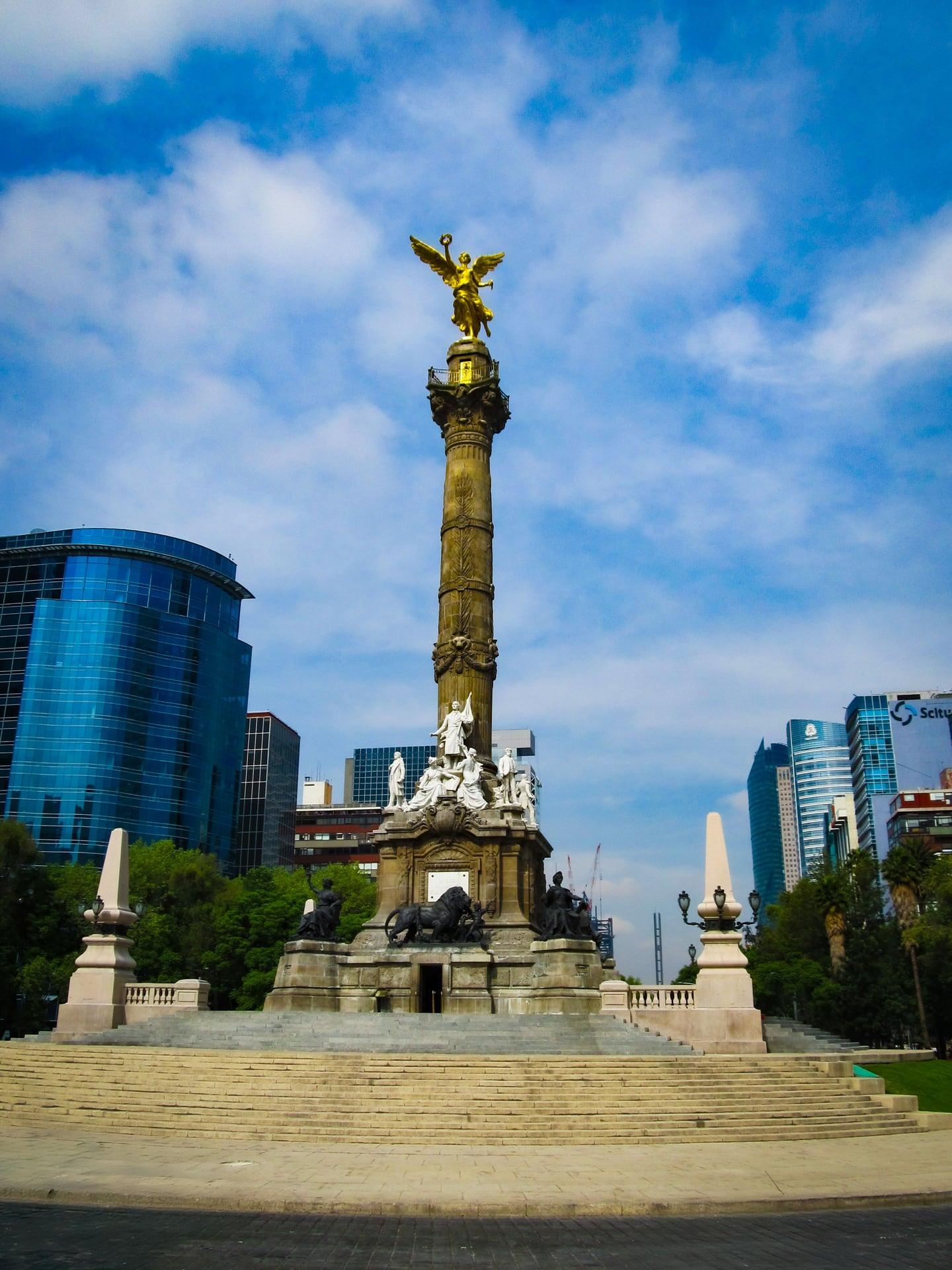
The centrepiece is the Ángel de la Independencia, its cornerstone laid in 1902 and the column standing for the centenary celebrations of 1910. It is also the best lesson in what the ground does to monuments. The city's tourism portal notes that it was built with nine steps at its base and that fourteen more have been added as the street sank around it. On 28 July 1957 an earthquake threw the gilded Victory from the top and broke her. Inside the base, the city says, lie the remains of fourteen heroes of Independence.
Then there is the monument that was meant to be a parliament. Díaz's Legislative Palace was begun in 1910 and abandoned in 1912 with only the steel of its central dome standing. Under Lázaro Cárdenas it was finished in 1938 as the Monumento a la Revolución, and later became a tomb for revolutionary leaders. The Revolution took the dictator's parliament and made it its own.
The layer from below
The second layer arrived in the last decade, and it does not always ask permission. On the promenade before the Ángel stands Leona Vicario, a heroine of Independence, unveiled by the city on 21 August 2020 as the first of a walk of heroines; by March 2023 there were fourteen. Their bronze figures stand on carved stone bases like the men's. Is that a correction to Sosa's plan or a completion of it?
Further on, the roundabout once named for a palm now holds a young ahuehuete, chosen by online vote after the palm died in 2022. Its fence has carried posters of the faces of the disappeared, and nearby an antimonumento, a protest marker, remembers the sixty-five miners killed at Pasta de Conchos in 2006.
The sharpest change is the empty plinth. Christopher Columbus stood there, by the city's account the first statue placed on Reforma, from 1877. On 10 October 2020 the city removed him for restoration, and he has not returned. On 25 September 2021 mothers of disappeared women and victims of femicide, with feminist collectives, set a purple wooden figure of a woman with a raised fist on the plinth, and the roundabout has been known since as the Glorieta de las Mujeres que Luchan. The city placed its own figure beside it in 2023, a replica of the sculpture known as the Joven de Amajac. Two answers to one empty pedestal, one official and one not.
Walking it
The route runs twelve stops over about 3.1 kilometres in just under two hours, starting at the lion gate and ending at the Frontón México, the Art Deco jai alai hall beside the Monumento a la Revolución. It suits doing it your own way: stop as long as you like at the plinth, skip a roundabout, or break for coffee between the towers. Some roundabouts are fenced on protest days, and the stops are told from the sidewalk. The tour is free to start.
The column is stop 5 and the empty plinth is stop 10 of Paseo de la Reforma: The Avenue That Rewrites Its Monuments, which runs from stop 1 at the Puerta de los Leones to stop 12 at the Frontón México. See all routes on the Mexico City page.
Sources
- Bosque de Chapultepec, Puerta Monumental de los Leones: the lions by Georges Gardet, commissioned under Porfirio Díaz for the Legislative Palace, installed at the gate in 1921.
- Gobierno de la CDMX tourism portal, El Ángel de la Independencia: cornerstone 1902; standing since the 1910 centenary; nine original steps and fourteen added as the ground sank; the 28 July 1957 earthquake; the remains of fourteen heroes inside.
- Roamer's Paseo de la Reforma tour transcript and its fact dossier (the avenue's origin and renaming; the Cuauhtémoc monument; Sosa's 1887 plan and the first statues of 1889; the heroines from 2020; the Glorieta del Ahuehuete and Pasta de Conchos marker; the Columbus removal and the 2021 figure; the Legislative Palace and the 1938 monument).
Mexico eSIM· 10% off with ROAMER10
Ready to experience it?
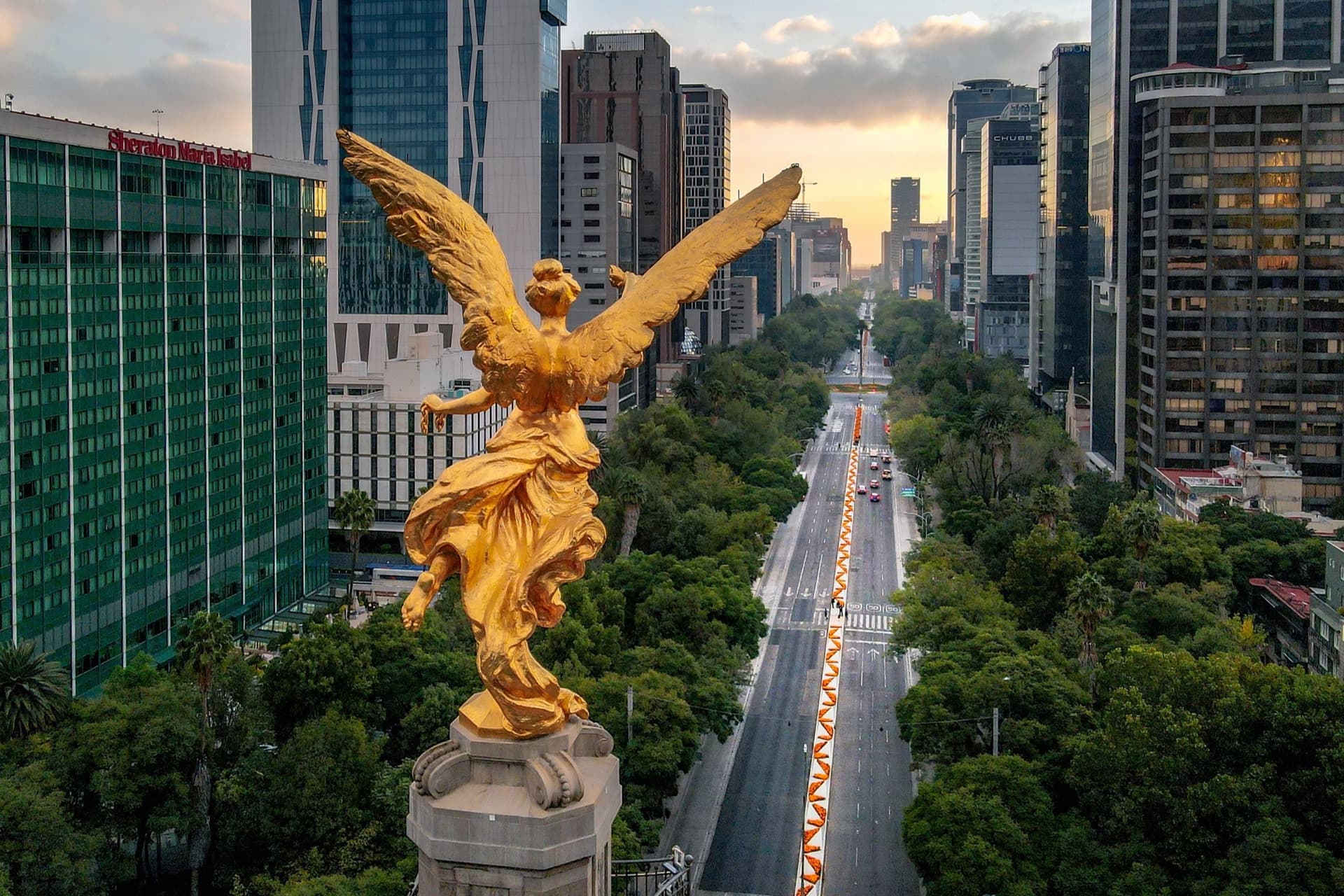
Paseo de la Reforma: The Avenue That Rewrites Its Monuments
110 min · 3.1 km · easy
More from Mexico City
Explore more at your own pace.
Basilica of Guadalupe: Three Churches, One Lakebed, and the Hill Above
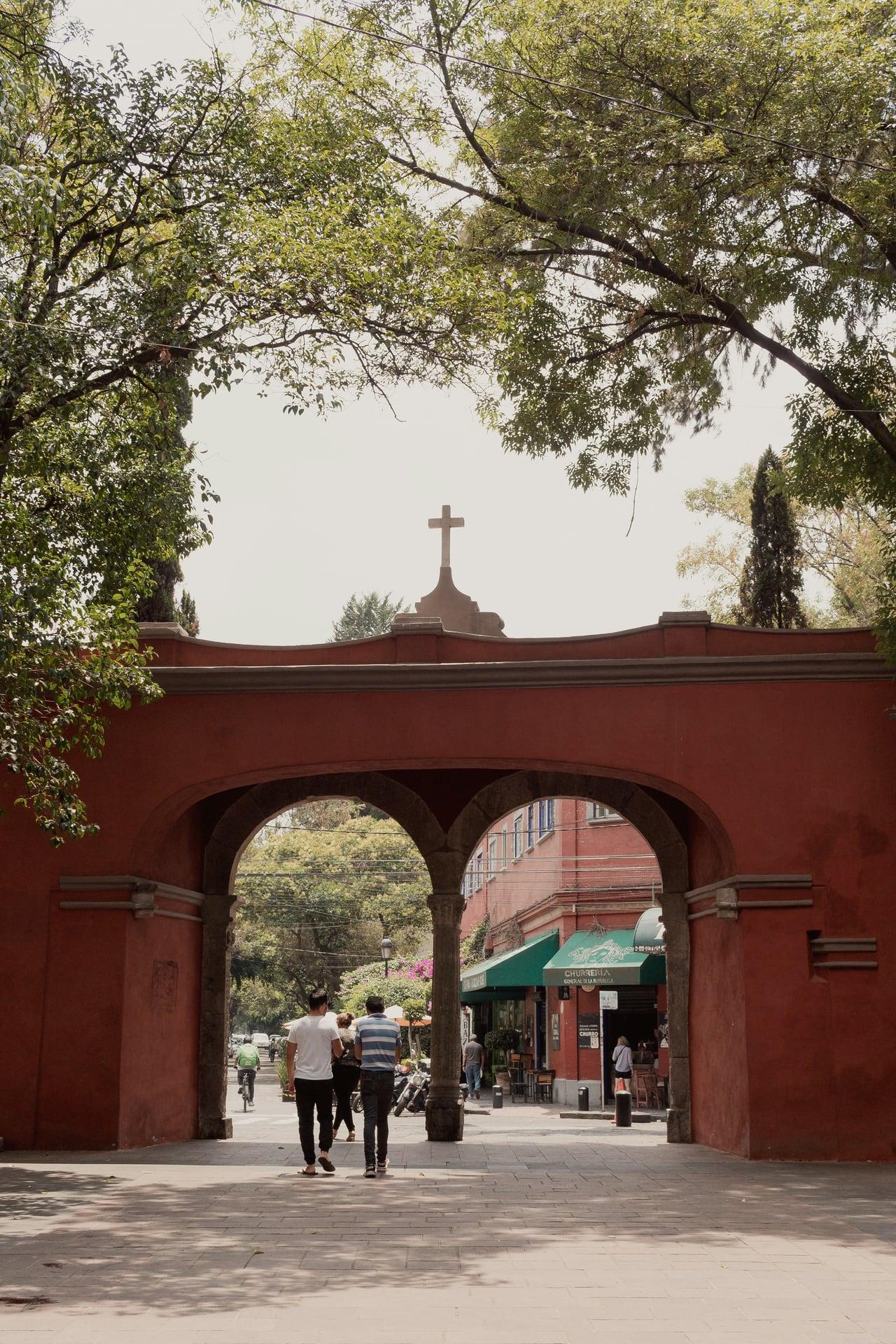
Coyoacán in Walls: Churchyards Torn Open, a Blue House Closed In
San Ángel: How a Friars' College Named a Village, and Two Concrete Houses Answered It
Capilla del Pocito: Red Stone, Tiled Domes and a Spring at the Basilica of Guadalupe
Casa del Risco: The Fountain of Broken China Hidden Behind a San Ángel Wall