San Ángel is a friars' college that named a village. The Dominicans came first and called the place San Jacinto. Then the Carmelites built a college whose name, San Ángel, took over. Over the next three centuries the orchards and haciendas around them were cut into the walled lots that line its cobbled lanes. And in 1931 and 1932 the architect Juan O'Gorman put two concrete houses on the village's edge that rejected every bit of that, across the road from an old hacienda that kept everything. Walk it in that order and the village reads like an argument.
Two orders, two names
The older name is still on the church at the end of Plaza San Jacinto. A Dominican hermitage stood here by the middle of the sixteenth century, and it became an official church in 1580. The community was San Jacinto Tenanitla. The Dominicans were practical builders: they used the waterfalls nearby to drive spinning and weaving workshops, and the Casa del Risco's museum notes that its own ground was first Dominican land.
The newer name arrived with a bigger building. From 1615, Discalced Carmelite friars built the Colegio de San Ángelo Mártir to train their priests, designed and run by a friar, Andrés de San Miguel. INAH, which runs the old college as the Museo de El Carmen, dates the works to 1615 to 1617. The friars lived partly off an orchard of more than thirteen thousand fruit trees, land that is now the neighbourhood of Chimalistac across Avenida Insurgentes. Look up from the street and you see why this college won the naming contest: domes faced in glazed tile, rising over a long convent wall. Inside, the cloisters were kept low and plain. In the crypt are twelve mummified bodies, found in 1916.
Set the two churches side by side in your head. San Jacinto turns its front away from its own plaza, toward a garden. El Carmen announces itself in tile over the rooftops. Which name would you have bet on?
Mint money and blank walls
Hear a stop from this walk
San Ángel Inn: An Orchard Grant of 1616
The second layer is money from the capital. On the Plaza del Carmen stands the Casa del Mayorazgo de Fagoaga, the house of an entailed estate held by a family tied to the colonial mint. On Plaza San Jacinto, the Casa del Risco was bought in 1750 by Captain Manuel de León, the mint's first assayer. Two mint men, two country houses, in a friars' village outside the city.
Both houses show the habit that defines San Ángel: a front that tells you almost nothing. The Casa del Risco keeps its treasure, a fountain more than eight metres high built from broken porcelain, tiles, shells and mirrors, in a courtyard you cannot see from the street. Up Calle Reina and along Calle Lazcano the habit becomes the whole townscape: rough cobbles, little or no pavement, high blank walls, a gate, a tree spilling over the top.
Those walls trace the land. The orchards and haciendas around the village were cut into lots, and the walls are the edges of the pieces. The clearest case is at the walk's end. The San Ángel Inn's own history records a 1616 grant for a house and orchard, purchase by Ramón de Goicoechea in 1777, about thirty-four hectares of hacienda, and sale in 1906 to the American-owned San Ángel Land Company, which opened it as a hotel in 1907. It has been a restaurant since 13 June 1963. In between, as the tour tells it, the Lazcano couple bought it in 1880 and their heirs began dividing it, the kind of division that produced the lanes you have just walked.
Two concrete boxes
Then comes the refusal. At the fork of Calle Diego Rivera stand two boxy houses, one red and white, one blue, joined by a small bridge on the upper floor. Diego Rivera asked O'Gorman for a house and studio for himself and another for Frida Kahlo. Building started in 1931 and finished in 1932. Smooth concrete, big industrial windows, no tile, no ornament, nothing borrowed from the village. O'Gorman drew on Le Corbusier and his idea of the house as a machine for living.
The city's tourism portal calls them among the first functionalist buildings in Latin America. The very first functionalist house in Mexico stands on the same plot: O'Gorman built it for his father in 1929. Rivera and Kahlo moved in in 1934. Frida left in 1941 for the blue house in Coyoacán, and Rivera died in his studio in 1957.
Stand between the studios and the Inn and the village's whole story is on one street. On one side, an orchard grant of 1616 that became a hacienda, a hotel and a restaurant, still behind its walls. On the other, two houses from 1932 that wanted nothing to do with the past. San Ángel kept both, which is its real character: it absorbs its rebels.
Walking it
The walk runs ten stops over about 2.1 kilometres in a little under an hour and a half, from the Obregón monument in Parque de la Bombilla, where a president-elect was shot at breakfast in 1928, to the San Ángel Inn. It is easy to do at your own pace, with no group: linger in the Casa del Risco's courtyard, skip the museums on a Monday when they close, or come on a Saturday when the Bazar del Sábado fills Plaza San Jacinto. The tour is free to start.
The village's story runs through all ten stops of San Ángel: Carmelite Domes, Garden Walls and the O'Gorman Studios, from stop 1 at the Obregón monument to stop 10 at the San Ángel Inn. See all routes on the Mexico City page.
Sources
- INAH, Museo de El Carmen: the college built 1615 to 1617 by the Discalced Carmelites under fray Andrés de San Miguel; the twelve mummified bodies found in 1916; Monday closing.
- Museo Casa del Risco, history: the Dominican land; Captain Manuel de León of the Royal Mint, 1750; the fountain, 8.10 m by 9.50 m.
- San Ángel Inn, history: the 1616 grant, Goicoechea in 1777, about 34 hectares, the San Ángel Land Company in 1906, the hotel in 1907, the restaurant from 13 June 1963.
- Gobierno de la CDMX tourism portal, Museo Casa Estudio Diego Rivera y Frida Kahlo: O'Gorman's design, building 1931 to 1932, one house red and white and one blue, the upper-floor bridge, "one of the first functionalist buildings in Latin America".
- Roamer's San Ángel tour transcript and its fact dossier (INBAL Boletín 693 of 17 May 2019 on the 1929 house for Cecil O'Gorman, Frida's departure in 1941 and Rivera's death in 1957; the Lazcano purchase of 1880).
Mexico eSIM· 10% off with ROAMER10
Ready to experience it?
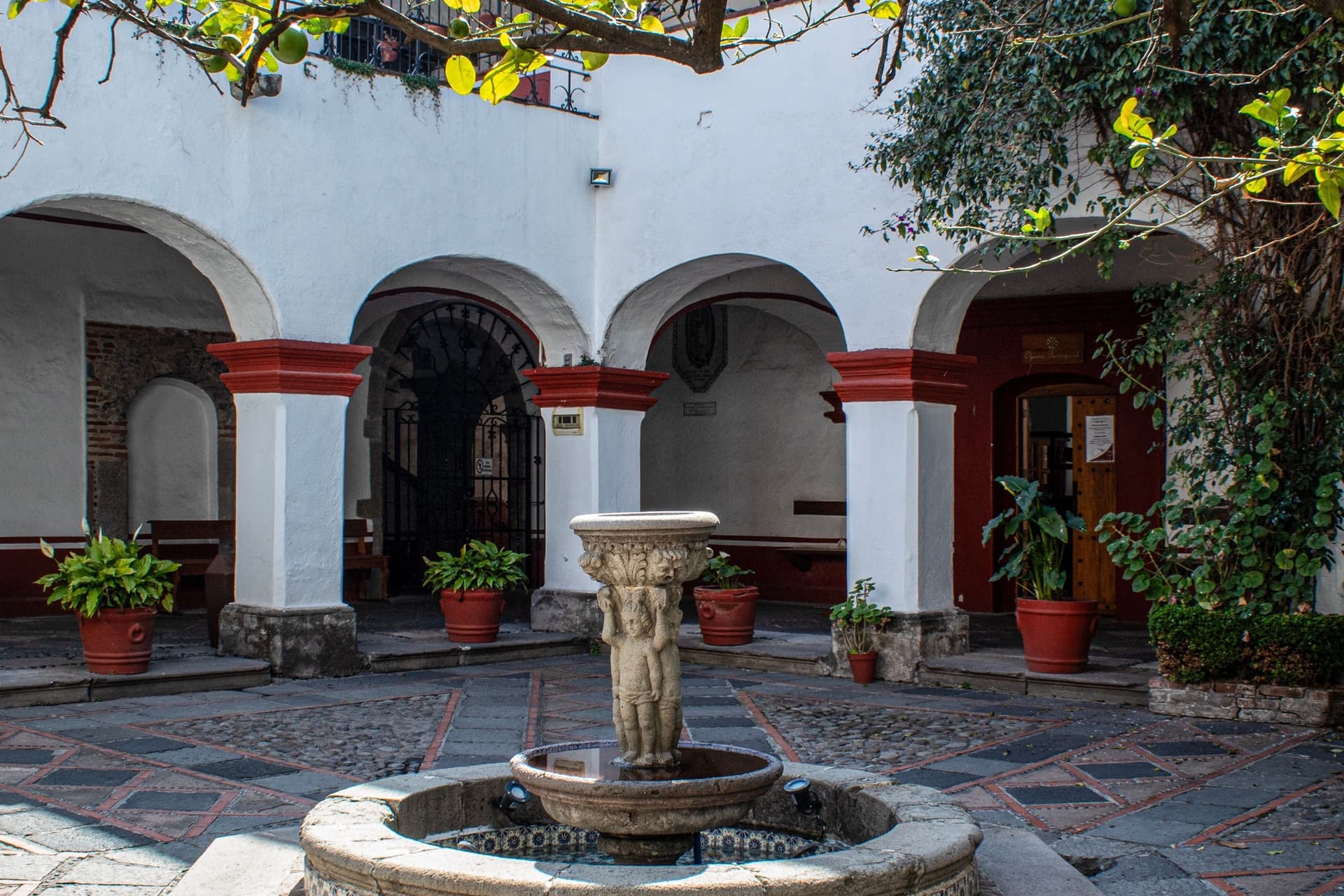
San Ángel: Carmelite Domes, Garden Walls and the O'Gorman Studios
85 min · 2.1 km · easy
More from Mexico City
Explore more at your own pace.
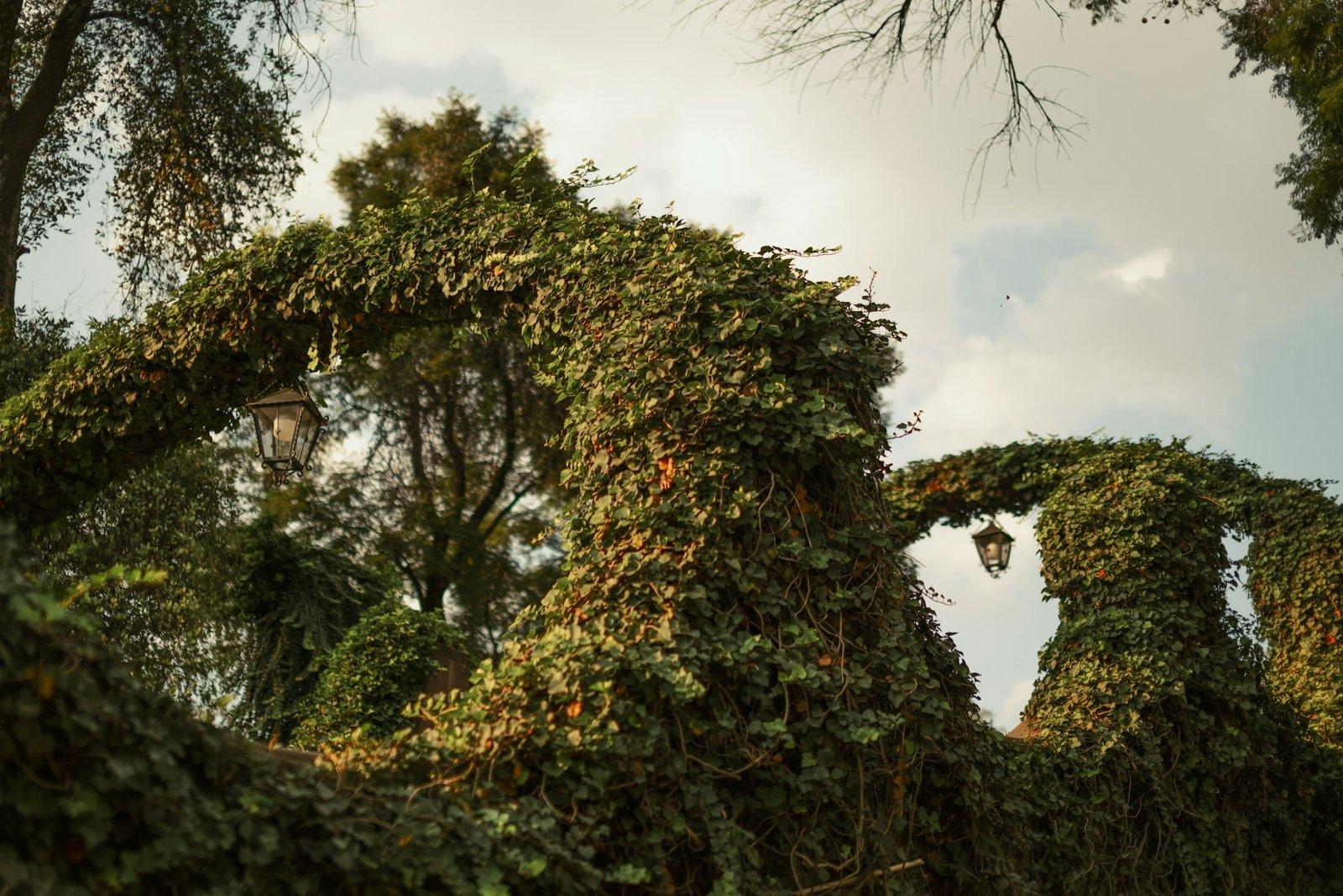
Basilica of Guadalupe: Three Churches, One Lakebed, and the Hill Above
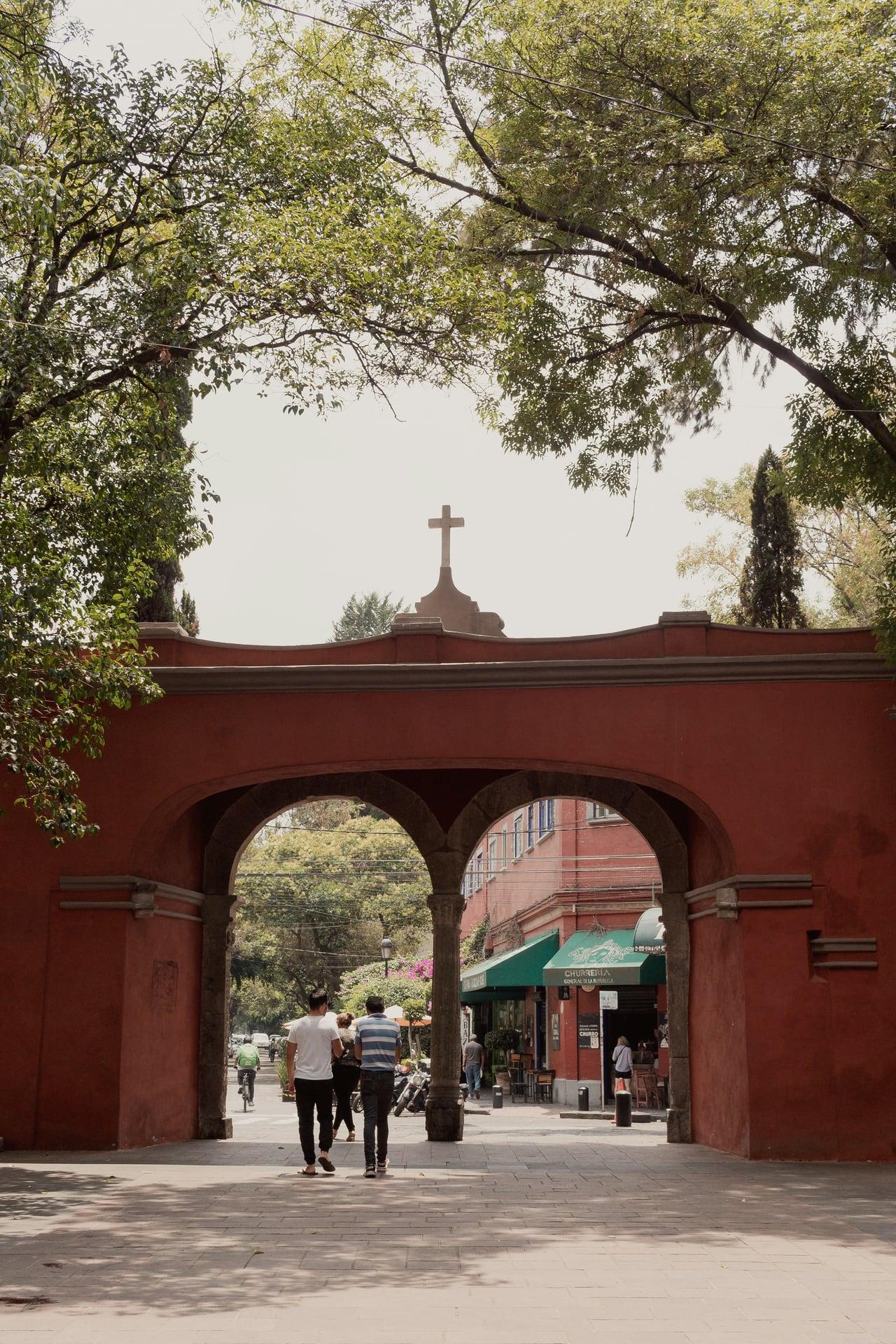
Coyoacán in Walls: Churchyards Torn Open, a Blue House Closed In
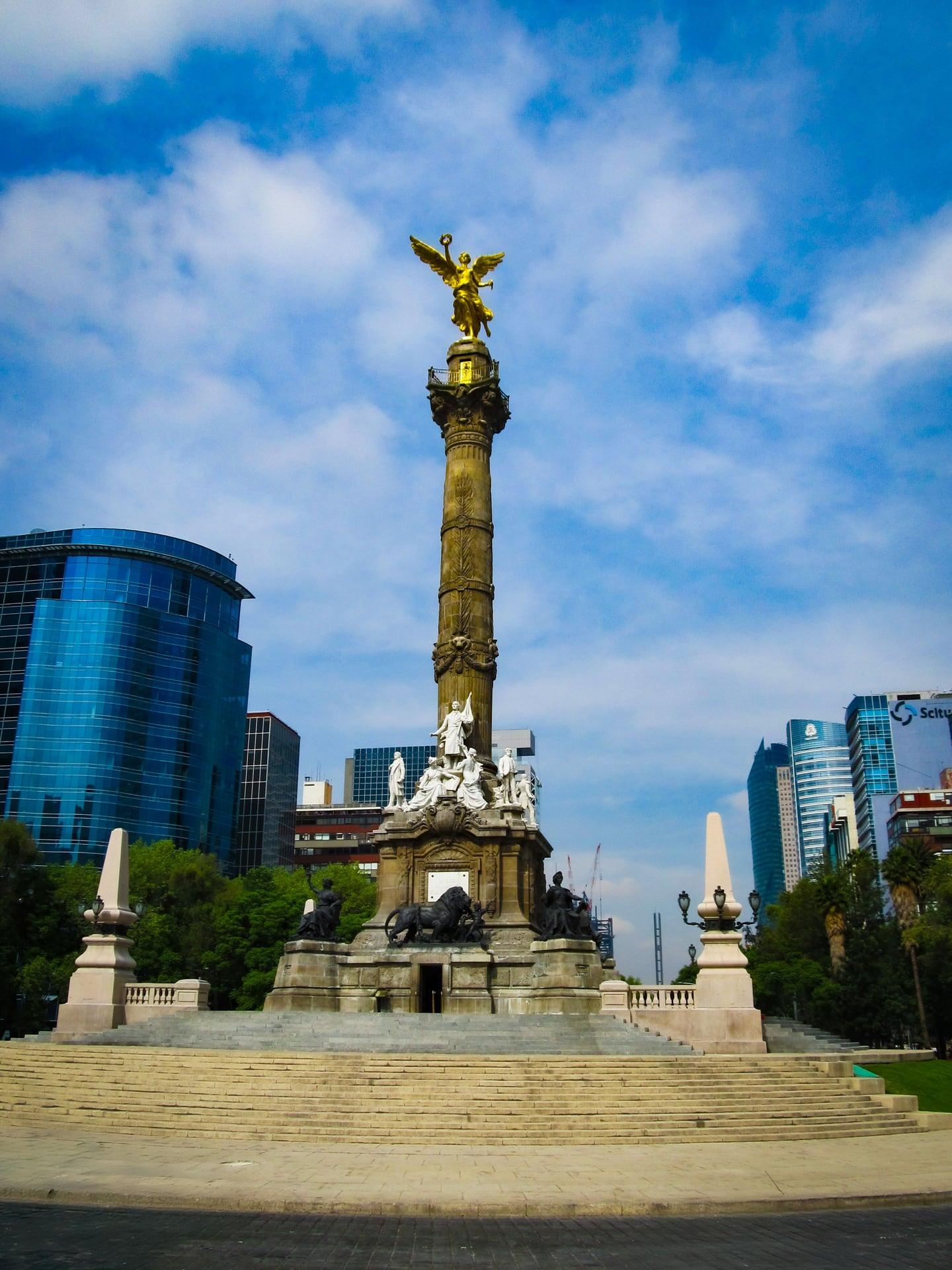
Paseo de la Reforma: Where Mexico Decides Who Gets a Statue
Capilla del Pocito: Red Stone, Tiled Domes and a Spring at the Basilica of Guadalupe
Casa del Risco: The Fountain of Broken China Hidden Behind a San Ángel Wall