The Casa del Risco takes its name from a fountain, and you cannot see that fountain from the street. It stands in the courtyard of an eighteenth-century house on Plaza San Jacinto, a wall more than eight metres high built of broken porcelain, tiles, shells and mirrors. From the plaza you see a door. Behind it is one of the strangest objects in Mexico City. That arrangement, a plain front on the street and a private treasure behind it, is San Ángel in miniature.
The wall of pieces
Start with the thing itself. The museum gives its size as 8.10 metres high and 9.50 metres wide, and dates it, carefully, as probably from the last third of the eighteenth century, on the grounds of its style and scale. That style is what Mexican art historians call ultrabaroque, the late phase of the baroque when surfaces stopped holding back. The fountain stands against a courtyard wall like an altar, and instead of carved stone or gilded wood, its surface is made of fragments. Time Out México lists plates, sculptures, mirrors, broken porcelain and mother-of-pearl shell. The tour adds that the porcelain includes pieces of Chinese and Japanese dishes.
Think about what that means in a colonial village. Asian porcelain reached New Spain as a luxury. Here it was broken on purpose, or saved when broken, and set into a wall where it would catch the light and the water. The effect is less a fountain than a shrine to abundance: so much fine china that you could afford to make architecture out of the shards.
Why "risco"? The word means a crag or cliff, and accounts disagree on whether it refers to the fountain's rough, rocky look or to the broken pieces themselves. The museum settles only the essential point: the house takes its name from the fountain.
A mint man's country house
Hear a stop from this walk
San Ángel Inn: An Orchard Grant of 1616
The house tells the rest of San Ángel's story in a few owners. INAH attributes the building to the master builder Joseph Eduardo de Herrera. In 1750 it was bought and fitted out by Captain Manuel de León, the first assayer of the Royal Mint of New Spain. He was one of the colonial capital's money men buying into a friars' village, like the Fagoaga family whose entailed house stands on the Plaza del Carmen nearby. The museum also records that the ground was first held by the Dominican friars who founded San Jacinto.
In 1847, during the war with the United States, the house served as a hospital. INAH says a South Carolina battalion of the United States Army then occupied it for several months, and the tour notes the museum's account that soldiers of the San Patricio Battalion were sentenced here, before several were hanged in San Ángel.
Then the house came down in the world. It became a tenement, decayed, and in 1931 was emptied and put up for sale, the same year a new law protected colonial mansions as historic monuments. In 1933 the politician Isidro Fabela bought it and restored it with his wife, Josefina Eisenmann. The museum quotes his reason in his own words: he wanted to live in a colonial mansion in San Ángel. In 1958 the couple gave the house, its furnishings, art, library and archive to the nation through a Banco de México trust. The museum calls it the first museum in Mexico donated by a private individual. It opened as the Centro Cultural Isidro Fabela in 1963, and the State of Mexico has helped run it since 1988.
What to look at
Inside, the collection is Fabela's: religious art from the seventeenth to nineteenth centuries, European canvases, carved furniture and the family's porcelain. But the fountain is the reason to step in. Stand back far enough to take in its full height, then go close and pick out single pieces: a plate's rim, a shell, a mirror shard. Notice how the fragments are arranged into an altar's frame rather than scattered.
Then keep the image with you. Near the end of the San Ángel walk, at the Rivera and Kahlo studios, Juan O'Gorman built two concrete houses with no ornament at all. The glittering wall of broken china is the exact opposite of those boxes, and seeing both in one morning is the point of the route. Entry to the house has usually been free, Tuesday to Sunday, with Mondays closed; check before you go. You can give it five minutes or half an hour, on your own schedule.
The courtyard is stop 4 of San Ángel: Carmelite Domes, Garden Walls and the O'Gorman Studios, which runs from the Obregón monument in Parque de la Bombilla to the San Ángel Inn. See all routes on the Mexico City page.
Sources
- Museo Casa del Risco, history: the Dominican land; Captain Manuel de León, first assayer of the Royal Mint, 1750; the tenement and 1931 sale; the 1931 monuments law; Fabela's purchase in 1933 with Josefina Eisenmann and his quoted reason; the 1958 donation through a Banco de México trust; "the first museum donated by a private individual"; the 1963 opening and State of Mexico support since 1988; the fountain's probable date, ultrabaroque style and 8.10 m by 9.50 m size; the house named for the fountain.
- INAH, Casa del Risco: attribution to Joseph Eduardo de Herrera; occupation by a South Carolina battalion of the US Army after the battle of Padierna in 1847; the October 1958 donation.
- Time Out México, Museo Casa del Risco: the fountain's plates, sculptures, mirrors, porcelain fragments and mother-of-pearl; the collection of sacred and baroque art, furniture and porcelain.
- Roamer's San Ángel tour transcript (Chinese and Japanese porcelain; the San Patricio sentencing; usual opening days).
Mexico eSIM· 10% off with ROAMER10
Ready to experience it?
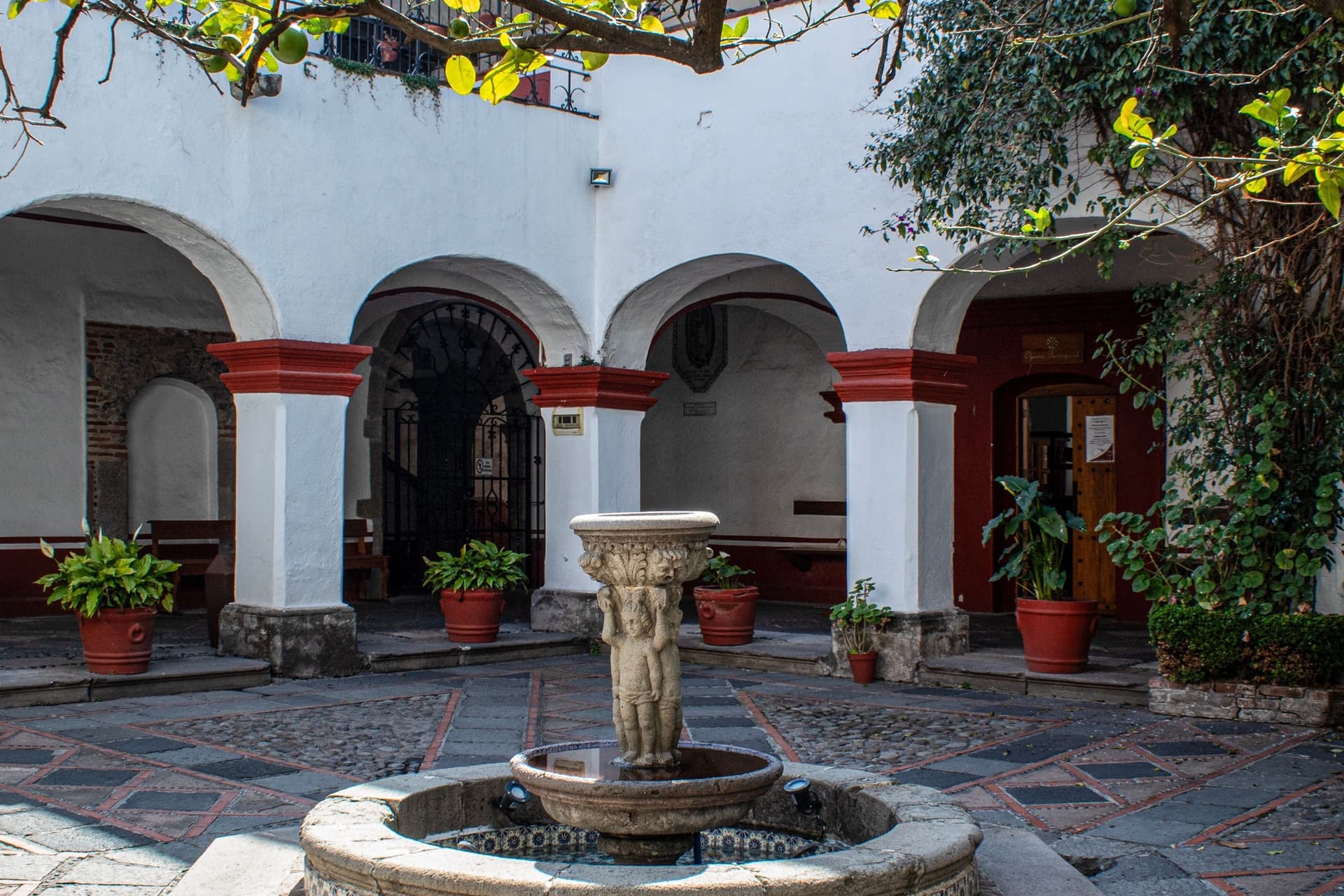
San Ángel: Carmelite Domes, Garden Walls and the O'Gorman Studios
85 min · 2.1 km · easy
More from Mexico City
Explore more at your own pace.
Basilica of Guadalupe: Three Churches, One Lakebed, and the Hill Above
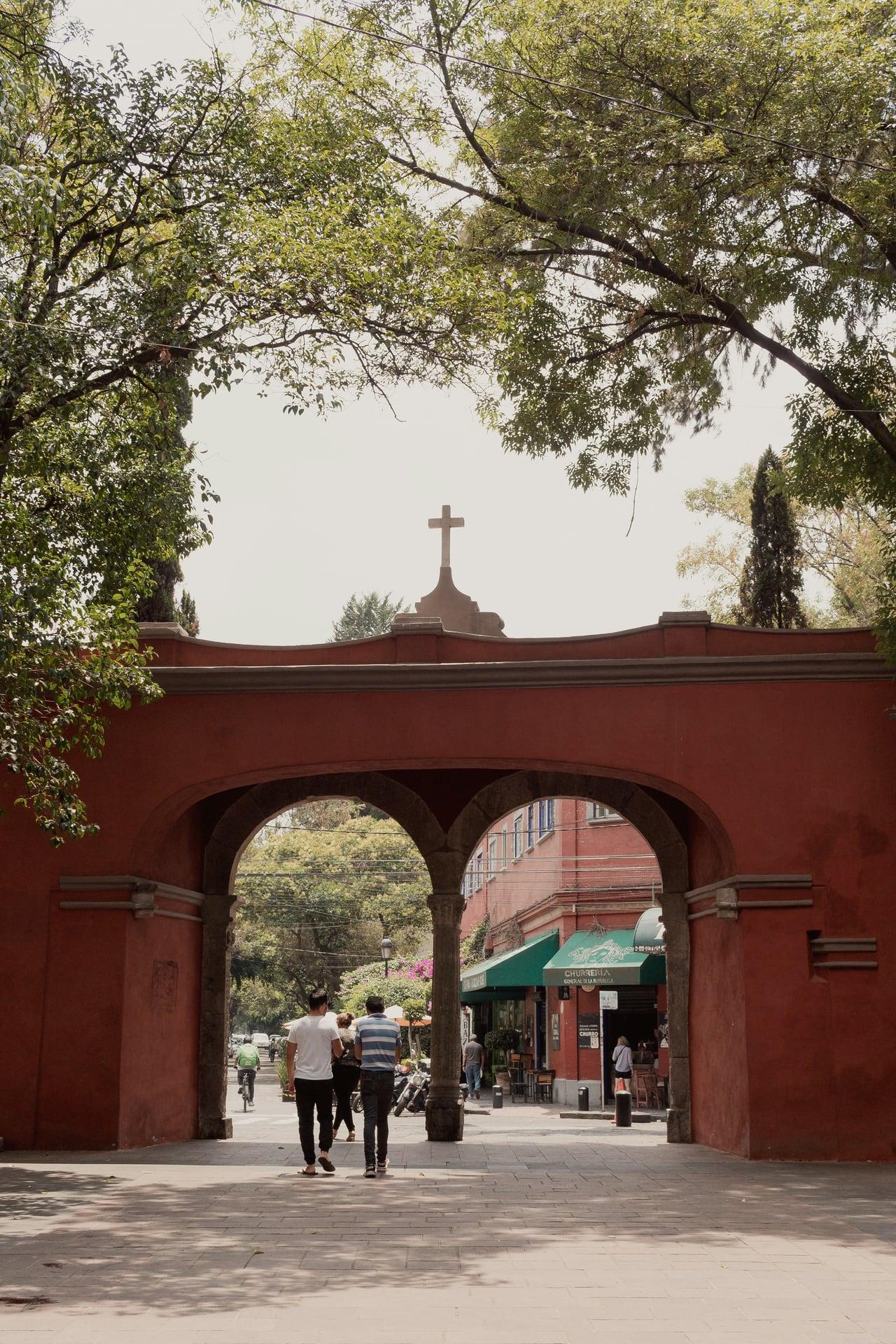
Coyoacán in Walls: Churchyards Torn Open, a Blue House Closed In
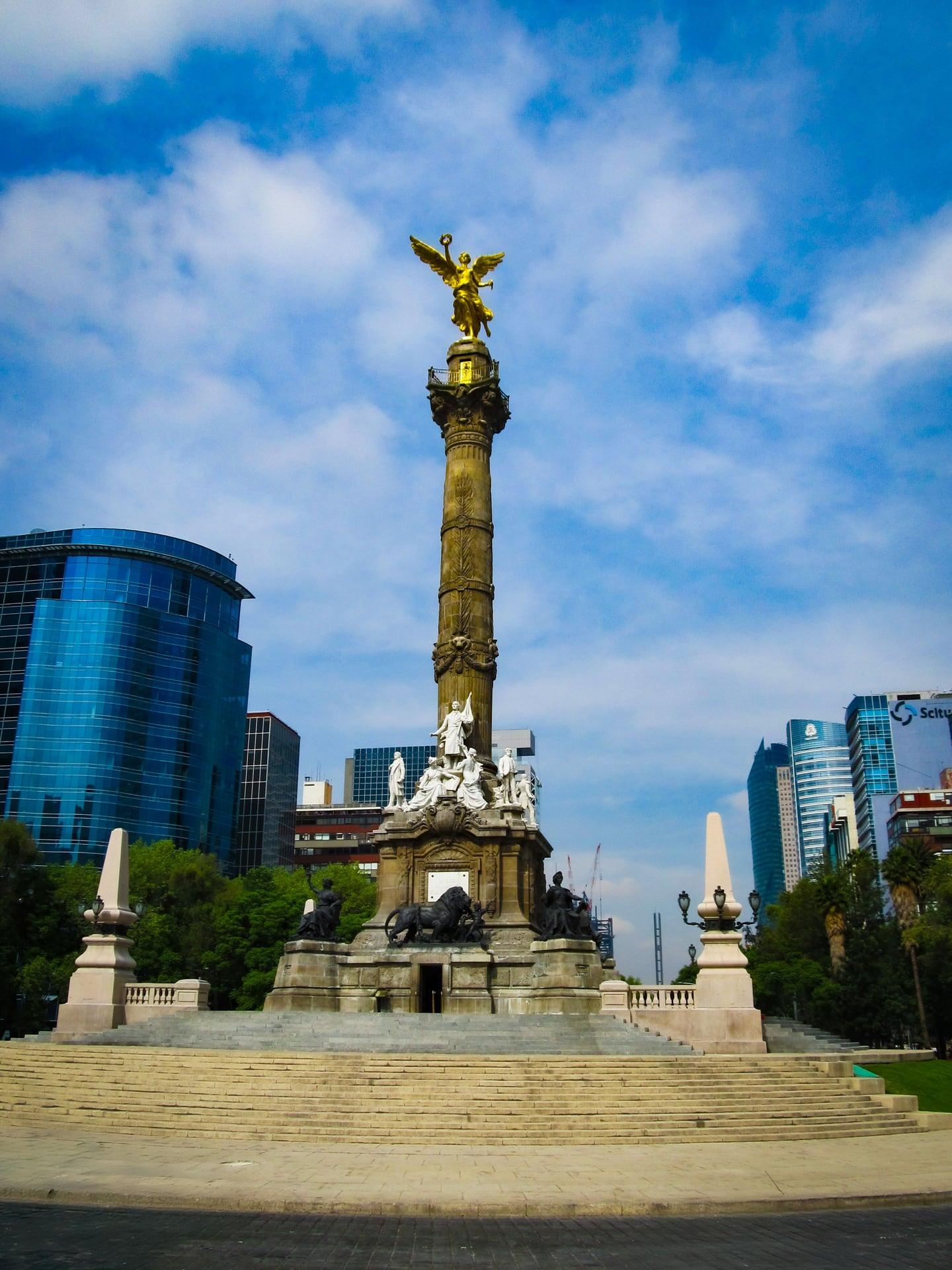
Paseo de la Reforma: Where Mexico Decides Who Gets a Statue
San Ángel: How a Friars' College Named a Village, and Two Concrete Houses Answered It
Capilla del Pocito: Red Stone, Tiled Domes and a Spring at the Basilica of Guadalupe