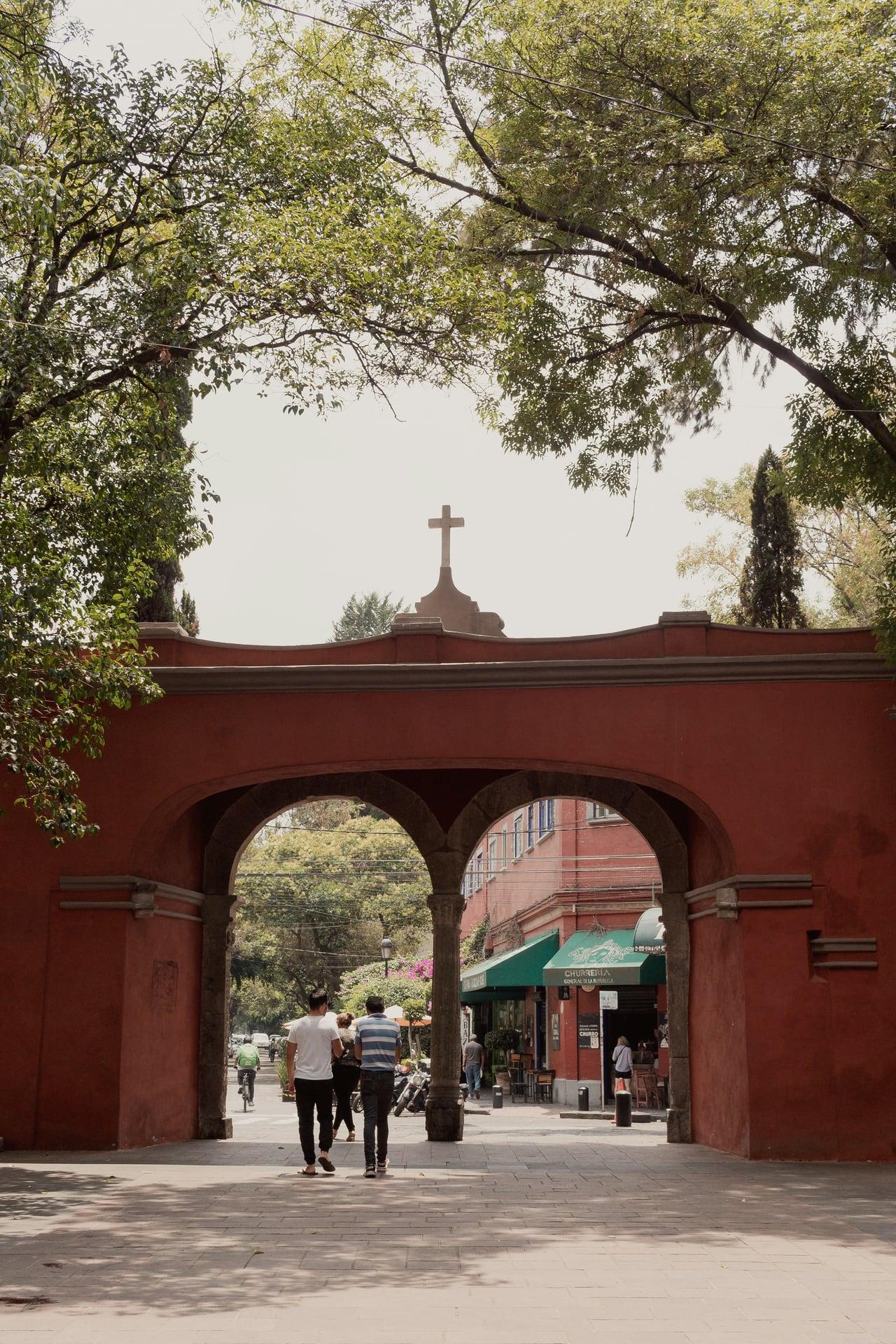
Coyoacán reads as a story of walls. Colonial churchyard walls were pulled down to give the village its public gardens, in 1914 and again in 1933. Then, in the late 1930s and in 1940, walls went up around a hunted exile, first at a painter's blue house and then at a fortress on Calle Viena that in the end let in his assassin. The same village opened itself to its people and closed itself around one man, and you can walk both halves in a morning.
A village before it was a city
Coyoacán was a town of its own for most of its history. After Tenochtitlan fell in 1521, Hernán Cortés and his men settled here while the ruined capital was rebuilt, and Coyoacán stayed separate until it was joined to Mexico City in 1928. Ten years later President Lázaro Cárdenas folded the village and the tree nursery at its western edge into one national park, El Histórico Coyoacán. The nursery itself began with a gift: in 1901 the engineer Miguel Ángel de Quevedo, known as the apostle of the tree, donated a hectare of his ranch to raise young trees, and the federal government kept buying land around it until it reached its present thirty-nine hectares. Keep Cárdenas in mind. He returns at the blue house.
Walls that came down
Hear a stop from this walk
Trotsky's House: The Walls That Failed
The churches here once stood in walled atriums, the enclosed yards where crowds gathered for mass. Look at the little chapel on Plaza Santa Catarina. It began as an open chapel, with big round arches facing outward so a crowd could follow the service in the open air, and was later closed in. Its churchyard wall was torn down in 1933 and the neighbours made a park.
The bigger case is at the end of Francisco Sosa, the old royal road to San Ángel. A double stone arch stands alone at the edge of the Jardín Centenario. The city's tourism portal explains it: for centuries the garden was part of the atrium of San Juan Bautista, and the Indigenous-style carving on the arch's columns has survived since the church was built. The rest of the enclosure did not. As the tour tells it from the inspectors' file, in 1914 the order to destroy the atrium came from the president of the Republic himself, because the town needed a municipal garden. The gateway now frames open lawn, benches and a fountain with two bronze coyotes, a nod to the usual reading of the name Coyoacán as the place of coyotes.
Is that a loss or a gift? The open garden named for the centenary of independence is the answer Coyoacán lives with.
Walls that went up
A few blocks north, on Calle Londres, the walls turn cobalt. Frida Kahlo's father built the Casa Azul in 1904 around a central patio, and Frida was born there in 1907. The Museo Frida Kahlo is precise about the next step: when Leon Trotsky lived with Diego Rivera and Frida between 1937 and 1938, the blue-painted exterior walls were erected to enclose a newly purchased lot of land. Trotsky had arrived with asylum granted by the same President Cárdenas who signed the park decree. Here, for once, a wall went up to protect someone.
After about two years Trotsky and his wife, Natalia Sedova, moved a few blocks away to a house on Calle Viena. Before dawn on 24 May 1940, about twenty men led by the painter David Alfaro Siqueiros got in and fired into the bedroom. Both survived. Afterward the house was walled in, its doors armoured, guards posted and towers manned. It did not hold. Three months later the killer came through the gate as a guest, and on 20 August 1940 he struck Trotsky with an ice axe in his study. Trotsky died the next day. His ashes and Natalia's lie in the garden behind the wall.
One painter sheltered him behind blue walls; another led the raid on his fortress. The walls did their job against strangers and failed against a familiar face.
What to look at between them
The walls are the frame, but the walk is full of surfaces worth stopping for. The mortar reliefs of vines, rosettes, a sun and a moon on La Conchita's chapel front. The deep red Casa de la Malinche, a private house whose legend no document supports. The long white town hall on Plaza Hidalgo, called the Casa de Cortés though it dates from the eighteenth century, where Frida Kahlo married Diego Rivera in 1929. The plain mid-century market hall. Each is a wall too: a face the village shows the street.
Walking it
The route runs twelve stops over about 3.6 kilometres in about two hours, from the south gate of the Viveros de Coyoacán to Trotsky's house, longer if you go into the Frida Kahlo Museum, which sells timed tickets online and closes on Mondays. On your own schedule, with no group, you can sit out a stop in the Jardín Centenario or skip the market entirely. The tour is free to start.
The garden gateway is stop 4 and the blue walls are stop 11 of Coyoacán: Open Gardens, Blue Walls and Trotsky's Fortress, which ends at stop 12, Trotsky's house. For the people behind those walls, see three houses, a few blocks. See all routes on the Mexico City page.
Sources
- Museo Frida Kahlo, "The Blue House: Frida Kahlo's Intimate Universe": built in 1904; the blue-painted exterior walls erected to enclose a newly purchased lot while Trotsky lived there, 1937 to 1938; museum opened in 1958.
- Gobierno de la CDMX tourism portal, Jardín Centenario: the garden as the former atrium of San Juan Bautista; the Indigenous-style columns of the arches kept since the church was built.
- Gobierno de la CDMX tourism portal, Viveros de Coyoacán: Quevedo's one-hectare donation of 1901 from the Panzacola ranch; land bought 1911 to 1934; 39 hectares; "Apostle of the Tree".
- Roamer's Coyoacán tour transcript and its fact dossier (the 1914 presidential order and the 1933 Santa Catarina wall; the 1938 park decree; the 1940 raid and assassination; the Casa de Cortés and the 1929 wedding).
Mexico eSIM· 10% off with ROAMER10
Ready to experience it?
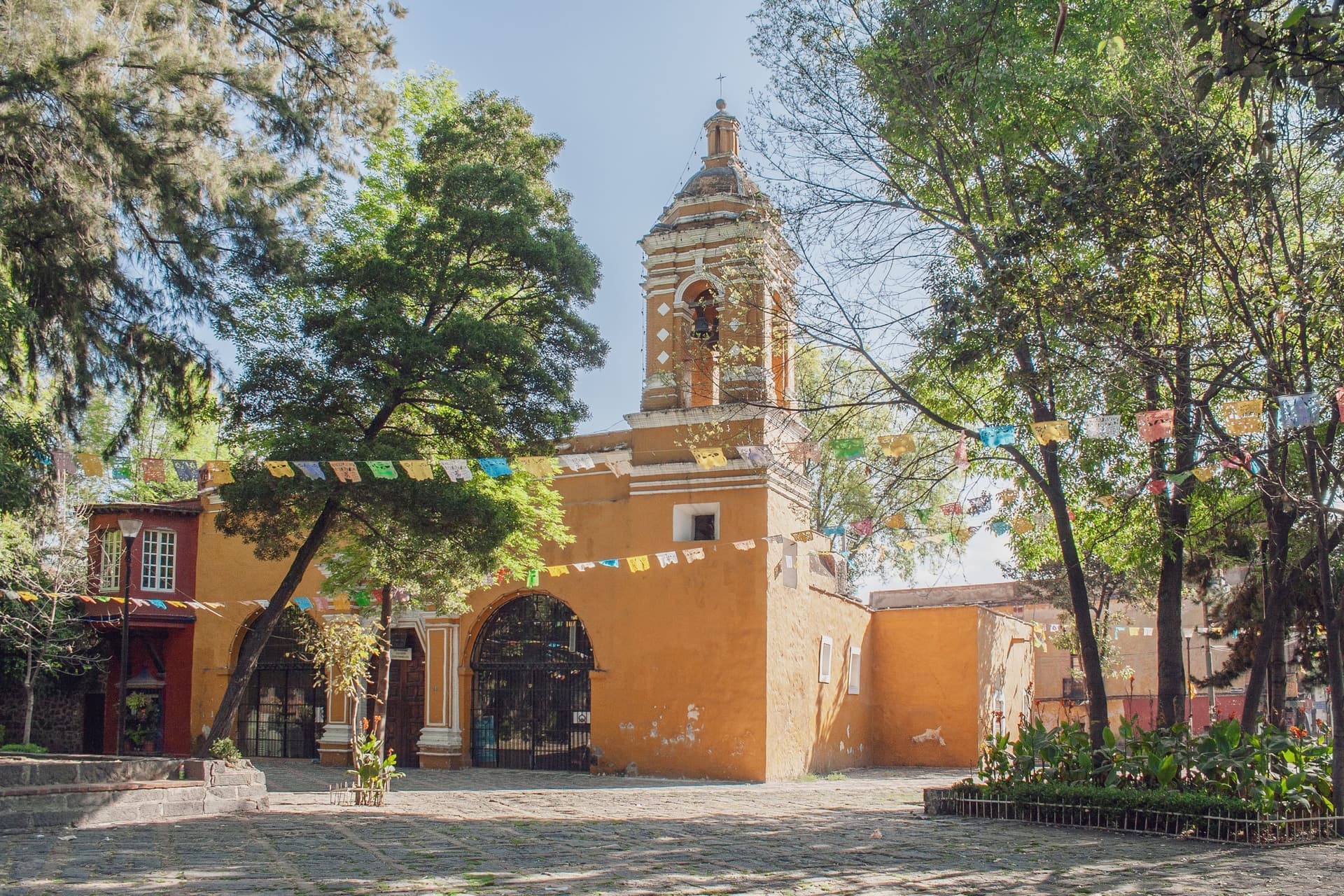
Coyoacán: Open Gardens, Blue Walls and Trotsky's Fortress
120 min · 3.6 km · easy
More from Mexico City
Explore more at your own pace.
Basilica of Guadalupe: Three Churches, One Lakebed, and the Hill Above
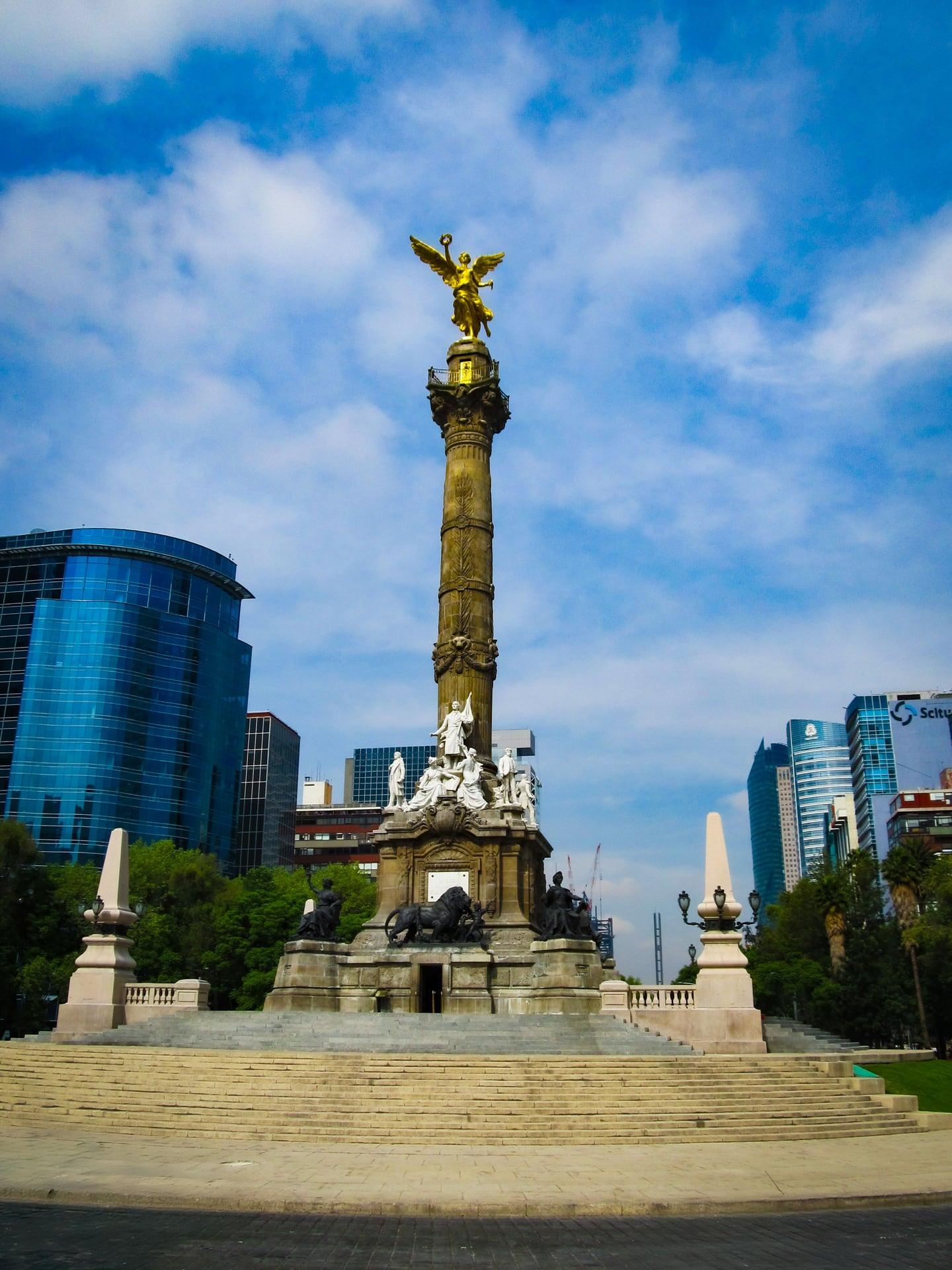
Paseo de la Reforma: Where Mexico Decides Who Gets a Statue
San Ángel: How a Friars' College Named a Village, and Two Concrete Houses Answered It
Capilla del Pocito: Red Stone, Tiled Domes and a Spring at the Basilica of Guadalupe
Casa del Risco: The Fountain of Broken China Hidden Behind a San Ángel Wall