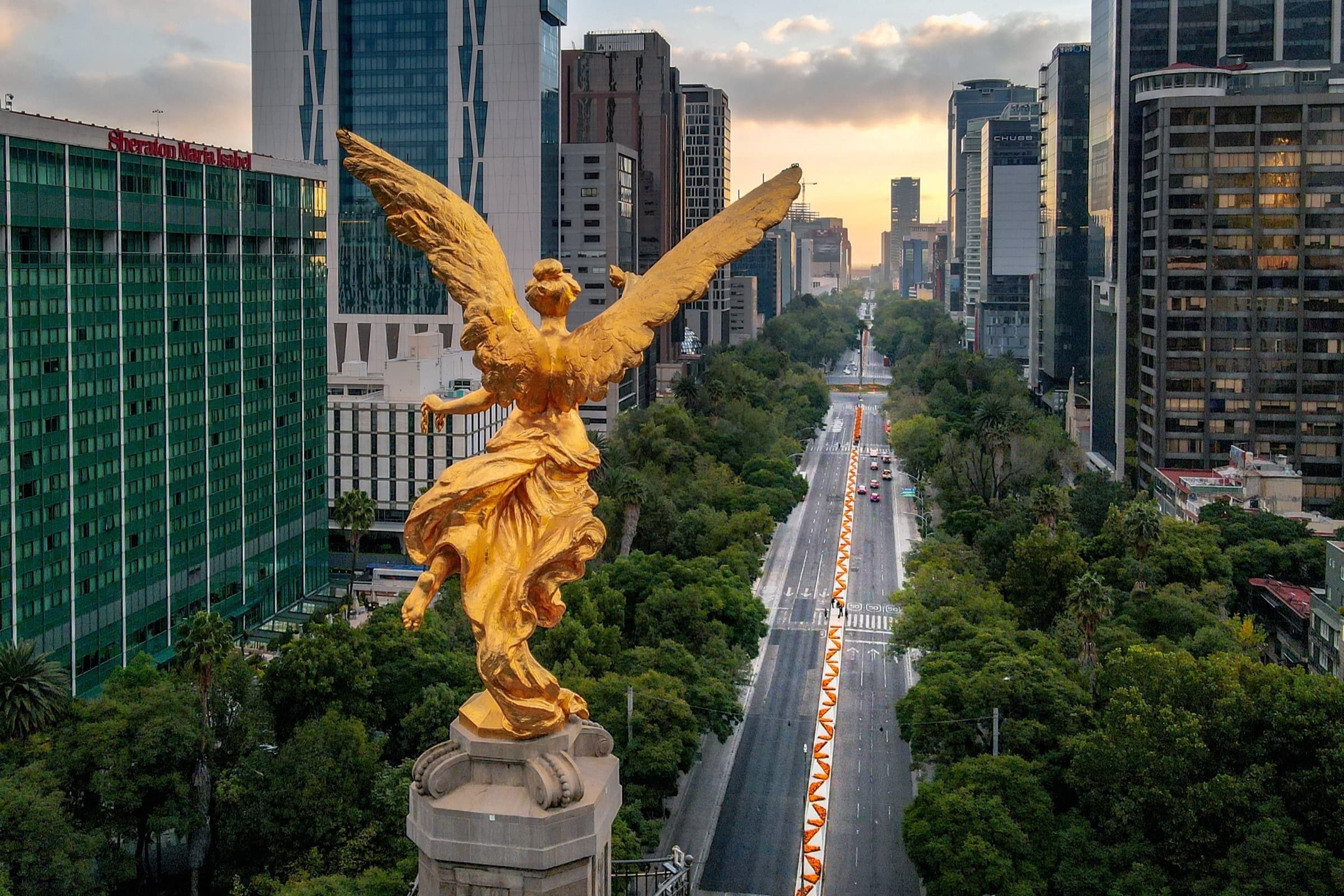
Walk Mexico City's grand avenue from Chapultepec's lion gate past the Diana, the Ángel and Cuauhtémoc to the Monumento a la Revolución, through statues, towers and protest memorials.
Start · Puerta de los Leones: Lions Made for a Parliament
DirectionsStops
- 1
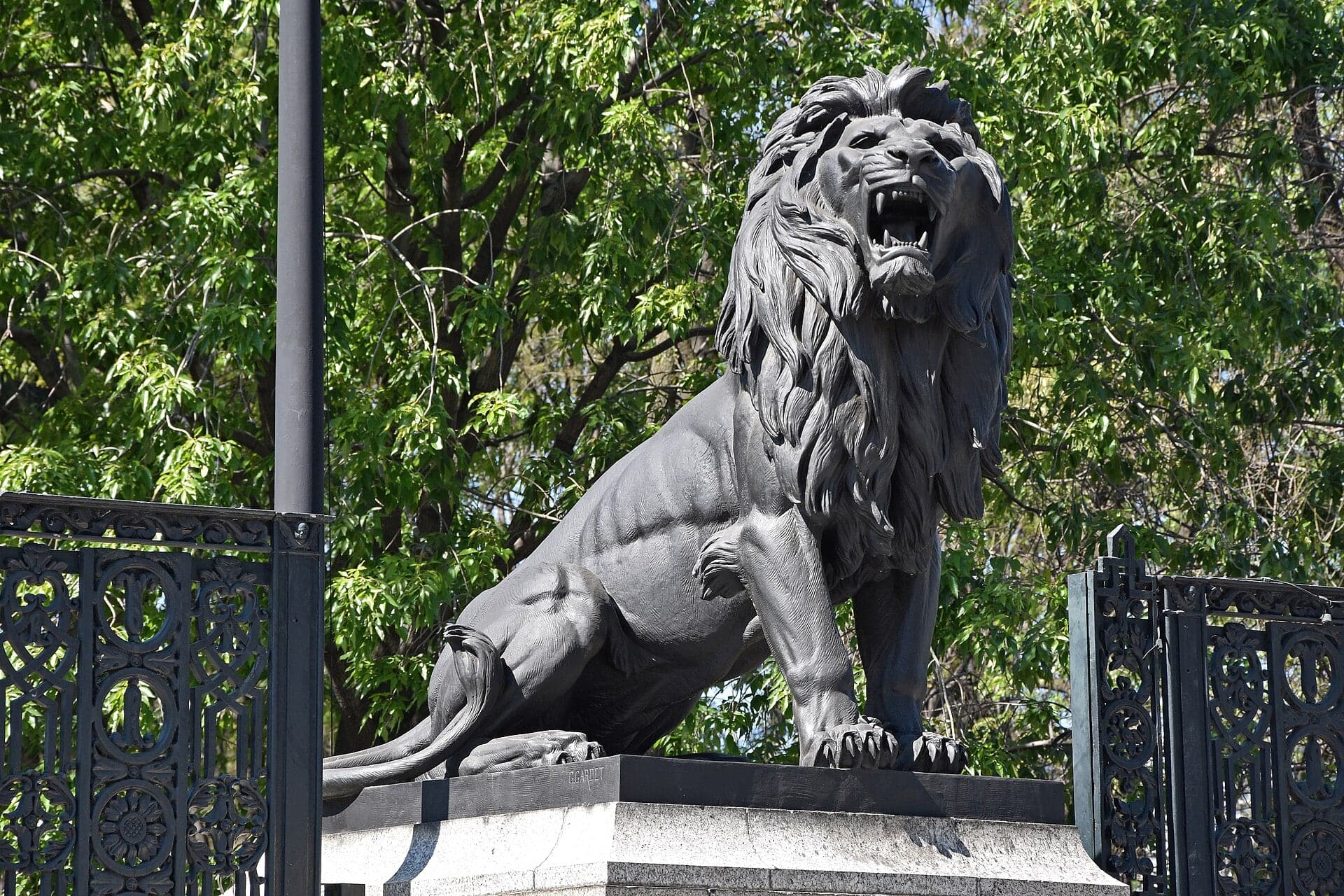
Puerta de los Leones: Lions Made for a Parliament
Chapultepec's gate is guarded by bronze lions made for another building. Across the plaza rises the quartz-clad Estela de Luz, the bicentennial's late and costly tower.
- 2
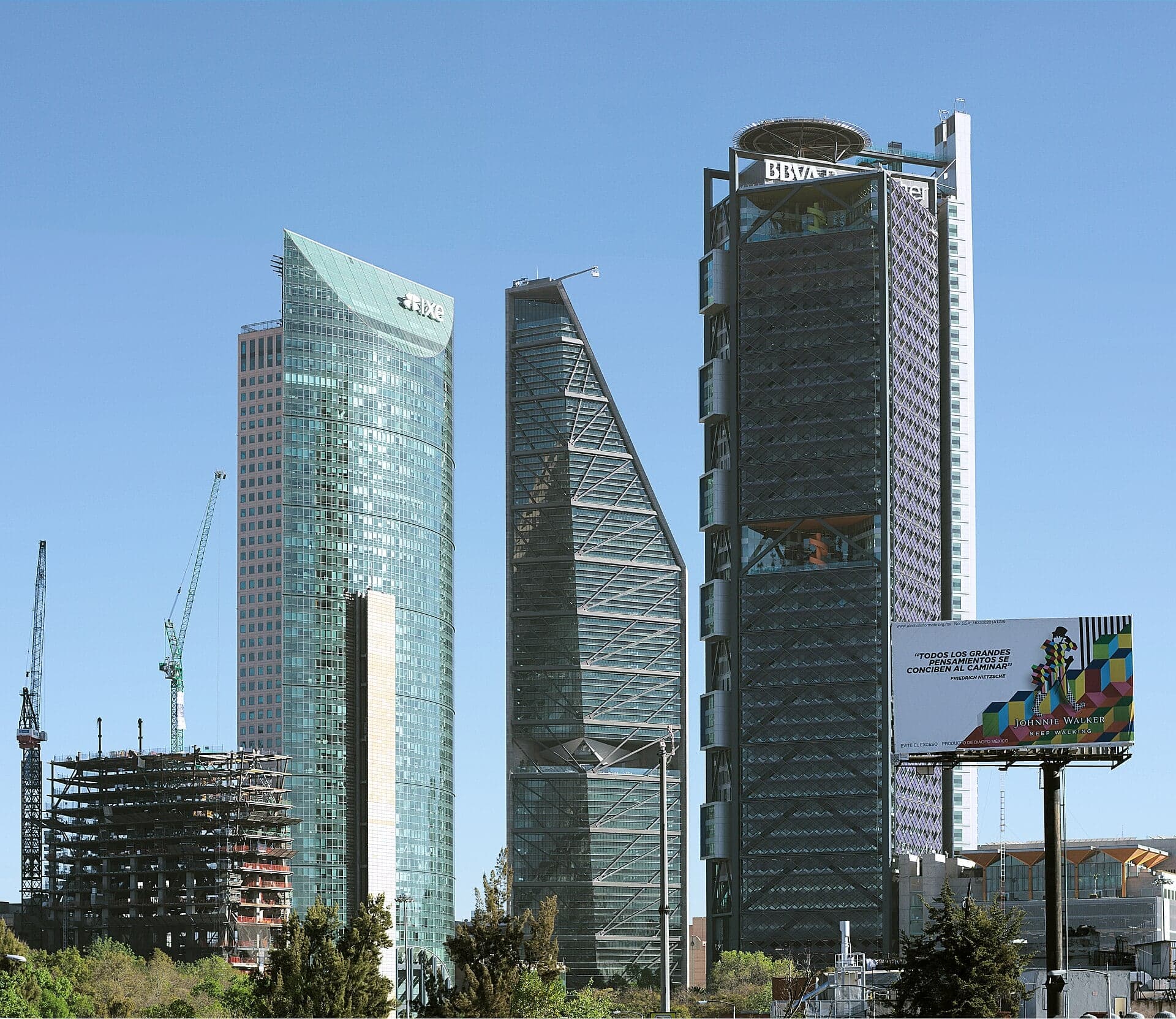
Casa O'Hea and the Towers: The House That Moved
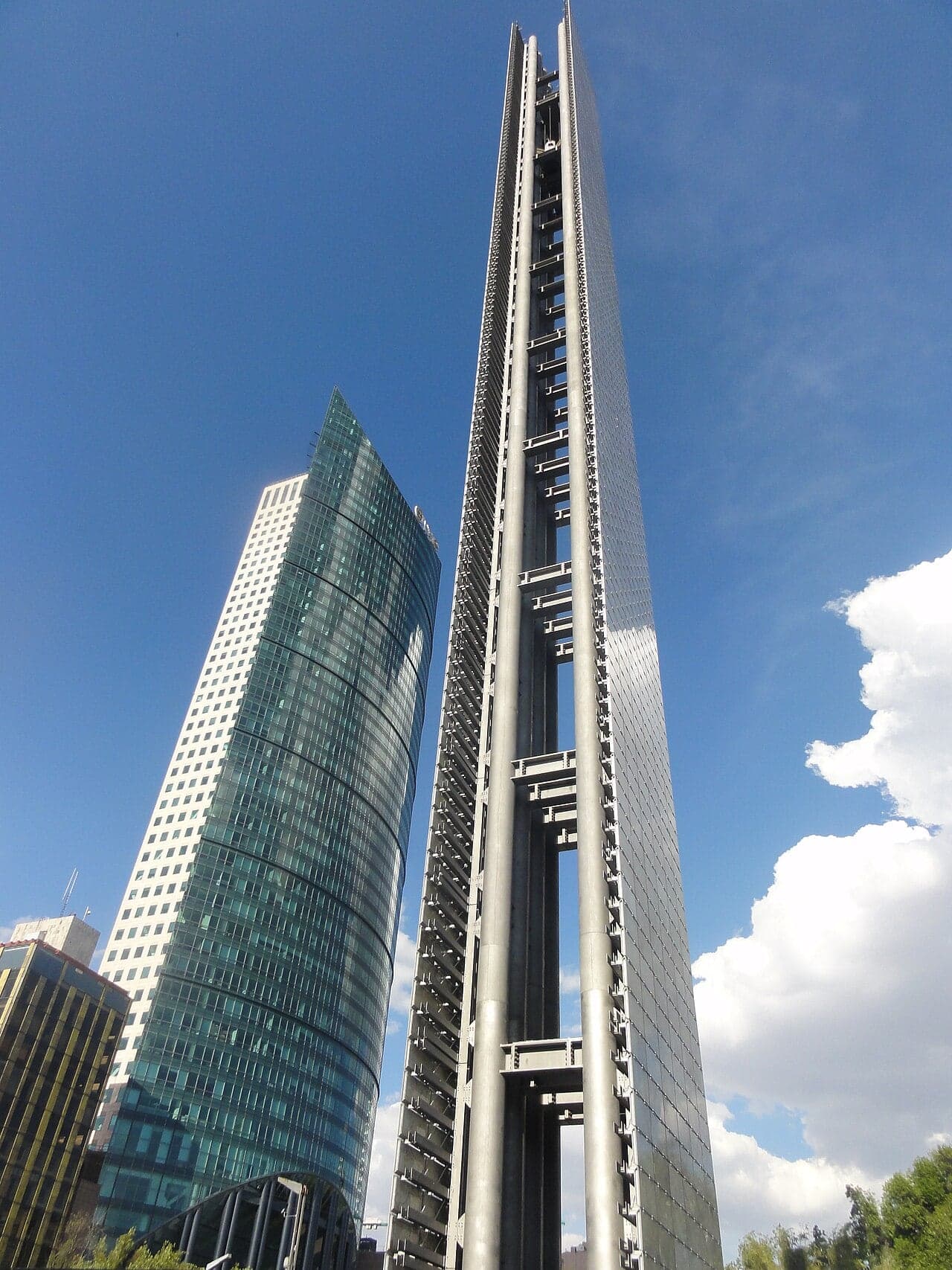
A small neo-Gothic house was moved and brought back for a tower. Beside it rise glass towers, one fitted with ninety-eight earthquake dampers.
- 3
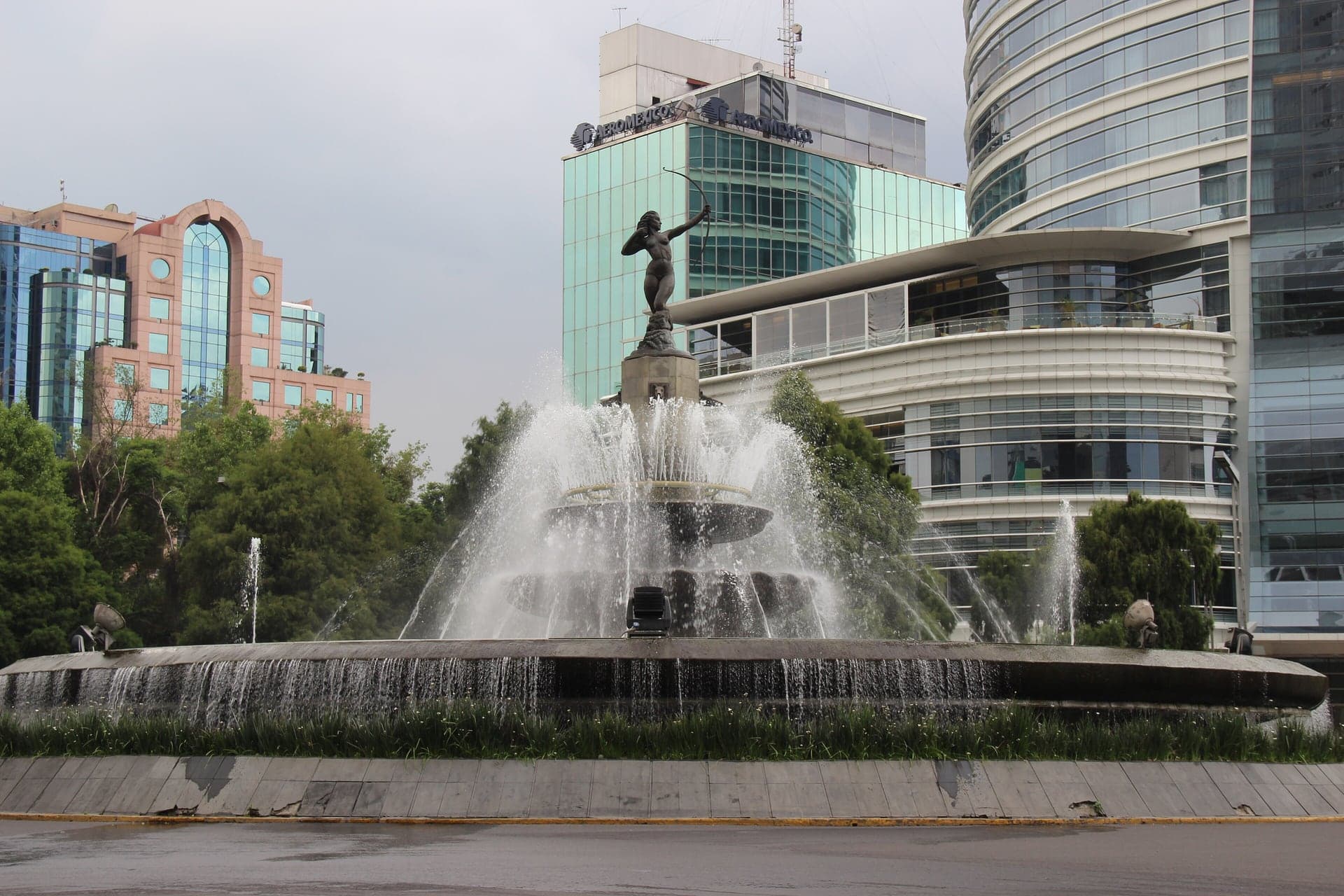
Diana Cazadora: Dressed, Undressed and Brought Back
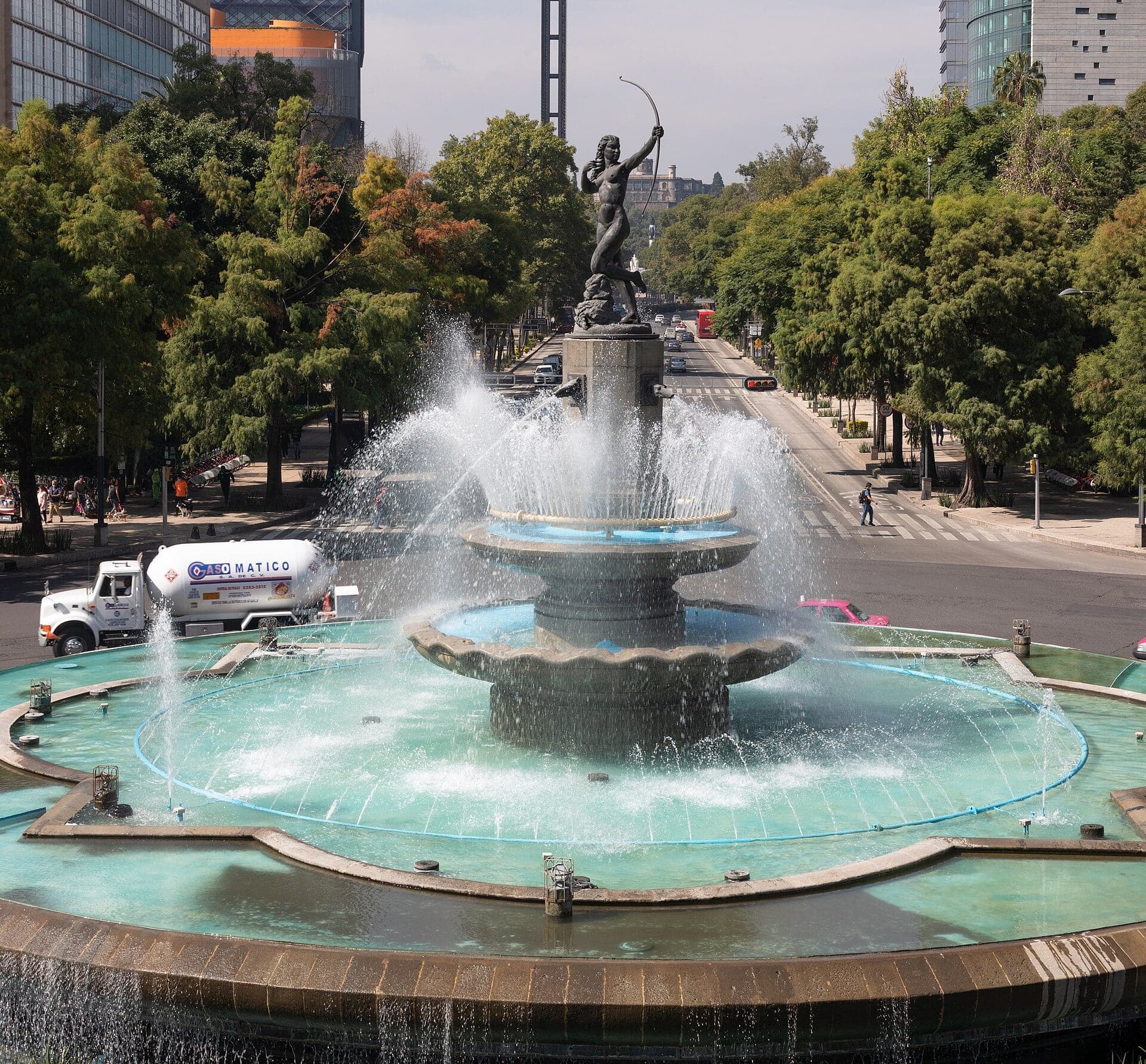
A bronze archer was covered up, uncovered, recast and sent away. In 1992 she came back to Reforma, and her model told her secret.
- 4
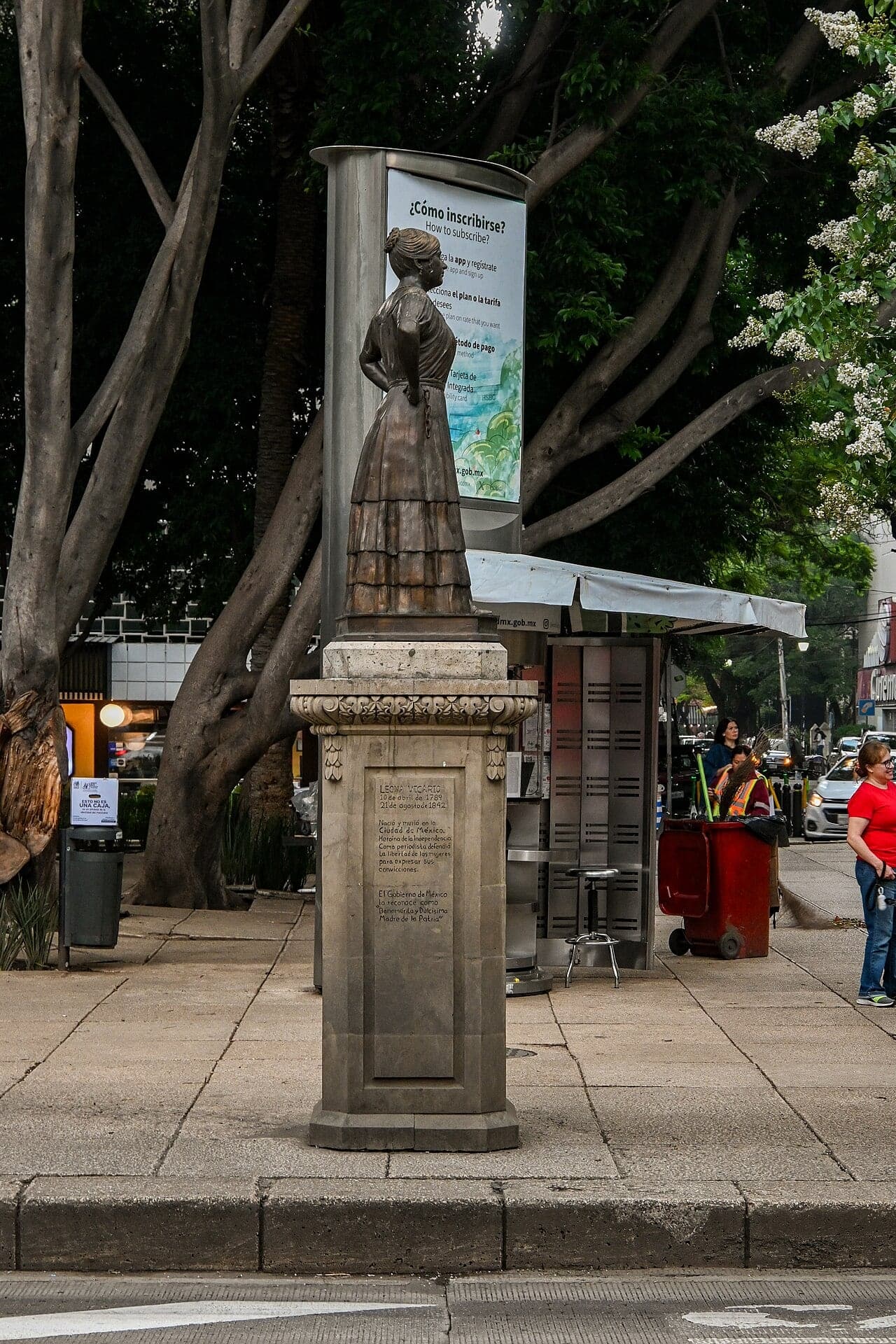
The Heroines: Women Join the Avenue's Bronze
Fourteen bronze women joined the avenue between 2020 and 2023. They stand on carved stone bases like the men's.
- 5
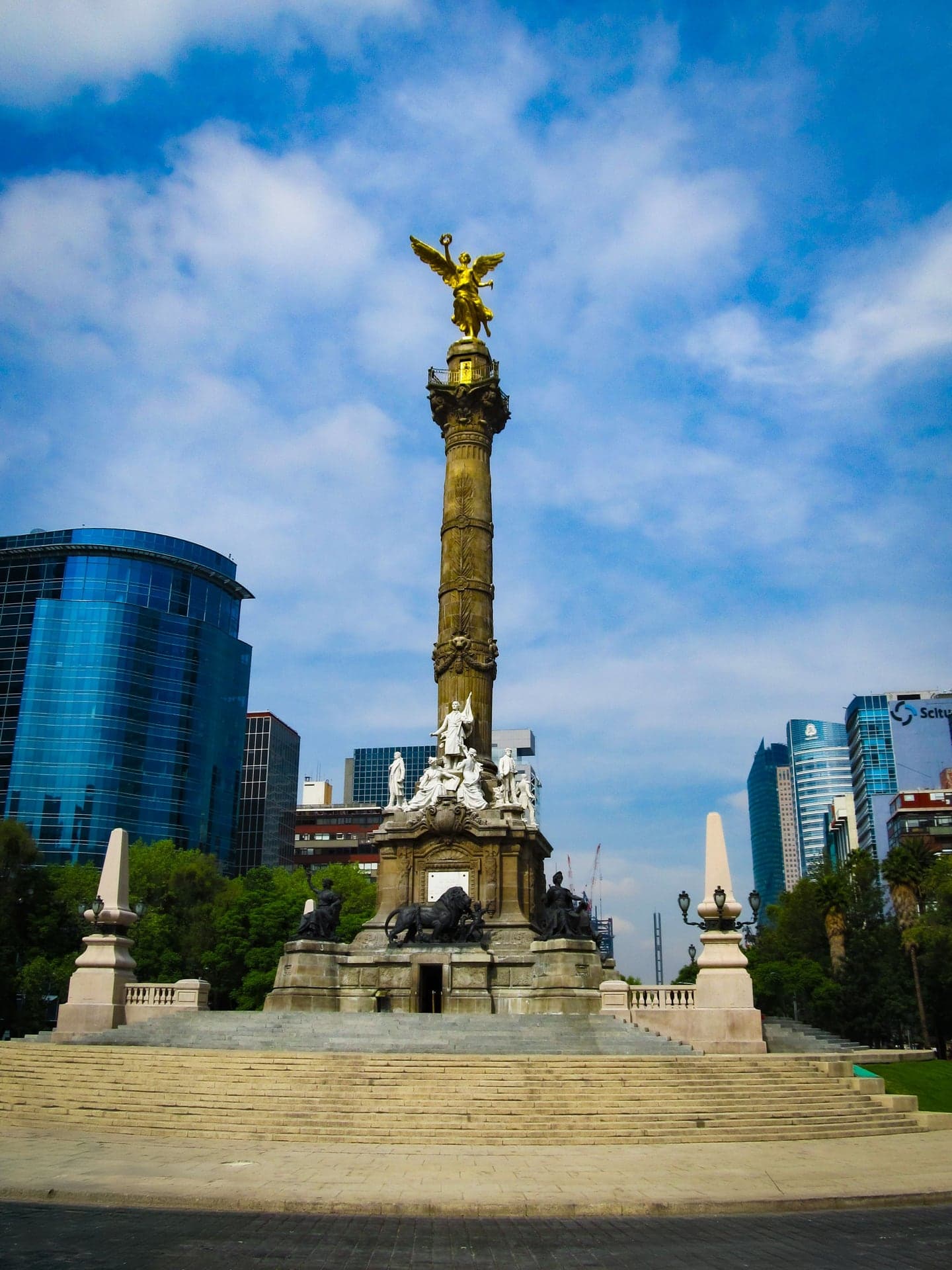
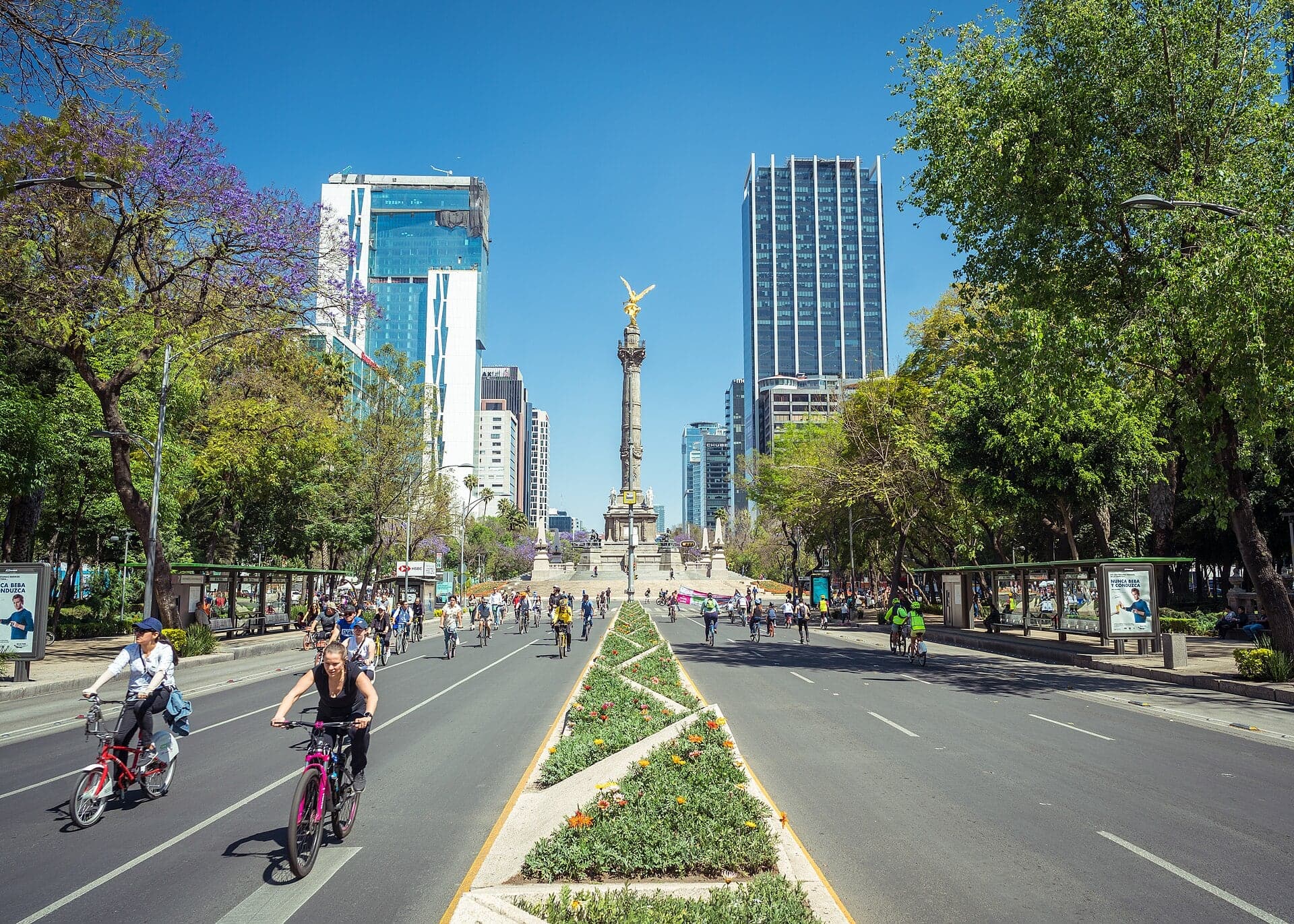
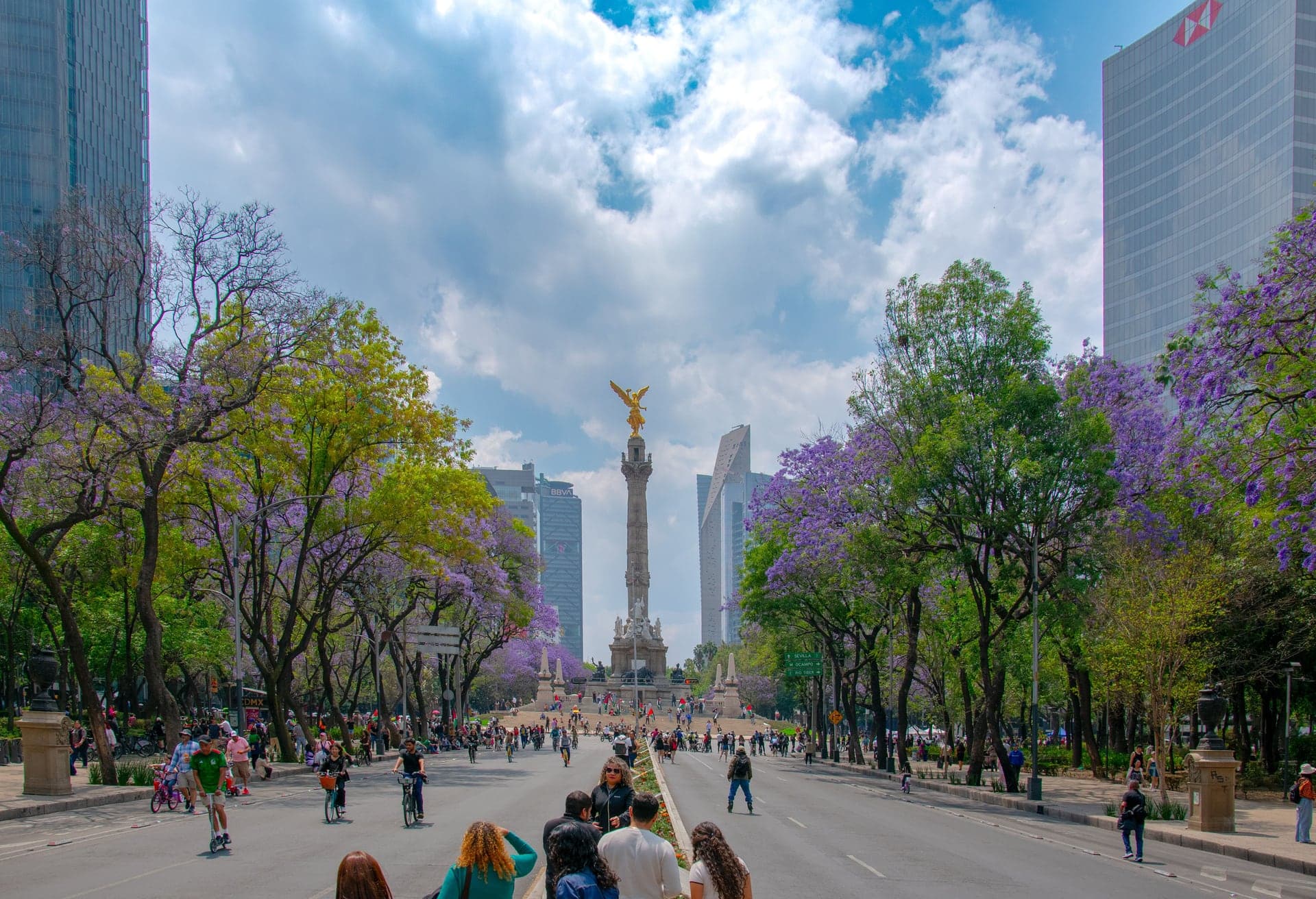
Ángel de la Independencia: Fourteen Extra Steps
The 1910 centenary column has gained fourteen steps at its base. The ground sank around it, and the Victory on top fell in the 1957 earthquake.
- 6
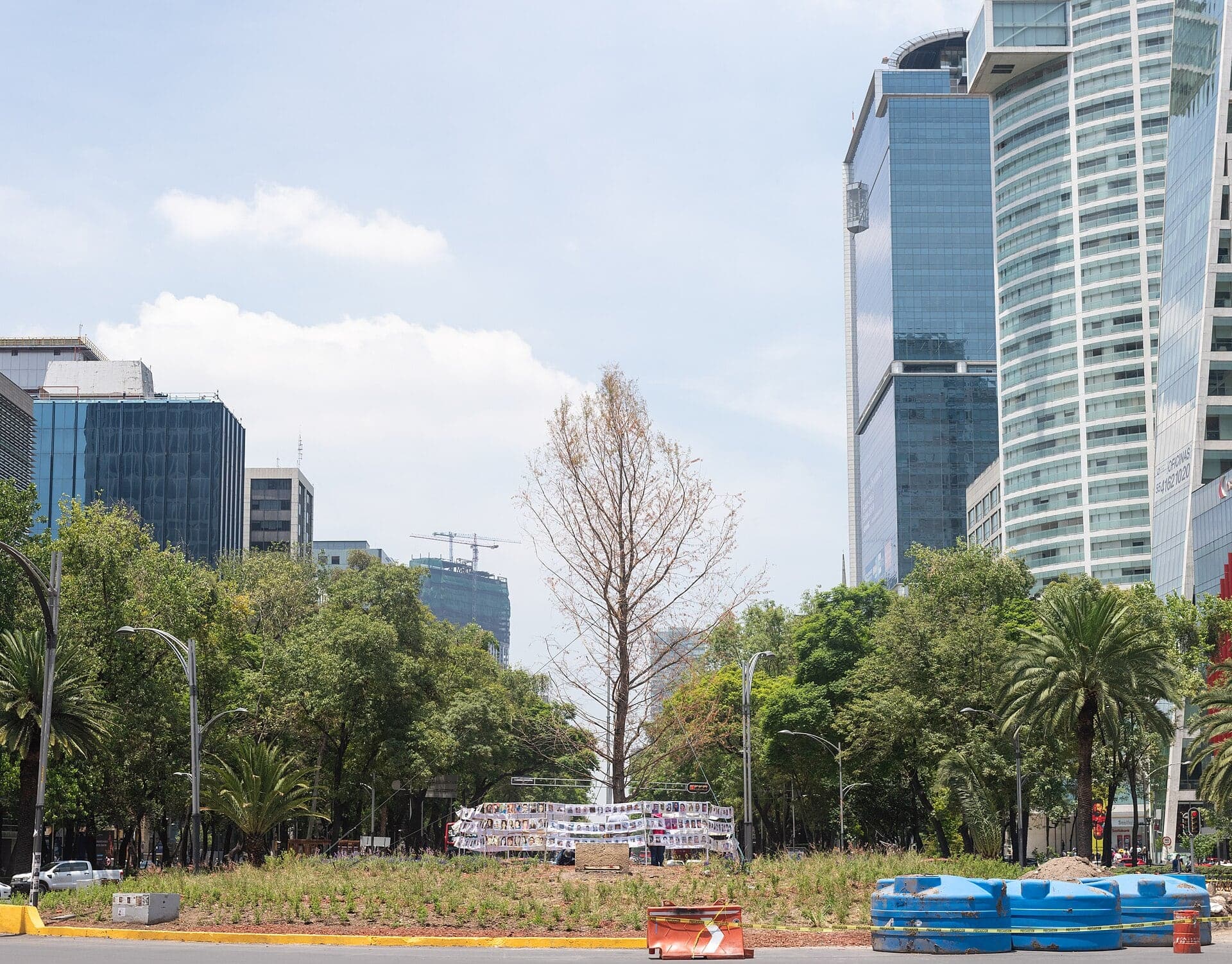
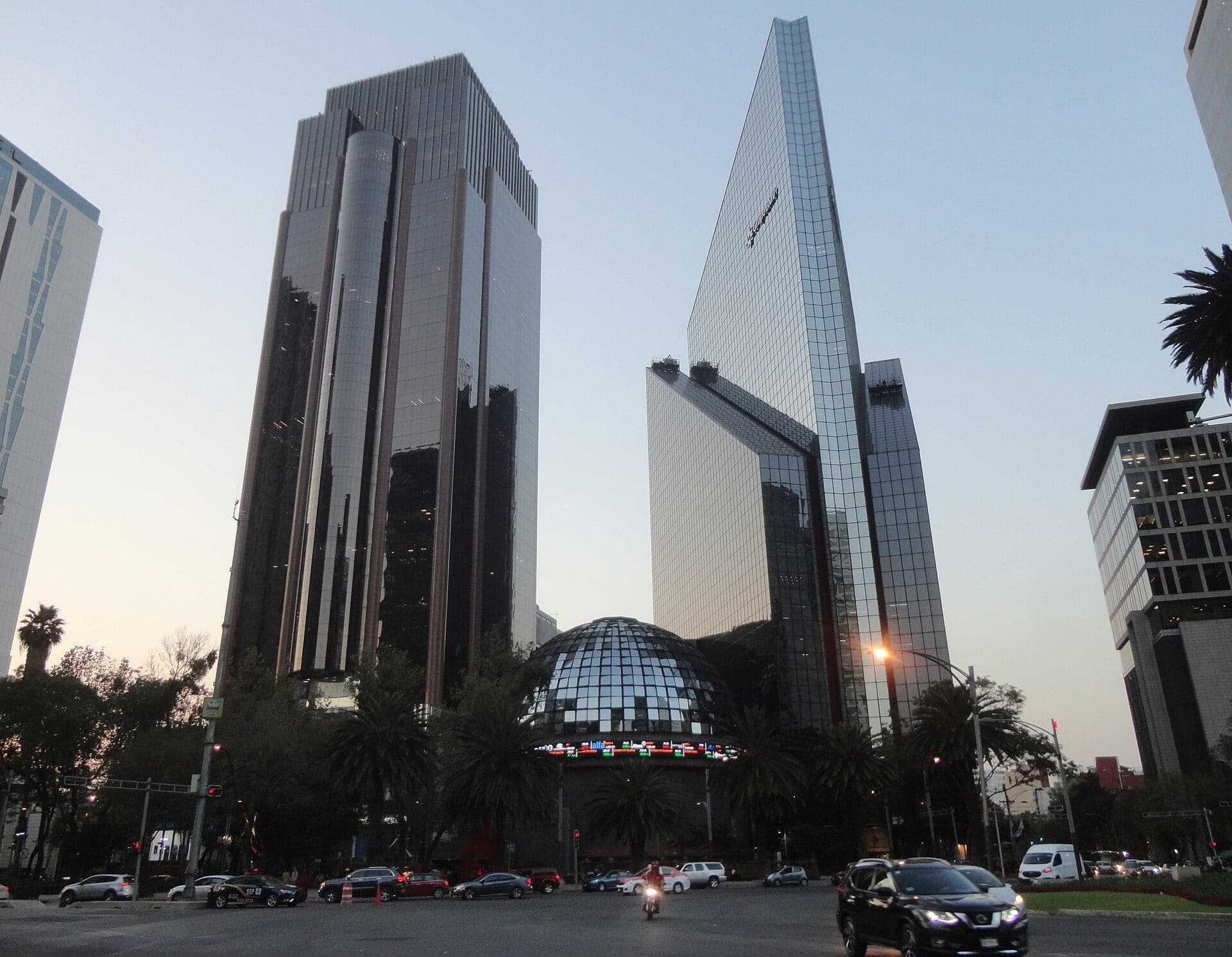
Glorieta del Ahuehuete: A Palm, Two Trees and a Fence of Faces
A young ahuehuete replaced a dying palm in the roundabout, where families of the disappeared have kept a memorial. Beside it stand the Pasta de Conchos marker and the stock exchange.
- 7
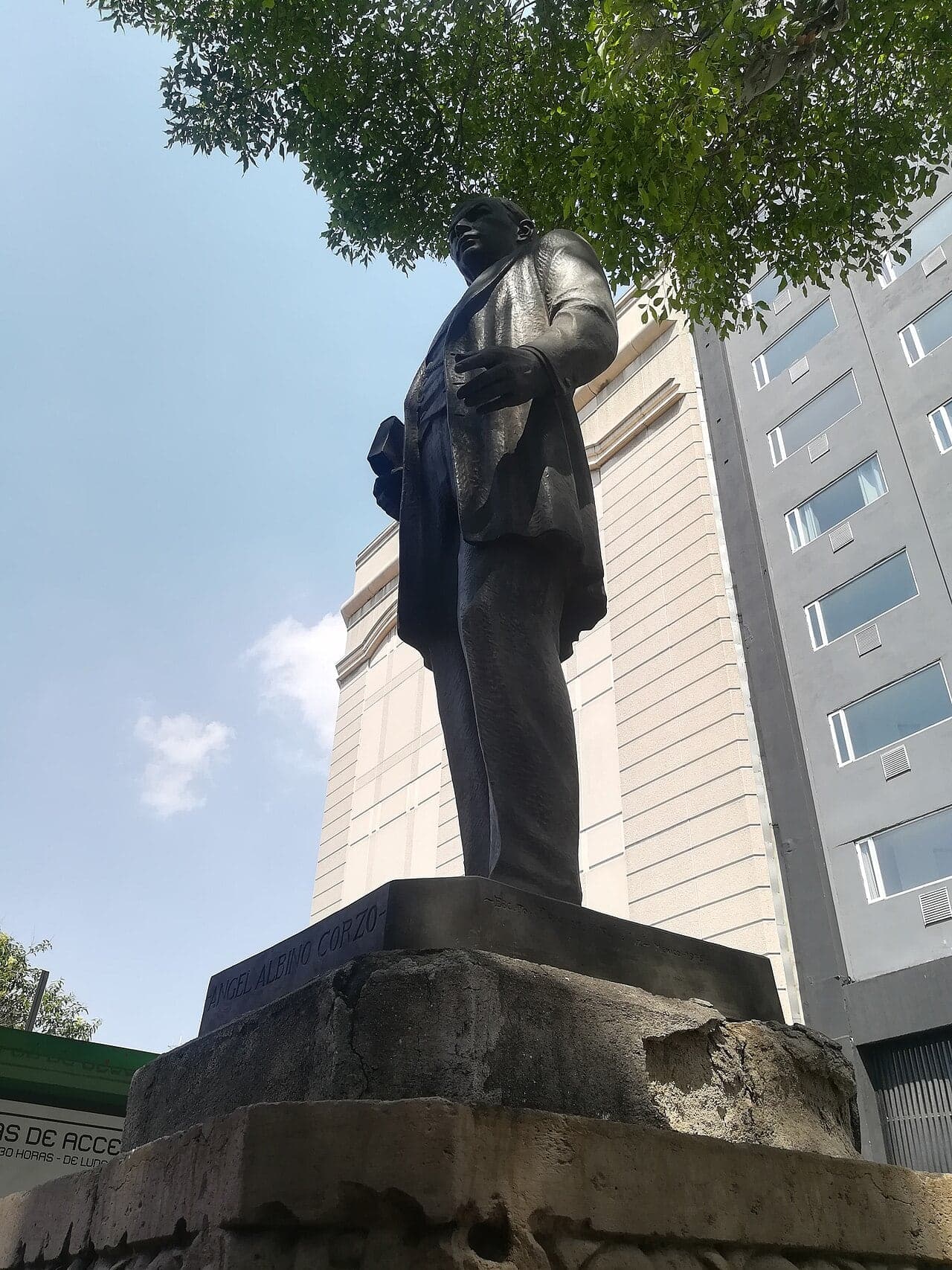
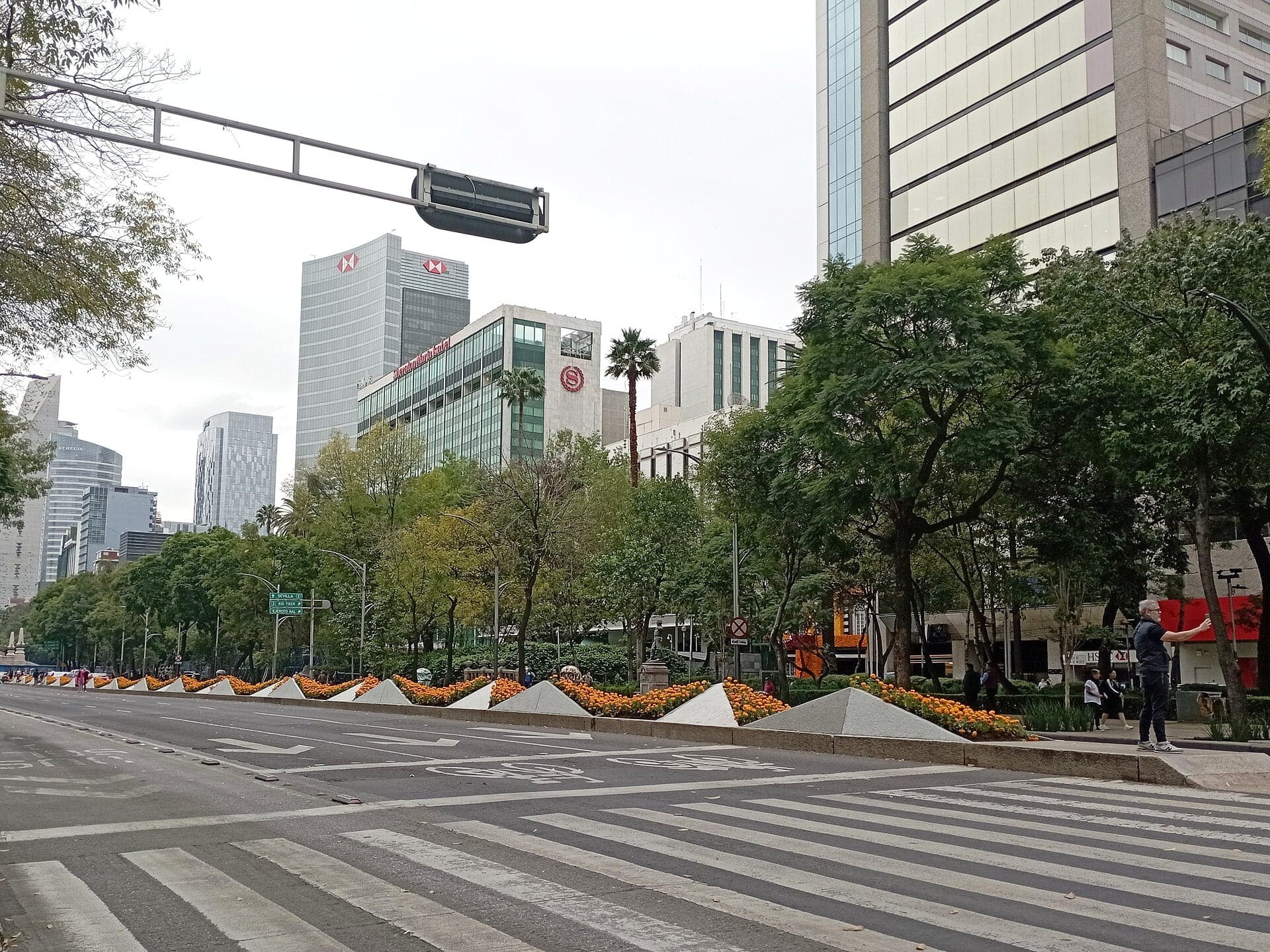
The Paseo of Heroes: Two Statues from Every State
A writer's 1887 idea filled the avenue with life-size statues. Each state was asked to send two of its heroes.
- 8
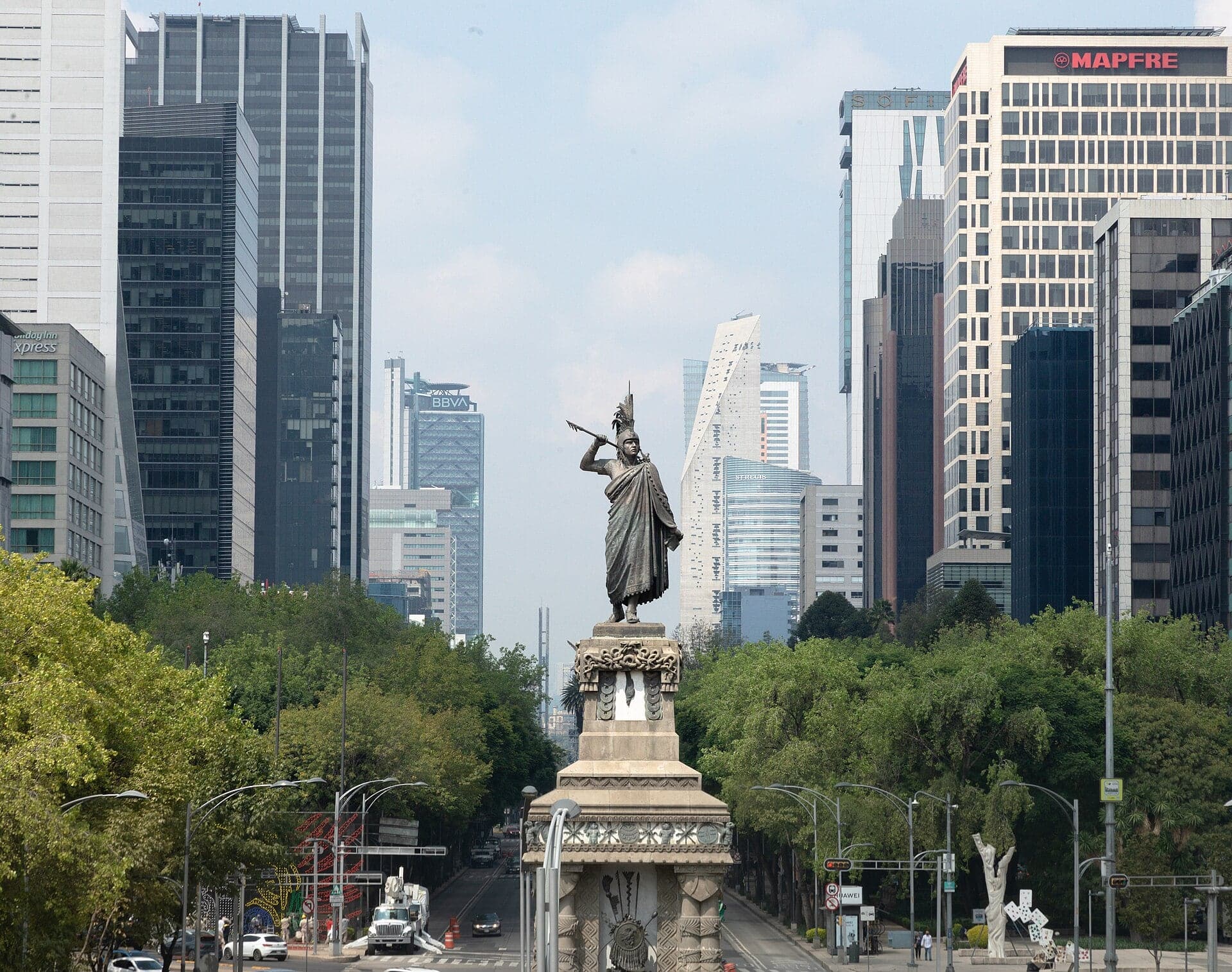
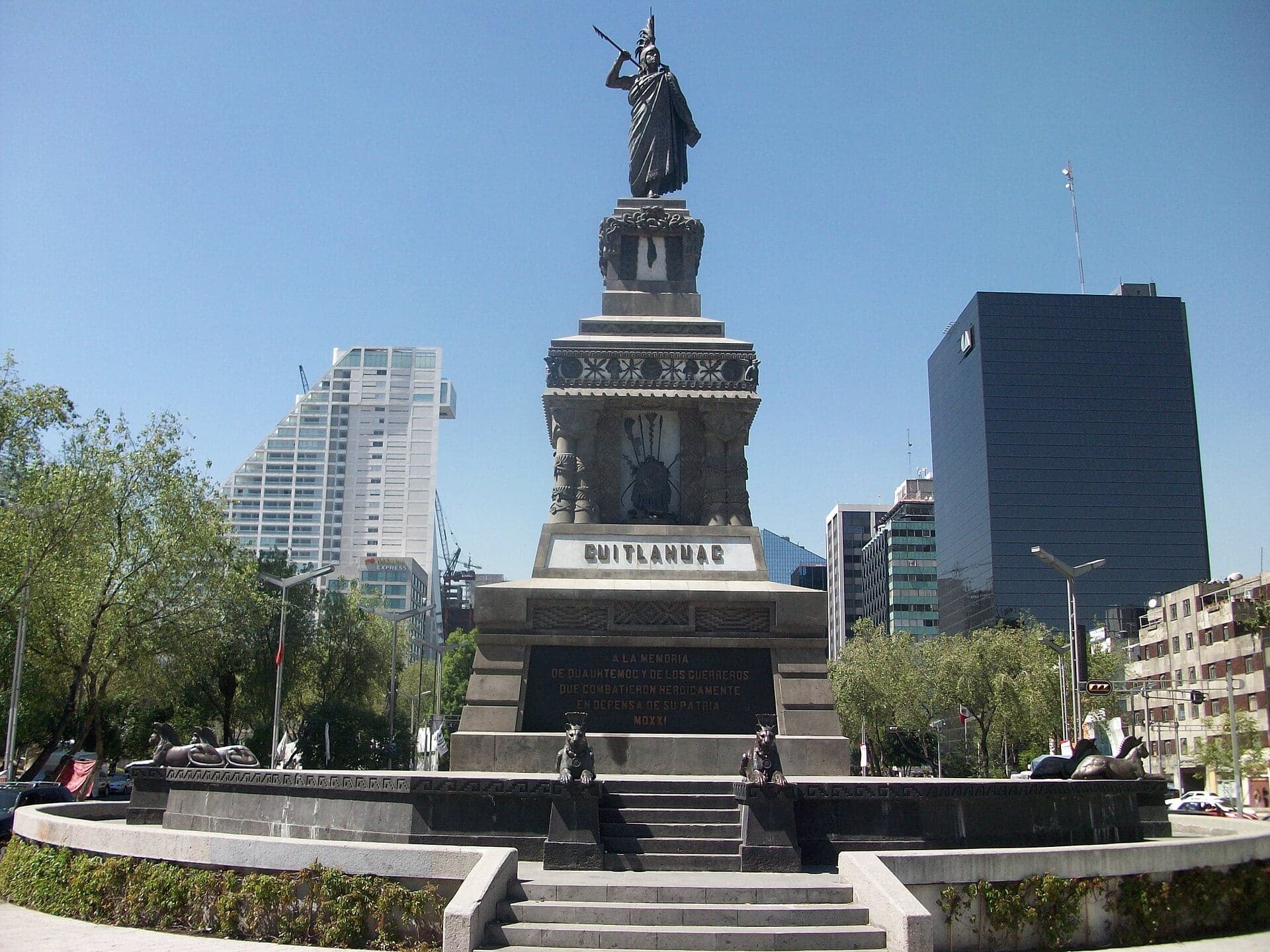
Monumento a Cuauhtémoc: The Last Aztec Ruler in Bronze
The last ruler of Tenochtitlan stands on a base borrowed from Mitla, Tula and Uxmal. It opened in 1887 with a speech in Nahuatl.
- 9
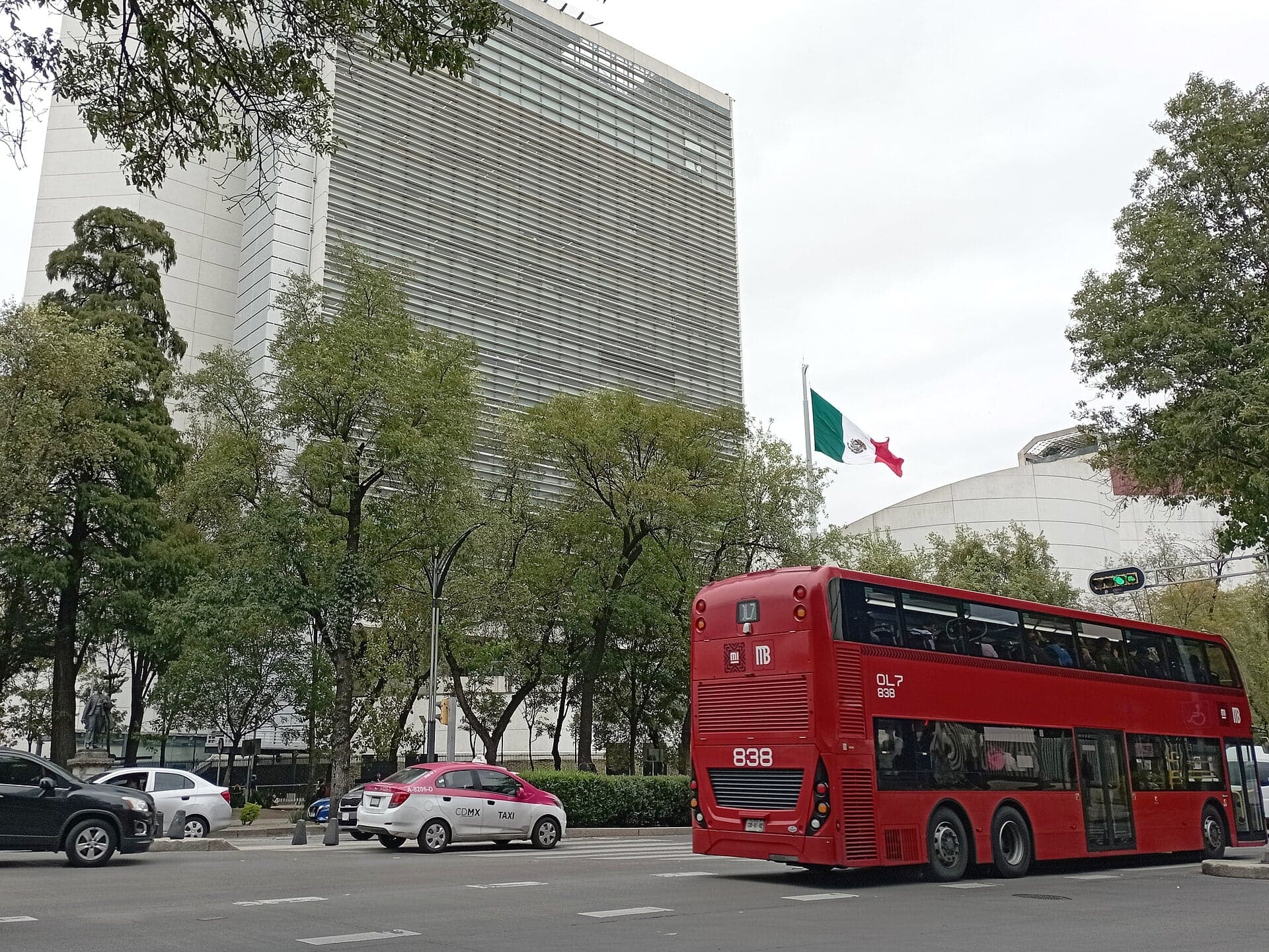
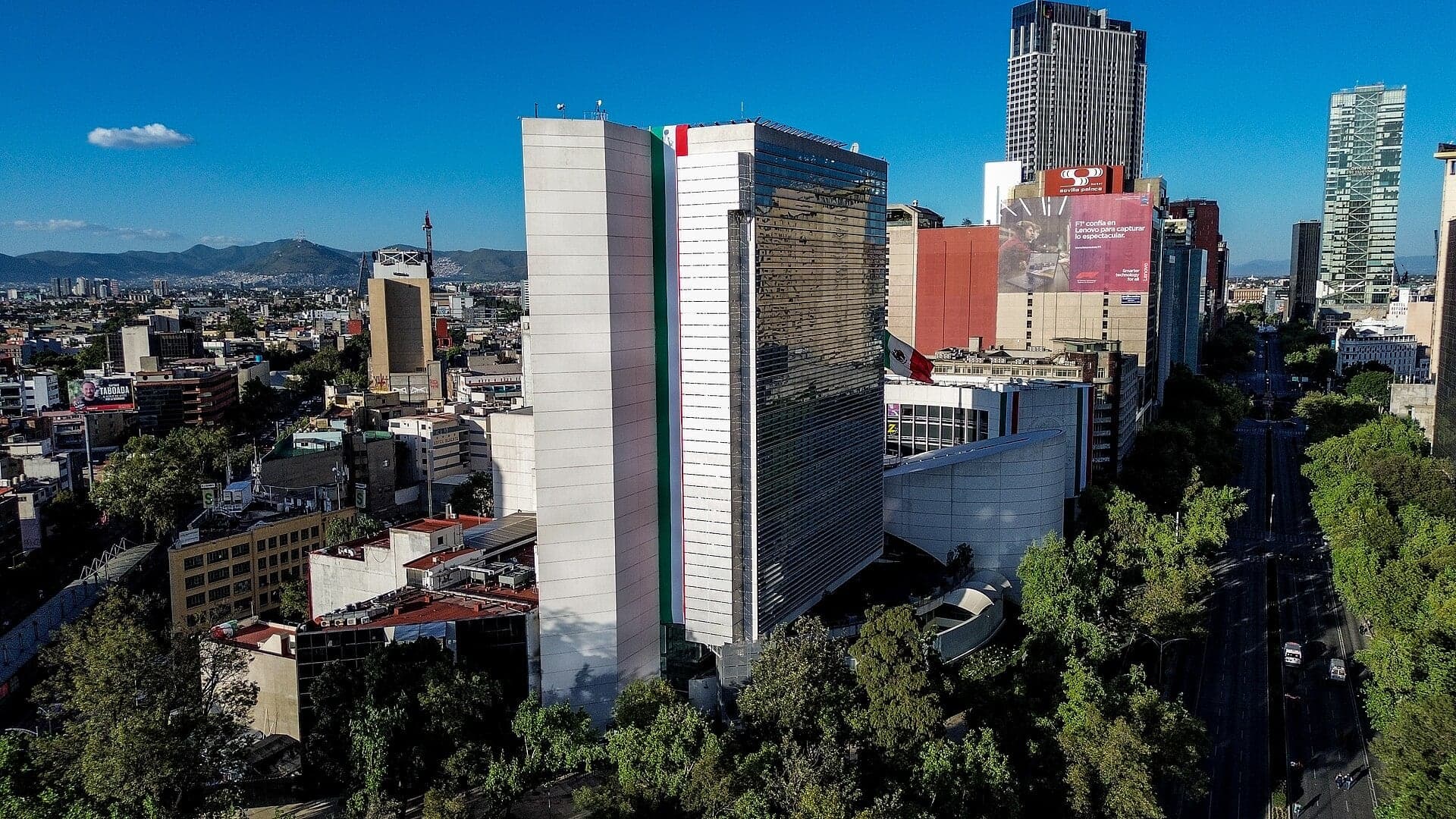
Senado de la República: A Parliament That Opened
The Senate has met in this building on Reforma since 2011. It ended up costing more than double its contract.
- 10
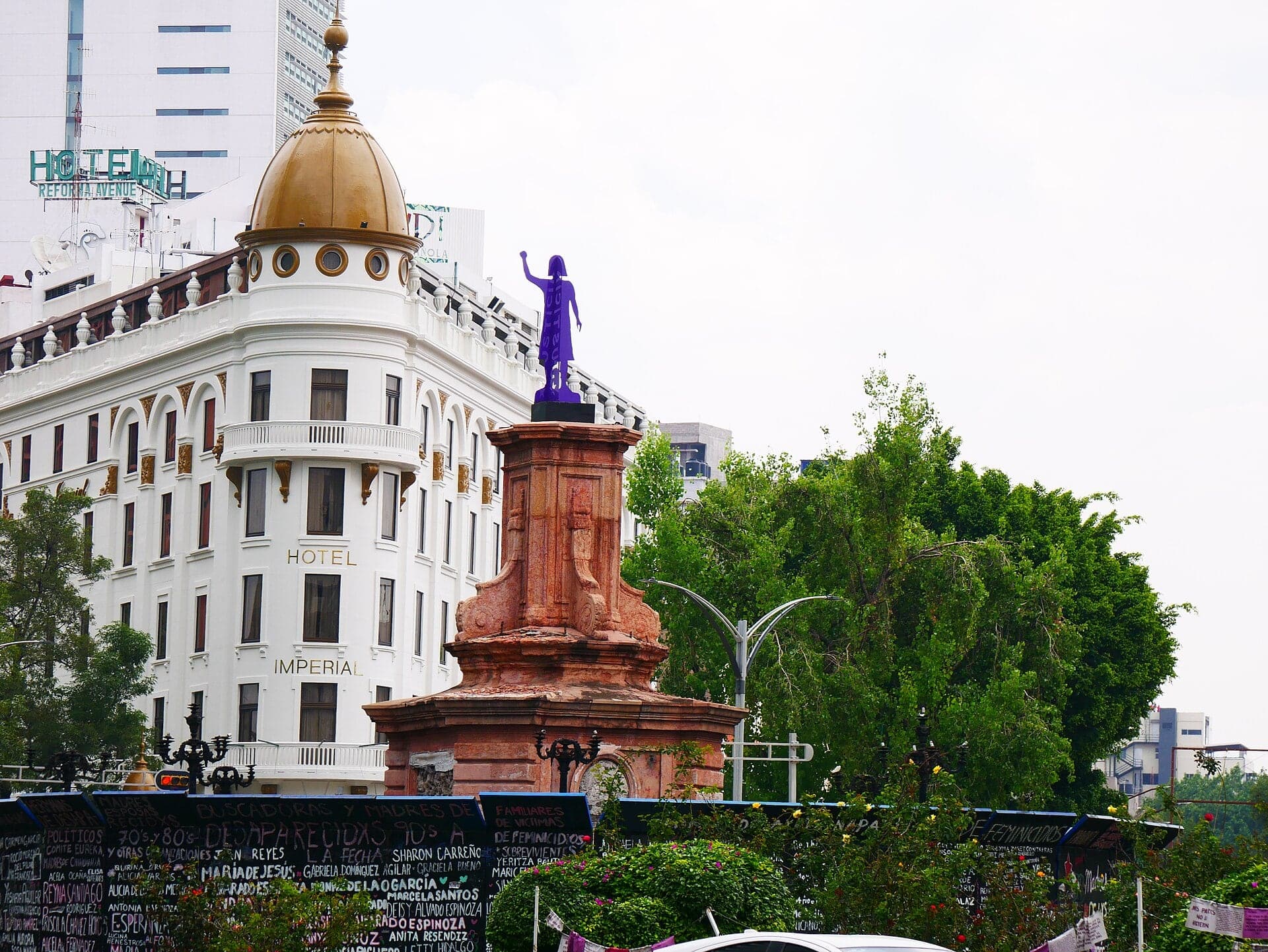
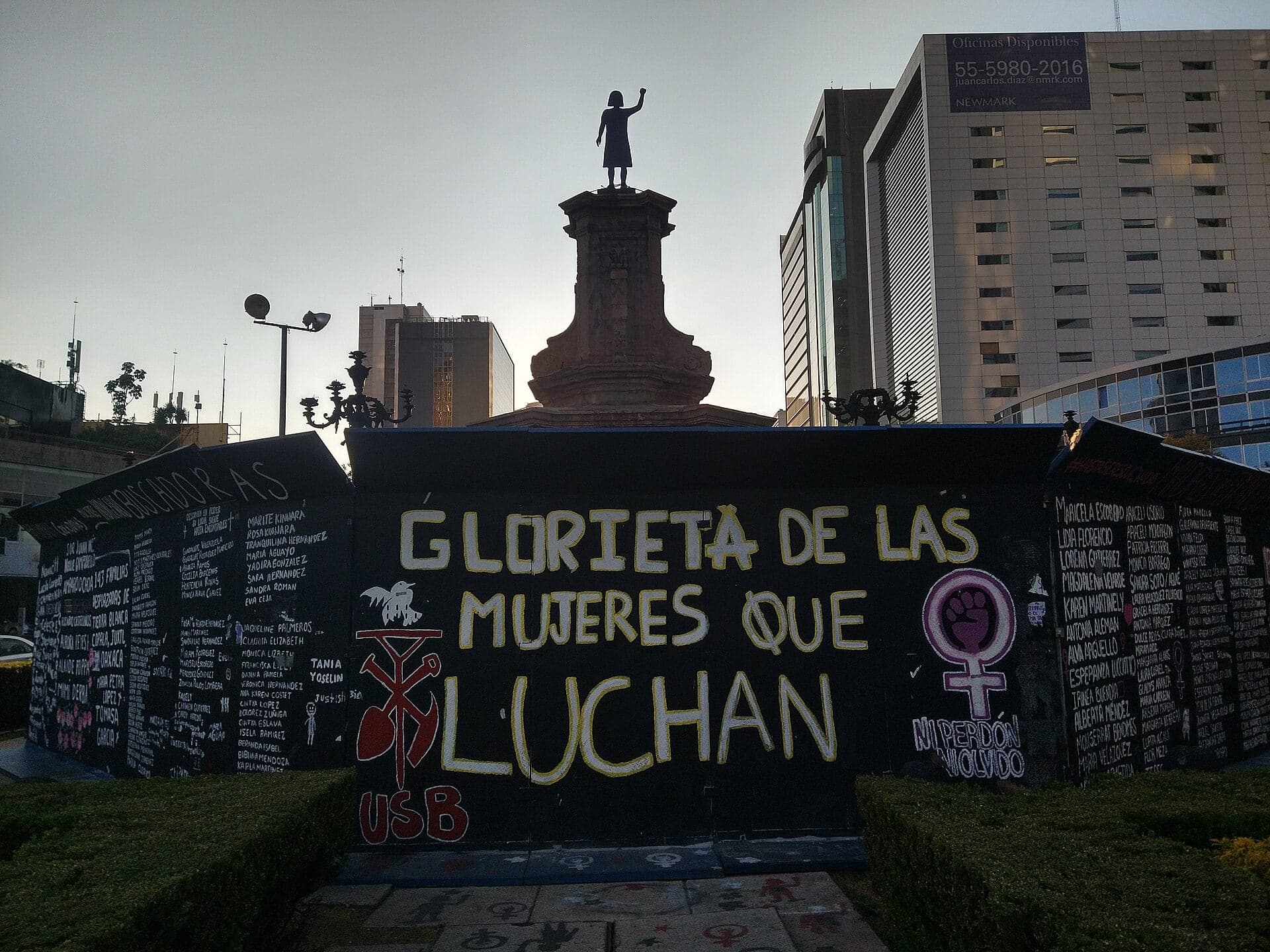
Glorieta de las Mujeres que Luchan: The Empty Plinth
Columbus stood here from 1877 until the city removed him in 2020. Mothers of disappeared and murdered women then took the plinth.
- 11
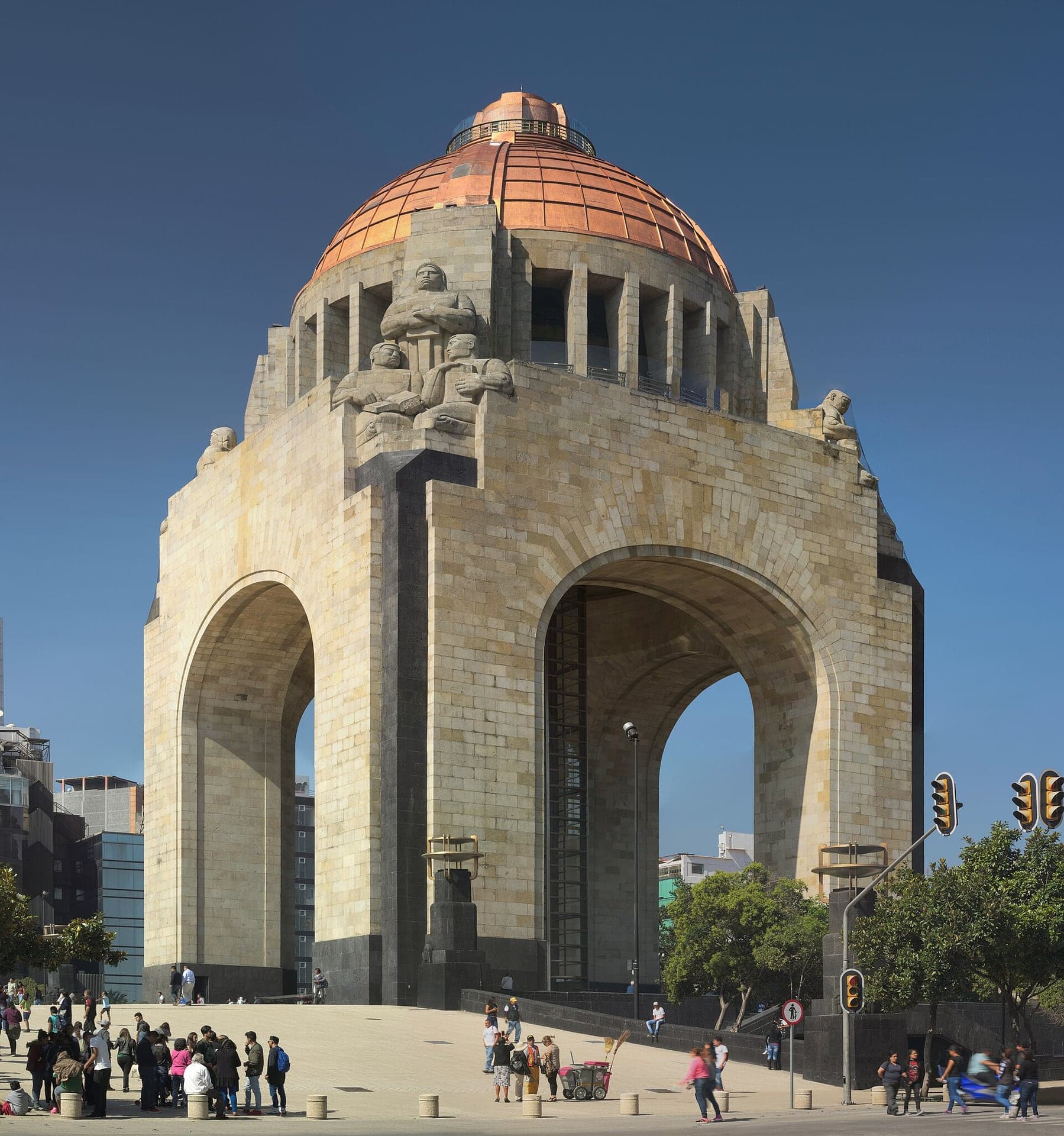
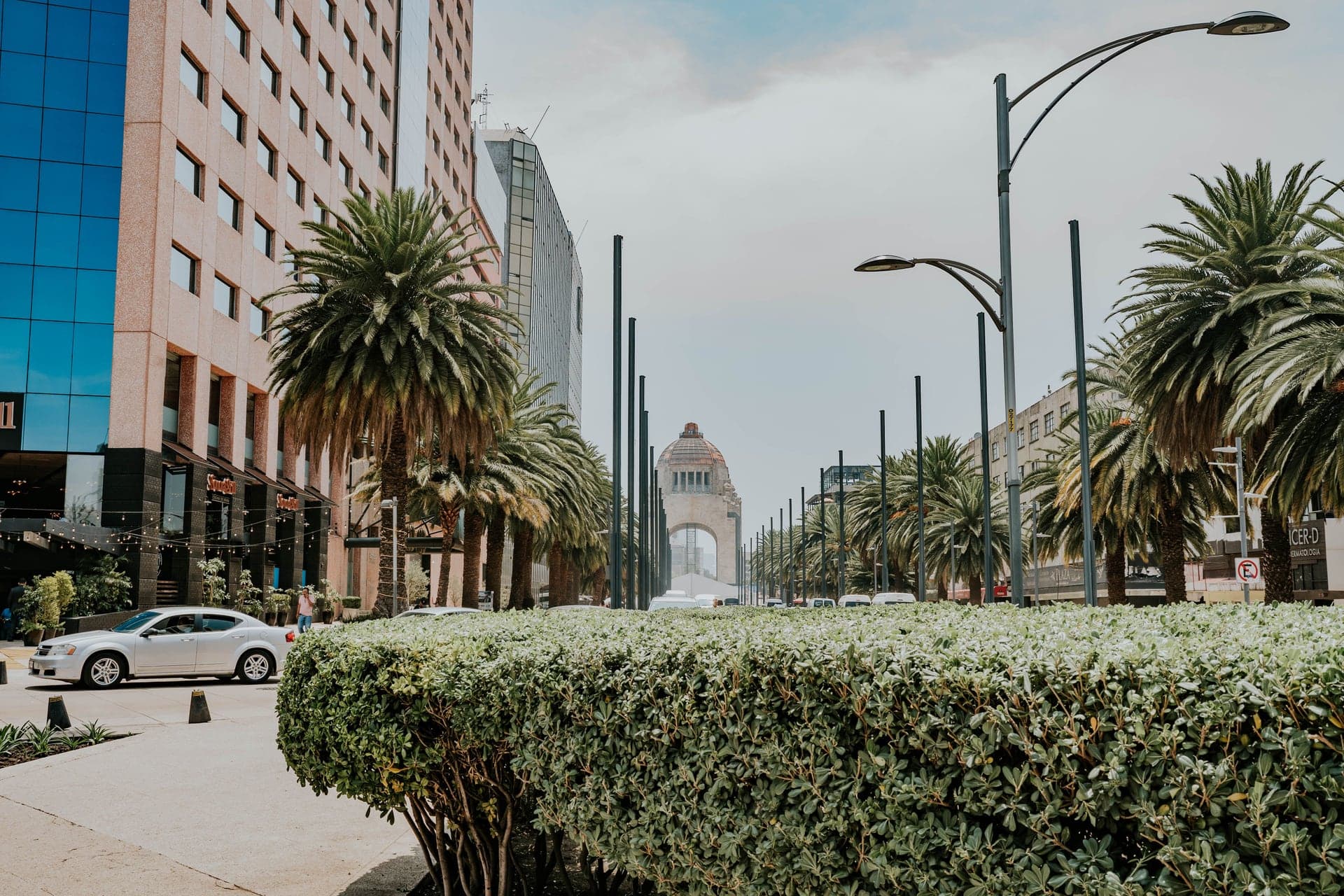
Monumento a la Revolución: A Dome for a Parliament That Never Sat
Porfirio Díaz began a parliament here in 1910. The Revolution stopped it, and its steel dome became the Revolution's own monument and tomb.
- 12
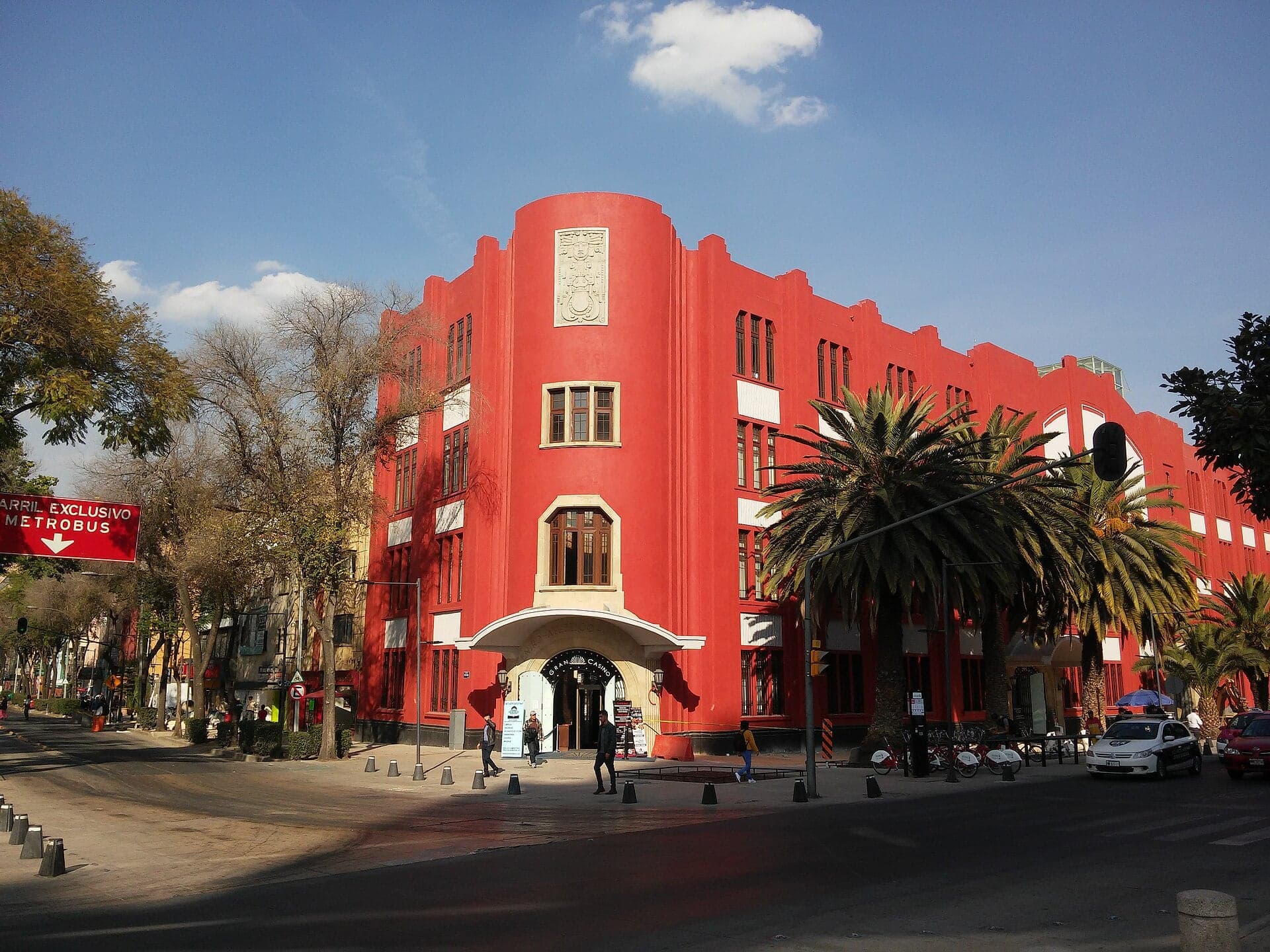
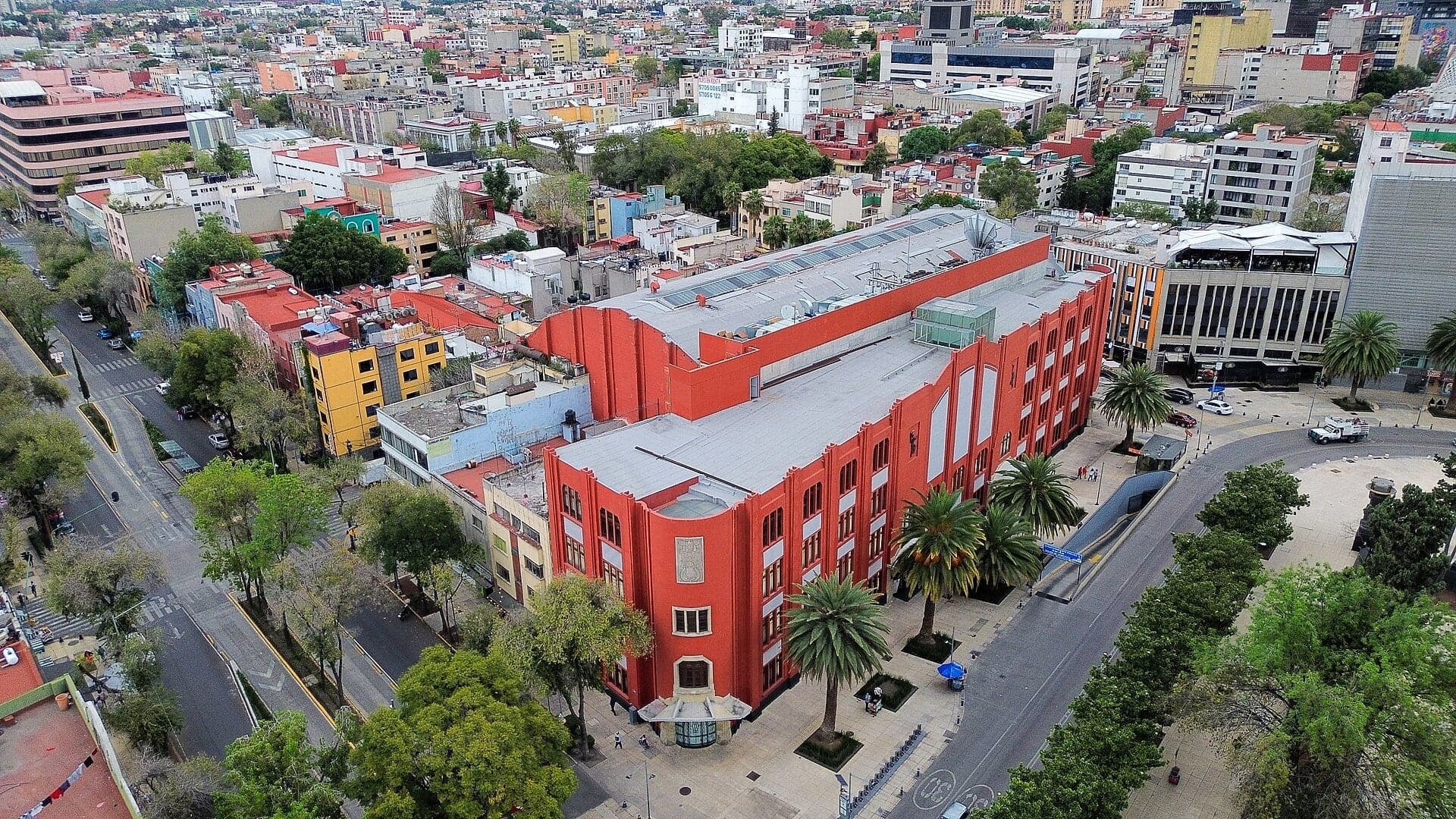
Frontón México: The Same Pair, the Same Year
This 1929 hall was built for jai alai, the Basque ball game. Its designers also built Casa O'Hea, back at the start of the walk.
Details
Best Time to Visit
A weekday morning, or a Sunday morning, when on most Sundays the avenue's central lanes close to cars for cyclists (reported 8:00 to 14:00, checked 15 October 2026 with press reports, not with the city's transport office). Avoid march and celebration days, when the Ángel, the roundabouts and the Plaza de la República may be fenced. Walk in daylight: the last three stops are quieter after dark.
Pro Tips
- •Start at Metro Chapultepec (Line 1); Metrobús Line 7 runs along Reforma, with stations named La Diana, El Ángel, La Palma and Glorieta de Colón; the last two still carry the names of the palm and the Columbus statue that have gone. Checked 15 October 2026.
- •End near Metro Revolución (Line 2), a few blocks north of the Plaza de la República. Metro hours were reported as weekdays 5:00 to 24:00, Saturday 6:00 to 24:00 and Sunday 7:00 to 24:00 (2025 Metro page, checked 15 October 2026).
- •Chapultepec Park's First Section is free and closed on Mondays (city visitor page, checked 15 October 2026). The Puerta de los Leones was closed for restoration from September 2023; if it is shut, use another entrance.
- •The mirador of the Monumento a la Revolución is ticketed and opens from midday (third-party listing, checked 15 October 2026); the monument has no official website, so check its Instagram before going.
- •The top of the Ángel is only occasionally opened, by appointment through the Alcaldía Cuauhtémoc (last detail found from 2023); do not plan on climbing it.
- •Bring water and sun protection: the promenade is shaded, but the roundabouts are open.
Safety & Precautions
- •Paseo de la Reforma is the city's main protest and celebration route. On march days, football celebrations and big events, the Ángel, the Senate, the roundabouts and the Plaza de la República can be fenced or crowded; follow the open sidewalks and skip a stop if you need to.
- •Where fences stand around the ahuehuete and the Glorieta de las Mujeres que Luchan, they are memorials of families of the disappeared and of murdered women. Please do not lean on them or take things from them.
- •Cross only at signals or marked crossings; at Avenida Insurgentes, Río Tíber and Río Rhin the crosswalks are mapped without their own signal, so wait for a clear gap. The roundabouts carry fast traffic in several lanes, and the islands of the Diana and the Ángel are not reached on this walk.
- •Keep phones and bags secure in crowds around the Ángel and the Plaza de la República.
- •The Colonia Tabacalera around the last three stops is quiet after dark: walk in daylight.
- •Mexico City is more than 2,200 m above sea level: on your first day, walk slowly and drink water.
Travel advisory: Exercise Increased Caution (Level 2).
Gallery
Read the walk
The full story of Paseo de la Reforma: The Avenue That Rewrites Its Monuments, in words. Prefer to listen? Play it narrated, from home or on location.
Introduction
Mexico City, the capital of Mexico, has one avenue where the country decides who deserves a statue. Paseo de la Reforma began in the eighteen sixties as a straight carriage road between the city and Chapultepec Castle, laid out for the emperor Maximilian, who named it for his wife, the empress Carlota. After the empire fell it was renamed, and by the early eighteen seventies it was the Paseo de la Reforma, named for the Liberal reform laws.
Ever since, governments have added bronze and stone to it, and lately people have changed it from below. Three names return along the way: Maximilian, who laid out the road; Porfirio Díaz, the president who began a parliament at this walk's far end; and Francisco Sosa, a writer who in eighteen eighty-seven asked every state to send statues of its patriots.
The walk runs from the lion gate of Chapultepec Park to the Monumento a la Revolución: twelve stops over about three kilometers, a little under two miles, taking just under two hours. Mexico City sits more than two thousand two hundred meters above sea level, so a first day is a day to take slowly. Between stops, the statues on their pedestals and the glass towers above them are part of the walk too, and worth looking up at as you go.
The first stop is on the plaza outside the Puerta de los Leones, the lion gate of Chapultepec Park.
1. Puerta de los Leones: Lions Made for a Parliament
Welcome to Paseo de la Reforma, and to the first stop on this walk, on the plaza outside the Puerta de los Leones, the lion gate of Chapultepec Park. The park is free, and closed on Mondays; this gate has also been shut at times for restoration, so the walk stays out here on the plaza. The details are on this stop's card.
Find the two bronze lions at the gate. According to the park, they were made by a French sculptor for the government of Porfirio Díaz, to adorn a new Legislative Palace for the country's parliament. That palace was never finished, and since nineteen twenty-one the lions have guarded this gate instead. At the far end of this walk you will reach what was left of the building they were made for.
The original avenue began here because of the park. Chapultepec Castle stands inside it, and the road was laid out for Maximilian as a straight carriage road between the castle and the city.
Now find the tall, slim slab across the plaza. This is the Estela de Luz, the stele of light, about one hundred and four meters high and clad in panels of quartz. It was meant for the two hundredth anniversary of Independence, in twenty ten. It opened on the seventh of January, twenty twelve, about fifteen months late. It was budgeted at about three hundred and ninety-three million pesos, and it cost about one point three billion. The federal auditor found serious irregularities, and officials were later prosecuted.
So the walk begins with two monuments: one made for a building that never opened, and one that opened very late. What would you put up, if you were asked to mark two hundred years of a country?
Follow the route across the avenue at the lights, then along the sidewalk on the far side, past the first of the glass towers.
2. Casa O'Hea and the Towers: The House That Moved
Walk on to the small stone house at the foot of the tall tower, and stop there. Everything at this stop is seen from the sidewalk, and it is free.
Look at the house first. This is Casa O'Hea, built in nineteen twenty-nine and nineteen thirty in a neo-Gothic style, borrowed from medieval Europe, for a British resident of Mexico named Patrick O'Hea. It is one of the few neo-Gothic houses left in the capital, and it is on the heritage lists of both the city and the fine arts institute. Remember that it is credited to an engineer and an architect who worked as a pair. They come back at the very end of the walk.
Now look up. The tower above it is Torre Reforma, about two hundred and forty-six meters high. Two of its sides are bare concrete walls meeting at a right angle, like an open book, and its other face is glass. When the tower's foundations went in, the house was in the way. Instead of being knocked down, it was lifted and moved about eighteen meters on rails, and then brought back.
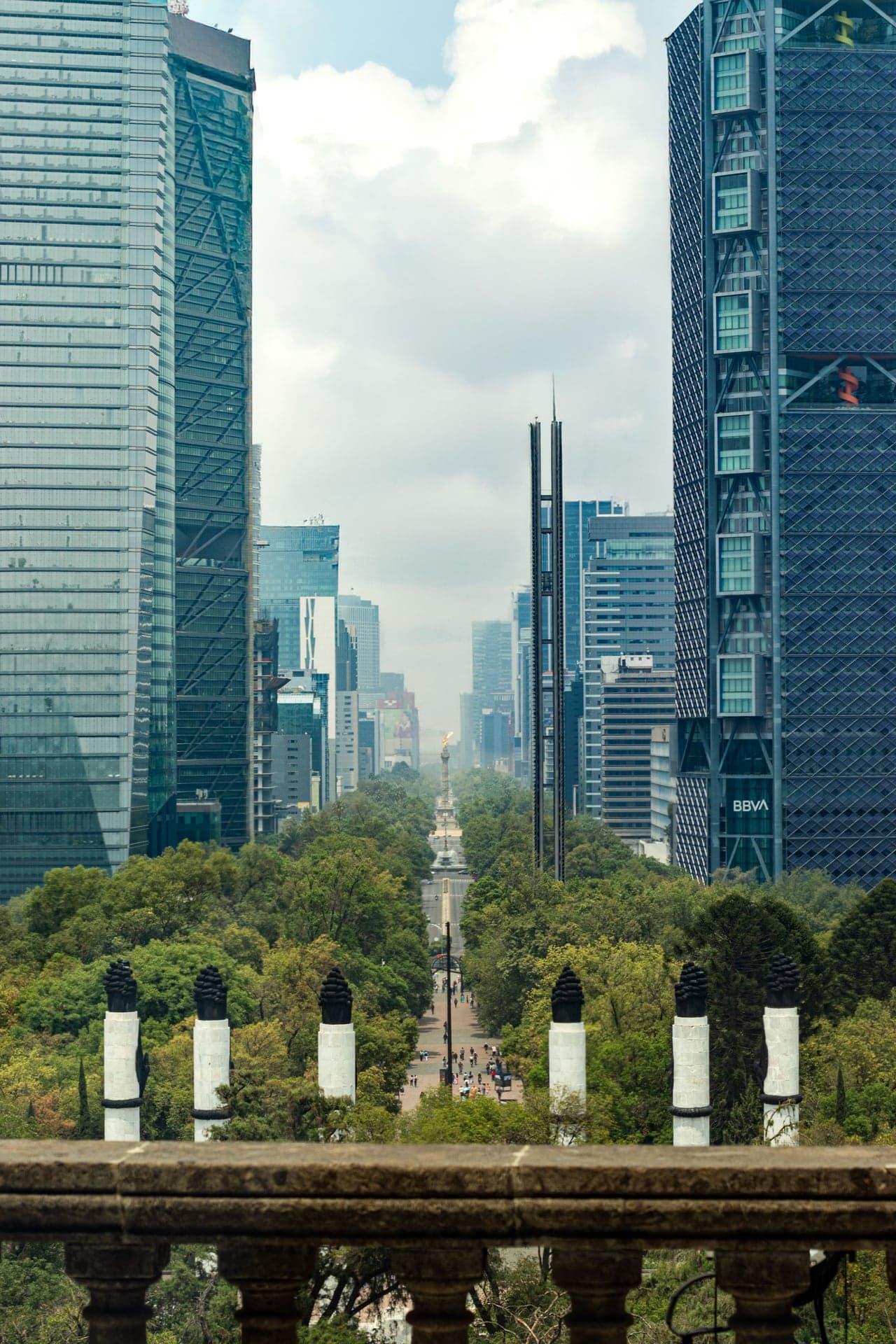
The tower you passed just before this one is Torre Mayor. Its builders gave it ninety-eight dampers, the big shock absorbers that soak up the shaking of an earthquake. Its damper maker says it was the first tall building to rely on large dampers of this kind, and that it came through the strong earthquakes of twenty oh three and twenty seventeen without damage. Across the avenue stands the tower of the BBVA bank.
Something worth keeping stood in the way of something new, and here the city kept both. If it had had to choose, which would you have kept?
Follow the route along the sidewalk, across the side lanes at the lights, and along the promenade to the fountain with the archer.
3. Diana Cazadora: Dressed, Undressed and Brought Back
Cross with the lights to the tip of the next stretch of promenade, and stop there. Then turn to your right, back toward the fountain in the roundabout you have just walked around. There is no safe way onto its island, so this stop is told from here.
Find the bronze woman with a bow on top of the fountain. This is the Diana Cazadora, Diana the Huntress, cast in bronze and unveiled in nineteen forty-two. She shows how easily a monument can be changed.
A decency league objected to a naked woman on the avenue. A bronze garment was fixed onto her, by one account with only three welds, and for years she wore it. Then, in November nineteen sixty-seven, the statue was taken down to repair the pedestal, the head of the city government agreed to remove the garment, and in December she came back to Reforma without it.
Taking the garment off damaged the original bronze. So the figure you see is a new cast, made from the original mold, and the first Diana was sent away to the town of Ixmiquilpan, in the state of Hidalgo.
Then the avenue moved her too. In nineteen seventy-four her roundabout was taken out for a new expressway, and she was stored and later put in a garden. On the sixth of July, nineteen ninety-two, she came back here. That same year, a woman named Helvia Martínez Verdayes published a book revealing that she had been the model, a secret kept for half a century.
Keep her in mind: covered, uncovered, replaced, moved away and brought back. The avenue will do all of those things again.
Follow the route along the promenade toward the tall column.
4. The Heroines: Women Join the Avenue's Bronze
Walk on along the promenade and stop by the bronze woman on her carved stone base. More of them stand behind you on this promenade and across the central lanes.
The statues of heroes along this avenue, set up from the eighteen eighties, are of men. Women joined them only in twenty twenty. On the twenty-first of August that year, the city unveiled a statue of Leona Vicario, a heroine of the War of Independence. She was the first of what the city called the walk of the heroines, and she is the bronze beside you. Remember her name. She is one of the heroes buried, the city says, in the column just ahead.
More followed. In September twenty twenty-one came Josefa Ortiz, Gertrudis Bocanegra, Sor Juana and Margarita Maza, and by March twenty twenty-three there were fourteen. One of them is not a single woman at all, but a figure for the anonymous Mexican women who helped build the republic. Not all of them come from the War of Independence. Some belong to the years of the Reform, and some to the Revolution a century later.
Look at how they stand. Each bronze is about one point seven five meters tall, on a base of carved stone like the bases of the men's statues along the avenue. The city said the idea went back to eighteen eighty-seven, to a plan by the writer Francisco Sosa that you will hear about a few stops from here. That plan filled this avenue with men. A century and a third later, the same kind of pedestal was used to add the women.
Does a matching base make them part of the old plan, or a correction to it? Look at the faces and the names, and decide for yourself.
Follow the route a short way on, toward the tall column.
5. Ángel de la Independencia: Fourteen Extra Steps
Walk on to the end of the promenade, and stop there, with the tall column ahead, across the traffic. The monument is free to see from outside. Its base and the climb to the top are only occasionally opened, by appointment, and on protest and celebration days the roundabout is…
Full narration for this stop unlocks with the tour.
6. Glorieta del Ahuehuete: A Palm, Two Trees and a Fence of Faces
Walk on to the end of the promenade, and stop there, with the roundabout and its young tree to your right. For about a hundred years a tall palm stood in this roundabout, and the roundabout was named for it. By twenty twenty-two the palm was sick with fungi, and on the night of…
Full narration for this stop unlocks with the tour.
7. The Paseo of Heroes: Two Statues from Every State
Walk on along the promenade and stop among the statues on their stone pedestals. You have been passing these figures since the column. They were a writer's idea. In October eighteen eighty-seven, Francisco Sosa published an article in a newspaper, El Partido Liberal, asking the…
Full narration for this stop unlocks with the tour.
8. Monumento a Cuauhtémoc: The Last Aztec Ruler in Bronze
Finish crossing Insurgentes, then walk on to the edge of the open space, and stop there, with the tall stone monument close by. On top stands Cuauhtémoc, the last ruler of the Aztec capital, Tenochtitlan. The inscription dedicates the monument to him and to his warriors, who…
Full narration for this stop unlocks with the tour.
9. Senado de la República: A Parliament That Opened
Walk on along the sidewalk beside the Senate building, and stop there. It is seen from outside only. This is the seat of the Senado de la República, the upper house of Mexico's Congress. On the thirteenth of April, twenty eleven, ninety-two senators held the first solemn…
Full narration for this stop unlocks with the tour.
10. Glorieta de las Mujeres que Luchan: The Empty Plinth
Walk on to the sidewalk at the curve of the next roundabout, and stop there. The roundabout is a memorial, and in recent years it has usually been fenced, so this stop is told from the sidewalk. For almost a century and a half, Christopher Columbus stood here. The city says it…
Full narration for this stop unlocks with the tour.
11. Monumento a la Revolución: A Dome for a Parliament That Never Sat
Walk on into the edge of the Plaza de la República, and stop there, with the great dome straight ahead. The plaza is free. The lookout at the top is ticketed and, by recent listings, opens from midday, and the museum underneath is usually closed on Mondays. The details are on…
Full narration for this stop unlocks with the tour.
12. Frontón México: The Same Pair, the Same Year
Walk on to the edge of the plaza by the crossing, and stop there, with the Frontón México across the road. This is the Frontón México, built as the city's main hall for jai alai, the Basque ball game. It was inaugurated on the tenth of May, nineteen twenty-nine. By recent…
Full narration for this stop unlocks with the tour.
- Chapultepec park in Mexico City. — Phyrexian, CC BY-SA 4.0 · source
- Estela de Luz — vladimix, CC BY-SA 2.0 · source
- From left to right, Torre Mayor, Reforma Tower, BBVA Bancomer Tower, on Mexico City — Carlos Valenzuela, CC BY-SA 4.0 · source
- Escultura realizada por Juan Fernando Olaguíbel y emplazada en una fuente diseñada por Vicente Mendiola Quezada localizada en el cruce de Av — EneasMx, CC BY-SA 4.0 · source
- Sculpture of Leona Vicario as part of the Paseo de las Heroínas on Paseo de la Reforma in Mexico City — ProtoplasmaKid, CC BY 4.0 · source
- Reforma During Ciclovia — Nan Palmero from San Antonio, TX, USA, CC BY 2.0 · source
- La "Glorieta de la Palma" en la avenida Reforma de la Ciudad de México ahora luce un ahuehuete y fotografías de personas desaparecidas en Mé — EneasMx, CC BY-SA 4.0 · source
- Bolsa Mexicana de Valores y Edificio Reforma 265 - Paseo de la Reforma, Ciudad de México, México. — Juan Carlos Fonseca Mata, CC BY-SA 4.0 · source
- Estatua de Ángel Albino Corzo — Tbhotch, CC BY-SA 4.0 · source
- Flores de cempasúchil adornan el camellón. Paseo de la Reforma, Ciudad de México, México. — Juan Carlos Fonseca Mata, CC BY-SA 4.0 · source
- El monumento a Cuauhtémoc está dedicado al huey tlatoani mexica Cuauhtémoc, ubicado en el cruce de la Avenida de los Insurgentes y Paseo de — EneasMx, CC BY-SA 4.0 · source
- Unidad de Metrobús pasando frente a la Cámara de Senadores. Paseo de la Reforma, Ciudad de México, México. — Juan Carlos Fonseca Mata, CC BY-SA 4.0 · source
- Aerial view of the Senate of the Republic of Mexico. Mexico City, Mexico. — Own work, CC BY-SA 4.0 · source
- Panorámica de la Glorieta de las mujeres que luchan — Luis Alvaz, CC BY-SA 4.0 · source
- Glorieta de las mujeres que luchan (Paseo de la Reforma) — Luisalvaz, CC BY-SA 4.0 · source
- Monument to the Mexican Revolution, Mexico City, Image produced by combining 6 photographies — Carlos Valenzuela, CC BY-SA 4.0 · source
- Fachada del Frontón México en la Ciudad de México — Henryficar, CC BY-SA 4.0 · source
- Fronton Mexico building. Aerial shots obtained with a drone of the Monument to the Revolution of Mexico, Cuauhtemoc, Mexico City, Mexico. — ProtoplasmaKid, CC BY-SA 4.0 · source
Images may be cropped or resized. Other photos via Unsplash and Pexels.