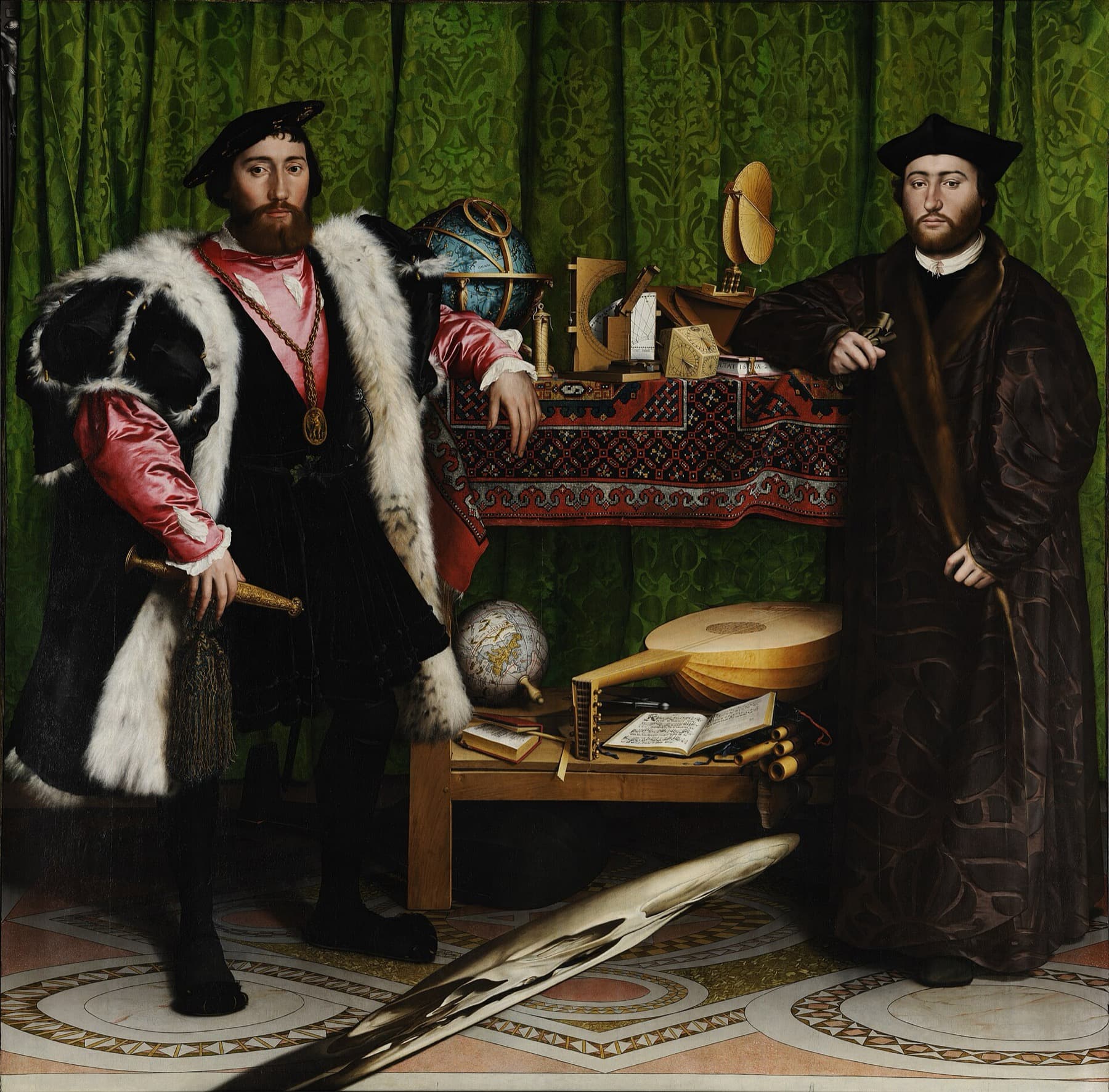
The Ambassadors is a 1533 double portrait by Hans Holbein the Younger of Jean de Dinteville, the French ambassador in London, and his friend Georges de Selve. The grey shape across the floor is a skull painted in stretched perspective, called anamorphosis, which snaps into shape when seen from near the lower right of the picture. It is a reminder of death. The painting hangs in Room 4 of the National Gallery, London.
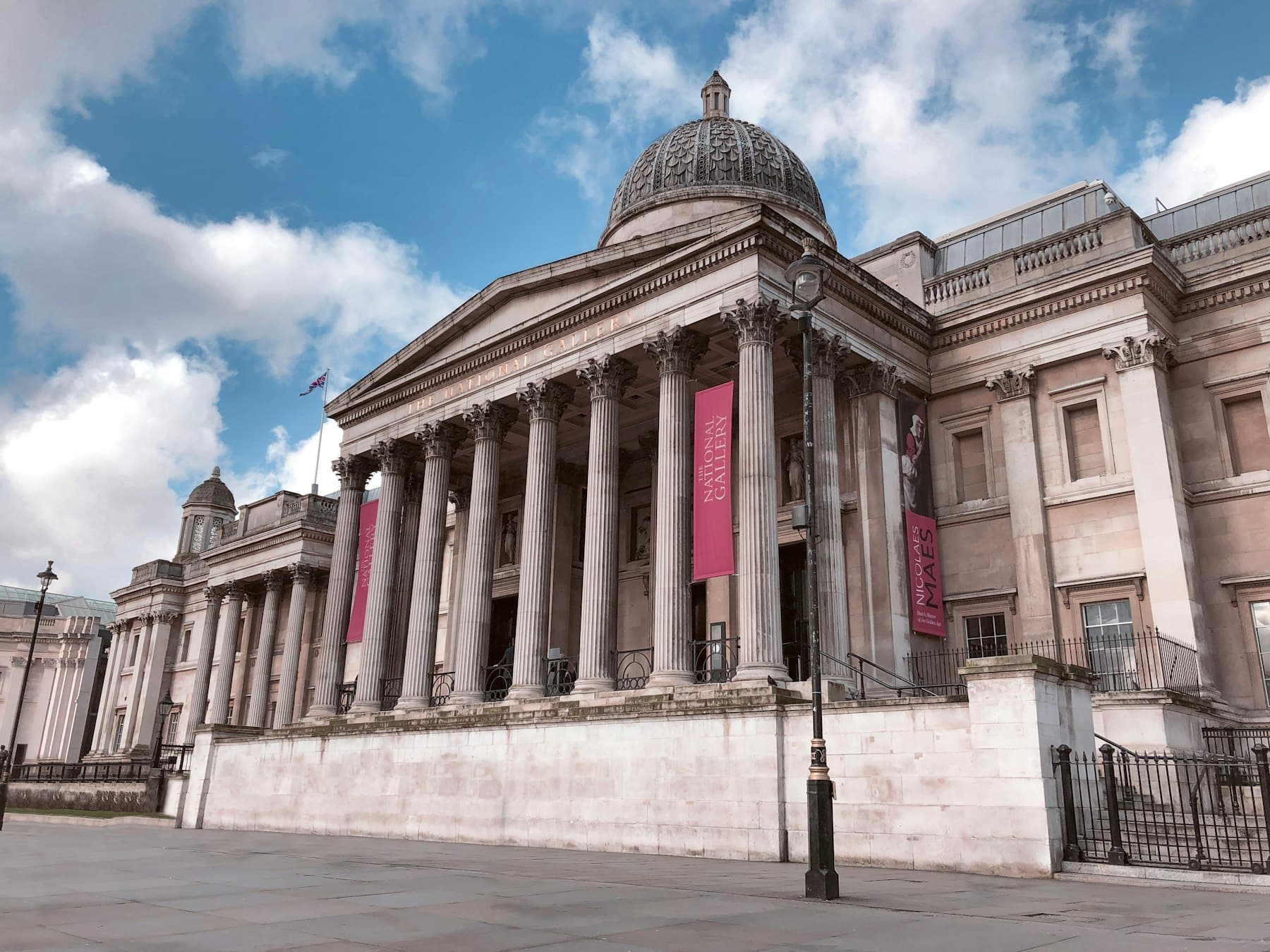
If you are asking where The Ambassadors is: it hangs in Room 4 of the National Gallery in London, in the main building. It is big, about two metres square.
If you are asking about the skull: the long grey shape slanting across the floor at their feet is a human skull, painted in stretched perspective. From the front it looks like a smear. Move to the right-hand side of the painting, lower your eye and look back along its surface, and it snaps into shape. The trick is called anamorphosis.
Who the ambassadors are
On the left is Jean de Dinteville, lord of Polisy in France. He was the French ambassador at the court of Henry VIII for most of 1533. On the right is his friend Georges de Selve, Bishop of Lavaur. He wears no bishop's robes, and Wikipedia gives a neat reason: he was not consecrated until 1534. Inscriptions in the painting give their ages as 29 and 25.
Selve visited London briefly in the spring of 1533, and the gallery reads the portrait as a record of the two friends' time together. Holbein, on his second stay in England, signed and dated it 1533 on the floor behind Dinteville.
That year matters. In 1533 Henry VIII married Anne Boleyn without the Pope's approval, and England's break with Rome followed. Two Catholic Frenchmen were in London as the old order of Christian Europe began to split.
What is on the table
Hear a stop from this walk
Victoria Tower Gardens: Pankhurst at Parliament's Door
The two men lean on a tall stand with two shelves, and the objects on it tell the story.
The top shelf is the heavens. On the left is a celestial globe, mapping the stars. Next to it are sundials and other instruments for measuring time and the positions of the sun and stars, including a torquetum, a brass disc on a stand. The gallery links them to Nicholas Kratzer, Henry VIII's astronomer. This is the world of learning: two educated men who can measure the sky.
The lower shelf is the earth, and it is not in harmony. There is a terrestrial globe, and if you look closely it marks Polisy, Dinteville's own chateau. There is an arithmetic book held open at a page on division. There is a lute with one broken string, a familiar sign of discord. There is a case of flutes with one missing. And there is an open Lutheran hymn book, with the hymn "Come Holy Ghost" and Luther's version of the Ten Commandments.
Put together, the lower shelf reads as a quiet comment on Europe in 1533: division, a broken string, a Protestant hymn book beside a Catholic bishop.
How the skull works
Anamorphosis means painting an image in distorted perspective, so that it only looks right from one particular viewpoint. Holbein stretched the skull along a diagonal, so that from the front it reads as a strange grey object floating above the floor. The gallery says it is best seen by looking up at the painting from the bottom right corner. Its audio description puts it more simply: stand close, to the right.
There are other theories about how it was meant to be seen. In 1962 the writer Edgar Samuel suggested it could be viewed face on through a glass tube. Nobody knows for sure how Holbein meant it to be hung. What is certain is that you cannot see the two men and the skull clearly at the same time. To see death, you have to stop looking at the living.
The gallery's frame was designed so that you can step to the side and get that view, so try it.
What it means
The gallery frames the skull as a memento mori, a reminder that life is short. Portraits like this one celebrated wealth, learning and power, and the skull sits in the middle of it all as a warning that none of it lasts.
It is not the only one. Dinteville wears a small skull badge on his hat, so the theme appears twice.
Then look at the very top left corner. Half hidden behind the green damask curtain is a small crucifix. The gallery reads it as a hint of the hope of salvation through Christ, and possibly as a hope for Christian unity at a time of division. So the painting moves from top to bottom and back again: the learning of the heavens, the discord of the earth, death across the floor, and in the corner, almost out of sight, hope. The guide's own one-line summary is death in plain sight, hope in the corner.
The floor
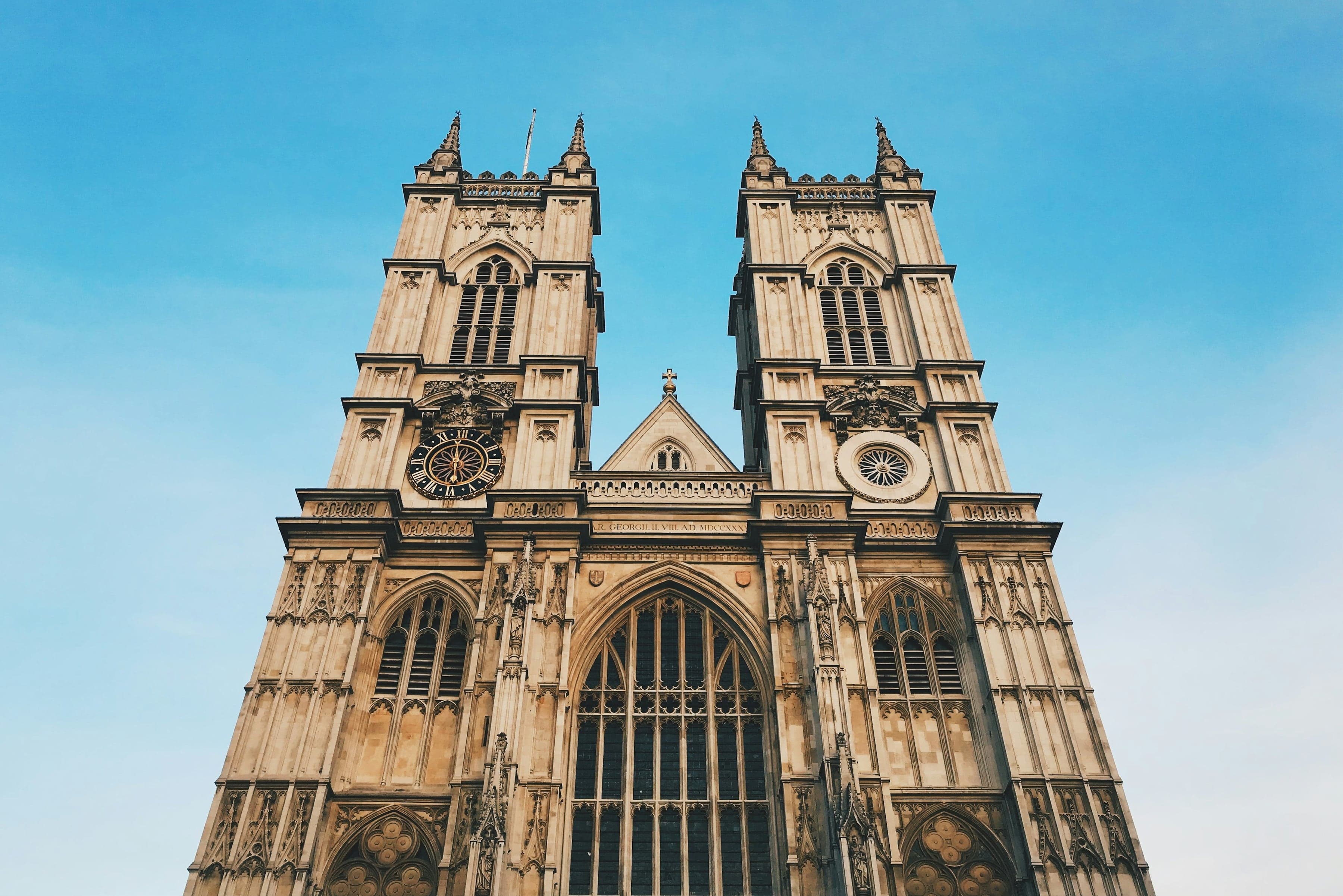
The patterned floor under their feet is not invented. Wikipedia identifies it as based on the Cosmati pavement in front of the high altar of Westminster Abbey, a medieval mosaic floor that still survives. The historian Eric Ives suggested it was a reference to Anne Boleyn's coronation, held at that spot in 1533. If he is right, the painting carries one more reminder of the year it was made.
From a French chateau to Trafalgar Square
The painting probably went home to France with Dinteville. It is first recorded in 1589, hanging in the great hall of his chateau at Polisy. It stayed with his family's descendants, went to Paris in the 1650s, and was sold there in 1787 to the dealer Jean-Baptiste-Pierre Lebrun. By 1792 it was in England, and in 1808 the 2nd Earl of Radnor bought it for Longford Castle.
In 1890 the 5th Earl of Radnor sold it to the National Gallery with two other paintings, for £55,000 in all. The money came from a government grant and from gifts by three private donors. The painting was restored in the 1990s, when missing areas of the skull were reconstructed.
Seeing it in the gallery
The Ambassadors hangs in Room 4, a room about the spectacle of portraiture in the 1500s, where every sitter chose clothes and objects with care. Holbein's full-length portrait of Christina of Denmark, painted for Henry VIII when he was looking for a new wife, is in the same room.
Take it in three steps. First stand in the middle and look at the two men and the table. Then find the crucifix, top left. Then walk to the right-hand edge, crouch a little and look back along the surface until the skull resolves.
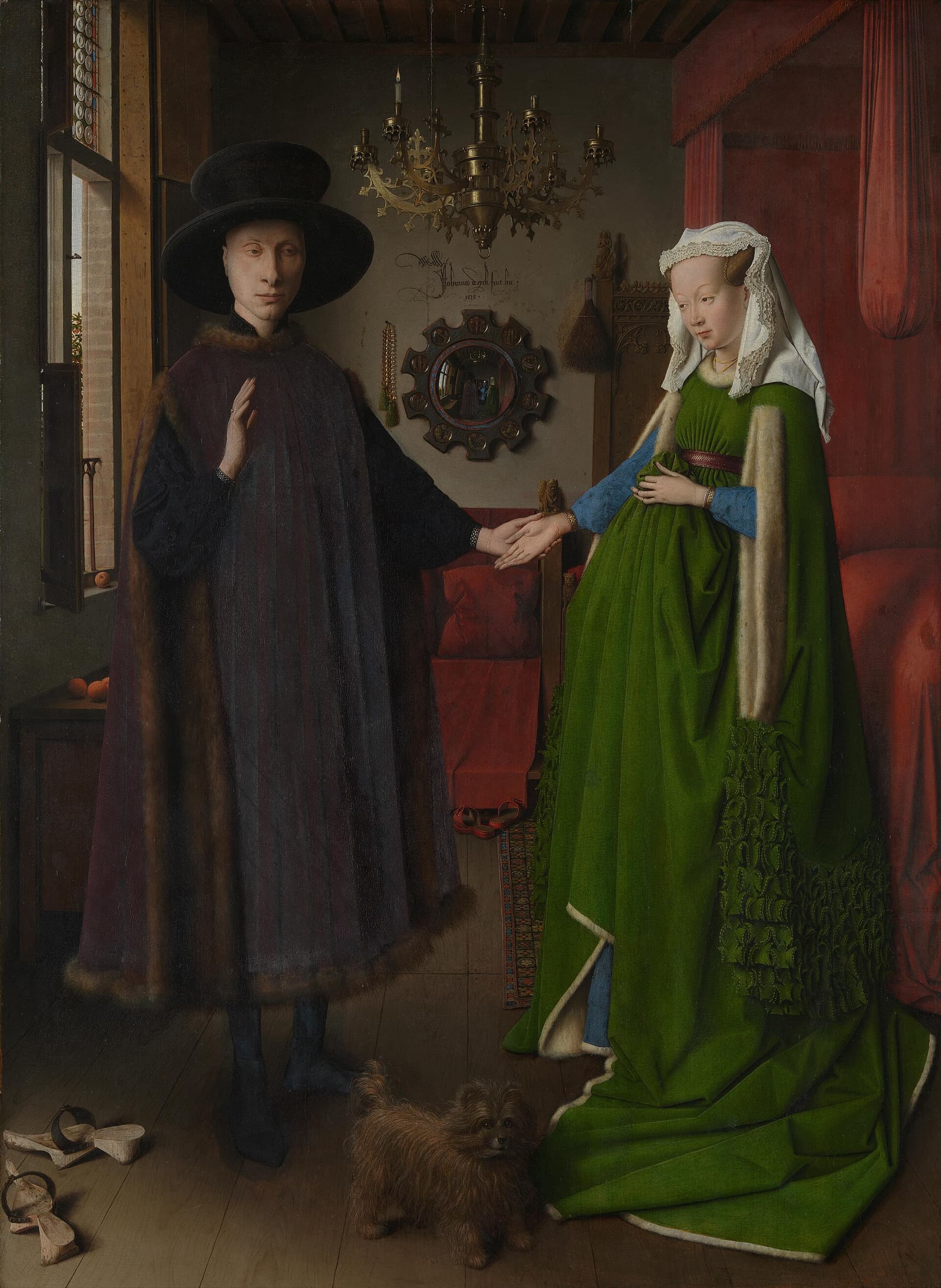
The painting is on the Roamer guide's one-hour and two-hour routes and at the centre of its Tricks of the Eye route, which also visits the mirror in the Arnolfini Portrait and the blurred reflection in the Rokeby Venus. For the rest of the building, read what to see at the National Gallery.
How this fits the Roamer guide
Roamer's independent audio guide to the National Gallery has a short story for The Ambassadors that walks you from the table to the skull and the crucifix, at your own pace, with nobody waiting for you to move on. You can find it in the National Gallery guide.
Cover image: Hans Holbein the Younger, The Ambassadors, 1533, National Gallery, London, public domain, via Wikimedia Commons.

Ready to experience it?
Westminster: The Rebels at Parliament's Gates
90 min · 2.9 km · easy
More from London
Explore more at your own pace.
British Museum: What to See, Floor by Floor
The Arnolfini Portrait: The Mirror, the Meaning and the Myths
The Fighting Temeraire: Turner's Last Voyage of a Trafalgar Ship
The Lewis Chessmen: Kings, Queens and Berserkers in Room 40
The Parthenon Sculptures: What Is in Room 18 and How It Got There