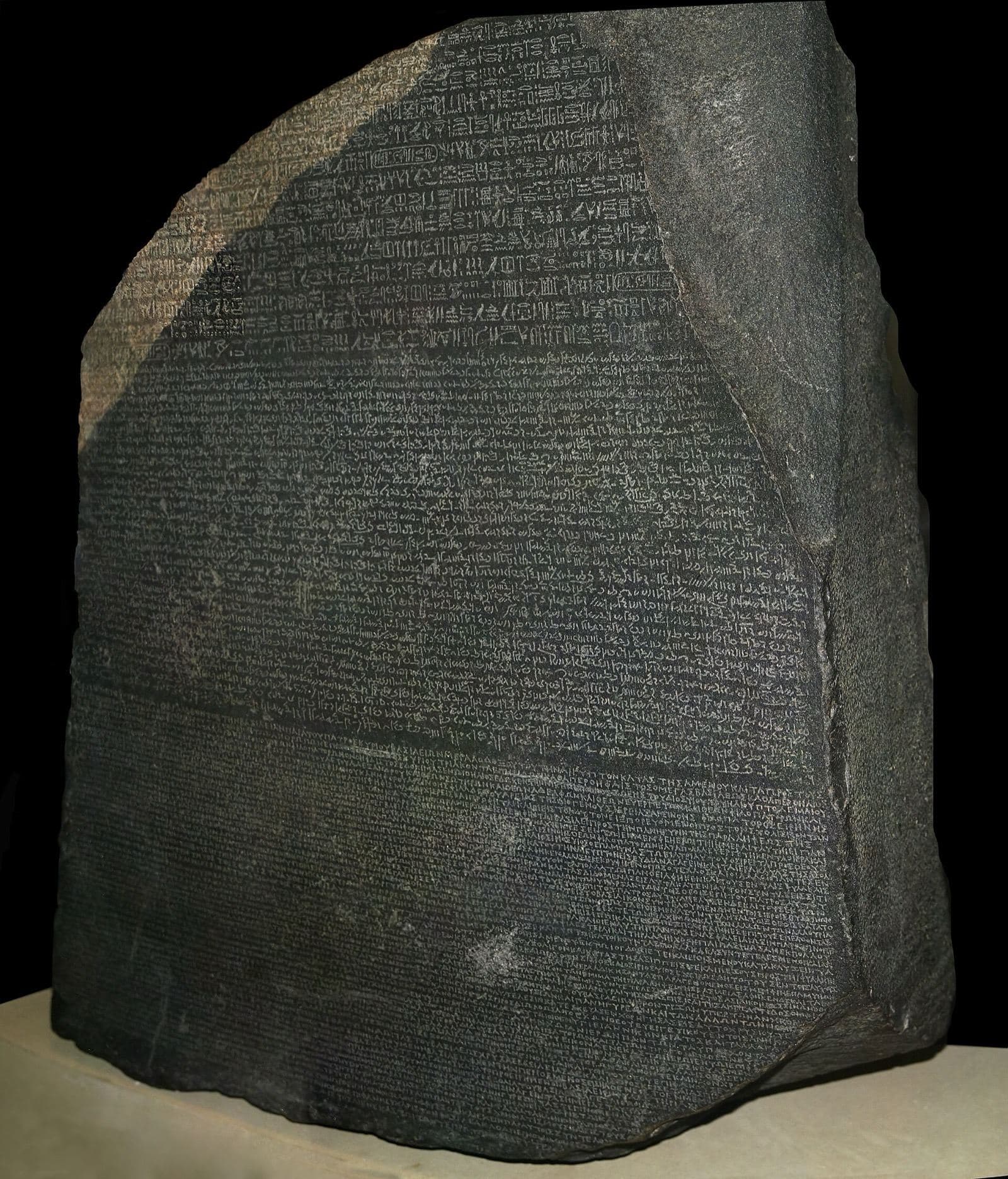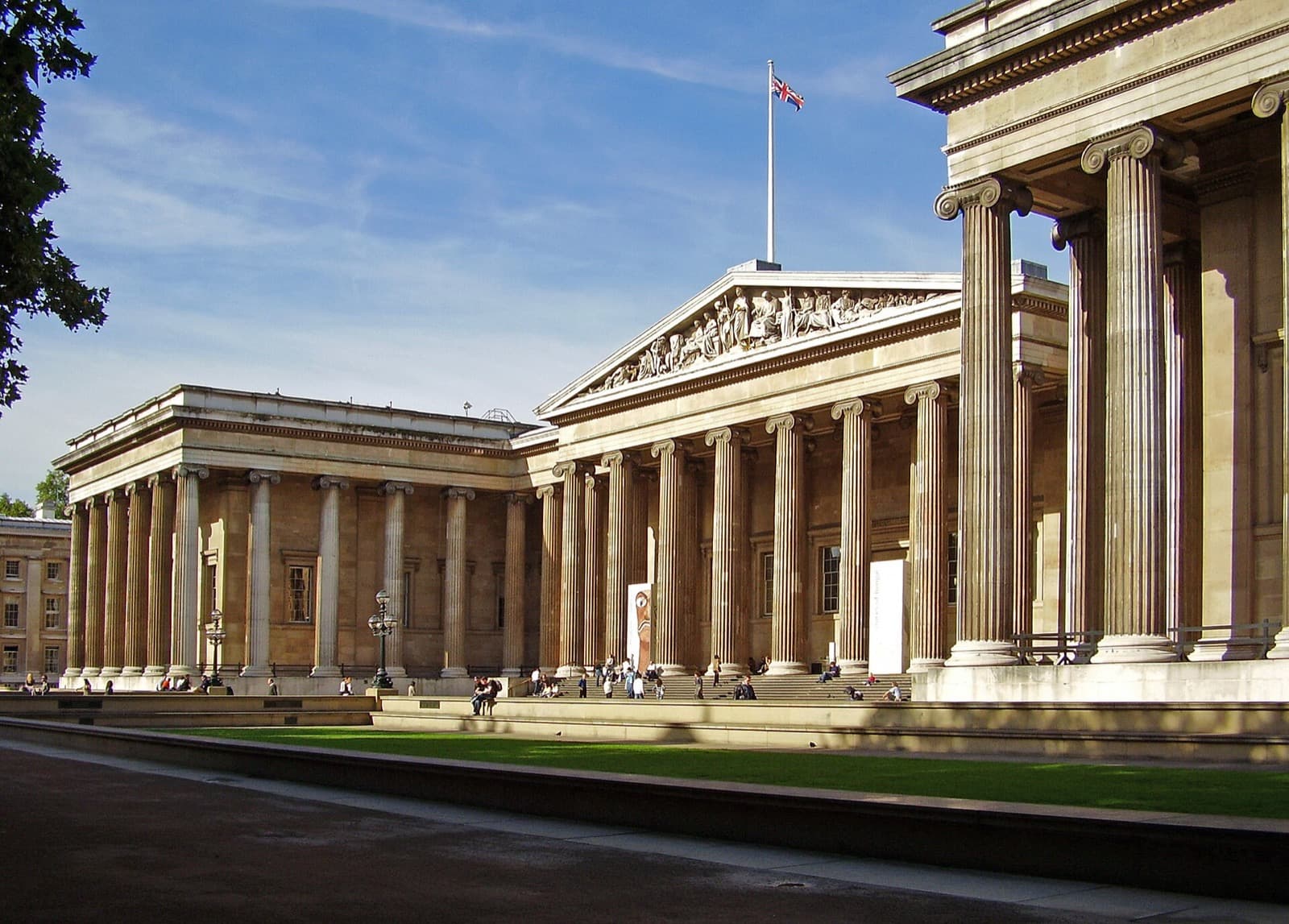
Plan about two hours for the highlights of the British Museum. Start with the Rosetta Stone in Room 4, just off the Great Court, then the colossal bust of Ramesses II, the Assyrian lion hunt in Room 10 and the Parthenon sculptures in Room 18. Upstairs, see the Portland Vase, the Lewis Chessmen in Room 40, the Sutton Hoo helmet in Room 41 and the mummies in Rooms 62 and 63. Entry to the permanent collection is free.
The British Museum stands on Great Russell Street in London, and the first thing to know is that nobody sees all of it in one visit. More than 6.4 million people came in 2025, which made it the second most visited attraction in the UK. How long does it take? Plan about two hours for the highlights.
Is it free? Yes. Entry to the permanent collection is free, as it has been since the museum first opened in 1759. The museum recommends booking a free ticket on its own website, which gives priority entry at busy times; without one, entry depends on capacity. Paid exhibitions are separate, including the Bayeux Tapestry, on show in Room 30 from 10 September 2026 to 11 July 2027. The museum is open daily from 10:00 to 17:00, and until 20:30 on Fridays, with last entry at 16:45. It closes from 24 to 26 December.
A ring of rooms round a covered court
Parliament founded the museum in 1753 around the collection of a doctor, Sir Hans Sloane, and it first opened in a mansion on this site called Montagu House. The building you walk into was designed by Sir Robert Smirke in 1823. The King's Library, now Room 1, was the first wing to go up, and the Greek temple front on Great Russell Street, with its 43 columns, finished the building in 1852.
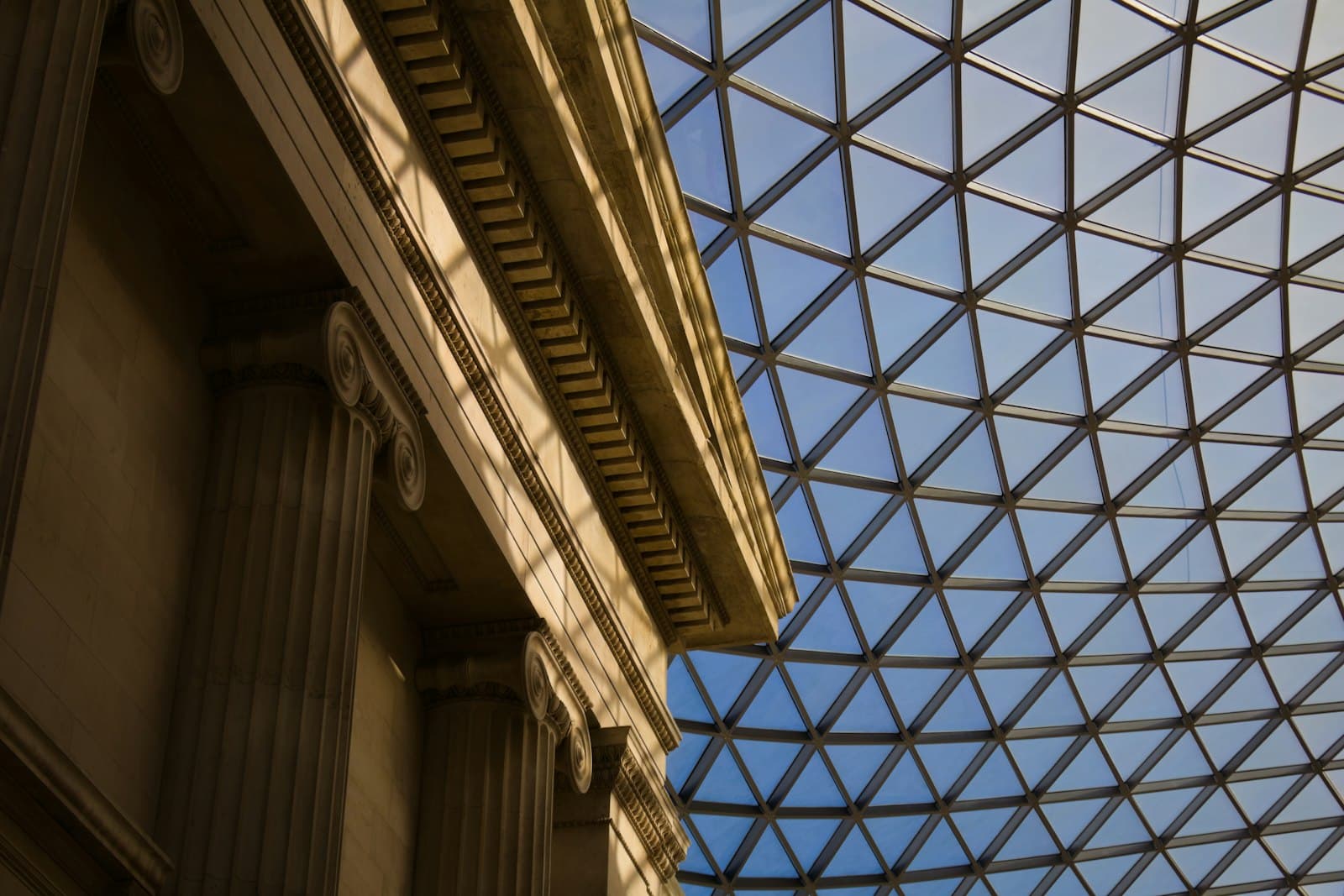
Smirke left an open courtyard in the middle. In 1857 the round Reading Room was built inside it, wrapped in iron book stacks, and Karl Marx and Lenin both held reader's tickets. When the British Library moved out in 1997, the stacks came down and Foster and Partners roofed the courtyard in glass and steel. The museum counts 3,312 panes, no two the same shape. Queen Elizabeth II opened the Great Court on 6 December 2000.
That court is the key to the whole building. Every room is numbered, as on the museum's map, and the galleries run round the court on two main floors.
How the floors are laid out
Hear a stop from this walk
Victoria Tower Gardens: Pankhurst at Parliament's Door
- Ground floor, west: the giants. Room 4, the long gallery of Egyptian sculpture, runs beside the Great Court and holds the Rosetta Stone. Behind it are the Assyrian palace rooms, 6 to 10, and beyond them ancient Greece, with the Parthenon sculptures in Room 18.
- Ground floor, north and east: Room 24, Living and Dying, with Hoa Hakananai'a from Rapa Nui; North America and Mexico in Rooms 26 and 27; and along the east side, Room 1, Enlightenment, the old King's Library. Room 2a holds the Waddesdon Bequest, a Rothschild treasure room.
- Upper floor: a ring of rooms circling the court. The Egyptian mummies and ancient Mesopotamia are on the north side, Rome and the Greek world along the west, and Britain and Europe to the east and south, from the Mold gold cape to Sutton Hoo, the Lewis Chessmen and a gallery of clocks.
- North wing: small floors that climb to China and South Asia (Room 33), Chinese ceramics and Korea, and Japan at the top.
- Lower floor: Africa, in Room 25, below the north side of the Great Court.
You can download the museum's own map from its website. Rooms close for maintenance on a rolling schedule, so check it on the day if one piece matters to you.
The must-see pieces, room by room
Room 4, Egyptian sculpture. The Rosetta Stone is here, on the ground floor, just off the Great Court. Further along the same gallery is the colossal bust of Ramesses II, cut from one block of two-coloured stone and weighing about seven and a quarter tons, though it is only the top of a seated figure. Giovanni Belzoni, a former circus strongman, had it dragged to the Nile in 1816, and news of its journey is thought to have helped inspire Shelley's poem Ozymandias. Look also for the Gayer-Anderson Cat, a bronze cat that still wears gold rings in its ears and nose, and the sarcophagus of Nectanebo II, Egypt's last native pharaoh, later used as a ritual bath, with twelve holes drilled near its base.
Rooms 6 to 10, Assyria. In Room 6, a pair of winged lions with human heads once guarded the throne room of King Ashurnasirpal II at Nimrud. Count their legs: there are five, so they stand still seen from the front and stride seen from the side. Nearby is the Black Obelisk, set up at Nimrud in 825 BC. In Room 10, the royal lion hunt of Ashurbanipal, carved for his palace at Nineveh, shows lions let out of cages one by one. The winged bulls from Sargon II's citadel at Khorsabad stand in the same room.
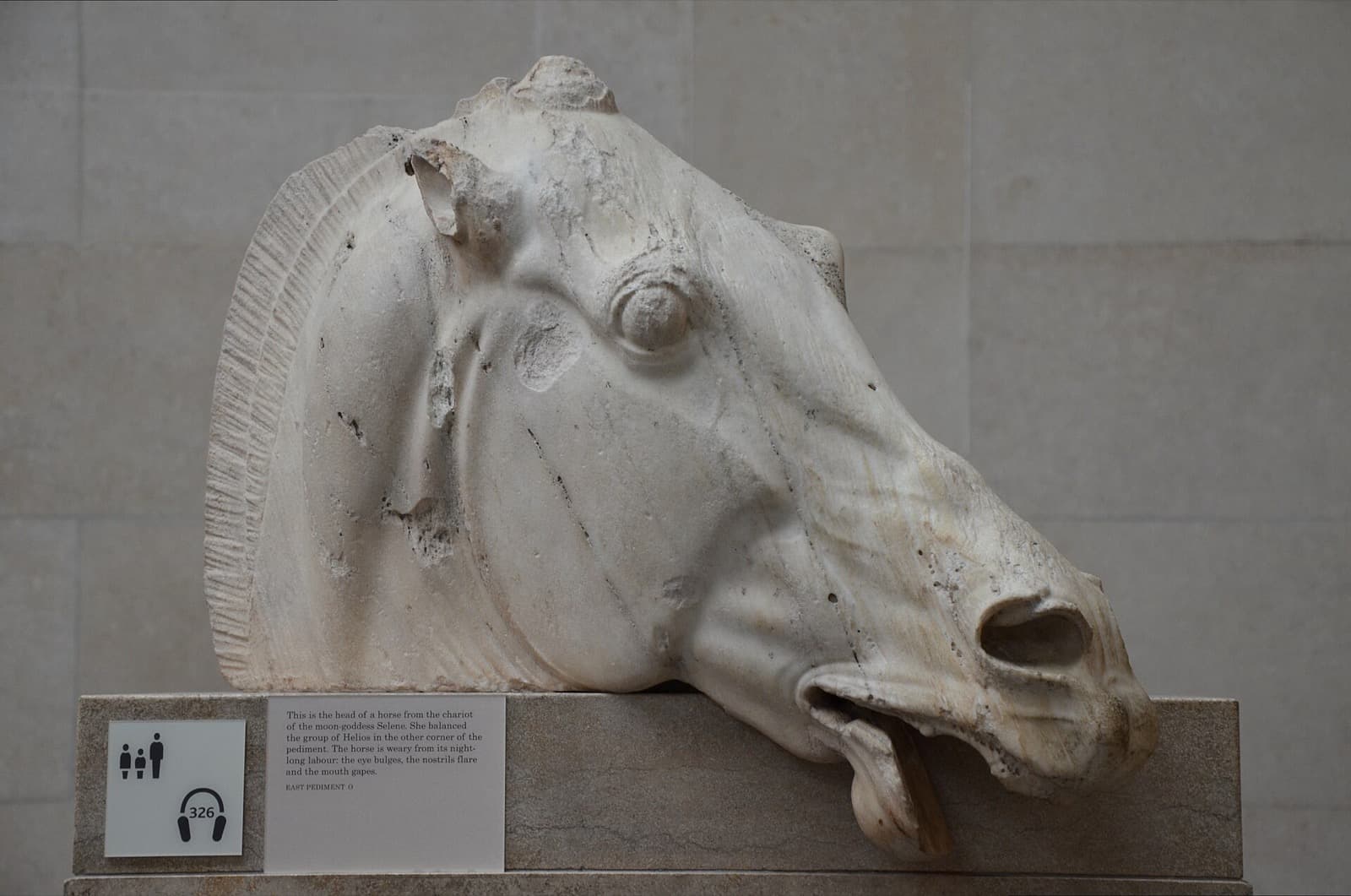
Room 18, the Parthenon. The long Duveen Gallery holds the Parthenon sculptures: the frieze procession along the walls, the battle metopes, and gods from the two pediments at either end. Find the exhausted horse of the moon goddess Selene, which the museum calls perhaps the best loved of them all. Next door in Room 19 stands a caryatid, one of six female figures that held up a porch of the Erechtheion in Athens.
Room 24, Living and Dying. Hoa Hakananai'a, a basalt ancestor figure 2.42 metres tall from Orongo on Rapa Nui (Easter Island), was taken by the crew of a British survey ship in 1868. Since 2018 the island's council of elders and other bodies have asked for its return, and the museum says it is building a long-term relationship with the Rapanui community.
Room 25, Africa. Brass plaques from the royal palace of Benin City, in today's Nigeria, show court life and ritual. Most came to London after a British military expedition captured and looted the city in 1897. Nigeria has asked for their return, and the museum says it remains open to discussion.
Rooms 1 and 2a. Room 1 is 91 metres long and shows how collectors of the 1700s sorted the world. It also has a replica of the Rosetta Stone you are allowed to touch. In Room 2a, the Holy Thorn Reliquary, made in Paris around 1400, hides a thorn behind a window of rock crystal. In the 1860s a Viennese dealer secretly copied it while restoring it, and the copy went back to the Habsburg treasury in its place.
Room 70, Roman Empire. The Portland Vase is dark blue glass with white figures cut into a top layer. It was smashed in 1845 and has been put back together three times.
Rooms 40 and 41, medieval Europe and Sutton Hoo. The Lewis Chessmen, carved from walrus ivory and found on a Scottish island in 1831, are in Room 40 with the Royal Gold Cup, made for the French royal family around 1370 to 1380. Room 41 holds the finds from the Sutton Hoo ship burial in Suffolk, excavated in 1939: the helmet, rebuilt from hundreds of rusted fragments, and a great gold buckle of about 413 grams.
The east side of the upper floor. Roman Britain (Room 49) has a birthday invitation written in ink on a thin sheet of wood at the fort of Vindolanda, and the great silver dish from Mildenhall. Room 50 has the Snettisham Great Torc, Room 51 the gold cape from Mold in north Wales, and Room 52 the Cyrus Cylinder and a tiny gold chariot from the Oxus Treasure.
Rooms 55 to 63, Mesopotamia and the mummies. Room 55 has a Babylonian map of the world on a clay tablet. Room 56 has the Standard of Ur, a box inlaid with shell, red limestone and lapis lazuli, with a war scene on one side and a banquet on the other. Then come the mummies and painted coffins of Rooms 62 and 63, among them the gilded inner coffin of the priest Hornedjitef, and the Book of the Dead of Hunefer, where a man's heart is weighed against a feather.
The British Museum in two hours
This plan follows the guide's two-hour route: the ground floor first, then the ring upstairs. Times are rough; skip anything you like.
- Room 4 (15 minutes). The Rosetta Stone and Ramesses II.
- Rooms 6 and 10 (20 minutes). The winged lions from Nimrud and the lion hunt.
- Room 18 (20 minutes). The Parthenon sculptures, ending at the horse of Selene.
- Up the West stairs to Room 70 (10 minutes). The Portland Vase.
- Round the ring to Rooms 40 and 41 (20 minutes). The Lewis Chessmen and the Sutton Hoo helmet.
- North to Rooms 52 and 56 (15 minutes). The Cyrus Cylinder and the Standard of Ur.
- Rooms 62 and 63, then down (20 minutes). The mummies, then the North stairs down to Hoa Hakananai'a in Room 24.
With kids? Pick a few pieces with something to spot rather than a long route: the gold rings on the Gayer-Anderson Cat, the five legs on the Assyrian guardians, the lions in the royal hunt, the faces of the Lewis Chessmen, and the mummies upstairs. The touchable Rosetta Stone replica in Room 1 is a good end.
Five ready-made routes
The Roamer guide groups the museum into five short themed routes. Each works as a plan on its own.
The British Museum in an Hour. Six stops, all on the ground floor: the Rosetta Stone, Ramesses II, the winged bulls from Khorsabad, the royal lion hunt, the horse of Selene from the Parthenon, and Hoa Hakananai'a. If your question is what you must see, this is the answer.
The British Museum in Two Hours. Twelve stops, the plan above: the ground-floor icons, then upstairs to the Portland Vase, the Lewis Chessmen, Sutton Hoo, the Cyrus Cylinder, Ur and the mummies.
Written in Stone and Clay. Seven stops about writing: the Rosetta Stone, the Black Obelisk, the Vindolanda birthday invitation, the Cyrus Cylinder, clay letters from merchants trading across Anatolia, the Babylonian map of the world, and the Book of the Dead of Hunefer.
Treasure. Seven stops of gold and silver: the Holy Thorn Reliquary, the Royal Gold Cup, the Sutton Hoo buckle, the Mildenhall dish, the Snettisham torc, the Mold cape and the Oxus chariot.
How They Came Here. About 75 minutes on the question many visitors ask. At each of seven stops, the Rosetta Stone, a caryatid from the Erechtheion, the Parthenon frieze, a wooden shield from New South Wales, Hoa Hakananai'a, the Benin plaques and a processional cross from Maqdala in Ethiopia, the story tells what is documented about how the object reached London, who has asked for it back, and what the museum says. It does not take sides.
Tips for the visit
- Book the free ticket before you go. It is not required, but without one you may queue at busy times.
- There are two entrances: the main entrance on Great Russell Street and a second one on Montague Place, at the north end, near Room 24 and the North stairs.
- Look up when you cross the Great Court, and step into the Reading Room if it is open.
- Do not try to finish. Pick one of the routes and let the rest be a reason to come back.
How this fits the Roamer guide
Roamer has an independent audio guide to the British Museum that works room by room: open any gallery and play its story, or follow one of the five routes above with directions from room to room. You can find it here: the British Museum guide.
Cover photo: Ham, CC BY-SA 3.0, via Wikimedia Commons.

Ready to experience it?
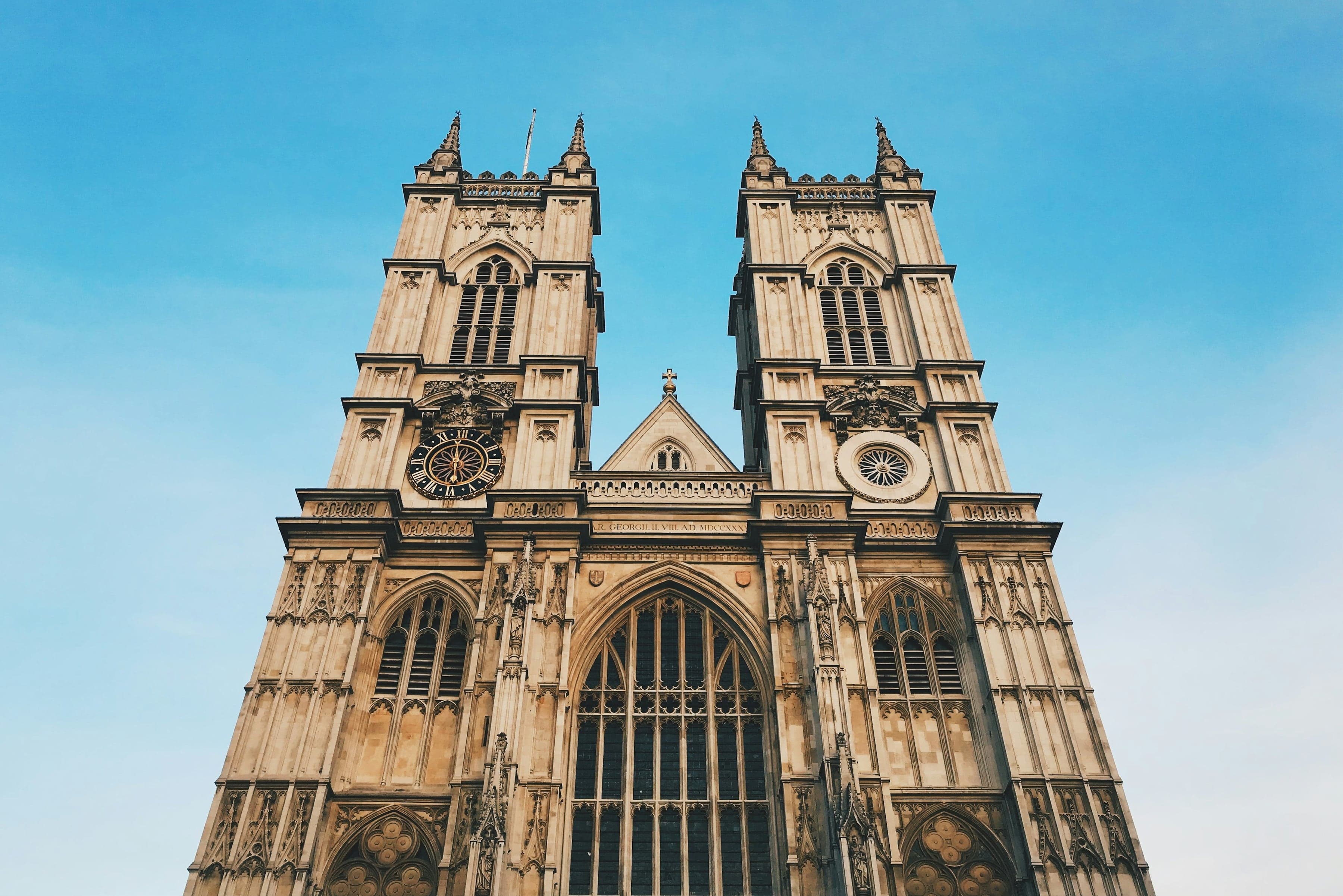
Westminster: The Rebels at Parliament's Gates
90 min · 2.9 km · easy
More from London
Explore more at your own pace.
A Cathedral to Nature: Reading the Natural History Museum Building
Hope the Blue Whale: The Story of the Skeleton in Hintze Hall
The Giant Sequoia at the Natural History Museum: 1,341 Years in One Slice
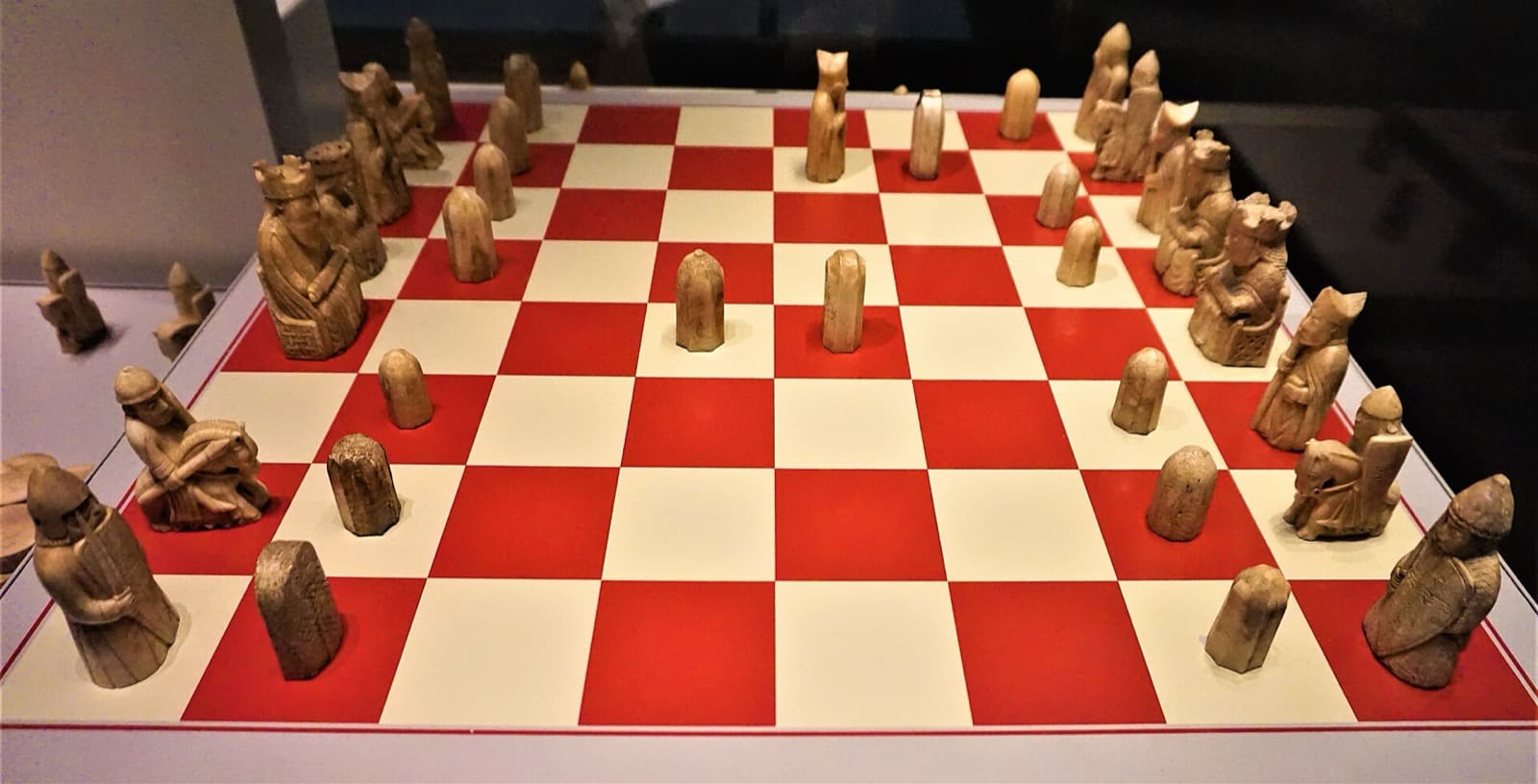
The Lewis Chessmen: Kings, Queens and Berserkers in Room 40
The Parthenon Sculptures: What Is in Room 18 and How It Got There