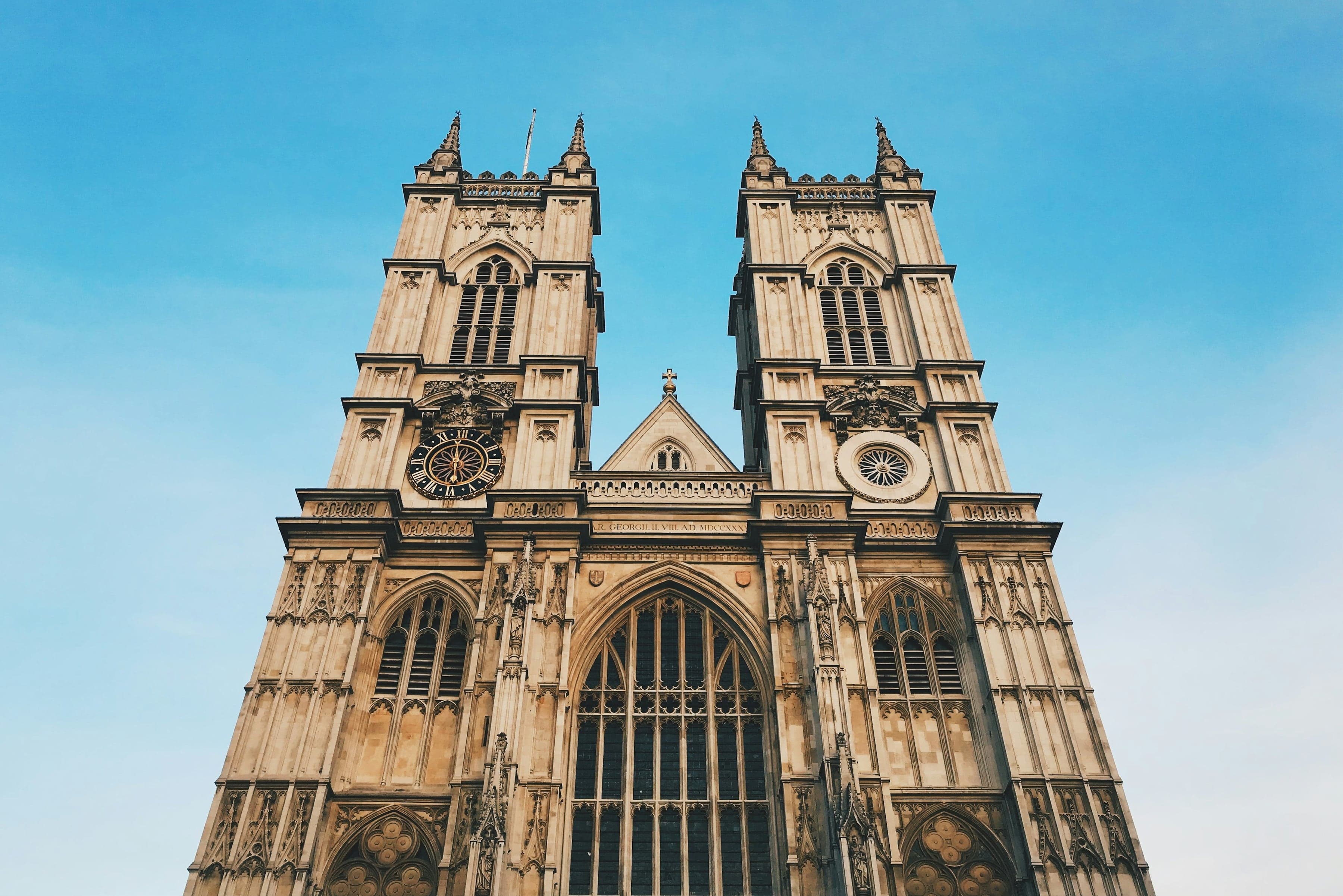
The seat of British power and the statues of rebels at its gates, from Boudica and Whitehall to Parliament Square and Pankhurst, at your own pace.
Start · Boudica and Westminster Bridge: The Rebel Queen at Parliament's Door
DirectionsStops
- 1
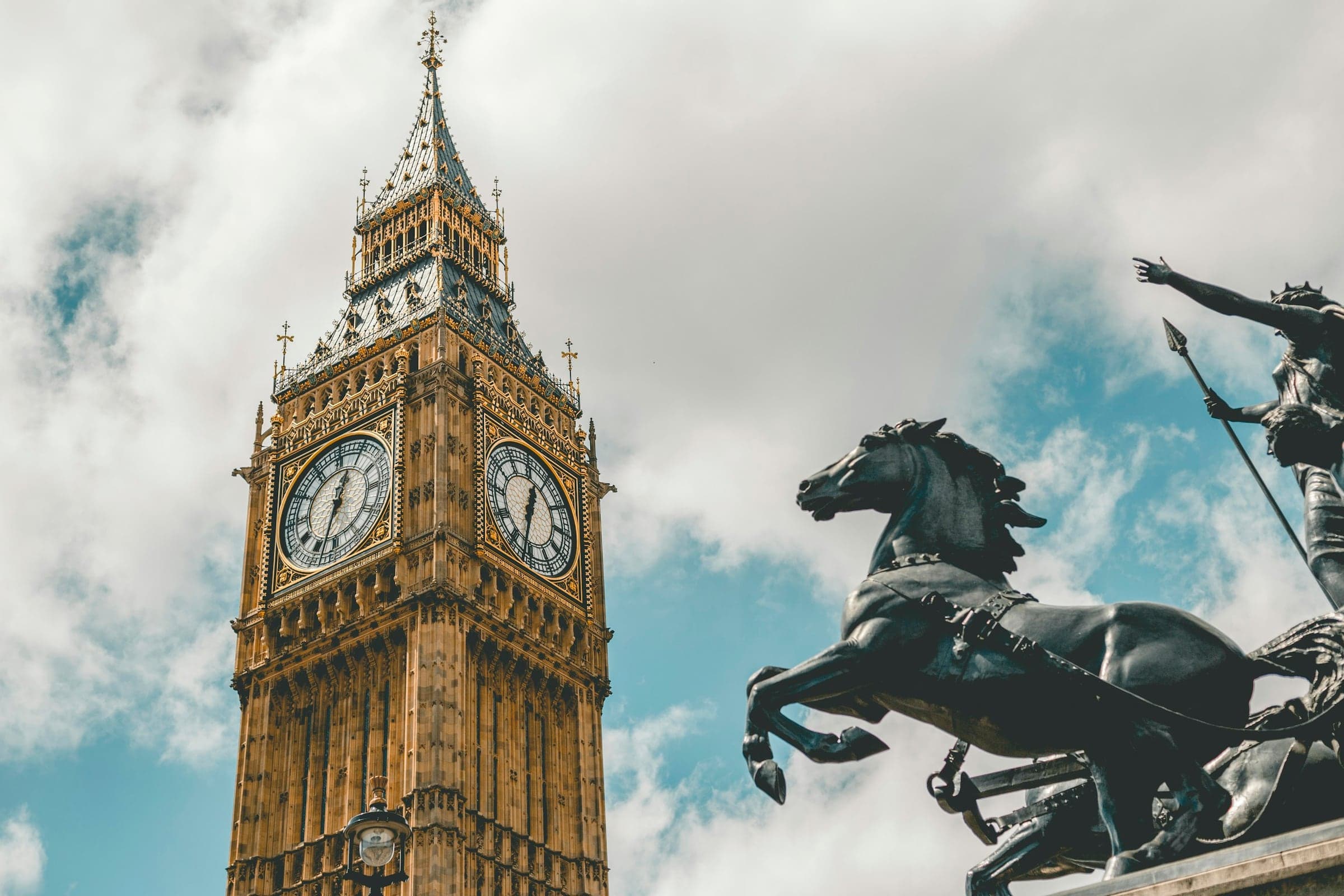
Boudica and Westminster Bridge: The Rebel Queen at Parliament's Door
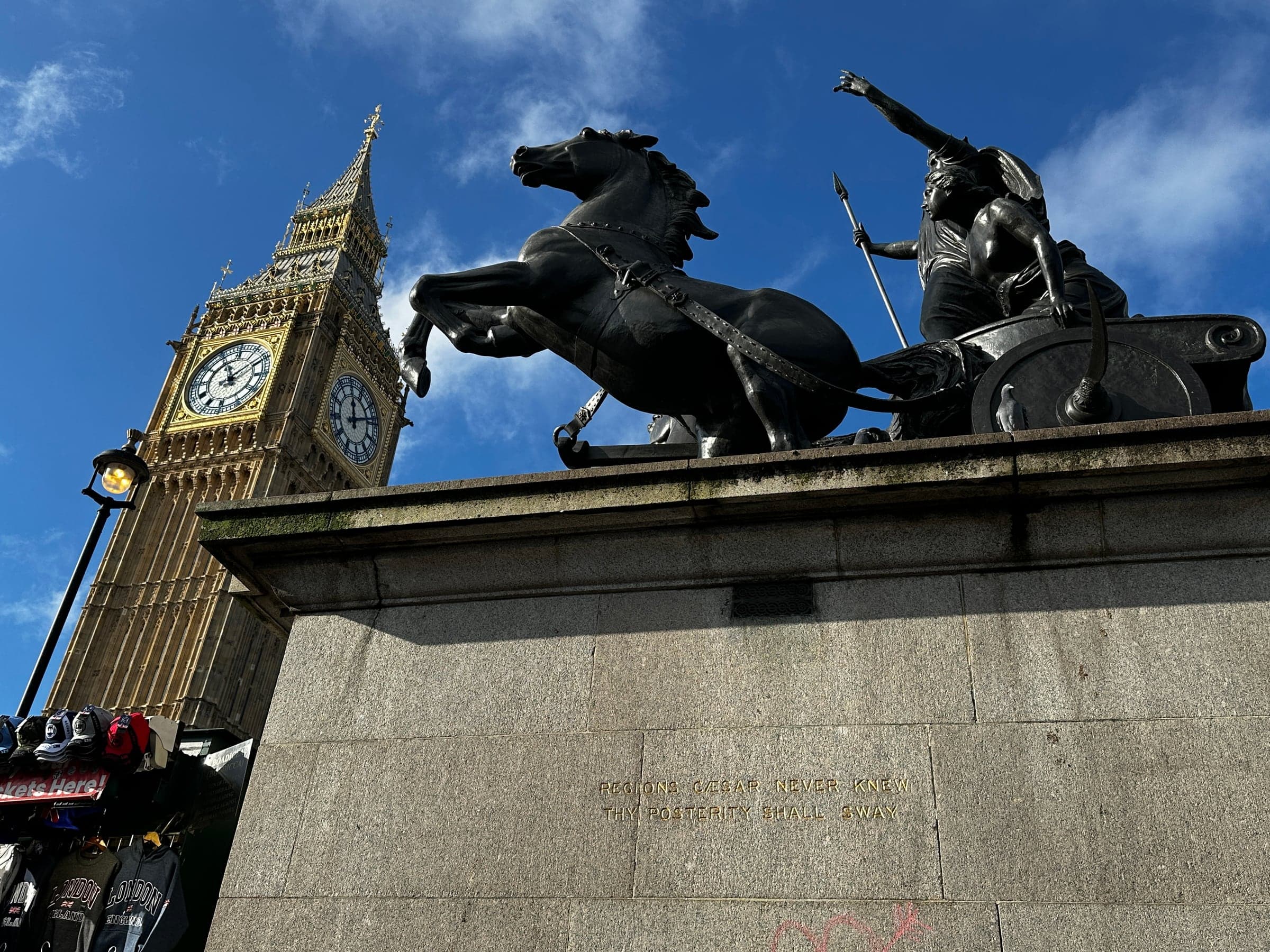
A rebel queen's statue at the foot of Parliament. Boudica, who burned Roman London around AD 60 or 61, was set up here in 1902 on a plinth that recasts her as the ancestor of an empire.
- 2
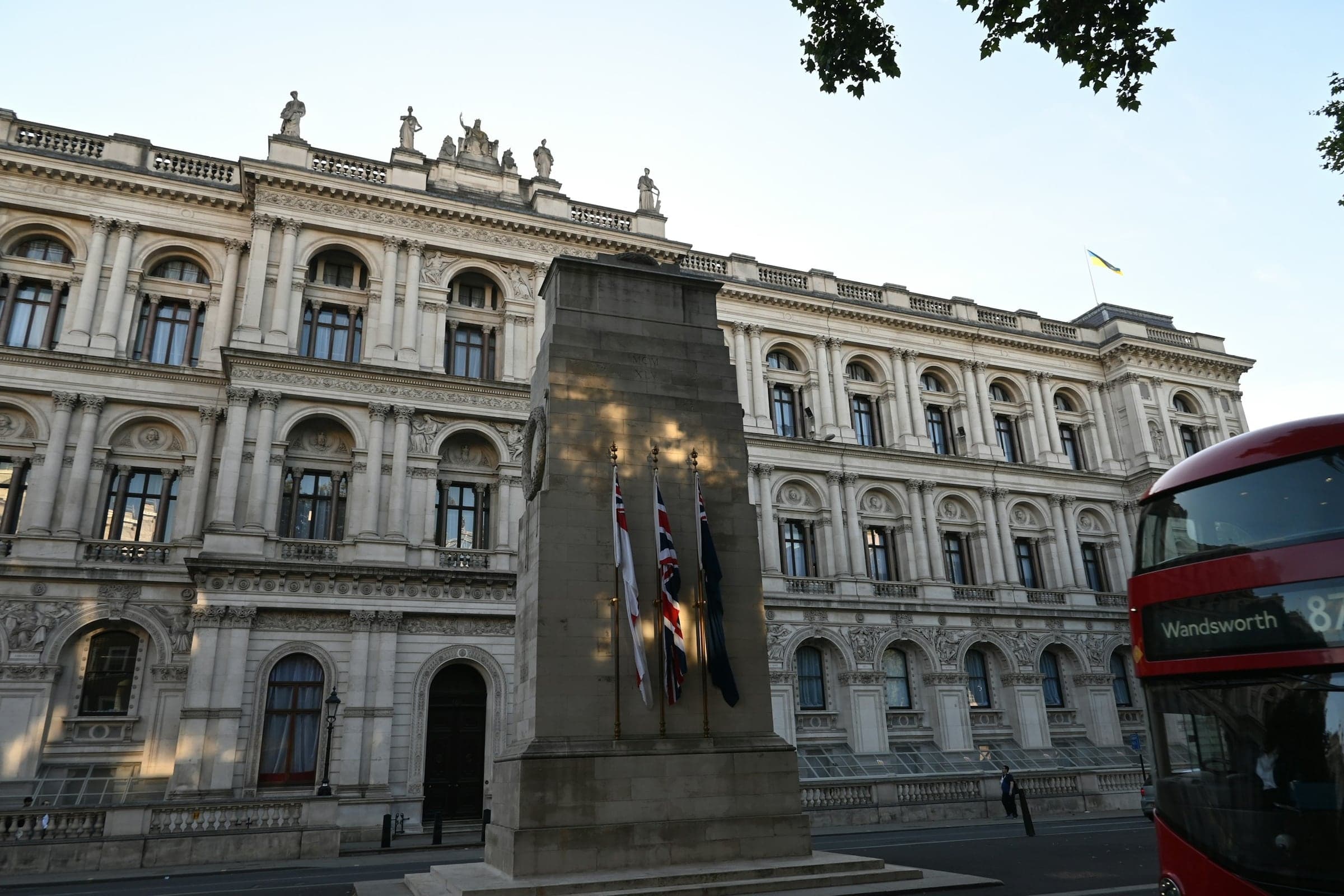
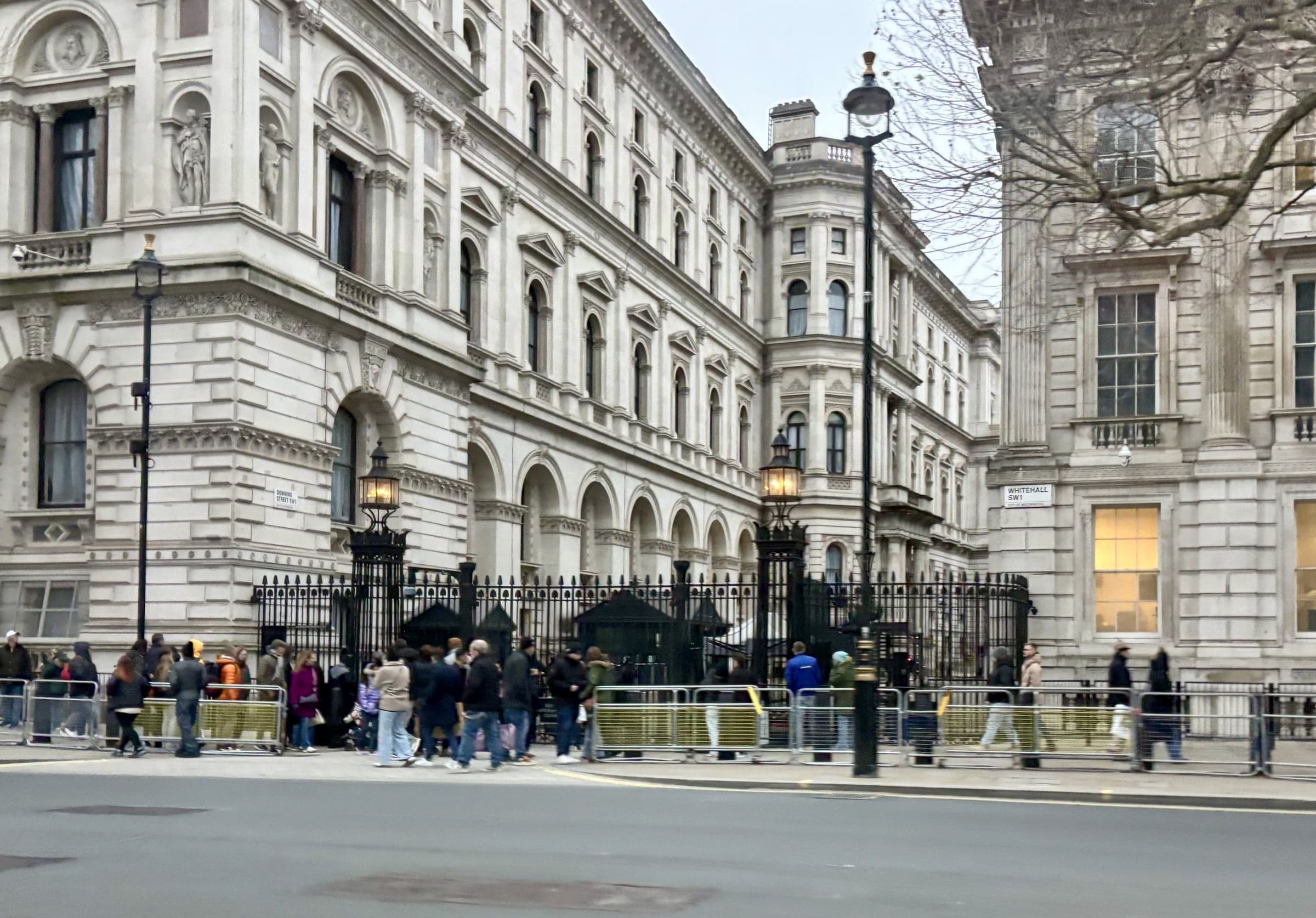
Cenotaph and Downing Street: An Empty Tomb and a Turncoat's Street
An empty tomb and a gated street of power. The Cenotaph began as a canvas and plaster prop meant to stand for one week, and Downing Street is named after the diplomat who changed sides and hunted down three of the regicides.
- 3
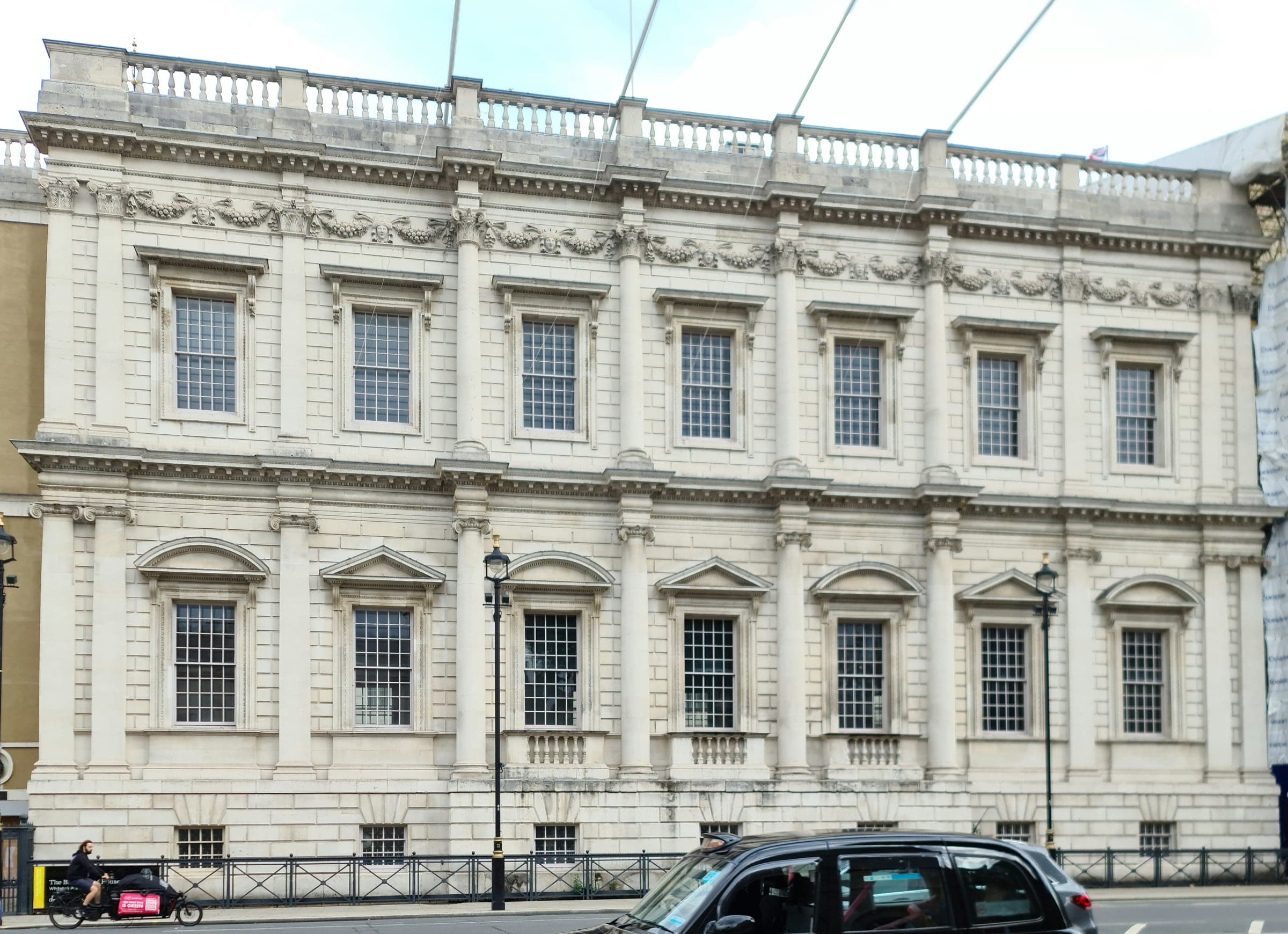
Banqueting House: Where England Beheaded Its King
The hall where Charles I walked to his death. Inigo Jones's Banqueting House, the last complete building of Whitehall Palace, faces Horse Guards across the road.
- 4
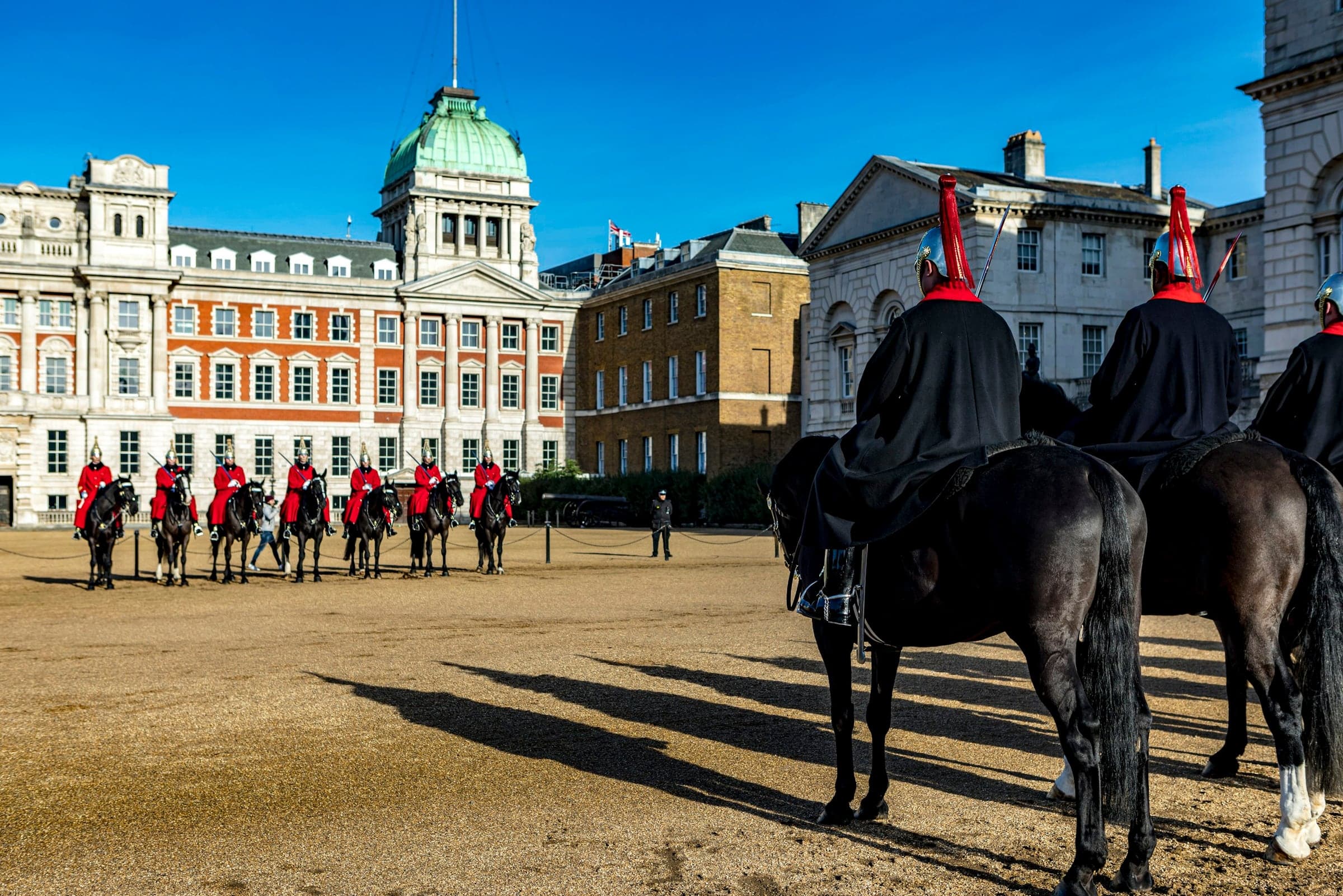
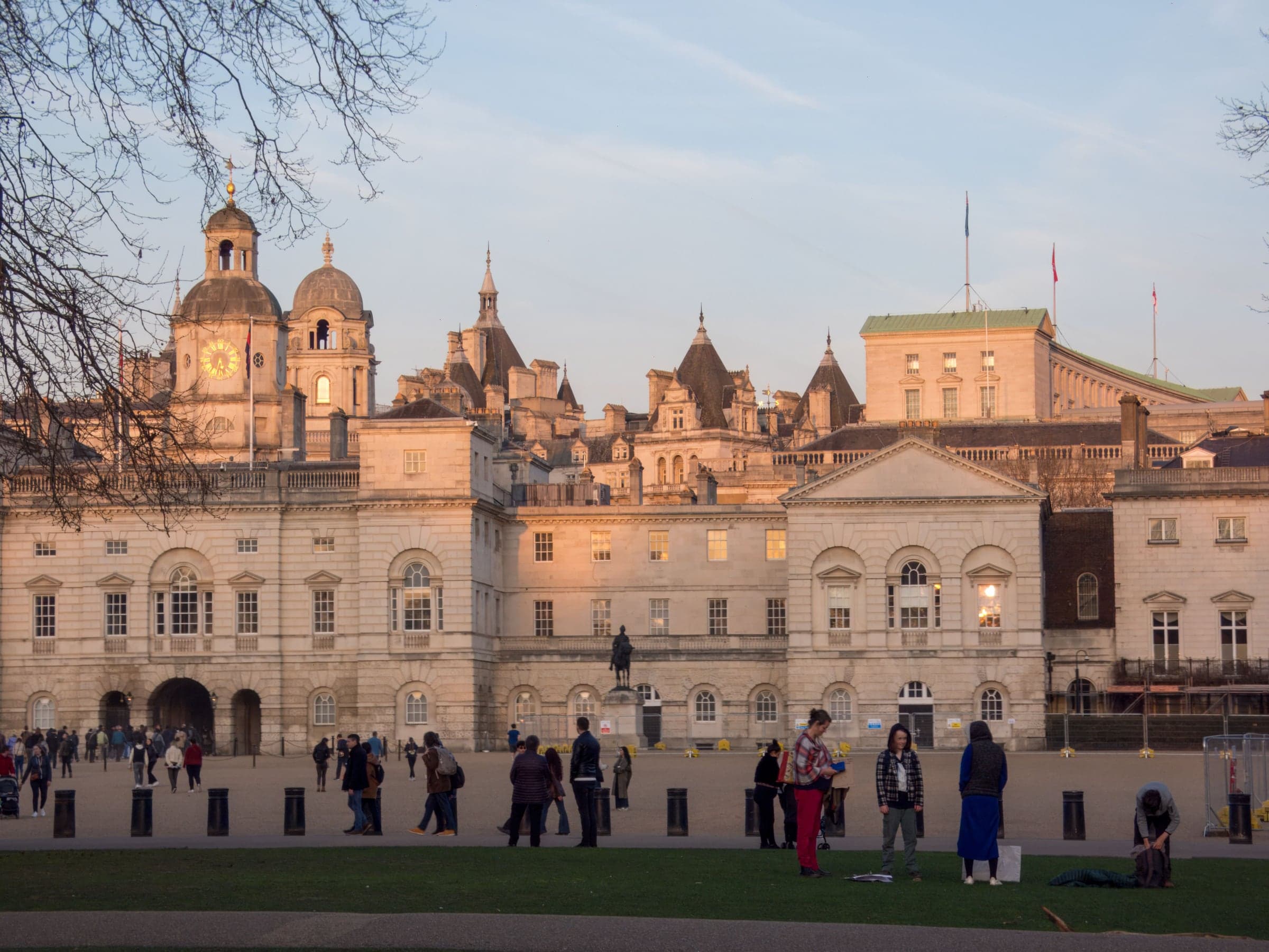
Horse Guards Parade: The Back Door of Power
The parade ground behind Downing Street's garden wall. Henry VIII's tiltyard under Horse Guards, the King's Life Guard since 1660, a mortar attack in 1991 and a wartime bunker an MP called the ugliest building in London.
- 5
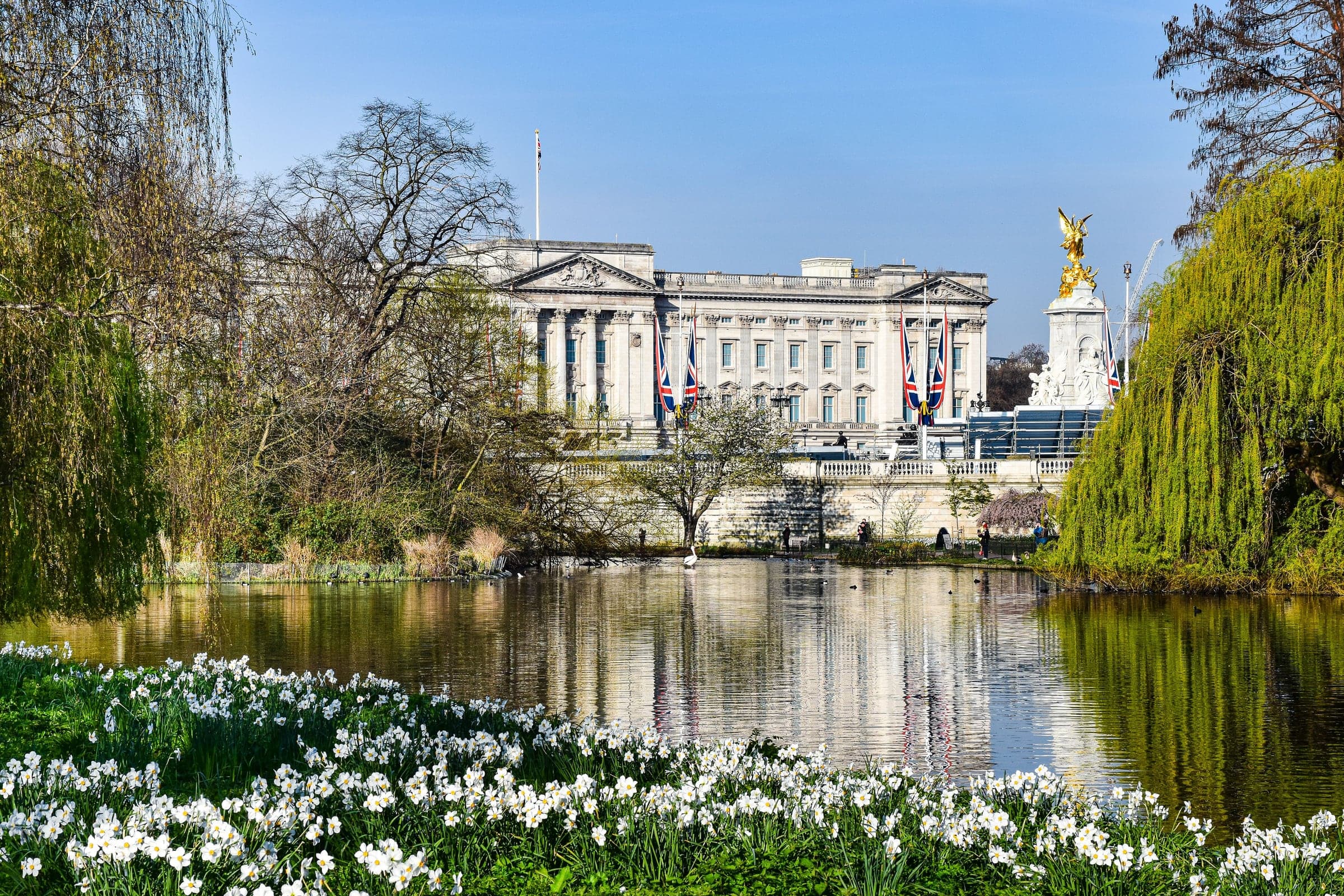
St James's Park: The King's Hunting Ground
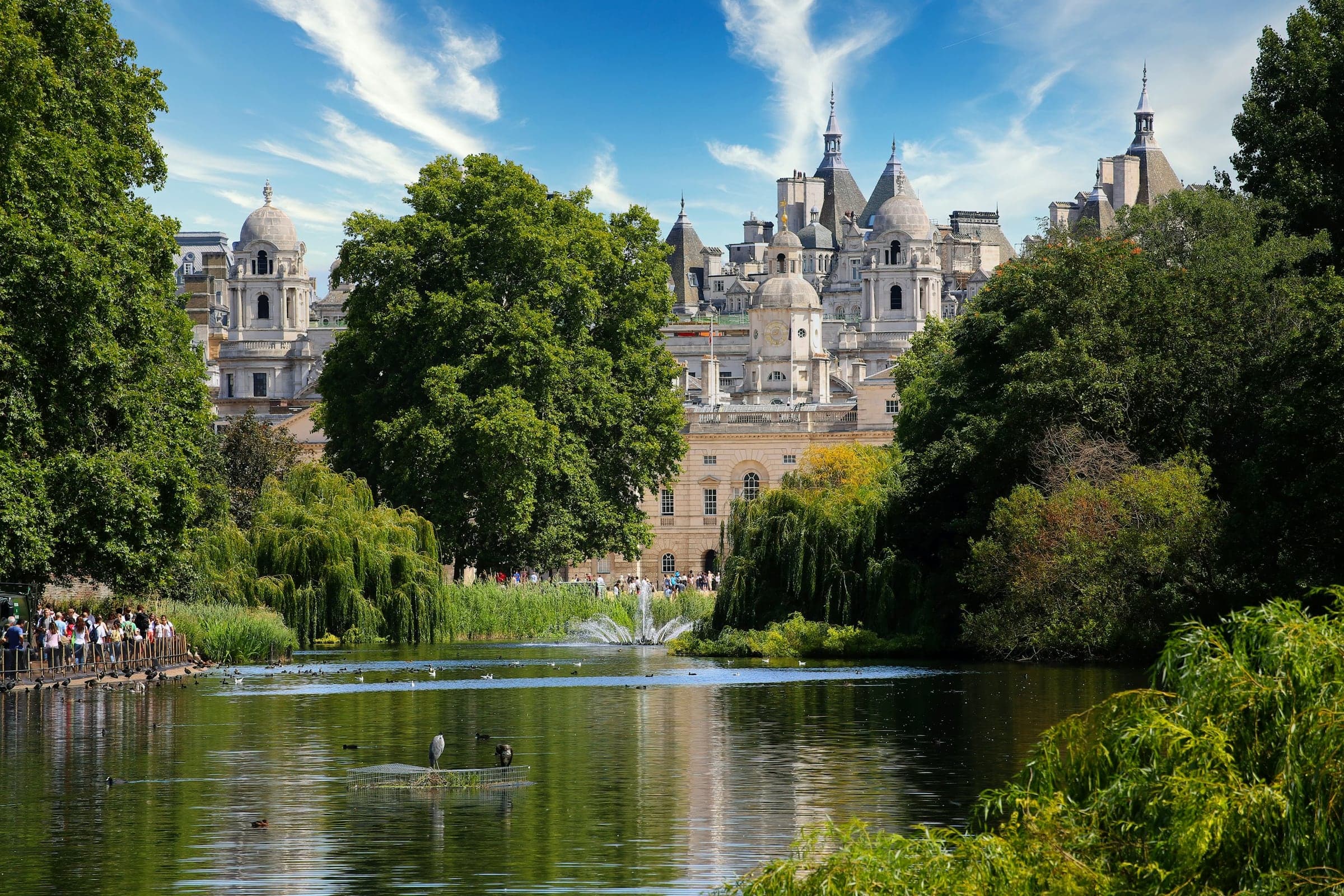
A royal hunting ground that became a public park. From the middle of the Blue Bridge you see Buckingham Palace one way and Whitehall's rooftops the other, over a lake where pelicans have lived since 1664.
- 6
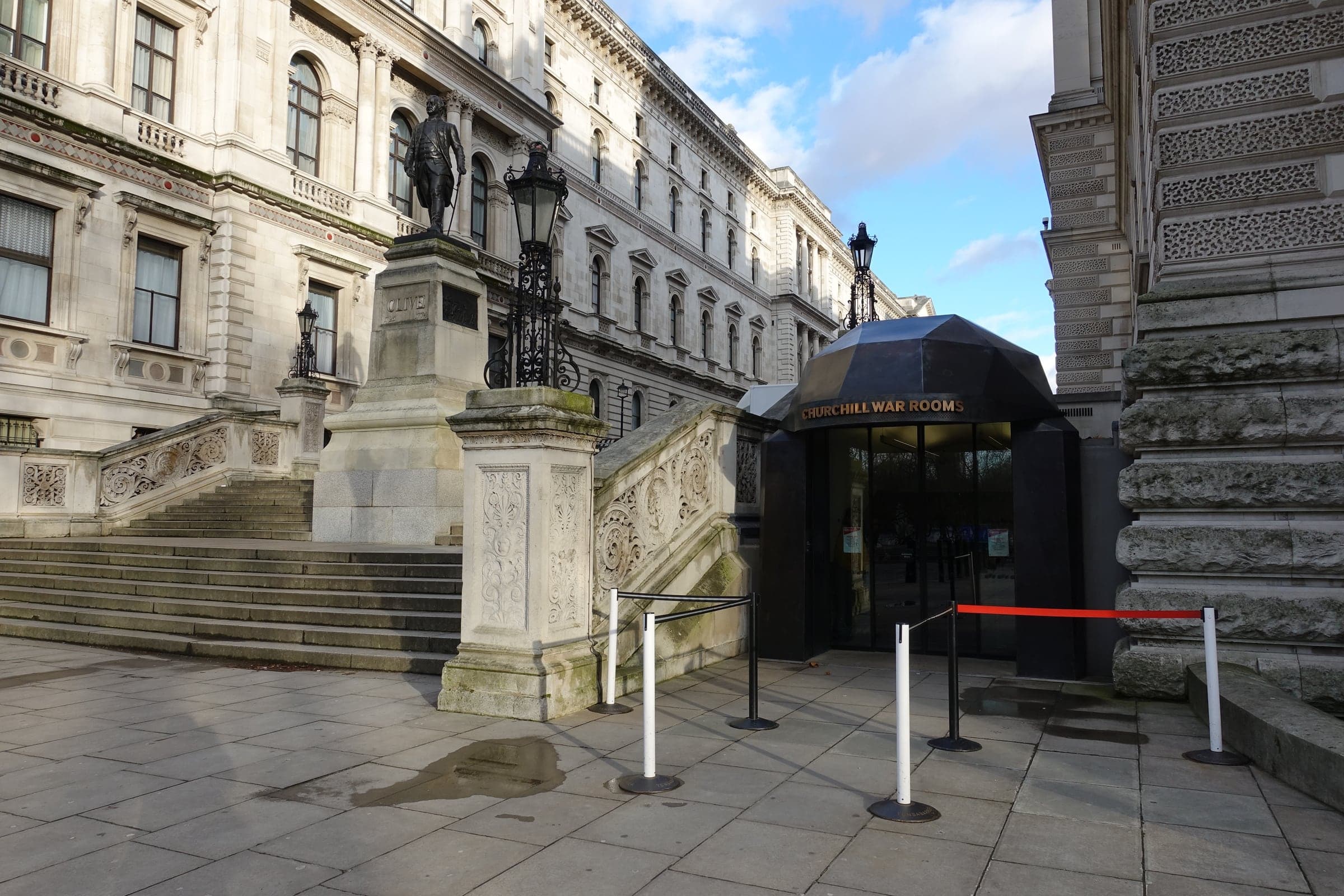
Churchill War Rooms: A Bunker Kept Safe by Secrecy
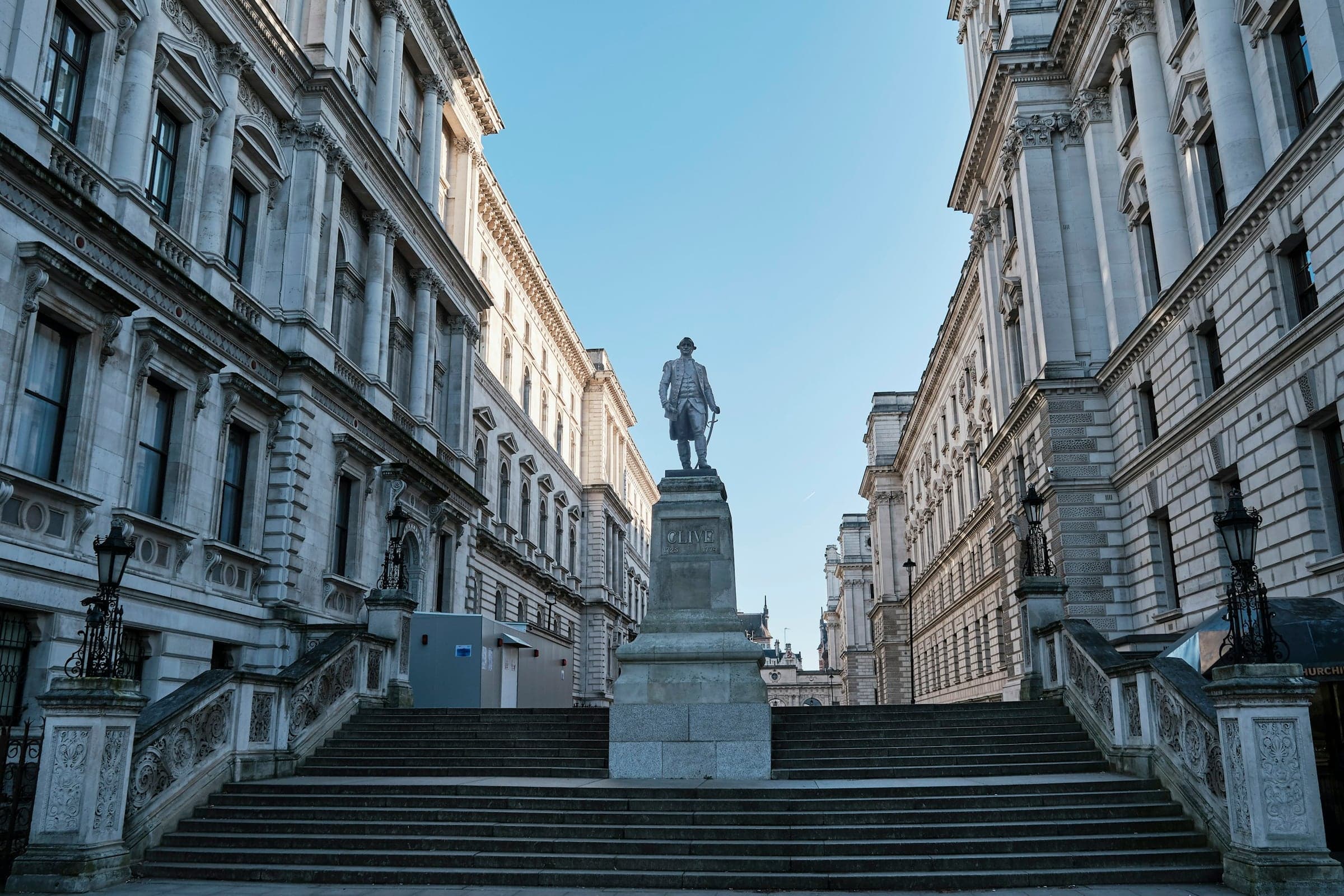
The entrance to Churchill's underground war headquarters. It was working a week before war was declared, it was never truly bomb-proof, and the statue at the top of the steps, Robert Clive, is itself now in dispute.
- 7
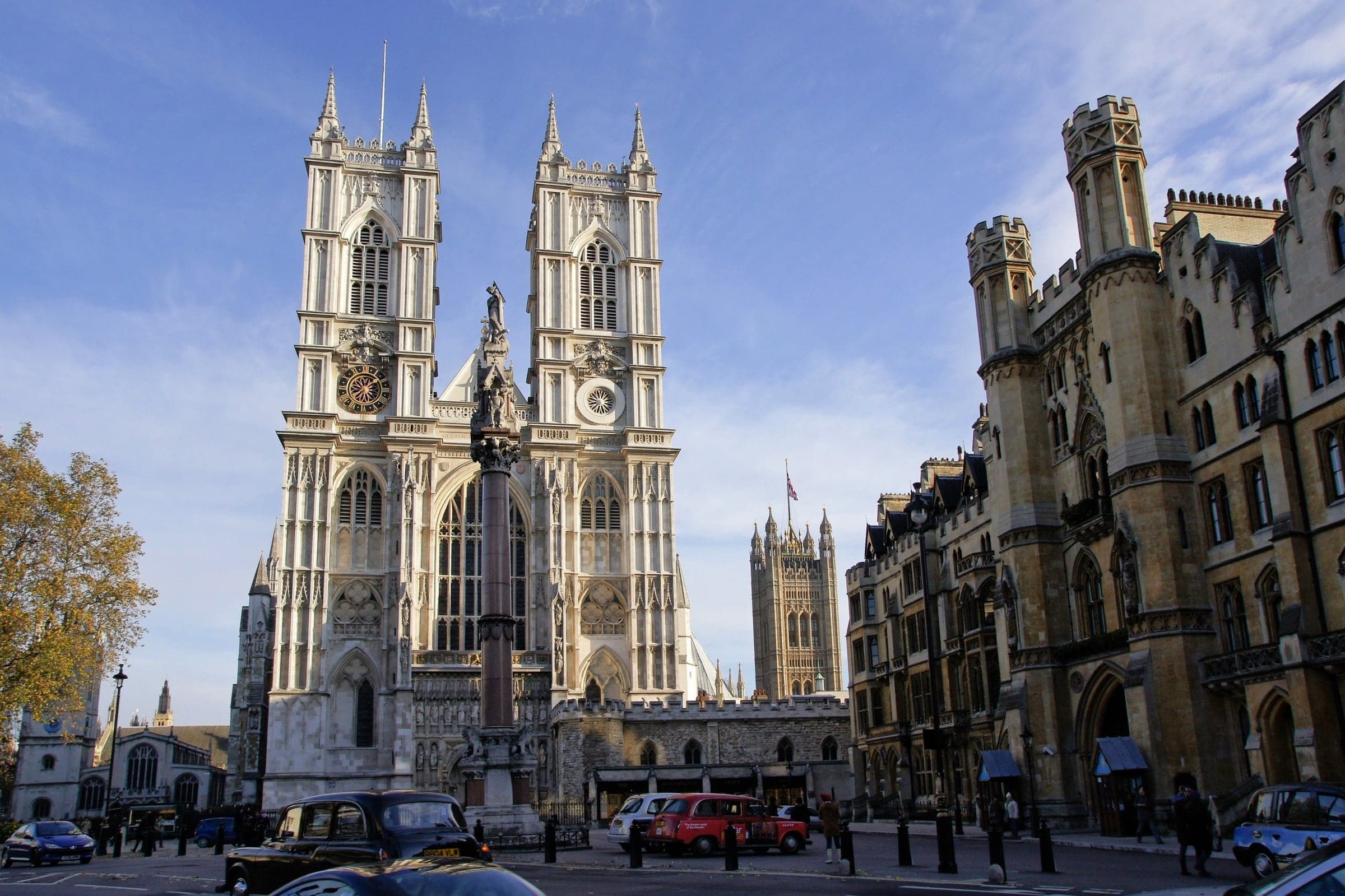
Westminster Abbey: Martyrs Over the Door
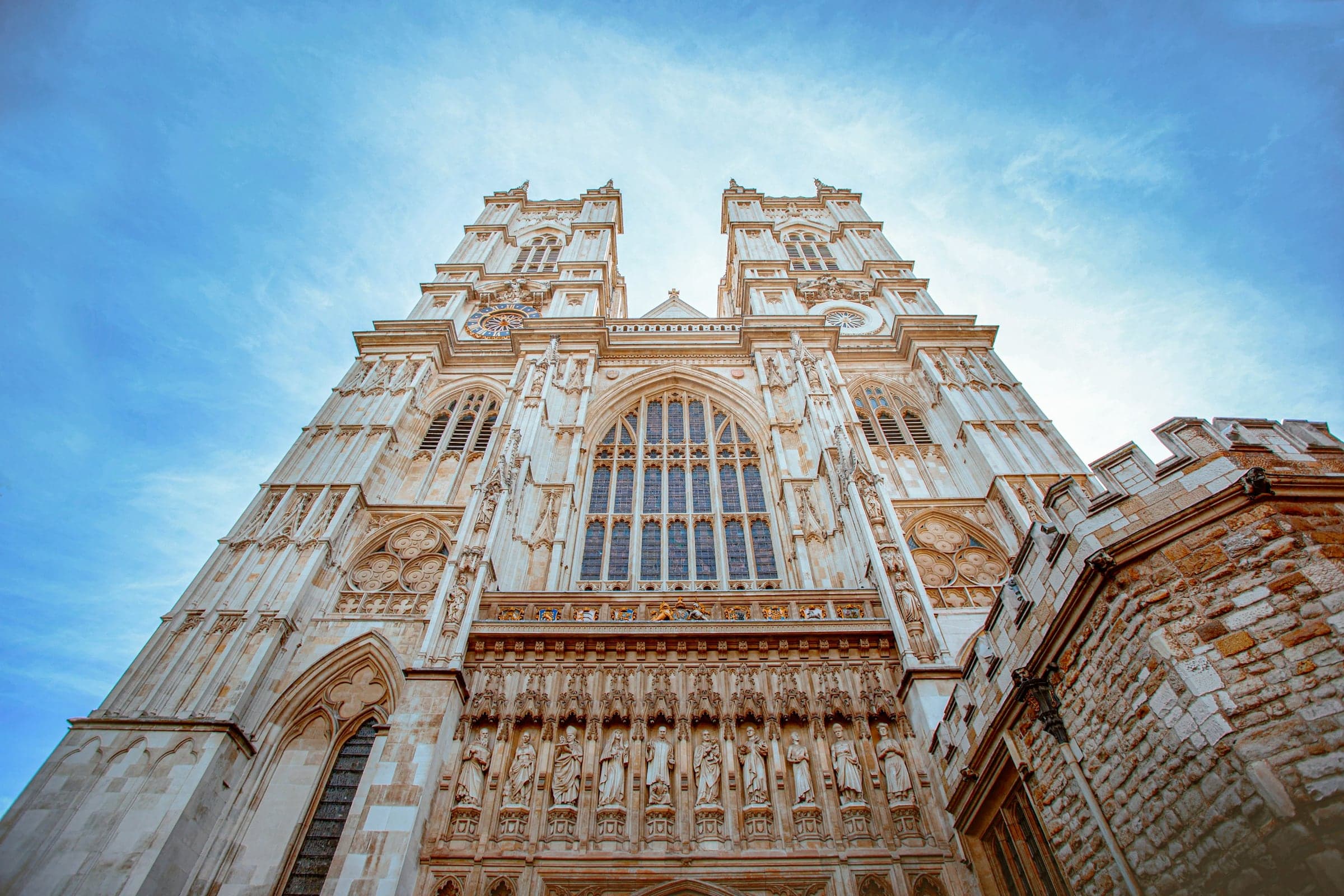
The coronation church and its ten modern martyrs. Forty monarchs have been crowned here since 1066, the Abbey once sheltered fugitives from the Crown, and ten people killed for what they stood for now stand over its Great West Door.
- 8
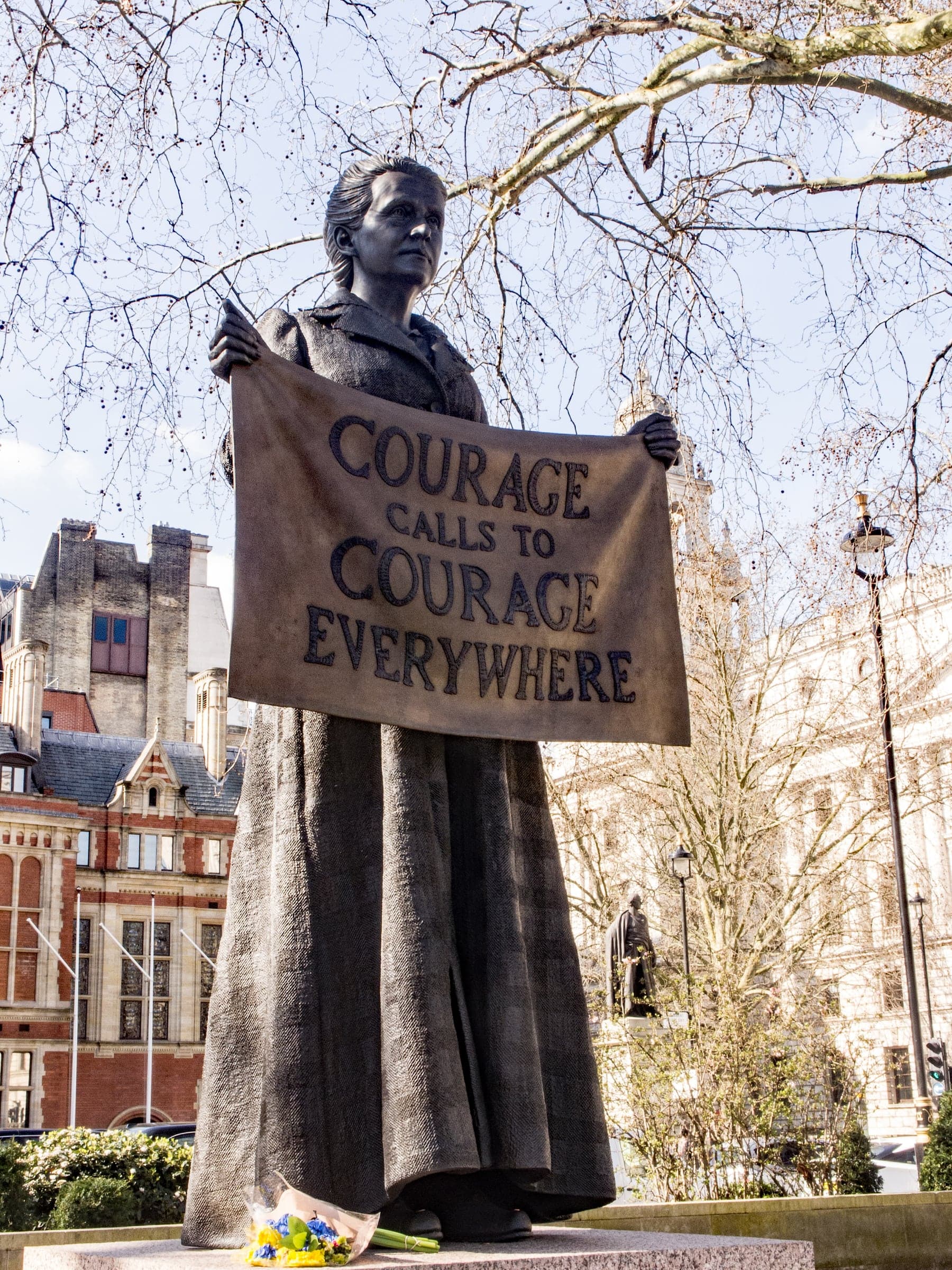
Parliament Square: The Rebels Move In
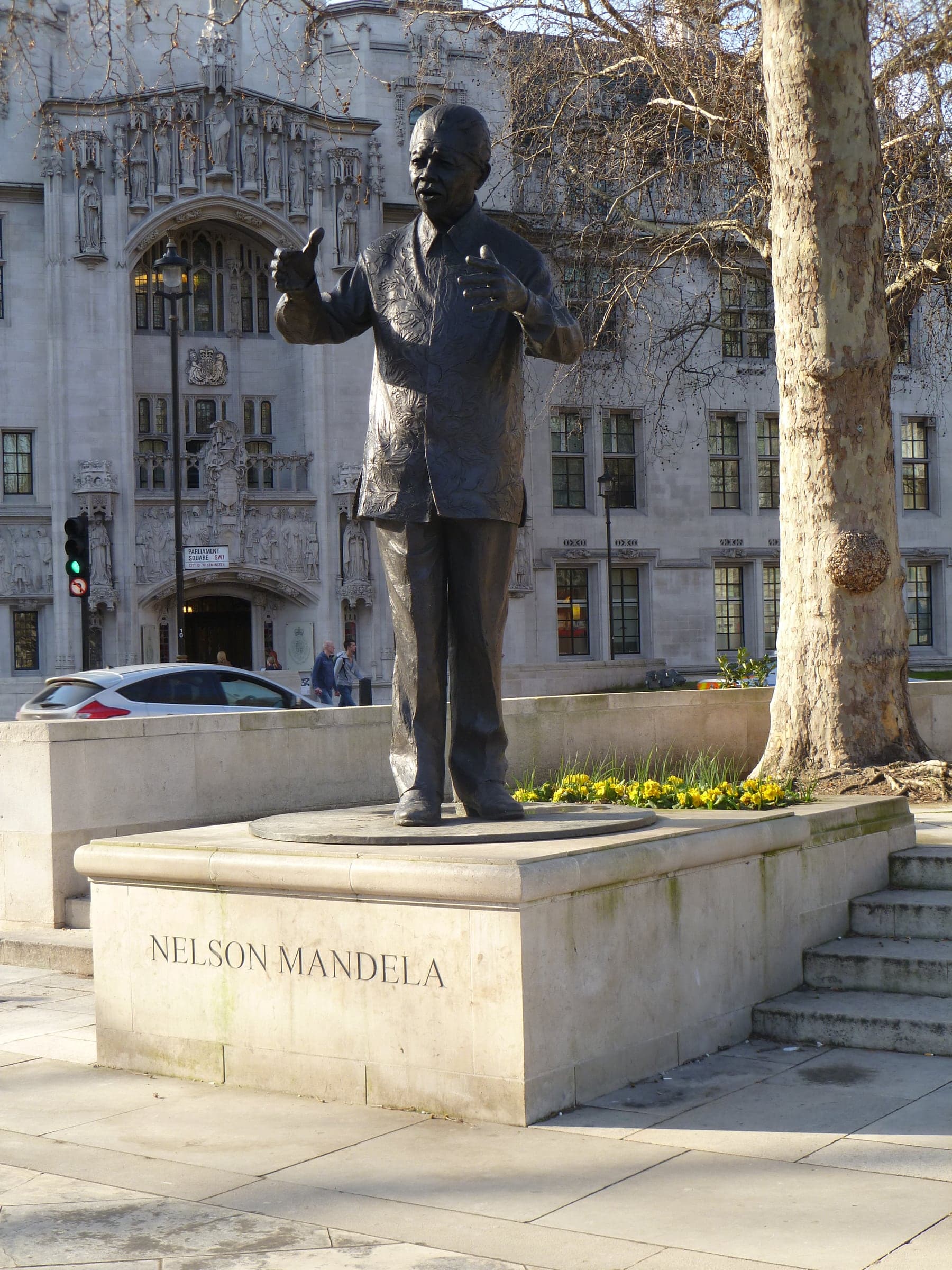
The square where the rebels finally got statues. Every statue put up here until 1973 honoured a man who governed; since 2007 Nelson Mandela, Mahatma Gandhi and Millicent Fawcett have joined them.
- 9
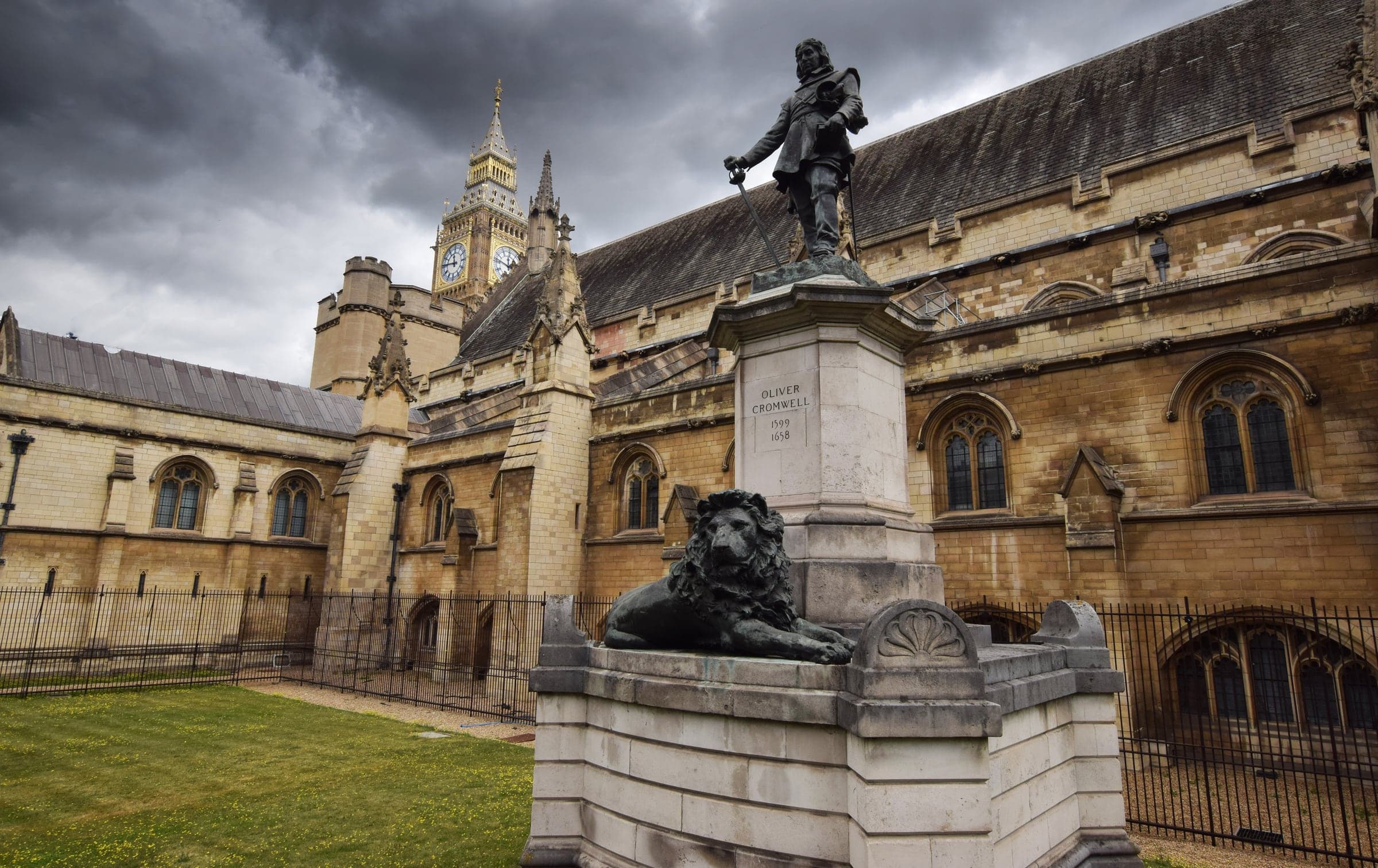
Westminster Hall: Cromwell in the Sunken Garden
The hall where a king was tried, and his enemy's statue. Westminster Hall saw the trials of Wallace, More, Fawkes and Charles I, and Cromwell's statue arrived in 1899 as an anonymous gift, set below the street.
- 10
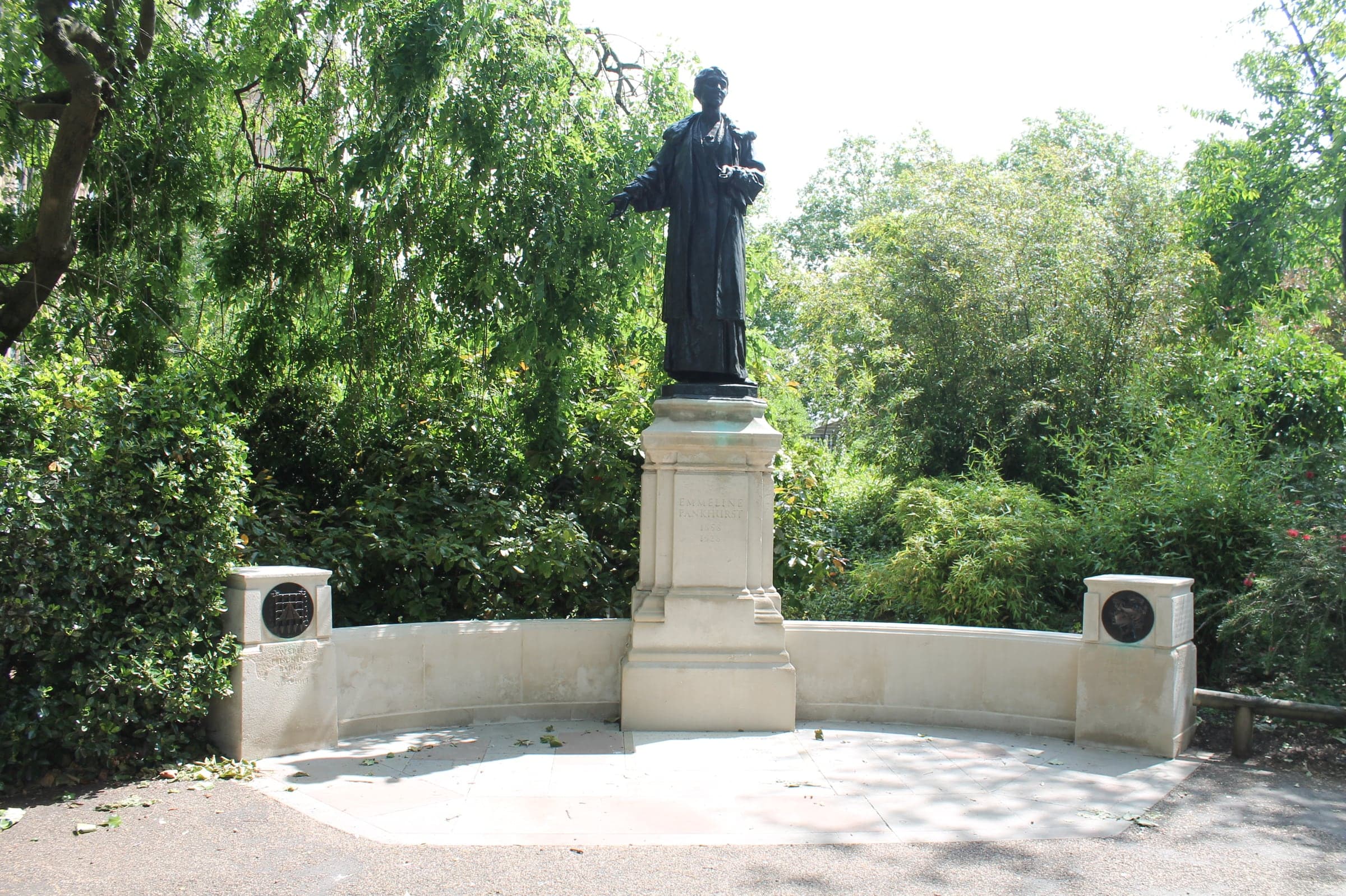
Victoria Tower Gardens: Pankhurst at Parliament's Door
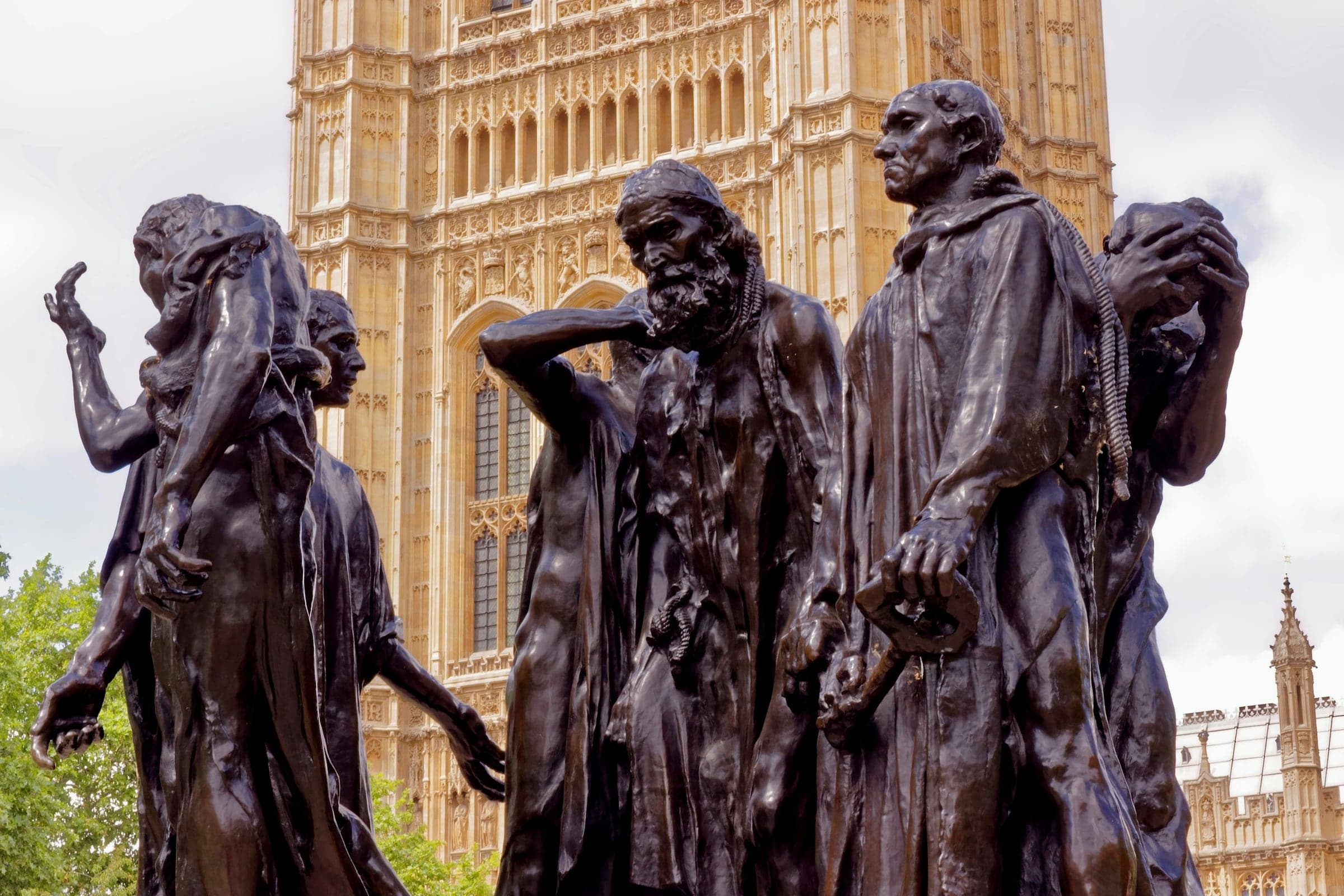
Emmeline Pankhurst beside the House of Lords. Her statue was paid for by the women she led and placed, at their insistence, near Parliament, with Rodin's Burghers of Calais and the abolition fountain further in.
Details
Best Time to Visit
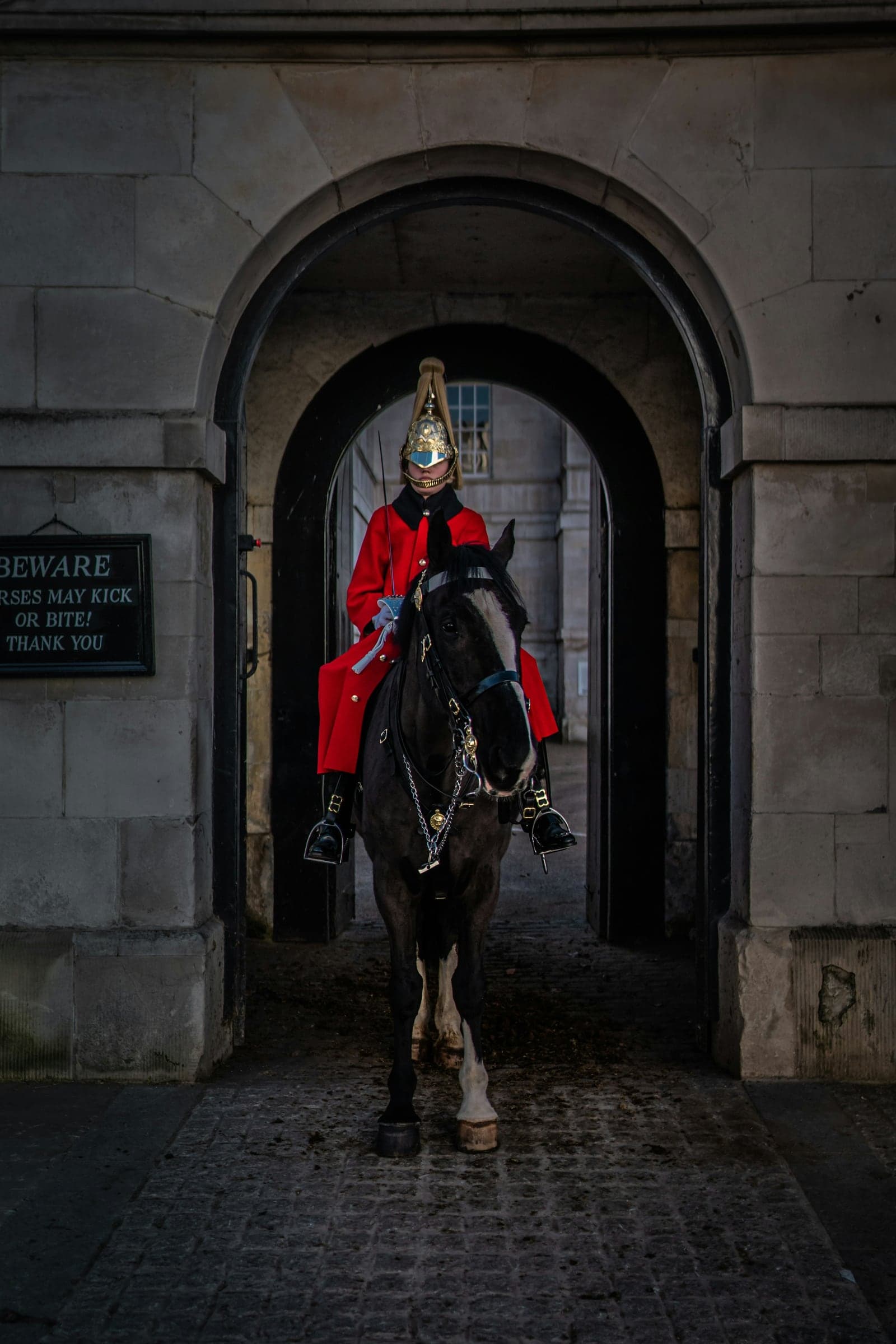
Weekday mornings from about nine, before the crowds build around Parliament Square, or late afternoon, when the sun is on the Abbey's west front. The mounted sentries are on the Whitehall side of Horse Guards between 10:00 and 16:00. The Horse Guards arch can be locked in the evening, so plan to pass it before about 19:00. Avoid state occasions and Remembrance Sunday (8 November 2026), when Whitehall is closed.
Pro Tips
- •For the classic photograph of the Houses of Parliament, walk about fifty metres out onto Westminster Bridge from the Boudica statue and look upriver, then come back to start the walk.
- •The Changing of the King's Life Guard takes place on Horse Guards Parade at 11:00 on Mondays, Wednesdays and Fridays, with an inspection at 11:00 at weekends. Ceremonies were suspended from 17 August 2026 for works in the stables, with a planned return on 29 August, so check the Household Division schedule before you plan round it. Checked 18 September 2026.
- •Westminster Abbey is open to visitors Monday to Friday 9:30 to 15:30 and Saturday 9:30 to 15:00, with services only on Sunday; adult entry is 31 GBP and hours change at short notice. Attending a service such as Evensong is free, through the Great West Door. Checked 18 September 2026 on westminster-abbey.org.
- •The Churchill War Rooms open daily 9:30 to 18:00 (last entry 17:00), adults 34 GBP; it is quietest after 15:00. Checked 18 September 2026 on iwm.org.uk.
- •The Banqueting House interior, with the Rubens ceiling, has limited opening: after 20 September 2026 it opens to the public only on 1 November and 20 December 2026. Checked 18 September 2026 on hrp.org.uk.
- •The St James's Park pelicans are fed daily, usually around 14:30; look for them near Duck Island Cottage at the east end of the lake, or on the rocks in the middle of the water. Checked 18 September 2026 on royalparks.org.uk.
- •Trafalgar Square is five minutes north up Whitehall from Horse Guards, and makes an easy extension after the walk.
- •The Jewel Tower, the medieval treasure tower opposite Victoria Tower Gardens, is run by English Heritage and opens daily 10:00 to 17:00 (last entry 16:30). Checked 18 September 2026.
Safety & Precautions
- •The route from stop 3 to stop 4 passes through the Horse Guards arch, which is reported to be locked in the evening (about 20:00 to 07:00; no official hours are published). If it is shut, walk on up Whitehall to Trafalgar Square, turn left through Admiralty Arch into The Mall, and take the first left down Horse Guards Road onto the parade (about ten minutes). The same detour works when the parade is closed for Trooping the Colour or another event.
- •Whitehall, Parliament Square and Downing Street see frequent demonstrations, state events and police cordons, and the pavements may be closed at short notice. Remembrance Sunday (8 November 2026) closes Whitehall for the morning.
- •Around Parliament Square the traffic is heavy and the square was designed with few crossings: cross only at the signals.
- •Victoria Tower Gardens opens at 07:00 and closes at 20:30 in September, earlier in winter (The Royal Parks). When it is shut, the Pankhurst statue can still be seen through the railings from Abingdon Street.
- •Plans for a national Holocaust memorial in Victoria Tower Gardens were still awaiting a planning decision at the government's latest update (20 August 2026), and no works had been reported; check The Royal Parks website for any closures.
- •Parliament Square, Whitehall and the Abbey forecourt draw dense crowds, and crowded sightseeing spots attract pickpockets and phone thieves. Keep bags closed and in front of you, and hold your phone securely when taking photos near the kerb.
Travel advisory: Exercise Increased Caution (Level 2).
Gallery
Related Reading
Go deeper on what you'll see, hear, and walk through.
Read the walk
The full story of Westminster: The Rebels at Parliament's Gates, in words. Prefer to listen? Play it narrated, from home or on location.
Introduction
Westminster is where Britain keeps its power. It is also where it keeps the statues of people who fought against power. A queen who burned London. The man who ruled England without a king. Women who went to prison for the vote. A prisoner who became a president. They stand at Parliament's gates now, and how they got there is the story of this walk.
Take Oliver Cromwell. In eighteen ninety-five the government asked Parliament for five hundred pounds for a statue of him, and after a fight in the House of Commons it dropped the idea. Four years later he was standing outside Parliament anyway, and the way he got there says a lot about this place. Westminster does honour the people who defied it, in the end. Reluctantly, late, and on its own terms.
This walk covers Westminster, in London, England. It is ten stops and about two point nine kilometres, a loop of around an hour and a half on mostly level pavements, with a few steps in Parliament Square: up Whitehall, through Horse Guards into Saint James's Park, back past Westminster Abbey and Parliament Square, and on to a riverside garden beside the Houses of Parliament.
When you arrive at the statue of Boudica, at the Westminster end of Westminster Bridge, begin with stop one.
1. Boudica and Westminster Bridge: The Rebel Queen at Parliament's Door
Welcome to Westminster Bridge, and to the first rebel on this walk. The bronze chariot on the granite plinth beside you is Boudica, queen of the Iceni, with her two daughters crouched on either side of her.
Around the year sixty or sixty-one she led a rising against Roman rule in Britain. Her army attacked Colchester, then London, then Saint Albans. London was a busy merchants' town then, and archaeologists digging under the City still find the thick layer of burned debris it left behind. The Roman historian Tacitus gives her a speech before her last battle, and in his version it ends: such was the settled purpose of a woman; the men might live and be slaves.
Now look at how London remembers her. Thomas Thornycroft worked on this group for decades from the eighteen fifties, and the London Museum says Prince Albert commissioned it. Thornycroft died in eighteen eighty-five, seventeen years before it went up. His son presented it to London, and the London County Council placed it here, at the foot of Parliament, in nineteen oh two. The front of the plinth honours her for leading her people against the Roman invader. One side carries two lines from a poem by William Cowper, promising her that her descendants will rule lands Caesar never knew.
So the woman who fought an empire is recast as the ancestor of a bigger one. That is the move to watch for on this walk. Westminster honours the people who defied it, but it chooses the words on the plinth.
Across the road stands the clock tower everyone calls Big Ben. Strictly, Big Ben is the great bell inside, and the tower has been the Elizabeth Tower since twenty twelve.
Now cross the Embankment at the lights and walk away from the river along Bridge Street, with the tower on your left. At the end of the street, cross over to the far side of Parliament Street at the lights, then turn right and walk up that pavement, away from the tower. Stop two is the tall pale stone standing in the middle of the road.
2. Cenotaph and Downing Street: An Empty Tomb and a Turncoat's Street
Stop on the pavement just short of the tall pale stone in the middle of the road. This is the Cenotaph, and it is the first of two things in this view that are not what they seem.
The name is Greek for an empty tomb. No one is buried in it and no names are carved on it. The only words are The Glorious Dead, suggested by the Prime Minister, David Lloyd George. And the first Cenotaph was never meant to last. Edwin Lutyens made it of canvas, plaster and wood for the peace parade of July nineteen nineteen, to stand for a week. More than a million people came to it in that first week, and it was rebuilt in Portland stone. The King unveiled the permanent one on Armistice Day, nineteen twenty. The crowds, in effect, decided what the nation's memorial would be.
Look at its edges. Nothing on it is quite straight. Its upright lines, Historic England says, lean in towards a point about a thousand feet up, and its level lines curve round a point nine hundred feet below the pavement. There is no cross on it either, which offended some people at the time.
Now the second thing. Just ahead, on this side of the road, are the black gates of Downing Street. The street is named after Sir George Downing, a diplomat who served Oliver Cromwell's republic, changed sides, and won a royal pardon. In sixteen sixty-two he had three of the regicides, the men held responsible for the execution of King Charles the First, arrested in the Dutch town of Delft and sent home to be put to death. Samuel Pepys wrote that he had acted like a perfidious rogue.
Those gates are newer than they look. There has been a barrier here since nineteen seventy-three, and the present gates went up around nineteen ninety, when a member of Parliament asked whether the public's right of way down the street had been extinguished.
From here, walk on up Whitehall, past the gates. Stop three is about two hundred metres on, just before a gateway guarded by sentry boxes, opposite a stone building with tall windows.
3. Banqueting House: Where England Beheaded Its King
Stop here, just short of the gateway with the sentry boxes. Across the road, on your right, is the Banqueting House, and this is where England did something it had never done before.
Inigo Jones began it in sixteen nineteen, and it is the only complete building left of the royal Palace of Whitehall, which burned in sixteen ninety-eight. Inside, King Charles the First installed a ceiling by Peter Paul Rubens that shows his father, James the First, being carried up to heaven.
On the thirtieth of January, sixteen forty-nine, Charles walked beneath that ceiling to his death. He had been tried in Westminster Hall, near the end of this walk, and condemned for treason. It was a cold day, and he asked for, in the words of his attendant Thomas Herbert, a shirt on more than ordinary, so that he would not be seen to shiver. A scaffold had been built out from the front of the building. The plaque under the king's bust says he stepped out of a window; a witness wrote of a passage broken through the wall. The crowd was held too far back to hear his last speech. When the axe fell, one man wrote, there was such a groan by the thousands then present as he had never heard before. Historic Royal Palaces calls him the only English monarch to be tried and executed for treason.
Look for that bust, a dark figure in a niche above the entrance. It was put there in nineteen fifty, and every year on the thirtieth of January a service is held for him here.
On this side of the road, from ten in the morning until four in the afternoon, mounted troopers stand guard at Horse Guards. Their guard has been mounted here since sixteen sixty, when the dead king's son came back to the throne. Hold on to one more name: Oliver Cromwell, whose republic you heard about at Downing Street. You will meet him before the end of the walk.
Walk on to the sentry boxes, turn left between them, and go through the arch of Horse Guards out onto the open parade ground beyond. If the gates are locked, as they can be in the evening, walk on up Whitehall to Trafalgar Square, turn left through Admiralty Arch into The Mall, and take the first left, Horse Guards Road, beside a bunker covered in creeper. It brings you onto the parade.
4. Horse Guards Parade: The Back Door of Power
Walk out onto the parade ground, then turn to face the Horse Guards building, with its clock tower. This is the back of Horse Guards, and this stop is about the back doors of power. The building went up in the seventeen fifties to a design by William Kent, who died before it…
Full narration for this stop unlocks with the tour.
5. St James's Park: The King's Hunting Ground
Stop in the middle of the bridge. On your right, at the far end of the lake, is Buckingham Palace. On your left, over the trees, rise the towers and rooftops of Whitehall, with the London Eye beyond them. All of this park was once royal ground. In the early fifteen thirties…
Full narration for this stop unlocks with the tour.
6. Churchill War Rooms: A Bunker Kept Safe by Secrecy
Stop at the foot of the steps, by the entrance to the Churchill War Rooms. Beneath the great government building above you, Britain's war was run. In June nineteen thirty-eight officials chose the basement of this building, then called the New Public Offices, for an emergency…
Full narration for this stop unlocks with the tour.
7. Westminster Abbey: Martyrs Over the Door
Stop by the red granite column and face the two towers. This is the west front of Westminster Abbey, the coronation church. Forty monarchs have been crowned inside, beginning with William the Conqueror on Christmas Day, ten sixty-six. That first coronation was chaos. The…
Full narration for this stop unlocks with the tour.
8. Parliament Square: The Rebels Move In
Stop beside the statue of the woman with the banner. On the way up this path you passed two other newcomers, standing among the old prime ministers: Nelson Mandela at the corner, then Mahatma Gandhi. All three arrived in this century. For more than a century this square…
Full narration for this stop unlocks with the tour.
9. Westminster Hall: Cromwell in the Sunken Garden
Stop by the railings. Below you on your left, in the sunken lawn, stands Oliver Cromwell, with the great flank of Westminster Hall behind him. This is where the king's story from earlier in the walk began, and where Cromwell's ends. Westminster Hall was built in the ten…
Full narration for this stop unlocks with the tour.
10. Victoria Tower Gardens: Pankhurst at Parliament's Door
Walk in through the gate and stop by the statue on your left: a woman with one arm stretched out, as if in the middle of a speech. If the gate is locked, stay at the railings: she stands just inside, to the left. This is Emmeline Pankhurst, and she ends this walk, because her…
Full narration for this stop unlocks with the tour.
- Boudica's chariot on its plinth with Elizabeth Tower at left — Matt Brown, CC BY 4.0 · source
- The Downing Street gates on Whitehall's west side — John H Darch, CC BY-SA 2.0 · source
- The Banqueting House Whitehall front head-on — Ricardalovesmonuments, CC BY-SA 4.0 · source
- The Churchill War Rooms entrance pavilion (black canopy lettered CHURCHILL WAR ROOMS) at the foot of the Clive Steps — CrisNYCa, CC BY-SA 4.0 · source
- Abbey west front with the Scholars War Memorial column — besopha, CC BY-SA 2.0 · source
- Millicent Fawcett statue holding the COURAGE CALLS TO COURAGE EVERYWHERE banner — Jim Osley, CC BY-SA 2.0 · source
- Nelson Mandela statue on its plinth — Tbmurray, CC BY 3.0 · source
- Cromwell statue with its lion on Cromwell Green — Mark from Brighton, CC BY 2.0 · source
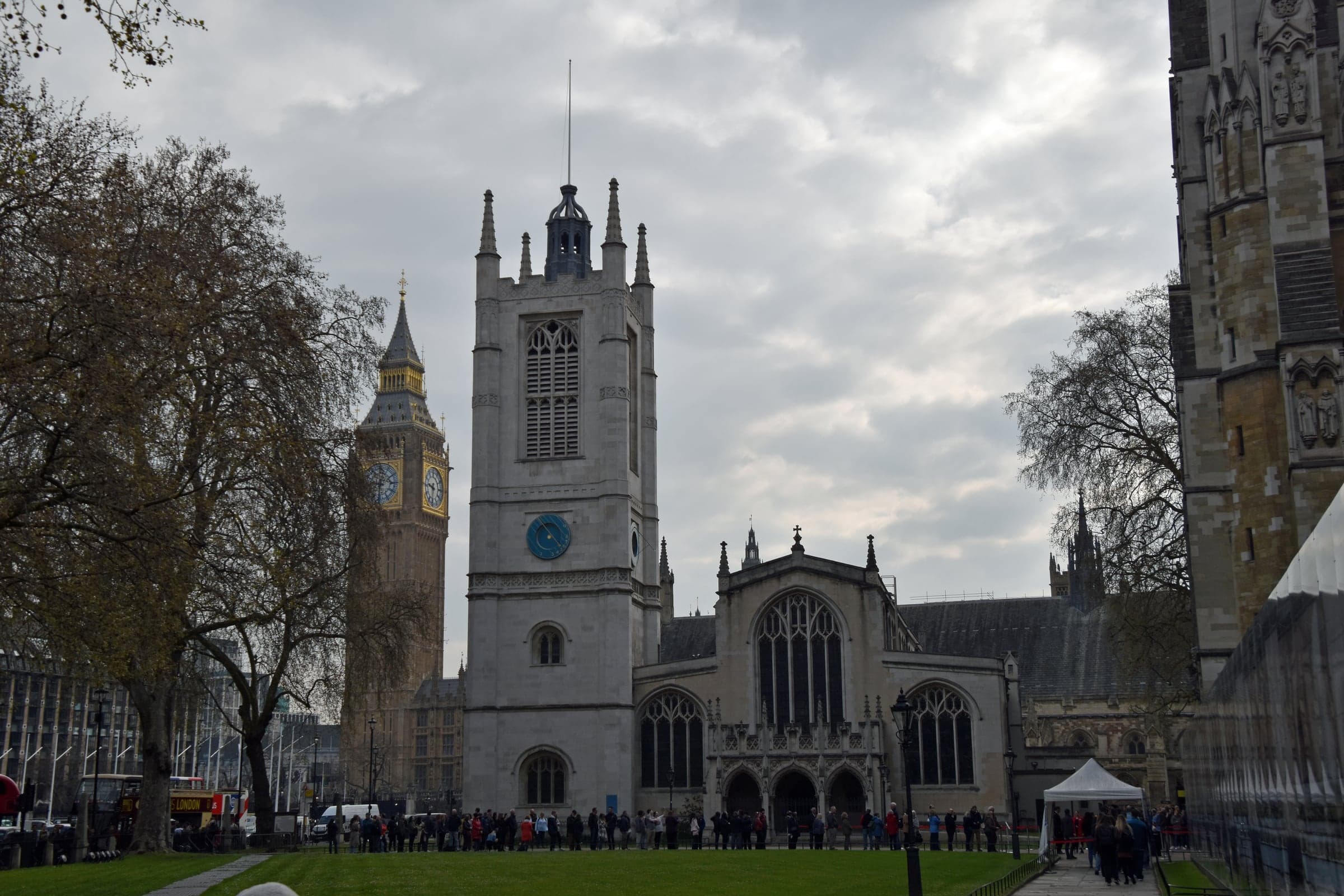
- St Margaret's Church with Elizabeth Tower beyond and the Abbey's north side at right (2023) — Thomas Dahlstrøm Nielsen, CC BY-SA 4.0 · source
- Emmeline Pankhurst statue on its pedestal with the curved stone screen and medallions — Maggie Jones, Public domain · source
Images may be cropped or resized. Other photos via Unsplash and Pexels.