Taj Mahal: A Paradise Garden Built to Face the River
70 min · 1.3 km · easy
Agra holds three generations of one family's graves within a few kilometers of each other. Akbar's Tomb at Sikandra was finished in 1613. Itimad-ud-Daulah, the tomb of his son Jahangir's chief minister and father-in-law, was finished in 1628. The Taj Mahal, for that minister's granddaughter, was begun in about 1632. Visit them in that order and you watch the Taj being reached.
Where the line starts
The idea of a tomb in a walled garden was already old when Akbar died. The Archaeological Survey's own page for Humayun's Tomb in Delhi gives the first garden tomb in India to Sikandar Lodi's, of after 1517, and UNESCO calls Humayun's, finished about 1572, the first of the grand dynastic mausoleums. Our Delhi garden tombs piece follows that half of the story. Agra's three take it from there.
Akbar: a plan argued over
Hear a stop from this walk
East Riverfront: The Moonlight Garden
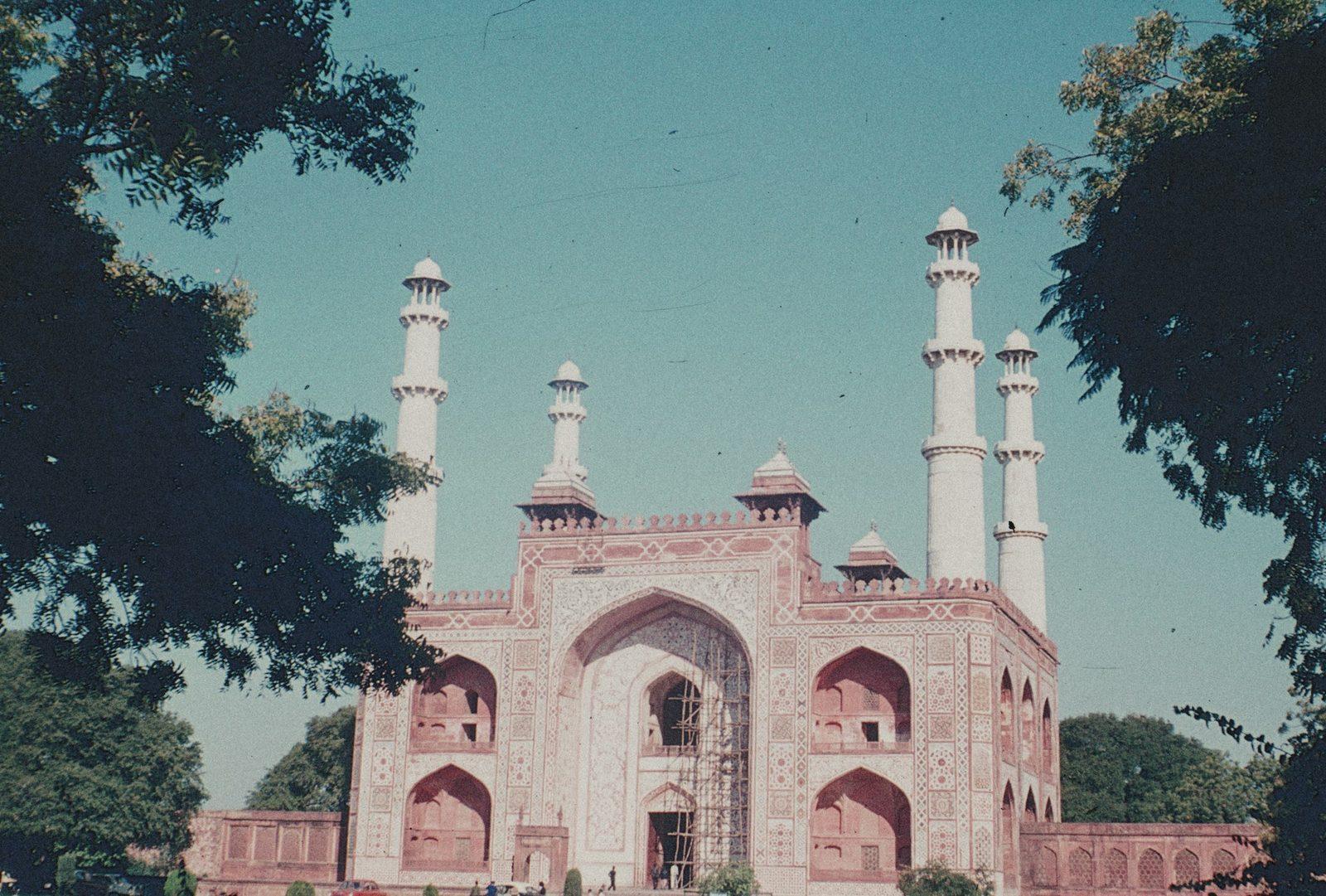
Akbar is said to have begun his own tomb. His son Jahangir visited in 1608, wrote that it "did not come up to my idea of what it ought to be", and had experienced architects rebuild it "on a settled plan", with a lofty gateway and "minarets of white stone". It was finished in 1613: five stories stepping up like a pyramid, red sandstone with a marble top, at the center of a walled garden with three blind gates. Nothing else in Mughal building quite looks like it. The South Gate's inscriptions are signed by Abd al-Haqq of Shiraz, who would later, as Amanat Khan, letter the Taj. See Akbar's Tomb: the grave his son rebuilt.
Itimad-ud-Daulah: small, white, inlaid
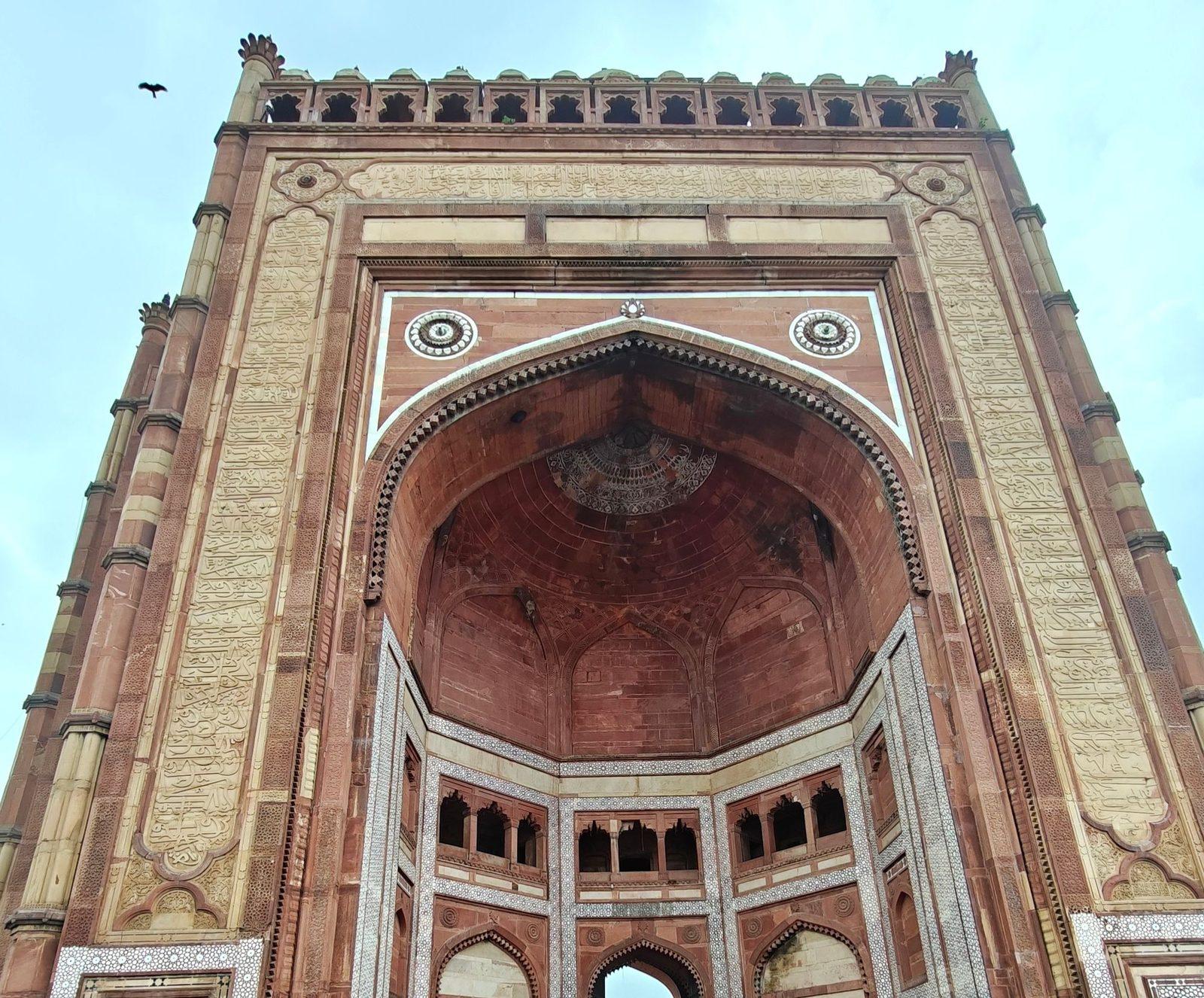
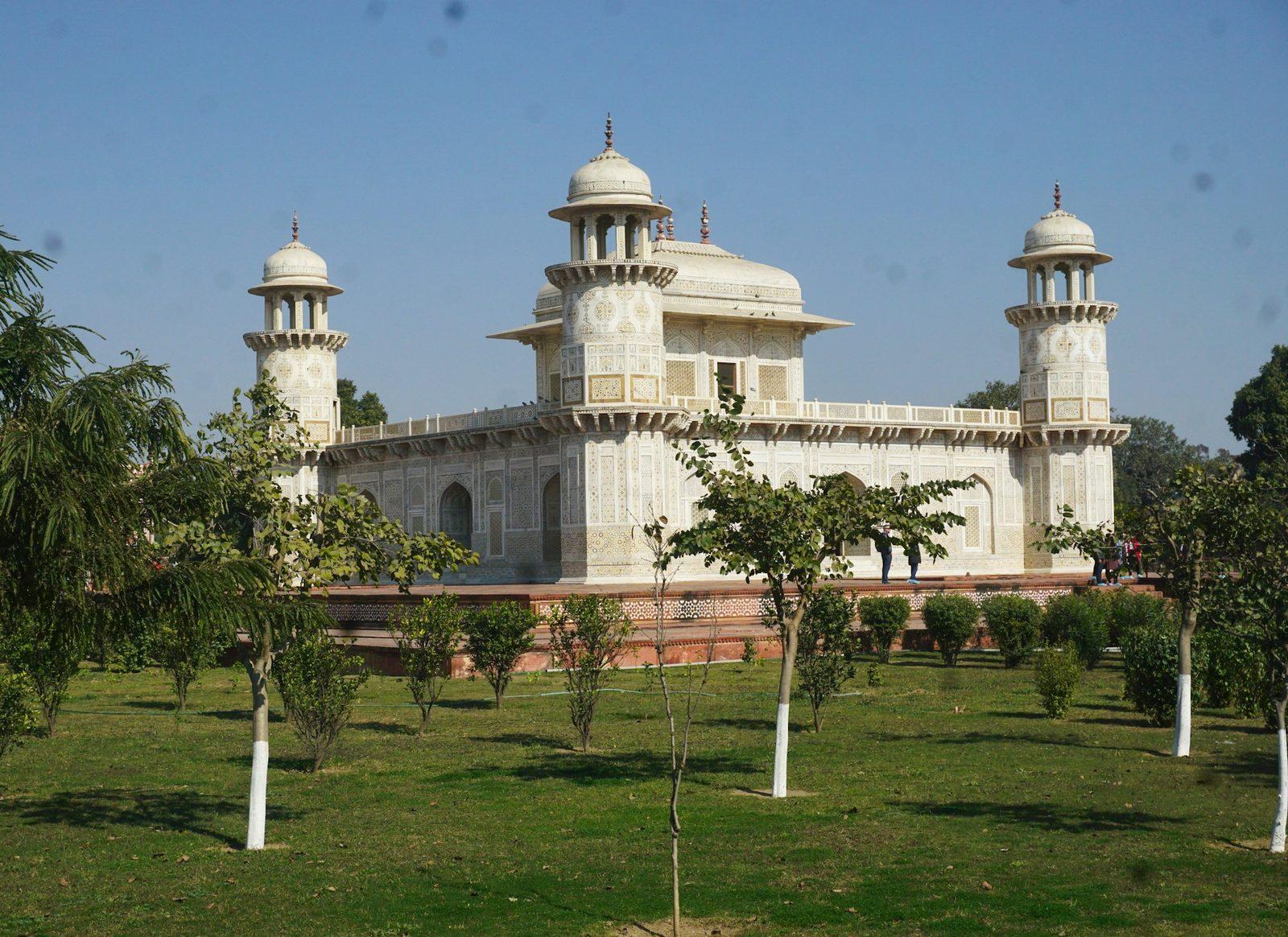
Jahangir's wife Nur Jahan built the next one for her father, Mirza Ghiyas Beg, titled Itimad-ud-Daulah, from 1622, and finished it in 1628. It is small and low, faced in white marble set with colored stone, with a pavilion on top instead of a dome. People call it the first white marble Mughal tomb and the first with pietra dura; the historian Mehreen Chida-Razvi more carefully calls its inlay "a forerunner to the delicate pietra dura" of the Taj. Salim Chishti's white marble tomb at Fatehpur Sikri, finished in 1580-81, is older. Inside, the wife lies at the exact center with her husband beside her. See Itimad-ud-Daulah: the Baby Taj that came first.
A kilometer north, Chini ka Rauza, a minister's tomb of the 1630s, tried another kind of color: glazed tile, which the district calls unique in Agra.
The Taj: the tomb at the end of the garden
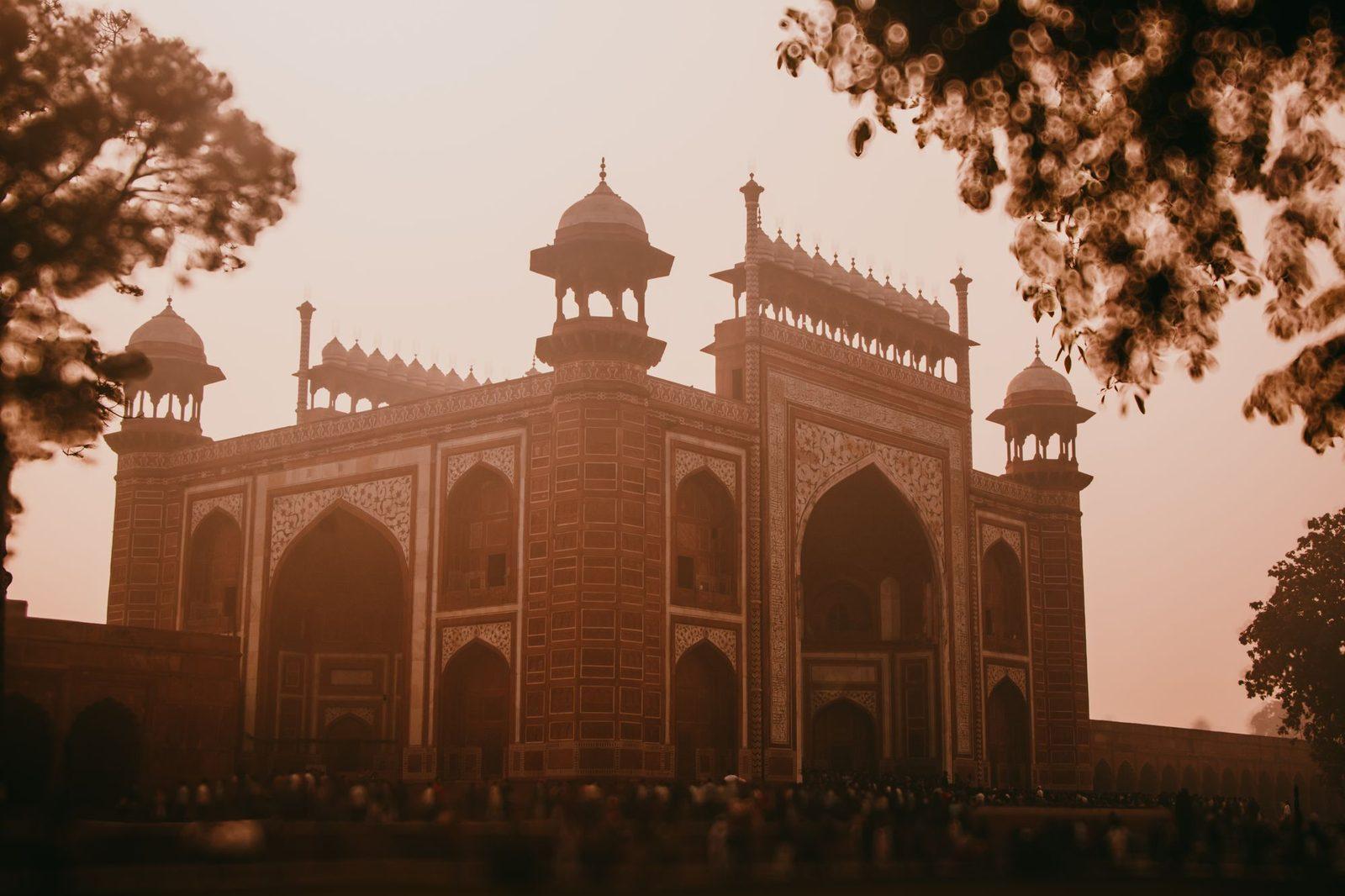
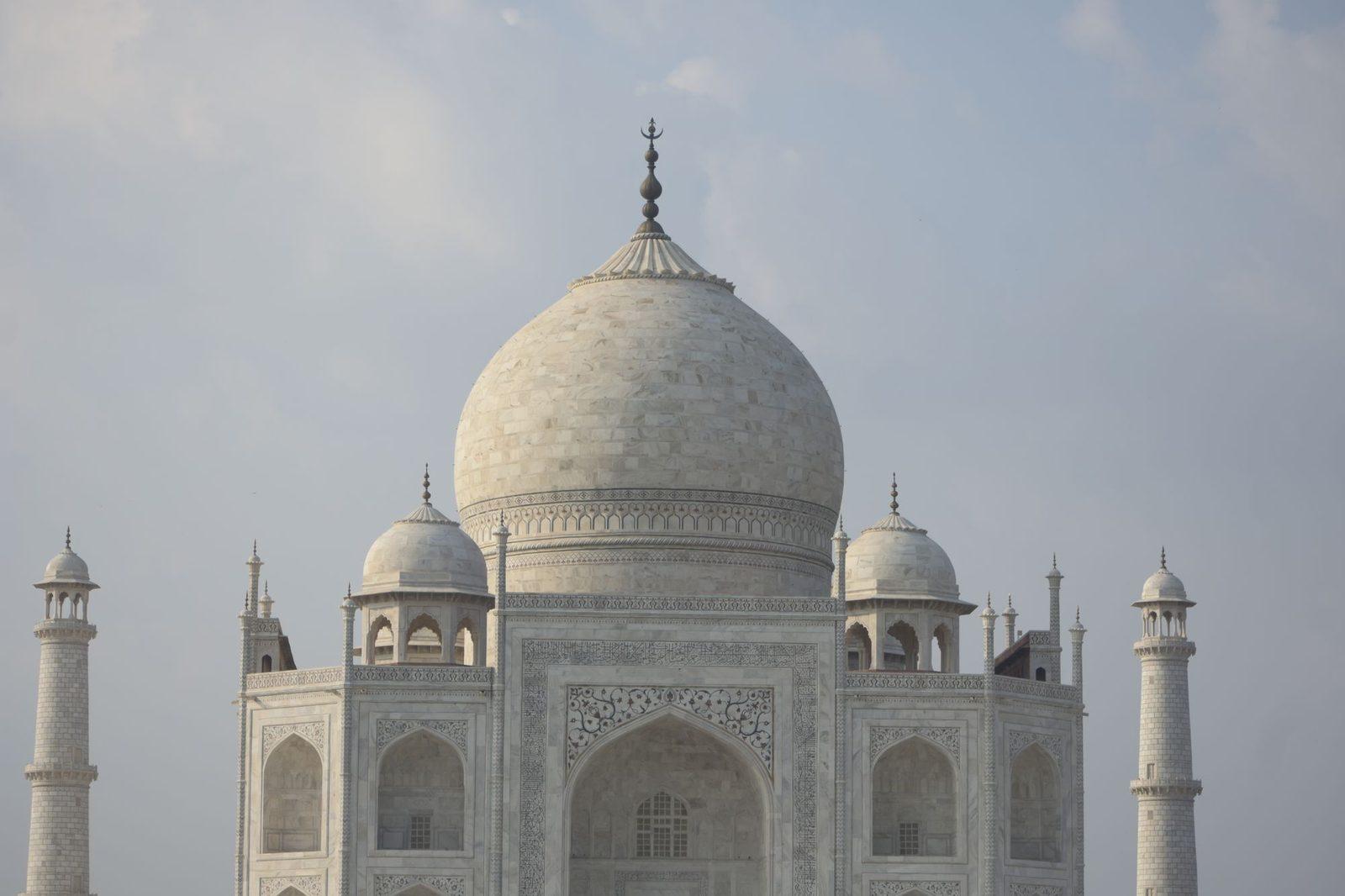
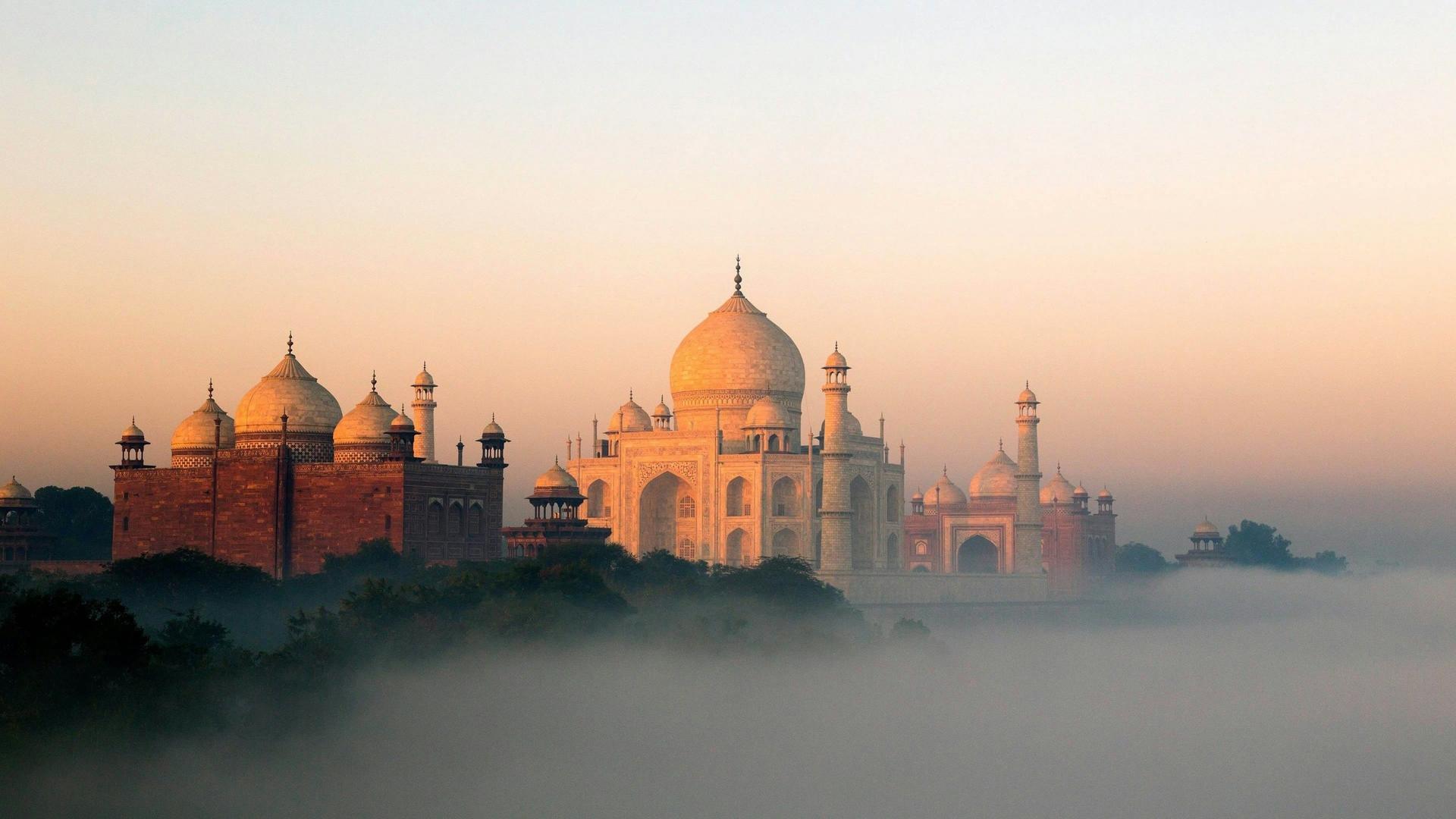
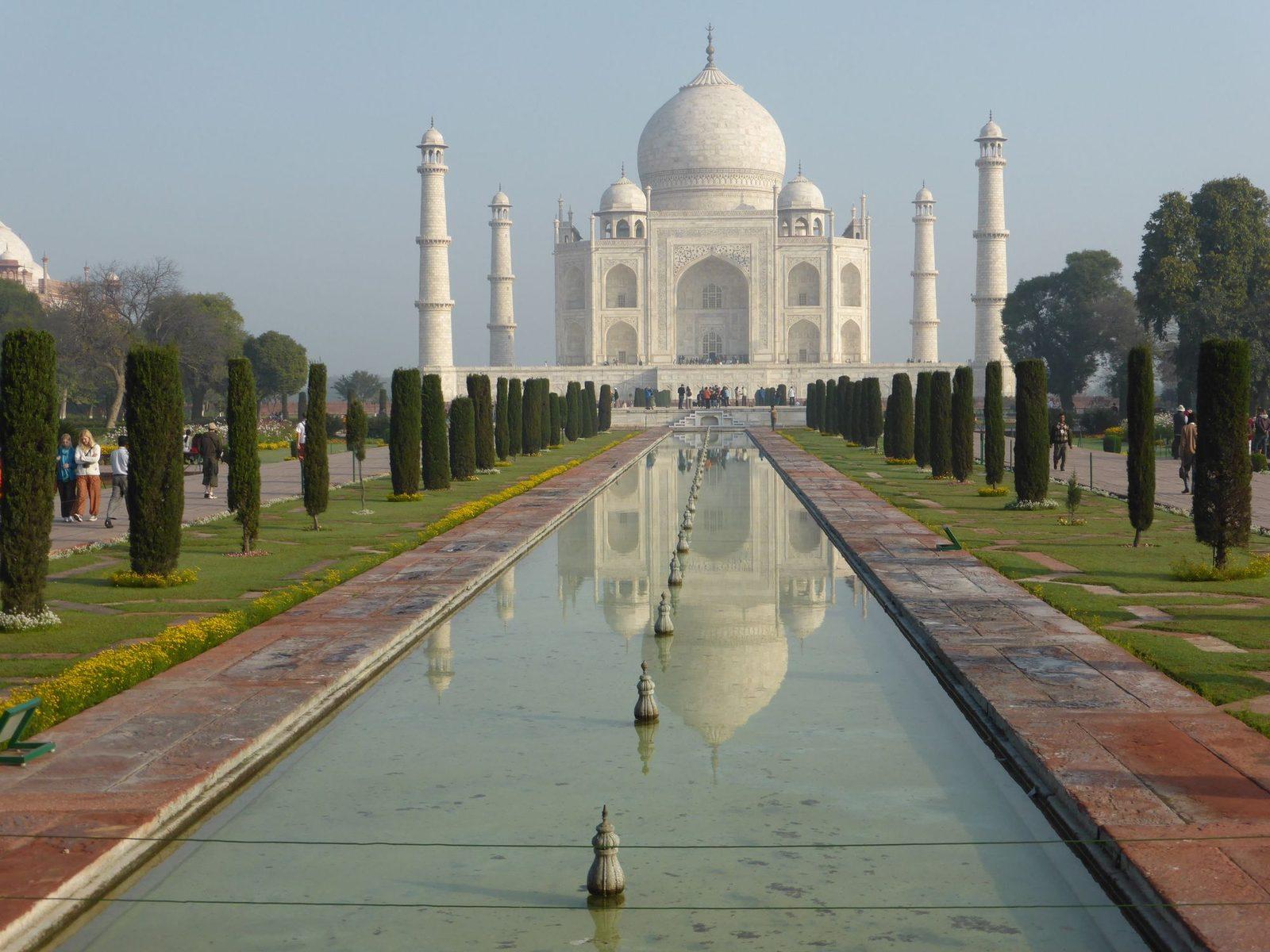
Itimad-ud-Daulah's granddaughter was Mumtaz Mahal. When she died in 1631, Shah Jahan began her tomb a few kilometers away, on the other bank. It takes the marble and the inlay to their height, but its plan makes the decisive change. UNESCO singles it out: the tomb stands at one end of its fourfold garden, not in the middle as at Humayun's, Sikandra or Itimad-ud-Daulah, on a platform above the river, with four minarets standing free at its corners. Inside, as at her grandfather's tomb, the wife lies at the center; her husband's cenotaph was added beside hers more than thirty years later. See the Taj mausoleum piece.
Walking them
Each tomb has its own walk, about an hour each: Akbar's Tomb (eleven stops), Itimad-ud-Daulah (eleven, with a short ride to Chini ka Rauza) and the Taj Mahal (twelve). The Taj is closed on Fridays; the other two are open every day, sunrise to sunset. Prices are in Agra monument tickets, hours and closures.
Frequently asked questions
- What are the Mughal tombs to see in Agra?
- The Taj Mahal, built for Mumtaz Mahal from about 1632; Itimad-ud-Daulah, the tomb Nur Jahan finished for her father in 1628; and Akbar's Tomb at Sikandra, finished in 1613. Chini ka Rauza, a minister's tomb of the 1630s faced in glazed tile, is near Itimad-ud-Daulah, and Salim Chishti's marble tomb of 1580-81 is at Fatehpur Sikri.
- Is the Baby Taj older than the Taj Mahal?
- Yes. Itimad-ud-Daulah was built from 1622 and finished in 1628, and the Taj Mahal was begun in about 1632. Historians see its stone inlay as a forerunner of the Taj's rather than a copy, and it is the tomb of Mumtaz Mahal's grandfather.
- In what order should you visit the Agra tombs?
- By date, if you can: Akbar's Tomb at Sikandra (finished 1613), then Itimad-ud-Daulah (1628), then the Taj Mahal (begun about 1632). The Taj is closed on Fridays; the other two are open every day, sunrise to sunset.
Ready to experience it?
Taj Mahal: A Paradise Garden Built to Face the River
70 min · 1.3 km · easy
More from Agra
Explore more at your own pace.
Agra Monument Tickets, Hours and Closures (Checked November 2026)
Akbar's Tomb, Sikandra: The Grave His Son Rebuilt
Fatehpur Sikri: Akbar's Red City and the Names It Borrowed
Itimad-ud-Daulah, Agra: The Baby Taj That Came First
Musamman Burj, Agra Fort: A Tower of Justice and Confinement