Taj Mahal: A Paradise Garden Built to Face the River
70 min · 1.3 km · easy
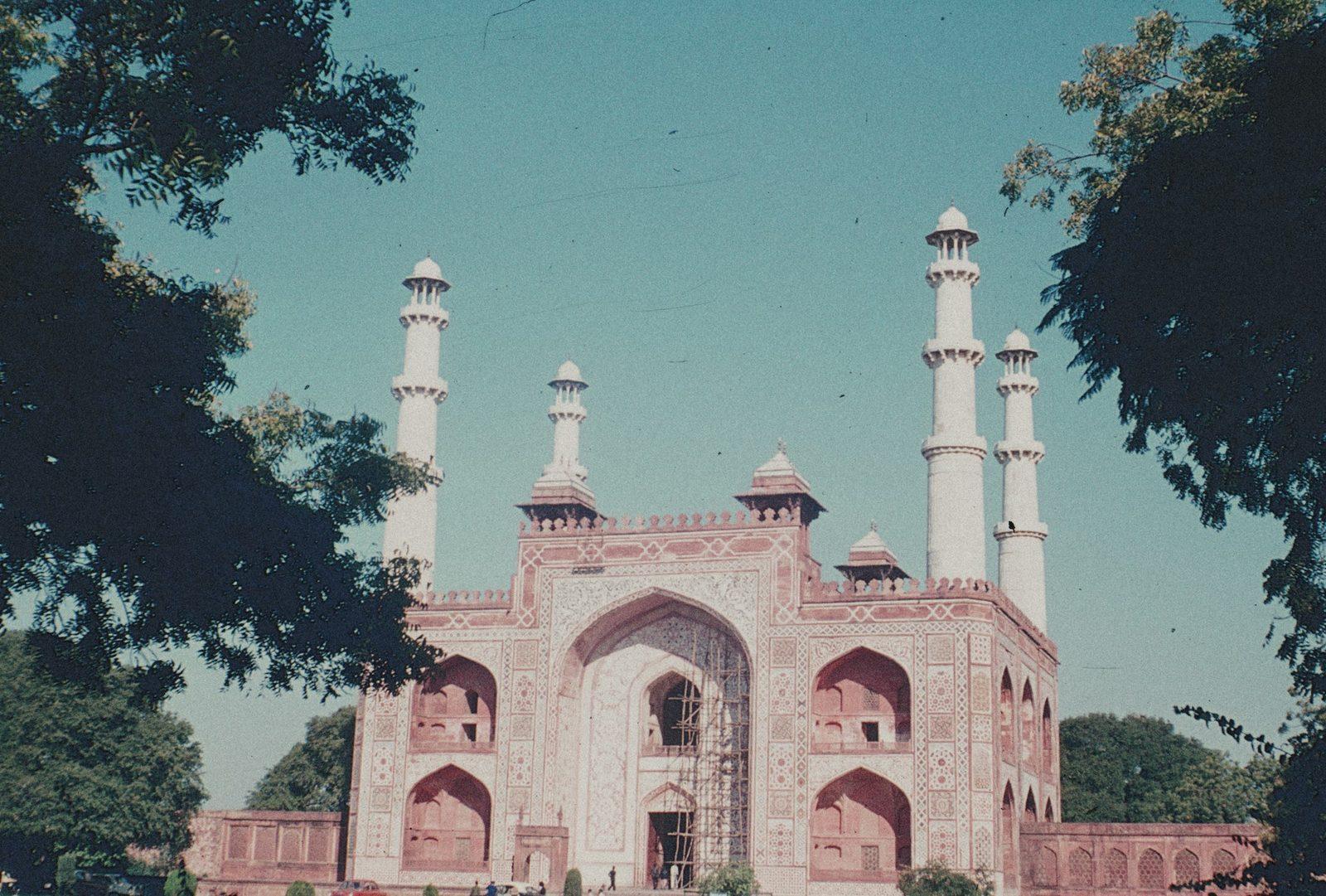
Akbar's Tomb stands at Sikandra, about ten kilometers north-west of central Agra, beside the highway out of the city. Akbar died in October 1605. He is said to have begun this tomb himself. His son, the emperor Jahangir, came to see it, did not like what the builders had done, and had it rebuilt to a new plan, finished in 1613. The result looks like no other Mughal tomb: five stories stepping up like a pyramid, in the middle of a walled paradise garden.
The son's verdict
Jahangir tells it himself. On his first pilgrimage to the tomb, in the third year of his reign, 1608, he saw what had been built and wrote that it "did not come up to my idea of what it ought to be." While he had been away dealing with his rebellious son Khusrau, he says, "the architects had built it after a design of their own." He ordered experienced architects to lay the foundations again "on a settled plan", with a bright garden round it "and a large and lofty gateway with minarets of white stone." He was told the whole cost 1,500,000 rupees.
That Akbar began the tomb in his own lifetime is tradition, though an old one: the English traveler William Hawkins, in Agra a few years later, wrote that it had been fourteen years in building. No source names an architect. What exactly Jahangir changed is argued; the building simply tells you it is unusual, and the Archaeological Survey's E. W. Smith wrote in 1909 that it is unique of its kind in India.
A gate lettered by the Taj's calligrapher
Hear a stop from this walk
East Riverfront: The Moonlight Garden
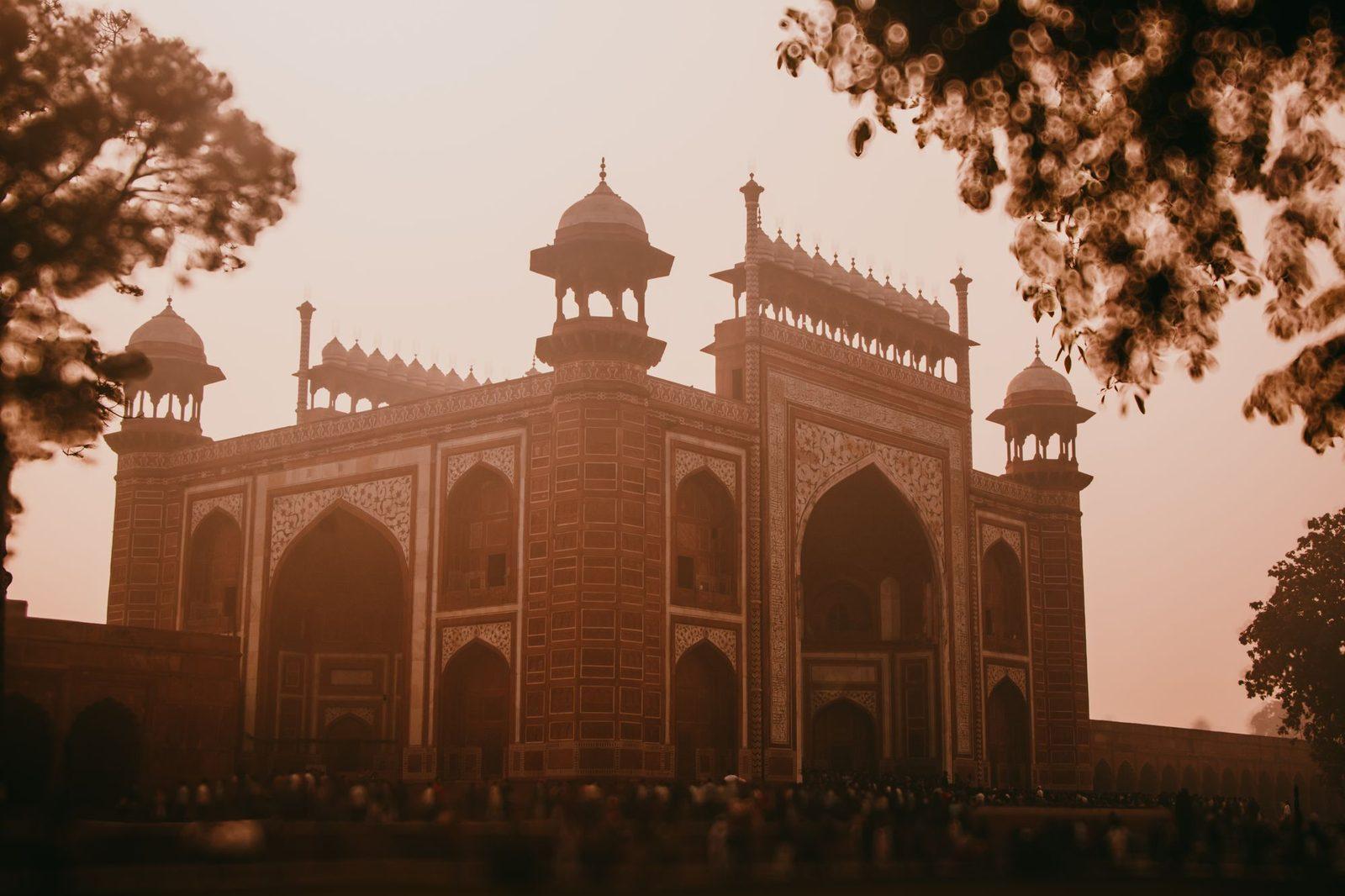
The South Gate is the only way in; the other three gates in the walls are blind, built for symmetry. Its inscriptions are dated in the seventh year of Jahangir's reign, the Hijri years 1021 and 1022, which is 1612 to 1613. They are signed by Abd al-Haqq of Shiraz, who had come from Iran in about 1608. Under the title Amanat Khan he later designed the inscriptions of the Taj Mahal. See the Taj's Great Gate.
The four white marble minarets on the gate are Jahangir's "minarets of white stone". Their tops were lost by the 1780s and rebuilt in Lord Curzon's restoration about 1905.
A garden for rain and antelope
Four raised causeways cross the garden, broadening into masonry tanks. Smith noted that the rainwater from the tomb and its platform drained into them; whether water runs in them today is not certain. Behind the tomb, blackbuck antelope graze. A 1965 count found 128 in a fifty-acre enclosure, and a 2019 plan proposed moving about eighty to a safari park; the district page still mentions herds in 2026. Never feed or approach them, and do not count on seeing them.
The long working life
In 1688, during a Jat rising against Aurangzeb's rule, the tomb was plundered. Later the rooms of the north false gate were used for years as cattle sheds. Jahangir's rebuilding, Curzon's repairs and the Survey's own work since are all part of what you see; in September 2024 damp damaged the gilded painting at the main entrance, and the Survey formed an expert committee.
At the end of the walk, past the poem on the gate and the son's grand plan, Akbar lies in a plain grave at the bottom of a sloping passage. The chambers and upper stories may be closed, so the walk tells them from outside.
Before you go
Akbar's Tomb: The Grave His Son Rebuilt has eleven stops on less than a kilometer, about 55 minutes, flat and paved, with a short climb onto the platform. The garden is open every day from sunrise to sunset; by the district page, entry is 30 rupees for Indian, SAARC and BIMSTEC citizens and 310 for other foreign visitors, under fifteens free, plus the 500-rupee toll foreign visitors pay once a day across Agra's five ticketed monuments, not charged on Fridays (checked 22 November 2026). The ticket is not included with the walk. There is almost no shade. Sikandra is not a World Heritage Site, whatever some pages say. For how this tomb fits between Humayun's and the Taj, read Mughal tombs of Agra.
Ready to experience it?
Taj Mahal: A Paradise Garden Built to Face the River
70 min · 1.3 km · easy
More from Agra
Explore more at your own pace.
Agra Monument Tickets, Hours and Closures (Checked November 2026)
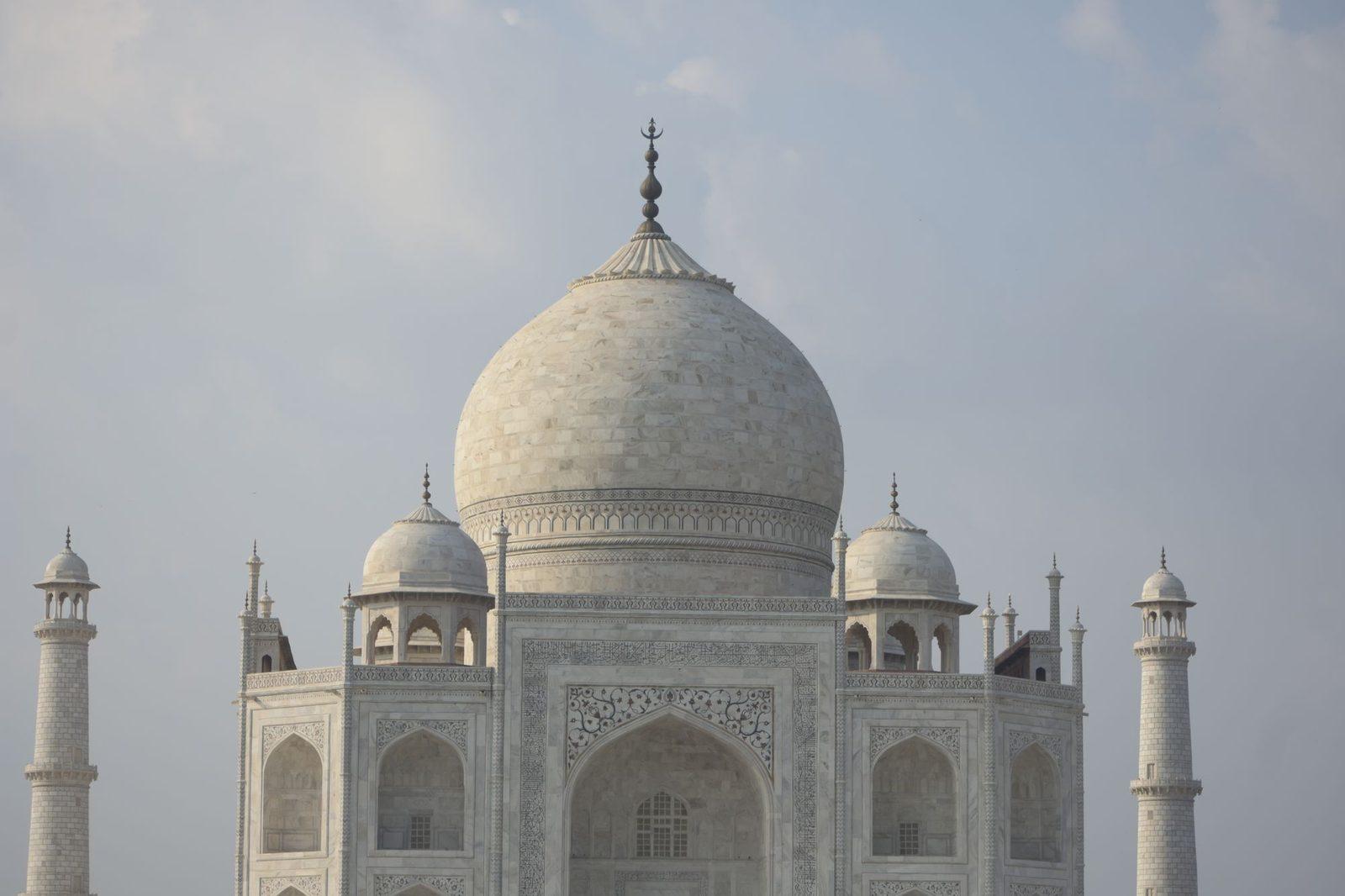
Mughal Tombs of Agra: From Akbar's Grave to the Taj Mahal
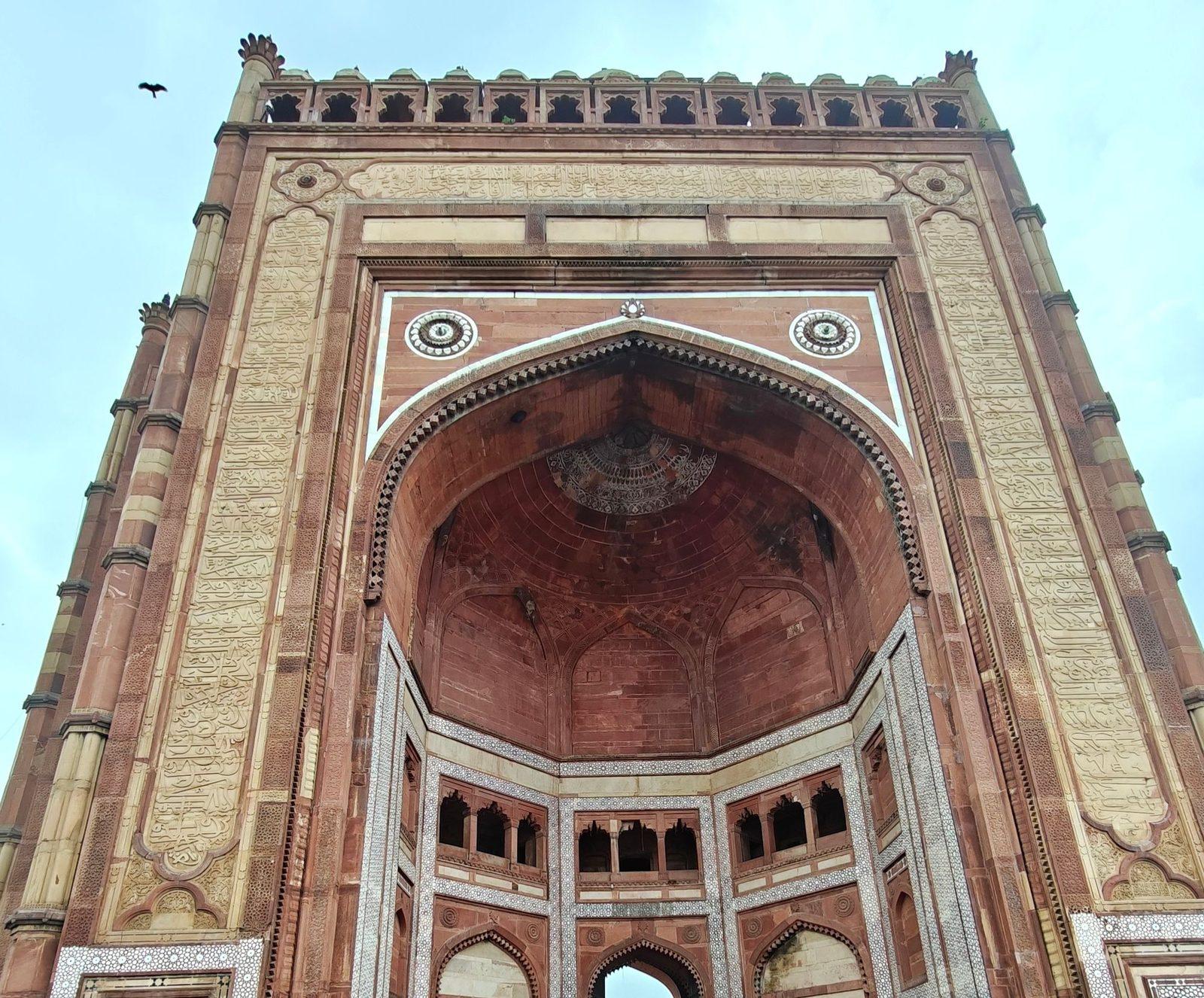
Fatehpur Sikri: Akbar's Red City and the Names It Borrowed
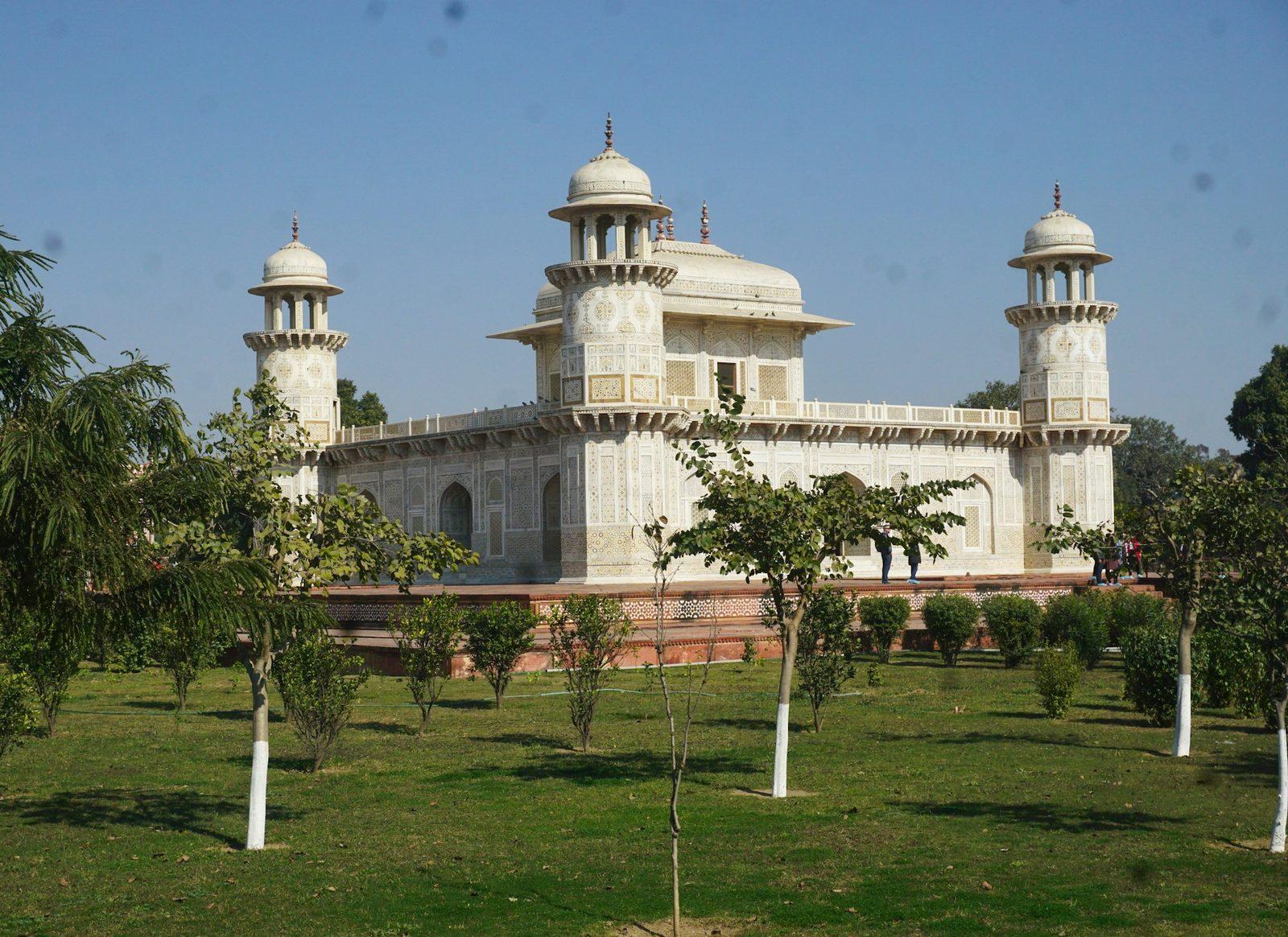
Itimad-ud-Daulah, Agra: The Baby Taj That Came First
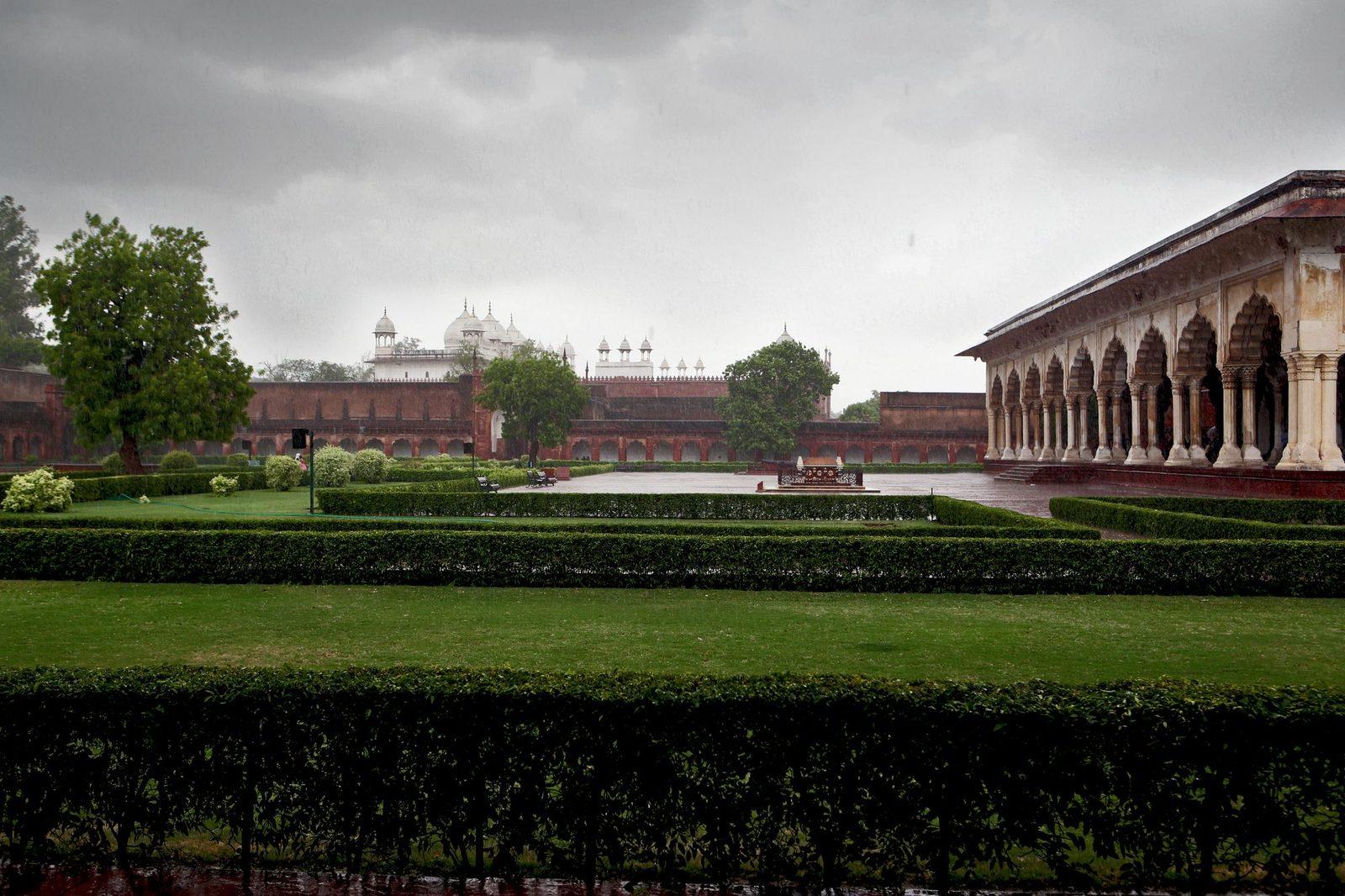
Musamman Burj, Agra Fort: A Tower of Justice and Confinement