
Taj Mahal: An Emperor's Monument to Grief
90 min · 1 km · easy
You can see Agra's two great Mughal monuments in one full day on foot: walk the Taj Mahal from its gateway to its riverfront terrace in the soft light of early morning, cross the short distance to Agra Fort by auto-rickshaw or the electric shuttle bus, and spend the afternoon reading the red-sandstone and marble palaces where the emperor who built the Taj later died a prisoner. Both sites are compact, walkable, and about two and a half kilometers apart, so a single day covers the pair without rushing. Our two self-guided audio walks, the Taj Mahal tour and the Agra Fort tour, are built to narrate each stop as you stand in front of it.
Here is how to shape the day, with the logistics checked against current sources.
Start at the Taj Mahal, right at opening
Arrive at the Taj Mahal for opening, soon after sunrise. This is when the marble glows soft and pearly, the air is coolest, and the crowds at the reflecting pool are thinnest. The monument opens around sunrise and closes around sunset, and it is closed to general visitors every Friday for prayers at the mosque inside the complex, so plan your Agra day for any other weekday.
A foreign-tourist ticket is around eleven hundred rupees, with an optional extra of roughly two hundred rupees to step onto the raised marble plinth and enter the tomb chamber. Children under fifteen enter free. Buy the plinth ticket if you want to go inside to the cenotaphs. Note that petrol and diesel vehicles are banned within about five hundred meters of the Taj to protect the marble from pollution, so your taxi or auto-rickshaw drops you at a distance and you either walk or take an electric shuttle the last stretch to the gate.
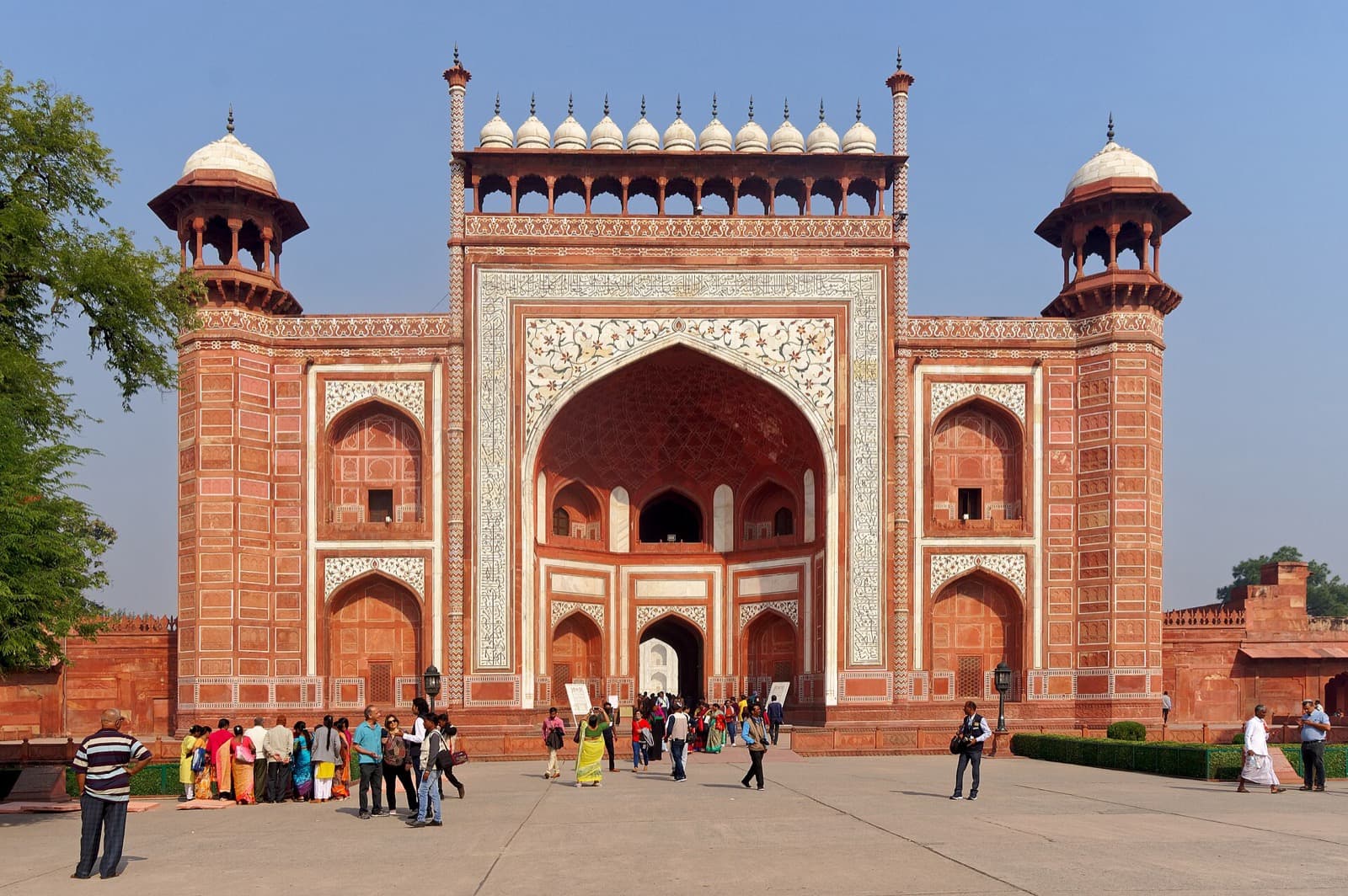
The self-guided walk inside runs six stops, roughly a kilometer of gentle walking, and takes about ninety minutes at a calm pace. It begins at the Great Gate (Darwaza-i Rauza), moves through the paradise garden (char bagh) with its reflecting channel, reaches the mausoleum and the tomb chamber, then reads the flanking mosque and its mirror-image jawab before closing on the riverfront terrace. The audio sets the famous legends (the maimed artisans, the mythical Black Taj) gently aside from the documented history. Security is strict and bag rules are tight: bring only a phone, wallet, and a small clear bag, since food, large bags, and tripods are turned away at the entrance.
Break for lunch and cross to Agra Fort
Hear a stop from this walk
The Mosque and the Jawab: A Twin Built Only for Symmetry
By late morning you will have finished the Taj Mahal circuit. Step out, decline the photo-touts and guide-touts firmly (you owe no tip for unrequested help), and find a place to eat near the east or west gate. The two monuments sit close together, so the transfer is short.
Agra Fort is about two and a half kilometers from the Taj Mahal, roughly a ten-minute ride by auto-rickshaw or taxi. Agree the fare before you climb in, because meters here are decorative. In 2026 an electric bus also runs the Taj Mahal to Agra Fort axis, which is cheap and avoids traffic. This is the one leg of the day where you ride rather than walk, and it is a brief one.
Spend the afternoon inside Agra Fort
Agra Fort is open every day, roughly 6 in the morning until 6 in the evening, with no Friday closure, so it makes a reliable afternoon anchor. Foreign-tourist entry is in the region of six hundred fifty rupees, and children under fifteen are free. Enter through the Amar Singh Gate, the southern visitor entrance.
The self-guided fort walk is six stops over about one and a half kilometers of moderate walking, allow around ninety minutes or more. It moves inward and forward in time: Akbar's red-sandstone Jahangiri Mahal first, then the marble riverfront palaces of Khas Mahal and the Anguri Bagh, the audience hall of the Diwan-i-Am, the octagonal Musamman Burj tower, and the small mosques of the Nagina Masjid and Moti Masjid. From the Musamman Burj on a clear day you can see the Taj Mahal downstream, the view Shah Jahan is said to have kept during his final years, held in the fort by his son. Treat the mosques as active places of worship and frame them modestly. The Moti Masjid sits inside a restricted army zone and is usually viewed from the courtyard exterior only.
Close the day
By late afternoon the fort's red sandstone takes warmer light on the ramparts, a good time to linger before it closes. If you still have energy, the riverfront gardens across the Yamuna from the Taj Mahal offer a distant, quieter view of the monument at the end of the day. Otherwise, a full day of two walks is plenty. You will have covered both of Agra's marquee monuments at your own pace, on your own schedule, with no group to keep up with.
For the full stop-by-stop narration and the maps that trigger each segment as you reach it, start with our Agra walking tours hub and the Agra city page, then load the Taj Mahal and Agra Fort tours before you set out.
Practical notes
Weather matters more than almost anything else here. The cooler months from roughly November to February are far kinder than the fierce heat from April to June, when much of both sites is open stone with little shade. Carry water, wear a hat, and pace yourself. Both monuments are tout-heavy: decline unrequested help and keep walking. Carry small cash in rupees, since ticket lines and short rides are simpler that way.
Sources
Frequently asked questions
- Can you see the Taj Mahal and Agra Fort in one day?
- Yes. The two monuments are about two and a half kilometers apart, roughly a ten-minute ride by auto-rickshaw or taxi. A common plan is the Taj Mahal at opening in the morning, lunch, then Agra Fort in the afternoon. Each site takes about ninety minutes to two hours to walk properly.
- What are the Taj Mahal opening hours and is it closed on Friday?
- The Taj Mahal opens around sunrise and closes around sunset. It is closed to general visitors every Friday for prayers at the mosque inside the complex, so plan your visit for any other day of the week. Agra Fort, by contrast, is open every day including Friday.
- How much is the Taj Mahal entry fee for foreign tourists in 2026?
- A foreign-tourist ticket is around eleven hundred rupees, with an optional extra of roughly two hundred rupees to step onto the marble mausoleum plinth and enter the tomb chamber. Children under fifteen enter free. Buy the plinth ticket only if you want to go inside to the cenotaphs.
- How do you get from the Taj Mahal to Agra Fort?
- The two sites are about two and a half kilometers apart. Take an auto-rickshaw or taxi for a ride of roughly ten minutes, agreeing the fare before you get in since meters are unreliable. In 2026 an electric bus also runs the Taj Mahal to Agra Fort route, which is cheap and avoids traffic.
- How much is Agra Fort entry and what are its hours?
- Foreign-tourist entry to Agra Fort is in the region of six hundred fifty rupees, with children under fifteen free. The fort is open roughly 6 in the morning to 6 in the evening every day, with no Friday closure. Enter through the Amar Singh Gate, the southern visitor entrance.
- When is the best time of year to walk Agra?
- The cooler months from roughly November to February are far more comfortable than the fierce heat from April to June, when much of both sites is exposed stone with little shade. Whatever the season, arrive at opening to beat both the crowds and the strongest sun, and carry water and a hat.
Ready to experience it?
Taj Mahal: An Emperor's Monument to Grief
90 min · 1 km · easy
More from Agra
Explore more at your own pace.

Agra Travel Guide: How Many Days, Getting Around, and Safety
Agra: The Mughal Zenith Read Across a River
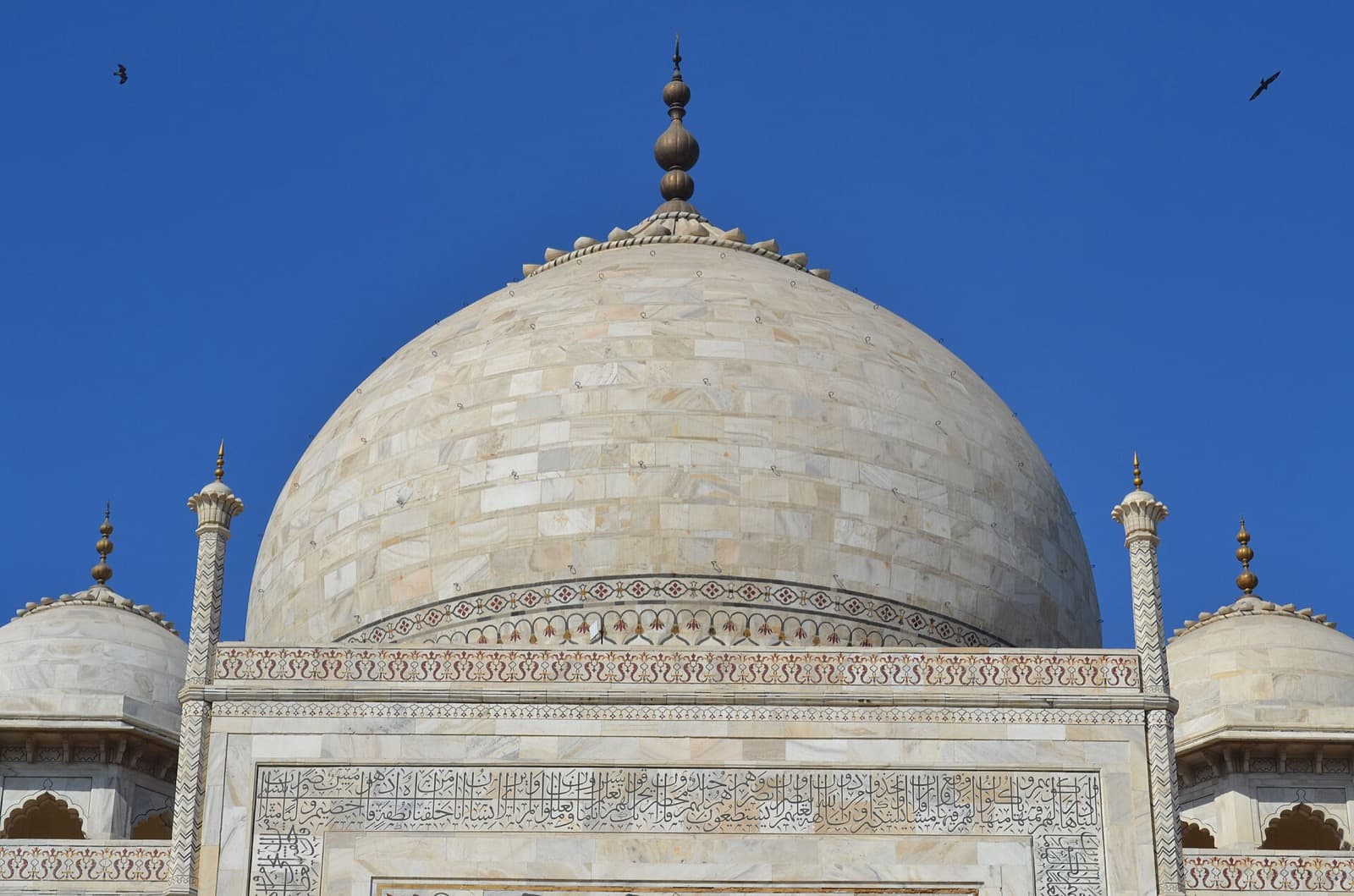
Reading the Taj Mahal as a Tomb: What the Mausoleum Tells You
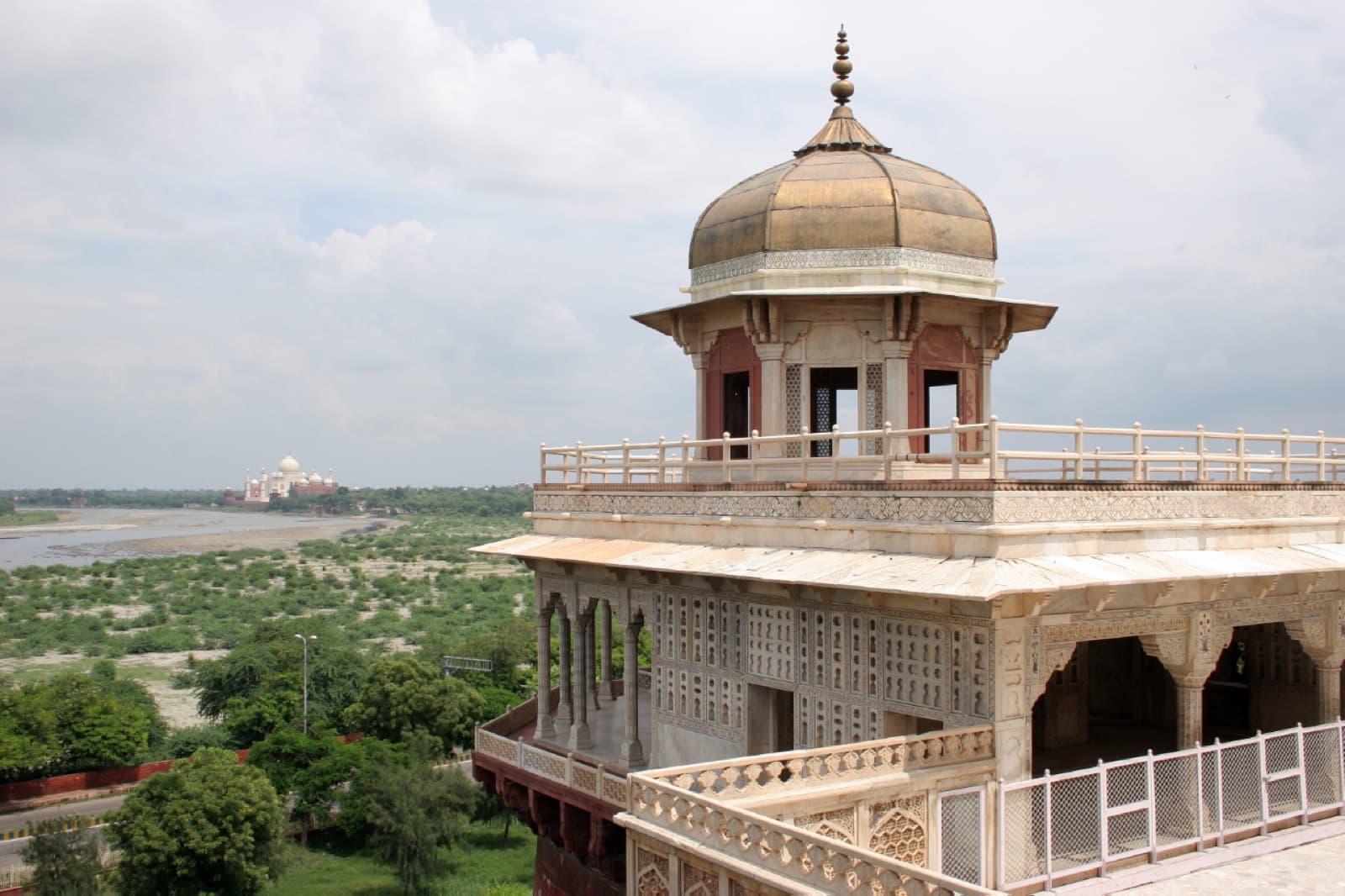
The Marble Tower Where a Mughal Emperor Was Jailed by His Own Son
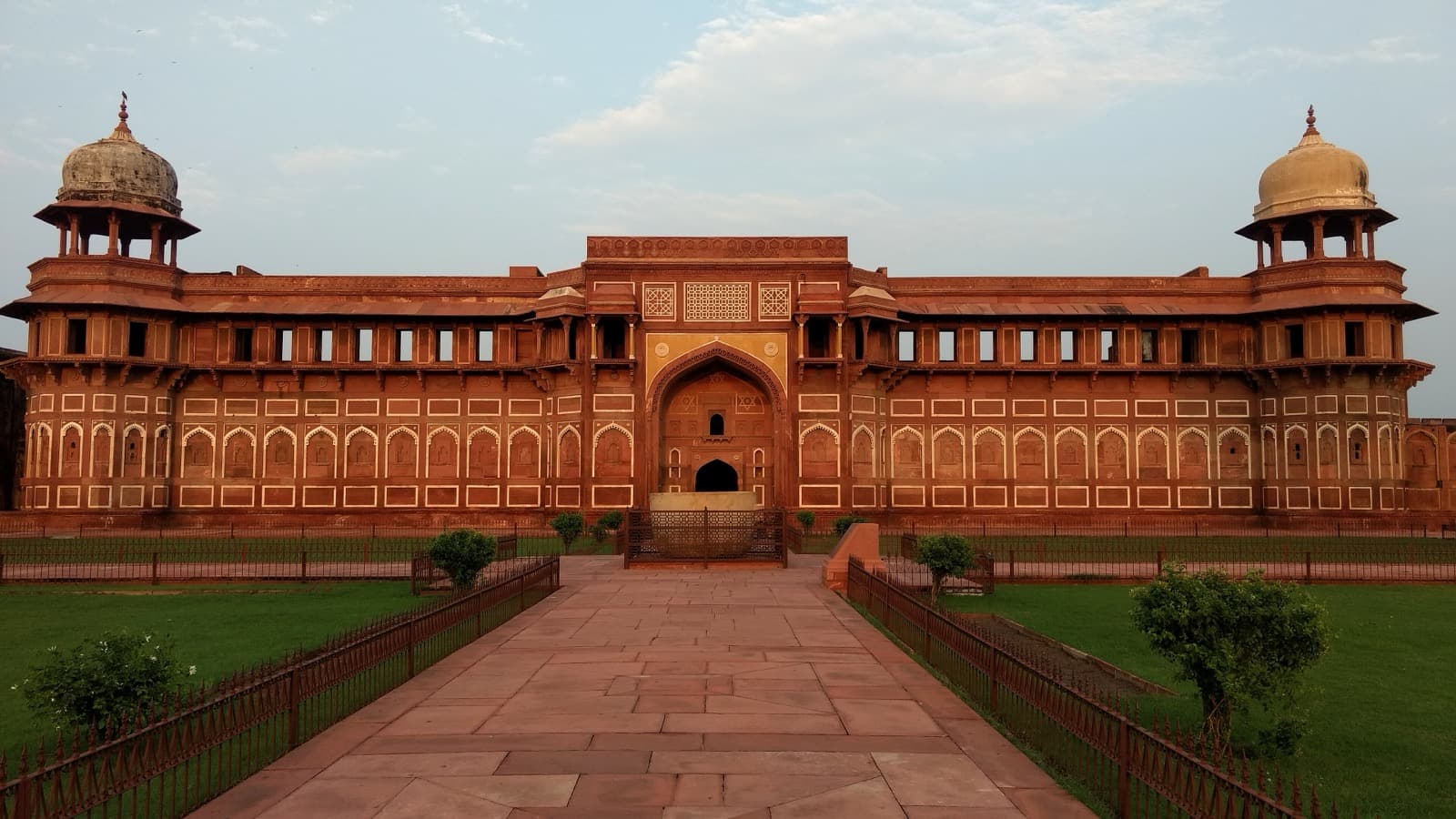
Jahangiri Mahal: Akbar's Red Palace Where Mughal and Rajput Built as One