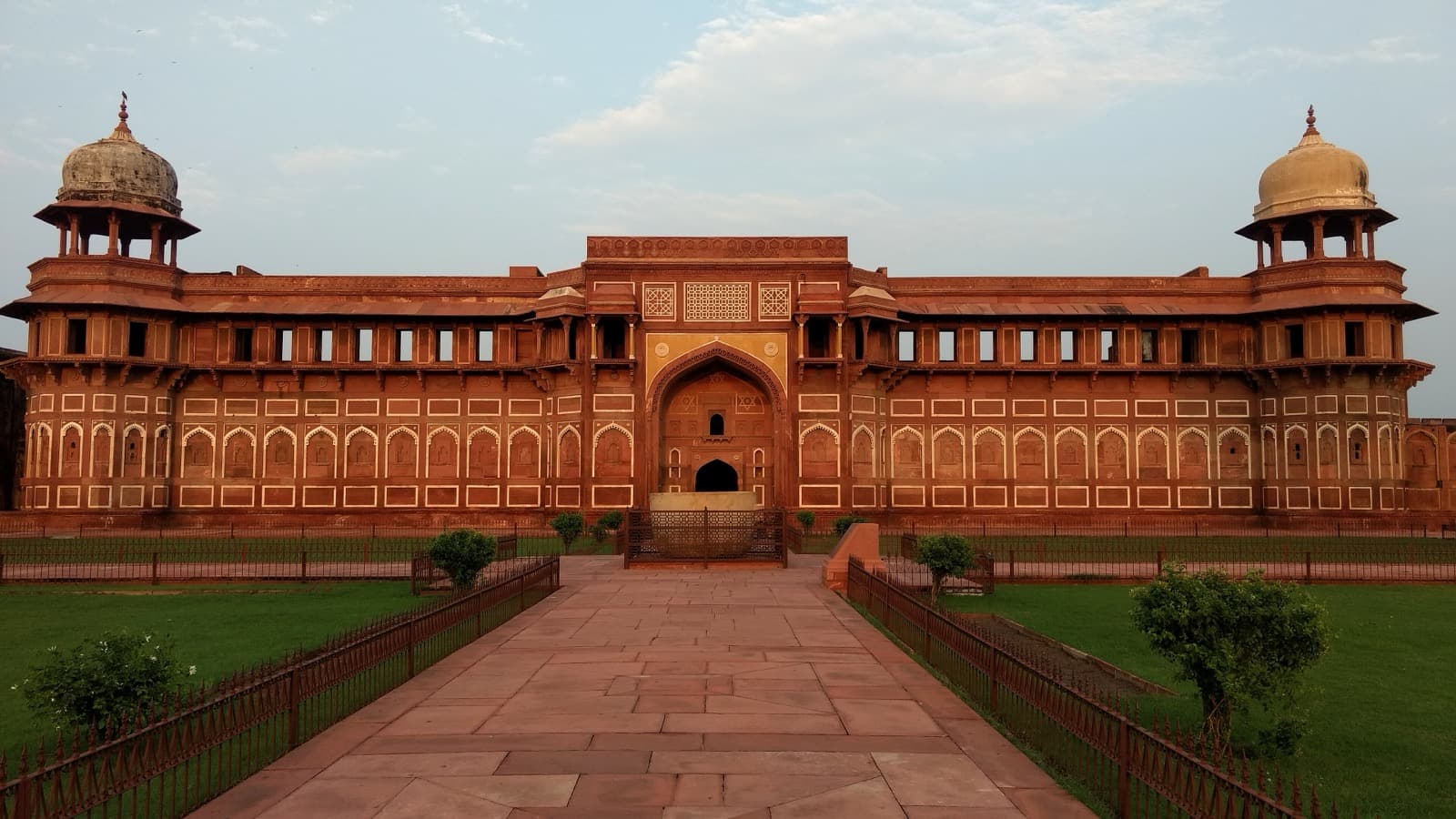
The Jahangiri Mahal carries the name of one emperor and the hand of another. It is the deepest surviving layer of Agra Fort, a red-sandstone palace built by Akbar for the women of the royal household, and it fuses Rajput and Islamic building into a single stone. Standing in front of it, most visitors read the name and assume Jahangir raised it. He did not. His father did. That small confusion is the first thing to understand here, and once you resolve it, the palace opens up as the clearest place in the whole fort to see how the early Mughals actually built.
A name that misleads
The palace is one of the earliest surviving buildings of Akbar's reign and one of the largest surviving palaces of his original fort. Akbar rebuilt Agra Fort in red sandstone from fifteen sixty-five, and the Jahangiri Mahal belongs to that sixteenth-century campaign, raised around fifteen sixty-five to fifteen sixty-nine, not to his son's later reign. Jahangir himself settled the question. In his own memoirs he recorded that the buildings here were his father Akbar's work and claimed no credit for them. So the palace named for Jahangir was, by Jahangir's own account, made by Akbar. In fact the name traces not to the son at all but to the Hauz-i-Jahangiri, the great stone basin that sits before its entrance. Names attach themselves to Mughal buildings loosely, and the Jahangiri Mahal is the plainest example of that habit at the fort.
Akbar built it as the principal zenana, the palace reserved for the women of the royal household. According to the site's history, it was raised for his Hindu chief queen, Mariam-uz-Zamani, popularly remembered as Jodha Bai. It later housed Jahangir's wife, Jagat Gosain, the mother of the emperor who would become Shah Jahan. That lineage matters, because the woman remembered as Jodha Bai was Hindu, and the palace built for her reflects that fact in its very stonework. This was not a neutral choice of style. It was a statement about who Akbar was marrying, who he was housing, and how he intended his empire to look.
Two traditions, one stone
Hear a stop from this walk
The Nagina Masjid and the Moti Masjid: The Gem and Pearl Mosques Hidden in the Red Fort
Look at how the palace is made. The red sandstone is worked with carved brackets, heavy beams, and courtyards whose forms echo Rajput and Gujarati building, the Hindu architectural traditions of the region. Those forms are set alongside the Central Asian and Islamic idiom the Mughals carried with them from their origins to the north and west. The result is a genuine blend rather than a decoration laid over a foreign frame. Brackets that would look at home on a Rajput palace hold up beams in a fort raised by a Muslim dynasty of Timurid descent, and neither tradition is treated as a guest.
This is what makes the Jahangiri Mahal worth slowing down for. Under Akbar, Mughal and Rajput built as one, in a single palace, in a single stone. That syncretism was not an accident of craftsmen doing what they knew. It matched Akbar's wider project of drawing Hindu nobles, Hindu queens, and Hindu building traditions into the center of his state rather than treating them as conquered outsiders. The palace is that policy rendered in sandstone. You can read a ruler's approach to a diverse empire in the choice to let two architectural languages share one wall, and here the wall survives to be read.
In the courtyard sits the Hauz-i-Jahangiri, a huge bowl carved from a single block of stone. It once held rose water for the household. A basin cut from one piece of stone is a quiet flourish of ambition, the kind of object that signals the resources and confidence of the reign that commissioned it. It is easy to walk past. It rewards a pause.
The deepest layer of the fort
The one thing to hold onto, standing in front of the Jahangiri Mahal, is that you are looking at the deep layer of Agra Fort, Akbar's own century, the sixteenth. It is robust, grounded, and unmistakably red. Everything else the fort is famous for came later and looks different. Within a single family's lifetime, grandfather to grandson, Mughal taste changed utterly. The heavy red of Akbar's zenana gave way to the fine white marble of his grandson's riverfront rooms, to pierced screens and inlaid flowers. The Khas Mahal, the Musamman Burj, the pearl and gem mosques: all of that white delicacy belongs to Shah Jahan, and all of it postdates this palace.
So the Jahangiri Mahal is the starting point of the fort's real story, the before against which the after makes sense. If you visit only the marble, you see the ending without the beginning. Stand in the shade of the carved brackets first, register the weight and the redness and the mixed ancestry of the stone, and the shift to marble that happens a short walk away lands as the drama it is. The palace also tends to be quieter than the marble stops that draw the crowds, which makes it a good place to actually look rather than jostle.
There is real reward in walking the fort in order, letting the stone change color under your feet as the reigns advance. The Jahangiri Mahal is stop two on Roamer's self-guided Agra Fort audio tour, which moves inward and forward in time across six stops, from Akbar's red gate to the marble tower where Shah Jahan died a prisoner within sight of the Taj Mahal. You walk it at your own pace, with no group van and no one steering you toward a shop, pausing at the carved brackets as long as you like. For more on the city and its other walks, see our guide to Agra walking tours. Come to this red palace first. It is where the whole story of the fort begins.
Sources
- Jahangiri Mahal, Wikipedia: the palace was built by Akbar as the principal zenana, first for his Hindu queen Mariam-uz-Zamani (Jodha Bai) and later Jahangir's wife Jagat Gosain, and its name derives from the Hauz-i-Jahangiri rose-water basin.
- Roamer, Agra Fort self-guided audio tour transcript (fact-audited): primary source for the palace's builder, the Jodha Bai attribution, and the Hauz-i-Jahangiri basin.
- Encyclopaedia Britannica, "Agra Fort": Akbar commissioned the red-sandstone fort in fifteen sixty-five and it took about eight years to build, up to fifteen seventy-three.
- The Memoirs of Jahangir (Tuzuk-i-Jahangiri): Jahangir's own record that the buildings at this site were his father Akbar's work.
Ready to experience it?
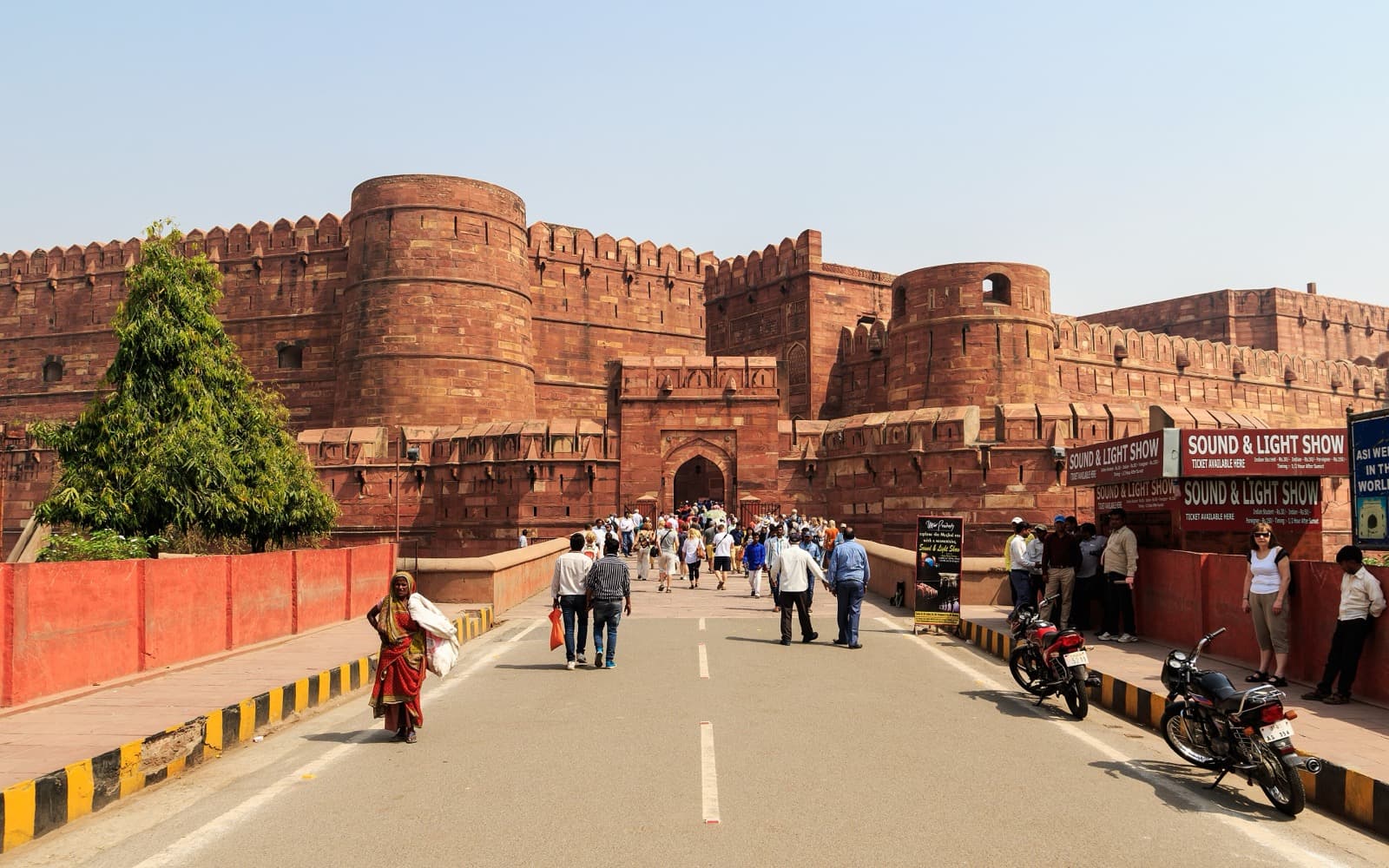
Agra Fort: The Red Sandstone Seat of Empire
90 min · 1.5 km · moderate
More from Agra
Explore more at your own pace.
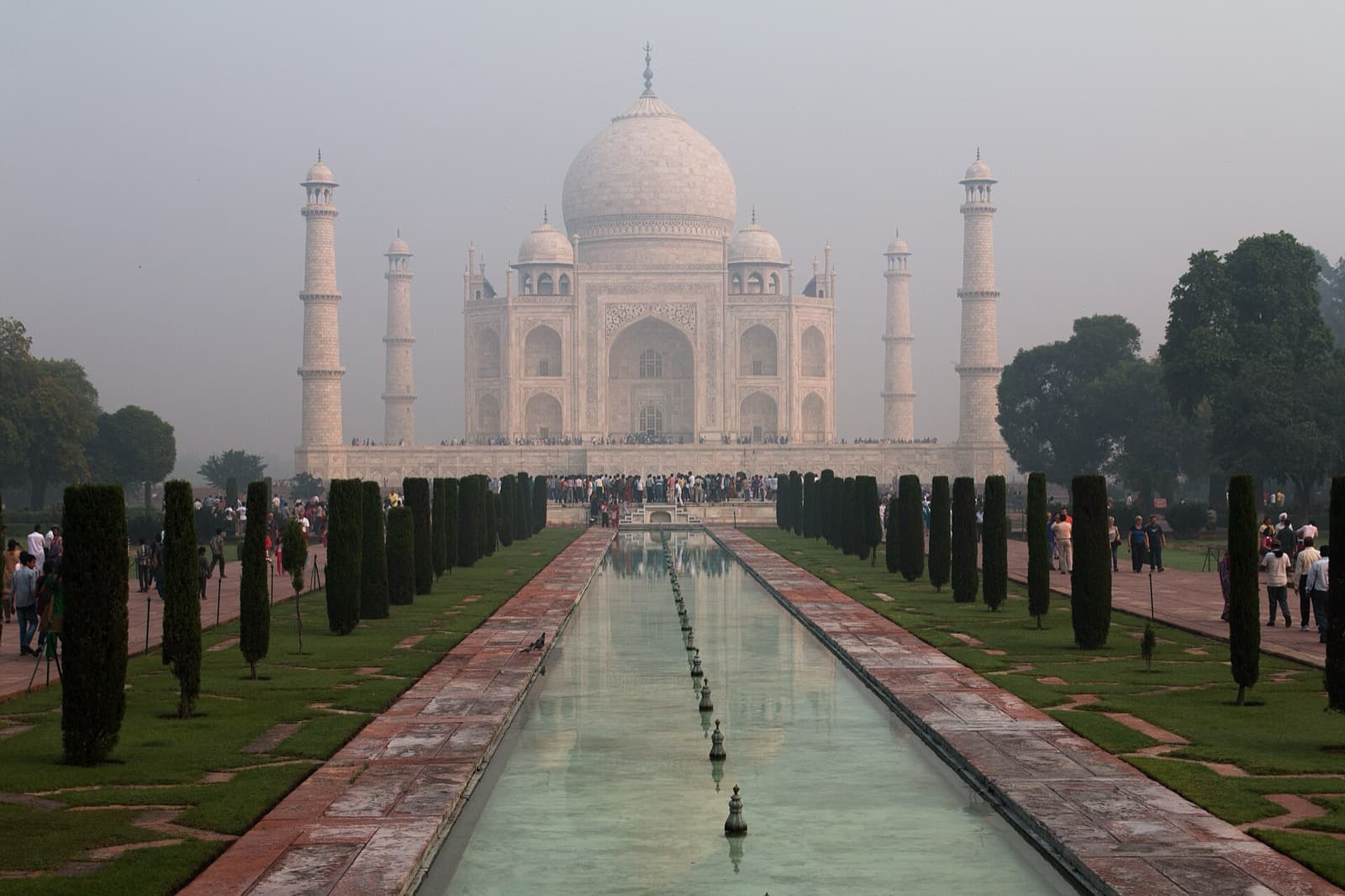
Agra Travel Guide: How Many Days, Getting Around, and Safety
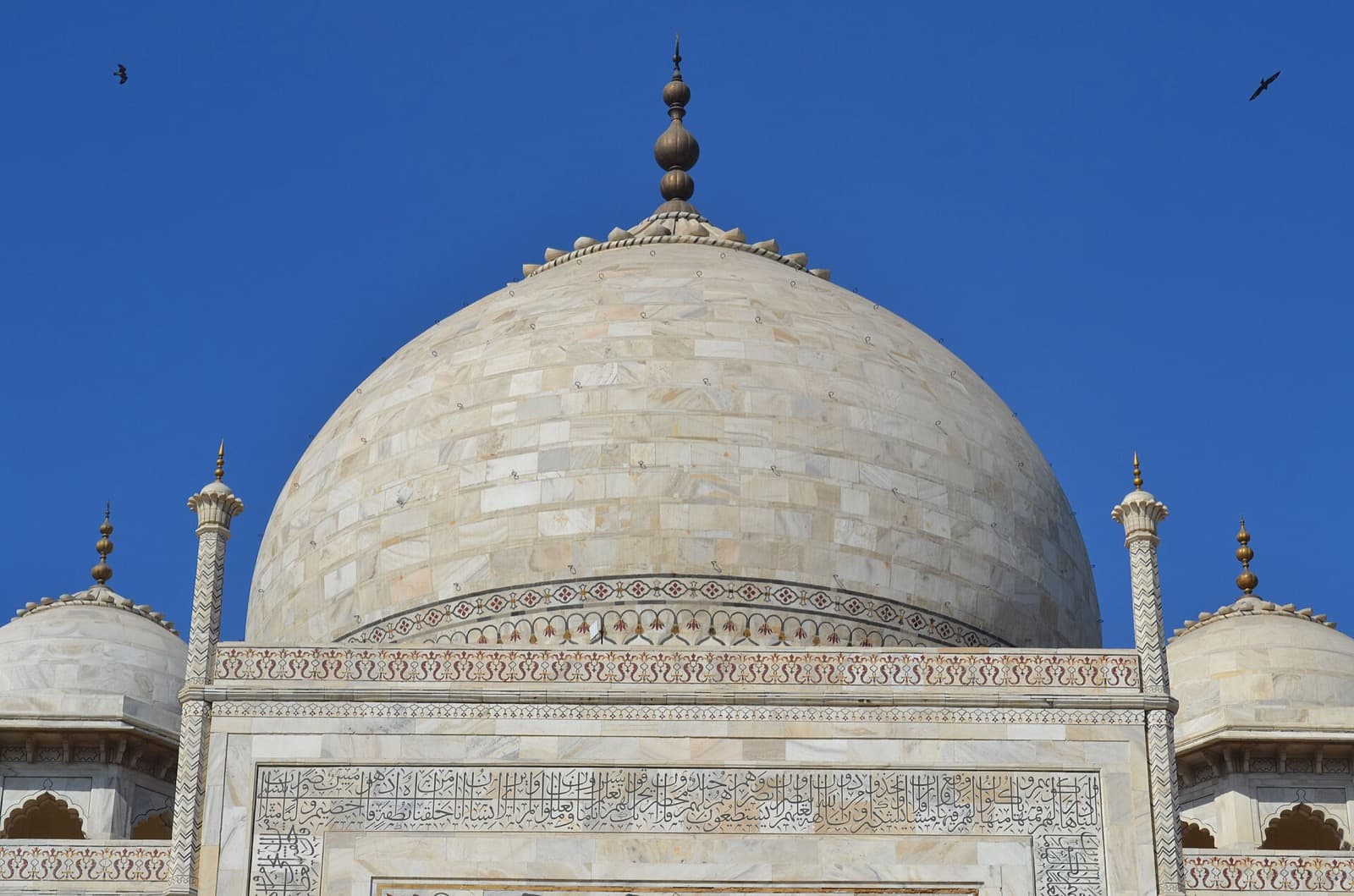
One Day in Agra: A Walkable Itinerary from the Taj Mahal to Agra Fort
Agra: The Mughal Zenith Read Across a River
Reading the Taj Mahal as a Tomb: What the Mausoleum Tells You
The Marble Tower Where a Mughal Emperor Was Jailed by His Own Son