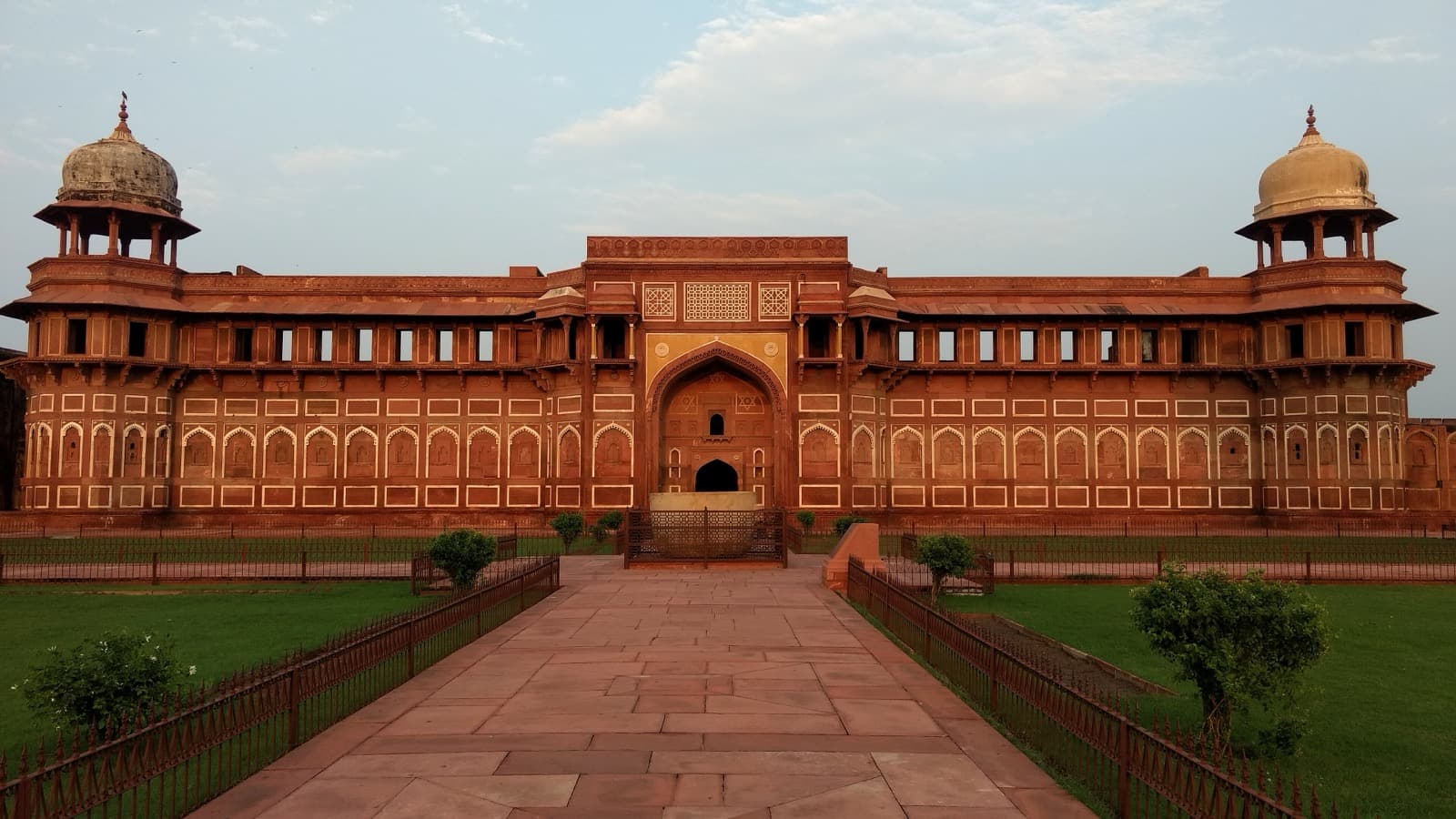
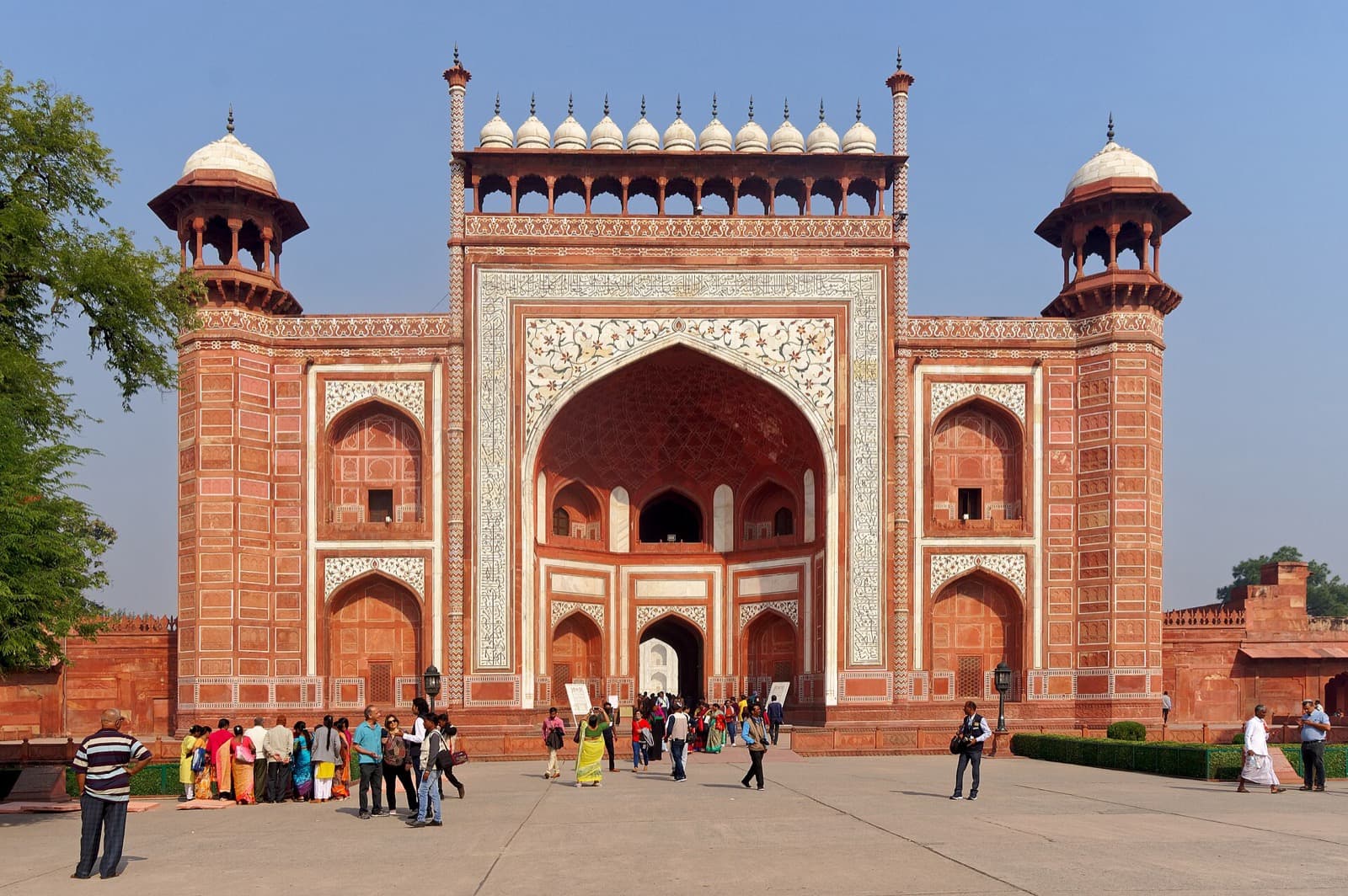
Before you ever see the white marble, you pass through red sandstone. The Great Gate of the Taj Mahal, the Darwaza-i Rauza, was built dark on purpose and inscribed with letters that grow larger as they climb, so that the mausoleum stays hidden behind a shadowed arch until you walk through it and the tomb appears all at once at the far end of the garden. Most visitors treat the gate as a turnstile, a thing to get past on the way to the famous view. It is the opposite. The gate is the first move in the design, the instrument that makes the white tomb feel like a vision rather than a building.
A gateway that means "tomb"
The word Darwaza means gate, and Rauza refers to the tomb or its garden, so the name announces plainly what the crowds forget: the Taj Mahal is a grave. The emperor Shah Jahan raised the whole complex for his wife Mumtaz Mahal, who died in 1631. Construction began in 1632, and the complex was finished by 1653. The gate is the formal threshold from the outer forecourt into the char bagh, the fourfold paradise garden that holds the mausoleum. Everything past this arch was conceived as a picture of paradise, and the gate is where that picture is framed.
The structure is red sandstone banded with white marble, its great arch inlaid with verses from the Quran in black stone. That black inlay is not decoration alone. It carries a specific address to the dead: an invitation from the Quran to a soul at peace, "O soul, thou art at rest, return to the Lord at peace with Him." The gate speaks to Mumtaz Mahal before it shows you her tomb.
The calligraphy that lies to your eye
Hear a stop from this walk
The Mosque and the Jawab: A Twin Built Only for Symmetry
Look closely at the inscription around the arch and you will find one of the quietest pieces of engineering in all of Mughal building. The letters, and the spaces between them, grow steadily larger the higher they climb. From where you stand on the ground, that graded lettering reads as if every character were exactly the same size. It is a trompe l'oeil, a deliberate optical correction that cancels the foreshortening your eye would otherwise apply to text far above your head.
This is documented design, not a tour-guide flourish. The calligraphy was carried out under Amanat Khan, born Abdul Haq, a man who received his honorific title directly from the emperor Shah Jahan. He holds a rare distinction on the complex: his is the only artisan's name recorded on the monument itself. In a building that erased nearly every individual hand into one seamless whole, the calligrapher's name survives on the stone. When you stand at the gate reading letters that appear perfectly even, you are looking at the signature of the one craftsman history allowed to be named.
Built dark to make the white feel like paradise
The gate's most important quality is the one you feel before you understand it. Its deep arch is shadowed, and it frames a single view. As you move through that shadow, the white mausoleum appears all at once at the far end of the long garden, pale and complete, as though it were arriving rather than merely standing. The darkness is the point. A bright, open entrance would let the tomb bleed into view gradually and lose its force. Instead the design withholds, then delivers. The dark doorway exists to make the white tomb feel like paradise glimpsed, a reward for passing through shadow into light.
This is why the gate rewards patience. Step into the shade, let your eyes adjust, and watch the framed rectangle of the arch do its work. The crowds surge through this passage without pausing, chasing the reflecting pool beyond. If you slow down here, you get to experience the reveal the architects actually built, the reveal that gives the Taj Mahal its first and most theatrical breath.
Reading the gate on your own clock
The Taj Mahal is one of the most crowded and tout-heavy sites on earth, thick with guides, hawkers, and photo-touts. The gate is where the pressure begins, and it is exactly where a self-guided pace pays off. No one is steering you toward a shop or hurrying you past the calligraphy. You can stand in the shadow of the arch as long as the crowd will let you, study the rising letters, trace the black verses against the red stone, and choose the moment you walk into the light.
A few practical notes for the threshold. The gate is included in the standard Taj Mahal ticket, whose base fee runs around eleven hundred rupees for foreign visitors, with a small extra charge to enter the mausoleum interior. The whole site is closed on Fridays, so plan for another day. Arrive right at opening, soon after sunrise, and you can read the gate and cross the garden before the densest crowds build, with the marble at its softest, pearly light. Bring only a small bag or your phone and wallet, because security is strict and many everyday items are banned.
The Great Gate is the first stop on a six-stop, self-guided walk that reads the whole complex from this dark doorway to the riverfront terrace above the Yamuna, separating the documented history from the famous legends of maimed artisans and a Black Taj that was never built. If you want to walk it at your own pace, with the calligraphy, the char bagh garden, the mausoleum, and the tomb chamber narrated stop by stop, start with the Taj Mahal tour in Agra. For more routes through the city, from the fort to the riverside, see our guide to Agra walking tours.
Stand in the shadow first. The white tomb has waited nearly four centuries. It can wait for you to look up at the letters that were built to fool your eye, and then walk through into the light.
Sources
- Taj Mahal, Wikipedia. Overview of the complex, the main gateway, the charbagh garden, the graded calligraphy panels, and the calligrapher Abdul Haq (Amanat Khan).
- Taj Mahal Calligraphy (Amanat Khan / Abdul Haq), tajmahal.gov.in. Official Archaeological Survey of India page on the calligrapher and his inscriptions.
- Great Gate (Darwaza-i-Rauza), Wonders of the World. Red sandstone and white marble construction, the Quran calligraphy in black inlay, and the letters written larger toward the top to read evenly from the ground.
- Taj Mahal, UNESCO World Heritage Centre (inscribed 1983). Documentation of the complex as the jewel of Muslim art in India.
- Roamer tour transcript and fact audit for "Taj Mahal: An Emperor's Monument to Grief," Stop 1 (The Great Gate). Primary verified source for gate design, inscription text, and the title of Amanat Khan.
Ready to experience it?
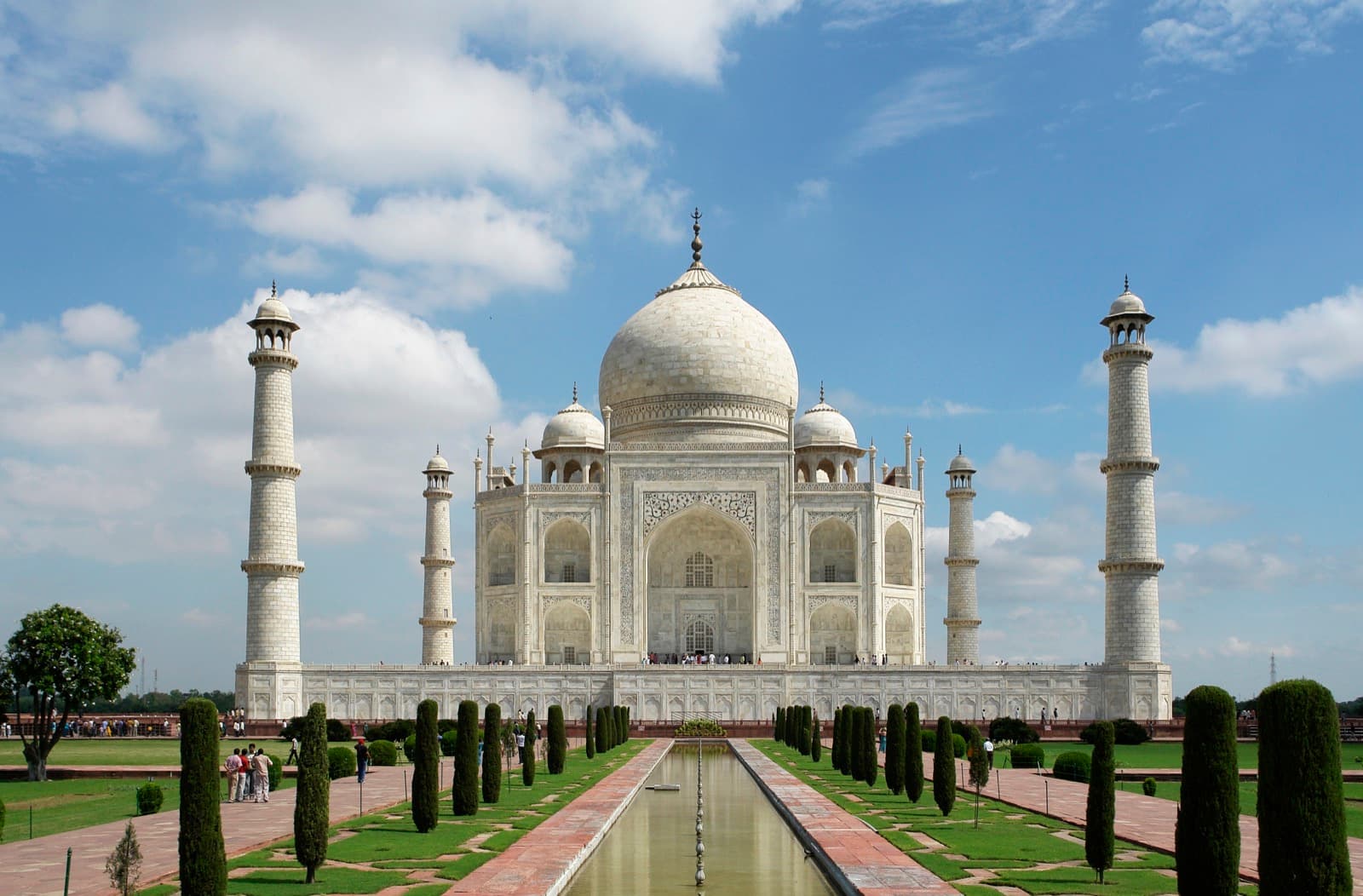
Taj Mahal: An Emperor's Monument to Grief
90 min · 1 km · easy
More from Agra
Explore more at your own pace.
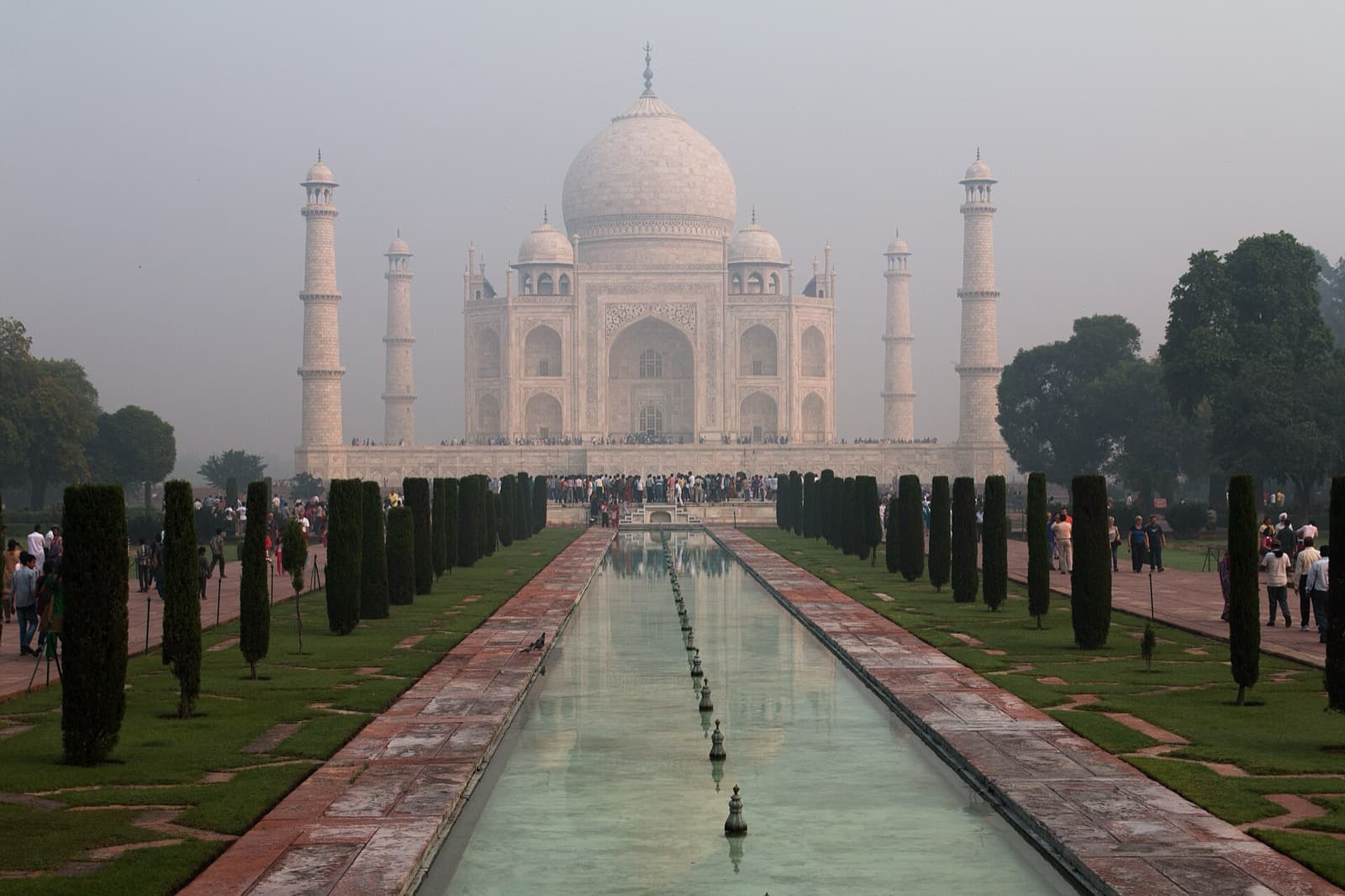
Agra Travel Guide: How Many Days, Getting Around, and Safety
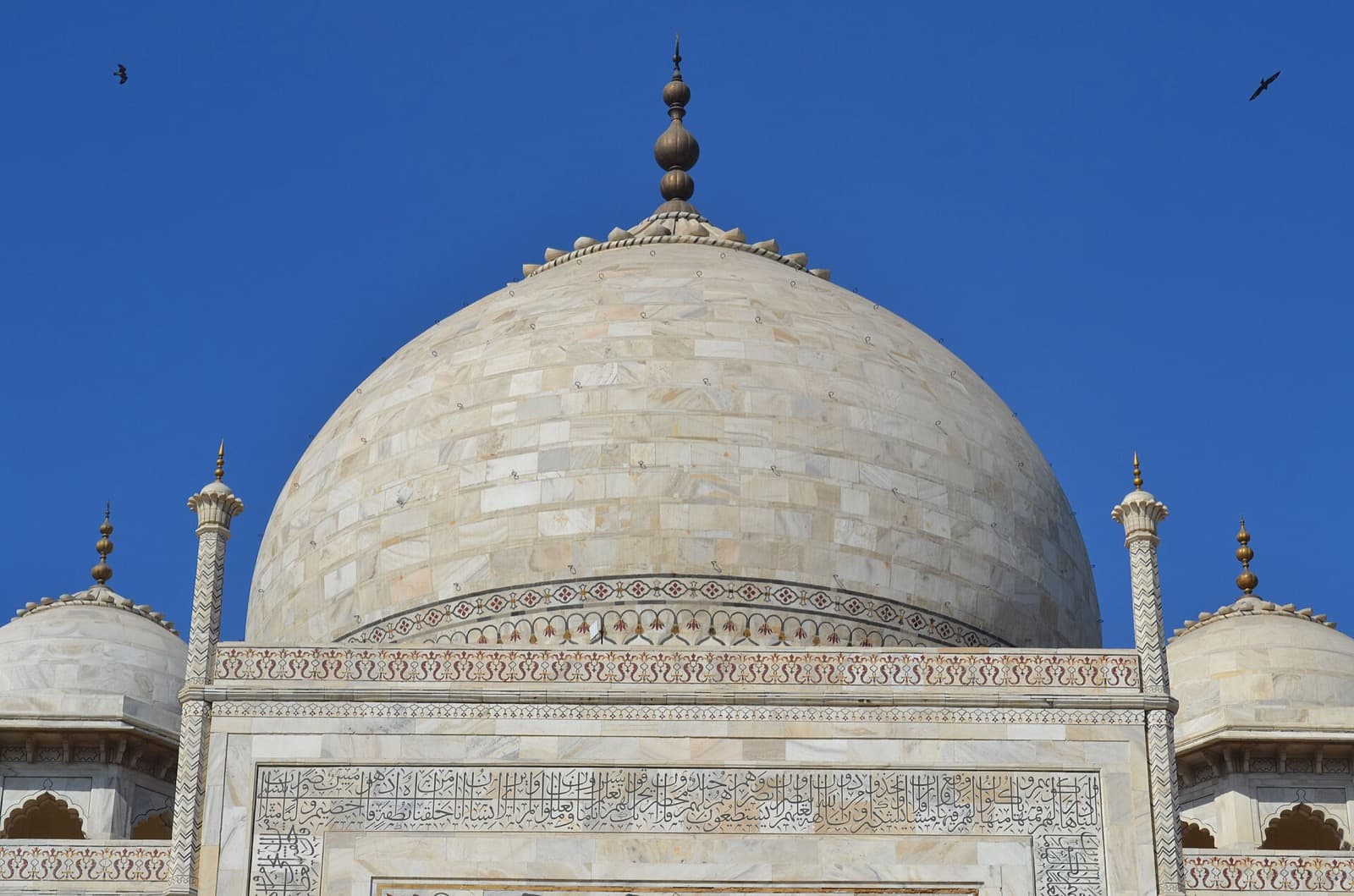
One Day in Agra: A Walkable Itinerary from the Taj Mahal to Agra Fort
Agra: The Mughal Zenith Read Across a River
Reading the Taj Mahal as a Tomb: What the Mausoleum Tells You
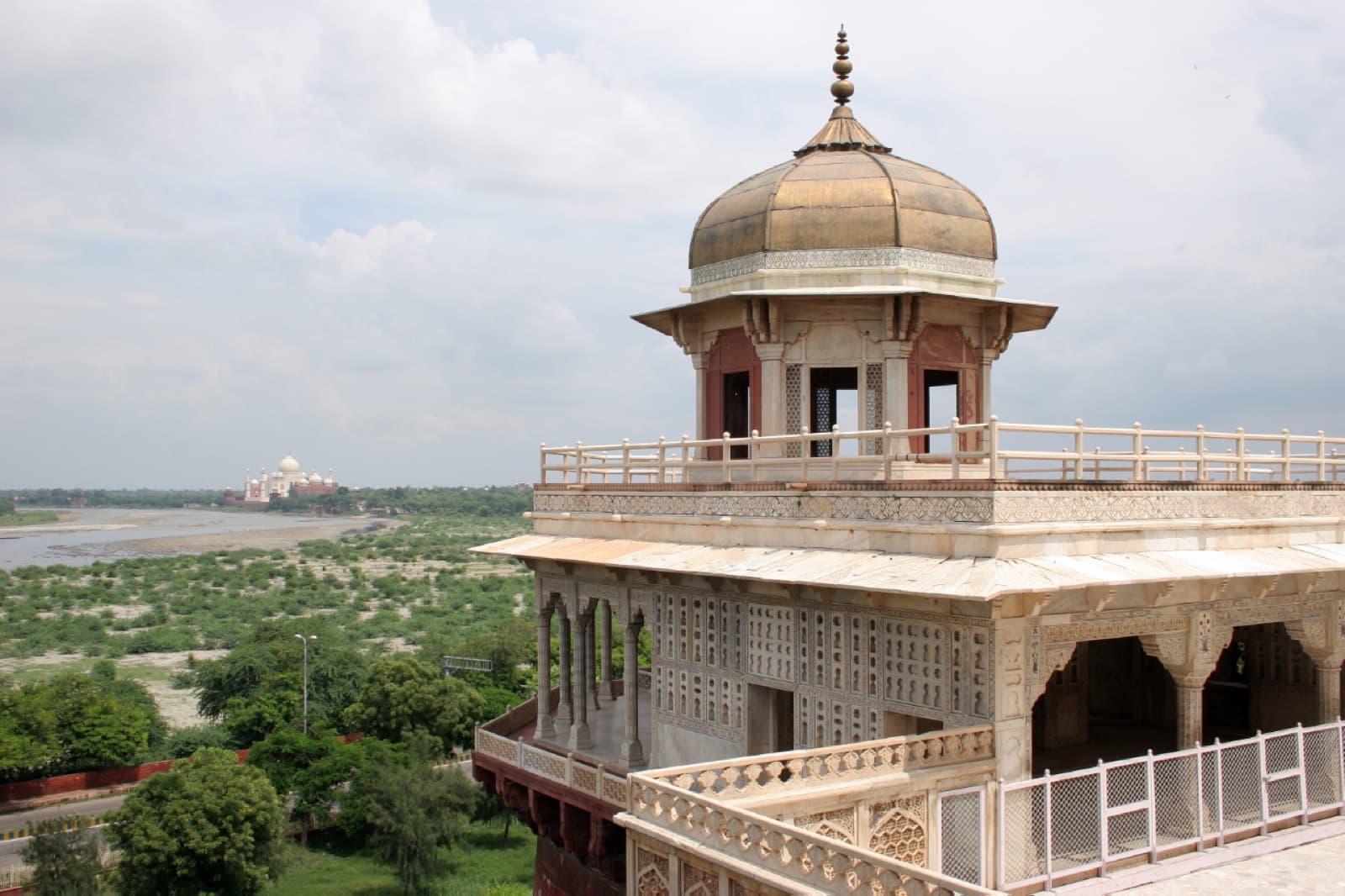
The Marble Tower Where a Mughal Emperor Was Jailed by His Own Son