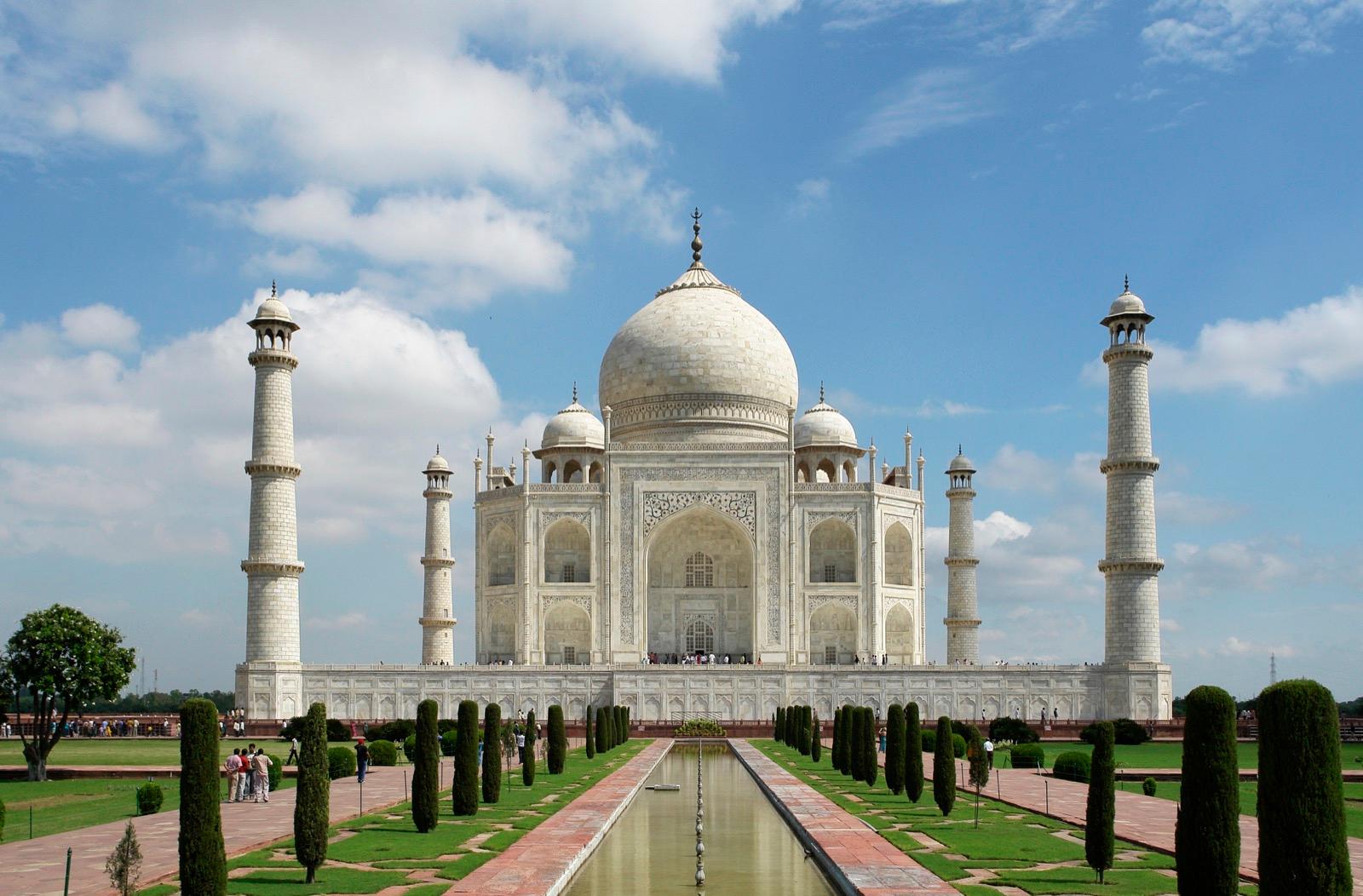
The Taj Mahal is not a palace but a tomb, an emperor's grief for one woman turned into white marble. This walk reads it from its dark gateway to its riverfront terrace and gently sets the famous legends aside from the documented history.
Start · The Great Gate: A Dark Doorway Built to Reveal a Vision
DirectionsStops
- 1
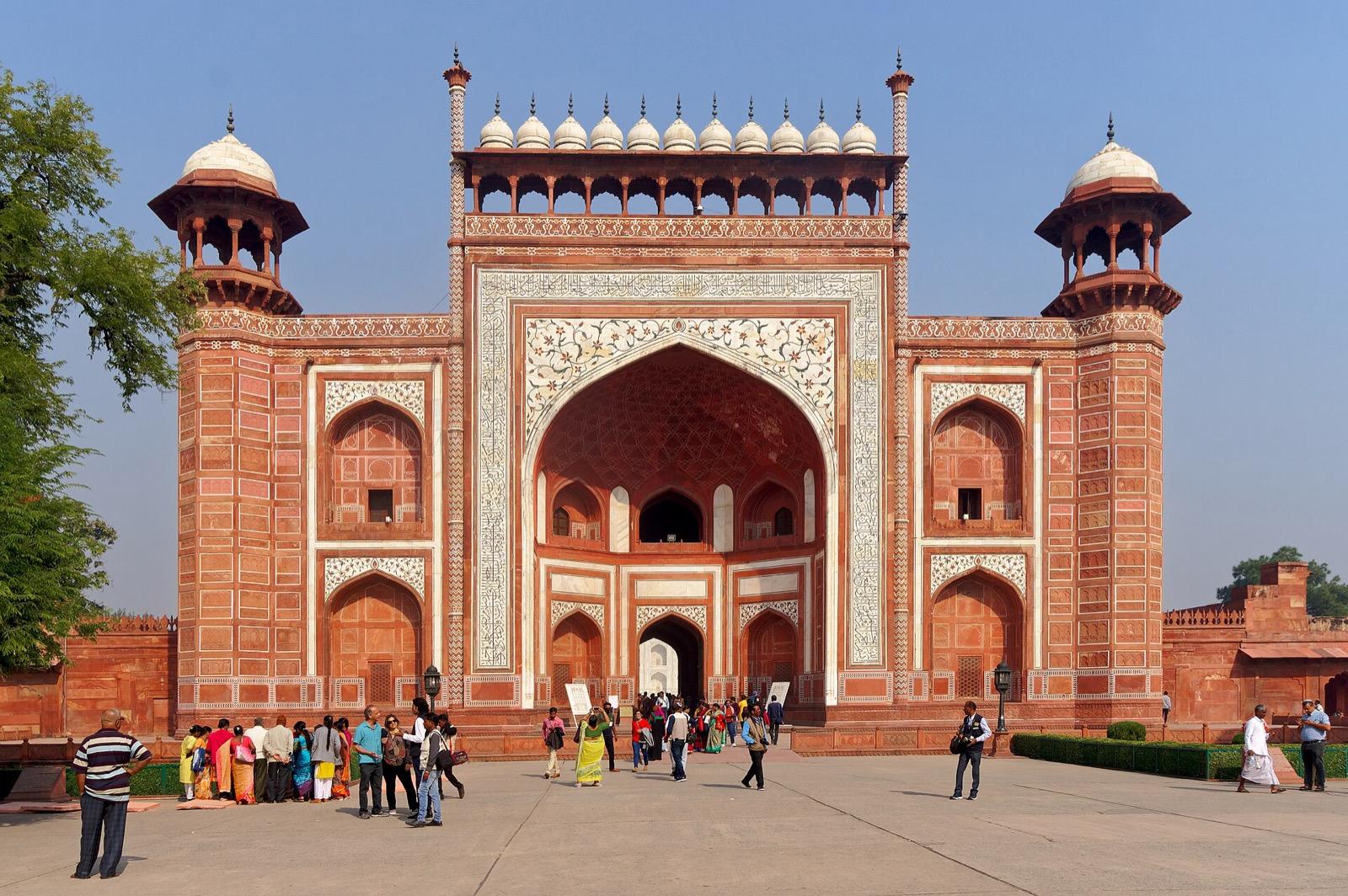
The Great Gate: A Dark Doorway Built to Reveal a Vision
The monumental red sandstone gateway into the tomb garden, designed so that the white mausoleum appears suddenly, like a vision, at the far end.
- 2
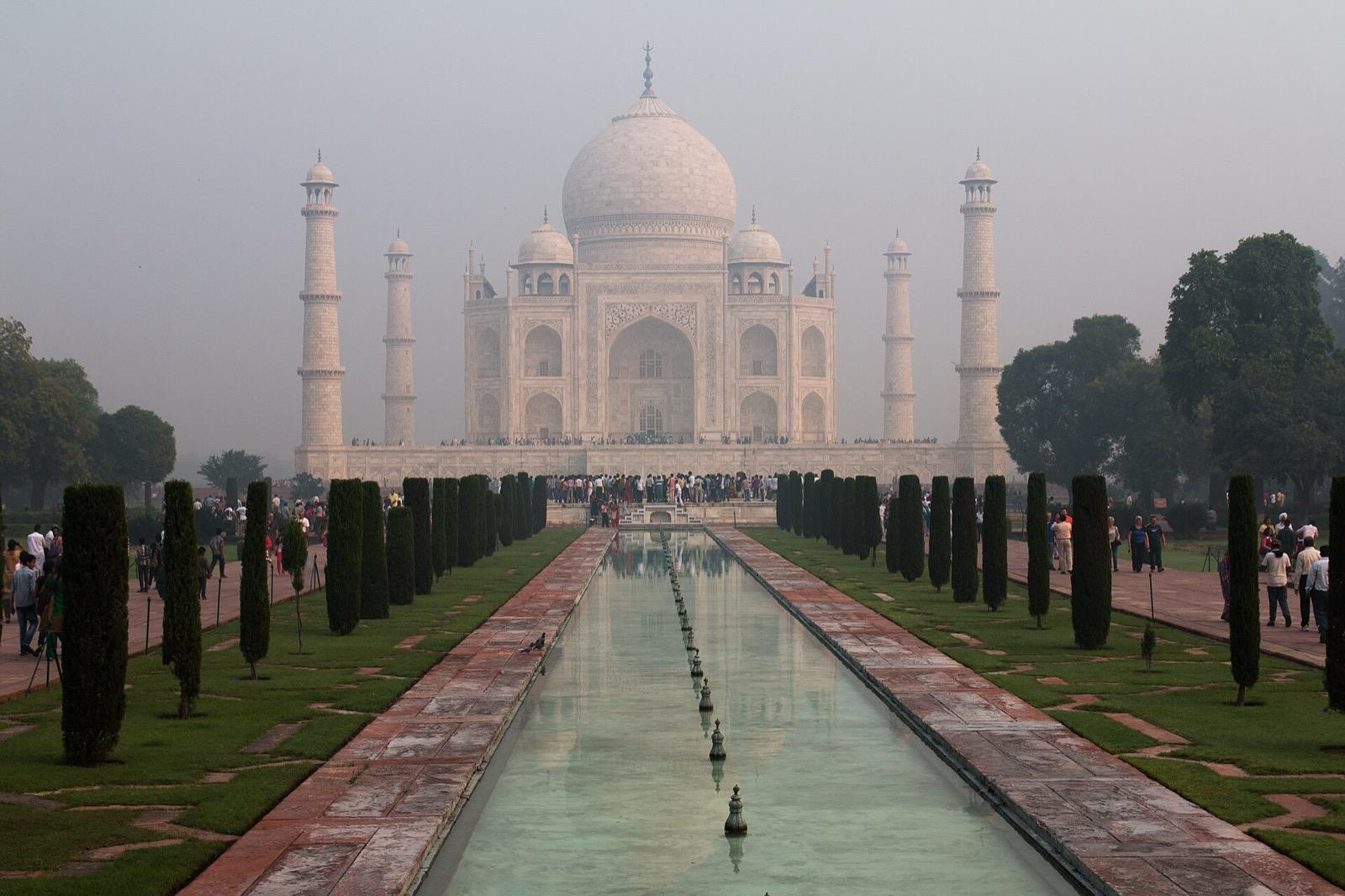
The Paradise Garden: The Pool That Doubles the Dome
The fourfold Persian paradise garden divided by water channels, with a raised central marble tank whose reflecting pool mirrors the mausoleum.
- 3
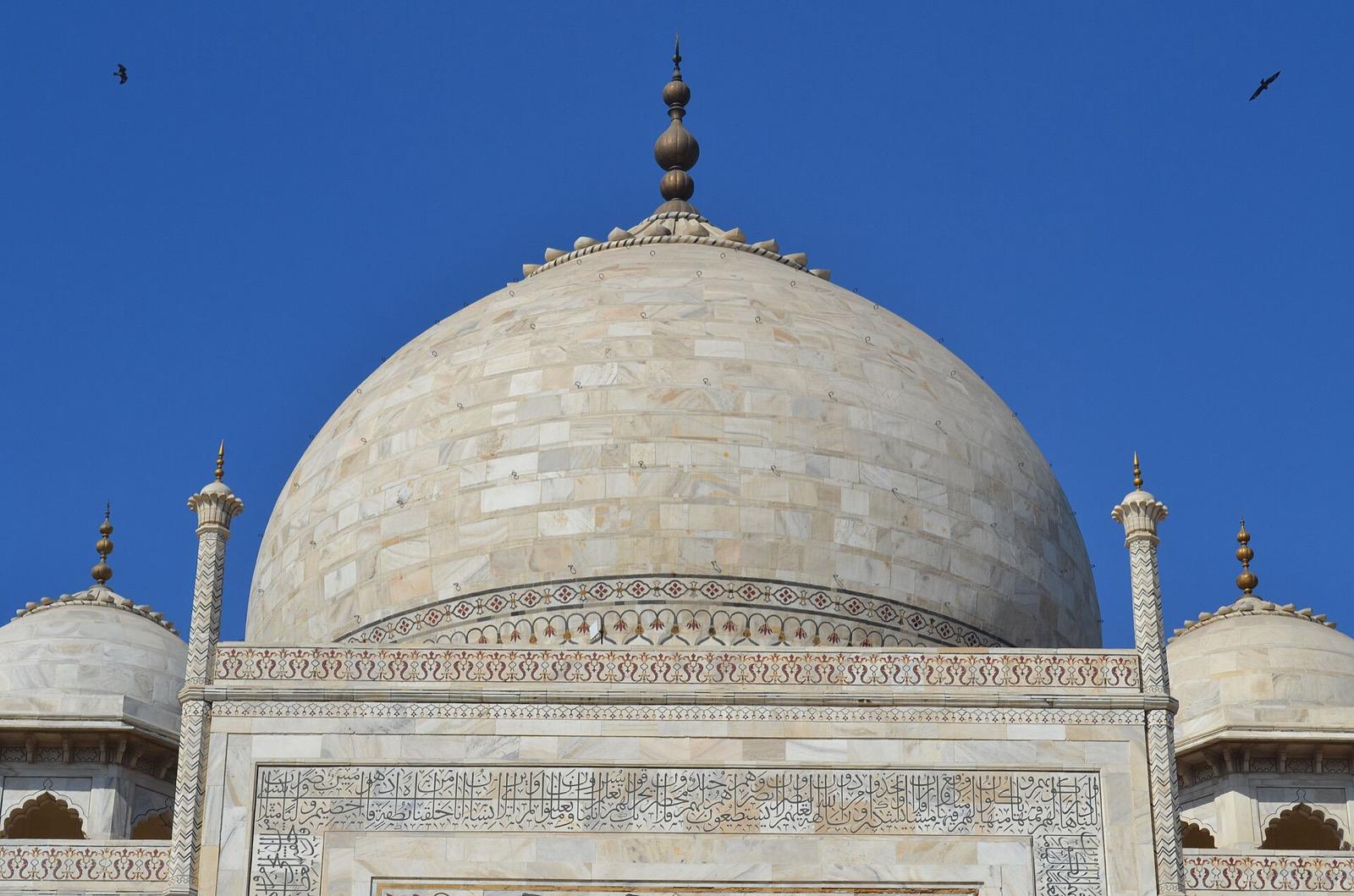
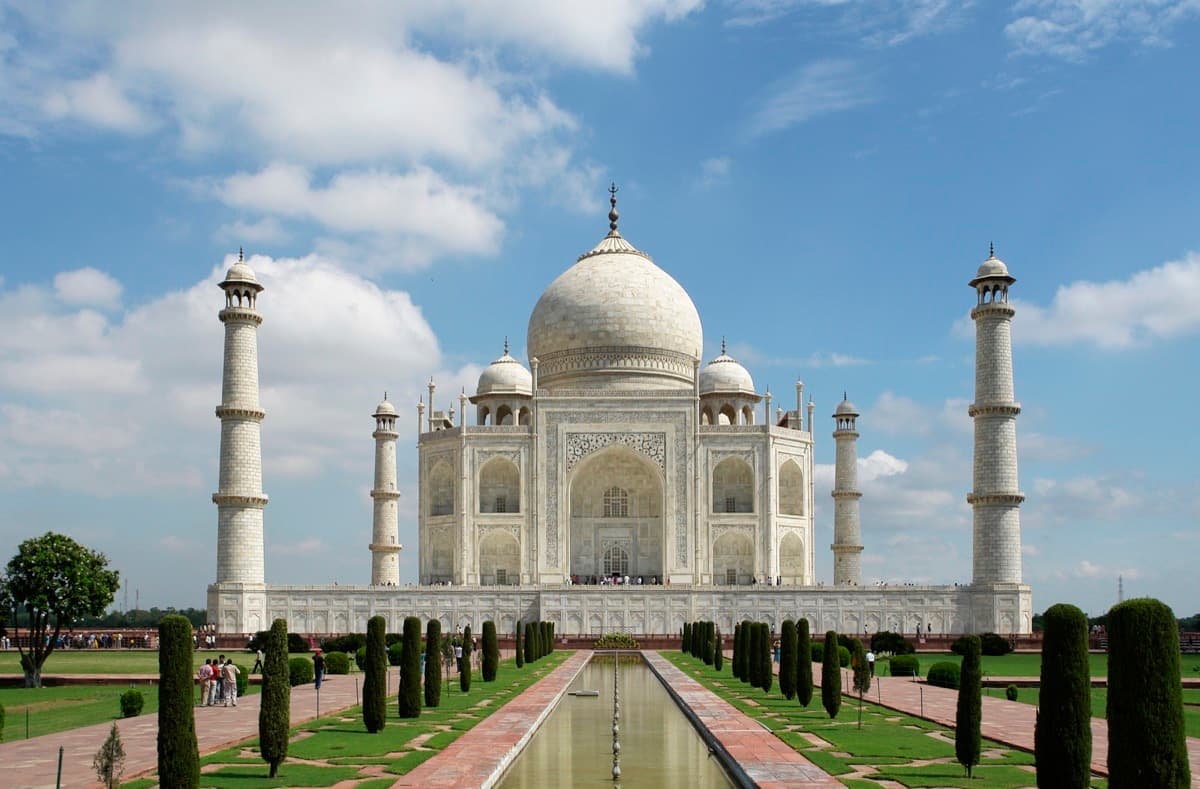
The Mausoleum: Marble That Flowers with Stone
The marquee monument itself, a white marble tomb rising to about seventy-three metres, its surfaces inlaid with flowers of semiprecious stone and framed by bands of calligraphy.
- 4
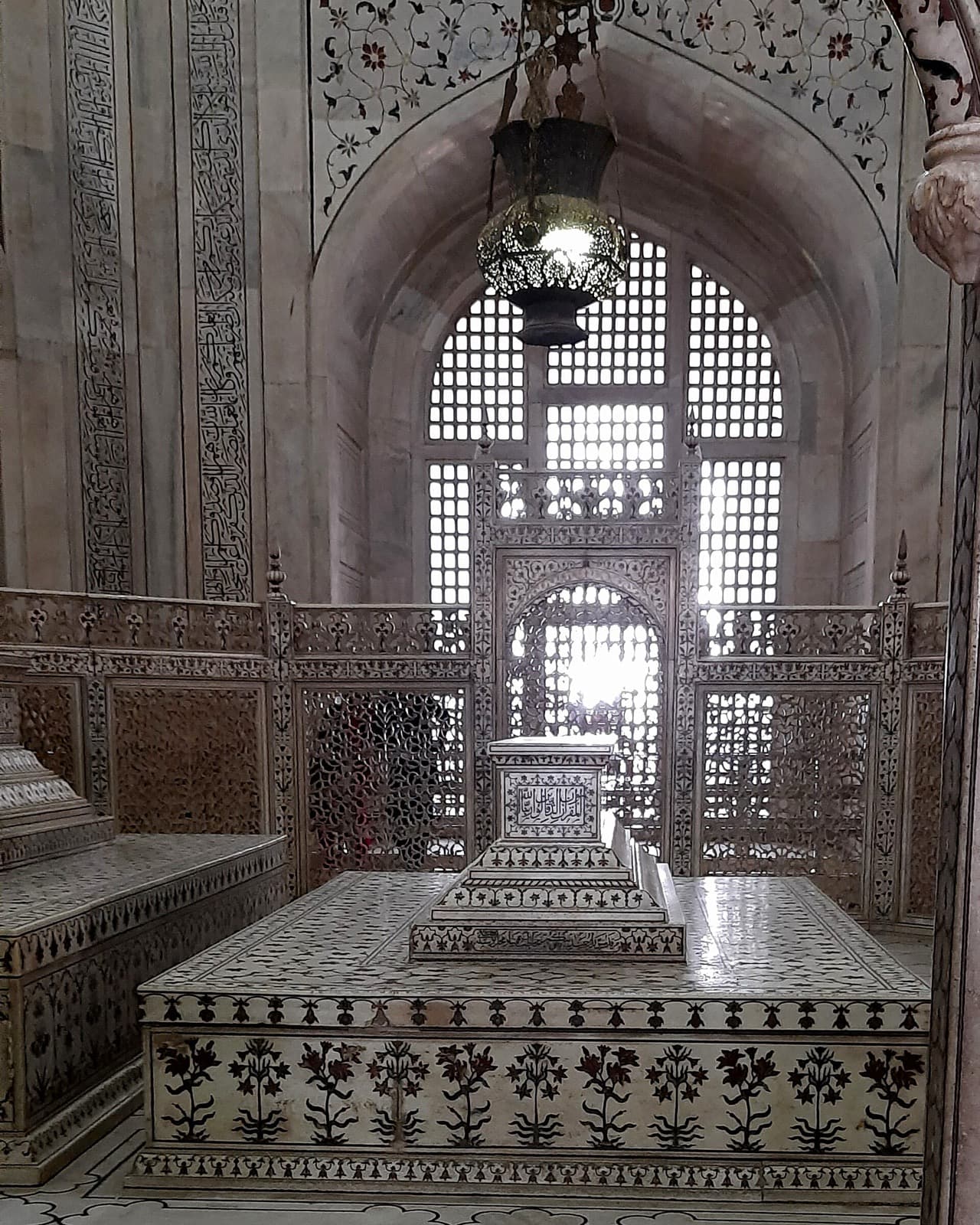
The Tomb Chamber: The One Flaw That Grief Added
The interior chamber beneath the dome, where a single off-center cenotaph is the only asymmetry in an otherwise perfectly balanced building.
- 5
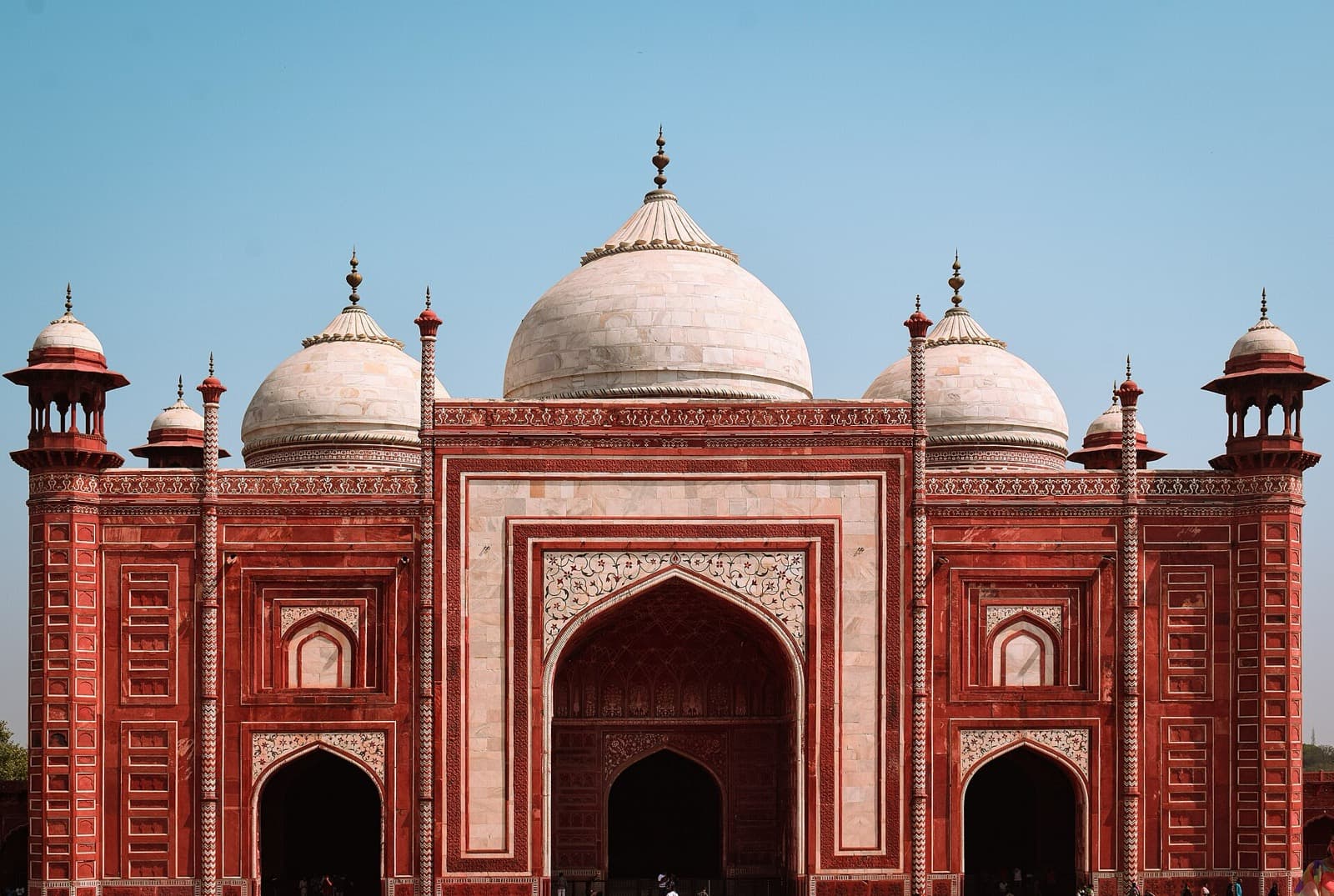
The Mosque and the Jawab: A Twin Built Only for Symmetry
Two identical red sandstone buildings flank the mausoleum, one a working mosque and the other its mirror image built solely to balance the composition.
- 6
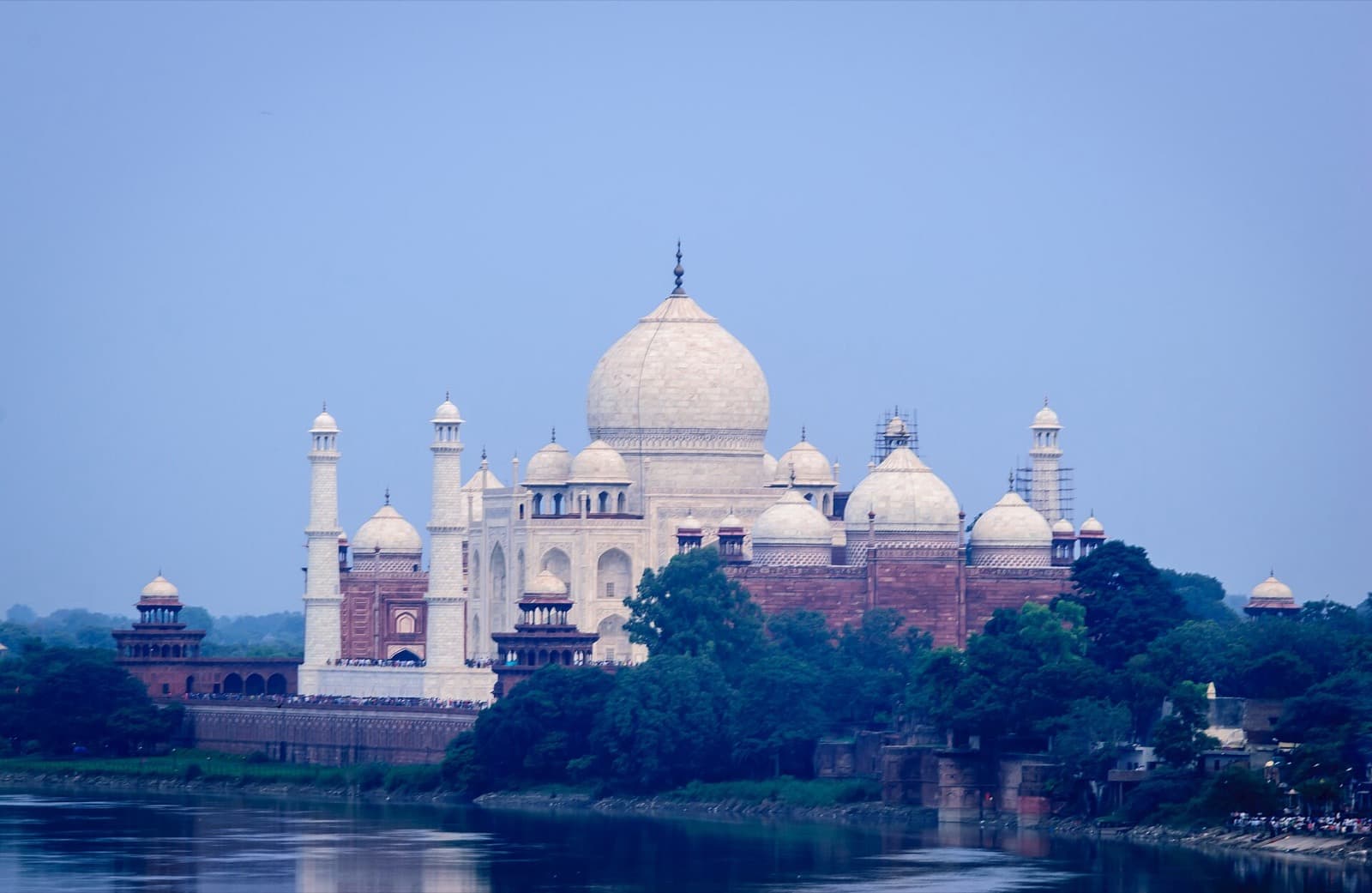
The Riverfront Terrace: The Fort Upstream and the Tomb That Was Never Built
The great terrace above the Yamuna, looking upstream toward Agra Fort where Shah Jahan was imprisoned, and out over the river where the legendary Black Taj was said to have been planned.
Details
Best Time to Visit
Come at opening, soon after sunrise, when the marble glows soft and pearly and the crowds are thinnest, or in the last hour before closing for warm evening light. Avoid Fridays, when the Taj Mahal is closed to general visitors. The cooler months from roughly November to February are far kinder than the fierce heat of April to June.
Pro Tips
- •The site is closed every Friday, so plan your visit for any other day of the week.
- •A foreign tourist ticket is around eleven hundred rupees, with an optional extra of about two hundred rupees to step onto the marble mausoleum plinth; buy the plinth ticket if you want to go inside to the tomb chamber.
- •Arrive right at opening to walk the char bagh garden and photograph the reflecting pool before the crowds build.
- •Watch the marble change color through the day; dawn and the last light of afternoon are the most rewarding, so give yourself time rather than rushing one quick loop.
- •Only a small clear bag or your phone and wallet are worth bringing; food, large bags, tripods, and many everyday items are not allowed through security, so travel light.
- •Cloth shoe-covers are provided or required to step onto the marble plinth; slip them over your shoes rather than going barefoot on hot stone.
Safety & Precautions
- •This is one of the most tout-heavy sites anywhere, thick with guide-touts, photo-touts, and hawkers; you are free to decline firmly and keep walking, and you owe no one a tip for unrequested help.
- •Security is tight and bag rules are strict, with long queues at entry and many items banned; carry as little as possible and expect to be searched.
- •There is strong sun and very little shade across the marble terrace and garden; carry water, wear a hat, and be especially careful in the severe heat from April to June.
- •Crowds are dense at the mausoleum and the reflecting pool; keep your valuables secure and close to your body, and mind your footing on the smooth, sometimes slick marble.
- •Buy tickets only at the official counter or QR code at the gate, or the government ASI booking site, and ignore anyone offering skip-the-line entry, special access, or a street guide; the Archaeological Survey of India has warned of lookalike websites and unauthorized sellers here. If a guide starts talking or leads you anywhere without a price agreed first, you owe nothing.
Travel advisory: Exercise Increased Caution (Level 2).
Gallery
Related Reading
Go deeper on what you'll see, hear, and walk through.
Overview
Agra Travel Guide: How Many Days, Getting Around, and Safety
6 min
Overview
Best Self-Guided Walking Tours in Agra (2026)
3 min
Overview
One Day in Agra: A Walkable Itinerary from the Taj Mahal to Agra Fort
5 min
Thematic
Agra: The Mughal Zenith Read Across a River
7 min
Thematic
Best History Walking Tours in Agra (2026)
2 min
Companion
Reading the Taj Mahal as a Tomb: What the Mausoleum Tells You
7 min
Deep dive
The Great Gate of the Taj Mahal: Why the Darwaza-i Rauza Was Built Dark
6 min
Read
What to Eat in Agra: Petha, Bedai, and Mughlai Food
5 min
Read the walk
The full story of Taj Mahal: An Emperor's Monument to Grief, in words. Prefer to listen? Play it narrated, from home or on location.
Introduction
The Taj Mahal, in Agra, India, is famous the world over as a monument to love, yet at its heart it is a grave. This self-guided walk of six stops covers roughly one kilometre and takes about ninety minutes at your own pace, from the dark gateway built to frame a vision to the riverfront terrace above the Yamuna river. The emperor Shah Jahan raised it for his wife Mumtaz Mahal, who died in sixteen thirty-one. Construction began in sixteen thirty-two, and the whole complex was finished by sixteen fifty-three. Along the way this tour separates the documented history from the legends that the crowds repeat, the maimed artisans and the Black Taj, and it treats both plainly. This is one of the most tout-heavy and crowded sites on earth, thick with guides, hawkers, and photo-touts. The gift of moving on your own is real here: your route, your clock, no group van, no one steering you toward a shop, and no one hurrying you past the calligraphy. You can linger at the marble as long as the light holds, or press on when a stop is done. Every stop is short and skippable, and you set the order and the pace. The site is closed on Fridays, so plan for another day of the week. Keep water and small cash in rupees within reach. When you arrive at the Great Gate, the Darwaza-i Rauza, begin with stop one.
1. The Great Gate: A Dark Doorway Built to Reveal a Vision
You are standing before the Darwaza-i Rauza, the Great Gate, the way into the tomb garden. Darwaza means gate. It is built of red sandstone banded with white marble, and its great arch is inlaid with verses from the Quran in black stone. That calligraphy was carried out under Amanat Khan, born Abdul Haq, who was given the title Amanat Khan by the emperor Shah Jahan himself. Look closely at the inscription and there is a quiet piece of genius in it. The letters and the spaces between them grow steadily larger the higher they climb the arch. It is a trompe l'oeil, an optical trick, so that from where you stand on the ground the whole inscription reads as if every letter were the same size. This is documented design, not legend. Among the verses is an invitation from the Quran to a soul at peace: O soul, thou art at rest, return to the Lord at peace with Him. That is the note the gate wants to sound, because of what happens when you pass through it. The gate is deliberately dark. Its deep arch is shadowed, and it frames a single view. Move through that shadow and the white mausoleum appears all at once at the far end of the long garden, pale and complete, as if it were a vision arriving rather than a building standing. The dark doorway exists to make the white tomb feel like paradise glimpsed. Take your time in the shade here. The crowds surge through this arch, but you are not on anyone's schedule. When the view opens, it is yours to hold as long as you like.
2. The Paradise Garden: The Pool That Doubles the Dome
The garden spread out around you is a char bagh, a fourfold Persian garden. Bagh means garden. Raised walkways and water channels cut it into four equal quadrants, and that shape is not decoration. In this tradition the fourfold garden stands for paradise, and its four channels recall the four rivers of Paradise described in Islamic tradition. The whole idea descends from an old Persian word for a walled pleasure garden, an enclosure of green shut off from the dust of the world. Where you are standing, roughly halfway between the gate behind you and the tomb ahead, sits a raised marble tank. It carries a name from Islamic tradition, the Tank of Abundance, and it feeds a long reflecting channel that runs north to south toward the mausoleum. This is the spot the photographers fight over, and you can see why. When the water is still, the white dome and its minarets drop straight down into the pool, doubled, so that the tomb seems to float on its own reflection. Grief built this as a picture of paradise, and the reflecting pool lets you see the vision twice at once. There is no correct pace here. The garden was meant to be walked slowly, along the channels, under whatever trees give shade. You are free to stand at the tank until the surface goes glassy, or to carry on toward the marble. Notice how the garden holds the tomb at a distance, keeping it framed and small and perfect, before it lets you approach. That distance is part of the design, and it is yours to cross on your own clock.
3. The Mausoleum: Marble That Flowers with Stone
This is the reason the world comes to Agra. The mausoleum stands on a marble plinth on the riverfront terrace, and its great central double dome rises to about seventy-three metres to the tip of the finial at the top. UNESCO records it as the jewel of Muslim art in India, and…
Full narration for this stop unlocks with the tour.
4. The Tomb Chamber: The One Flaw That Grief Added
Inside, beneath the dome, is the tomb chamber. What you see here are the cenotaphs, the false tombs, ringed by a perforated marble screen called a jali, a lattice of stone cut so fine it seems like frozen lace. Look at how the two cenotaphs sit. The one at the exact center of…
Full narration for this stop unlocks with the tour.
5. The Mosque and the Jawab: A Twin Built Only for Symmetry
Two red sandstone buildings stand one on each side of the marble tomb, and they look identical, but they do very different work. The one to the west is a real mosque, a masjid, and masjid simply means mosque. It faces Mecca, and it sanctifies the whole complex as sacred ground.…
Full narration for this stop unlocks with the tour.
6. The Riverfront Terrace: The Fort Upstream and the Tomb That Was Never Built
This great terrace on the northern edge carries the whole complex above the Yamuna river. Beyond the parapet the water runs, and the crowds thin here, because most people never turn their backs on the tomb to face the river. Do turn. Look upstream, about two and a half…
Full narration for this stop unlocks with the tour.