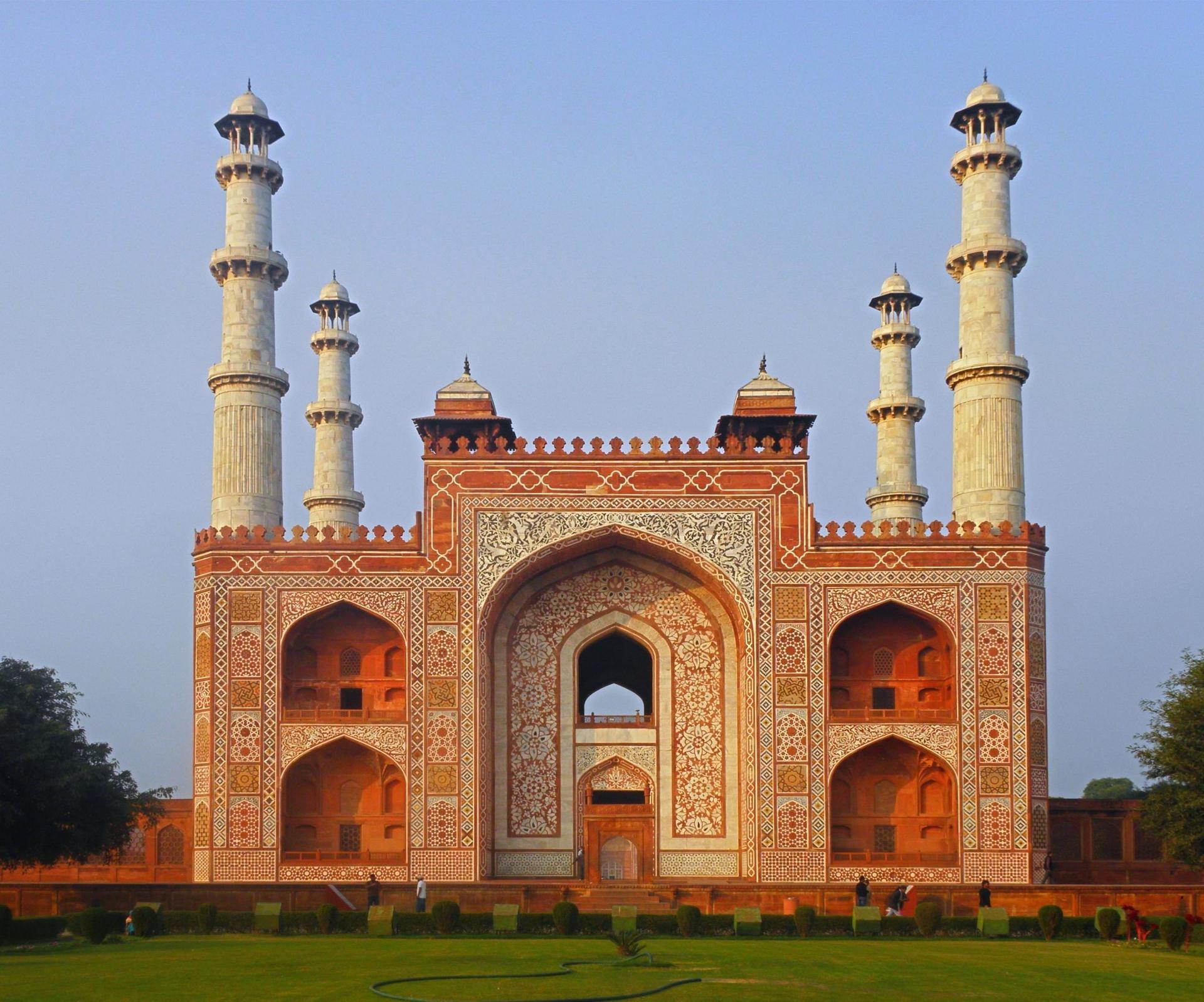
Inside the walled garden tomb of the emperor Akbar at Sikandra, northwest of Agra. Through the South Gate and its white marble minarets, up the raised causeway of a fourfold paradise garden, and round the five story tomb on its platform, past the blind gates and the blackbuck refuge, to the porch over Akbar's plain grave.
Start · South Gate
DirectionsStops
- 1
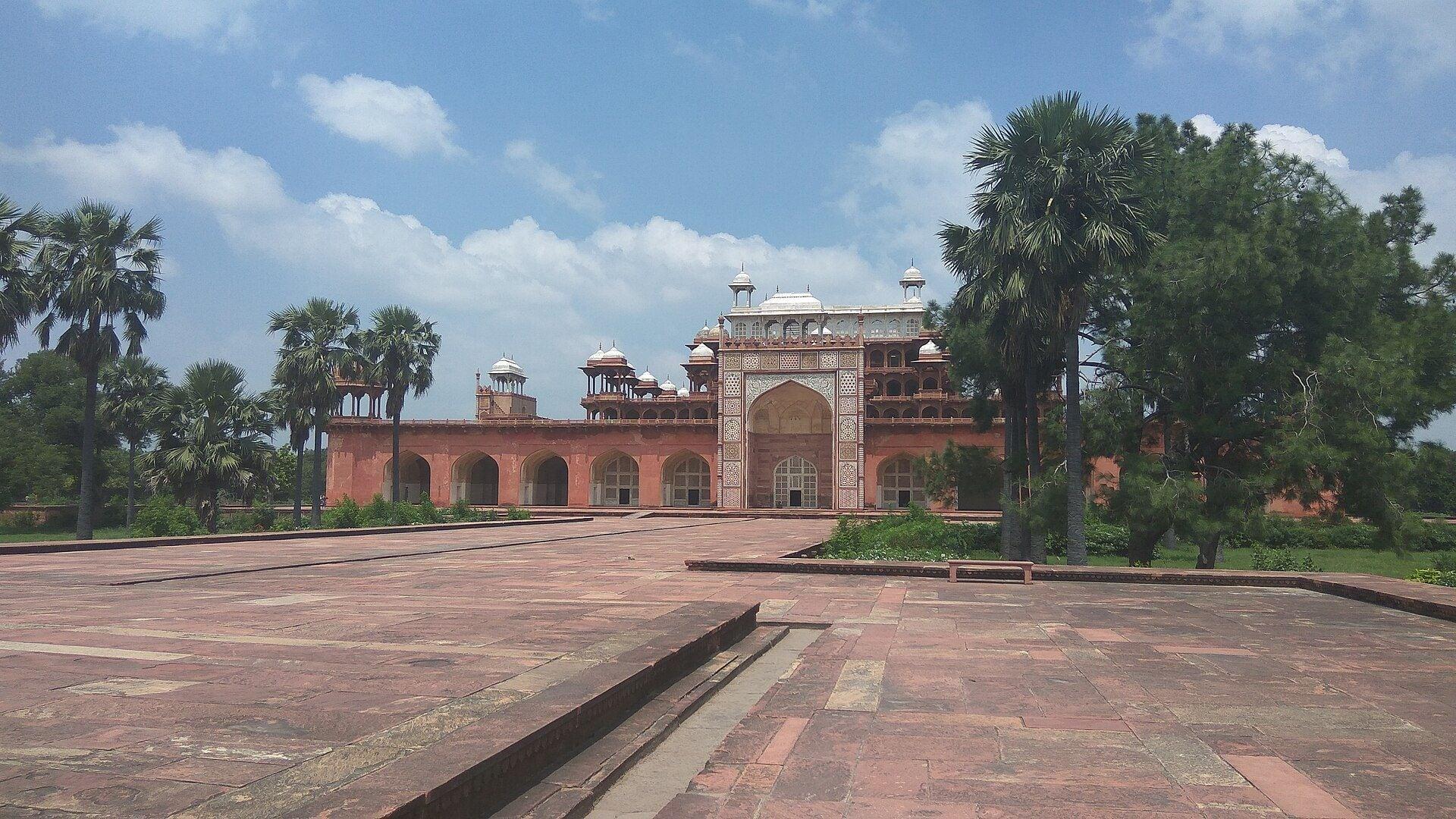
South Gate
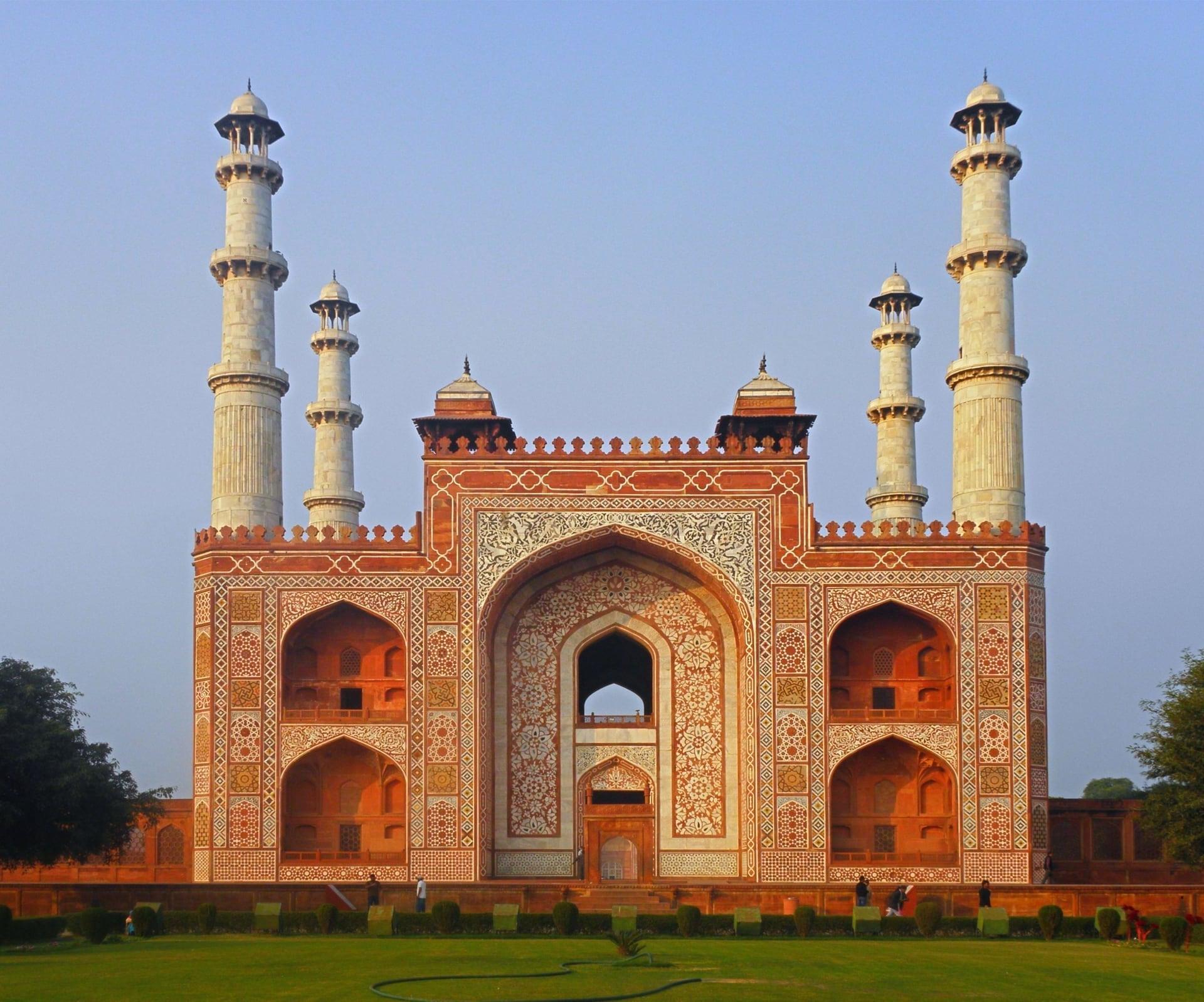
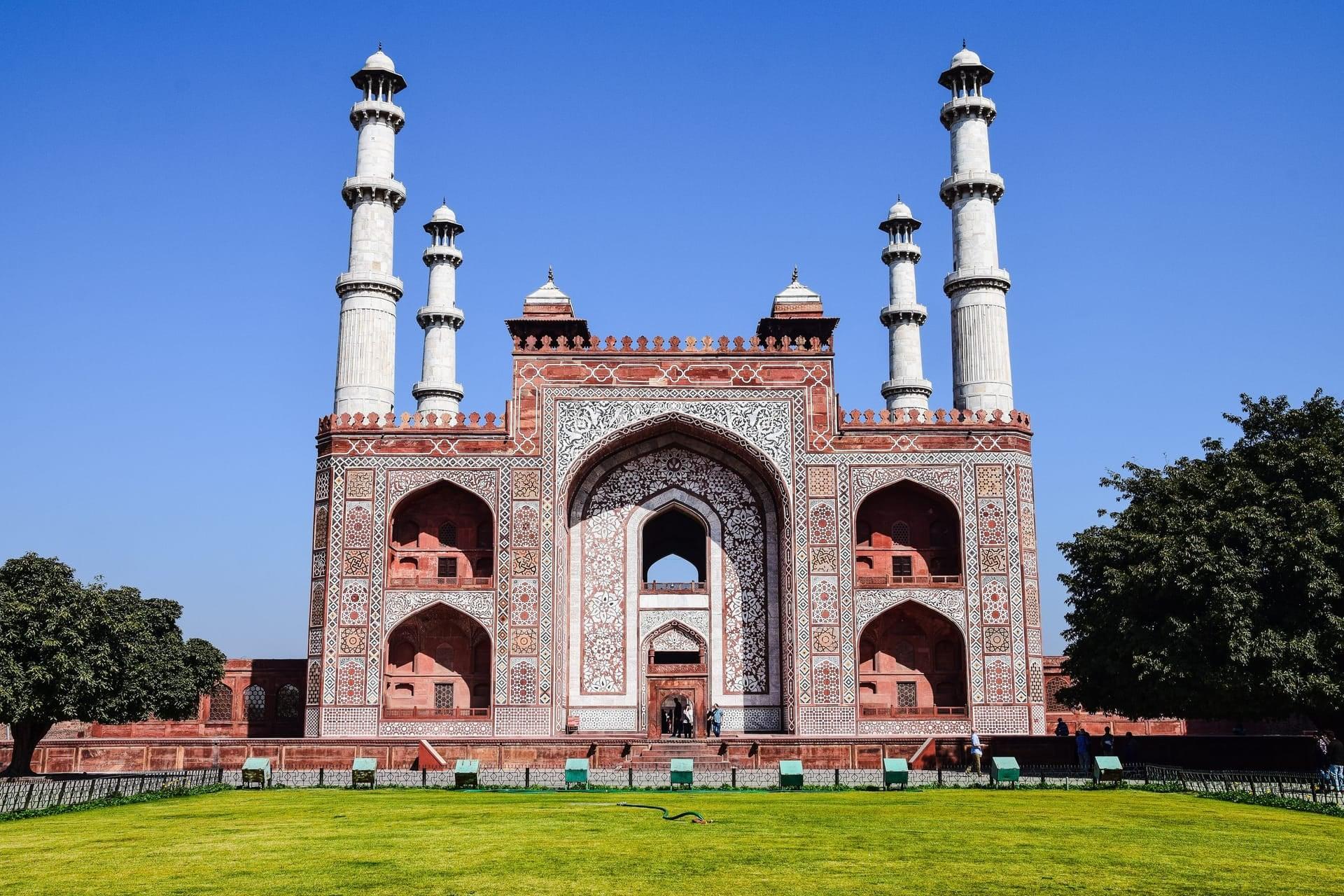
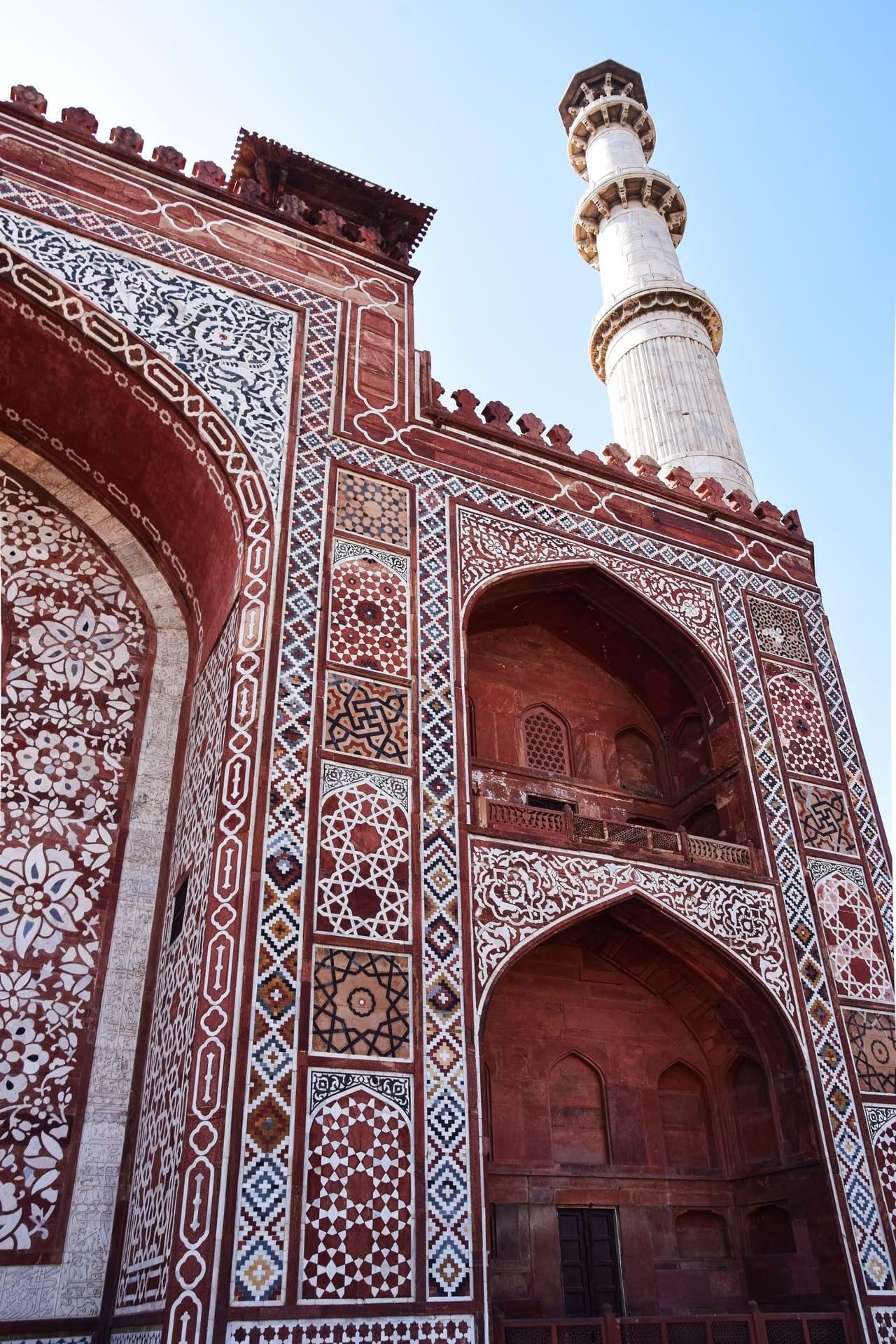
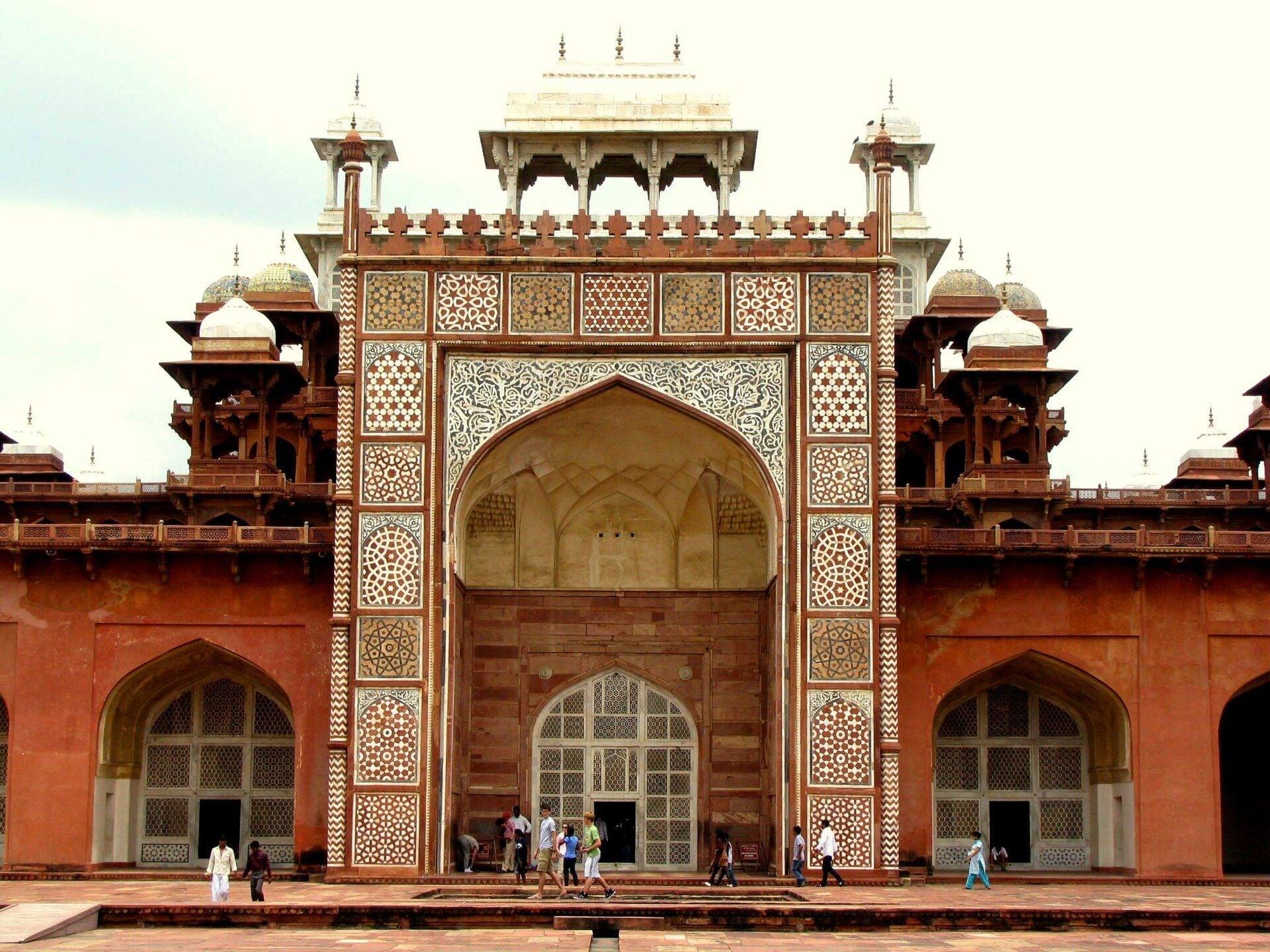
A poem in stone opens the garden. The South Gate of Akbar's Tomb, the only real way in, faced in inlaid marble and stone and lettered in 1613 by the calligrapher who went on to write the Taj Mahal's inscriptions.
- 2
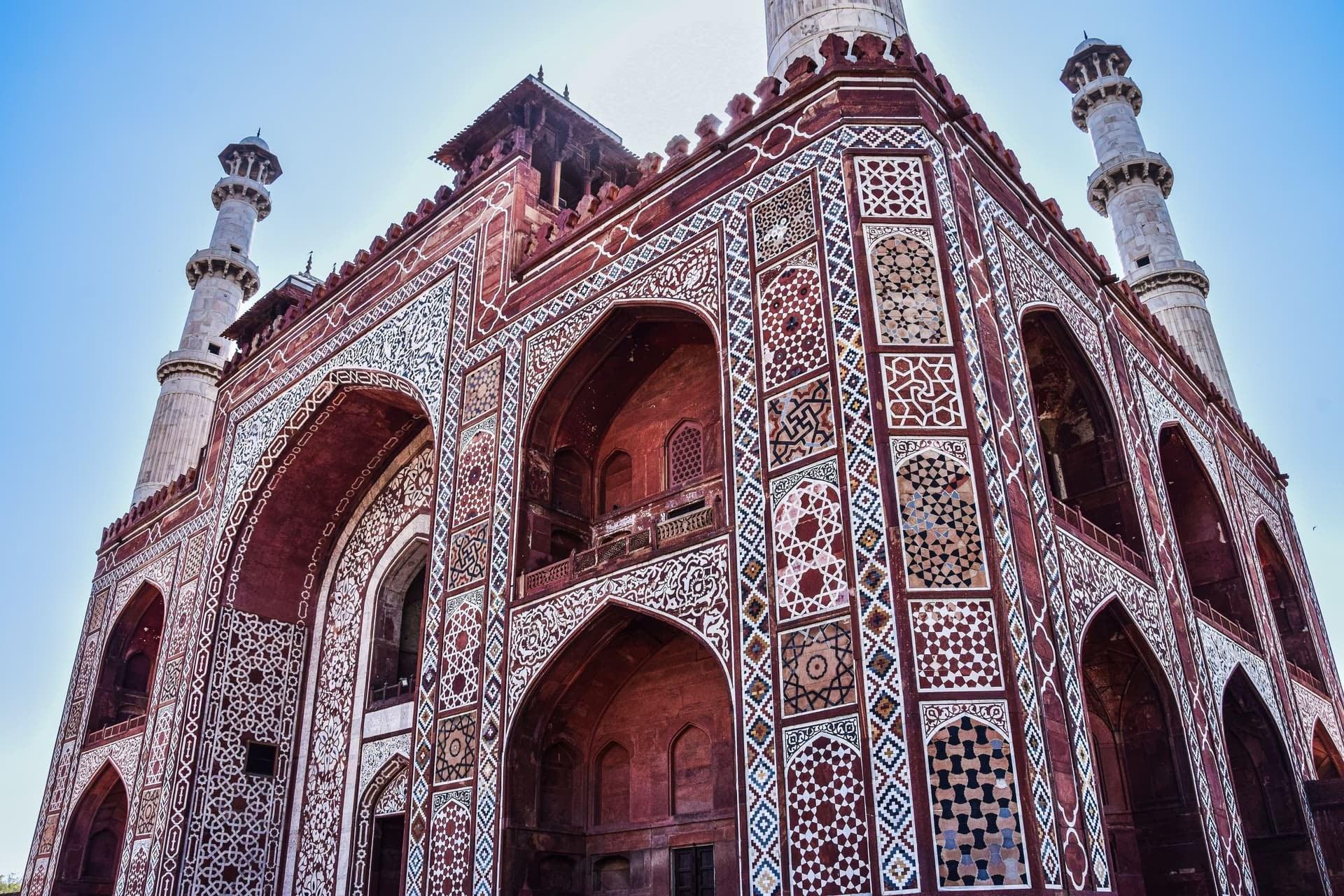
Gateway Minarets
The gate's white minarets face the tomb. Four marble minarets on the gate's roof, lost by the 1780s and rebuilt about 1905, almost twenty years older than any at the Taj.
- 3
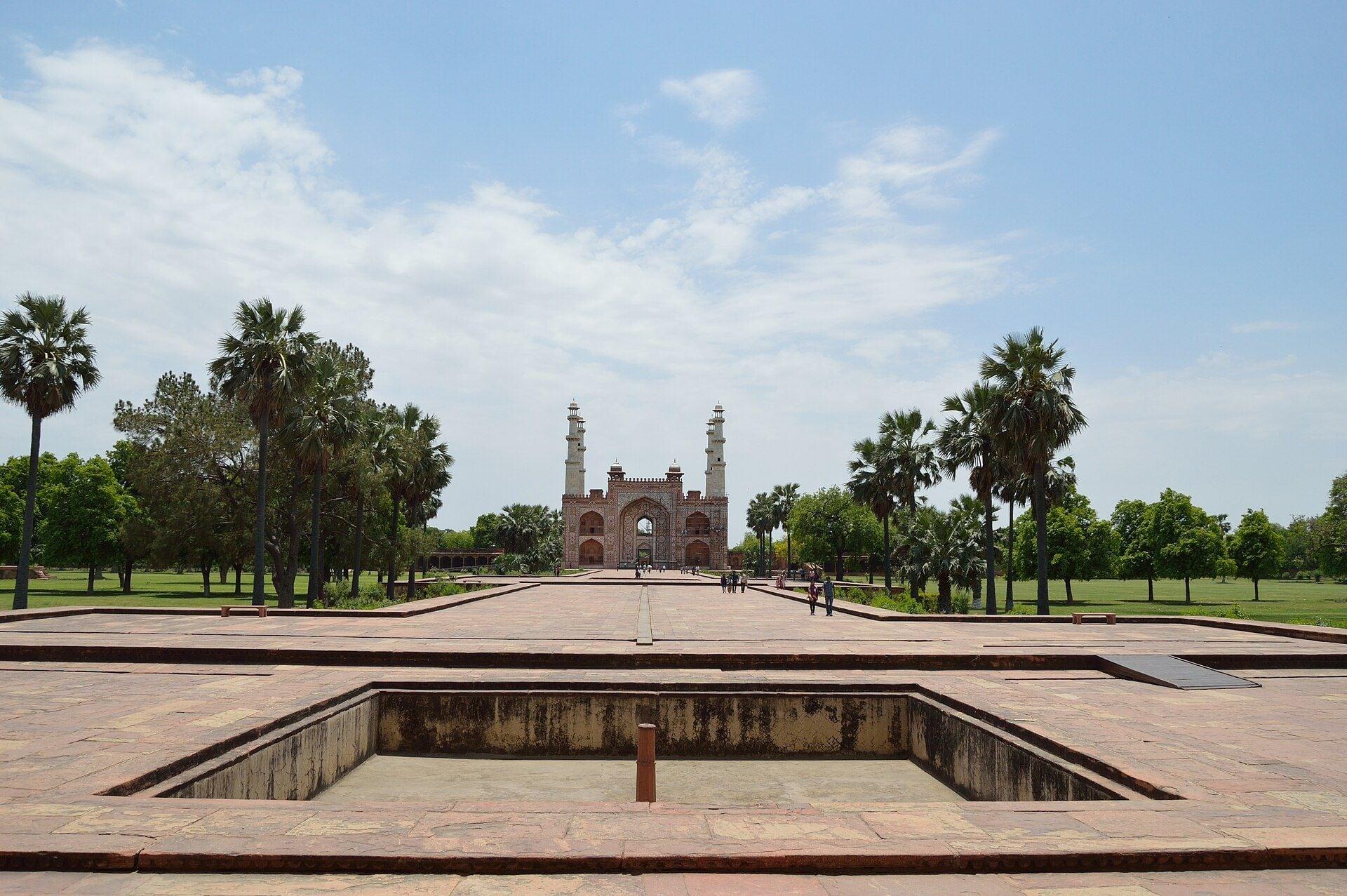
Causeway Tank
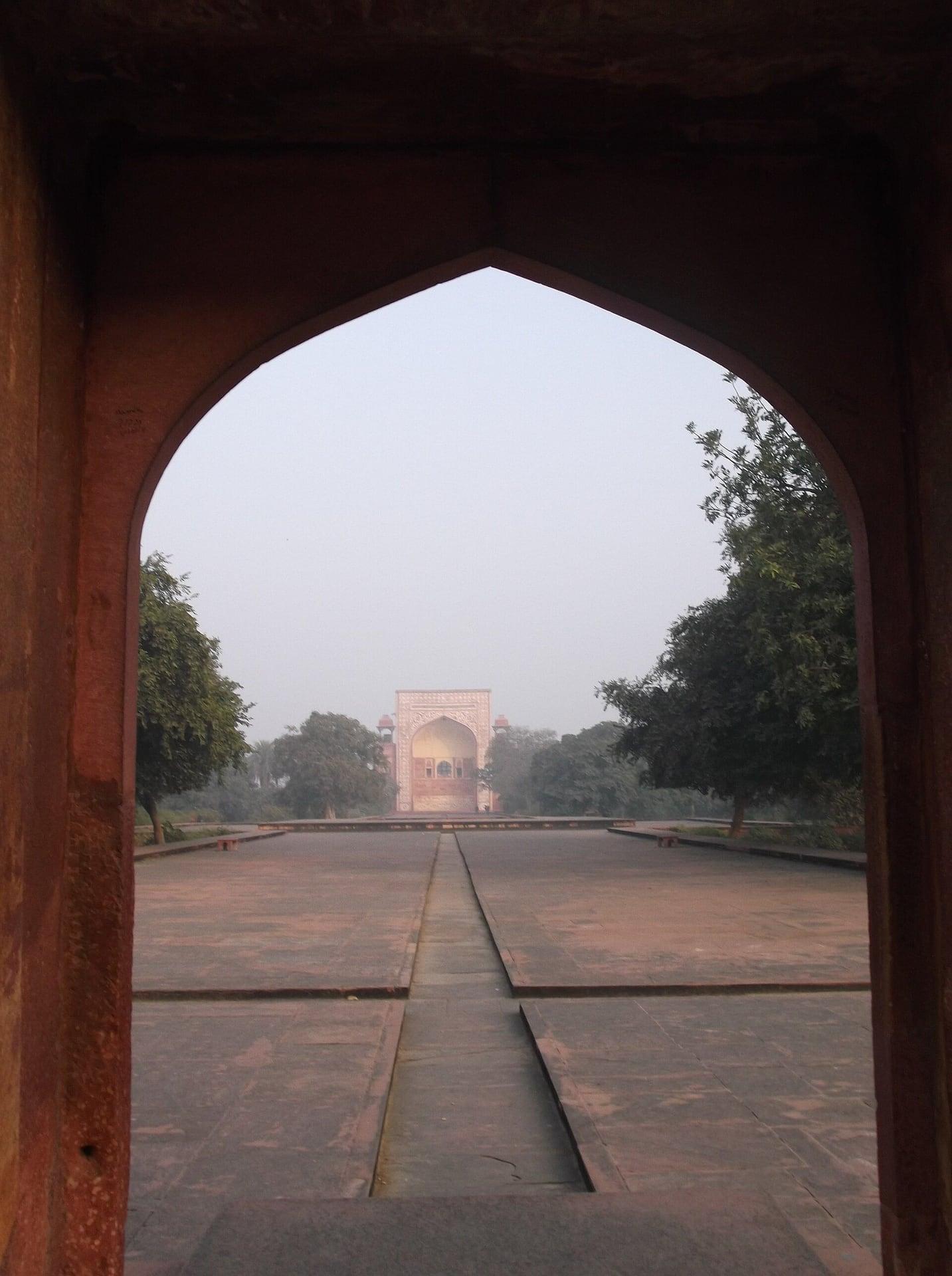
Paradise here was also plumbing. The central tank of the raised south causeway, one of the fountain basins of a fourfold garden that drained the rain off the tomb.
- 4
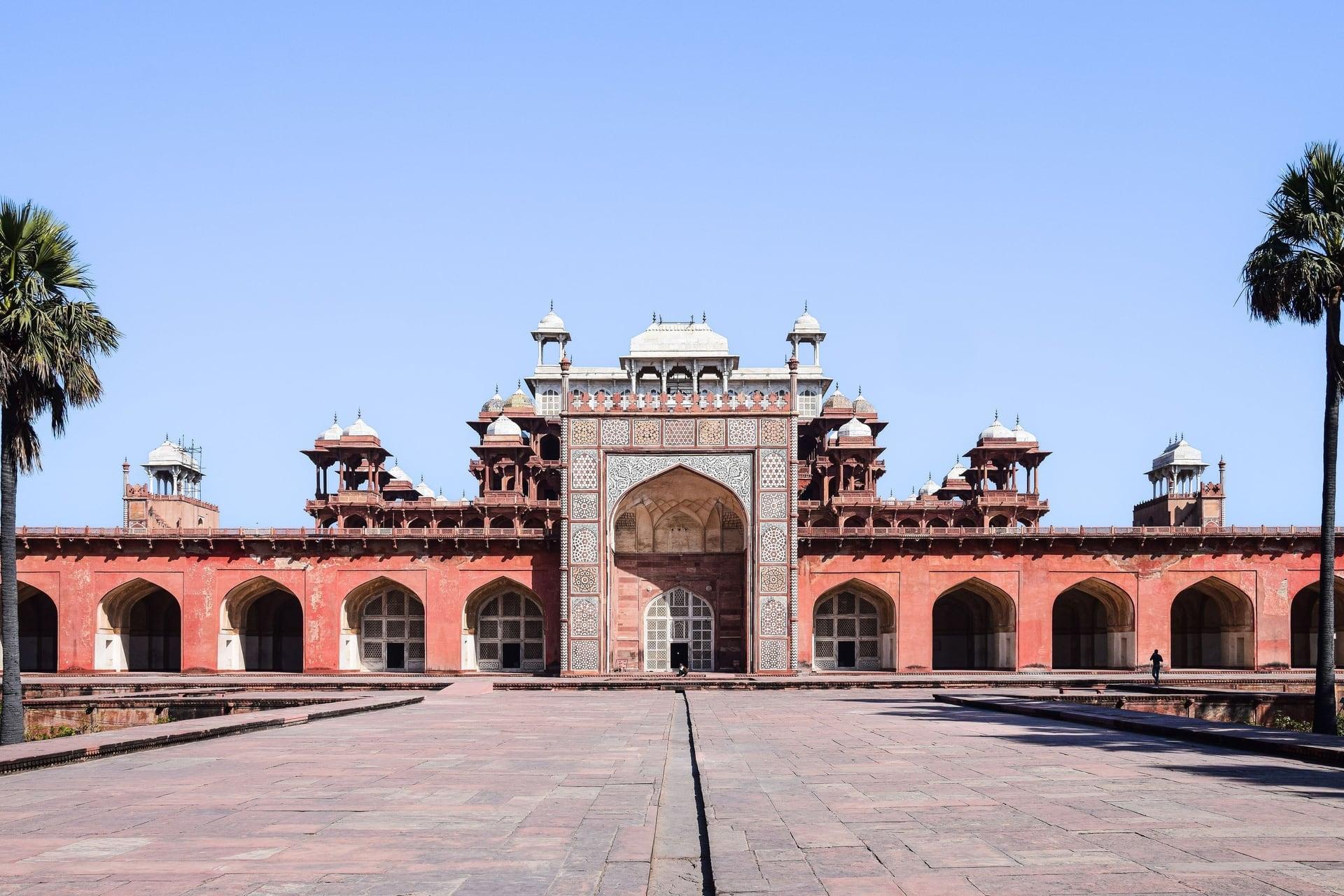
Five Stories: The Rebuilt Plan
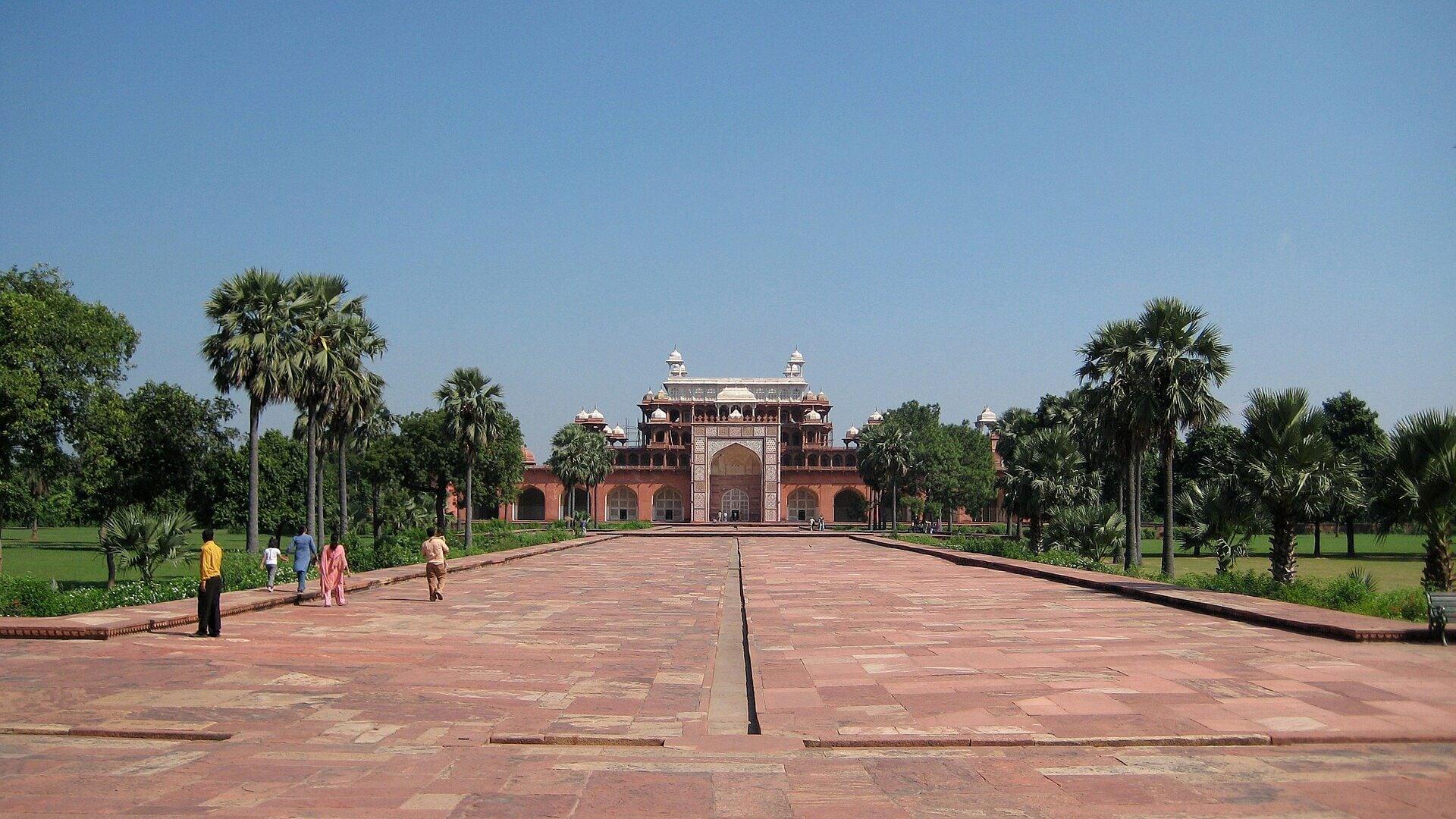
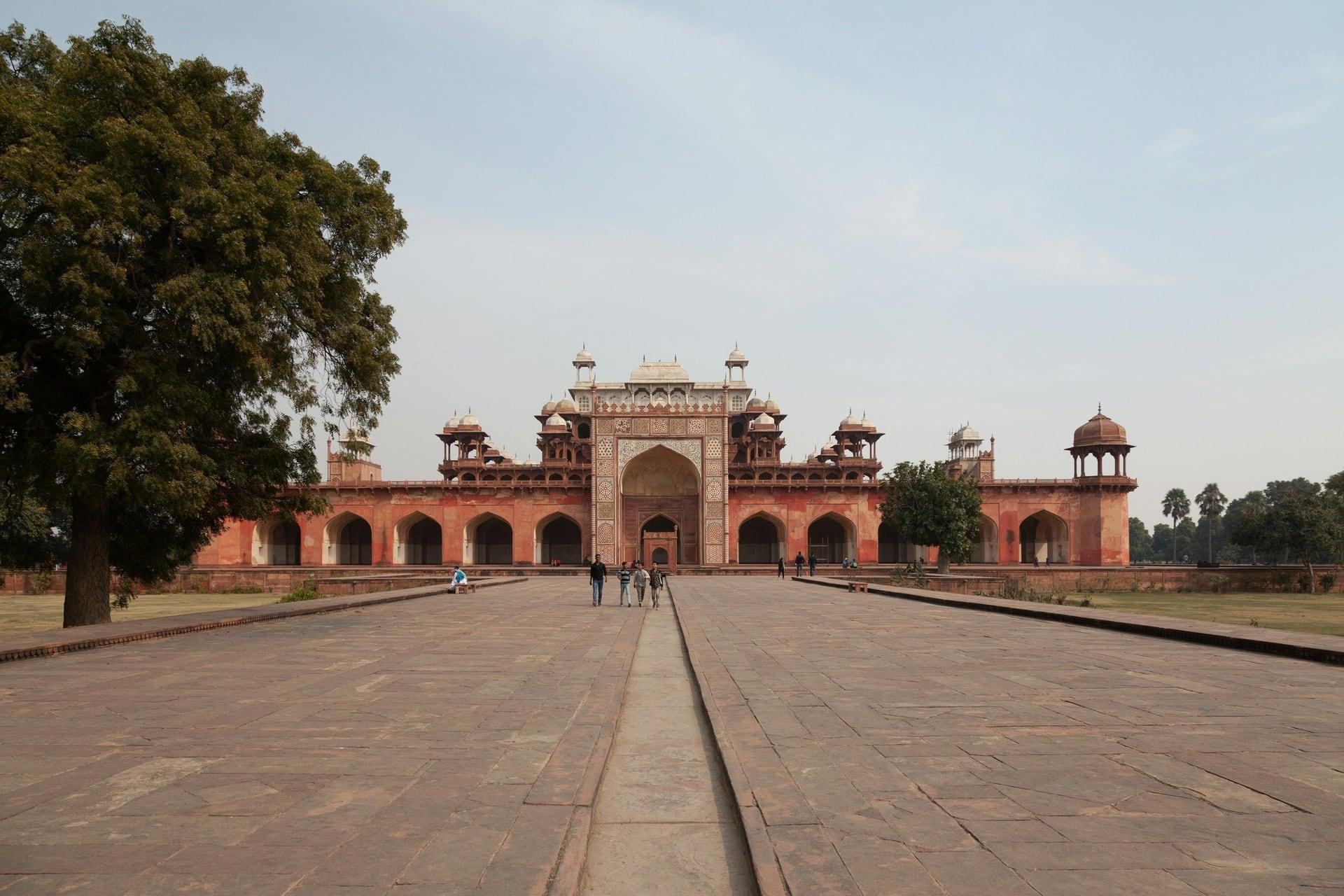
The son disliked the first design. The five-story tomb seen whole from the causeway: begun, by tradition, by Akbar, rebuilt to a new plan by Jahangir, finished in 1613.
- 5
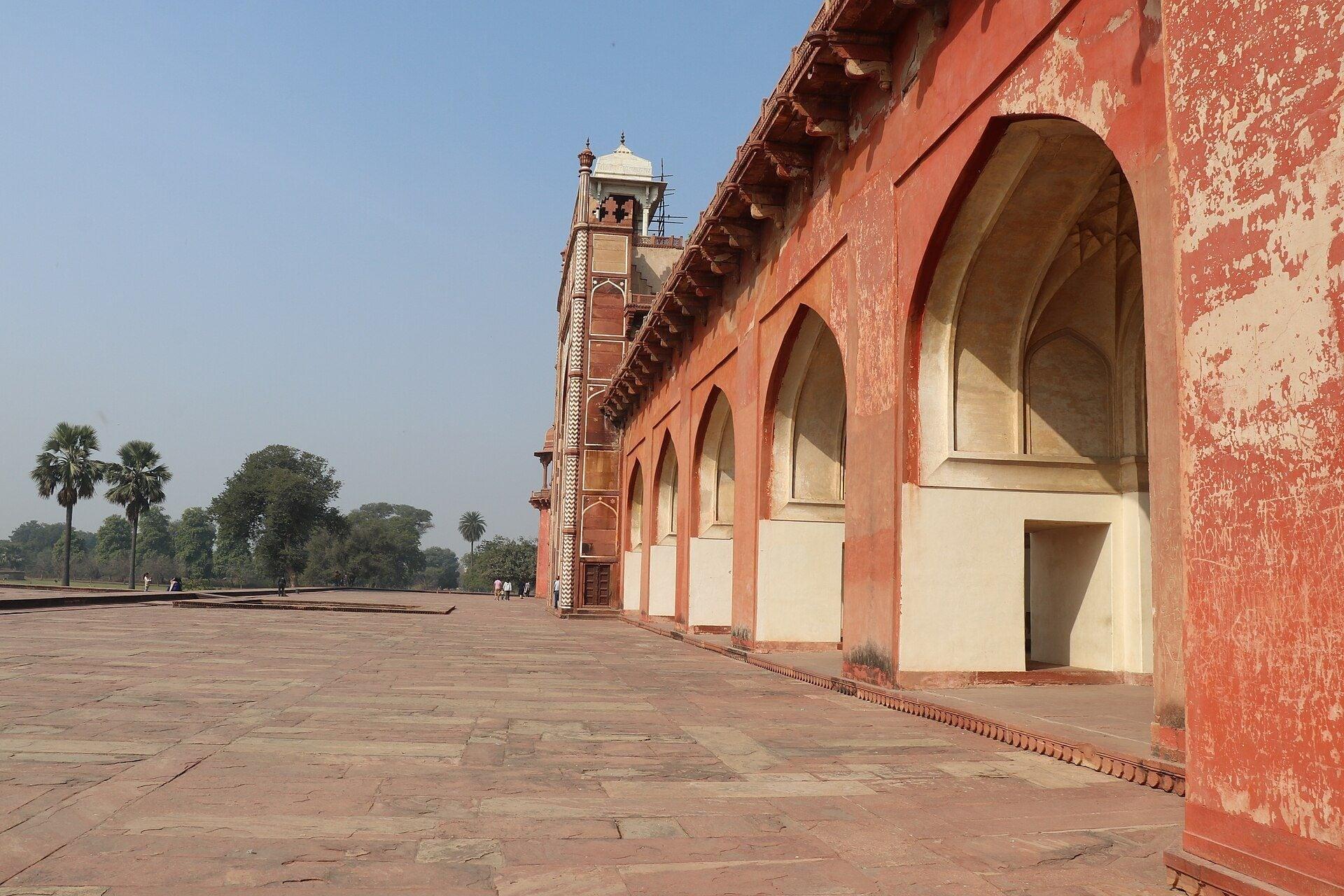
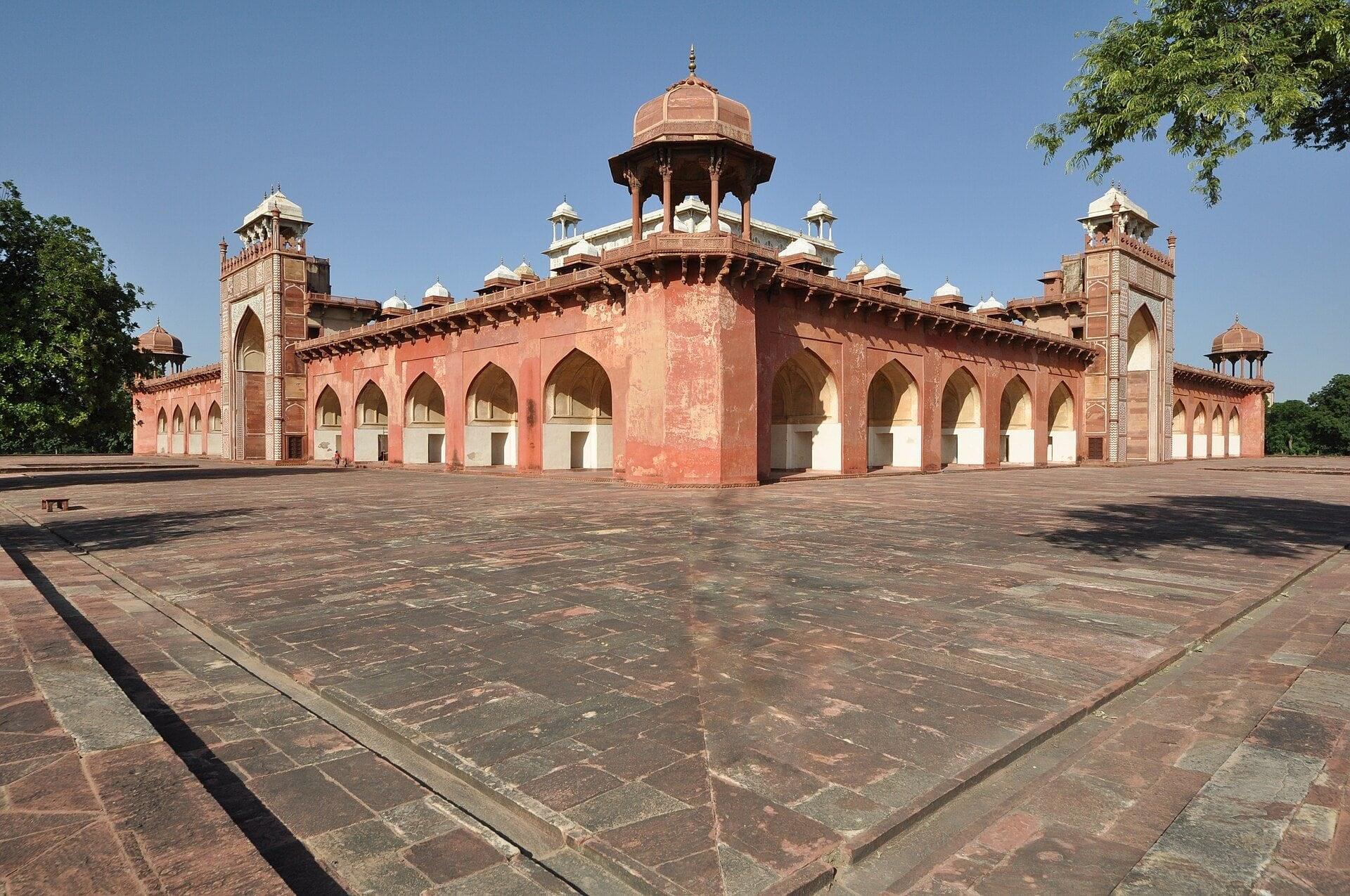
Southwest Corner: The Cloisters
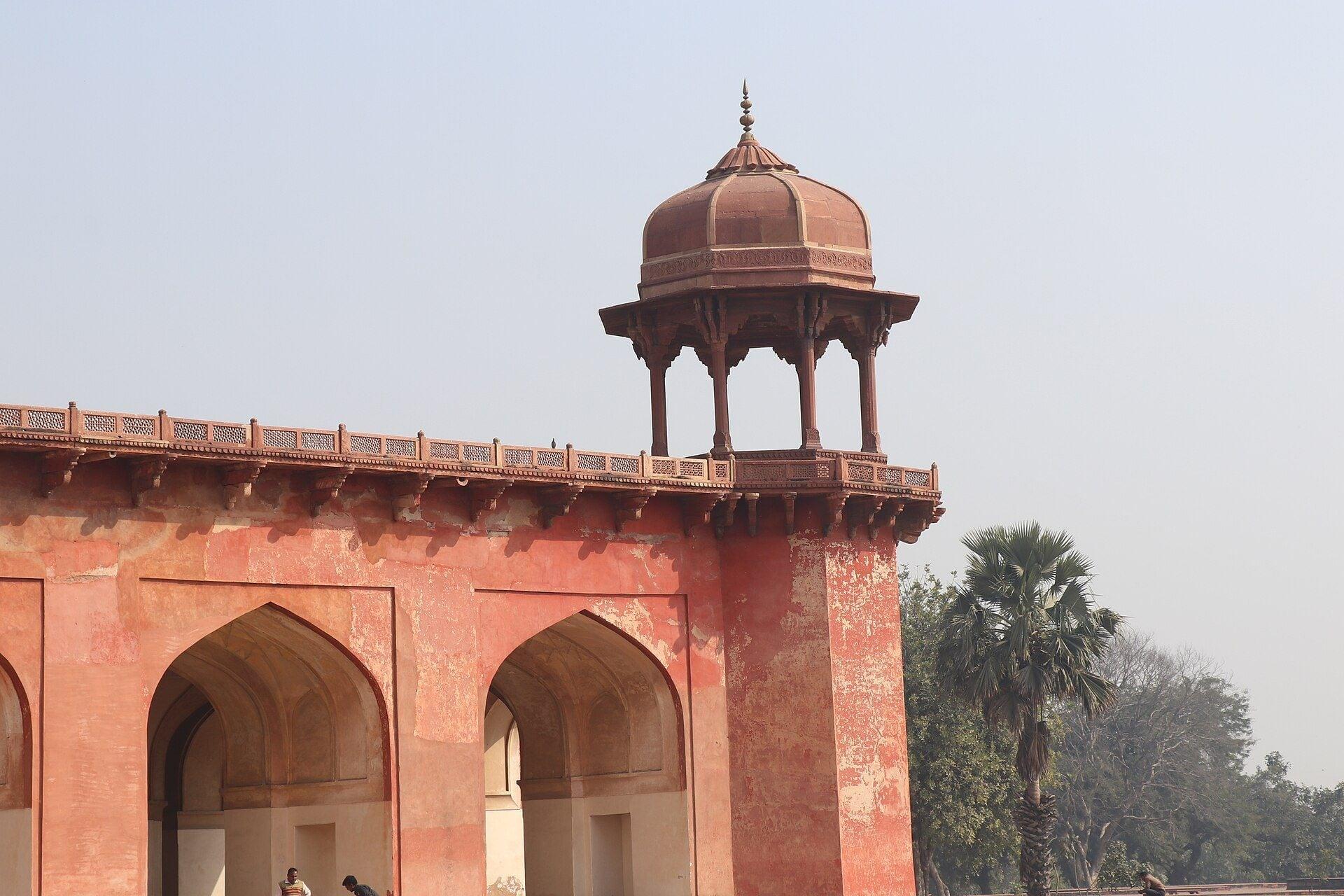
The ground story once housed soldiers. The tomb's southwest corner tower and the arcaded cloisters of its ground story, where British dragoons were quartered in 1803.
- 6
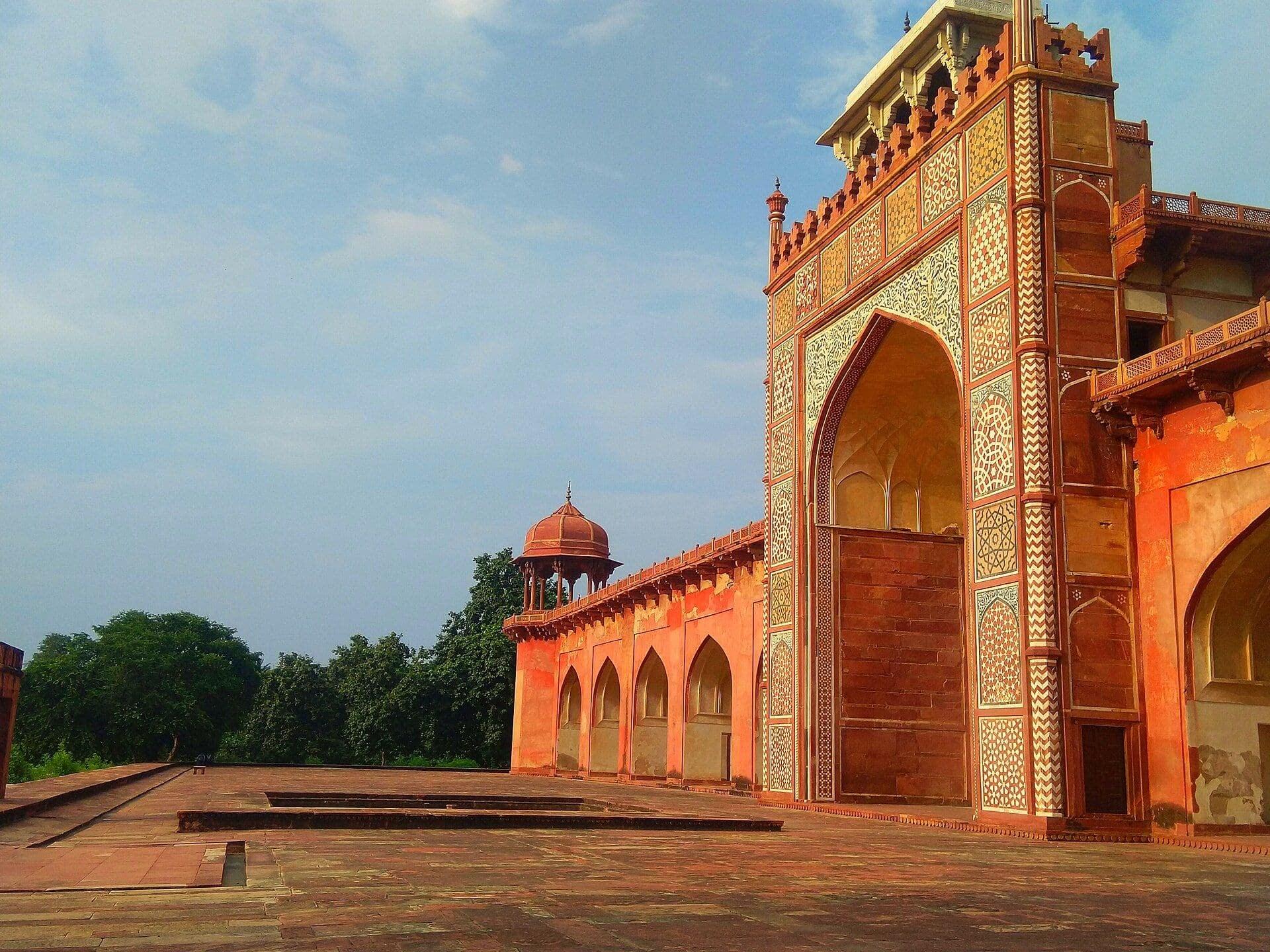
West Front: The Blind Gate
Three great gates open onto nothing. The tomb's west portal and, far down the west causeway, a blind gate built only so the garden would look perfect.
- 7
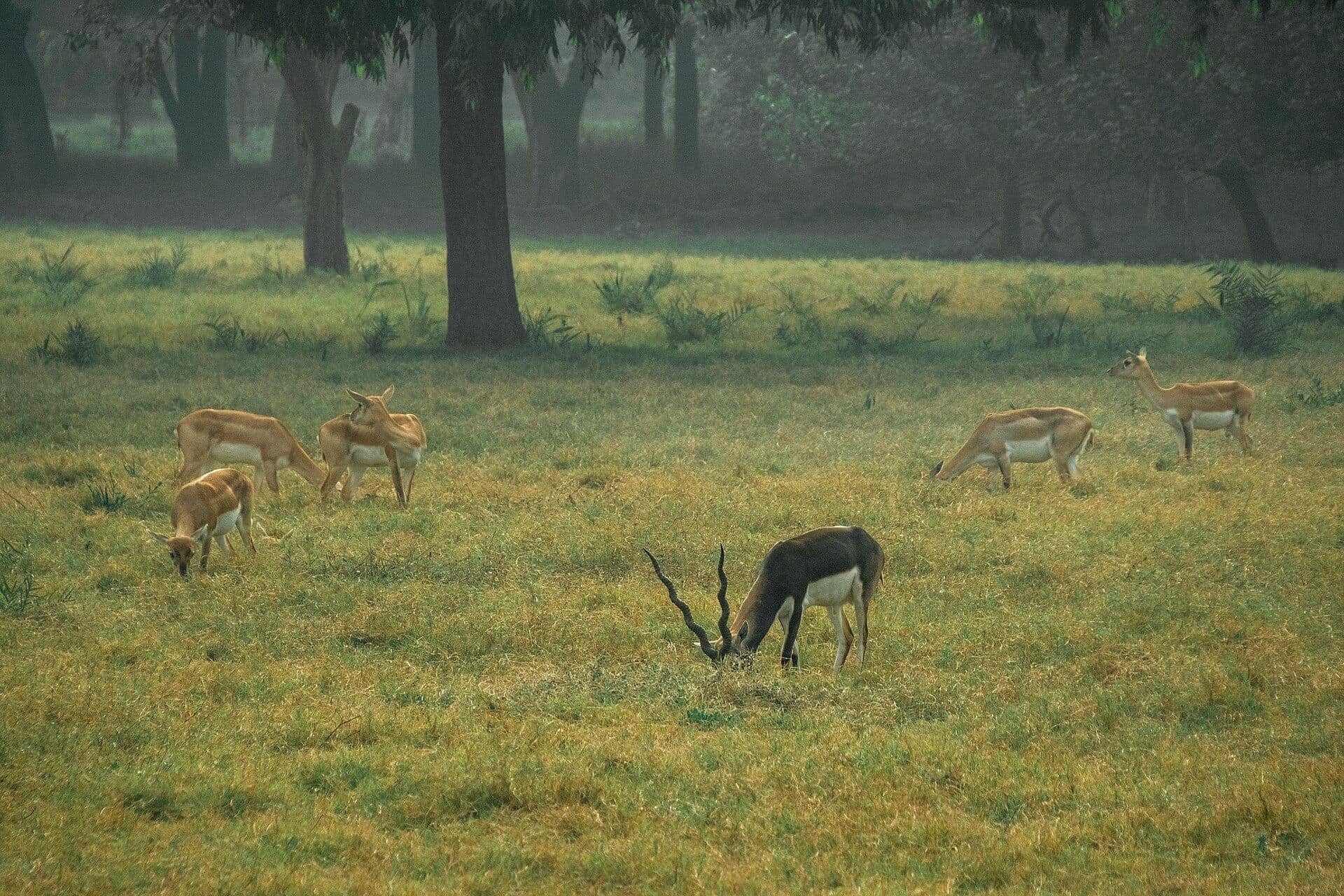
North Front: The Blackbuck Refuge
An emperor's garden became an antelope refuge. The tomb's north front over the scrubby back half of the garden, home since British times to a protected herd of blackbuck.
- 8
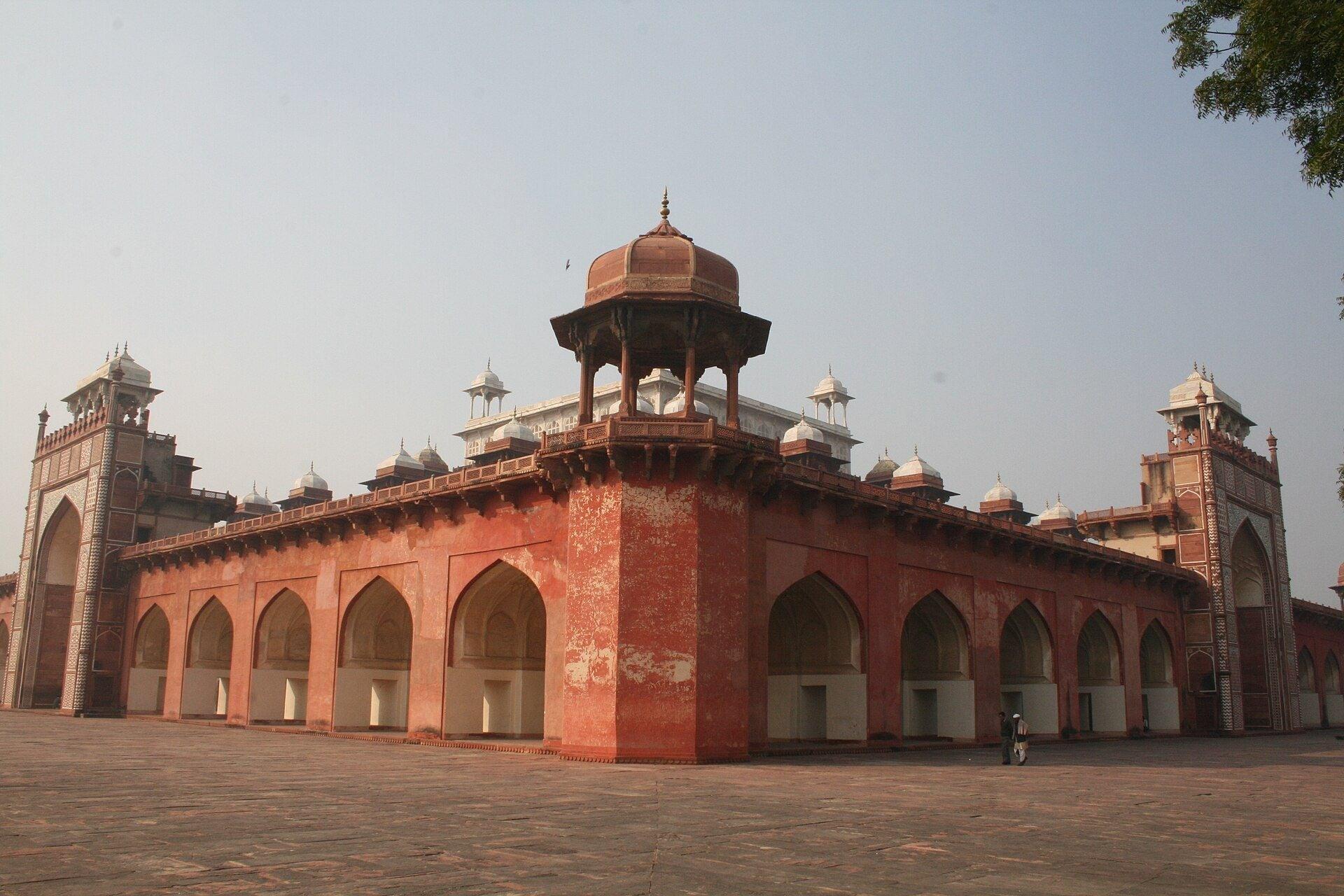
Northeast Corner: The Open Roof
The marble top is open to the sky. The stepped stories in profile from the northeast corner, up to the white marble court where Akbar's cenotaph lies under the open air.
- 9
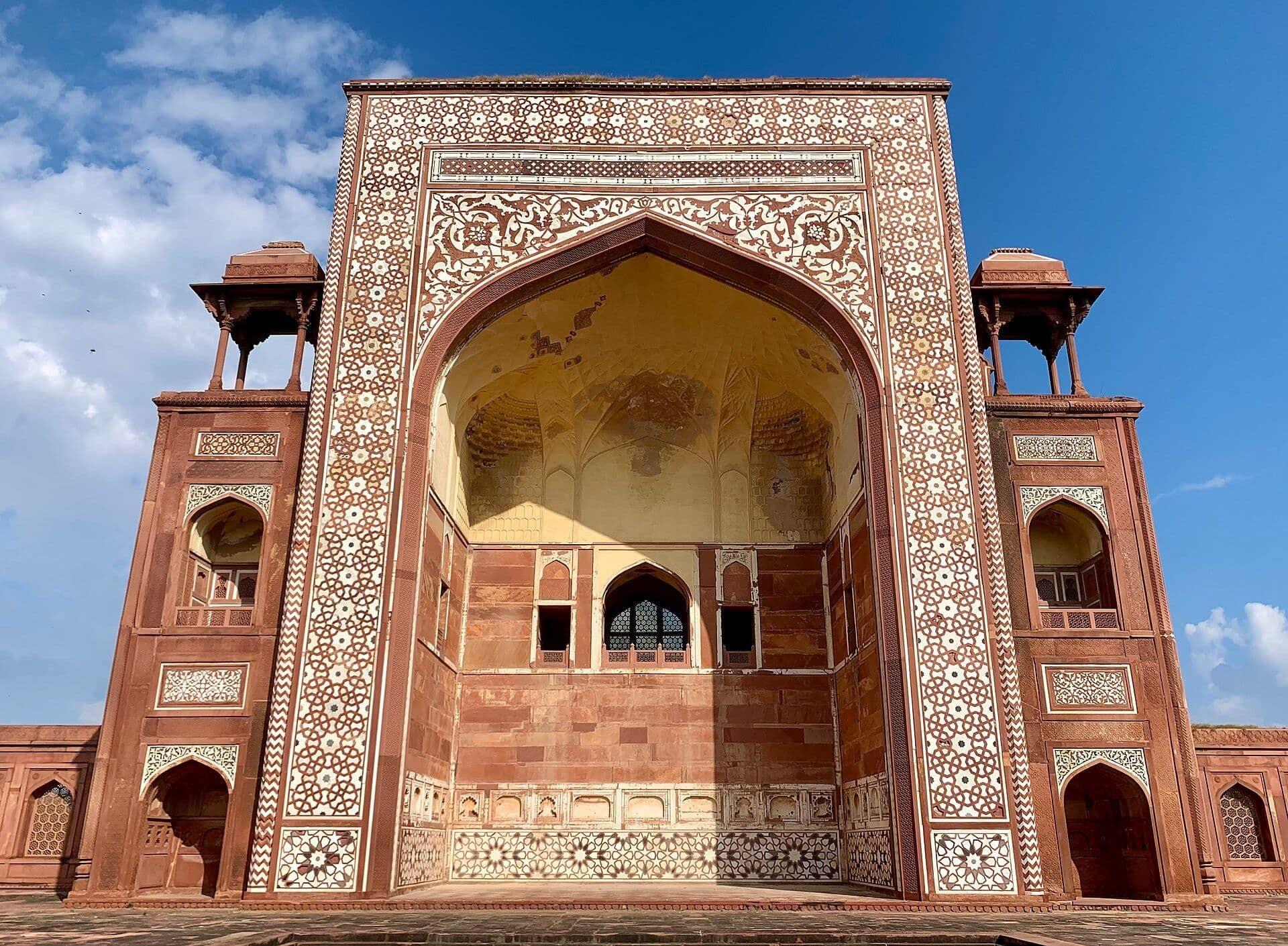
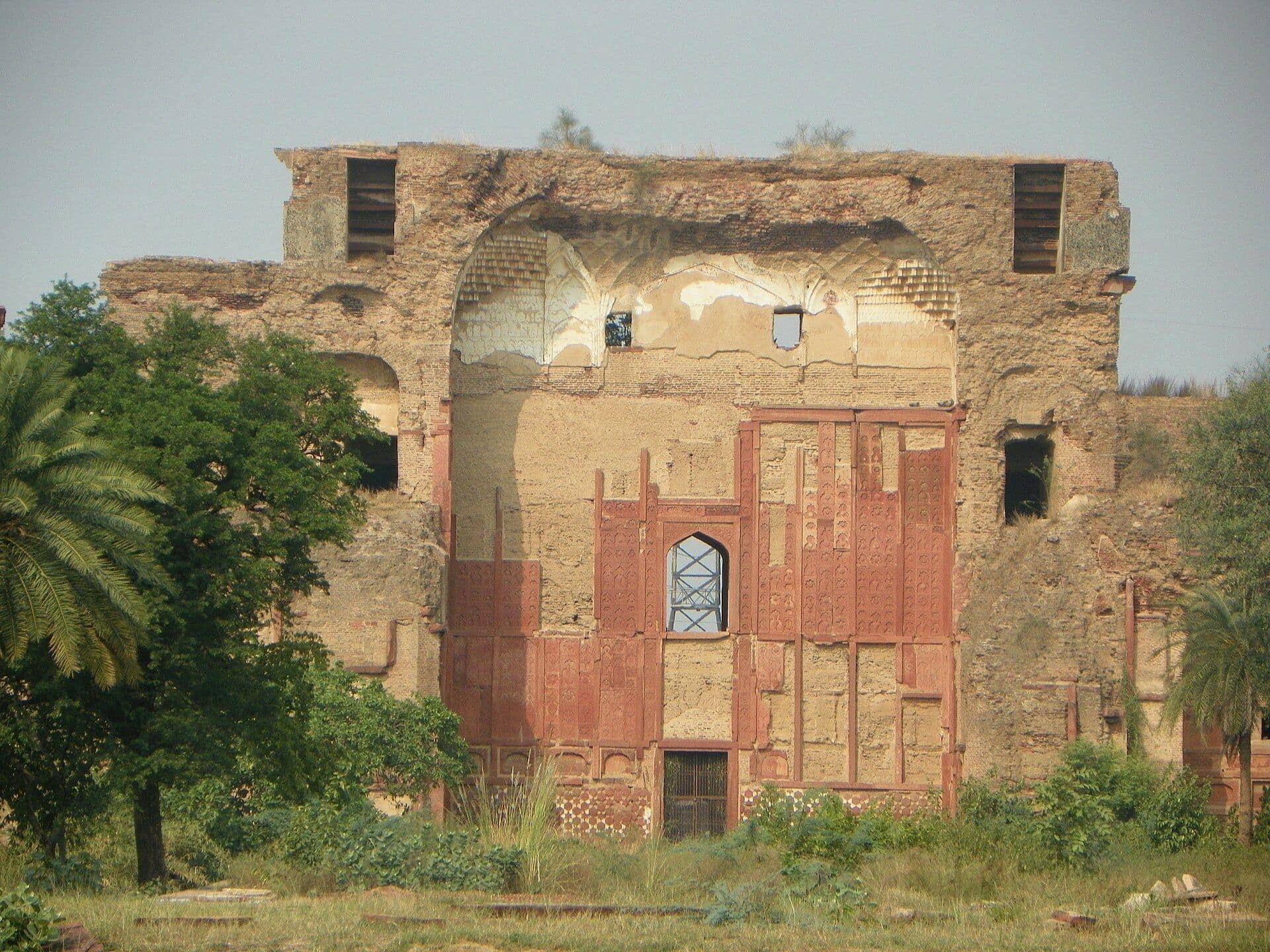
East Front: The Outward Carvings
The best carvings face the wrong way. The tomb's east portal and the blind east gate, whose carved birds, vases and peacock look out from the garden, not in.
- 10
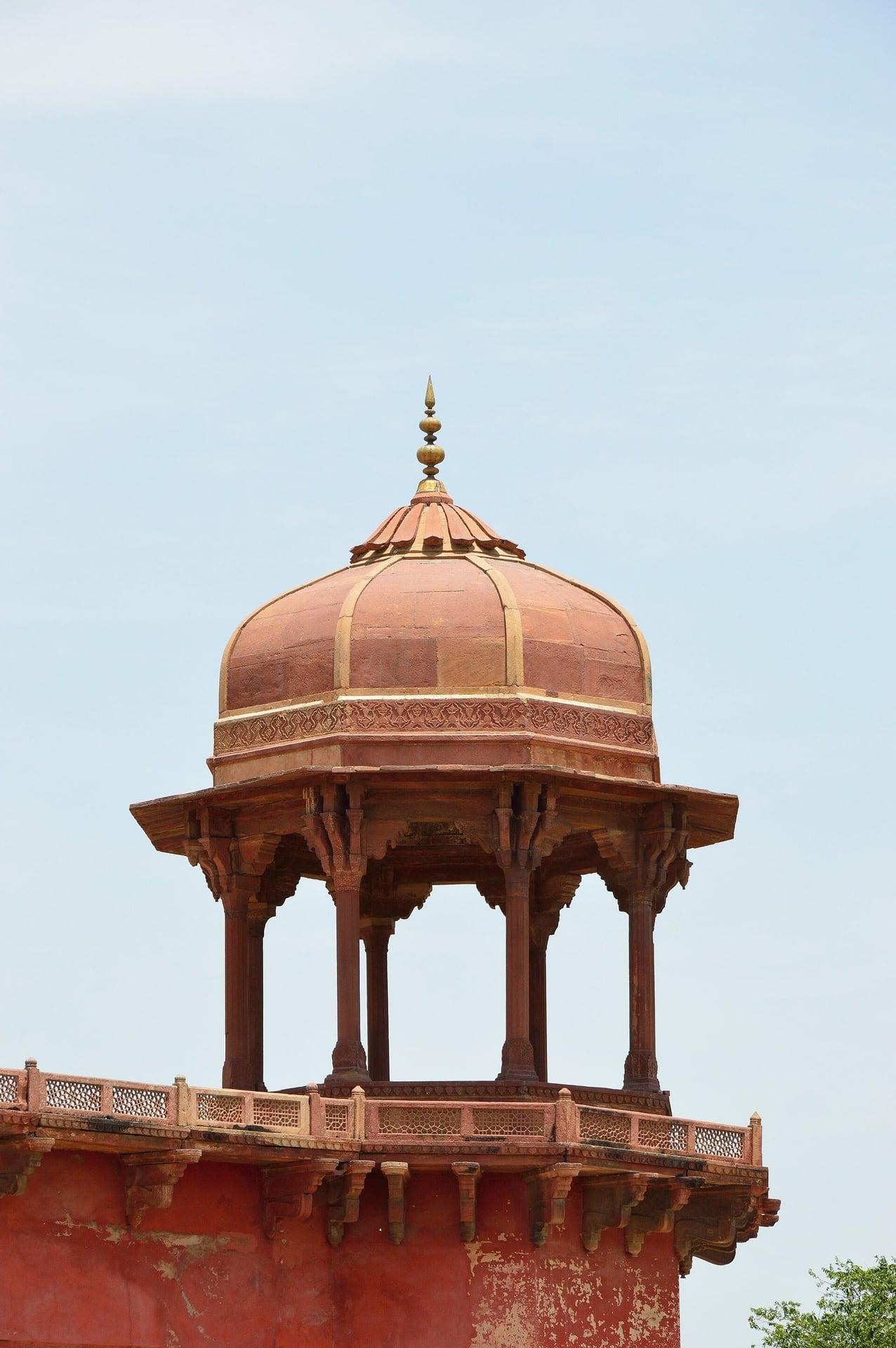
Southeast Corner: Centuries of Repair
This tomb survives because people keep repairing it. The southeast corner tower and the kiosks once faced with glazed tile, a building kept alive by four hundred years of repair.
- 11
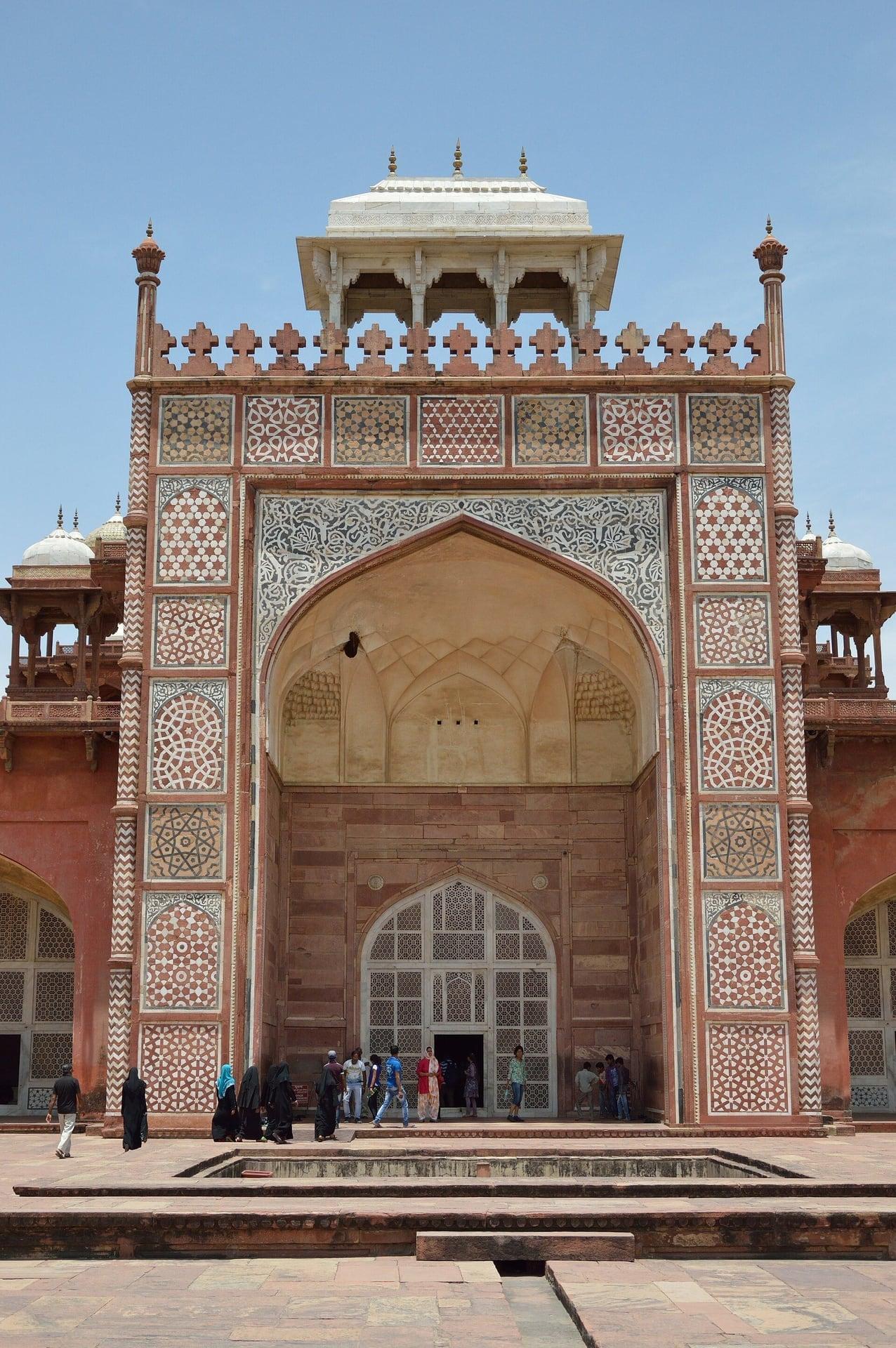
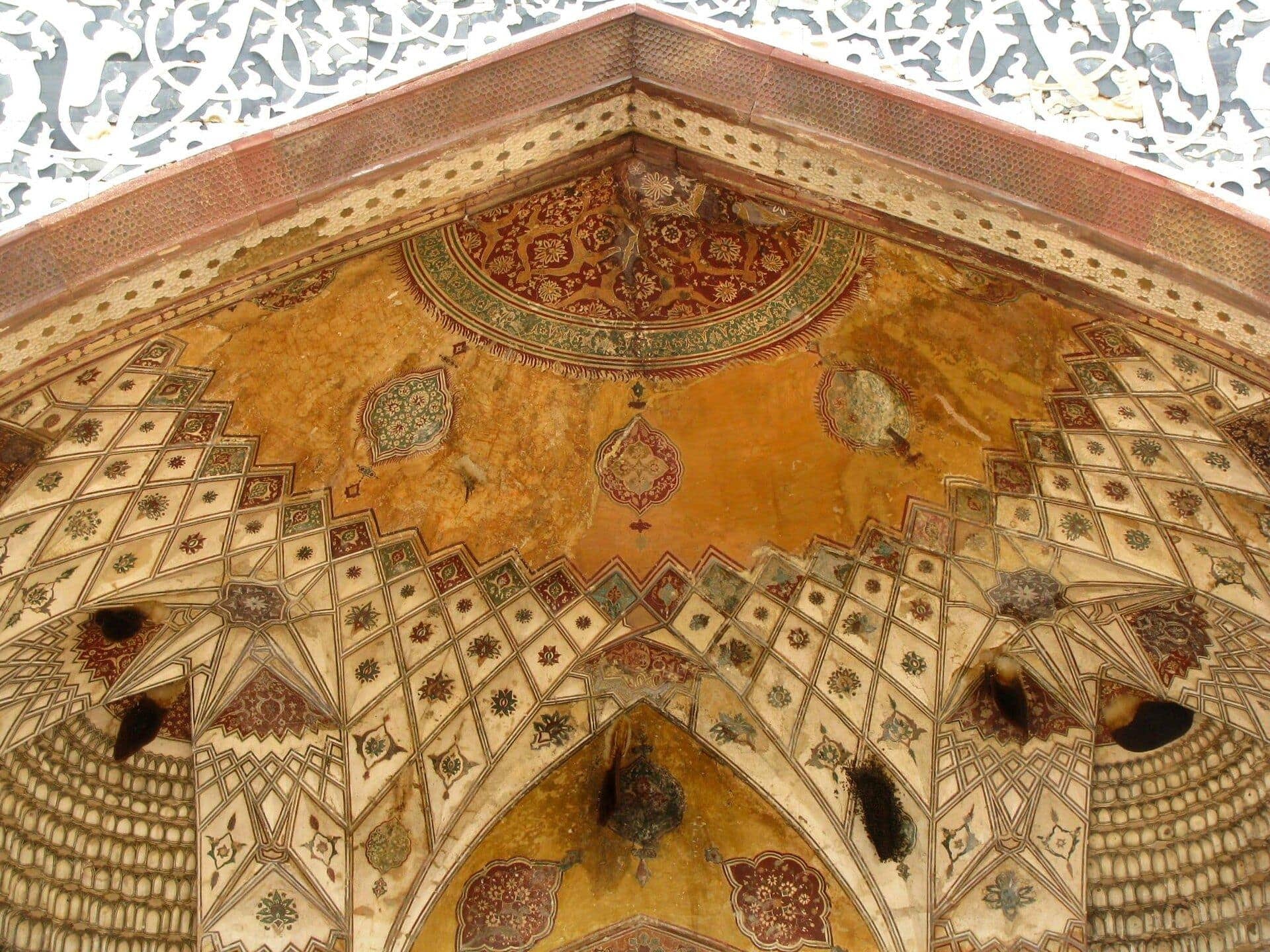
South Porch: Akbar's Grave
A plain grave lies at the bottom. The tomb's south porch and the painted vestibule beyond it, where a long dark passage slopes down to Akbar's plain marble grave.
Details
Best Time to Visit
Morning, from opening at sunrise (about 6:45 am in late November, about 7:05 am in January) to about 10:30, when the stone is cool and the light falls on the South Gate from the southeast; or mid-afternoon, finishing before sunset (about 5:25 pm late November to mid-December, 5:45 pm mid-January, 6:00 pm early February, 6:20 pm early March; computed for the tomb). Open every day, sunrise to sunset. October to March is the season; December and January mornings are often misty or hazy, hiding the far gates. Fridays: the foreign fee is lower because the ADA toll is not charged. Checked 22 November 2026.
Pro Tips
- •Getting there: Sikandra is about 10 km northwest of central Agra on NH-19, the highway toward Mathura and Delhi. Take a taxi or auto-rickshaw to Akbar's Tomb and ask to be dropped at the tomb's gate on the tomb's side of the highway: NH-19 is a divided trunk road with no mapped pedestrian crossing here, and traffic keeps left, so a car coming from central Agra arrives on the far carriageway and must turn. Agree the fare first or insist on the meter (Government of Canada travel advice, updated 6 November 2026). Whether an Agra Metro station serves Sikandra was not confirmed: do not plan on it. Checked 22 November 2026.
- •The entry ticket is NOT included. Buy it at the official counter at the gate or online at asi.paygov.org.in. Indian citizens Rs 30, foreign visitors Rs 310 (Rs 300 on Fridays or after the Taj the same day), SAARC and BIMSTEC Rs 30, under 15 free (ASI Agra Circle). Decline unsolicited guides and ticket offers at the entrance. Checked 22 November 2026.
- •The walk starts on the paved forecourt in front of the South Gate, the tomb's only entrance. Where exactly the ticket check stands, at the road entrance or at the gate, was not confirmed: allow a few minutes.
- •Allow about 50 minutes, plus about 300 m back to the gate at the end. The route is flat red sandstone paving with a short climb onto the tomb's raised platform.
- •Combine with Mariam's Tomb, about 1 km toward Agra on the same highway (separate ASI ticket: Indian Rs 25, foreign Rs 300; Agra district portal, 10 July 2026), or ride on to Agra Fort and the Taj Mahal about 10 km southeast.
Safety & Precautions
- •There is almost no shade on the causeway or the platform: carry water and a hat, and expect the red stone to be hot underfoot by March and slippery after rain.
- •Blackbuck antelope live in the grounds and are protected under Schedule I of India's Wildlife Protection Act, 1972: never feed, chase or approach them, and stay off the lawns to get closer.
- •The tomb's crypt passage, vestibule and upper stories may be closed (access not confirmed on 22 November 2026); the gate's minarets are not climbed. Every stop is told from outside.
- •Akbar's grave is a grave: if the vestibule is open, go quietly and follow the attendants and the signs on photography. Ask before photographing anyone.
- •Weather and air: in December and January highs are about 22 to 24 C and lows about 7 to 8 C (IMD normals, Agra, 1991 to 2020); winter mornings are often misty or hazy. Check the day's air quality index; a mask helps if you have asthma.
- •Outside the gate, NH-19 is a fast divided highway with no mapped pedestrian crossing: do not cross it on foot. The garden closes at sunset.
Travel advisory: Exercise Increased Caution (Level 2).
Gallery
Related Reading
Go deeper on what you'll see, hear, and walk through.
Overview
Agra Monument Tickets, Hours and Closures (Checked November 2026)
5 min
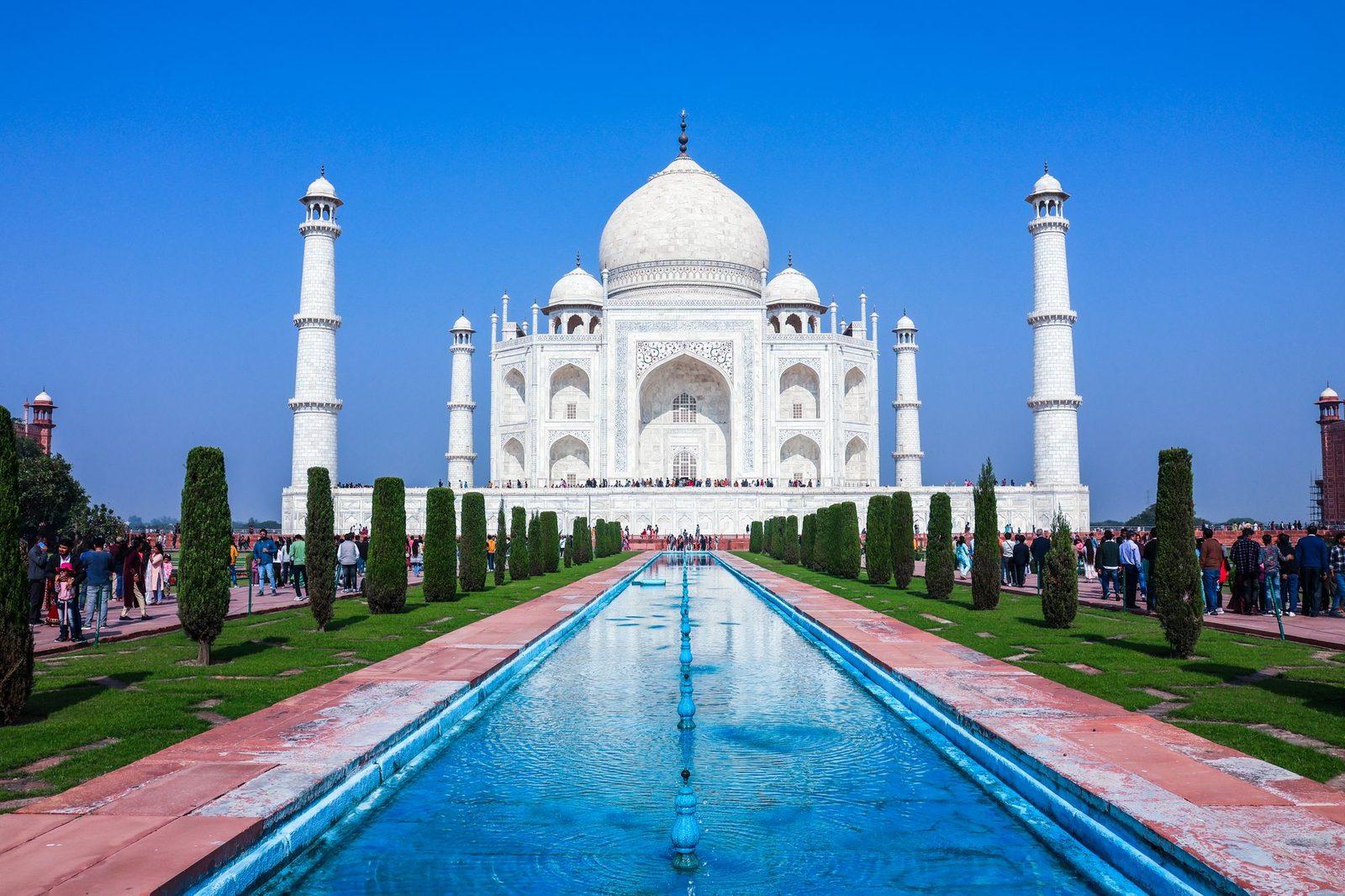
Overview
Agra Travel Guide: How Many Days, Getting Around, and Staying Safe
4 min
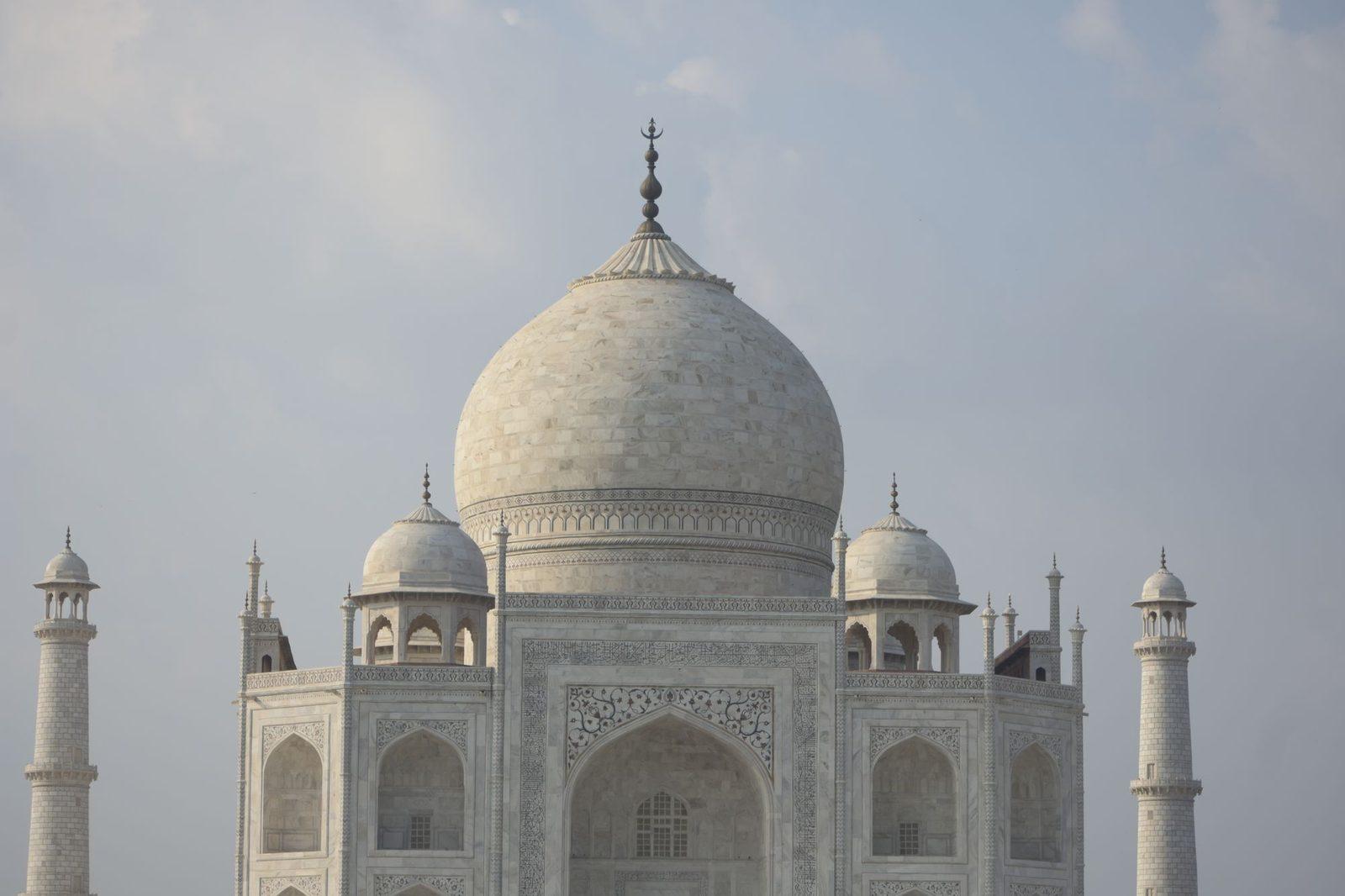
Thematic
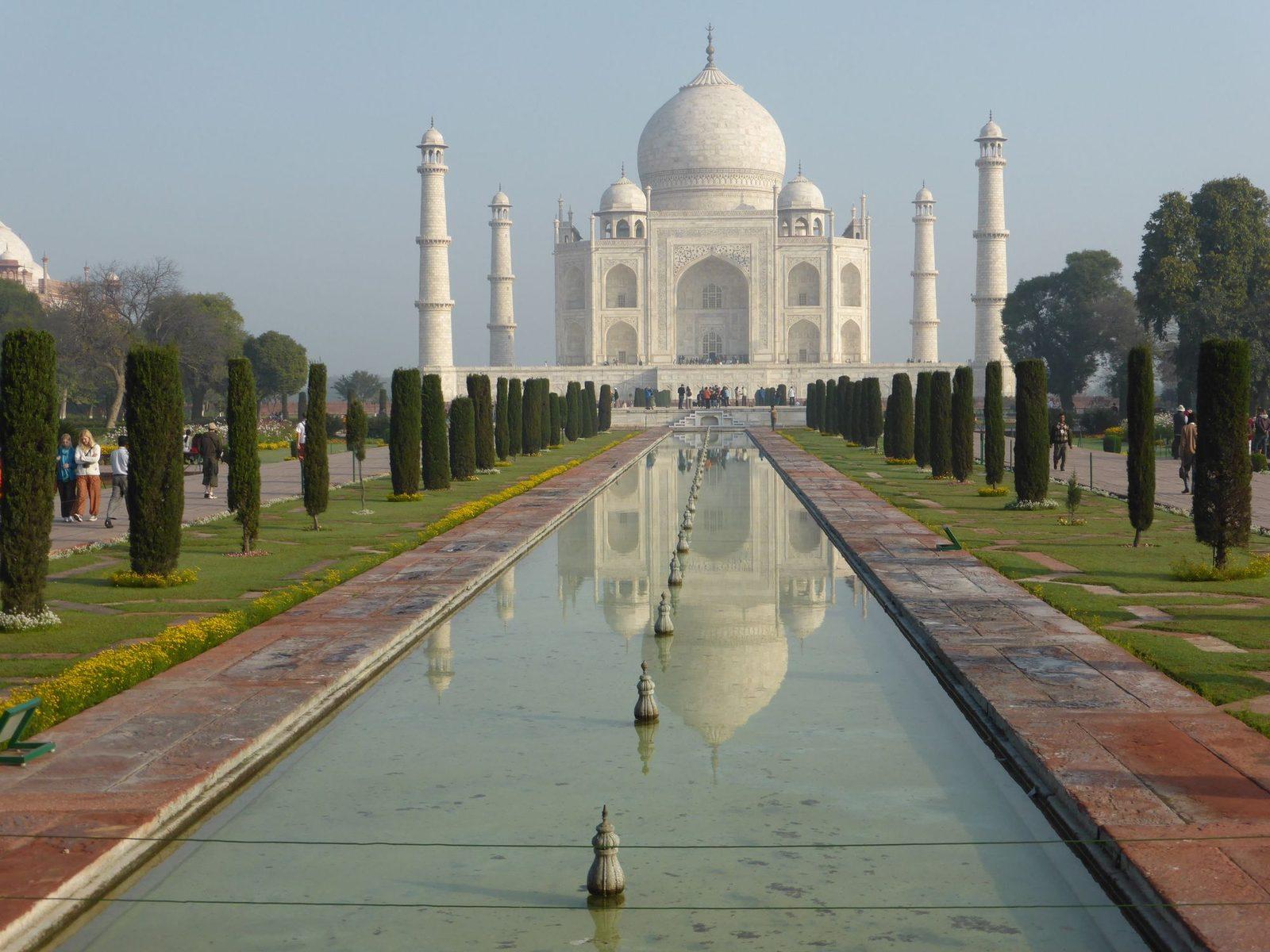
Mughal Tombs of Agra: From Akbar's Grave to the Taj Mahal
3 min
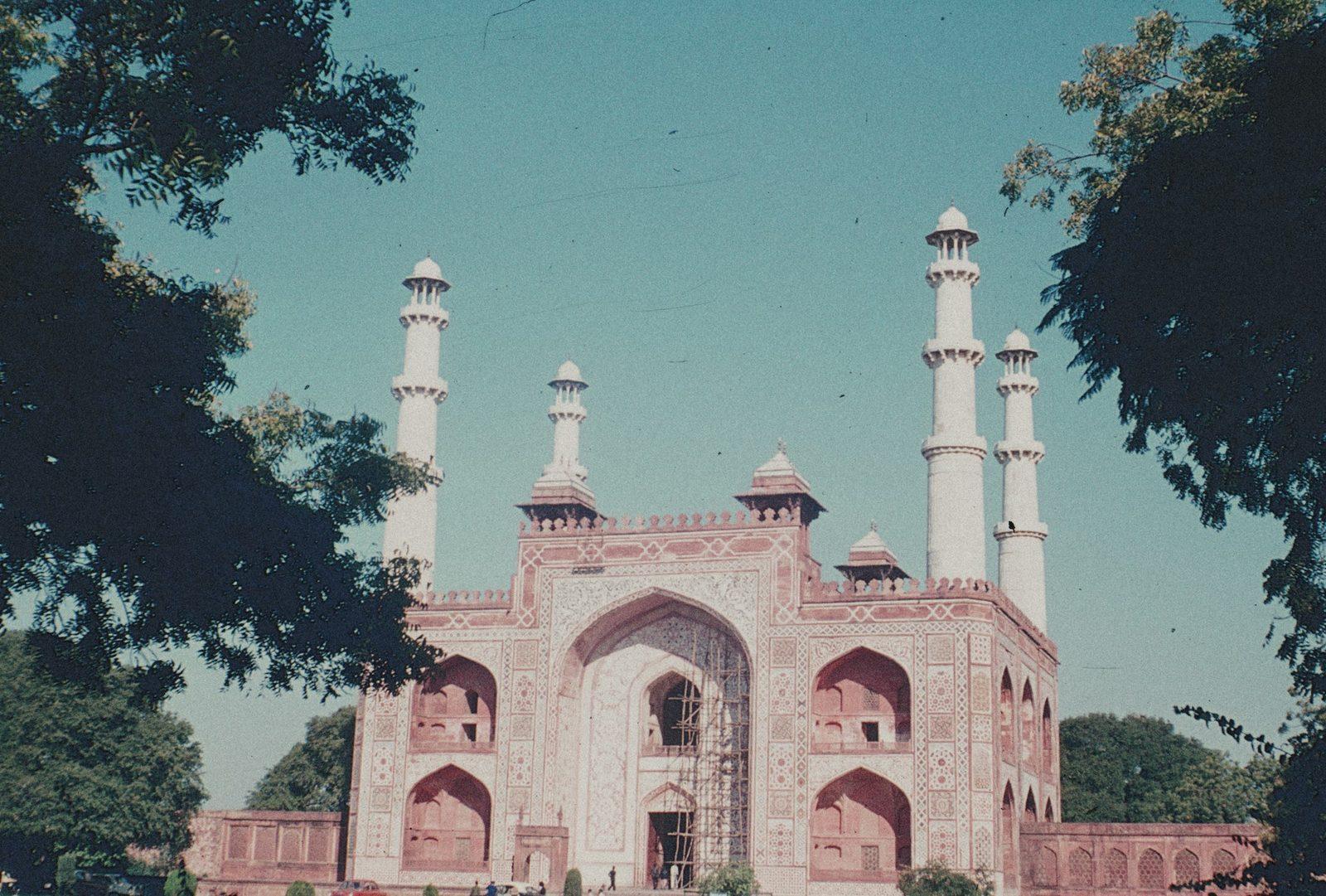
Companion
Akbar's Tomb, Sikandra: The Grave His Son Rebuilt
4 min
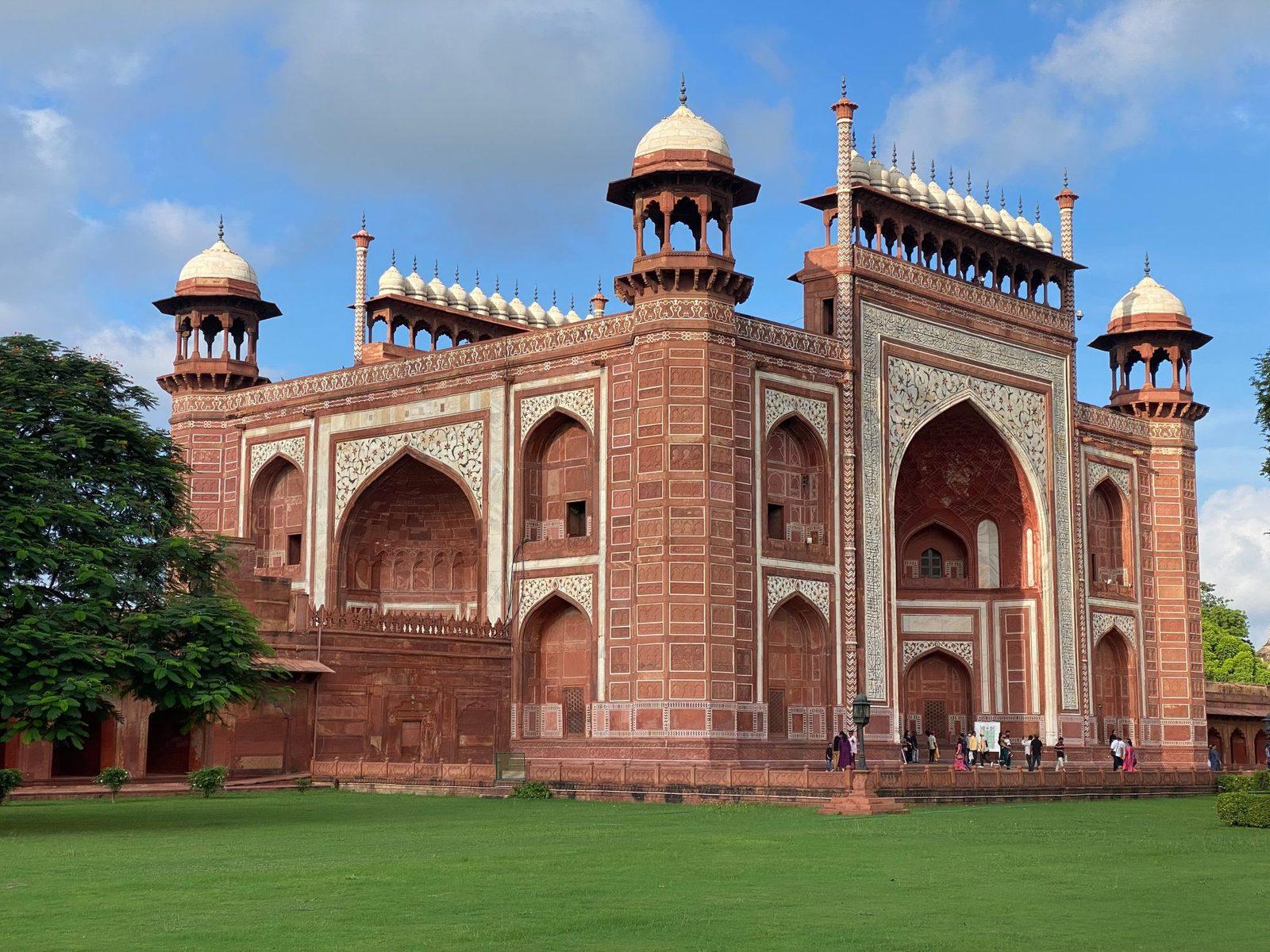
Deep dive
Taj Mahal Great Gate: The Darwaza-i-Rauza and Its Lettering Sized for Your Eye
3 min
Read the walk
The full story of Akbar's Tomb: The Grave His Son Rebuilt, in words. Prefer to listen? Play it narrated, from home or on location.
Introduction
Akbar's Tomb stands at Sikandra, about ten kilometers northwest of central Agra, beside the main highway out of the city. The entry ticket is not included with this tour: buy it at the official counter at the gate or on the Archaeological Survey of India's ticket website. For foreign visitors it is about three hundred and ten rupees.
Akbar, the Mughal emperor, died in sixteen oh five. He is said to have begun this tomb himself. His son, the emperor Jahangir, came to see it, did not like what the builders had done, and had it rebuilt to a new plan. It was finished in sixteen thirteen. The result looks like no other Mughal tomb: five stories stepping up like a pyramid, in the middle of a walled paradise garden.
This walk goes in through the great South Gate, up the raised causeway, and round the tomb on its platform, finishing at the porch over Akbar's grave. There are eleven stops over less than a kilometer, about half a mile, and it takes about fifty minutes. It is flat and paved, with a short climb onto the tomb's platform, and no road is crossed inside the walls. The tomb's chambers and upper stories may be closed, so every stop is told from outside.
The garden is open every day from sunrise to sunset: start at least ninety minutes before dark. There is almost no shade. Winter days are mild and the mornings often misty, so the far gates may disappear. Check the day's air quality index; a mask helps if you have asthma. Blackbuck antelope live in the grounds: never feed or approach them.
Sikandra is a ride from the city. Take a taxi or auto-rickshaw, and get out on the tomb's side of the highway. When you arrive at South Gate, begin with stop one.
1. South Gate
In front of you, across the paved forecourt, rises the gate of an emperor's garden. It is about twenty three meters high and more than forty meters wide, two stories tall, and its whole outer face is covered in inlaid marble and stone: geometric panels of pentagons and hexagons, and flowering scrolls over the arches. On its roof, at the four corners, stand four white marble towers. We will come to those from the other side.
From here on the garden is ticketed, and the ticket is not part of this tour.
This is the only real entrance. The garden has a great gate in the middle of each of its four walls, but the other three are blind. They were built for the eye, to make the plan perfect, and they open onto nothing.
Now look at the band of white marble lettering framing the arch. It is a Persian poem, and it was carved for a reader standing where you are. It hails this blessed space as happier than the garden of paradise, and it ends with these words, as the old translation gives them: These are the gardens of Eden, enter them to live for ever.
The calligrapher signed it three times. He was Abd al-Haqq, from Shiraz in Iran, and the date he gives is sixteen thirteen. Years later, under the title Amanat Khan, the same man designed the inscriptions on the Taj Mahal. So the letters over this arch come from the same hand as the Taj Mahal's.
Follow the route through the gate's long passage and out onto the raised causeway, then turn round.
2. Gateway Minarets
You have come out of the gate's passage onto the long raised causeway. Turn round and look back at the gate's north face.
On its four corners stand the four white marble minarets, each in four tiers, with spiral stairs inside. The emperor Jahangir, who built this garden for his father, described exactly this in his own memoir: a large and lofty gateway, with minarets of white stone.
They went up almost twenty years before work began on the Taj Mahal, and it is hard not to see the Taj's four white minarets here in rehearsal.
The tops you see are not all original. By the seventeen eighties a British traveler found them already gone. Who broke them is not known: old Agra guidebooks tell two different stories, and neither is certain. They were rebuilt in a British restoration of the tomb, finished around nineteen oh five.
This side of the gate faces the tomb, and its marble lettering speaks of the dead emperor rather than to the visitor. It praises Akbar's reign, counted as fifty two years by the moon. One of its lines, in the old translation, is worth carrying up the causeway: In this garden spring and autumn embrace; time has the cup in the hand and the corpse on the back.
The climb to the minarets is not open to visitors, so stay on the causeway.
Now turn back to face the tomb, at the far end of the axis.
Follow the route straight up the causeway to the water tank in the middle.
3. Causeway Tank
Ahead of you, the causeway widens round a stone tank. On both sides, below the causeway's edge, lie the garden's lawns.
This is a charbagh, a fourfold garden: four broad raised walkways, each about twenty three meters wide, meet at the tomb and cut the garden into four quarters. At the middle and the end of every causeway the builders set a masonry tank with fountains. The whole garden covers about one hundred and nineteen acres.
The tanks were not only for show. The rain that fell on the tomb and on the great platform round it was drained into them. Paradise, in other words, was also a drainage system. The tanks were made for water and fountains; whether you see any water today depends on the season and on the gardeners.
The garden was meant to be read as paradise, and the place took the name. The village here is Sikandra, but after Akbar was buried here it was renamed Bihishtabad, the land of paradise. The emperor Jahangir uses that name in his memoir when he comes back to visit his father's grave.
The tomb itself now fills the far end of the axis: you are looking straight at its south face, as the builders intended.
If blackbuck antelope are out on the lawns, enjoy them from the causeway. Do not feed them, and do not step down onto the grass to get closer.
Follow the route round the tank and on toward the tomb.
4. Five Stories: The Rebuilt Plan
Ahead of you, the whole tomb stands across the end of the causeway. At the bottom, a long arcaded story. Above it, three stories of red stone pavilions stepping back like a pyramid. At the very top, a white marble crown. It rises a little more than thirty meters.
A Victorian historian of architecture wrote that it is quite unlike any other tomb built in India, before or since. The Archaeological Survey's own study of nineteen oh nine agreed that it has no parallel. And the reason may be an argument between a father and a son.
Akbar died in sixteen oh five. He is said to have begun his own tomb here, following an old custom of the princes of Central Asia. His son, the emperor Jahangir, left a rare first hand account. On his first visit, in sixteen oh eight, he wrote that the building did not come up to his idea of what it ought to be. While trouble in the empire had kept him away in Lahore, the architects had built it after a design of their own. So he had experienced architects lay the foundations again, on a settled plan.
English travelers saw the work going on. One counted at least three thousand people working here every day. Another, around sixteen eleven, found it nothing near finished. It was completed in sixteen thirteen, in the seventh year of Jahangir's reign, and by his own account it cost one and a half million rupees.
No source names the architects. What you see is the plan the son insisted on.
Ahead, at the foot of the tomb, is a porch in the middle of the front. That is where this walk finishes, so pass it by for now: the route climbs onto the tomb's platform and turns along its front.
Follow the route onto the platform and along the tomb's front to its corner.
5. Southwest Corner: The Cloisters
You are on the platform now, at the tomb's southwest corner. On your right, just behind you, rises an eight sided corner tower with an open domed kiosk on top. Step back from the corner and take in the size of this. The tomb's ground story is about one hundred and three meters…
Full narration for this stop unlocks with the tour.
6. West Front: The Blind Gate
On your right, the tomb's west portal rises in the middle of this side. Look at its panels: red sandstone inlaid with white marble and black slate, set into geometric patterns. Now look the other way, out along the west causeway. At its far end, about three hundred meters off,…
Full narration for this stop unlocks with the tour.
7. North Front: The Blackbuck Refuge
You have turned along the tomb's north front. On your right, the north portal; on the other side, the back half of the garden, rougher and wilder than the lawns you came through. Look out over that scrub. For decades this part of the garden has been a refuge for blackbuck, an…
Full narration for this stop unlocks with the tour.
8. Northeast Corner: The Open Roof
At this corner, turn to face the tomb and look up along its edge. From here you see the stories in profile, each one set back from the one below, climbing to the band of white at the top. That white band is the top story: a court about twenty one meters square, open to the sky,…
Full narration for this stop unlocks with the tour.
9. East Front: The Outward Carvings
On your right is the tomb's east portal. Out to the other side runs the east causeway, to the second of the blind gates. That gate hides a small surprise. In nineteen oh nine it was partly in ruins and being conserved, and the survey of that year noticed something about its…
Full narration for this stop unlocks with the tour.
10. Southeast Corner: Centuries of Repair
On your right, just behind you, rises the southeast corner tower. Look up at the small domed kiosks round the third story. Their domes are faced with white marble, and Jahangir had glazed tile laid on the kiosks of that story too. This corner is a good place to think about how…
Full narration for this stop unlocks with the tour.
11. South Porch: Akbar's Grave
On your right is the tomb's south porch, its arch faced in marble mosaic. This is the way in to the grave itself. Beyond the arch is a vestibule with an elaborate ceiling of stucco, painted in blue and gold, with verses of the Quran in gold letters on blue round the top. In…
Full narration for this stop unlocks with the tour.
- This is a photo of ASI monument number — Biswarup Ganguly, CC BY 3.0 · source
- Water channels in the Charbagh gardens within the Akbar's tomb complex, Sikandra — subbu arumugam, CC BY-SA 2.0 · source
- This is a photo of ASI monument number — Yash raina, CC BY-SA 4.0 · source
- Akbars Tomb in Sikandra, Uttar Pradesh. — Aiwok, CC BY-SA 3.0 · source
- It was built by his son Jahangir. — Abhi290498, CC BY-SA 4.0 · source
- This is a photo of ASI monument number — Vikas Singh, CC BY-SA 4.0 · source
- The Tomb of Akbar in Sikandra is spread over a huge area. The gardens here have been a popular spot amongst the deers in this area (includin — Darshanavenugopal, CC BY-SA 4.0 · source
- the northern gate — juggadery, CC BY-SA 2.0 · source
- Akbar's Tomb, Sikandra, near Agra, India — Diego Delso, CC BY-SA 4.0 · source
- This is a photo of ASI monument number — Gauravsirola95, CC BY-SA 4.0 · source
- Akbar's tomb had different entrace gate, one for every direction, (N,S, E,W) — Suraj Shah, CC BY-SA 3.0 · source
- This is a photo of ASI monument number — Biswarup Ganguly, CC BY 3.0 · source
- This is a photo of ASI monument number — Yash raina, CC BY-SA 4.0 · source
- This is a photo of ASI monument number — Biswarup Ganguly, CC BY 3.0 · source
- This is a photo of ASI monument number — Vikas Singh, CC BY-SA 4.0 · source
Images may be cropped or resized. Other photos via Unsplash and Pexels.