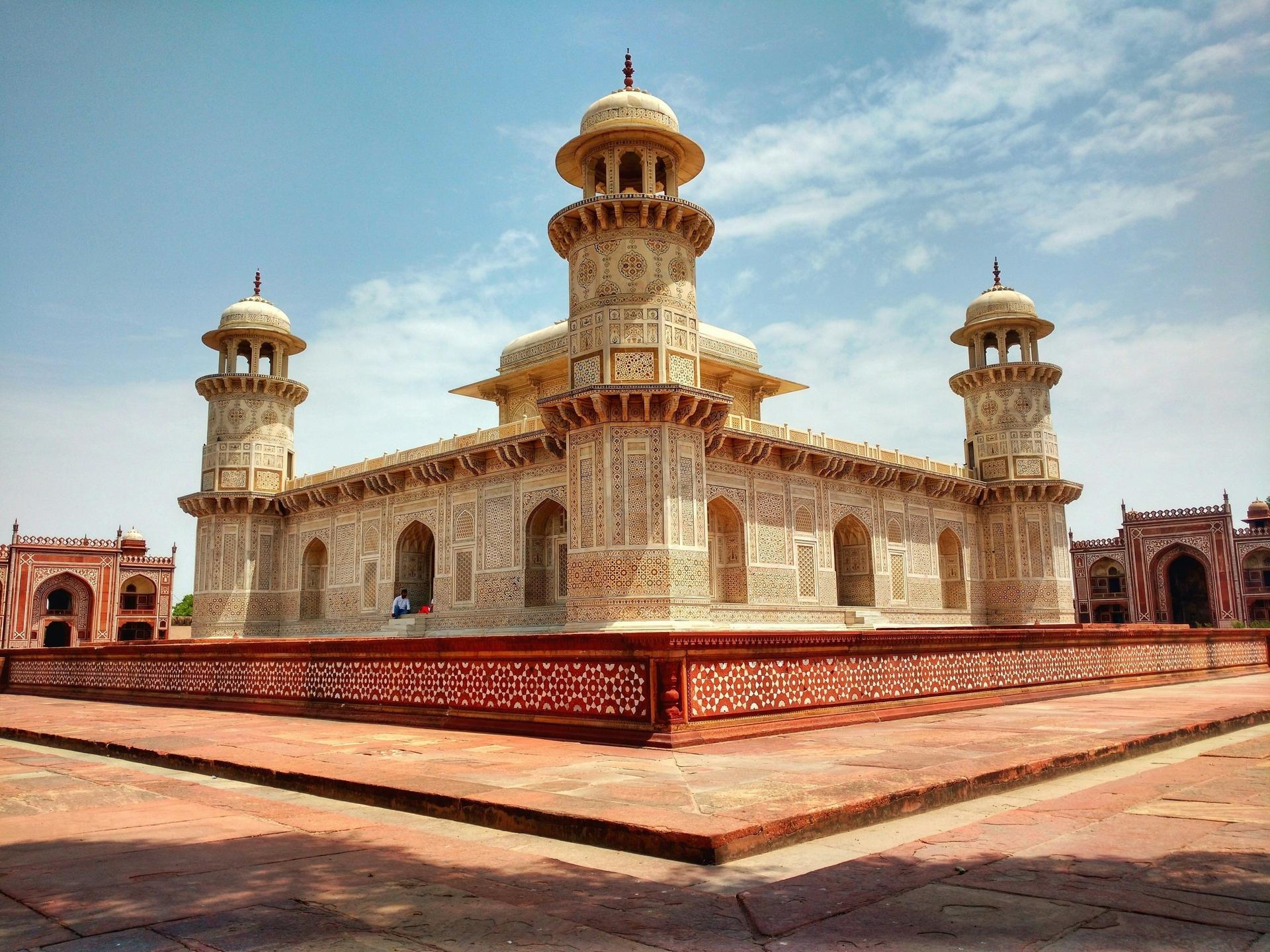
Inside the walled riverside garden of Itimad-ud-Daulah in Agra, the tomb Nur Jahan finished for her father in 1628. The gateway, the inlaid white marble faces, the south door, the false gates, the river wall and pavilion, then a short ride north to Chini ka Rauza, a minister's tomb from the 1630s faced in Persian glazed tile, ending on the Yamuna.
Start · Gateway Forecourt
DirectionsStops
- 1
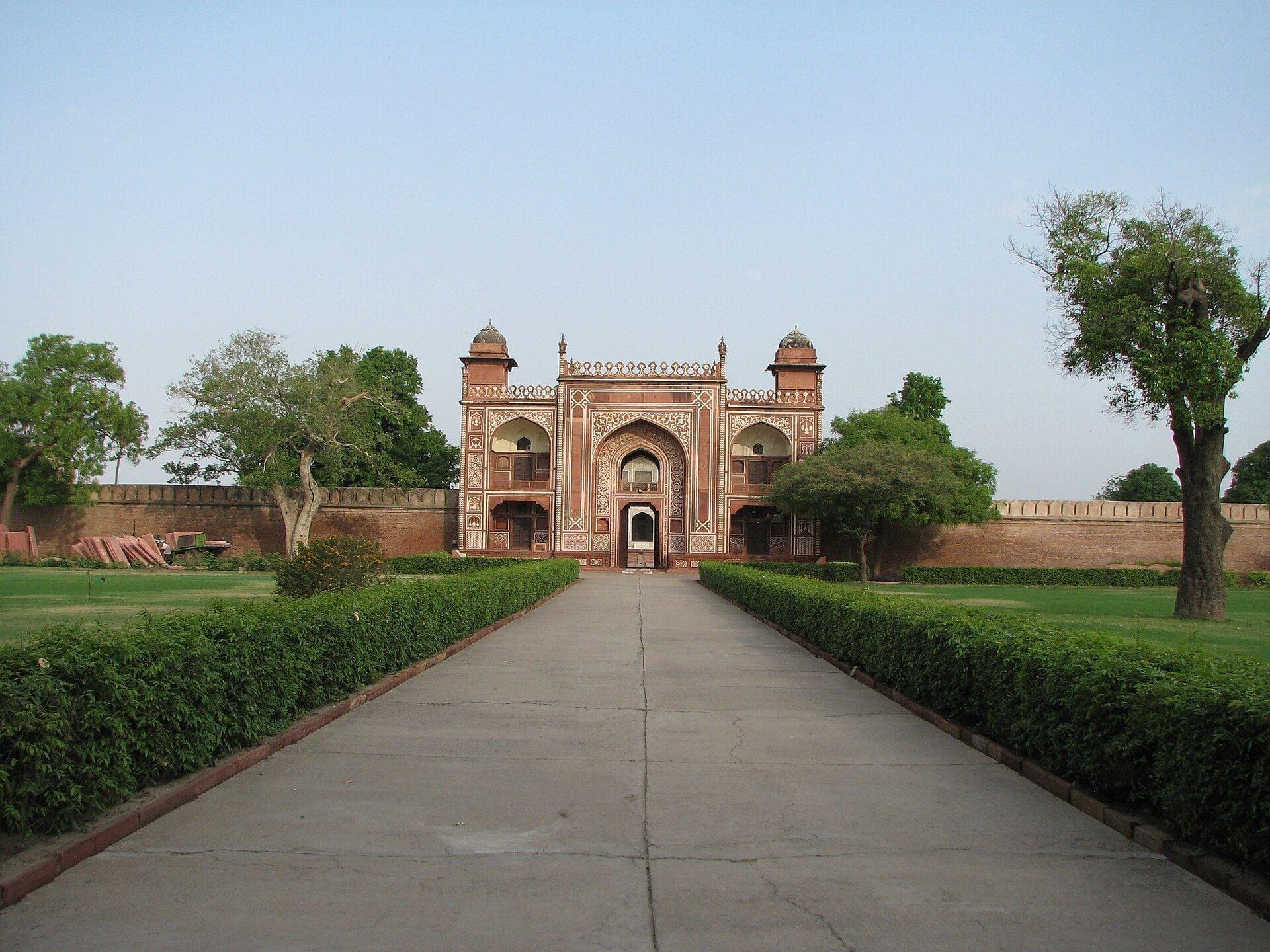
Gateway Forecourt
A family's rise begins at this gateway. The red sandstone gateway into Itimad-ud-Daulah's garden, inlaid with white marble, and the story of the Persian minister, his daughter Nur Jahan and the family behind the Taj.
- 2
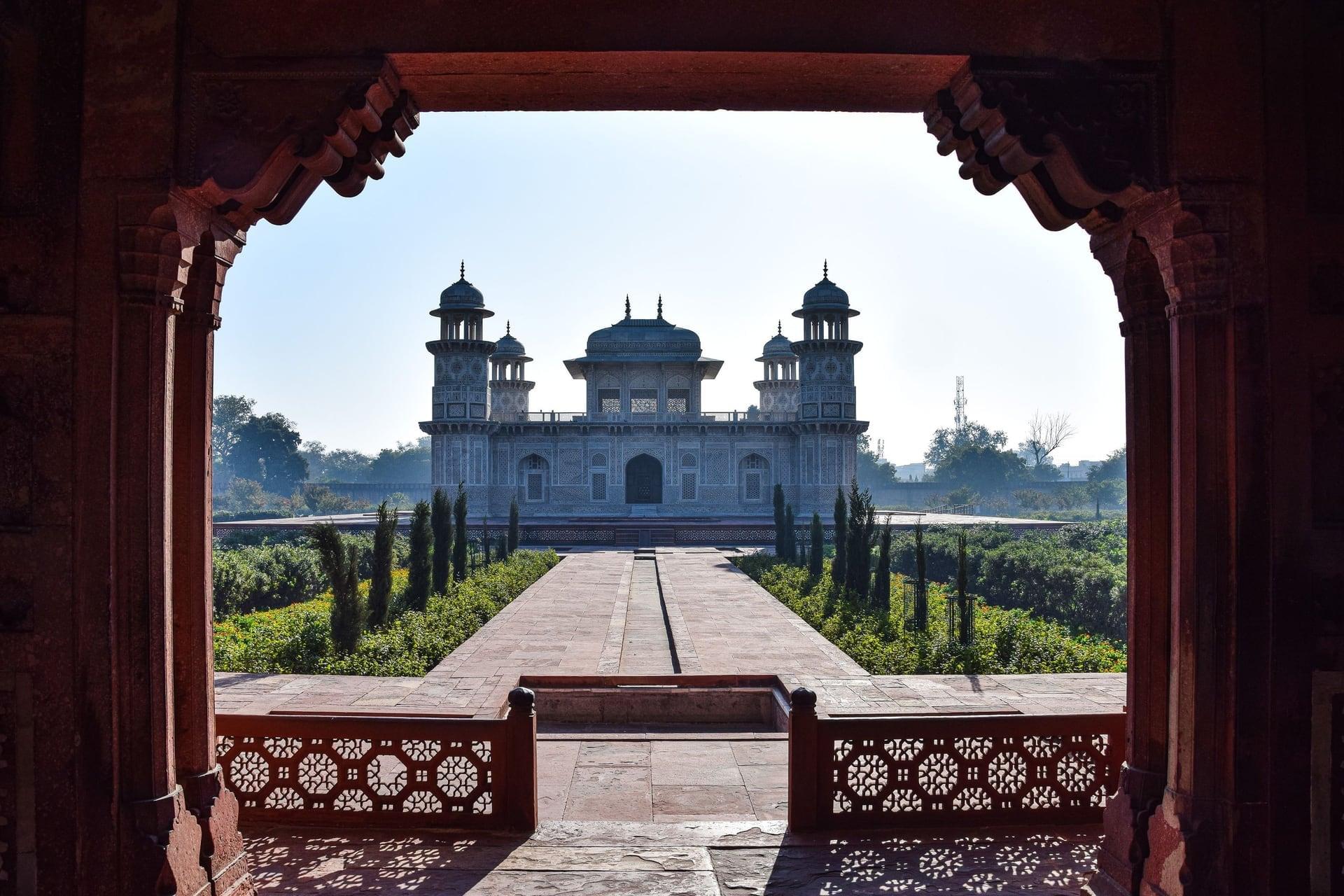
East Gate: The First View
The whole tomb appears down the channel. Just inside the gateway, the first view along the fourfold garden's water channel, restored and running again since 2019.
- 3
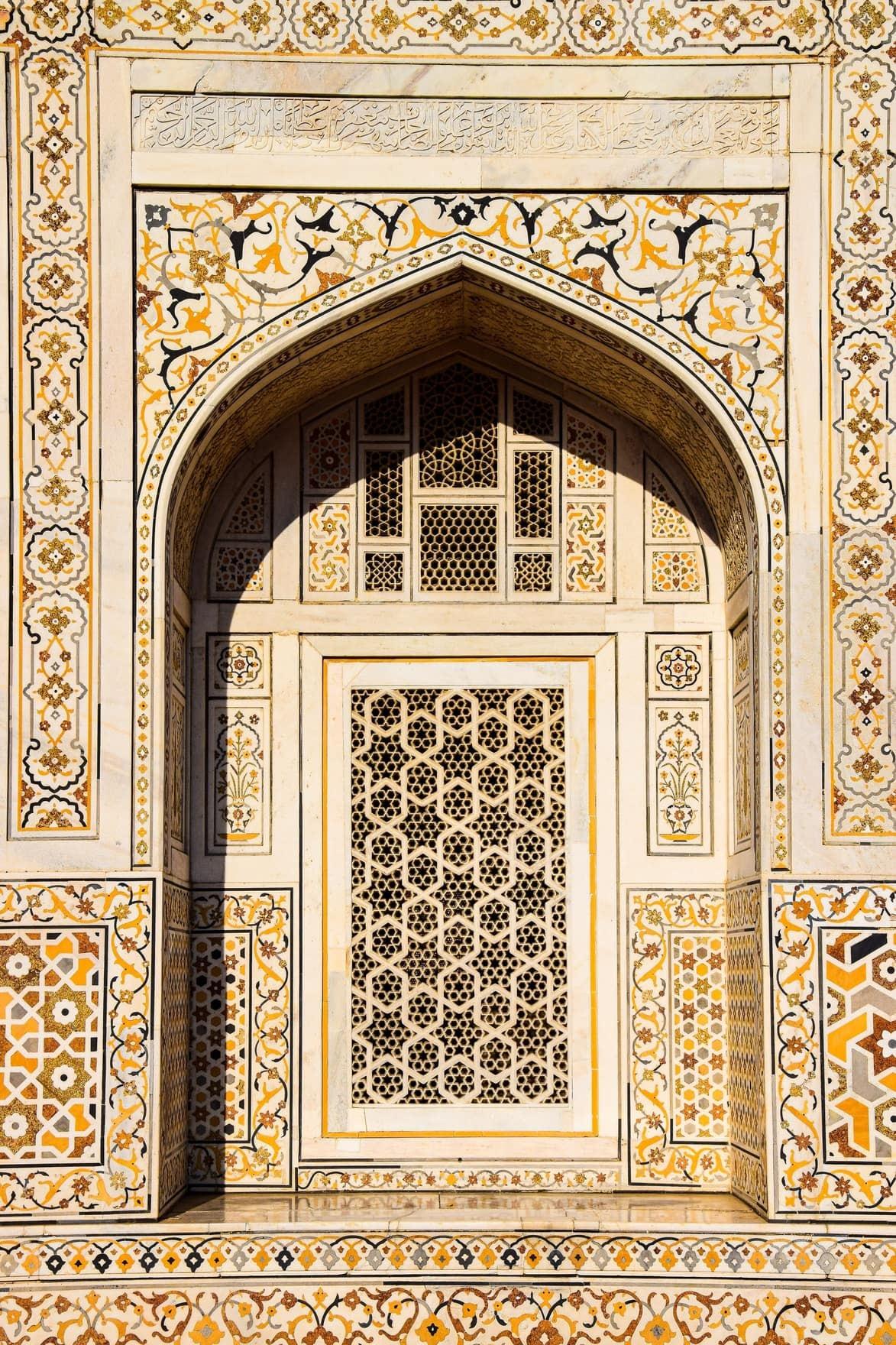
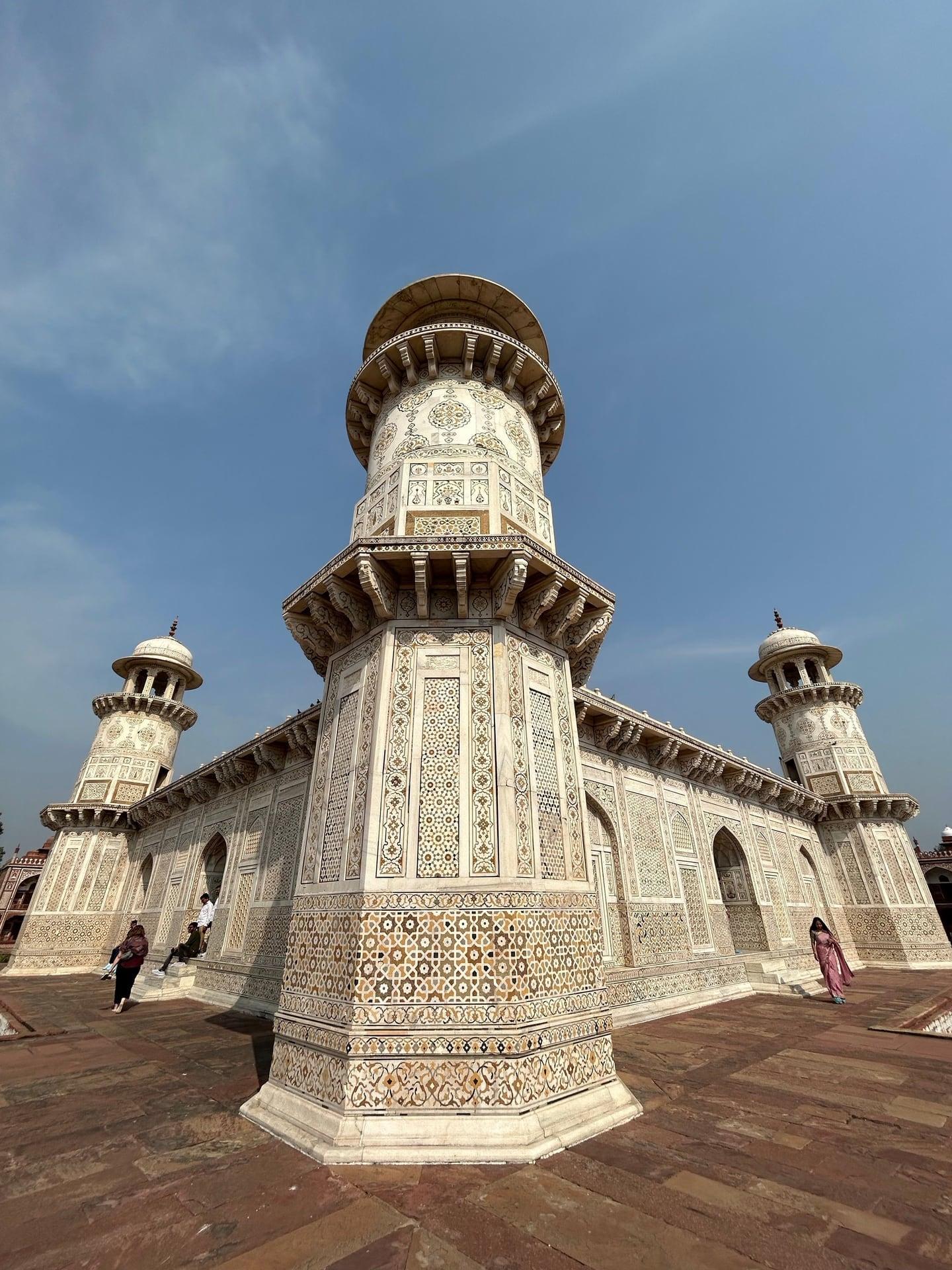
Inlaid East Face
White marble is filled with colored stone. The tomb's east face up close: wine vessels, vases and cypresses in inlaid stone, a step toward the Taj's pietra dura.
- 4
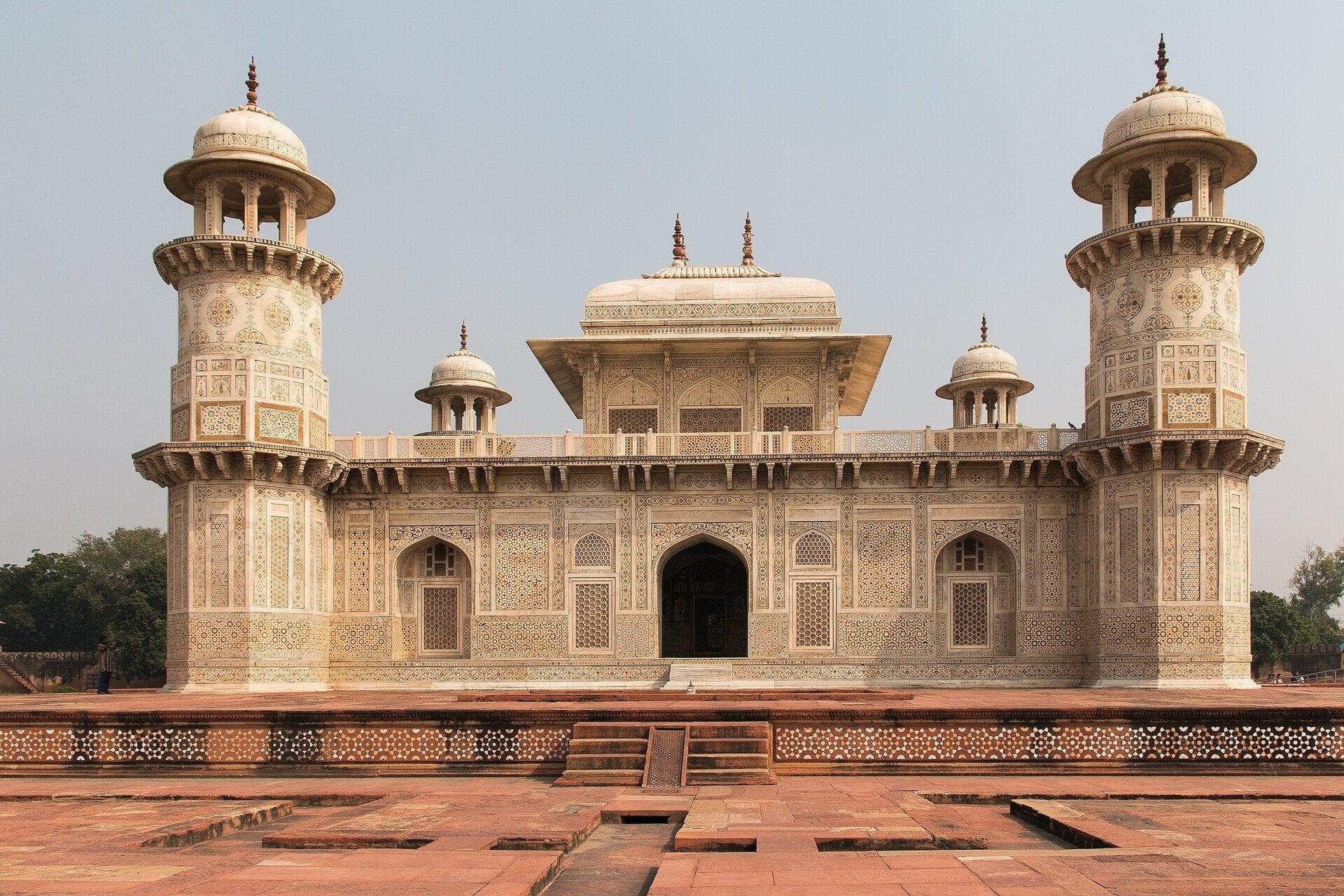
South Door
This arch is the burial hall's only door. The south face of the tomb, its marble screens, and the two cenotaphs inside, arranged as at the Taj.
- 5
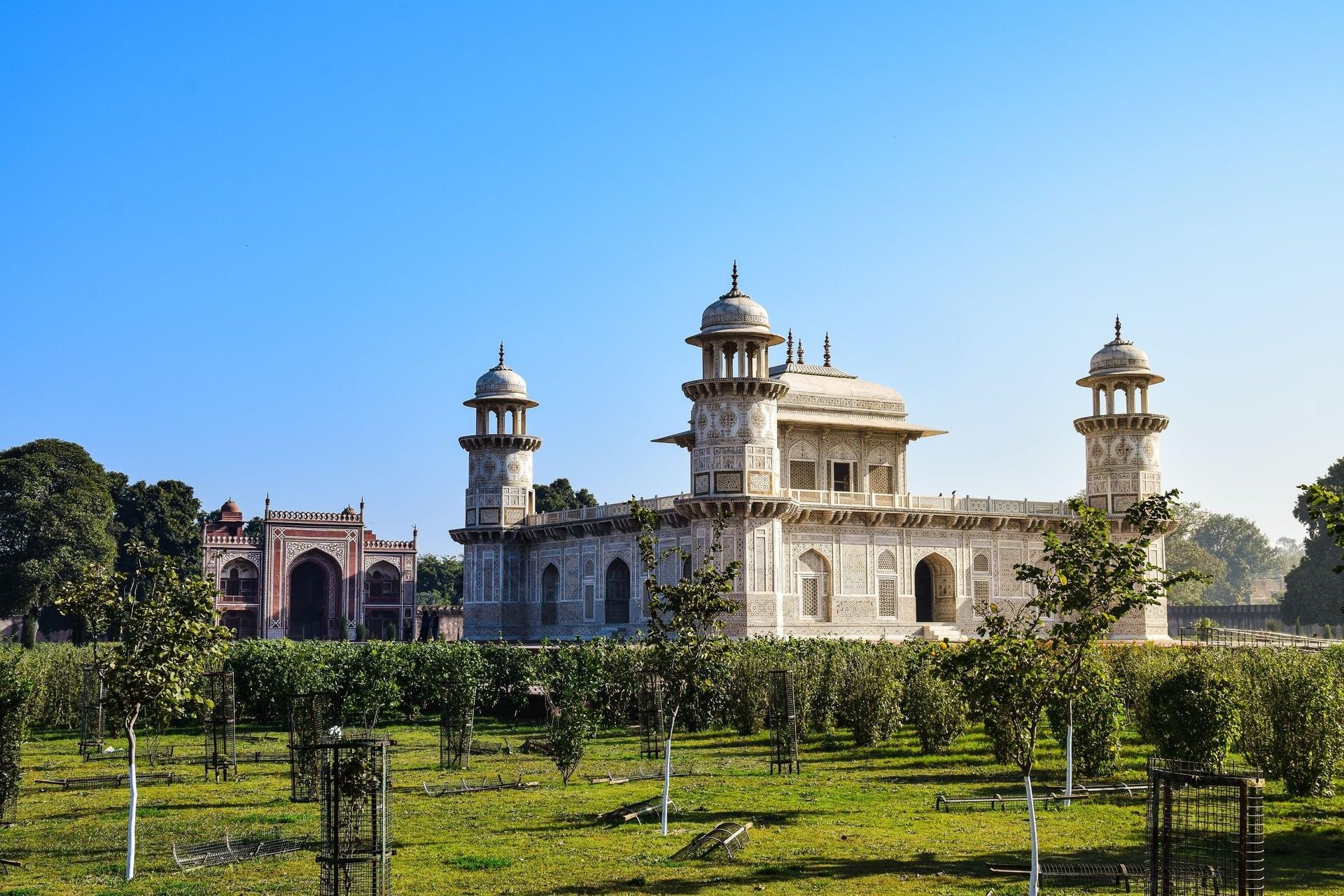
South Gate: The Full Portrait
A false gate frames the full tomb. Turn back from the south gate for the whole silhouette: corner towers, the square upper pavilion, a gate built only for symmetry.
- 6
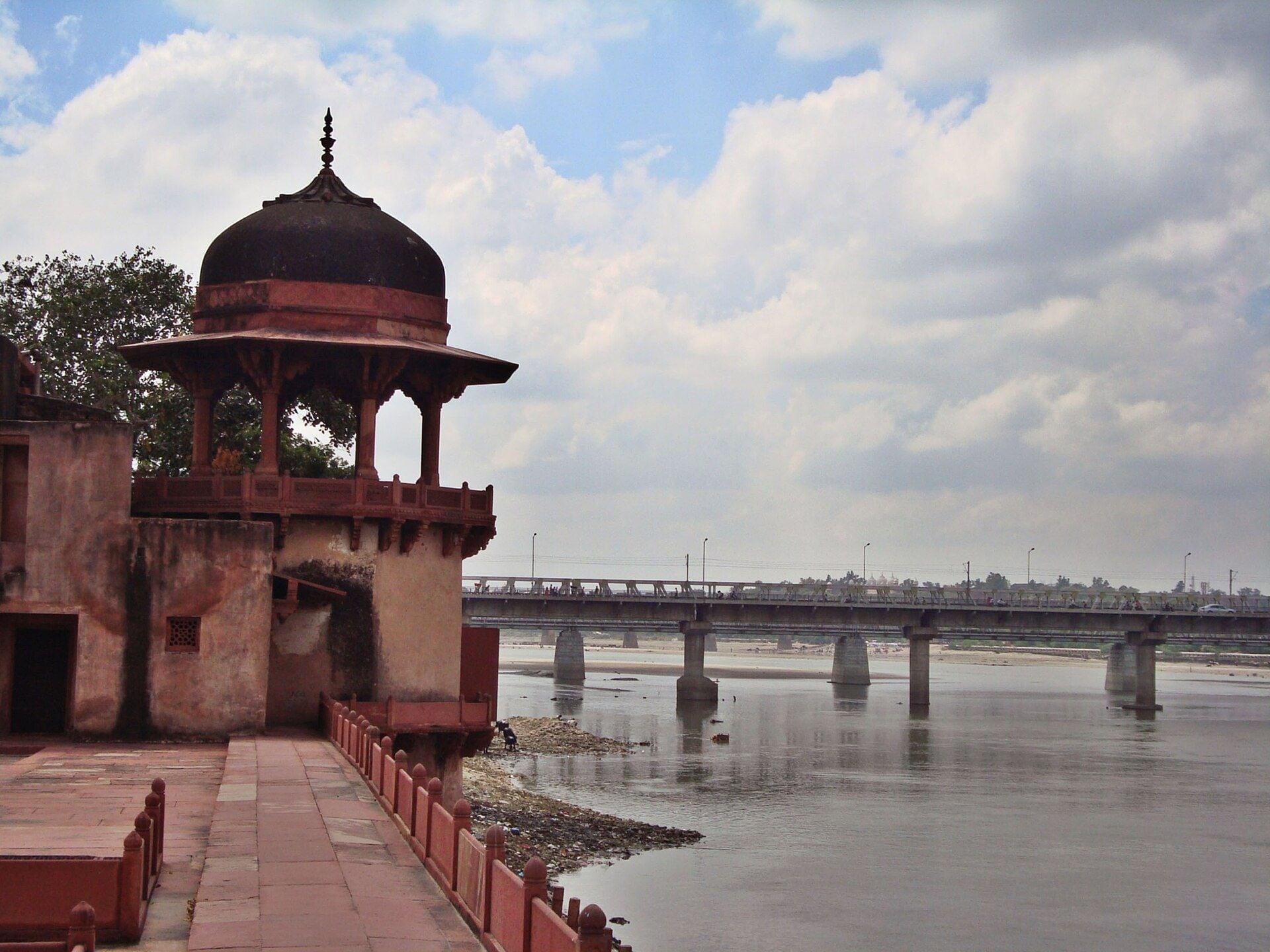
River Corner
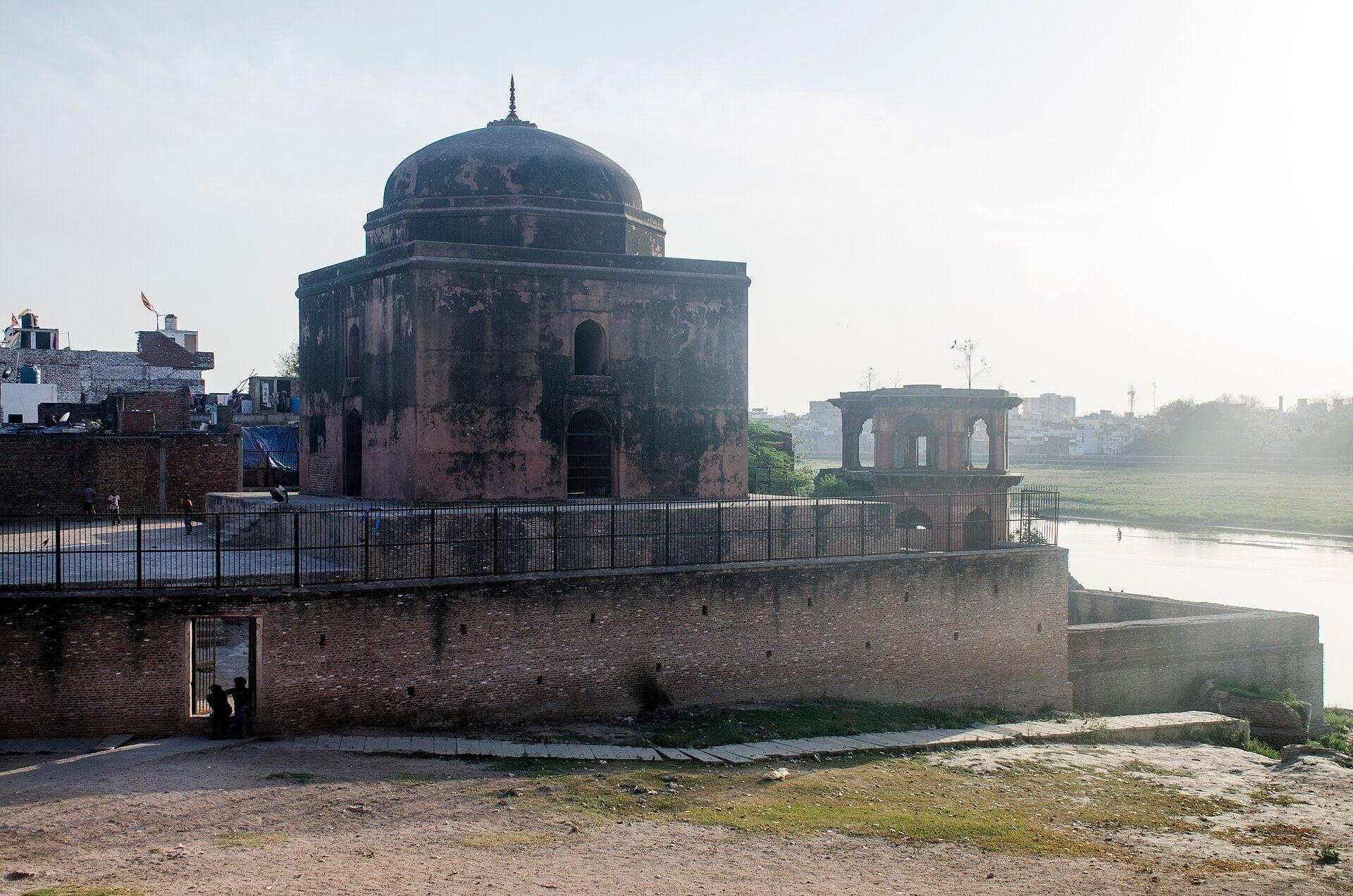
Agra's riverside gardens once lined this bank. The river wall at the garden's corner, and the riverfront city of walled gardens that this tomb belonged to.
- 7
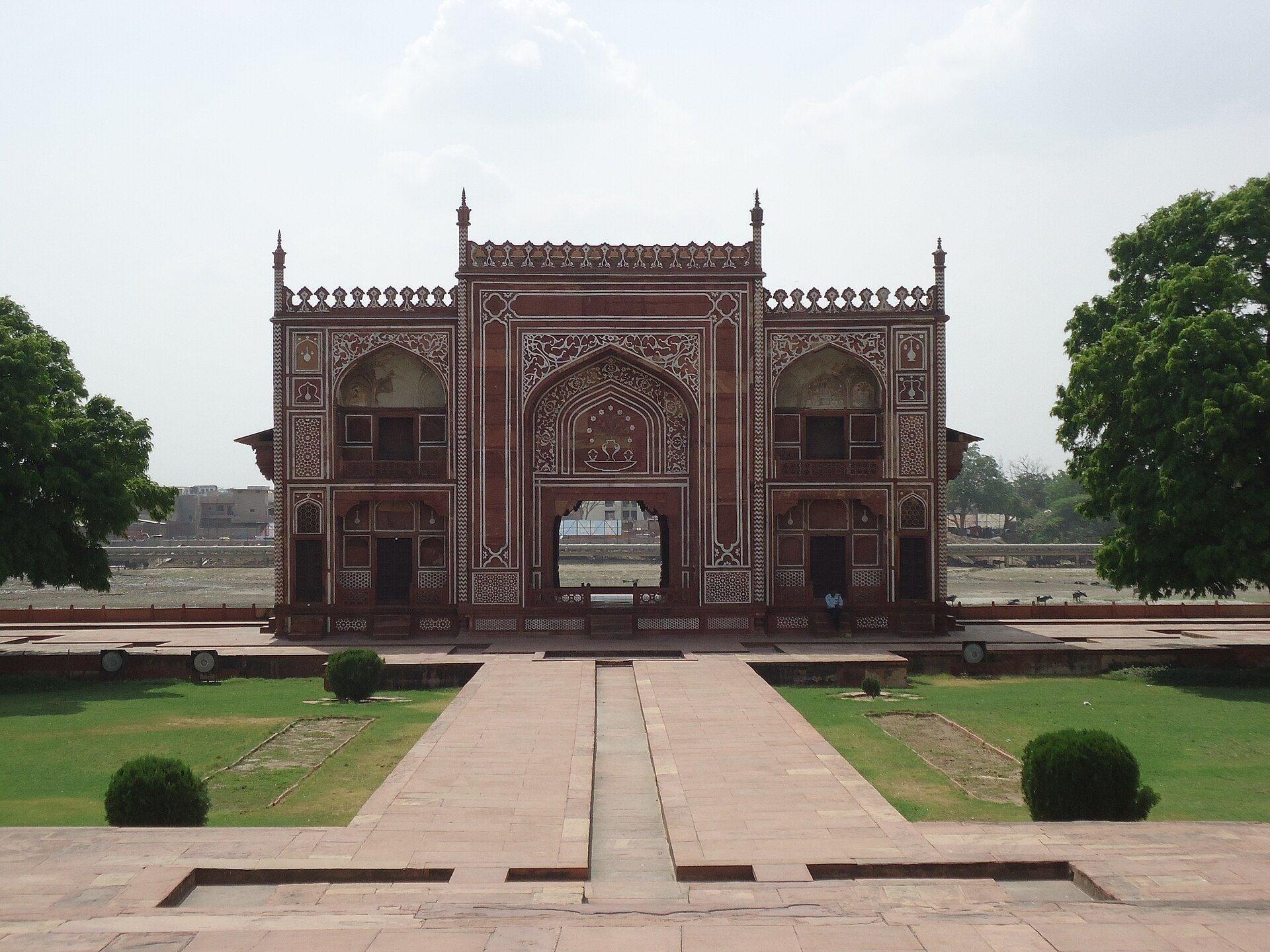
River Pavilion
A pleasure pavilion stands where a gate should be. The waterfront pavilion that replaces a west gate, decorated, like the tomb, with animal imagery.
- 8
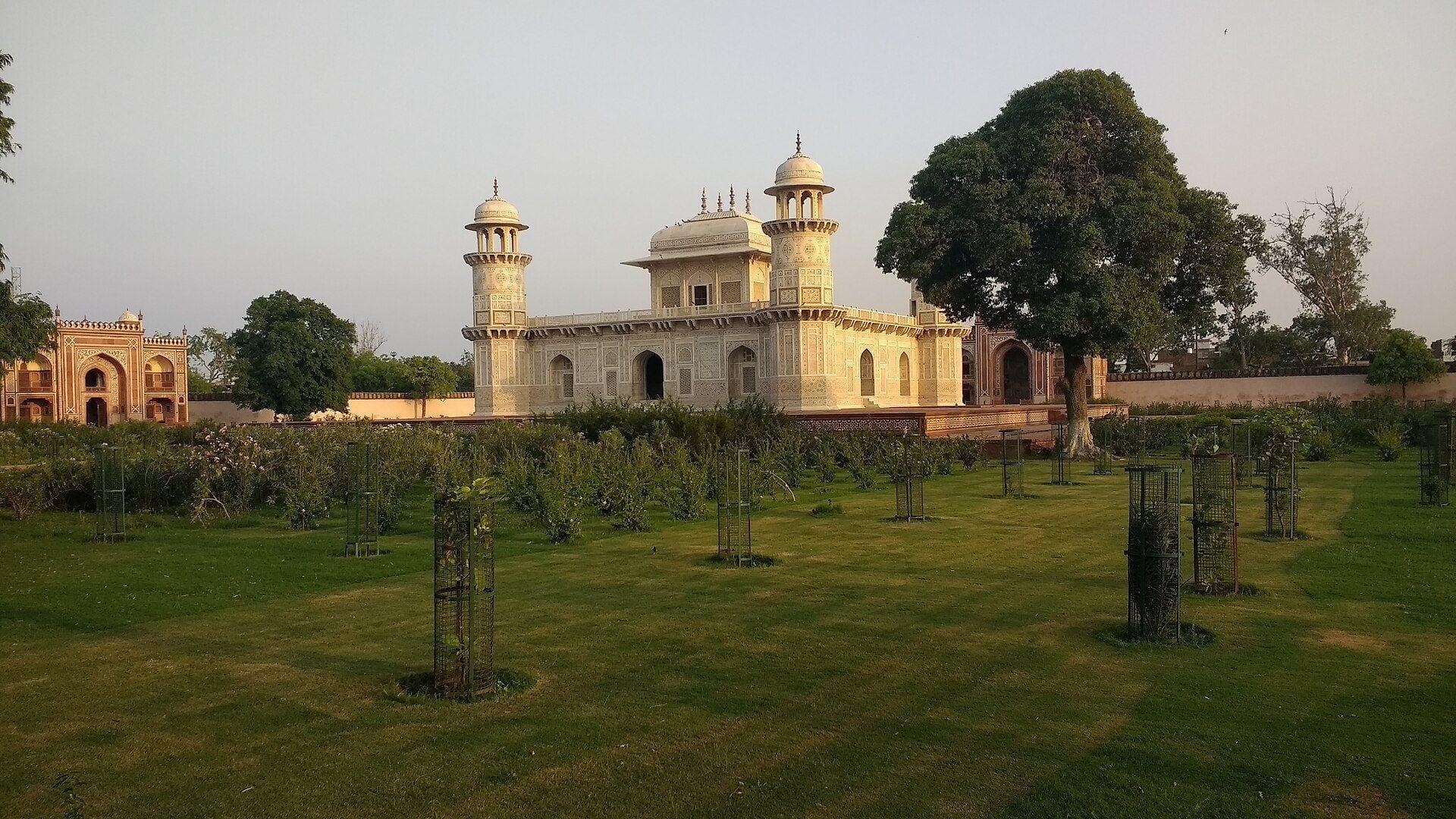
River Face
The river face hides a calligraphy band. The tomb's west face, built for the river, with an inscribed band most visitors never notice.
- 9
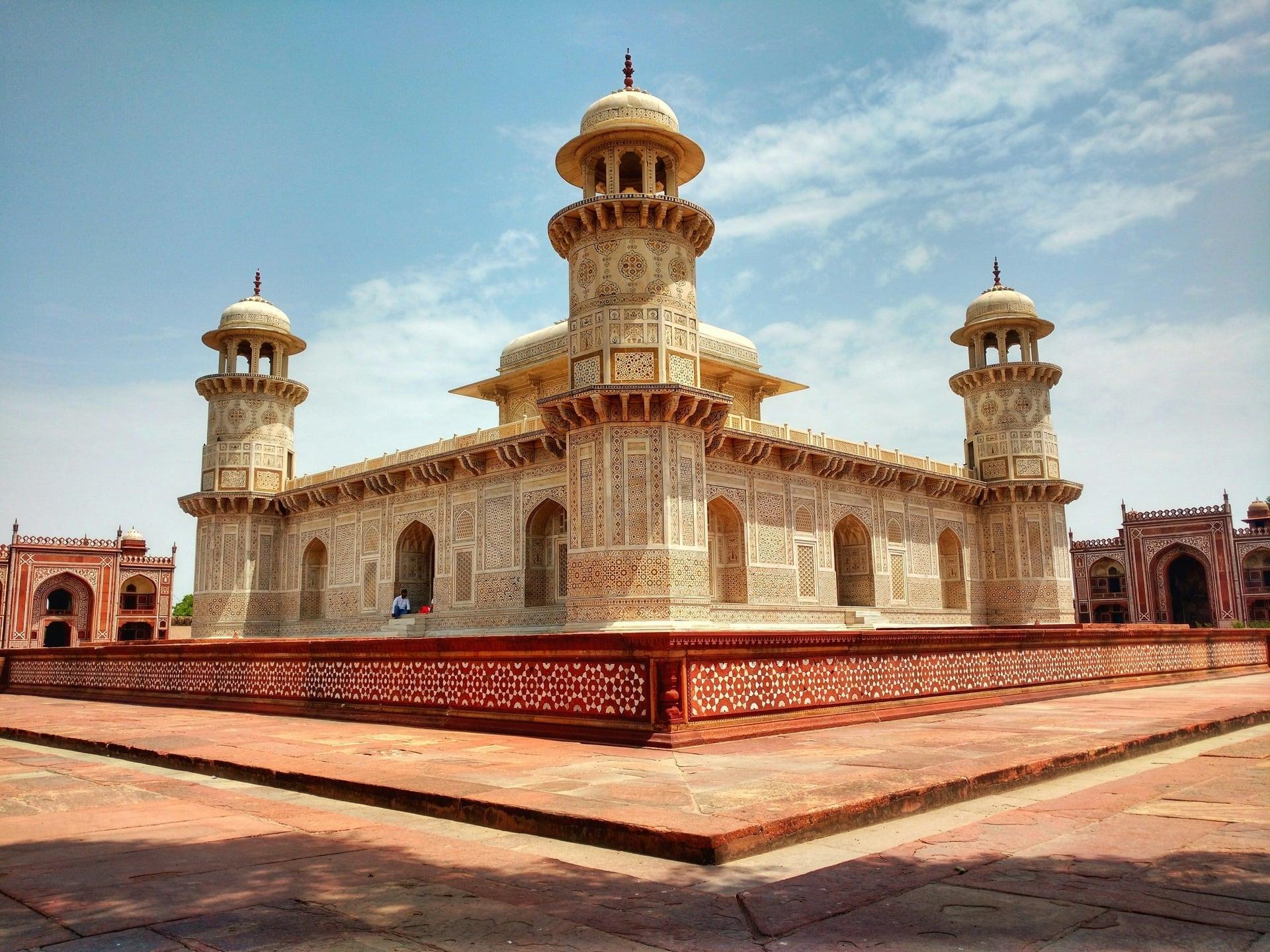
North Gate
One family gave Agra two great tombs. A last look back from the north gate, Nur Jahan's patronage, her niece and the Taj, then the ride to Chini ka Rauza.
- 10
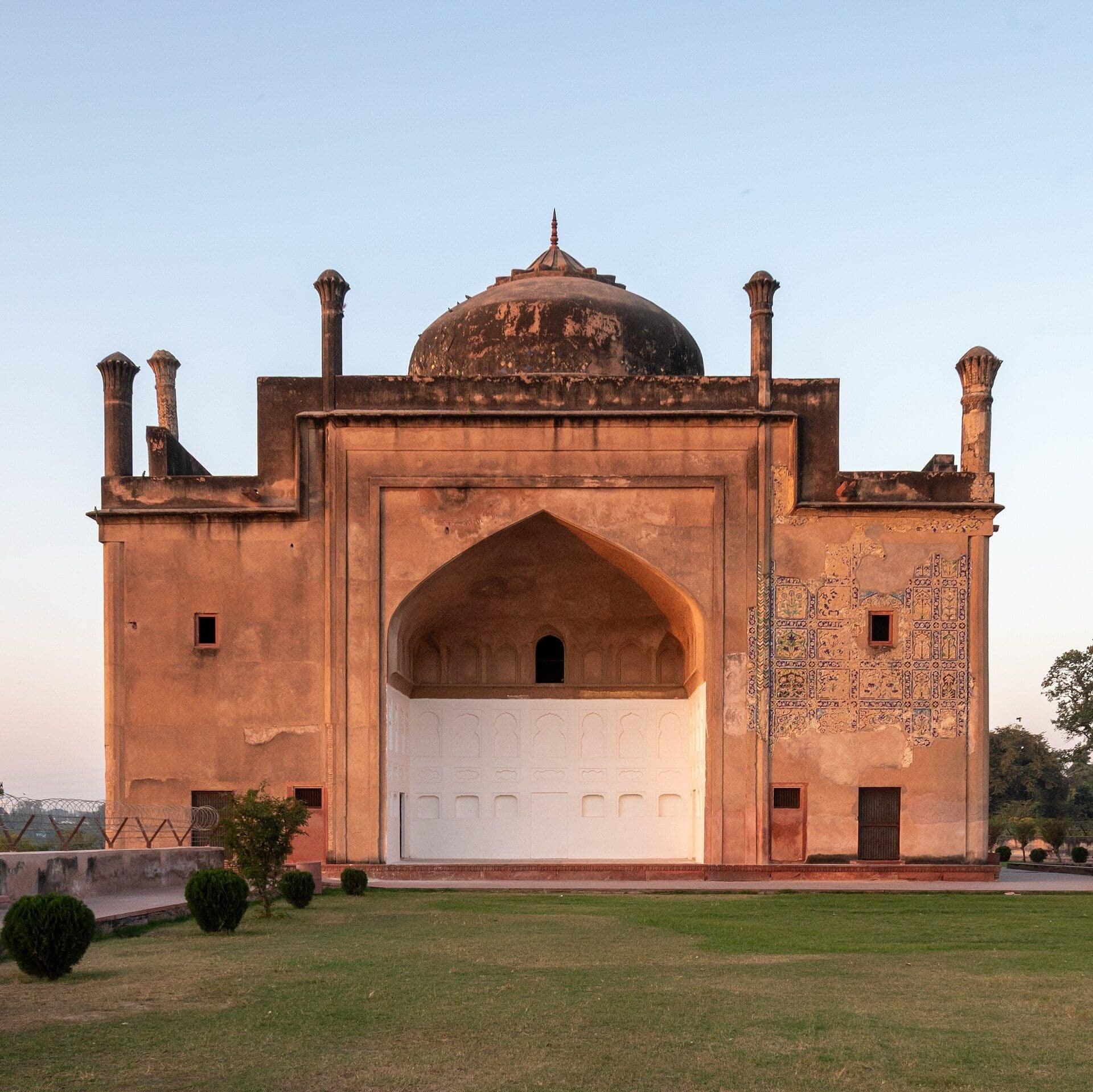
Chini ka Rauza
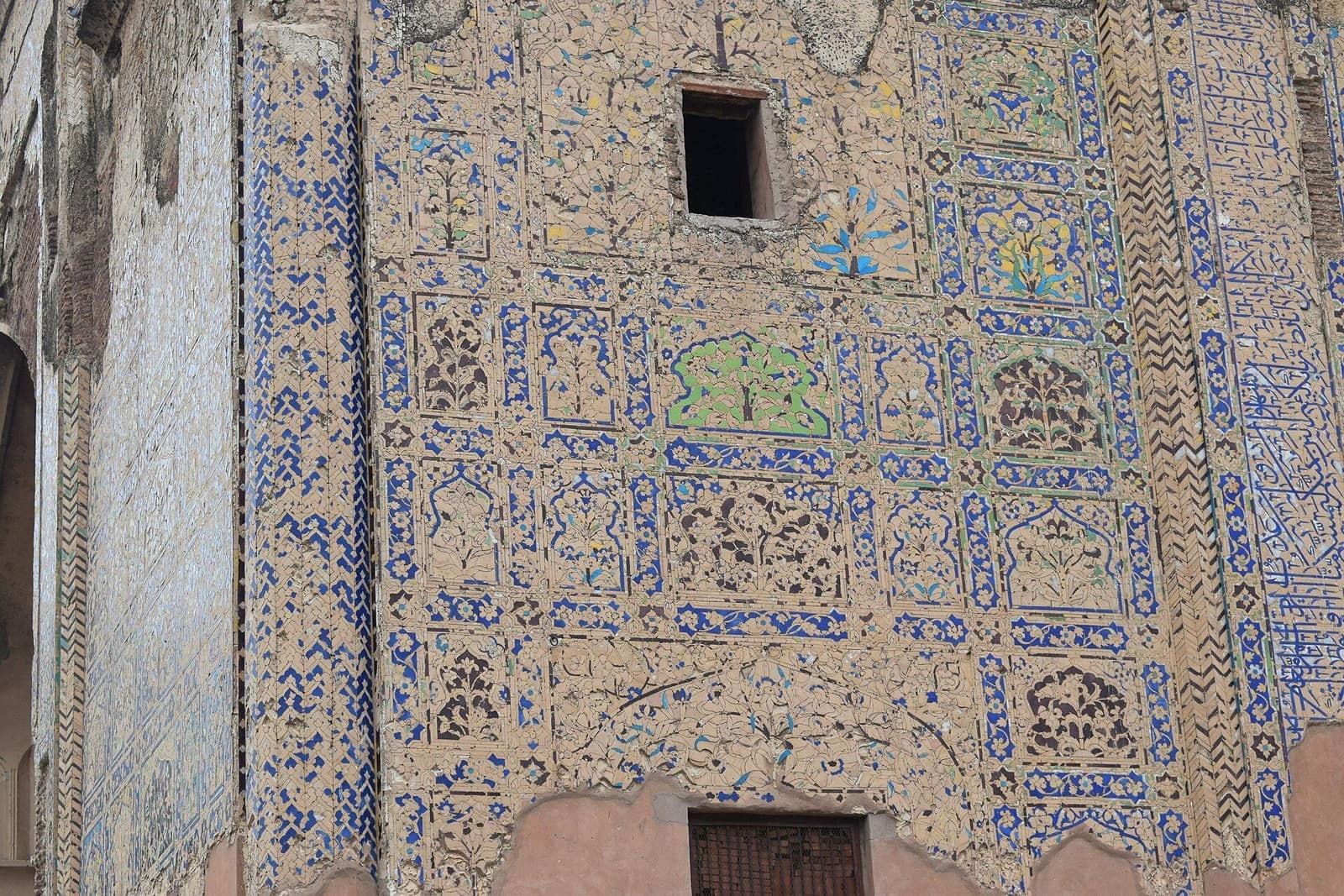
Glazed tile once covered this whole tomb. The only tomb in Agra dressed in Persian glazed tile, built in the 1630s and believed to be the minister Afzal Khan's, now a beautiful ruin.
- 11
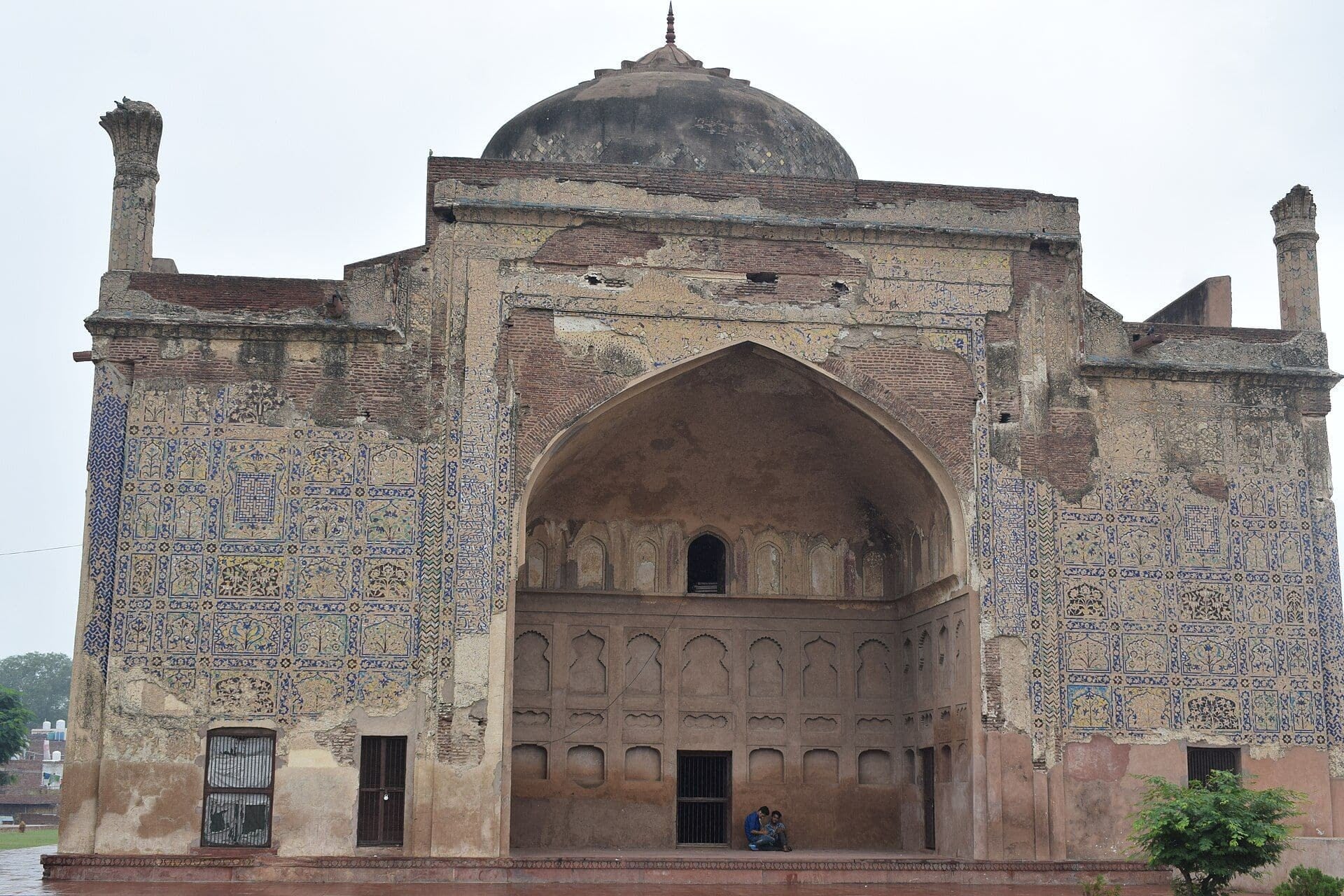
Riverside Terrace
The riverbank joins a century of gardens. Chini ka Rauza's river side, the Yamuna, and the two answers this walk has seen to one question: how to color a tomb.
Details
Best Time to Visit
Mid-morning or mid-afternoon, finishing before sunset: both gardens are open every day from sunrise to sunset (agra.nic.in; ASI Agra Circle) and nothing is lit for visitors. Sunset in Agra is about 5:25 pm late November to mid-December, 5:34 pm on 1 January, 5:58 pm on 1 February and 6:18 pm on 1 March (computed, NOAA formula): in winter start by about 3:30 pm to see both tombs. No Friday closure here (only the Taj closes Fridays), and Fridays are a little cheaper for foreign visitors (no Agra Development Authority toll). October to March is the season; December and January mornings can be misty or hazy, hiding the river. Checked 22 November 2026.
Pro Tips
- •Getting there: taxi or auto-rickshaw to 'Itimad-ud-Daulah, Aligarh road', on the Yamuna's east bank about 4 km from Agra Fort across the river (agra.nic.in). The ticket gate is on the road; the walk starts on the forecourt path inside it. The Agra Metro does not reach this bank. Negotiate the fare in advance or insist on the meter (Government of Canada travel advice, updated 6 November 2026). Checked 22 November 2026.
- •The entry ticket is NOT included. Buy it at the official counter at the gate or online at asi.paygov.org.in. Indian citizens Rs 30, foreign visitors Rs 310, SAARC and BIMSTEC Rs 30, under 15 free (UP Tourism ticketing table). The foreign price includes a small Agra Development Authority toll, so it is Rs 300 on Fridays, when no toll is charged, or if you already hold a same-day Taj Mahal ticket, whose Rs 500 toll covers Agra's other ticketed monuments (UP Tourism; ASI Agra Circle). Chini ka Rauza is free (agra.nic.in). Checked 22 November 2026.
- •The ride (stop 9 to stop 10): leave by the east gateway, the only visitor gate, and take an auto-rickshaw or taxi about 1.3 km north on the Aligarh road to Chini ka Rauza, about five minutes. The gate is on the northbound side, so no road is crossed on foot. Ask the driver to wait, or keep the driver who brought you. Do not walk it: no sidewalk is mapped and trucks use the road.
- •Chini ka Rauza's gate is not confirmed: the driver will set you down at the garden; walk to the tomb's land side, facing away from the river, where stop 10 starts.
- •Photography for personal use is allowed in the gardens (ASI order of 12 July 2018, The Tribune, 13 July 2018); tripods and filming need ASI permission, and drones are not allowed.
- •Ram Bagh, often called the oldest surviving Mughal garden in India, is about 1 km further north on the same road (separate ticket, Rs 25 Indian, Rs 300 foreign: UP Tourism). Agra Fort is across the river by road; the Taj Mahal and Taj Ganj about 7 to 8 km by road.
Safety & Precautions
- •The tomb's platform has a few low steps on each side, and shoes come off at the burial hall's door (follow the signs; whether also on the platform is unverified). The upper storey's stair is not open to count on.
- •Do not walk the Aligarh road between the two tombs: no sidewalk is mapped, and it carries trucks, e-rickshaws and cows.
- •Weather and air: December and January highs about 22 to 24 C, lows about 7 to 8 C (IMD normals, Agra, 1991 to 2020); winter mornings can be misty or hazy. Check the day's air quality index; a mask helps if you have asthma.
- •Unofficial guides and touts may approach at the gate: buy tickets only at the official counter or online, and no shop is part of this walk (Government of Canada travel advice; UP Tourism advises approved guides with identity cards).
- •Chini ka Rauza's riverside ground (stop 11) is open earth; its public access is unverified. If it is closed, finish on the lawn path at the garden's south corner, and keep back from the riverbank's edge.
- •Both gardens close at sunset and are not lit: start in daylight. Ask before photographing anyone.
Travel advisory: Exercise Increased Caution (Level 2).
Gallery
Related Reading
Go deeper on what you'll see, hear, and walk through.
Overview
Agra Monument Tickets, Hours and Closures (Checked November 2026)
5 min
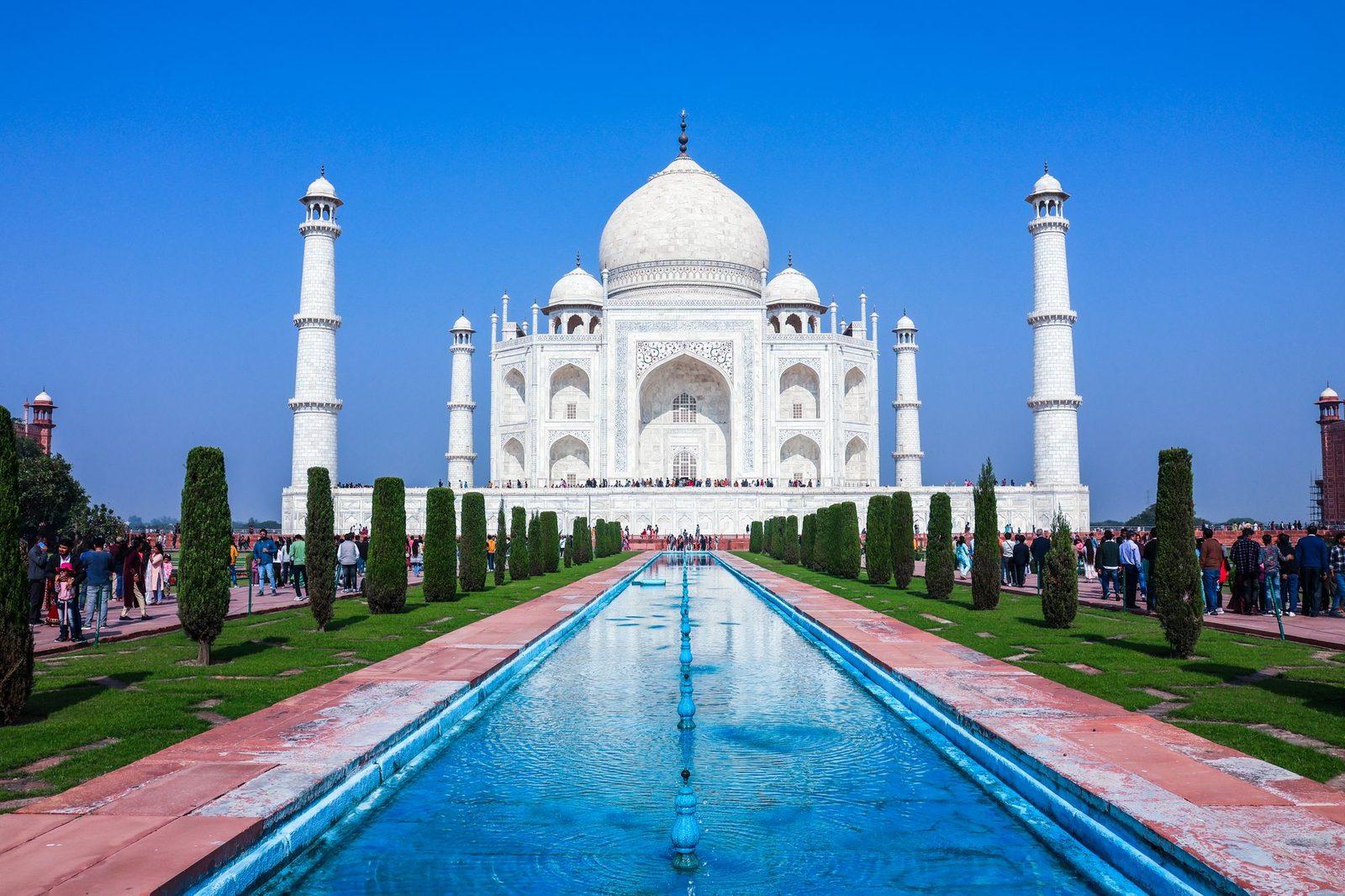
Overview
Agra Travel Guide: How Many Days, Getting Around, and Staying Safe
4 min
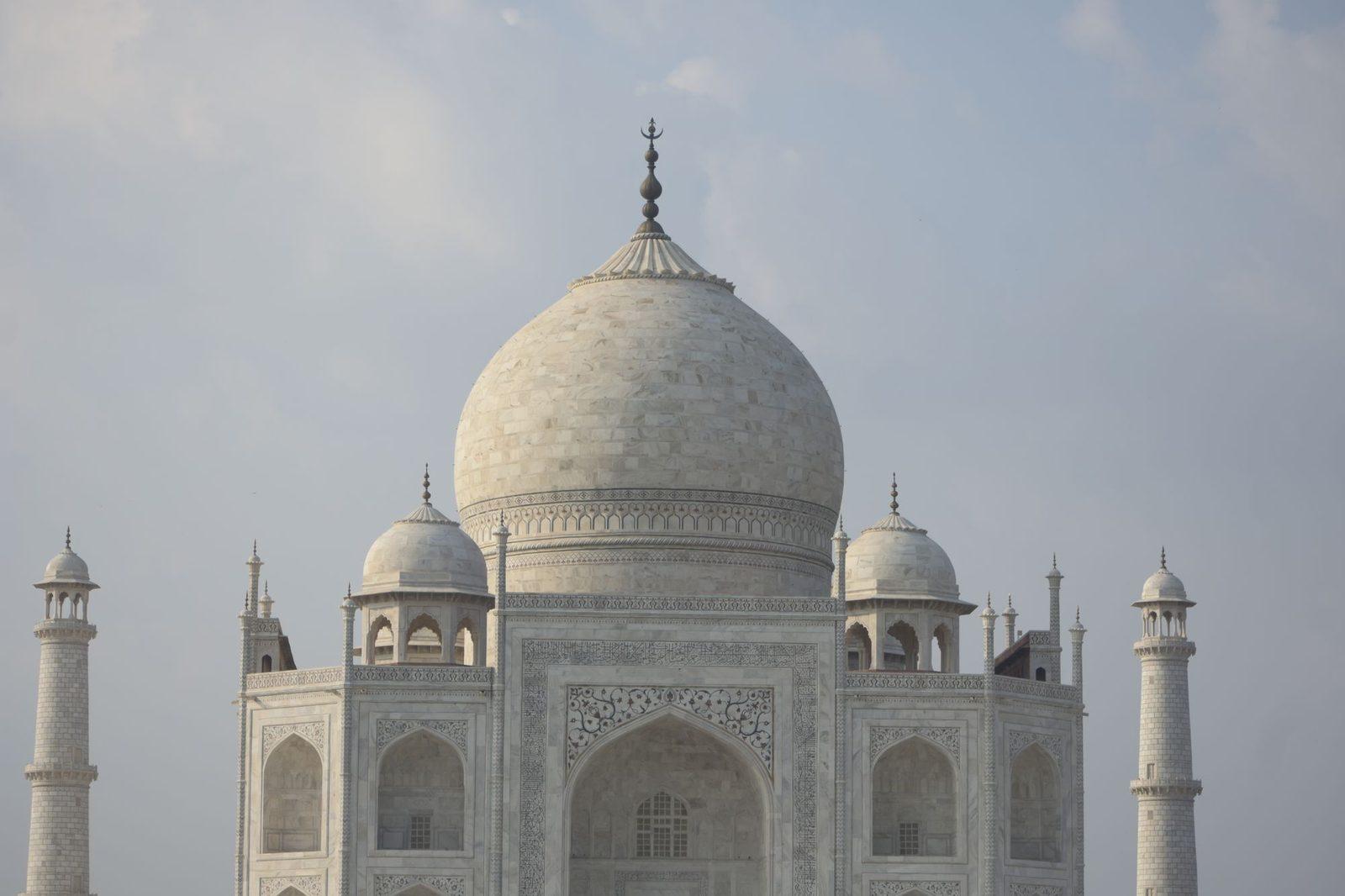
Thematic
Mughal Tombs of Agra: From Akbar's Grave to the Taj Mahal
3 min
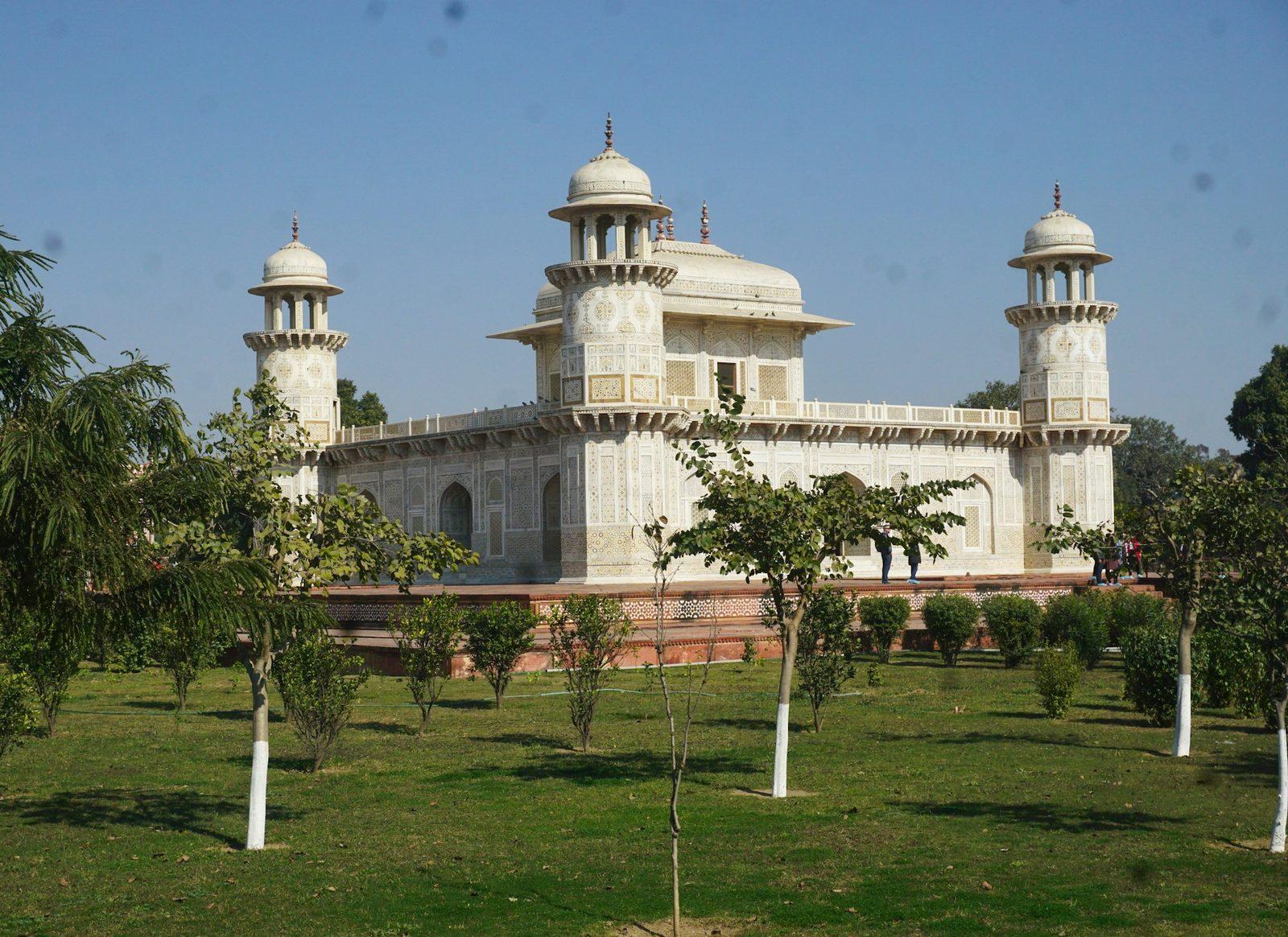
Companion
Itimad-ud-Daulah, Agra: The Baby Taj That Came First
4 min
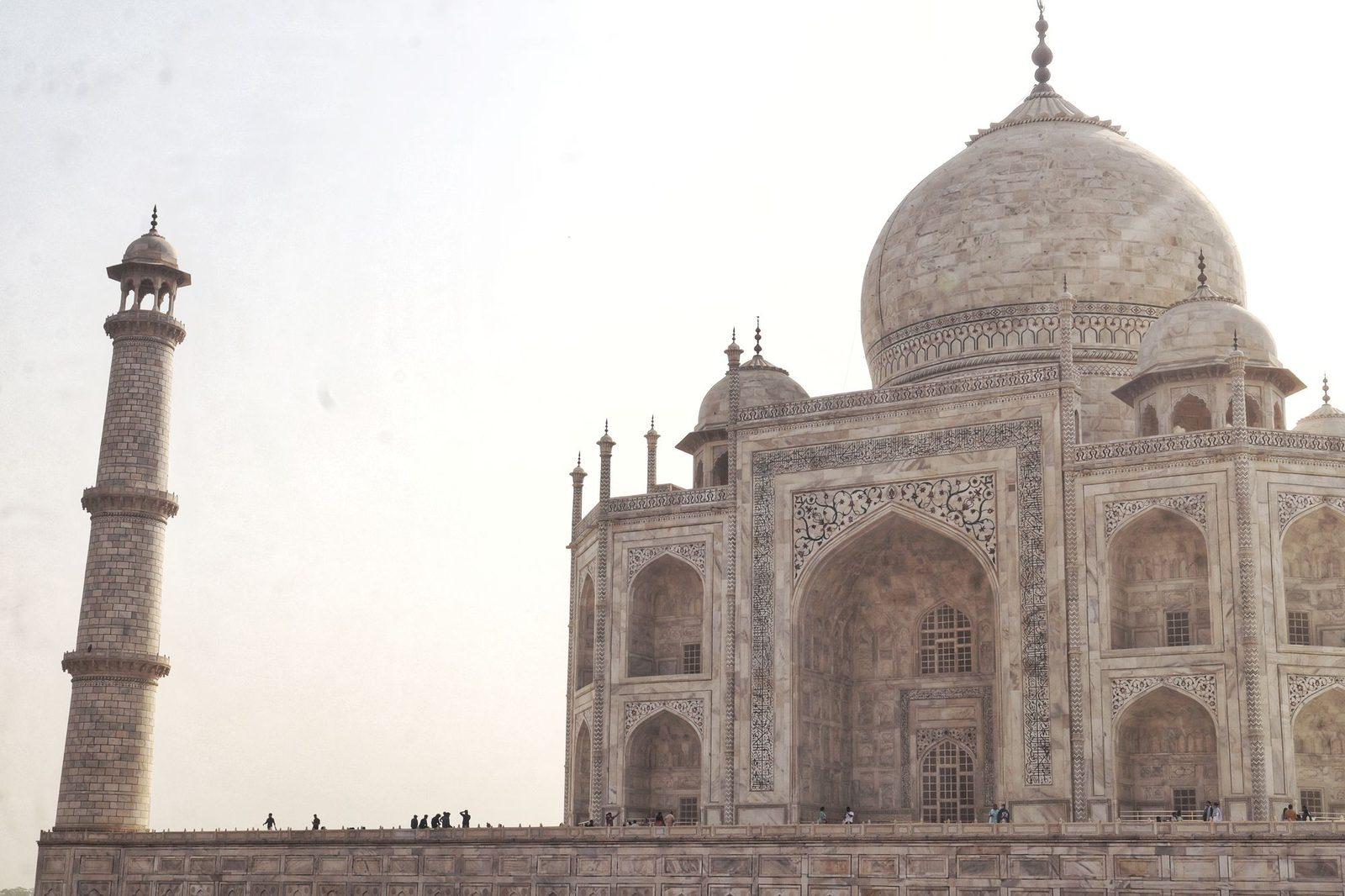
Companion
Taj Mahal Mausoleum: Two Tombs Above, Two Graves Below
4 min
Read the walk
The full story of Itimad-ud-Daulah: The Baby Taj That Came First, in words. Prefer to listen? Play it narrated, from home or on location.
Introduction
Agra's most famous tomb was built for a wife. A few years before it was begun, on the other bank of the Yamuna, a daughter finished a small tomb for her father, and dressed its white marble in colored stone. People call it the Baby Taj, but it came first.
Its garden is ticketed, and the entry ticket is not included with this tour: buy it at the official counter at the gate or on the Archaeological Survey of India's website. Chini ka Rauza, at the end, is free.
The walk circles the walled garden: the gateway, the tomb's inlaid faces, the river wall and its pavilion, and the false gates built only for symmetry. It includes one short ride. You leave by the gate and take an auto-rickshaw or taxi about one point three kilometers north, about five minutes, to Chini ka Rauza, a minister's tomb from the next reign, colored a different way, with glazed tile.
There are eleven stops. You walk about one kilometer, a little over half a mile, plus the ride, and it takes about an hour. The ground is flat, with a few low steps onto the tomb's platform, and no road is crossed on foot. The road between the two tombs has no sidewalk, so do not walk it.
Both gardens are open every day from sunrise to sunset: in winter, start by about half past three. December and January days are mild and the mornings cool, and mist or haze can hide the river. Check the day's air quality; a mask helps if you have asthma. Unofficial guides may approach you at the gate: buy only at the official counter.
The walk ends on Chini ka Rauza's river side. When you arrive at the Gateway Forecourt, begin with stop one.
1. Gateway Forecourt
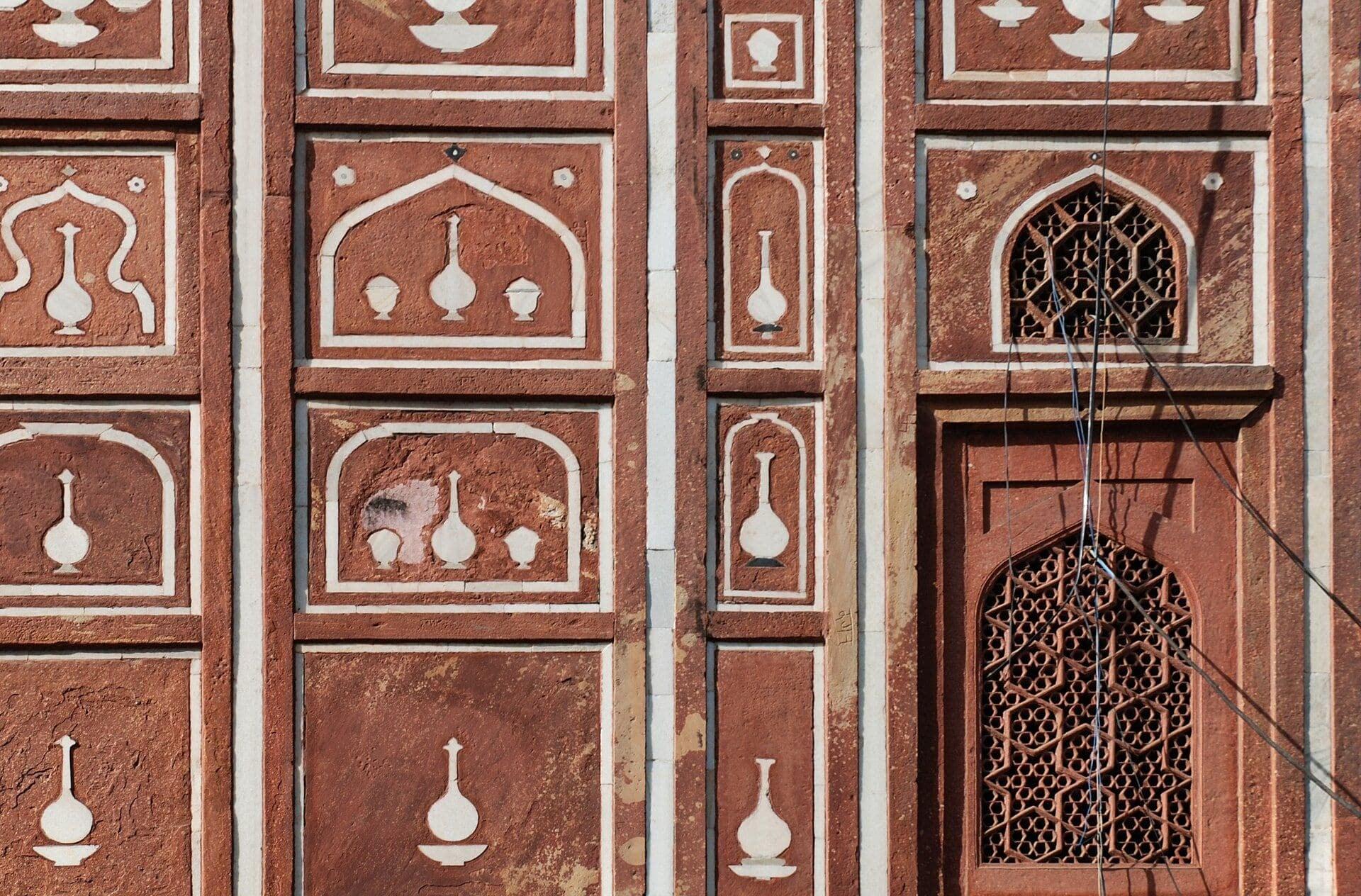
At the end of the path ahead stands the gateway: red sandstone, set with white marble. Its inlaid panels show little niches that seem to hold vessels, fruit bowls and flowers, a decoration called chini khana. The tomb is hidden behind it, for now.
This is a ticketed garden, and the ticket, sold at the counter by the road gate, is not part of this tour.
The garden first belonged to a man the Mughal court called Itimad-ud-Daulah, the Pillar of the State. His own name was Mirza Ghiyas Beg. He was Persian, the son of a man who had served at the Persian court. He came to India, entered the Mughal emperor's service at Fatehpur Sikri, and under the next emperor rose to be the empire's treasurer, and then its chief minister.
His family rose with him. His daughter married that next emperor in sixteen eleven, and five years later was given the title Nur Jahan, Light of the World. She was a patron in her own right, wealthy from trade and land.
Her mother died in sixteen twenty one, and her father months later. Nur Jahan built his tomb here, in his own garden, and finished it in sixteen twenty eight. This is the family behind the Taj Mahal, as you will hear.
Follow the route through the gateway, to the first view of the tomb.
2. East Gate: The First View
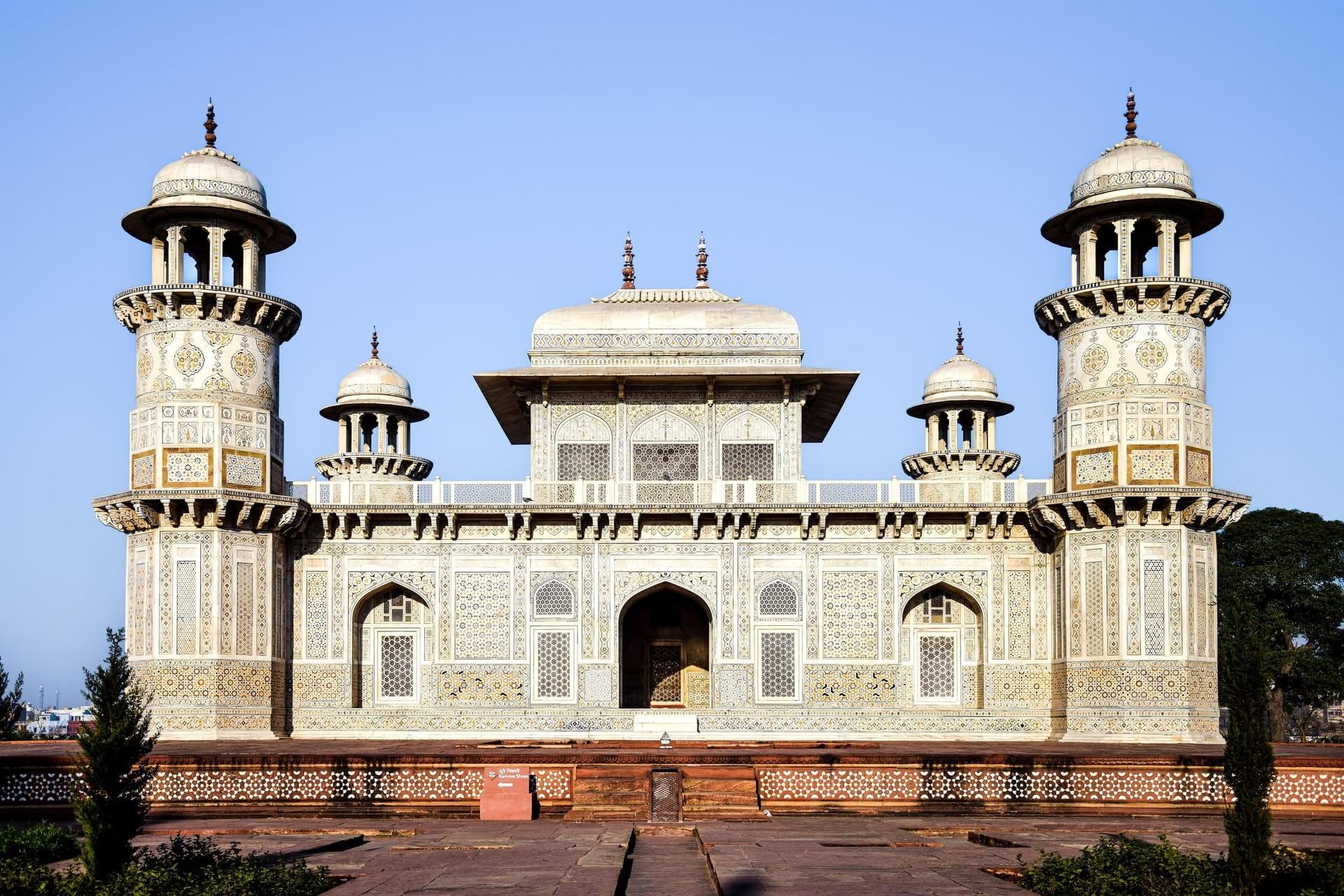
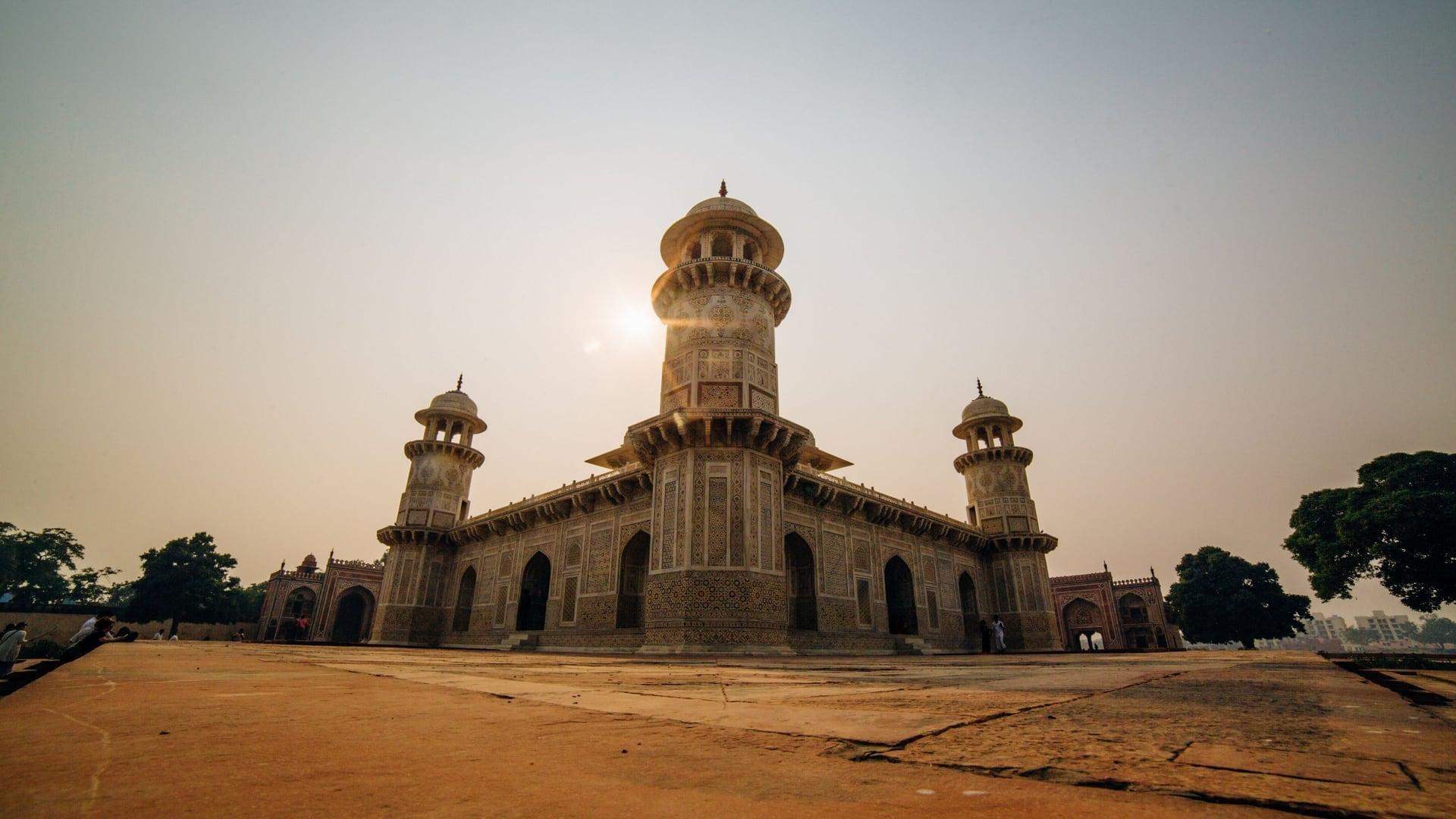
There it is, at the end of the water channel: the whole tomb, small, white and square, with a slim tower at each corner.
The garden around it is a charbagh, a fourfold garden. Raised walkways divide it into four quarters, each walkway with a water channel down its middle, and they meet at the tomb. Gardens like this were read as a picture of paradise, crossed by its four rivers. Four rectangular pools with fountains are built into the tomb's platform.
From twenty fourteen, the World Monuments Fund and the Archaeological Survey of India restored this garden, and Mehtab Bagh, the garden opposite the Taj. When the work was opened in January twenty nineteen, clean water was flowing in these channels again. The quarters were replanted with fragrance, fruit and shade in mind, and the groundwater is treated here, on site, to water them.
Notice the scale. This is not a mountain of a building. One historian of Mughal architecture wrote that it was designed to look like a beautiful picture rather than a massive tomb. Keep that word, picture, in mind.
Follow the route along the channel, up onto the tomb's platform.
3. Inlaid East Face
Up on the platform, the tomb's east face is close now. Step nearer, and the white marble turns out to be full of color. If there is a sign about shoes on the platform, follow it.
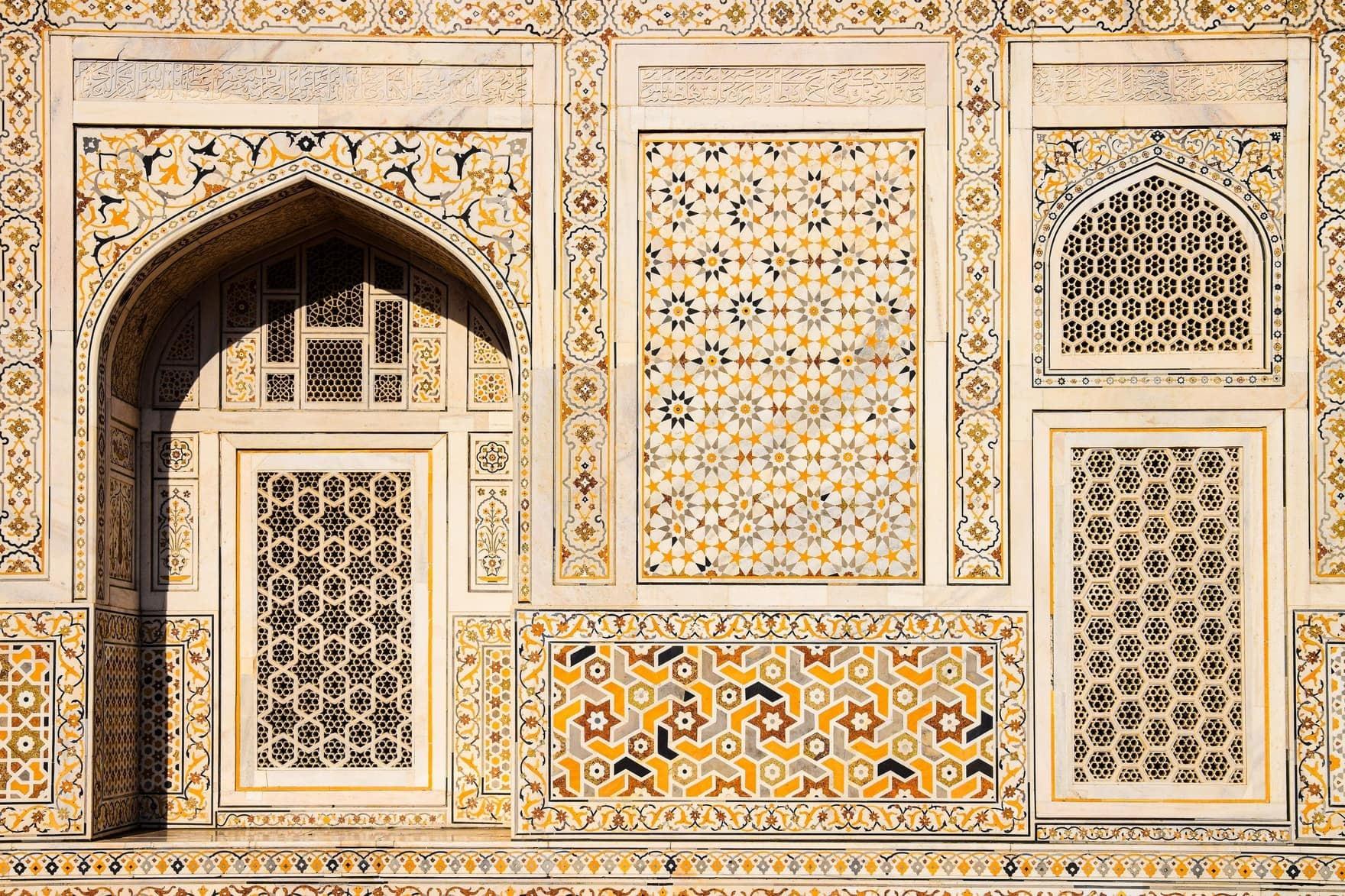
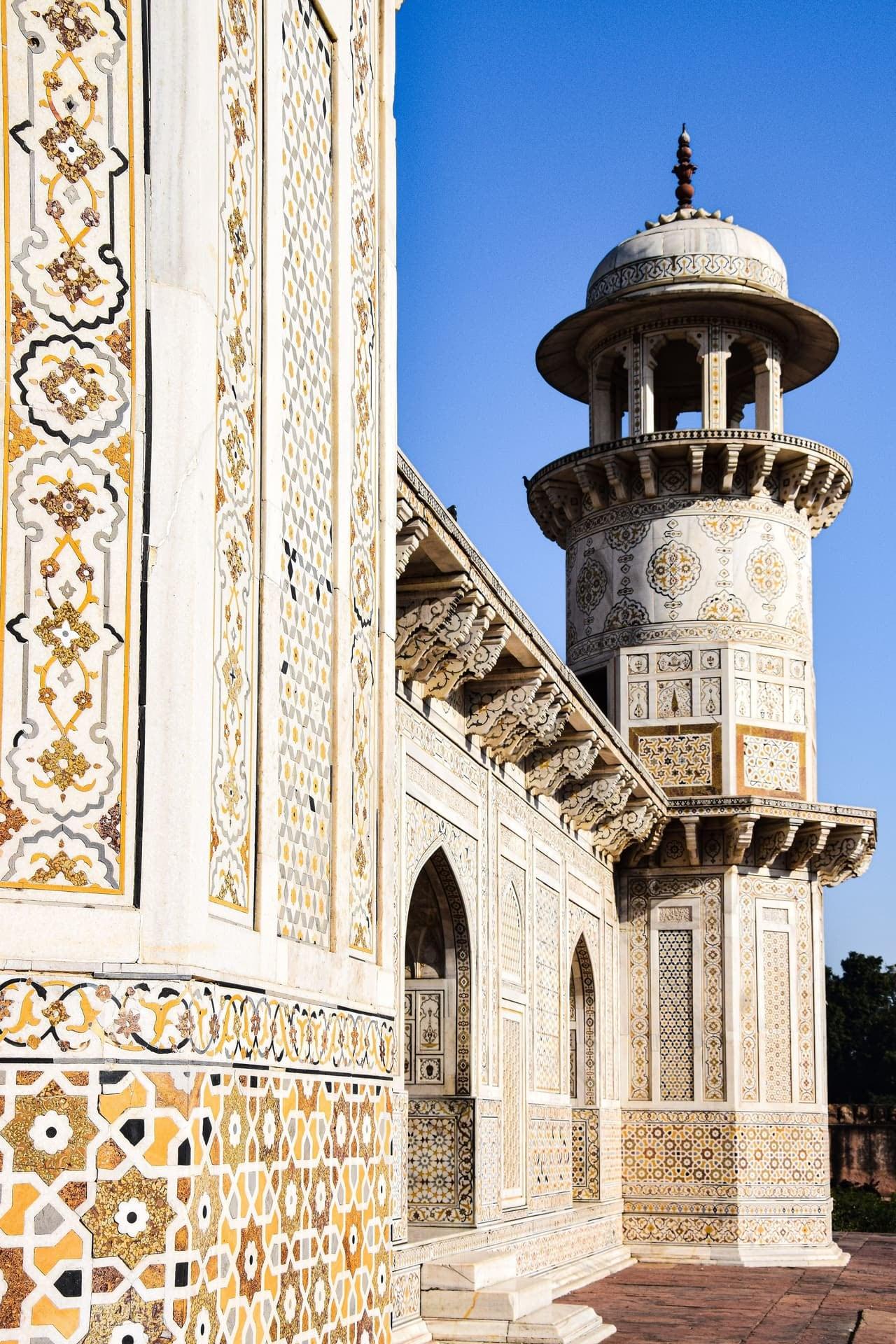
Look for the shapes: wine vessels, flower vases, tall cypress trees and geometric patterns, all made of hard and semi precious stones, cut and set into the marble. On some of the vessels there are even small duck heads.
Here is the tomb's argument. The gateway you came through is red sandstone with white trim, the way Mughal Agra had mostly built. A few years after this tomb, the Taj Mahal would be white marble from top to bottom. Here, in the sixteen twenties, under a woman's patronage, the step is taken: white marble, with the color laid into it.
You will often hear this called the first Mughal tomb in white marble, and the first to use pietra dura, the Italian name for this kind of stone inlay. One historian puts it more carefully: the first Mughal tomb faced in white marble to use stone inlay so widely, a forerunner of the finer pietra dura of the Taj.
Wine vessels on a tomb can seem strange. With the flowers and fruit, they are often read as images of the gardens of Paradise. That is an interpretation, not something written on the wall.
Follow the route round the platform's corner, to the south side.
4. South Door
Along this side of the tomb, the arch in the middle of the face is the only door into the burial hall. The other openings are filled with jalis, marble screens carved into a lattice that lets the light through.
The hall is the largest of nine rooms on the ground floor. In its center lie the tombs of Itimad-ud-Daulah and his wife, over their graves. They are cut from yellow stone, carved to look like wood. Notice the arrangement if you go in: the wife lies at the exact center, and her husband beside her. It is the same arrangement as at the Taj Mahal, where the empress lies at the center and the emperor's tomb was added beside hers.
The smaller rooms around the hall hold other members of the family. The walls inside were painted with flowers, mostly red, and with wine vessels, vases and cypresses. Much of that painting has been lost, and large areas have been restored.
Visitors can usually go in. Expect to take your shoes off at the door, and follow the signs and the staff.
Follow the route down off the platform and along the walkway to the south gate.
5. South Gate: The Full Portrait
Turn round, away from the gate, and you have the whole tomb in one frame. The gate behind you is a false one. The garden has four gateways, one in the middle of each wall, but only the east one, where you came in, is an entrance. The west side is a pavilion on the river. This…
Full narration for this stop unlocks with the tour.
6. River Corner
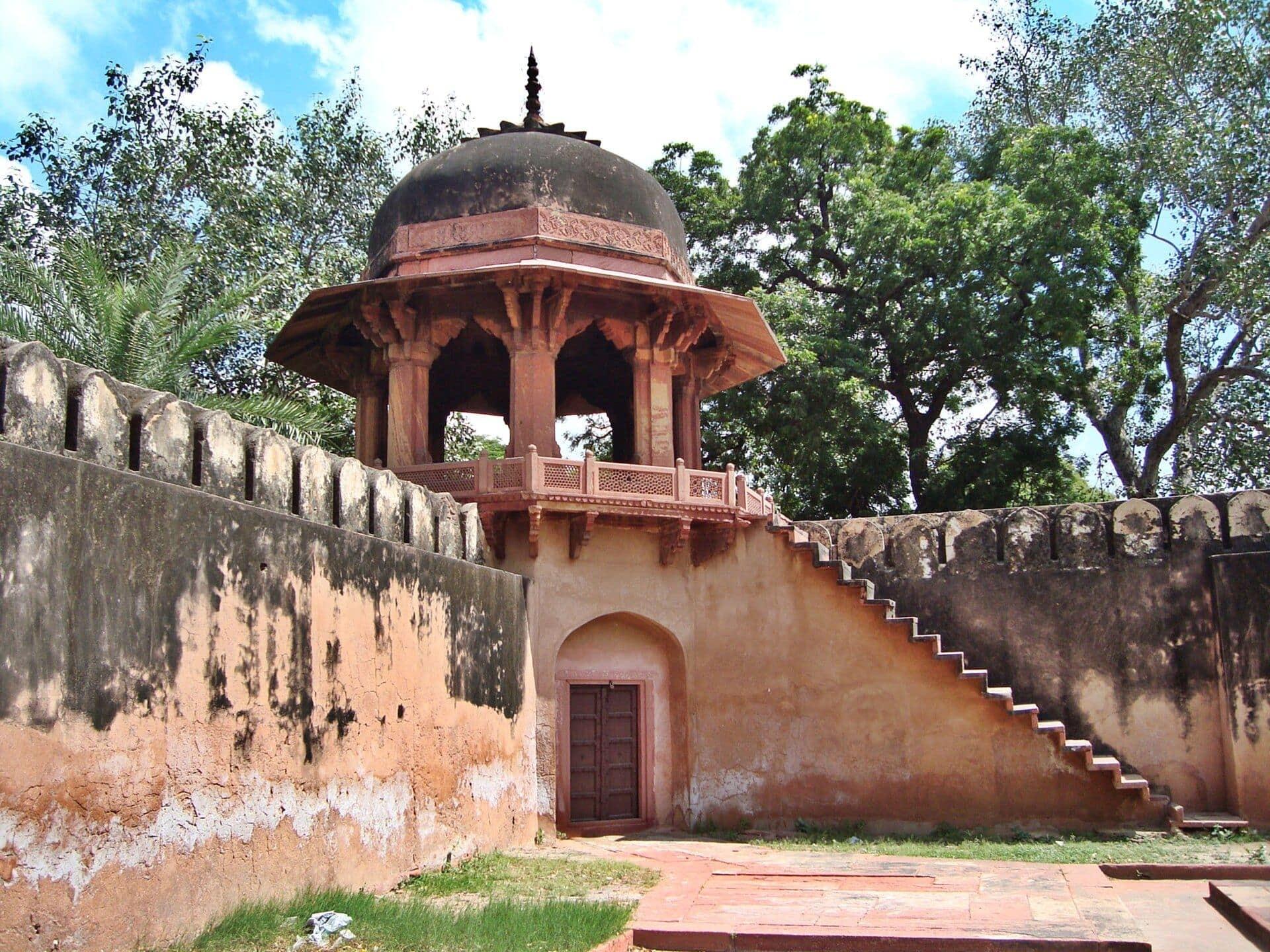
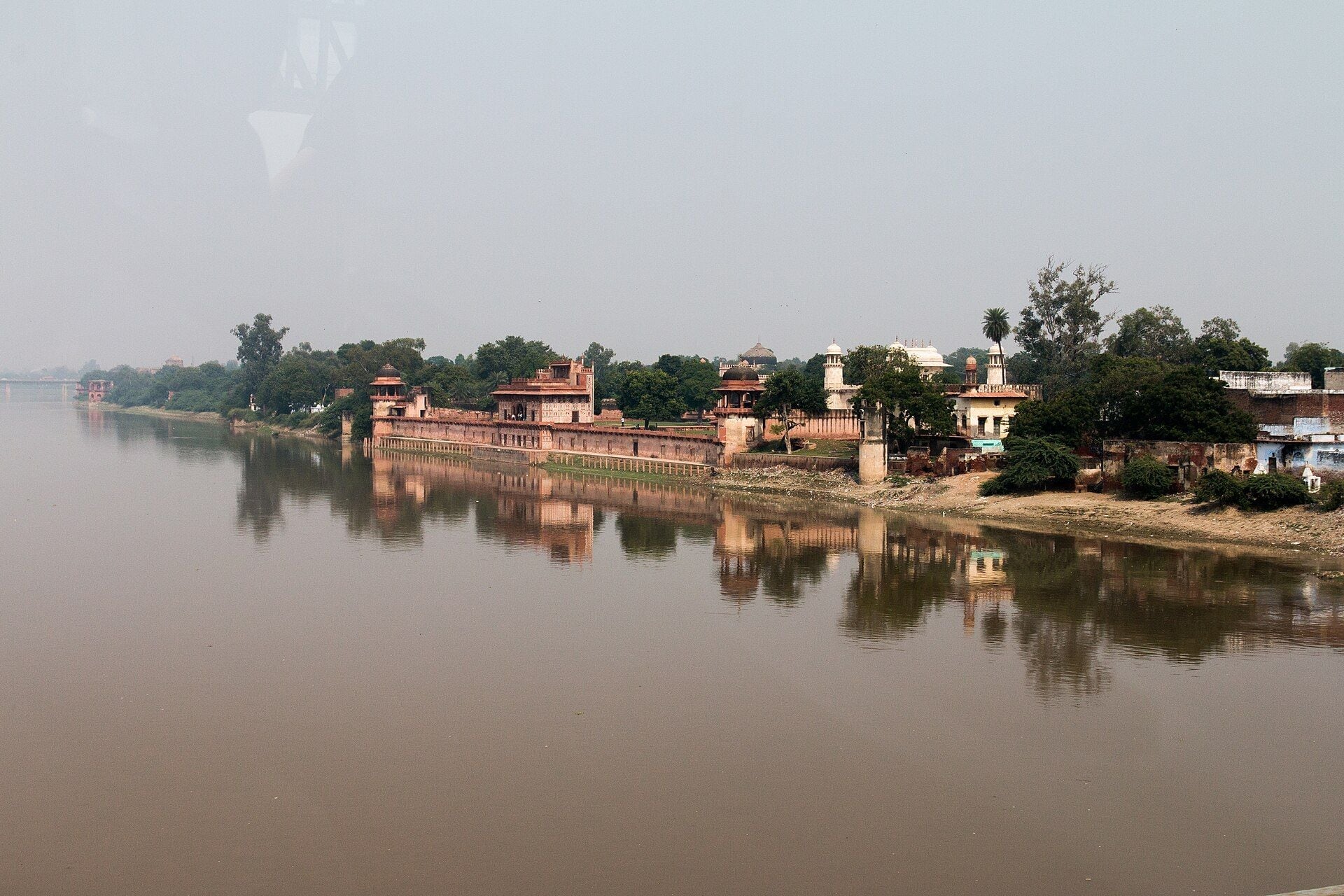
You have turned the corner onto the river side of the garden. Beyond the wall is the Yamuna, and at the garden's corner, just behind you, a tower looks out over the water. Agra was once a city of gardens facing each other across this river. In the sixteenth and seventeenth…
Full narration for this stop unlocks with the tour.
7. River Pavilion
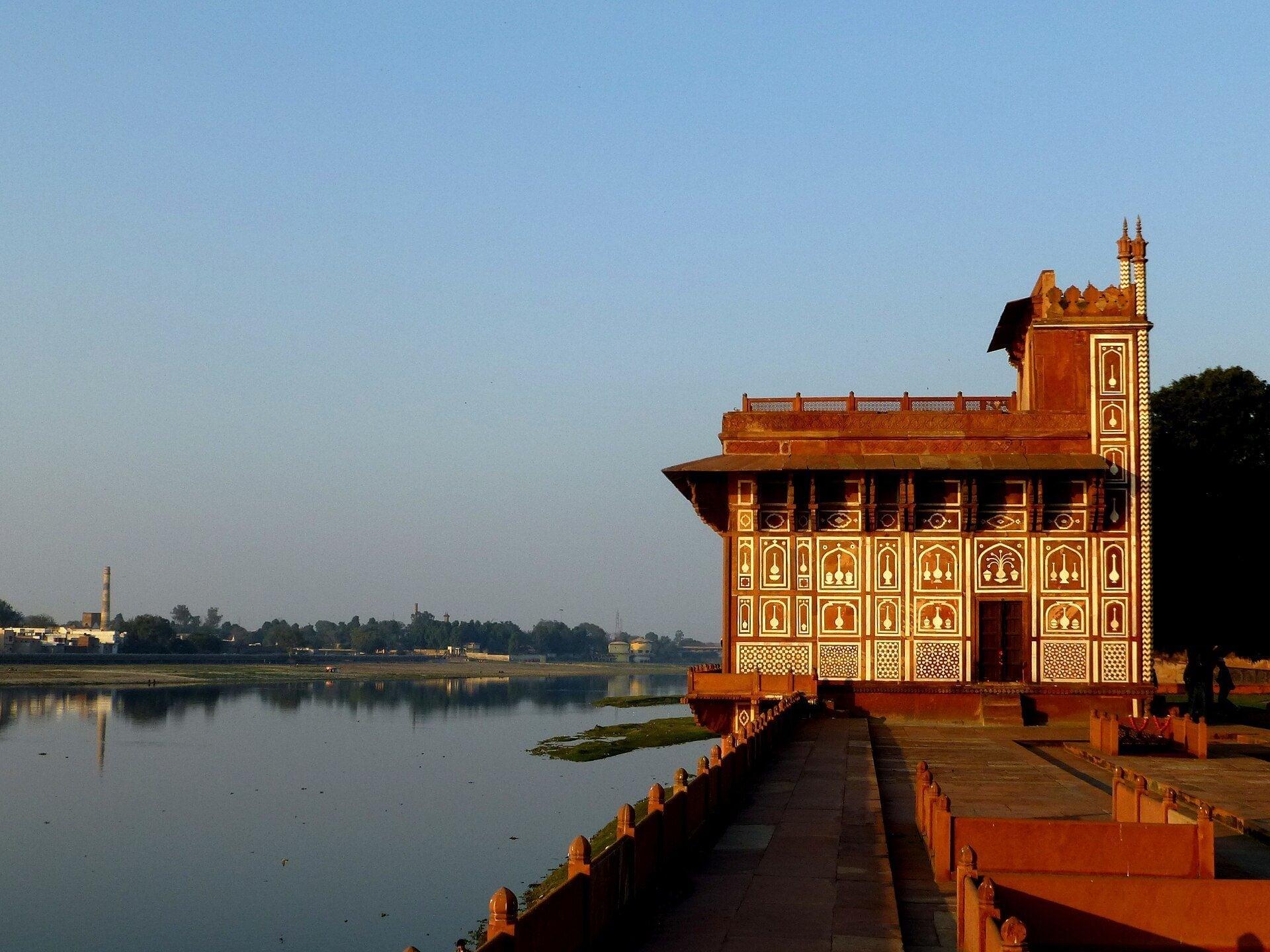
Turn to face the river side. The building here takes the place of a west gate. It was never a gate: it is a baradari, a pavilion, open to the Yamuna, with large rooms inside and views up and down the water. A pleasure pavilion, in a tomb garden. Look for animals in its…
Full narration for this stop unlocks with the tour.
8. River Face
This is the face the river saw, and up close it carries the same colored stone as the east face. It also carries something most visitors miss. Look up to the band just below the brackets, between the ground floor and the upper story. There is a line of calligraphy there, almost…
Full narration for this stop unlocks with the tour.
9. North Gate
Turn round for a last look. From here the tomb stands between the planted quarters, the river pavilion off to one side. This was a family's monument, and the daughter made it. Nur Jahan was by then the emperor's wife and a great patron, rich in her own right. She finished this…
Full narration for this stop unlocks with the tour.
10. Chini ka Rauza
This is Chini ka Rauza. Where its old coat survives, the walls show patches of glazed tile, blue and turquoise among bare brick and plaster. Chini here does not mean China. It means porcelain, or glazed ware, and rauza means tomb. This is the only tomb in Agra dressed in glazed…
Full narration for this stop unlocks with the tour.
11. Riverside Terrace
Out here the tomb's river side is behind you, and the Yamuna is ahead. Turn back for a moment: the river face is where the blue and turquoise tile is said to glow best. If this ground is closed, the lawn path at the garden's south corner makes a fine place to finish. Keep back…
Full narration for this stop unlocks with the tour.
- The entrance gate to Itmad-Ud-Daulah's Tomb. — Jashjashjash, CC BY-SA 4.0 · source
- Detail of gate decoration in the Itmad-Ud-Daulah mausoleum (Baby Taj), Agra, Uttar Pradesh, India — Zorka Sojka, CC BY-SA 4.0 · source
- Façade of the Lotus Basin, southern walk of the mausoleum of Itmad ud Daulah. — Daniel VILLAFRUELA, CC BY-SA 3.0 · source
- This is a photo of ASI monument number — Anupamg, CC BY-SA 4.0 · source
- This is a photo of ASI monument number — Anupamg, CC BY-SA 4.0 · source
- This is a photo of ASI monument number — Nivedha Kamalakannan, CC BY-SA 4.0 · source
- Itmad Ud Daulah Agra India — Hiroki Ogawa, CC BY 3.0 · source
- Etmadola view from Yamuna side. — Himmat Singh 4844, CC BY-SA 4.0 · source
- The mausoleum of Itimâd-ud-Daulâ seen from the Ambedkar bridge over the Yamuna River. — Daniel VILLAFRUELA, CC BY-SA 3.0 · source
- The Chini Ka Rauza in Agra is a 17th-century funerary monument built for Afzal Khan, a scholar and poet in Emperor Shah Jahan’s court. — Rohit Sharma, CC BY-SA 4.0 · source
- inlay work on chini ka rauza agra — Harshit Singhal, CC BY-SA 4.0 · source
- River side chini Ka rauza — Harshit Singhal, CC BY-SA 4.0 · source
- Chini ki Rauza 8.jpg — Rangan Datta Wiki, CC BY-SA 4.0 · source
Images may be cropped or resized. Other photos via Unsplash and Pexels.