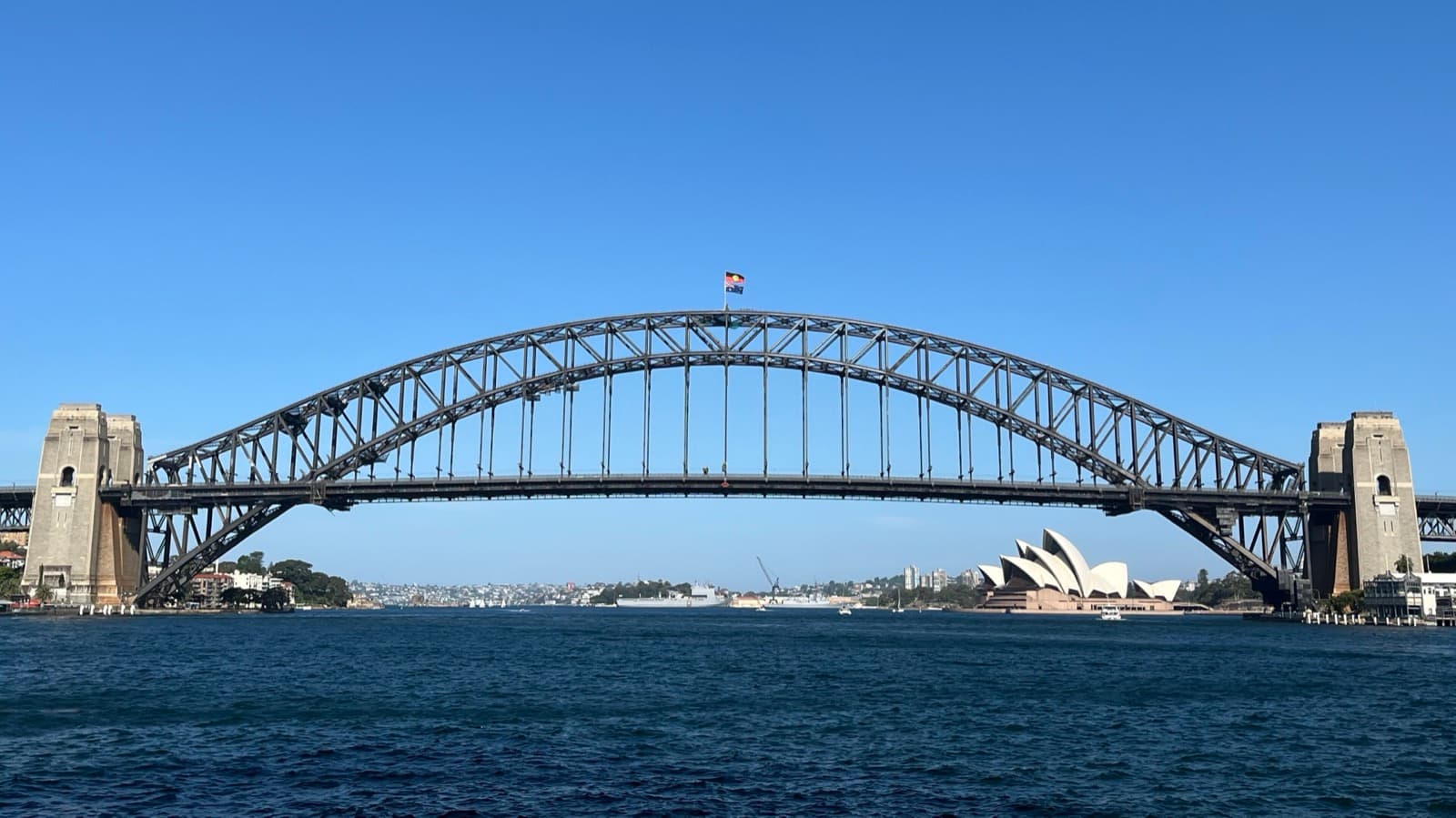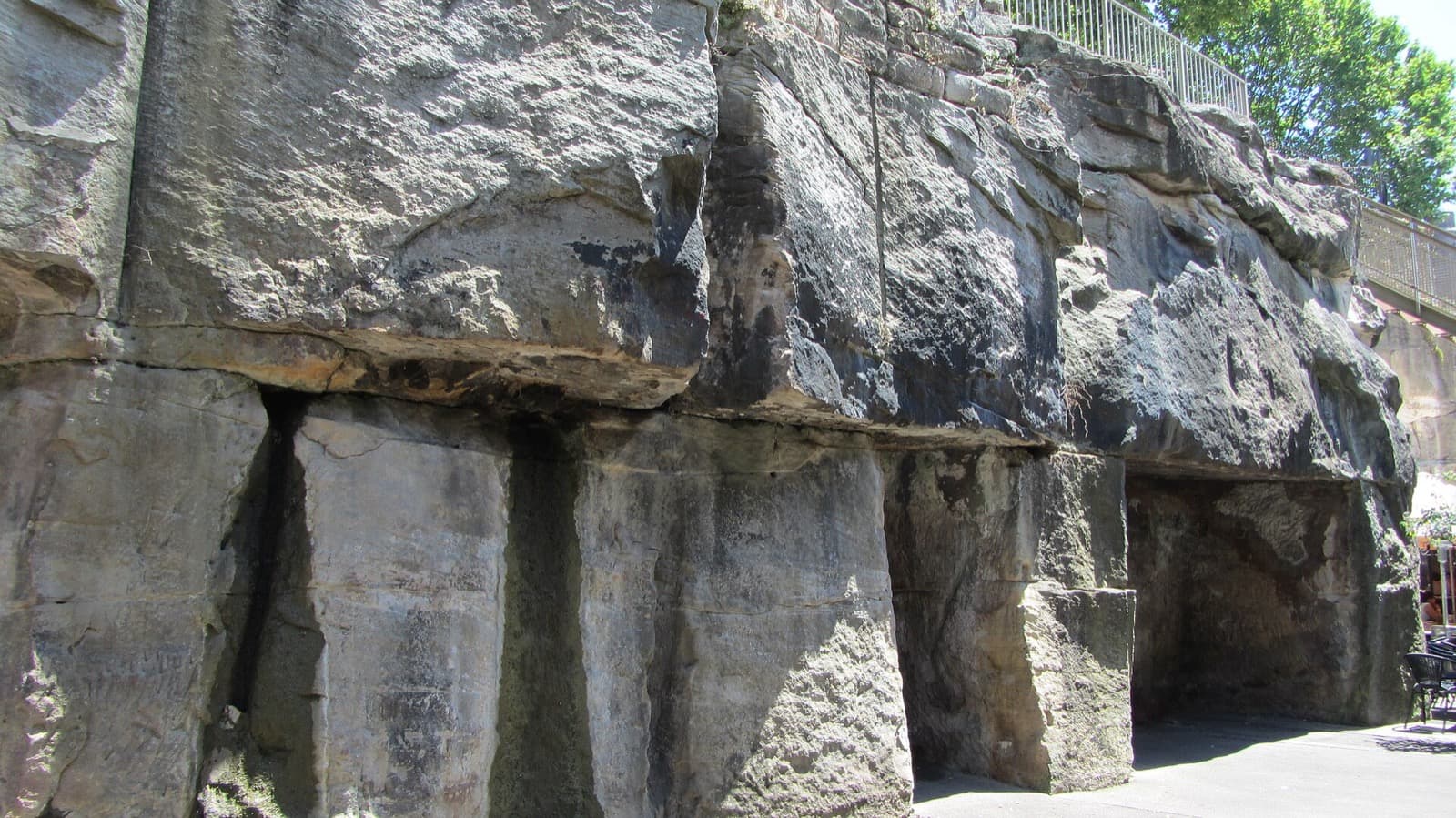
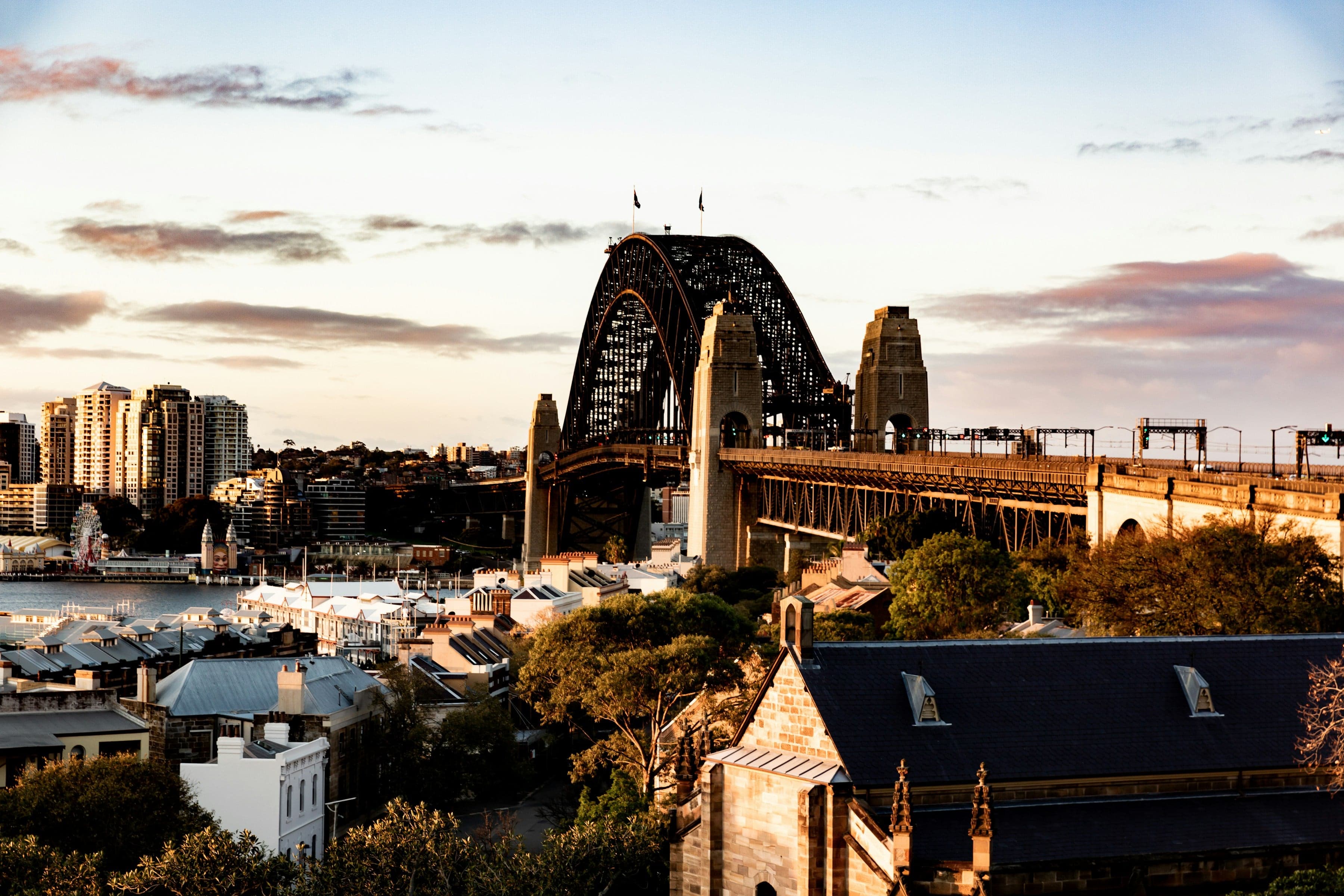
The Rocks to the Opera House: The Town Sydney Kept Trying to Knock Down
120 min · 3.7 km · moderate
Give Sydney three days if you can, get an Opal card or just tap a contactless card on every train, ferry, and bus, and plan your outdoor days around the mild shoulder seasons. Sydney is a walkable harbour city where the marquee sights (the Opera House, the Harbour Bridge, The Rocks, Macquarie Street) sit within a compact core you can cross on foot, so the planning questions that actually matter are how long to stay, how to move between neighbourhoods, when to come, and how to keep a strong currency from quietly draining your budget. This guide answers each of those with current 2026 numbers, then hands you a walking route through the historic core.
How many days do you need in Sydney?
Two full days covers the essentials; three lets you slow down and add a beach or a day trip. The central sights cluster tightly around the harbour, which is why a self-guided walking approach works so well here.
A practical shape for three days:
- Day one, the origins. Walk The Rocks, the sandstone quarter where the First Fleet came ashore at Sydney Cove in 1788. Our The Rocks to the Opera House tour runs just under 4 kilometres over ten stops, once round Sydney Cove from Cadmans Cottage, under the bridge at Dawes Point, up Observatory Hill and through the Argyle Cut, to the Opera House. It takes around two hours at an easy pace, with one short climb and some steps.
- Day two, the postcard. Pick up the foreshore where day one ended, at the Opera House, and follow it through the Royal Botanic Garden and out to Mrs Macquarie's Chair for the classic bridge-and-shells view. No audio tour covers this stretch, but it is flat and easy underfoot, and a ferry from Circular Quay makes a cheap harbour cruise to round off the day.
- Day three, the civic city. Walk Macquarie Street, the ceremonial street Governor Lachlan Macquarie laid out to turn a penal camp into a city, past Hyde Park Barracks, Parliament House, and the State Library. It is a short, flat walk of about 2.4 kilometres, easy for anyone.
If you only have two days, combine day one and day three, since The Rocks and Macquarie Street are a short walk apart across the central business district.
How do you get around Sydney?
Hear a stop from this walk
Playfair Street: Where The Rocks Fought Back
Tap on and tap off with an Opal card, or with any contactless credit card, debit card, or phone wallet, which now works identically to an Opal card at the same fares and caps. The single card covers trains, the metro, buses, light rail, and ferries across greater Sydney.
The fare caps are the thing to understand, because they protect you from overpaying:
- The adult daily cap is about 19.30 Australian dollars Monday through Thursday and about 9.65 dollars Friday through Sunday.
- There is a weekly cap of about 50 dollars.
- Caps reset at 4am. Once you hit the daily cap, further travel that day is effectively free.
For the historic core, you rarely need transport at all. Circular Quay, The Rocks, Macquarie Street, and Hyde Park are all within a 15 to 20 minute walk of one another. Where the network earns its keep is the ferry: a ride from Circular Quay doubles as a cheap harbour cruise and is charged as an ordinary Opal fare, no premium.
From the airport, the T8 Airport Link train reaches Central Station in about 13 minutes, Town Hall in about 16, and Wynyard in about 19. Note the station access fee: the airport stations add a gate charge on top of the normal fare, so the total to the city centre runs around 22 Australian dollars. Trains run roughly every 6 to 10 minutes from early morning to after midnight. Budget travellers sometimes walk out to a public bus stop and take a bus to Mascot Station to skip the gate fee, which is slower but much cheaper.
When is the best time to visit Sydney?
Come in spring (September to November) or autumn (March to May) for the mildest weather and the most comfortable walking. October is the single most-recommended month.
By season:
- Autumn (March to May) is the mildest stretch, with average temperatures roughly 14.6 to 22.2 degrees Celsius and lower humidity. This is the most comfortable time to be on foot all day.
- Spring (September to November) brings warm, mild days, low humidity, and good sightseeing weather.
- Summer (December to February) is hot and can be humid, with average humidity around 65 percent and the hottest afternoons in late January and February. It is beach season and the water warms up, but an early start is much kinder for a walking tour. Our Rocks walk's own guidance is to go in the morning or the late afternoon.
- Winter (June to August) is cool but rarely cold, roughly 8.8 to 17 degrees Celsius, with fewer crowds and lower prices. Sydney's winter is walkable; just bring a light layer.
Whatever the season, morning light on the sandstone is the quiet, uncrowded window before coach tours arrive. The historic time ball on Observatory Hill traditionally dropped at one o'clock on weekdays, but the Powerhouse, which runs the observatory, does not currently publish a drop schedule, so check before you plan around it.
Is Sydney safe for travelers?
Yes. Sydney is generally very safe, with a lower overall crime rate than comparable global cities like New York, London, or Los Angeles, and violent street crime is uncommon in well-populated areas. It is a comfortable city for solo travellers.
The realistic concern is petty theft, not danger. Pickpocketing and bag-snatching cluster where crowds and cameras-out tourists do: Circular Quay, the Opera House forecourt, Central Station, and busy transport hubs. The countermeasures are the ordinary ones. Keep your phone and wallet zipped away in crowds, do not leave a bag hanging on a chair back, and stay aware at packed viewpoints. Late at night, parts of Kings Cross and a few pockets of the central business district see more drunken behaviour, so use the same common sense you would in any big city after dark. None of this should shape your daytime walking plans, which run through some of the safest, most public ground in the city.
What will Sydney cost?
Sydney is not cheap, but it is easy to control. As a rough per-person daily guide: backpacker and hostel travel runs about 120 to 180 Australian dollars, mid-range about 280 to 450, and comfortable travel 500 to 900. A budget meal from a food court or bakery is around 10 to 15 dollars, while a casual sit-down meal typically runs 20 to 40 dollars, and a mid-range dinner higher again.
Two things quietly save money here. First, tipping is not customary. It is welcomed for standout service but never expected, and cafes, bars, and casual restaurants assume no tip, so the menu price is close to your final price. Second, the best of Sydney is free or cheap: the harbour foreshore, The Rocks lanes, Observatory Hill, the Royal Botanic Garden, Hyde Park, and the Opera House forecourt cost nothing to walk through. Many of the sights along Macquarie Street are free to enter, including Parliament House public galleries, the Mint courtyard, and the State Library. A few historic house museums, such as Susannah Place in The Rocks, charge a modest fee for their guided tours. A self-guided audio walk lets you read all of that ground at your own pace without a booked time slot or a group.
A walking route through the historic core
Sydney's history reads cleanly on foot in three connected walks. Start in The Rocks, where the First Fleet landed and the first town grew in sandstone lanes like Nurses Walk and the lane called the Suez Canal, passing under the bridge at Dawes Point and climbing Observatory Hill, then follow the shore round Circular Quay to the Opera House. Carry on along the harbour foreshore through the Botanic Garden to Mrs Macquarie's Chair. Then walk Macquarie Street, the convict-built civic spine, past the Barracks, Parliament, and the old Rum Hospital. The Rocks walk and Macquarie Street are self-guided audio tours you control with GPS, pausing wherever you like; the garden stretch is yours to wander.
Browse the full set on the Sydney walking tours hub, or start from the Sydney city page.
Sources
Frequently asked questions
- How many days do you need in Sydney?
- Two full days covers the central sights and three is ideal. The marquee attractions cluster tightly around the harbour, so two days handles The Rocks, the Opera House foreshore, and Macquarie Street on foot. A third day lets you slow down or add a beach or day trip.
- Do you need an Opal card in Sydney, or can you use a contactless card?
- You can use either. Any contactless credit card, debit card, or phone wallet now works identically to an Opal card at the same fares and caps across trains, metro, buses, light rail, and ferries. The adult daily cap is about 19.30 Australian dollars Monday to Thursday and about 9.65 dollars Friday to Sunday, with a weekly cap around 50 dollars.
- What is the best time of year to visit Sydney?
- Spring (September to November) and autumn (March to May) offer the mildest weather and most comfortable walking, with October the most-recommended single month. Summer from December to February is hot and can be humid, so start walks early. Winter from June to August is cool but rarely cold, with fewer crowds and lower prices.
- Is Sydney safe for tourists and solo travelers?
- Yes. Sydney is generally very safe, with a lower overall crime rate than comparable cities like New York or London, and violent street crime is uncommon in well-populated areas. The main risk is petty theft such as pickpocketing in crowded spots like Circular Quay, the Opera House, and Central Station, which basic precautions prevent.
- How do you get from Sydney Airport to the city?
- The T8 Airport Link train reaches Central Station in about 13 minutes and runs roughly every 6 to 10 minutes from early morning until after midnight. The airport stations add a gate access fee on top of the fare, so the total to the city centre is around 22 Australian dollars. A cheaper option is walking out to a public bus stop and connecting to a train at Mascot Station.
- Do you tip in Sydney?
- Tipping is not customary in Australia. It is welcomed for outstanding service but never expected, and cafes, bars, and casual restaurants assume no tip, so the menu price is close to your final cost. This makes budgeting more predictable than in tipping cultures.
Ready to experience it?
The Rocks to the Opera House: The Town Sydney Kept Trying to Knock Down
120 min · 3.7 km · moderate
More from Sydney
Explore more at your own pace.
One Day in Sydney: A Walkable Morning-to-Evening Itinerary
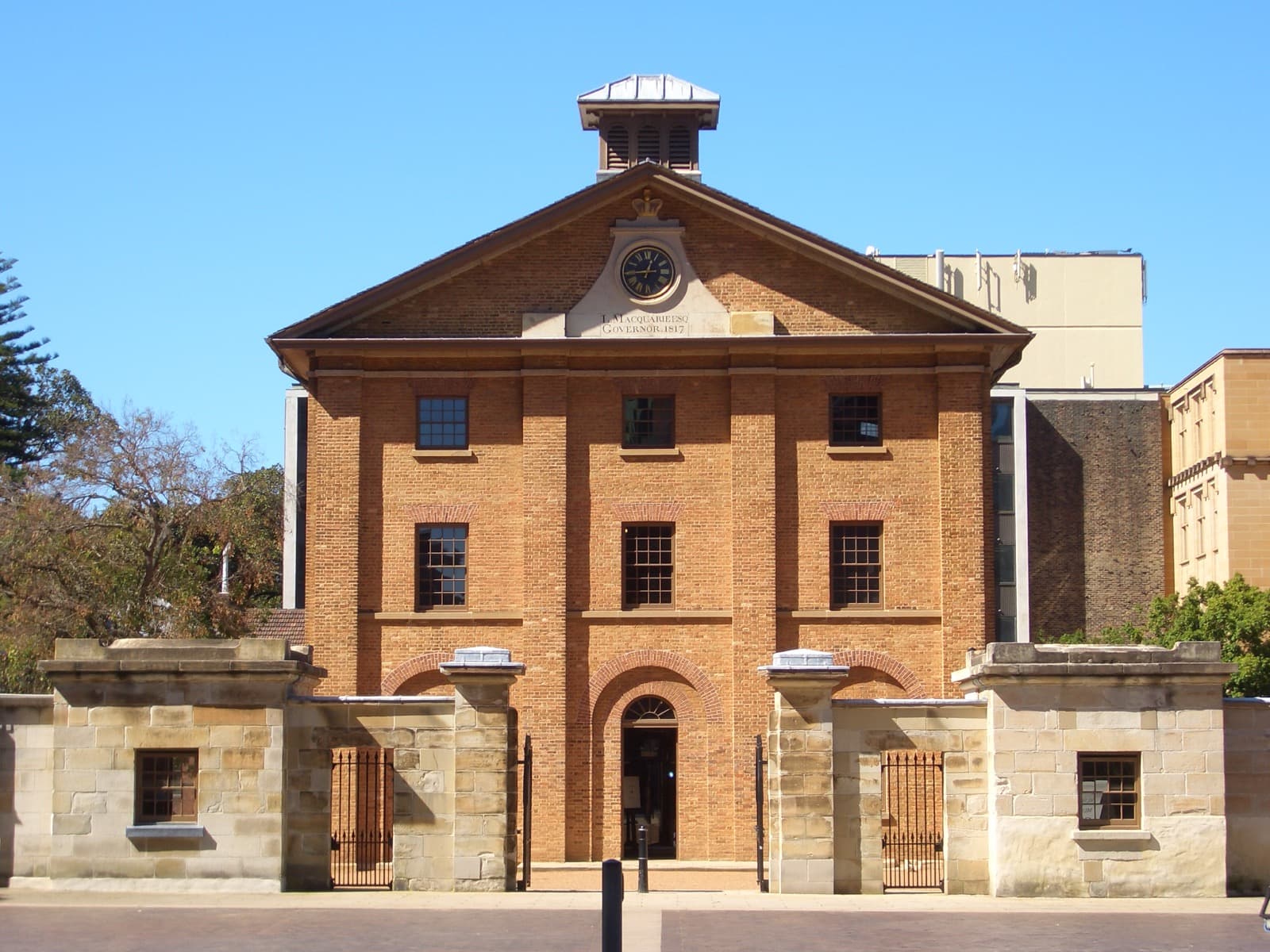
Hyde Park Barracks: The Building That Explains Convict Sydney
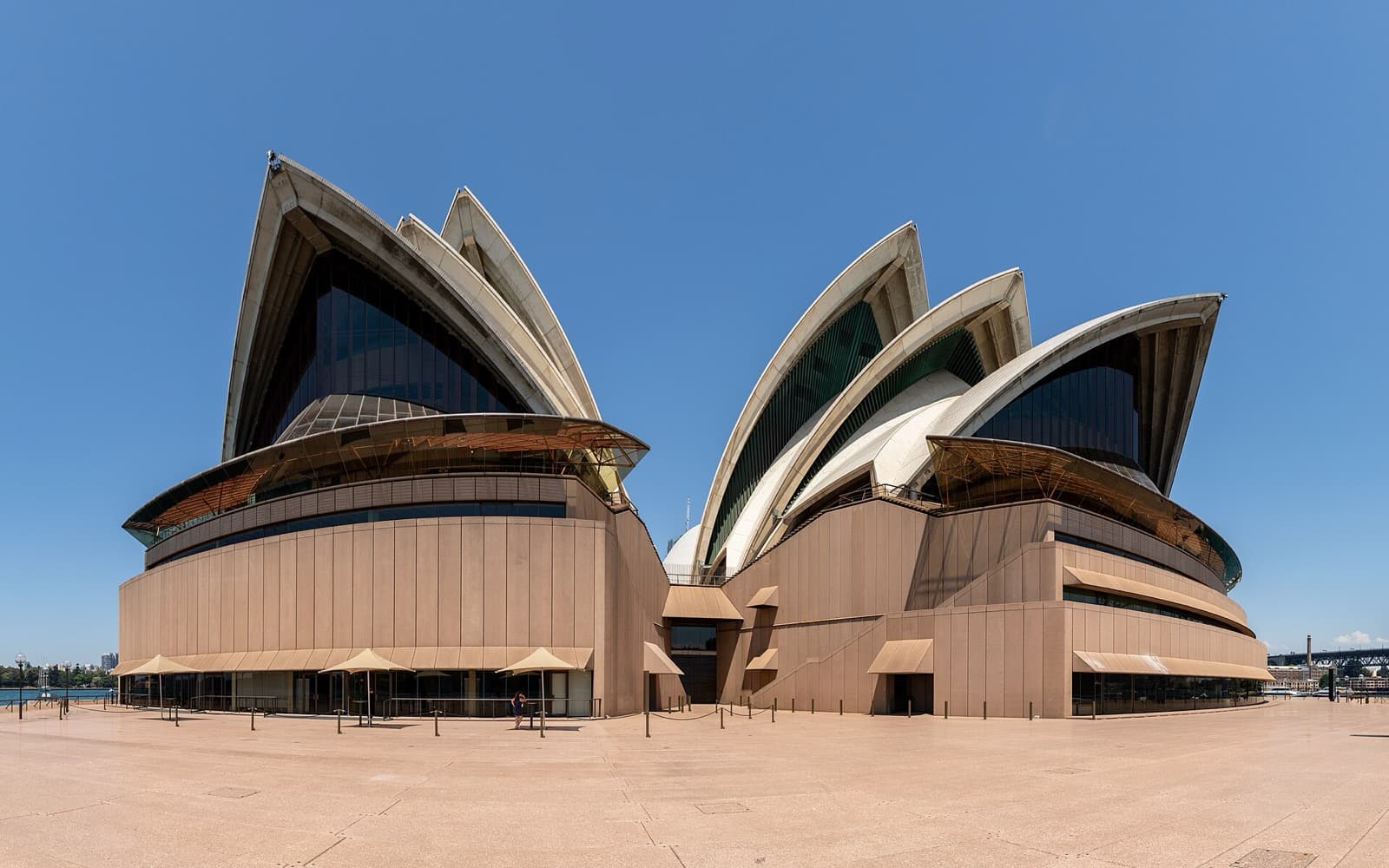
The Sydney Opera House and the Struggle Behind the Postcard
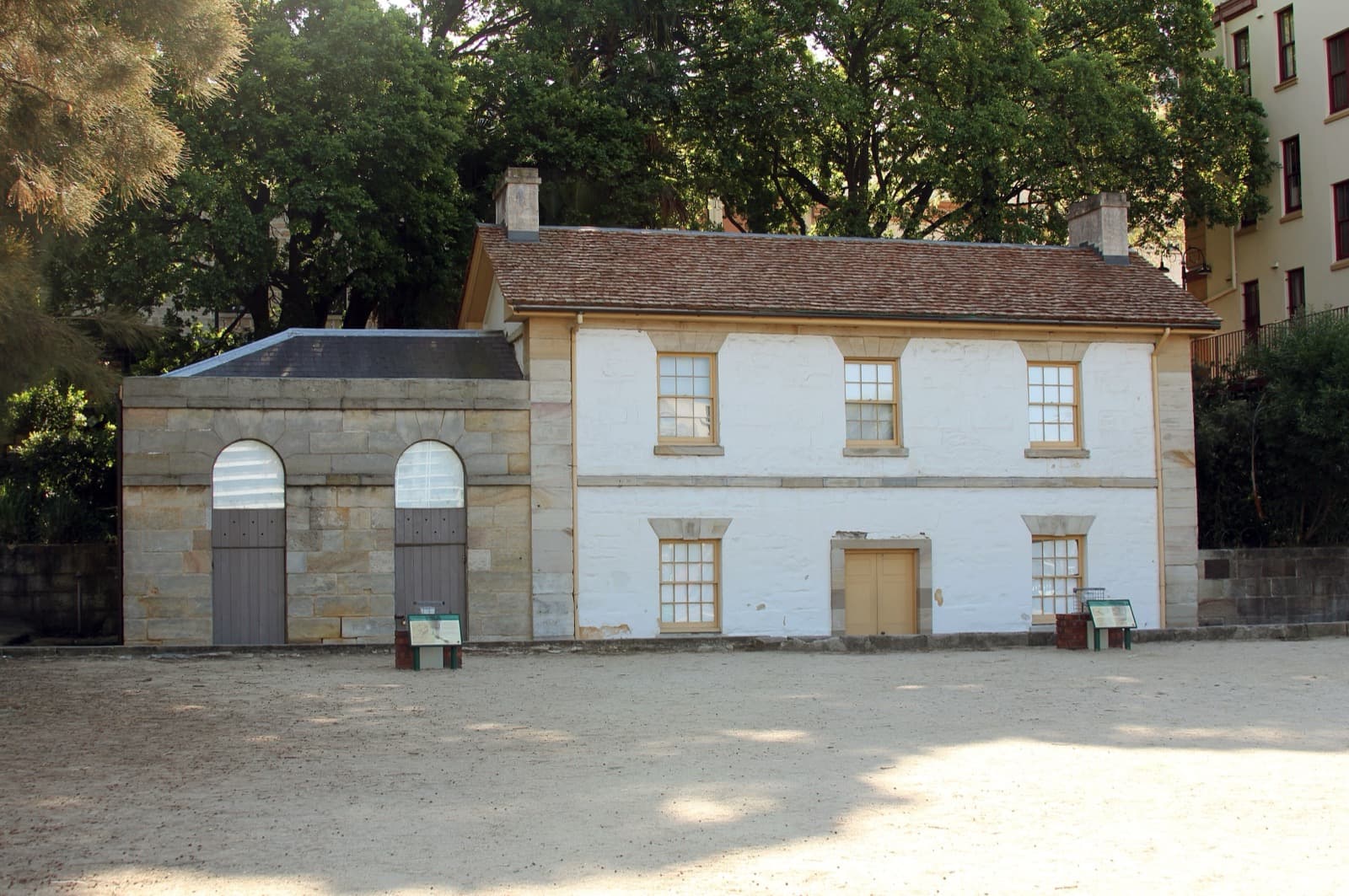
Cadmans Cottage: Sydney's Little House by the Water
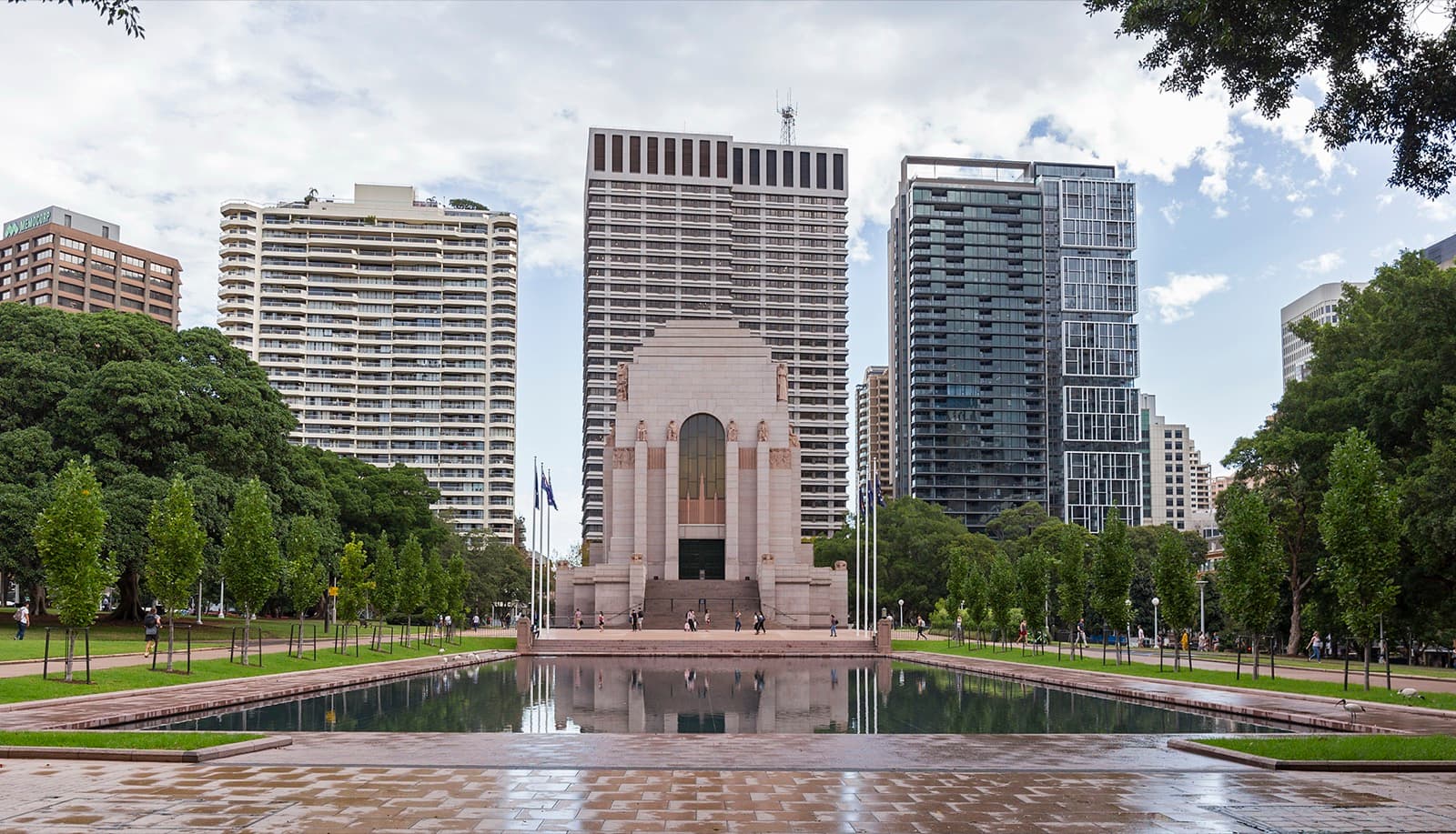
Hyde Park and the ANZAC Memorial: Australia's Oldest Park and Its War Memory