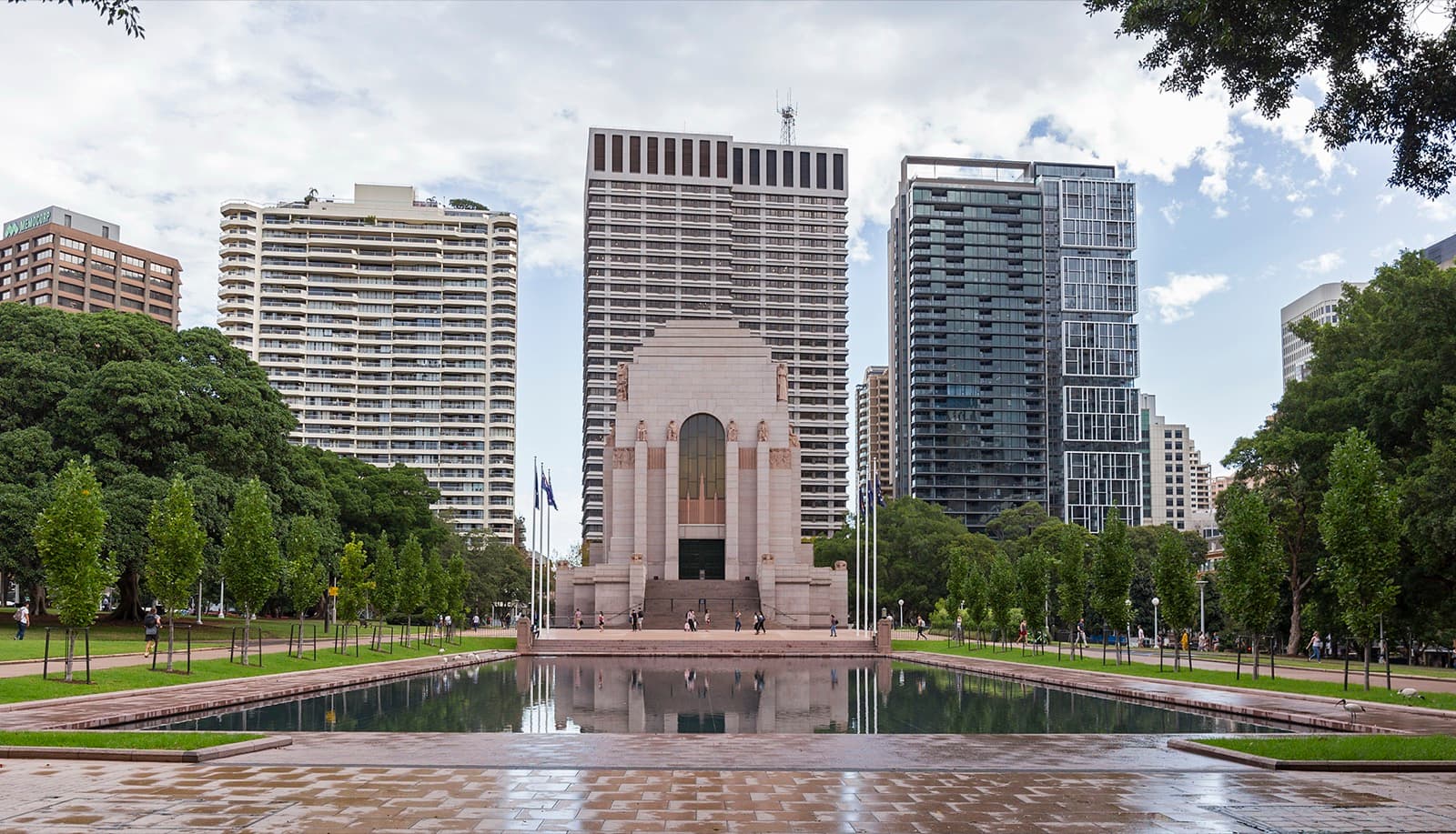
Hyde Park is the oldest public parkland in Australia, reserved by Governor Lachlan Macquarie in 1810, and at its southern end the Art Deco ANZAC Memorial holds a dome of roughly 120,000 golden stars, one for every man and woman of New South Wales who served in the First World War. Standing there, you are holding two very different acts of memory at once: a governor's decision to give a penal camp the green civic space of a real city, and a state's decision, more than a century later, to count its war dead individually in gold. The park and the monument frame the head of Macquarie Street, the ceremonial spine this ground introduces.
The oldest park, and what it was before it was a park
Macquarie set this ground aside on the eleventh of February, 1810. Sixteen hectares, named after the Hyde Park of London, it became the first public parkland in the country. But the lawns and fig trees you see now settled over rougher use. Before Macquarie's proclamation the land was open common, grazed by settlers' animals and stripped for firewood, ground that belonged to everyone rather than to the governor. Within days of the dedication it became a racecourse. Officers of the 73rd Regiment, Macquarie's own regiment, laid out a track and ran Sydney's first official horse races here in October 1810, partly to improve the breed of horse available to the military. Through the 1820s the same open field hosted cricket. So the oldest park in Australia began as a place to race, to graze, and to play, and only slowly became the composed rectangle of paths and canopy it is today.
That layered history is easy to miss because the park now reads as calm and finished. Hold the older uses in mind as you walk it. A racecourse became a garden, and the garden became the dignified front lawn of a colonial capital, exactly the transformation Macquarie was after: turning a rough settlement into something that looked and functioned like a city.
The one thing to understand: a dome that counts individuals
Hear a stop from this walk
Hyde Park and the ANZAC Memorial: The Oldest Park, The State's War Memory
Walk to the southern end, and the register changes. The ANZAC Memorial is the state's memorial to its First World War dead, and the single thing worth understanding as you stand in front of it is how it chooses to remember. It does not offer one heroic figure to stand for the many. Inside the dome hang about 120,000 golden Stars of Memory, and each star represents one individual: one man or one woman of New South Wales who enlisted for that war. The number is not a rounded flourish. It is a tally.
The building came out of a design competition that drew 117 entries. A young Sydney architect, Charles Bruce Dellit, won it, choosing a contemporary Art Deco style rather than the classical temple most war memorials of the era reached for. His ziggurat apex, amber glass, and geometric ornament place the monument squarely in its interwar moment. Dellit brought in the sculptor George Rayner Hoff, known here as Rayner Hoff, to supply the human weight the modern shell needed. Hoff's central bronze, titled Sacrifice, sits in the Hall of Silence below the dome, an Anzac figure borne up on a shield by three women. The memorial was dedicated on the twenty-fourth of November, 1934.
Outside, a long Pool of Reflection stretches toward the monument, a device that forces you to approach slowly and see the building doubled in still water before you reach it. It is a piece of choreography, not decoration. The memorial wants you to arrive at the count of stars having already slowed down.
The ground beneath both
There is an older layer still, and the tour is careful not to skip it. Before the park, before the races, before the city that Macquarie's street would organize, this was the Country of the Gadigal, a clan of the coastal Eora and the traditional owners of central Sydney. Their people lived on this harbour for tens of thousands of years before the First Fleet arrived in 1788, and Gadigal culture continues here today. The whole of Macquarie Street, and the park that heads it, was laid over their ground. That is not a footnote to the walk. It is the deepest of its several strata, and standing in Hyde Park is the first place the tour asks you to feel all of them stacked at once: Aboriginal Country, colonial common, governor's park, and national grief.
If you have time to wander to the northern end of the park, the Archibald Fountain of 1932, by the French sculptor Francois-Leon Sicard, closes the green rectangle with a very different mood, classical, exuberant, and dry-witted where the ANZAC Memorial is grave. The two ends of one park hold two centuries of what Sydney thought a public space was for.
Standing here, then walking
Hyde Park and the ANZAC Memorial make an unusually honest opening to a walk about a colonial city, because they refuse to be only pretty. The park's beginnings were practical and rough; the memorial's beauty is in service of a hard subject; the ground under both belongs to people who were here for millennia before either. That triple honesty is exactly the argument the rest of Macquarie Street makes in sandstone, where a pardoned forger designed the colony's finest buildings and a rum-financed hospital wing grew into a parliament.
This landmark is the first stop on Roamer's self-guided audio tour, Macquarie Street: The Convict Architect's Sandstone Mile, a level walk of roughly one kilometre that reads the street as a single argument in stone. From the park it runs downhill past Hyde Park Barracks, Saint James' Church, the old Rum Hospital, Parliament House, The Mint, and the State Library, all at your own pace with no group and no schedule. For more routes across the city, see our Sydney walking tours guide, or browse everything on offer in Sydney. Begin under the trees, unhurried, and let the count of golden stars set the tone for the mile ahead.
Sources
- ANZAC Memorial, Hyde Park, Sydney (official site): history of the memorial, the 1934 dedication, the Stars of Memory, and the Hall of Silence.
- The History of the Anzac Memorial and The Architect: Charles Bruce Dellit (anzacmemorial.nsw.gov.au): the 117-entry design competition and Dellit's winning Art Deco design.
- Hyde Park and Hyde Park racecourse, The Dictionary of Sydney: the park's 1810 proclamation, its earlier use as common, and the October 1810 races by the 73rd Regiment.
- Hyde Park, Sydney (Wikipedia): the park's status as Australia's oldest public parkland and the Archibald Fountain of 1932.
- Roamer tour transcript, "Macquarie Street: The Convict Architect's Sandstone Mile" (fact-audited primary source for the anchor stop): Gadigal and Eora context, Rayner Hoff sculpture, Pool of Reflection, and the star count.
Ready to experience it?
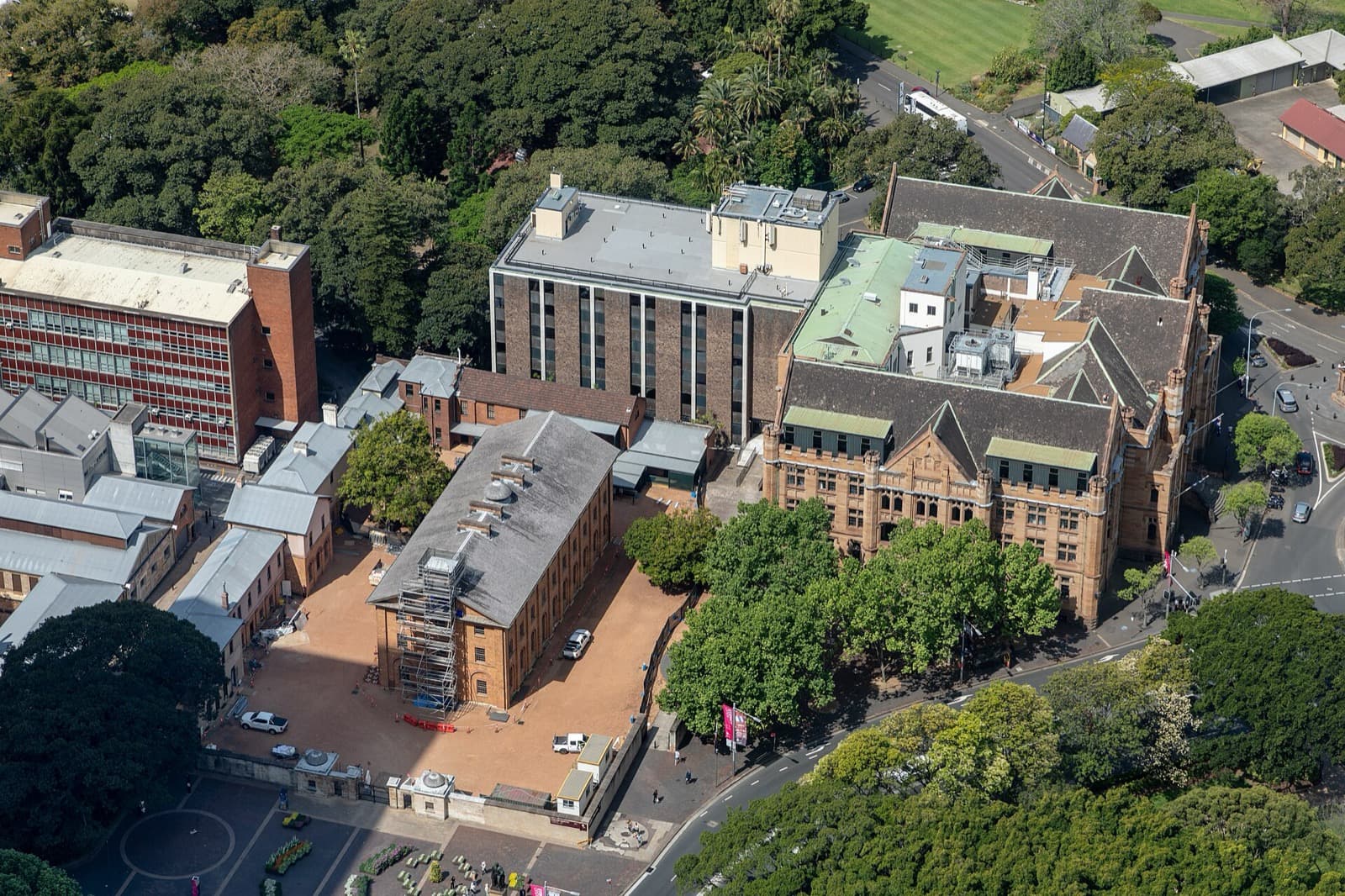
Macquarie Street: The Convict Architect's Sandstone Mile
75 min · 2.4 km · easy
More from Sydney
Explore more at your own pace.
One Day in Sydney: A Walkable Morning-to-Evening Itinerary
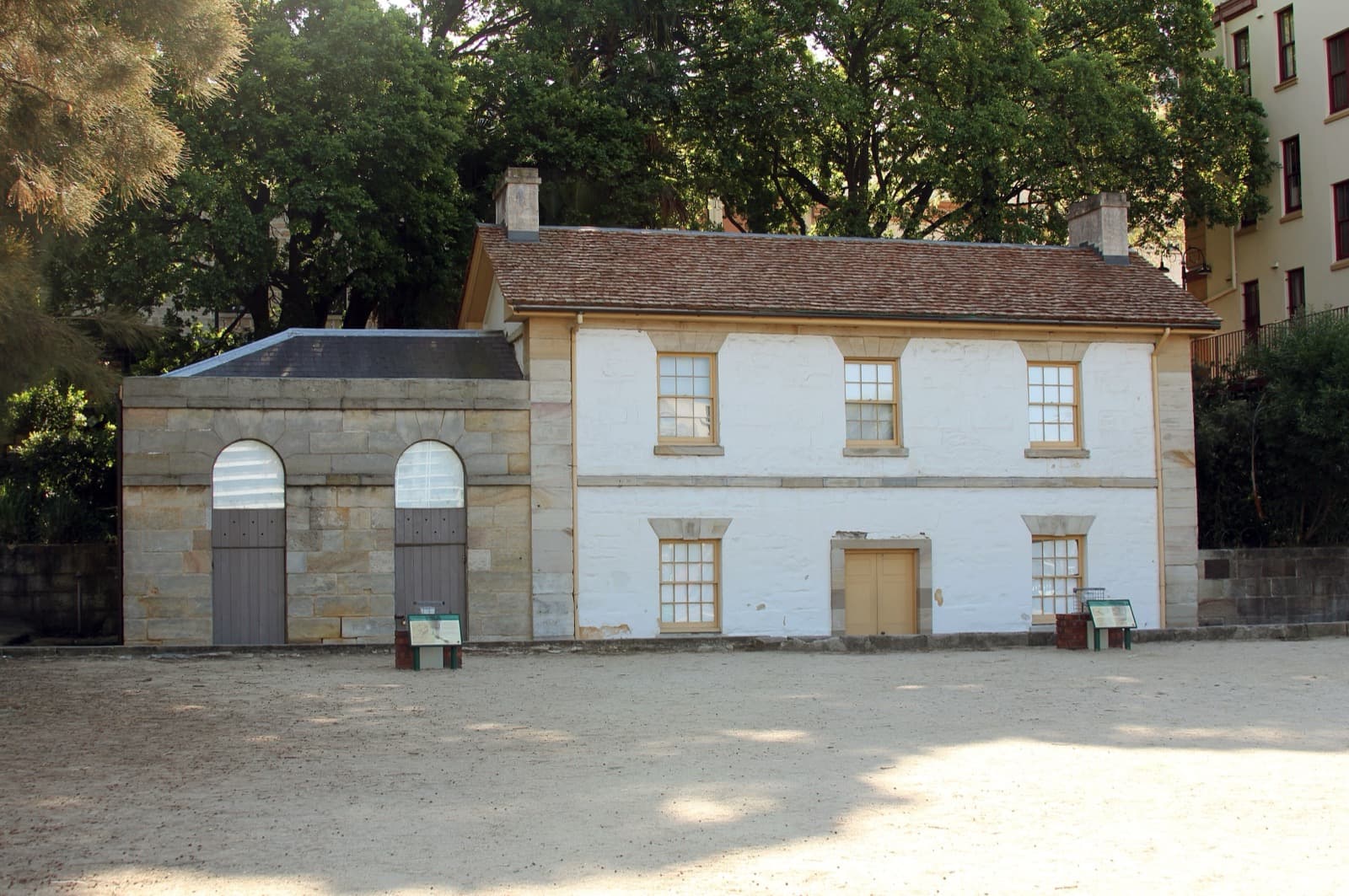
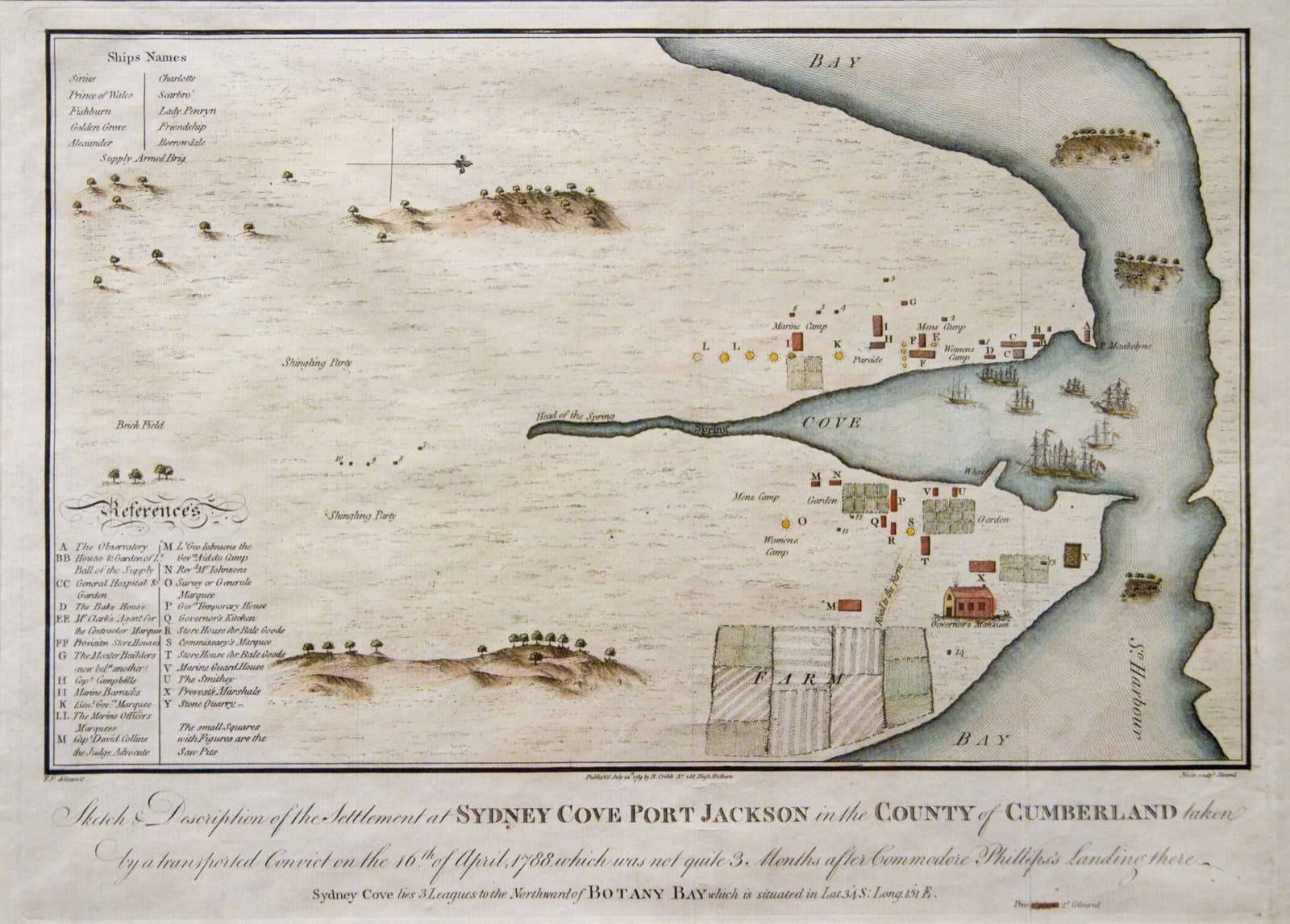
Sydney in Sandstone: Reading a Convict City From Cove to Harbour
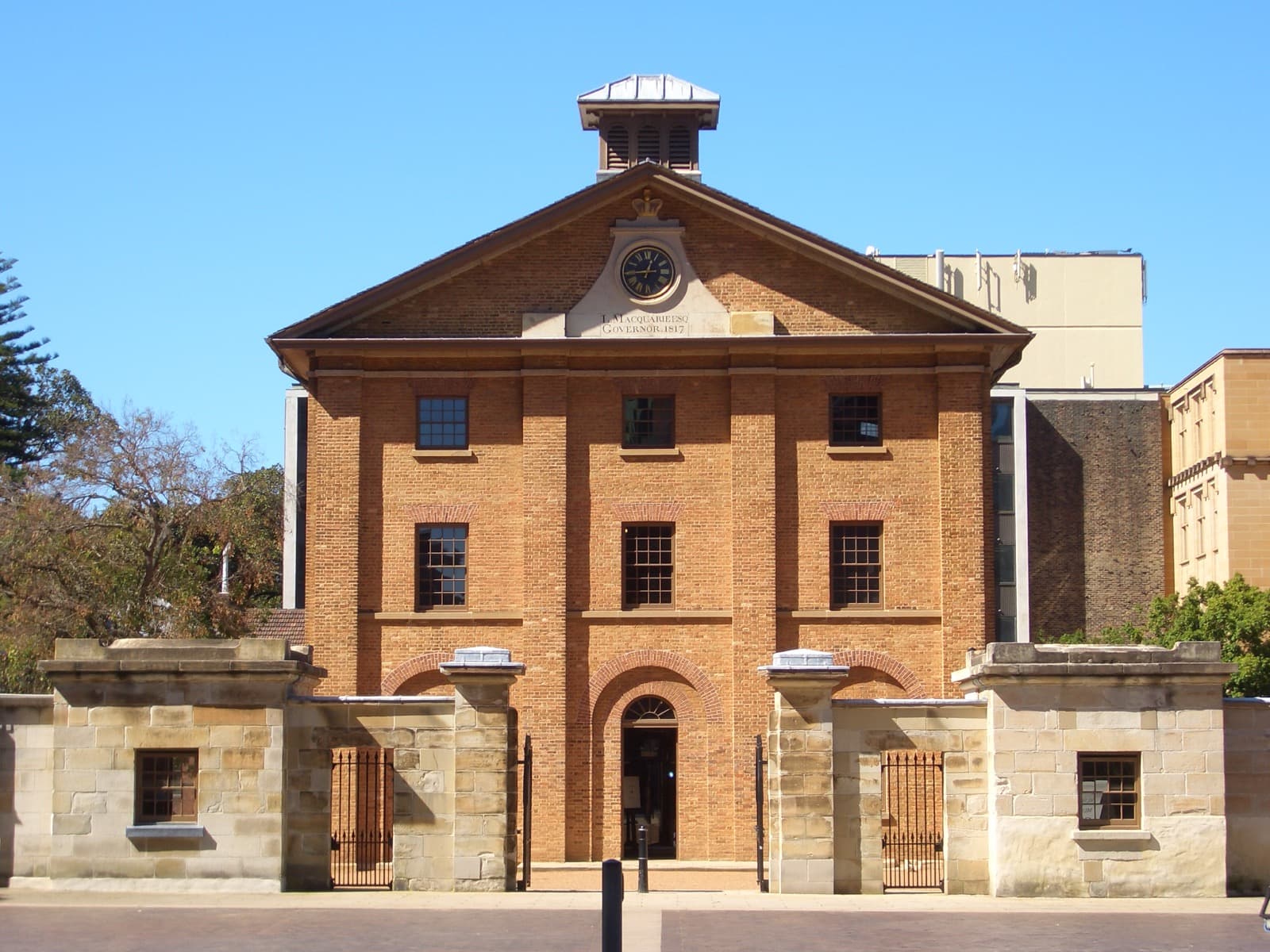
Hyde Park Barracks: The Building That Explains Convict Sydney
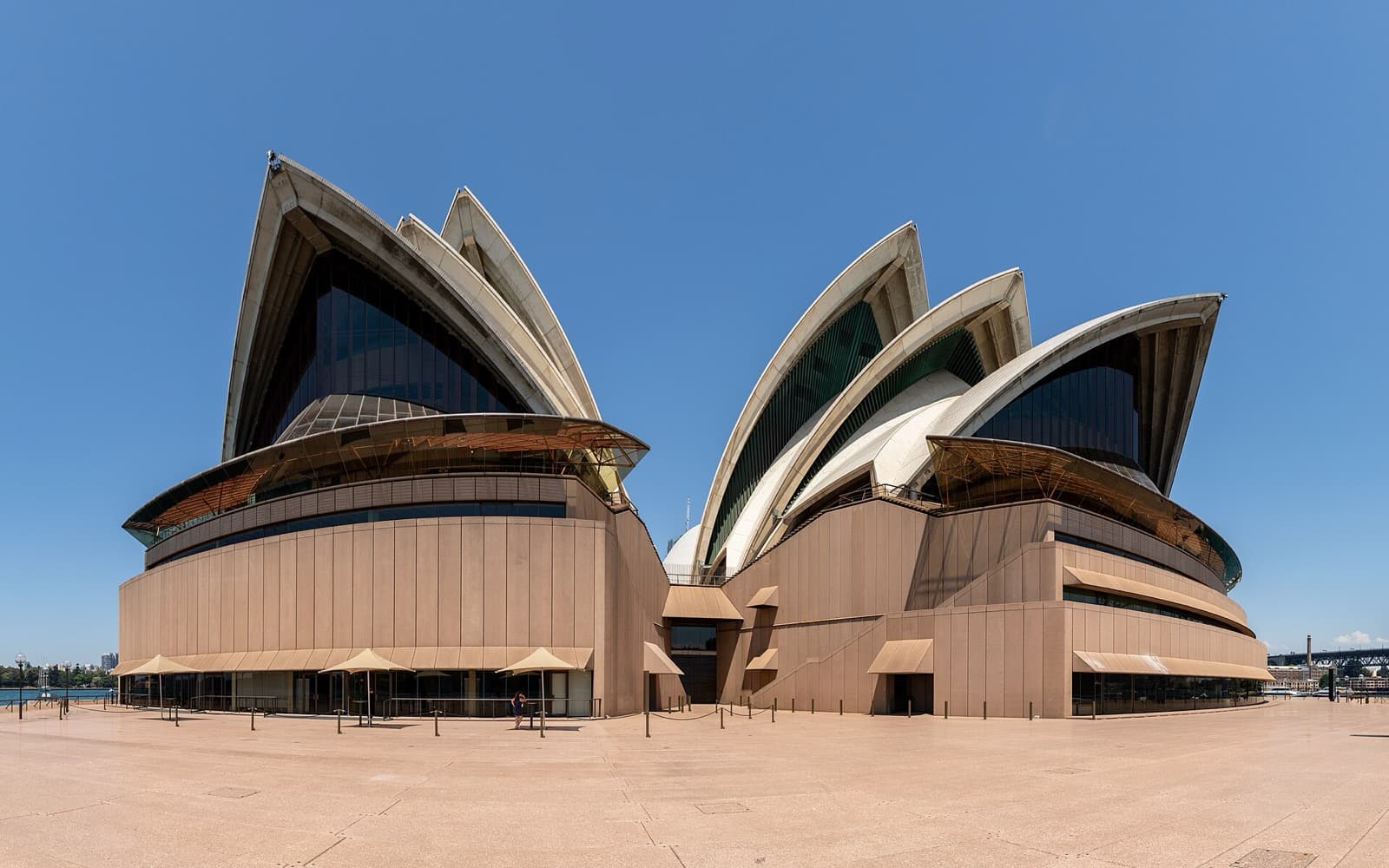
The Sydney Opera House and the Struggle Behind the Postcard
Cadmans Cottage: Sydney's Little House by the Water