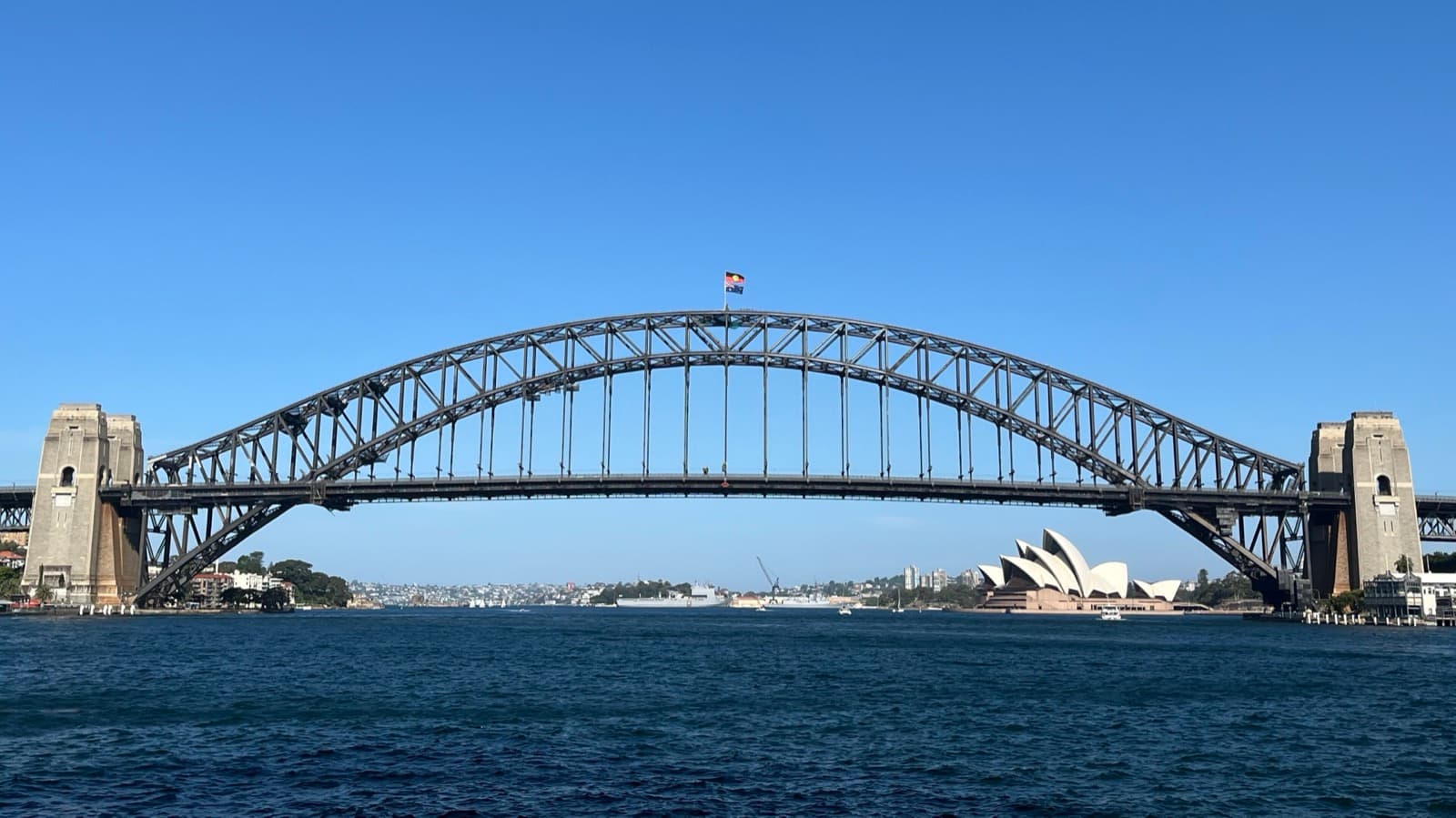
Stand at Circular Quay and look to your left, across the water, and you see a single steel arch thrown from one shore to the other. Sydney calls it the Coathanger, for its shape. The Sydney Harbour Bridge is a single-span steel arch, raised through the depths of the Great Depression, and the strangest way to understand what it meant to the city that built it is the political theatre of its opening in 1932, when a man on horseback slashed the ribbon with a sword before the Premier could cut it. The bridge is not only an engineering object. It is a monument to hard work in a hard decade, and the sword episode is the moment where the engineering and the politics collided in full public view.
What you are actually looking at
The numbers are worth holding in your head as you look. The whole structure runs about 1,149 metres. The deck sits roughly 49 metres above the water at mid-span, high enough for ships to pass beneath it and keep the working harbour open. The top of the arch rises about 134 metres above the sea. It is one continuous arch, not a chain of towers and cables, which is why the shape reads so cleanly against the sky and why the nickname stuck.
It was designed under John Bradfield of the New South Wales public works, and built by the British firm Dorman Long. That division matters: the vision and the drive were local, the fabrication muscle came from overseas, and the two together produced a structure that a young country could point to as proof of what it could raise. Museums of History NSW dates the start of construction to the turning of the first sod on 28 July 1923, and the contract went to Dorman Long in March 1924. The two halves of the arch were built outward from opposite shores, each cantilevered into empty air over the water, held back by cables until they could reach each other. They finally met in 1930, about a year and a half before the bridge carried its first traffic.
A bridge built while the country was breaking
Hear a stop from this walk
Playfair Street: Where The Rocks Fought Back
Timing is everything with this structure. Work started in the 1920s, but the years that followed were the worst economic years the country had known. The bridge went up while banks failed, while wages were cut, and while unemployment climbed into figures that reshaped ordinary life. It opened on 19 March 1932, in the depths of the Depression.
That context changes how you read the arch. A vast public work, expensive and slow, kept going while the wider economy fell apart. For the men who worked on it, the bridge was wages in a time when wages were vanishing. For the government that pushed it forward, it was a statement that the state could still build something permanent when everything else felt provisional. The structure you photograph from the quay carried, from the day it opened, the weight of that argument about work, hardship, and public purpose. It is not a neutral piece of infrastructure. It was a wager placed at the worst possible moment, and it paid off in steel that is still standing.
The sword and the ribbon
Then there is the opening itself, one of the odder moments in the city's history. The plan was ordinary enough: the New South Wales Premier, Jack Lang, would cut a ribbon and declare the bridge open. Lang was a divisive figure, a Labor premier locked in bitter fights with his opponents over how to handle the Depression, and to his enemies his politics were a provocation in their own right.
As Lang prepared to cut the ribbon, a man named Captain Francis de Groot rode up on horseback, in military uniform, and slashed the ribbon with his sword before the Premier could reach it. De Groot was a member of a right-wing paramilitary group called the New Guard, and he declared the bridge open in the name of the decent and respectable people of New South Wales, a deliberate insult aimed squarely at Lang. He was promptly arrested. The ribbon was tied again, and Lang cut it properly the second time.
The story is often told as a piece of comedy, a man on a horse making a scene, and it is funny. But it was also a genuine act of political sabotage at a public ceremony, a sign of how raw the Depression-era divisions had become. A monument to collective labour and public spending was opened, on its first day, by a private act of theatre from a paramilitary opponent of the government that built it. Both facts are true at once, and holding them together is the whole point of standing here.
Reading it from the quay
You do not need to climb the arch to understand it. From the shoreline near Circular Quay the bridge sits framed against the harbour, and from the Opera House forecourt at the end of the walk you look straight back at it across the cove. The view is free and open, and the calmest reading of the bridge comes from the water's edge rather than the summit. Watch the ferries pass under it, remember the 49-metre clearance that lets them keep running, and picture the two half-arches inching toward each other over open water in 1930.
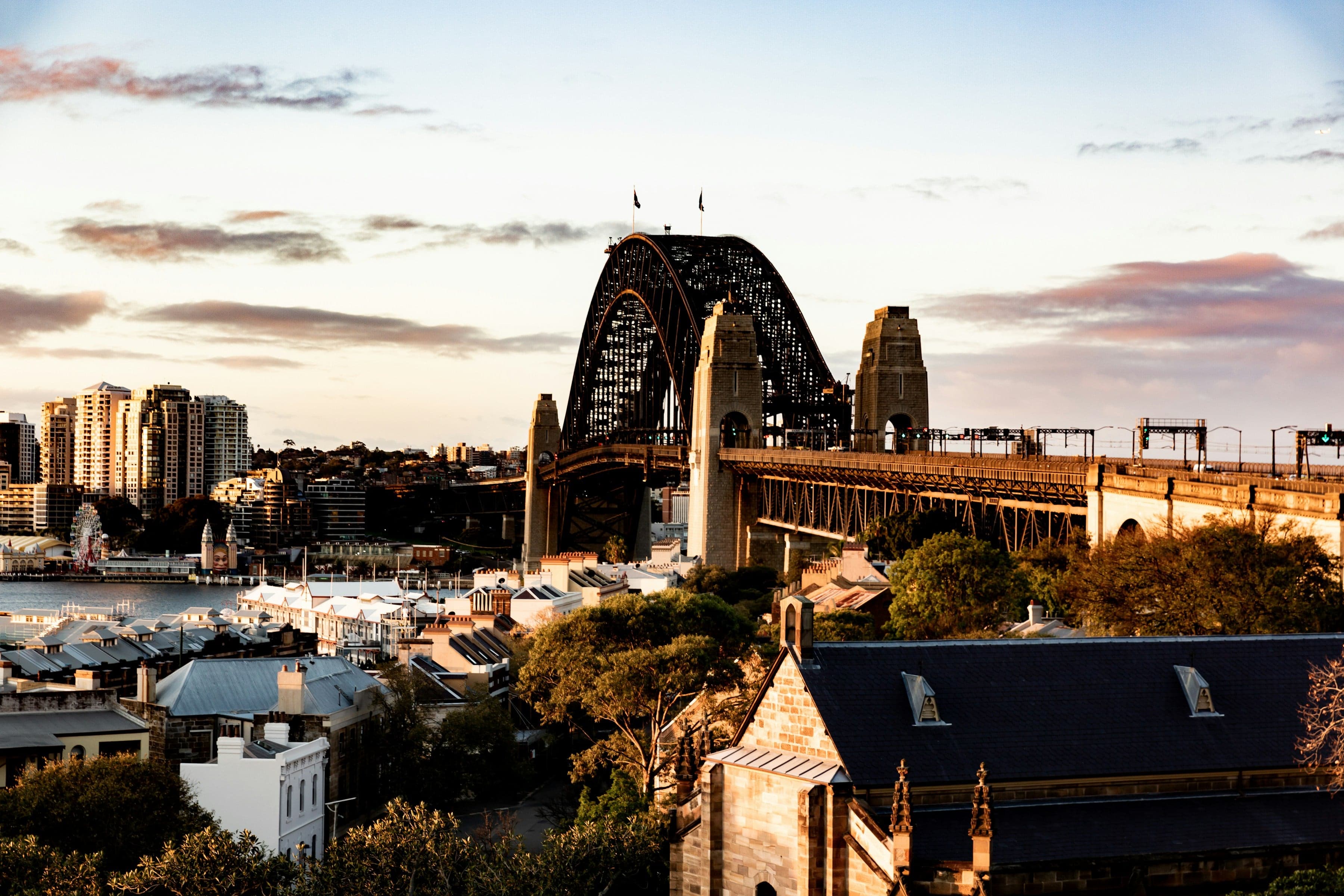
This deep dive is one stop on a longer walk. The self-guided The Rocks to the Opera House tour goes once round Sydney Cove: it passes right under the bridge at Dawes Point, where the southern approach cut through The Rocks, crosses the head of the cove at Circular Quay with this view of the arch, and ends at the white shells of the Opera House. You walk it at your own pace, with no group and no schedule, stopping for as long as the light and the story hold you. If you want to see how this stop fits the rest of the harbour, browse the full set of Sydney walking tours and start where you like.
The Coathanger looks effortless from the quay, one clean line across the water. It was anything but. It was built through a broken decade, joined in mid-air over the harbour, and opened, absurdly and unforgettably, at the point of a sword.
Sources
- National Museum of Australia, "Sydney Harbour Bridge opens" (Defining Moments). Source for the opening date, construction span, and the de Groot ribbon-cutting episode.
- National Museum of Australia, "Francis de Groot cutting the ribbon, 1932". Documentation of the New Guard captain's disruption of the 1932 opening ceremony.
- Museums of History NSW, Sydney Harbour Bridge guide. Source for the 134-metre summit, the first sod of 28 July 1923, the March 1924 Dorman Long contract, and the meeting of the arch in 1930.
- Dictionary of Sydney, "Building the Sydney Harbour Bridge". The approaches that cut through The Rocks, and de Groot cutting the ribbon before Lang completed the ceremony.
Ready to experience it?
The Rocks to the Opera House: The Town Sydney Kept Trying to Knock Down
120 min · 3.7 km · moderate
More from Sydney
Explore more at your own pace.
One Day in Sydney: A Walkable Morning-to-Evening Itinerary
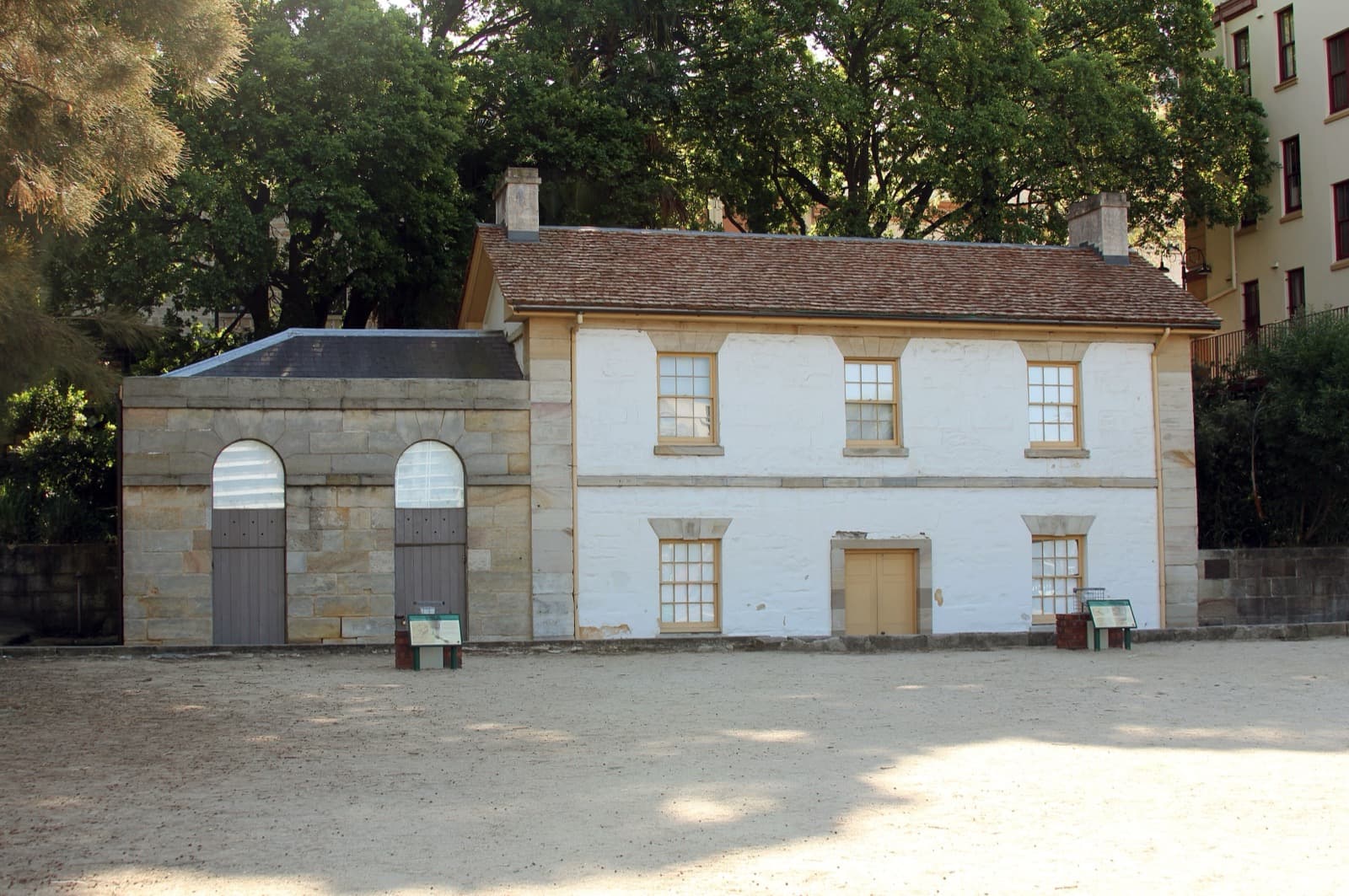
Sydney in Sandstone: Reading a Convict City From Cove to Harbour
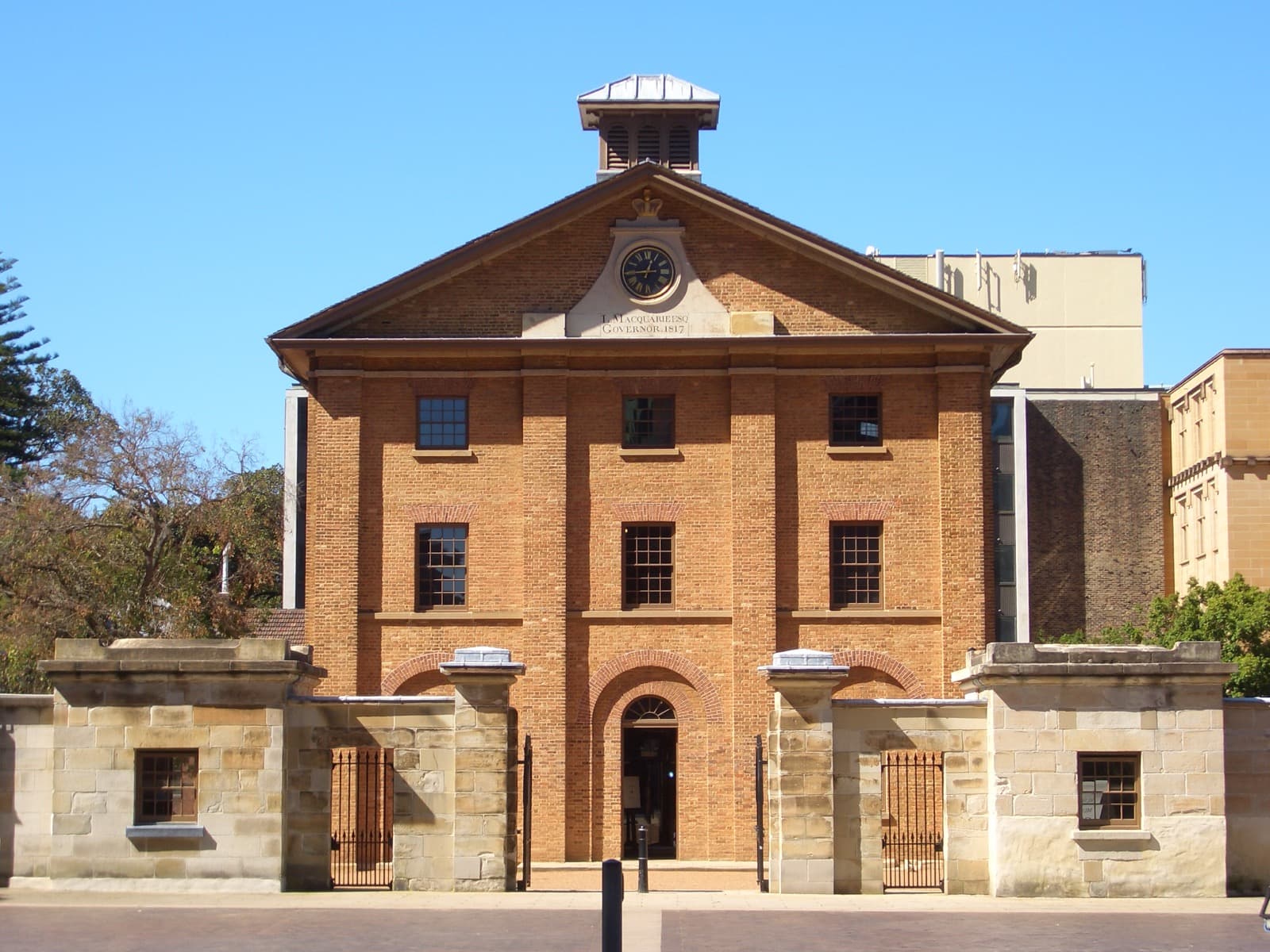
Hyde Park Barracks: The Building That Explains Convict Sydney
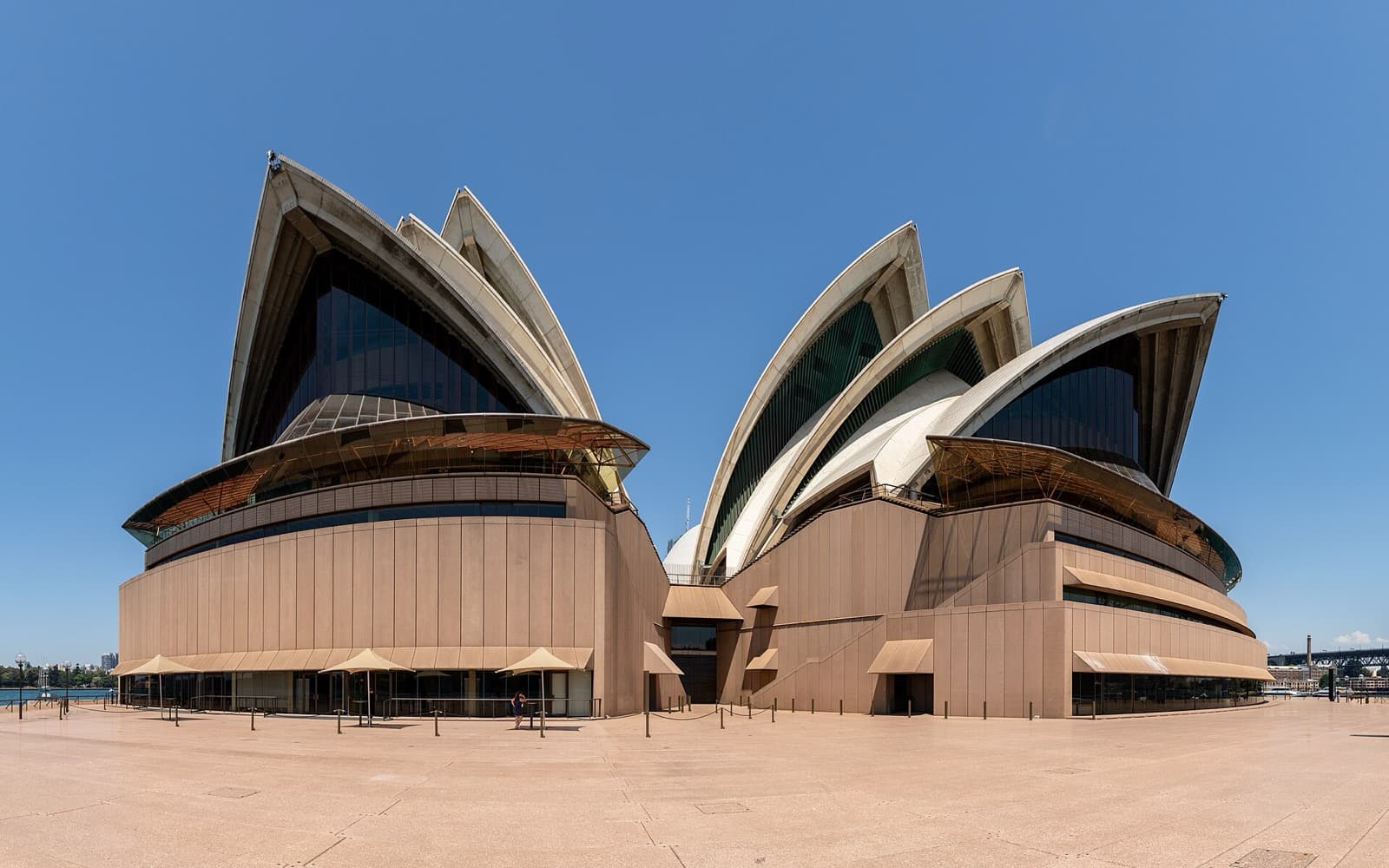
The Sydney Opera House and the Struggle Behind the Postcard
Cadmans Cottage: Sydney's Little House by the Water