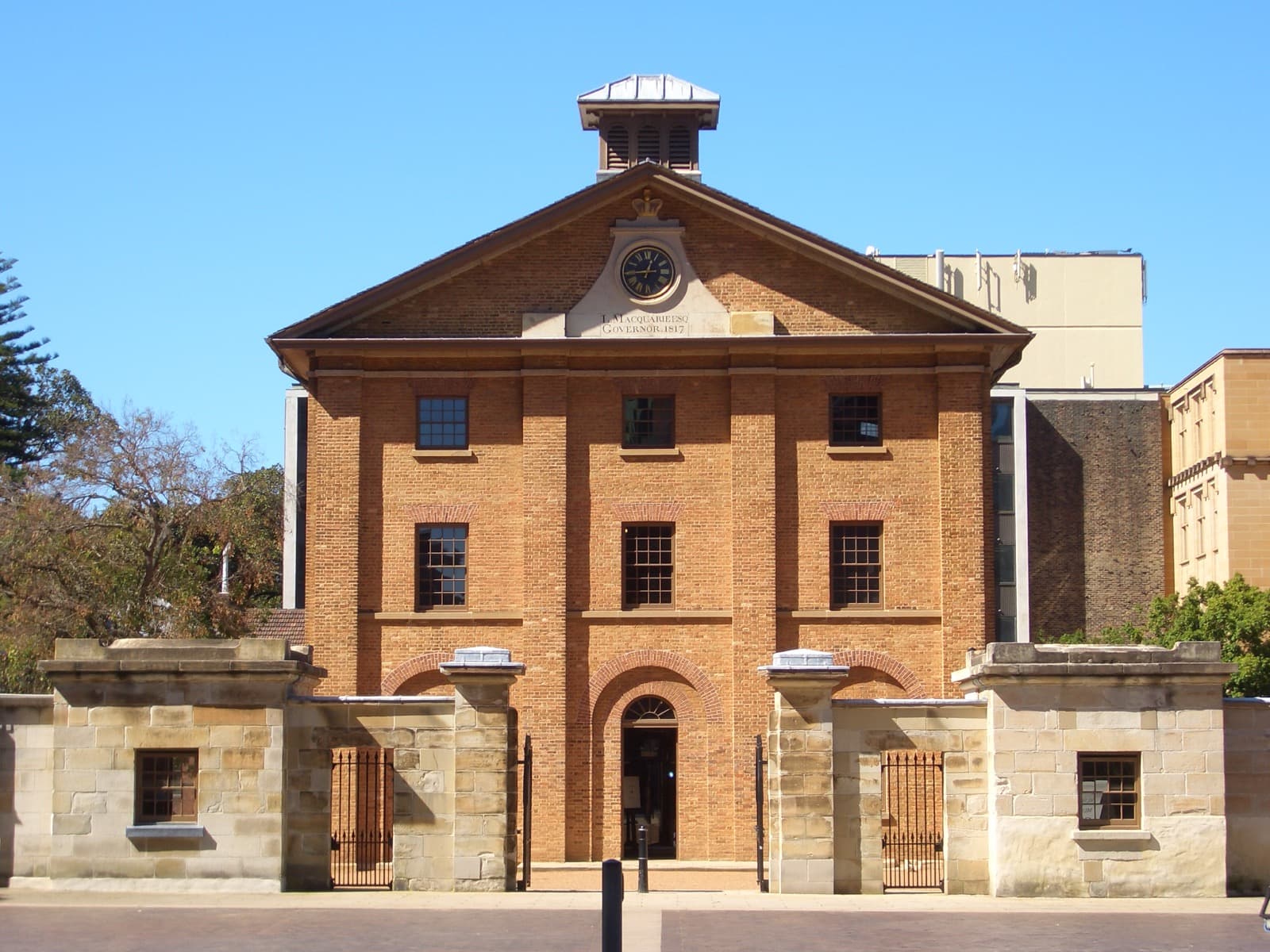
A convict transported for forgery designed the barracks that once held nearly six hundred convicts, and Governor Lachlan Macquarie pardoned him for the quality of his work. That single sentence holds the paradox of Hyde Park Barracks, and the paradox of the whole street it stands on. The barracks is a plain, dignified brick building on Macquarie Street in Sydney, coercion at its foundation and civic order in its lines, and reading it carefully is the fastest way to understand the ceremonial mile that Macquarie laid out to turn a penal camp into a city.
The architect who was a prisoner
Francis Greenway arrived in the colony as a convict. He had been transported for forgery, a crime of the pen rather than the fist, and by the ordinary logic of a penal settlement he should have vanished into labour gangs. Instead Macquarie made him his architect. The barracks rose between 1817 and 1819, and Macquarie laid the foundation stone himself on the sixth of April, 1817. When it was finished he was so impressed that he granted Greenway a full pardon.
Consider what that arrangement actually was. A man convicted of faking documents was handed the job of giving the colony its most important public buildings, and he delivered a Georgian dormitory so well proportioned that it earned him his freedom. The barracks opened on the fourth of June, 1819, when five hundred and eighty-nine convicts were admitted to a building meant to hold about six hundred. Order and grace, laid carefully over a foundation of forgery and coercion. That tension is the argument the entire street makes, and the barracks states it first and plainest.
A building that never stopped changing jobs
Hear a stop from this walk
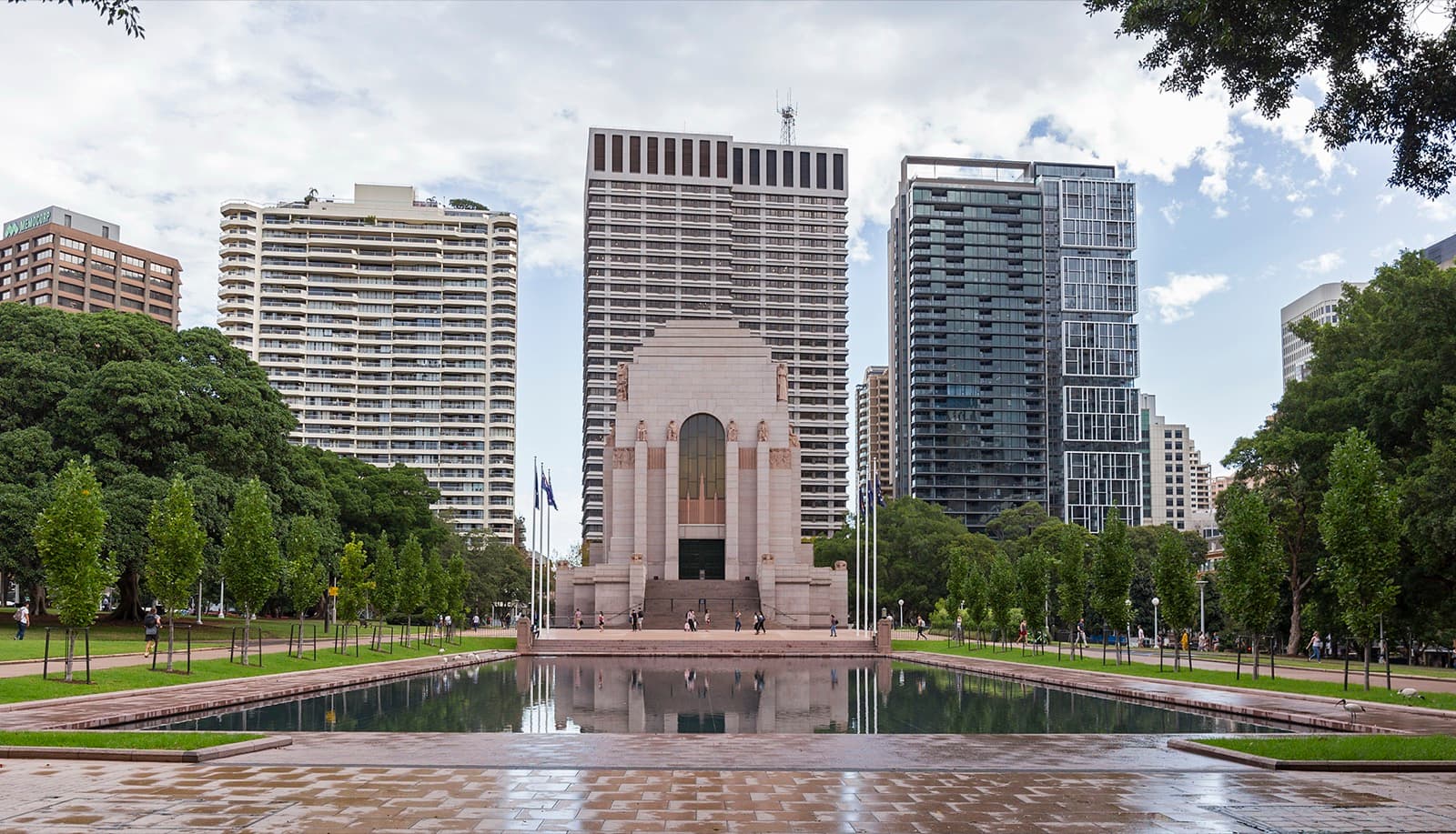
Hyde Park and the ANZAC Memorial: The Oldest Park, The State's War Memory
The barracks refused to stay one thing. It began as a convict dormitory. From 1848 to 1886 it served as an immigration depot and asylum for women, and it housed courts as well. In 2010 it was inscribed as one of eleven Australian Convict Sites on the UNESCO World Heritage List. A single set of walls carried the colony from convict transportation, through the arrival of free immigrant women, to the machinery of law, to a museum, across nearly two centuries.
That shape-shifting is worth holding onto, because it repeats up and down Macquarie Street. Greenway's church a short walk north began life as a courthouse. Two wings of a hospital became a parliament and a mint. The barracks simply does it inside one structure, which is why it makes such a good key to the rest.
The scale behind the walls
It is easy to look at a tidy brick facade and forget what it represents. From 1788, about one hundred and sixty thousand convicts were sent to Australia over some eighty years. The men held here were part of that system: petty thieves, forgers, the poor and the unlucky, sent to the far side of the world. They were real people, not the props of a ghost story, and the site earns respect precisely because it does not flatten them into spectacle.
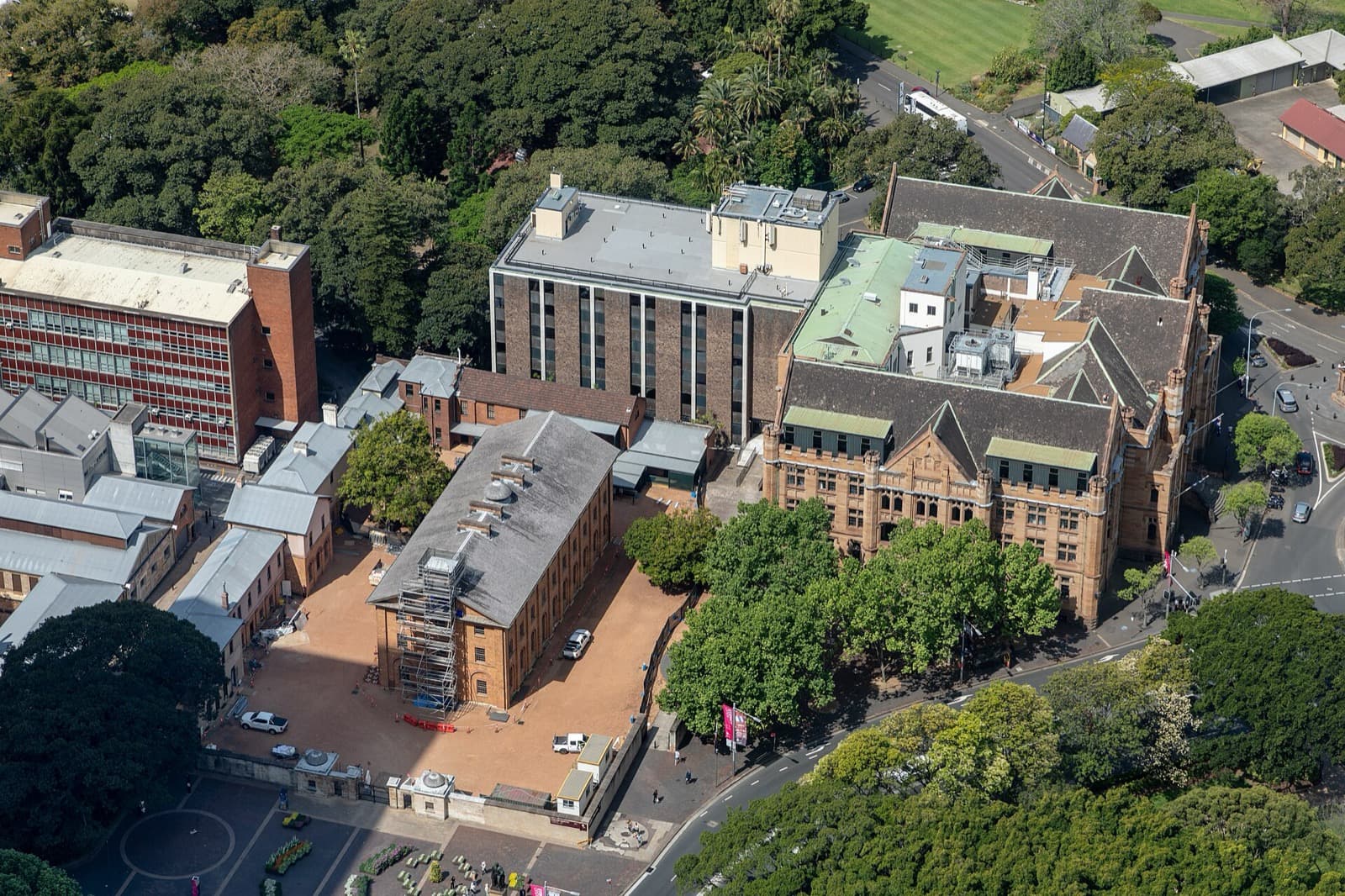
Museums of History New South Wales, which runs the barracks as a museum today, holds a remarkable archive recovered from beneath its floors, small things dropped and lost by the men and, later, the women who lived here. Archaeologists uncovered almost one hundred and twenty thousand fragments trapped under the boards, many dragged into nests by rats, then preserved for a century in the dark. Over four thousand of those original objects are now on display. It is an oddly intimate collection: not proclamations or portraits, but buttons, scraps, and the small litter of daily life, pulled back up from under the floor of the rooms where convicts once slept.
Older ground beneath the brick
The barracks also stands on Country. This is the land of the Gadigal, one of the clans of the coastal Eora, the traditional owners of central Sydney, whose culture continues here today. They lived on this harbour for tens of thousands of years before the First Fleet landed in 1788. Macquarie's Georgian street, and the convict system that built it, were laid over their ground, and their story and the losses that followed belong to every stop on this walk. The barracks is where that layering becomes physical: a brick box for imprisoned Britons, set on land held by the Gadigal for far longer than any European record.
Why the barracks opens the whole street
Once you have read the barracks, the rest of Macquarie Street clicks into place. Governor Macquarie set out after 1810 to give a squalid penal camp the form and dignity of a real city, and Greenway was his unlikely instrument. Walk north and you meet Greenway's Saint James' Church, the oldest church building in central Sydney, which began as a courthouse before a royal commissioner recommended it become a place to pray in 1820. Its copper spire rises about forty-six metres and once served ships in the harbour as a navigation mark.
Then the street turns to its central scandal: the hospital Macquarie financed not with cash but with a monopoly on importing rum, when the British Government refused to pay. Its two surviving wings each grew a second life. The north wing became Parliament House of New South Wales, the oldest parliament building in Australia, where the Legislative Council first met in 1829. The south wing became The Mint, the first branch of the Royal Mint established anywhere outside Britain, which struck its first gold sovereign on the twenty-third of June, 1855, from gold pulled out of the New South Wales rushes. The street ends at the State Library of New South Wales, the oldest library in the country, which keeps ten of the fifteen surviving First Fleet journals, the fullest collection anywhere in the world.
A wing built to hold sick convicts became the room where a penal colony learned to govern itself. Another became the place where the colony turned raw gold into the Queen's own coin. Every one of those turns is the barracks paradox again: something orderly and lasting grown out of a coercive beginning. See it once, at the barracks, and you carry the reading for the whole mile.
Walking it yourself
The route is a level, roughly one-kilometre line down Macquarie Street, about seventy-five minutes at an unhurried pace, and being solo suits it. There is no group, no timetable, no one hurrying you past the details, and no tip expected at the end. Hyde Park Barracks charges museum entry in Australian dollars, while the church, the hospital exterior, the parliament galleries, the mint courtyard, and the library are free, so you can do most of the walk for nothing. If you want to step inside Parliament House and The Mint, go on a weekday and check Parliament's sitting-day access first.
The full self-guided audio tour begins at the southern end of Hyde Park by the ANZAC Memorial and reads each building in turn. You can browse the route and other Sydney walking tours, or see everything on offer in Sydney before you set out. Start at the park, arrive at the barracks, and let one plain brick building unlock the argument the whole street is making.
Sources
- Museums of History NSW, Hyde Park Barracks: official history of the convict barracks and the objects recovered from beneath its floors.
- UNESCO World Heritage List, Australian Convict Sites: the 2010 inscription placing Hyde Park Barracks among eleven convict sites.
- State Library of NSW, First Fleet Collection: holdings of surviving First Fleet journals, the fullest collection in the world.
- Parliament of NSW, heritage history (Governor Lachlan Macquarie, 1810 to 1821): the north hospital wing's life as the oldest parliament building in Australia.
- Wikipedia, Hyde Park Barracks, Sydney: consolidated dates for construction, opening, and the building's later uses.
Ready to experience it?
Macquarie Street: The Convict Architect's Sandstone Mile
75 min · 2.4 km · easy
More from Sydney
Explore more at your own pace.
One Day in Sydney: A Walkable Morning-to-Evening Itinerary
Sydney in Sandstone: Reading a Convict City From Cove to Harbour
The Sydney Opera House and the Struggle Behind the Postcard
Cadmans Cottage: Sydney's Little House by the Water
Hyde Park and the ANZAC Memorial: Australia's Oldest Park and Its War Memory