From St Mary's Cathedral through Hyde Park and up Macquarie Street, past the Hyde Park Barracks, the Rum Hospital's Mint and Parliament, the State Library and Greenway's castle stables, to the 1818 obelisk in Macquarie Place.
Start · St Mary's Cathedral: Spires by Helicopter
DirectionsStops
- 1
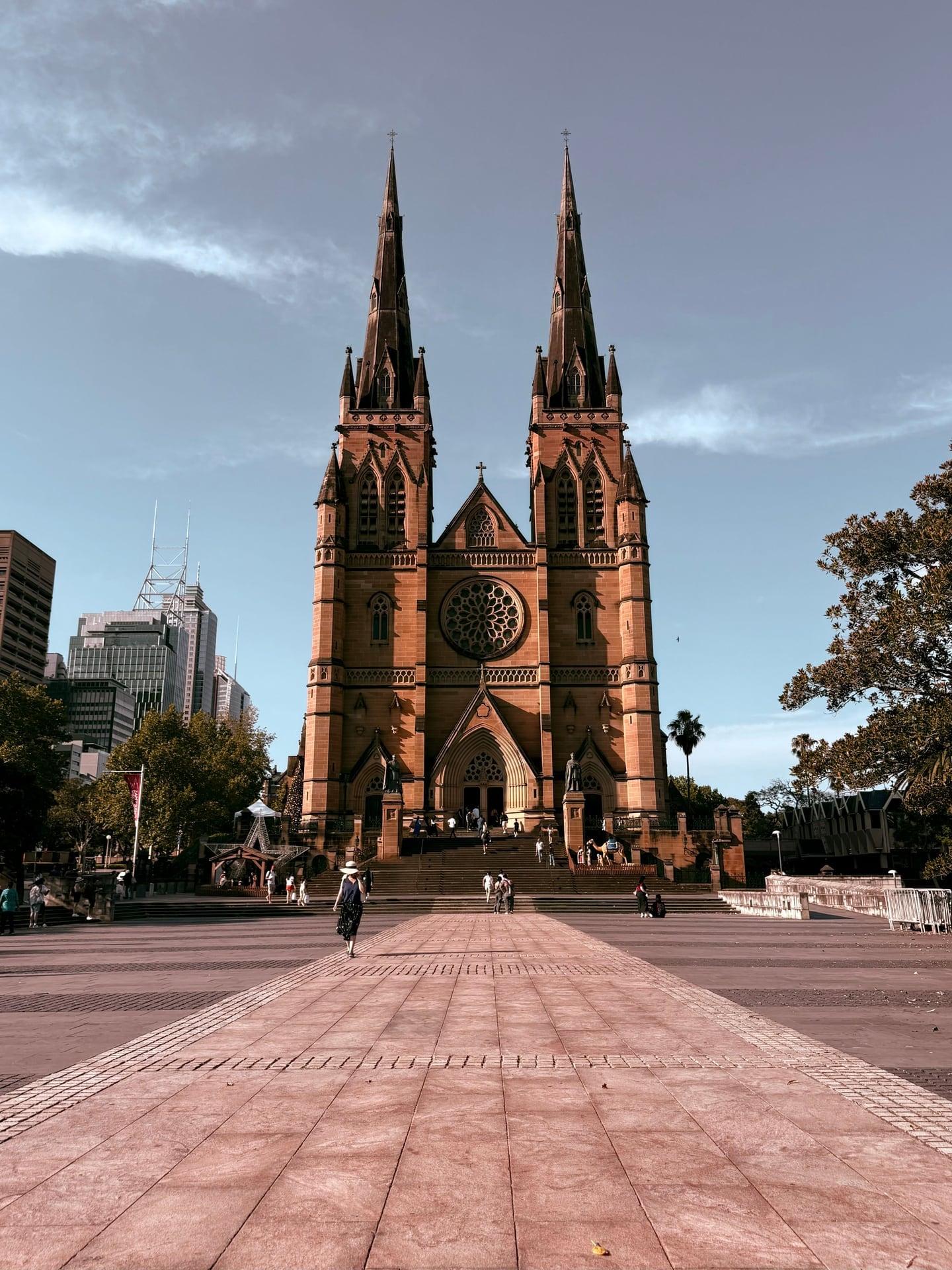
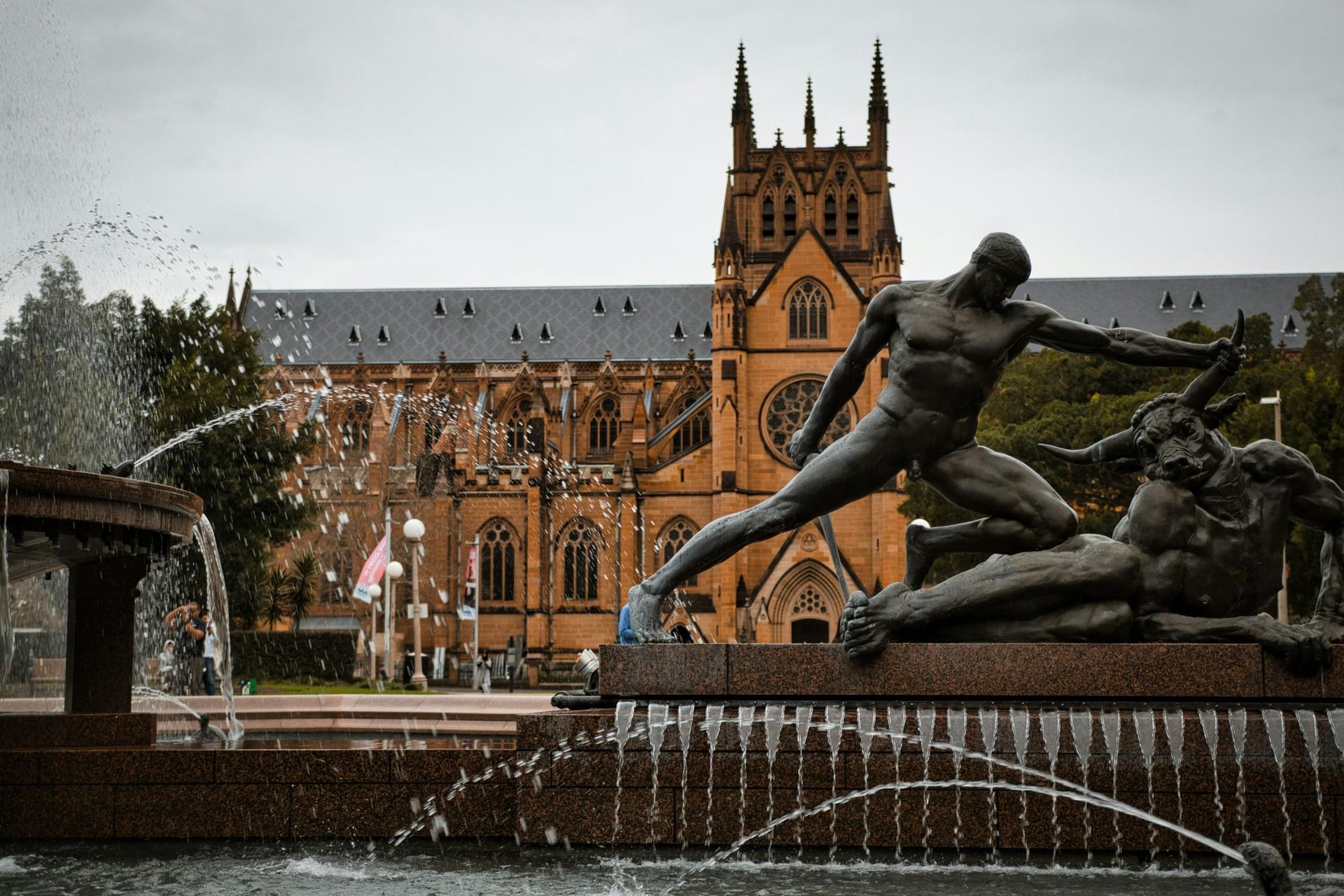
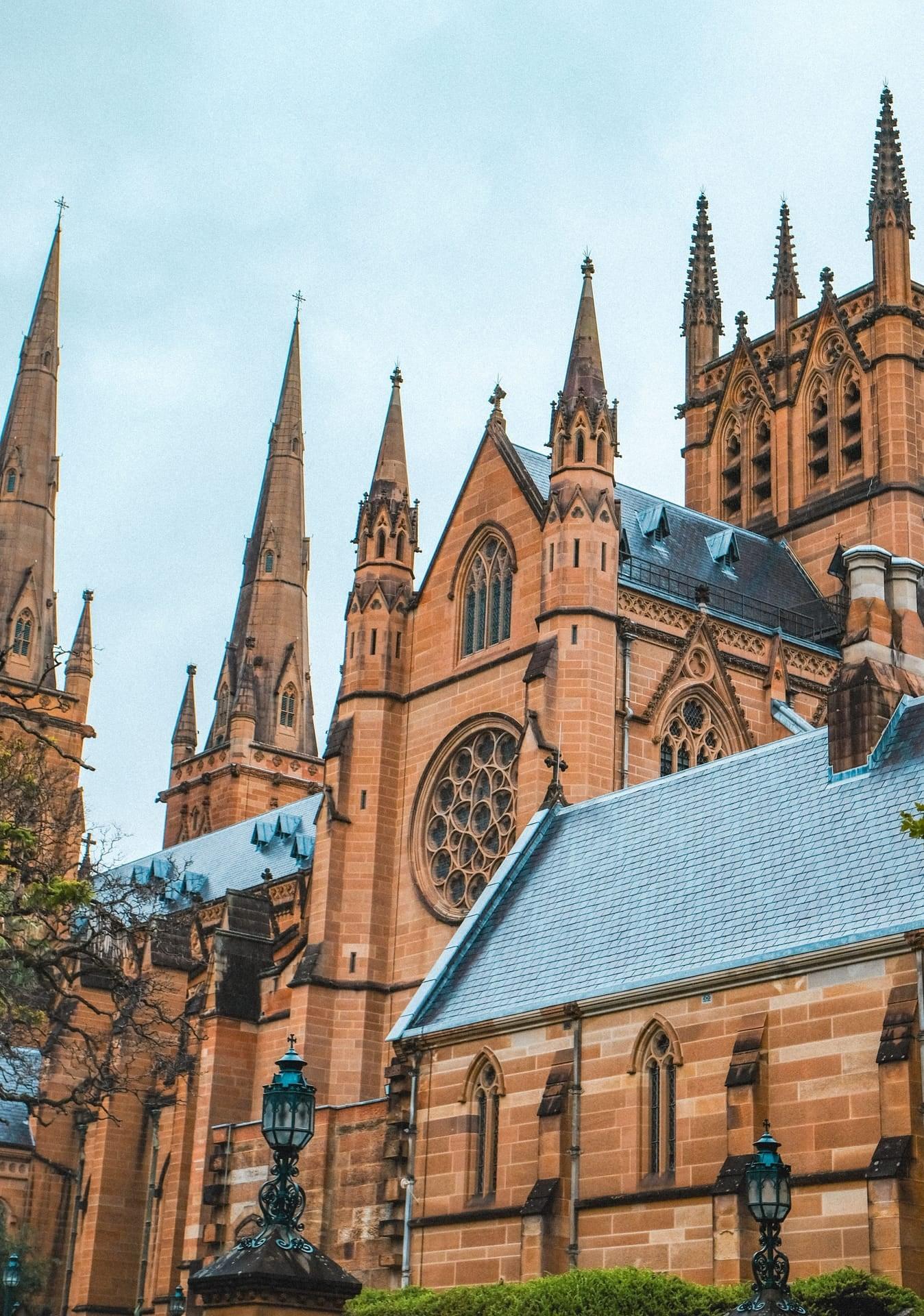
St Mary's Cathedral: Spires by Helicopter
A cathedral finished by helicopter. St Mary's on College Street, begun at Governor Macquarie's chapel stone of 1821, rebuilt in Sydney sandstone from 1868, its two southern spires lowered into place in June 2000.
- 2
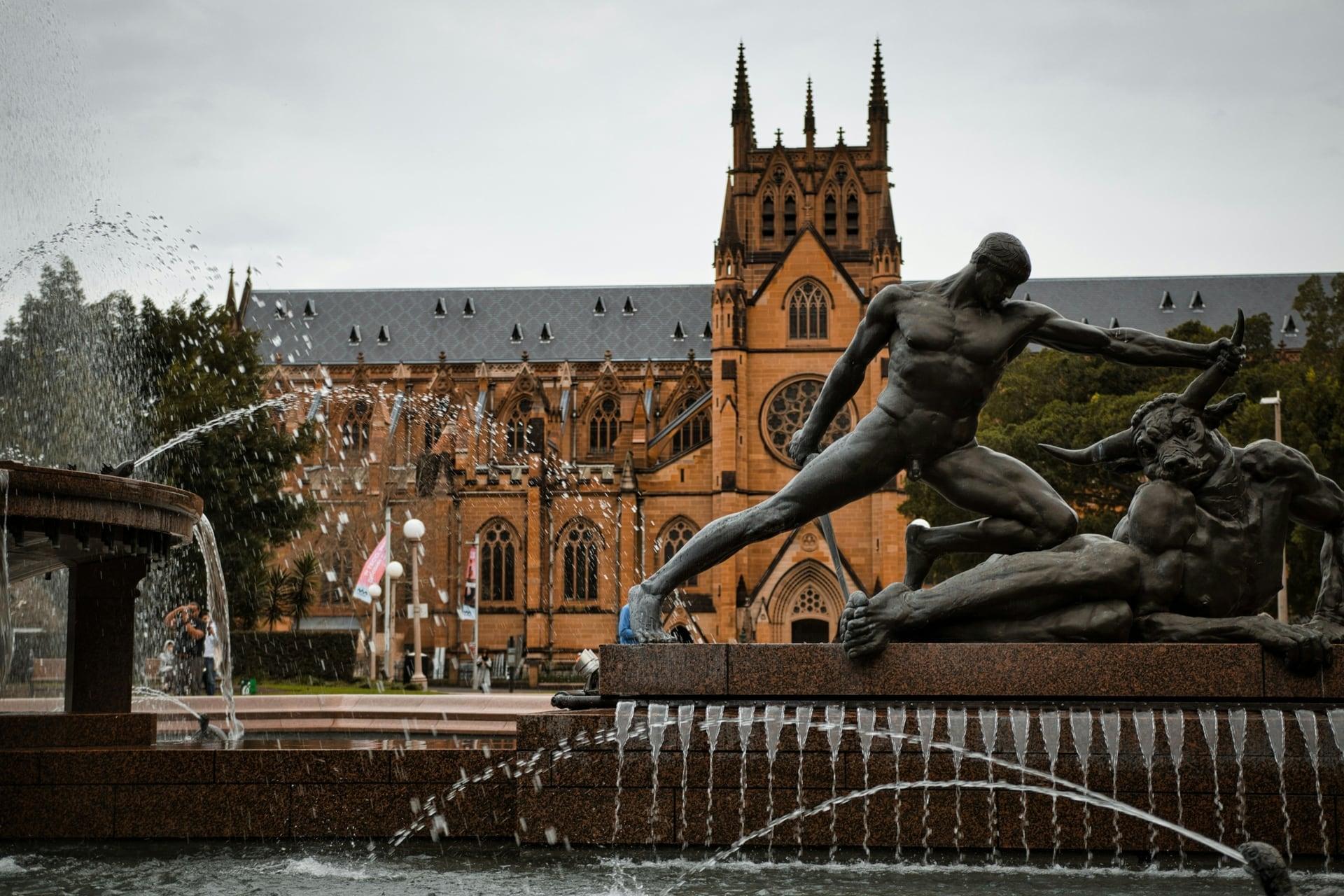
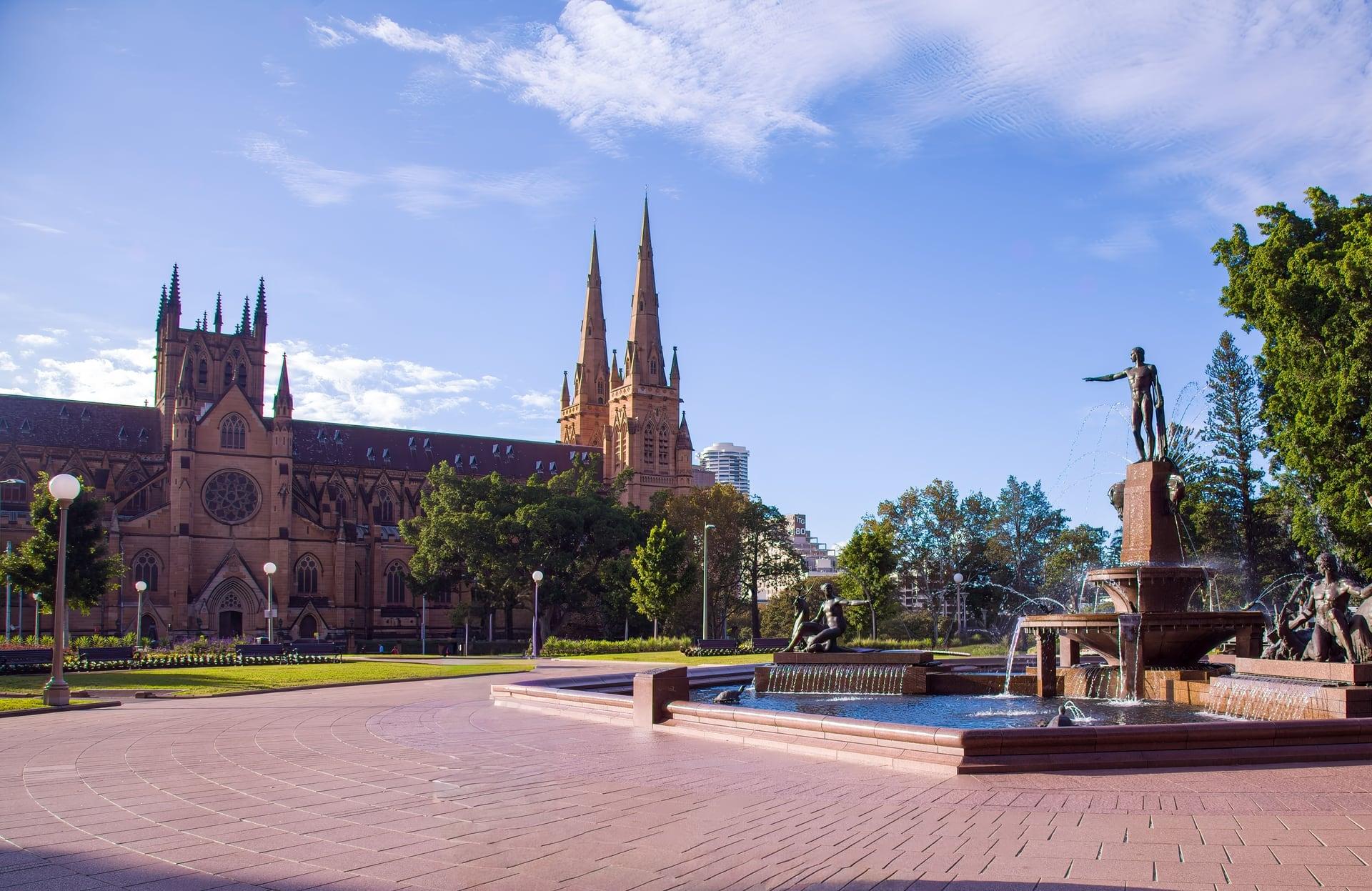
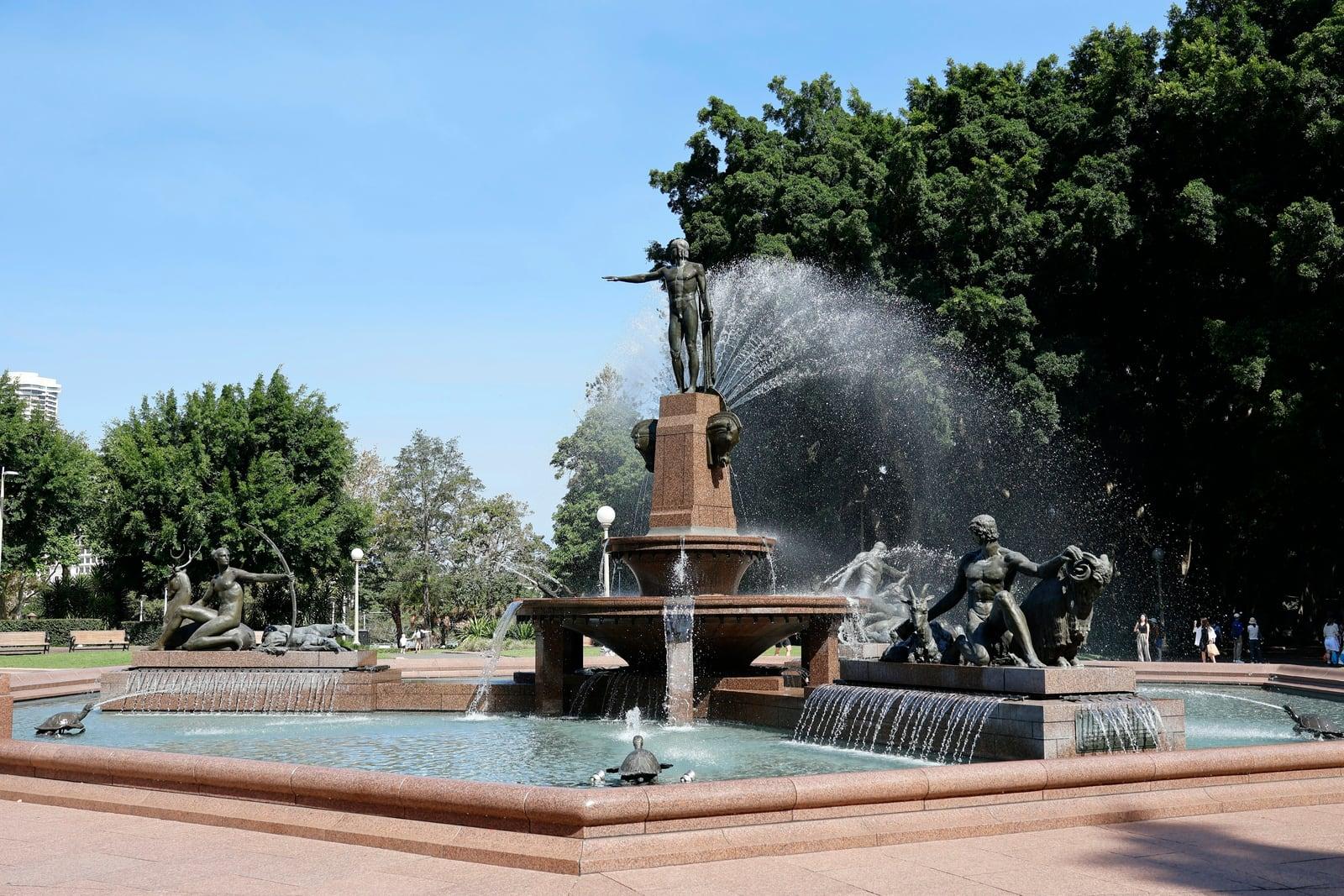
Archibald Fountain: The Governor's Park
Macquarie made the town common a park. Hyde Park was proclaimed in 1810 and first used as a racecourse; its fig avenue runs in line with Macquarie Street, and its French fountain was unveiled in 1932.
- 3
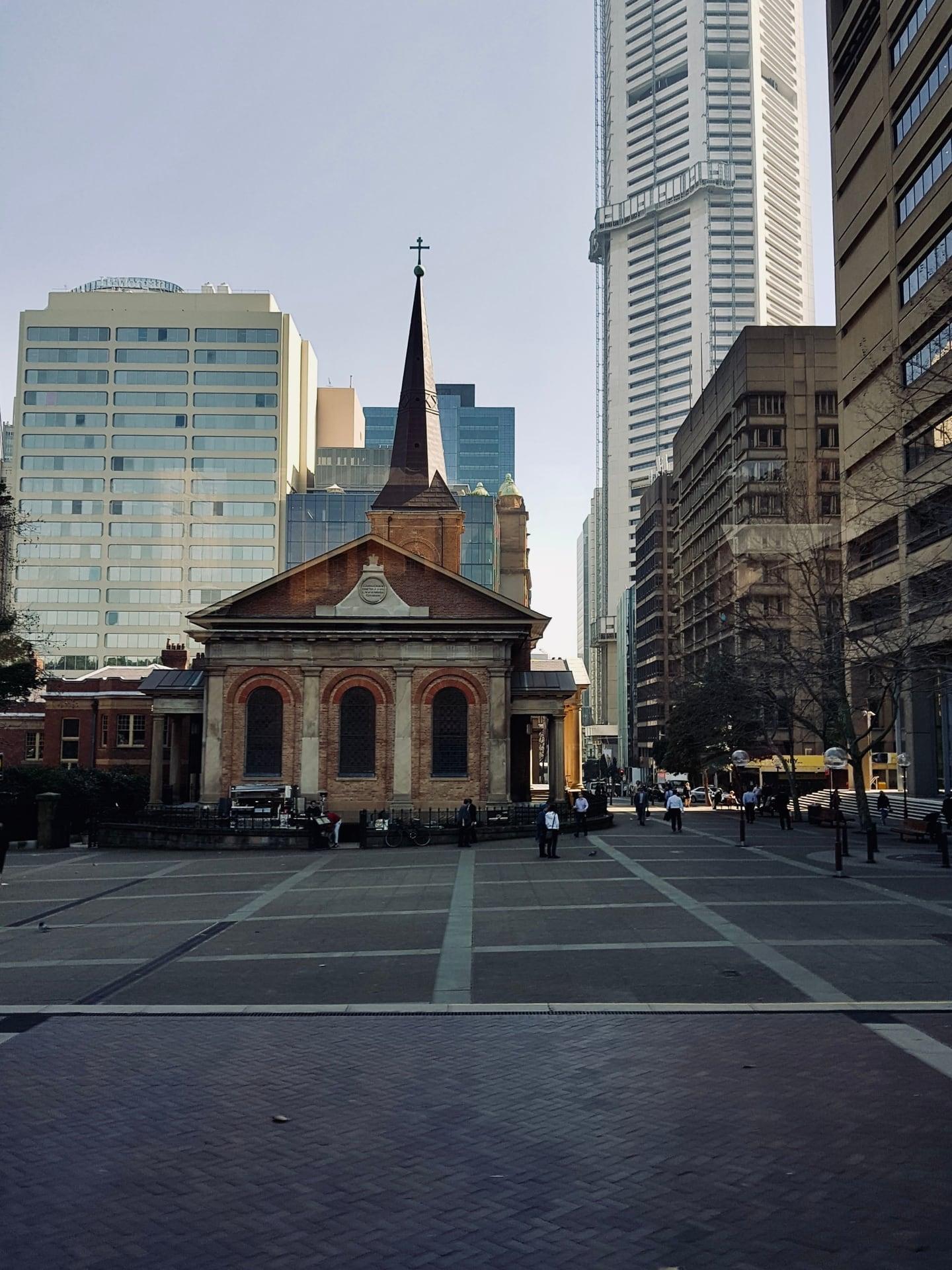
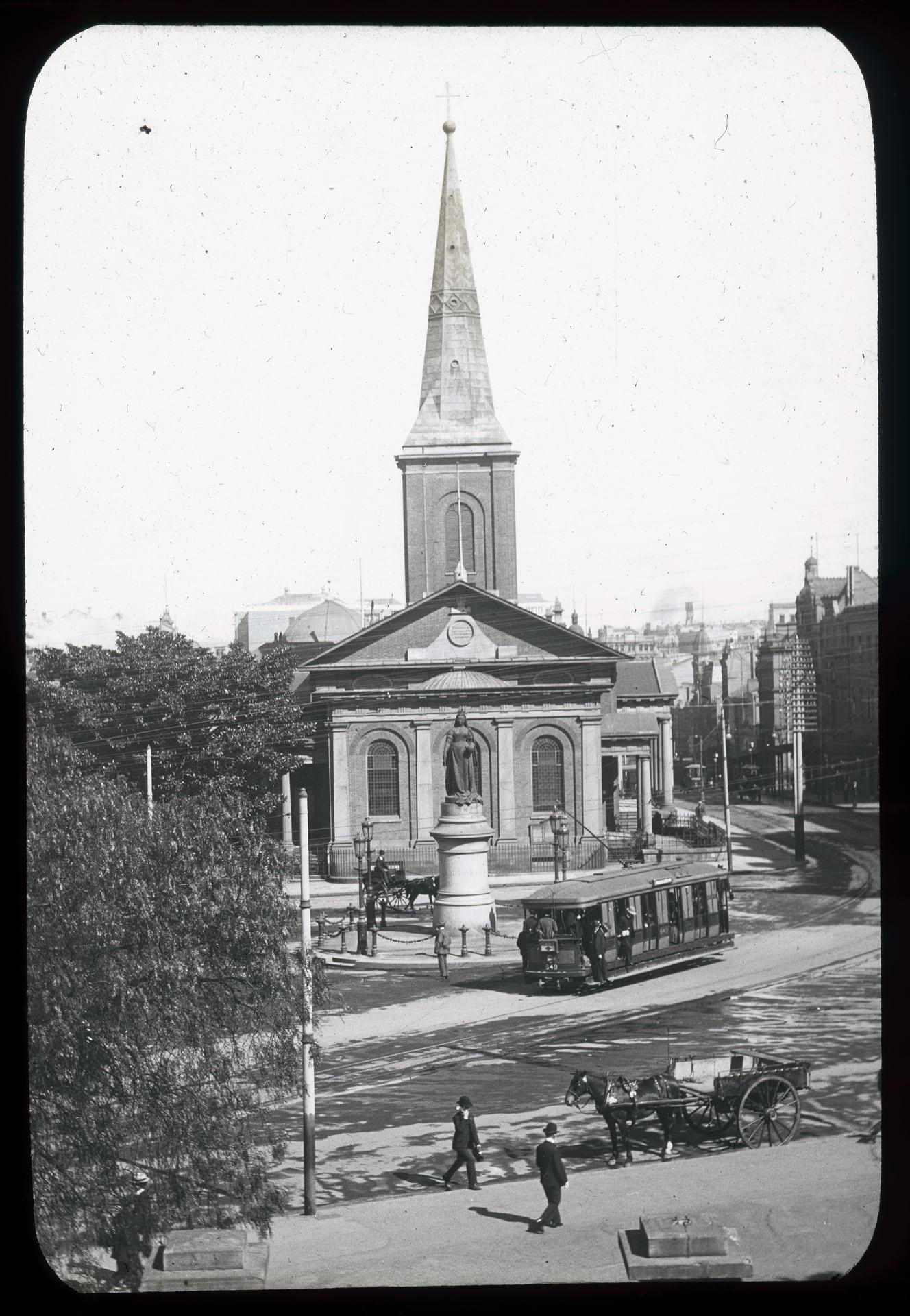
St James' Church: The Courthouse That Wasn't
A courthouse that became a church. St James' was begun in 1819 as a courthouse, turned into a church at the suggestion of London's inquiry, consecrated in 1824, and Sydney's tallest building for decades.
- 4
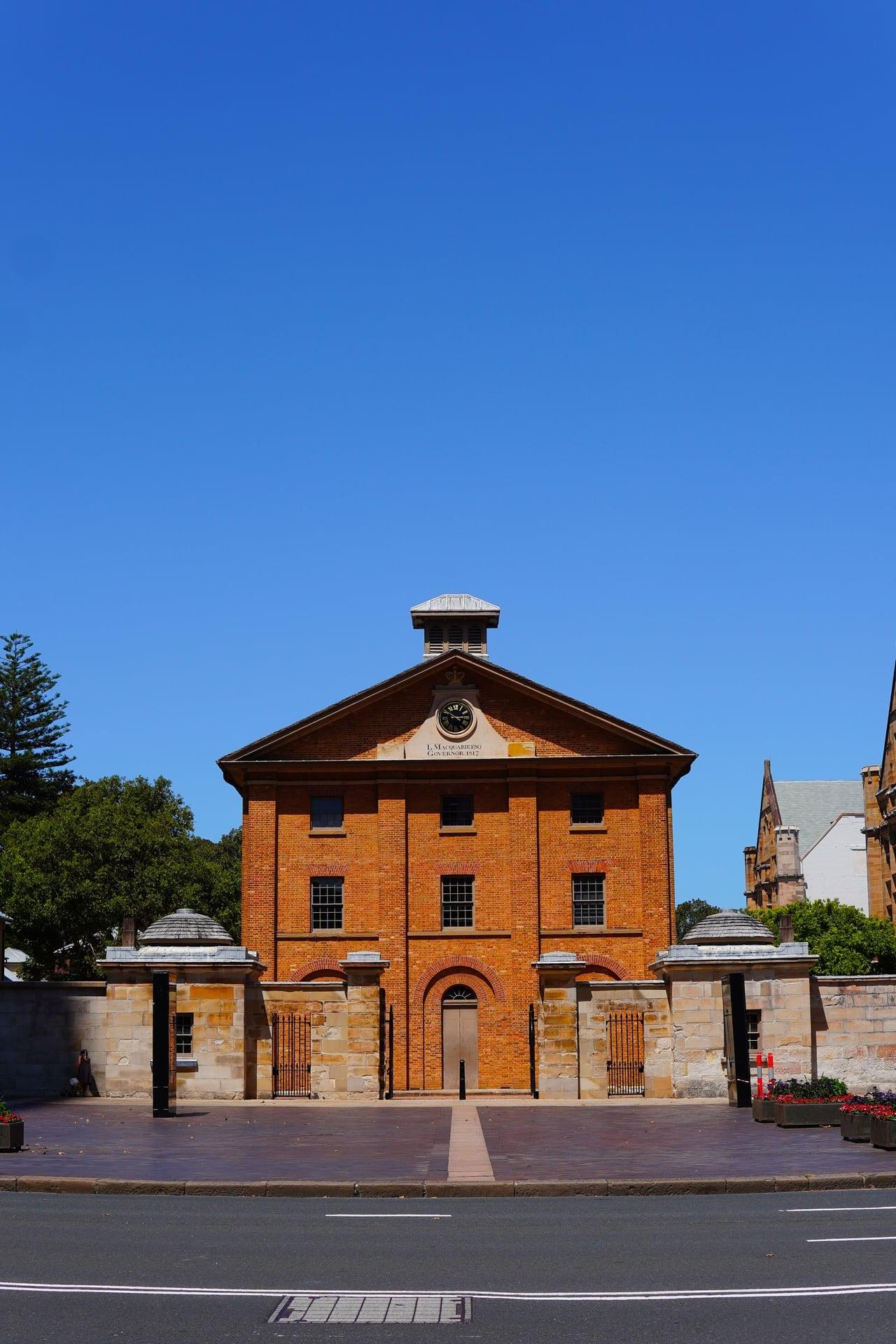
Hyde Park Barracks: The Convict Dormitory
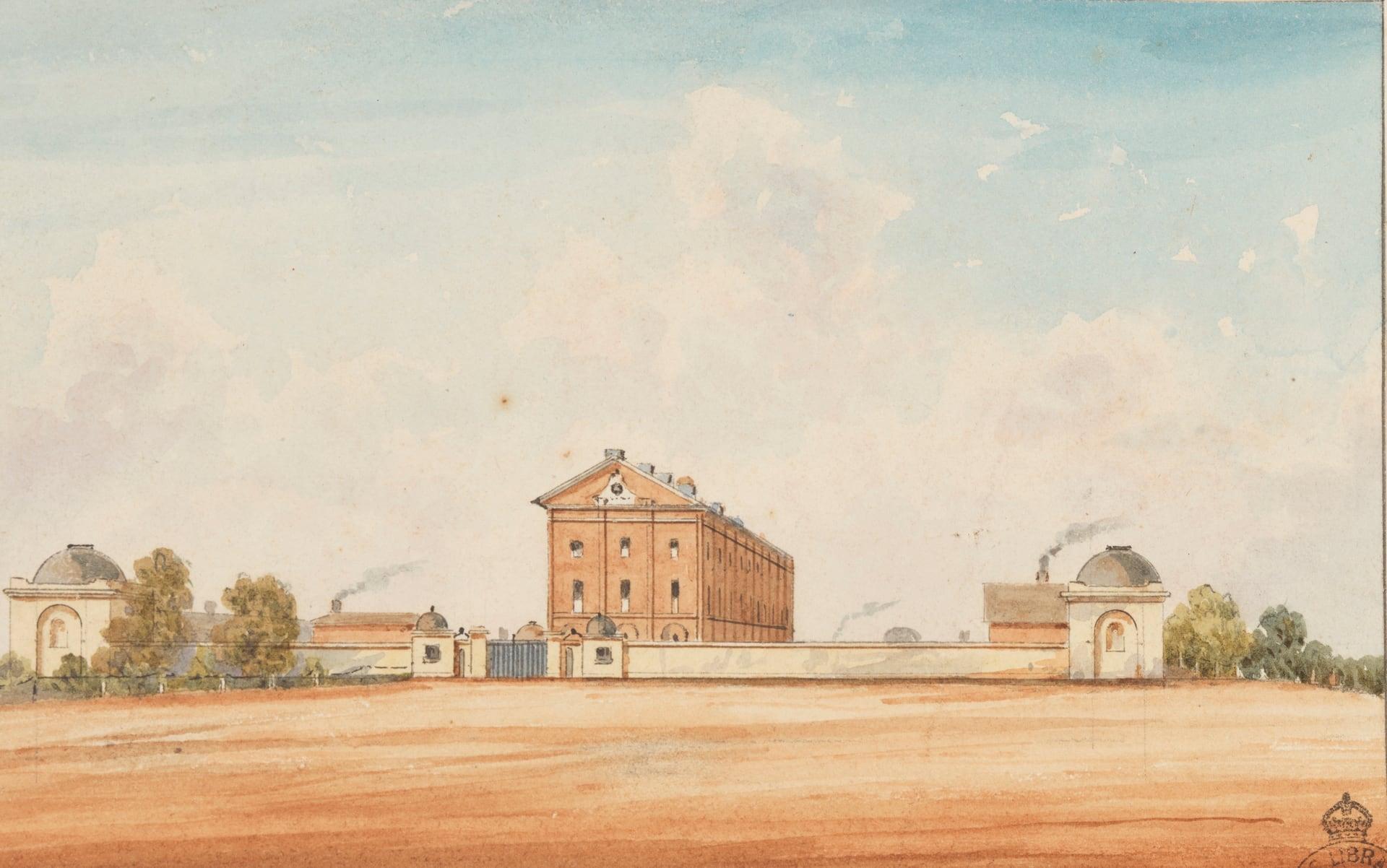
Greenway built this for convict men. The Hyde Park Barracks, opened in 1819 for up to 600 government convicts, later an immigrant women's depot, asylum and courts, now a free museum and a World Heritage site.
- 5
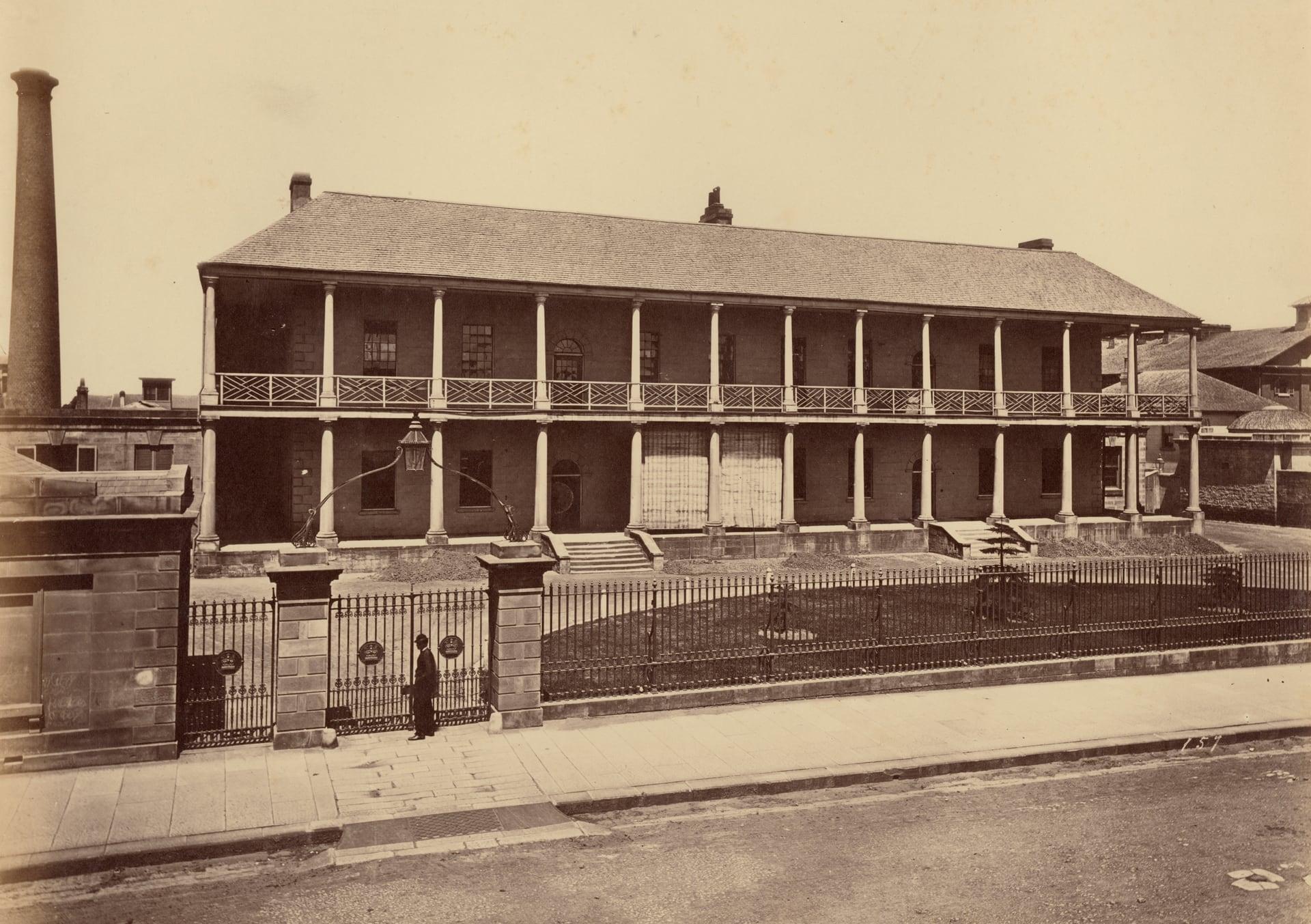
Mint: A Hospital Paid For in Rum
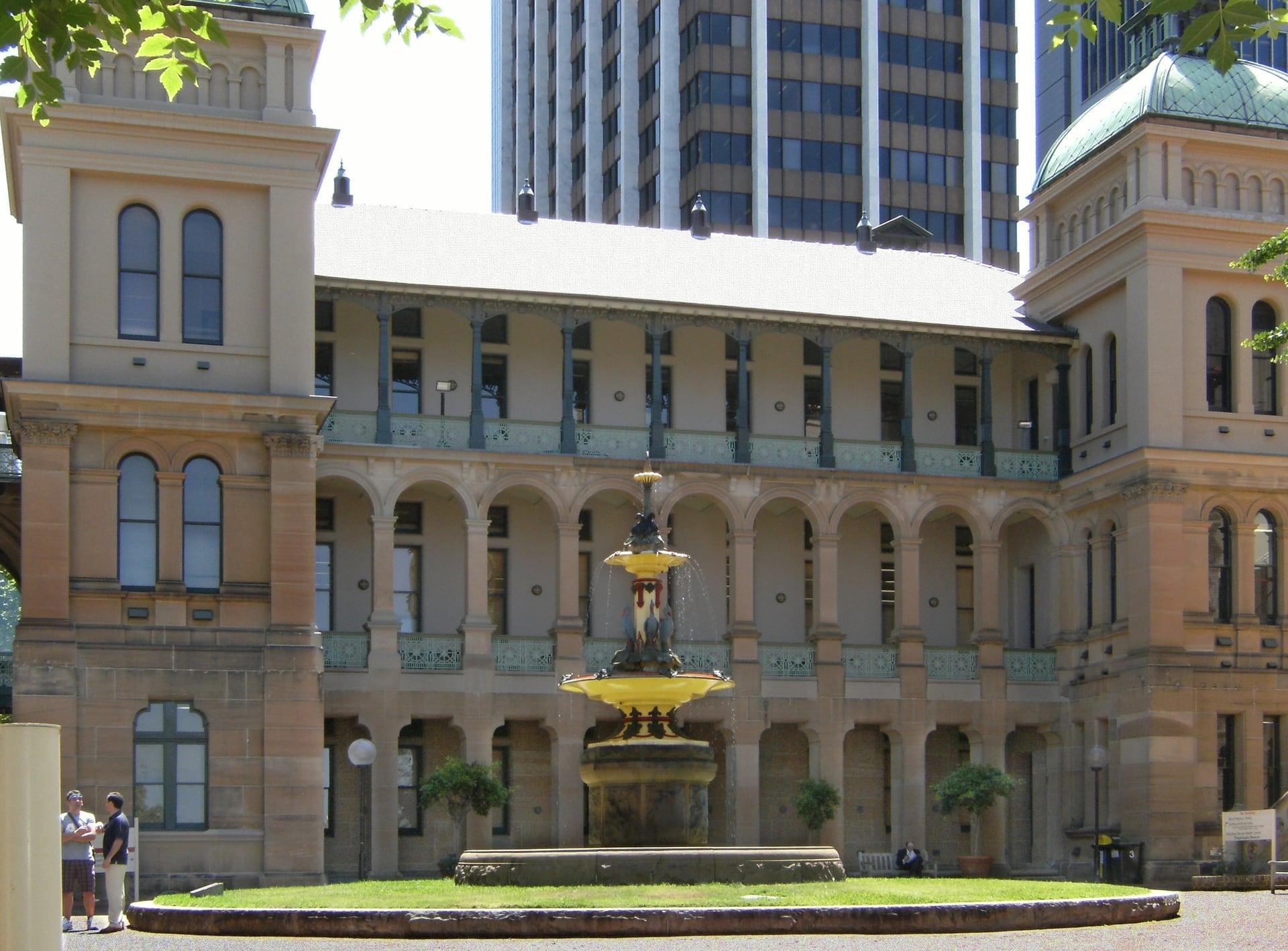
A hospital wing paid for in rum. The Mint, the Rum Hospital's south wing, built 1811 to 1816 for a monopoly on spirits, then the Sydney branch of the Royal Mint, coining gold from 1855.
- 6
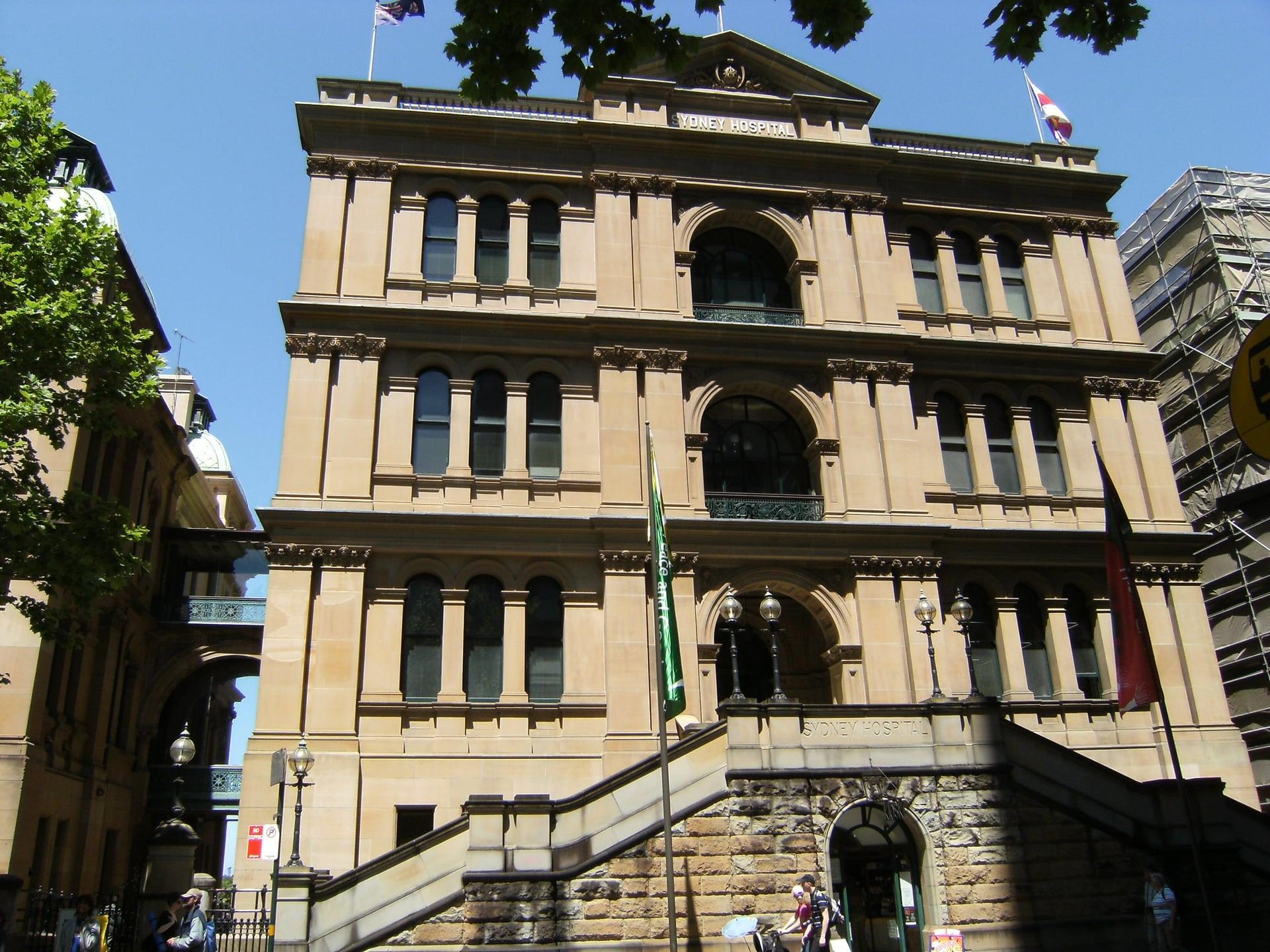
Sydney Hospital: The Missing Middle
The middle of the Rum Hospital is gone. Sydney Hospital stands on the site of its demolished central wing, with a bronze boar copied from Florence at the door and Martin Place opposite.
- 7
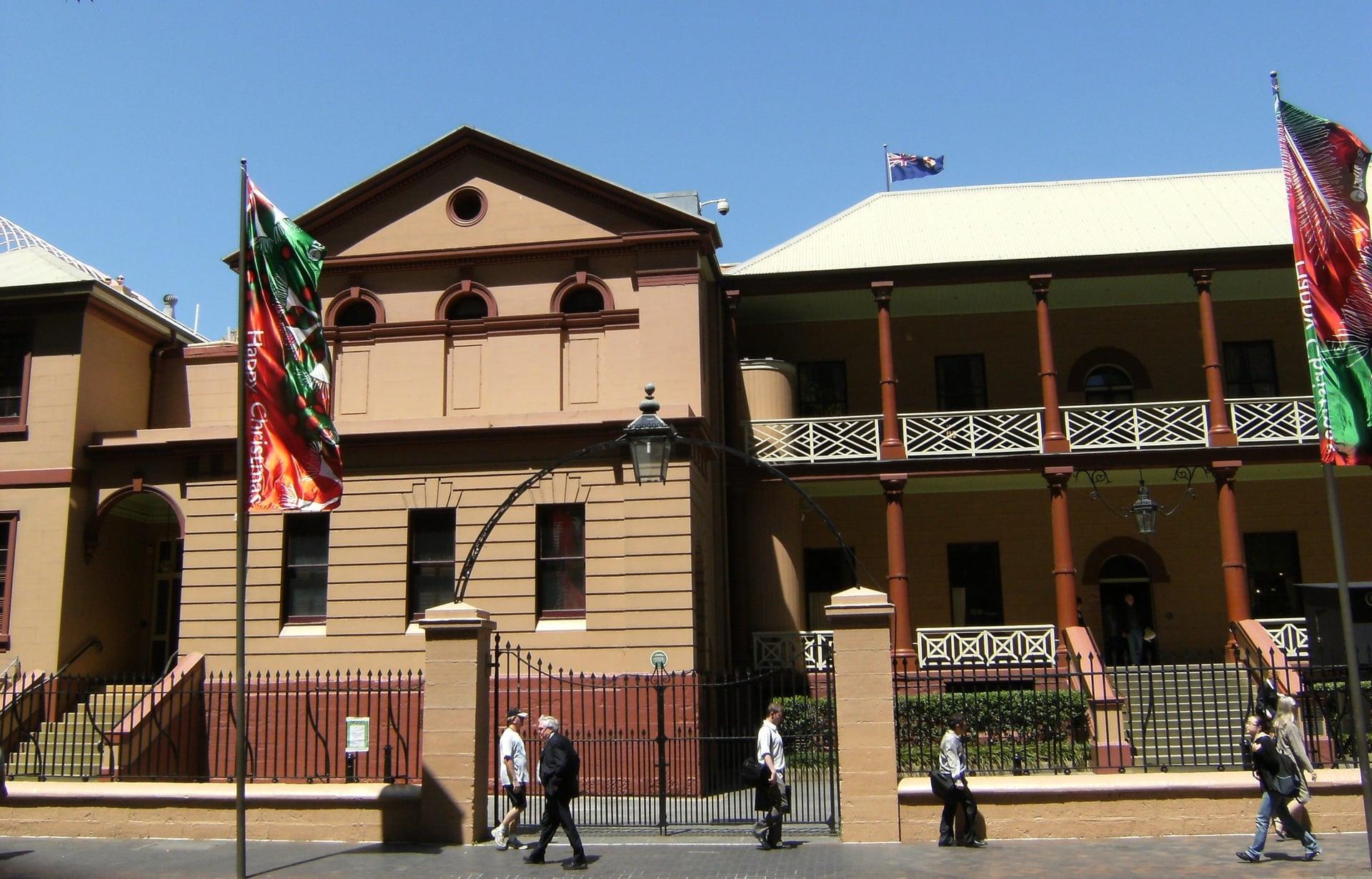
Parliament House: From Ward to Chamber
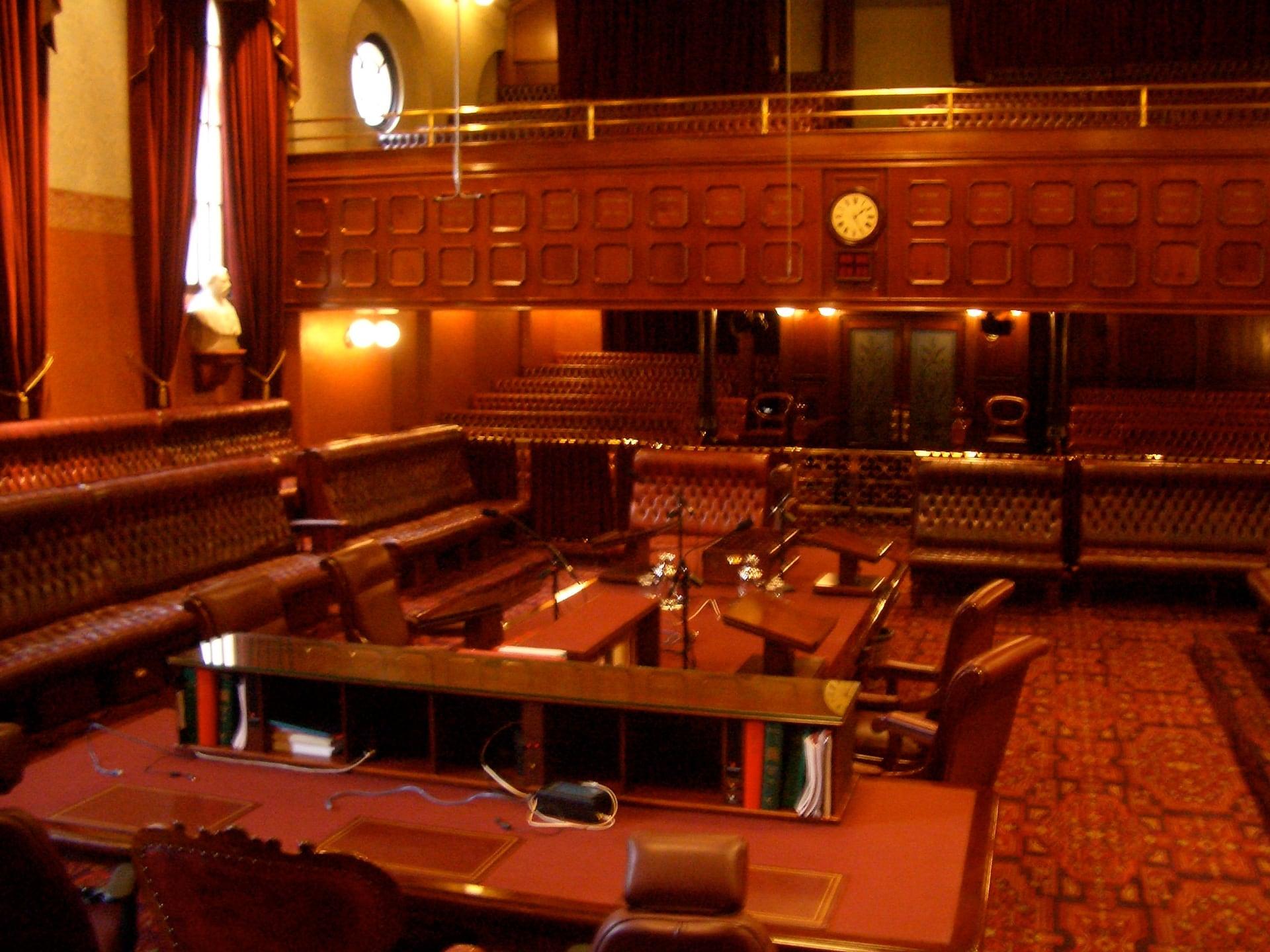
A hospital wing became a parliament. Parliament House is the Rum Hospital's north wing of 1811 to 1816, a courtroom, then the colony's council room from 1829 and the state parliament since 1856.
- 8
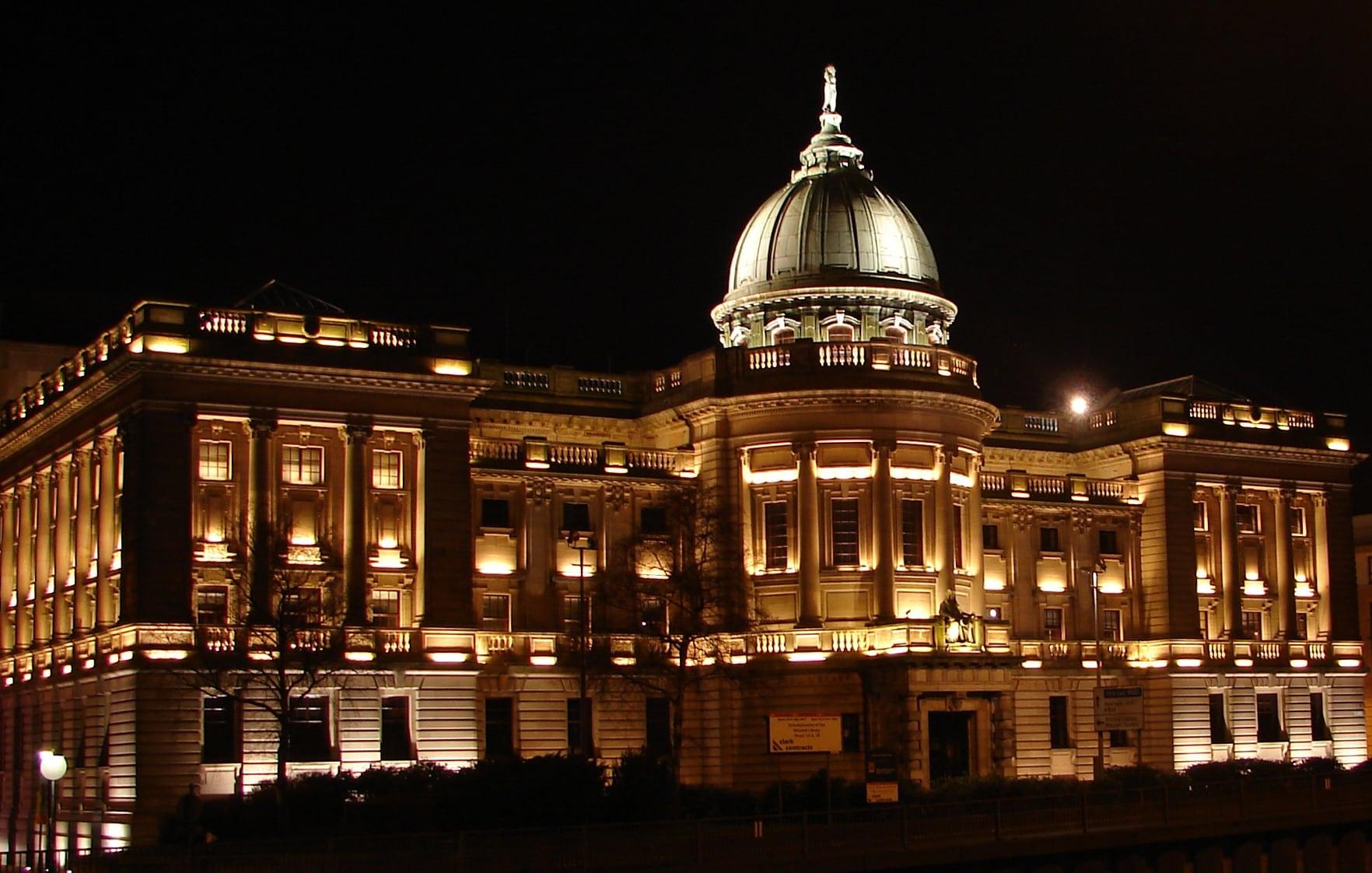
State Library: The Collector's Condition
A collector made the state build this. The Mitchell Library, opened on 9 March 1910 for one man's collection, part of a library that began as a subscription library in 1826.
- 9
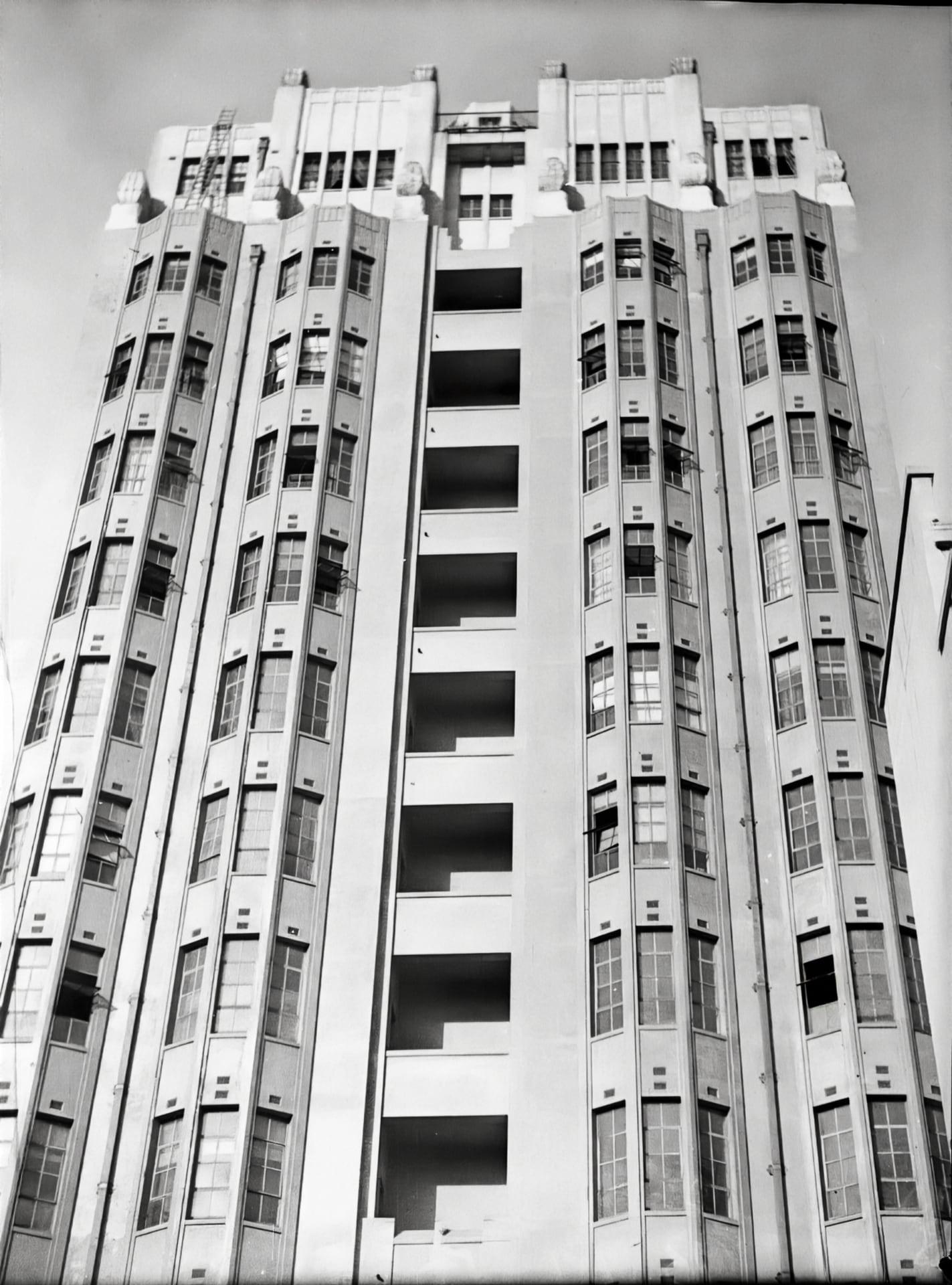
BMA House: Knights and Koalas
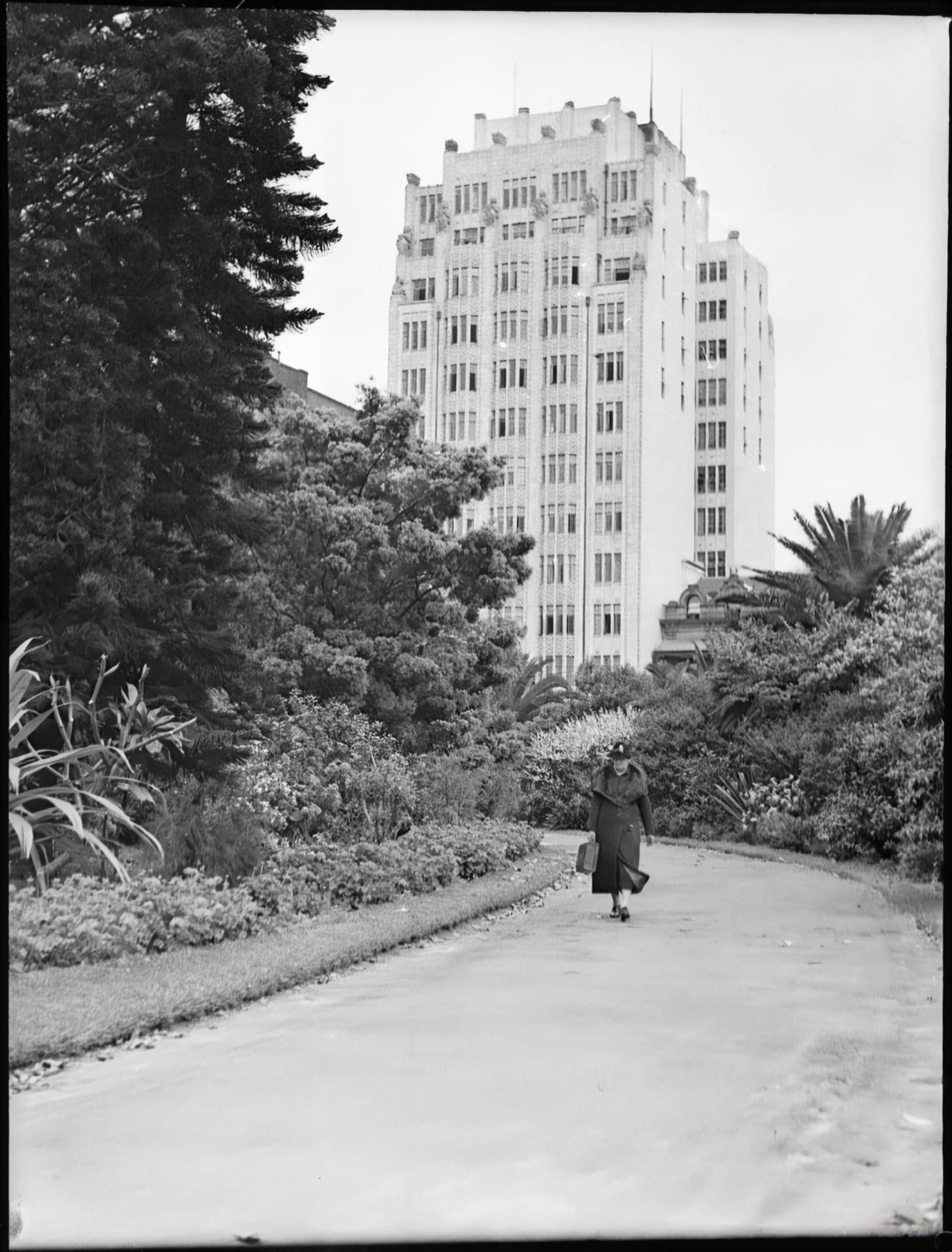
Knights and koalas on a doctors' tower. BMA House, a 1930 Art Deco office tower with six terracotta knights and two koalas high on its front, on the street that became the doctors' street.
- 10
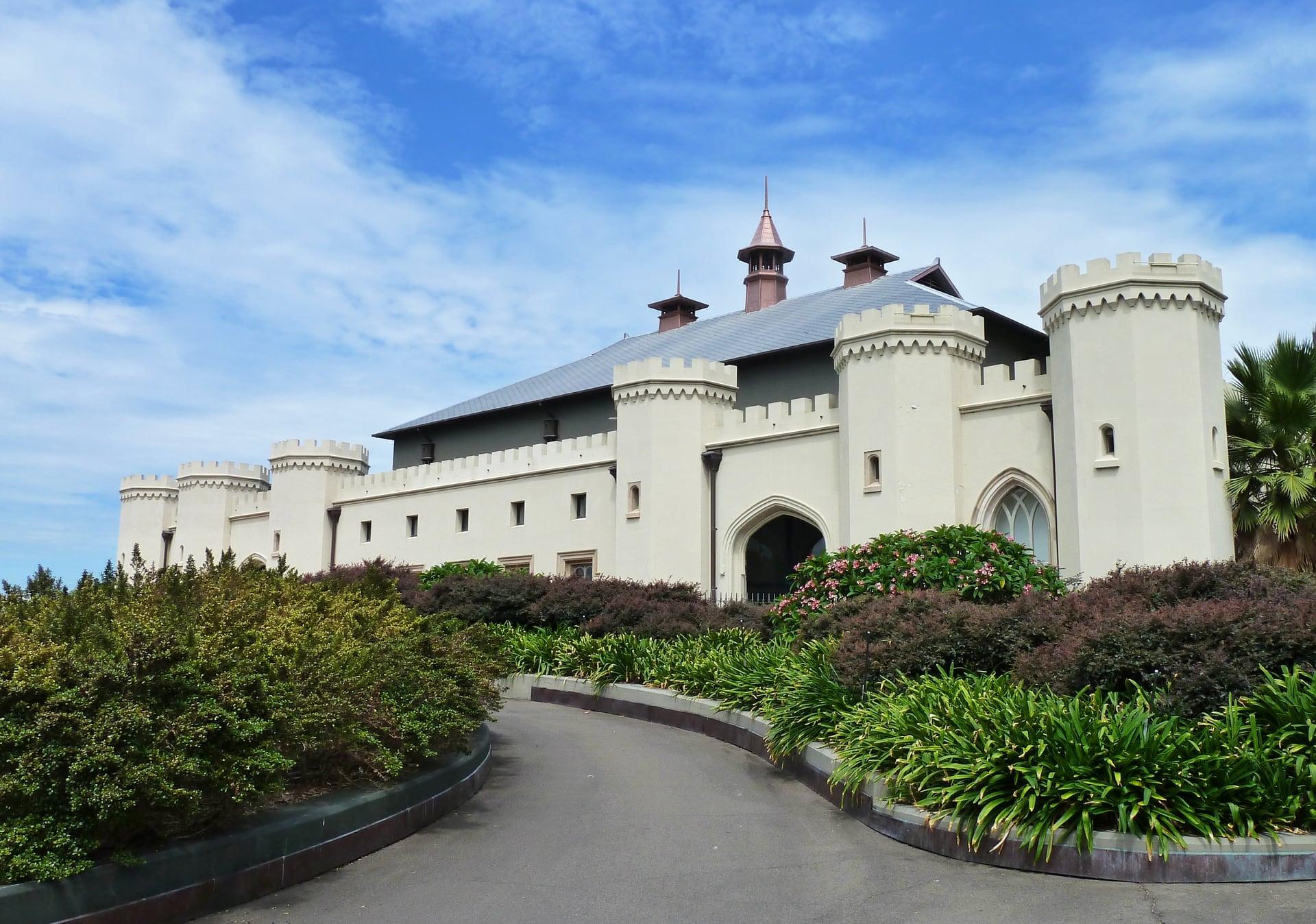
Conservatorium: Stables Without a Palace
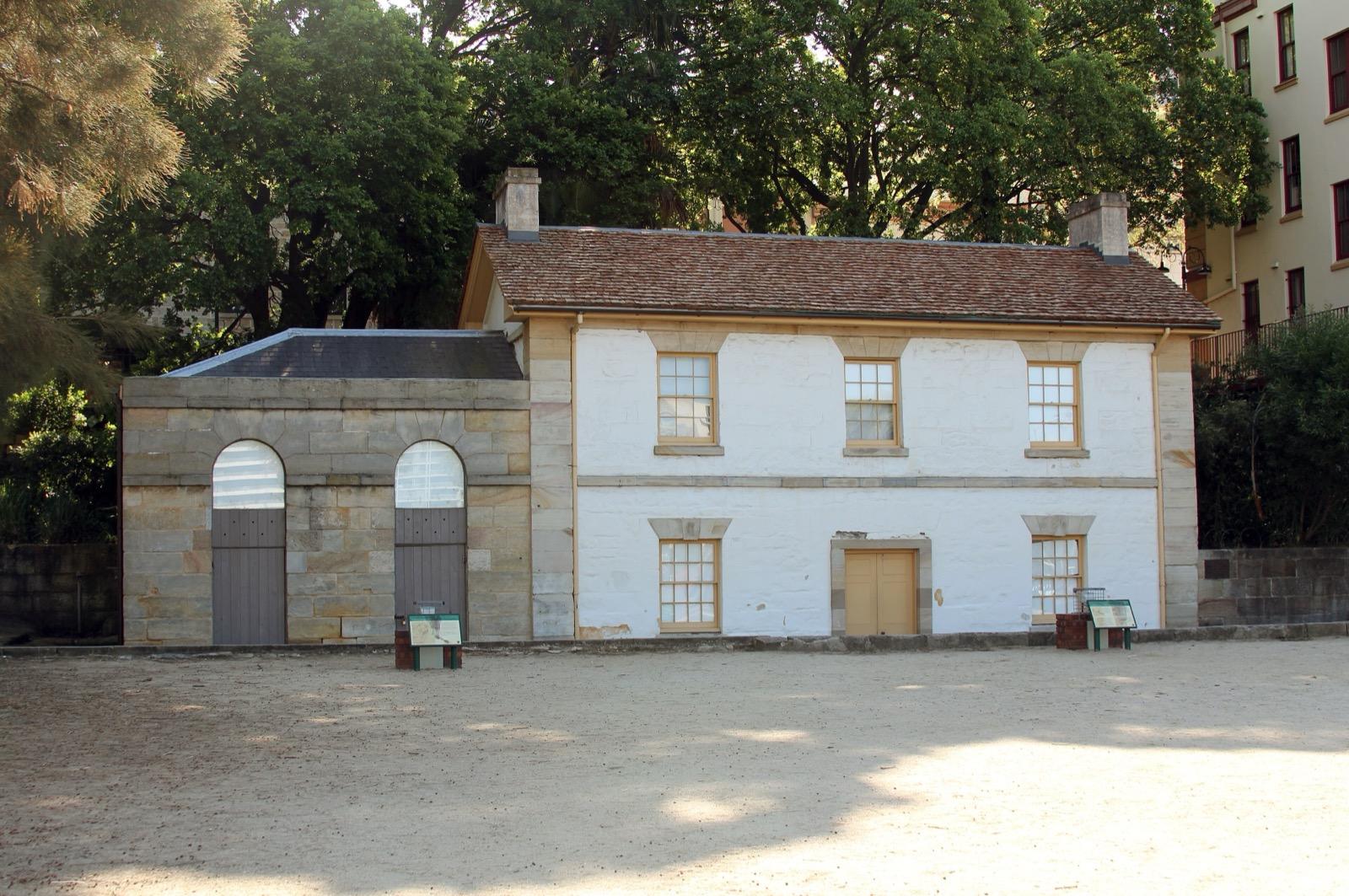
Stables built without London's consent. Greenway's castellated Government House stables, begun in 1817 against London's orders and finished in 1821, now the Conservatorium of Music.
- 11
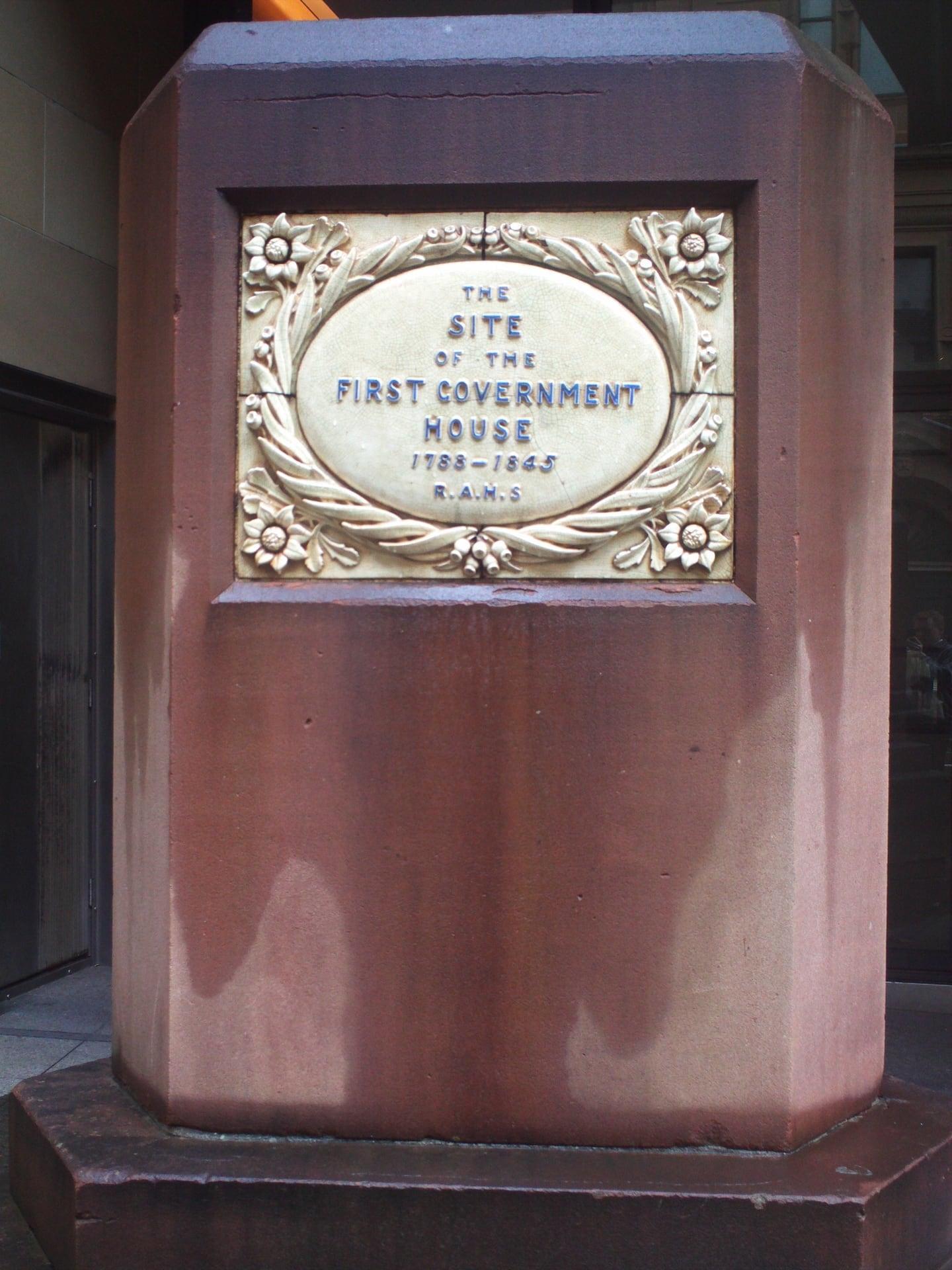
First Government House Site: The Governor's Home
The first Government House stood here. The colony's first governors' residence, built in 1788 to 1789, Macquarie's home, pulled down in 1845 to 1846, its foundations found in 1983 under the Museum of Sydney's forecourt.
- 12
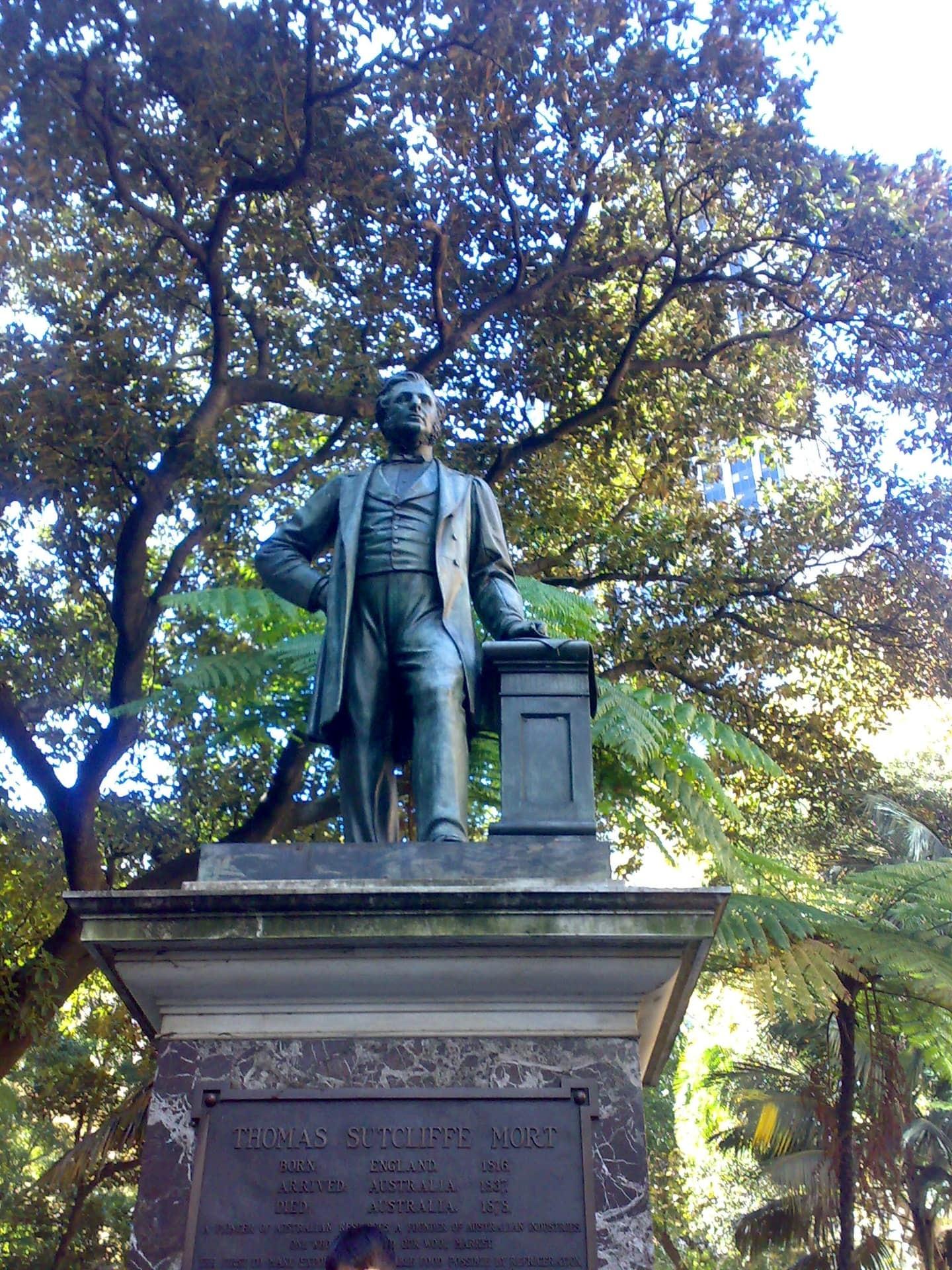
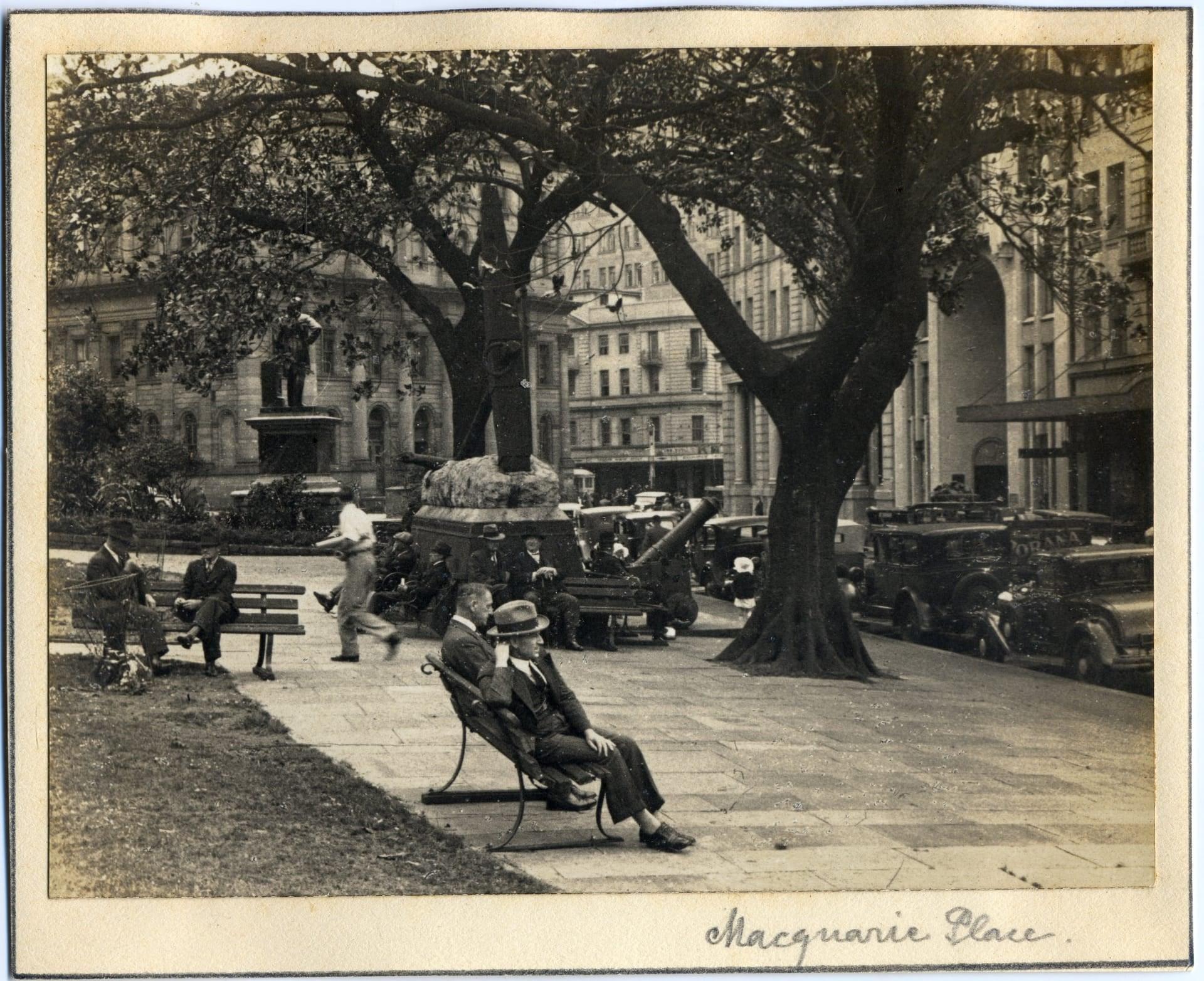
Macquarie Place: Where the Roads Begin
The state's road distances start here. Greenway's 1818 Obelisk of Distances in Macquarie Place, the zero point for New South Wales road distances, with the anchor and a cannon of HMS Sirius.
Details
Best Time to Visit
Any day, in daylight or after dark: every stop is on a public sidewalk, park path or plaza, and none depends on a gate. To go inside, come on a weekday between 10:00 and 16:00, when the Hyde Park Barracks (daily 10:00 to 18:00), the Mint (Monday to Friday 9:00 to 16:00 only), Parliament House (Monday to Friday 9:00 to 17:00) and the State Library are all open. Sunset is about 19:30 in mid November and about 20:05 at the December solstice (computed, not an official figure). In summer, the Hyde Park figs and Macquarie Street's trees give shade on most of the line; Bridge Street is open sky. Checked 10 November 2026.
Pro Tips
- •Start on College Street at St Mary's Cathedral, beside Hyde Park. St James and Museum stations (Sydney Trains) are each a short walk across the park.
- •From the end of our Royal Botanic Garden walk in the Domain, the start is about 400 m, five minutes, along Prince Albert Road. Check lines and exits in the Transport for NSW app before you go; they were read from maps, not the planner. Checked 10 November 2026.
- •Hyde Park Barracks (stop 4): museum entry is free, pre-booking recommended; daily 10:00 to 18:00, last entry 16:30; closed Good Friday and Christmas Day. Professional camera gear needs permission. Checked 10 November 2026.
- •The Mint (stop 5): free, Monday to Friday 9:00 to 16:00, closed weekends and public holidays. Checked 10 November 2026.
- •Parliament House (stop 7): free, Monday to Friday 9:00 to 17:00 (later on sitting days), closed public holidays; everyone passes security screening, and bags and phones are cloaked for the galleries. Free guided tours on Mondays and non-sitting Fridays at 13:30. Read from the Parliament's page as archived on 24 October 2026; Checked 10 November 2026.
- •State Library (stop 8): free. Reading rooms and galleries Monday to Thursday 9:00 to 20:00, Friday 9:00 to 17:00, weekends 10:00 to 17:00. The Tasman Map mosaic is on the vestibule floor of the Mitchell building, up the steps from Shakespeare Place. Checked 10 November 2026.
- •Museum of Sydney (stop 11): free, pre-booking recommended; daily 10:00 to 17:00, closed Good Friday and Christmas Day. Checked 10 November 2026.
- •St Mary's Cathedral (stop 1): open Monday to Friday 6:30 to 18:30, weekends 6:30 to 19:00. Checked 10 November 2026.
- •BMA House's knights and koalas (stop 9) sit high on a 12-storey front: bring a camera zoom or binoculars.
- •At the end, Circular Quay (trains, ferries and light rail) is about 250 m down Loftus Street, with The Rocks beyond.
Safety & Precautions
- •Twelve road crossings: eleven have signals, so wait for the green. The twelfth, between stops 8 and 9, is a zebra over the Shakespeare Place slip lane with no lights: cars coming out of Shakespeare Place approach from your right, and traffic drives on the left, so look right first and cross only when they have stopped.
- •The paths at stops 8 to 10 and the park edge at stop 3 are shared with cyclists: keep to one side.
- •Watch for ambulances at the Sydney Hospital driveway just past the Mint (between stops 5 and 6), and keep the hospital's doors clear at stop 6.
- •St Mary's Cathedral and St James' Church are working churches: keep quiet during services. St James' Church says it is open daily to visit (its site as archived on 12 October 2026; the live site refused connections on 10 November 2026).
- •St Mary's Cathedral has announced major upgrade works in and around the cathedral from March 2027: scaffolding or hoarding may cover parts of it. Checked 10 November 2026.
- •Step-free: no steps on the route, but the obelisk at stop 12 and the Mitchell Library's entrance at stop 8 have steps; stand on the sidewalk. Kerb ramps at the crossings were not all checked on the ground.
- •GPS can drift among the towers on Bridge Street (stops 11 and 12) and under the Hyde Park figs: the copy orients by what you can see.
- •Hyde Park's ibis and gulls are bold around food.
Travel advisory: Exercise Normal Precautions (Level 1).
Gallery
Related Reading
Go deeper on what you'll see, hear, and walk through.
Overview
Best Self-Guided Walking Tours in Sydney (2026)
5 min
Overview
One Day in Sydney: A Walkable Morning-to-Evening Itinerary
9 min
Overview
Sydney Travel Guide: Days, Transport, Safety, and Budget
9 min
Thematic
Best History Walking Tours in Sydney (2026)
2 min
Thematic
Sydney in Sandstone: Reading a Convict City From Cove to Harbour
8 min
Companion
Hyde Park Barracks: The Building That Explains Convict Sydney
8 min
Deep dive
Hyde Park and the ANZAC Memorial: Australia's Oldest Park and Its War Memory
7 min
Read
What to Eat in Sydney: Pies, Oysters, Banh Mi and the Flat White
8 min
Read the walk
The full story of Macquarie Street and Hyde Park: The Governor's Town, in words. Prefer to listen? Play it narrated, from home or on location.
Introduction
Sydney's Macquarie Street is a governor's plan you can still walk. Lachlan Macquarie governed New South Wales from eighteen ten to eighteen twenty one, and he set out to turn a convict settlement into a town. His architect was a convict too: Francis Greenway, transported for forgery. Then nearly every building they made changed its job. A courthouse became a church. A hospital became a mint and a parliament. From the park the governor proclaimed in eighteen ten to the stone of eighteen eighteen that the state still measures its roads from, this walk follows what they made.
There are twelve stops over just under a kilometer and a half, a little under a mile, and it takes about an hour. It starts at St Mary's Cathedral beside Hyde Park, runs north along Macquarie Street, and ends at Macquarie Place, a few minutes from Circular Quay. There are no steps: a gentle rise of about eight meters to Sydney Hospital, then about twenty six meters down to the end. Eleven of the twelve road crossings have signals, so wait for the green. The other is a zebra crossing near the State Library, and that stop will tell you when. Every stop is outside, so the walk works at any hour; the museums, the library and the churches keep their own. From the end of our Royal Botanic Garden walk in the Domain, the start is five minutes away. When you arrive at St Mary's Cathedral, begin with stop one.
1. St Mary's Cathedral: Spires by Helicopter
Welcome to St Mary's Cathedral, where this walk begins. Walk on along College Street to the edge of the paved square and stop there. The long sandstone flank of the cathedral runs beside the street, and at the head of the square rise the two spires of its south front.
This cathedral begins with the governor. In eighteen twenty one Lachlan Macquarie laid the foundation stone of the first Saint Mary's chapel on this ground, and a priest blessed it. It was part of his plan for the east side of the town: the convict barracks you will see at stop four were placed near this chapel, the heritage register says.
In eighteen sixty five the cathedral that had grown from that chapel burned down. The archbishop wrote to the architect he had chosen to rebuild it, and gave him a free hand: any plan, any style, anything that is beautiful and grand. The foundation stone of the building in front of you was laid in eighteen sixty eight. It opened, still unfinished, in eighteen eighty two, and the south nave was only completed in nineteen twenty eight.
Look at the stone. It is honey-toned Sydney sandstone. The architect used Australian native plants as decoration throughout the building.
Now look up at the two spires. They are the newest part. The original design was only finished in June two thousand, when the metal frames of the southern spires were lowered into place by helicopter and then clad in sandstone. That is a hundred and thirty two years after the first stone of this building.
The cathedral calls itself the largest cathedral building in Australia. It is a working church, open every day; if a Mass is on, step in quietly, or come back later.
Follow the route across College Street at the lights, into Hyde Park. Next is a fountain in the governor's park.
2. Archibald Fountain: The Governor's Park
Walk on along the park path toward the fountain ahead and stop on the paved ring around it. In the middle, on the column, stands a bronze Apollo. Around the basin are Diana, Pan and Theseus, with tortoises, fish and horses spraying the jets.
Before the fountain, the ground. It was set aside for the town in seventeen ninety two, in the colony's first years, and used as a common, where people gathered firewood and grazed animals. In eighteen ten, his first year in office, Governor Macquarie proclaimed it a park. Francis Greenway, the convict architect you will meet again and again on this walk, imagined it as the grand square of a classical town. Its first real use was rougher: a racecourse. By the eighteen twenties it was the place for cricket matches. And for decades it had no grass and no trees at all. Those only came in eighteen fifty four.
Now look north, away from the cathedral. An avenue of big Moreton Bay fig trees leads off between the lawns. It continues the line of Macquarie Street: walk up it, and you walk straight into the governor's street.
The fountain came much later. It was a bequest from J. F. Archibald, the editor and owner of The Bulletin magazine, who also endowed the Archibald portrait prize. He wanted a monument to the bond between Australia and France in the First World War, and his bequest asked for a French artist. The sculptor worked from photographs of the Royal Botanic Garden, the site the bequest proposed. The fountain ended up here instead, and was unveiled in March nineteen thirty two. The granite basin is eighteen meters across.
One place, many jobs: that is the thread of this walk.
Follow the route north up the fig avenue. Next is a church that was meant to be a courthouse.
3. St James' Church: The Courthouse That Wasn't
As the fig avenue comes to its end, walk on to the edge of St James Road and stop on the park side, before the crossing. Across the road, look for a copper spire rising above the trees. That is St James' Church. Its near end, with its columned porches, is partly hidden by trees.
This church is the street's first change of mind. In eighteen fourteen Macquarie invited the public to subscribe toward a new courthouse on that site. The foundation stone was laid in October eighteen nineteen. Then a commissioner, sent from London to inquire into the colony, suggested it should be a church instead, and Macquarie agreed. Greenway designed it, convicts built it, and it was consecrated in February eighteen twenty four. By then Greenway had already been dismissed from government work, in eighteen twenty two.
What you see from here is the back of the church. The tower and spire stand at its far end, over the main door; the end facing you holds the altar, and its porches were added in eighteen thirty four, so they are not Greenway's front.
Tower and spire rise about fifty meters to the top of the cross, and from its consecration it was the tallest building in Sydney for about half a century, until the Town Hall's tower rose in the late eighteen sixties and early eighteen seventies.
The state heritage record calls it the oldest church building in the City of Sydney still used for its original purpose.
Now look across the junction: a brick building behind a wall, with a clock in its gable. That is the next stop, and it was placed in line with this church on purpose.
Follow the route: cross St James Road at the lights, then Macquarie Street at the lights, to the barracks gate.
4. Hyde Park Barracks: The Convict Dormitory
Walk on north along the barracks wall, past its gate on your right, and stop. Through and above the gate stands a three-story brick building with a triangular pediment and a clock. This is the Hyde Park Barracks. Entry to the museum is free.
Macquarie laid the foundation stone in April eighteen seventeen. Skilled convict laborers built it to Greenway's design, and it opened in June eighteen nineteen to house up to six hundred government convict men. On average about six hundred slept in that central building, and at times, it was said, twice as many.
Look at the clock. The crown above it carries the governor's name: L. Macquarie, Esquire, Governor, eighteen seventeen. A convict clockmaker assembled it in eighteen nineteen. In his journal Macquarie called this the new elegant barrack, and the heritage listing says he was so impressed that he gave Greenway a full pardon soon after it was finished.
Transportation to New South Wales ended in eighteen forty, and in eighteen forty eight the last convicts left. Then the building changed its job, again and again. From eighteen forty eight it was a depot for newly arrived immigrant women. From eighteen sixty two it also held an asylum for infirm and destitute women. Then it held courts and government offices until nineteen seventy nine. In the nineteen thirties there were proposals to pull it down, and the campaign against them helped lead to the founding of the National Trust in nineteen forty five. It opened as a museum in nineteen eighty four.
Since twenty ten it has been one of eleven places on UNESCO's World Heritage List as the Australian Convict Sites. UNESCO counts around one hundred and sixty six thousand men, women and children sent to Australia over eighty years, from seventeen eighty seven to eighteen sixty eight.
Follow the route north along this sidewalk. Next is a hospital paid for in rum.
5. Mint: A Hospital Paid For in Rum
Walk on along the sidewalk to the railings of the next building and stop: a two-story sandstone wing with deep verandas on both floors. This is the Mint, now a free museum, open on weekdays from nine to four. It began as a hospital, and an odd deal paid for it. In November…
Full narration for this stop unlocks with the tour.
6. Sydney Hospital: The Missing Middle
Walk on to the bronze boar sitting at the edge of the sidewalk and stop beside it. Behind it rise the tall sandstone fronts of Sydney Hospital. This is the middle of the Rum Hospital story, and the middle is the part that is gone. The central wing of Macquarie's hospital was…
Full narration for this stop unlocks with the tour.
7. Parliament House: From Ward to Chamber
Walk on to the next long building with verandas on both floors and stop at its front. This is Parliament House of New South Wales. Entry is free on weekdays from nine to five, through security screening, and there are free guided tours. This was the Rum Hospital's northern…
Full narration for this stop unlocks with the tour.
8. State Library: The Collector's Condition
Walk on around the corner into Shakespeare Place and stop by the bronze statue at the corner. Along this side street stands a sandstone front with tall columns, at the top of a flight of steps. That is the Mitchell Library, part of the State Library of New South Wales. The…
Full narration for this stop unlocks with the tour.
9. BMA House: Knights and Koalas
Walk on along the path beside the Garden's iron fence and stop. Look across Macquarie Street at the tall pale building with decoration high on its front. That is BMA House, built in nineteen twenty nine and nineteen thirty for a doctors' association. Look up near the top. There…
Full narration for this stop unlocks with the tour.
10. Conservatorium: Stables Without a Palace
Walk on to the corner where Bridge Street meets Macquarie Street and stop. Turn your back to Macquarie Street and look across Conservatorium Road to the sandstone building on the rise, with battlements and turrets showing above the trees. It looks like a castle. It was built as…
Full narration for this stop unlocks with the tour.
11. First Government House Site: The Governor's Home
Walk on along Bridge Street to the open forecourt at the corner of Phillip Street and stop at its edge. In the forecourt stands a cluster of tall poles, and behind it the Museum of Sydney, which is free to enter. Under this ground lies the colony's first Government House. It…
Full narration for this stop unlocks with the tour.
12. Macquarie Place: Where the Roads Begin
Walk on along Loftus Street beside the park's railings and stop beside the stone obelisk. It stands below the sidewalk, in a sunken space with steps down on both sides and an iron railing around it: a tall, tapering sandstone shaft about six meters high. This is the Obelisk of…
Full narration for this stop unlocks with the tour.