From the Bondi Surf Bathers' Life Saving Club along Bondi's promenade and the cliff path past Bondi Icebergs, Mackenzies Point's shark engraving and Tamarama's gully, to the Bronte Baths.
Start · Bondi Surf Bathers' Life Saving Club: Reel and Flags
DirectionsStops
- 1
Bondi Surf Bathers' Life Saving Club: Reel and Flags
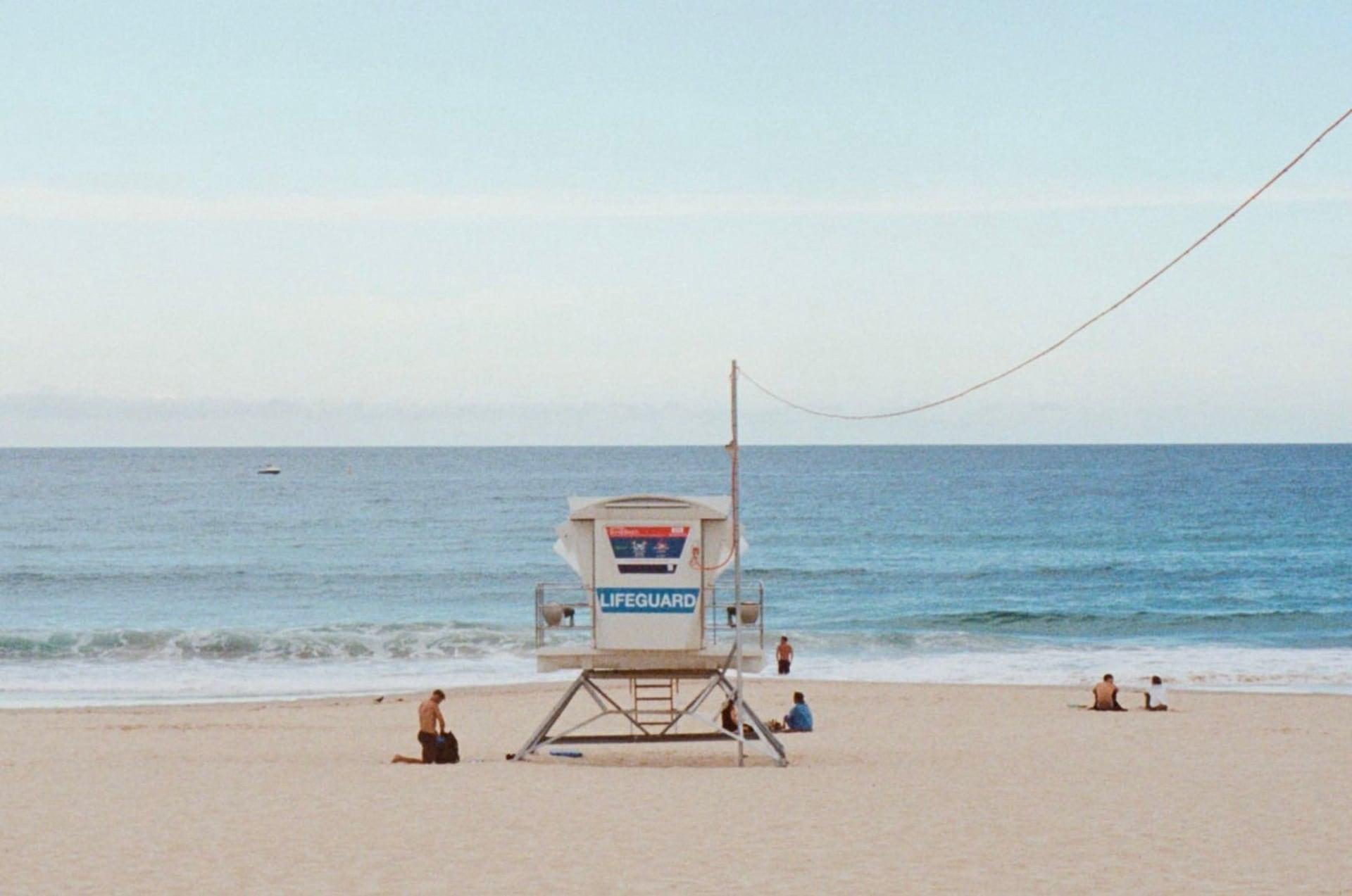
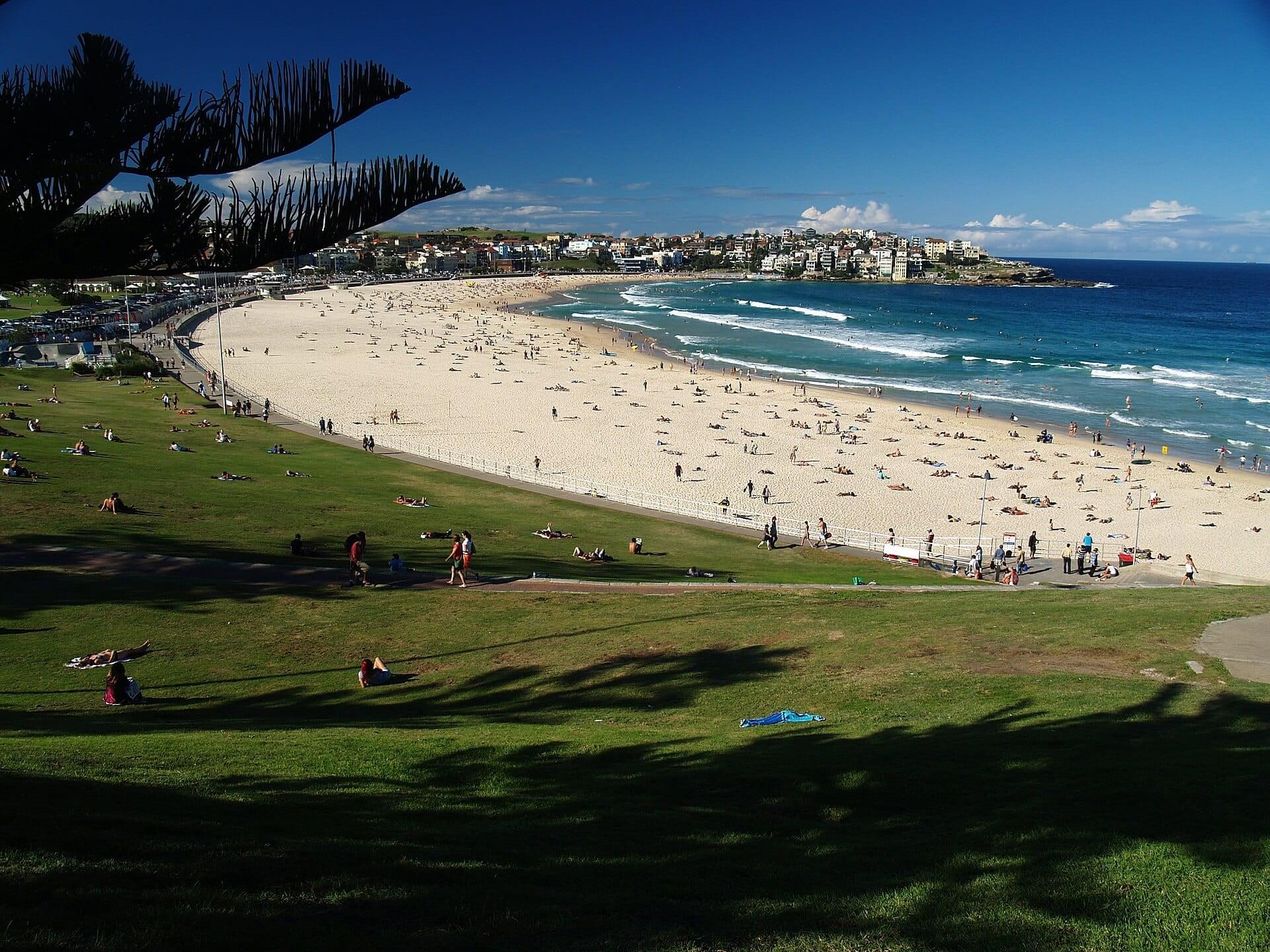
Swimmers formed this club in 1907. The Bondi Surf Bathers' Life Saving Club, formed on 21 February 1907 and called Australia's first recorded surf lifesaving club by the state's blue plaque, with the patrol flags on the sand in front.
- 2
Bondi Pavilion: Changing Rooms for Thousands
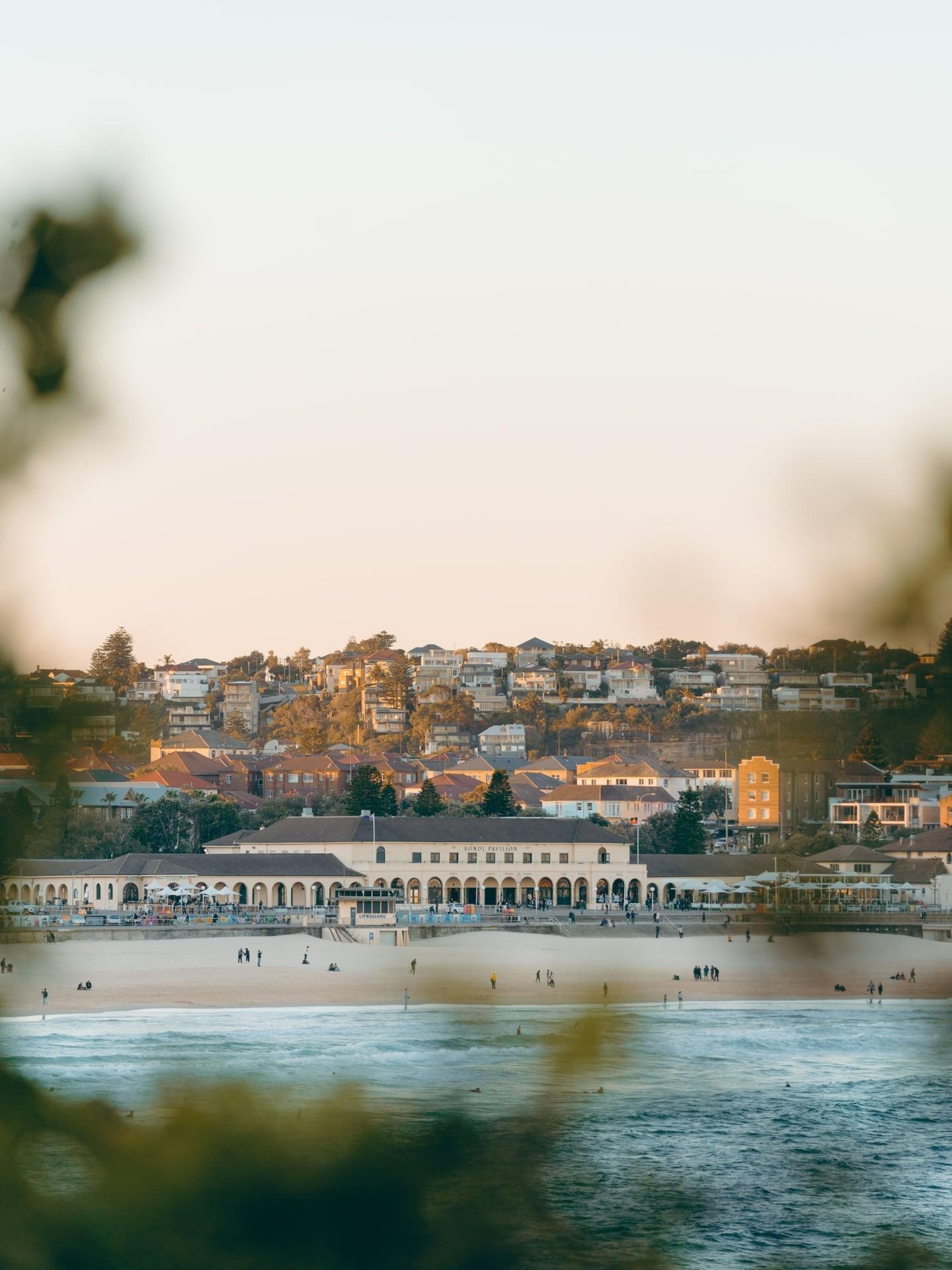
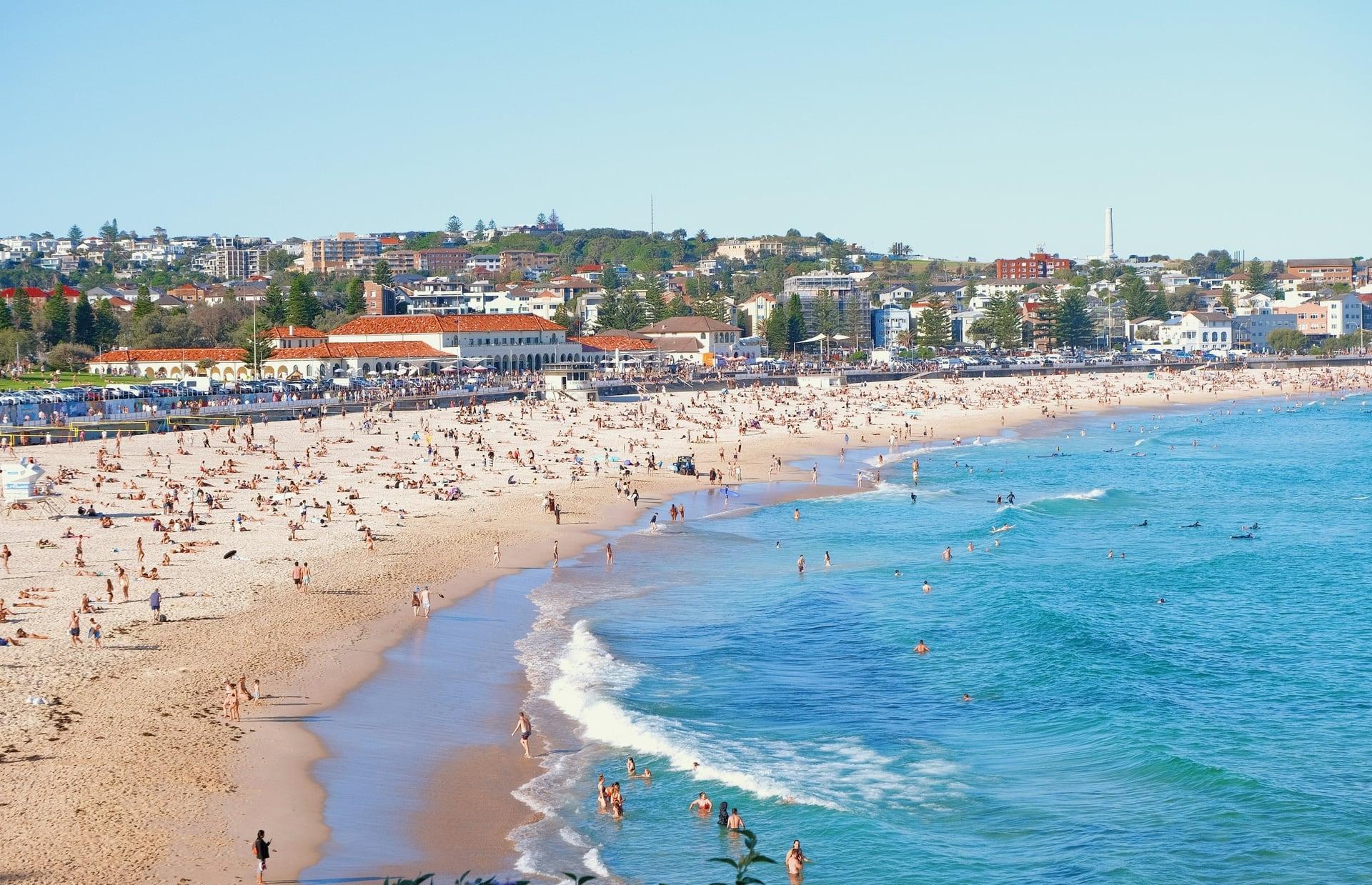
Built for crowds in the late 1920s. The Bondi Pavilion's arched sea front, almost 130 m long, built with changing rooms, Turkish baths and a ballroom for 12,000 bathers, renovated in 2022.
- 3
Bondi Sea Wall: When Daylight Swimming Was Banned
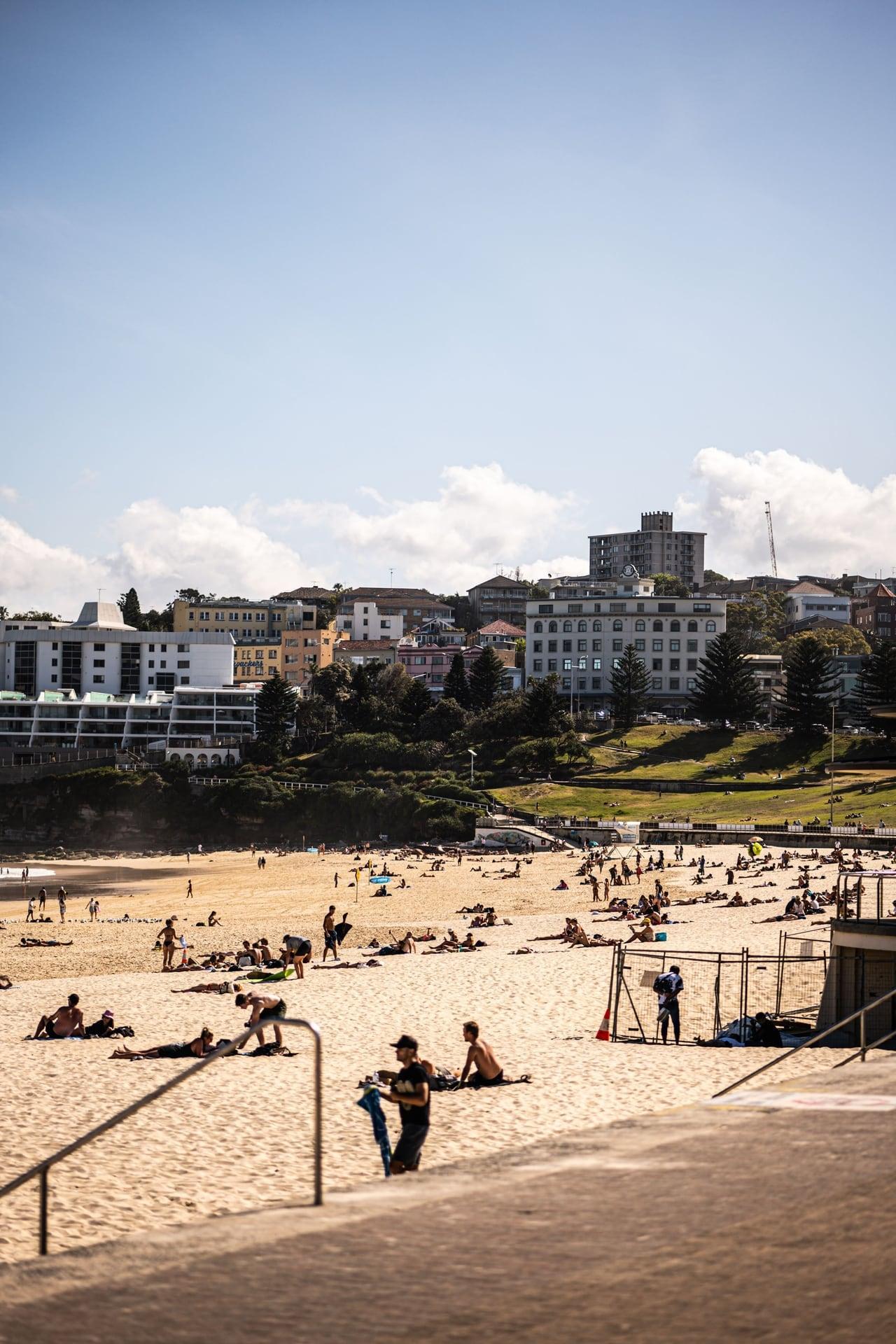
A sea wall that artists now paint. Built between 1911 and 1920 to hold Bondi's sand, a few years after bathing by daylight became legal on Sydney's beaches.
- 4
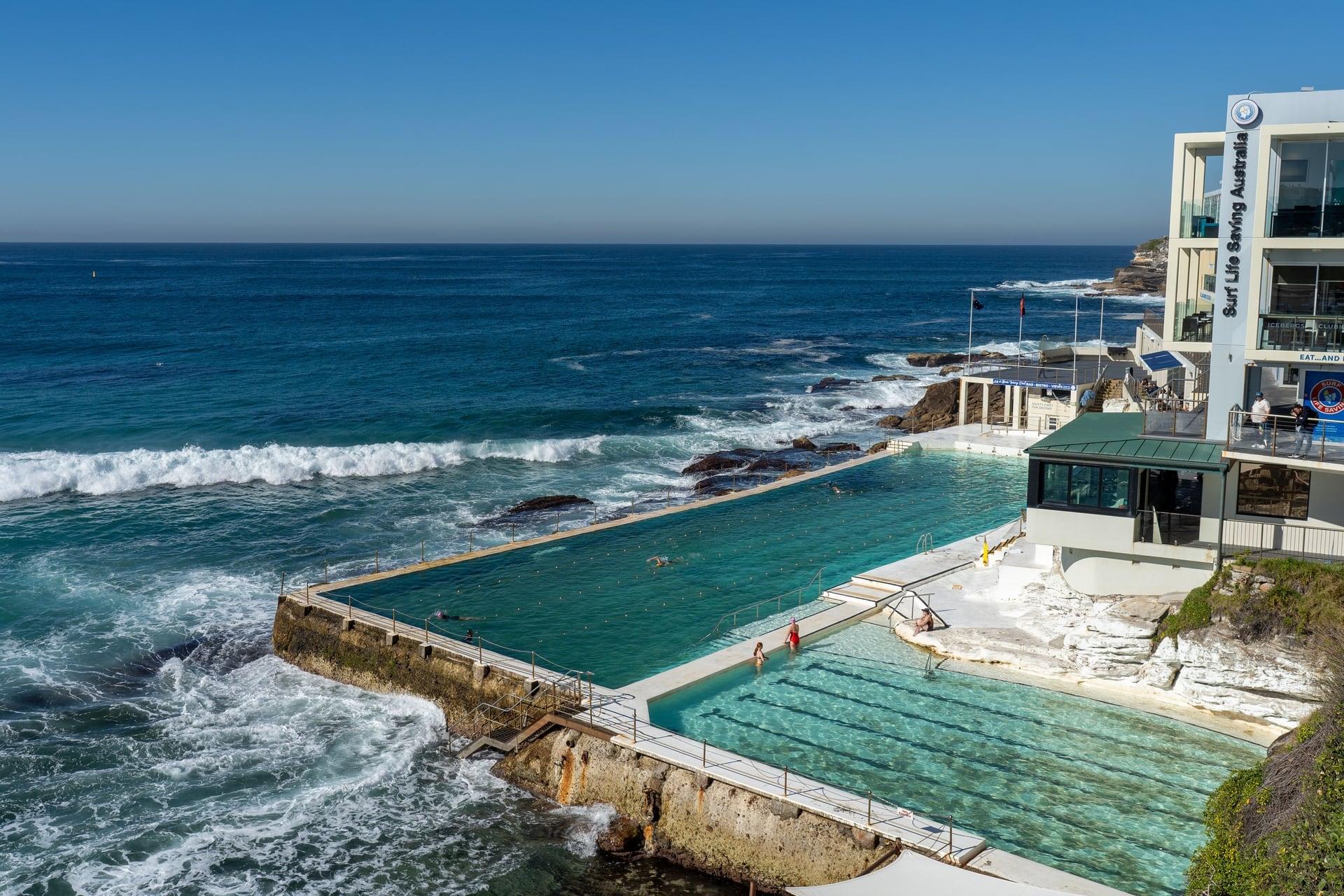
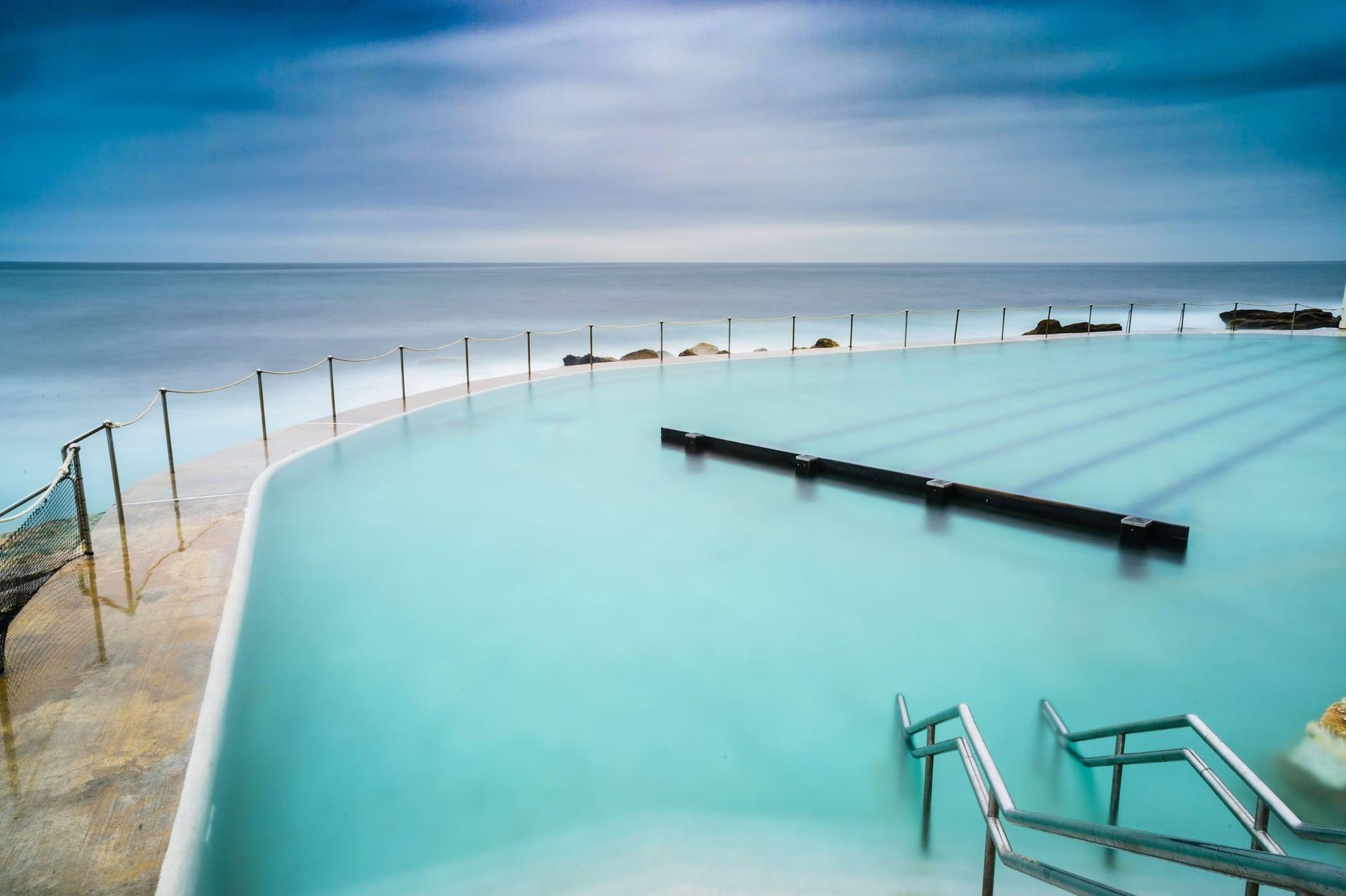
Bondi Icebergs: Swimming Through Winter
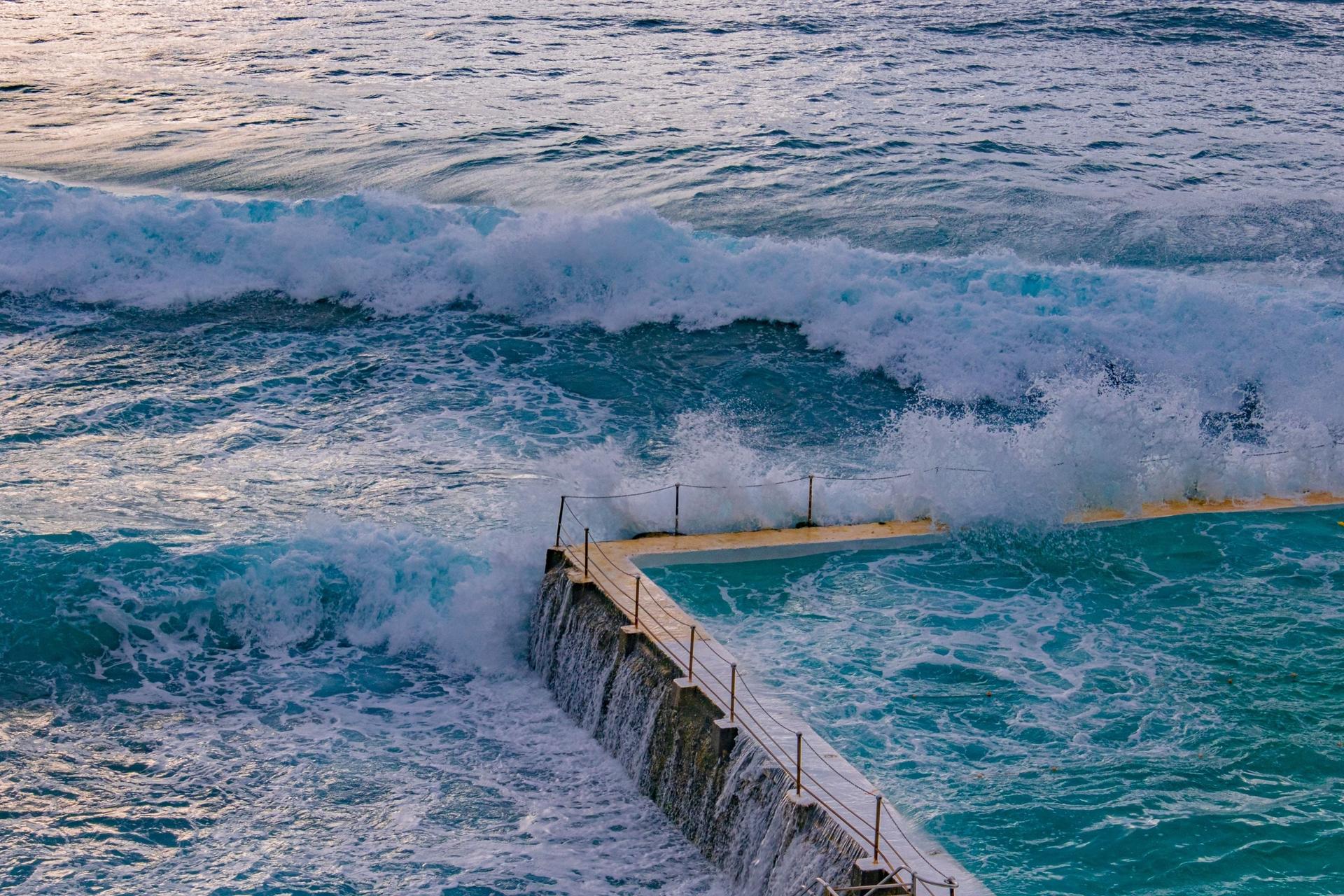
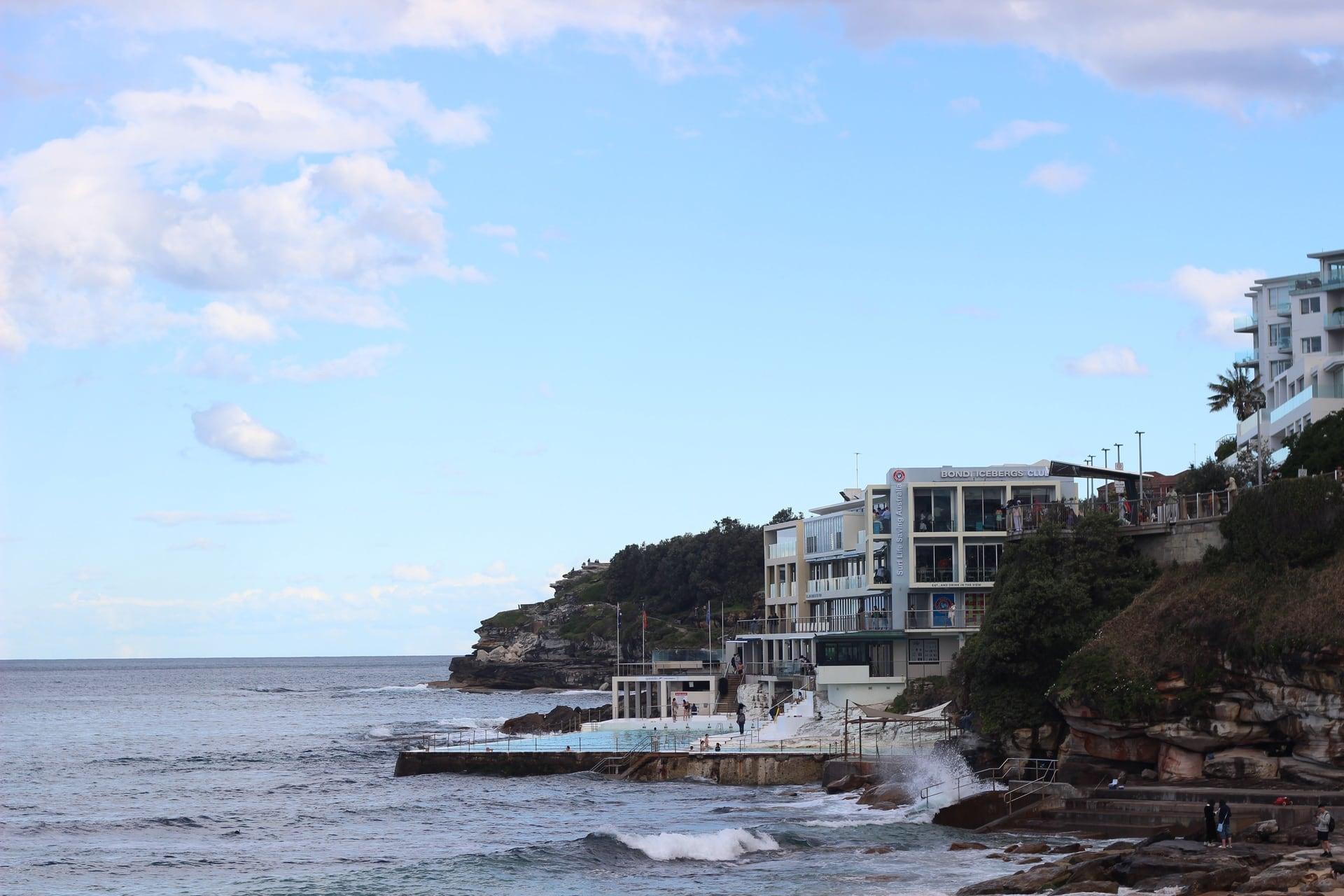
A winter swimming club since 1929. Bondi Icebergs' ocean pool below the free public lookout, open to the public all year for an entry fee, with the whole of Bondi Beach behind it.
- 5
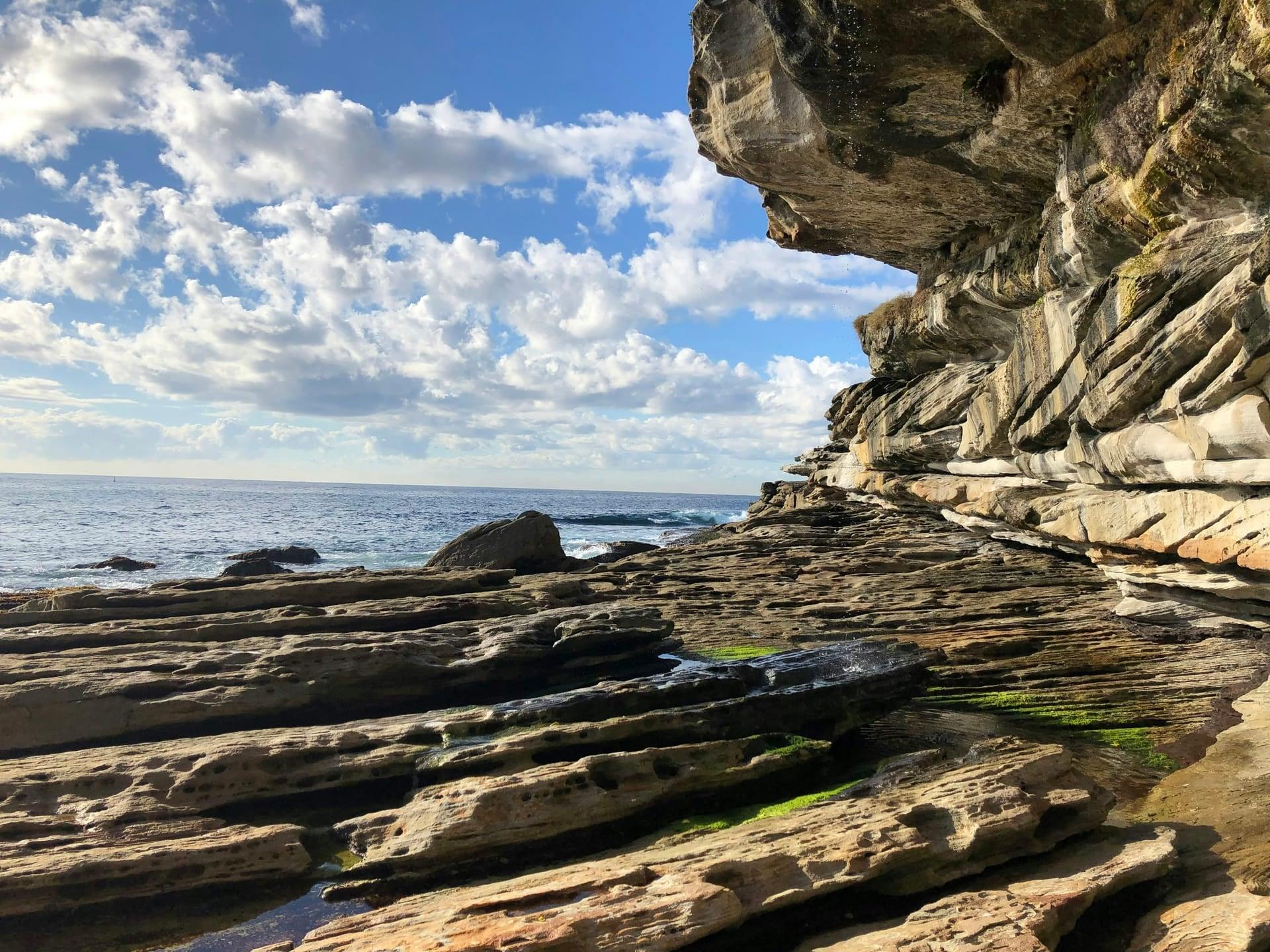
South Bondi Cliffs: Soft Rock, Hard Edge
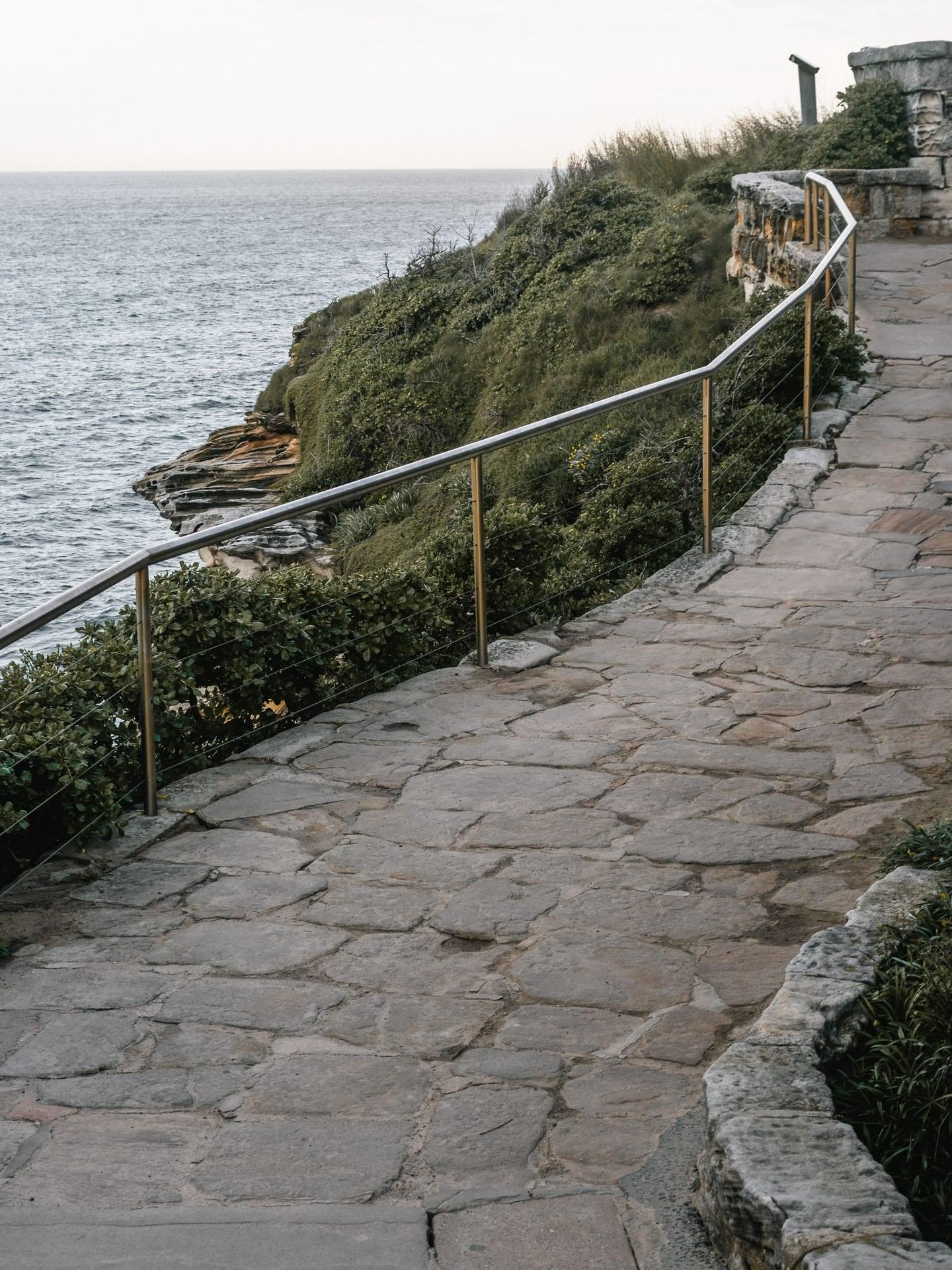
Soft sandstone cliffs behind a fence. The clifftop path south of the Icebergs, where Waverley warns that going beyond the fence is potentially fatal, and where Sculpture by the Sea takes over each spring.
- 6
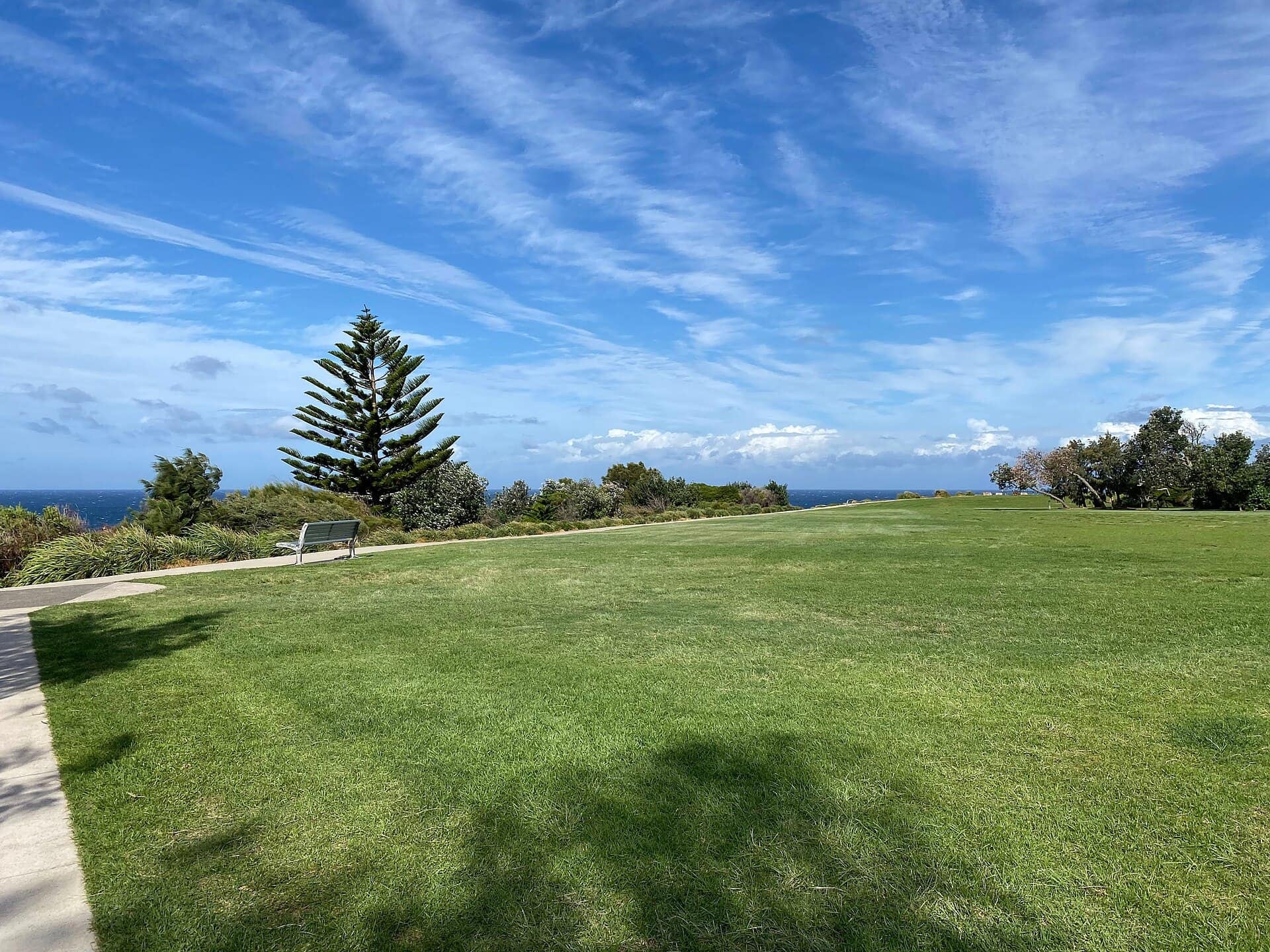
Mackenzies Point: The Shark in the Rock
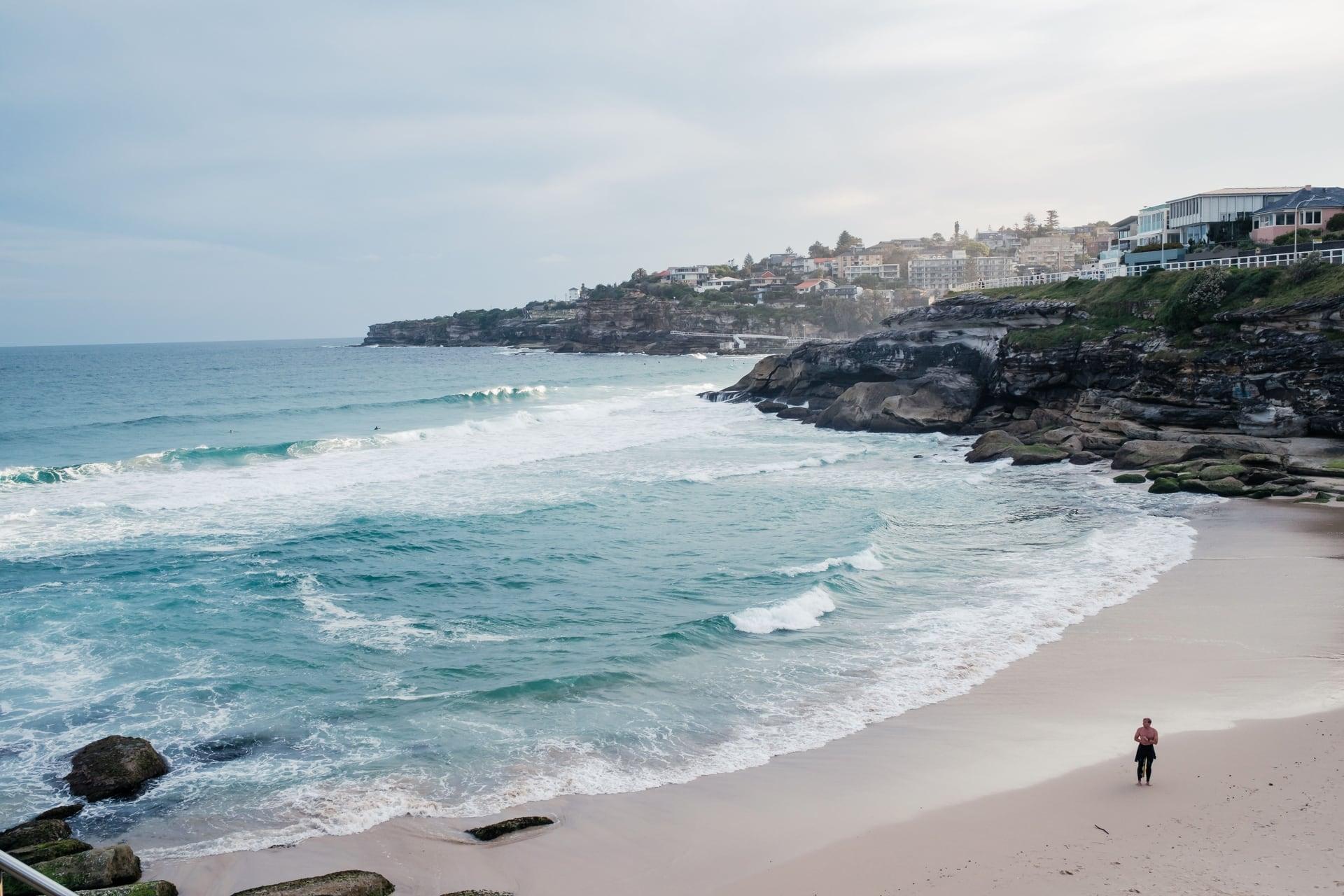
An engraved shark on the rock platform. Mackenzies Point in Marks Park, where an Aboriginal engraving of a six-meter shark lies on the rock: to be seen, never walked on or touched.
- 7
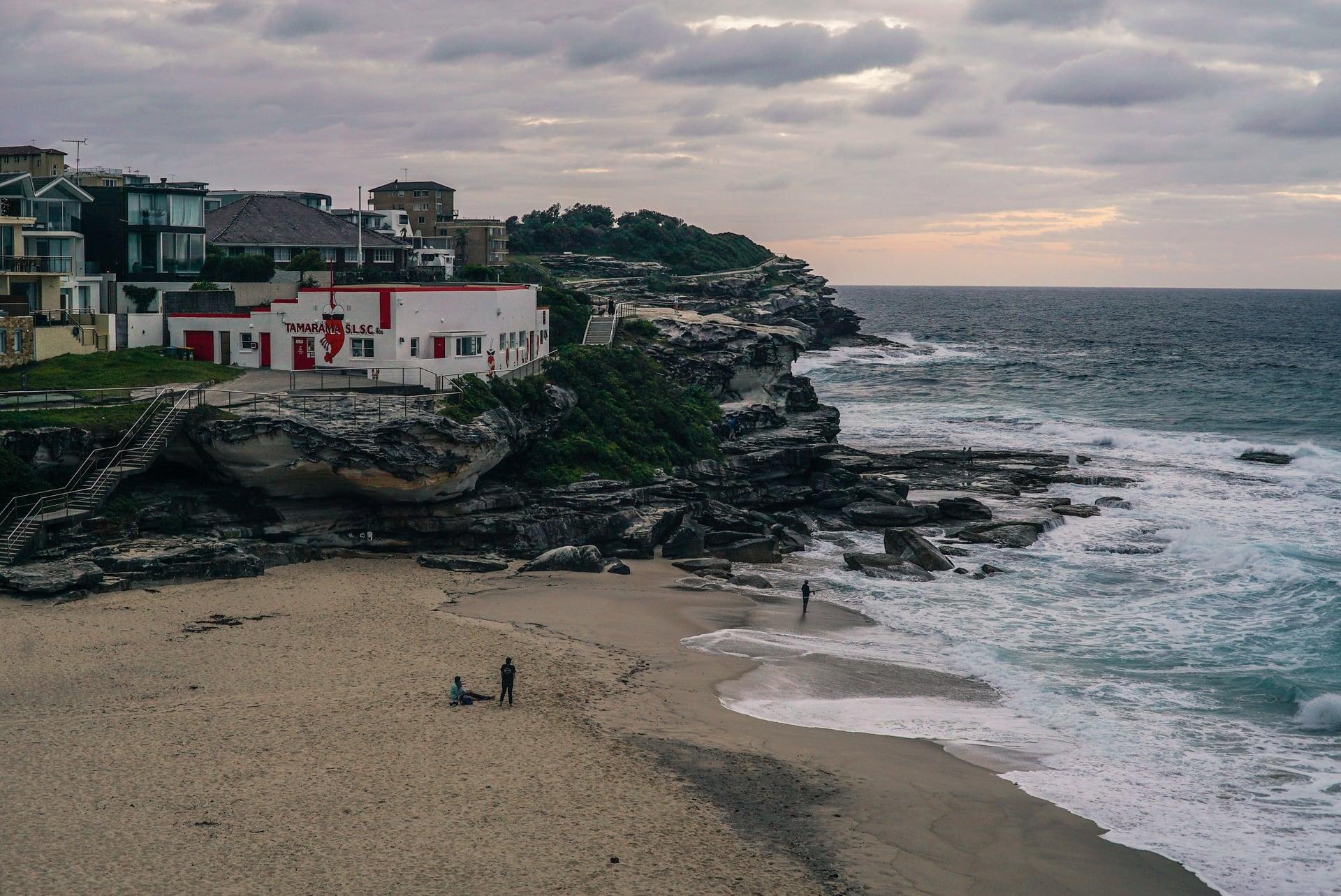
Above Tamarama: A Cove of Many Names
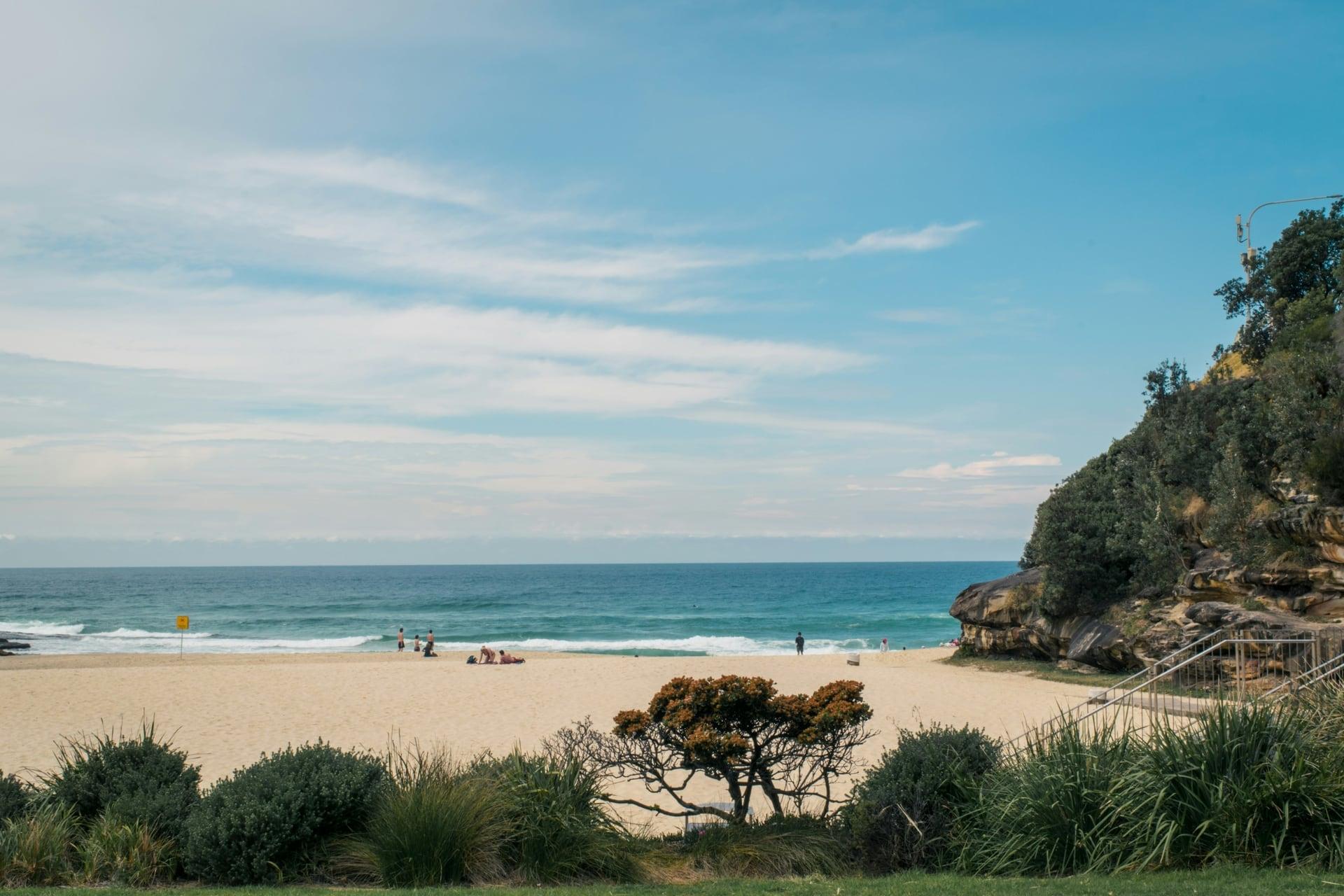
Tamarama's cove has worn many names. The clifftop lawn above Tamarama's narrow beach and gully, beside a history board titled 'The Arrival of the Dharawal'.
- 8
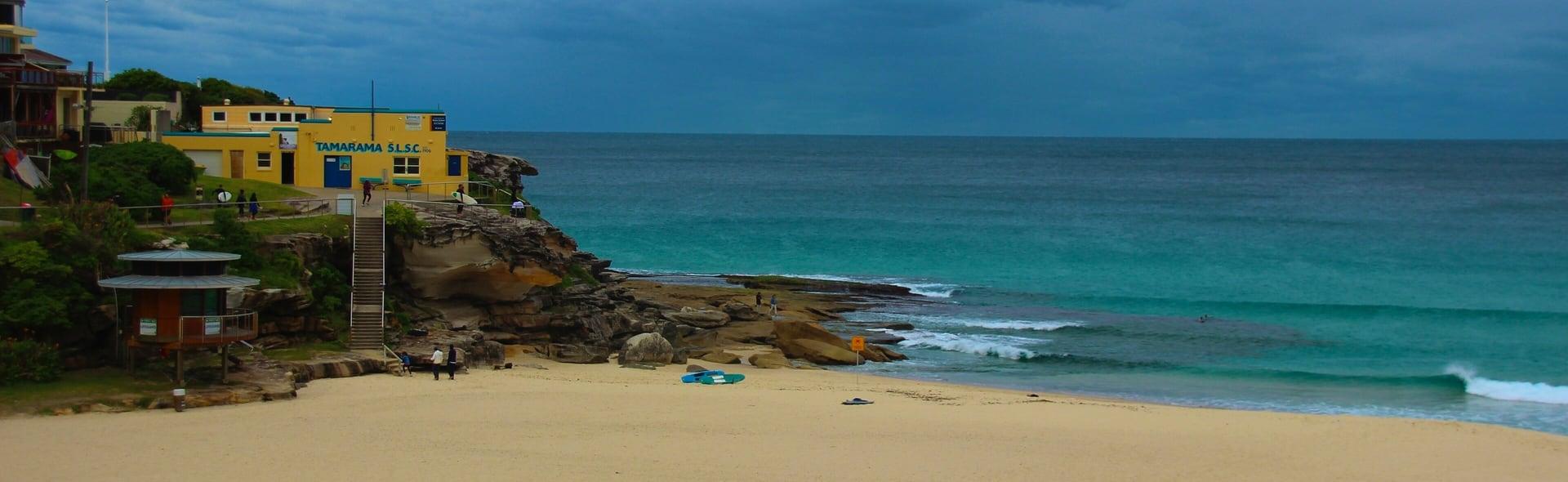
Tamarama Surf Life Saving Club: The Cut Fence
Swimmers cut a barbed wire fence here. Tamarama's surf club, formed by the swimmers who cut an amusement park's wire across this beach until the state ordered free access in March 1907.
- 9
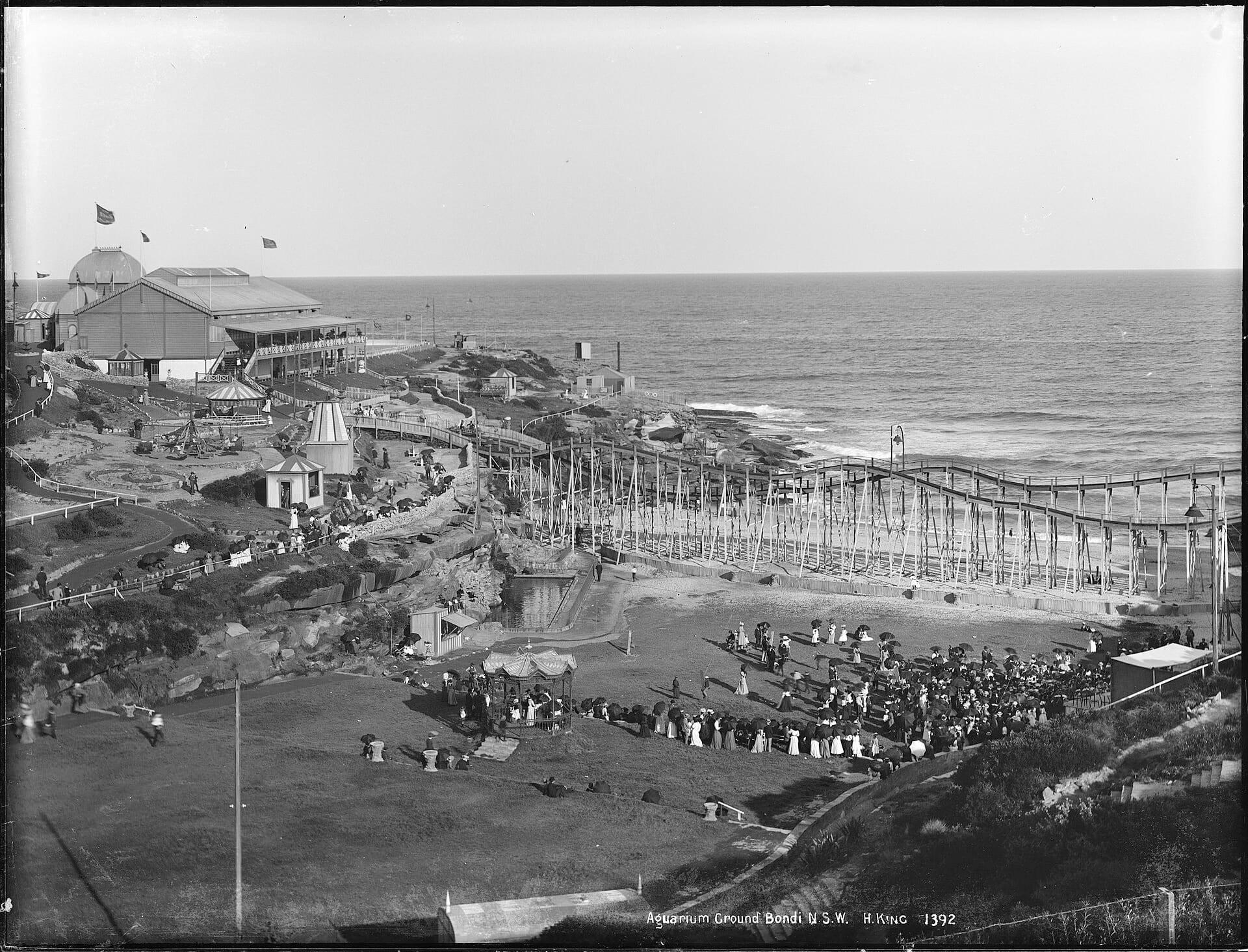
Tamarama Park: The Fairground in the Gully
A fairground once filled this gully. The Royal Aquarium from 1887 and William Anderson's Wonderland City from 1906, with a roller coaster and an airship on a cable, closed by 1911.
- 10
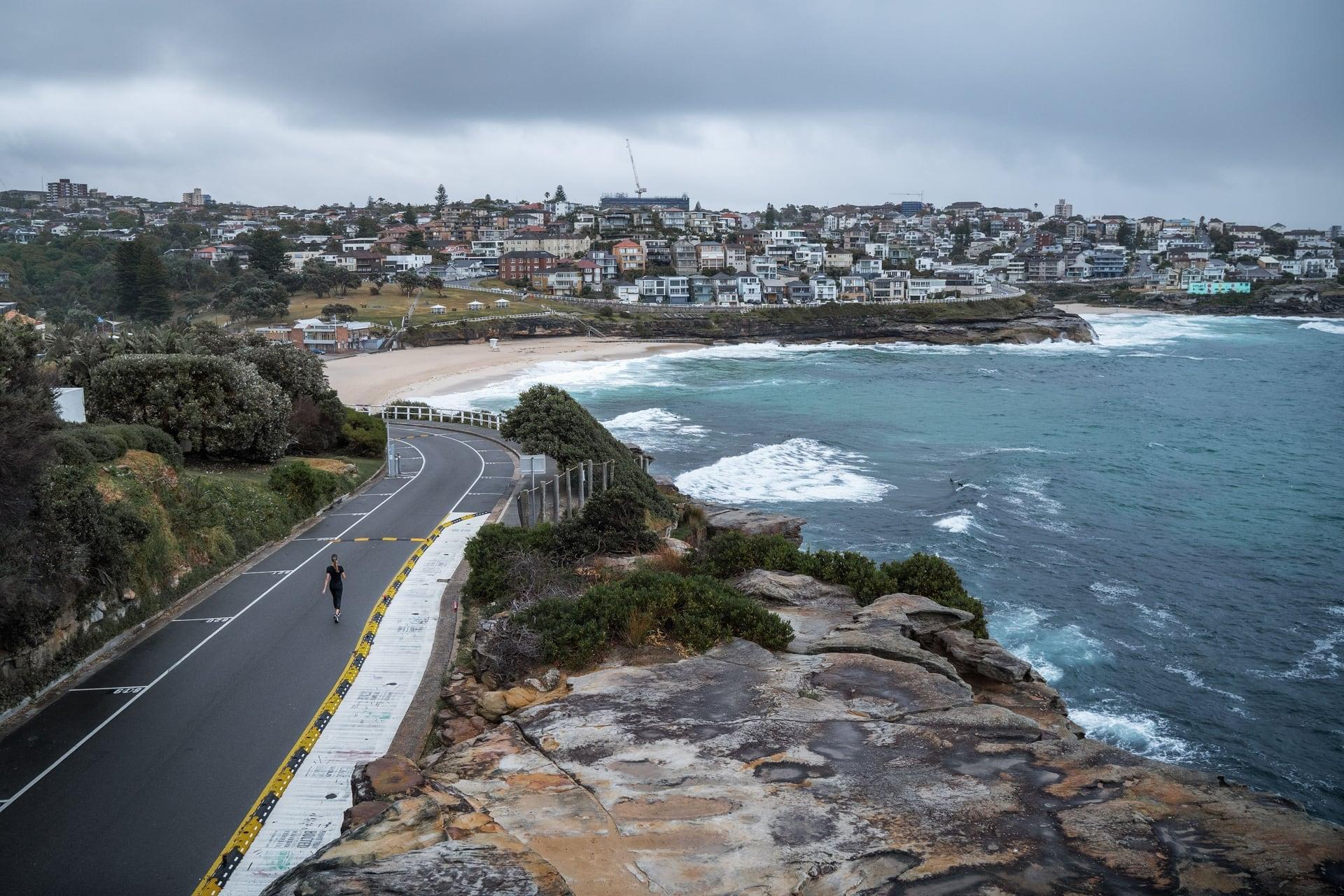
North Bronte: The Fallen Cliff
A rockfall closed these beach stairs. The view over all of Bronte from Bronte Marine Drive, beside the beach stairs closed since the August 2025 rockfall; no reopening date.
- 11
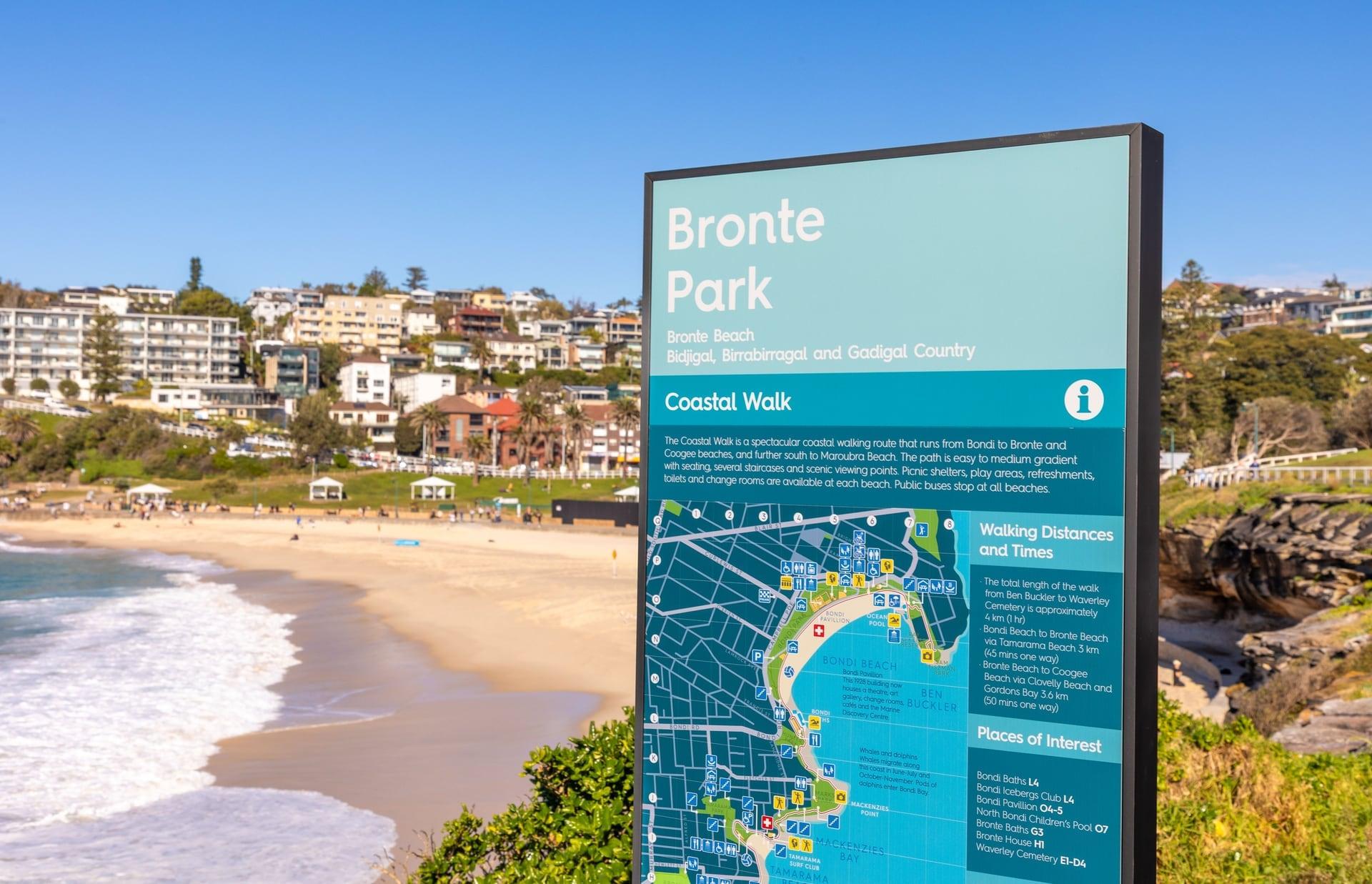
Bronte Park: The Other First Club
Bronte's club claims an older start. Bronte Park, resumed for the public in 1886, beside the fenced site of the new Bronte surf club, whose members date their first lifesavers to 1903.
- 12
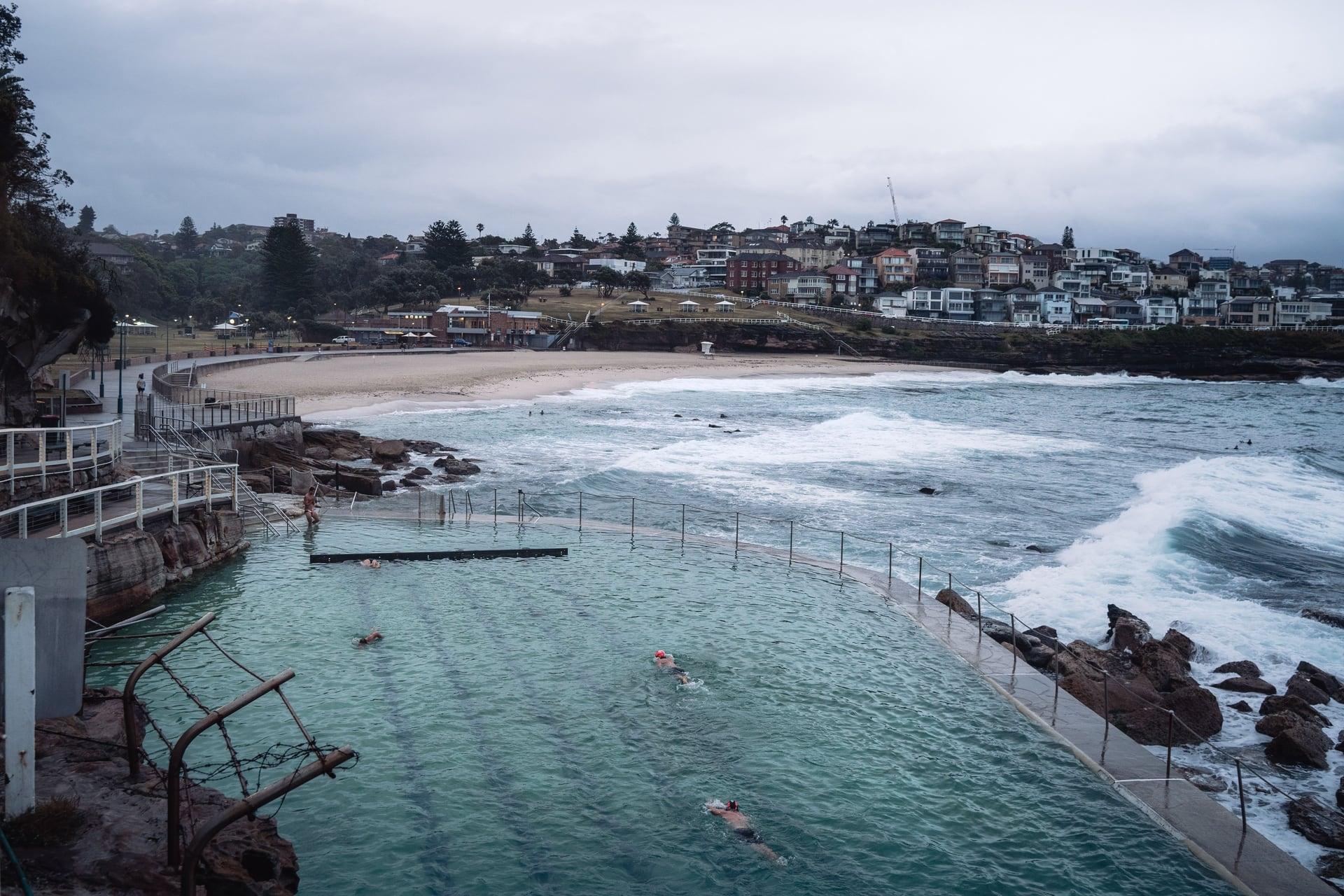
Bronte Baths: A Pool in the Rock
An ocean pool cut into sandstone. The Bronte Baths of 1887 and the Bogey Hole, free and open daily except Wednesday cleaning, with Waverley Cemetery on the next headland.
Details
Best Time to Visit
Daylight and dry weather, ideally a calm-sea day. The cliff path from just after stop 4 to stop 8 is unlit: sunset is about 7:30 pm on 10 November and about 8:05 pm on 21 December (computed, not official), so start by about 5:30 pm in November and 6 pm in December, or end at stop 4. In summer go early or late: there is almost no shade, and no taps or kiosks between stop 4 and stop 8. Big swell can close the path at the Icebergs. Checked 10 November 2026.
Pro Tips
- •Getting there: buses 333 and 380 to Bondi Beach, Campbell Pde, Stand A (Hello Bondi: about 30 minutes from Circular Quay, Town Hall and Central). From the stop, cross Bondi Park toward the beach and walk north along the promenade, past the Pavilion, about 400 m to the surf club and its flags. Or take a train to Bondi Junction (from Central, Town Hall or Martin Place) and the 333 from Stand A there. Check the Transport for NSW Trip Planner first. Checked 10 November 2026.
- •Getting back: bus 379 from Bronte Beach Terminus, Bronte Rd, about 210 m inland from stop 12 through the south side of the park, to Bondi Junction. Checked 10 November 2026.
- •Short version at dusk: end at stop 4. The South Bondi Beach stops on Campbell Parade are about 100 m up the road from the Icebergs lookout; check the Trip Planner for the route.
- •Bondi Icebergs pool (stop 4): adult entry $10, open to the public all year, Monday to Friday 6:00 am to 6:30 pm, weekends 6:30 am to 6:30 pm, subject to tides and races; closed Thursdays for cleaning except in summer when tides permit (icebergs.com.au). Checked 10 November 2026.
- •Bronte Baths (stop 12): free, open daily, closed on Wednesdays for cleaning for about four hours before low tide (Wednesday 11 November from 12 pm, Wednesday 18 November from 5 am, per Waverley Council's schedule). Checked 10 November 2026.
- •Keep going if you have the legs: the coastal walk continues about 400 m south to Waverley Cemetery (open to pedestrians at all times; Henry Lawson's grave) and on toward Clovelly.
- •Taps, toilets and kiosks are at Bondi, Tamarama and Bronte; none between stop 4 and stop 8. Marks Park's toilets open 6:30 am to 3:30 pm on weekdays and 7:30 am to sunset on weekends (Waverley Council).
- •Sculpture by the Sea fills the path between Bondi and Tamarama each spring; the 2027 dates are 22 October to 8 November (sculpturebythesea.com). Checked 10 November 2026.
Safety & Precautions
- •About 290 steps in some 14 short flights (82 counted, the rest estimated from the map), with no step-free route past the Icebergs; the biggest flights are the Icebergs stairs (stop 4 to 5) and the climbs in and out of Tamarama (stops 7 to 10). Not suitable for wheelchairs or strollers between stop 4 and stop 10.
- •Full sun on almost every meter. Sun protection is recommended whenever the UV index reaches 3 (Cancer Council); summer middays here run far higher. Hat, sunscreen, water.
- •Swim only between the red and yellow flags; if no flags are up, swimming is not recommended (Waverley Council). Tamarama's surf suits experienced surfers.
- •Stay behind the cliff fences: Waverley Council warns it is highly dangerous and potentially fatal to go beyond the fence line. Keep children close on the cliff path.
- •The rock engraving at Mackenzies Point (stop 6) may be seen but never walked on or touched (Gujaga Foundation, Waverley Council).
- •The cliff path is unlit from just after stop 4 to stop 8 (about 1 km, including unlit stairs down to Tamarama). In November start by about 5:30 pm, or end at stop 4.
- •North Bronte's beach stairs and the coastal walk toward the Bronte surf club have been closed since the August 2025 rockfall, with no reopening date (Waverley Council, checked 10 November 2026). The route detours by Bronte Marine Drive and Bayview Street: follow the council's detour signs and never pass the fences.
- •The Bronte surf club is being rebuilt behind hoardings until about 2027 (Waverley Council); the fence line and the diversion move with the works. Follow the signs between stops 11 and 12. Checked 10 November 2026.
- •Between stops 10 and 11 there is no road to cross: keep to the park side of Bayview Street for about 60 m and watch for cars pulling out of the parking bays.
- •Notts Avenue (between stops 3 and 4) is a shared street with cars at walking pace: keep to the edge. Big swell can close the path here: follow the signs.
- •Eastern Suburbs buses have been affected by industrial action since Wednesday 4 November 2026, with some services delayed or cancelled and no end date given (transportnsw.info). Check the Trip Planner before you set off and before you leave Bronte. Checked 10 November 2026.
- •Bondi, Tamarama and Bronte beaches and the streets around them are alcohol-free zones (Waverley Council).
- •Waverley Cemetery, beyond the end, is a working cemetery: walk quietly, keep off the graves and be considerate of funerals.
Travel advisory: Exercise Normal Precautions (Level 1).
Gallery
Related Reading
Go deeper on what you'll see, hear, and walk through.
Read the walk
The full story of Bondi to Bronte Coastal Walk: How the Beaches Were Won, in words. Prefer to listen? Play it narrated, from home or on location.
Introduction
Bondi Beach, on Sydney's eastern edge, looks as if it has always belonged to everyone. It has not. Swimming here by daylight was banned until the early nineteen hundreds. The land behind the beach was private until it was declared a public reserve in eighteen eighty two. And in the next cove south, an amusement park ran barbed wire across the sand, and swimmers cut it until the state stepped in. This walk follows that coast to Bronte.
There are twelve stops over about three point two kilometers, two miles, and it takes about ninety minutes. There are nearly three hundred steps, in short flights over the headlands, with no step-free route past the Icebergs, and no road to cross. There is almost no shade: bring a hat, sunscreen and water. The cliff path from just after stop four to stop eight has no lights, so in November start by about half past five in the afternoon, or end at stop four. At North Bronte the beach stairs have been closed since a rockfall in August twenty twenty five, and the Bronte surf club is a building site: follow the council's detour signs. Check the Trip Planner for buses before you set off. The walk ends at the Bronte Baths, near the Bronte bus terminus. When you arrive at the Bondi Surf Bathers' Life Saving Club, begin with stop one.
1. Bondi Surf Bathers' Life Saving Club: Reel and Flags
Stop on the promenade in front of the Bondi Surf Bathers' Life Saving Club. Farther along the beach, the way you will walk, stands a round lifeguard tower, and when the patrol is up you will see red and yellow flags on the sand.
A few years before this club existed, swimming here by daylight was banned, for fear of sharks and stingrays and for modesty, Waverley Council's visitor history says. When the ban came off, in the early nineteen hundreds, the crowds went into the surf.
In nineteen oh six, local swimmers were already pulling people out of the water. One of them, Lyster Ormsby, helped invent the tool they used: a line and a belt, later the reel and line, so a rescuer could swim out to someone in trouble and both could be hauled back to shore. The reel and line was in use on this beach by December nineteen oh six. Then, on the twenty first of February nineteen oh seven, at a meeting in a hotel at Bondi Junction, twenty three men formed this club. The state's blue plaque calls it Australia's first recorded surf lifesaving club. You will hear another claim to that title near the end of this walk.
The red and yellow flags came later, in nineteen thirty five. They mark the water the patrol is watching. Swim only between them, and if no flags are up, the advice is not to swim at all. On Black Sunday, the sixth of February nineteen thirty eight, the council's history records about two hundred and fifty swimmers needing help on this beach at once, and five who drowned.
Today two kinds of people watch this water. Lifeguards in blue are employed by the council and patrol all year. Lifesavers in red and yellow are volunteers, the heirs of this club.
Follow the route along the promenade. Next is the long building with the arches.
2. Bondi Pavilion: Changing Rooms for Thousands
Walk on along the promenade to the far corner of the long building with the arches and red tiled roofs, and stop there, where you can look back along its whole sea front. This is the Bondi Pavilion.
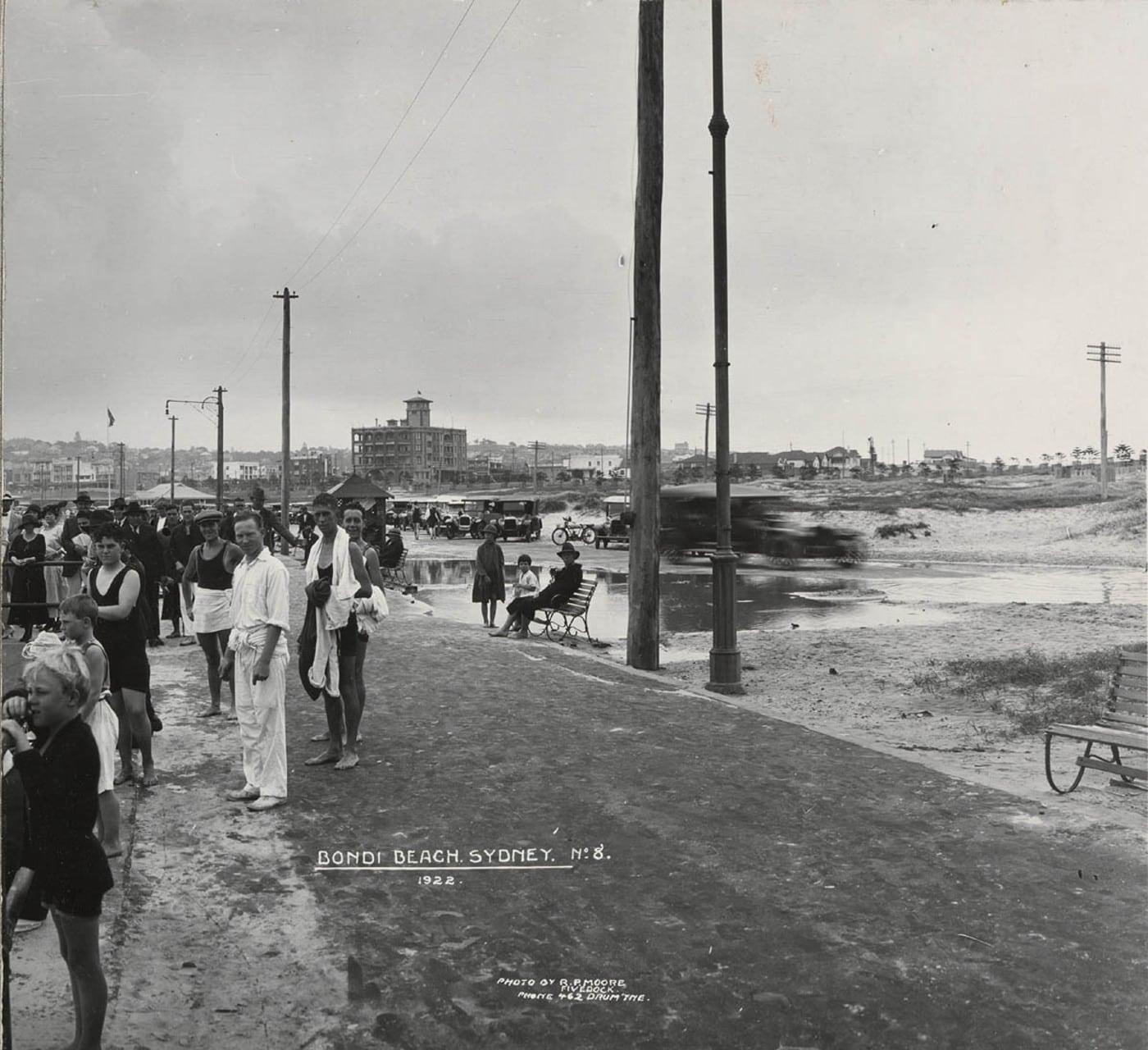
The land behind this beach was once private. People called for it to be opened, and in eighteen eighty two it was declared a public reserve. Once daylight swimming was allowed, the crowds came, and they needed somewhere to change. A first pavilion, known as the Castle Pavilion, went up in nineteen eleven. It was soon replaced.
This one was the council's answer to the crowds. Its foundation stone was laid in May nineteen twenty eight, and the Dictionary of Sydney records it opening, with the rest of a rebuilt beachfront, in December nineteen twenty nine. Its front runs almost a hundred and thirty meters, and it was designed for twelve thousand people at a time, with changing rooms, shops, Turkish baths and even a ballroom. Look at the arches, the colonnade and the tiled roofs. The style mixes Interwar Mediterranean and Georgian Revival: a seaside palace for a city that had only just been allowed into the sea by day.
Fashions changed. By the early nineteen seventies the press was calling the pavilion a great white elephant. A theatre opened inside in nineteen seventy five, the building was made a heritage site in nineteen seventy seven, and its latest renovation was finished in September twenty twenty two. Today it is a public building, with a theatre, a gallery and community spaces inside.
Follow the route on along the promenade. Next is the long wall below the road, covered in paint.
3. Bondi Sea Wall: When Daylight Swimming Was Banned
Walk on to the foot of the painted wall that runs along the land side of the promenade, and stop there. Ahead, at the far end of the beach, you can see the white walls of the Icebergs above their ocean pool.
This is the Bondi sea wall. It was built between nineteen eleven and nineteen twenty, at the back of the beach, to hold the sand in place. Today the council lets artists paint it, and the pictures change. Look along it: whatever is painted there today is the newest layer on a wall more than a century old.
When its first stones went in, swimming here by day had been legal for only a few years. Before then, bathing in daylight was banned on Sydney's beaches. In nineteen oh two, a man swam at Manly in daylight in protest against the law, and was arrested but not charged. In November nineteen oh three Manly's rule was repealed: men and women could bathe at any hour, at set places, as long as they were covered from neck to knee. Bondi's own daylight ban ended in the early nineteen hundreds too.
So this wall, the pavilion and the club you passed all belong to one short burst. In about thirty years Bondi went from a beach where you could not legally swim by day to a beach with a surf club, a sea wall, a pavilion for twelve thousand people, and flags.
Follow the route to the end of the promenade and up onto Notts Avenue. It is a shared street, with cars moving at walking pace into the Icebergs' entrance, so keep to its edge. If the path ahead is closed for big waves, follow the signs.
4. Bondi Icebergs: Swimming Through Winter
Walk on to the lookout above the ocean pool and stop there, with the pool below you and the whole curve of Bondi Beach behind it. When the swell is up, waves break right over the pool's sea wall.
This is Bondi Icebergs. The pool below is open to the public all year for an entry fee, about ten dollars for an adult, and it closes on Thursdays for cleaning, except on summer days when the tides allow; the details are on this stop's card. This lookout is free.
The club was founded in nineteen twenty nine, and its own history says why: to foster winter swimming. Think about where that sits in the story. A generation earlier, swimming here by day was banned. Now there was a club whose whole point was to keep swimming through the cold months, in the sea. The club calls itself the only licensed swimming club in the world, and it considers new members once a year, by application, in January.
People lived on this coast long before any club. Waverley's visitor pages record a midden, a deposit of shells, found in a rock shelter at Bondi's southern end, a mark of the long First Nations occupation of this coast.
The swimmers below are here for the water, so give them their space.
If the light is going, this is the place to end the walk. The cliff path ahead has no lights for about a kilometer. The South Bondi bus stops on Campbell Parade are about a hundred meters up the road: check the Trip Planner for the route.
Follow the route down the stairs past the Icebergs and out onto the cliff path.
5. South Bondi Cliffs: Soft Rock, Hard Edge
Walk on along the cliff path and stop where you can see the cliff and the rock shelf below the fence, with the Icebergs and Bondi behind you. Inland is the grass of Hunter Park. Look at the rock. This is sandstone, and the council's own history pages, in text from the Gujaga…
Full narration for this stop unlocks with the tour.
6. Mackenzies Point: The Shark in the Rock
Walk on to Mackenzies Point and step onto the lookout terrace beside the path to listen. The open ocean is in front of you, Bondi is back along the coast, and Tamarama and Bronte lie ahead along the coast. On the flat rock platform of this point is an Aboriginal engraving: a…
Full narration for this stop unlocks with the tour.
7. Above Tamarama: A Cove of Many Names
Walk on along the cliff path to the edge of the lawn above the next cove, and stop there, on the path or the grass, well back from the fence. Below you is Tamarama: a narrow beach in a deep green gully between two headlands. Just back along the path you passed a history board…
Full narration for this stop unlocks with the tour.
8. Tamarama Surf Life Saving Club: The Cut Fence
Walk on down past the surf club building to the beach promenade at this end of Tamarama Beach, and stop there. In front of you is the beach: short and narrow, between two rocky headlands. Its waves, Waverley's visitor guide says, are ideal for experienced surfers. Council…
Full narration for this stop unlocks with the tour.
9. Tamarama Park: The Fairground in the Gully
Walk on to the head of the promenade, at the edge of the park behind the beach, and stop just short of the steps. In front of you is the gully, with its lawns and trees rising between the two headlands. For twenty four years this gully was a fairground. On the first of October…
Full narration for this stop unlocks with the tour.
10. North Bronte: The Fallen Cliff
Walk on along the path beside the road until the whole of Bronte opens out below you, and stop there. You can see the beach, the green park in its gully, the fenced building site of the surf club, and at the far end, the rock pool where this walk ends. Right beside you, behind…
Full narration for this stop unlocks with the tour.
11. Bronte Park: The Other First Club
Walk on along the path across the lawn and stop where you can see the fenced building site of the surf club, with the beach beyond it and the trees of the gully inland. This park was won, too. Before the eighteen eighties the beach here was private property, closed to the…
Full narration for this stop unlocks with the tour.
12. Bronte Baths: A Pool in the Rock
Walk on down the promenade to the far end of the beach and stop above the rock pool. Below you is a long rectangular pool cut into the sandstone, with the sea washing over its outer wall, and beside it a smaller rock pool. The smaller pool is the bogey hole. The Dictionary of…
Full narration for this stop unlocks with the tour.