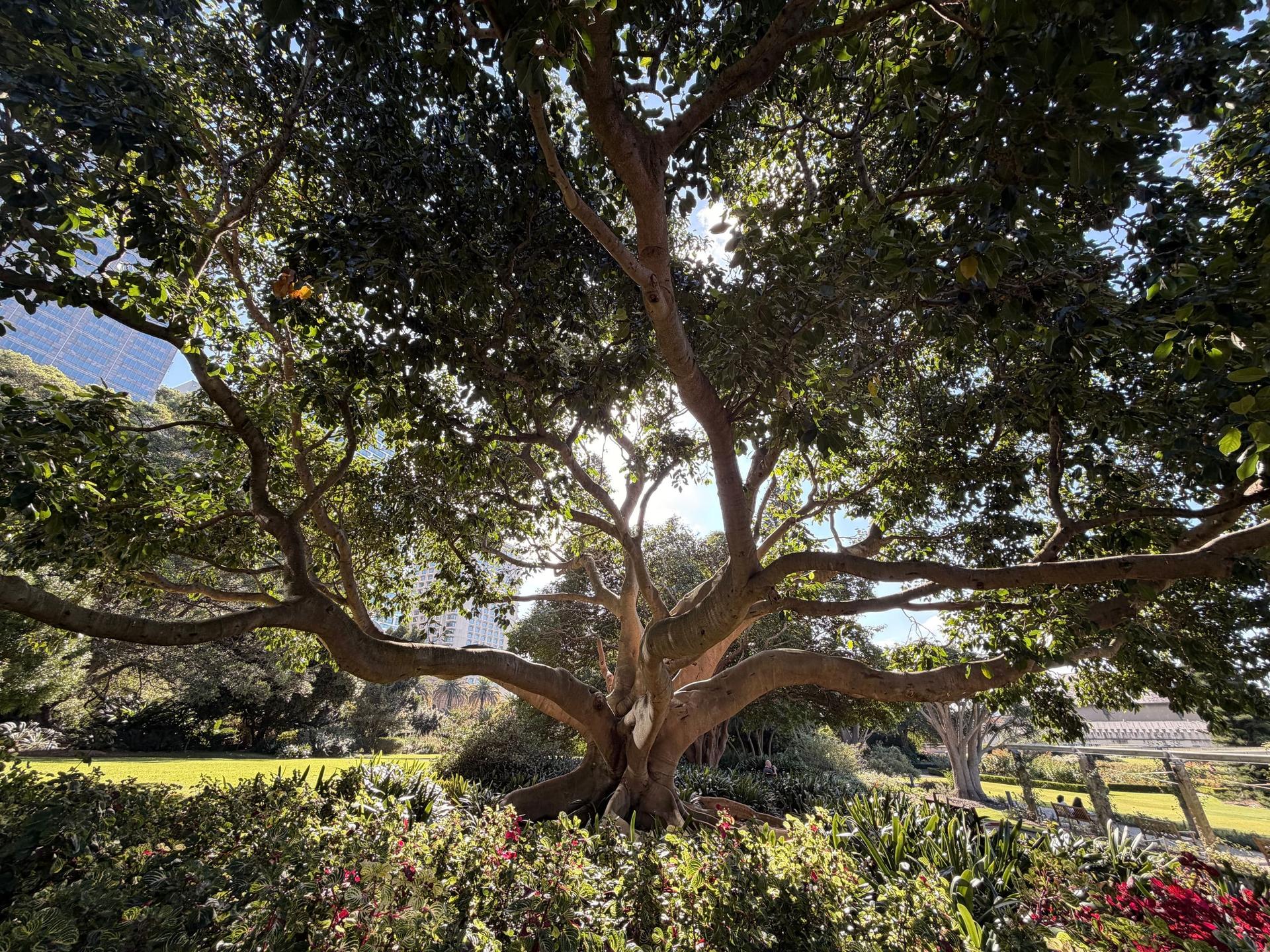
From the Queen Elizabeth II Gate by the Opera House through the Royal Botanic Garden's lawns and the first farm site, round Farm Cove's sea wall to Mrs Macquarie's Chair, past Woolloomooloo Bay and the Art Gallery across the Domain.
Start · Queen Elizabeth II Gate
DirectionsStops
- 1
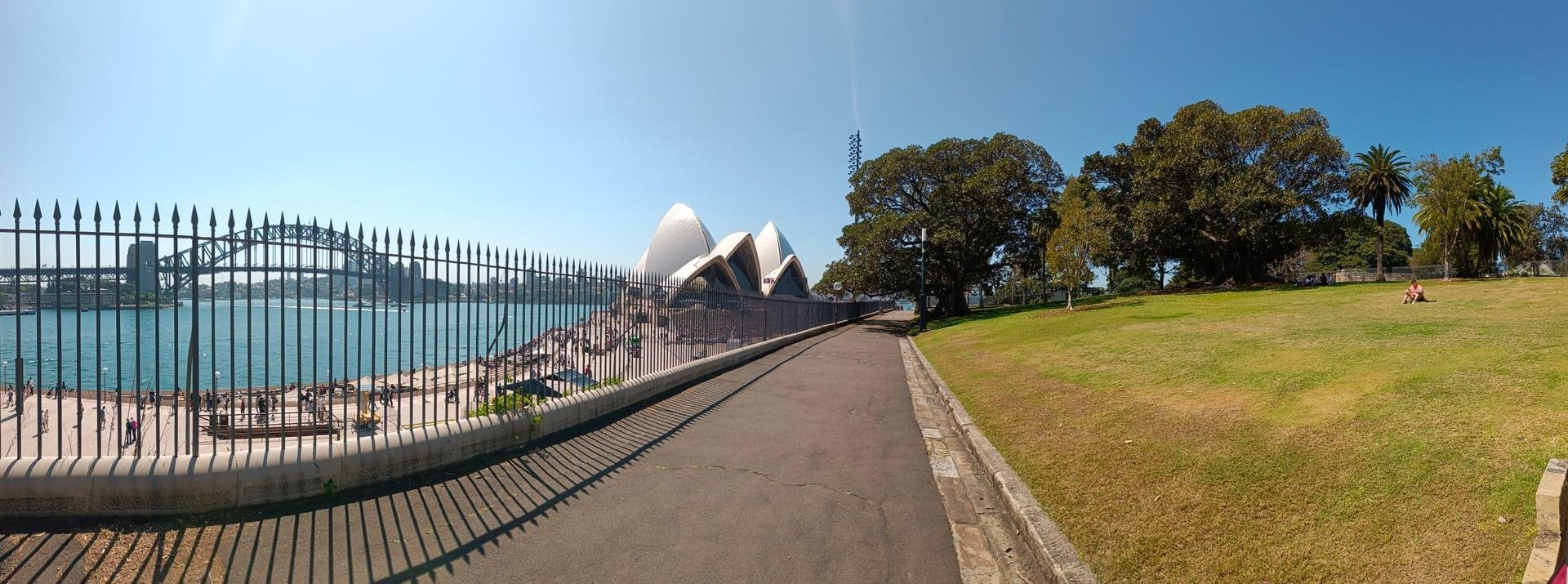
Queen Elizabeth II Gate
The Garden's harbor gate opens here. Australia's oldest botanic garden, founded in 1816, begins just inside the gate at the Opera House forecourt, below a sandstone cliff cut in 1880.
- 2
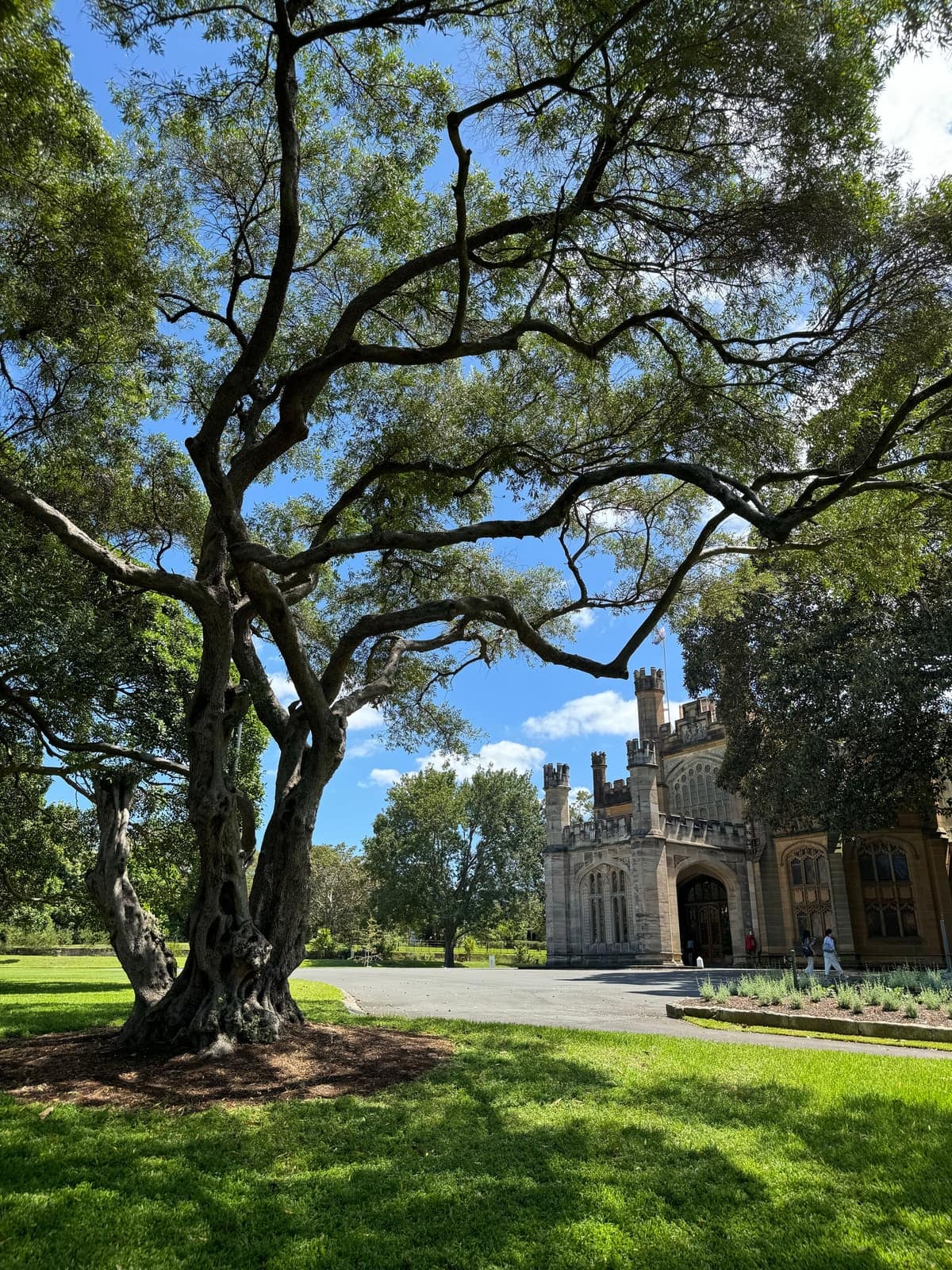
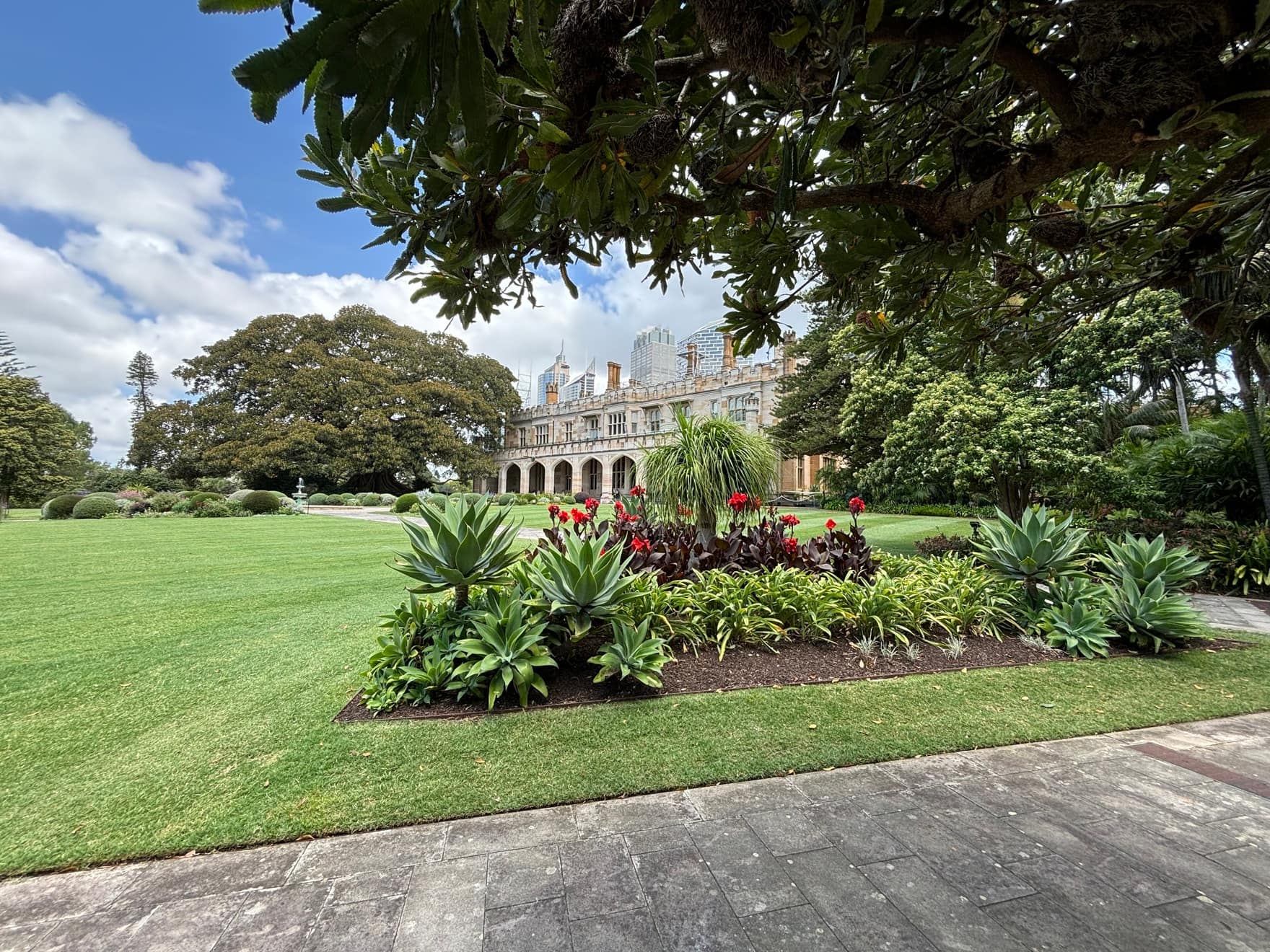
Government House: The Governor's Lawn
The governor's house shares this fence. Government House, castellated and set on its terrace, seen across its lawn from the Garden path; the house and grounds are not part of the Garden.
- 3
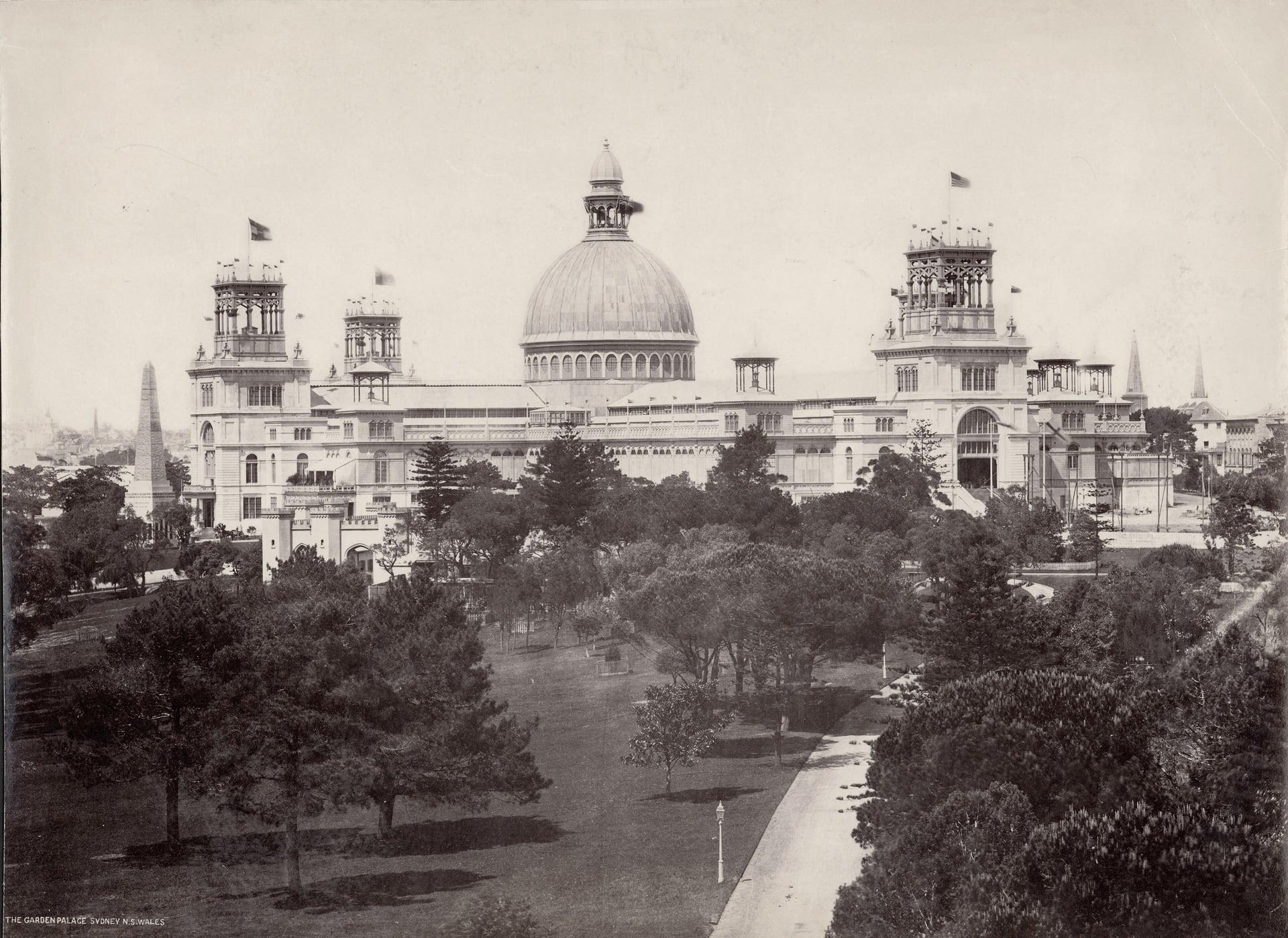
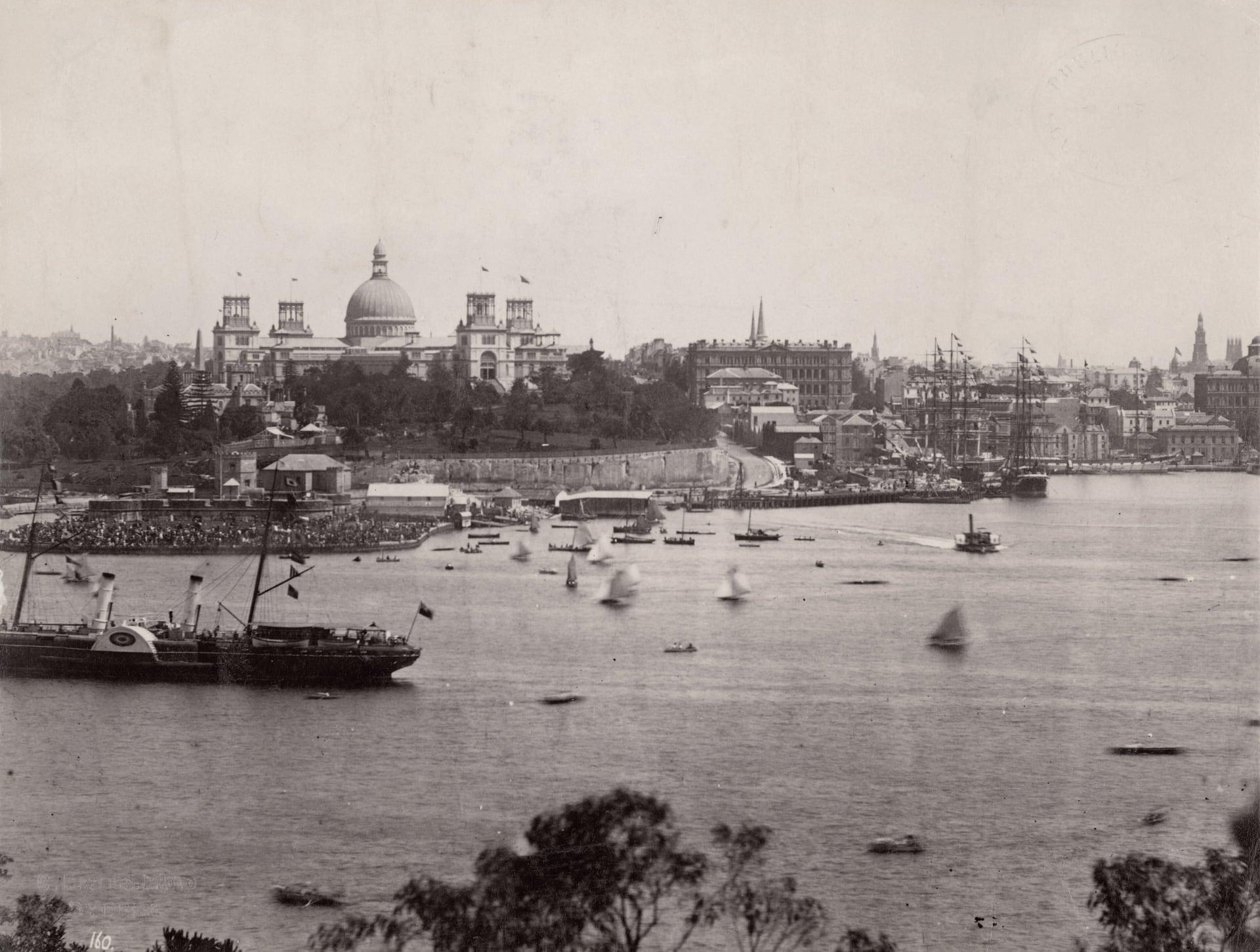
Garden Palace: The Building That Burned
A vast palace burned beside this lawn. The Garden Palace, built in 1879 for the International Exhibition, twice the size of the Queen Victoria Building, burned on the night of 22 September 1882.
- 4
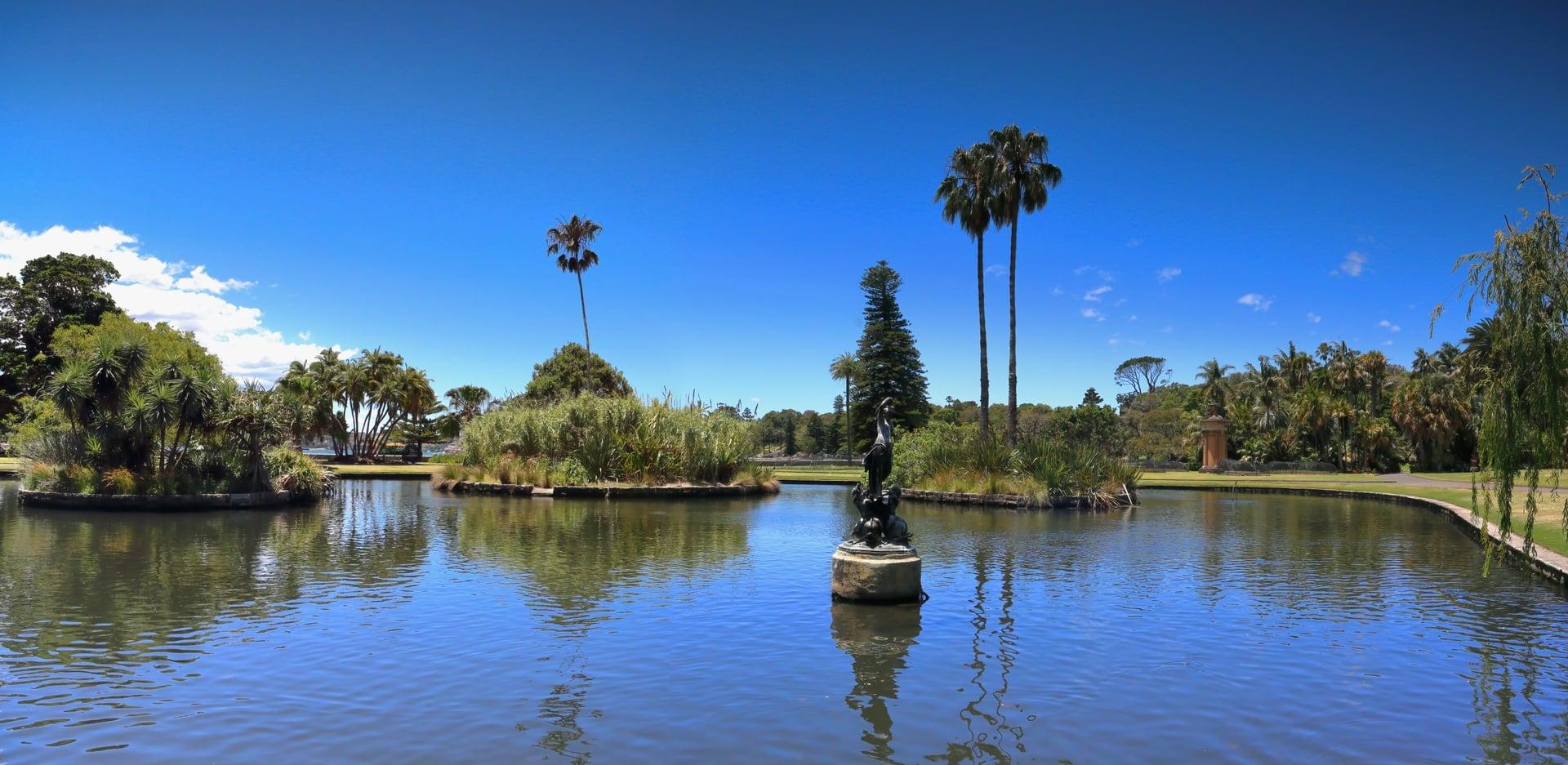
Middle Garden: The Farm That Failed
The colony's first farm failed here. The Middle Garden's squared beds on the first farm site, with a Wollemi pine beside the path, the 1876 Palm House and the Macquarie Wall of about 1812 nearby.
- 5
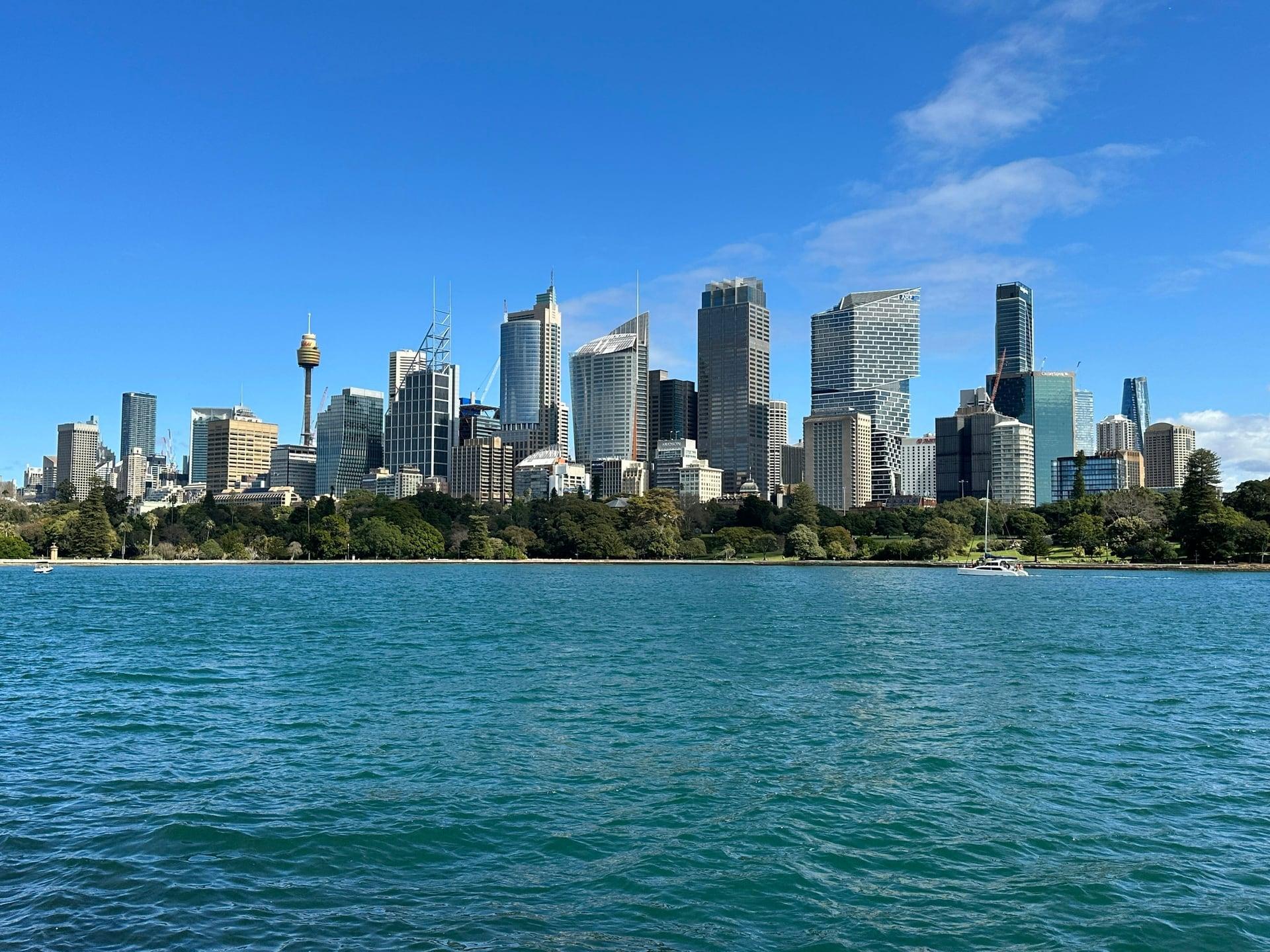
Farm Cove: Names Underfoot
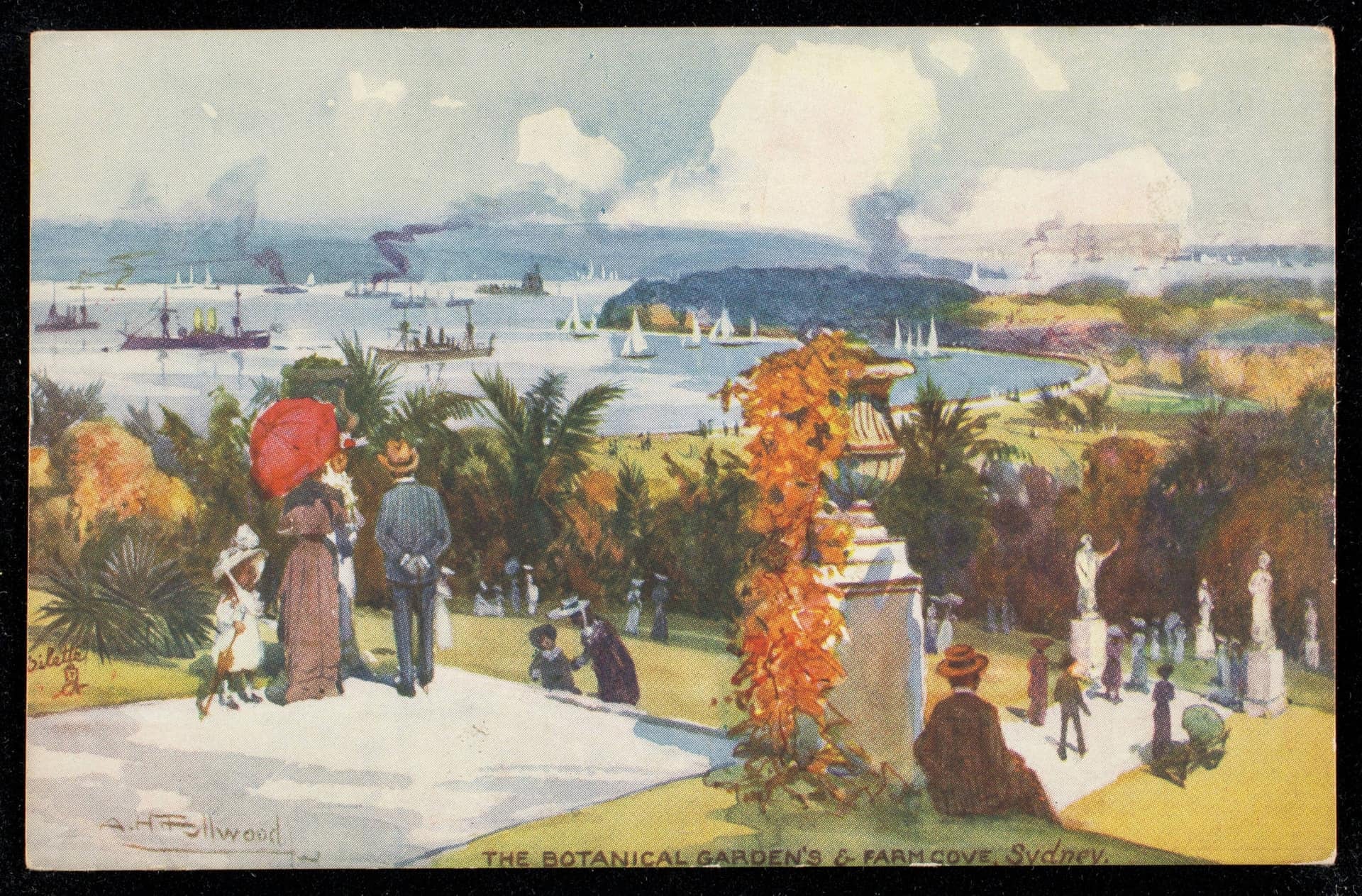
Gadigal names are set into this path. Brenda Croft's mosaic Wuganmagulya, inlaid along the Farm Cove foreshore, records names of the Sydney clans' people, places, animals, tools and rituals.
- 6
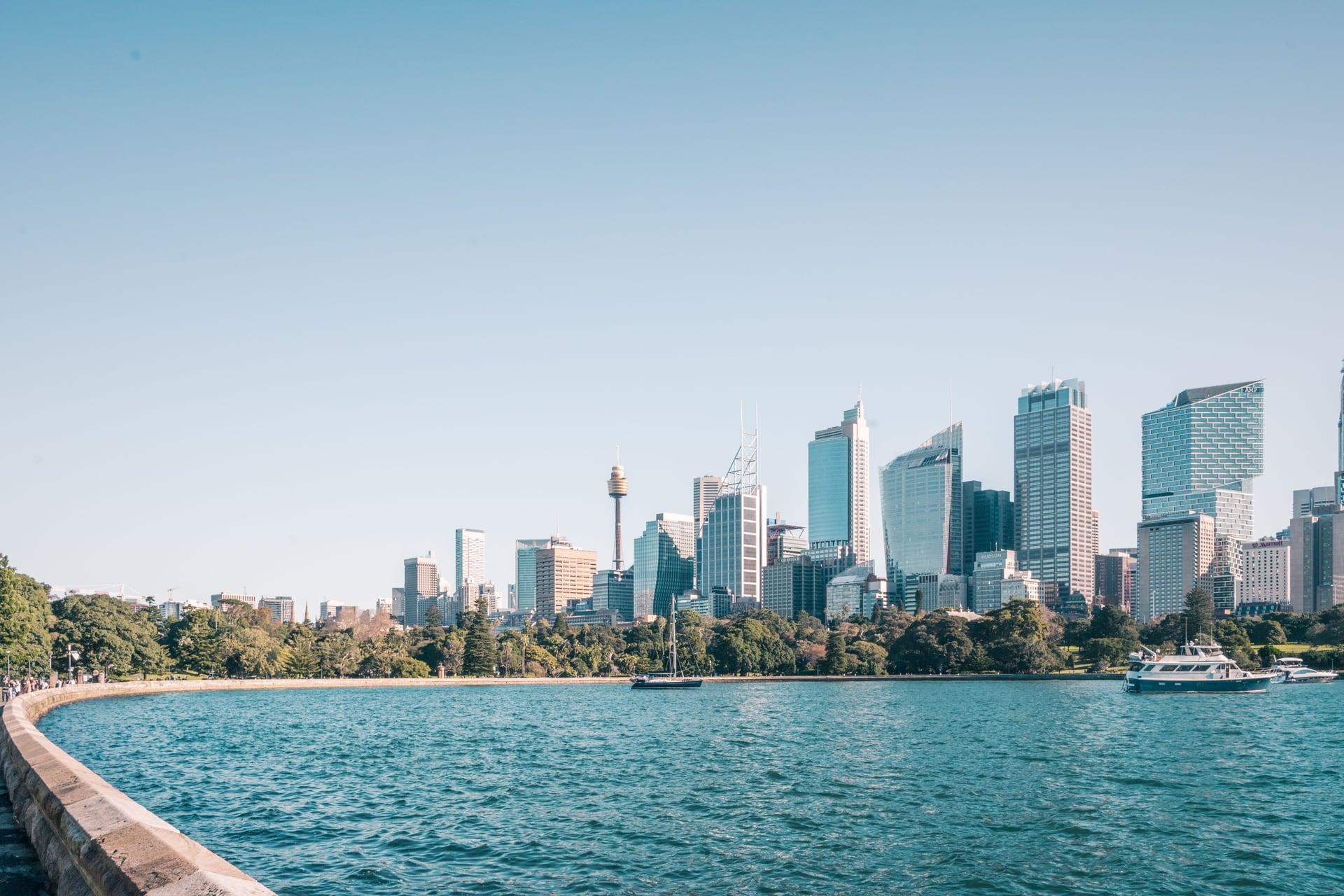
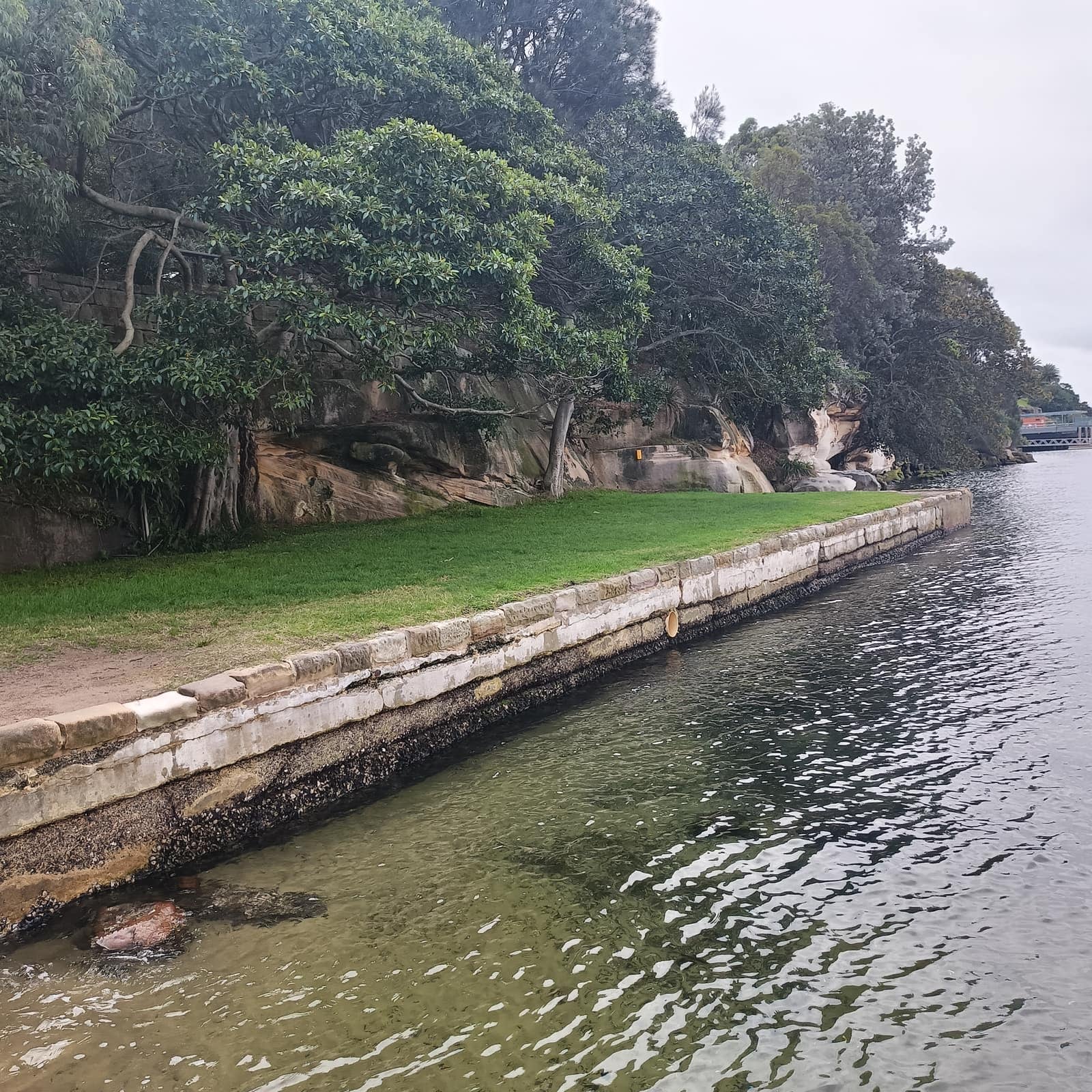
Farm Cove Sea Wall: Stone From the First Government House
This curved wall reshaped the cove. Farm Cove's sea wall, begun in the late 1840s and finished in 1879 under Charles Moore, built of stone from the demolished first Government House.
- 7
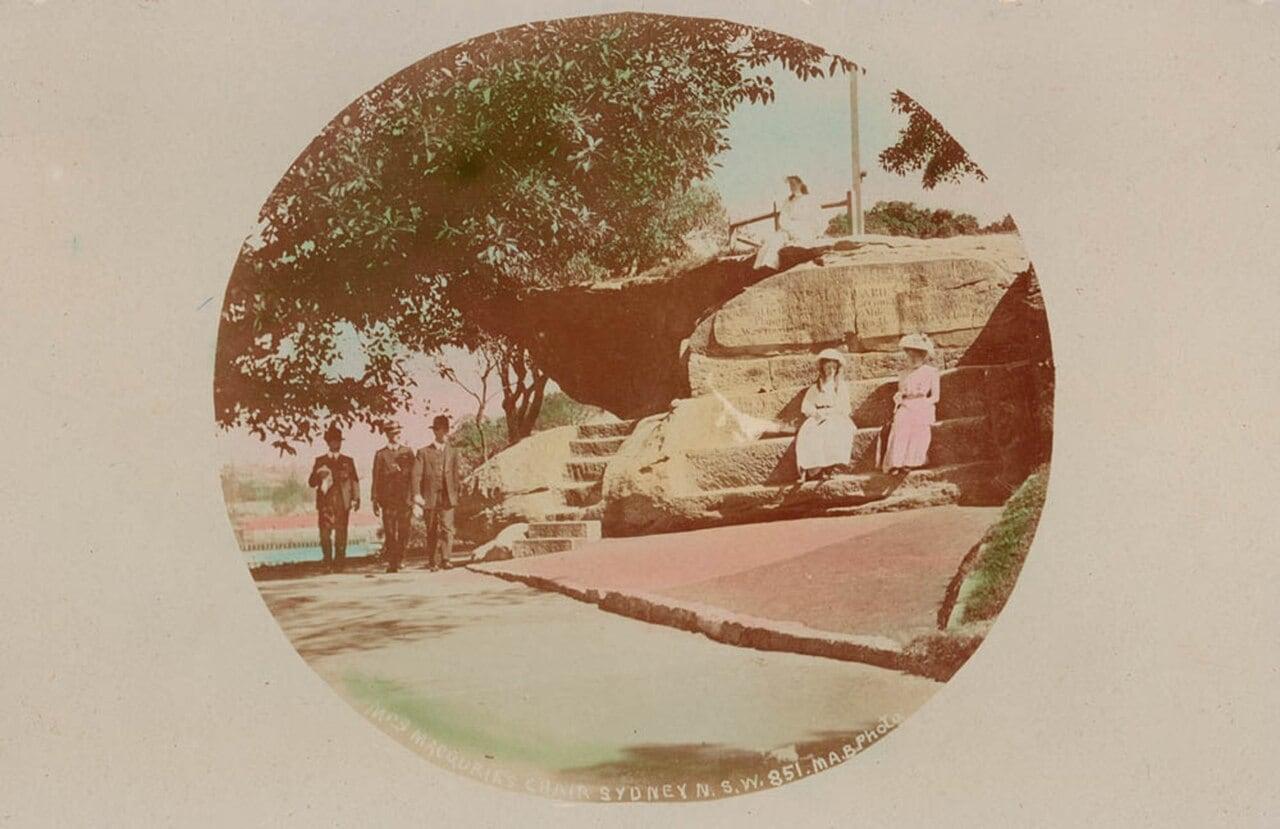
Mrs Macquarie's Chair
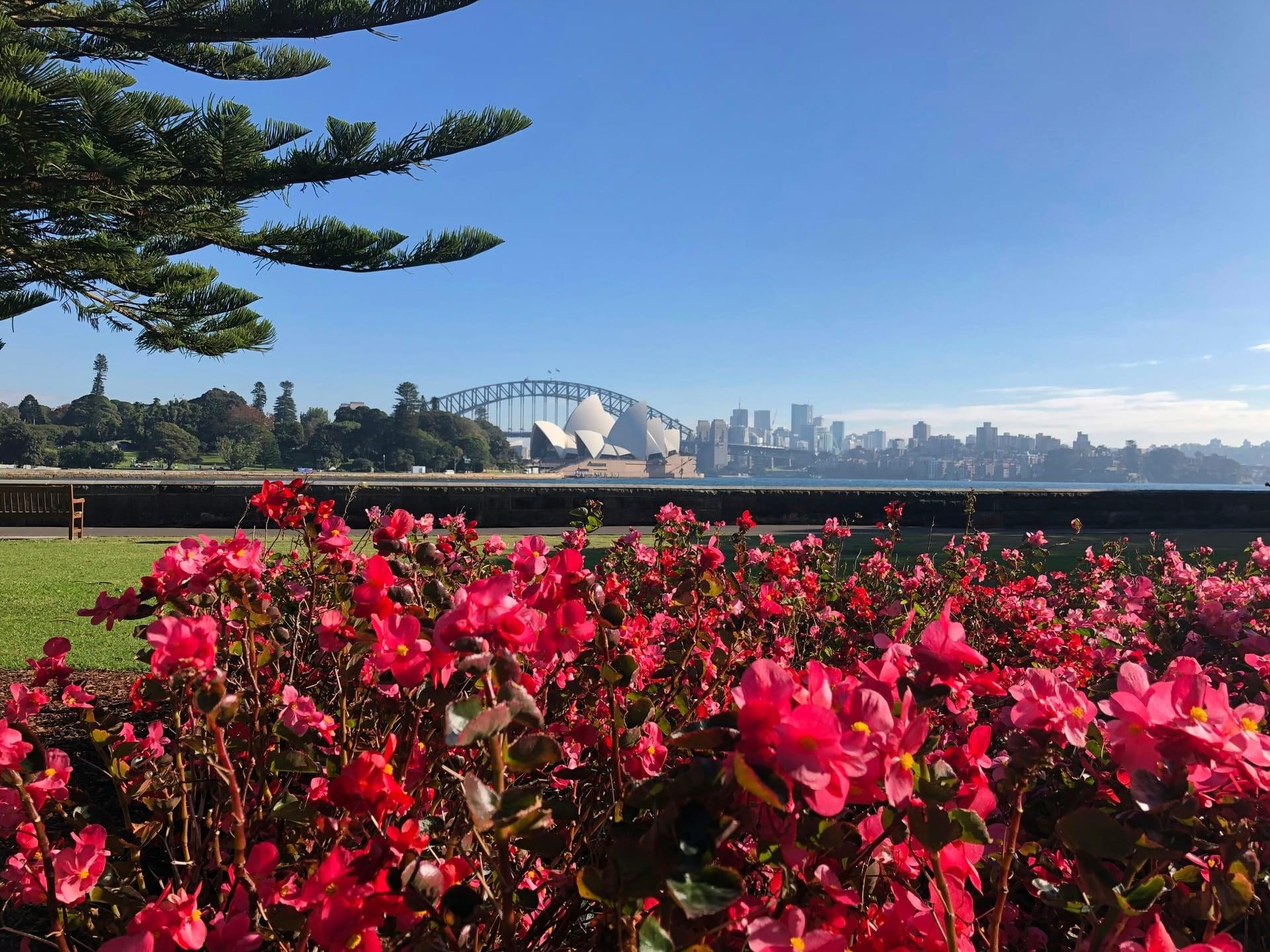
A road was built to this view. Mrs Macquarie's Chair, a seat cut into the sandstone at the end of the road finished in 1816, with the Opera House and the Harbour Bridge together across the water.
- 8
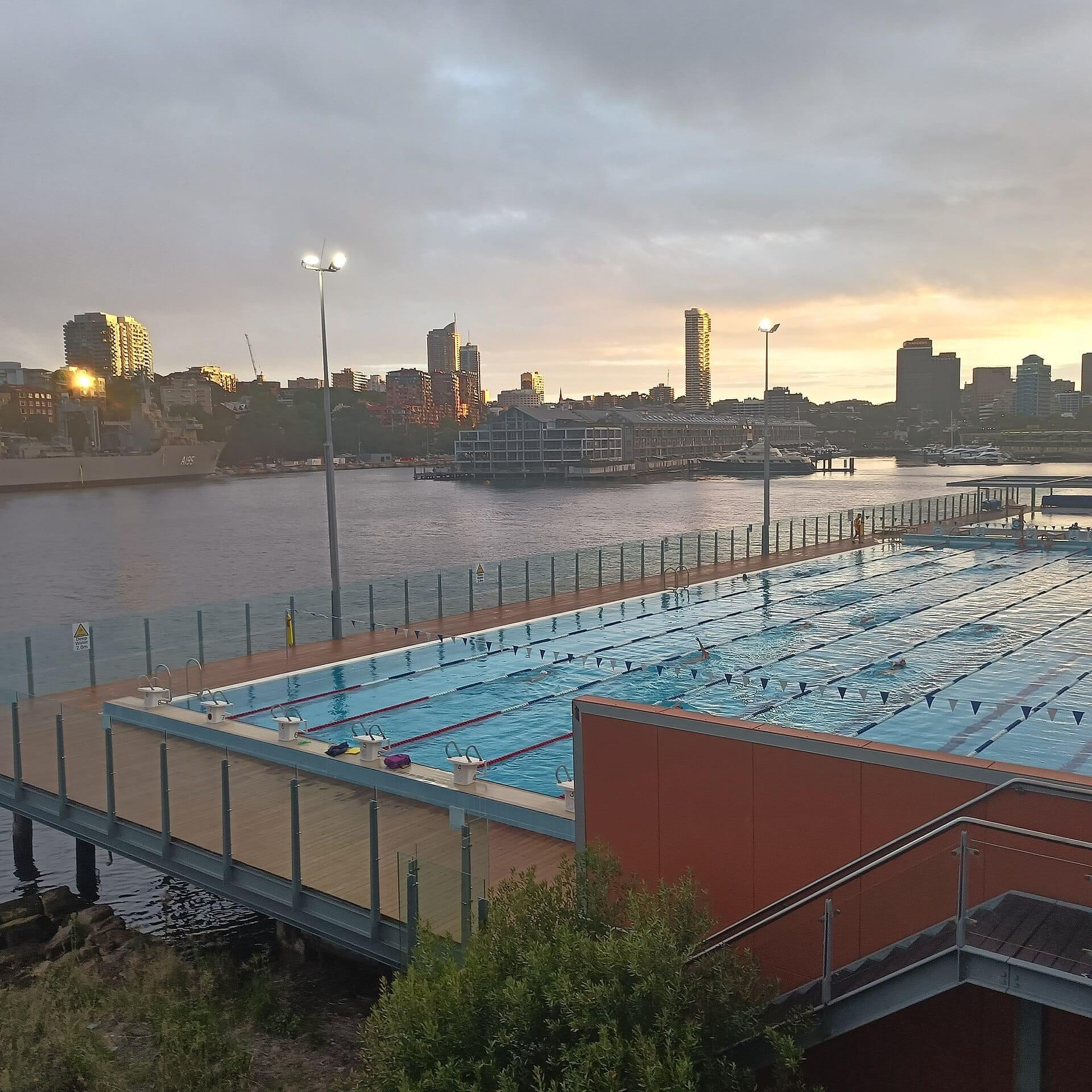
Andrew (Boy) Charlton Pool
A harborside pool sits below the road. The Andrew (Boy) Charlton Pool on Woolloomooloo Bay, open September to April, seen from Mrs Macquaries Road on the Domain's public waterfront.
- 9
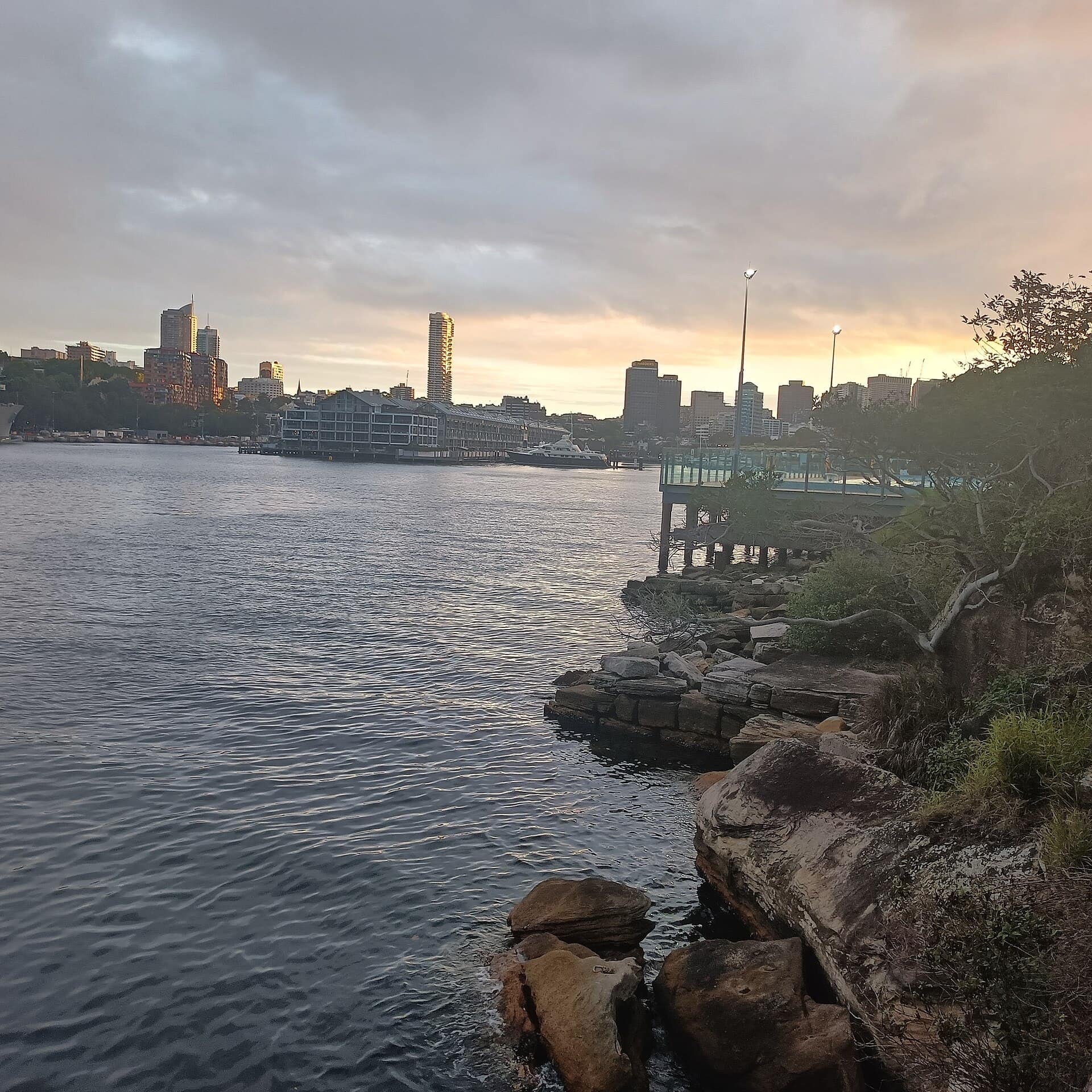
Woolloomooloo Bay
An old timber wharf lines the bay. The view across Woolloomooloo Bay to its century-old Finger Wharf, the marina and the naval wharves of Garden Island, from the Domain's waterfront lawn.
- 10
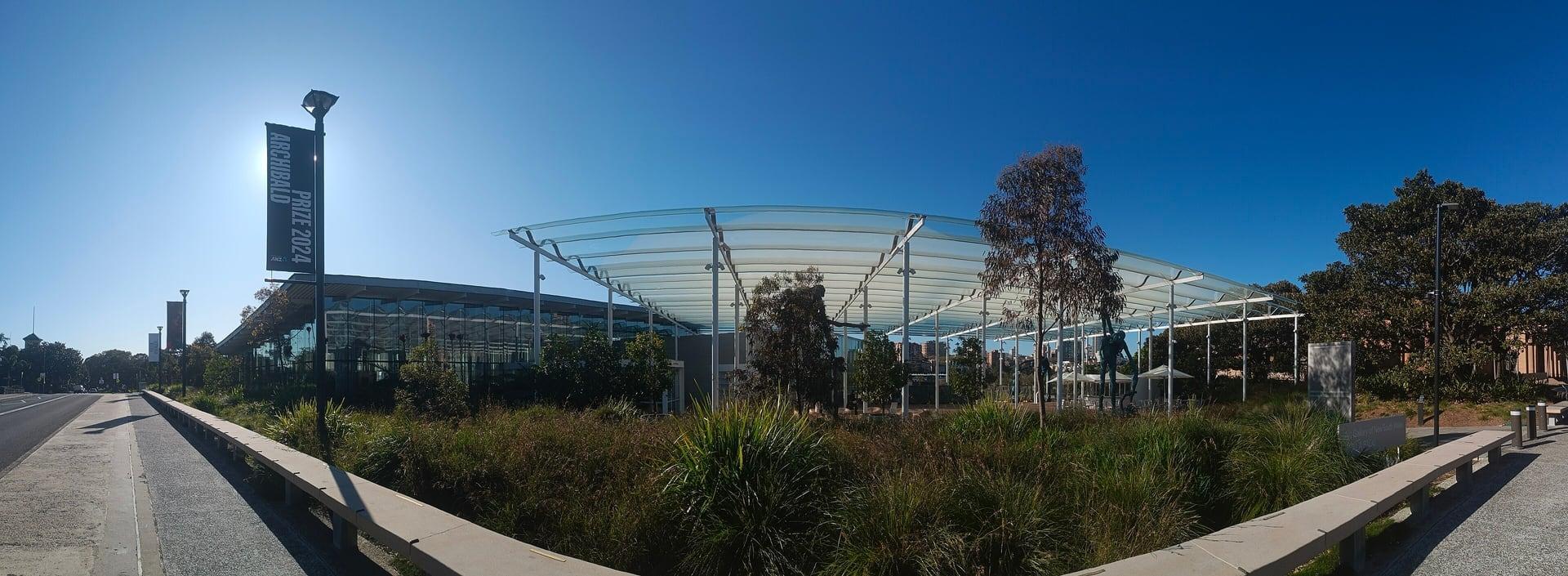
Sydney Modern: A Gallery on a Fuel Tank
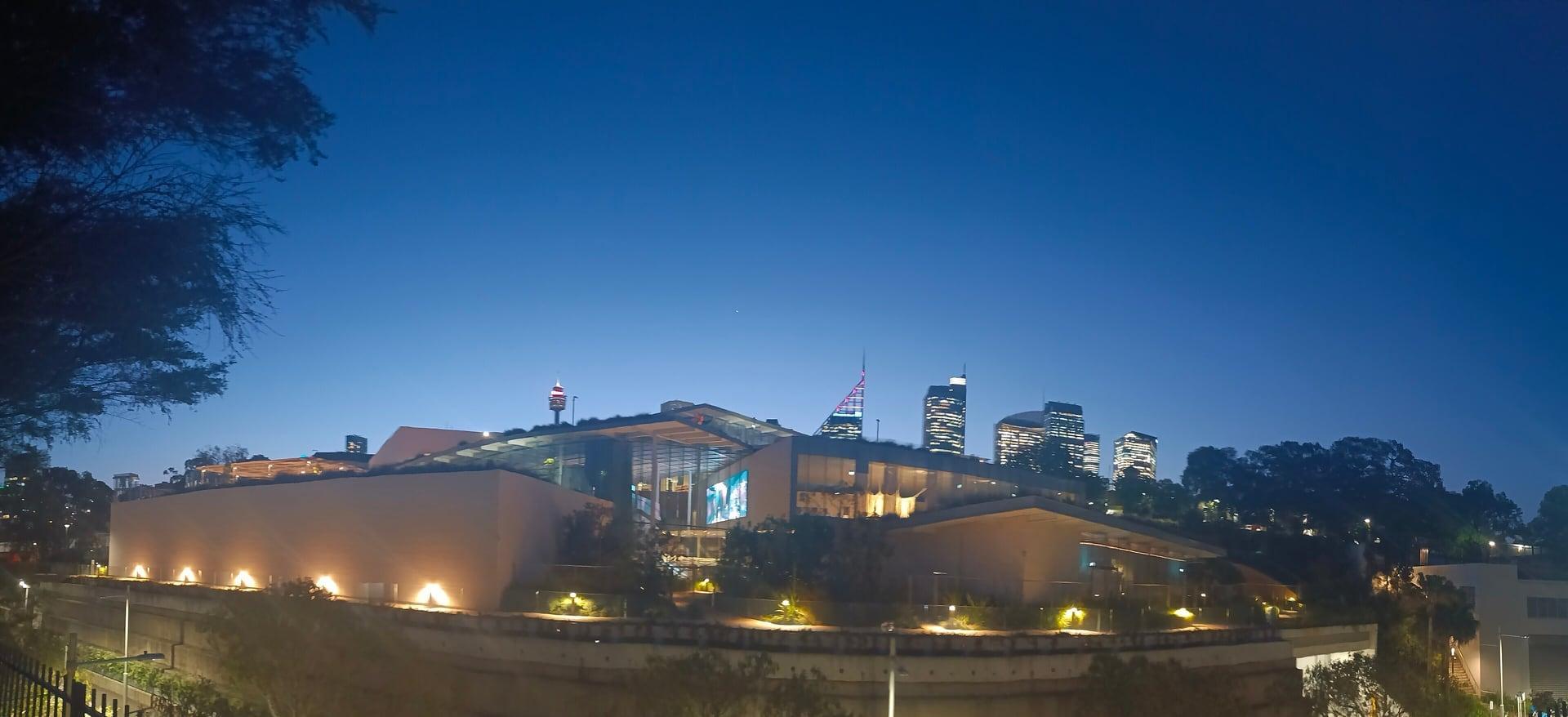
A 2022 gallery sits on a fuel tank. Naala Badu, the Art Gallery of NSW's building by SANAA, opened on 3 December 2022 above a Second World War naval fuel tank; free general entry.
- 11
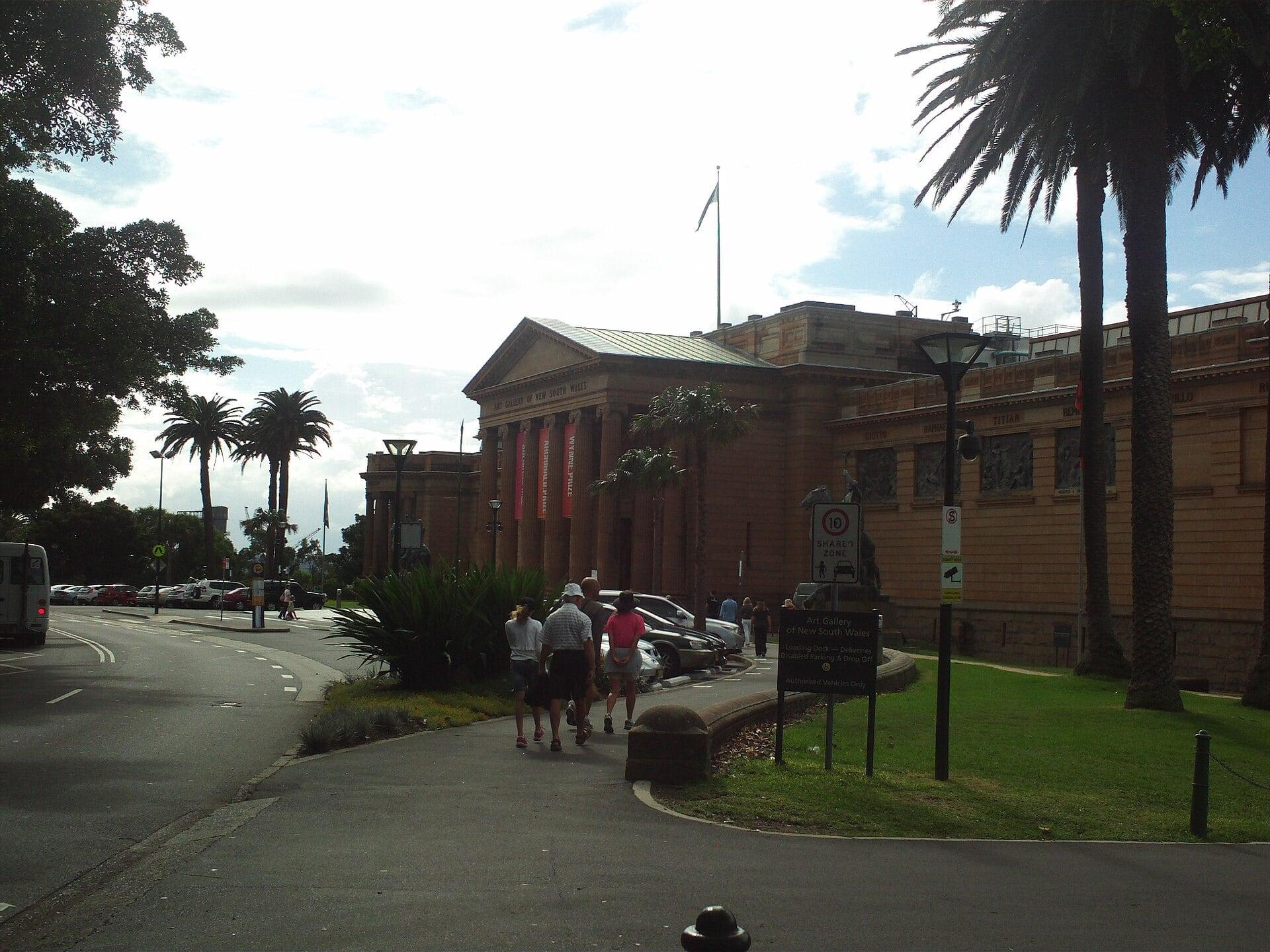
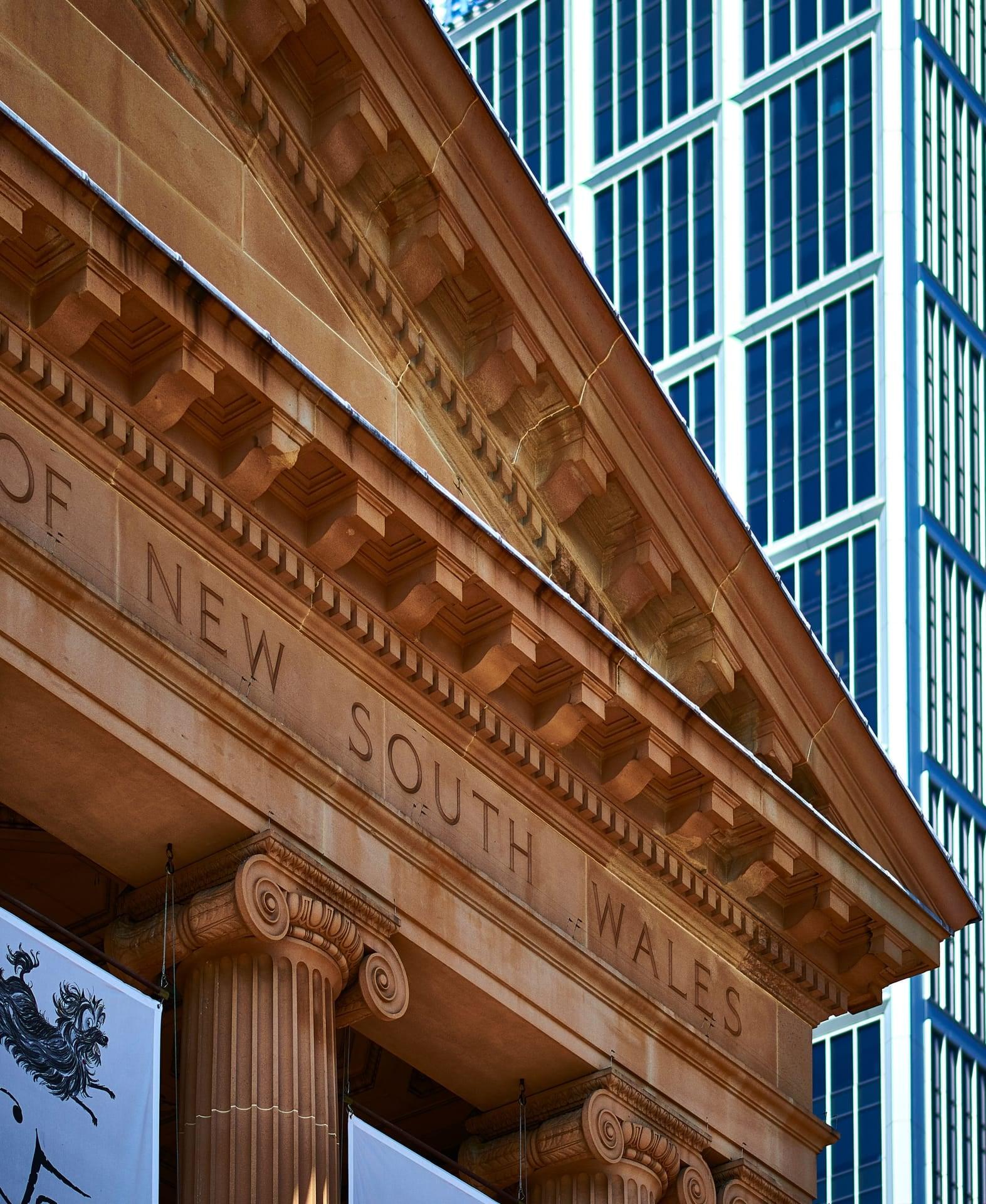
Art Gallery of New South Wales
The gallery's 1909 front faces you. The Art Gallery of New South Wales's columned front and old wing, built 1896 to 1909, with two bronze horsemen on its forecourt, seen from the Domain lawn.
- 12
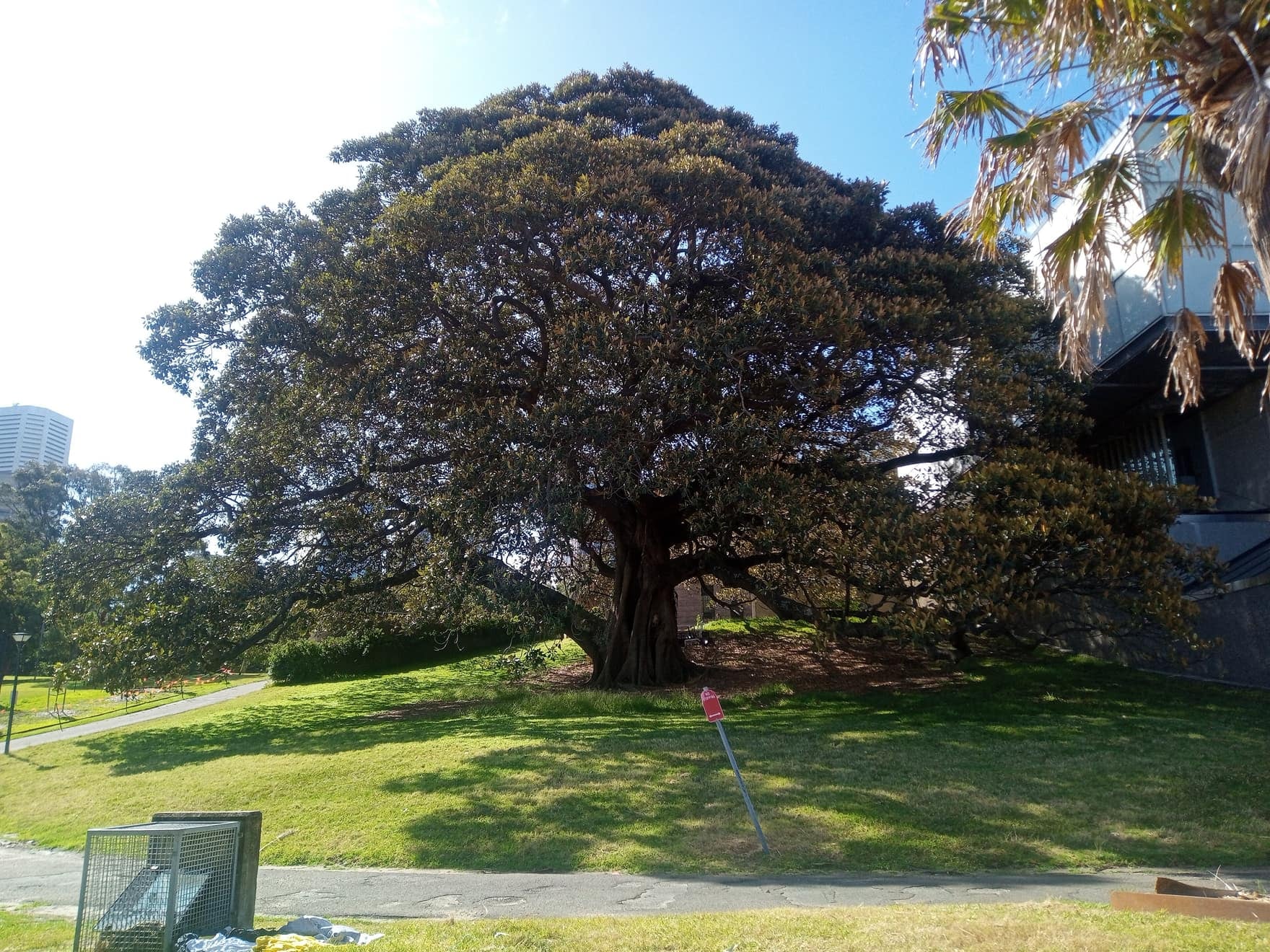
Domain: Sydney's Soapbox Lawn
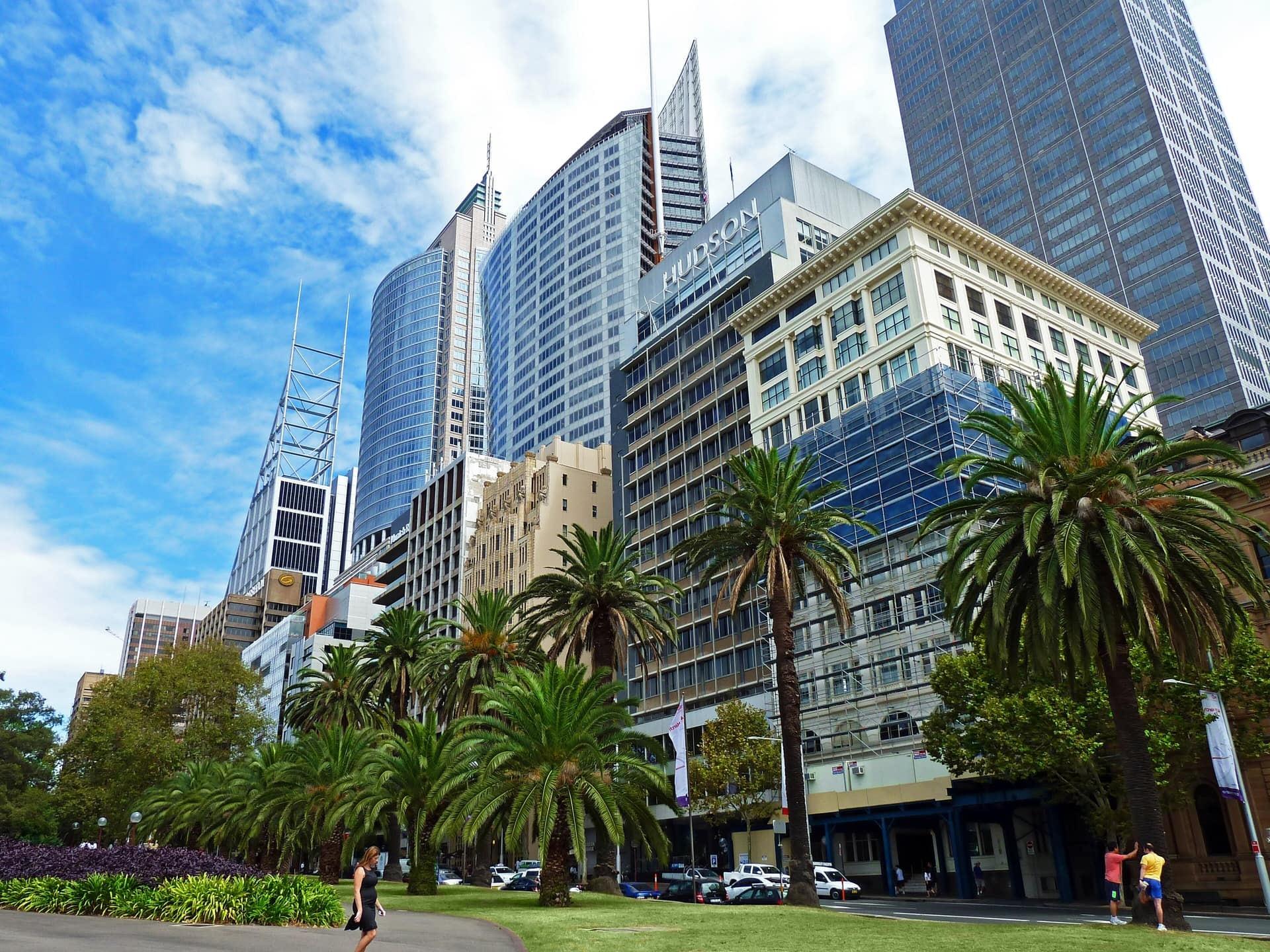
Sydney's soapbox lawn meets the city. The Domain's south-west corner, set aside in 1792 and public since 1831, a ground for speeches and rallies, opposite Queens Square and Macquarie Street.
Details
Best Time to Visit
Any day except 31 December 2026, when the Royal Botanic Garden is closed all day. Stops 1 to 5 are inside the Garden's gates: open 7 am daily; close 8 pm November to February, 7:30 pm October, 6:30 pm March, 6 pm April and September, 5:30 pm May and August, 5 pm June and July. Start by 7 pm in summer (November to February) and by 3:45 pm in winter (June and July), and at least 75 minutes before closing in other months. In late December the gates shut before sunset (computed sunset about 8:05 pm on 21 December). Morning is calmest on the sea wall; late afternoon gives the best light at Mrs Macquarie's Chair, with crowds at sunset. In summer, the sea wall from stop 5 to stop 7 has no shade. Checked 10 November 2026.
Pro Tips
- •Meet just inside the Queen Elizabeth II Gate, at the Opera House forecourt's south-east corner, about 600 m along East Circular Quay from Circular Quay station, wharves and light rail.
- •Circular Quay: trains on the T2, T3 and T8 lines, light rail L2 Randwick and L3 Kingsford, and ferries from Wharves 2 to 6 (Transport for NSW Circular Quay map and light rail stop guide, valid 19 January 2026). Checked 10 November 2026.
- •Our Rocks walk ends at the foot of the Opera House's Monumental Steps, about 120 m from this walk's first stop.
- •After the Garden's gates close: walk stops 6 to 12 only (about 1.8 km), joining at the Farm Cove sea wall from Mrs Macquaries Road on the Domain side of the gate at the Garden's edge. There is no short way round the outside from stop 1: it is about 2.3 km.
- •Government House (stop 2) opens Fridays, Saturdays and Sundays from 10:30 am to 3 pm, with free guided tours half-hourly, up to 20 people each, first come first served; bags are cloaked at the ticket office. House and grounds are closed on 13, 21 and 28 November 2026 (governor.nsw.gov.au/government-house/visit-us). Checked 10 November 2026.
- •Art Gallery of New South Wales (stops 10 and 11): both buildings open daily 10 am to 5 pm, to 10 pm on Wednesdays, closed Christmas Day and Good Friday; free general entry, with fees for some exhibitions (artgallery.nsw.gov.au). Checked 10 November 2026.
- •Andrew (Boy) Charlton Pool (stop 8) is open 1 September to 30 April and closed 1 May to 31 August (City of Sydney Leisure). Checked 10 November 2026.
- •At the end, Queens Square and the Hyde Park Barracks are a short walk along, where Macquarie Street begins; St James station is about 400 m away across Queens Square. Check lines in the Transport for NSW app.
Safety & Precautions
- •Stops 1 to 5 are inside the Royal Botanic Garden, whose gates close at a posted time that changes by month (8 pm November to February, 5 pm June and July). The Garden is closed all day on 31 December 2026, when Mrs Macquarie's Point is a capped New Year's Eve viewing site (10,000 people, from 10 am, no BYO alcohol). Checked 10 November 2026.
- •The sea wall between stops 5 and 7 has no shade. Sun protection is recommended whenever the UV index reaches 3 (Cancer Council): hat, sunscreen and water from October to March.
- •One road crossing: the zebra over Art Gallery Road between stops 9 and 10. Cars drive on the left; look right first. Watch for vehicles at the pool's driveway (between stops 7 and 8) and at the gallery's service road (just before stop 10).
- •The sea wall promenade beyond the Garden's gate and the Mrs Macquaries Road and Art Gallery Road sidewalks are shared with cyclists.
- •Stop 10 stands beside the open cutting of the Cahill Expressway, behind a fence: it is loud there.
- •There are no steps on the route, which is flat along the water and rises about 30 m to the Domain at the end.
- •Garden rules: no bicycles, no drones, no animals except assistance animals, and no entering or leaving the Garden over the sea wall.
- •GPS can drift under the trees around stops 3 and 4: if a stop does not start on its own, start it by hand.
- •Stops 6 to 12 are in the Domain, which has no gate on this route; the Botanic Gardens of Sydney list it as open daily and post no closing time (botanicgardens.org.au/domain-sydney). Checked 10 November 2026.
Travel advisory: Exercise Normal Precautions (Level 1).
Gallery
Related Reading
Go deeper on what you'll see, hear, and walk through.
Overview
One Day in Sydney: A Walkable Morning-to-Evening Itinerary
9 min
Overview
Sydney Travel Guide: Days, Transport, Safety, and Budget
9 min
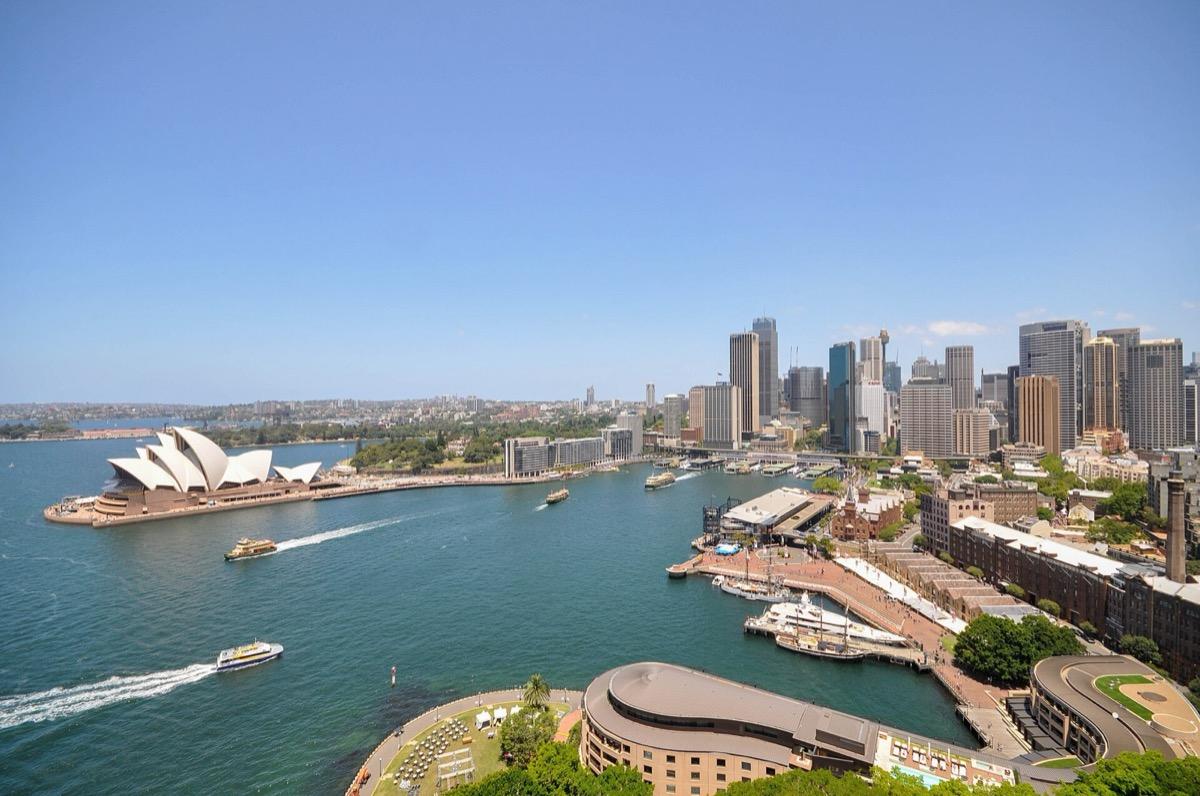
Thematic
Best Nature Walking Tours in Sydney (2026)
2 min
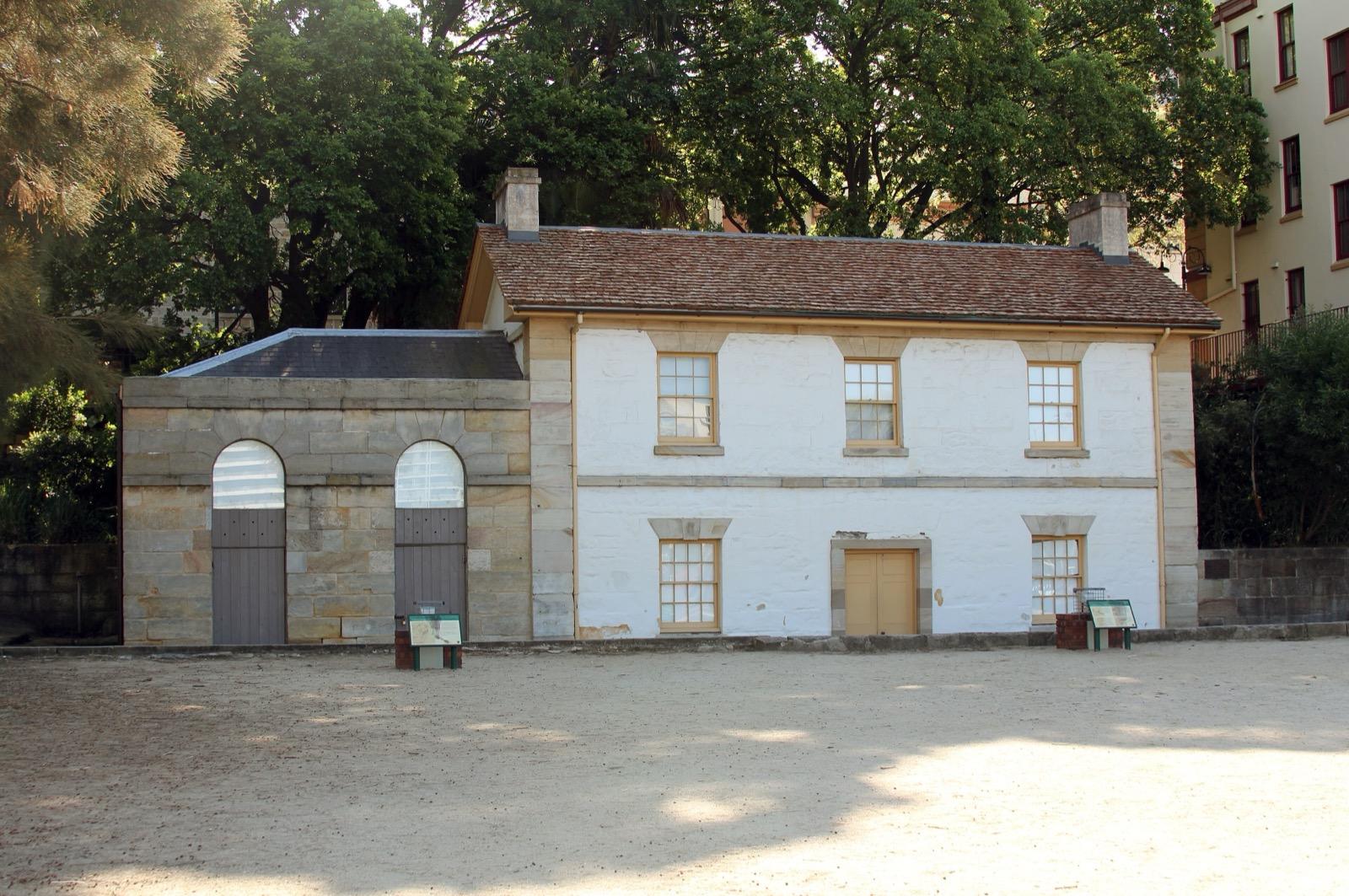
Thematic
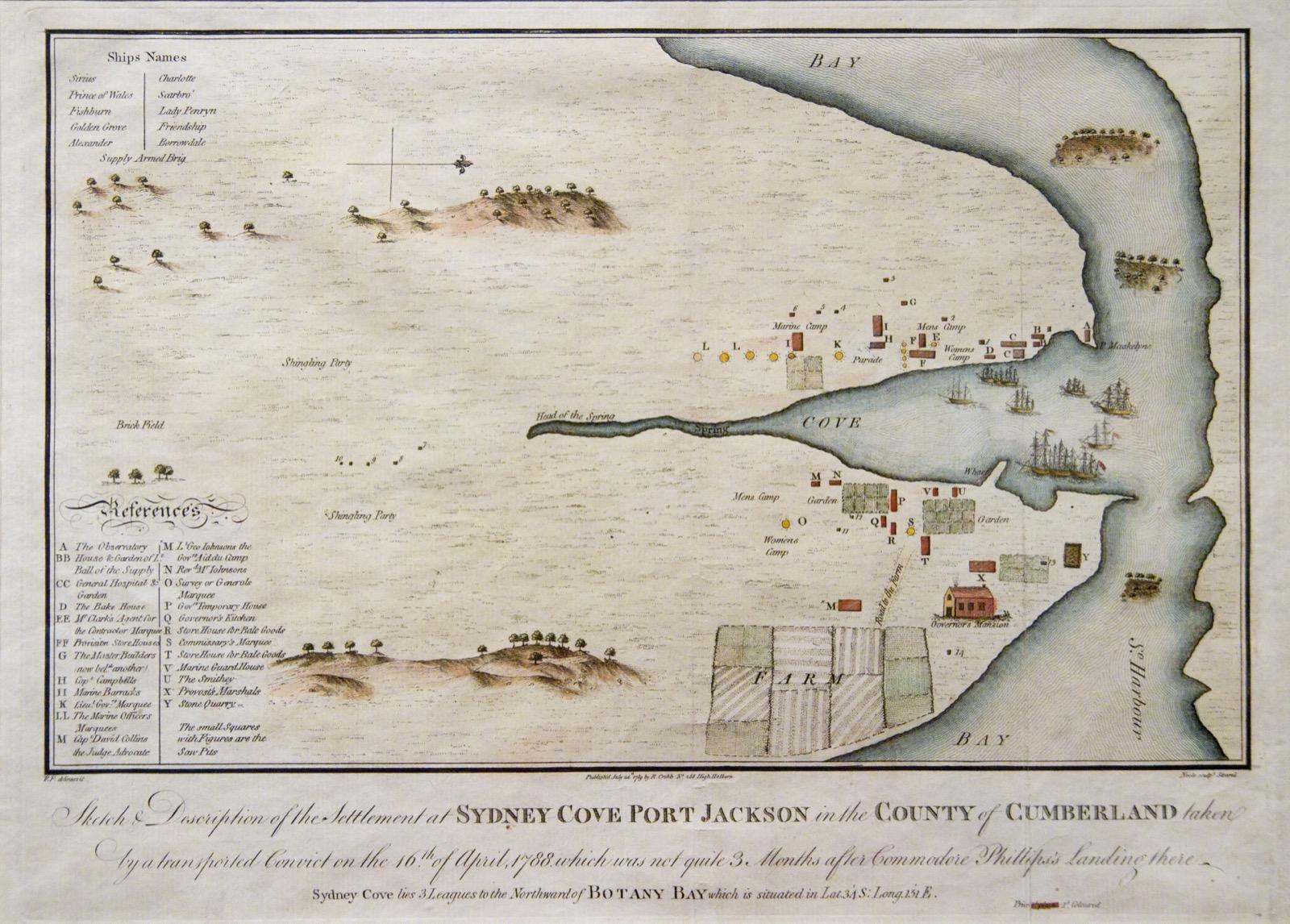
Sydney in Sandstone: Reading a Convict City From Cove to Harbour
8 min
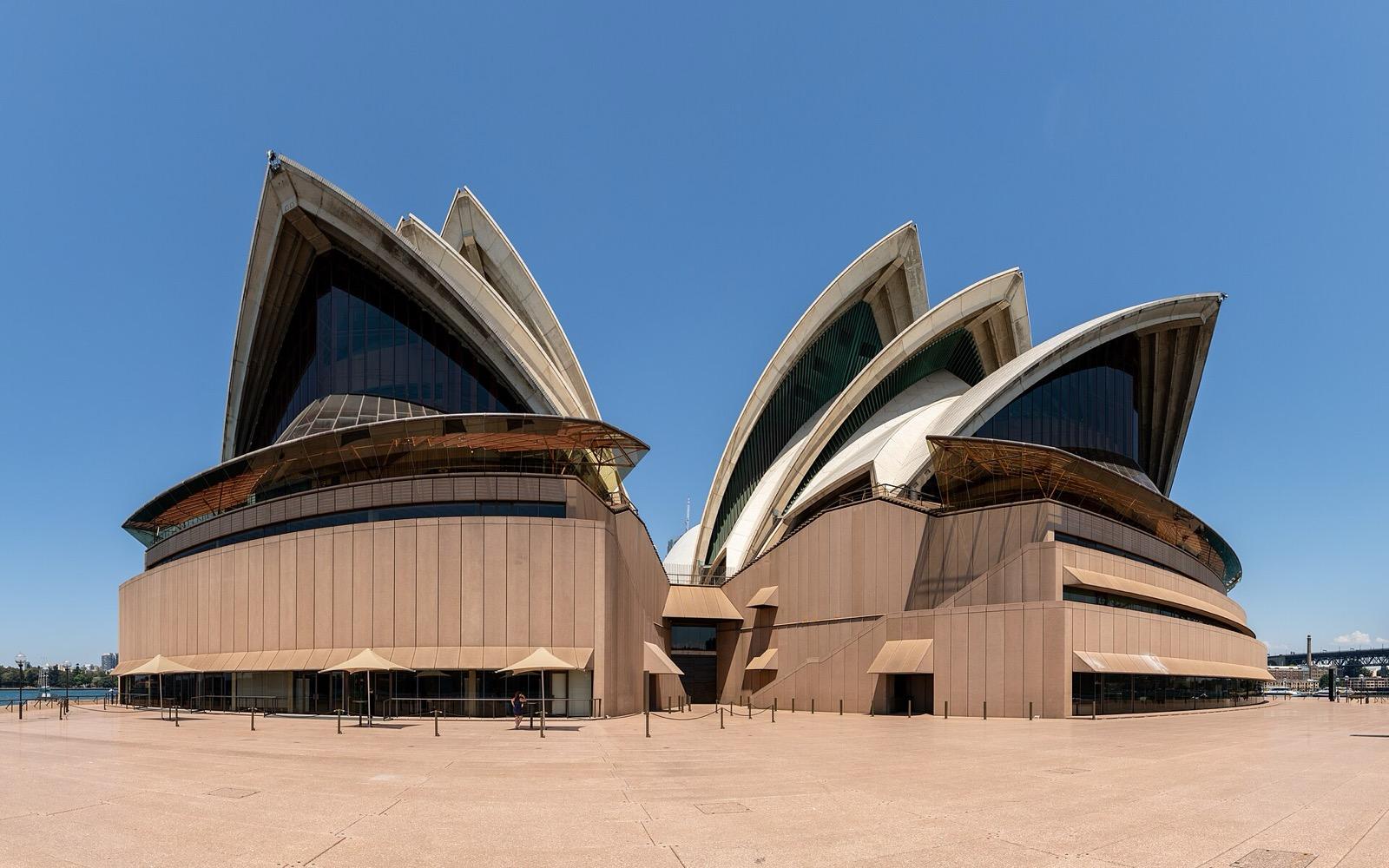
Companion
The Sydney Opera House and the Struggle Behind the Postcard
8 min
Read the walk
The full story of Royal Botanic Garden and Mrs Macquarie's Chair: A Failed Farm, in words. Prefer to listen? Play it narrated, from home or on location.
Introduction
Sydney's Royal Botanic Garden grew out of a failed farm above Farm Cove. A generation later a governor turned the same ground into a botanic garden, and the city has kept remaking it since: a palace that burned in a night, a sea wall built from an old government house, a road laid out to a view, and a lawn where Sydney came to argue.
There are twelve stops over just under three and a half kilometers, about two miles, and it takes about an hour and a half. It is flat, rising gently at the end, with no steps, and one road crossing, a zebra on Art Gallery Road.
The first five stops are inside the Garden's gates, open from seven in the morning to eight in the evening from November to February, and to five in June and July. So start by seven in the evening in summer, and by a quarter to four in winter. After closing time, walk stops six to twelve only, joining at the Farm Cove sea wall from Mrs Macquaries Road. The Garden is closed all day on New Year's Eve. The sea wall has no shade, and the summer UV here is fierce: bring a hat, sunscreen and water.
The walk ends at the corner of the Domain opposite Queens Square, where Macquarie Street begins. When you arrive at the Queen Elizabeth the Second Gate, beside the Opera House, begin with stop one.
1. Queen Elizabeth II Gate
Welcome to the Royal Botanic Garden. Walk on through the Queen Elizabeth the Second Gate, at the corner of the Opera House forecourt, and stop just inside. If the gate is already shut, this stop works from outside it.
Behind you, the sails of the Opera House fill the end of the point. Our walk through The Rocks tells their story and finishes right there, so this one turns the other way.
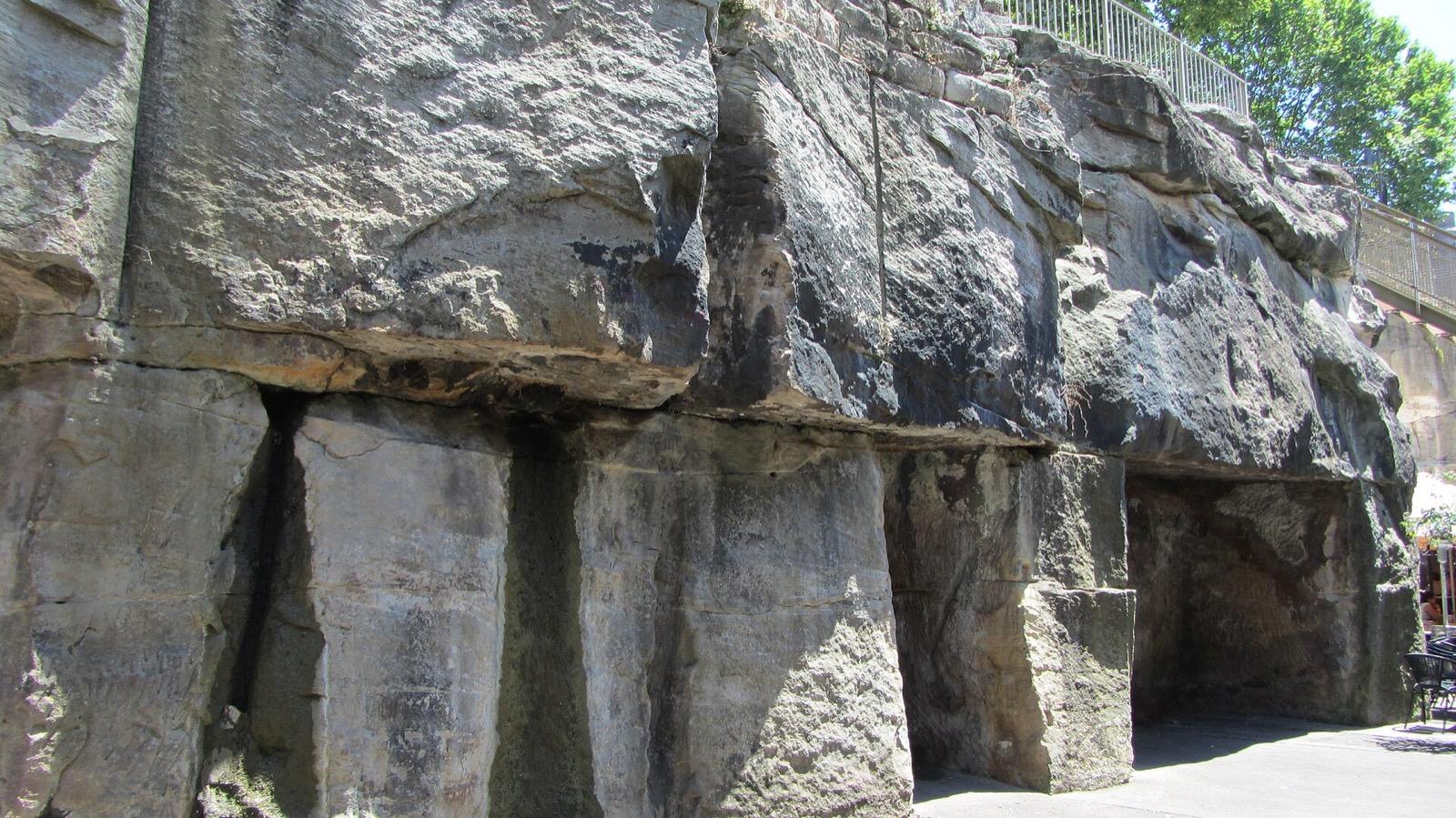
First, look at the cliff at the back of the forecourt, a sheer face of pale sandstone. It is not natural. It was cut out of the headland in eighteen eighty, at a cost of six thousand pounds, to carry Macquarie Street down to the point. Remember that stone. Sydney is built on it, and this walk will keep finding it cut, stacked and shaped.
Ahead of you is a garden more than sixty years older than that cliff. The State Heritage Register says this ground was officially opened as a botanic garden in eighteen sixteen, and calls it Australia's oldest scientific institution. The Garden itself says it is the oldest botanic garden in Australia, and the second oldest in the southern hemisphere.
It did not begin as a garden. It began as a farm, and the farm failed. Over the next stops you will see what the colony made of that ground instead: a governor's lawn, a palace that vanished in a night, a sea wall built from an old government house, and a road laid out to reach a view.
Entry is free, and the gates open at seven every morning. They close in the evening at a time that changes with the month, and the first five stops are inside them.
Follow the route along the path beside the fence. Next is the governor's house.
2. Government House: The Governor's Lawn
Walk on along the fence and stop where the lawn opens up beyond it. Across the grass, above the walls of a raised terrace, stands a long building with towers and battlements, like a small castle. That is Government House, the house of the governor of New South Wales.
Notice the fence. It matters more than it looks. The house and its grounds are not part of the Botanic Garden: the heritage listing for the Garden leaves them out. On your side of the fence, a public garden. On the other, the governor's.
For the colony's first decades, all of this ground was the governor's. By eighteen oh seven a governor had formally declared the land part of the domain of the governor's residence. The Garden says that was the first use of the name this whole stretch of green still carries: the Domain. The botanic garden grew up inside it, as the governor's neighbor.
The two gardens traded more than a fence. Elizabeth Macquarie, the wife of the governor who founded the Botanic Garden, decided that a Norfolk Island pine planted in the governor's private garden had grown too large for it. She ordered it moved next door, into the botanic garden. It became famous there as the Wishing Tree, and it lasted until nineteen forty five. Her name comes back at the end of the point, on a seat cut into the rock.
The house opens for free guided tours on some days of the week; the times are in the tips.
Follow the route down the long straight avenue. It is the longest stretch of the walk, past ponds and under big trees. Next is a palace that is no longer there.
3. Garden Palace: The Building That Burned
Walk on to where this path meets the avenue at the edge of an open lawn, and stop there. The lawn spreads out ahead of you. The story of this stop is behind you, beyond the trees and the terraces, toward Macquarie Street, where nothing of it is left to see.
In eighteen seventy nine, Sydney built an exhibition palace there for its International Exhibition. The Garden says it was twice the size of the Queen Victoria Building, and stretched almost from the Conservatorium of Music to the State Library. The Garden also calls it Australia's first building built using electric lighting, so that it could stay open day and night.
On the night of the twenty second of September, eighteen eighty two, it burned to the ground. Lost with it were a collection of Aboriginal objects and historical records, among them the returns of the eighteen eighty one census. Rumours about the cause ran around the city at the time. The Garden's own conclusion is plainer: in all likelihood, the fire was largely sparked by faulty electrical wiring.
The heritage register says only the sandstone and iron gates survived. They still stand on Macquarie Street, out of sight beyond the trees. After the clean up, about nineteen acres of new garden were added to the Botanic Garden here, and named the Palace Garden. The big terraces in the ground behind you were made for the exhibition, and the planting kept them.
So the ground you are walking on is the palace's garden, laid out over the space it left. A building twice the size of the Queen Victoria Building, and it lasted three years.
Follow the route along the path toward the palms. Next is the ground where the colony first tried to grow its food.
4. Middle Garden: The Farm That Failed
Walk on past the palms as the path swings round toward the open beds, and stop at the head of the squared flower beds. Beside the path grows a Wollemi pine. The glasshouse a short way off across the beds is the Palm House.
This flat, sheltered ground is where the colony first tried to feed itself. The heritage register is direct about it: the Middle Garden is the first farm site. Convicts cleared nine acres, and sowed seed brought from England, the Canary Islands, Rio de Janeiro and Cape Town. Corn went in. The Garden lists why it failed: the wrong season, poor soil, and rats.
So this is where the Garden truly begins, with a crop that did not grow. The squared beds in front of you are traditionally believed to follow the furrows of that first farm. Tradition, not proof, but a good one.
Then came the governor who would found the Garden. Around eighteen twelve his men built a long wall nearby, still called the Macquarie Wall, and in eighteen sixteen the ground became a botanic garden. The glass Palm House followed in eighteen seventy six. What you see is a reconstruction of nineteen ninety two and ninety three, returned to its form of nineteen twelve.
Now the pine. Until nineteen ninety four, nobody alive had seen a Wollemi pine. It was known only from fossils and assumed to be extinct, until a national parks ranger found living trees in the wild that year. The Garden planted the first one ever grown by human hands in nineteen ninety eight. A tree from the age of the fossils, growing on the colony's failed farm.
Hunger, science and glass, all on one patch of ground.
Follow the route down past the lawns toward the water. Next is the cove itself.
5. Farm Cove: Names Underfoot
Walk on down to the water and stop on the sea wall path, where the whole cove opens out in front of you, with the Opera House and the Harbour Bridge across the water. Now look down. Set into the path is a mosaic of terrazzo and stained concrete. It is an artwork by the Gurindji…
Full narration for this stop unlocks with the tour.
6. Farm Cove Sea Wall: Stone From the First Government House
Walk on through the gate where the Garden ends, along the promenade on the cove's far shore, and stop with the curve of the cove in front of you. If you have joined the walk here, after the Garden's gates have closed, this is where your walk begins. This promenade is shared…
Full narration for this stop unlocks with the tour.
7. Mrs Macquarie's Chair
Walk on round the tip of the point and stop on the path beside a seat cut into the sandstone. Across the water, the Opera House and the Harbour Bridge stand together, one in front of the other. Out in the harbor, the small fort on its island is Fort Denison. This is Mrs…
Full narration for this stop unlocks with the tour.
8. Andrew (Boy) Charlton Pool
Walk on along the sidewalk and stop where you can look down over the edge at the pool below the road. Beyond it lies Woolloomooloo Bay, and across the water the wharves of Garden Island, a naval base. This is the Andrew Boy Charlton Pool, an outdoor pool on the edge of the…
Full narration for this stop unlocks with the tour.
9. Woolloomooloo Bay
Walk on to where the trees open onto a lawn running down to the water, and stop on the sidewalk there. Across the bay, look for the long, low building standing out over the water on its piles. That is the Finger Wharf, a timber wharf about a century old, built for the ships of…
Full narration for this stop unlocks with the tour.
10. Sydney Modern: A Gallery on a Fuel Tank
Walk on across the zebra and along the sidewalk, and stop where you can see, across the road, low pavilions of glass stepping down the slope toward the bay. Behind the fence beside you, the expressway runs in its cutting, so this stop is short. That building is the Art Gallery…
Full narration for this stop unlocks with the tour.
11. Art Gallery of New South Wales
Walk on along the lawn side of the road and stop opposite the gallery's columned stone front, across the road. Two bronze horsemen stand on the forecourt before it. The Art Gallery of New South Wales began, in its own words, without a collection and without a building, on the…
Full narration for this stop unlocks with the tour.
12. Domain: Sydney's Soapbox Lawn
Walk on to the corner of the Domain and stop there. Across the road rise the towers of Saint Mary's Cathedral, and a short way along, past the trees, is Queens Square, where Macquarie Street begins. Behind you stretch the lawns and the great fig trees of the Domain. The…
Full narration for this stop unlocks with the tour.