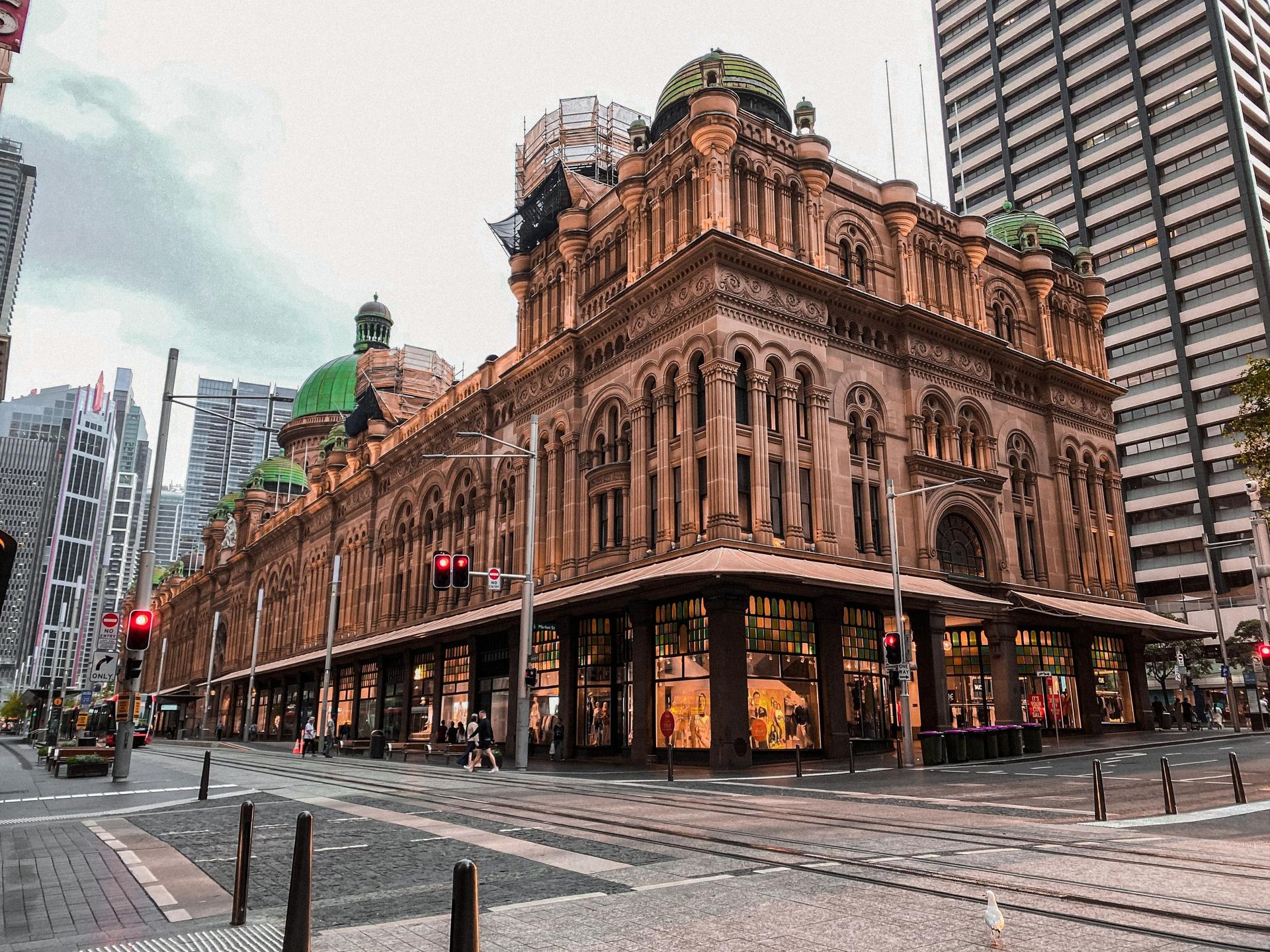
From the top of Martin Place down past the siege memorial, Angel Place's birdcages, the Cenotaph and the General Post Office, through Pitt Street Mall to the Strand Arcade, the State Theatre, the Queen Victoria Building, Sydney Town Hall and St Andrew's Cathedral.
Start · Martin Place: A Street Cut Block by Block
DirectionsStops
- 1
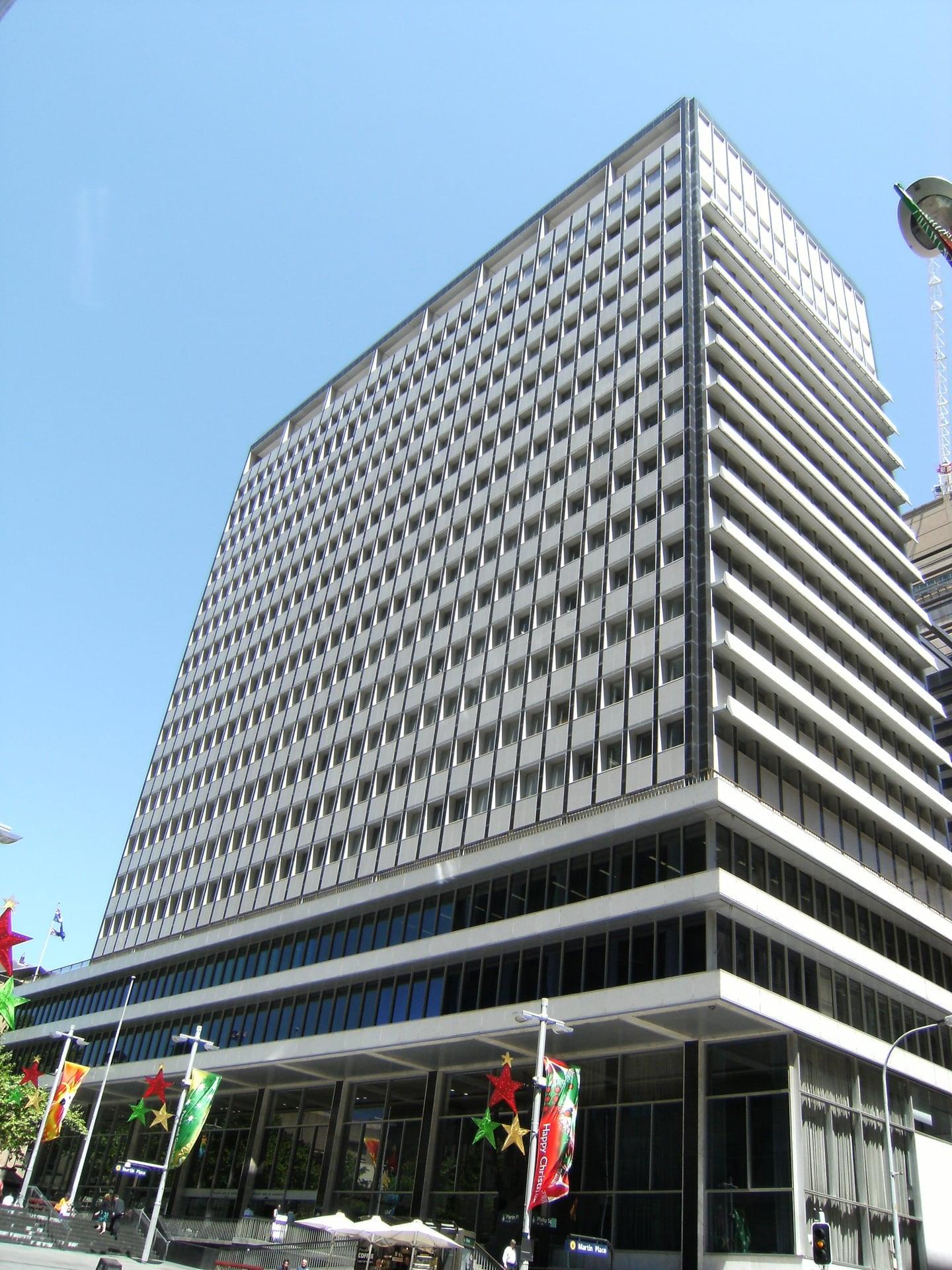
Martin Place: A Street Cut Block by Block
The city's ceremonial street starts here. Martin Place began in 1892 as a widened lane in front of the Post Office and was cut through to Macquarie Street, block by block, by 1935; a car-free plaza since 1979.
- 2
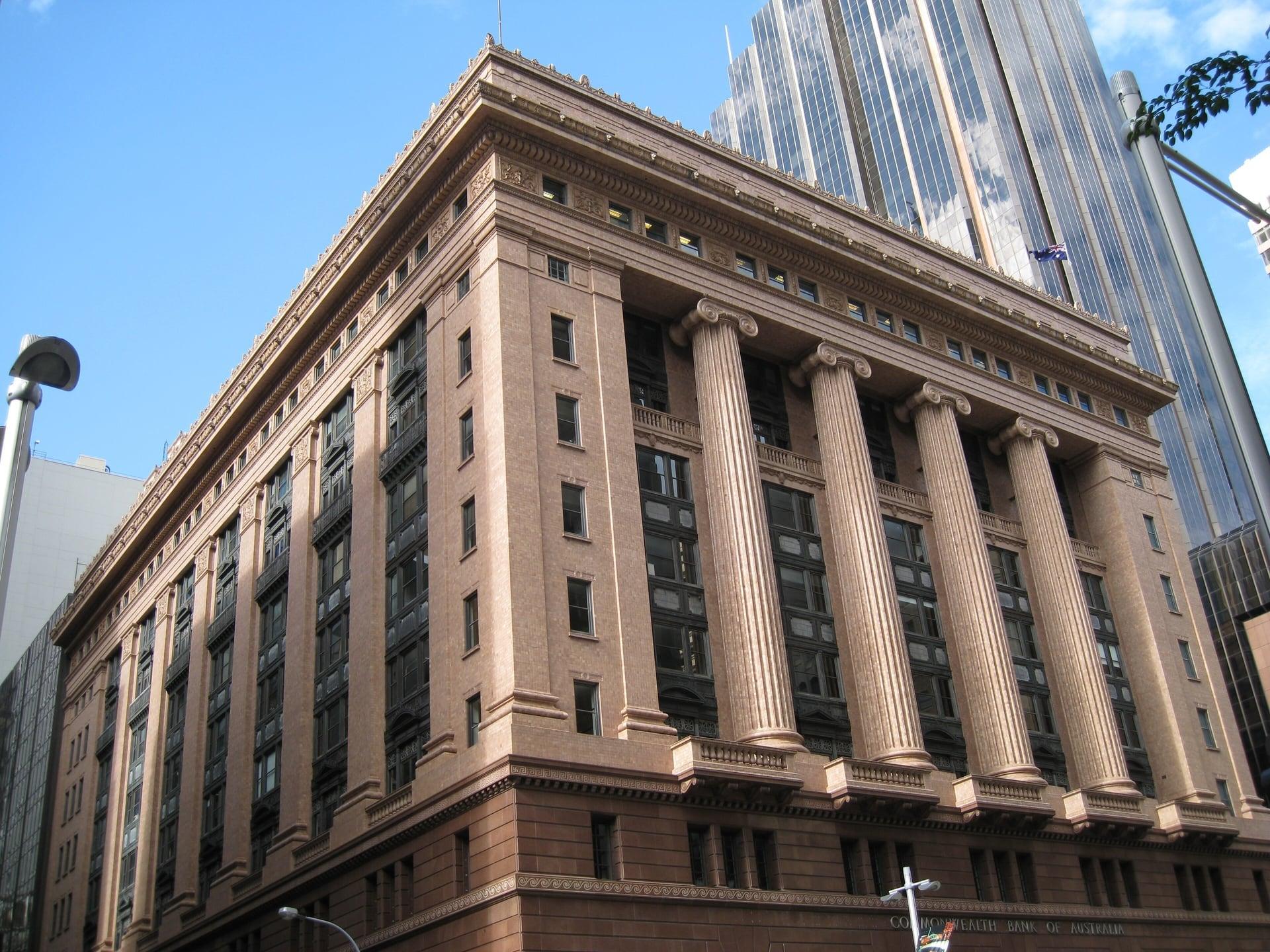
48 Martin Place: The People's Bank
A people's bank that failed in 1931. The Government Savings Bank of New South Wales opened this columned palace on 13 December 1928; within three years, in the Depression, it had closed its doors.
- 3
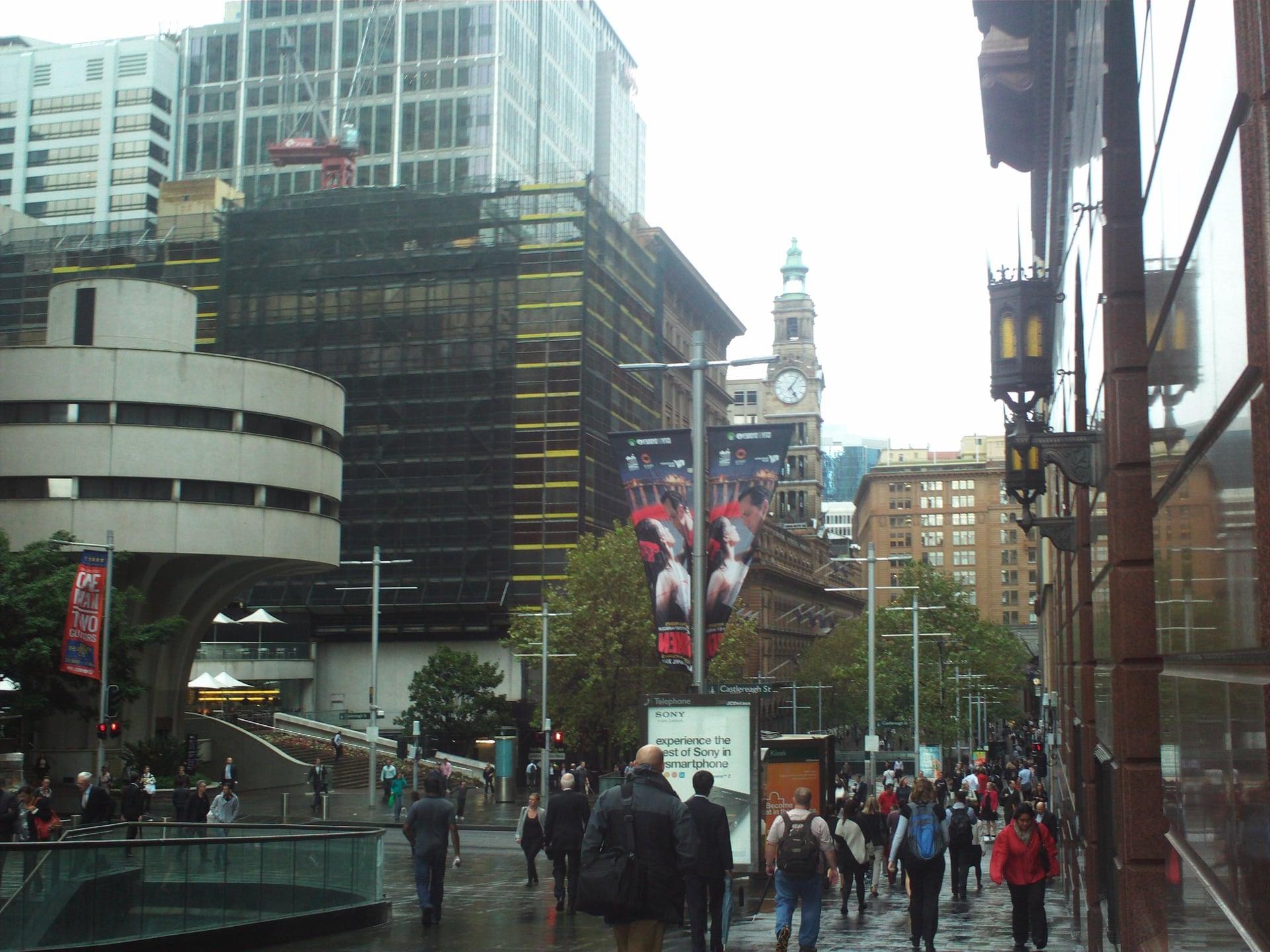
Reflection: The Siege Memorial
Flowers in the paving for two lives. The 2017 memorial to Katrina Dawson and Tori Johnson, killed in the December 2014 siege: 210 hand-made flowers set in the paving where the sea of flowers began.
- 4
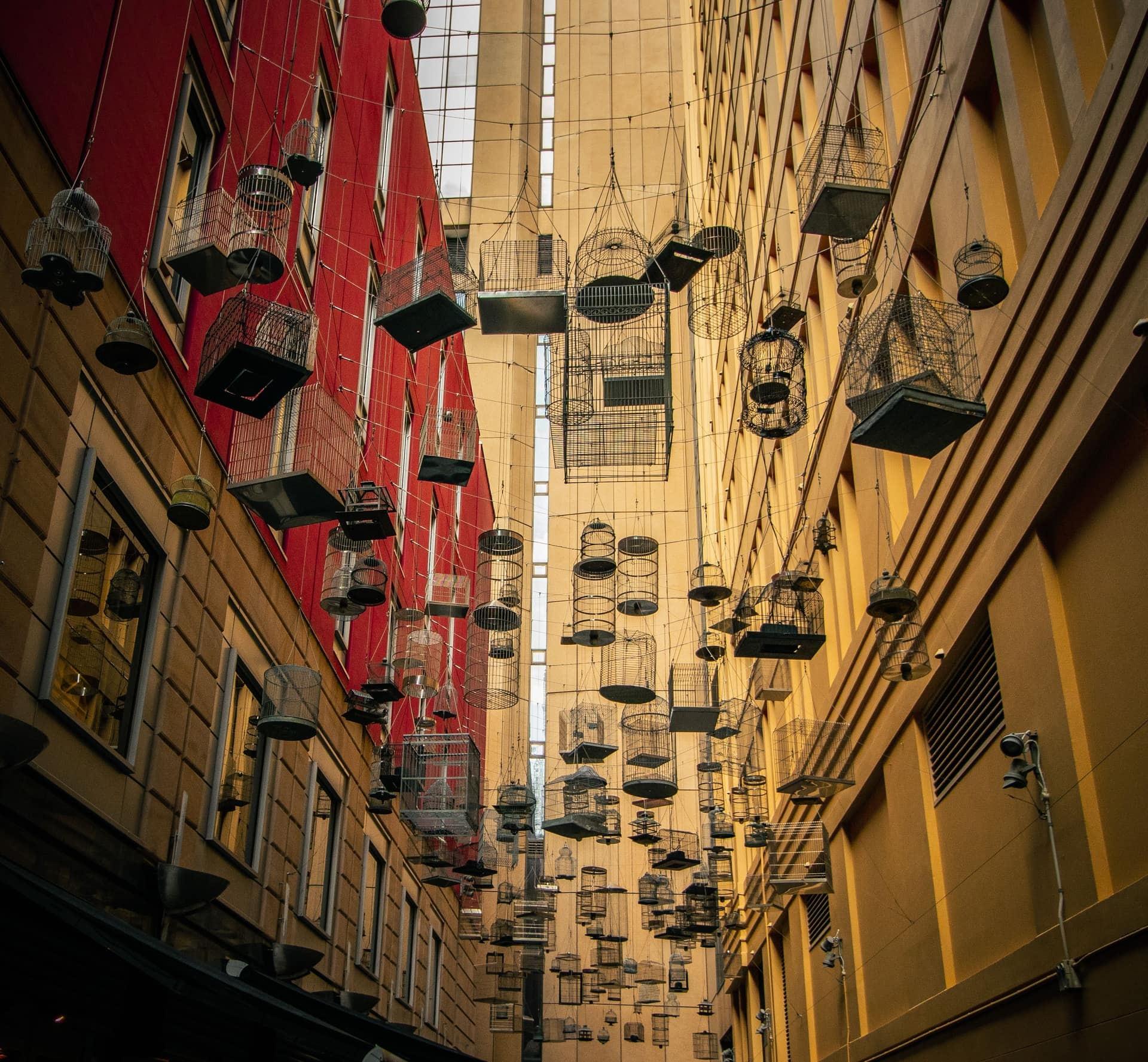
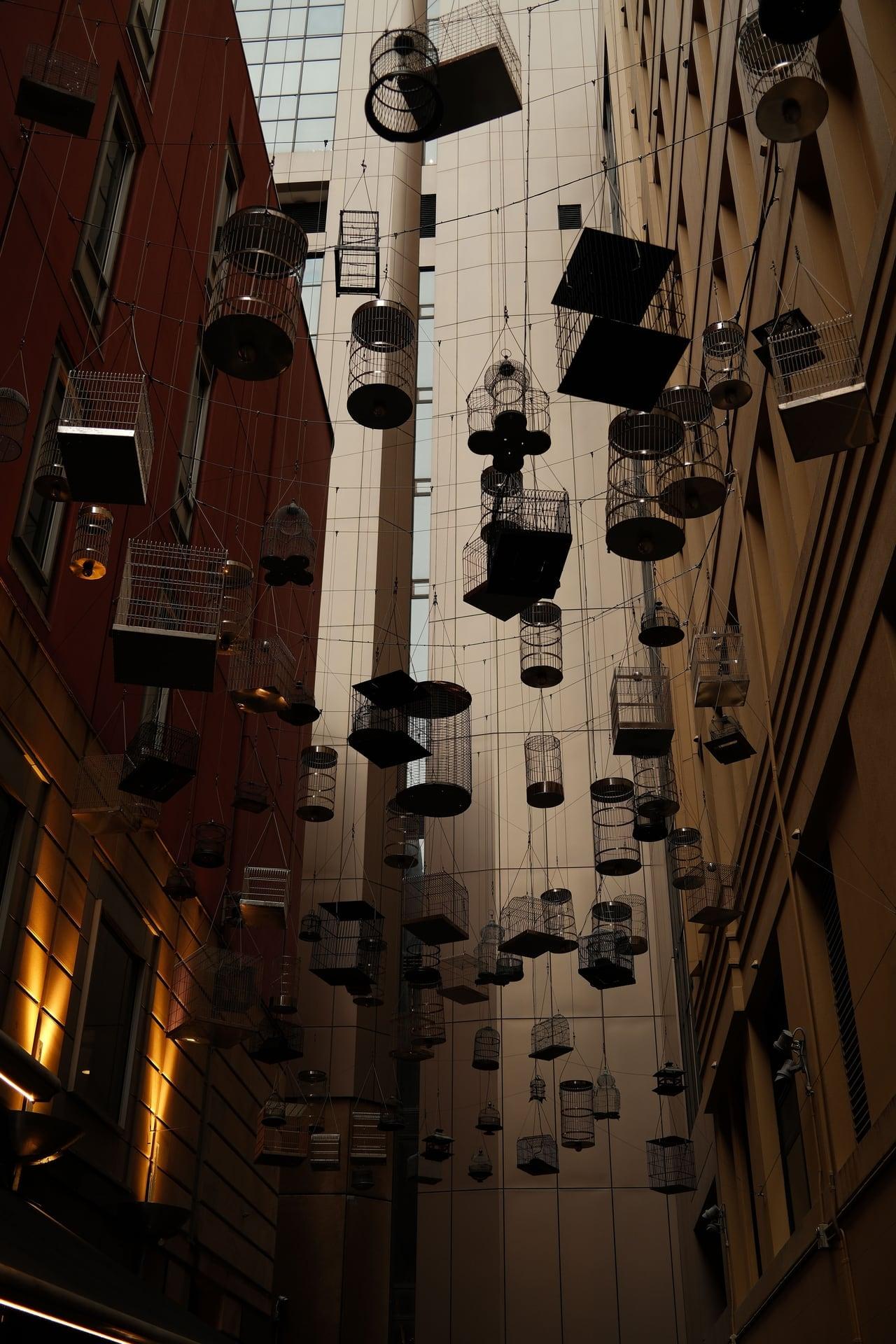
Angel Place: Birdcages and Forgotten Songs
Empty birdcages sing for lost birds. Forgotten Songs (installed 2012) plays the calls of 50 birds once heard in central Sydney: day birds by day, night birds after dark.
- 5
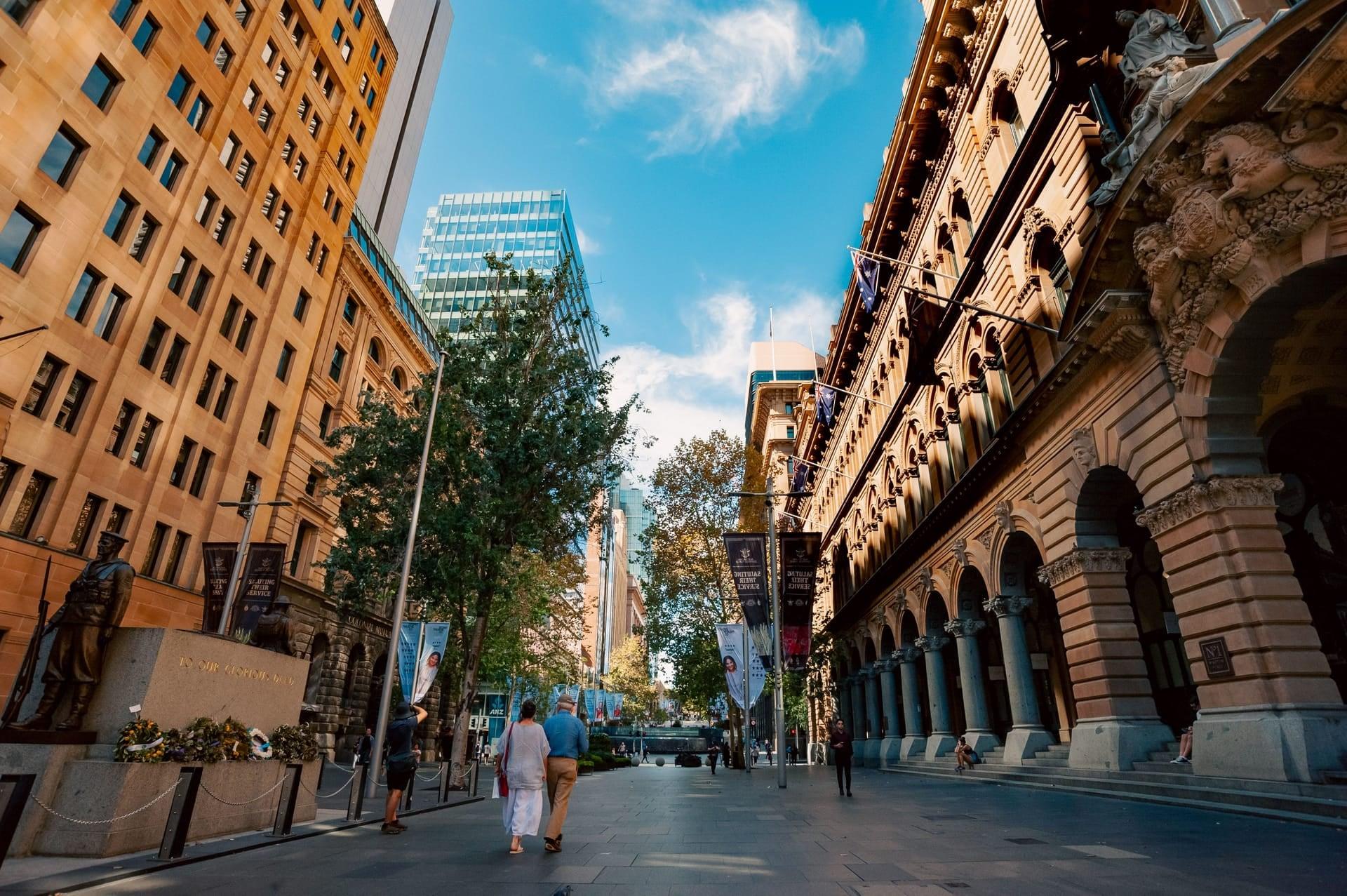
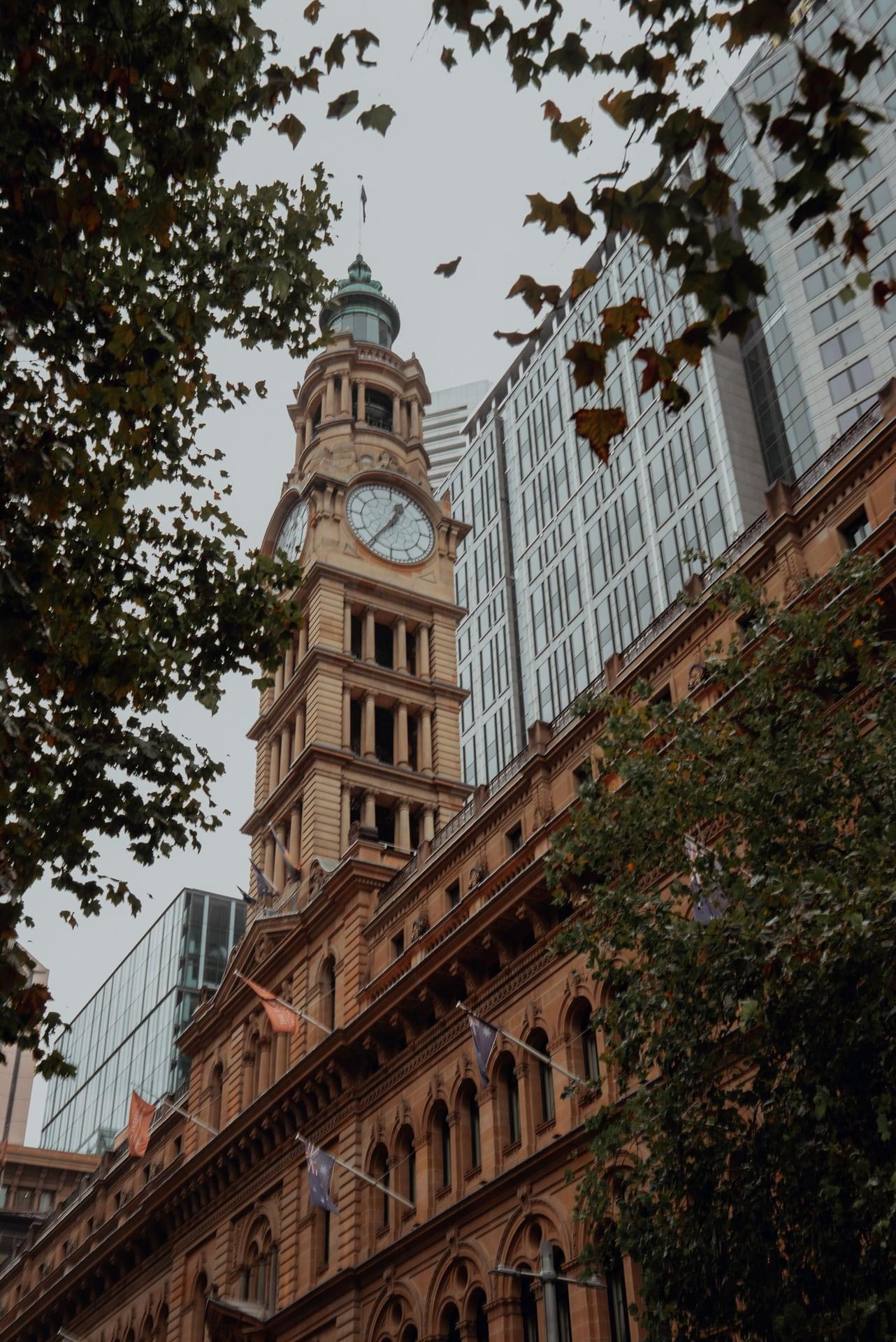
Cenotaph and GPO: The Tower That Came Back
The war memorial faces the old Post Office. The Cenotaph (unveiled 1929), where an official Anzac Day dawn service was first held in 1928, and the General Post Office (1866 to 1891), whose tower came down in 1942 and went back up in 1964.
- 6
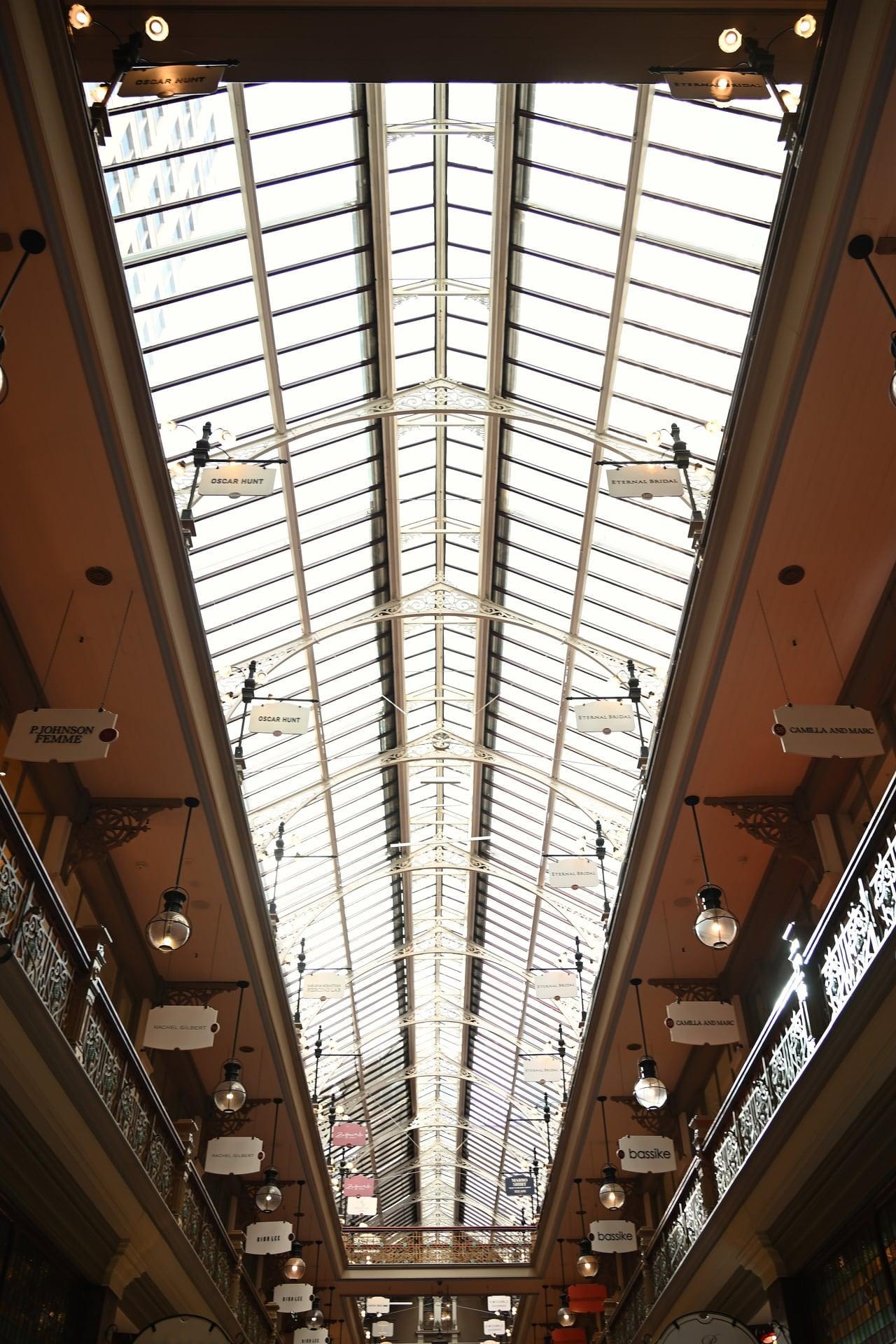
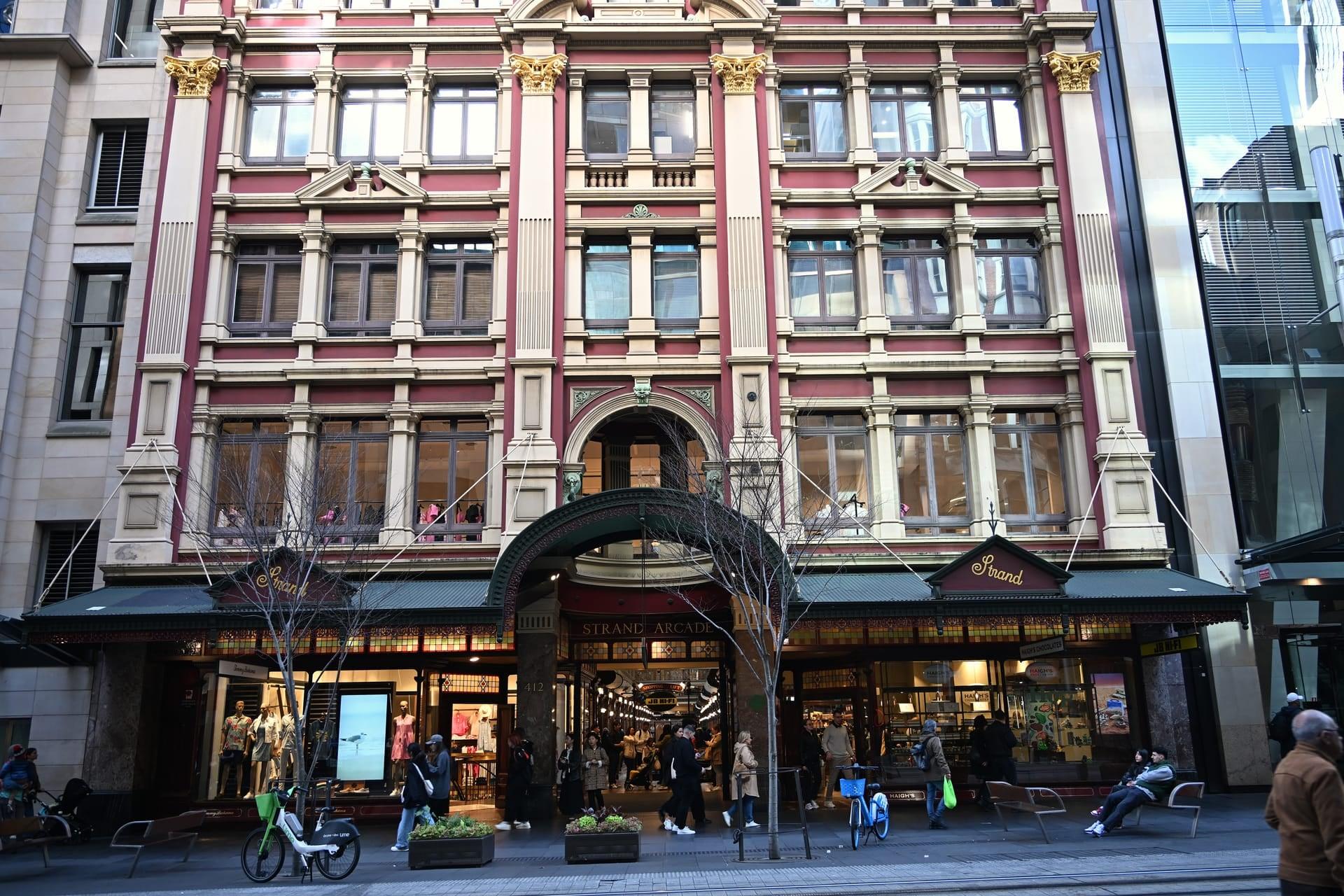
Strand Arcade: The Arcade That Survived
The finest of the city's old arcades. The Strand (1890 to 1892), once the longest of Sydney's Victorian arcades, survived two fires; its Pitt Street end keeps its original walls and doors. Open daily, shorter hours at weekends.
- 7
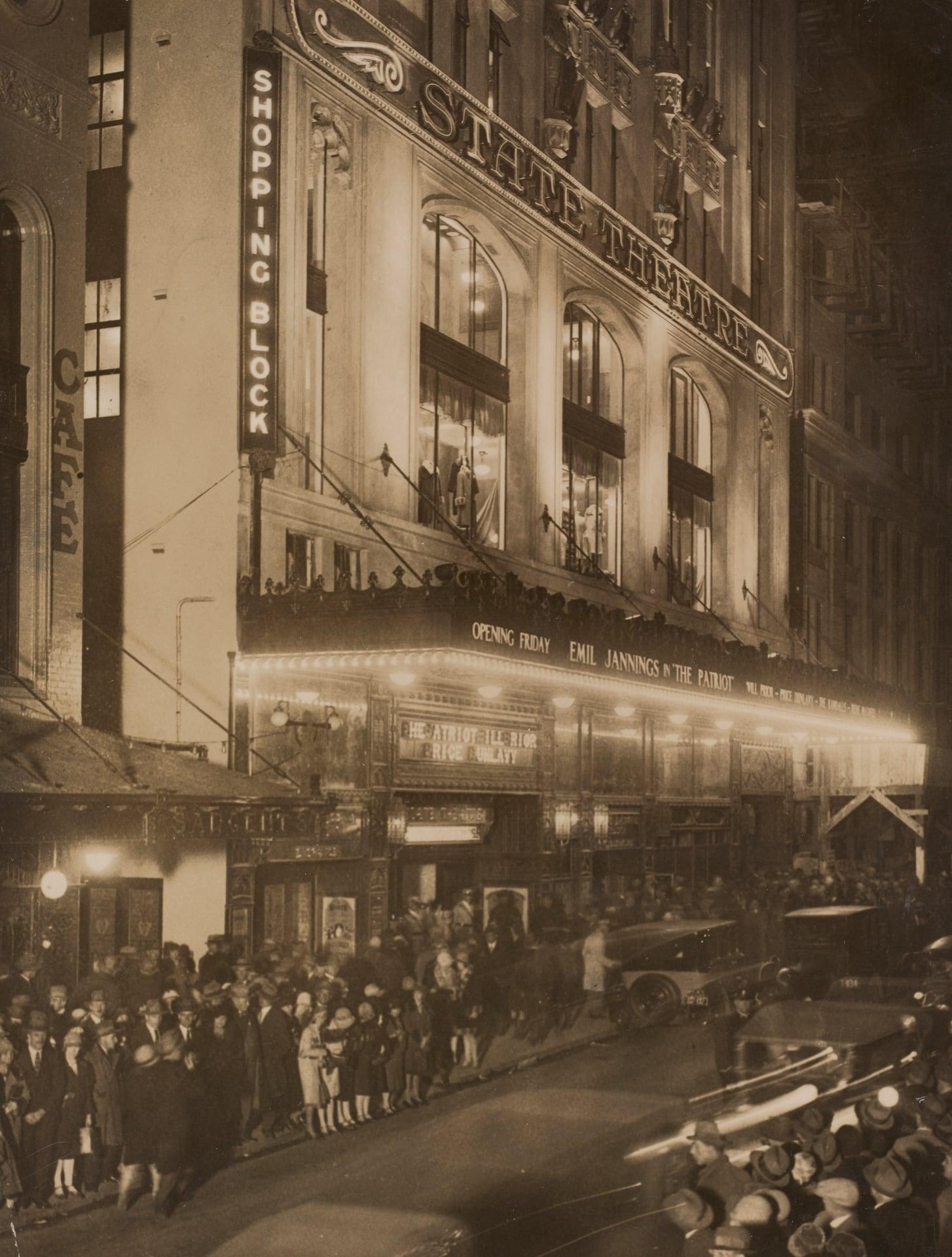
State Theatre: A Picture Palace
A 1929 picture palace on Market Street. The State Theatre opened on 7 June 1929 as 'The Empire's Greatest Theatre'; home of the Sydney Film Festival since 1974. Shows and tours are ticketed.
- 8
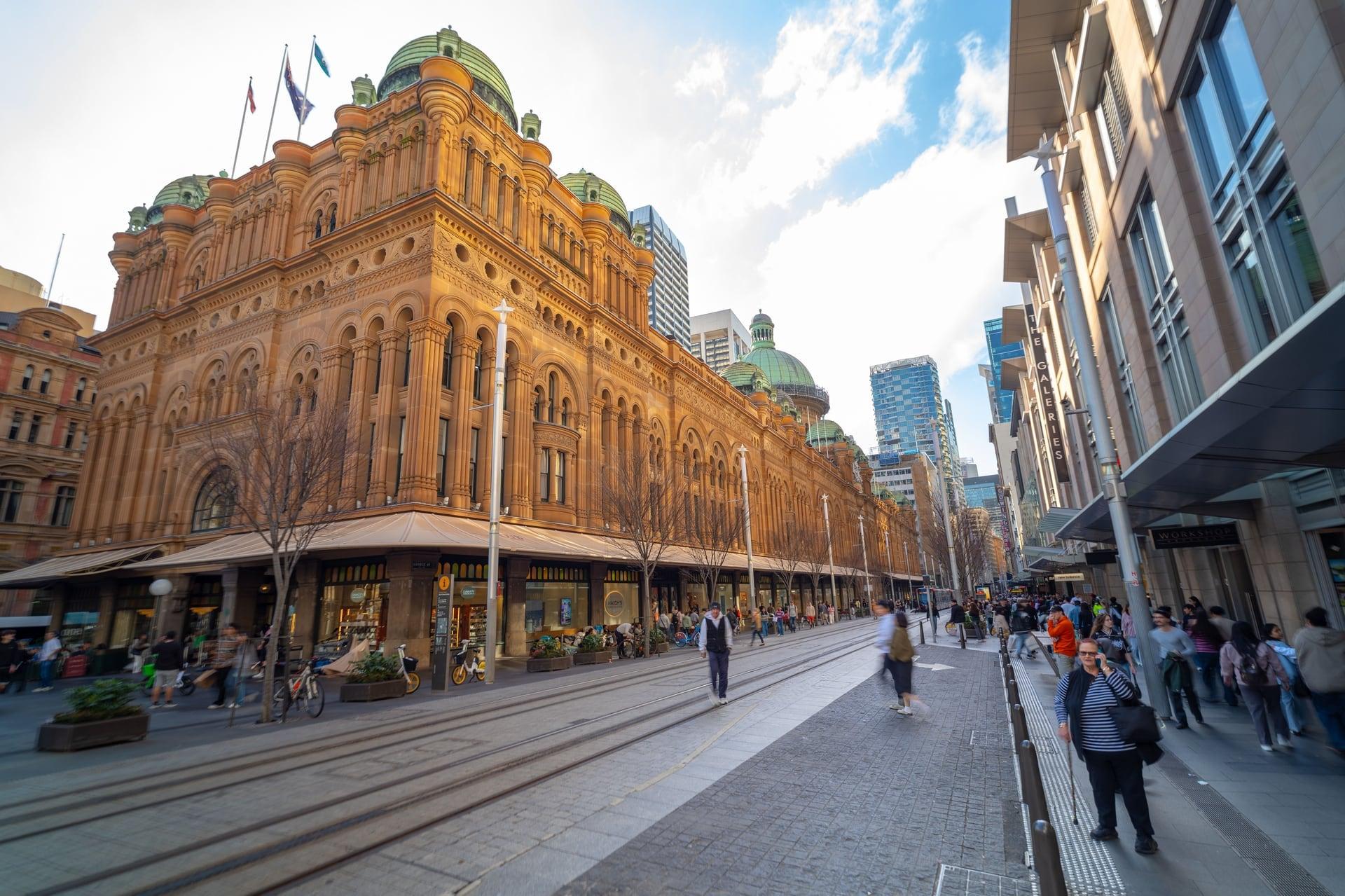
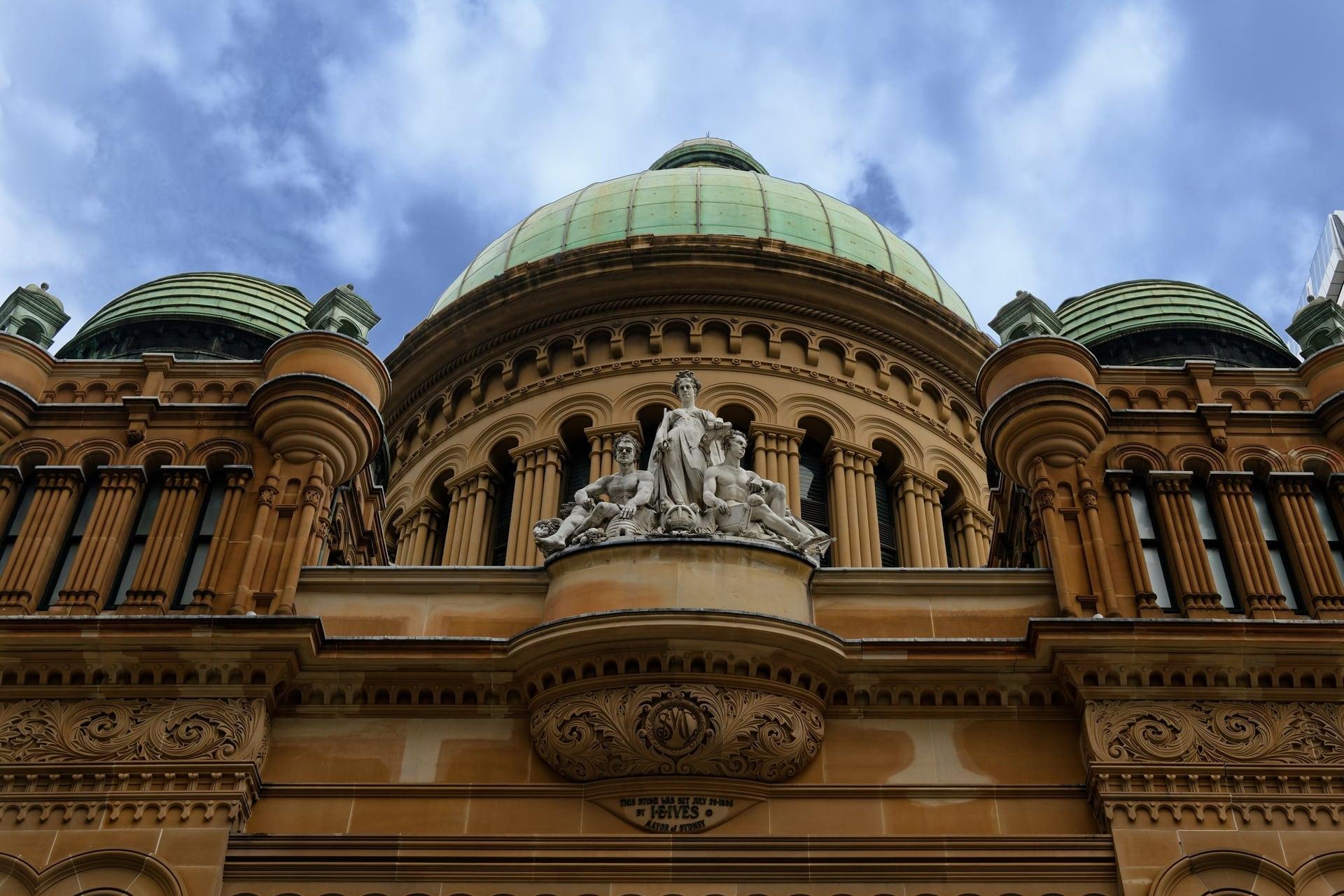
Queen Victoria Building: The Market Nearly Lost
The market hall the city nearly demolished. Built 1893 to 1898 as the central market, turned into offices, proposed for demolition in 1959, then restored 1982 to 1986 under a 99-year lease. Free to enter in shop hours.
- 9
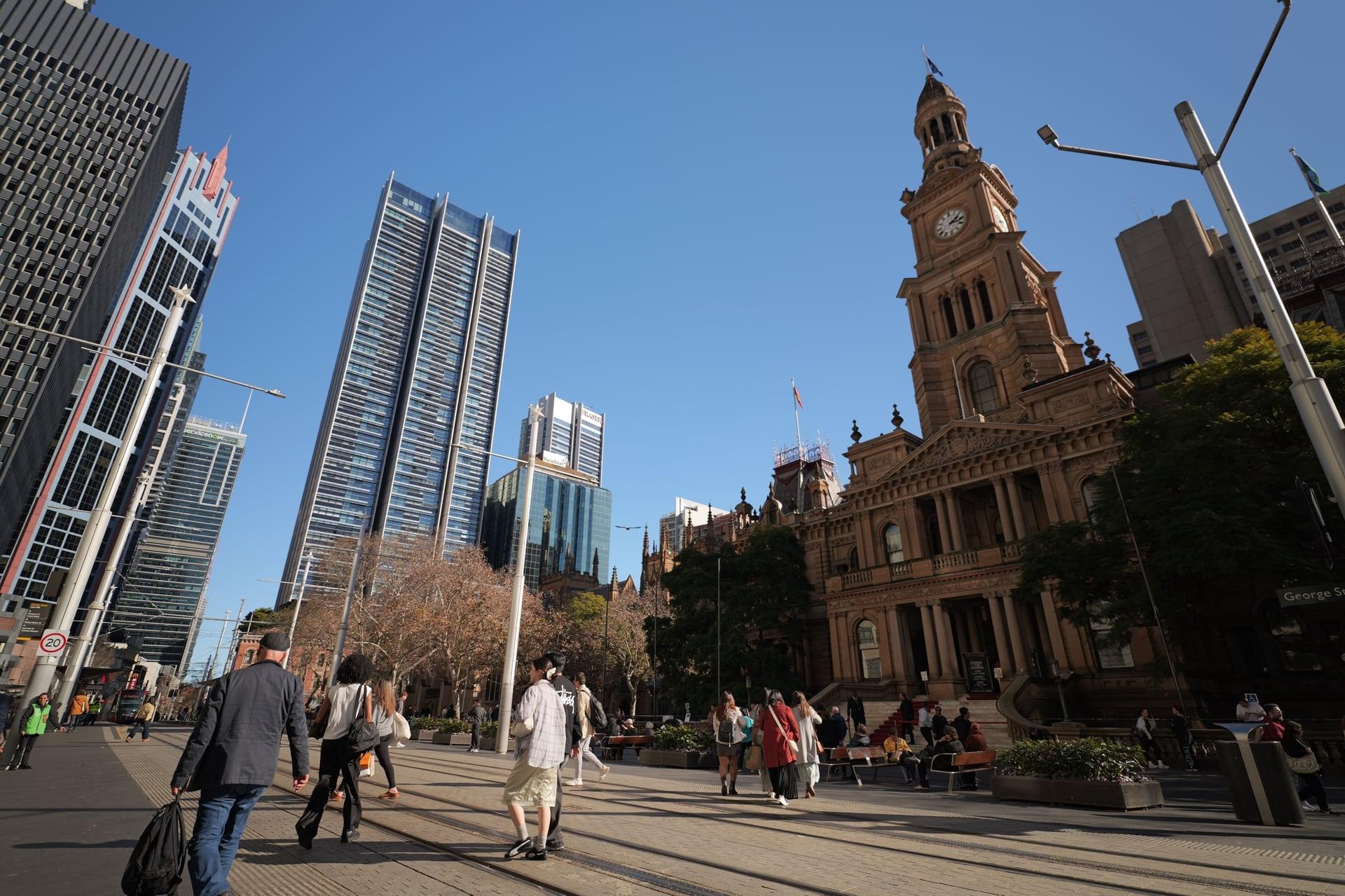
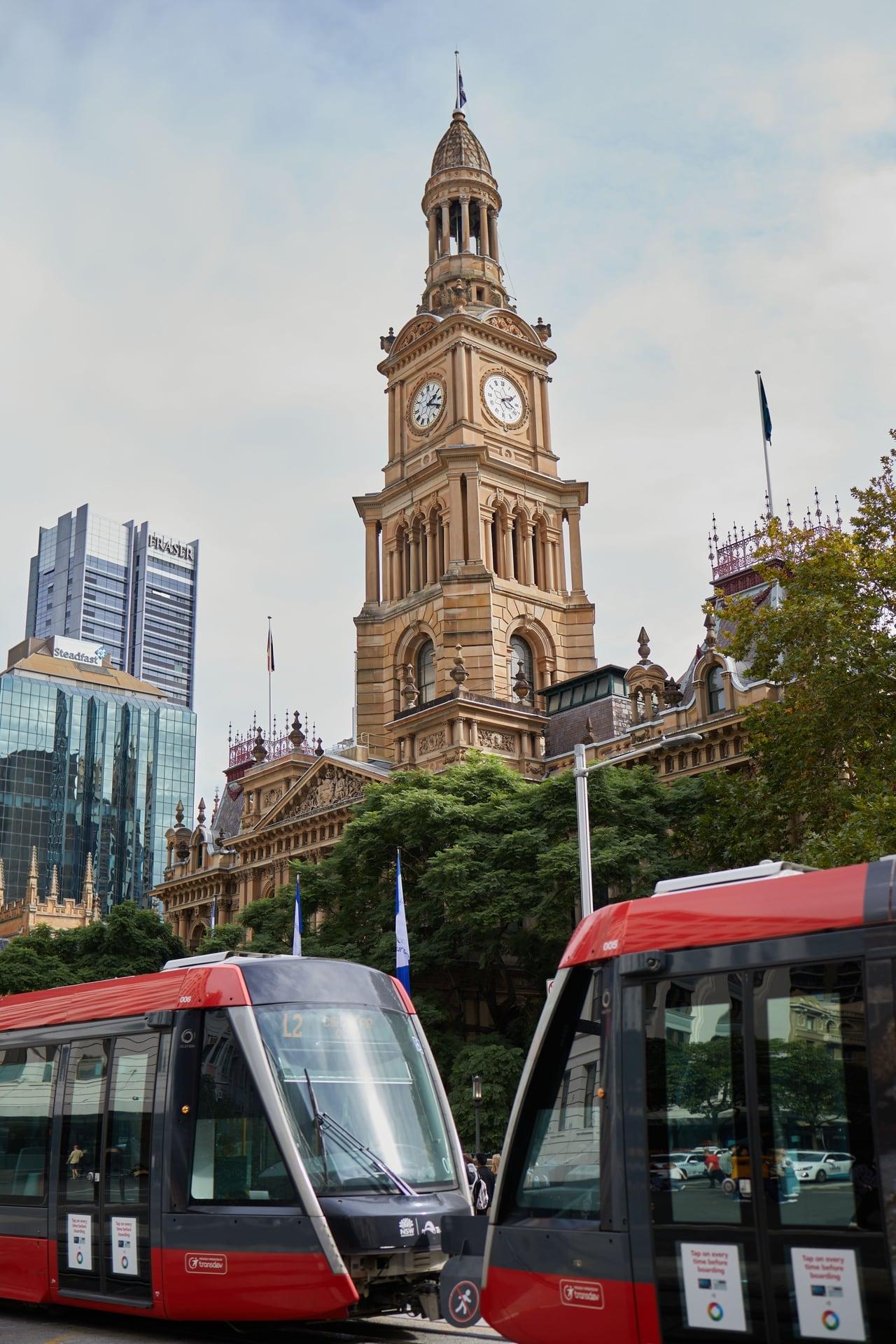
Sydney Town Hall: Built Over a Burial Ground
The town hall stands on old graves. Built over twenty years, 1869 to 1889, on the Old Sydney Burial Ground, the colony's first permanent cemetery (1792 to 1820); the front steps date from 1934.
- 10
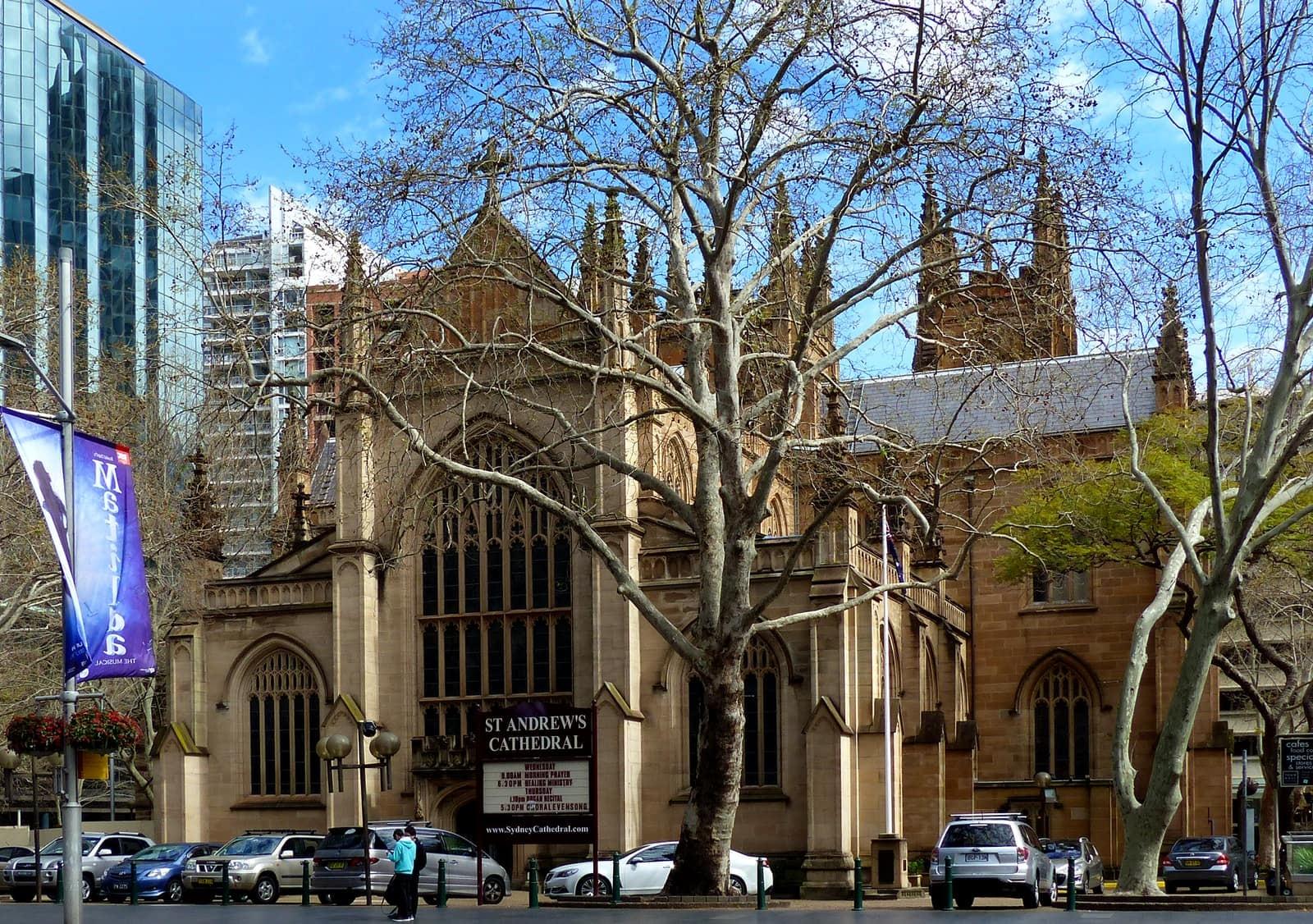
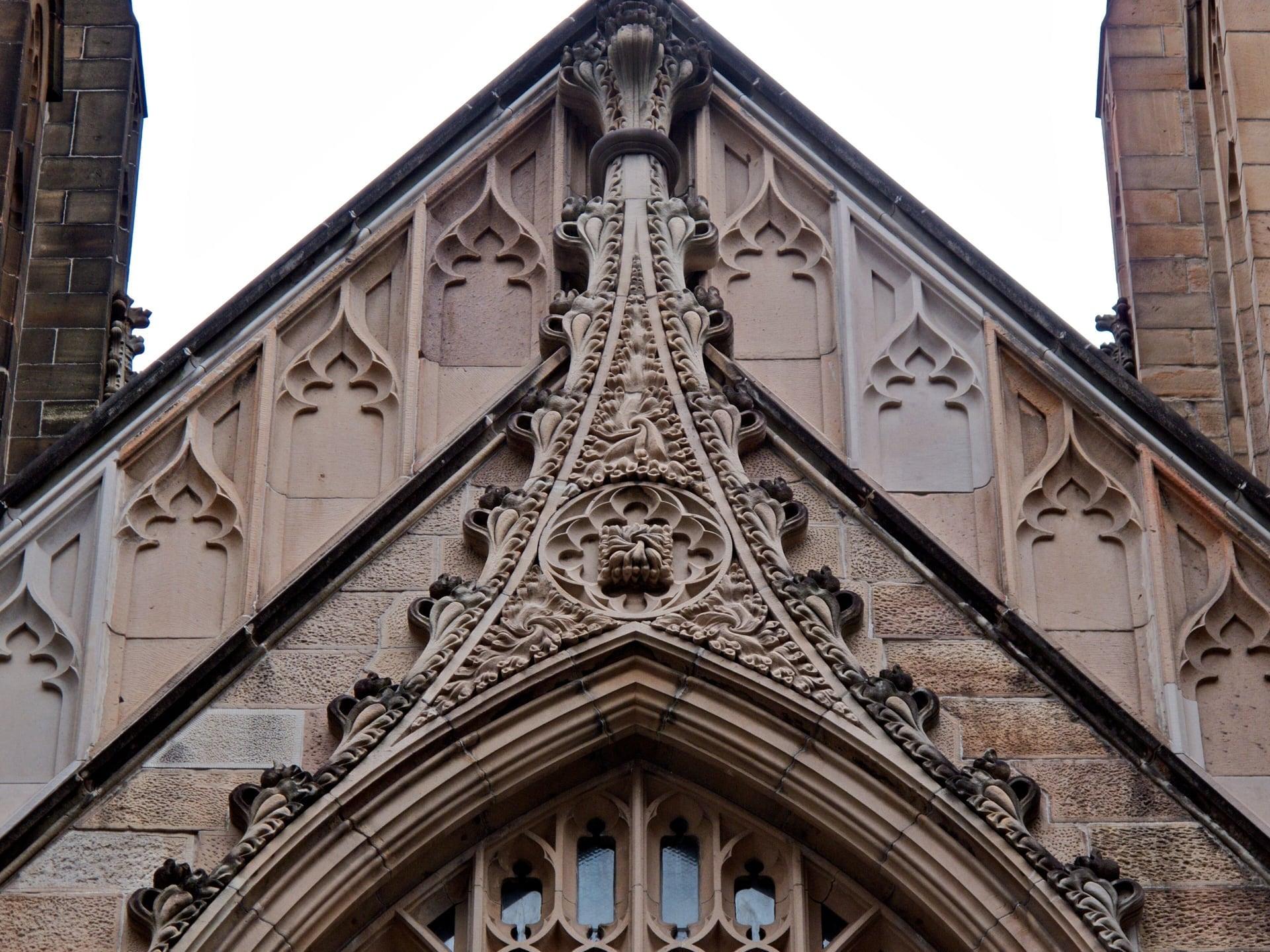
St Andrew's Cathedral: Beside the Town Hall
Cathedral and town hall stand side by side. St Andrew's, which the state heritage listing calls the oldest cathedral in Australia, consecrated in 1868; usually open to visitors on weekdays, free.
Details
Best Time to Visit
Any day, any hour: every stop is outside on a plaza, mall or sidewalk and works after shop hours and after dark (sunset about 19:30 in mid November, computed, not an official figure). To step inside, go when the Strand Arcade (Monday to Wednesday and Friday 9:00 to 17:30, Thursday to 21:00, Saturday 9:00 to 16:00, Sunday 11:00 to 16:00) and the QVB (9:00 to 18:00, Thursday to 21:00, Sunday 11:00 to 17:00) are open, and St Andrew's on a weekday from 10:00. Anzac Day (25 April) and Remembrance Day (11 November) bring services to the Cenotaph and fill Martin Place. Checked 10 November 2026.
Pro Tips
- •Start at the top of Martin Place by Macquarie Street, above Martin Place station (Sydney Trains and Sydney Metro). Check lines and exits in the Transport for NSW app.
- •On foot: the Macquarie Street walk ends where this one begins. From Circular Quay it is about 10 minutes up Phillip or Macquarie Street.
- •Strand Arcade (stop 6): if it is open, walk through to George Street and back; the Pitt Street end has its original walls and doors. Monday to Wednesday and Friday 9:00 to 17:30, Thursday 9:00 to 21:00, Saturday 9:00 to 16:00, Sunday 11:00 to 16:00. Checked 10 November 2026.
- •Queen Victoria Building (stop 8): free to walk through in shop hours, Monday to Wednesday, Friday and Saturday 9:00 to 18:00, Thursday 9:00 to 21:00, Sunday 11:00 to 17:00. The QVB runs its own 60-minute History Tour ($25, Wednesday to Saturday at 11:00, booked online). Checked 10 November 2026.
- •St Andrew's Cathedral (stop 10): usually open to visitors Monday and Wednesday 10:00 to 15:00, Tuesday, Thursday and Friday 10:00 to 16:00, free; Sunday services at 8:30, 10:30 and 17:00. Checked 10 November 2026.
- •From the end: Town Hall station (Sydney Trains) is at the door and the light rail stops on George Street in front of the Town Hall; Gadigal station (Sydney Metro) is about 200 m east on Pitt Street. Our Darling Harbour walk starts at the city end of Pyrmont Bridge, about 10 minutes west down Druitt Street. Station details were read from OpenStreetMap and Sydney Metro: check the Transport for NSW app.
Safety & Precautions
- •Eight road crossings, all at signals: Phillip, Elizabeth, Castlereagh and Pitt Streets on Martin Place, King, Market and Park Streets, and George Street at the Town Hall. Cars drive on the left. Wait for the green each time.
- •The light rail on George Street is almost silent. Cross the tracks only at the signalled crossing by the Town Hall (between stops 8 and 9), and look both ways before you step onto them.
- •Angel Place (stop 4) is a narrow shared lane with occasional cars and vans: keep to the side. Small lane and driveway mouths cross the sidewalk on Pitt and George Streets.
- •One short flight of terrace steps on Martin Place between stops 1 and 2, with a ramp at the south end of the flight (mapped in OpenStreetMap); otherwise the walk is step-free and nearly level, gently downhill along Martin Place.
- •Reflection (stop 3) and the Cenotaph (stop 5) are memorials: keep your voice low. On Anzac Day and Remembrance Day services fill Martin Place.
- •The City of Sydney's Christmas tree stands in Martin Place from Thursday 26 November 2026 to Tuesday 5 January 2027, with a light show every night from 20:00 to midnight and choirs in December: expect evening crowds on Martin Place (City of Sydney What's On). Checked 10 November 2026.
- •GPS can drift between the towers, especially in Angel Place (stop 4) and on George Street (stop 8): look for the birdcages and the domes.
- •St Andrew's is an active cathedral: services take precedence, so go in quietly.
- •The top of Martin Place is in full sun at midday: carry water and a hat in summer.
Travel advisory: Exercise Normal Precautions (Level 1).
Gallery
Related Reading
Go deeper on what you'll see, hear, and walk through.
Read the walk
The full story of City Centre: The Victorian Heart Sydney Kept, in words. Prefer to listen? Play it narrated, from home or on location.
Introduction
Sydney's city center was built to impress. In the second half of the eighteen hundreds, colonial Sydney put up a post office like a palace, an arcade of shops right through a city block, a market hall with a copper dome and a town hall with a clock tower. The twentieth century came close to losing some of them. The post office tower came down in the war. A Lord Mayor proposed demolishing the market hall for a square and a car park. This walk follows what the city kept, just.
There are ten stops over about a kilometer and a half, just under a mile, and it takes about seventy five minutes. It runs gently downhill along Martin Place, with one short flight of terrace steps near the start and a ramp at one end of it; after that it is nearly level. There are eight road crossings, every one at a signal: wait for the green. At the last, in front of the Town Hall, you also cross the light rail, and the trams are almost silent. Martin Place is a street of memorials, so keep your voice low at the siege memorial and the Cenotaph. The arcade and the Queen Victoria Building close in the evening, but every stop is outside, and the walk works at any hour. It ends at St Andrew's Cathedral, beside the Town Hall. Martin Place station comes up right at the start. When you arrive at Martin Place's Macquarie Street end, begin with stop one.
1. Martin Place: A Street Cut Block by Block
You are at the top of Martin Place, at its Macquarie Street end. Face down the plaza. It falls away from you in broad terraces toward George Street, a long paved room between banks and towers. Behind you, across Macquarie Street, stand the old Sydney Hospital and the Mint. They belong to our Macquarie Street walk, which passes along that side of the street.
This street was never planned as a whole. It was cut, a piece at a time. It began in eighteen ninety two as a widened lane in front of the new General Post Office, between George Street and Pitt Street, and it took its name from a chief justice of the colony. In nineteen twenty one the next block, a street called Moore Street, was widened and renamed Martin Place. The last stretch, the one you are standing on, was not finished until nineteen thirty five. Forty three years, one block at a time.
Cars went out later. A pedestrian plaza opened in stages from nineteen seventy one, and by nineteen seventy nine it ran all the way from George Street up to here, timed for the railway station that opened under your feet. On this top block stands the head office of the Reserve Bank of Australia, built between nineteen sixty one and nineteen sixty four.
This walk is about what the city kept. In the eighteen hundreds colonial Sydney built a post office like a palace, a market hall with a copper dome, and a town hall with a clock tower. In the twentieth century it came close to losing some of them. A tower was taken down. A market hall was nearly demolished. Watch for two dates at each stop: when it was built, and when it was saved.
Follow the route down the plaza. There is a short flight of terrace steps first, with a ramp at one end of the flight, and then Phillip Street: wait for the signal. Next is a bank that failed.
2. 48 Martin Place: The People's Bank
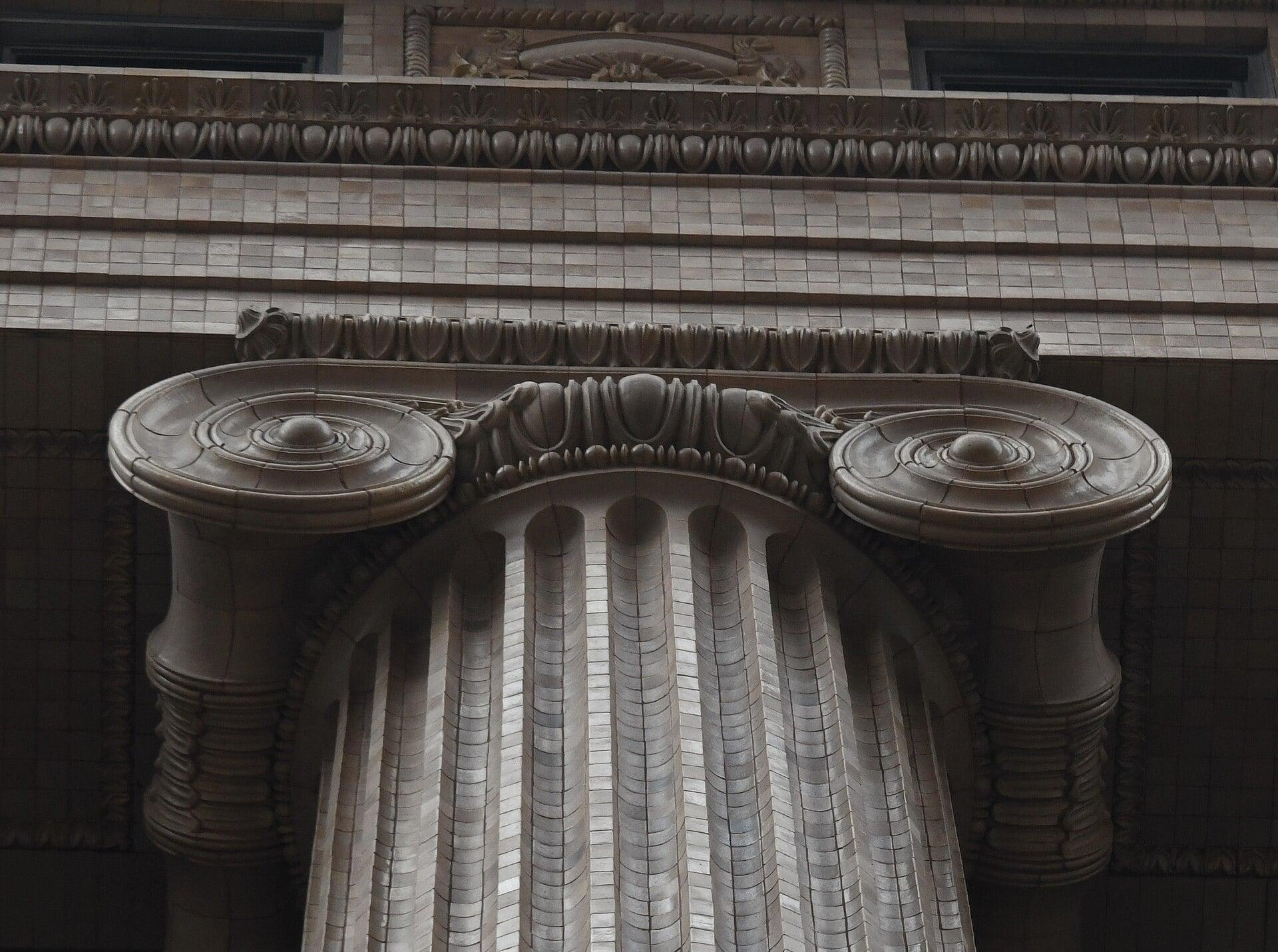
Stop here, short of Elizabeth Street, and look across it at the building with the giant columns. Tall Ionic columns run up six floors of the front, over a base of red granite. This is forty eight Martin Place.
It was built for the Government Savings Bank of New South Wales, the people's bank: the bank of school savings accounts and home loans. Building began in February nineteen twenty five, and the state's Premier opened it on the thirteenth of December nineteen twenty eight. Inside, the banking hall was finished in marble. The state's heritage register calls it the finest banking building in New South Wales.
By nineteen thirty one, the register says, this was the largest savings bank in Australia and the second largest in the British Empire. That year it collapsed. In the depths of the Depression, the people's bank closed its doors. The register calls it a casualty of the conflict between the federal and state governments over how to relieve the Depression, and it says the collapse had a devastating effect on the lives of ordinary people. Their savings were behind these columns.
So this is a palace built for small savers, finished just in time for the worst years of the century. The building outlived the bank, and this stop is its front, from here.
Follow the route across Elizabeth Street and then Castlereagh Street, both at signals. Wait for the green each time. Next is a memorial set into the ground: after the second crossing, slow down and look at your feet.
3. Reflection: The Siege Memorial
Stop here, just past the crossing, and look down. Set into the paving of this block, between Castlereagh Street and Pitt Street, are small cubes, scattered as if they had been dropped, and each one holds a small flower. There are two hundred and ten of them. This memorial is called Reflection.
In December twenty fourteen, two people were killed in the Martin Place siege: Katrina Dawson and Tori Johnson. In the days and weeks that followed, people filled Martin Place with flowers, more than a hundred thousand bunches. The City of Sydney says the sea of flowers began on this block, and that is where the memorial lies.
It was designed by an architect, and the flowers were made by hand by an artist from Adelaide. It was installed in twenty seventeen. At its heart are two clusters, aqua hydrangeas and yellow sunflowers, for the two people it remembers. The other cubes are scattered, not lined up, to keep the way the flowers spread through the plaza.
People walk over it every day, as it was meant to be walked over. If you stay a moment, stay quietly.
Follow the route to Pitt Street and cross it at the signal, then turn along Pitt Street with the Post Office behind you, and into Angel Place, a narrow lane shared with the odd car: keep to the side. Next are the birdcages.
4. Angel Place: Birdcages and Forgotten Songs
Where the lane bends, look up. Empty birdcages hang over Angel Place, and from them comes birdsong. Walk on under the cages and stop there. This is a sound work called Forgotten Songs, part of the City of Sydney's public art collection. The City says these are the songs of…
Full narration for this stop unlocks with the tour.
5. Cenotaph and GPO: The Tower That Came Back
Stop here, at the George Street end of Martin Place. Ahead of you, in the plaza, is a long block of granite with a bronze figure at each end: a soldier at the far end, a sailor at this one. That is the Cenotaph. Along the side of the plaza runs the long arched front of the…
Full narration for this stop unlocks with the tour.
6. Strand Arcade: The Arcade That Survived
Walk on down the mall and stop near the Strand Arcade's entrance, on the side of the mall toward George Street. Look through the doors: a long, narrow hall of shops runs away from you, right through the block. The Strand was built between eighteen ninety and eighteen ninety…
Full narration for this stop unlocks with the tour.
7. State Theatre: A Picture Palace
Stop here on Market Street and look across the road at the theatre front, with its Gothic details. This is the State Theatre. It opened on the seventh of June nineteen twenty nine, as a picture palace, a cinema built to feel like a palace. It was the vision of a cinema company,…
Full narration for this stop unlocks with the tour.
8. Queen Victoria Building: The Market Nearly Lost
Walk on down this side of George Street and stop opposite the great copper dome. Across the light rail tracks stands the whole long stone front of the Queen Victoria Building, with smaller domes along its roof. Stay on this side to look: the trams are almost silent. It was…
Full narration for this stop unlocks with the tour.
9. Sydney Town Hall: Built Over a Burial Ground
After the crossing, walk on along the Town Hall's front, past the station stairs, and stop beyond them. Turn to face the building. Back toward the crossing, the clock tower rises over the main steps. The Town Hall's design won a competition and built over twenty years, from…
Full narration for this stop unlocks with the tour.
10. St Andrew's Cathedral: Beside the Town Hall
Walk on to the edge of the square and stop under its trees. Beyond them rise the sandstone towers of St Andrew's Cathedral. The state's heritage record calls it the oldest cathedral in Australia. The colony's governor marked out the site around eighteen nineteen and eighteen…
Full narration for this stop unlocks with the tour.