Hagia Sophia and the Blue Mosque: The Peninsula of Empires
90 min · 2.3 km · moderate
Istanbul is a city that later empires wrote over earlier ones without erasing them, and the clearest way to read it is to cross water. The old Sultanahmet peninsula stacks Roman, Byzantine, and Ottoman capitals onto one small headland where the Bosphorus, the Golden Horn, and the Sea of Marmara meet. Across the Golden Horn, a Genoese hill grew into the merchant, banking, and European Istanbul that faced west and lived by plurality. And down along the market quarter between the two seas, the commerce that paid for every dome ran downhill from covered vaults to the water. Three walks, three registers of the same argument: this is a layered city, and you learn to read it by watching who built onto what.
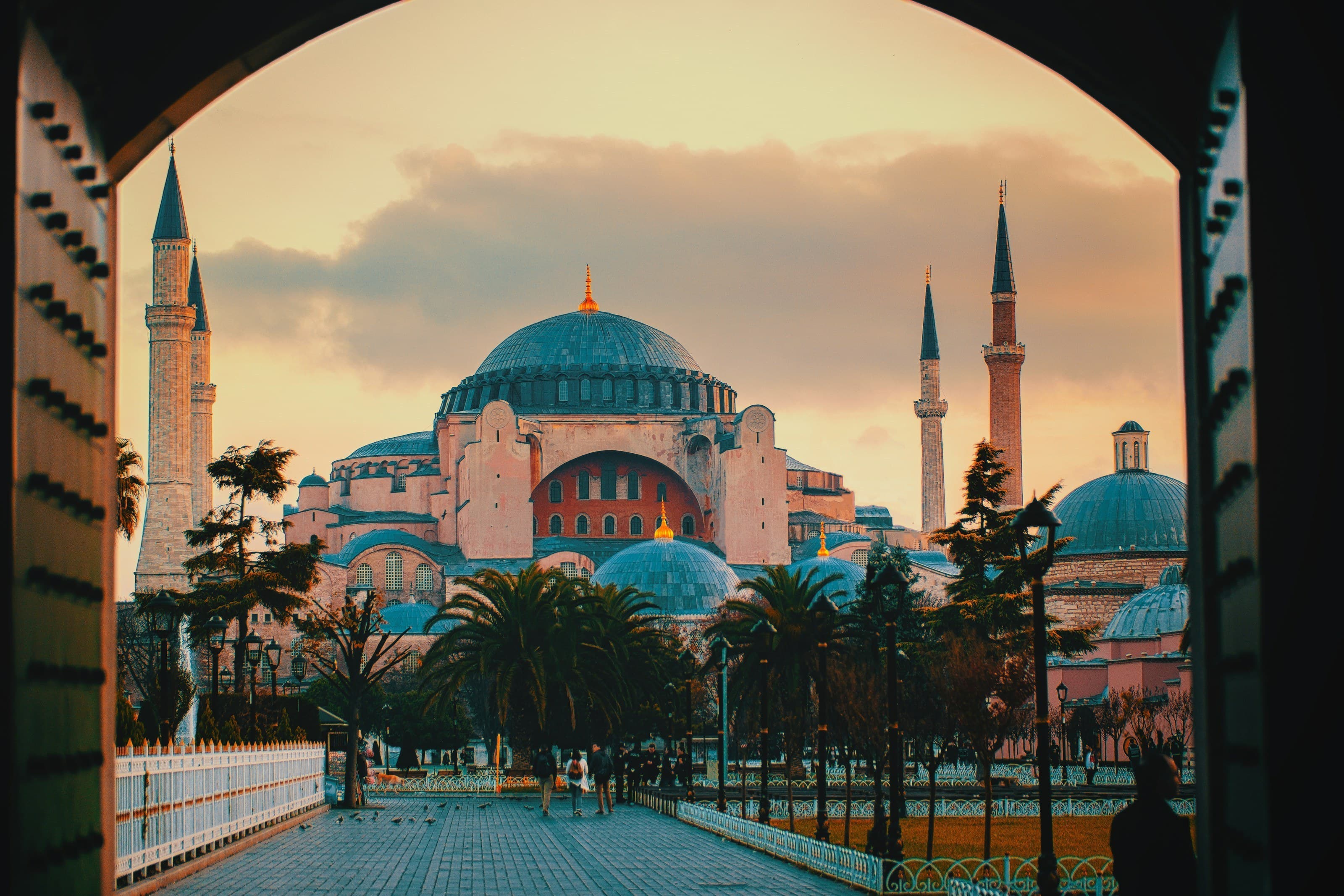
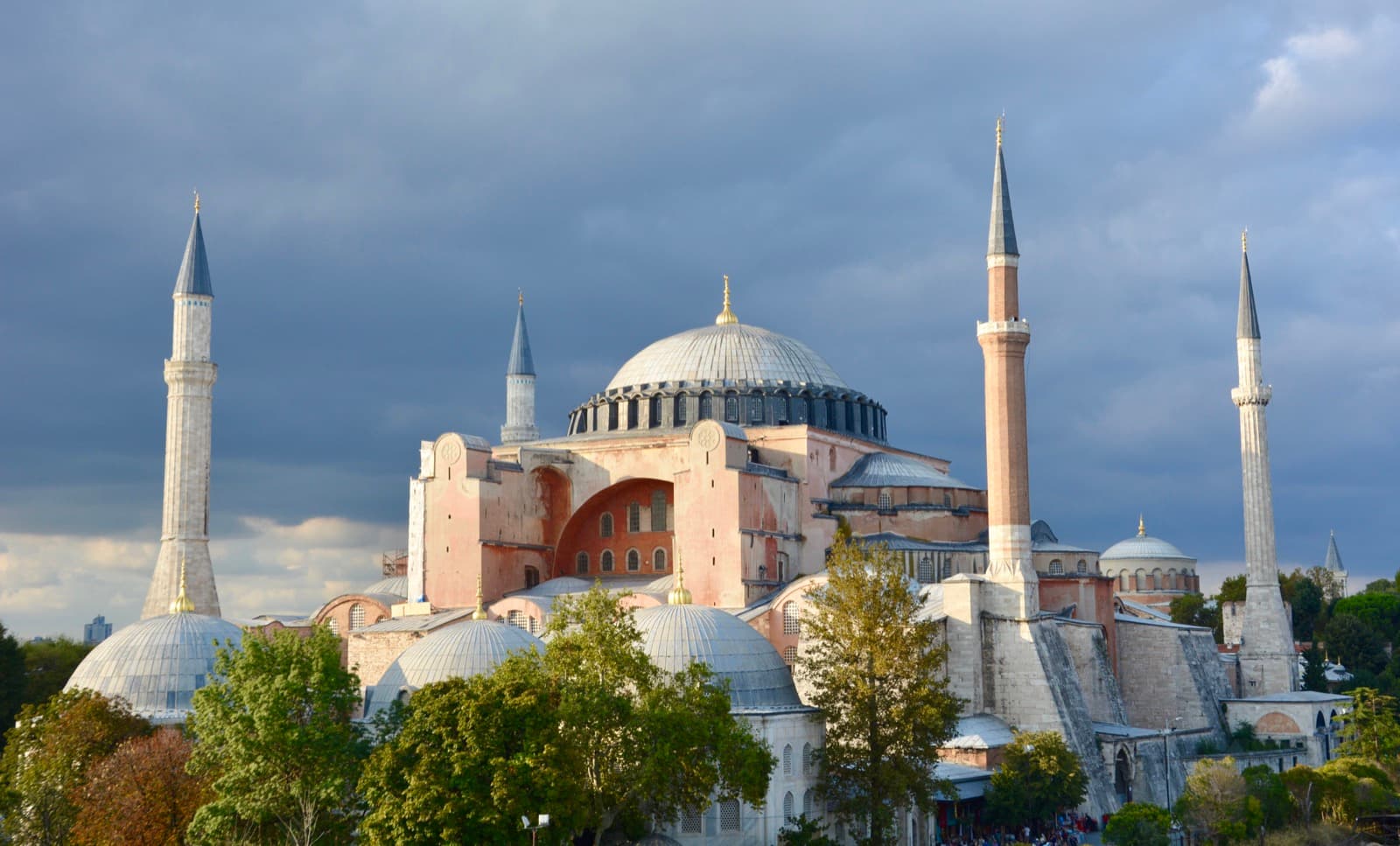
Start with the peninsula, because Sultanahmet holds the grammar the rest of the city repeats. On the Peninsula of Empires walk, Hagia Sophia is the whole idea compressed into one shell. It was completed as a cathedral in 537 under the emperor Justinian the First, its architects Anthemius of Tralles and Isidore of Miletus carrying an enormous dome on four curved triangles of masonry that, as Justinian's historian Procopius wrote, seemed to hang from heaven. It served as an Orthodox cathedral until 1453, apart from a Catholic interlude under the Latin occupation of 1204 to 1261, became a mosque after the Ottoman conquest, opened as a museum from 1935, and was reconverted to a working mosque in 2020. Four lives in one building, nothing fully erased. That is the lesson you carry to every other stop.
The peninsula: three capitals on one headland
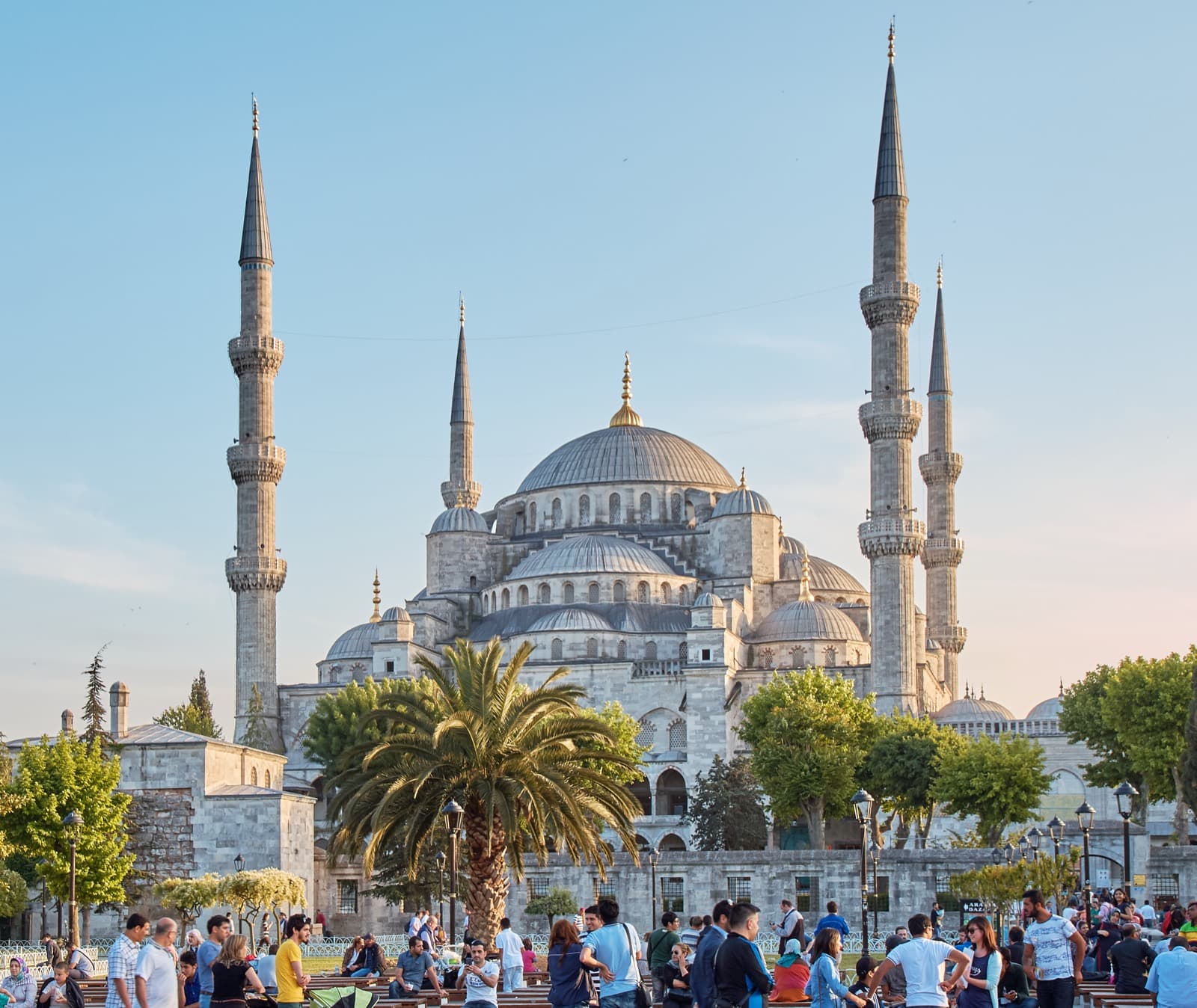
The layers on the peninsula are literal, and often below your feet. The long public square of Sultanahmet is the oldest layer of all: it was the Hippodrome, a Roman chariot circus first built around the year 203 under the emperor Septimius Severus, then enlarged by Constantine the Great after 324, as he rebuilt the city he dedicated in 330. The track is gone, but three monuments Constantine and his successors gathered still stand in pits below today's pavement, including the Obelisk of Theodosius, an Egyptian obelisk of the pharaoh Thutmose the Third re-erected here in 390. Across the square, the Blue Mosque answers Hagia Sophia directly. Built for Sultan Ahmed the First between 1609 and 1617 by the architect Sedefkar Mehmed Aga, its cascade of domes and more than twenty thousand tiles from the workshops of Iznik and Kutahya are a deliberate reply to the cathedral facing it. Two empires holding a conversation across one square.
The reuse runs underground too. The Basilica Cistern, built in the sixth century under Justinian, rests its ceiling on about three hundred and thirty-six marble columns, most of them spolia salvaged from older Roman buildings, and in one corner two carved Medusa heads serve as column bases, one on its side and one upside down. Nobody knows where they came from, perhaps a Roman fountain. The peninsula walk ends at Little Hagia Sophia, the church of Saints Sergius and Bacchus built by Justinian and Theodora around 530, converted to a mosque under Bayezid the Second and still working today. The great cathedral's church-to-mosque story, told again in a quieter key. And beside the entrance to the cistern stands the fragment of the Milion, the Byzantine zero-mile marker from which distances along the empire's roads were measured. This is the true center the whole city was built around. A few minutes west, a short detour from the walk and a stop on the Grand Bazaar walk, rises the Column of Constantine, set up by Constantine around 328 in the forum of the capital he dedicated on the eleventh of May, 330.
The city across the water: the plural hill
Hear a stop from this walk
Little Hagia Sophia: The Empress on the Cornice
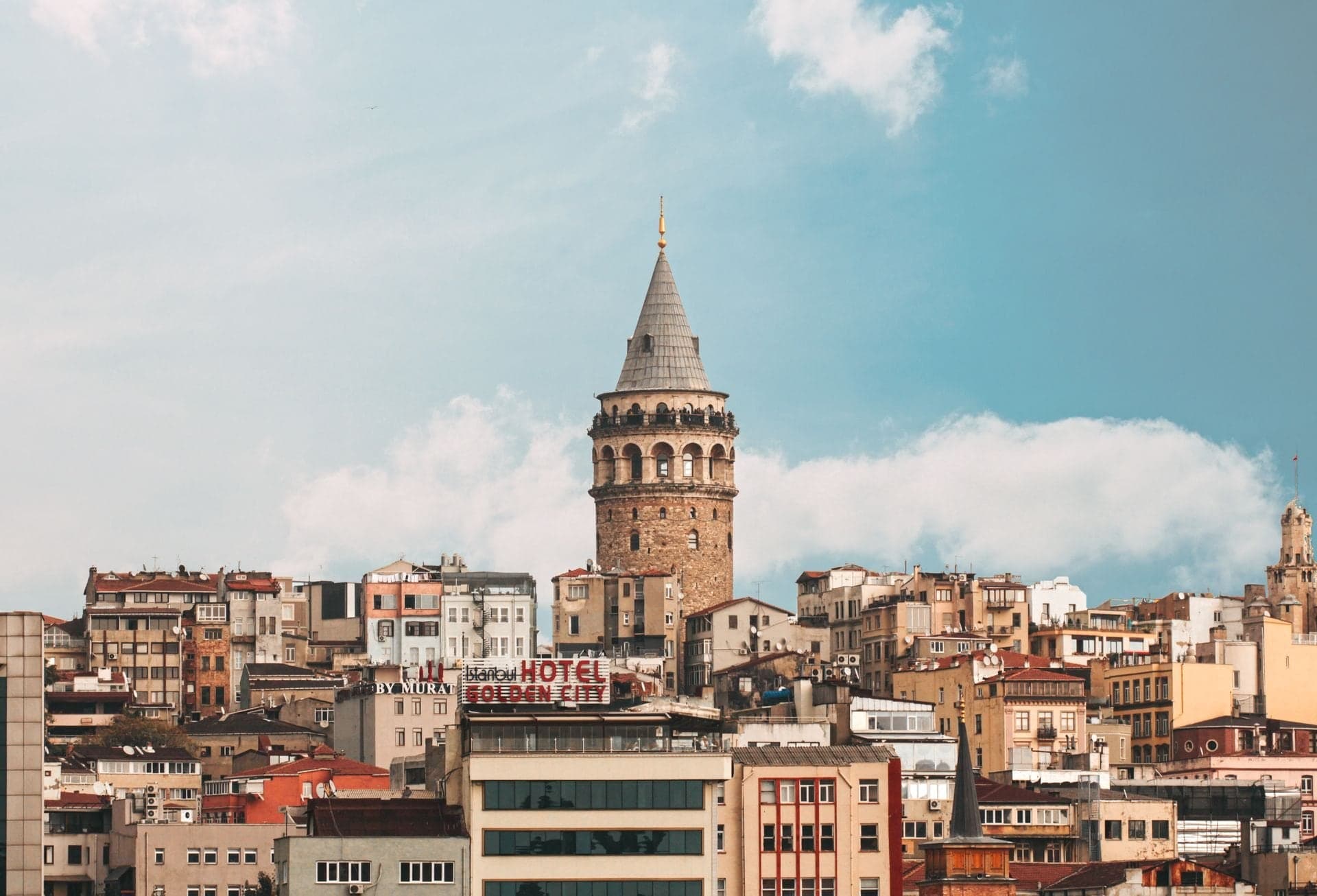
Cross the Golden Horn and the register changes completely. The Galata Tower and Istiklal walk climbs the hill the postcards leave out, eleven stops over about two and a half kilometres from the Galata Bridge to Taksim Square. The Byzantines called this shore Pera, "the other side". The Genoese walled a merchant town here, largely running their own affairs, and in 1348 they built the tower at the summit of their walls, calling it the Christea Turris, the Tower of Christ. It stands 62.59 metres tall, and from its square you can look south to the peninsula of domes and then turn to face the other Istanbul behind you.
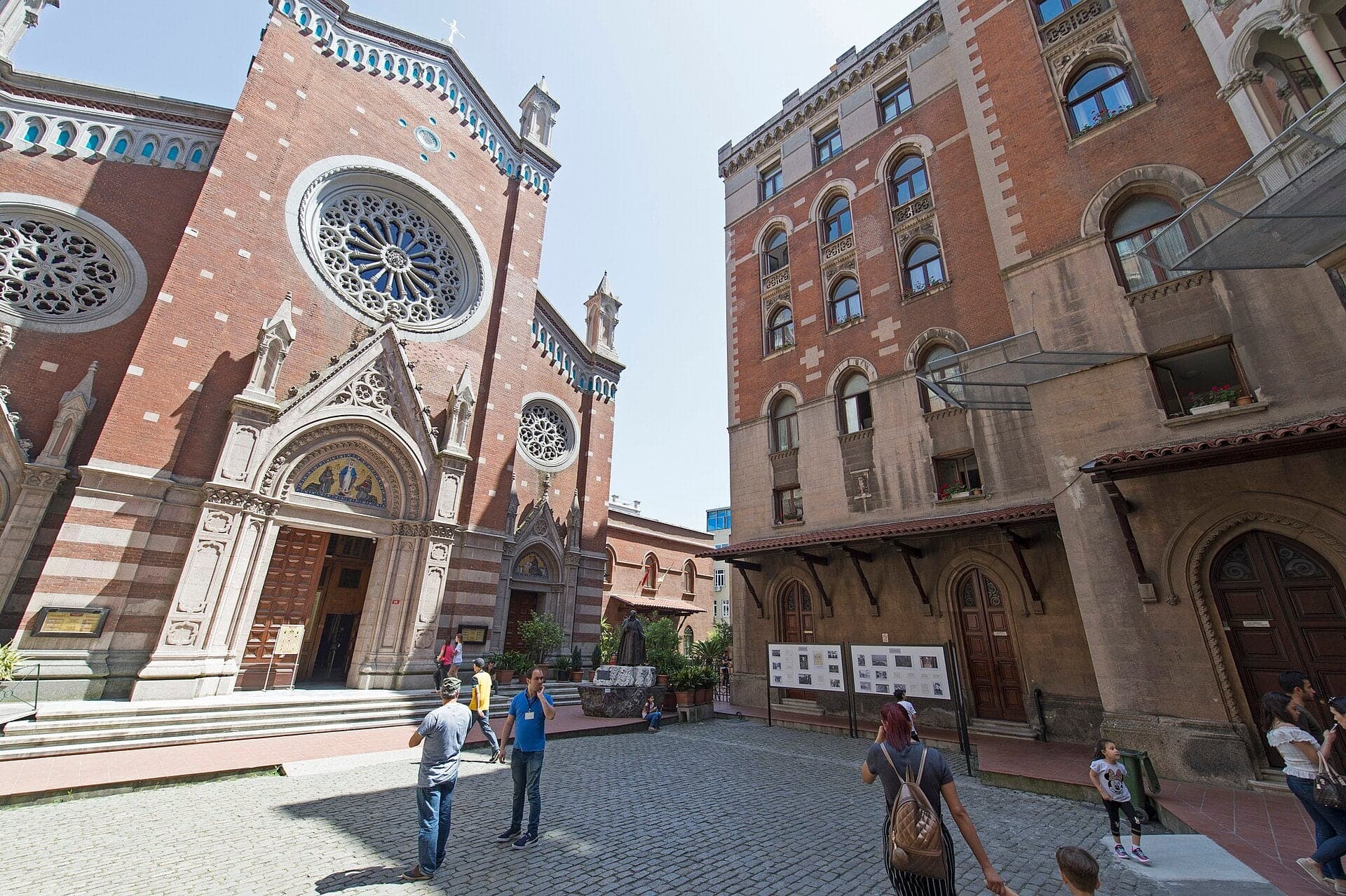
That other Istanbul was built on money and mixture. Bankalar Caddesi, Banks Street, the walk's second stop, holds the Ottoman Bank's head office, opened in 1892 to a design by the architect Alexandre Vallaury, with a classical face to the street and an Ottoman-style face turned to the old city. Beside it climb the Camondo Stairs, named for the Camondo family of Sephardic Jewish bankers who built much of this quarter, and photographed by Henri Cartier-Bresson in 1964. Up on the avenue, the Church of Saint Anthony of Padua, rebuilt between 1906 and 1912 after its older church was demolished for a tram line and one of the largest Roman Catholic churches in Istanbul, anchors a quarter that held Greek Orthodox and Armenian churches, synagogues, and mosques within a few streets of each other. The future Pope John the Twenty-third, then Angelo Roncalli, served as the Pope's envoy in Turkey from 1935 to 1944 and read a prayer here in 1940.
This hill was European in its engineering as well as its faiths. The Tunel, whose upper station the walk reaches at Tunel Square, opened on the seventeenth of January, 1875, and is the second-oldest underground urban railway in the world after the London Underground, conceived by the French engineer Eugene-Henri Gavand under a concession from Sultan Abdulaziz. And a quieter layer coexisted with all of it: the Galata Mevlevi Lodge, founded in 1491 by Iskender Pasha, where whirling dervishes of the Mevlevi order performed the sema until the lodges were closed in 1925. The walk resolves at Taksim Square, named for the eight-sided water house of 1732 that divided the city's water and is now the Republic Museum, and at the Republic Monument, unveiled in 1928 and sculpted by the Italian artist Pietro Canonica, where the cosmopolitan Ottoman hill hands over to the Turkish Republic founded in 1923.
The bazaar between two seas: the engine underneath
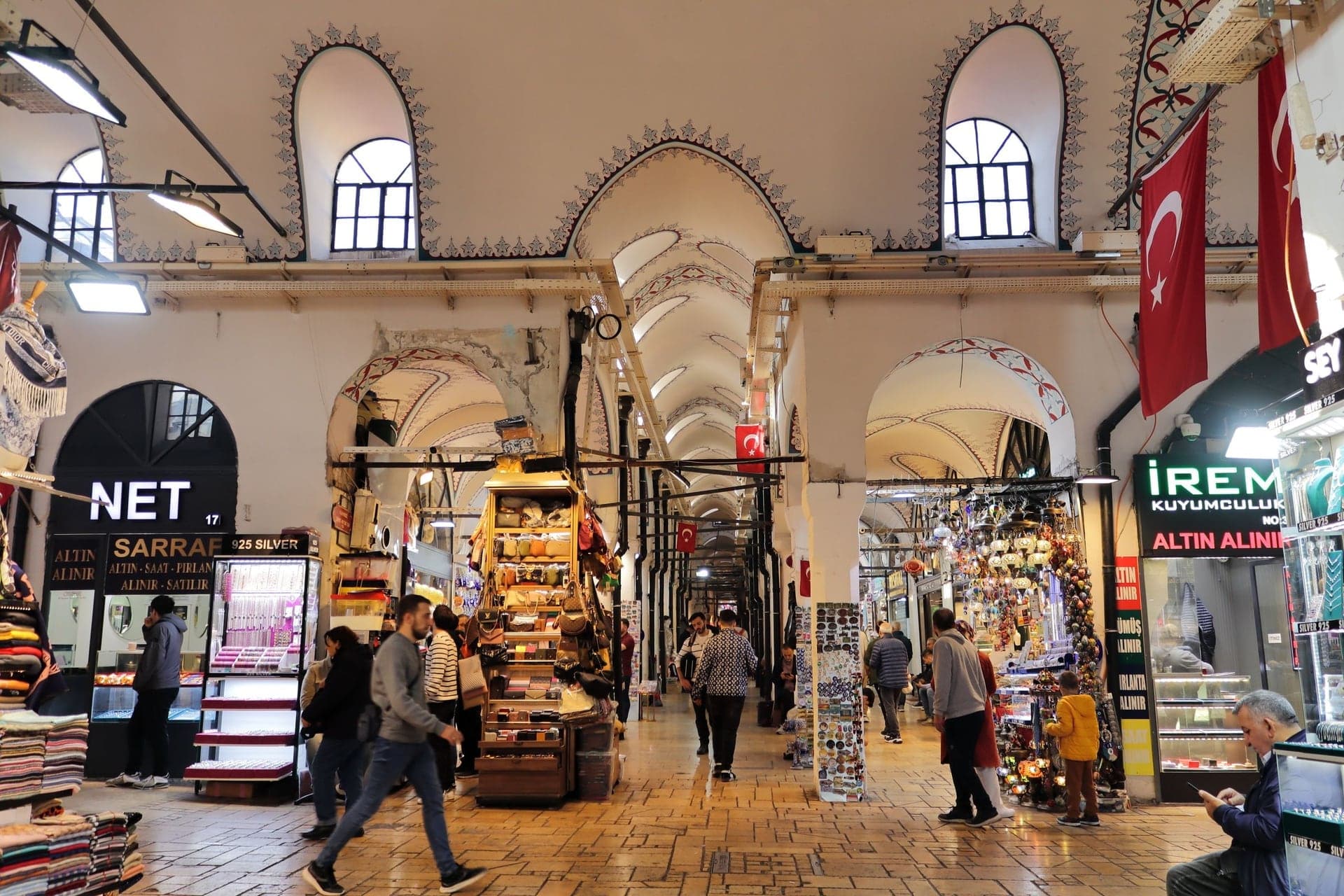
If the peninsula is the crown and Galata is the plural hill, the market quarter is the machine that funded both. The Grand Bazaar walk, eleven stops over about three and a half kilometres from Nuruosmaniye to the New Mosque at Eminonu, holds one idea the whole way down: none of these mosques stood alone, and shops, inns and markets were built with each one to pay its way. The Grand Bazaar began with a single decision, when Mehmed the Second, right after taking the city, built a stone bedesten, the inner hall now called the Cevahir Bedesten, to earn income for his endowments; the traders' association gives 1461 as the accepted founding year. From that core it grew into a roofed city of streets and shops, rebuilt in stone vaults after a great fire in 1701. Below it, the hans, courtyard caravanserais like the Buyuk Valide Han, built in the sixteen hundreds by Kosem Valide Sultan to pay for her mosque in Uskudar, are still working buildings.
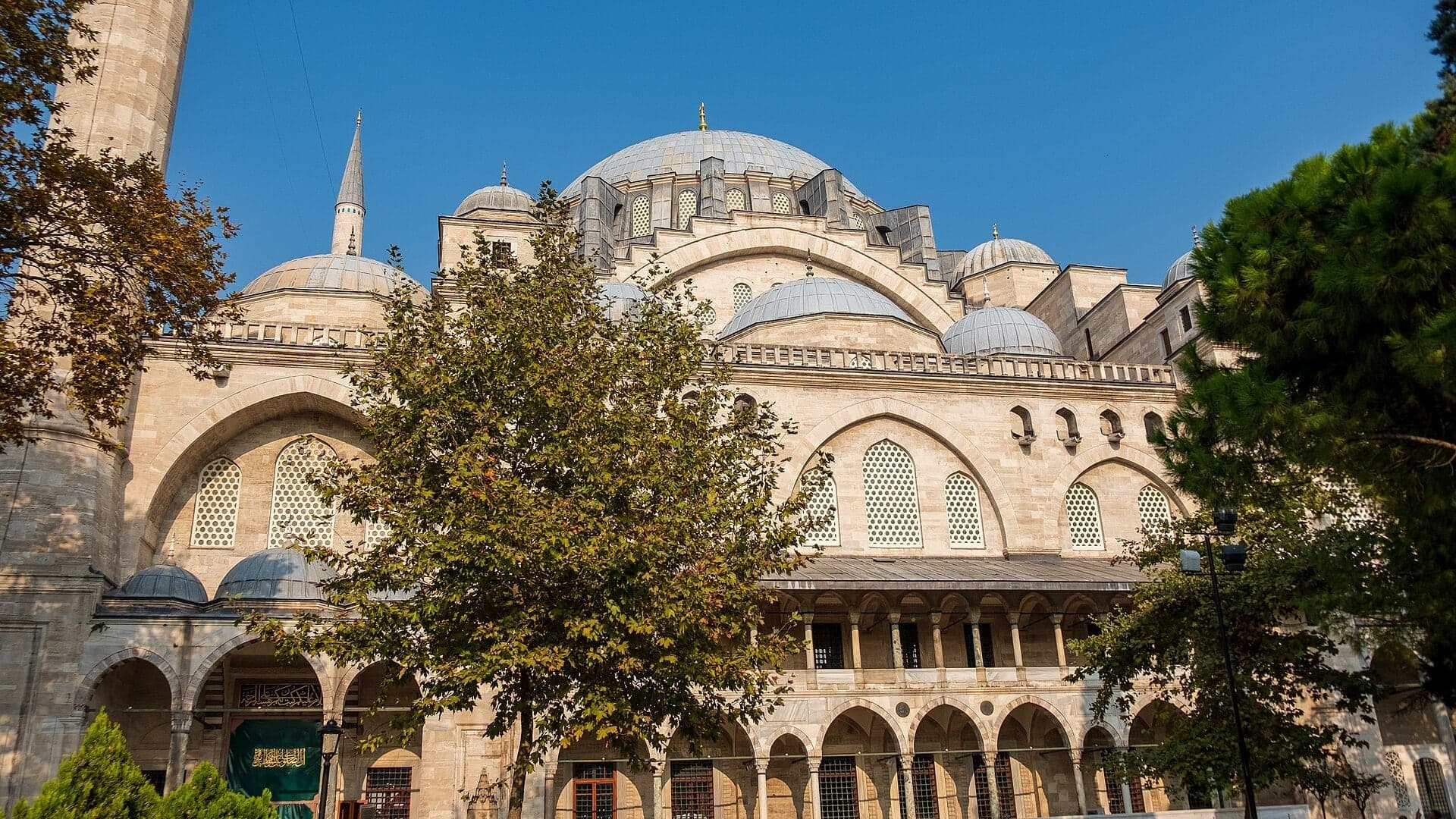
The endowment logic is made explicit on the third hill. The Suleymaniye Mosque, built between 1550 and 1557 by the imperial architect Mimar Sinan for Suleyman the Magnificent, was never only a mosque. Sinan laid out a kulliye around it: colleges, a hospital, a medical school, and a public kitchen, with rows of vaulted shops cut into its own slope whose rents helped pay for them. The grandeur up top leaned on the trade below, and Sinan himself lies in a small open tomb on a corner just outside the precinct. Sinan repeats the trick at the Rustem Pasha Mosque, built around 1560 and raised on its own vaulted storerooms and shops, its porch and interior faced with Iznik tiles. The walk ends at the water, at the Spice Bazaar, finished in 1664 as the New Mosque's market to meet its expenses (its Turkish name, Misir Carsisi, means Egyptian Bazaar, after the goods that came through Egypt), and the New Mosque above the Eminonu ferry docks, begun in 1598 and finished by Turhan Hatice Sultan, who opened it in 1665. This is where the money came in by boat and moved up the hill and back down again.
Read together, the three walks make one point. Istanbul is not a set of separate postcards but a single system that rebuilt itself in place: empires stacked on the peninsula, a plural merchant city on the hill across the water, and a market between the two seas that paid for all of it. Learn the grammar at Hagia Sophia, and you will see the layers everywhere. To plan a route through all three, start with the Istanbul walking tours hub.
Sources
- UNESCO World Heritage Centre, Historic Areas of Istanbul (inscribed 1985), whc.unesco.org/en/list/356
- Encyclopaedia Britannica, Hagia Sophia, britannica.com/topic/Hagia-Sophia
- Encyclopaedia Britannica, Grand Bazaar and Ottoman architecture entries, britannica.com
- Roamer tour transcripts for The Peninsula of Empires, Galata Tower and Istiklal: The Climb from the Golden Horn, and Grand Bazaar: The Markets That Paid for the Mosques (fact-audited source content)
- Encyclopaedia of the Hellenic World, Constantinople, and TDV Islam Ansiklopedisi: Sultanahmet dates and details corrected in a September 2026 fact-check
- Istanbul Metropolitan Municipality cultural heritage pages on the Galata Tower, the Tunel funicular, and the Grand and Spice Bazaars
- TDV Islam Ansiklopedisi, Kultur Portali, IETT and SALT: Galata and Grand Bazaar walk dates and details corrected in an October 2026 fact-check
Frequently asked questions
- Why is Istanbul called a city of layered empires?
- Three world empires built their capital on the Sultanahmet peninsula, one over the other, and none fully erased the last. The Roman and Byzantine city raised the Hippodrome, Hagia Sophia, and the Basilica Cistern, and Ottoman Istanbul answered after 1453 with imperial mosques and Topkapi Palace. Hagia Sophia alone held four roles: cathedral, mosque, museum, then a working mosque again from 2020.
- What is the difference between the Sultanahmet peninsula and the Galata side of Istanbul?
- The peninsula is the imperial city of domes, minarets, and sultans across from the Golden Horn. Galata and Pera on the hill opposite (Pera simply meant "the other side") were the merchant, banking, and European Istanbul, a walled Genoese town before 1453 where Greeks, Armenians, Jews, Italians, and Ottomans lived side by side. The peninsula is the city of one dominant faith and dynasty, while the hill was deliberately plural.
- How did the Grand Bazaar and markets pay for Istanbul's great mosques?
- Imperial mosques were built as a kulliye, a charitable complex backed by commercial rents. The Suleymaniye Mosque, built by Sinan between 1550 and 1557, has rows of vaulted shops cut into its own slope whose rents helped pay for its colleges, hospital, and kitchen. The Spice Bazaar, finished in 1664, was built as the New Mosque's market to meet the mosque's expenses, and the Rustem Pasha Mosque stands raised on its own storerooms and shops.
- How old is the Tunel underground railway in Istanbul?
- The Tunel opened on the seventeenth of January, 1875, making it the second-oldest underground urban railway in the world after the London Underground, which opened in 1863. It was conceived by the French engineer Eugene-Henri Gavand, who received the concession from Sultan Abdulaziz in 1869, to move people up the steep hill between the Karakoy waterfront and the top of Beyoglu. It was completed in December 1874, runs about 573 metres, climbs 61 metres between its two stations, and still carries passengers today.
- Which walking tours cover Istanbul's layered history?
- Three Roamer self-guided audio walks each read one layer: The Peninsula of Empires across Sultanahmet, Galata Tower and Istiklal: The Climb from the Golden Horn through Galata and Beyoglu, and Grand Bazaar: The Markets That Paid for the Mosques through the Grand Bazaar and Eminonu. Together they show empires stacked on the peninsula, the plural merchant city on the hill, and the market that funded both. You can pace and skip stops freely on each.
Ready to experience it?
Hagia Sophia and the Blue Mosque: The Peninsula of Empires
90 min · 2.3 km · moderate
More from Istanbul
Explore more at your own pace.
Hagia Sophia's Four Lives: How One Building Teaches You to Read Istanbul
Saint Anthony of Padua and the Plural City of Galata and Pera
The Grand Bazaar Is an Engine: How Istanbul's Market Paid for Its Domes
Galata Tower: The Watchtower of a Foreign City Inside Istanbul
Suleymaniye Mosque: Why Sinan's Great Complex Was Built to Pay Its Way