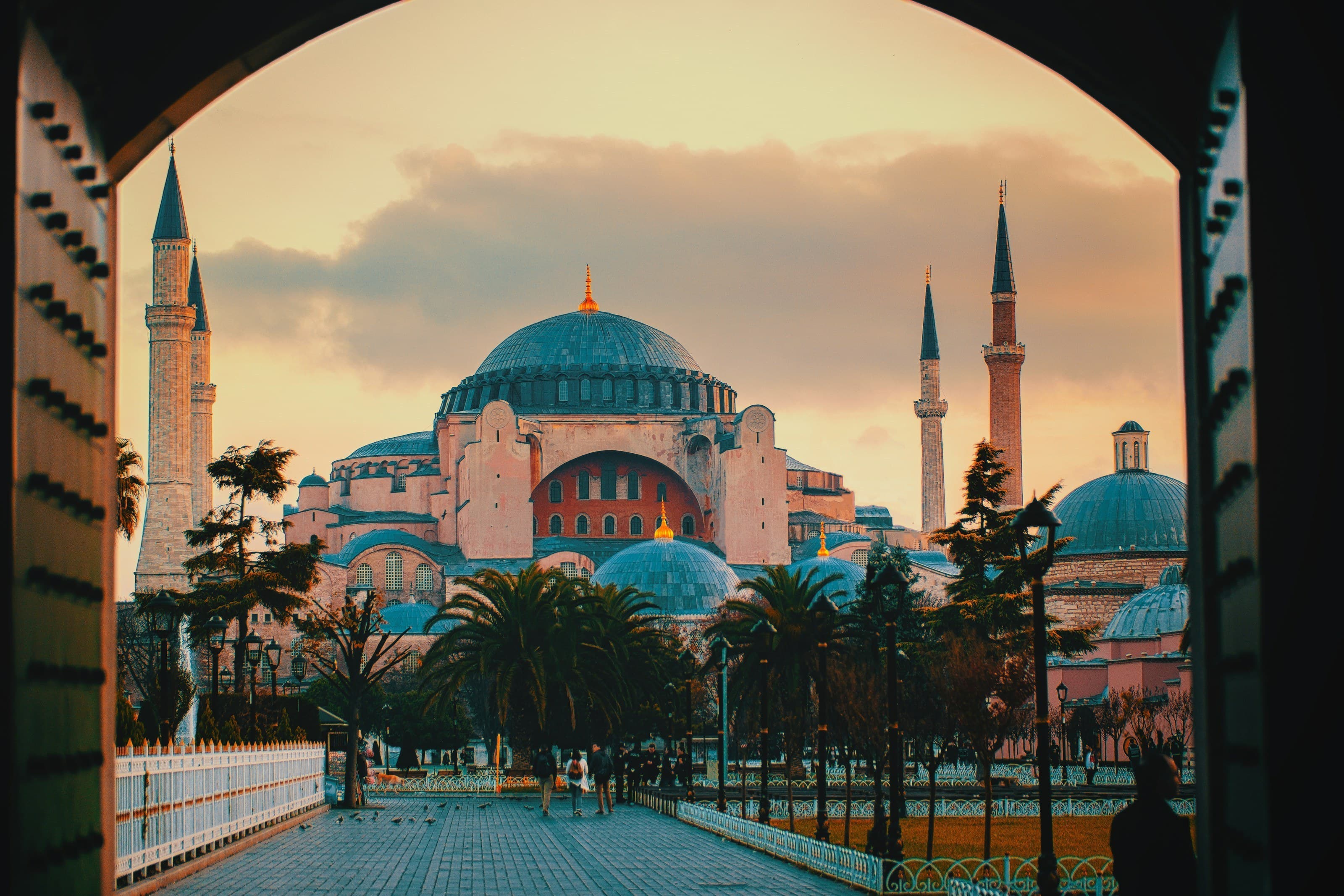
A walk from Hagia Sophia and the Blue Mosque down to the Roman Hippodrome and two quiet mosques below it, where Romans, Byzantines and Ottomans built on each other's work instead of clearing it away.
Start · Hagia Sophia: The Building the Conqueror Kept
DirectionsStops
- 1
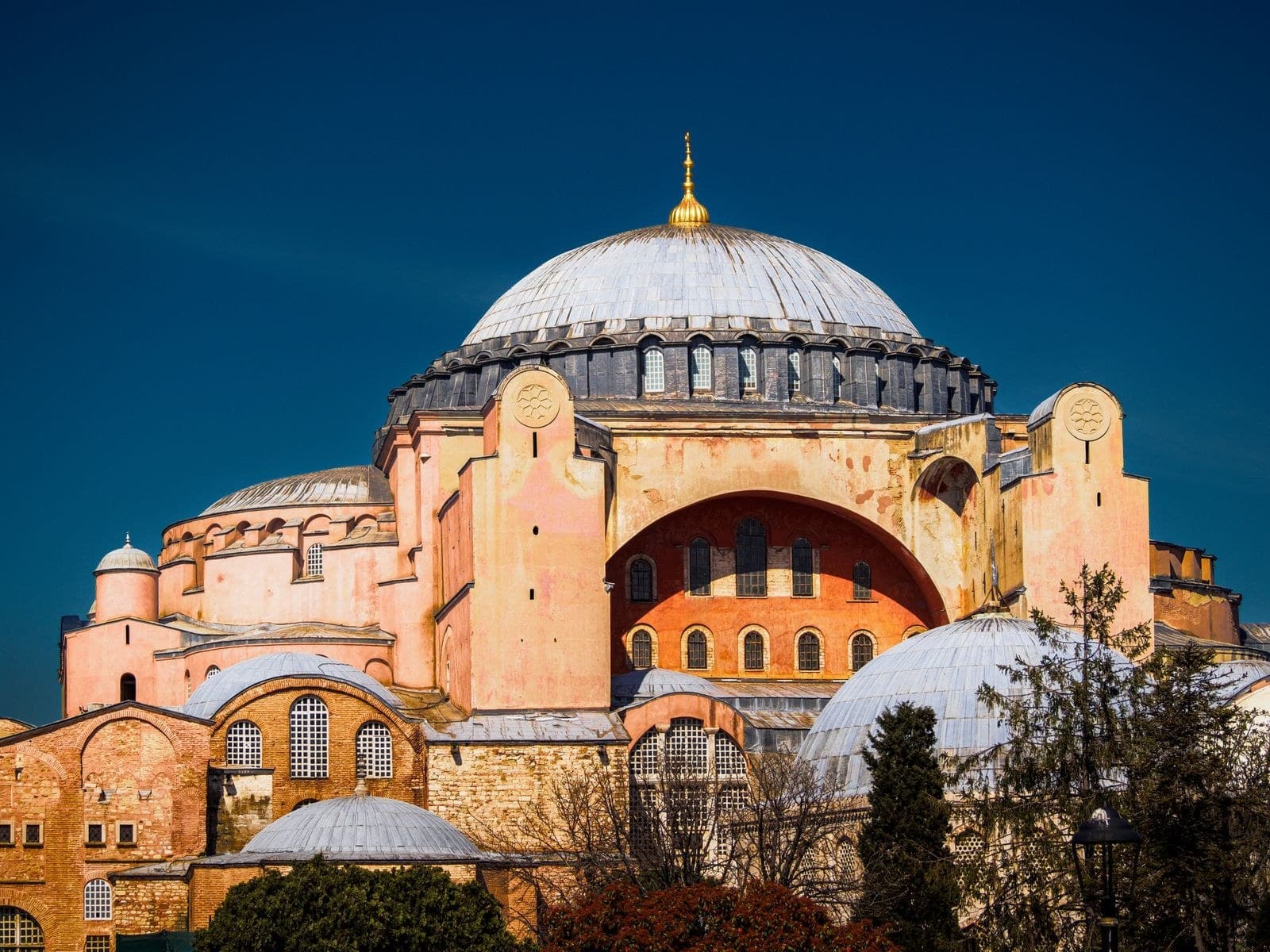
Hagia Sophia: The Building the Conqueror Kept
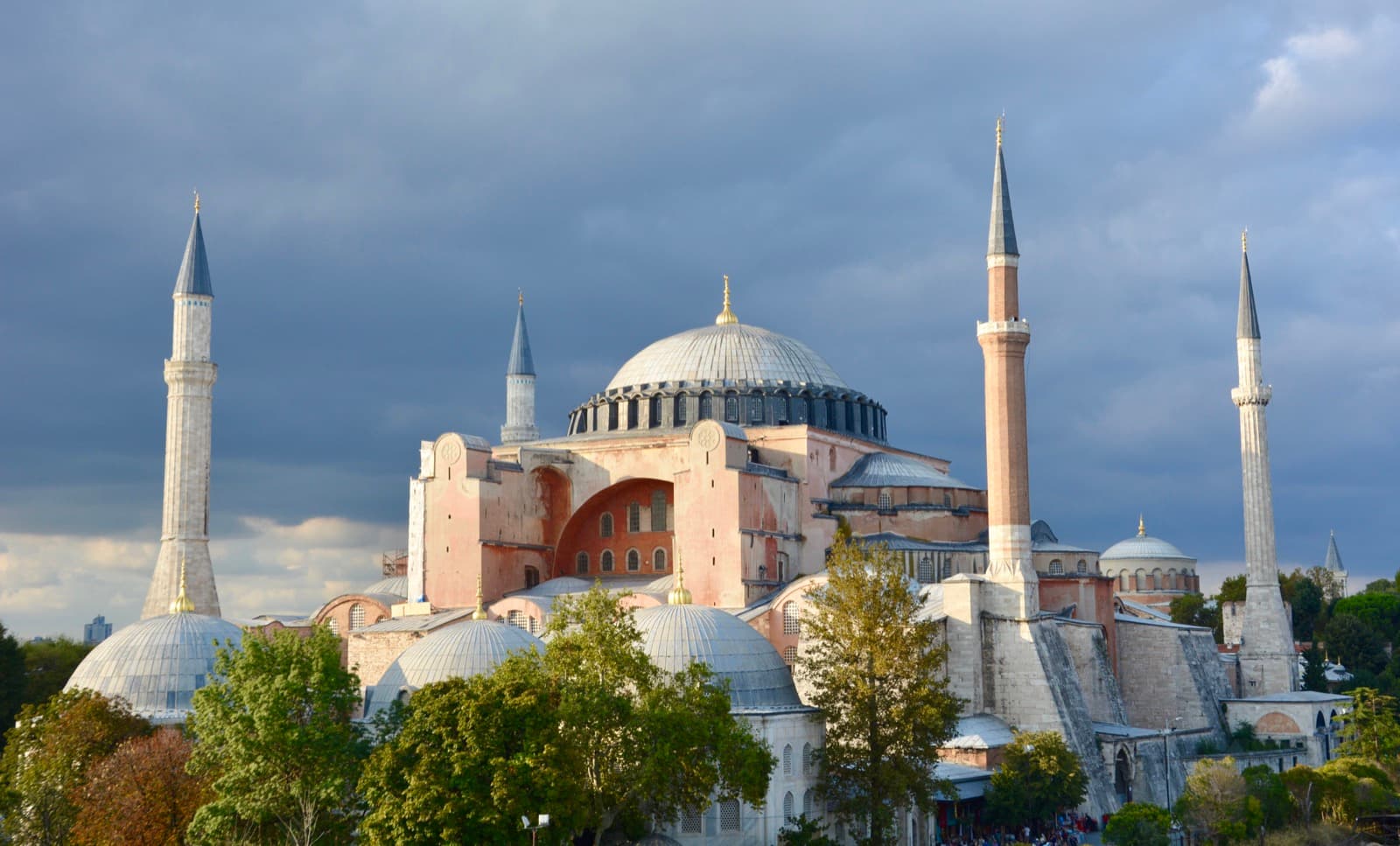
The church Mehmed the Second kept in 1453 and made a mosque, seen from the park between it and the Blue Mosque.
- 2
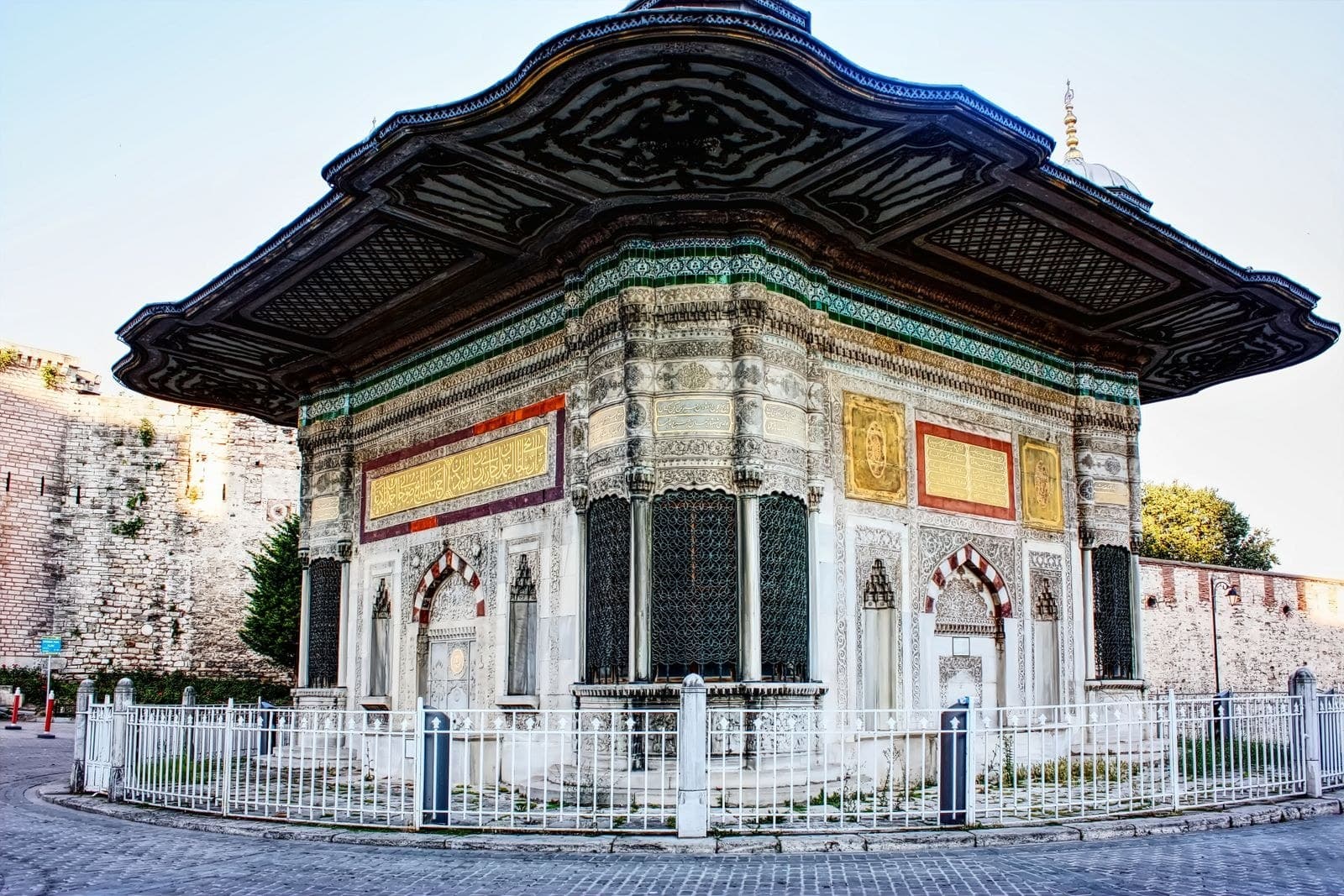
Imperial Gate and Hagia Irene: The Church That Stayed a Church
A Byzantine church the Ottomans kept as an arsenal and never made a mosque, inside the first gate of Topkapi Palace.
- 3
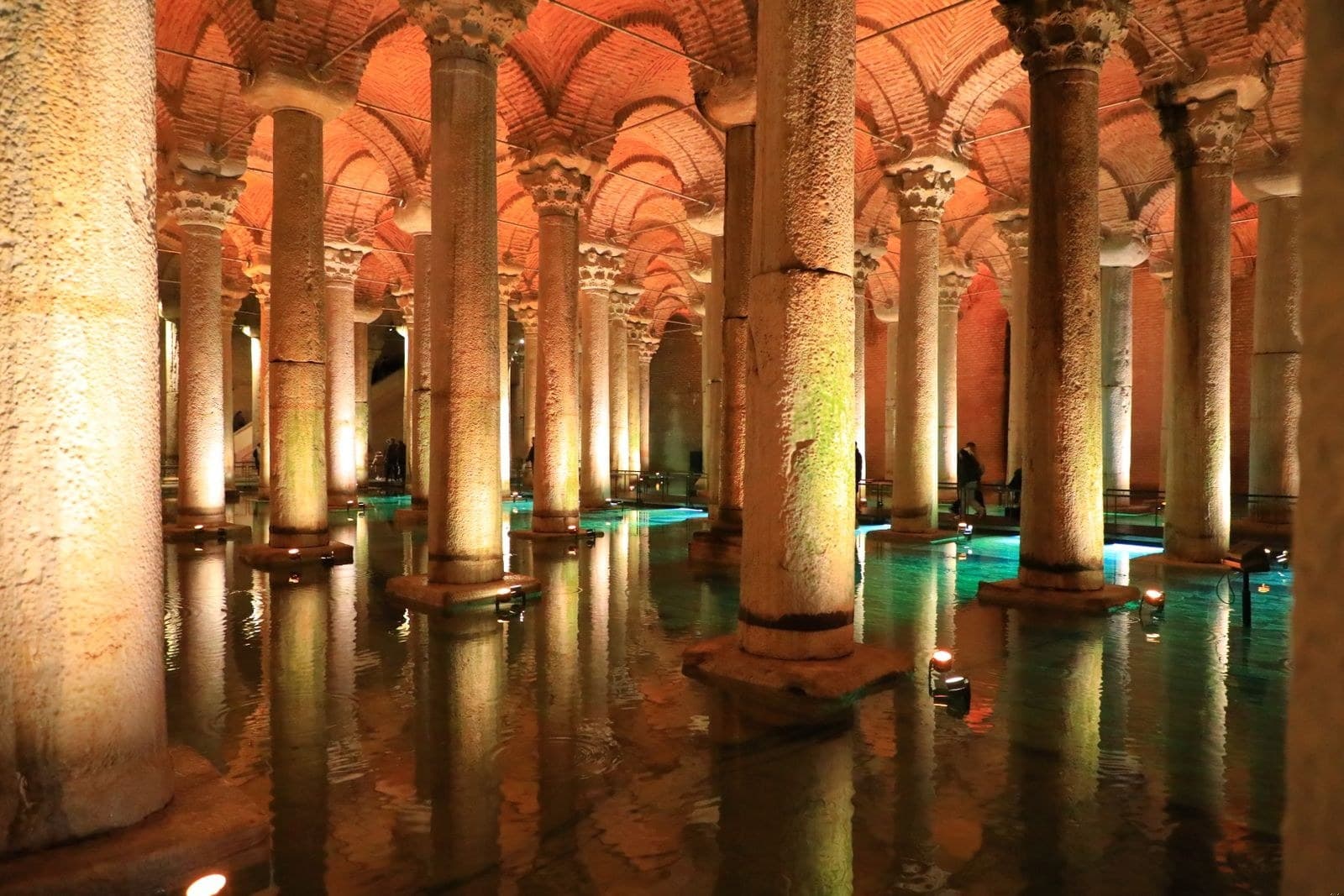
Basilica Cistern and the Milion: Where the Empire Measured From
The zero-mile marker of the Byzantine Empire, beside the entrance to Justinian's underground cistern.
- 4
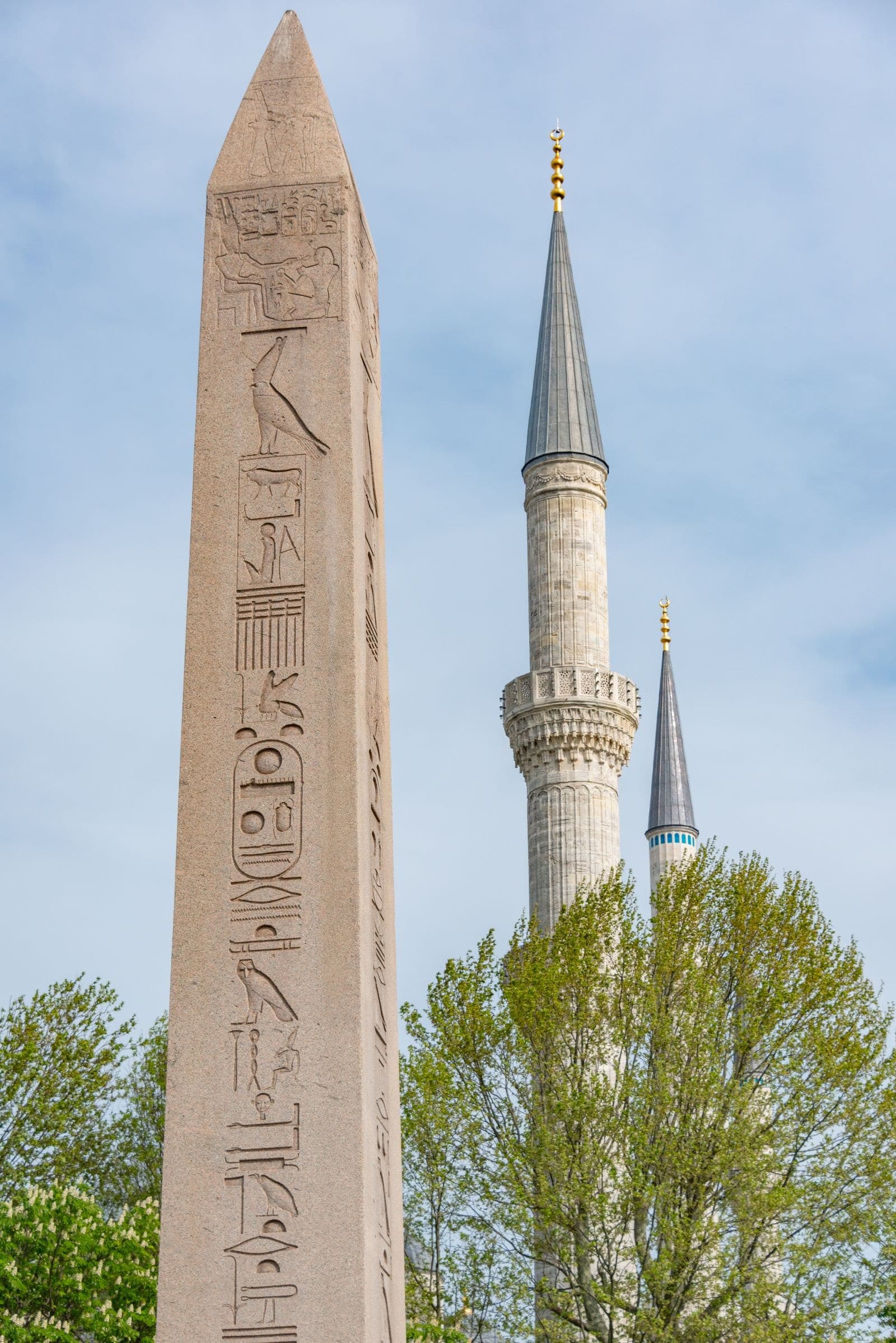
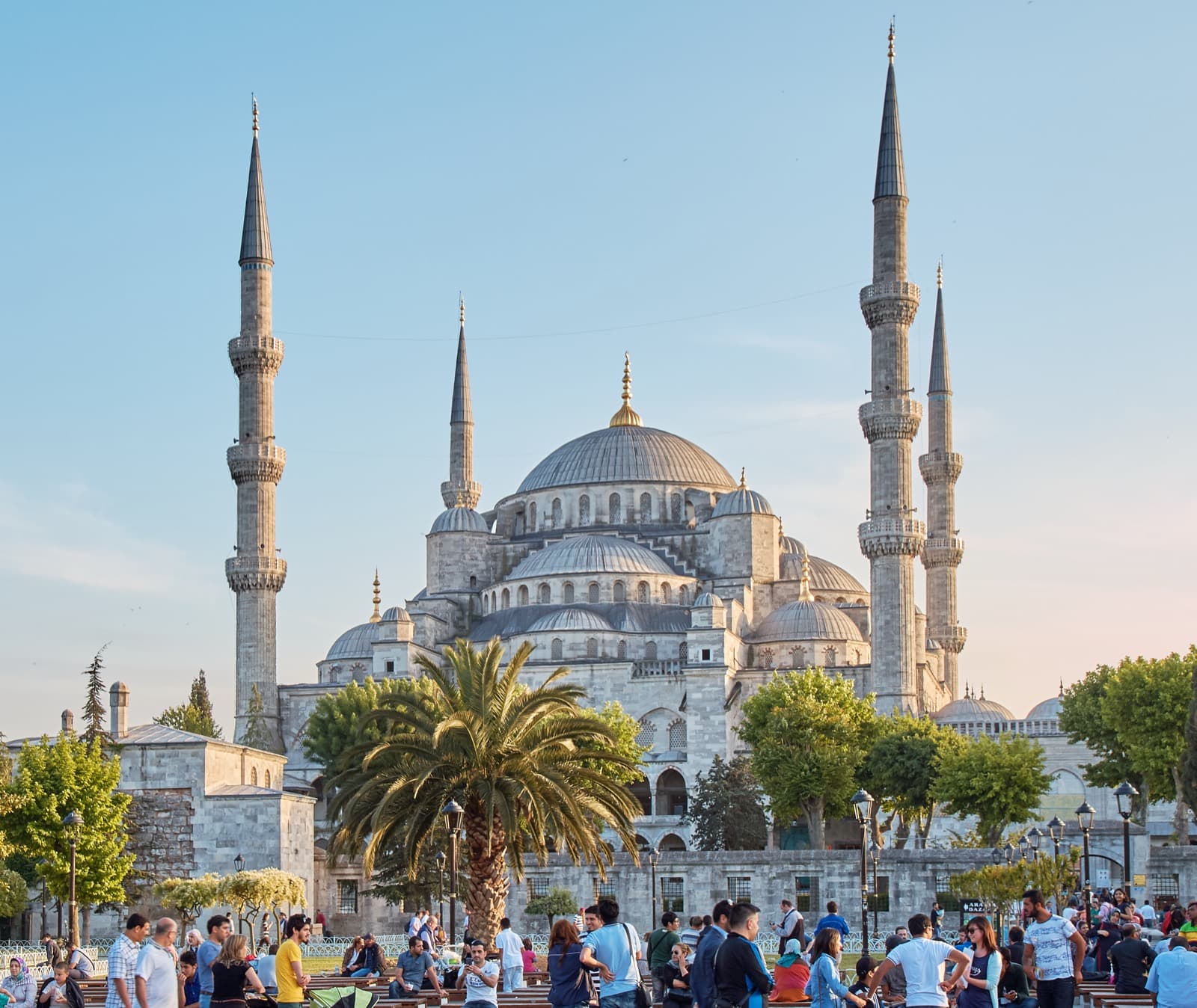
The Blue Mosque: The Answer Across the Park
Sultan Ahmed's answer to Hagia Sophia, placed so that the two great domes face each other across the park.
- 5
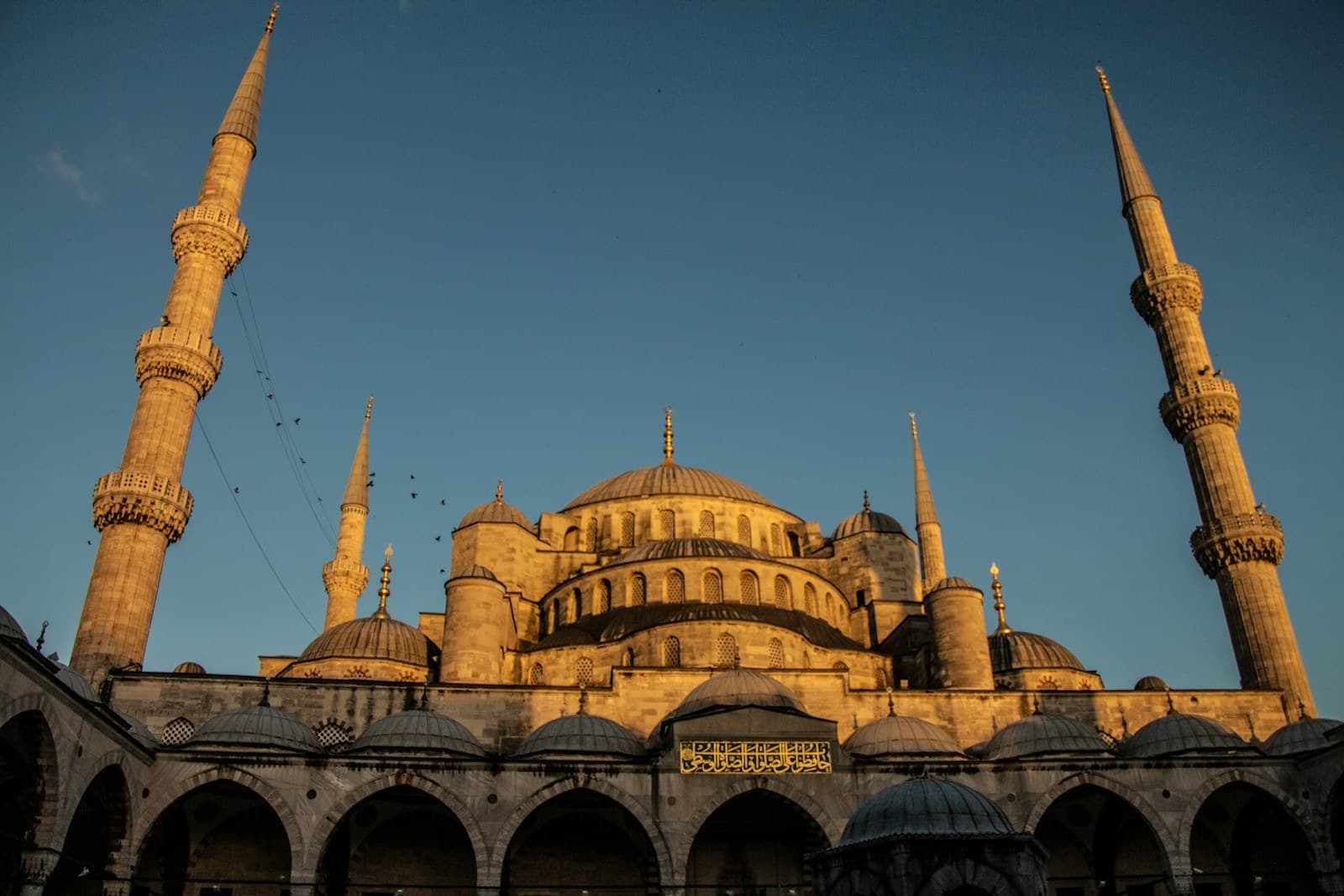
The Hippodrome: Where Emperors Collected the World
The Roman chariot arena where emperors raised an Egyptian obelisk and a bronze column from Delphi.
- 6
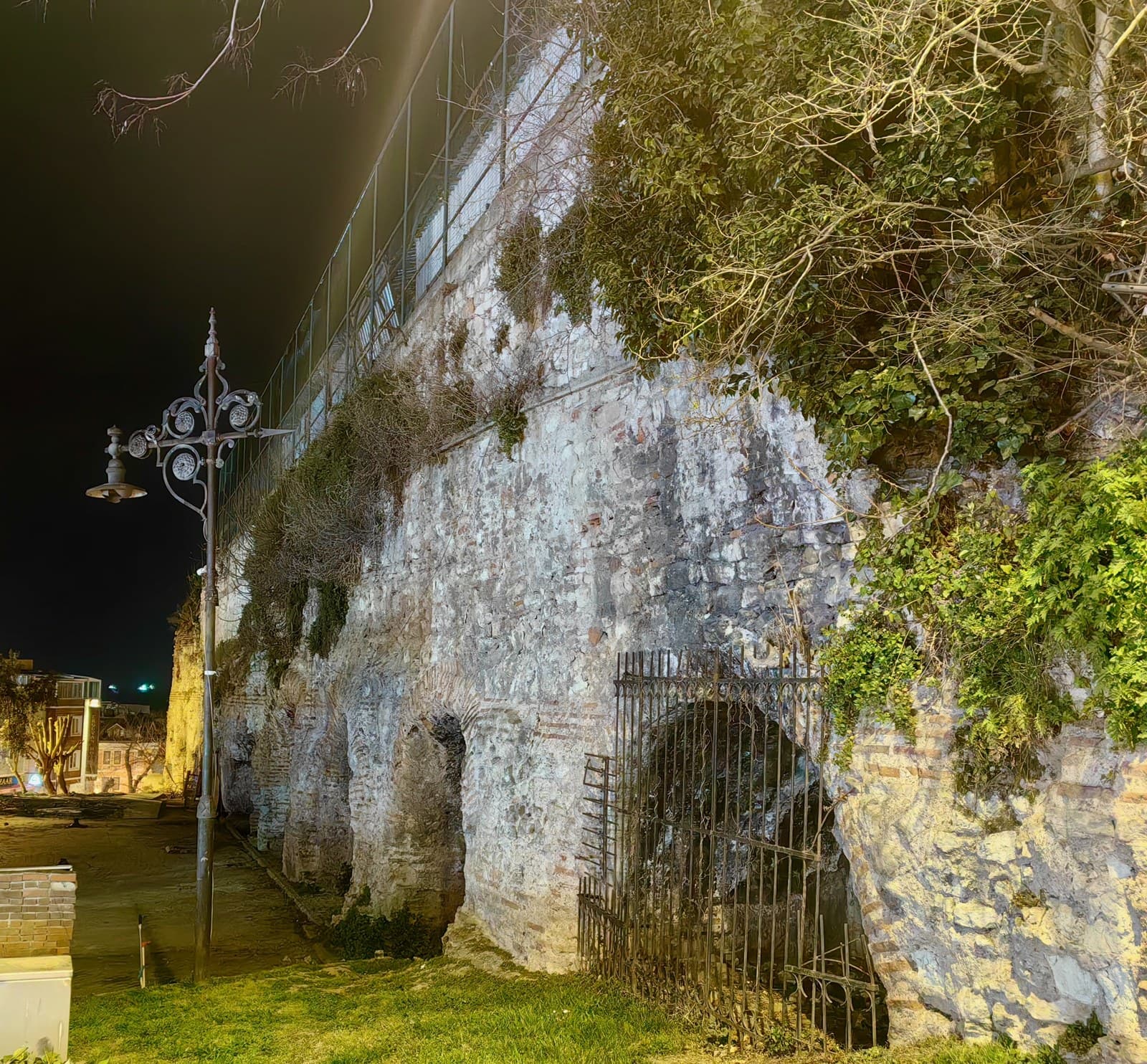
The Sphendone: The Hippodrome's Last Wall
The curved Roman wall that held up the southern end of the racetrack above the slope to the sea.
- 7
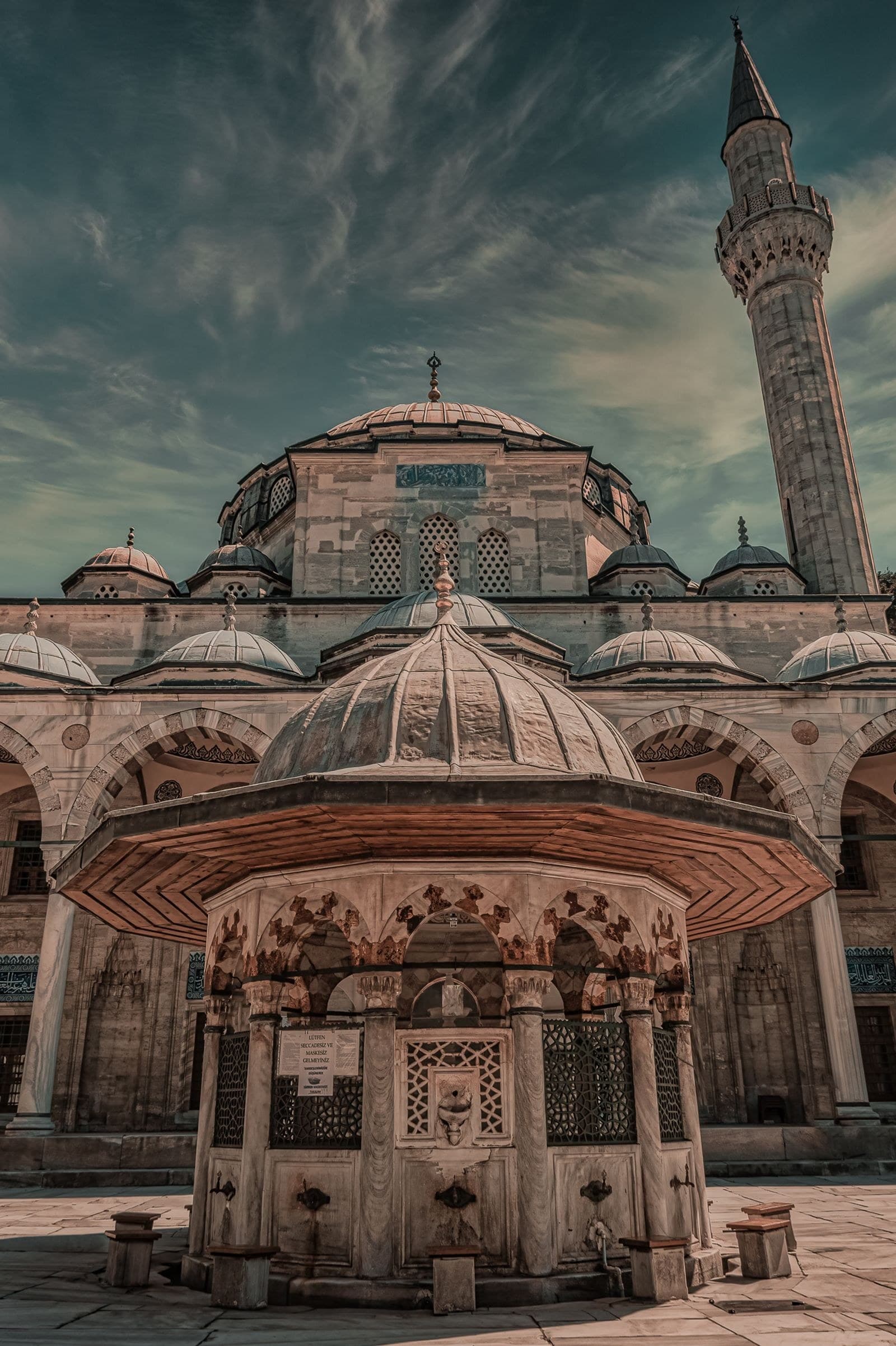
Sokollu Mehmed Pasha Mosque: Sinan and the Stones of Mecca
Sinan's mosque for a grand vizier and his royal wife, with four stones said to be fragments of Mecca's Black Stone set into it.
- 8
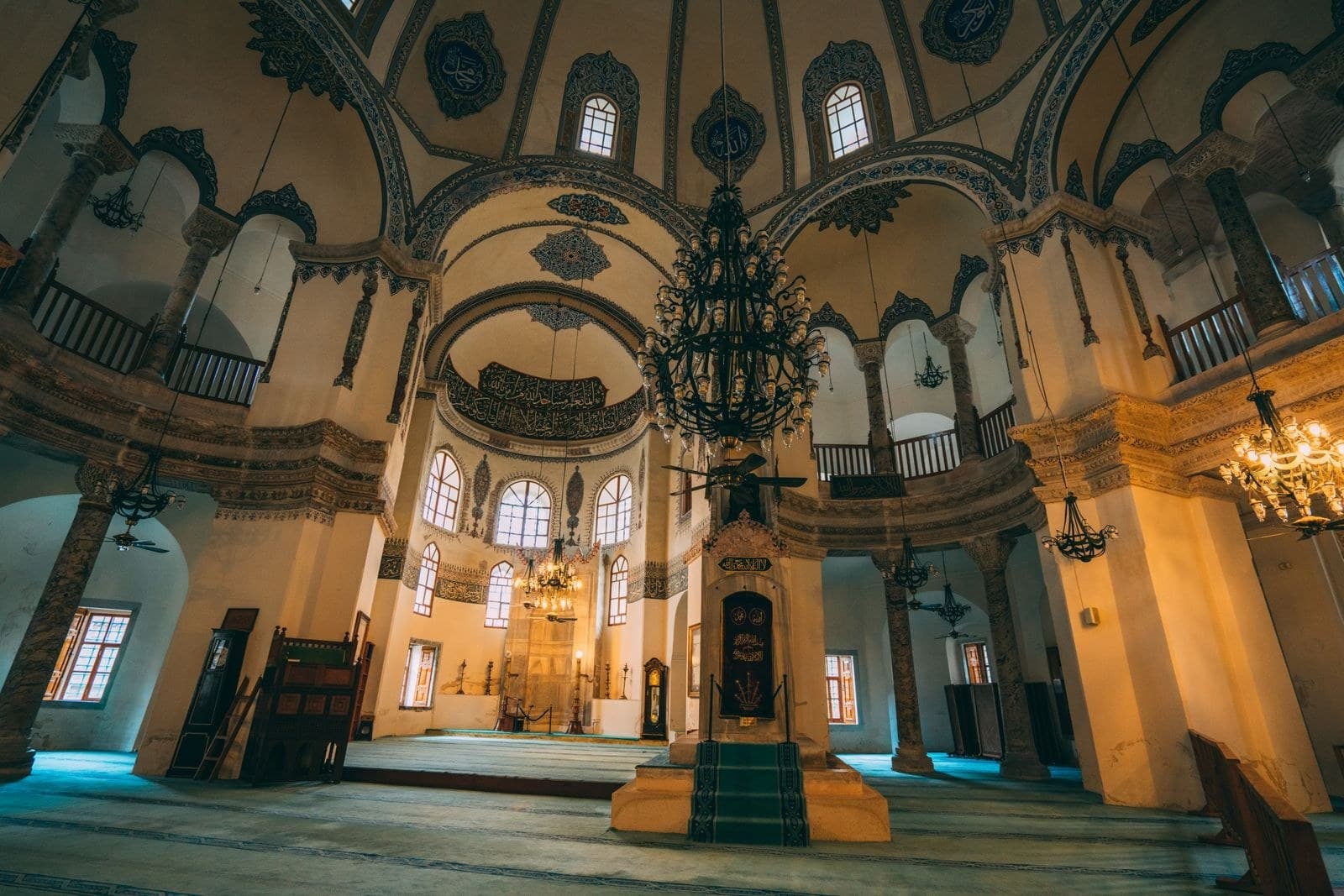
Little Hagia Sophia: The Empress on the Cornice
Justinian and Theodora's church from around 530, a mosque since the early sixteenth century.
Details
Best Time to Visit
Early morning, when Sultanahmet Park is quiet and the light is soft on both domes, or the last two hours before sunset. Midday is hottest and busiest. The mosques close to visitors around the five daily prayers, and the Friday midday closure is the longest of the week, so plan any interiors around it.
Pro Tips
- •Hagia Sophia: since 15 January 2024 visitors pay a separate fee (25 euros, still the listed price in September 2026) and see the interior from the upper gallery, reached by a ramp. The ticket office and visitor gate are by the Fountain of Ahmed III, across from the palace gate. The ground floor is for worship. Checked September 2026.
- •Hagia Sophia’s main dome is under restoration, with scaffolding and a temporary grey roof over it since July 2026 and no announced finish date; the building stays open to worshippers and visitors. Checked September 2026.
- •Topkapi Palace and Hagia Irene are closed on Tuesdays. You can buy the palace, the Harem and Hagia Irene separately or as a combined ticket. Checked on the official Milli Saraylar page, September 2026.
- •The Basilica Cistern is open every day from 09:00 to 22:00, with a break from 18:30 to 19:30. Hours have changed more than once, so check before you go. Checked September 2026.
- •Detour: the Column of Constantine, where the crowd of 1453 expected its angel, stands about seven minutes west of stop 3 along Divan Yolu.
- •The one surviving jaw of the Serpent Column's heads is in the Istanbul Archaeological Museums, a short walk north of stop 2.
- •For the mosques, carry a scarf and wear clothes that cover shoulders and knees. Shoes come off inside.
Safety & Precautions
- •The lanes around stops 6 to 8 are steep in places, with uneven paving and narrow pavements beside traffic. Wear sturdy shoes.
- •Sultanahmet is a busy tourist district. Keep bags closed and in front of you in crowds, and politely decline unsolicited guides.
- •The open squares get strong summer sun. Carry water and a hat.
- •Working mosques ask for modest dress and quiet voices. Stay outside during prayer times and follow the lead of worshippers.
Travel advisory: Exercise Increased Caution (Level 2).
Gallery
Related Reading
Go deeper on what you'll see, hear, and walk through.
Overview
Best Self-Guided Walking Tours in Istanbul (2026)
3 min
Overview
Istanbul Travel Guide: Days, Transport, Season, Safety, Budget
8 min
Overview
One Day in Istanbul: A Walkable Morning-to-Evening Itinerary
8 min
Thematic
Istanbul: A City Written and Rewritten by Empires
9 min
Companion
Hagia Sophia's Four Lives: How One Building Teaches You to Read Istanbul
7 min
Deep dive
The Blue Mosque: Reading the Ottoman Answer to Hagia Sophia
6 min
Read
What to Eat in Istanbul: Dishes, Origins, and How to Order
7 min
Read the walk
The full story of Hagia Sophia and the Blue Mosque: The Peninsula of Empires, in words. Prefer to listen? Play it narrated, from home or on location.
Introduction
On the twenty-ninth of May, fourteen fifty-three, the people of Constantinople crowded into Hagia Sophia and barred the doors. The Byzantine historian Doukas wrote that they trusted a prophecy: the Turks would get only as far as the Column of Constantine, up the old main street, and there an angel would come down and hand a sword to a poor stranger, who would drive them back.
No angel came. The soldiers broke down the doors with axes. But the sultan who followed them, Mehmed the Second, did not tear the building down. He kept it.
That is the pattern of this walk through Sultanahmet, the old heart of Istanbul, in Turkey. Roman emperors, Byzantine emperors and Ottoman sultans all built their capital on this headland, each on top of the last, and on this walk you can see all three at once.
There are eight stops over about two and a quarter kilometres, roughly an hour and a half at an easy pace, from Sultanahmet Park down to Little Hagia Sophia. Hagia Sophia's gallery, the Basilica Cistern and Topkapi Palace charge their own site entry fees if you want to go inside.
When you arrive at the fountain in Sultanahmet Park, begin with stop one.
1. Hagia Sophia: The Building the Conqueror Kept
Welcome to Sultanahmet Park, the first stop on this walk. From the fountain, look toward the great dome with four minarets. That is Hagia Sophia. Behind you, across the park, is the Blue Mosque, built more than a thousand years later to answer it.
Doukas tells the rest of that day in fourteen fifty-three. When Mehmed the Second entered the church, he found one of his soldiers breaking up the marble floor. The sultan struck him with his sword and told him the soldiers had treasure and captives enough, but the buildings of the city were his. Then he had one of his clerics climb the pulpit and call out a Muslim prayer. The cathedral became a mosque without losing a wall.
The building he kept was already nine centuries old. The emperor Justinian the First raised it in under six years and dedicated it in five hundred and thirty-seven, after rioters had burned the church that stood here before. His historian Procopius wrote that its dome did not seem to rest on stone at all, but to hang from heaven. About twenty years later, earthquakes brought that first dome down, and it was rebuilt higher. The heavy buttresses bracing the walls were added over the centuries that followed, to keep it standing.
It has had four lives: church, then mosque, then museum from nineteen thirty-five, and a working mosque again since twenty twenty. Visitors now see the interior from the upper gallery, while the floor under the dome is kept for prayer. The main dome is under restoration. Scaffolding went up over it in the summer of twenty twenty-six, under a temporary grey cover, so the dome you see from here may not look like the one in the photographs. The building stays open.
Remember the sultan's rule: take the city, keep the buildings. Now walk along the south side of Hagia Sophia, past the garden of the sultans' tombs, to the marble fountain in front of the palace gate.
2. Imperial Gate and Hagia Irene: The Church That Stayed a Church
Beyond this great gate stands a Byzantine church that the Ottomans kept for four centuries and never once turned into a mosque. After what you just heard at Hagia Sophia, that deserves a closer look.
This is the Imperial Gate of Topkapi Palace, the palace Mehmed the Second began in the years after the conquest. The inscription over the gate dates it to fourteen seventy-eight. For almost four hundred years the sultans lived and governed behind these walls, until the court moved to a new palace on the Bosphorus in eighteen fifty-six. In nineteen twenty-four the palace became a museum.
The church is Hagia Irene, the Church of Holy Peace, and you can walk through the gate into the first courtyard to see it. It burned in the same riot as Hagia Sophia, in five hundred and thirty-two, was rebuilt alongside it, and was repaired after a great earthquake in seven hundred and forty. When the Ottomans took the city they did not convert it. They filled it with weapons and used it as an arsenal. In eighteen forty-six its old arms and antiquities were put on display, and in eighteen sixty-nine it became the country's first official museum. Kept again, but in a way you might not expect.
Now turn to the fountain beside you, a marble pavilion under a wide, overhanging roof. Sultan Ahmed the Third built it in the seventeen twenties. A long poem is carved around it, and the sultan wrote the closing couplet himself. Through the grilles at its corners, attendants once handed water to anyone passing.
From here, take the lane that runs along the palace wall, to the left of the gate. It is lined with a row of Ottoman houses, rebuilt in the nineteen eighties to look the way they did a century ago. Follow it, then turn left and downhill toward the cistern entrance, about six minutes' walk.
3. Basilica Cistern and the Milion: Where the Empire Measured From
You are standing beside a broken stone pillar that was once the starting point of an empire. This is the Milion, the zero-mile marker of Byzantine Constantinople. Distances along the roads of the empire were counted from here, as Rome counted from its own golden milestone. What survives is a fragment of one of its pillars, raised again on the spot where excavations in the nineteen sixties found the foundations, at the start of the city’s old main street.
That street is still here. Today it is called Divan Yolu, and it runs west to the Column of Constantine, where the crowd of fourteen fifty-three expected its angel.
Beneath the streets beside you lies something far bigger. A few steps away is the entrance to the Basilica Cistern, rebuilt in the sixth century under Justinian to store water for the palace district. Underground, three hundred and thirty-six marble columns, many of them taken from older buildings, hold up the vaults of a hall about one hundred and forty metres long. In one corner, two carved heads of Medusa serve as column bases, one lying on its side and one upside down, and most scholars think they were placed that way on purpose. Nobody can say where they came from.
In time the city above forgot it was there. In the fifteen forties a French scholar, Pierre Gilles, noticed that people drew water from wells in their houses without knowing what lay beneath. He found a house with a way down, and its owner lit torches and rowed him in a small boat between the columns, spearing fish as they went. The cistern was never really abandoned, and in Ottoman times it supplied water to Topkapi Palace. Visitors have walked it on raised platforms since the nineteen eighties.
When you are ready, walk back into Sultanahmet Park and cross to its far side, where the Blue Mosque rises behind its garden wall.
4. The Blue Mosque: The Answer Across the Park
Across the garden stands the Sultan Ahmed Mosque, known in English as the Blue Mosque, built between sixteen oh nine and sixteen seventeen for the young Sultan Ahmed the First. Turn around, and Hagia Sophia is in full view across the park. That is by design. The builders placed…
Full narration for this stop unlocks with the tour.
5. The Hippodrome: Where Emperors Collected the World
You are standing in the Hippodrome, the chariot-racing arena of Constantinople. The emperor Septimius Severus began it around two hundred and three, and Constantine the Great enlarged it as he rebuilt the city into his capital. Tens of thousands of people cheered their racing…
Full narration for this stop unlocks with the tour.
6. The Sphendone: The Hippodrome's Last Wall
The long square you just crossed ends here, at a wall built so that a racetrack could be level. As you come down this street, look for the massive curved wall along its side. This is the Sphendone, the rounded southern end of the Hippodrome, where the chariots swung around and…
Full narration for this stop unlocks with the tour.
7. Sokollu Mehmed Pasha Mosque: Sinan and the Stones of Mecca
You have reached the Sokollu Mehmed Pasha Mosque, one of the finest works of Sinan, the greatest of the Ottoman architects. It was finished in fifteen seventy-one or seventy-two for Sokollu Mehmed Pasha, the grand vizier of the empire, and his wife Ismihan Sultan, a daughter of…
Full narration for this stop unlocks with the tour.
8. Little Hagia Sophia: The Empress on the Cornice
Welcome to the last stop, the mosque the city calls Little Hagia Sophia. It began as the Church of Saints Sergius and Bacchus, built by Justinian and Theodora around five hundred and thirty, in the grounds of the palace where Justinian lived before he became emperor. It rose at…
Full narration for this stop unlocks with the tour.