Hagia Sophia and the Blue Mosque: The Peninsula of Empires
90 min · 2.3 km · moderate
You can see the essential Istanbul on foot in one day by walking two connected areas: the old Sultanahmet peninsula in the morning, then crossing the Golden Horn to Galata in the afternoon. Start at Hagia Sophia when it opens, walk a compact loop past the Blue Mosque, the Hippodrome, and the Basilica Cistern, break for lunch near the Grand Bazaar, then ride one tram stop to the water, cross the bridge, and climb to Galata Tower for sunset. The whole day is genuinely walkable, roughly 6 to 8 kilometers of actual walking spread across many stops, and almost every religious site is free to enter. The only real logistics to plan around are a few paid tickets and the daily prayer closures.
This guide maps that day onto our three self-guided audio walks so you can hear the history at each stop instead of reading a sign. Full set: Istanbul walking tours. City page with all tours and the map: /turkey/istanbul.
The short version: one day, morning to evening
- Morning (Sultanahmet): Hagia Sophia, Blue Mosque, Hippodrome, Basilica Cistern, optionally Topkapi Palace.
- Midday: lunch near the Grand Bazaar, then wander the covered market and Suleymaniye Mosque.
- Afternoon: down to Eminonu and the Spice Bazaar on the waterfront.
- Evening: cross the Galata Bridge, climb to Galata Tower, finish in Beyoglu.
This order is deliberate. Sultanahmet's monuments open earliest and get busiest by late morning, so you front-load them. The bazaars and the Galata hill hold up better in the afternoon and evening light.
Morning: the Sultanahmet headland
Hear a stop from this walk
Little Hagia Sophia: The Empress on the Cornice
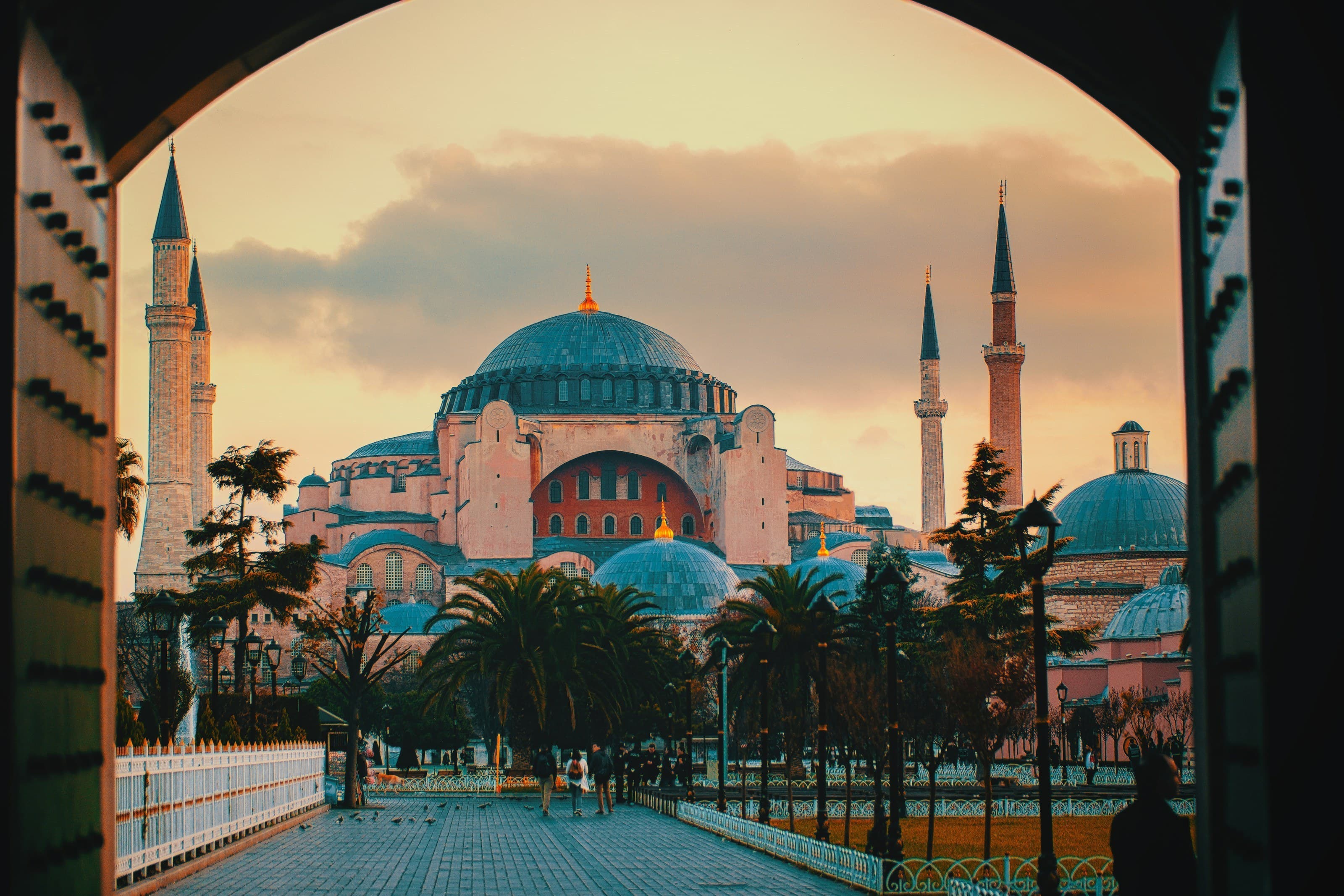
Begin at Hagia Sophia at opening. In summer (April to October) it opens around 08:00, in winter around 09:00. It now functions as a working mosque, so the ground-floor prayer hall is kept for worshippers, who enter free by their own entrance. Foreign visitors see the interior and its mosaics from the historic upper gallery, entering by a ramp on the south side. That route has its own ticket, 25 euros when it was introduced in January 2024, with children under 8 free. The building closes to tourists briefly during each of the five daily prayers and for longer on Friday around midday, so an early arrival is the safest plan.
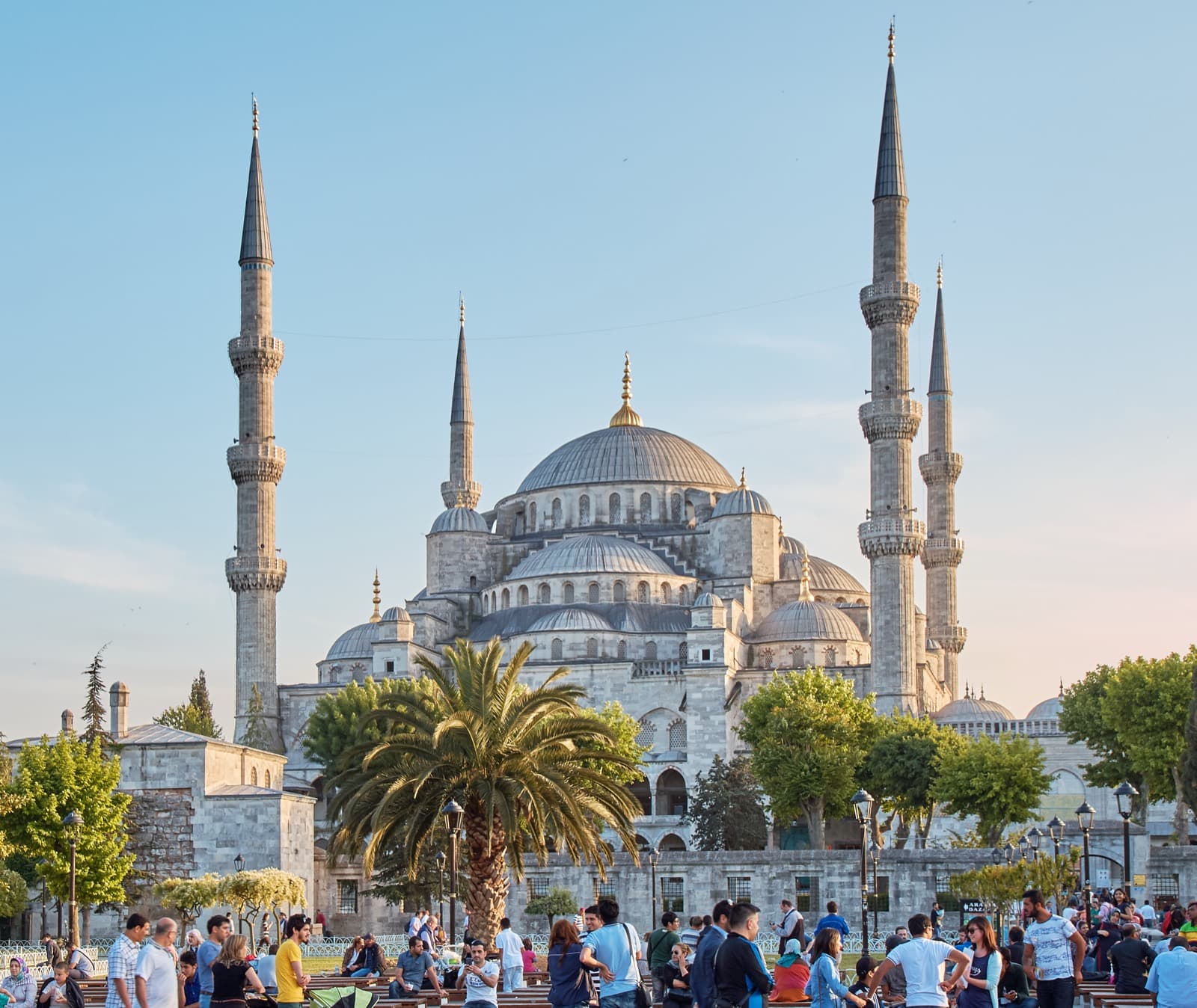
From there it is a two-minute walk across the square to the Blue Mosque (Sultan Ahmed Mosque), which reopened fully after a long restoration. Entry is free. Because it is an active mosque, visitors are admitted between prayers, roughly in the morning and again in the afternoon, and it is closed to tourists on Friday morning. Dress modestly: shoulders and knees covered for everyone, and a headscarf for women, with free scarves and cover-ups lent at the door.
Beside the Blue Mosque lies the Hippodrome of Constantinople, now the open public square called Sultanahmet Meydani. It costs nothing and takes only as long as you want to give its ancient columns and obelisks. A short walk north sits the Basilica Cistern, the sunken Byzantine water reservoir with its forest of columns. This one needs a paid ticket; it is open daily from 09:00 to 22:00, with a break from 18:30 to 19:30. Note that Istanbul museums stopped accepting cash in 2025, so bring a card.
Our audio walk for all of this is the Sultanahmet tour, about 2.3 kilometers and 90 minutes from Sultanahmet Park down to Little Hagia Sophia, which ties Hagia Sophia, the Imperial Gate of Topkapi Palace, the Basilica Cistern, the Blue Mosque, and the Hippodrome into one story about three empires building over each other. If you have the appetite and the time, Topkapi Palace is the natural morning add-on, but plan around it: it is closed every Tuesday, it needs a paid ticket, and the Harem is sold on its own or in a combined ticket with the palace and Hagia Irene. Topkapi alone can absorb two hours, so on a single day you may prefer to admire its gardens and gates from outside and keep moving.
Midday: the Grand Bazaar and the mosque on the hill
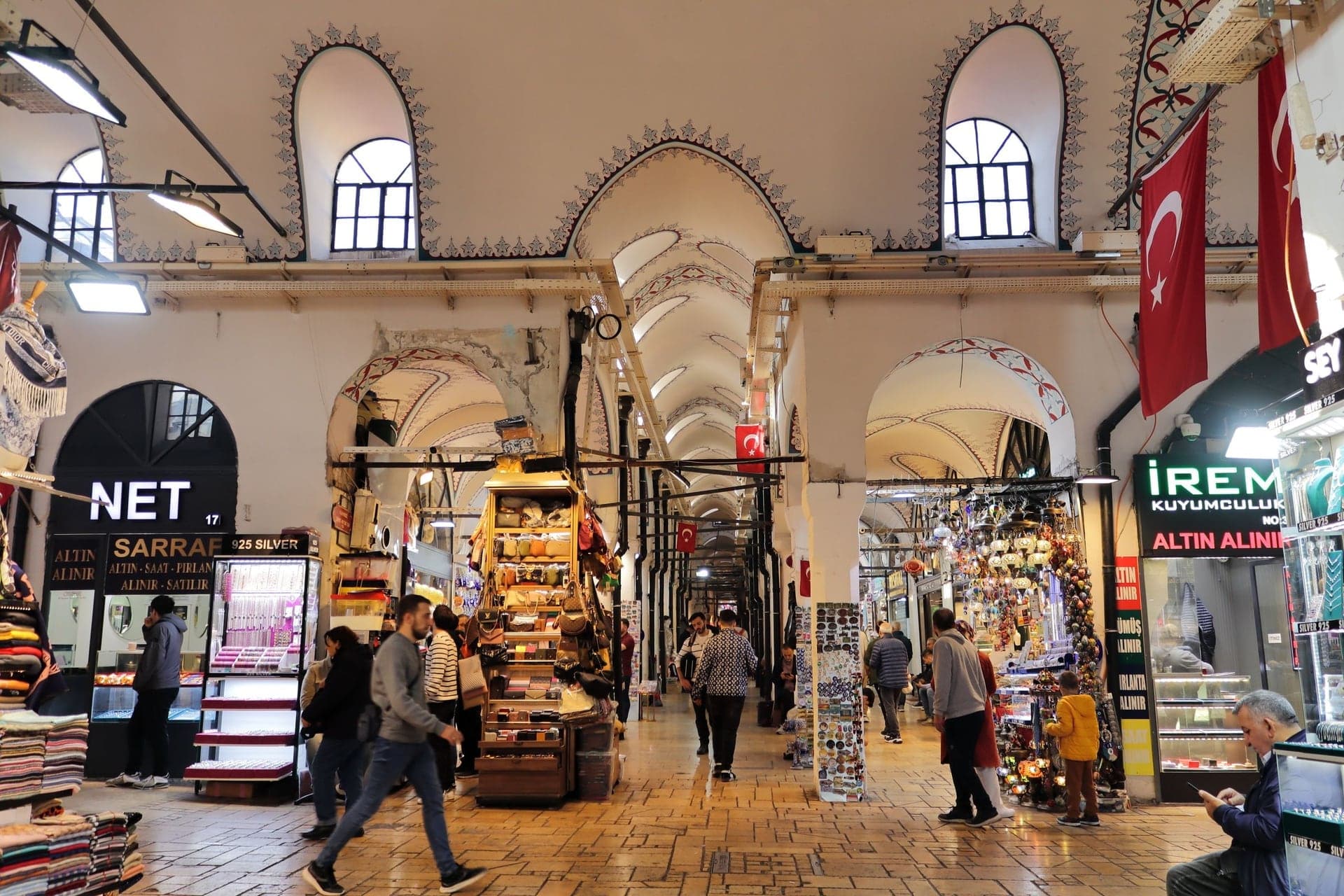
Walk west from Sultanahmet toward the covered market. The Grand Bazaar is a whole roofed city of market streets, and it is free to enter. Crucial timing detail: it is open Monday through Saturday, 08:30 to 19:00, and closed on Sundays and on religious and public holidays. If your one day falls on a Sunday, do the waterfront Spice Bazaar instead, which stays open, and save the Grand Bazaar for another trip.
This is where our Grand Bazaar and Eminonu audio walk begins, at the Nuruosmaniye Mosque beside the bazaar's eastern gates. It is a mostly downhill route of eleven stops and about 3.5 kilometers, a little under two hours, that treats the market as the commercial engine of the city and follows the trade down to the sea. It reads the bazaar from outside, gate by gate, so it works on Sundays too; go in before or after. Along the way it passes Suleymaniye Mosque, the great sixteenth-century complex by the imperial architect on the third hill, free to enter and one of the calmer grand mosques to sit in. Have lunch here: the streets around the bazaar are full of lokantas and kebab counters, and the terraces near Suleymaniye look out over the Golden Horn.
Afternoon: down to the water at Eminonu
Keep descending toward the shore. The Spice Bazaar near the Eminonu waterfront is free, opens every day including Sundays (it closes for some public holidays), and is smaller and quicker than the Grand Bazaar, which makes it a good afternoon stop. Beside it stands the New Mosque (Yeni Cami), the domed mosque that anchors the ferry-boat waterfront, also free, and the last stop of the Grand Bazaar walk. This is the seam of the city, where trams, ferries, gulls, and fishermen on the Galata Bridge all crowd together.
From Eminonu you have a choice. You can walk straight across the Galata Bridge on foot, which takes about ten minutes at an easy pace and gives you the classic view of the old-city skyline behind you. Or you can hop one stop on the T1 tram. Either way you are now at the foot of the Galata hill, where the Galata and Beyoglu walk begins, on the bridge itself. If you have not already bought one, an Istanbulkart (the rechargeable transit card, sold at machines in stations) pays for trams, ferries, and the two short funiculars and is far cheaper than single tickets.
Evening: climb Galata for the last light
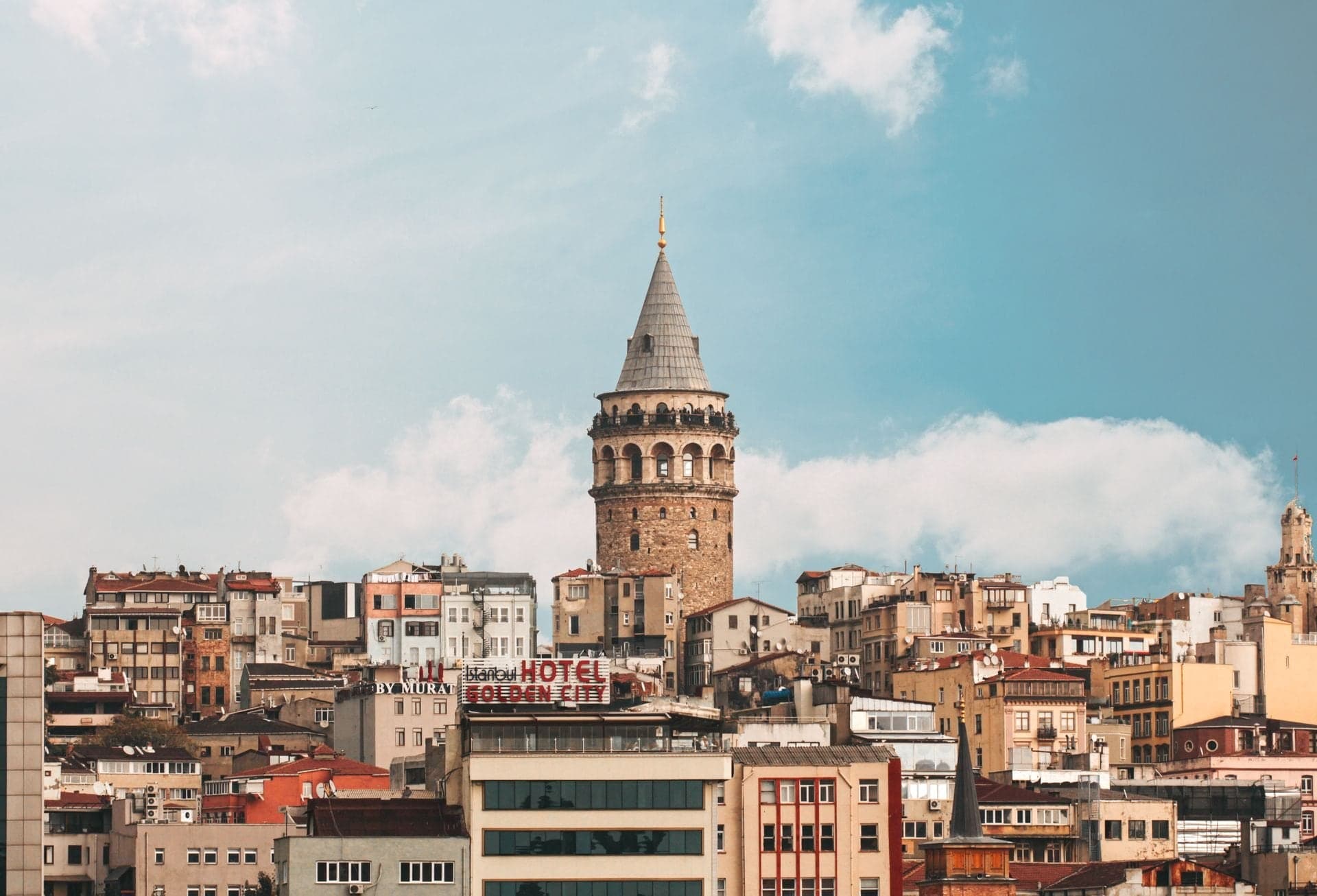
Cross the water and the day tips from the imperial old city into the European, merchant Istanbul of Galata and Pera. Our Galata and Beyoglu audio walk, eleven stops over about 2.4 kilometers and roughly an hour and a half, starts on the Galata Bridge and climbs past the old banking street and the Camondo Stairs to Galata Tower, the medieval stone tower that crowns the old walled town. The base and square are free; going up to the gallery at the top is a paid museum ticket, open every day into the late evening with last entry at 22:00, which makes it a strong sunset stop if you time it. From the top the whole peninsula you walked all morning lays out across the water.
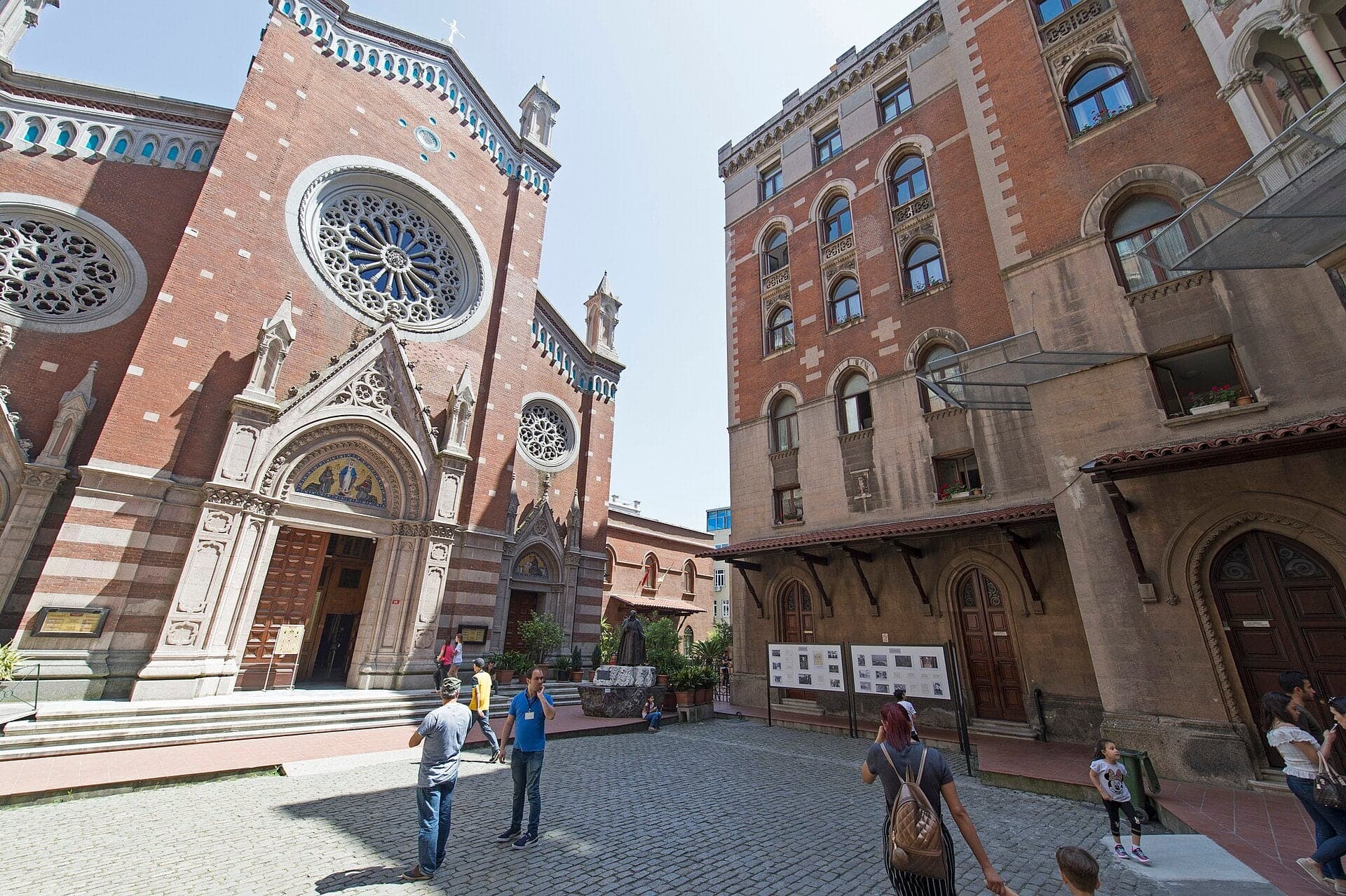
From the tower the walk climbs past the Mevlevi lodge of the whirling dervishes to Tunel Square at the head of Istiklal Avenue, then follows the pedestrian spine along the ridge past the Church of Saint Anthony of Padua, Galatasaray Square and Cicek Pasaji, and ends at Taksim Square. This is the part of the day for dinner, meyhane tables, and street music. If your legs are done, the historic Tunel funicular, opened in 1875 and one of the oldest underground urban railways still running, runs from Karakoy to the top of the hill and saves you the steepest climb for the price of a normal transit tap.
Practical notes and honest safety framing
Istanbul is a large, heavily touristed city, and Sultanahmet, the bazaars, and Beyoglu are busy, policed, well-lit areas where solo and evening walking is normal. The realistic annoyances are crowds, aggressive shop touts, and pickpocketing in the densest market lanes and on packed trams, so keep your bag in front of you and treat unsolicited "friendly" invitations to a shop or bar with polite caution. Carry a card, since cash is no longer accepted at the museums. Dress code applies at every working mosque, and all of them pause for prayer, so build in flexibility rather than a rigid clock. On foot the plan holds together well: the two halves of the day are each a compact cluster, joined by one short tram ride or bridge crossing, which is exactly why one day is enough to feel the shape of the city even if it is nowhere near enough to exhaust it.
Ready to walk it with the history in your ears? Browse the three tours on the Istanbul walking tours hub or open the map at /turkey/istanbul.
Sources
- Hagia Sophia Entrance Fee 2026 (hagia-sophia.org)
- Blue Mosque Istanbul 2026: Free Entry, Dress Code, Prayer Times (thebettervacation.com)
- Basilica Cistern Visit Info (yerebatan.com, official)
- Topkapi Palace Plan Your Visit 2026 (topkapipalace.com.tr)
- Grand Bazaar Istanbul Opening Hours 2026 (istanbultravelblog.com)
- Istanbul Tram T1 Guide 2026 (lostin.istanbul)
Frequently asked questions
- Is one day enough to see Istanbul on foot?
- One day is enough to walk the essential old city and Galata, but not to go deep. A practical plan is Sultanahmet in the morning (Hagia Sophia, Blue Mosque, Hippodrome, Basilica Cistern), the Grand Bazaar and Suleymaniye at midday, the Spice Bazaar and waterfront in the afternoon, then a Golden Horn crossing to Galata Tower for the evening. That is roughly 6 to 8 kilometers of walking split across many stops, joined by one short tram ride or a bridge crossing.
- How much does it cost to enter the main Istanbul sights?
- Most religious sites are free. The Blue Mosque, Suleymaniye Mosque, New Mosque, Spice Bazaar, and Grand Bazaar all cost nothing to enter, and Hagia Sophia's ground-floor prayer hall is free for worshippers. Paid tickets apply to Hagia Sophia's upper gallery, the route foreign visitors take (25 euros when the fee was introduced in January 2024), the Basilica Cistern, Topkapi Palace, and going up Galata Tower. Istanbul museums stopped accepting cash in 2025, so bring a card.
- What days are Istanbul attractions closed?
- Topkapi Palace is closed every Tuesday. The Grand Bazaar is closed on Sundays and on religious and public holidays. The Spice Bazaar opens every day, Sundays included, though it closes for some public holidays, so it is the natural Sunday alternative. Mosques are open daily but pause for the five daily prayers and close to tourists on Friday around midday, so plan mosque visits for between prayers.
- What is the best order to walk Istanbul in a day?
- Start early at Hagia Sophia when it opens (around 08:00 in summer, 09:00 in winter) because Sultanahmet gets crowded by late morning. Loop the nearby Blue Mosque, Hippodrome, and Basilica Cistern, then move to the Grand Bazaar and Suleymaniye for lunch. Descend to the Spice Bazaar and Eminonu waterfront in the afternoon, then cross the Golden Horn and climb to Galata Tower for sunset and dinner in Beyoglu.
- How do you get around Istanbul's old city without a car?
- The T1 tram links Sultanahmet, the Grand Bazaar area, and Eminonu, and it crosses the Galata Bridge toward Kabatas. Buy an Istanbulkart, the rechargeable transit card sold at station machines, which works on trams, ferries, buses, and the short funiculars and is cheaper than single tickets. Most of the one-day route is walkable on foot, with the tram or a ten-minute bridge walk connecting the old city to Galata.
- Is it safe to walk Istanbul alone, including in the evening?
- Sultanahmet, the bazaars, and Beyoglu are busy, well-lit, policed areas where solo and evening walking is common. The realistic risks are pickpocketing in crowded market lanes and on packed trams, plus persistent shop touts. Keep your bag in front of you, be polite but wary of unsolicited invitations to a shop or bar, and carry a card since museums no longer take cash.
Ready to experience it?
Hagia Sophia and the Blue Mosque: The Peninsula of Empires
90 min · 2.3 km · moderate
More from Istanbul
Explore more at your own pace.
Istanbul: A City Written and Rewritten by Empires
Hagia Sophia's Four Lives: How One Building Teaches You to Read Istanbul
Saint Anthony of Padua and the Plural City of Galata and Pera
The Grand Bazaar Is an Engine: How Istanbul's Market Paid for Its Domes
Galata Tower: The Watchtower of a Foreign City Inside Istanbul