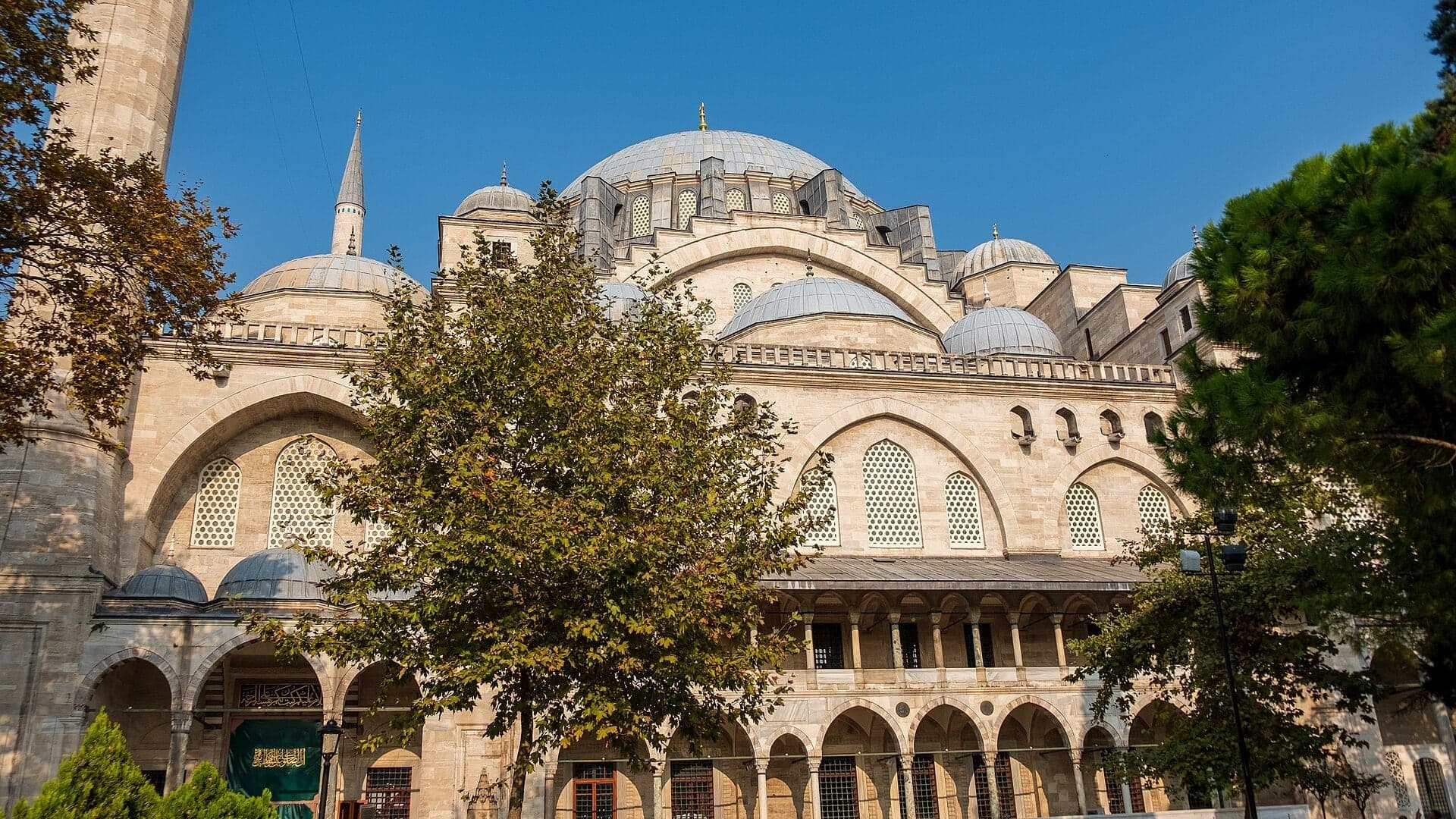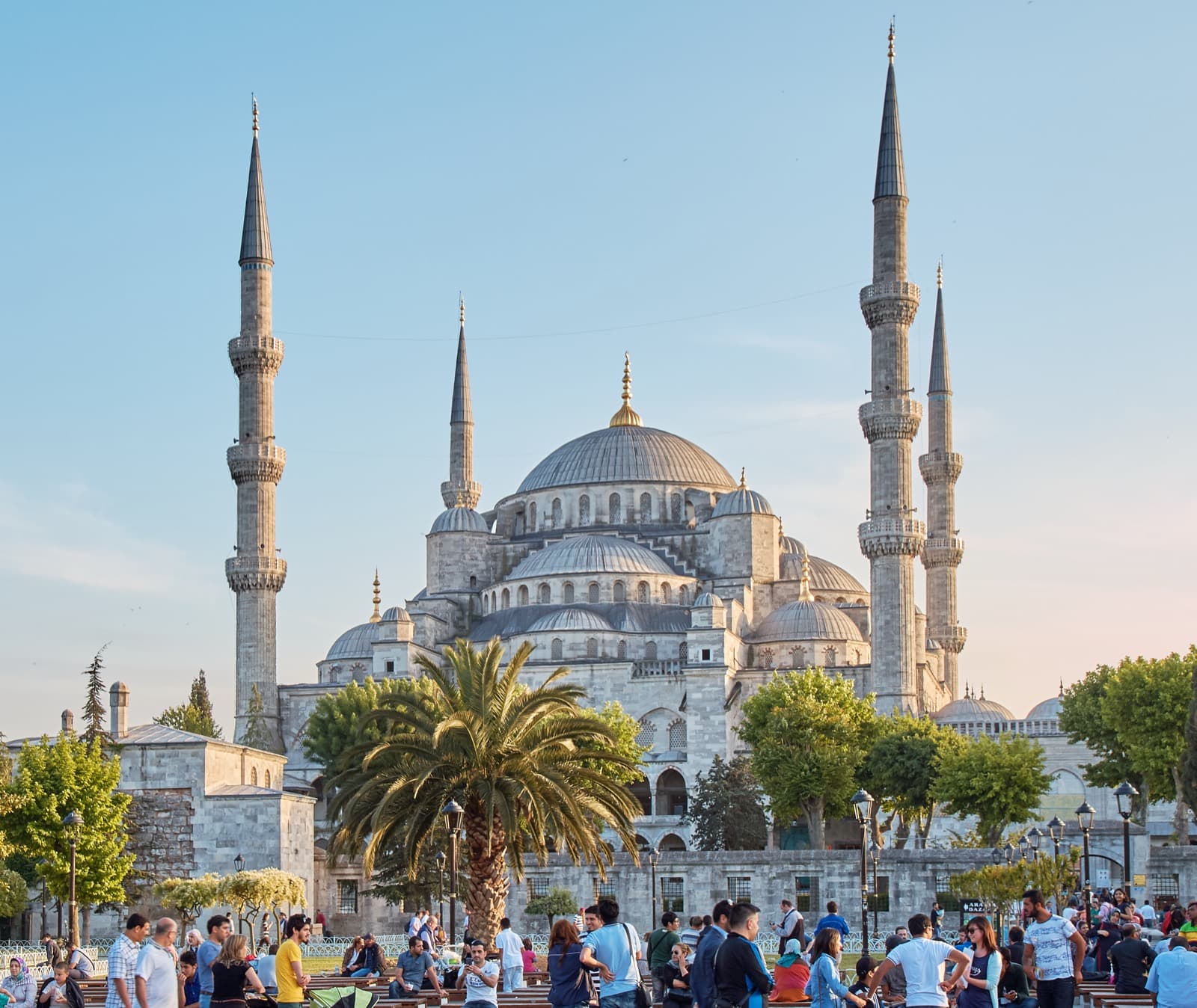
Stand in Sultanahmet Park and you are standing between two arguments made in stone. On one side rises Hagia Sophia, the old cathedral. On the other rises the Blue Mosque, and the second building was designed to answer the first. That is the single most useful thing to understand as you approach the Sultan Ahmed Mosque: it is not a monument that happens to sit near an older one. It is a deliberate reply, composed more than a thousand years after the cathedral it responds to, by an empire that had spent generations studying how the older dome held together.
What you are looking at
The Blue Mosque is properly called the Sultan Ahmed Mosque. It was built between 1609 and 1617 for Sultan Ahmed the First, and it opened on 9 June 1617. His architect was Sedefkar Mehmed Aga, who trained in the tradition of Sinan, the master architect whose work defined Ottoman mosque design in the previous century. Ahmed was a young sultan when he ordered the mosque, and he had no great conquest to show for it. Great imperial mosques were paid for with the spoils of conquest, so some religious scholars objected, and the building was even mocked as the Faithless Mosque. That made it a statement about ambition rather than a receipt for it.
Step back from the entrance and read the outline against the sky before you go anywhere near the door. A central dome, about twenty-three metres across, is buttressed by four half-domes. Those half-domes spill into smaller domes, so the whole roof appears to cascade downward like water pouring off the crown. Six minarets mark the corners of the prayer hall and the courtyard. No Ottoman mosque had been given six minarets before, and they set it apart from the earlier imperial mosques of the city.
Why it faces Hagia Sophia
Hear a stop from this walk
Little Hagia Sophia: The Empress on the Cornice
The silhouette is the point. That descending sequence of domes and half-domes is a direct response to Hagia Sophia, the cathedral completed in 537 under the emperor Justinian the First and standing just across the park. Hagia Sophia was the largest building in Byzantine Constantinople, and its floating dome was the engineering problem that every later builder in this city had to reckon with. The Ottomans had studied that cathedral for generations. After the conquest of 1453 they had turned it into a mosque, learned its geometry, and absorbed its lessons into their own architecture.
The Blue Mosque gathers everything they had learned into one composition and places it directly opposite its teacher. When you look from one dome to the other, you are watching two empires hold a conversation across a single square. The Roman and Byzantine cathedral says one thing about how a great space can be roofed. The Ottoman mosque, built more than a millennium later, answers with the same problem solved its own way, in the open air where anyone crossing the park can compare them.
The colour that named it
The English nickname comes from inside, not out. More than twenty thousand tiles, painted in over fifty distinct designs, cover the walls from above the lowest row of windows up to the third row, where painted decoration takes over. These tiles came from the leading Ottoman workshops at Iznik and Kutahya, and the density of blue across the interior surfaces is what gave the mosque its familiar English name. Roughly two hundred and sixty windows once filled the interior with coloured light, so that on a bright day the tiled walls and the glass work together and the whole hall reads as a field of shifting blue. The name is a foreigner's shorthand, drawn from a single overwhelming impression, but it points at something real about how the space was meant to be experienced.
A working mosque, restored
The Blue Mosque is not a museum. It is a living mosque, and people pray here five times a day. It reopened after a major restoration completed in 2023, a project that took about six years to finish and returned the tiles, the domes, and the interior to working condition. That fact should shape how you visit. If you go in, dress modestly, remove your shoes, keep your voice low, and step outside during the daily prayer times, when the building belongs to worshippers rather than visitors. Carrying a light scarf or shawl and wearing clothes that cover shoulders and knees will spare you being turned back at the door.
The one thing to carry away
The lesson of the Blue Mosque is the lesson of this whole peninsula in miniature. Each empire that ruled this headland built onto what it found rather than sweeping it away. Roman and Byzantine Constantinople raised a cathedral. Ottoman Istanbul, centuries later, did not tear it down. It converted it, studied it, and then built an answer to it a short walk away. Standing between the two domes, you are not looking at two separate postcards. You are reading one continuous argument about power, faith, and how to roof a very large room, carried on across more than a thousand years.
That conversation is easier to hear when you walk the ground slowly, with the sequence explained stop by stop. The Blue Mosque is stop four on the self-guided Istanbul walking tours that cross the old Sultanahmet peninsula, tracing Roman, Byzantine, and Ottoman layers as a single story rather than a checklist of sights. If you are planning the visit, start from the Istanbul city page, then set out on foot at your own pace. Read the layers instead of collecting them, and the mosque stops being a photograph and becomes an answer to a question the cathedral asked first.
Sources
- Blue Mosque, Istanbul (Wikipedia): architect Sedefkar Mehmed Aga, the dome, and the tile count.
- TDV Islam Ansiklopedisi, Sultan Ahmed Camii ve Kulliyesi: building dates 1609 to 1617, the six minarets, the tile placement, and the Iznik and Kutahya workshops.
- History of Istanbul (istanbultarihi.ist), Architecture in Istanbul between the XVIth and XVIIth centuries: the objections to the mosque and the Faithless Mosque nickname.
- Daily Sabah, Blue Mosque reopens after restoration: the six-year restoration project completed in 2023 and the mosque's return to prayer.
- Encyclopaedia of the Hellenic World, Hagia Sophia: the 537 completion under Justinian the First and its place as the largest building in Byzantine Constantinople, the building the mosque answers.
- UNESCO World Heritage, Historic Areas of Istanbul: the 1985 inscription that lists the Sultan Ahmed Mosque among the protected monuments of the peninsula.
Ready to experience it?
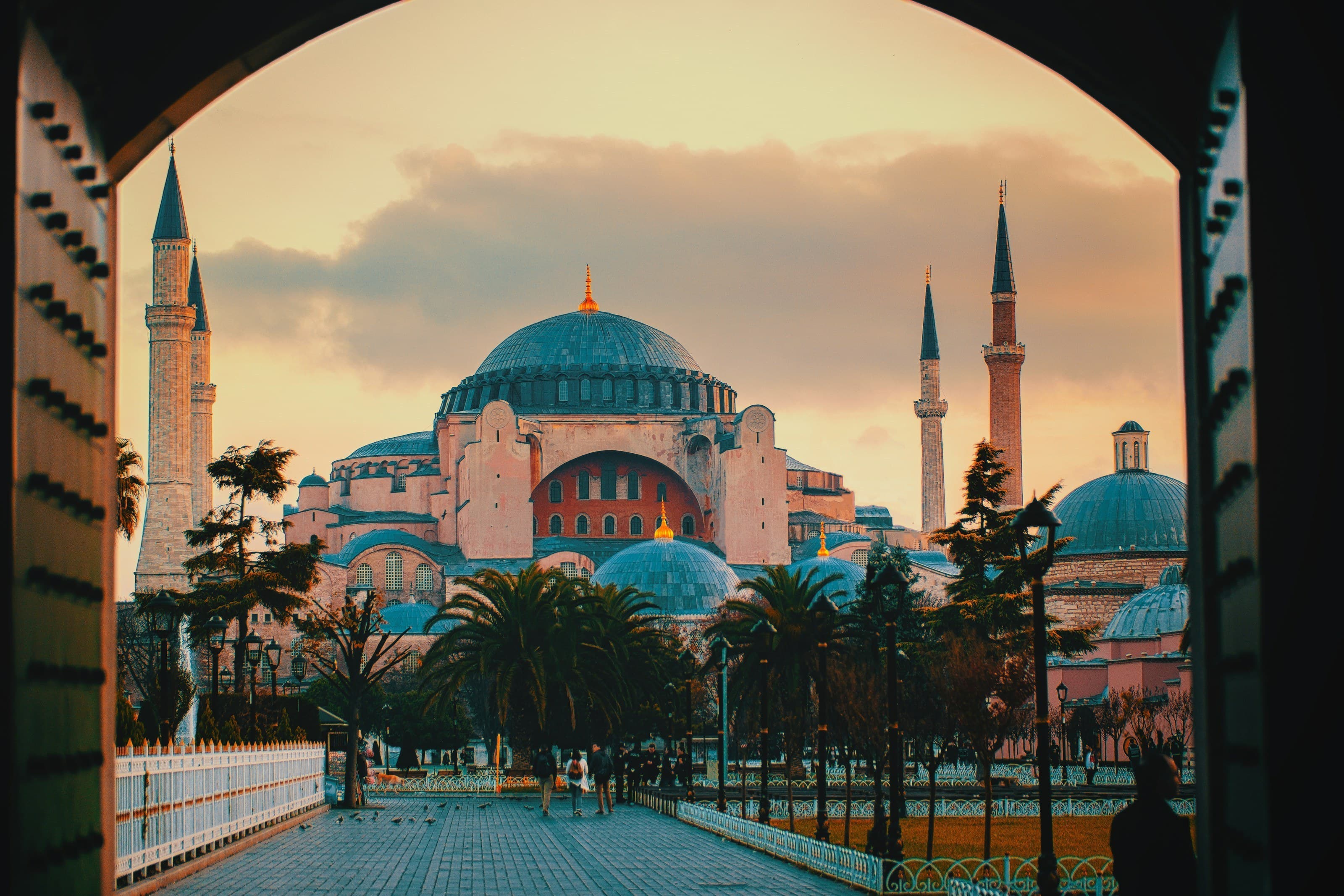
Hagia Sophia and the Blue Mosque: The Peninsula of Empires
90 min · 2.3 km · moderate
More from Istanbul
Explore more at your own pace.
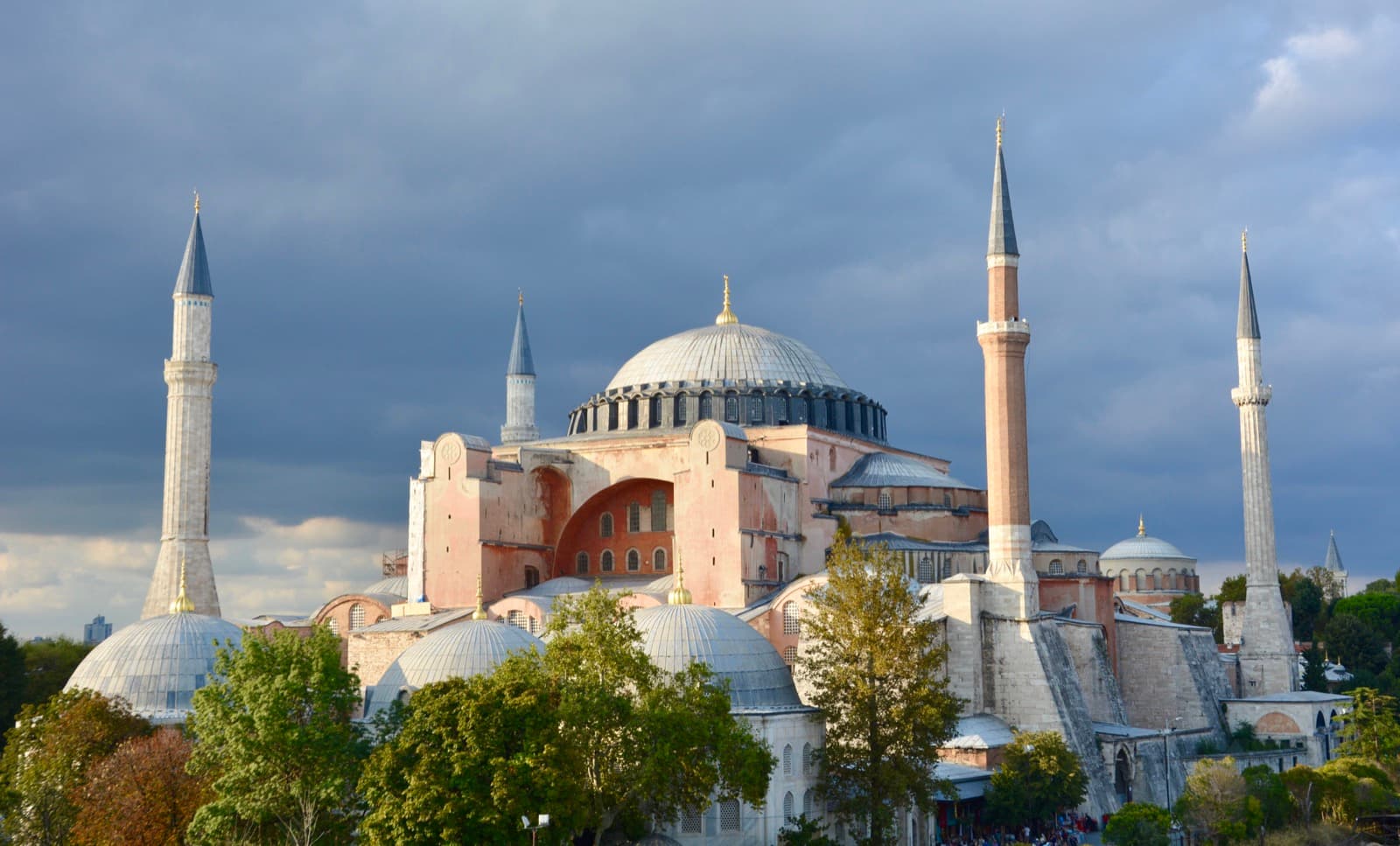
Istanbul: A City Written and Rewritten by Empires
Hagia Sophia's Four Lives: How One Building Teaches You to Read Istanbul
Saint Anthony of Padua and the Plural City of Galata and Pera
The Grand Bazaar Is an Engine: How Istanbul's Market Paid for Its Domes
Galata Tower: The Watchtower of a Foreign City Inside Istanbul