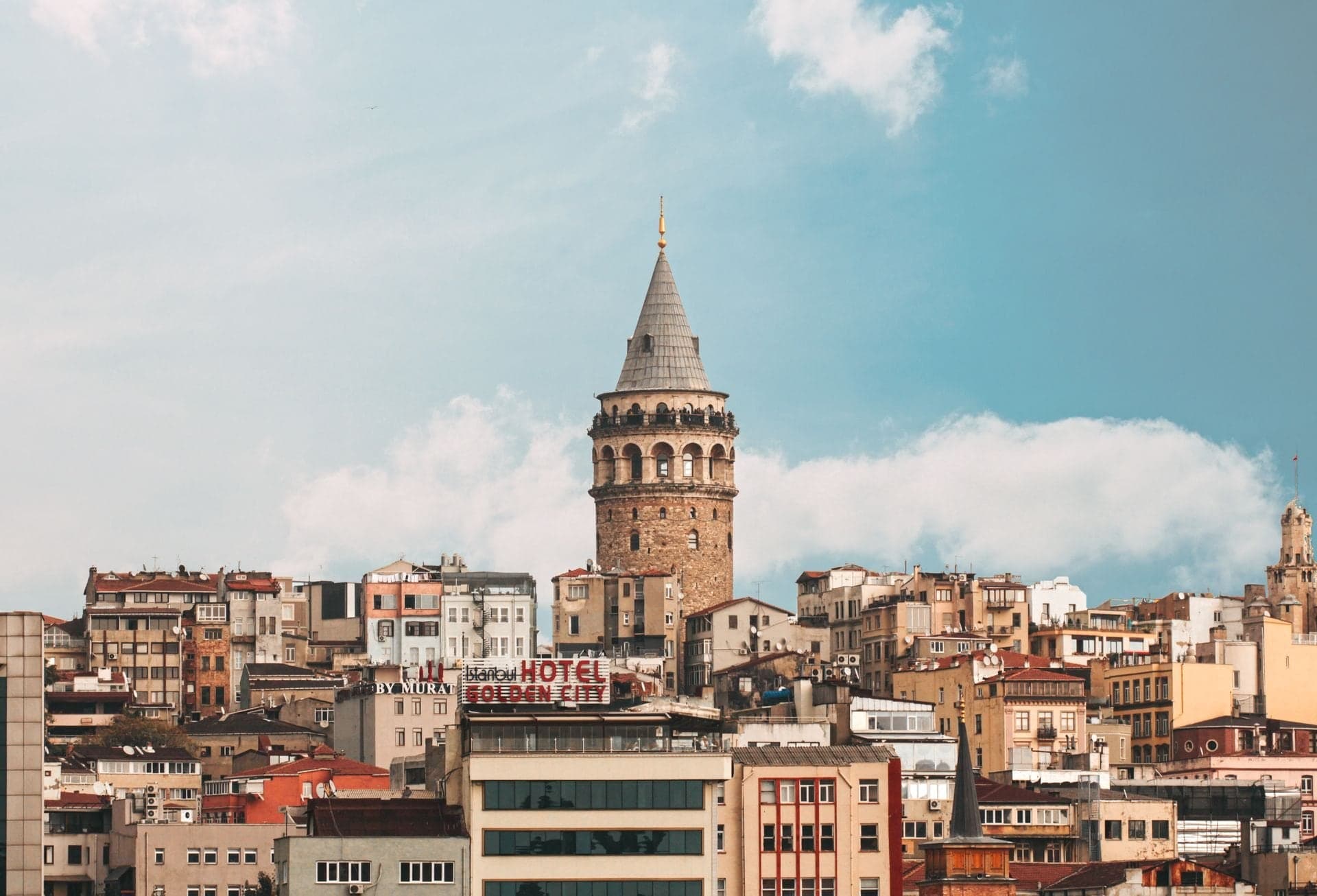
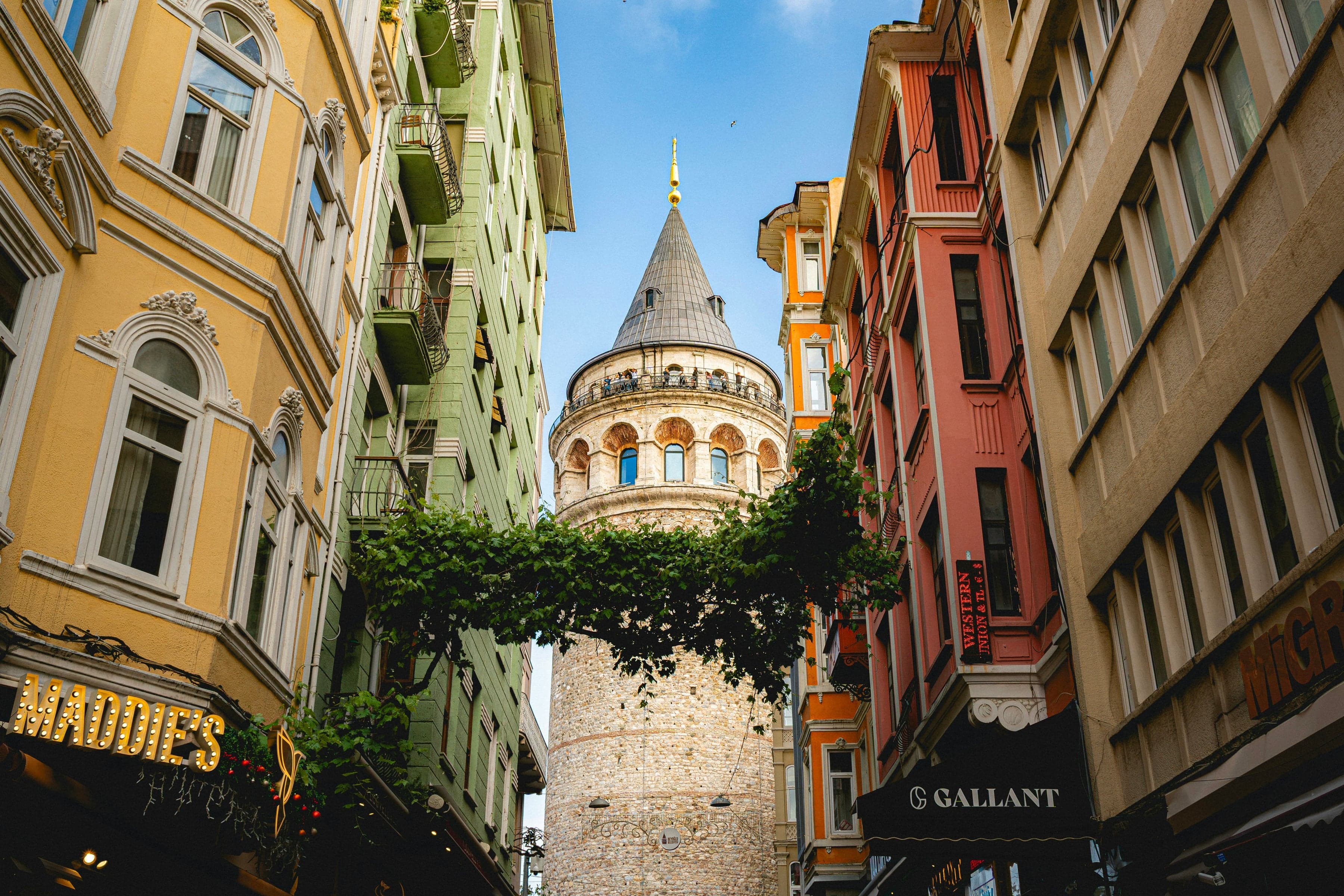
The Galata Tower is not a lone monument. It is the surviving apex of a walled foreign quarter that once sat inside Istanbul, a Genoese merchant colony that faced Constantinople across the Golden Horn and ran much of its own affairs. If you stand at the base of this stone cylinder and read it that way, as the summit of a semi-autonomous colony rather than a photogenic tower, the entire hill of Galata and Pera behind you comes into focus. That single shift in framing is the thing worth understanding here, and it is easy to miss when the crowds and the ticket line pull your attention toward the observation deck.
A colony, not a suburb
After the Byzantines retook their capital in the thirteenth century, the Genoese won a merchant quarter at Galata by treaty, on the far side of the Golden Horn from Byzantine Constantinople. The Byzantines already called this shore Pera, simply "the other side". The distinction matters. This was not simply a neighborhood of the imperial city. It was a colony of traders tied to Genoa, a rival Italian maritime power, and they ran much of the district's daily life behind their own defenses. The arrangement was never total independence. The Byzantine emperor still set terms, taxed the trade, and more than once ordered Genoese walls torn down when the colony overreached. But within those limits Galata operated as a compact, largely self-governing outpost, a foreign quarter with its own rhythm inside the empire's field of view.
The tower you see today was their high point in the most literal sense. In thirteen forty-eight, by the account of the Byzantine historian Nikephoros Gregoras, the Genoese built it in haste at the very top of their fortifications, the Walls of Galata, and they gave it a name that had nothing to do with the modern label. They called it the Christea Turris, the Tower of Christ. It stands 62.59 metres tall, on ground about thirty-five metres above the sea, and from its summit the colony could keep watch over the harbour, the shipping lanes that were the reason the whole place existed, and the imperial peninsula opposite. A watchtower over trade routes, planted by foreigners, staring back at the empire it did business with. That is the honest description of what you are looking at.
What the conquest changed, and what it did not
Hear a stop from this walk
Taksim Square: The House That Divided the Water
When the Ottomans took Constantinople in fourteen fifty-three, the Genoese colony was abolished. The semi-autonomous arrangement that had defined Galata for nearly two centuries was over. But the tower itself endured, and here is where its story becomes a study in reuse rather than ruin. Over the following centuries the structure took on new work for the city that now surrounded it. Its upper storeys are Ottoman, rebuilt after the earthquake of fifteen oh nine, while the lower part is still Genoese. It served as a lookout and, more consistently, as a fire-watch tower for the dense wooden districts below: from the eighteenth century fire watchers were posted at the top, and from eighteen seventy-four it was an alarm post of the new fire brigade.
Fire and repair became the tower's long rhythm. A fire in seventeen ninety-four burned its cap, which was rebuilt under Sultan Selim the Third; another fire in eighteen thirty-one led to a new pointed cap under Mahmud the Second; a storm in eighteen seventy-five tore the cap off again. The conical cap most people photograph today is reinforced concrete from works between nineteen sixty-four and nineteen sixty-seven. This is the quietly important part for anyone standing beneath it: much of what you see is layered reconstruction over a medieval core, not an untouched relic. The tower has been rebuilt into itself so many times that reading it as pristine fourteenth-century stone would be wrong. It is better understood as a long argument between the city and its own combustibility, settled over and over in masonry.
The view is the point, and it is free
Today the Galata Tower is a museum run by the Ministry of Culture and Tourism, open every day with a gallery that circles the top, and climbing it requires a ticket. Prices and hours change, so check the official site before you queue. But the orientation that matters most costs nothing. The square around the base is free, and it delivers the single most useful thing this landmark can teach you.
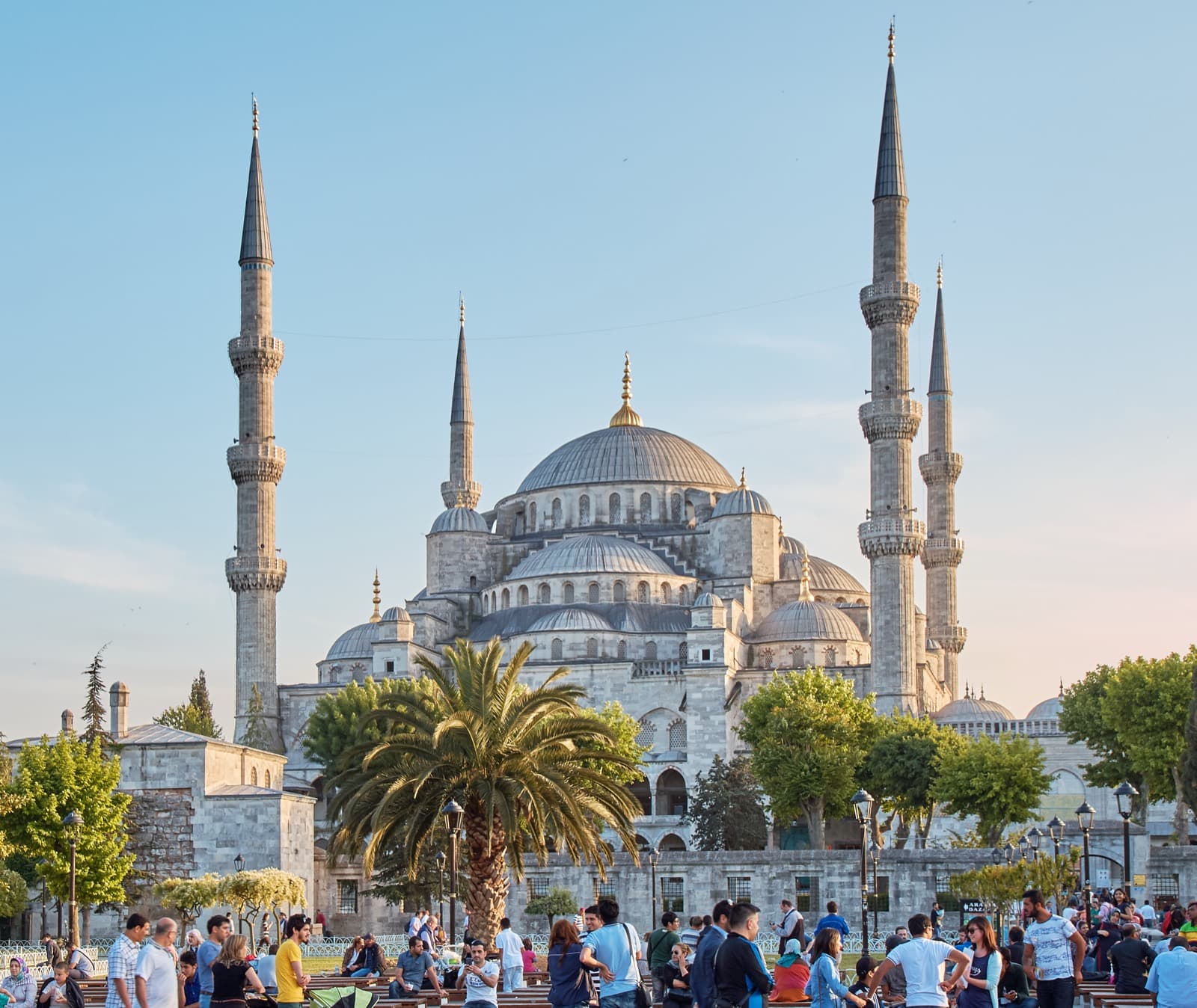
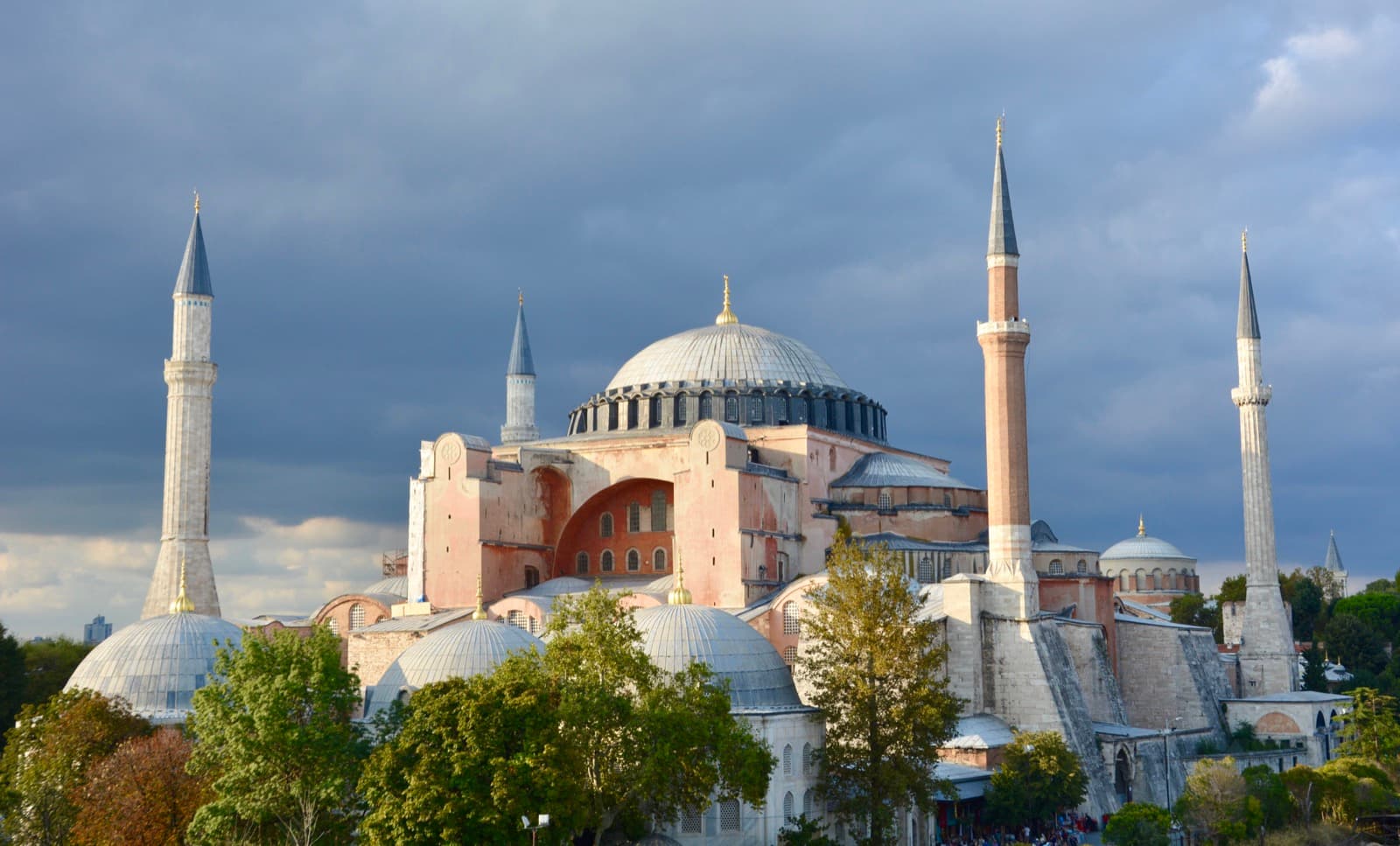
Stand in that square and look south across the water. That is the peninsula of domes and minarets, Hagia Sophia and the great mosques, the Istanbul of every postcard and the seat of the sultans. Then turn and face the hill rising behind you toward the avenue. That is the other Istanbul: the European, merchant, plural one that grew up around this Genoese watchtower and, above it, spread into the cosmopolitan quarter of Pera, where embassies, Levantine traders, and banking families lived. Two cities, one water crossing apart, and this tower marks the exact hinge between them. You do not need to buy a ticket to understand that. You need to turn around.
There is also a piece of local folklore attached to the tower that is worth telling honestly, as legend rather than record. According to a story told only by the seventeenth-century Ottoman travel writer Evliya Celebi, a man named Hezarfen Ahmed Celebi flew from this tower across the Bosphorus, wings strapped to his arms. It is a wonderful tale, and it is a tale of doubtful authenticity, not a documented fact. Treat it the way the sources do: a legend the tower has carried for centuries, not a claim to repeat as history.
Why the walk climbs to it
Everything about this hill is arranged around the tower. That is not a metaphor. It is geography. Below it sit the Galata Bridge and the banking street of Bankalar Caddesi, with the Camondo Stairs, named for the Sephardic Jewish banking family who built much of this quarter. Above it, along the ridge, run the Mevlevi lodge of the whirling dervishes, the top station of the Tunel, the funicular that has carried people up this slope since eighteen seventy-five, the Catholic church of Saint Anthony, the arcades of Pera and finally Taksim Square. The tower is the physical and historical hinge, the top of the old walled town and the foot of the avenue.
That is exactly why the self-guided audio walk Galata Tower and Istiklal: The Climb from the Golden Horn makes it the third of its eleven stops. The walk starts on the Galata Bridge at water level, climbs past the bankers' street to the tower, then follows the ridge up Istiklal to Taksim Square, about two and a half kilometres in roughly an hour and a half. From the tower square you can see both Istanbuls at once, then walk on into the plural one at your own pace, lingering where a facade holds you and moving on when you are ready.
If you want to place Galata within the wider set of routes across the city, browse the full list of Istanbul walking tours, or start from the Istanbul city page to see where this hill fits alongside the peninsula everyone already knows. Either way, come to the tower first. Stand in the free square, turn around, and let a fourteenth-century Genoese watchtower show you the city the postcards leave out.
Sources
- TDV Islam Ansiklopedisi, "Galata Kulesi" and "Galata". The thirteen forty-eight construction as Christea Turris, the Genoese lower part and Ottoman upper part, the fire-watch use from the eighteenth century, the fires of seventeen ninety-four and eighteen thirty-one, the eighteen seventy-five storm and the nineteen sixty-four to nineteen sixty-seven cap, Pera as "the other side".
- Turkish Ministry of Culture and Tourism (turkishmuseums.com, muze.gov.tr). The 62.59-metre height and the tower's status as a Ministry museum open every day.
- The Byzantine Legacy, "Galata Tower and the Walls of Galata." Context for the tower as the keep of the Genoese defensive walls and for the limits of the colony's autonomy under Byzantine oversight.
- Roamer tour transcript, "Galata Tower and Istiklal: The Climb from the Golden Horn" (istanbul-galata-beyoglu), fact-audited stop on the Galata Tower. Source for the framing of Galata as a semi-autonomous colony and the Evliya Celebi story as legend rather than fact.
Ready to experience it?
Galata Tower and Istiklal: The Climb from the Golden Horn
90 min · 2.4 km · moderate
More from Istanbul
Explore more at your own pace.
Istanbul: A City Written and Rewritten by Empires
Hagia Sophia's Four Lives: How One Building Teaches You to Read Istanbul
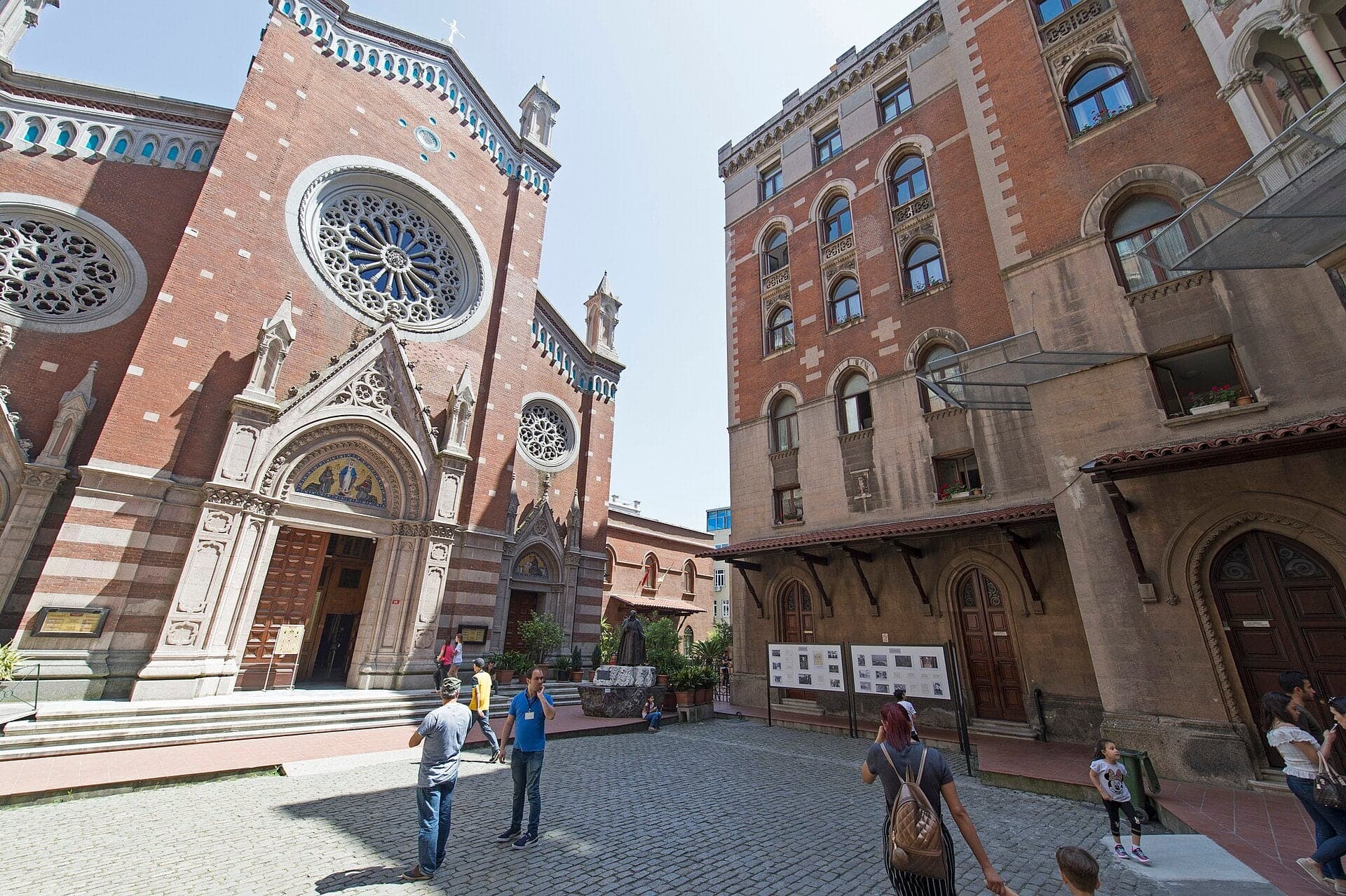
Saint Anthony of Padua and the Plural City of Galata and Pera
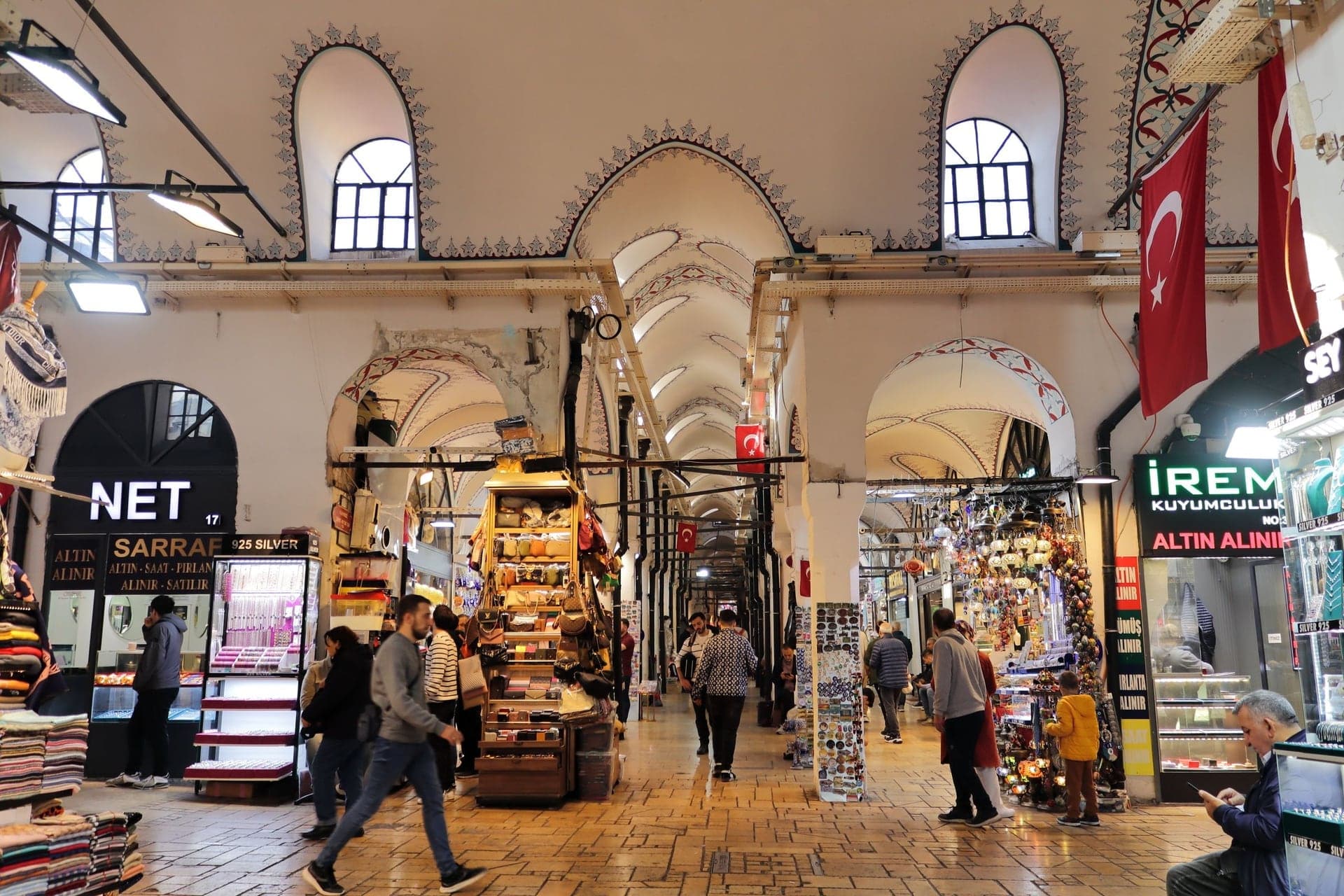
The Grand Bazaar Is an Engine: How Istanbul's Market Paid for Its Domes
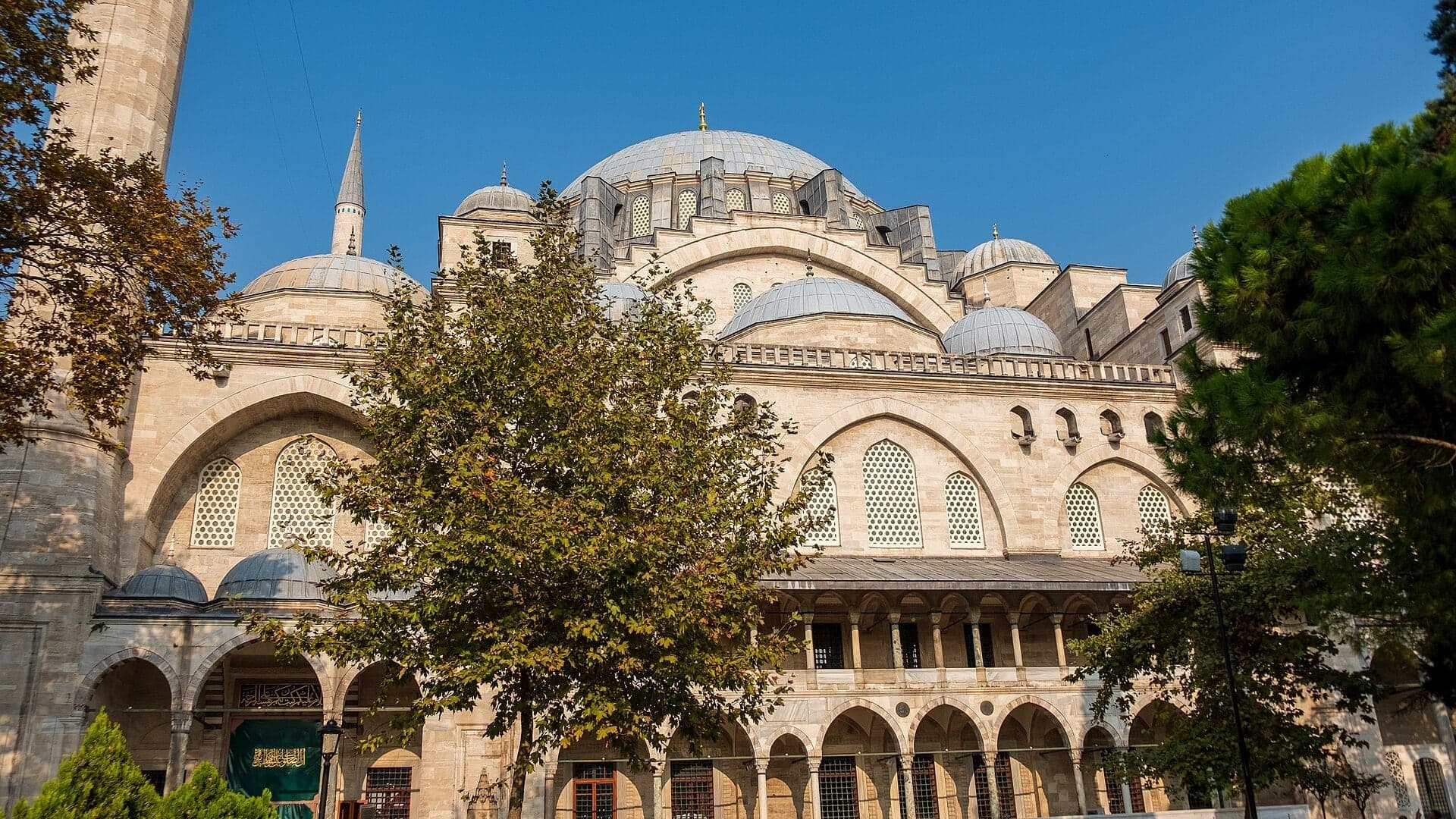
Suleymaniye Mosque: Why Sinan's Great Complex Was Built to Pay Its Way