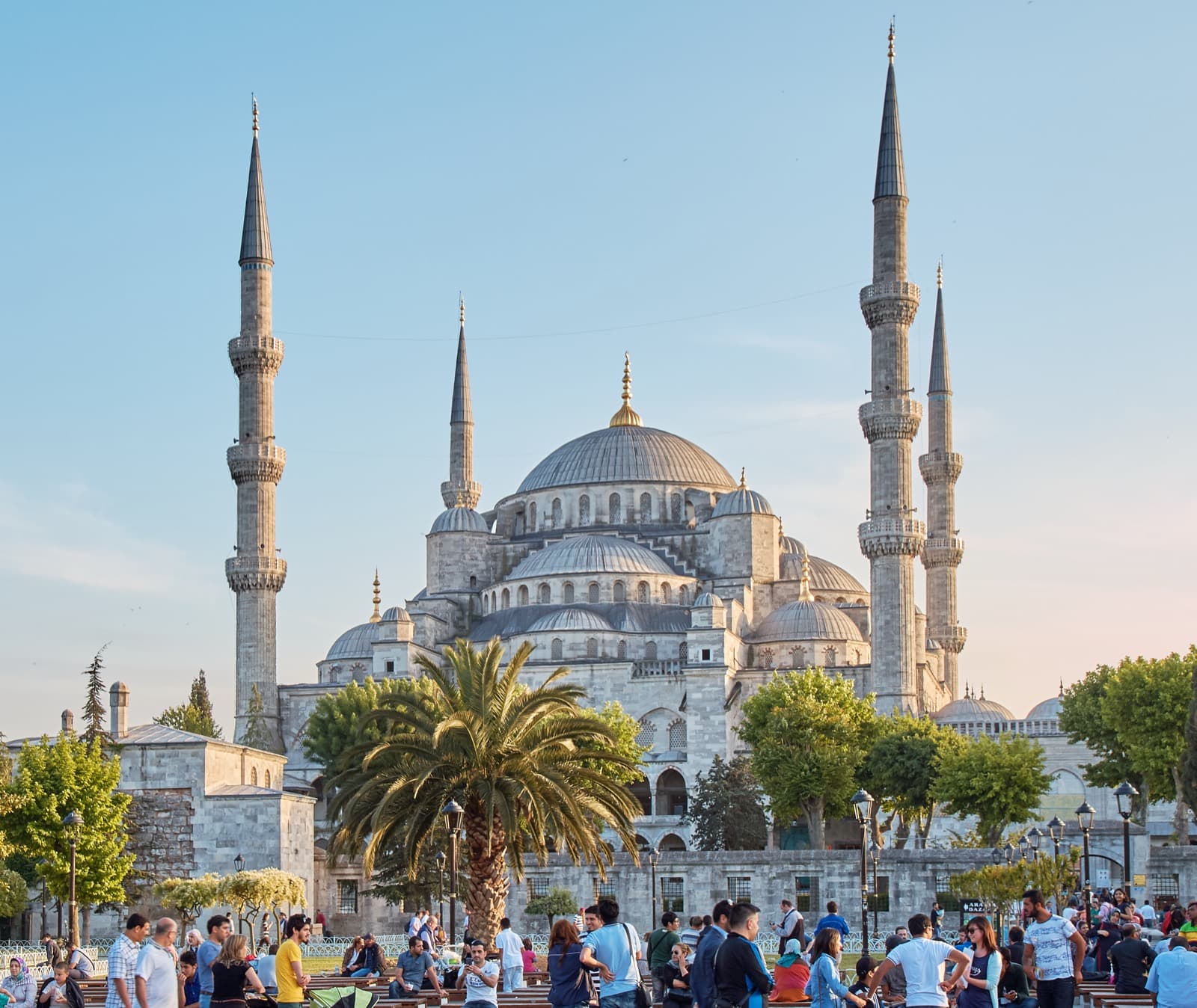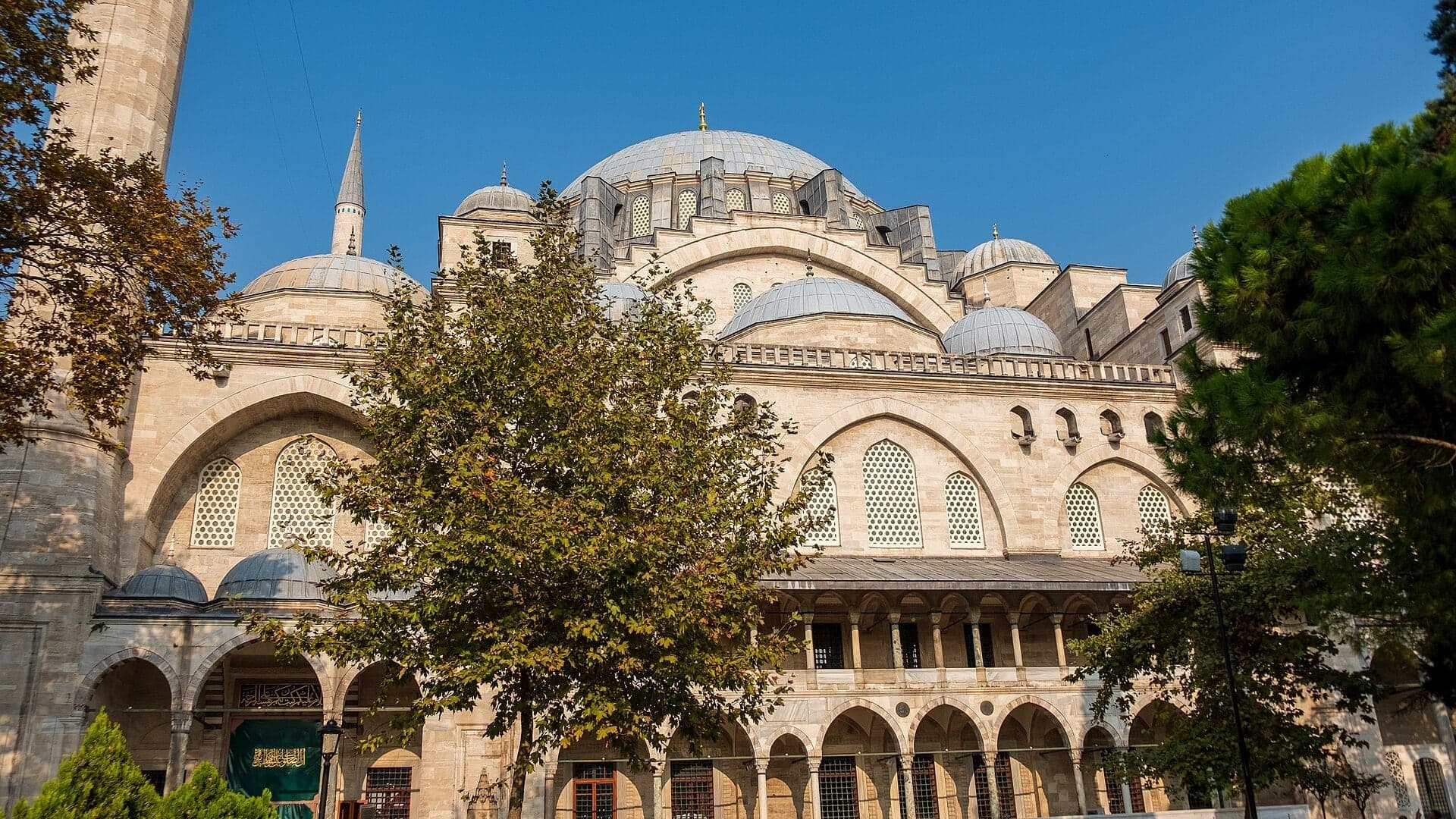
Climb to the top of Istanbul's third hill and you reach the Suleymaniye Mosque, built by the imperial architect Mimar Sinan for Sultan Suleyman the Magnificent. Most visitors read it as a single grand building. It is better understood as the crown of a machine. The prayer hall sits at the center of a full charitable complex, and that complex was built with its own rows of shops, cut into the slope beneath its colleges, whose rents helped keep it running. The domes on the ridge leaned on commerce, the same way the market quarter below did. That connection, more than any measurement of the dome, is the thing to carry with you when you stand in front of it.
A mosque that is really a small city
Sinan did not build a mosque here between 1550 and 1557, though the mosque alone, opened in October 1557, took him seven years. He built a kulliye, an endowed complex, and the mosque is only its most visible piece. Around the prayer hall he laid out graded colleges, a school of hadith, a primary school, a medical school, a hospital, a bath, a caravanserai, and a public kitchen and guesthouse. This was standard logic for imperial Ottoman patronage, but rarely executed on this scale. A sultan did not simply commission a beautiful building and walk away. He founded an institution and then attached a permanent income stream to keep it running.
That income stream is the point. Sinan built it into the hill itself: a row of vaulted shops under the primary school, the first colleges and the medical school on the west side, and another row of vaulted shops under the east courtyard wall. Their rents, the same kind of commerce that fills the Grand Bazaar and the hans a short walk away, belonged to the endowment and helped pay for the kitchen and the hospital and the schools. When you walk from the covered market up to this terrace, you are not just walking uphill. You are following the logic of the money.
What Sinan solved on this hill
Hear a stop from this walk
New Mosque: Two Queen Mothers by the Water
If the endowment is the idea, the engineering is the wonder. The central dome spans about twenty-seven meters and rises a little over fifty meters to its crown, and Sinan held it aloft with a lightness that still looks improbable in person. Stand under it and the interior feels open and calm rather than heavy, which is exactly the effect he was chasing. He was working in the long shadow of Hagia Sophia, the Byzantine church that had defined the possibilities of a great dome in this city for a thousand years, and Suleymaniye is his confident answer to it. Sinan himself modestly called it his "journeyman work", keeping "masterwork" for the Selimiye at Edirne.
The four minarets that pin the building to the sky carry a quiet piece of folk numerology worth knowing. There are four of them, said to mark Suleyman as the fourth Ottoman sultan to rule after the conquest of Constantinople. Between them, those minarets hold ten balconies, and the count of ten is said to mark Suleyman as the tenth Ottoman sultan overall. It is a folk reading rather than a documented intention, but it is the kind of detail that turns a skyline into a sentence.
The building has also earned its calm the hard way. Part of the dome collapsed in the earthquake of 1766 and was rebuilt. During the First World War the courtyard was pressed into service as a weapons depot, and when some of the ammunition ignited, the mosque suffered a fire. It came through all of it. A restoration between 2007 and 2010 brought the complex back to full condition.
The people in the garden
Walk around to the garden behind the mosque and you meet the human story directly. Two tombs, both by Sinan, stand there. One holds Suleyman himself, who died in 1566 after a reign that stretched most of the sixteenth century and pushed the empire to its widest reach. The other holds his wife, Hurrem Sultan, known in Europe as Roxelana, who died in 1558. Hurrem's rise from the harem to the position of Suleyman's legal wife and closest political partner was extraordinary for her era, and her tomb sitting here, beside a sultan's, in the garden of the grandest mosque he built, is its own kind of statement.
There is one more grave worth finding, and it is deliberately modest. Just outside the complex walls, to the north, on the corner of a small walled plot, is the tomb of Sinan himself, who died in 1588 close to a hundred years old. The architect who designed hundreds of buildings across the empire and who defined the look of the Ottoman skyline lies in the shadow of this mosque, in a small open tomb under a low roof that you could walk past without noticing. After the scale of everything else on this hill, that restraint lands hard.
Standing in front of it
If you go inside, treat it as the working place of worship it still is. Dress modestly with shoulders and knees covered, women should cover their hair, remove your shoes at the door, keep your voice low, and steer clear of the five daily prayer times when the hall fills with worshippers. A light scarf in your bag handles the covering for you and saves fumbling at the entrance.
Then do the one thing that ties the whole hill together. Walk to the edge of the terrace and look down over the rooftops toward the water of the Golden Horn. The market quarter you either just walked past or are about to walk through is spread out below you. Sinan placed the whole complex on this slope so that it would complete the skyline seen from Galata across the water. The kitchen that fed the city, the hospital that treated it, the schools that taught it, all of it leaned on the trade happening in shops like those below. The grandeur up here and the commerce down there are one system, and Suleymaniye is the place where you can see both ends of it at once.
That system is the whole argument of the self-guided walk Grand Bazaar: The Markets That Paid for the Mosques, one of the Istanbul walking tours that includes this hill. Over eleven stops and about three and a half kilometres, it starts at Nuruosmaniye beside the Grand Bazaar, follows the bazaar's gates from outside, looks down the steep street of the great merchant inns, then gives Suleymaniye two stops, its flank and this terrace, passing Sinan's tomb on the way in, before descending to the Spice Bazaar and the New Mosque on the waterfront where the money came in by boat. You set your own pace, stop where the light or the smell pulls you, and skip anything that does not. To see how Suleymaniye fits into that downhill descent through the commercial heart of old Istanbul, start from the Istanbul city page and walk the market quarter from the ridge to the sea.
Sources
- TDV Islam Ansiklopedisi, Selcuk Mulayim, "Suleymaniye Camii ve Kulliyesi", and "Sinan". Construction and opening dates, dome dimensions, the shops built into the slope, the minaret positions, the tombs, Sinan's tomb and his "journeyman work".
- Wikipedia, "Süleymaniye Mosque." The WWI weapons-depot fire and 1766 earthquake damage.
- Encyclopaedia Britannica, "Süleymaniye Mosque." Overview of Sinan's design and its place among his imperial works.
- Roamer tour transcript, "Grand Bazaar: The Markets That Paid for the Mosques" (fact-audited). The kulliye components, the market-funded endowment logic, and the tombs of Suleyman and Hurrem Sultan (Roxelana).
Ready to experience it?
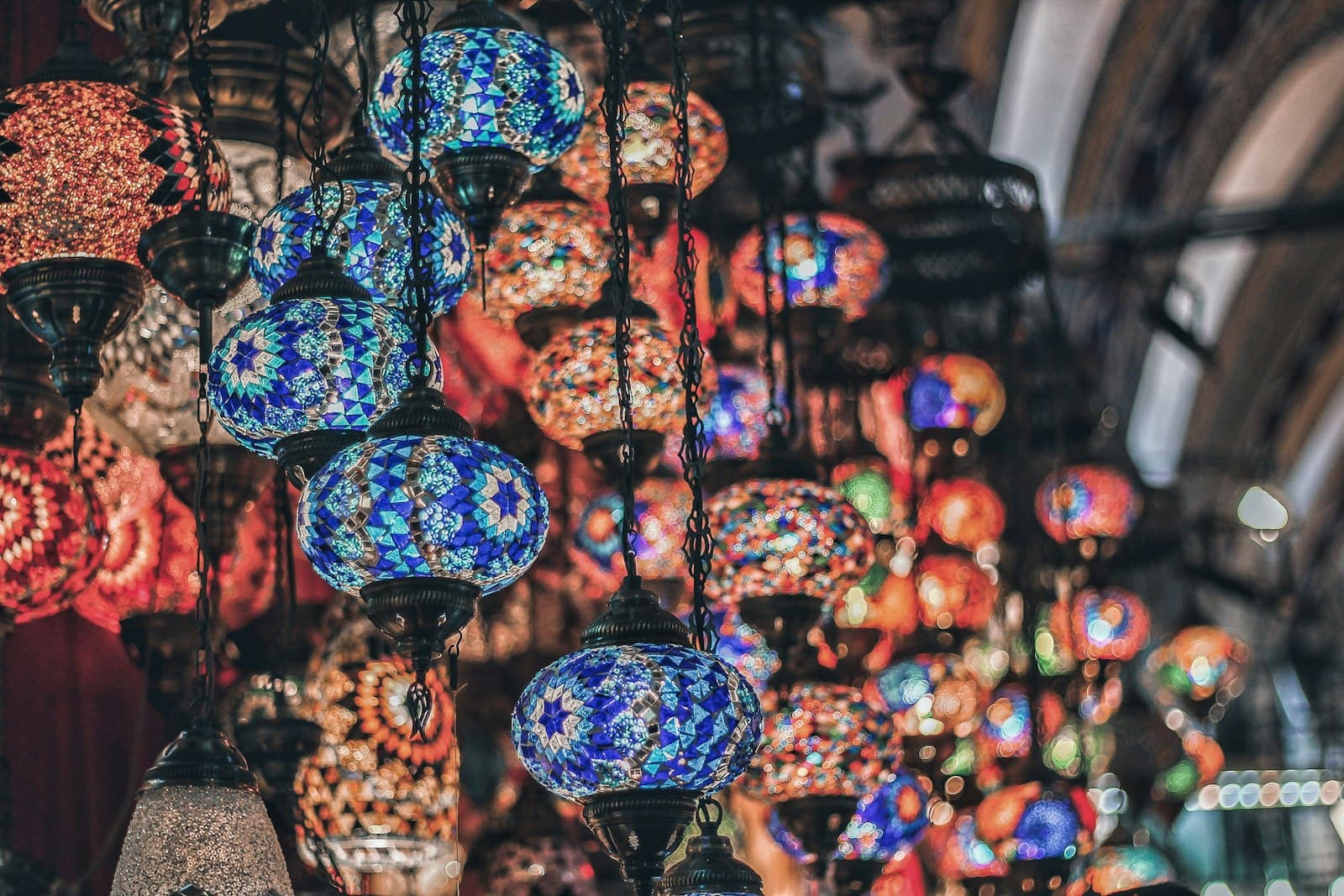
Grand Bazaar: The Markets That Paid for the Mosques
110 min · 3.5 km · moderate
More from Istanbul
Explore more at your own pace.
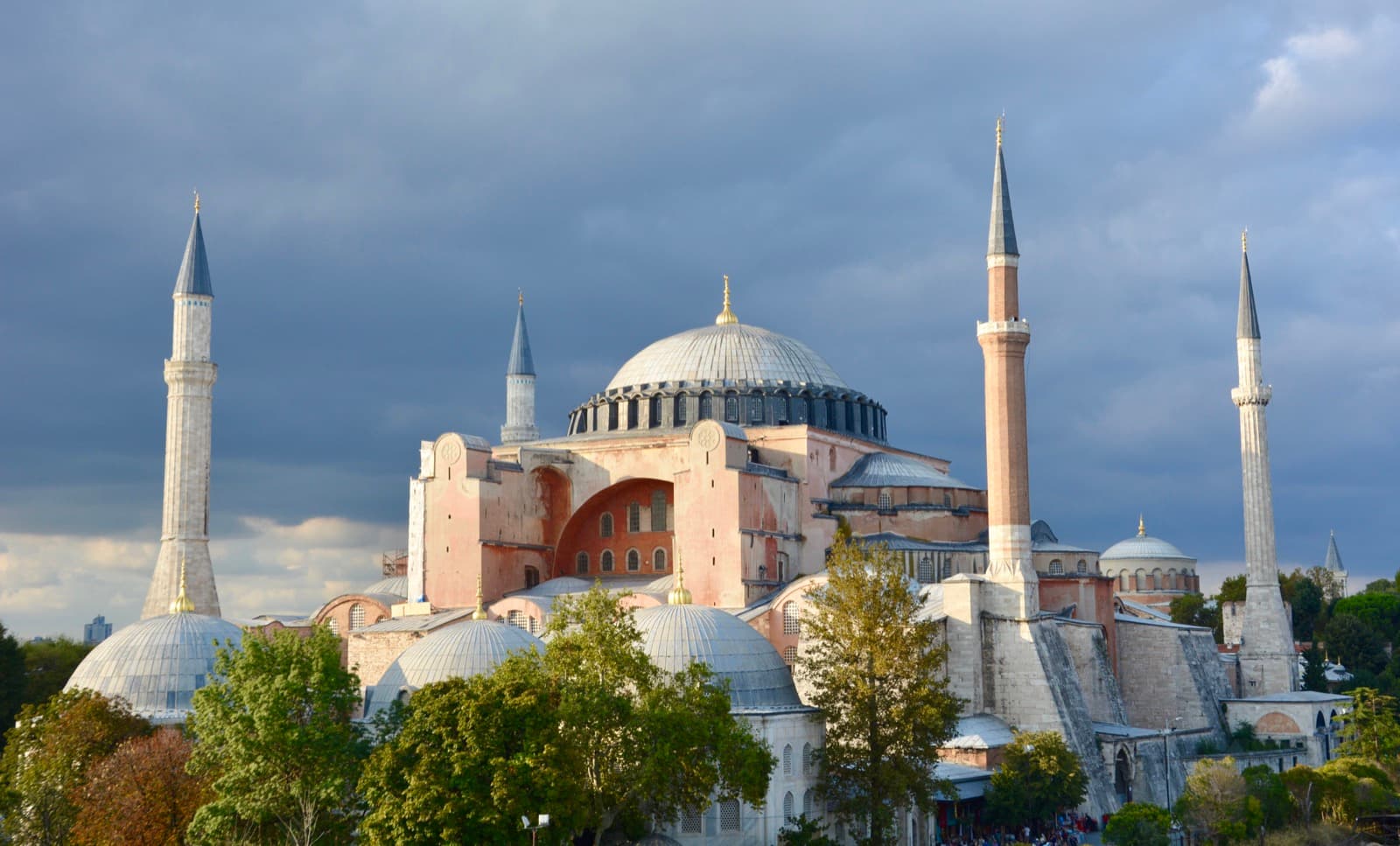
Istanbul: A City Written and Rewritten by Empires
Hagia Sophia's Four Lives: How One Building Teaches You to Read Istanbul
Saint Anthony of Padua and the Plural City of Galata and Pera
The Grand Bazaar Is an Engine: How Istanbul's Market Paid for Its Domes
Galata Tower: The Watchtower of a Foreign City Inside Istanbul