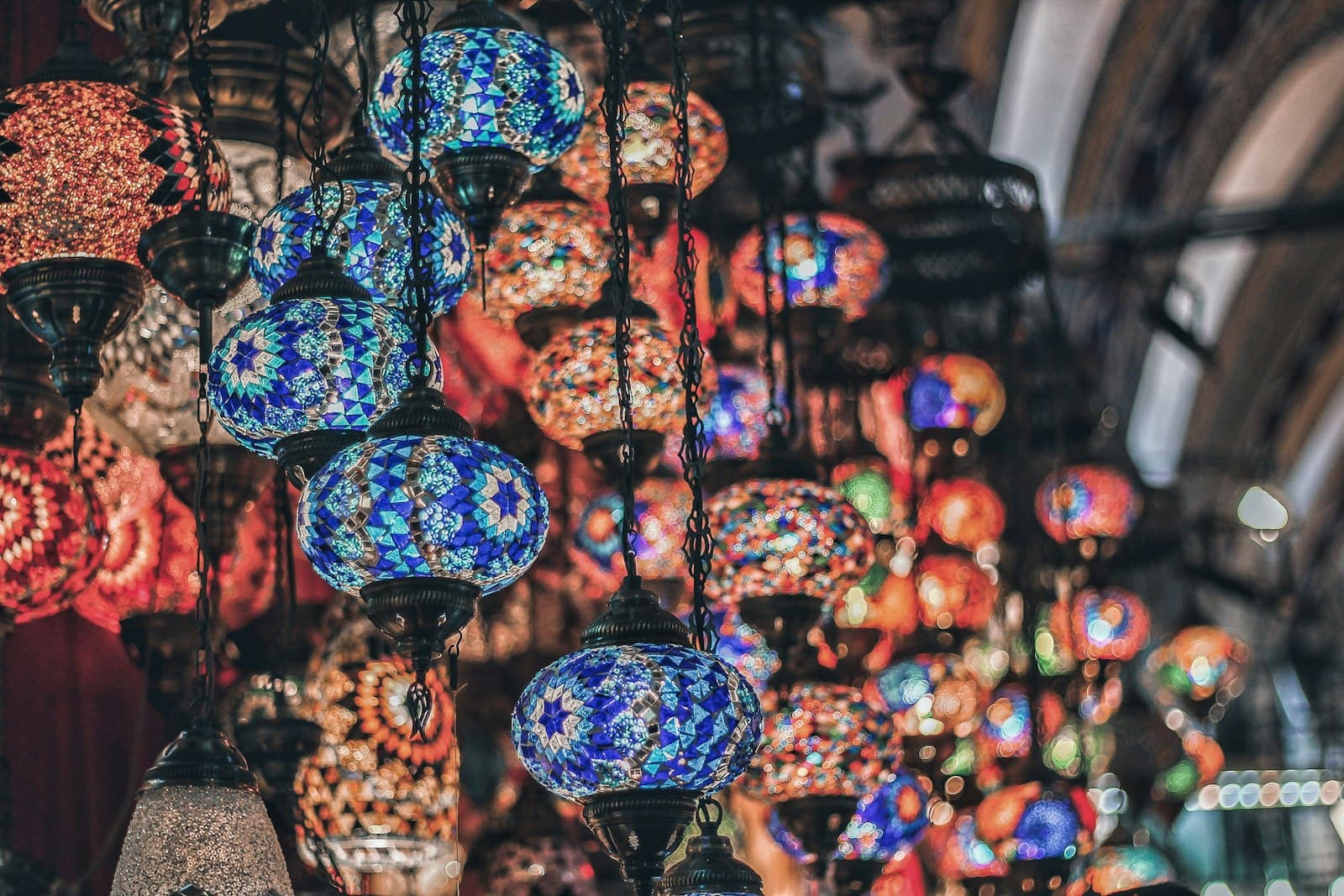
Walk from the Grand Bazaar's gates past Constantine's column, the Beyazit and Suleymaniye mosques and the street of the great hans, down to Rustem Pasha, the Spice Bazaar and the New Mosque on the Golden Horn.
Start · Nuruosmaniye Mosque: The Baroque Gate
DirectionsStops
- 1
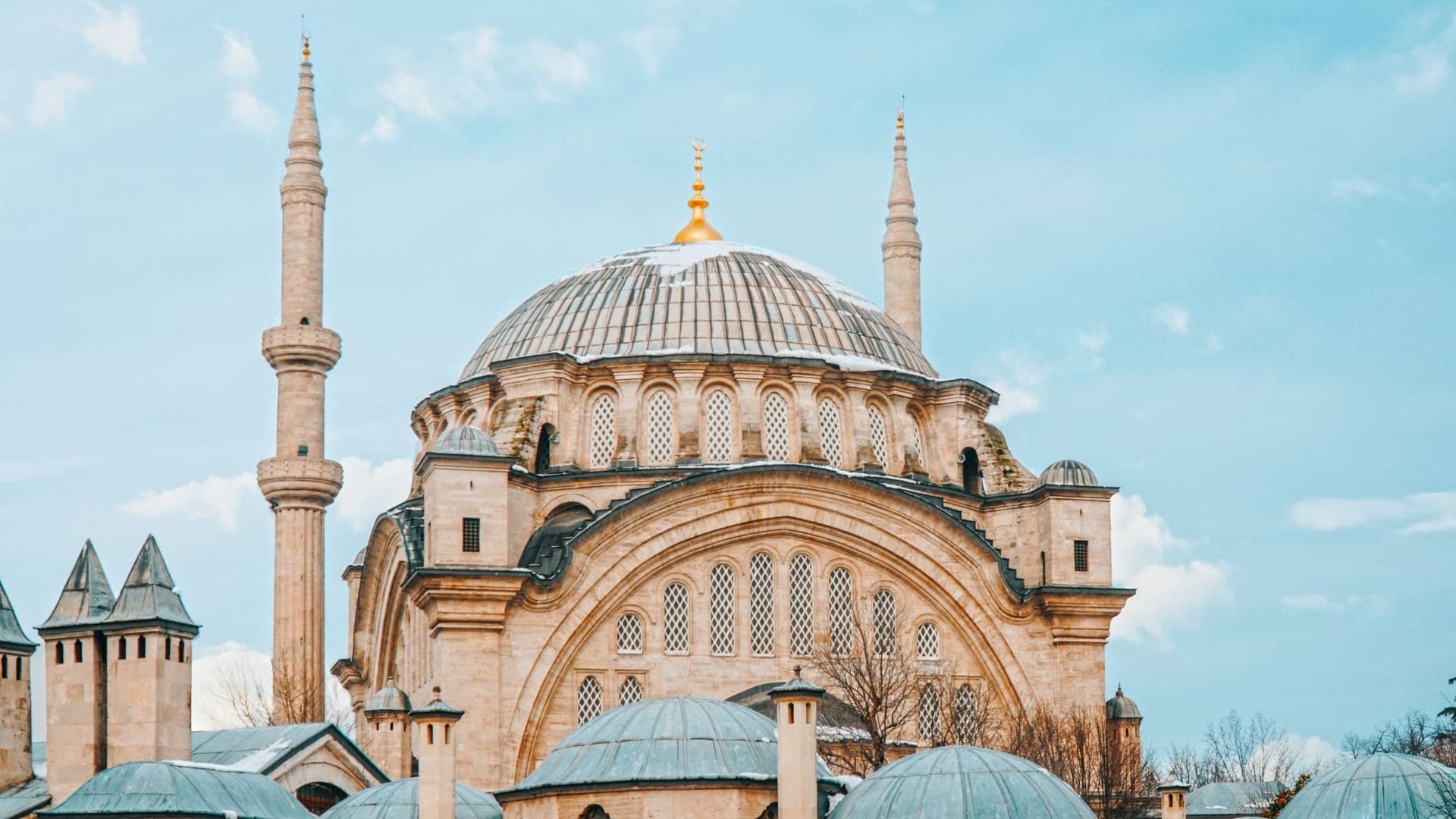
Nuruosmaniye Mosque: The Baroque Gate
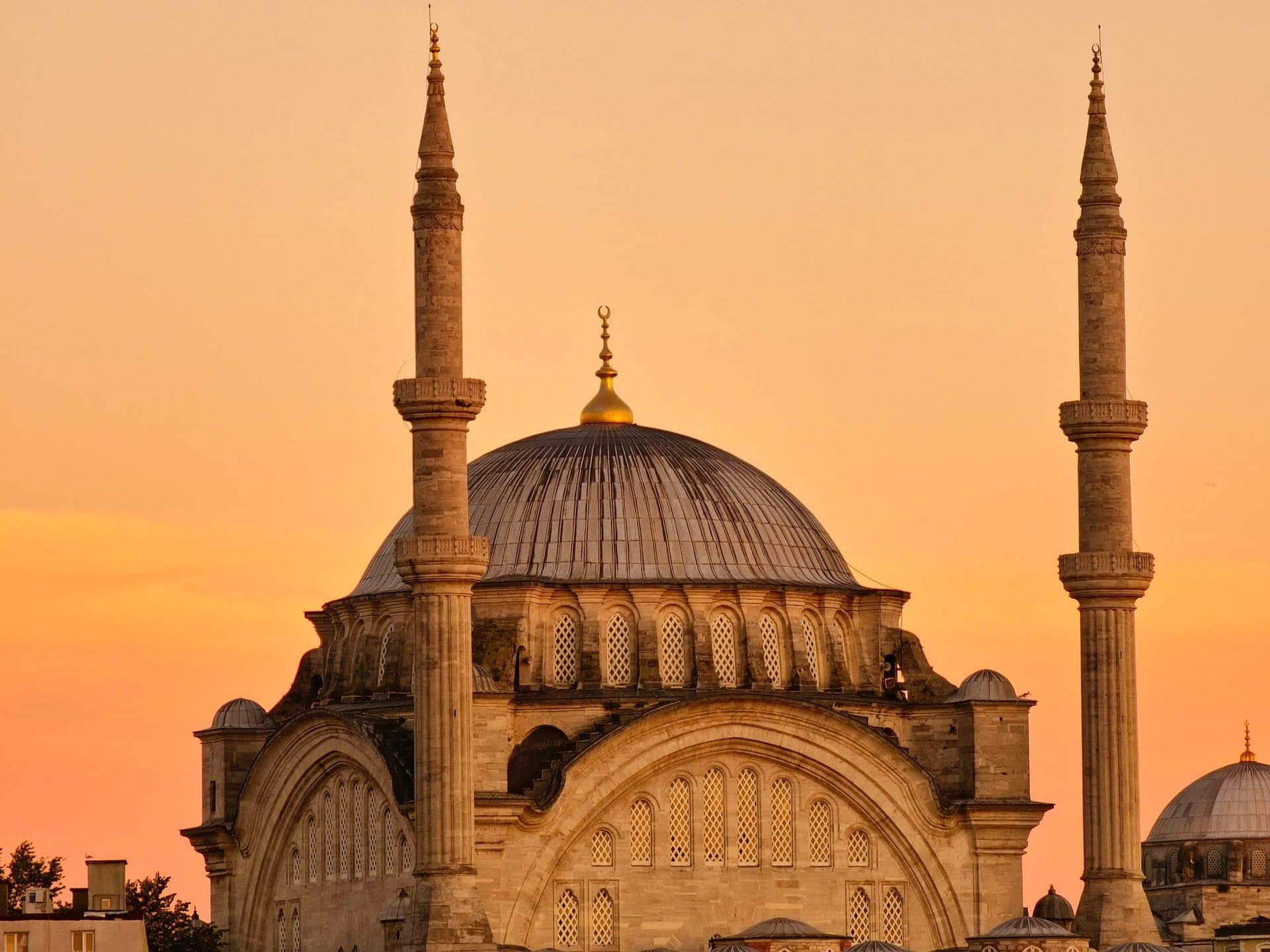
A sultan's late baroque mosque. A sultan named this baroque mosque the Light of Osman. Stone caps, not lead, tip its minarets, and the Grand Bazaar starts behind it.
- 2
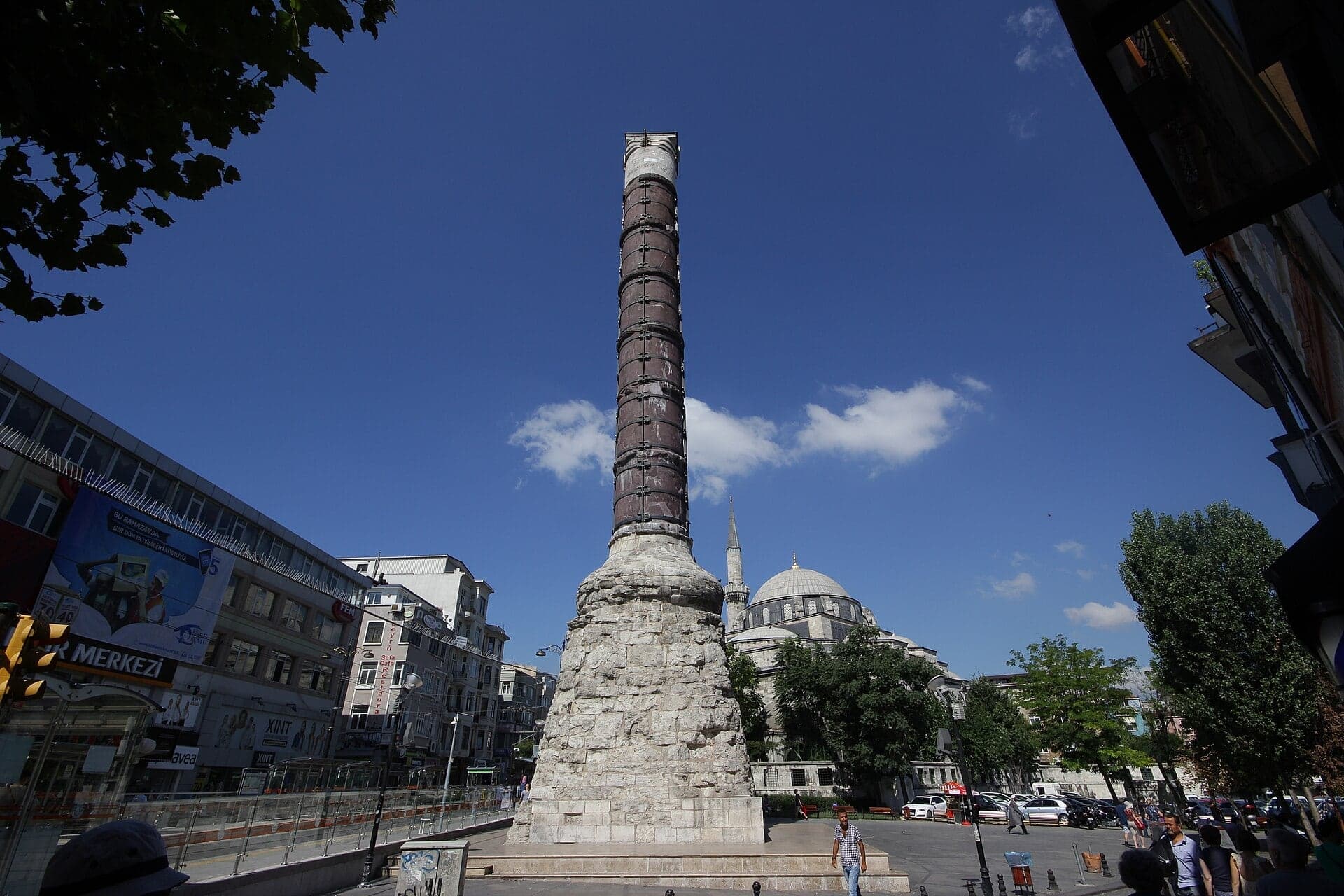
Column of Constantine: The Hooped Stone
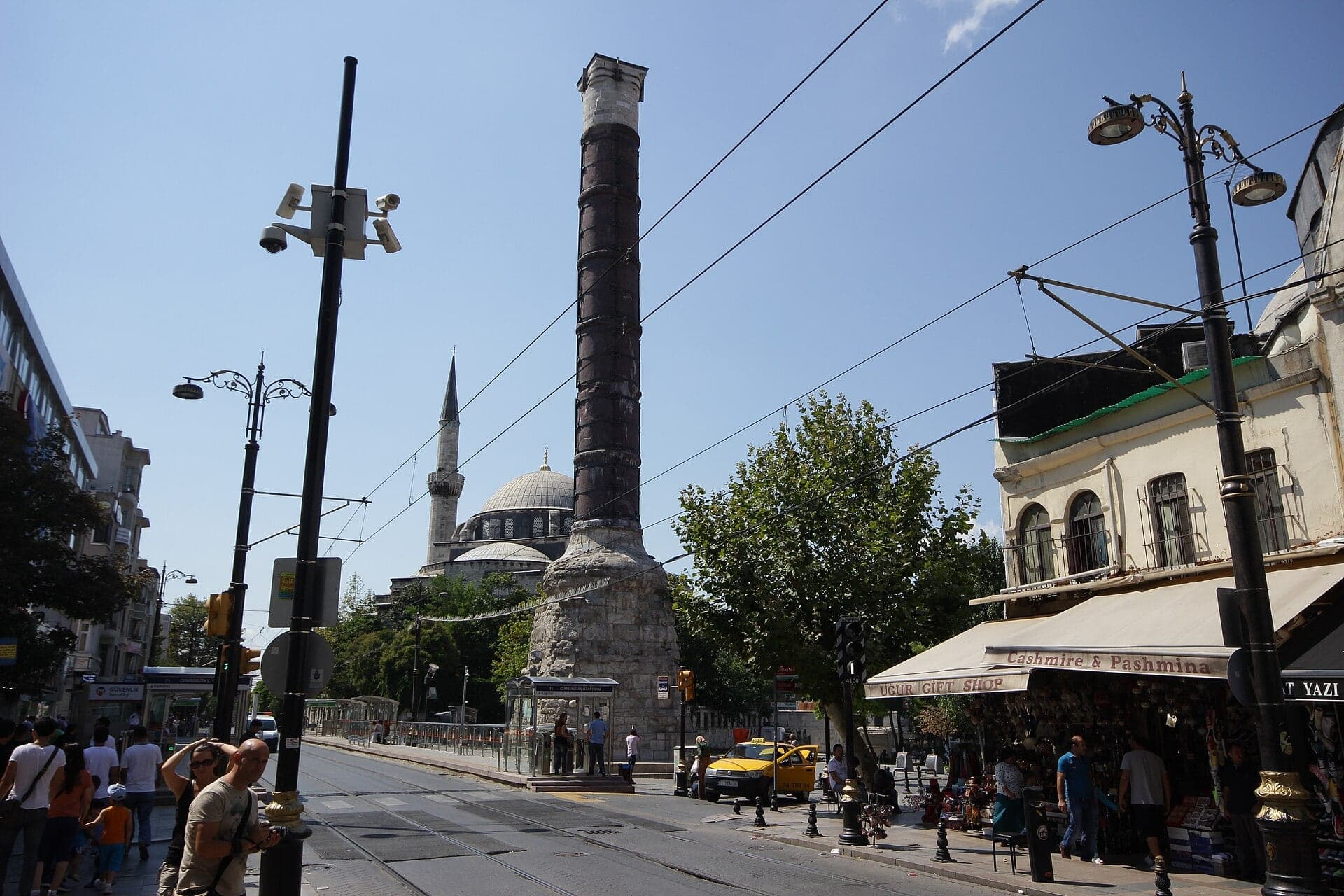
Constantine's column on his forum. Constantine's porphyry column still stands on his forum, bound in iron. A grand vizier's han, Vezir Han, hides just behind the street fronts.
- 3
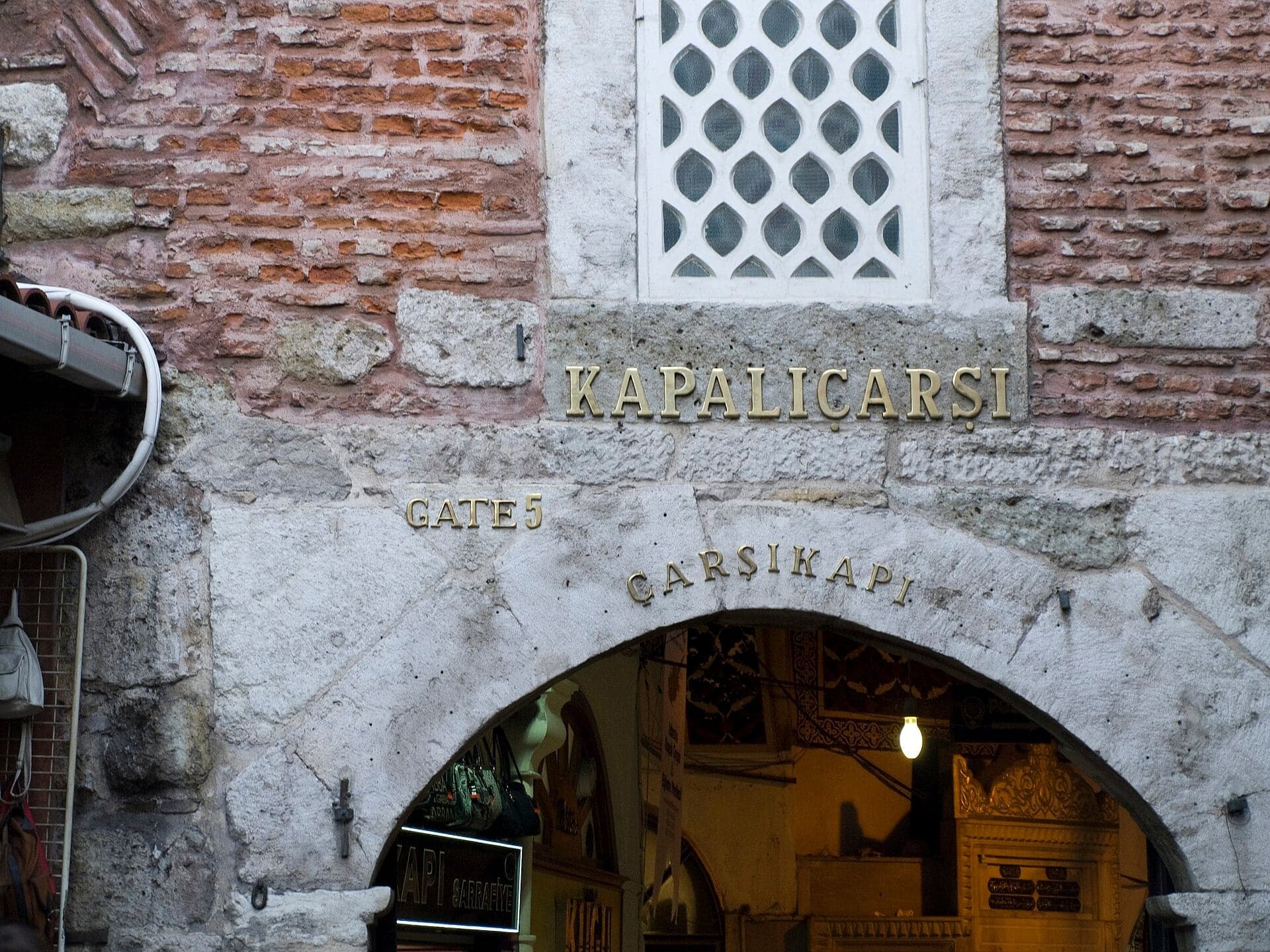
Carsikapi: The Gate on the Old Main Road
A bazaar gate on Divanyolu. A Grand Bazaar gate stands above the old main road. Grand viziers built their small charitable complexes along the way.
- 4
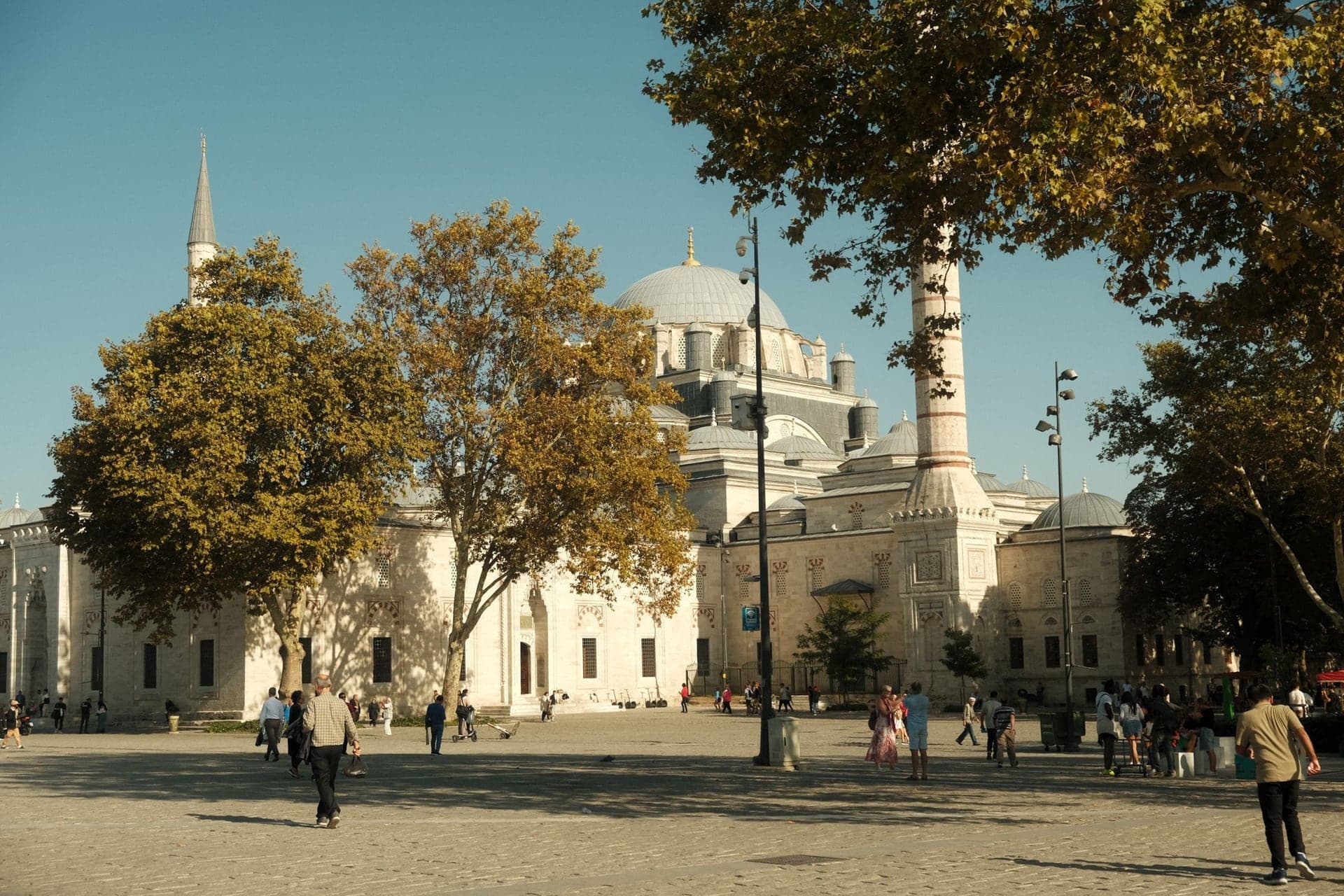
Beyazit Mosque: Half-Domes on a Byzantine Square
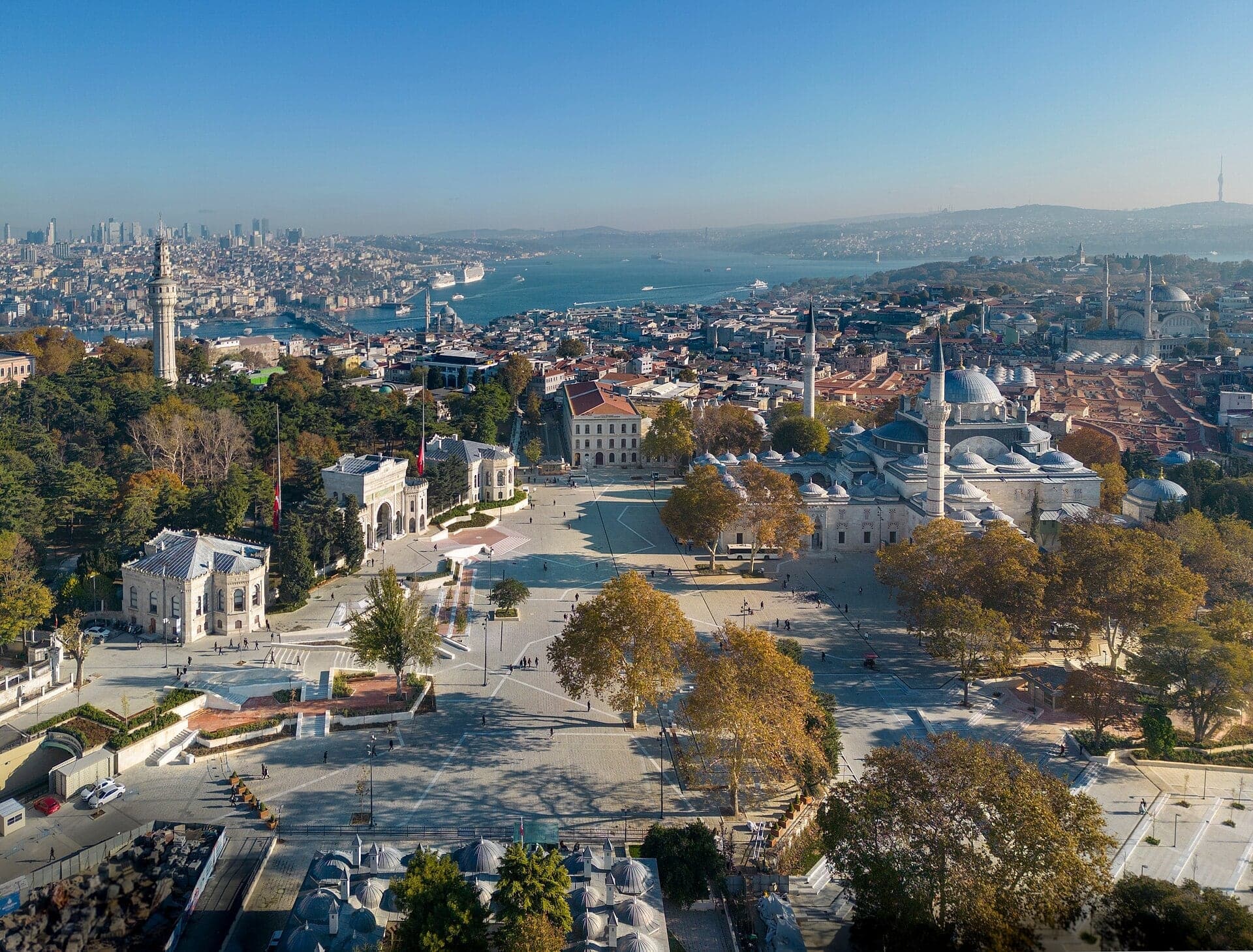
Bayezid's mosque on the square. Sultan Bayezid's mosque braces its dome with two half-domes. Beside it, a plain bazaar gate dates from the repairs after 1894.
- 5
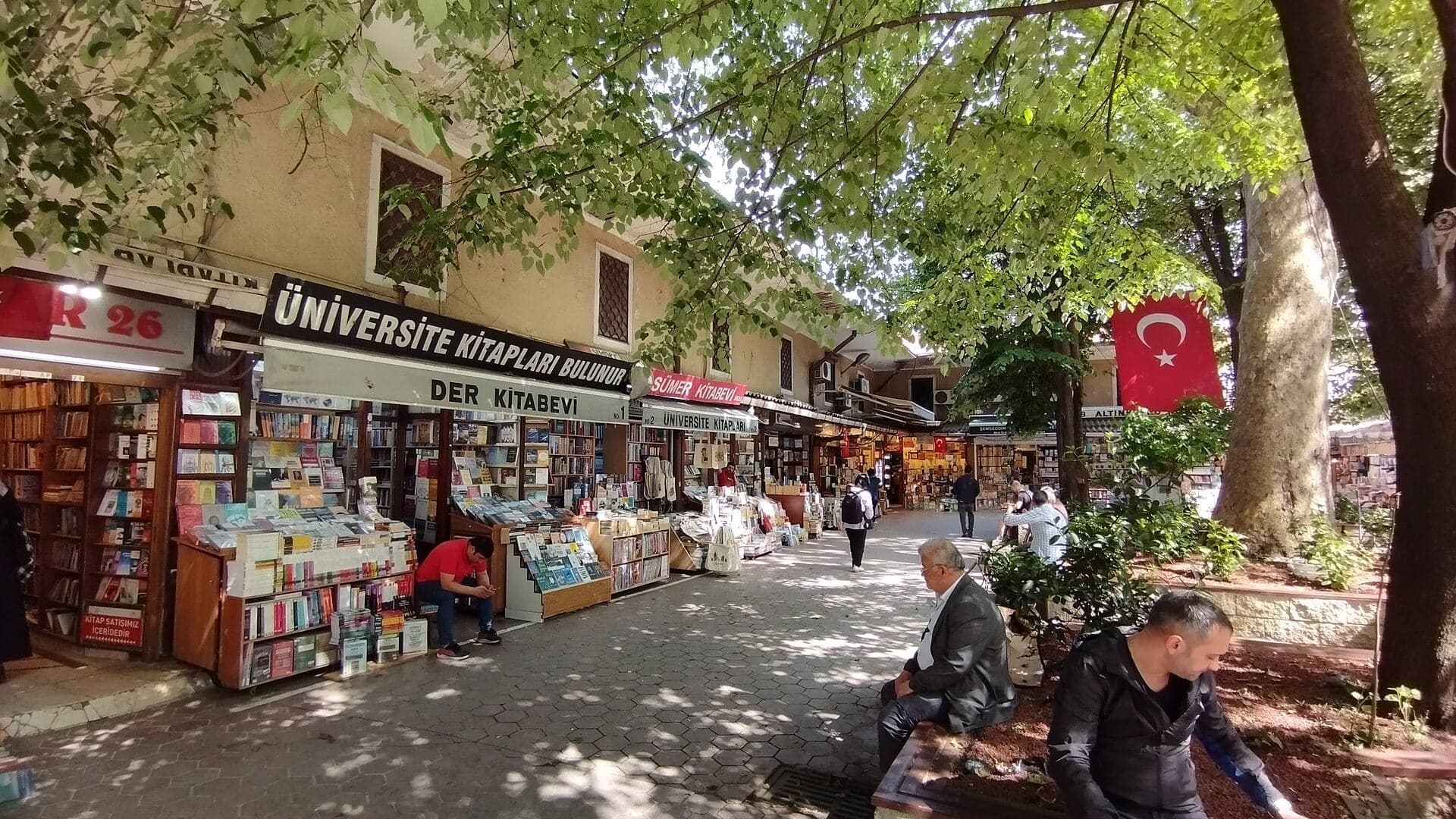
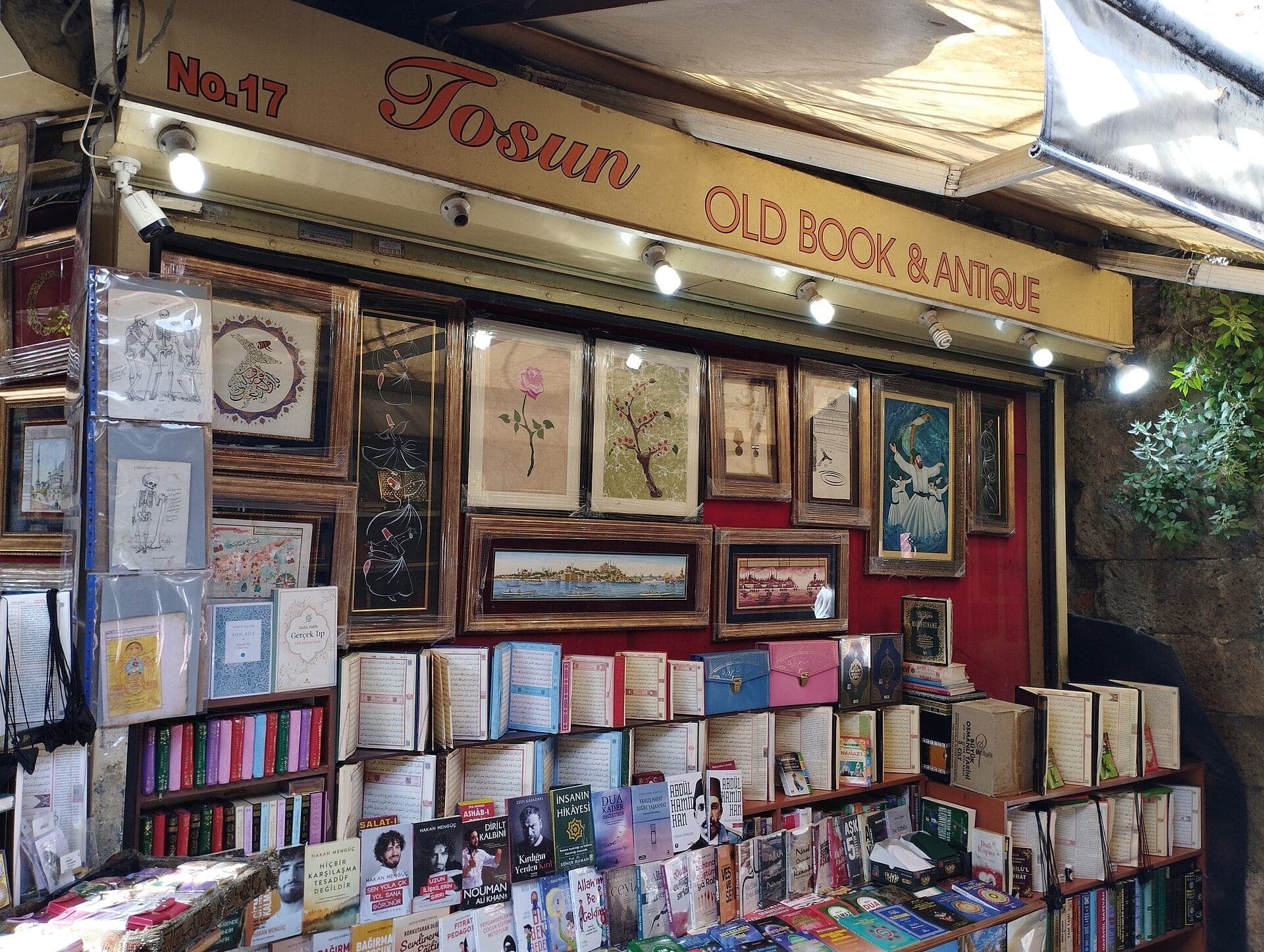
Sahaflar: The Old Book Market
The old book market by the bazaar. The city's old book market sits across from the bazaar's west wall. Beyond the library, out of sight, stands the War Ministry's gate.
- 6
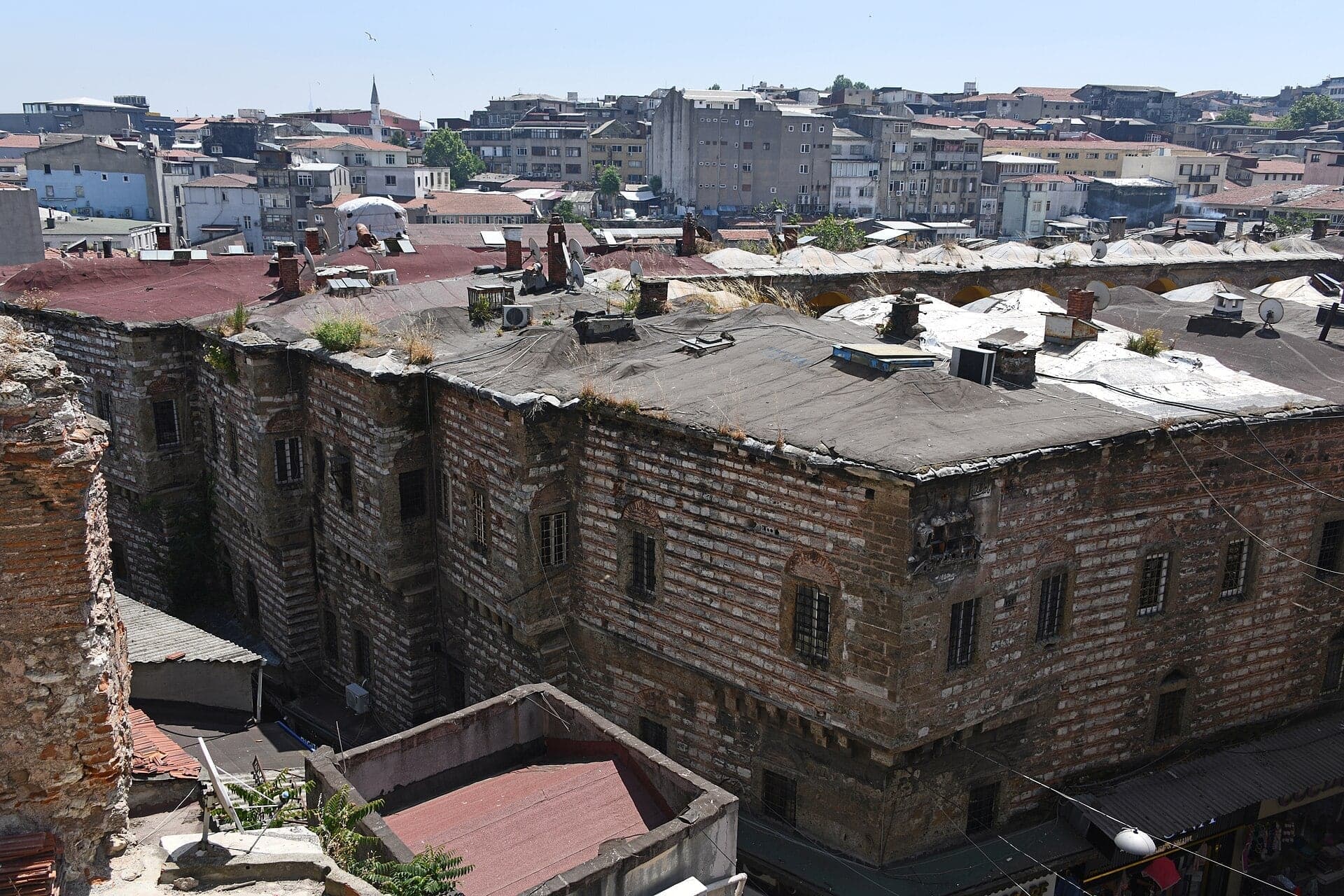
Cakmakcilar: The Street of the Great Hans
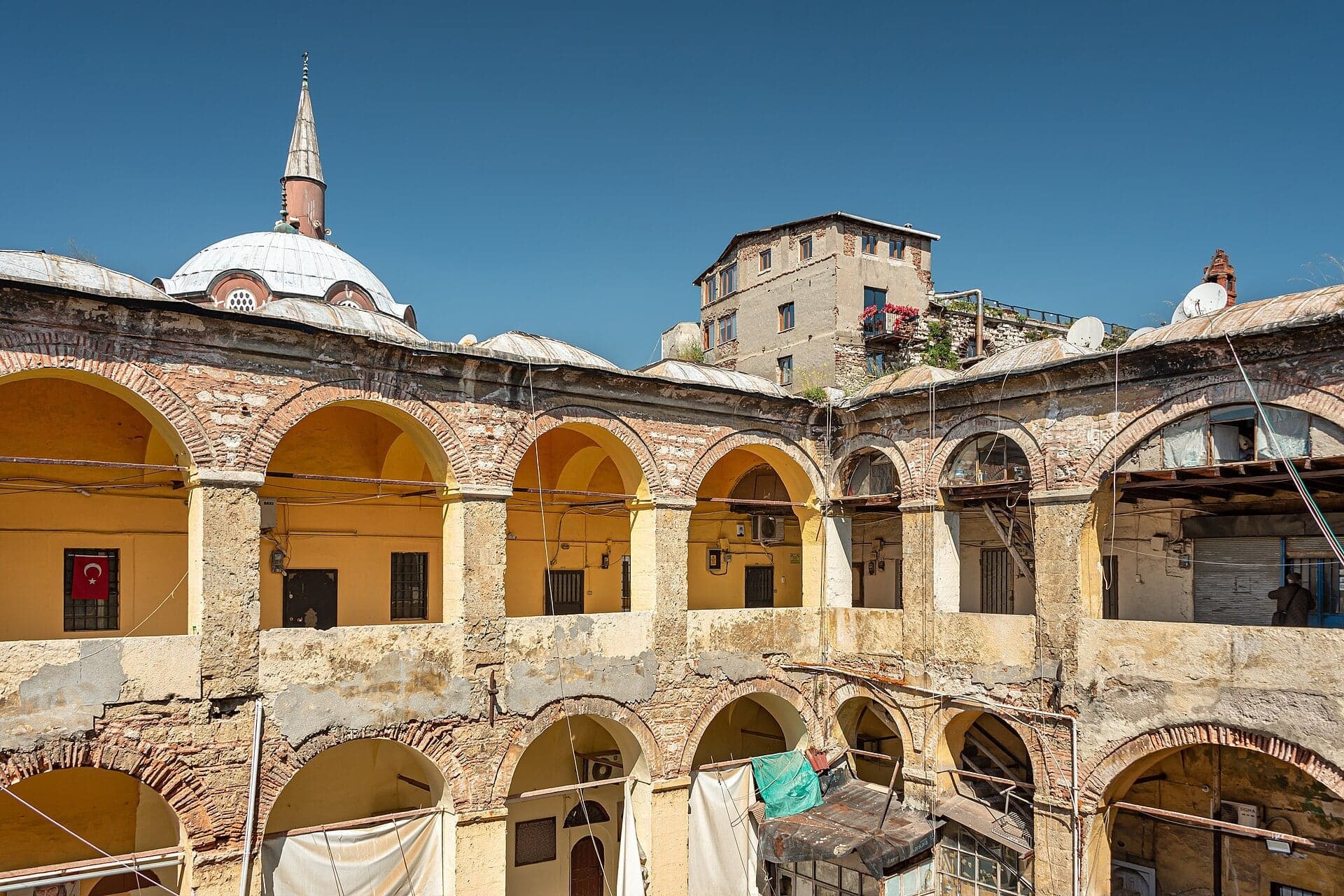
The street of the great hans. The street of the great hans drops toward the Golden Horn. Buyuk Valide Han and Buyuk Yeni Han line its slope.
- 7
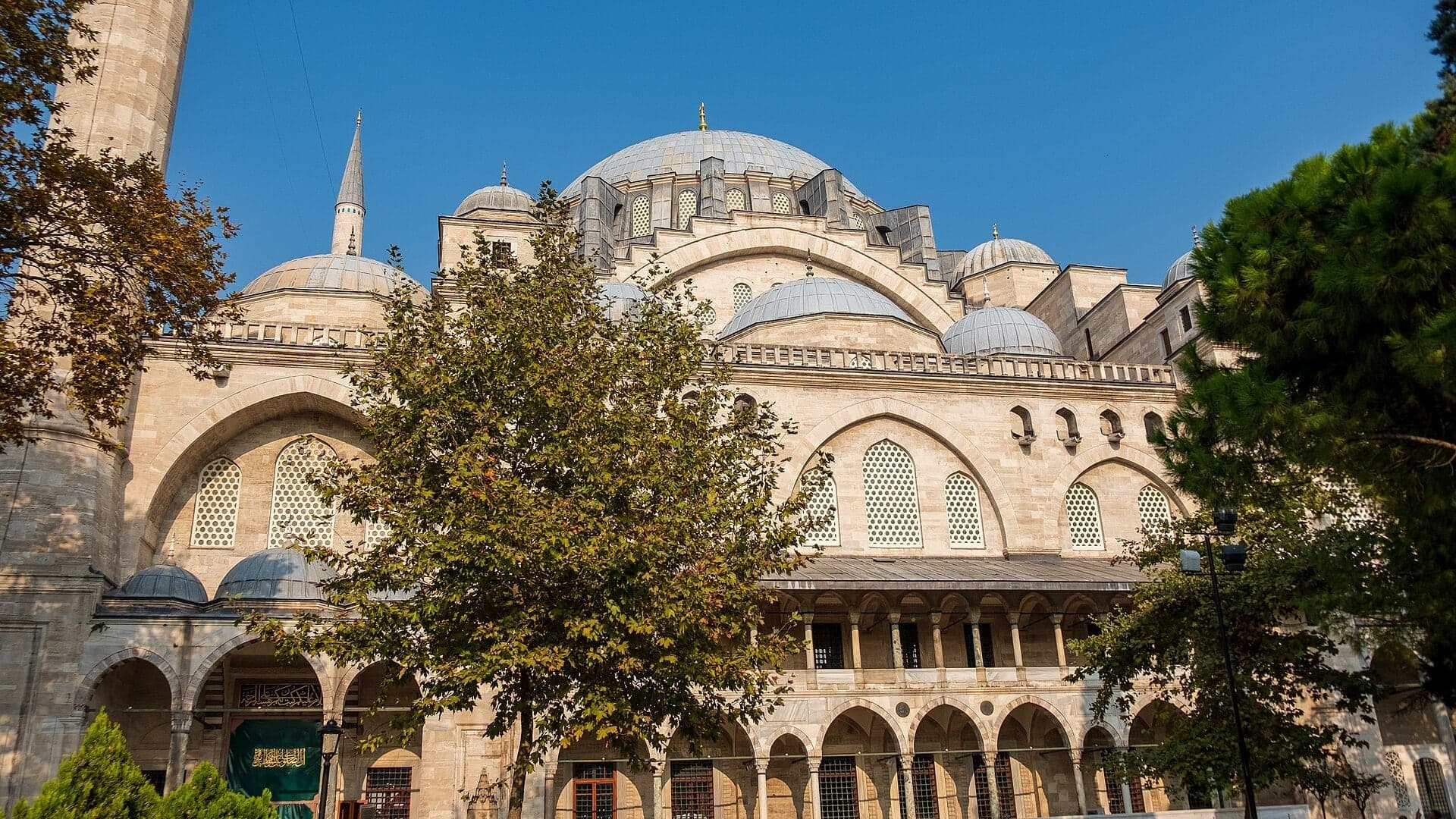
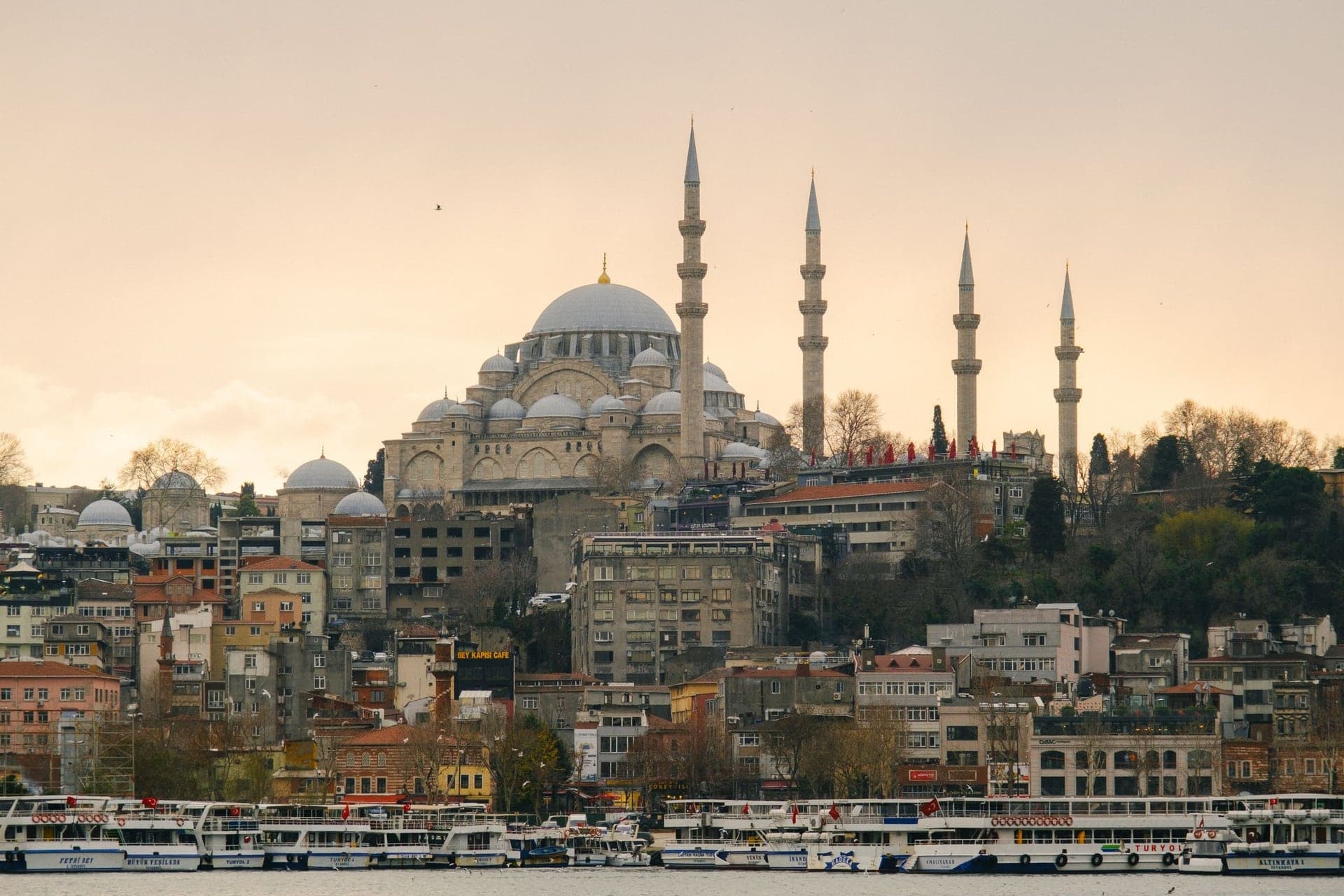
Suleymaniye Mosque: Sinan's Cascade of Domes
Sinan's great mosque from aside. Sinan's Suleymaniye Mosque shows its great side profile from here. Shops cut into its own slope helped pay for it.
- 8
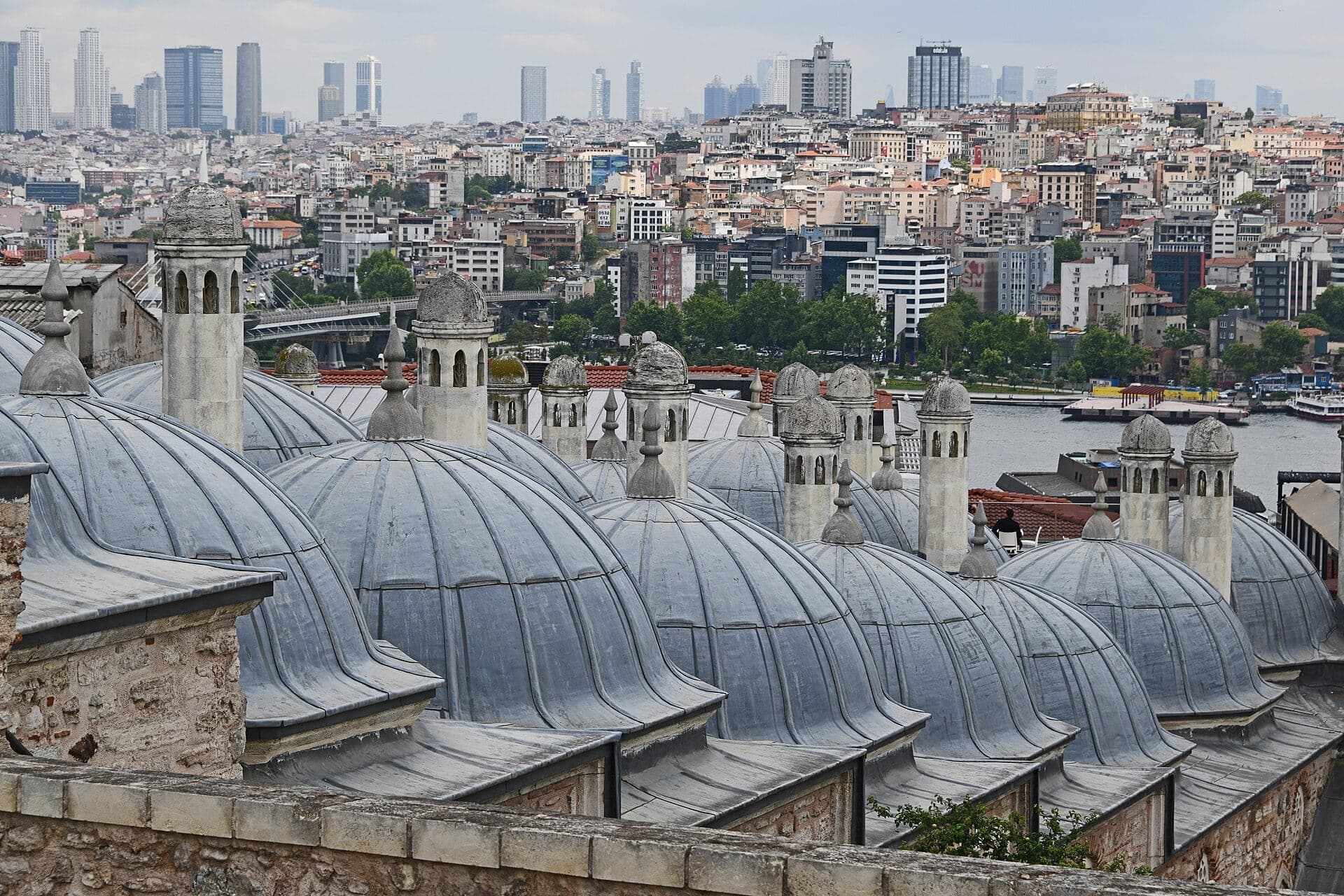
Suleymaniye Terrace: Sinan's View and Tomb
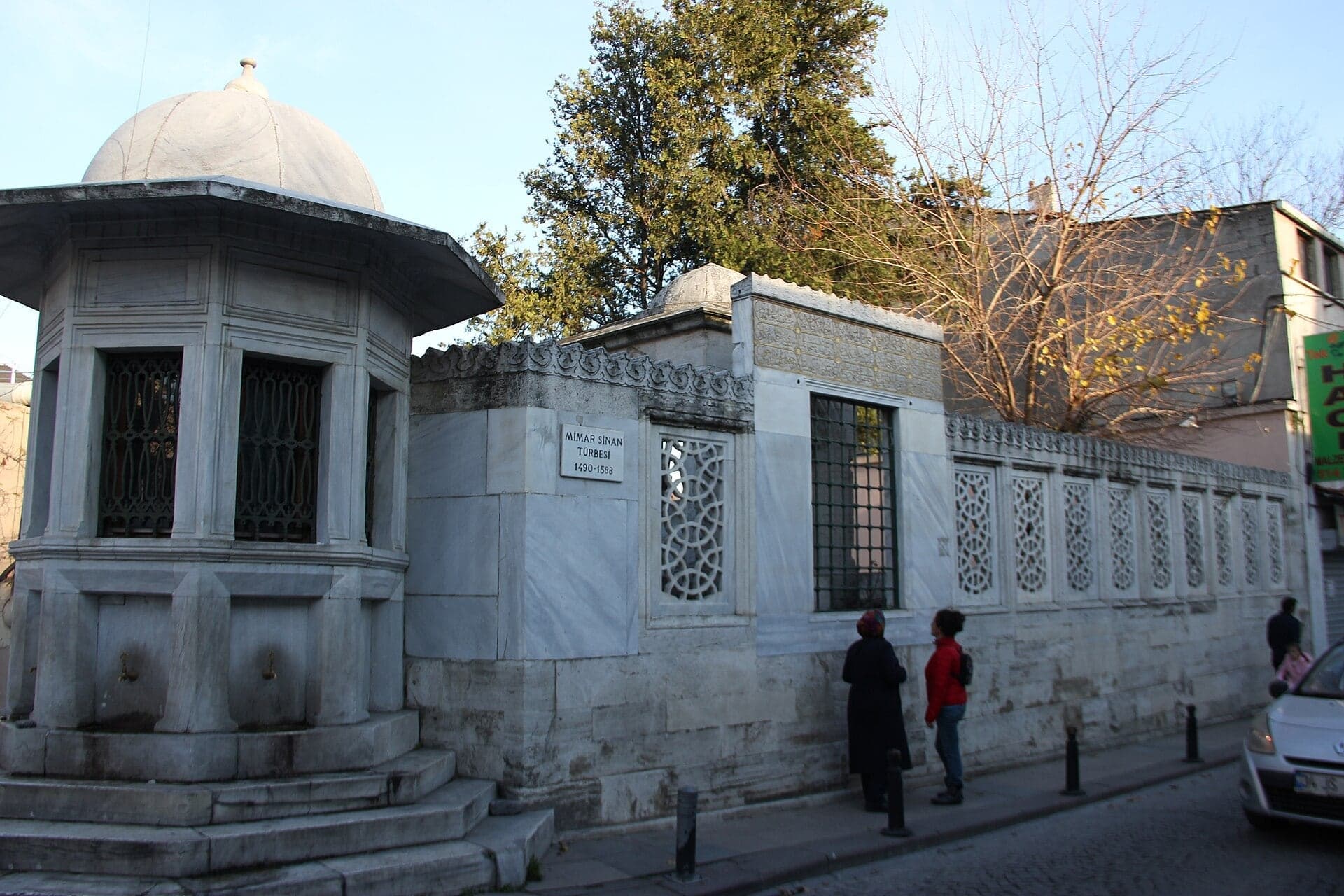
The Golden Horn from the terrace. The terrace looks out over the Golden Horn to Galata. Sinan lies in the small open tomb you pass just before it.
- 9
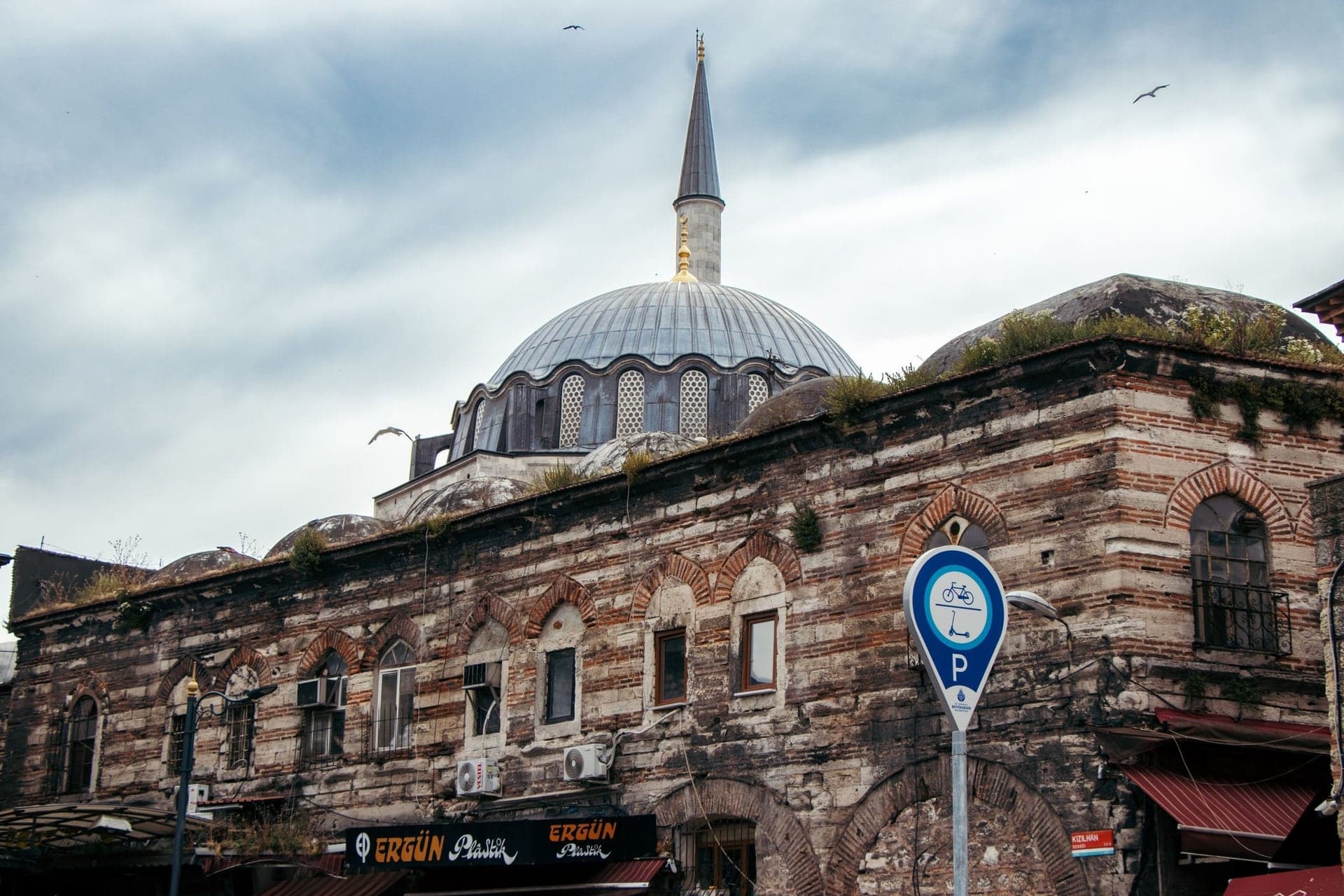
Rustem Pasha Mosque: On Top of Its Shops
A mosque raised over shops. Sinan raised this mosque on top of its own shops and storerooms. Iznik tiles fill the prayer hall upstairs.
- 10
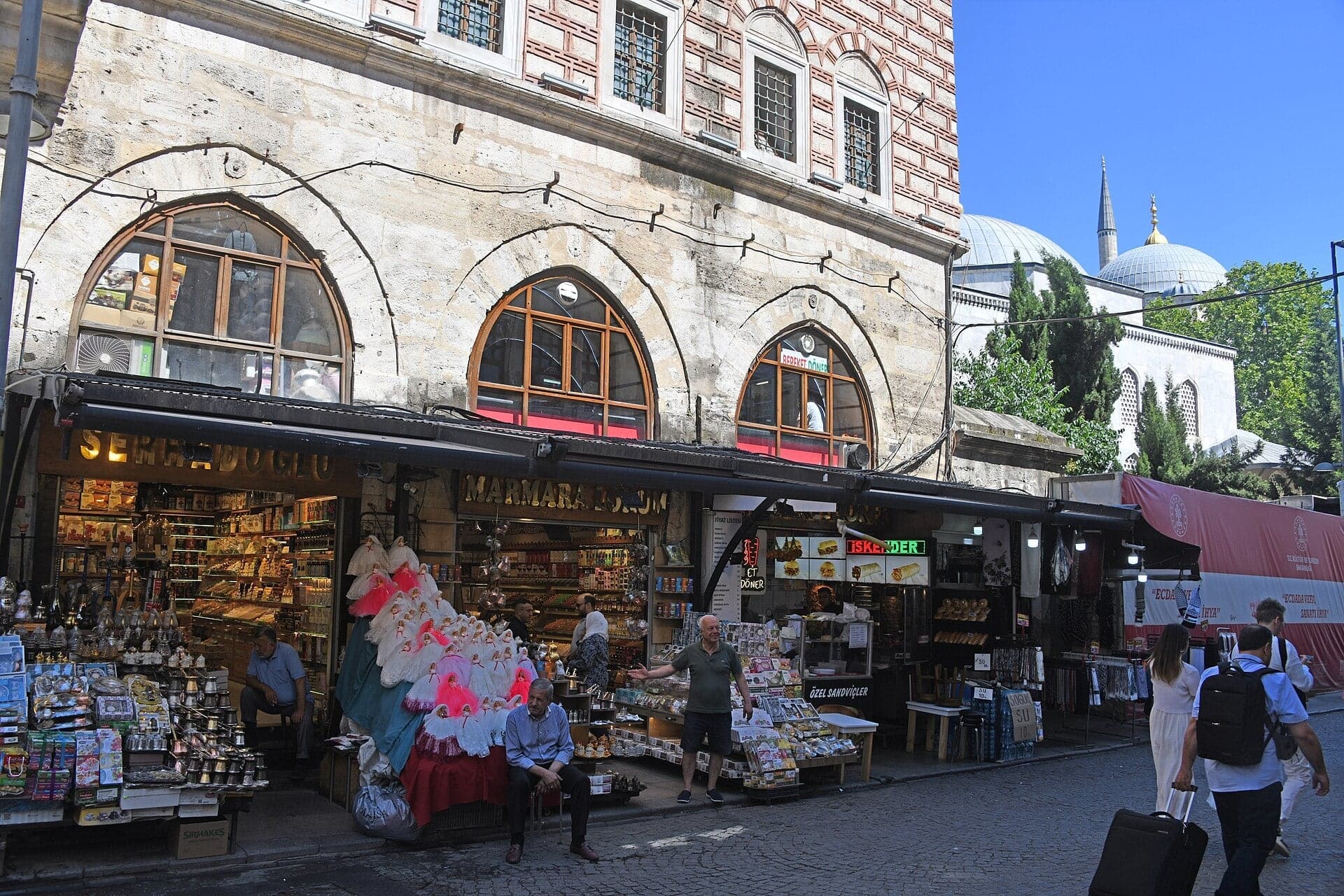
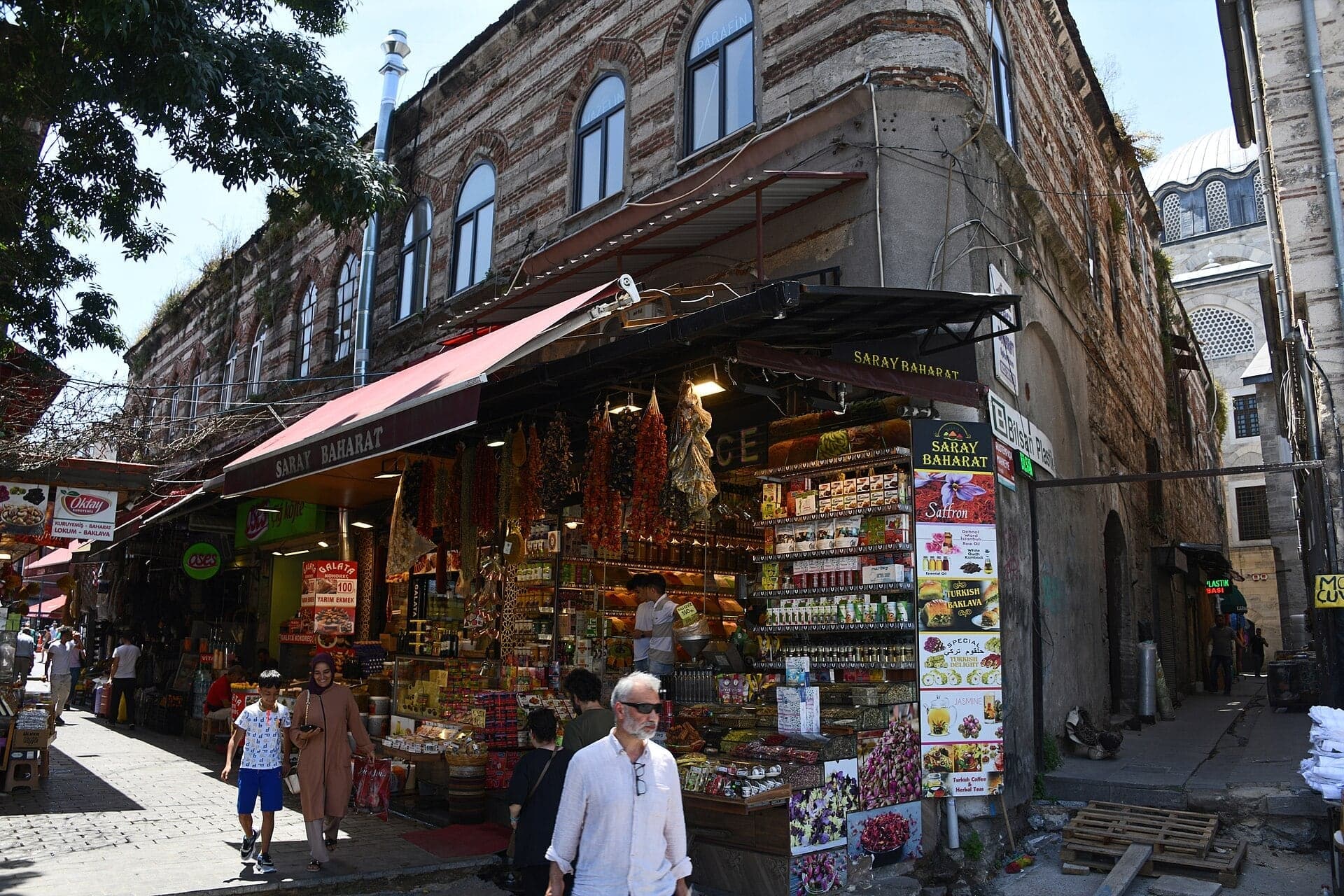
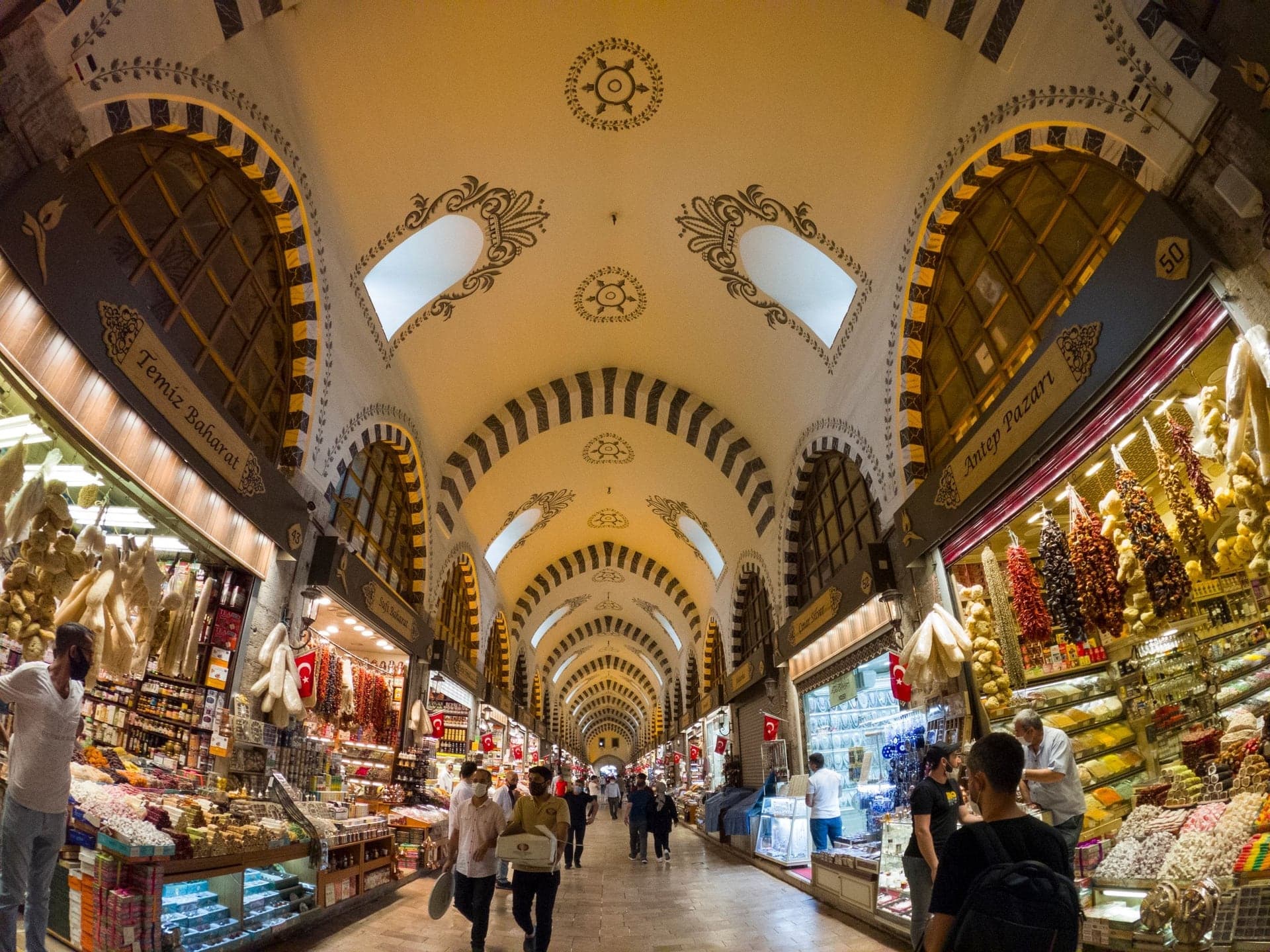
Spice Bazaar: The Market That Paid for a Mosque
Built to pay for a mosque. The Spice Bazaar was built to pay the New Mosque's bills. Its L-shaped plan has six gates and eighty-eight shops inside.
- 11
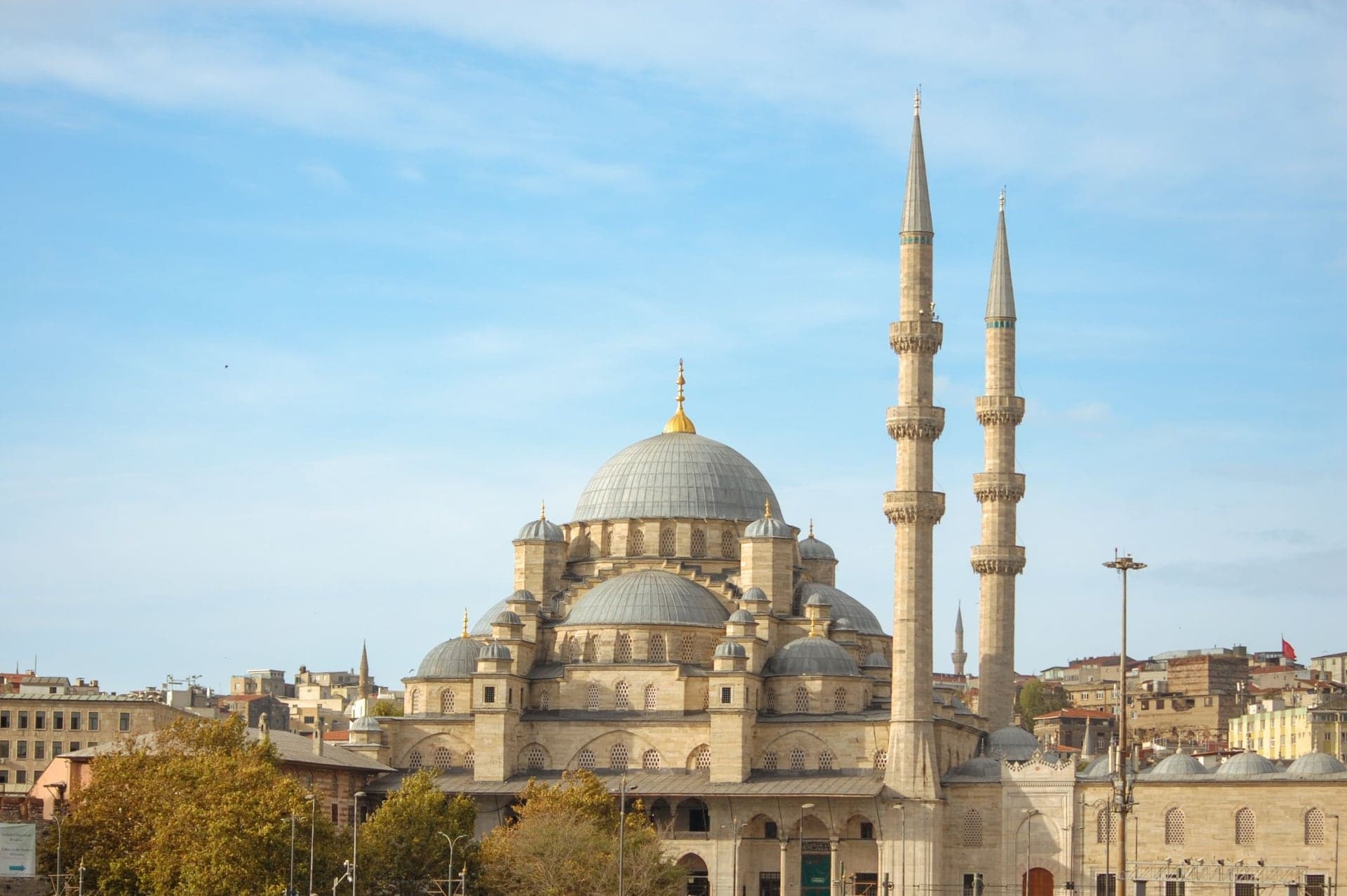
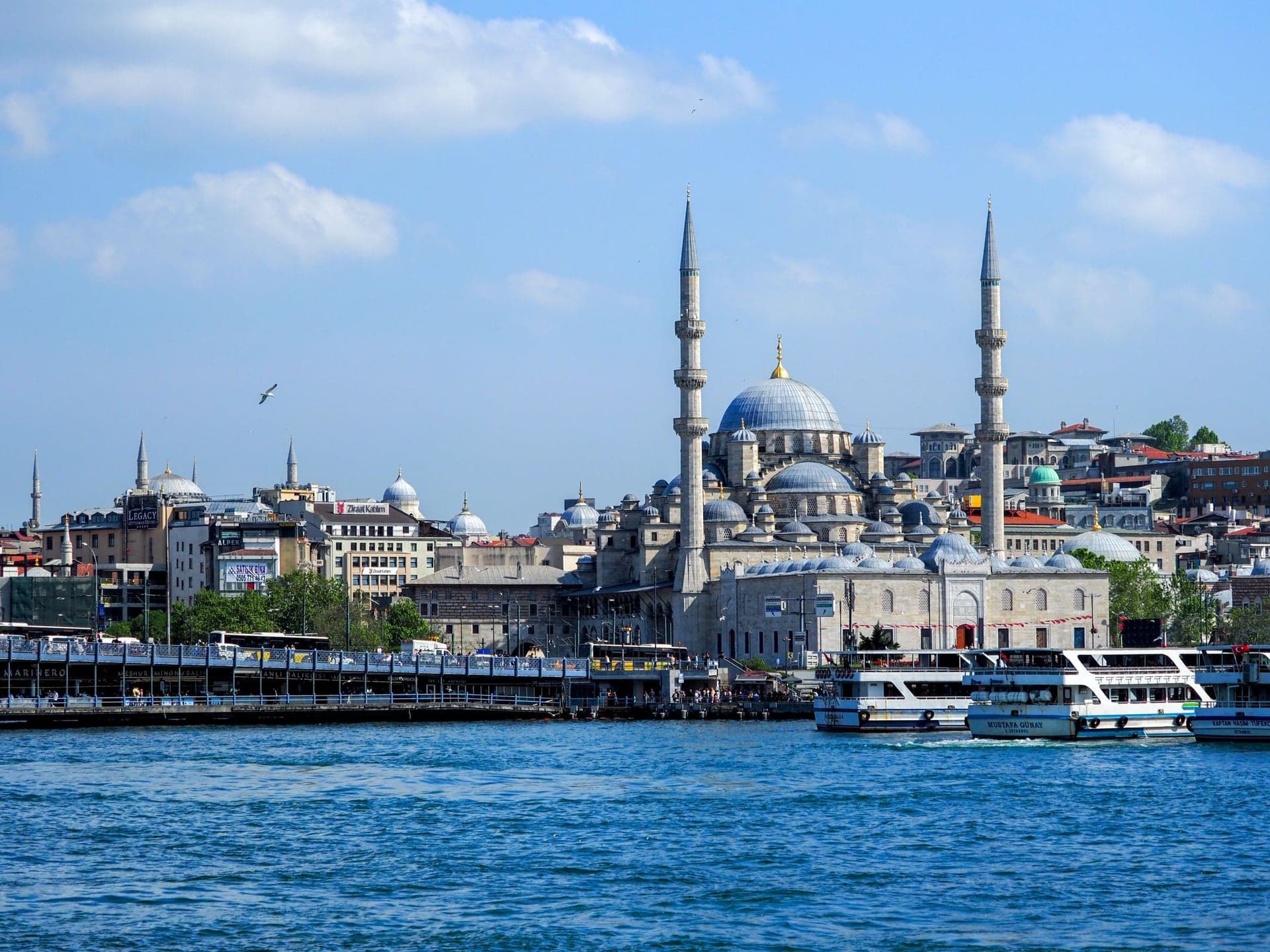
New Mosque: Two Queen Mothers by the Water
The New Mosque by the water. The New Mosque took two queen mothers and sixty-seven years. The walk ends here, by Eminonu's ferries and the Galata Bridge.
Details
Best Time to Visit
A weekday morning, Monday to Saturday, when the Grand Bazaar's gates are open and the han street is at work; start early, because the market lanes below Suleymaniye are packed by late morning and on Saturdays. Avoid Friday midday, when the mosques close for the main prayer, and finish in daylight: the Suleymaniye terrace has no published closing time. On Sundays the walk still works, but the bazaar gates and most shops are shut.
Pro Tips
- •Take the T1 tram to Cemberlitas: the Column of Constantine is beside the stop, and the start, the Nuruosmaniye Mosque's east gate, is a short walk north up Vezirhani Caddesi. T1 Beyazit-Kapalicarsi is the other close stop. The T1 line is sometimes split during security measures, so check Metro Istanbul before you go.
- •Grand Bazaar: open Monday to Saturday, 8:30 to 19:00, closed on Sundays and religious holidays, and expect it shut on national holidays too (next: Thursday 29 October 2026, Republic Day). Source: Ministry of Culture and Tourism. Checked 5 October 2026.
- •Spice Bazaar: open every day, Sundays included, about 8:00 to 19:30 by the bazaar's own site (other listings give shorter Sunday hours), and closed on some public holidays such as 1 January. Checked 5 October 2026.
- •Suleymaniye, Rustem Pasha and the New Mosque (and Nuruosmaniye and Beyazit) are free to visit outside prayer times. Prayer halls close to sightseers at each of the five daily prayers and for longer at Friday midday; times change every day (on 6 October 2026 Diyanet lists the midday prayer at 12:57 and the afternoon prayer at 16:10 in Istanbul). Checked 5 October 2026.
- •Mosque dress code: shoulders and knees covered for everyone, hair covered for women, no shorts or sleeveless tops, shoes off; scarves are usually lent at the door.
- •Rustem Pasha's prayer hall is upstairs, up one of its covered stairs; outside prayer times, the tiled porch alone is worth the climb.
- •The route passes Sinan's tomb on the corner where Sifahane Caddesi meets Fetva Yokusu and Mimar Sinan Caddesi, just before it enters the Suleymaniye precinct. It is an open pavilion, seen from the street whether or not its gate is open.
- •From the Galata Bridge, look back for Suleymaniye on its ridge.
Safety & Precautions
- •The route is not step-free: there are steps at Suleymaniye's south-east gate and a long stair on Fetva Yokusu, and Cakmakcilar, Uzuncarsi and Hasircilar are steep, crowded cobbled lanes with porters' carts. Give carts the right of way.
- •From the foot of Uzuncarsi up to Suleymaniye, about 340 m of the route walks against one-way traffic on lanes with no marked pavement: Havanci Sokagi, Fuatpasa Caddesi and, for the last 170 m, a narrow one-lane road along the mosque's outer wall. Keep to the side, the wall side at the end.
- •Three crossings have no lights: Vezirhani Caddesi near the start, Bakircilar Caddesi after the book market, and the two-way road at the foot of the Fetva Yokusu stair. Look both ways each time.
- •On Divanyolu the T1 tram runs beside the pavement: stay on the pavement and never cross the tracks.
- •Suleymaniye's outer precinct and terrace have no published gate hours. Walk it in daylight. If the gates are shut, you still pass Sinan's tomb on the street; from its corner, carry on down Fetva Yokusu to the long stair.
- •Buyuk Valide Han has been flagged by the city as structurally at risk (2019, with warnings to the owner up to 2023): see it from the street and do not go in. Neither han is part of the route.
- •Mosques: never go in during prayers, and expect the courtyards to fill at Friday midday.
- •The market lanes are crowded: keep bags closed and in front of you.
Travel advisory: Exercise Increased Caution (Level 2).
Gallery
Related Reading
Go deeper on what you'll see, hear, and walk through.
Overview
Best Self-Guided Walking Tours in Istanbul (2026)
3 min
Overview
Istanbul Travel Guide: Days, Transport, Season, Safety, Budget
8 min
Overview
One Day in Istanbul: A Walkable Morning-to-Evening Itinerary
8 min
Thematic
Best Culture Walking Tours in Istanbul (2026)
2 min
Thematic
Istanbul: A City Written and Rewritten by Empires
9 min
Companion
The Grand Bazaar Is an Engine: How Istanbul's Market Paid for Its Domes
8 min
Deep dive
Suleymaniye Mosque: Why Sinan's Great Complex Was Built to Pay Its Way
7 min
Read
What to Eat in Istanbul: Dishes, Origins, and How to Order
7 min
Read the walk
The full story of Grand Bazaar: The Markets That Paid for the Mosques, in words. Prefer to listen? Play it narrated, from home or on location.
Introduction
Istanbul, in Turkey, rises from the water in hills, and on its old peninsula the city's markets and its great mosques grew up side by side. This walk starts high on the ridge by the Grand Bazaar and works its way down to the Golden Horn, the harbor at the foot of the old city.
Over eleven stops and about three and a half kilometres, a little over two miles, it follows the bazaar's outside edge gate by gate, passes an emperor's column and a sultan's mosque on a Byzantine square, looks down the street of the great merchant inns, circles the Suleymaniye Mosque and drops through the market lanes to the Spice Bazaar and the waterfront at Eminonu. Allow a little under two hours. The first half keeps to the ridge, one climb brings you up to Suleymaniye, and from there it is all downhill, with steep cobbles and a long stair. The covered markets are seen from outside, so it works on Sundays too.
Three names come back along the way. Sinan, the great architect of the fifteen hundreds, built two of the mosques you will see. Kosem and Turhan, two queen mothers of the sixteen hundreds, built a great merchants' inn and finished the mosque by the water.
And watch for shops. None of these mosques stood alone: shops, inns and markets were built with each one, and their rents paid its way.
1. Nuruosmaniye Mosque: The Baroque Gate
Welcome to the Grand Bazaar quarter, and to the Nuruosmaniye Mosque. Across the street, a stone gateway opens in the precinct wall, and over the wall rises one great dome on its drum, with a slim minaret beside it.
One sultan began this mosque in the late seventeen forties, and his brother finished it and opened it in seventeen fifty-five. He called it Nuruosmaniye, the Light of Osman: his own name, and the name of his dynasty, set on the skyline.
It was something new. Apart from its basic shape, nearly every detail carries the marks of European baroque, and it is often called the city's first baroque mosque. On the far side of the mosque, out of sight from here, the courtyard is a half circle, the first courtyard of that shape in Ottoman building. The dome is about twenty-five and a half metres across, carried on four great arches.
Now look at the tip of the minaret. It ends in a pointed cap of stone. When the mosque was new, its caps were lead, like the gray points you will see on other mosques along this walk. The stone caps replaced them in the late eighteen hundreds.
The mosque and its courtyard sit up on a raised terrace, and under the terrace is a vaulted basement that may have been meant as a market. It was never used. But shops were part of the plan all the same, and that is the habit to watch for today. A mosque like this came with an endowment, and the endowment built shops, inns and markets whose rents kept the mosque and its charities running.
On the far side of the courtyard, a gate leads straight into the Grand Bazaar. The walk stays outside the covered market and meets it gate by gate.
Follow the route down to the main road. Next, an emperor's column, bound in iron.
2. Column of Constantine: The Hooped Stone
Walk on to the tall dark column at the edge of the square, and stop near it.
This is the Column of Constantine. When the emperor Constantine made this city his new capital, he laid out an oval forum in the middle of it, on the city's main road, and at its center he raised this column: drums of red porphyry, a hard purple-red stone brought here from elsewhere, with his own bronze statue on top, shown as the sun god. The statue is long gone, and the top you see is later masonry. This square was his forum.
Look at the joints between the drums. Fires scarred the stone over the centuries, and iron hoops were clamped round it to hold it together. The hoops gave the column its Turkish name, Cemberlitas, the hooped stone, and the tram stop beside it carries the same name.
The second thing here is a han, the first of many on this walk. A han is a merchants' building: shops along the street, a big gate, and behind it a courtyard ringed with arcades, with rooms over storerooms, and stables. This one, Vezir Han, is hidden behind the street-front buildings nearby. Its gate opens onto Vezirhani Caddesi, the street named after it, which you came down beside on the way to the column. Its two stories of stone and brick wrap two courtyards, the larger about seventy metres long, ringed by pointed brick arches on square stone piers, with a hearth in every upstairs room. A grand vizier built it before sixteen seventy-six and added it to the charitable complex his father had founded. It is a working building today, so it is seen from the street.
Follow the route along the main road, on this side of the tram tracks. Next, one of the bazaar's gates.
3. Carsikapi: The Gate on the Old Main Road
Walk on to the foot of the street that climbs toward the bazaar, and stop there.
The road you have just walked is the old Divanyolu, and it follows the line of the city's main road from Constantine's day, the one that ran past his forum. Grand viziers built small charitable complexes along it. You passed one on the way: behind a high wall with iron-barred windows, a college and a tomb from the fifteen nineties under lead-covered domes, with an eight-sided fountain kiosk on its corner, screened by cast-iron grilles in a honeycomb pattern. Another grand vizier added a mosque, a college and a library at this end of the road, between seventeen oh seven and seventeen oh nine. Each was an endowment, with its own income and its own good works.
Now look up the street ahead. At the top is Carsikapi, the Market Gate, one of the Grand Bazaar's gates.
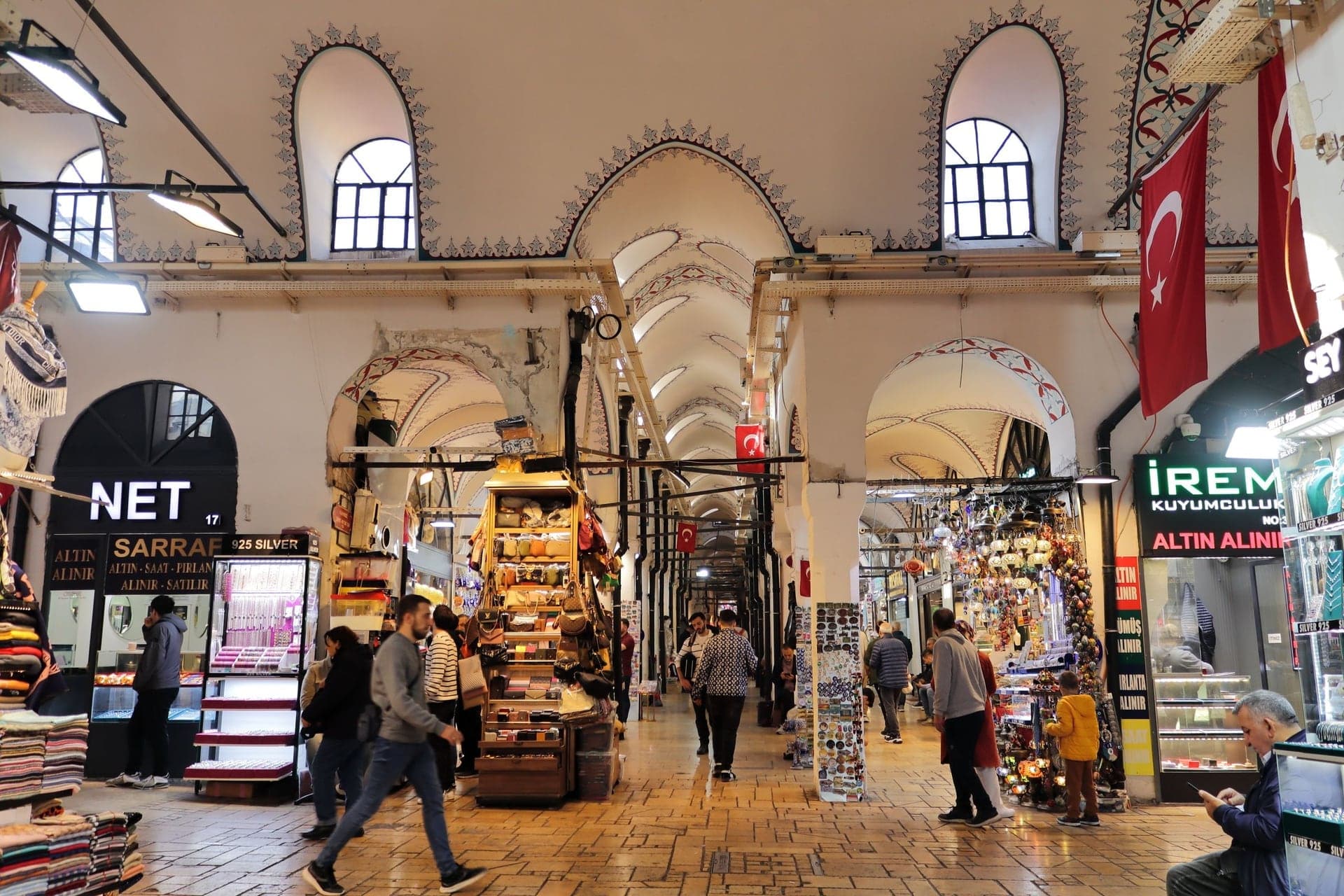
The bazaar did not start as a maze. Right after the conquest, the conquering sultan built a bedesten, a strong stone hall of fifteen domes, to earn money for his endowments, and a second domed hall, generally thought to be his too, followed. The streets between the two filled with shops and inns and were roofed over, bit by bit. Then gates were set on the entrances, and the whole cluster became one great covered market. It still shuts its gates in the evening, on Sundays and on holidays.
Follow the route across the square. Next, a sultan's mosque and another of the bazaar's gates.
4. Beyazit Mosque: Half-Domes on a Byzantine Square
Walk on across the square toward the big mosque with two minarets standing far apart, and stop on the paving where you can see both the mosque and a gate of the bazaar.
This is the Beyazit Mosque, finished in fifteen oh five for Sultan Bayezid the Second. It was built at a corner of the largest square of the Byzantine city, the Forum of Theodosius, and today's square lies over it.
Read the roofline. A central dome sits on four great arches, and along the main axis it is braced by two half-domes, with rows of small domes down each side. About half a century later, Sinan would take this idea of a dome braced by half-domes much further. You will see how at Suleymaniye.
Now the minarets. They stand at the far outer corners of the side wings, about seventy-nine metres apart, and one of them still carries its original bands of red terracotta.
This mosque, too, paid its way, from far off. Big caravan inns were built in Bursa and in Salonica to give it an income.
Now look to the bazaar's gate on this side of the square, the plain pointed arch. The old market was roofed in wood, and it burned again and again. After a great fire in seventeen oh one, a decree banned wooden shops. The burned streets were rebuilt in stone, by force where owners resisted, and from then on the market streets were vaulted over. Then the earthquake of eighteen ninety-four broke the bazaar open. In the repairs that followed, new gates went up at both ends of its main street, and this is the plainer of the two. A little way inside it, a second gate carries the sultan's monogram and an inscription: the one who earns is the beloved of God.
Follow the route up the street. Next, the old book market by the bazaar's west wall.
5. Sahaflar: The Old Book Market
Walk on up the street to the far end of the old book market, and stop there. This is the Sahaflar, the old book market. The booksellers used to trade inside the Grand Bazaar. Some began moving out to this spot before the earthquake of eighteen ninety-four, and most came after…
Full narration for this stop unlocks with the tour.
6. Cakmakcilar: The Street of the Great Hans
Walk on to the head of the steep street that drops away between old stone buildings, and stop there. Two old market streets meet here. One is Uzuncarsi, the Long Market, which the route follows next. In Byzantine times its line was the main market street, running down from the…
Full narration for this stop unlocks with the tour.
7. Suleymaniye Mosque: Sinan's Cascade of Domes
Walk on along the street until the mosque's long side opens up across the wall, and stop there. This is the Suleymaniye Mosque, built for Sultan Suleyman by his chief architect, Sinan. The foundation stone was laid in fifteen fifty, and the mosque opened in fifteen fifty-seven,…
Full narration for this stop unlocks with the tour.
8. Suleymaniye Terrace: Sinan's View and Tomb
Walk on across the terrace toward its open edge, and stop on the path by the lawn. First, the small tomb you passed on the corner just before you came in. That open pavilion behind the domed fountain kiosk, arches on stone piers over a stone coffin under a low hipped roof, is…
Full narration for this stop unlocks with the tour.
9. Rustem Pasha Mosque: On Top of Its Shops
Walk on down the busy market street to the foot of the stair that climbs into a high stone platform, and stop there. Up on that platform is the Rustem Pasha Mosque, built by Sinan around fifteen sixty for Rustem Pasha, grand vizier and Sultan Suleyman's son-in-law. From the…
Full narration for this stop unlocks with the tour.
10. Spice Bazaar: The Market That Paid for a Mosque
Walk on along the bazaar's outer wall to the gate at its corner, and stop there. This is the Spice Bazaar, and it was built to pay a mosque's bills. It was the market of the New Mosque complex by the water, begun in sixteen sixty on the order of the queen mother, Turhan Sultan,…
Full narration for this stop unlocks with the tour.
11. New Mosque: Two Queen Mothers by the Water
Walk on to the corner of the big mosque by the water, and stop on the pavement there. This is the New Mosque, and it took two queen mothers and more than half a century to build. The first began it in fifteen ninety-eight, so close to the water that the ground was strengthened…
Full narration for this stop unlocks with the tour.