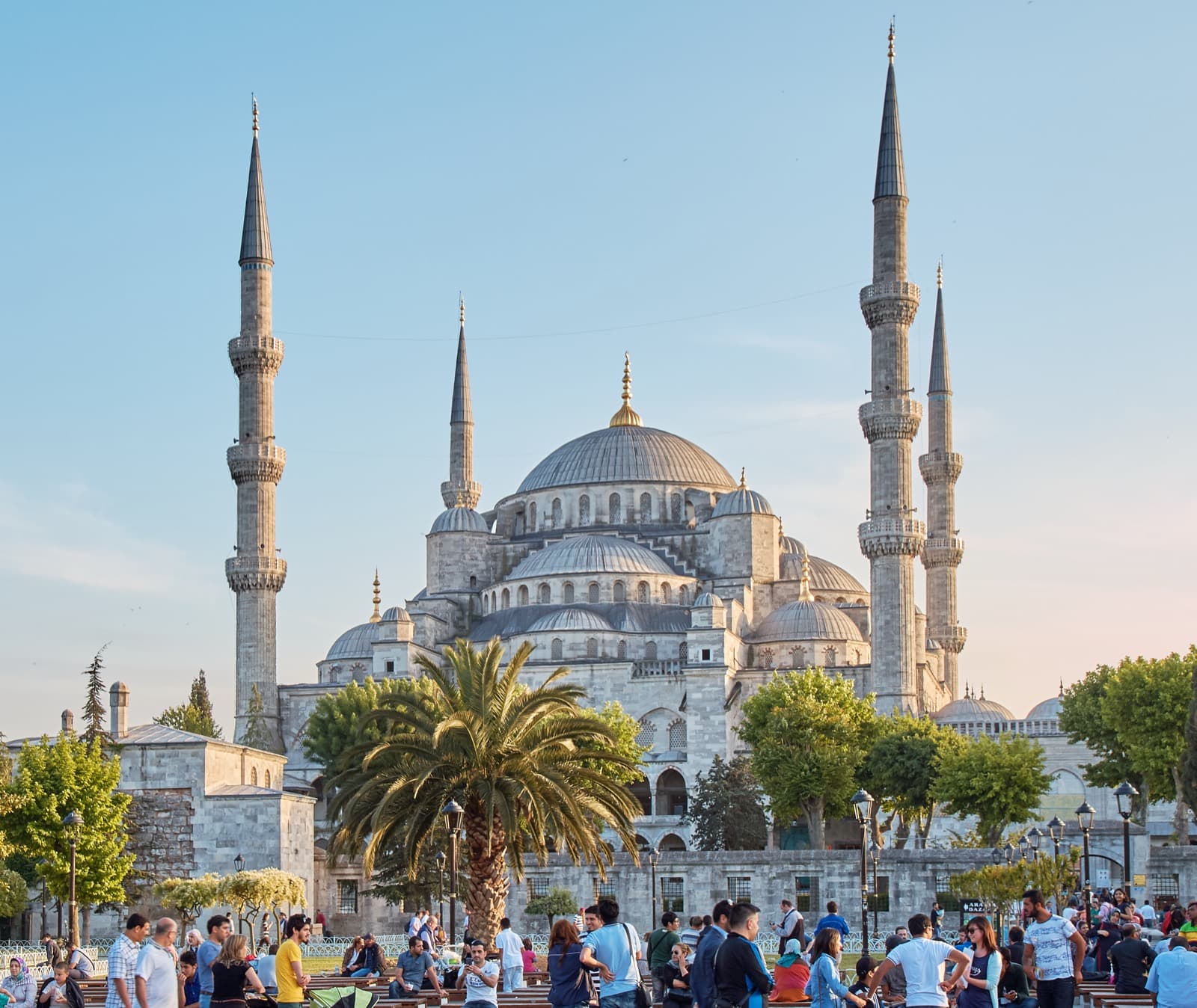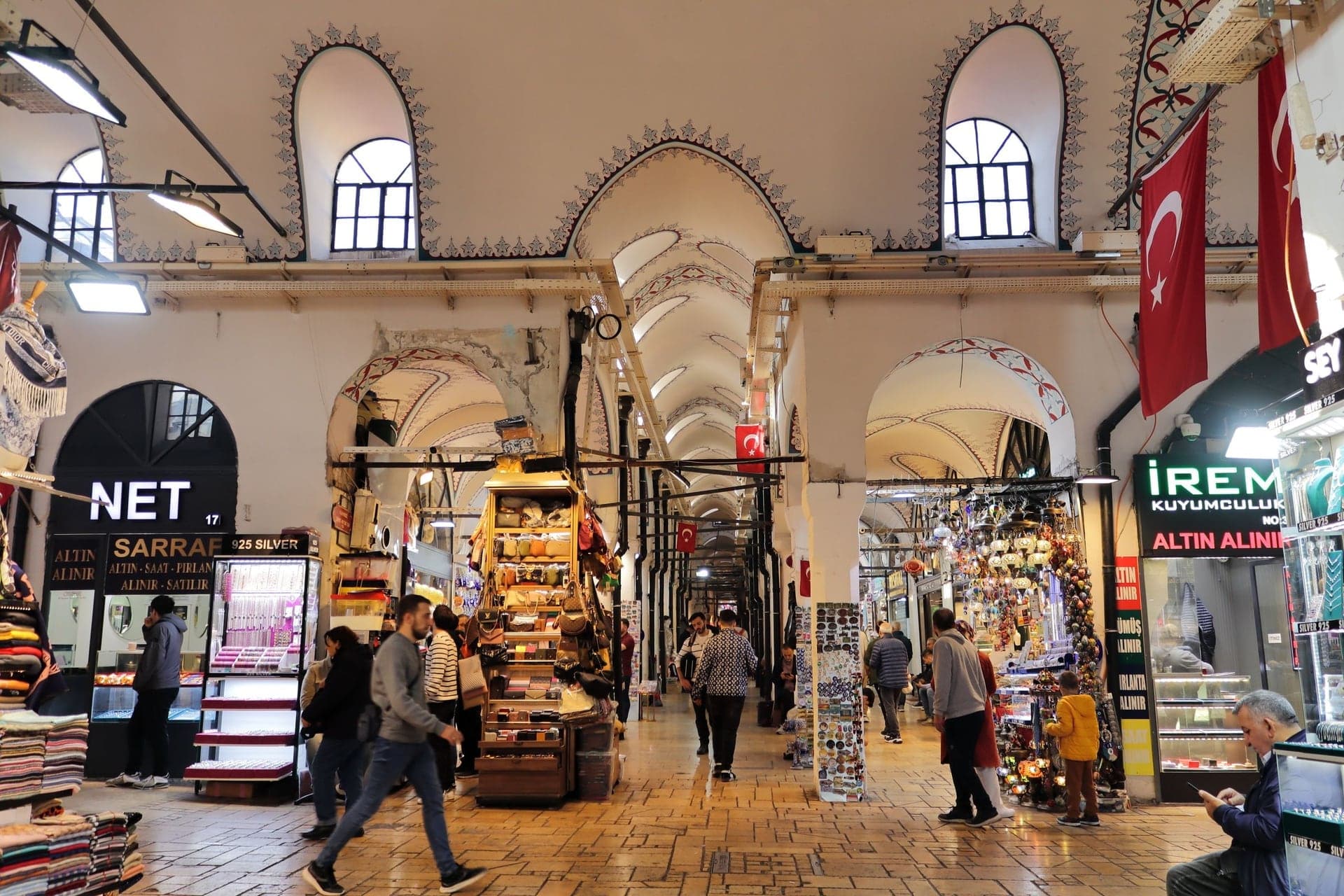
Stand at one of the gates of the Grand Bazaar and look in: the daylight drops away under the vaults, lamplight pools on gold in the windows, and the noise spills out at you. It is easy to read this place as a shopping destination, one more thing to see and then leave. That reading misses the point. The Grand Bazaar is an engine. Its arches were part of a machine that ran the commerce of an empire, and in Ottoman Istanbul the great mosques were paid for the same way: none of them stood alone, and shops, inns and markets were built with each one so their rents would keep it running. Understand that one idea and the whole quarter of old Istanbul reorganizes itself into a single system, from the covered market down to the sea.
A covered city, not a mall
The market began with one decision. Soon after he took the city in 1453, Mehmed the Second, called the Conqueror, built a stone bedesten, a lockable domed hall, to earn income for his religious endowments; the tradesmen's association today says 1461 is the accepted founding year. That vaulted strongbox at the centre, the Cevahir Bedesten or inner bedesten, traded the luxury goods a new capital needed, and a second domed hall followed. The streets between the two filled with inns and shops and were roofed over time. Fire kept forcing the issue: the wooden market burned again and again, and after a great fire in 1701 a decree of 1702 ordered it rebuilt in masonry, so the market streets were vaulted over in stone. In Turkish it is the Kapali Carsi, which simply means the covered market, and covered it is: a small city with a roof.
People often call it an early ancestor of the shopping mall. Set the comparison aside. A mall is a container for retail. This is infrastructure. The luxury trades clustered at the protected centre, lesser goods radiated outward, and the whole thing was built to move money. It still moves it. Even its own gates carry the message: after the 1894 earthquake, a new gate on the Beyazit side was inscribed with the line "the one who earns is the beloved of God". The crowds describe the surface. The real story is what all that traffic was designed to pay for.
The machine behind the machine
Hear a stop from this walk
New Mosque: Two Queen Mothers by the Water
Below the bazaar, on the slope toward the Golden Horn, you find the hans. A han is a caravanserai, a merchants' inn: a stone building wrapped around an open courtyard, with tiers of galleries stacked above, room after room where goods were stored and craft was worked. Traders slept and dealt above while the stables sat in the slope below. Today they are still working buildings, full of wholesale trade and workshops.
The grandest is the Buyuk Valide Han, the biggest commercial han in Istanbul, built in the sixteen hundreds by Kosem Valide Sultan, the powerful mother of two sultans, to give income to her foundations, first of all her mosque across the water in Uskudar. Across the same steep street stands the Buyuk Yeni Han, built by Sultan Mustafa the Third in the seventeen sixties to pay for his mosque at Laleli; the Ottoman state savings bank had its first offices in its upper rooms. These are working buildings, not exhibits, and the walk does not go in. Stand at the top of their street, Cakmakcilar, and look down the long stone-and-brick fronts: this is where the tour's argument first becomes visible. Each of these inns was built to pay for a mosque.
Where the rents went
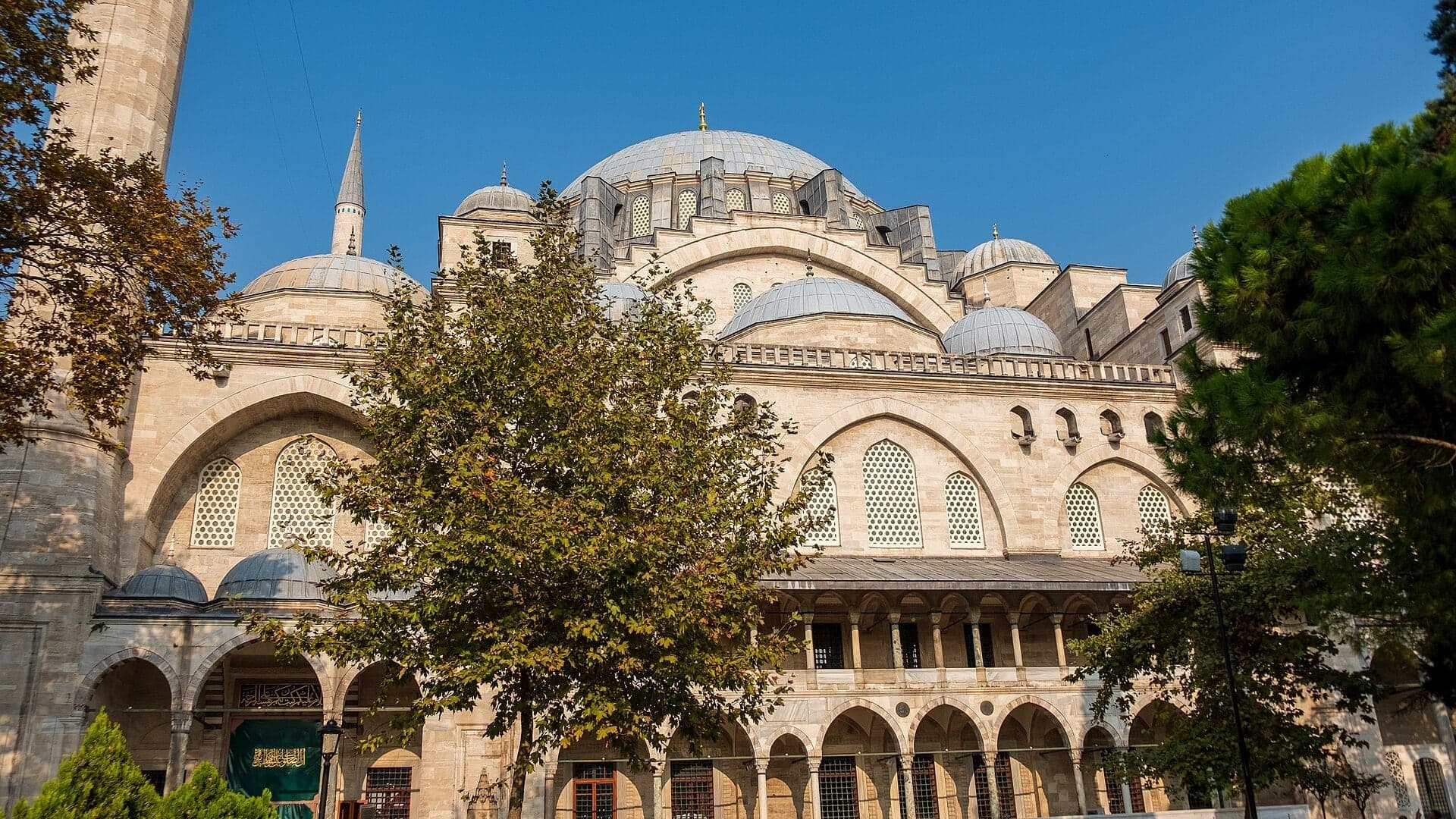
Climb onto the third hill and the thesis appears in stone. The Suleymaniye Mosque was built between 1550 and 1557 by the imperial architect Mimar Sinan for Sultan Suleyman the Magnificent, and Sinan himself called it his "journeyman work". Its central dome, about twenty-seven metres across, rises a little over fifty metres to the crown, carried on a cascade of half-domes that steps down the hill. But the mosque was never the whole point. Sinan built a kulliye here, a complex: colleges, a primary school, a medical school, a hospital, a bath, a caravanserai, and a public kitchen and guesthouse.
Here is the crucial part. Sinan built rows of vaulted shops into the complex's own slope, under the colleges and the school, so the market was part of the mosque from the start. The rents of commerce, the same commerce you just walked past, helped pay for the kitchen and the hospital and the schools. The grandeur up here was underwritten by the graft down there. They are one system. In the garden behind the mosque stand two tombs, one holding Suleyman himself, who died in 1566, the other his wife Hurrem Sultan, known in Europe as Roxelana, who died in 1558. Sinan lies close by too, in a small open tomb on a street corner outside the precinct, which the walk passes just before the terrace with its view over the Golden Horn.
That logic repeats at a smaller scale. The Rustem Pasha Mosque, another Sinan building, built around 1560 for Suleyman's grand vizier and son-in-law, stands raised on top of its own vaulted storerooms and a row of shops so the rents beneath would help support it. It is easy to walk straight past: a shop-fronted base on a crowded market street, with covered stairs climbing up into a raised courtyard. Upstairs, Iznik tiles of the finest classical period cover the porch and the interior. Grandeur does not always mean big. The Nuruosmaniye Mosque, opened in 1755 and named "the Light of Osman", sits right beside the bazaar on its eastern side, with shops and an inn built into its complex too, where commerce and prayer meet at the doorstep.
Following the money to the sea
Money moved downhill here, so the walk does too. The descent ends at the water, and the last two stops close the loop. The Spice Bazaar, the Misir Carsisi or Egyptian market, was begun in 1660 and finished in 1664, built as the market street of the New Mosque complex by the docks "to meet the mosque's expenses". It took the name Egyptian Market in the seventeen hundreds, after the goods that came through Egypt, and it is said to have been paid for with Egypt's taxes: a market sold here as cardamom and saffron and dried rose. Then Eminonu, on the Golden Horn, at the foot of the Galata Bridge, where the New Mosque rises over the ferry docks. It was begun in 1598, stood half-built for more than fifty years, and was finished by Turhan Sultan, a second queen mother, after the great fire of 1660. This is where the money came in by boat before it moved up the hill and back down again.
Reading about the system is one thing. Walking it, downhill, with the scent of the Spice Bazaar giving way to ferry horns and the smell of the sea, is what makes it click. If you want the full route with turn-by-turn audio, the self-guided walk Grand Bazaar: The Markets That Paid for the Mosques covers eleven stops over about three and a half kilometres, a little under two hours, from Nuruosmaniye and the bazaar's gates to the New Mosque at Eminonu. It follows the bazaar's outside edge gate by gate rather than going in, so it works on Sundays too. Browse more Istanbul walking tours or start from the Istanbul city page, then let gravity and the market do the rest.
Sources
- TDV Islam Ansiklopedisi, Semavi Eyice, "Buyuk Carsi" (Istanbul): the bedestens, the fires and the 1702 order to rebuild in stone, the 1894 earthquake and the Beyazit-side gate inscription.
- Kapalicarsi Esnaflari Dernegi (the Grand Bazaar tradesmen's association): 1461 as the accepted founding year.
- TDV Islam Ansiklopedisi, "Buyuk Valide Hani" and "Buyuk Yeni Han": the two hans, their founders and the endowments they paid for.
- TDV Islam Ansiklopedisi, Selcuk Mulayim, "Suleymaniye Camii ve Kulliyesi", and "Sinan": construction dates, the dome, the shops built into the slope, the tombs of Suleyman, Hurrem Sultan and Sinan.
- TDV Islam Ansiklopedisi, "Rustem Pasa Kulliyesi" and "Nuruosmaniye Kulliyesi": the raised mosque over its storerooms and shops, the tiles, and the 1755 opening.
- Turkish Ministry of Culture and Tourism, Kultur Portali, "Misir Carsisi", and TDV "Yenicami Kulliyesi": the Spice Bazaar's dates and purpose, and the New Mosque from 1598 to 1665.
- Roamer tour "Grand Bazaar: The Markets That Paid for the Mosques" (fact-audited tour transcript): stop sequence, thesis, and on-the-ground detail for the Grand Bazaar to Eminonu route.
Ready to experience it?
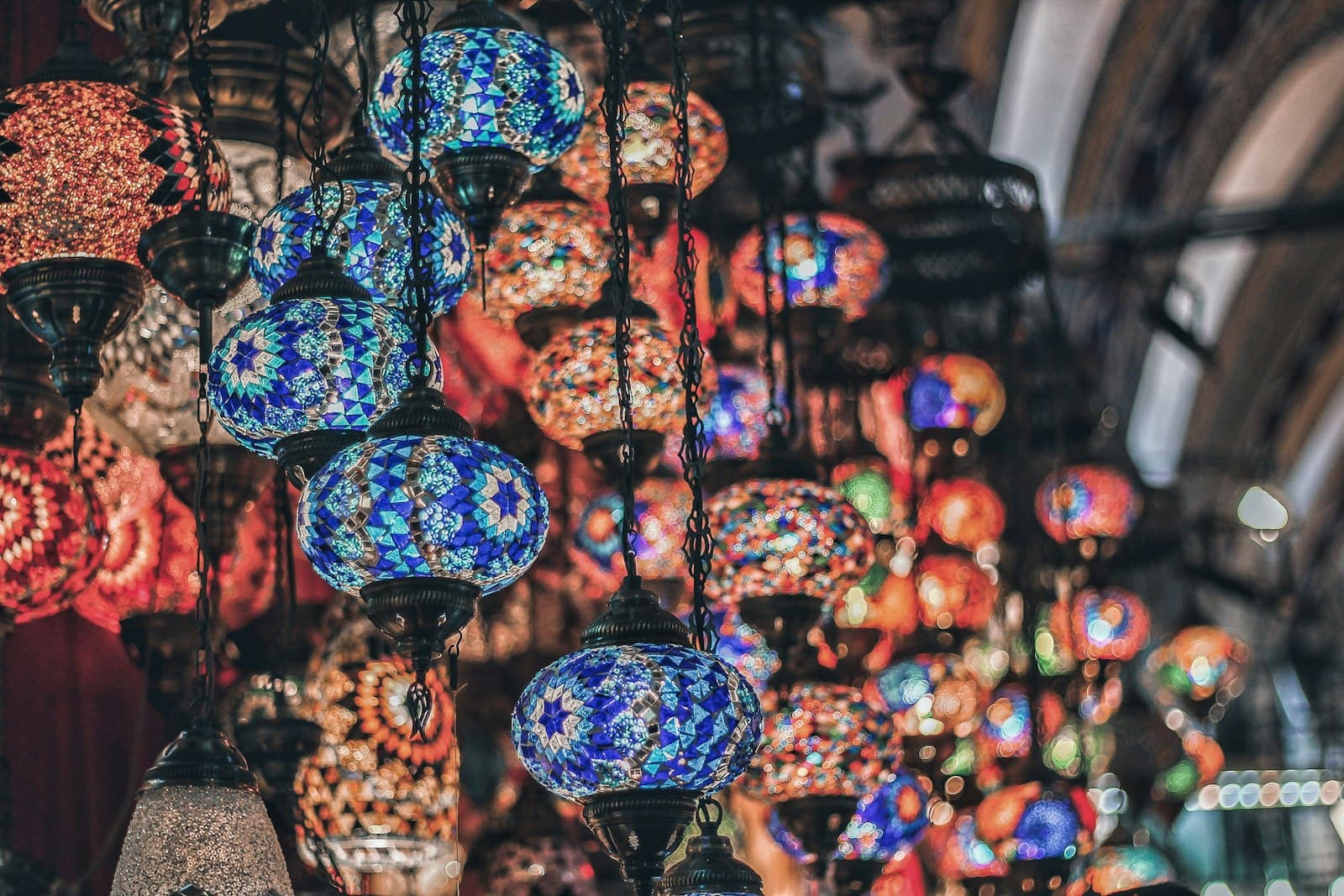
Grand Bazaar: The Markets That Paid for the Mosques
110 min · 3.5 km · moderate
More from Istanbul
Explore more at your own pace.
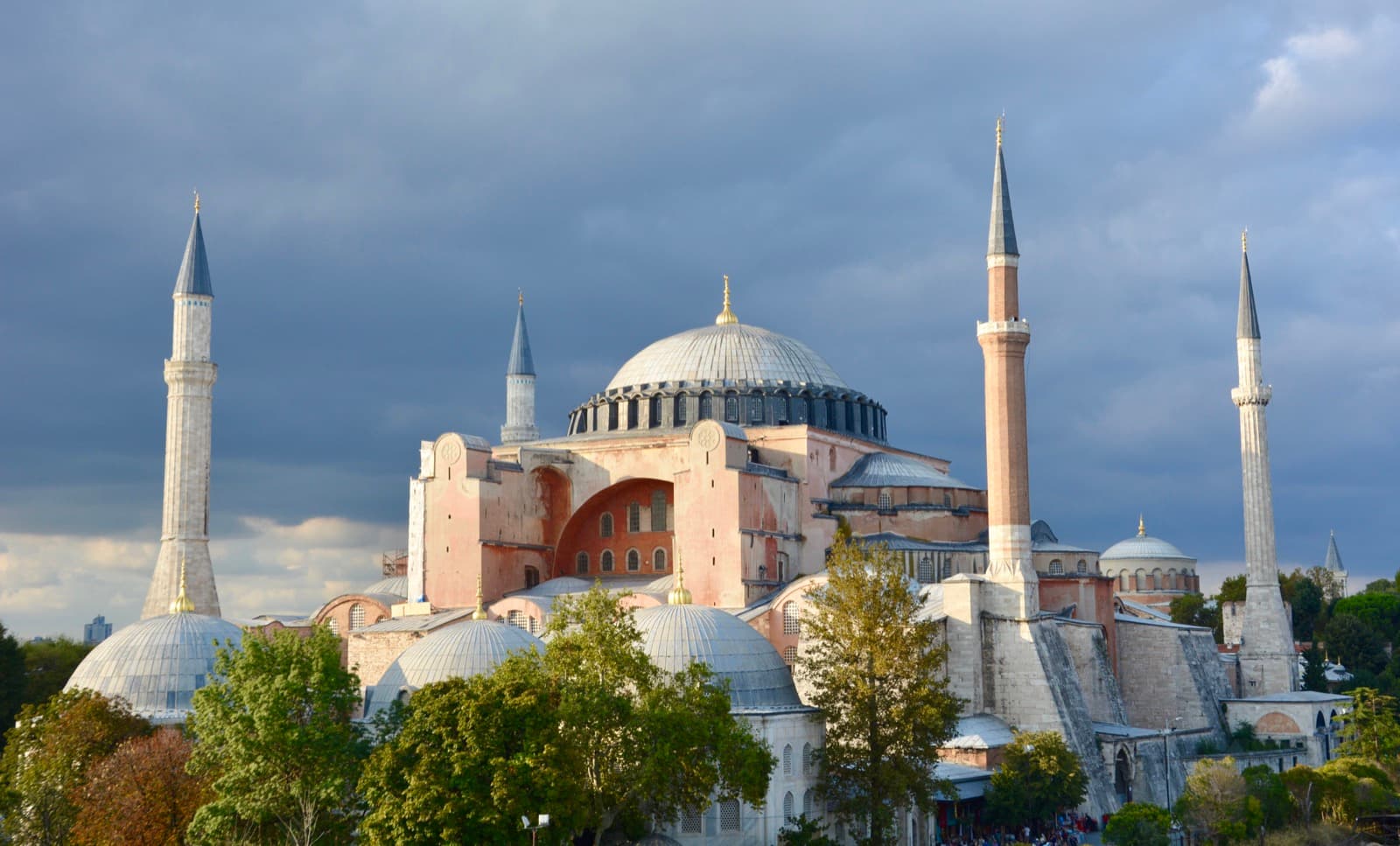
Istanbul: A City Written and Rewritten by Empires
Hagia Sophia's Four Lives: How One Building Teaches You to Read Istanbul
Saint Anthony of Padua and the Plural City of Galata and Pera
Galata Tower: The Watchtower of a Foreign City Inside Istanbul
Suleymaniye Mosque: Why Sinan's Great Complex Was Built to Pay Its Way