Plaza de Mayo: The Square Where a Nation Keeps Being Made
90 min · 2.1 km · easy
Buenos Aires keeps rewriting itself in public, on the same paving, over and over. The city argues out its national drama in three places you can walk in a single day: a founding square that has hosted revolution, populist glory, state terror, and quiet mourning; a marble necropolis where the landowning families built a city of the dead grander than much of the living one; and the oldest surviving barrio, where the wealthy fled a plague and left the cobbles to immigrants in whose patios tango took shape. Read the square, the cemetery, and the tango quarter together and you read a capital that dressed itself as Paris while it kept fighting over what it wanted to be.
The square where the drama plays
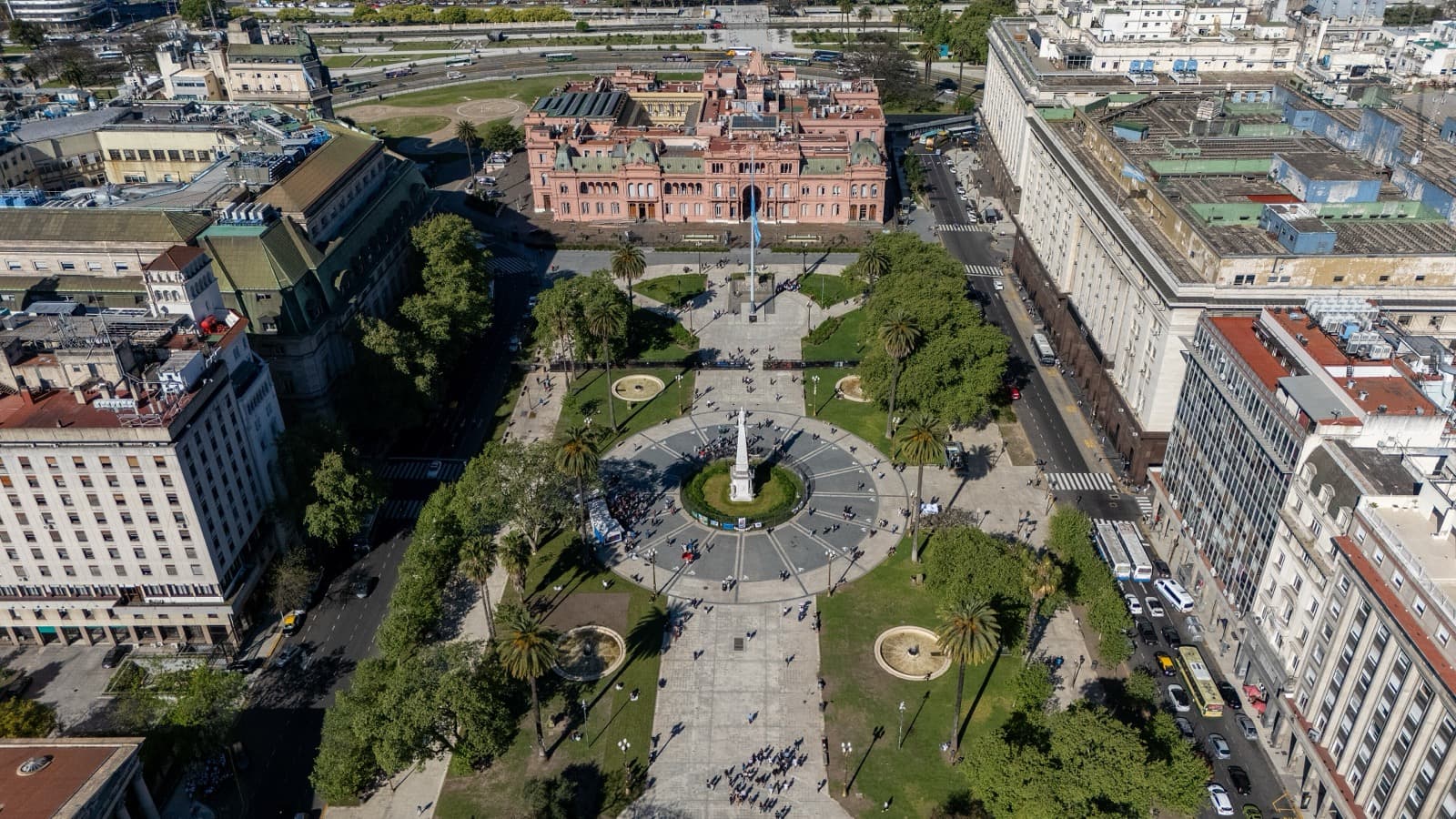
Start where the country was refounded. The Plaza de Mayo traces its origins to Juan de Garay, who refounded Buenos Aires here in fifteen eighty and laid out its main square, which the colonial fort would later face. It took its modern unified form in eighteen eighty-four, after the colonnade called the Recova that once split it was pulled down during the modernization ordered by mayor Torcuato de Alvear. Its name honours the May Revolution of the twenty-fifth of May, eighteen ten, when the city put its own government in charge (formal independence came six years later, at Tucuman), and at its center stands the May Pyramid, a slim white obelisk raised in eighteen eleven and the oldest patriotic monument in the city.
The genius of the square is that every act of the national story used the same stage. The pink Casa Rosada faces it from the east, rising on the layered remains of a fort begun in fifteen ninety-four. From its balcony, presidents addressed vast crowds, most famously the Peronist movement and Eva Peron, who spoke to enormous audiences alongside her husband Juan Peron. To the west stands the Cabildo, the colonial town council and the only major survivor of the plaza's colonial civic center. Inside it, on the twenty-second of May, eighteen ten, citizens gathered in an open council that voted the Spanish viceroy out. Three days later a new junta took power, still governing formally in the name of the captive Spanish king. On the north side, the Metropolitan Cathedral wears a temple front of twelve columns and holds the tomb of General Jose de San Martin, the Liberator, guarded by three figures for Argentina, Chile, and Peru.
Then the square becomes a place of grief. Painted into the pavement around the May Pyramid is a ring of white headscarves. During the last military dictatorship, which ruled from nineteen seventy-six to nineteen eighty-three, thousands were seized and never seen again. On the thirtieth of April, nineteen seventy-seven, a small group of mothers led by Azucena Villaflor gathered to demand news of their children, walking every Thursday in a slow circle around the pyramid. The Nunca Mas report documented eight thousand nine hundred sixty-one named disappearances and three hundred forty secret detention centres, noting the true number could be higher, while human-rights organisations usually estimate the toll at around thirty thousand. On the same stones where a nation was born, it also mourned.
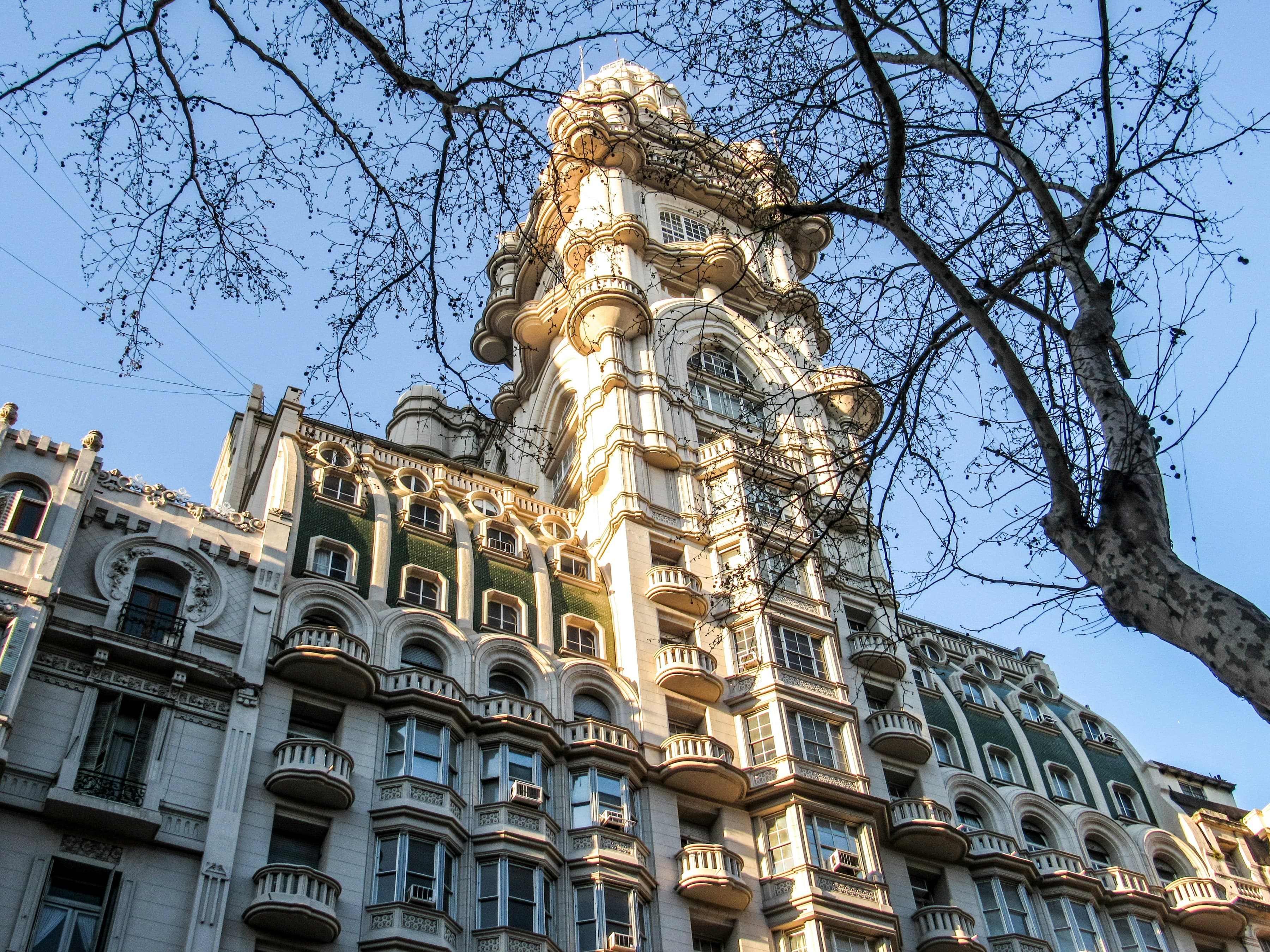
From the square, the aspiration runs west. The Avenida de Mayo, cut on the model of the Parisian boulevards and inaugurated on the ninth of July, eighteen ninety-four, carried the first subway line in Buenos Aires, opened in nineteen thirteen, the first underground in Latin America. Halfway along rises the Palacio Barolo, a hundred-metre tower built between nineteen nineteen and nineteen twenty-three, structured on Dante's Divine Comedy with hell at the base and heaven under a lighthouse beacon. For more than a decade it was the tallest building in Buenos Aires, and for a few years the tallest in South America, until its architect's own twin, the Palacio Salvo in Montevideo, rose higher. The avenue ends at the domed National Congress, where the young republic dressed its future in imported European stone before it had quite built the thing.
The marble city that outshone the living one
Hear a stop from this walk
National Congress: The Other End of the Axis
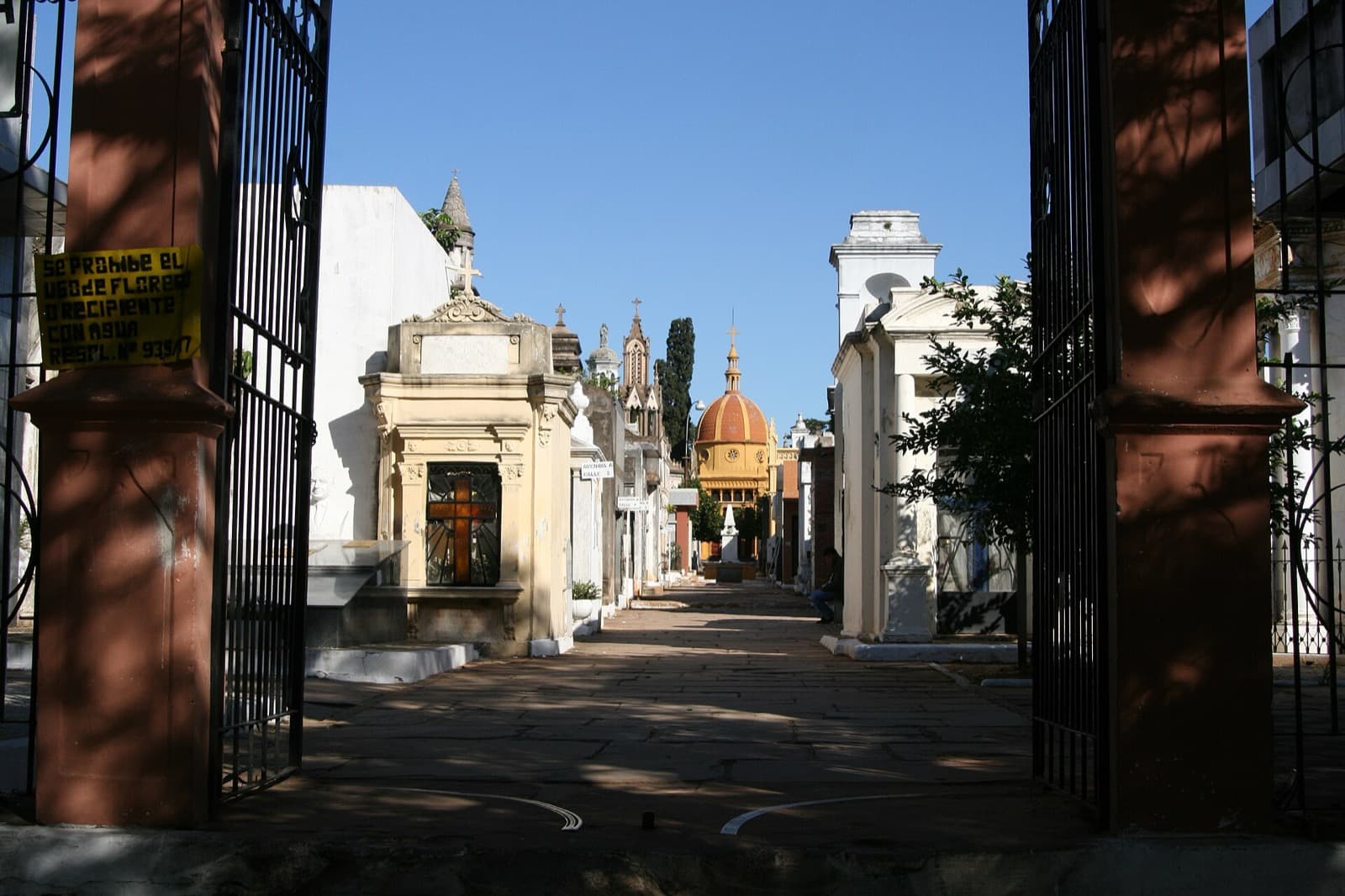
North of the square, Recoleta shows the same argument played in stone. The neighbourhood grew up around a cemetery of marble mausoleums laid out like streets, where the great landowning families competed in death as they had in life. Recoleta Cemetery opened on the seventeenth of November, eighteen twenty-two, as the first public cemetery in Buenos Aires, on land that had been the garden of the Recollect friars whose name gives the whole barrio its name. It covers about five and a half hectares and holds roughly four thousand seven hundred above-ground vaults, ninety-four of them declared National Historical Monuments, much of the marble imported from Paris and Milan. The families who made fortunes in grain and cattle spent lavishly here, each vault answering the next, wealth speaking in stone long after the people inside had died.
The paradox has a face. The most visited grave belongs not to a president but to Eva Peron, an outsider the traditional elite would never have admitted among them while she lived. She died of cervical cancer on the twenty-sixth of July, nineteen fifty-two. What followed is extraordinary: after the nineteen fifty-five coup that overthrew Juan Peron, her embalmed body was removed and buried in secret under the false name Maria Maggi de Magistris in Milan, exhumed in nineteen seventy-one, returned to Argentina in nineteen seventy-four, and finally interred in the Duarte vault only in October of nineteen seventy-six, in a fortified crypt about five metres underground behind a steel door. The longest queue in a necropolis of presidents leads to the woman the old families kept out.
The same fortune built beauty above ground too. Avenida Alvear, begun in eighteen eighty-five on a plan inspired by Baron Haussmann's Paris, became the most aristocratic street in the city, its French-academy palaces now housing the French and Brazilian embassies and the Park Hyatt. Yet the walk resolves in something shared. The Floralis Generica, a twenty-three-metre steel flower, was gifted to the city by architect Eduardo Catalano in two thousand two, belonging to no family at all. And the National Museum of Fine Arts, founded in eighteen ninety-six and holding more than thirteen thousand works including pieces by Goya, Rembrandt and Van Gogh, is free to residents and foreign visitors alike. The barrio that spent a fortune on private memory ends in public beauty.
The barrio where tango was born
To the south, San Telmo preserves the cobbled texture of the old port city, and it argues its identity by subtraction rather than grandeur. The hinge is the yellow fever epidemic of eighteen seventy-one, which killed over ten thousand people and drove the wealthy north, leaving the barrio to arriving immigrants. Nearly every surface here is a second use. Plaza Dorrego, traced by Spanish sources to fifteen eighty-six as the wagon-stop Alto de las Carretas, vanishes each Sunday beneath an antiques fair and street tango. The Mercado de San Telmo, opened in February eighteen ninety-seven, wraps an Italianate facade around an interior of iron and glass, built to feed the immigrant families then pouring in. The Pasaje de la Defensa, once the Ezeiza family mansion abandoned in the eighteen seventy-one epidemic, later held as many as thirty-two families as a tenement.
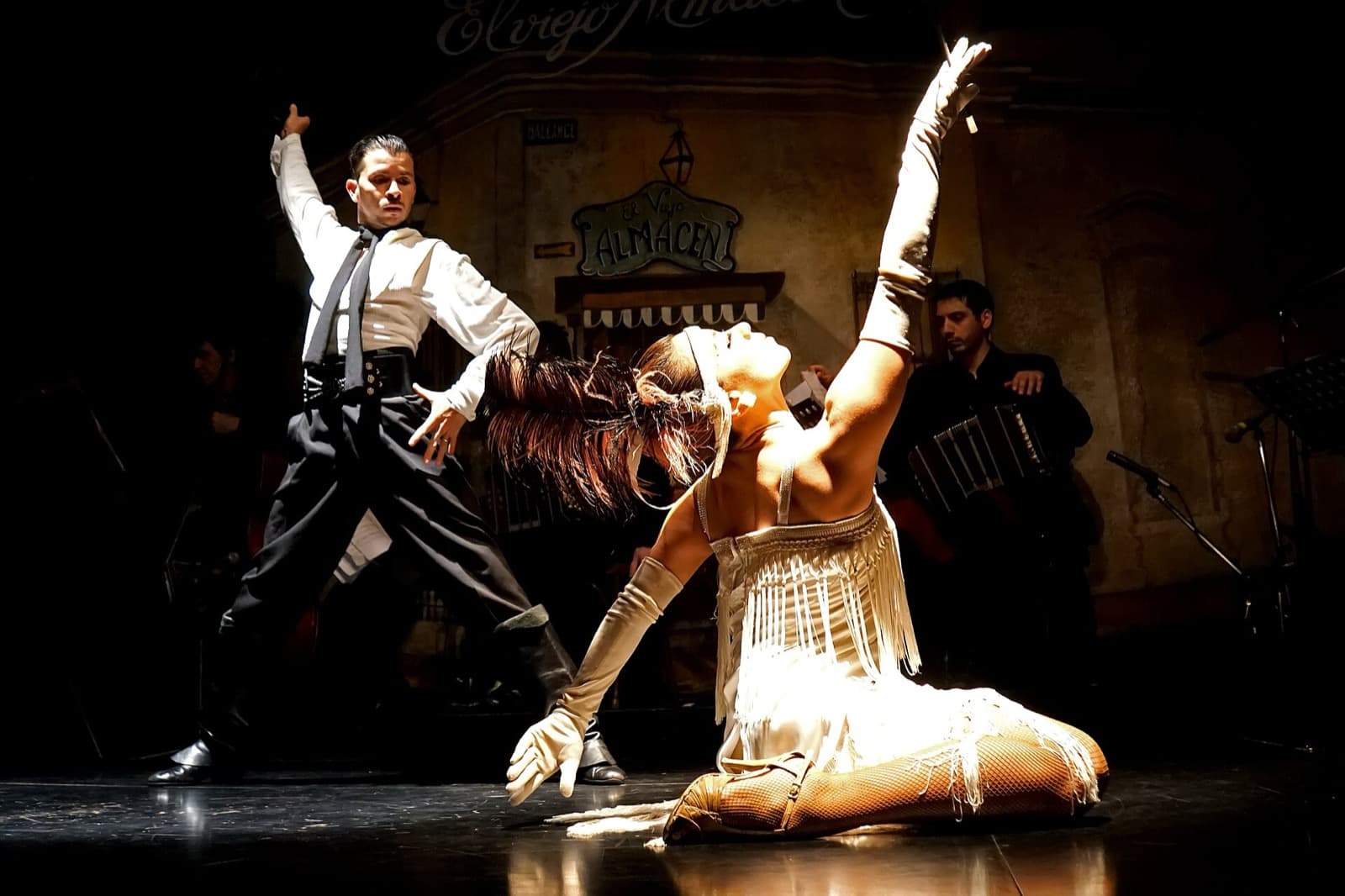
Tango belongs to this world of the everyday. It emerged from the eighteen eighties along the River Plate, in the impoverished port and immigrant districts of Buenos Aires and Montevideo, blending the local milonga, the habanera, African-Argentine candombe, and European music. Long dismissed as disreputable, it returned respectable after Paris embraced it, and UNESCO inscribed it on the Representative List of the Intangible Cultural Heritage of Humanity in two thousand nine, on a joint Argentina and Uruguay nomination. At El Zanjon de Granados, where amateur historian Jorge Eckstein rediscovered brick tunnels and colonial foundations in nineteen eighty-five, you can walk down into the buried city itself. And Parque Lezama, on a bluff at the barrio's southern edge, is where tradition holds Pedro de Mendoza made the first, failed founding of Buenos Aires on the second of February fifteen thirty-six. The city's oldest story survives here as legend rather than proven fact, which is fitting for a capital that keeps arguing over its own beginnings.
Walk all three and the through-line is clear. The founding square, the marble necropolis, and the tango barrio are three chapters of one long public argument about what Buenos Aires wanted to be. For the full set of routes, see Buenos Aires walking tours.
Sources
- Museo Casa Rosada and Cabildo Nacional, official histories of the Plaza de Mayo institutions (Argentine government, cultura.gob.ar)
- CONADEP, "Nunca Mas" report (1984), figures on documented disappearances and detention centres
- Recoleta Cemetery, official visitor information and history (Buenos Aires city government, buenosaires.gob.ar)
- UNESCO, Representative List of the Intangible Cultural Heritage of Humanity, "Tango" inscription (2009)
- Museo Nacional de Bellas Artes, collection and admission information (bellasartes.gob.ar)
Frequently asked questions
- Why is Plaza de Mayo so important to Buenos Aires?
- The Plaza de Mayo traces its origins to Juan de Garay's refounding of Buenos Aires in fifteen eighty and is named for the May Revolution of eighteen ten. It has served as the country's principal site of public assembly ever since, hosting revolution, Peronist crowds addressed from the Casa Rosada balcony, and the Mothers of the Plaza de Mayo who marched for the disappeared.
- Why is Eva Peron's grave the most visited in Recoleta Cemetery?
- Recoleta was built by Argentina's landowning elite, yet the most visited grave belongs to Eva Peron, an outsider the traditional elite would never have admitted while she lived. Her body was hidden abroad under a false name for years after the nineteen fifty-five coup and finally interred in the Duarte vault in October nineteen seventy-six, five metres underground behind a steel door.
- Where was tango born in Buenos Aires?
- Tango emerged from the eighteen eighties along the River Plate in the impoverished port and immigrant districts of Buenos Aires and Montevideo, with La Boca, San Telmo and Boedo tied to its early years. Its exact birthplace is tradition claimed by several districts, not one settled spot. UNESCO inscribed tango on its Intangible Cultural Heritage list in two thousand nine on a joint Argentina and Uruguay nomination.
- What are the Mothers of the Plaza de Mayo?
- They are mothers of people disappeared during the nineteen seventy-six to nineteen eighty-three military dictatorship. Called together by Azucena Villaflor, they first gathered on the thirtieth of April, nineteen seventy-seven, and soon settled into walking every Thursday in a circle around the May Pyramid. The white headscarves, first their children's cloth nappies, were first worn that October at a pilgrimage to Lujan and became their emblem. The headscarves are now painted into the pavement of the square as a memorial.
- How did the yellow fever epidemic change San Telmo?
- The yellow fever epidemic of eighteen seventy-one killed over ten thousand people and drove the wealthy north to higher ground, leaving San Telmo's grand houses to arriving European immigrants. Mansions became tenements, one former single-family house reportedly holding as many as thirty-two families, and it was in these patios and corners that tango took shape.
Ready to experience it?
Plaza de Mayo: The Square Where a Nation Keeps Being Made
90 min · 2.1 km · easy
More from Buenos Aires
Explore more at your own pace.
Tango on Plaza Dorrego: Why San Telmo Has No Single Birthplace
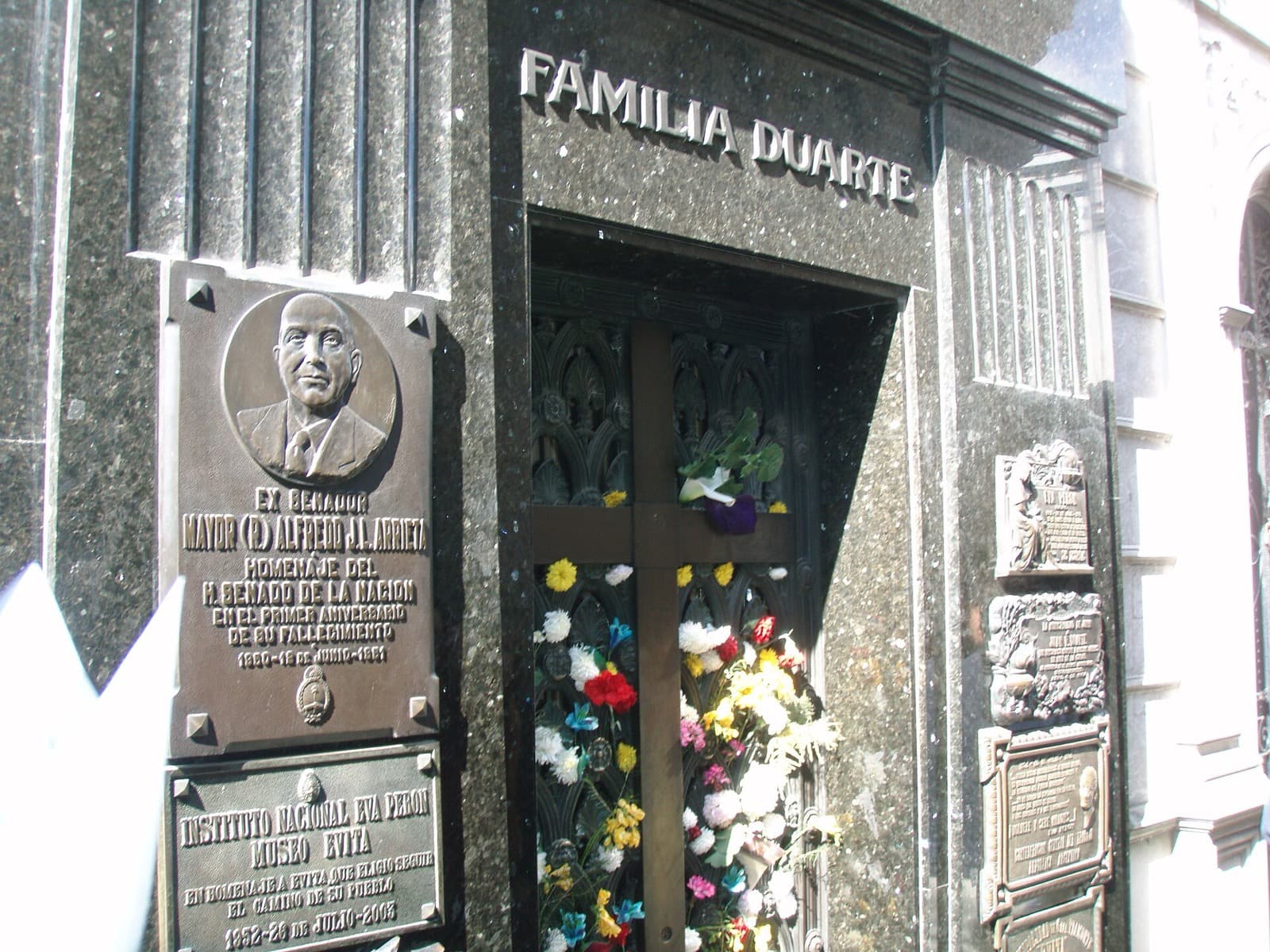
The Tomb of Eva Perón and the Recoleta Cemetery That Outshone the Living
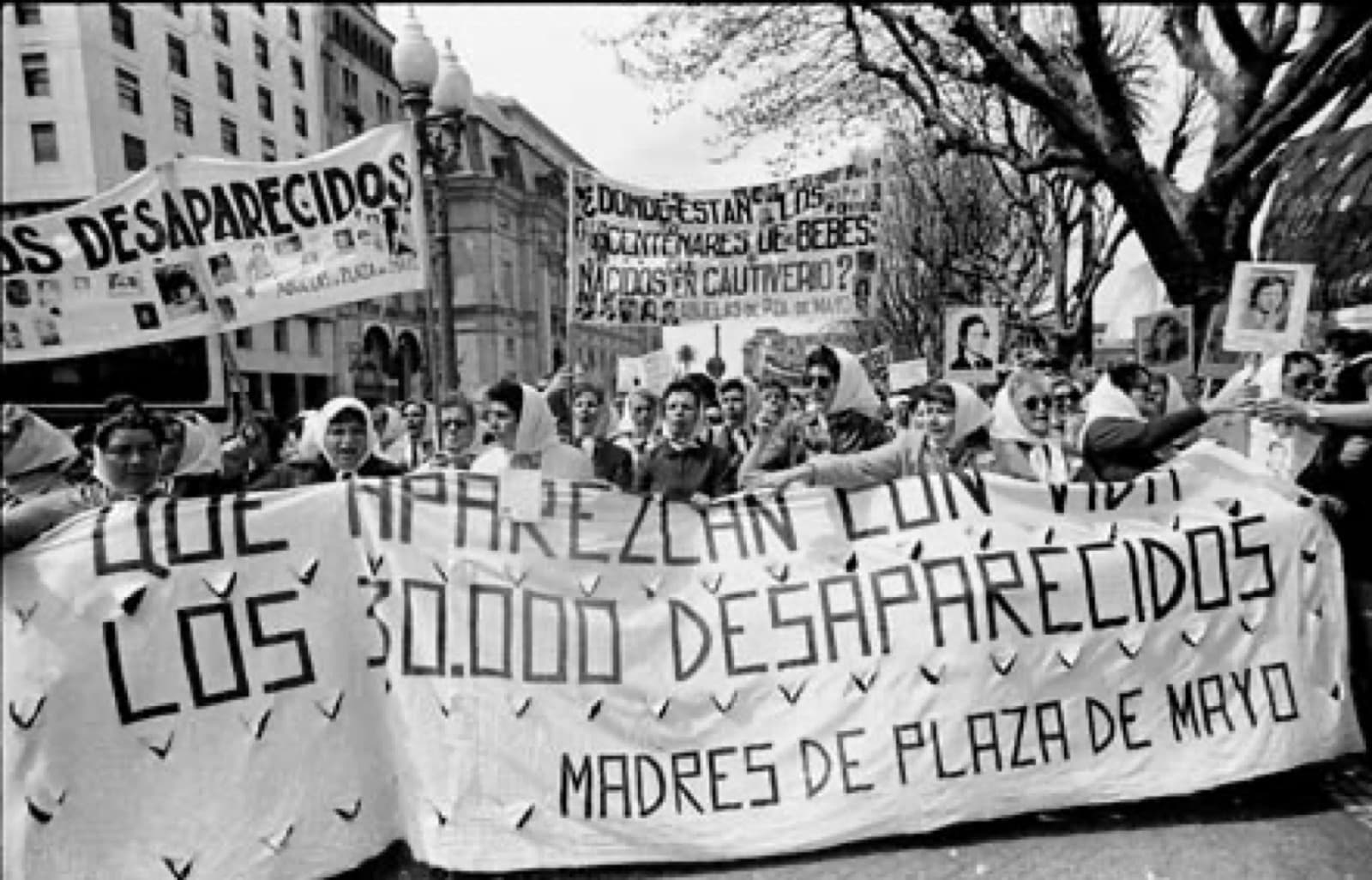
The White Headscarves at the Center of Plaza de Mayo
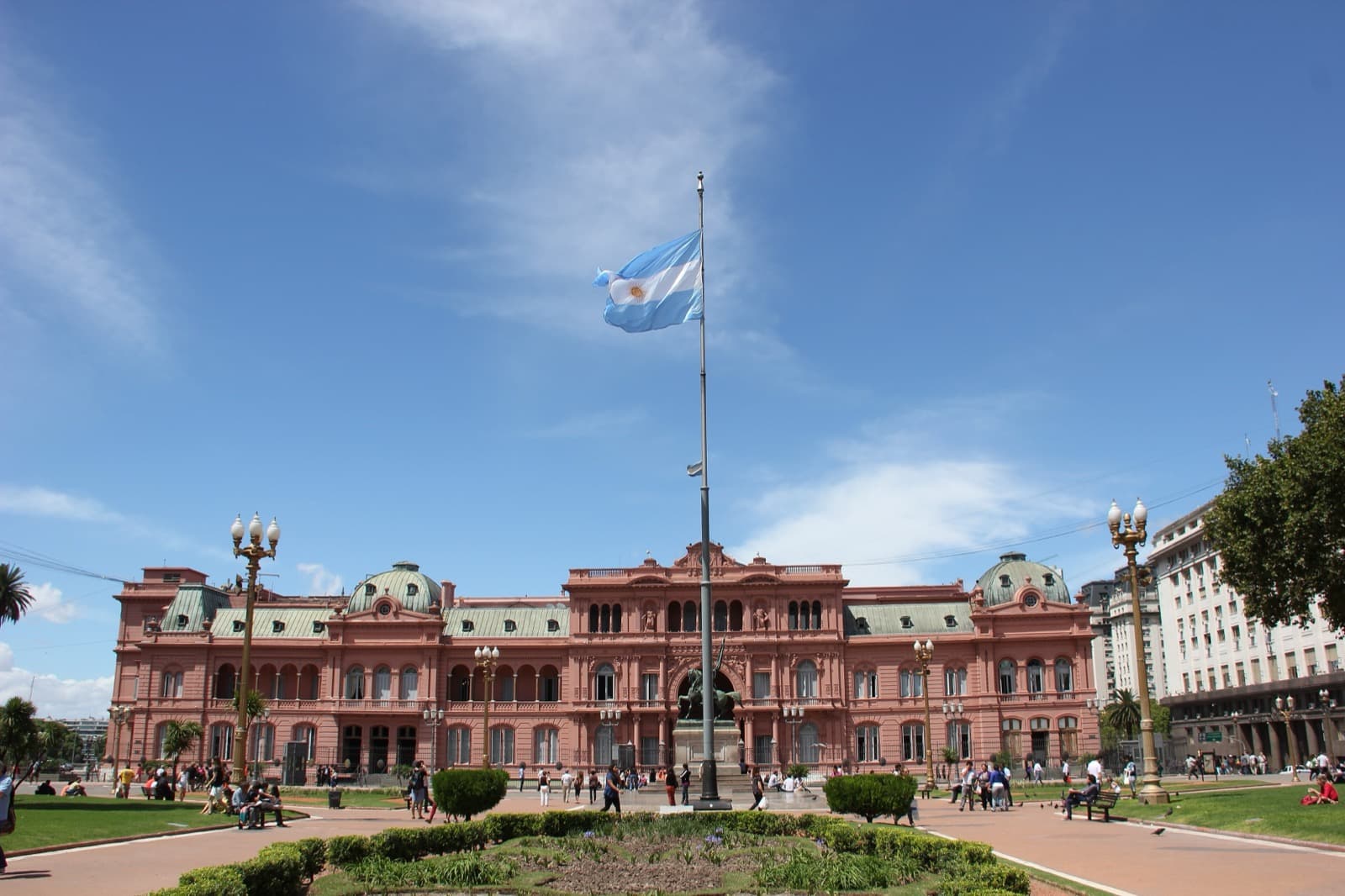
Casa Rosada: The Pink House That Faces the Founding Square
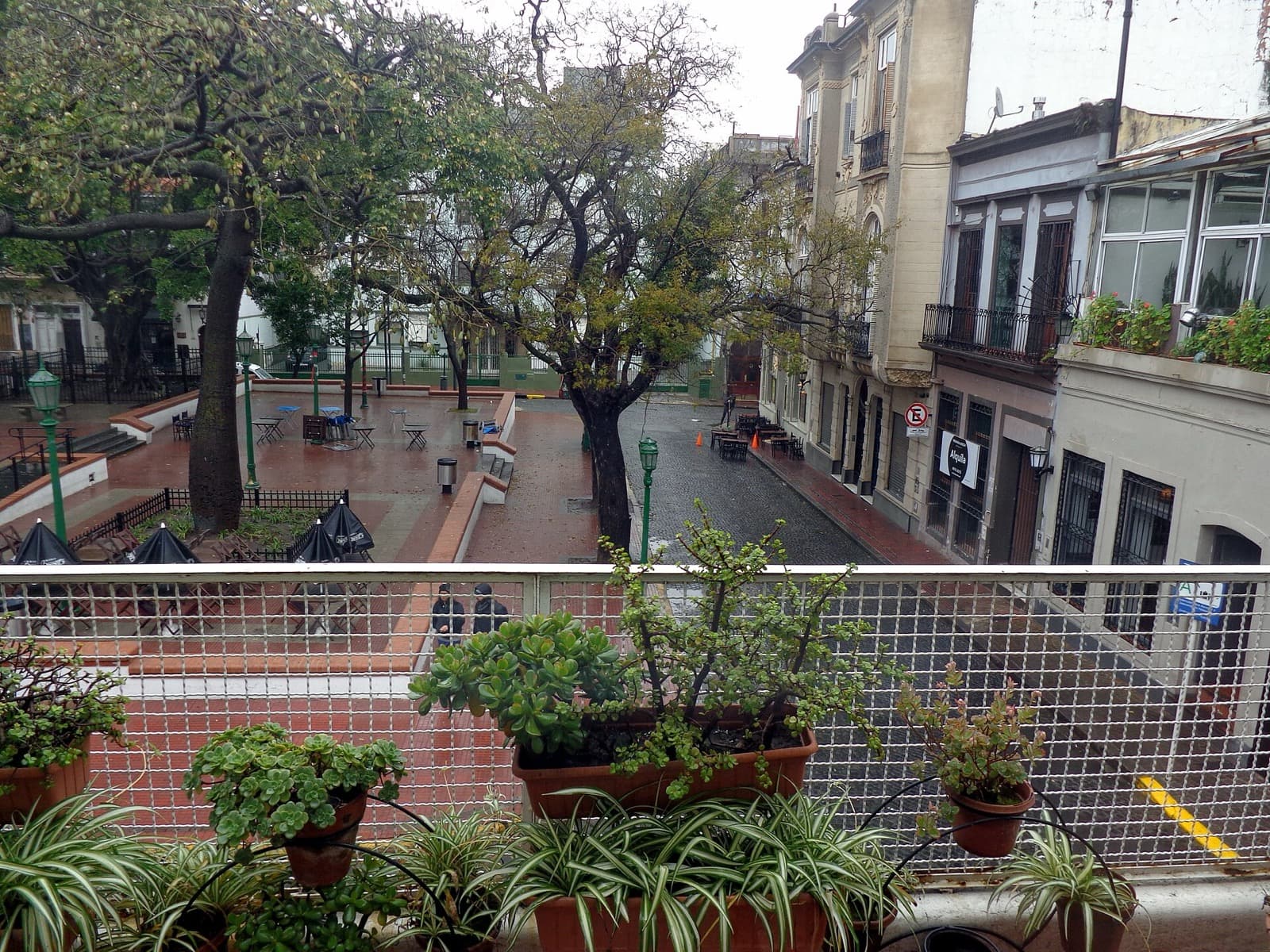
Plaza Dorrego: The Small Square Where San Telmo Comes to Life