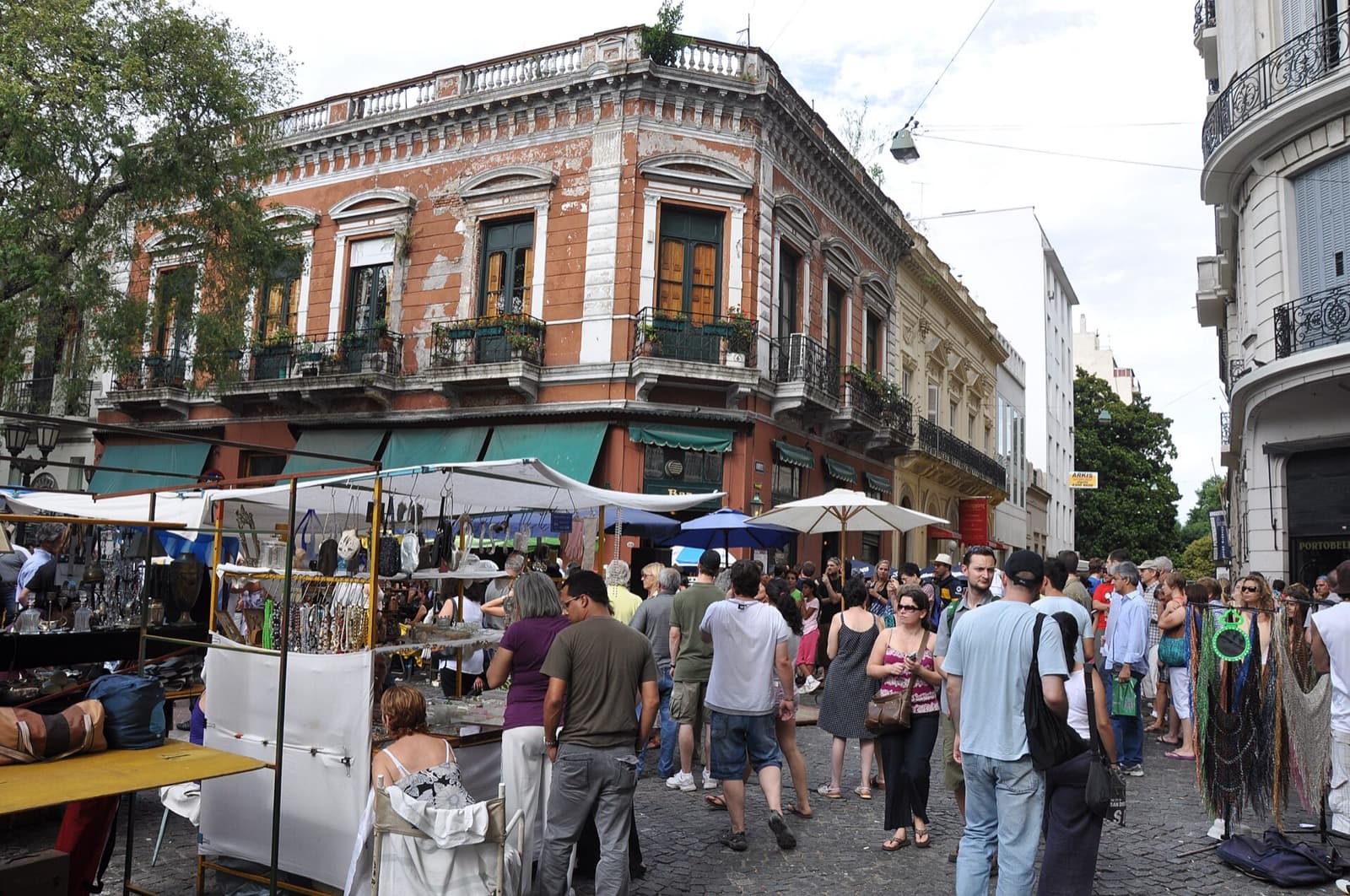
A slow walk through the oldest surviving quarter of Buenos Aires, reading the barrio not through monuments but through its grain: cobbled streets, iron and glass, buried foundations, and the corners where tango took shape.
Start · Plaza Dorrego: The Sunday Fair at the Heart of the Barrio
DirectionsStops
- 1
Plaza Dorrego: The Sunday Fair at the Heart of the Barrio
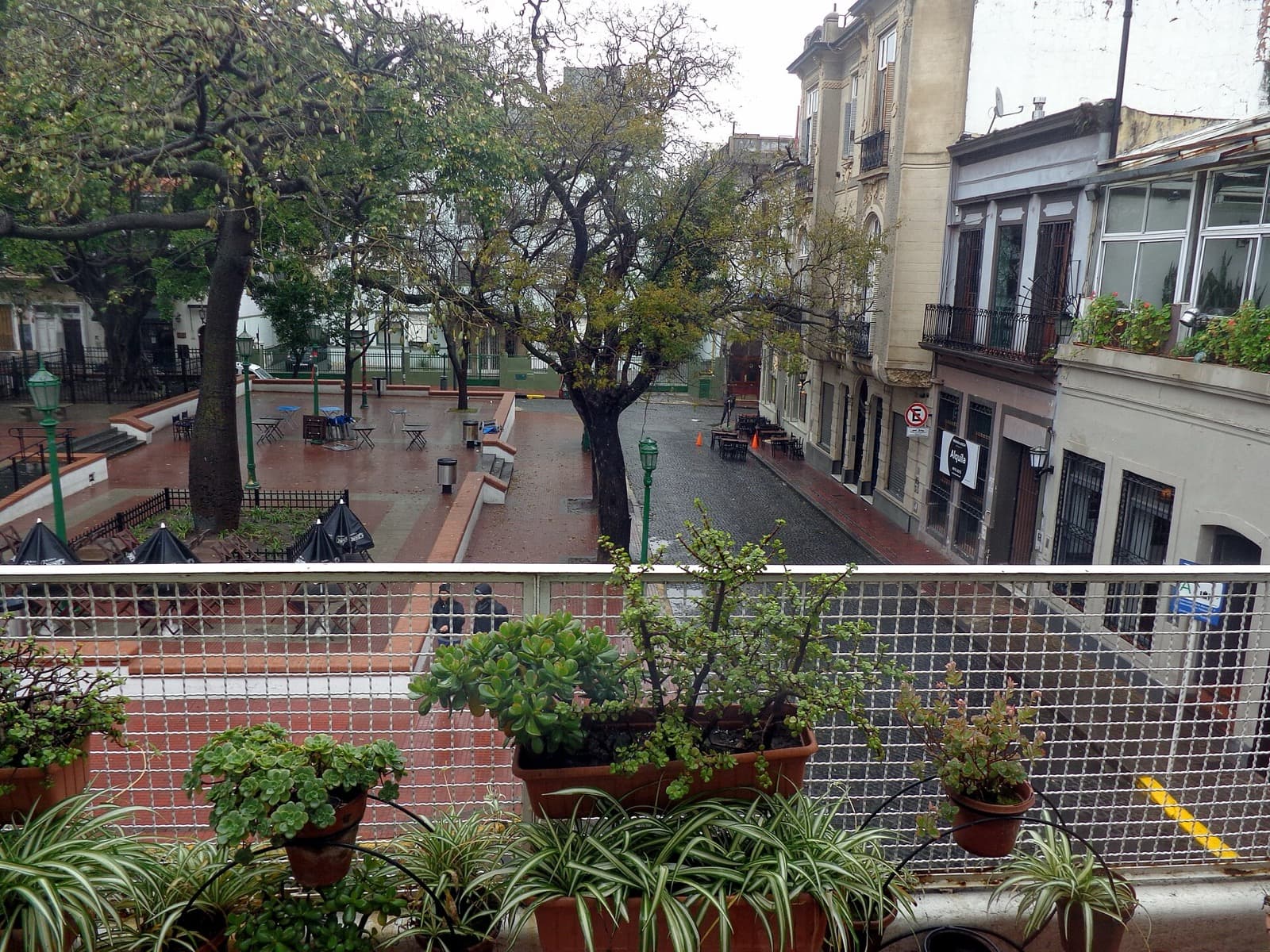
A small, old square at the corner of Humberto Primo and Defensa that on Sundays becomes the noisy centre of the San Telmo antiques fair and its street tango.
- 2
Tango: The Barrio's Most Famous Export
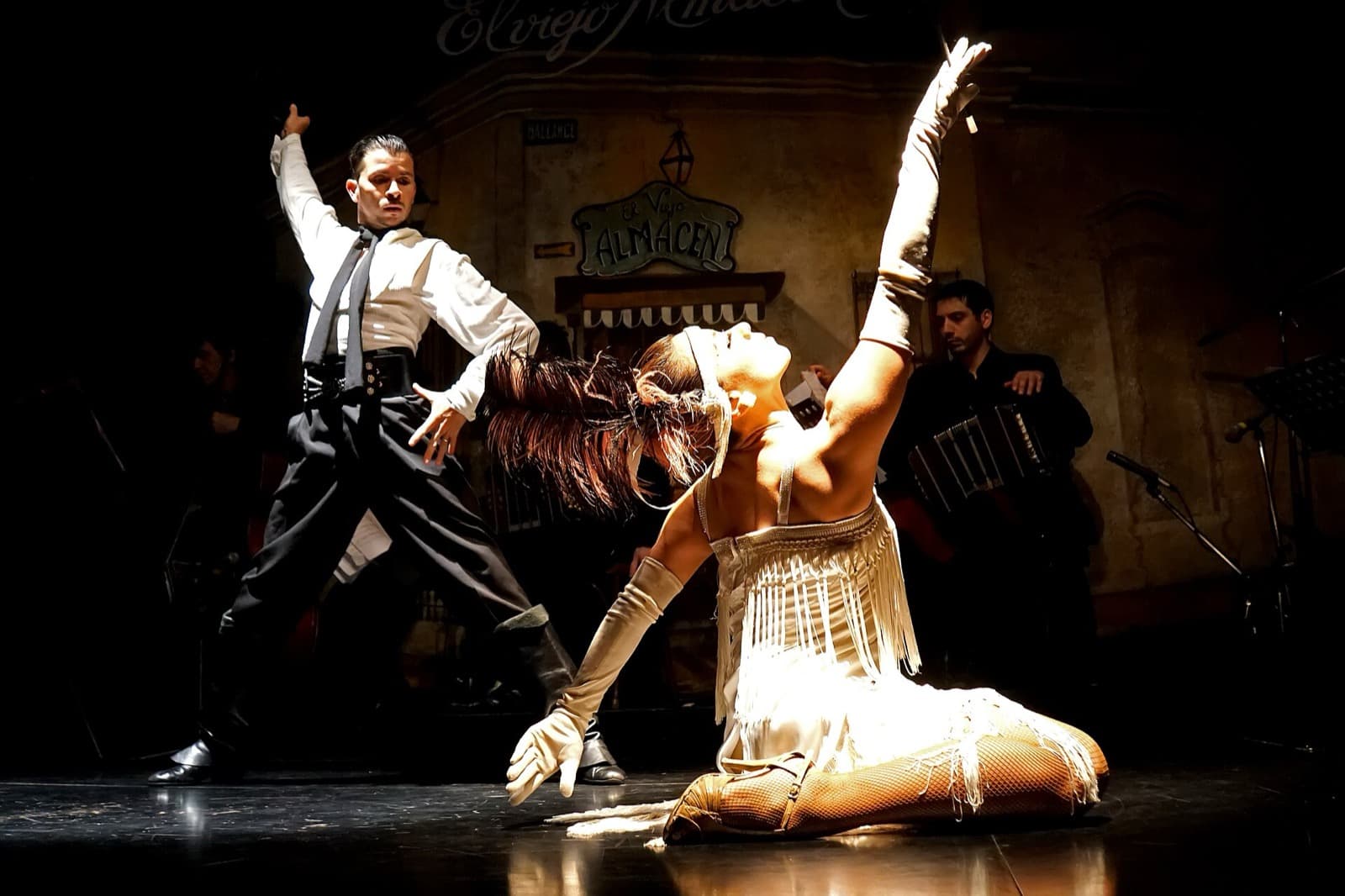
A thematic pause on the square to consider tango, a music and dance born along the River Plate whose exact birthplace is claimed by several districts at once.
- 3
Mercado de San Telmo: The Immigrant Everyday Under Iron and Glass
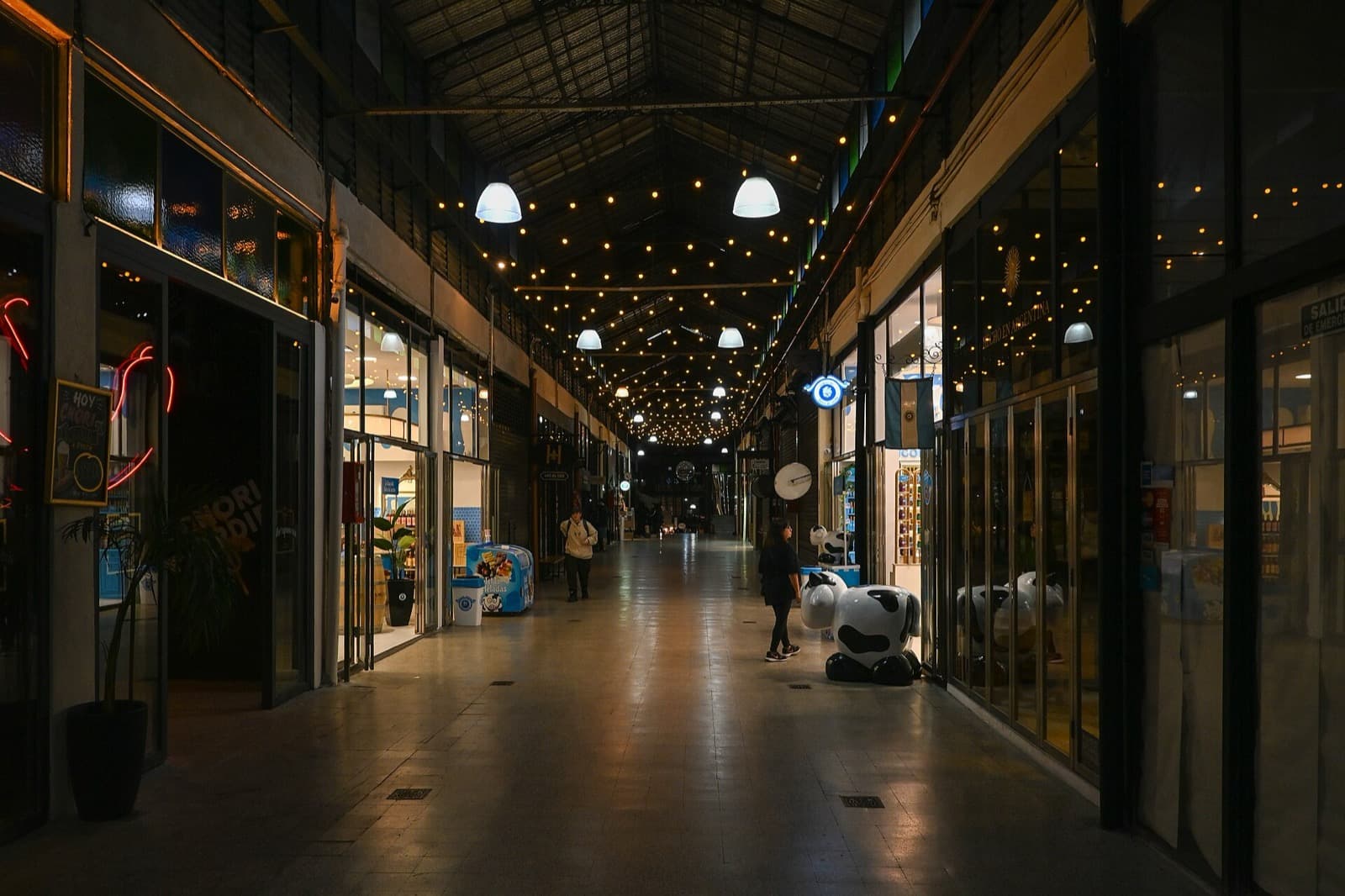
A covered market from eighteen ninety-seven, its Italianate facade wrapping an interior of iron beams and glass, built to feed the barrio's new immigrant families.
- 4
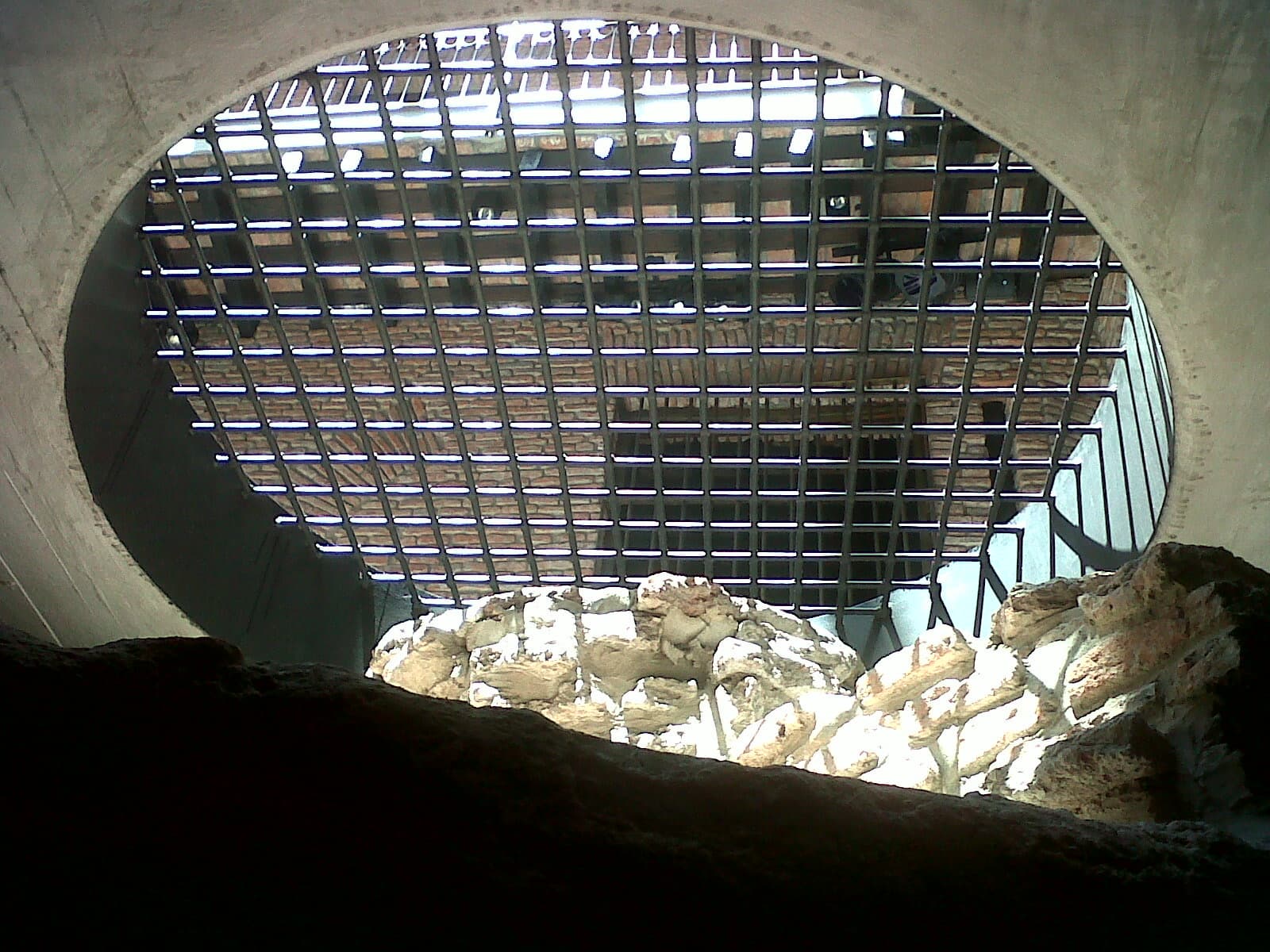
El Zanjon de Granados: The Foundations Beneath the Barrio
A private museum at Defensa 755 where a restored Italianate house opens onto brick tunnels that once channelled a stream, exposing the city's buried foundations.
- 5
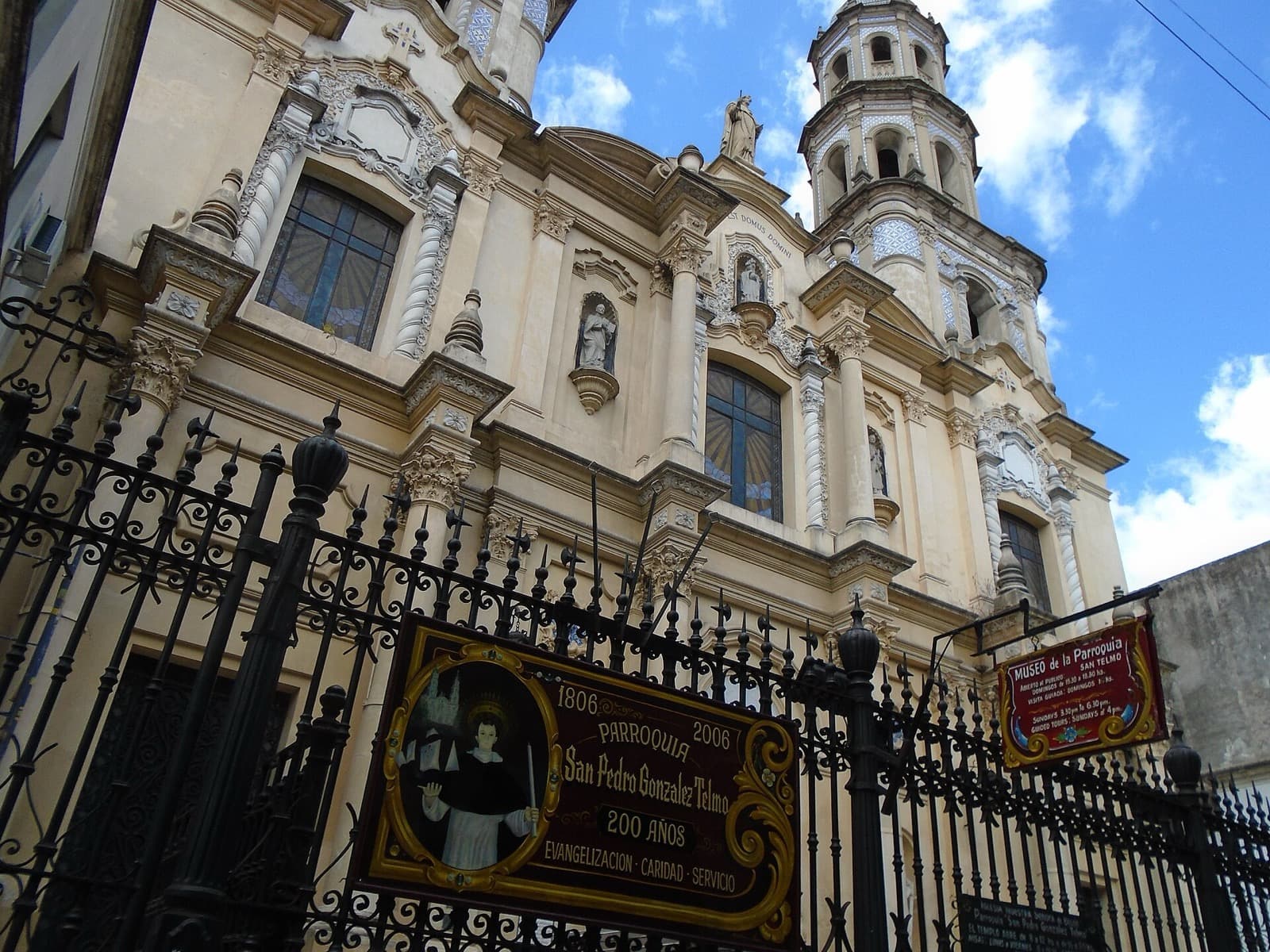
Parroquia San Pedro Telmo: The Sailors' Church That Names the Barrio
A working church at Balcarce and Humberto Primo, begun by the Jesuits in seventeen thirty-four and dedicated to the patron saint of sailors who gives the barrio its name.
- 6
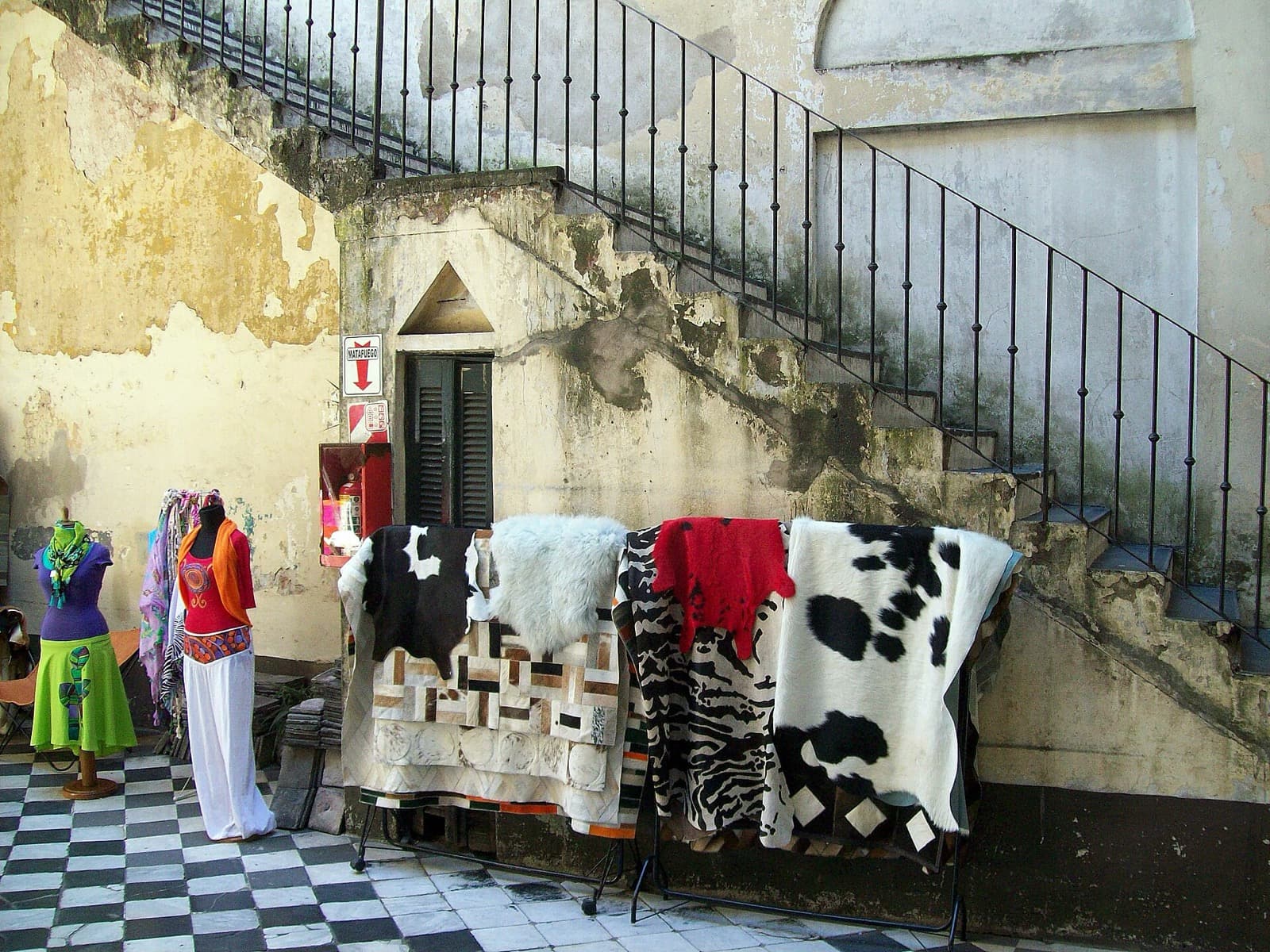
Pasaje de la Defensa: From Great House to Tenement
A former family mansion at Defensa 1179, built around linked courtyards, that became a crowded immigrant tenement and is now a gallery of antique and craft shops.
- 7
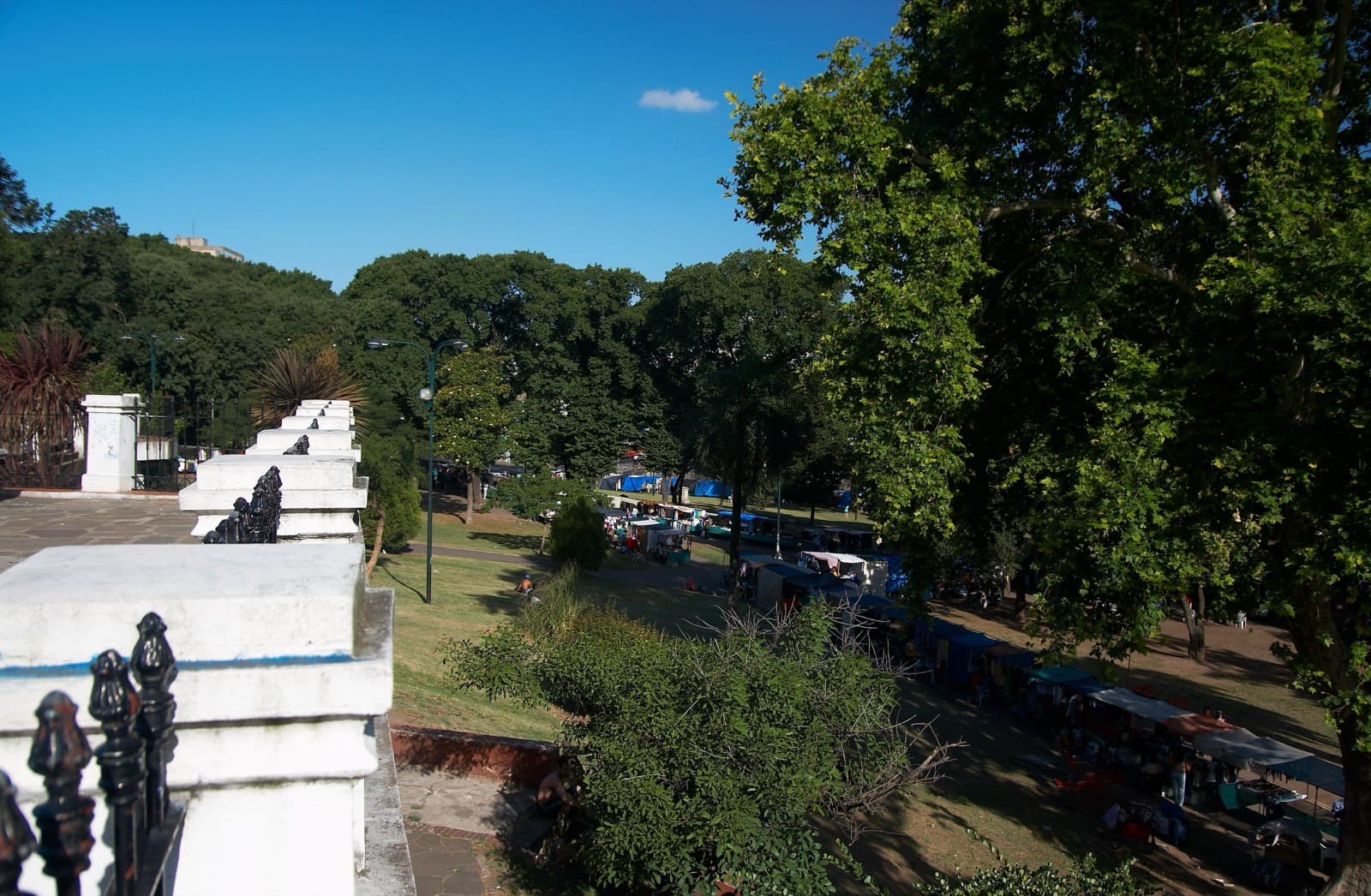
Parque Lezama: Where the City Is Said to Have Begun
A park on a bluff at the southern edge of San Telmo, traditionally held to be where the first, failed founding of Buenos Aires stood, now home to a monument and a national museum.
Details
Best Time to Visit
Sunday is the barrio at full voice, when the Feria de San Telmo fills Plaza Dorrego and spills down Calle Defensa with antique stalls and street tango, so come Sunday if you want the living heritage and the crowds together. For a quieter read of the same streets, come on a weekday morning when the cobbles are calm, the Mercado de San Telmo is busy with everyday shopping rather than tourists, and the working church is open for reflection. Late morning to early afternoon suits the light on the low colonial facades. If you plan to go inside El Zanjon de Granados, check its guided-tour times in advance, since it is visited by timed tour only.
Pro Tips
- •Wear sturdy, flat shoes: San Telmo's streets are original cobblestones and the pavements are uneven, so heels and thin soles will fight you the whole way.
- •El Zanjon de Granados is a private museum seen by guided tour only, so check the schedule and consider booking ahead rather than arriving and hoping to walk straight in.
- •Carry cash in Argentine pesos: many stalls at the Sunday fair, small shops, and the market prefer cash, and a few will not take cards at all.
- •Come Sunday for the Feria de San Telmo if you want the fair and street tango, or a weekday morning if you want the same streets quiet and the market at its everyday rhythm.
- •Treat the Parroquia San Pedro Telmo as the working church it is: keep your voice low, dress modestly if you step inside, and avoid wandering during a service.
- •Pace yourself and skip freely: each stop stands on its own, so linger at Plaza Dorrego or El Zanjon as long as you like and move on whenever you are ready.
Safety & Precautions
- •San Telmo's cobblestones and uneven pavements are genuinely tricky, especially where stones are loose or missing, so watch your footing and mind the curbs.
- •Keep valuables discreet and your bag closed and in front of you in the crowded Sunday fair on Plaza Dorrego and Calle Defensa, where ordinary big-city pickpocketing is the main risk.
- •The Parroquia San Pedro Telmo is an active place of worship: modest dress and quiet are expected, and photography may be limited during services.
- •El Zanjon de Granados is a paid guided visit that may need booking, and summer sun from December to February on these open streets is strong, so carry water, and remember the currency is the Argentine peso with cash often preferred.
Travel advisory: Exercise Normal Precautions (Level 1).
Gallery
Related Reading
Go deeper on what you'll see, hear, and walk through.

Overview
Best Self-Guided Walking Tours in Buenos Aires (2026)
4 min
Overview
Buenos Aires Travel Guide: Days, Transport, Season, Safety, Budget
7 min
Overview
One Day in Buenos Aires: A Walkable Itinerary From Plaza de Mayo to San Telmo
8 min
Thematic
Buenos Aires: The City That Keeps Rewriting Itself in Public
8 min
Companion
Tango on Plaza Dorrego: Why San Telmo Has No Single Birthplace
7 min
Deep dive
Plaza Dorrego: The Small Square Where San Telmo Comes to Life
7 min
Read
What to Eat in Buenos Aires: Dishes, Origins, and How to Order
7 min
Read the walk
The full story of San Telmo: The Cobblestones Where Tango Was Born, in words. Prefer to listen? Play it narrated, from home or on location.
Introduction
San Telmo is the oldest surviving quarter of Buenos Aires, and it is the kind of place you hear and feel before you read it. This walk covers seven stops over roughly ninety minutes and about one and a half kilometres, through the cobbled heart of this barrio in Argentina, and it asks a single question at every corner: what does a street show, and what does it hold underneath. Here in Buenos Aires, San Telmo looks like a preserved colonial postcard, low houses, iron balconies, stones underfoot. Yet nearly every surface is a second use. An aristocratic house became a tenement. A market built for immigrants still sells produce. A founding site is tradition rather than settled fact. The story that turns everything is the yellow fever epidemic of eighteen seventy-one, which drove the wealthy north and left the barrio to arriving immigrants, in whose patios and corners tango slowly took shape. You will begin at the sensory heart, the Sunday fair on Plaza Dorrego, then follow the grain of the old city: the barrio's most famous export, an immigrant market under iron and glass, a house where the ground itself opens onto the buried city, the sailors' church that gives the neighbourhood its name, a great house turned tenement, and finally a park where the city is said to have begun. Take it at your own pace. Each stop stands alone, so linger where you like and move on when you are ready. When you arrive at Plaza Dorrego, at the corner of Humberto Primo and Defensa, begin with stop one.
1. Plaza Dorrego: The Sunday Fair at the Heart of the Barrio
You are standing at the corner of Humberto Primo and Defensa, at Plaza Dorrego, the gathering point of San Telmo. Plaza simply means square, and this is a small one, ringed by low facades, but it carries a long memory. Spanish sources describe it as the second-oldest square of the city, with origins traced to fifteen eighty-six as the Alto de las Carretas, the high place where the wagons stopped. The names changed with the century. It was the Alto de San Pedro, then the Plaza del Comercio in eighteen twenty-two, and took its current form in nineteen hundred five. Through the eighteen hundreds, when San Telmo was the main residential neighbourhood, this square was its central gathering point. Come on a Sunday and the plaza disappears under the Feria de San Telmo, the antiques fair, its stalls crowding the square and spilling down Calle Defensa, calle meaning street. You will hear the fair before you see it: the clatter of old silver and glass, bargaining, and somewhere the sound of a bandoneon as couples dance tango on the stones for whoever gathers to watch. This is not a shopping errand to tick off. It is living heritage, a weekly ritual that has made this small square a stage for the barrio's own traditions. Notice how the fair uses the space exactly as the wagons and residents once did, as common ground. That is the theme of this whole walk in miniature. Every surface here is a second use, and the plaza that held wagons in the sixteenth century now holds the Sunday crowd. Take your time. When you are ready, we turn to the barrio's most famous export.
2. Tango: The Barrio's Most Famous Export
Stay a moment on the square, because the barrio's most famous export has no single address, and that is the point. Tango emerged in the late nineteenth century, from the eighteen eighties, along the River Plate, in the impoverished port and working-class immigrant districts of Buenos Aires and, across the water, Montevideo. The neighbourhoods that Argentine history ties to tango's early years include La Boca, San Telmo and Boedo. So when someone tells you tango was born on this exact corner, hold it lightly. The exact birthplace is tradition, claimed by several districts at once, not one settled spot. What is settled is the mixture. Tango blended the local milonga, the Spanish and Cuban habanera, the candombe carried by African-Argentines descended from formerly enslaved people, and European musical forms brought by immigrants. Around nineteen hundred it was widely regarded as disreputable, danced in the poorer margins of the port city. Then dancers and orchestras carried it to Paris, London and Berlin, and it returned respectable, and famous. UNESCO records that tango was inscribed on the Representative List of the Intangible Cultural Heritage of Humanity in two thousand nine, at its committee session in Abu Dhabi, on a joint nomination by Argentina and Uruguay, describing a fusion of European immigrants, descendants of African slaves, and native criollos. Think of that as you watch the Sunday dancers on the cobbles. What they perform is not a museum piece pinned to one plaque. It is a living tradition that grew in barrios exactly like this one, out of the everyday lives of the people the wealthy left behind. When you are ready, we go looking for that everyday life under iron and glass.
3. Mercado de San Telmo: The Immigrant Everyday Under Iron and Glass
You have reached the Mercado de San Telmo, the market, filling the inside of a whole block with entrances off Calle Defensa. Step from the street through the round-arched facade and the light changes. Overhead is an atrium of iron beams, sheet metal and glass, the kind of engineered roof that felt thoroughly modern when it went up. The city government notes that it opened in February eighteen ninety-seven, designed by the engineer-architect Juan Antonio Buschiazzo, who lived from eighteen forty-five to nineteen seventeen and was the second architect to qualify in Buenos Aires. The outside wears an Italianate dress, round arches and a restrained Tuscan order, but the true story is inside, in that iron and glass. This market was built to feed people. In the eighteen nineties, wave after wave of European immigrants were arriving, and a covered market meant produce, reliably, close to home. That is the everyday this walk keeps reaching for. Not a monument to a general, but a roof under which ordinary families bought vegetables, argued over prices, and made a foreign city into a home. Walk the aisles and you will still find produce alongside antiques, the working market layered over the tourist one, another second use. It was declared a national historic monument in the year two thousand, which is a fitting recognition for a building whose grandeur was always in service of the ordinary. Notice the way the iron carries the roof so lightly, and how the noise gathers under the glass. When you are ready, we go to the place where the barrio's floor lifts and shows you the city buried beneath it.
4. El Zanjon de Granados: The Foundations Beneath the Barrio
At Defensa 755 stands El Zanjon de Granados, and this is the turn of the walk, the place where the ground literally opens. On the surface it is an Italianate house, finalized around eighteen thirty. But the name points downward. A zanjon is a ditch or gully, and the Tercero del…
Full narration for this stop unlocks with the tour.
5. Parroquia San Pedro Telmo: The Sailors' Church That Names the Barrio
At the corner of Balcarce and Humberto Primo stands the Parroquia San Pedro Telmo, also called Nuestra Senora de Belen, Our Lady of Bethlehem. Parroquia means parish church, and this is a working one, so if you step inside, keep your voice low and dress modestly. Its history…
Full narration for this stop unlocks with the tour.
6. Pasaje de la Defensa: From Great House to Tenement
At Defensa 1179, just south of Plaza Dorrego, you come to the Pasaje de la Defensa. Pasaje means passage or alley, and this one runs back through a series of linked courtyards, the patios around which the building was arranged in the mid to late nineteenth century. It was the…
Full narration for this stop unlocks with the tour.
7. Parque Lezama: Where the City Is Said to Have Begun
You end the walk at Parque Lezama, a park on a bluff at the southern edge of San Telmo, above what was once the riverbank. Parque means park. It is a fitting close, because this is where the city is said to have begun. Tradition holds that on this eastern bluff, Pedro de Mendoza…
Full narration for this stop unlocks with the tour.