Plaza de Mayo: The Square Where a Nation Keeps Being Made
90 min · 2.1 km · easy
One good day in Buenos Aires walks the city center to Recoleta to San Telmo, tracing the founding square, the marble cemetery of the elite, and the oldest surviving quarter, all on foot with time to sit and eat. Start at the Plaza de Mayo when the light is soft, cross to Recoleta by midday, and end in San Telmo as the afternoon cools. The three neighborhoods sit close enough that a walker can link them with short taxi or subte hops, and each one already has a self-guided audio tour that carries the history stop by stop while you keep your eyes on the street. This itinerary sequences those three walks into a single day and flags the opening hours, fees, and safety notes worth knowing before you go.
Below is the hour-by-hour route, the logistics that actually change your plans (a couple of closures can reshape the day), and how each leg hands off to a Roamer tour.
The short answer: one walkable day, three neighborhoods
Morning in the historic center around the Plaza de Mayo. Midday and early afternoon in Recoleta, cemetery first. Late afternoon and evening in San Telmo, ending near Parque Lezama. Total walking is roughly 8 kilometers spread across the day, broken by two short transfers, a sit-down lunch, and a cafe stop. It is a full day but not a forced march, because the distances inside each neighborhood are small: the San Telmo loop is only about 1.5 kilometers, and the Recoleta walk is about 3.
Two scheduling facts drive everything. First, the San Telmo antiques fair runs on Sundays only, so a Sunday visit puts the street market at the end of your day. Second, the Museo Nacional de Bellas Artes in Recoleta closes on Mondays, and the Museo Casa Rosada opens only Wednesday through Sunday. If you want both museums open, aim for Wednesday through Sunday, and Sunday if you also want the fair.
See the full set of routes on the Buenos Aires walking tours hub, or browse everything on the /argentina/buenos-aires city page.
Morning: the Plaza de Mayo and the historic center
Hear a stop from this walk
National Congress: The Other End of the Axis
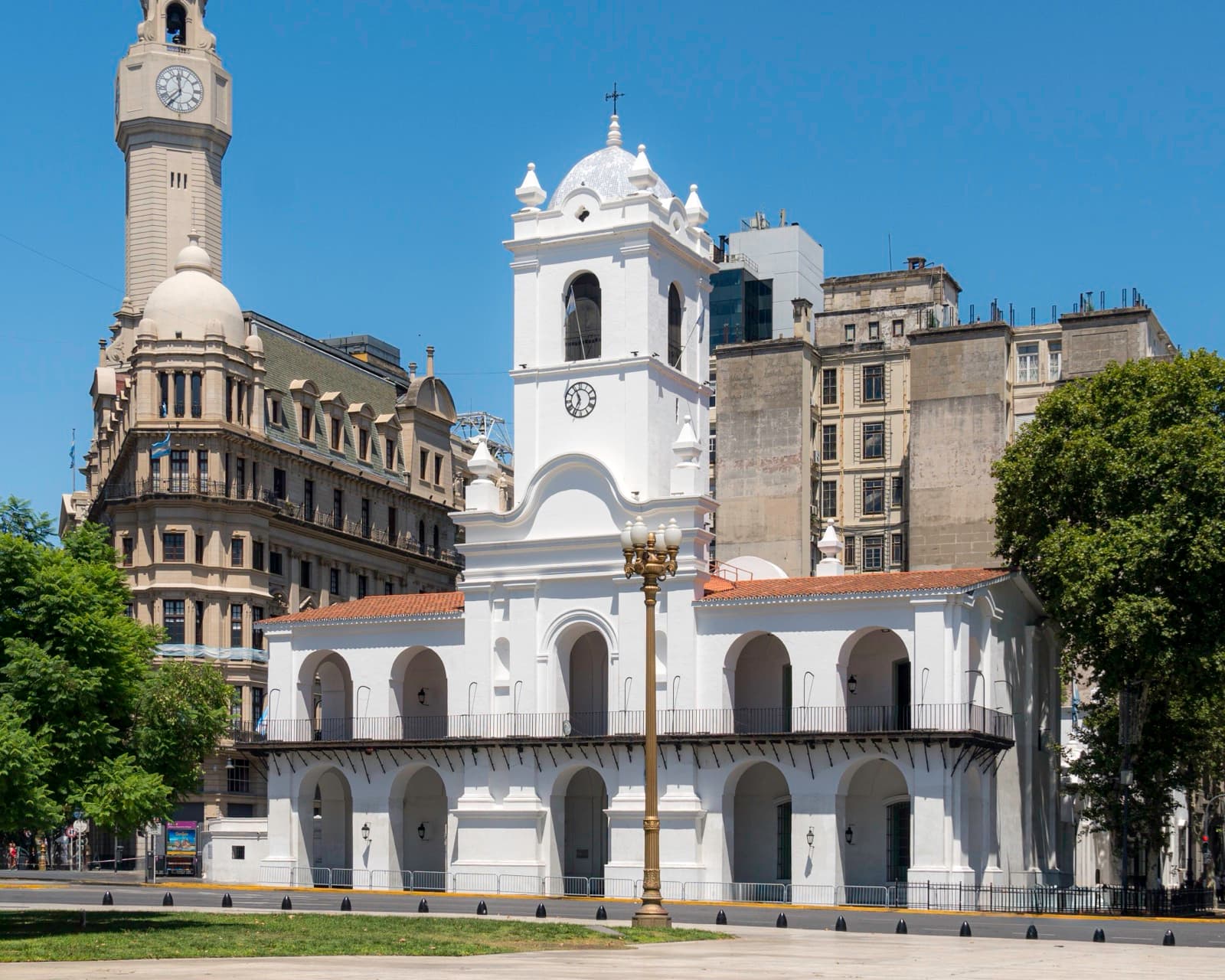
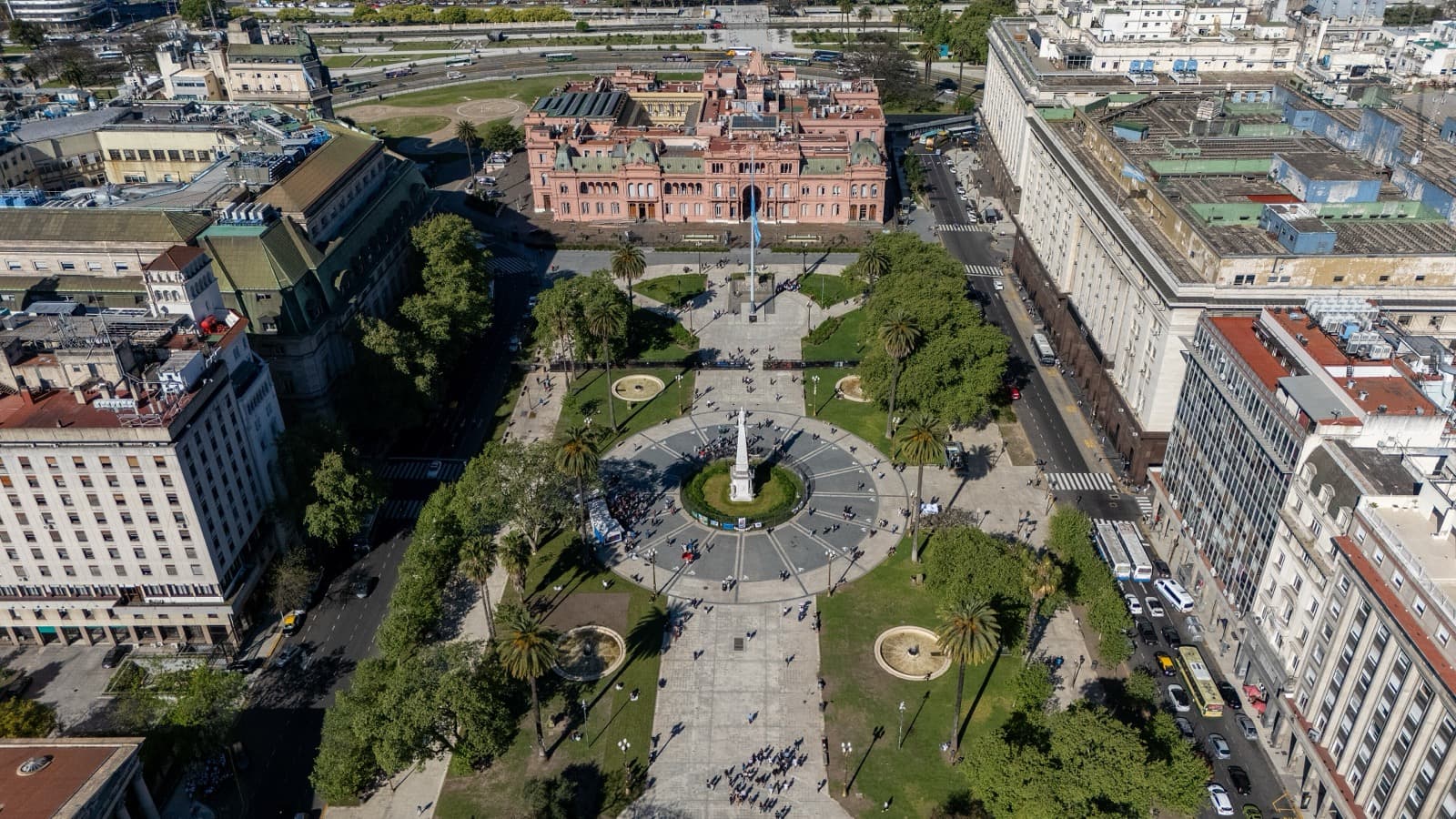
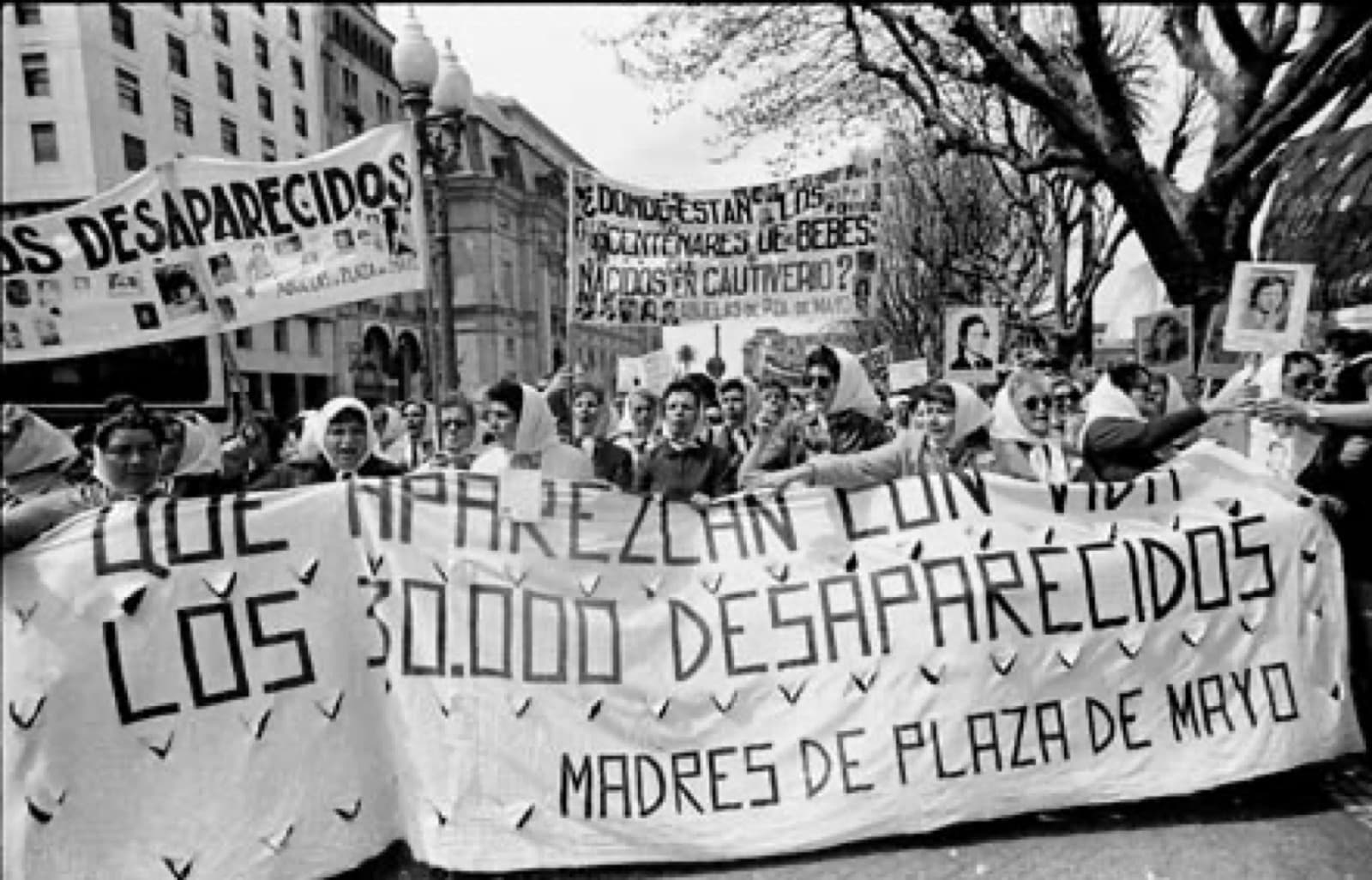
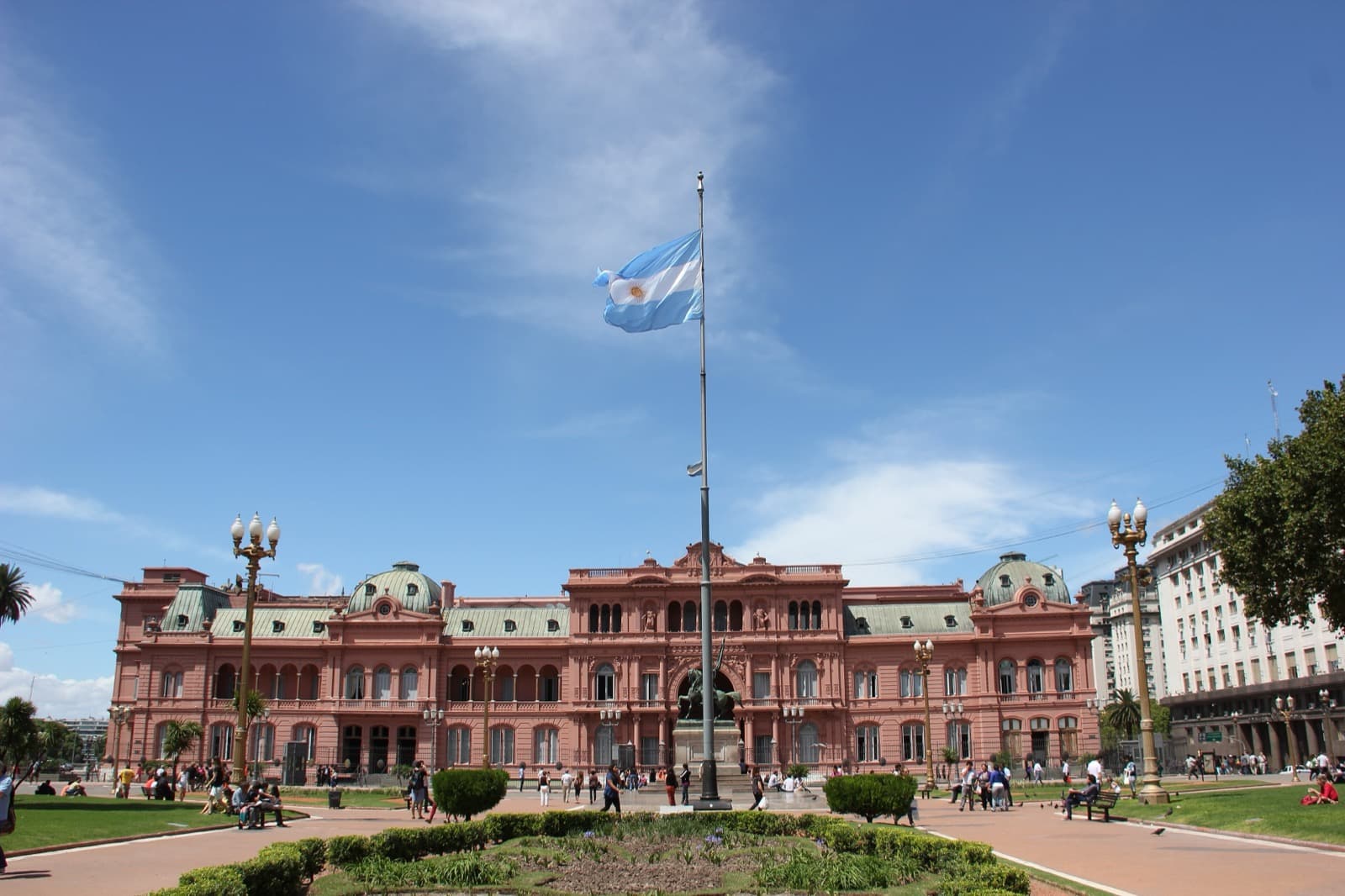
Begin at the Plaza de Mayo, the square where the city was refounded and where Argentine political life still concentrates. The open square, the May Pyramid at its center, and the painted headscarves of the Mothers of the Plaza de Mayo circling that monument are all free and always accessible. Around the plaza stand the Casa Rosada (the pink presidential palace), the Cabildo (the old colonial town hall), and the Metropolitan Cathedral, which holds the tomb of General San Martin.
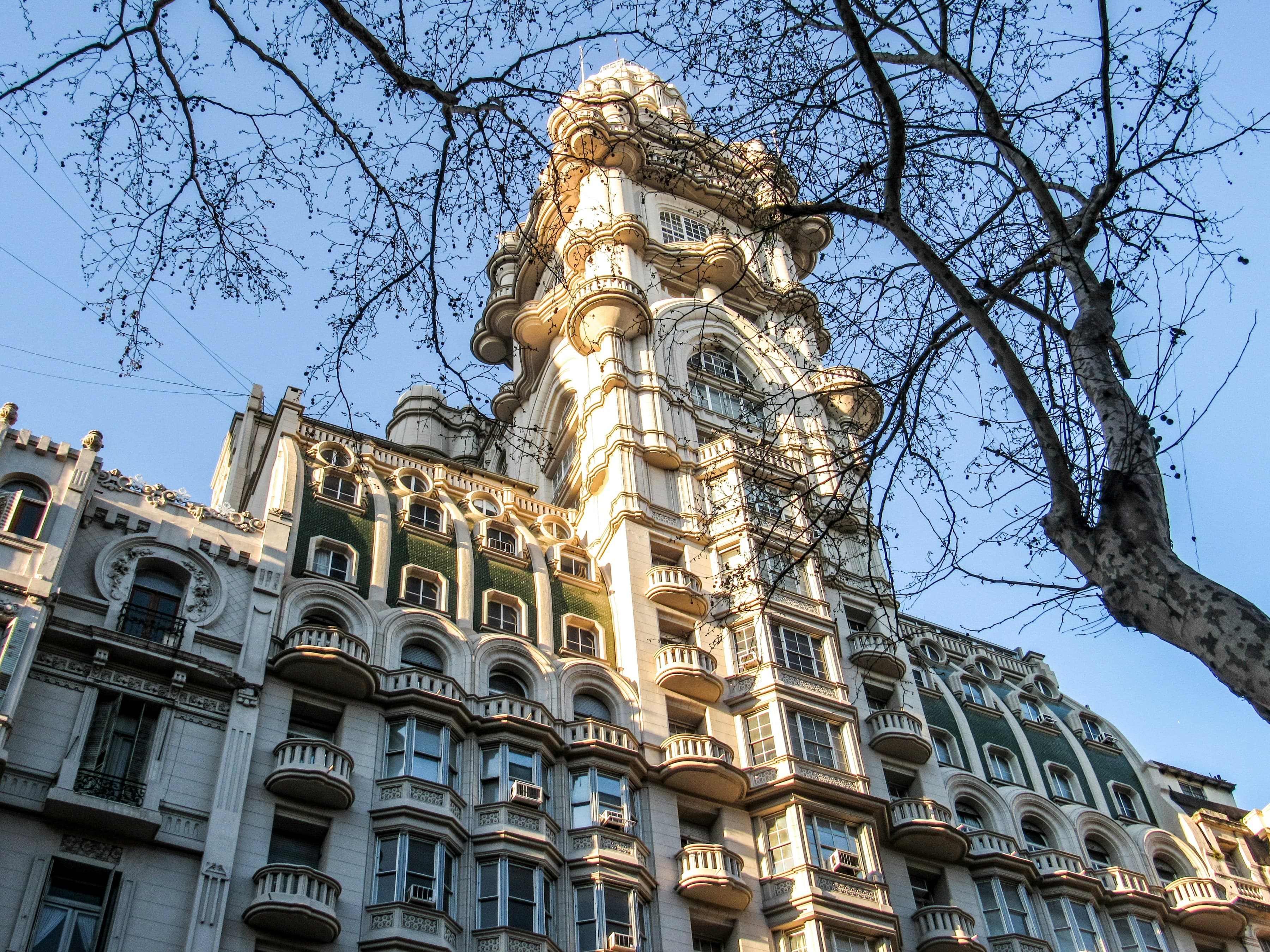
The palace exterior and the cathedral cost nothing. The Museo Casa Rosada, entered from the Paseo Colon side, is free but opens only Wednesday to Sunday, roughly late morning to early evening, so time your visit accordingly or admire the balcony from the square. The cathedral is a working church, so keep quiet during services. From the plaza, walk west along the Avenida de Mayo, the Belle Epoque boulevard built to echo Paris, past Cafe Tortoni (a paid cafe, worth a coffee if the line is short) toward Palacio Barolo and, at the far end, the National Congress. The Barolo is an office building, so the lobby may be open during office hours; climbing to its beacon requires a ticketed guided tour, best booked ahead.
This whole morning is the route of the Plaza de Mayo self-guided audio tour: about 2 kilometers and 90 minutes across ten stops, from the Casa Rosada and the May Pyramid to the Congress. Let the audio handle the layered history of colonial power, revolution, and dictatorship while you watch the boulevard.
Midday: transfer to Recoleta and the cemetery
From the Congress area, take a taxi, rideshare, or the subte north to Recoleta, a ride of roughly 10 to 15 minutes. Recoleta is a calm, elegant district, widely regarded as one of the safest in the city, and it is very walkable.
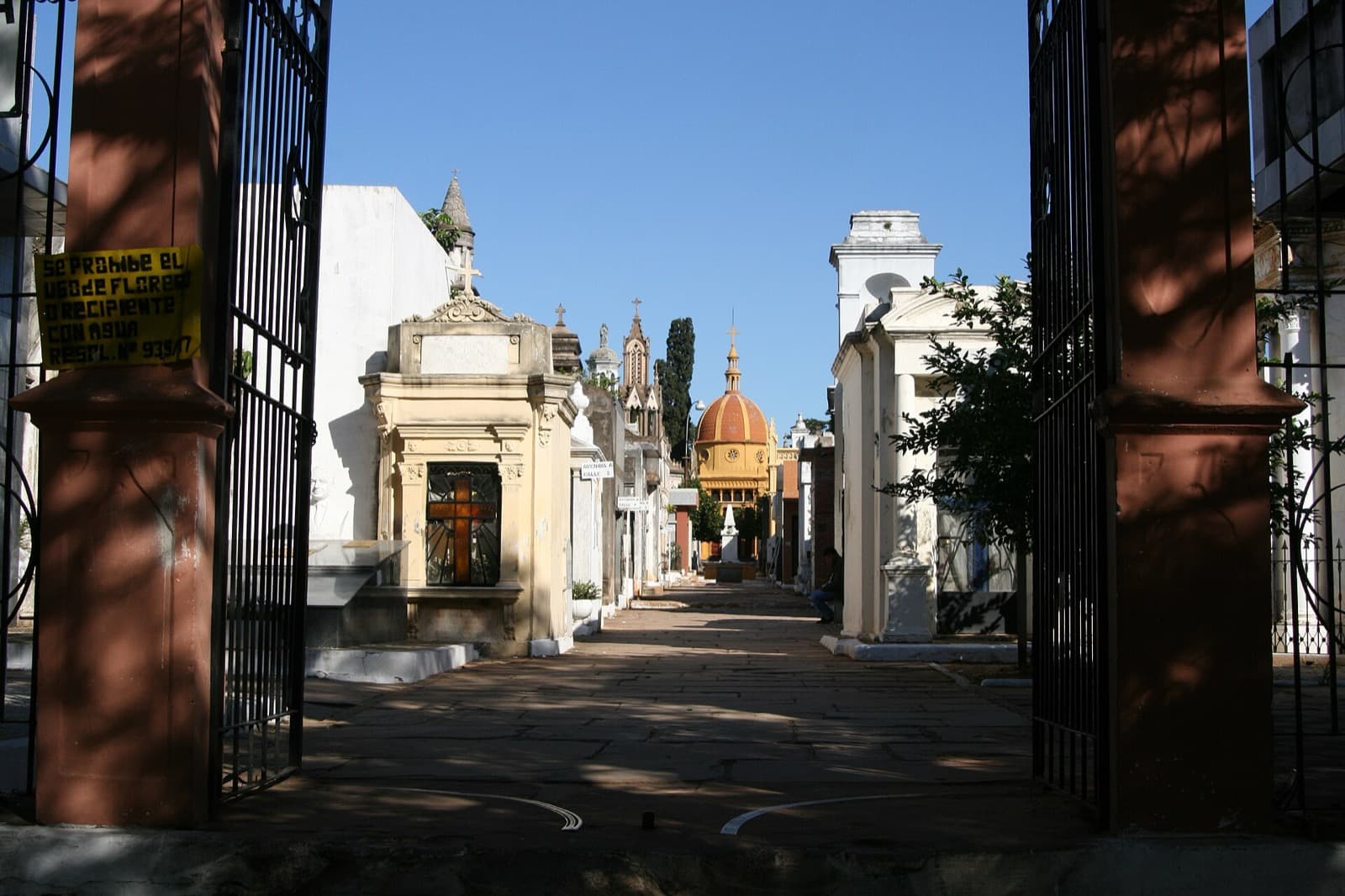
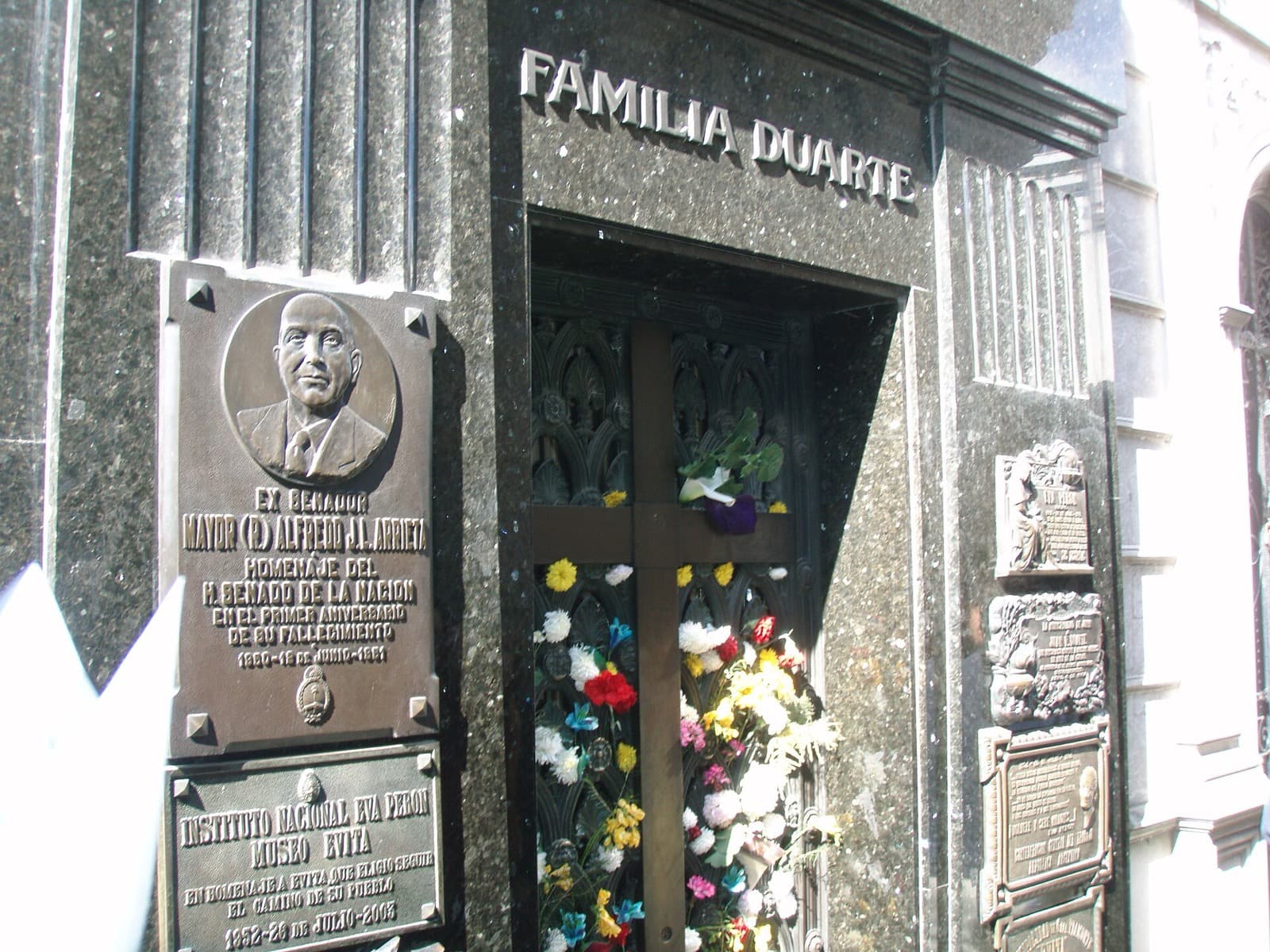
Start at the La Recoleta Cemetery, entered through its Doric gate. This is a city of marble mausoleums built by Argentina's landowning families, and the most visited grave belongs to Eva Peron, in the Duarte family vault. Entry is free for Argentine residents; foreign visitors pay an admission fee at the gate, and payment is by card only, so bring a bank or credit card rather than cash. The cemetery opens daily in the morning and closes in the early evening. Give yourself at least an hour to wander the marble avenues.
Next to the cemetery stand the Basilica de Nuestra Senora del Pilar (a free working church) and, on weekends, a craft fair spilling across the adjacent parks. Walk up through Plaza Francia and its enormous rubber tree, along the mansion-lined Avenida Alvear, and out to the giant steel flower Floralis Generica in United Nations Square. Finish at the Museo Nacional de Bellas Artes, whose permanent collection is free (donations welcome). The museum closes on Mondays and runs Tuesday to Sunday, so a Monday plan should swap it for more time in the parks. This leg is the Recoleta self-guided audio tour: about 3 kilometers, 90 minutes, eight stops, rated easy. Break for a late lunch anywhere along Avenida Alvear or near the museum before moving on.
Afternoon and evening: San Telmo, the oldest quarter
From Recoleta, take a taxi or the subte south to San Telmo, roughly 15 to 20 minutes. This is the oldest surviving neighborhood in Buenos Aires, read best through its texture: cobbled Defensa street, wrought iron, and the corners where tango took shape.
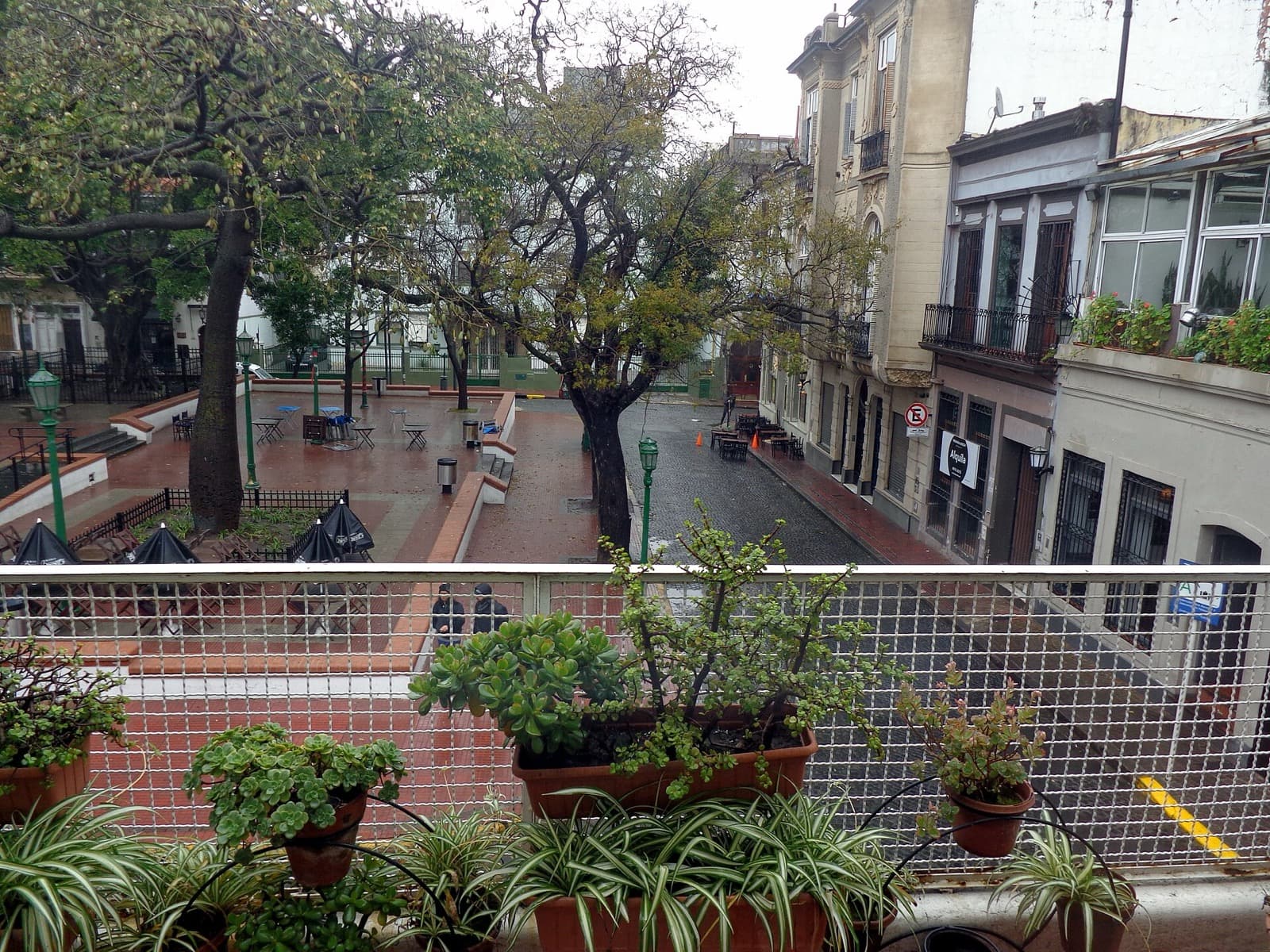
Center your walk on Plaza Dorrego, the small square that anchors the barrio. On Sundays, the Feria de San Telmo fills Defensa street with antiques and craft stalls, running roughly from mid-morning to late afternoon, all free to browse, with tango dancers performing on the plaza. Any other day, the square is quieter but the covered Mercado de San Telmo (free to enter, food and antiques inside) still hums. Two stops reward a pause: the Parroquia San Pedro Telmo church (free) and El Zanjon de Granados, an excavated network of tunnels and buried foundations that can be seen only on a paid guided tour, so book ahead if it interests you. The walk ends south at Parque Lezama, a public park on the rise where the city's first settlement is traditionally placed.
This is the San Telmo self-guided audio tour: a compact 1.5 kilometers, about 85 minutes, seven stops, easy walking. Time it for late afternoon so the neighborhood is lively and lit. San Telmo is a daytime-and-early-evening area for casual walking: main streets are fine, side streets thin out after dark, so keep to the busier blocks and take a taxi or rideshare back to your accommodation at night.
Logistics that change the plan
Fees. Most of this day is free. The reliable paid items are the Recoleta Cemetery admission for foreigners (card only), El Zanjon's guided tour, Palacio Barolo's beacon tour, and anything you eat or drink. Both major museums (Casa Rosada and Bellas Artes) are free.
Hours to respect. Museo Casa Rosada: Wednesday to Sunday. Museo Nacional de Bellas Artes: Tuesday to Sunday, closed Mondays. Recoleta Cemetery: daily, morning to early evening. San Telmo fair: Sundays only.
Transport. Distances inside each neighborhood are walkable, but the two transfers are faster by taxi, rideshare, or subte. For public transport, a rechargeable SUBE card (sold at kiosks and stations, bought with your passport) covers buses and the subway; the subte turnstiles now also accept contactless bank cards and phone wallets. A taxi or rideshare between neighborhoods is inexpensive and simple.
Safety, framed honestly. Argentina sits at the lowest tier of common travel advisories, and the neighborhoods on this route are among the areas tourists visit most. The realistic risk is petty theft, especially phone snatching, not violent crime. Keep your phone in your pocket rather than in your hand near busy corners, subte doors, or open taxi windows, carry a card for the cemetery, and shift to taxis after dark in San Telmo. With those habits, the day is calm and enjoyable.
Each leg pairs with a Roamer self-guided audio tour so you can walk at your own pace, pause for lunch or a coffee whenever you like, and let the narration carry the history while you watch the city. Start with the Buenos Aires walking tours hub to line up all three.
Sources
Frequently asked questions
- What is the best one-day walking route in Buenos Aires?
- Walk the historic center around the Plaza de Mayo in the morning, move to Recoleta for the cemetery and Avenida Alvear at midday, and finish in San Telmo in the late afternoon. Total walking is roughly 8 kilometers with two short taxi or subte transfers. Each neighborhood is compact and flat, so the day is full but not exhausting.
- Do you have to pay to enter Recoleta Cemetery?
- Argentine residents enter free, but foreign visitors pay an admission fee at the gate. Payment is by card only, so bring a bank or credit card rather than cash. The cemetery is open daily from the morning until the early evening.
- Is the San Telmo market open every day?
- The large outdoor Feria de San Telmo antiques and craft fair on Defensa street runs on Sundays only, roughly from mid-morning to late afternoon, and is free to browse. On other days the square is quieter, but the covered Mercado de San Telmo is open through the week and is also free to enter.
- Which Buenos Aires museums are closed on certain days?
- The Museo Nacional de Bellas Artes in Recoleta is closed on Mondays and open Tuesday to Sunday, with free admission to the permanent collection. The Museo Casa Rosada by the Plaza de Mayo is open Wednesday to Sunday only and is also free. Plan a Wednes-to-Sunday visit if you want both open.
- Is it safe to walk around Buenos Aires as a tourist?
- Argentina sits at the lowest tier of common travel advisories, and Recoleta, the city center, and daytime San Telmo are among the areas tourists visit most. The realistic risk is petty theft, especially phone snatching, rather than violent crime. Keep your phone out of sight near busy corners and subte doors, and take a taxi or rideshare after dark in San Telmo.
- How do you get between neighborhoods in Buenos Aires?
- Distances inside each neighborhood are walkable, but the transfers between the center, Recoleta, and San Telmo are quicker by taxi, rideshare, or subway. A rechargeable SUBE card, bought at kiosks or stations with your passport, covers buses and the subte, and the subway turnstiles now also accept contactless bank cards and phone wallets.
Ready to experience it?
Plaza de Mayo: The Square Where a Nation Keeps Being Made
90 min · 2.1 km · easy
More from Buenos Aires
Explore more at your own pace.
Buenos Aires: The City That Keeps Rewriting Itself in Public
The Tomb of Eva Perón and the Recoleta Cemetery That Outshone the Living
The White Headscarves at the Center of Plaza de Mayo
Casa Rosada: The Pink House That Faces the Founding Square
Plaza Dorrego: The Small Square Where San Telmo Comes to Life