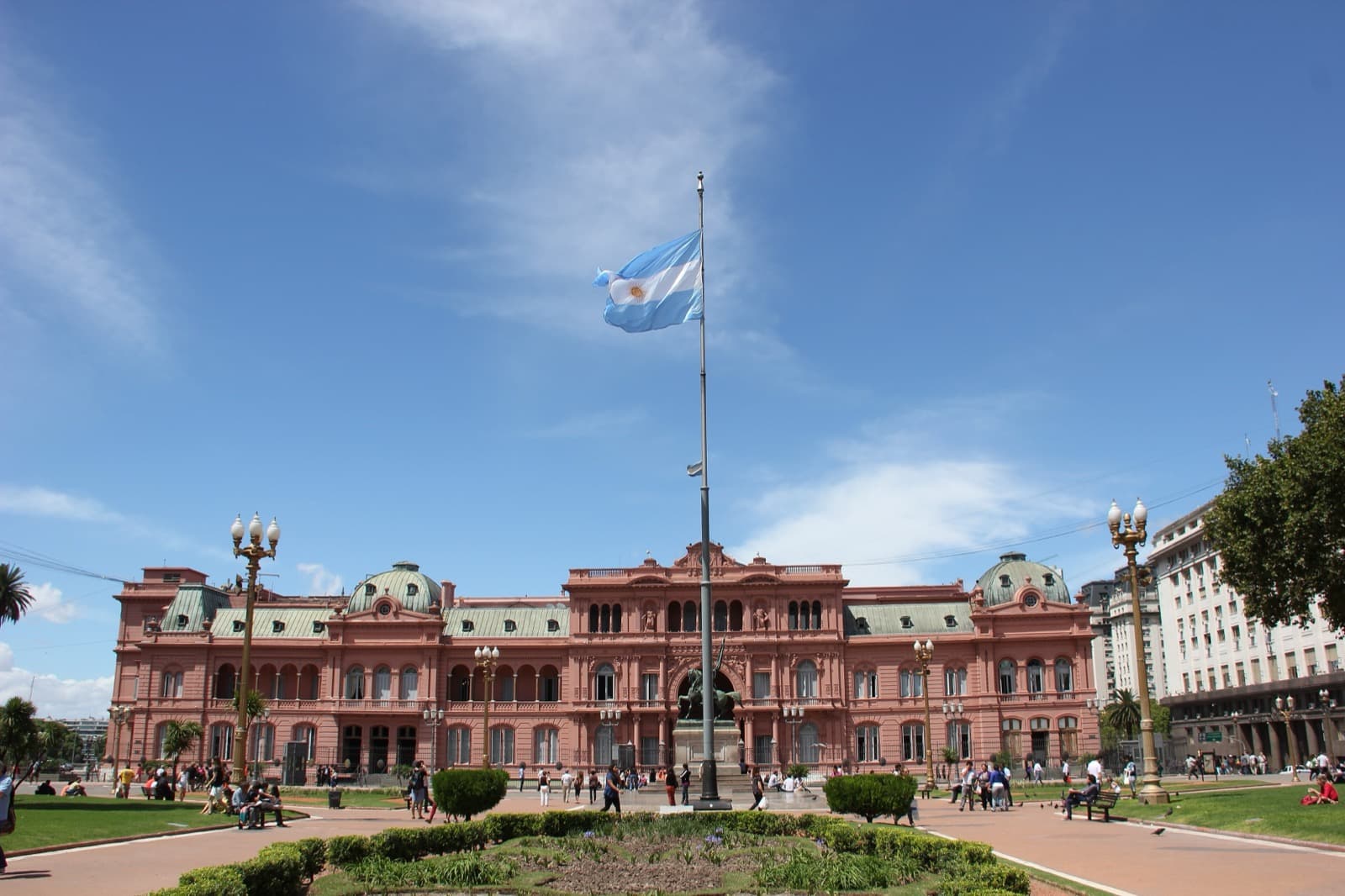
The Casa Rosada is the seat of Argentina's executive power, and it faces the Plaza de Mayo from the exact edge where Spanish colonial power once faced the same square. That continuity is the one thing to understand standing in front of the pink palace: this building holds the office of the President of the Argentine Republic, it rises on the buried remains of the colonial fort that first fixed authority at this spot, and its balcony over the square has served for more than a century as the country's most charged place of political address. Power has always faced this square from here, and the square has always answered back.
What you are actually looking at
Start with a correction that surprises most visitors. The president works here but does not usually live here. The official residence is the Quinta de Olivos, out in the northern suburbs. The Casa Rosada, the Pink House, is the workplace of the executive, the Argentine equivalent of a seat of government rather than a home. What you see across the Plaza de Mayo is the front of the state, deliberately placed at the eastern edge of the founding square.
That placement is not decorative. The palace stands on the site of the old colonial fort and customs house, and the layers underneath it read like a core sample of Argentine authority. A royal fort was built here in 1594. Between 1713 and 1720 it was replaced by a stone castle. Later a customs house rose behind it, and in the 1880s two separate buildings on the site, the central post office and a government palace, were joined by the great arch at the centre of the facade in 1886. The palace was finished in 1898, in the shape you see today. Every regime that governed this territory, from the Spanish crown to the modern republic, chose the same corner of the same square. When you stand before the Casa Rosada, you are looking at four centuries of power stacked on one footprint.
You can see the oldest layer for yourself. Behind the palace, the Museo Casa Rosada sits in the vaulted remains of the old customs house and the fort, uncovered in the 1980s, and admission is free. It is one of the few places in the historic center where you can descend to the physical foundation of colonial Buenos Aires and then walk back up into the seat of the current state.
Why it is pink
Hear a stop from this walk
National Congress: The Other End of the Axis
The color is the question everyone asks. The government's own history credits President Domingo Sarmiento with the pink paint, but on the question of why, no one can settle it. Tradition offers two competing stories, and a good chronicler holds both without pretending to know which is true.
The first says that Sarmiento chose pink to cool political tension, blending the red of one rival faction with the white of the other so the palace would belong to neither. Pink as a political compromise, literally mixed on the wall.
The second is earthier. It holds that the paint was cut with ox blood, a common practice for helping pigment resist the humidity that rises off the wide River Plate. Pink as a byproduct of engineering against the climate, not a message at all.
Both explanations are tradition, not documented fact. What matters is that whatever the origin, the color long ago stopped being a coat of paint and became the building's identity. Argentines do not say "the government house." They say the Casa Rosada, the Pink House, and the word for the color carries the whole institution with it.
The balcony
Now look up. The balcony over the Plaza de Mayo is the reason this facade is more than architecture. From here presidents have addressed enormous crowds packed onto the square below, and the balcony is most famously bound to the Peronist movement of the mid twentieth century. Eva Peron, known across the country simply as Evita, spoke from this front of the building to vast audiences, alongside her husband Juan Peron.
It is worth being careful here. Peronism remains genuinely divisive in Argentina to this day, loved and resented in roughly equal measure, and the point of standing at this balcony is not to take a side. It is to understand that Argentine political life has a physical stage, and this is it. When a president wants to speak directly to the people rather than through the institutions across the square, the country expects the address to come from this railing, over this plaza. The building's power is not only that it houses the executive. It is that it gives the executive a face to turn toward the crowd.
The one thing to carry away
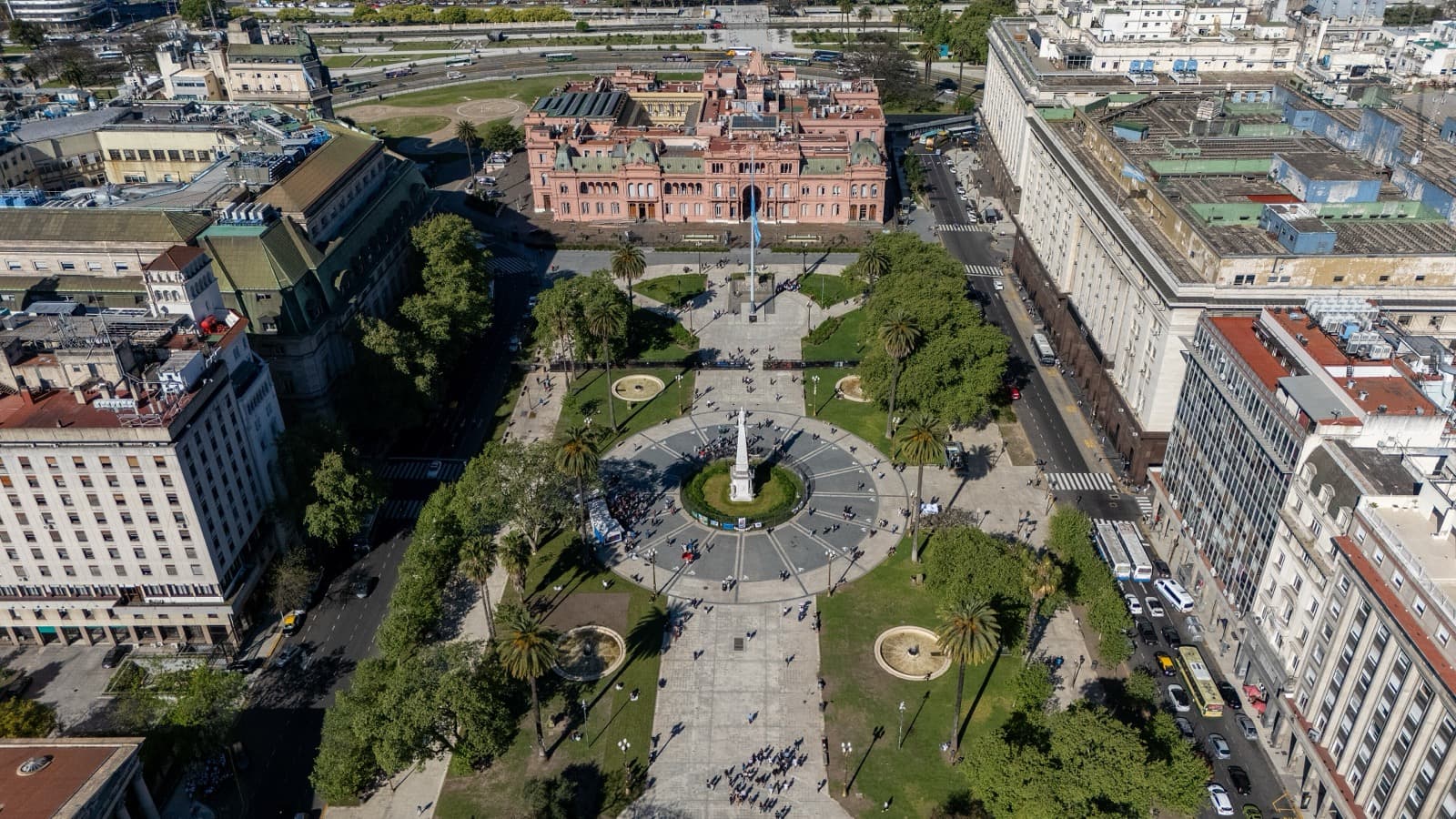
Understand the Casa Rosada as an edge, not just a building. The Plaza de Mayo has been the civic heart of Buenos Aires since the city was refounded on this ground by the general Juan de Garay in 1580, and the drama of the nation has always played out across its paving: colonial fort, revolution, populist glory, state terror, and mourning, all on one surface. The Casa Rosada is where one of the oldest actors in that drama, executive power, permanently faces the stage. The colonial fort gave way to a customs house, a post office and a palace, and those became the pink front of a republic that keeps arguing about itself in the open square below.
That is why the palace rewards a slow look rather than a quick photo. It is not a monument to a settled past. It is a working seat of a state that is still contested, planted on the exact spot where authority in this place began.
Walk it in context
The Casa Rosada makes the most sense as one beat in a longer line. Directly across the square sits the colonial Cabildo where the May Revolution was argued in 1810, the temple-fronted Metropolitan Cathedral holding the tomb of the Liberator San Martin, and, painted into the pavement around the central May Pyramid, the ring of white headscarves marking the path of the Mothers of the Plaza de Mayo. From there a Parisian boulevard runs west to the National Congress, carrying the whole arc from where the country was founded to where its laws are written.
The self-guided Plaza de Mayo walking tour links all of it into ten stops, about two kilometers and ninety unhurried minutes, with the Casa Rosada as its first stop and its clearest lesson in how a single edge of one square has held power for four hundred years. For the rest of the city, browse the full set of Buenos Aires walking tours and choose the ground you want to cover next.
Sources
- Casa Rosada, official history (casarosada.gob.ar). The fort of 1594, the castle of 1713 to 1720, the joining of the post office and government palace, and Sarmiento's pink paint.
- Museo Casa Rosada, visitor information (argentina.gob.ar). The museum in the customs house and fort remains, free entry.
- Casa Rosada, Buenos Aires official tourism (turismo.buenosaires.gob.ar). Visitor information for the palace exterior and the free Museo Casa Rosada.
- Buenos Aires city government, "11 de junio: fundacion de Buenos Aires" (buenosaires.gob.ar). Garay's refounding of the city in 1580.
- Roamer tour transcript, "Plaza de Mayo: The Square Where a Nation Keeps Being Made." Fact-audited narration for the Casa Rosada and its place on the square.
Ready to experience it?
Plaza de Mayo: The Square Where a Nation Keeps Being Made
90 min · 2.1 km · easy
More from Buenos Aires
Explore more at your own pace.
Buenos Aires: The City That Keeps Rewriting Itself in Public
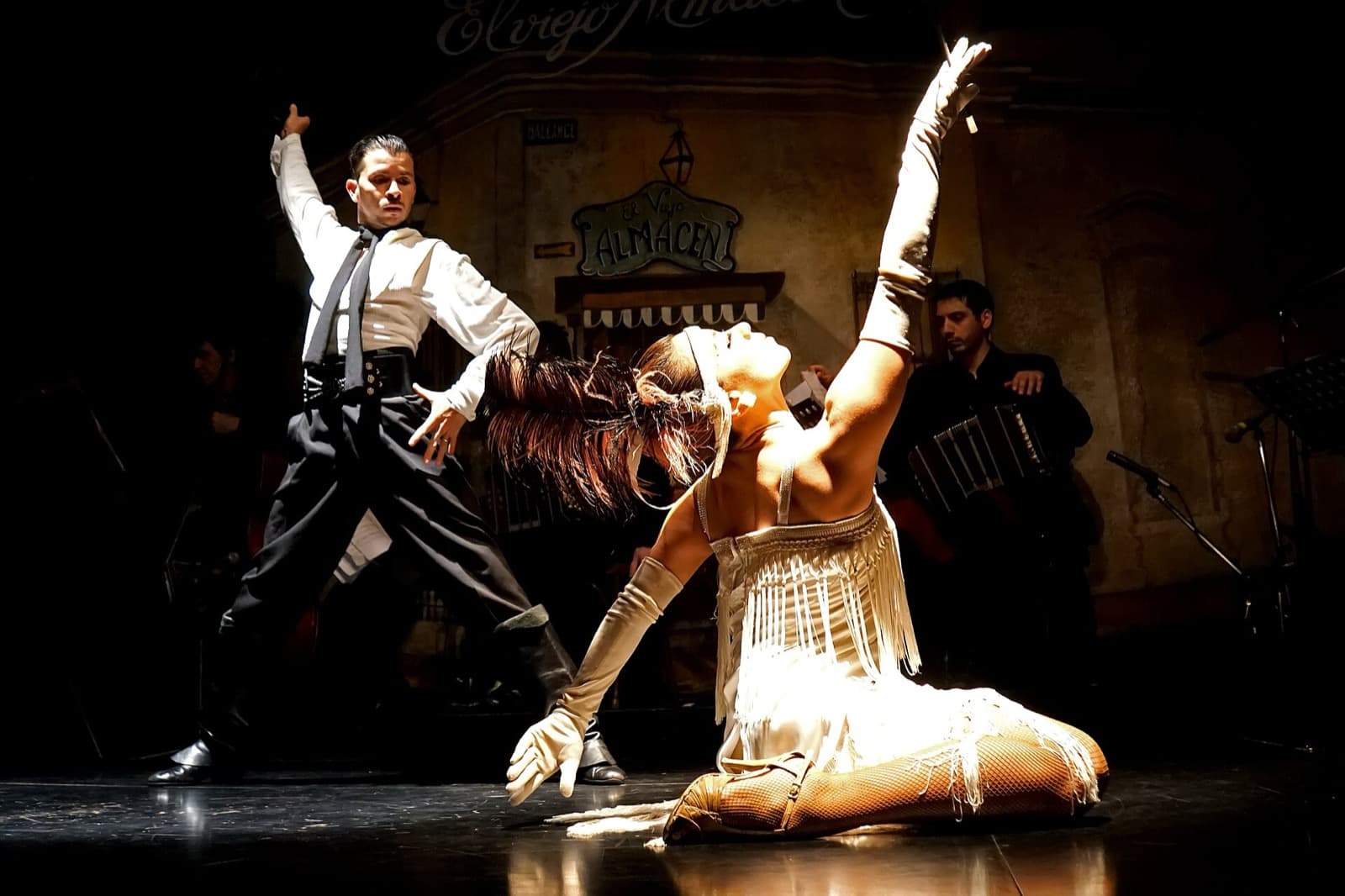
Tango on Plaza Dorrego: Why San Telmo Has No Single Birthplace
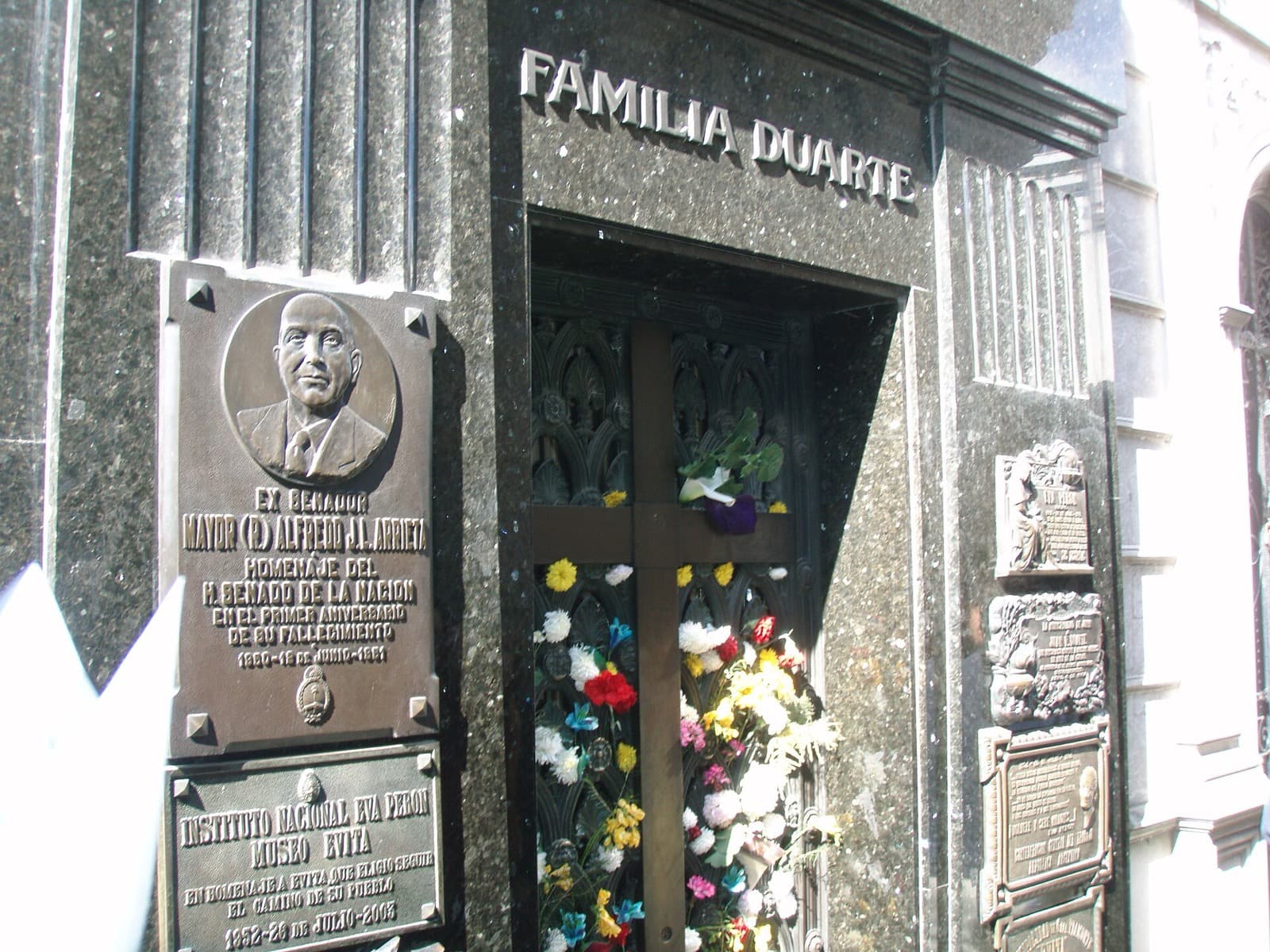
The Tomb of Eva Perón and the Recoleta Cemetery That Outshone the Living
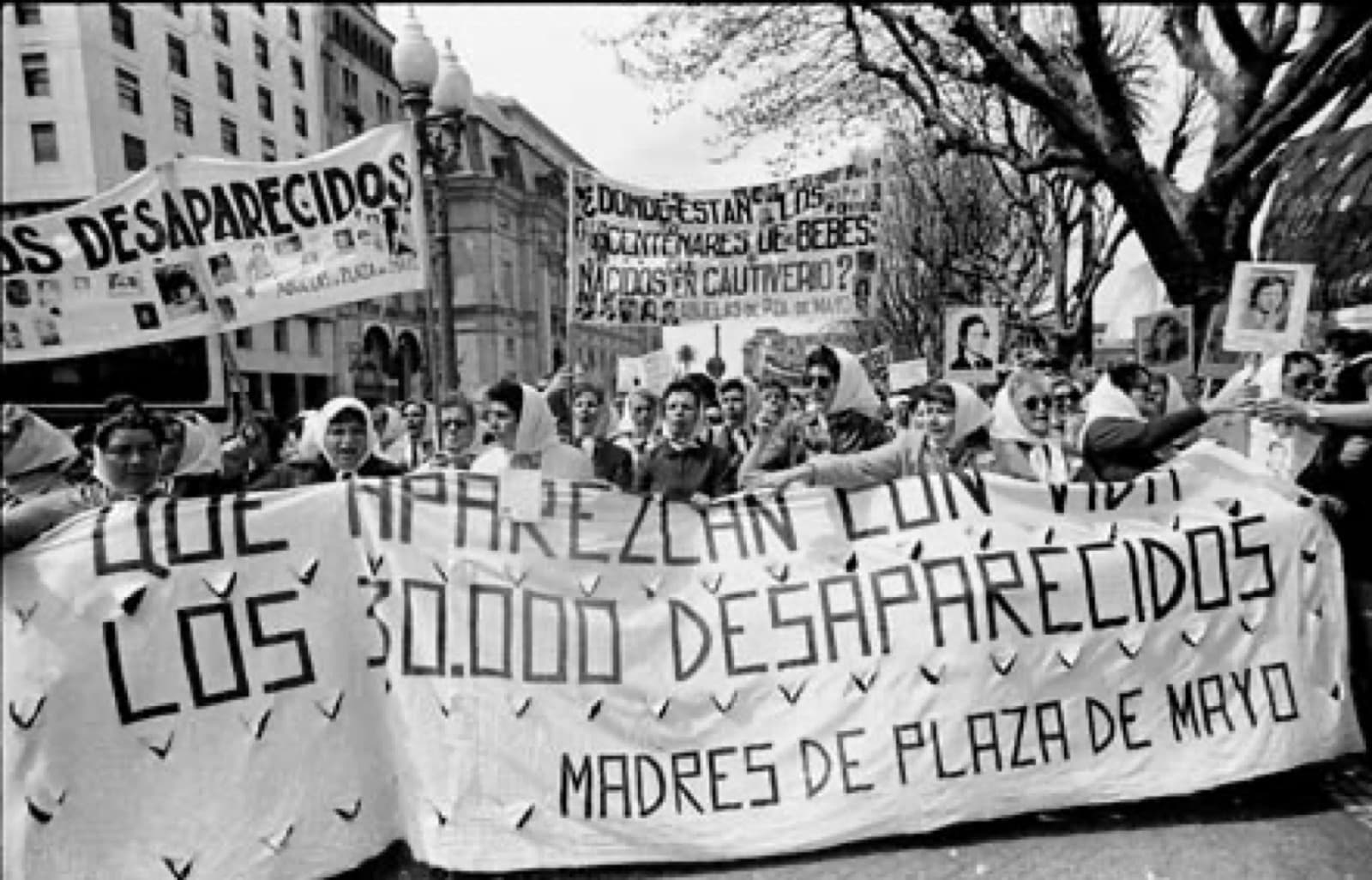
The White Headscarves at the Center of Plaza de Mayo
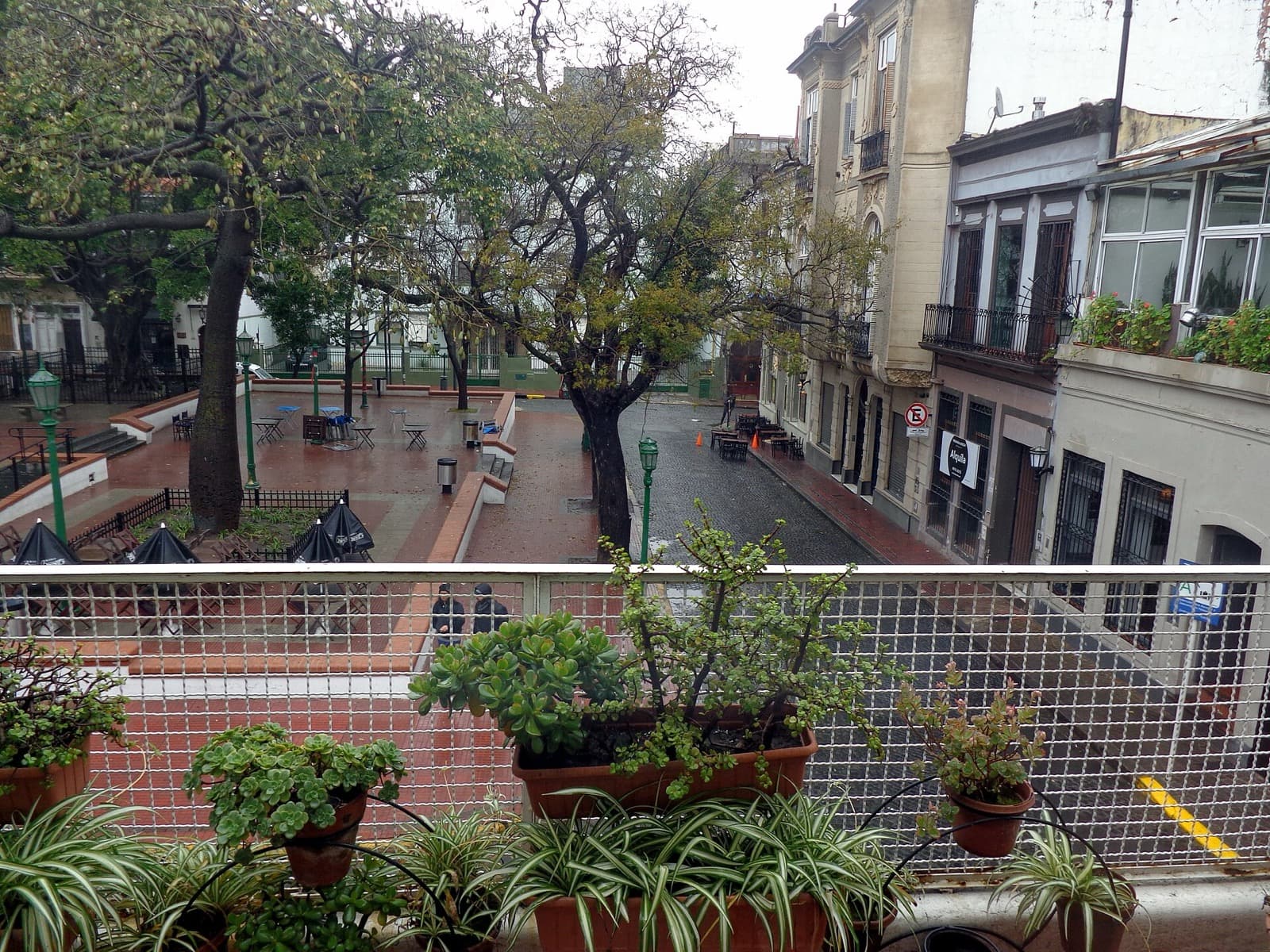
Plaza Dorrego: The Small Square Where San Telmo Comes to Life