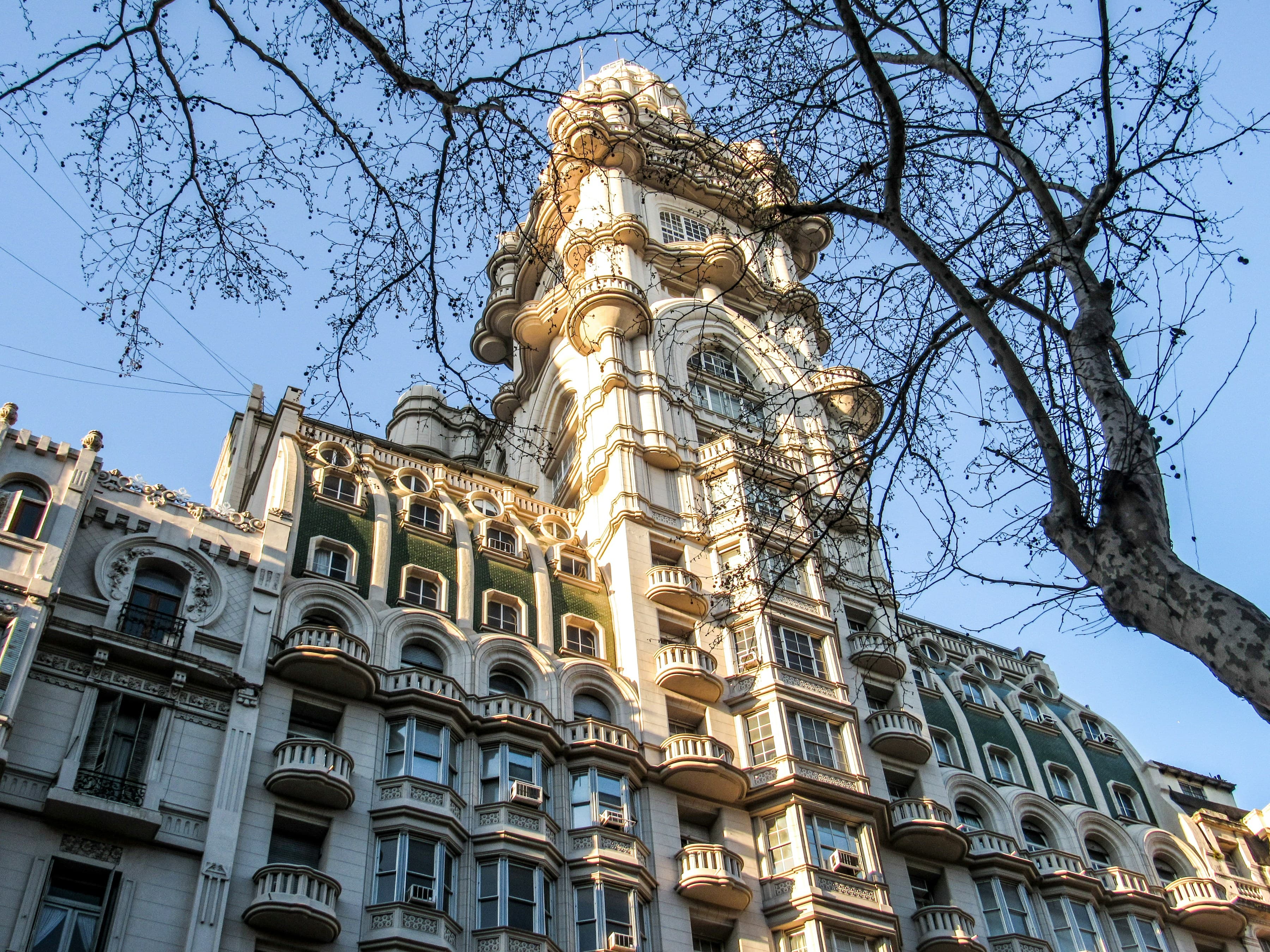
A walk from the Plaza de Mayo along the Avenida de Mayo to the National Congress, where every government and every crowd has remade the country's stage to say who Argentina is: a wrapped pyramid, a Cabildo cut down twice, a goddess taken off a roof, the Mothers' painted scarves and a steel Evita.
Start · Casa Rosada: The Balcony and the Bombs
DirectionsStops
- 1
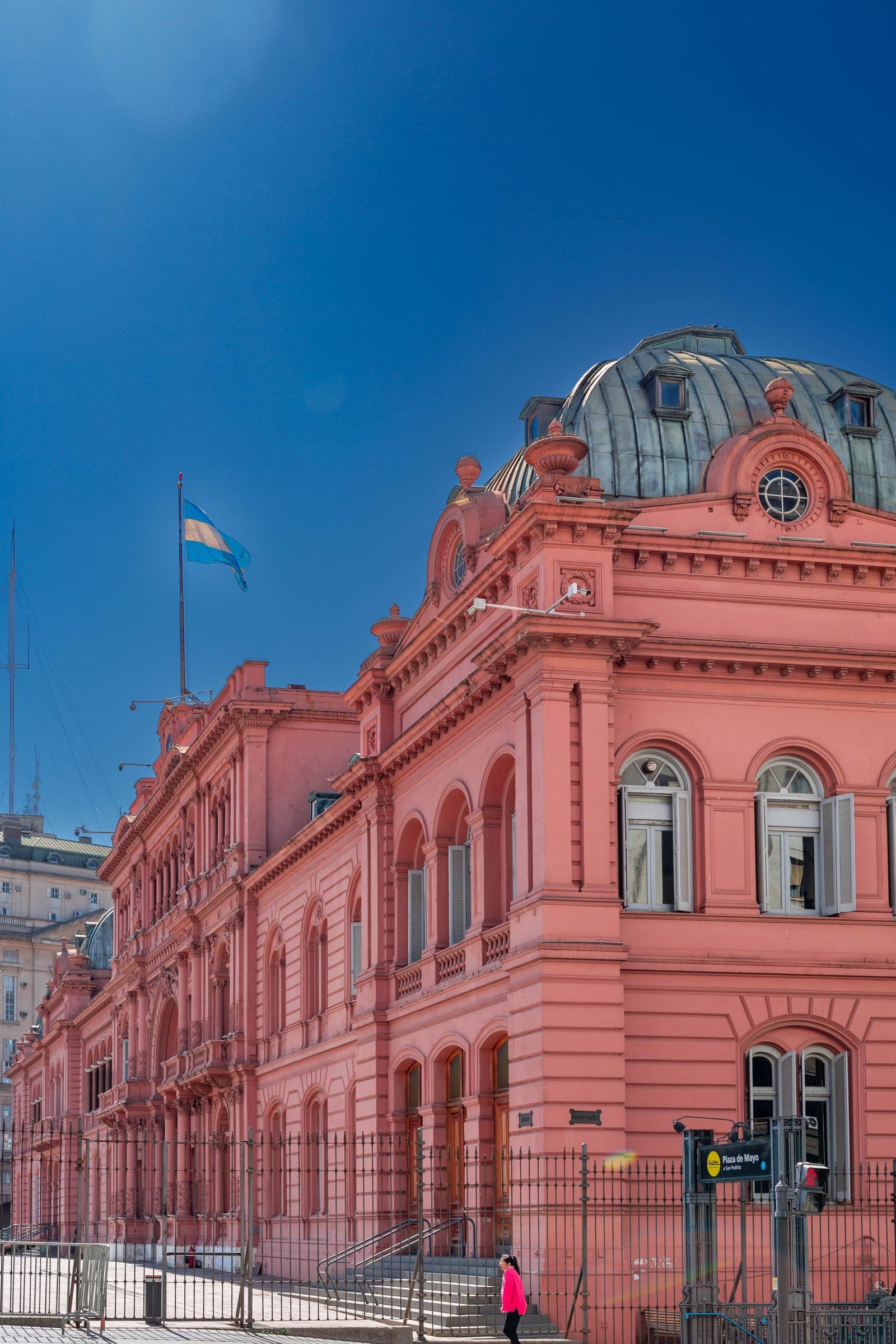
Casa Rosada: The Balcony and the Bombs
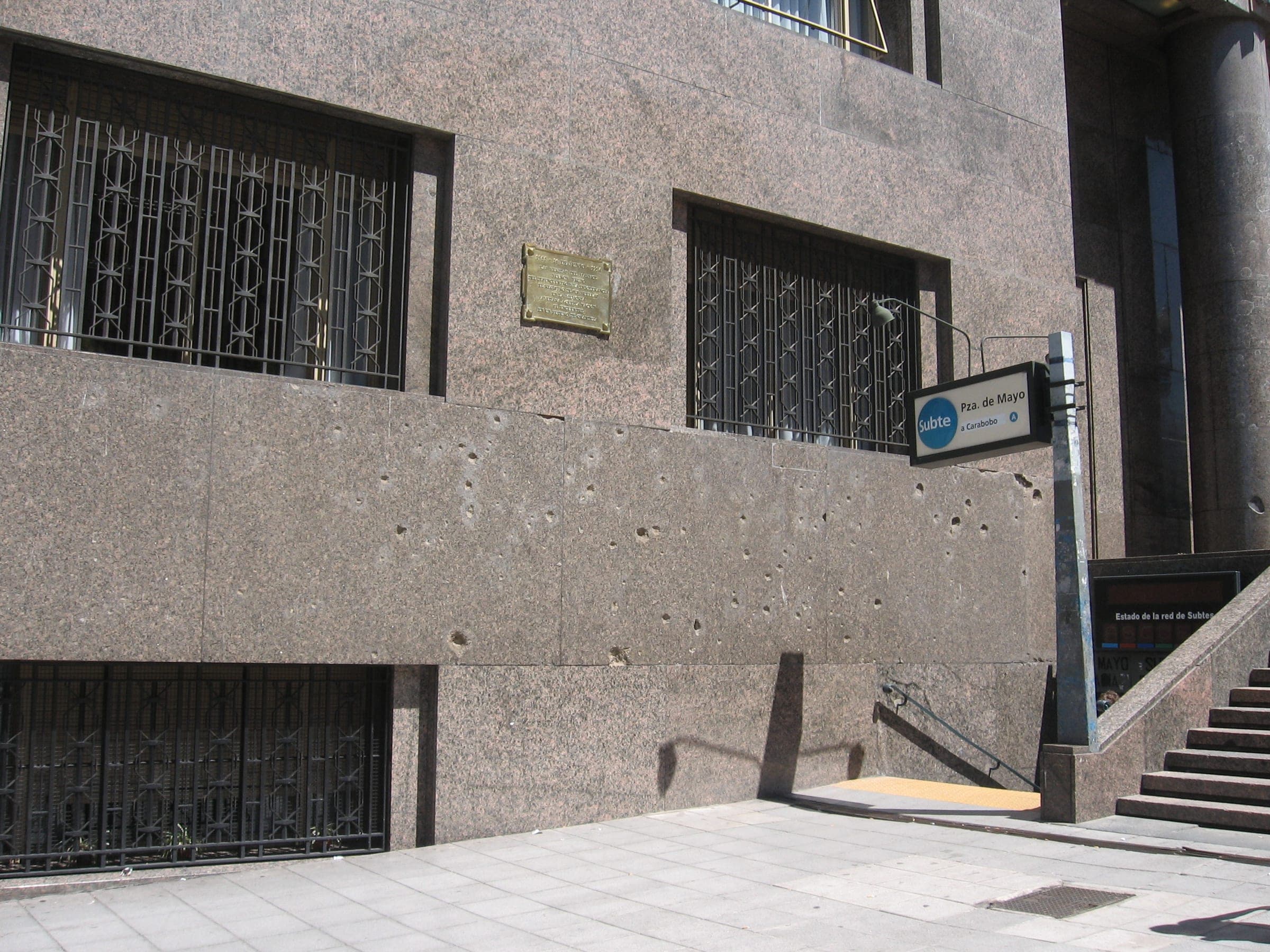
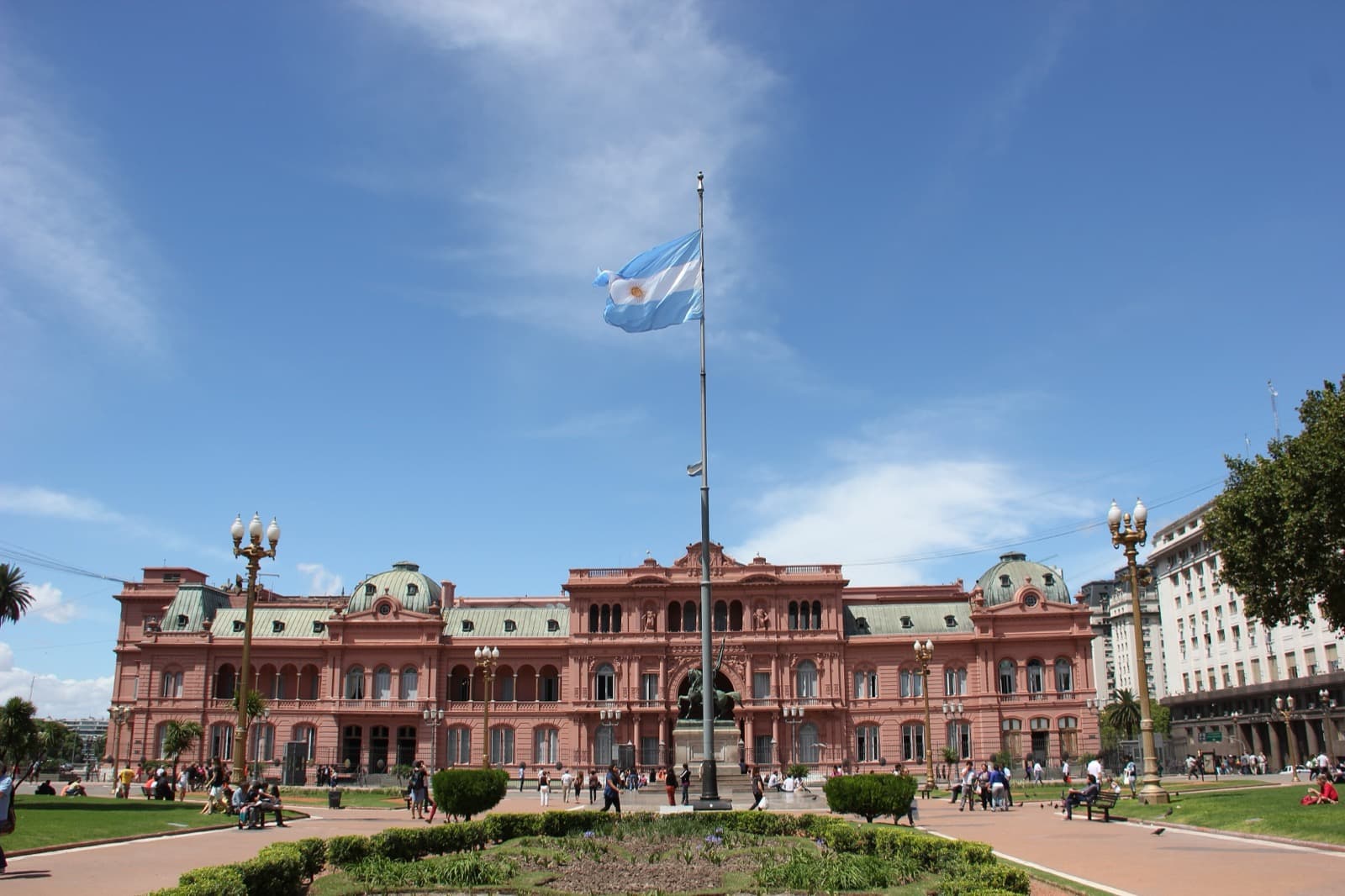
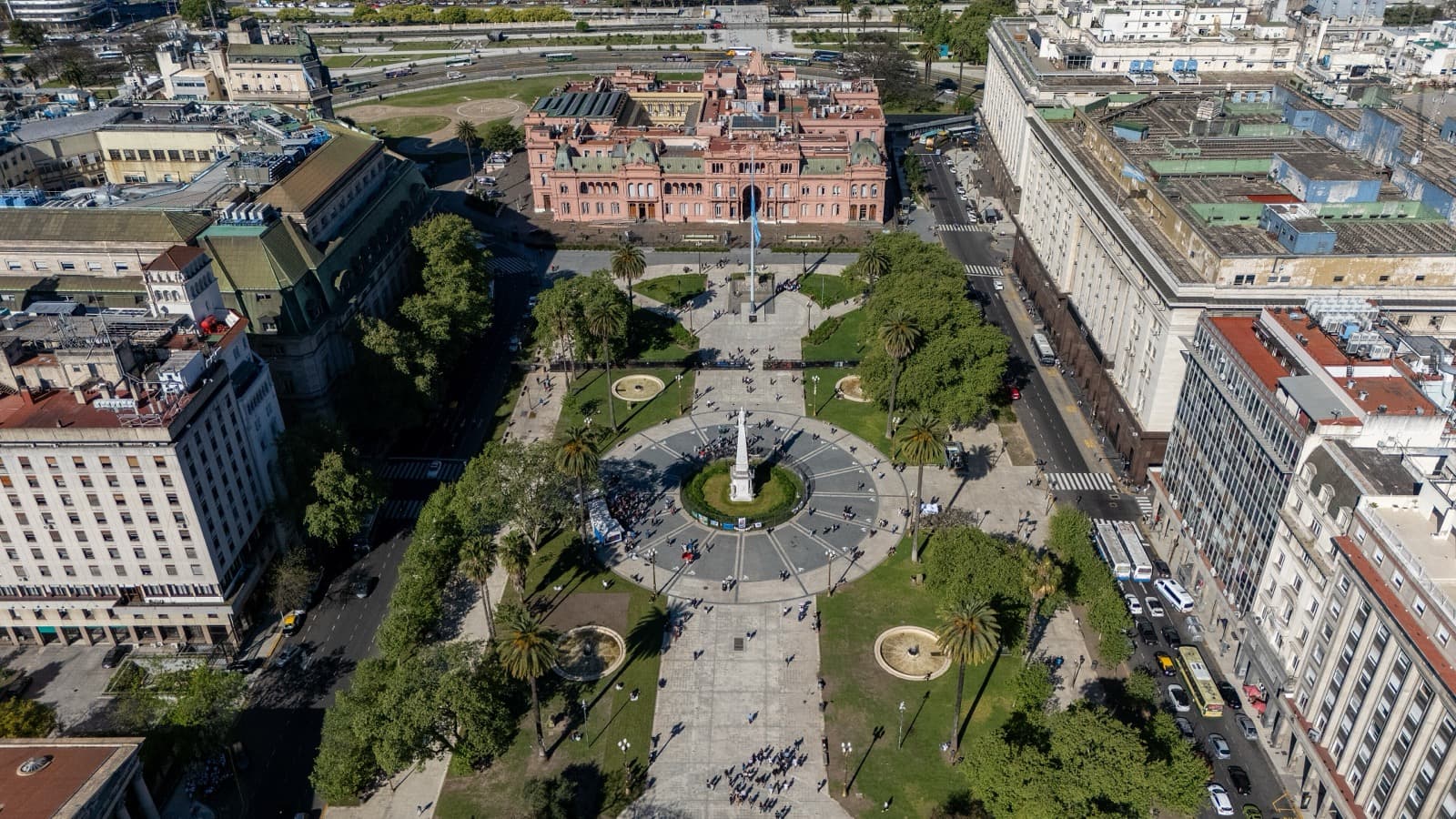
The pink presidential palace whose balconies staged Argentina's twentieth century, and the ministry across the street that still carries the scars of the day in 1955 when the country's own planes bombed this square.
- 2
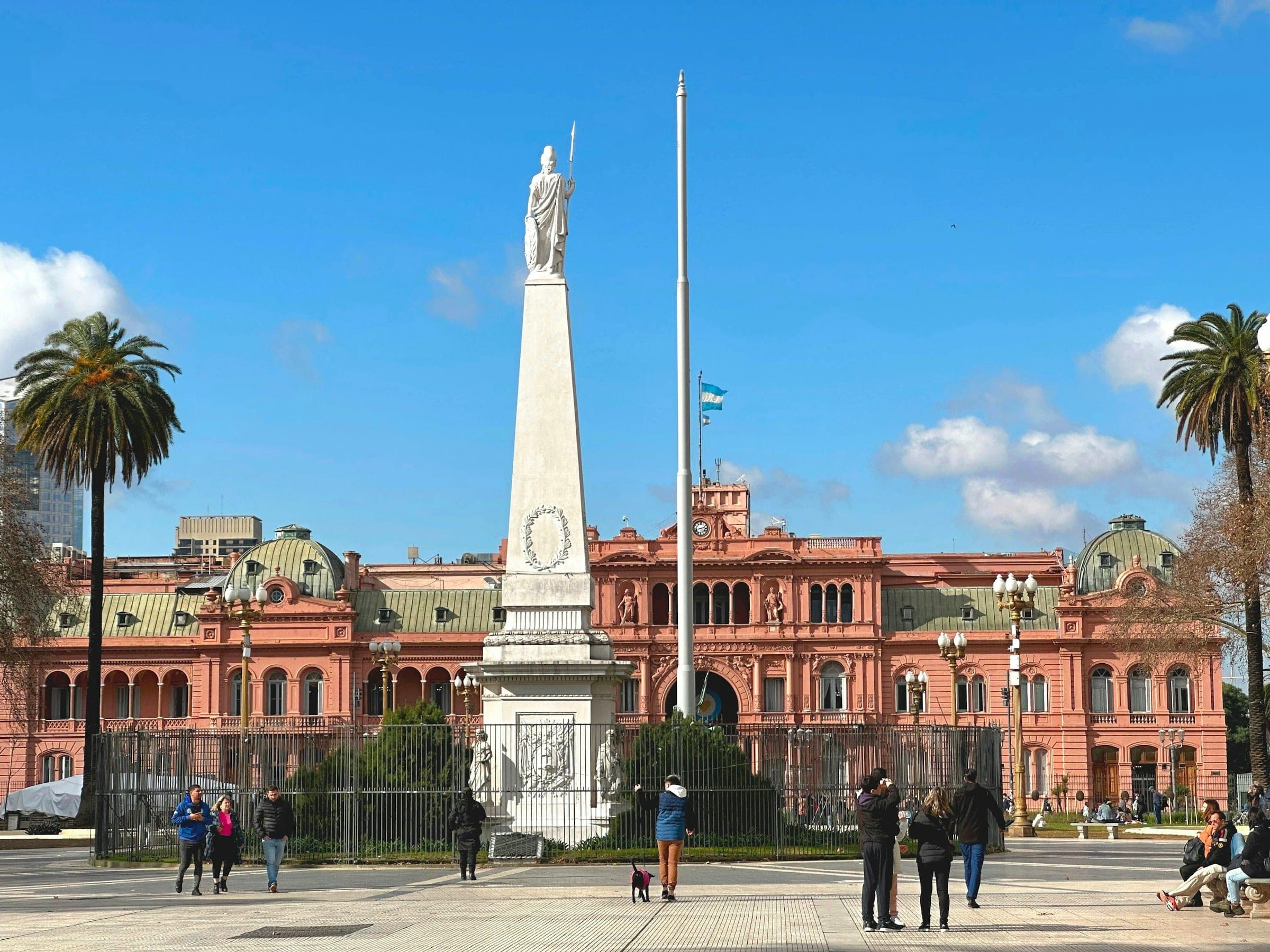
May Pyramid: The Mothers' Circle
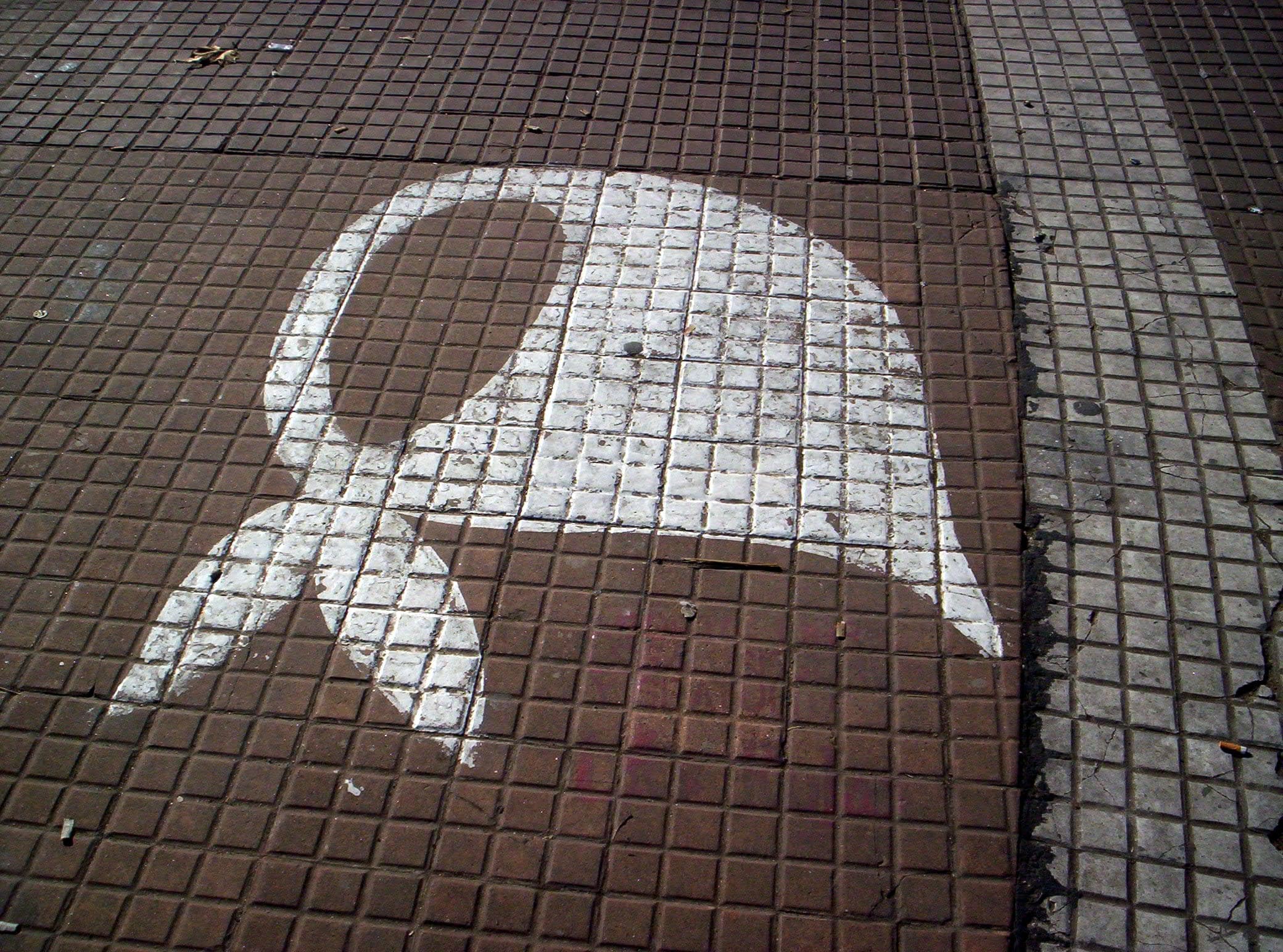
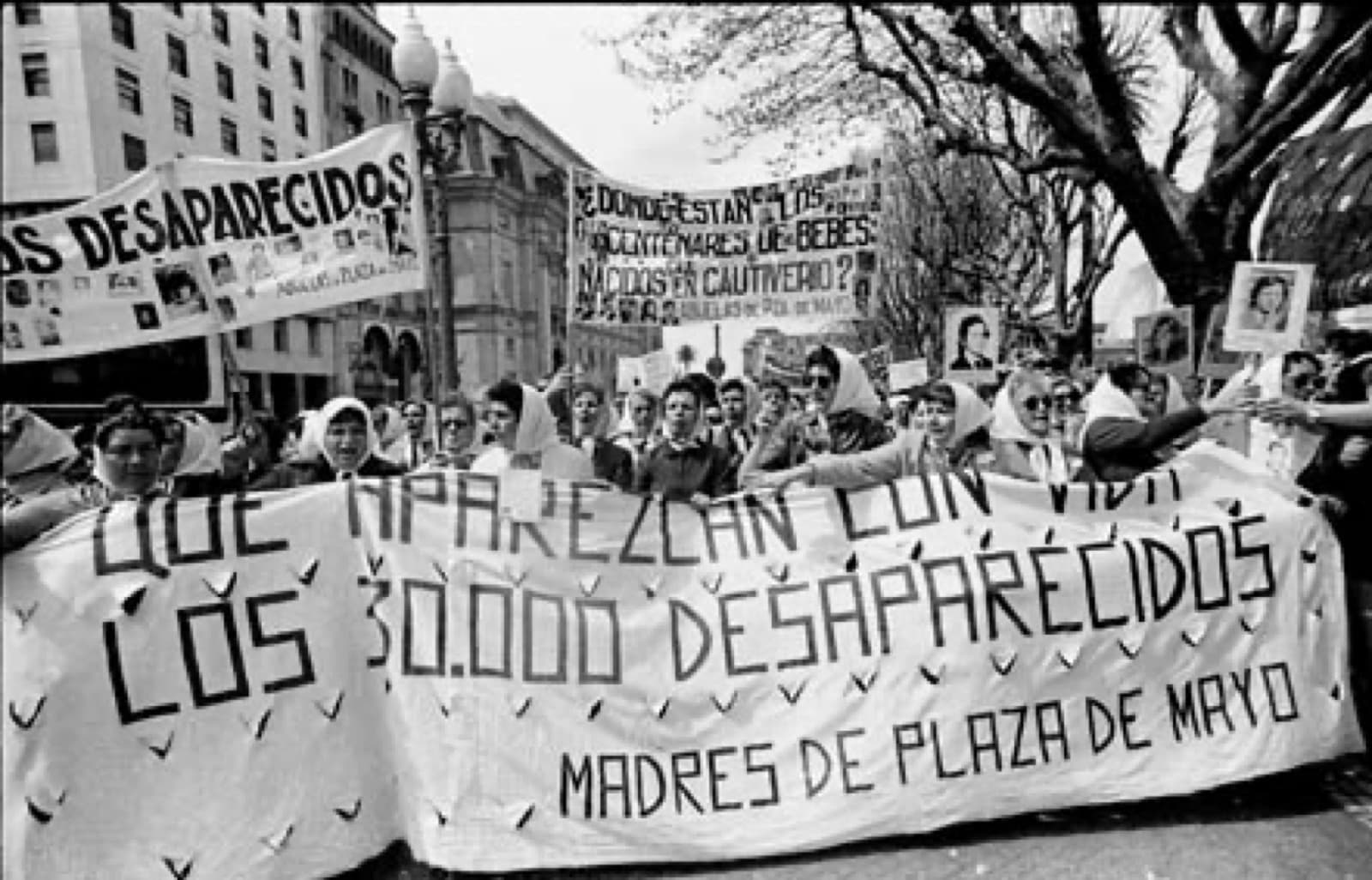
The oldest patriotic monument in the city, with its first version still sealed inside, and the white headscarves of the Mothers of the Plaza de Mayo painted on the paving around it.
- 3
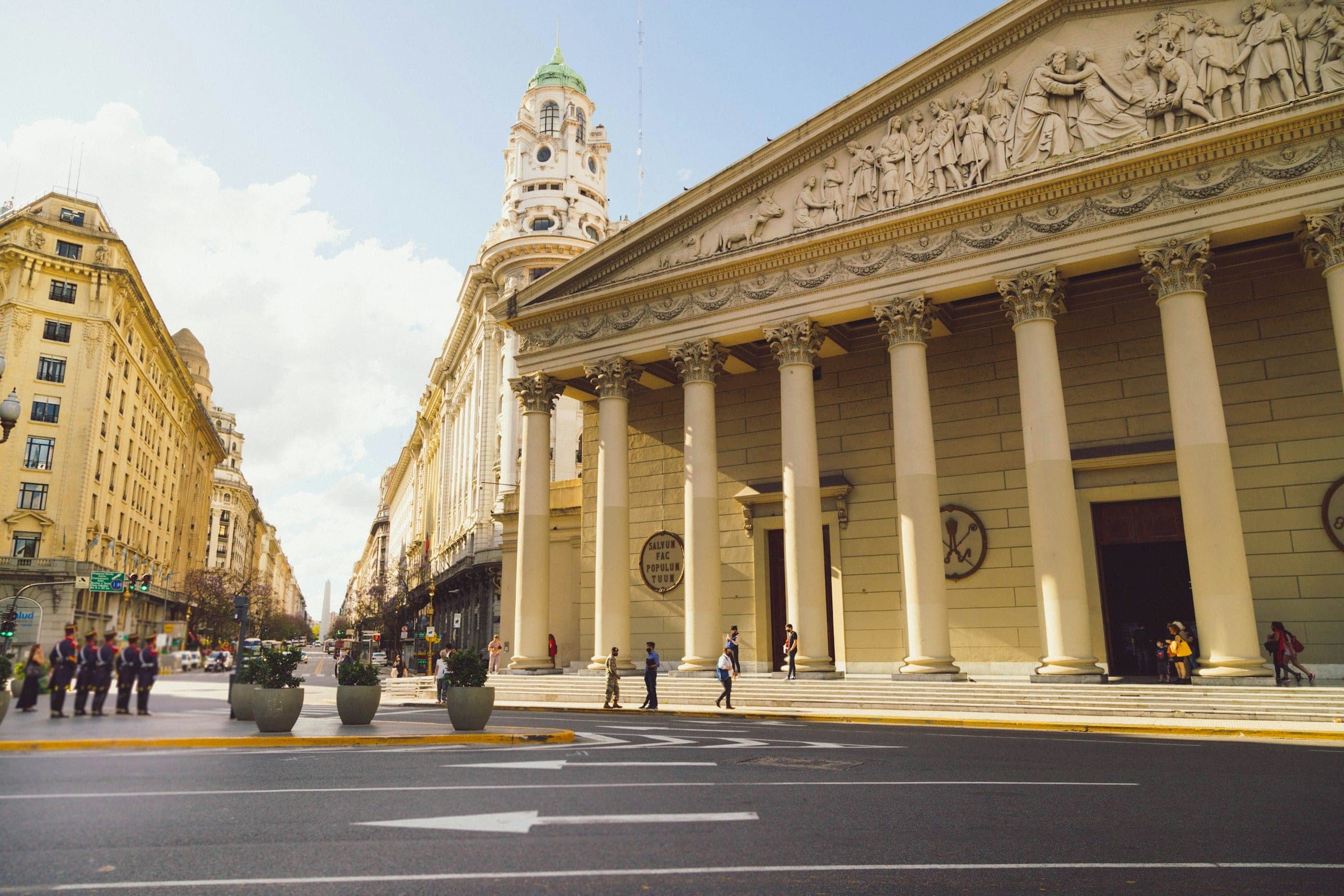
Metropolitan Cathedral: The General's Tilted Tomb
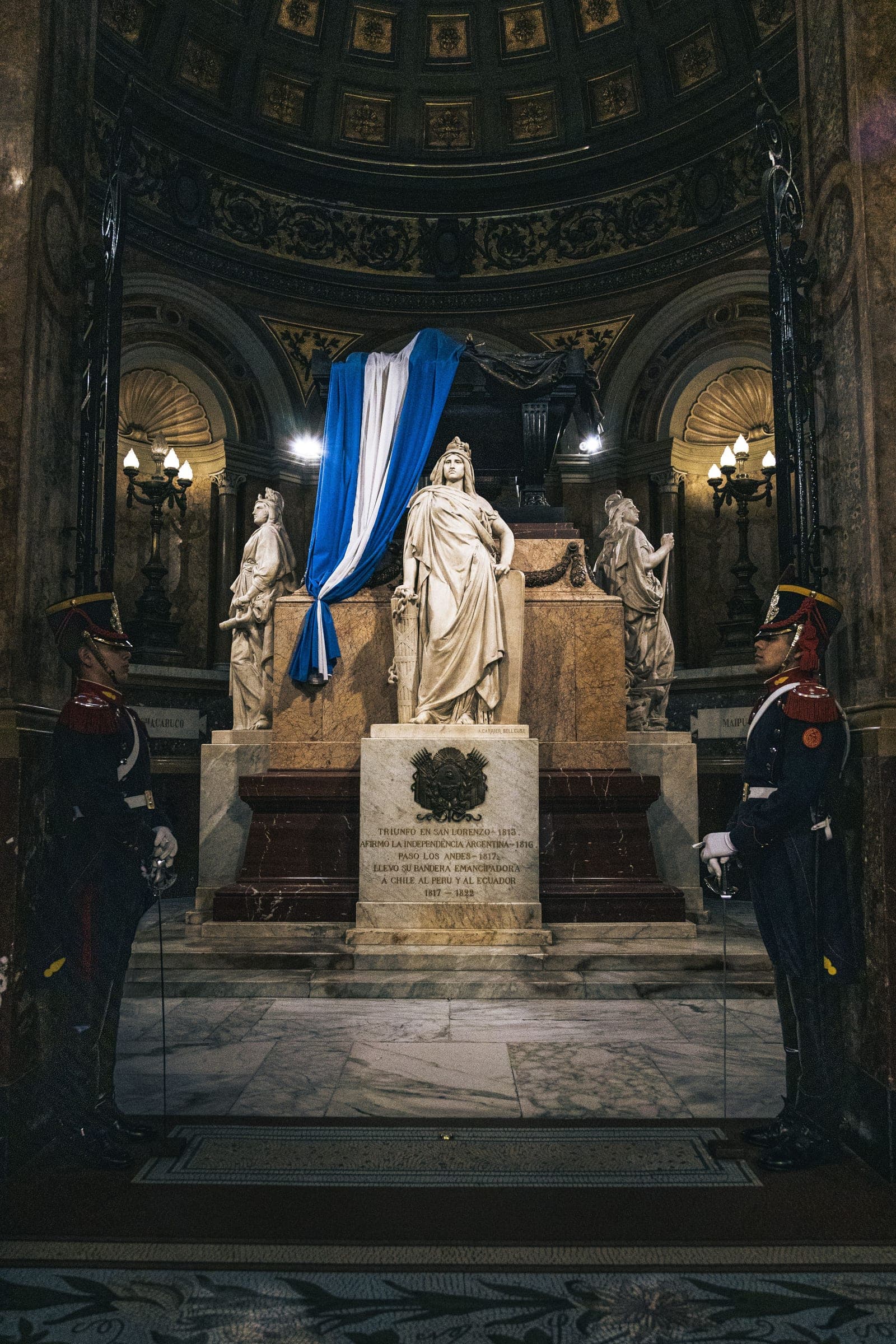
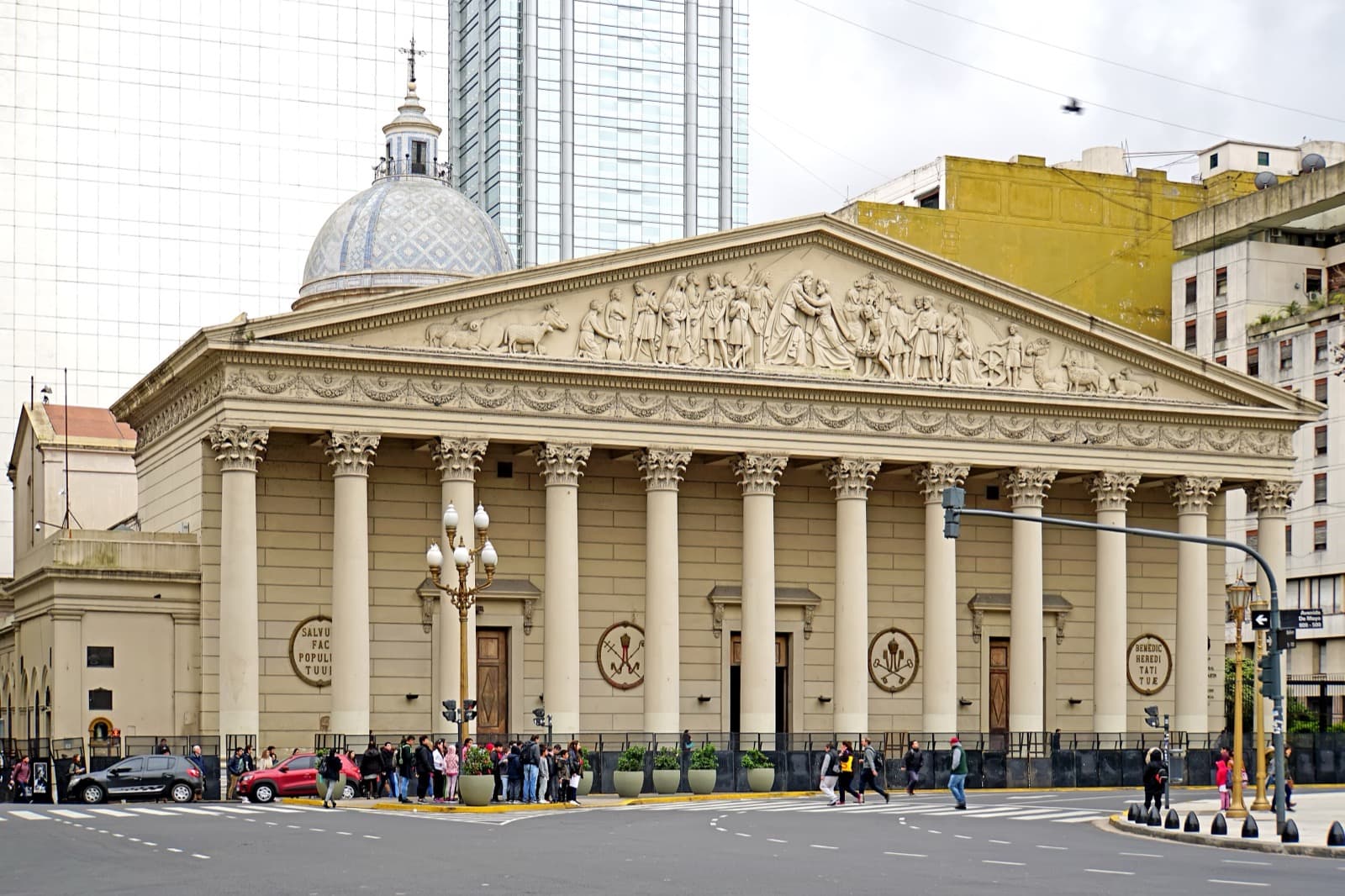
A cathedral with the front of a parliament, where the independence hero Jose de San Martin lies under guard in a side chapel, and where the future Pope Francis was archbishop.
- 4
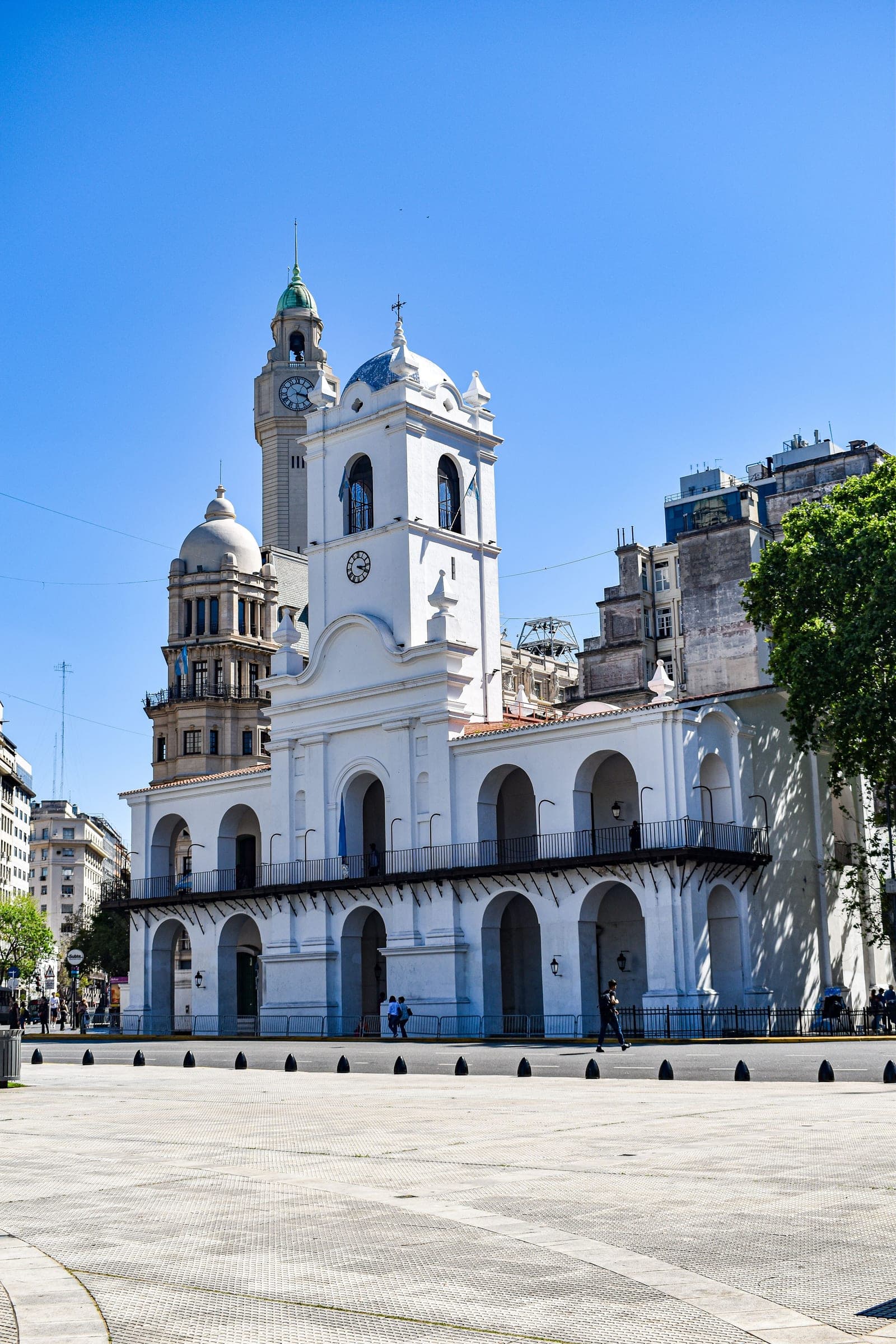
Cabildo: The Building the Revolution Cut Down
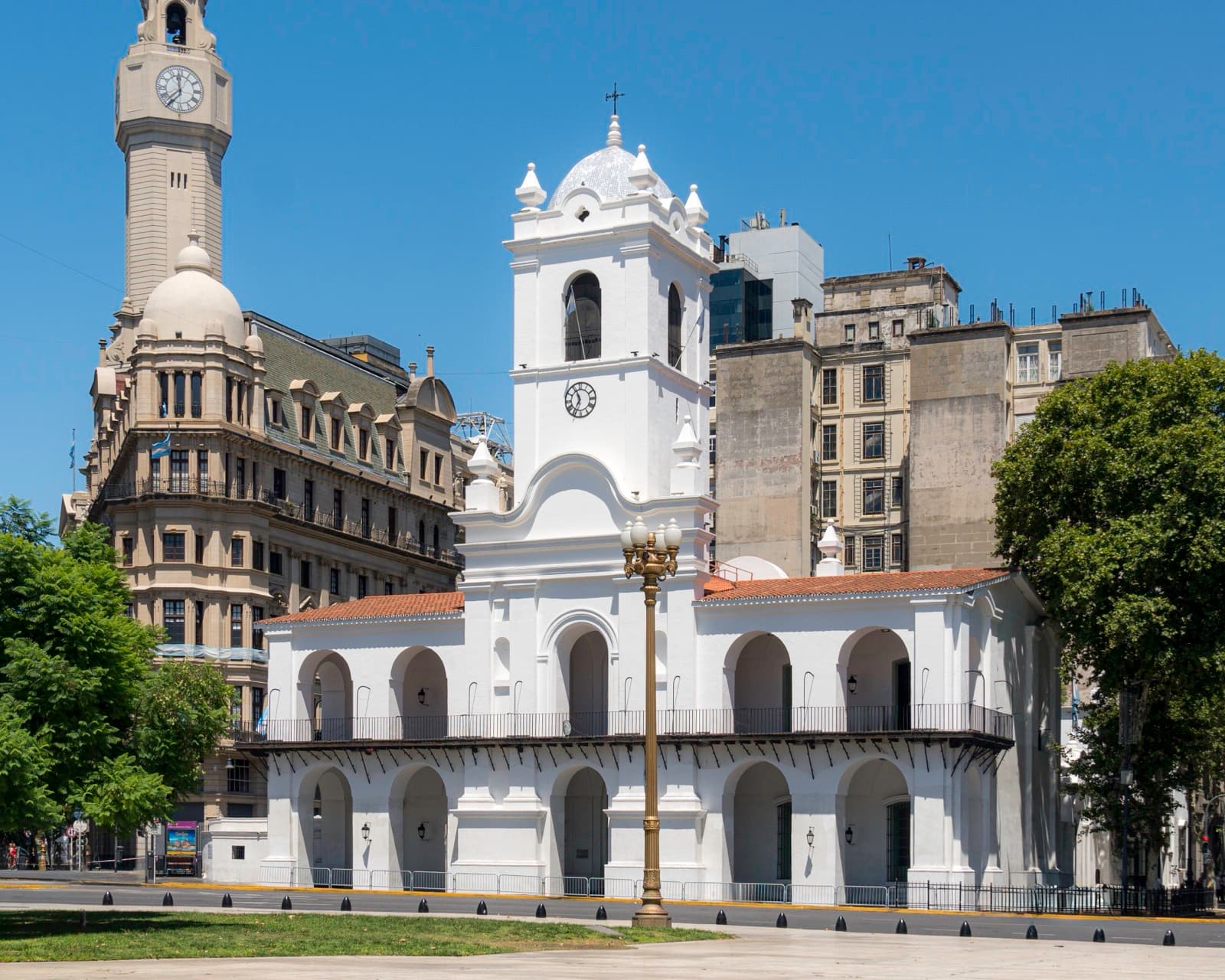
The colonial town hall where the city voted out the Spanish viceroy in 1810, cut down twice since, for a boulevard in 1889 and a diagonal avenue in 1931.
- 5
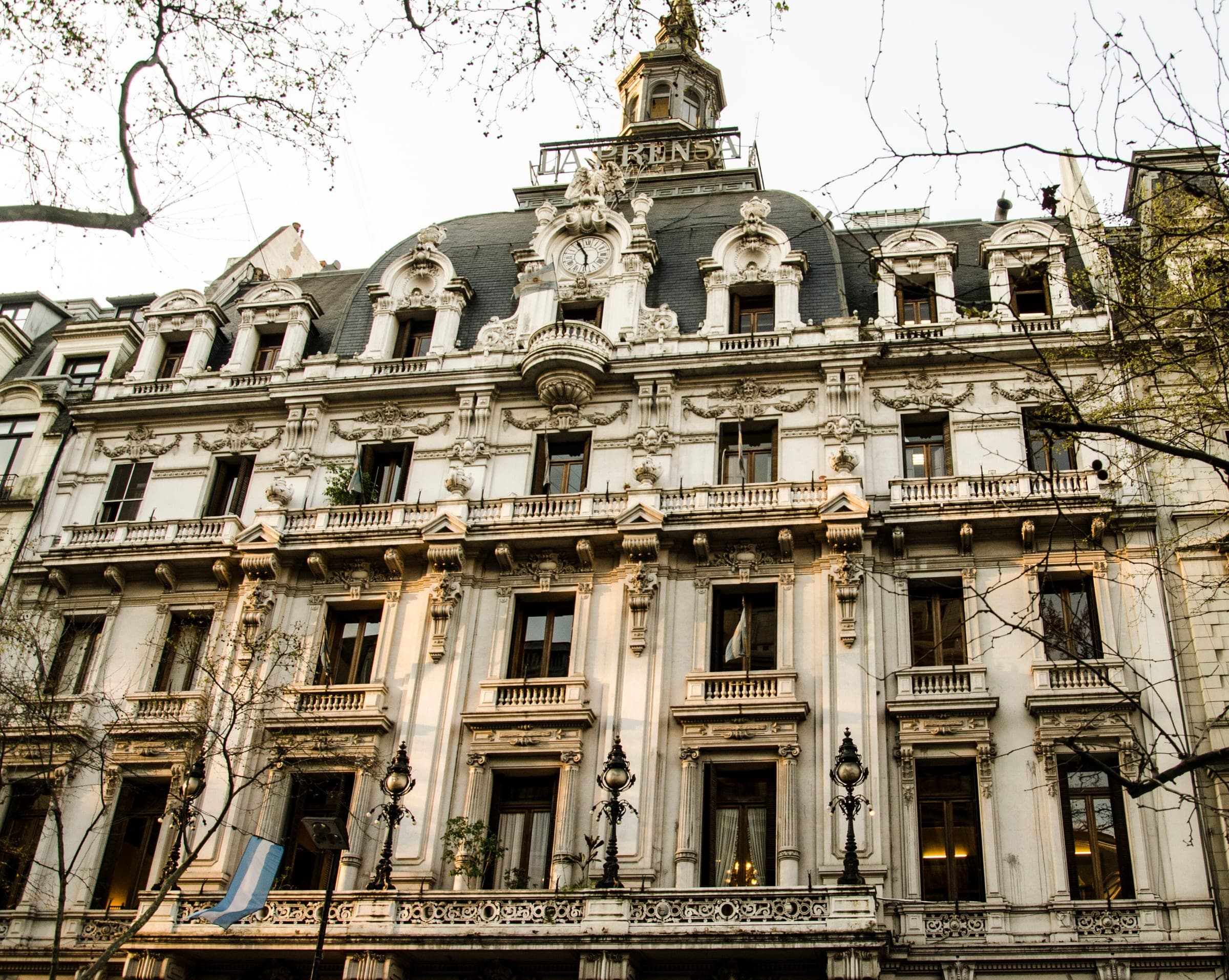
La Prensa: The Goddess Taken Off the Roof
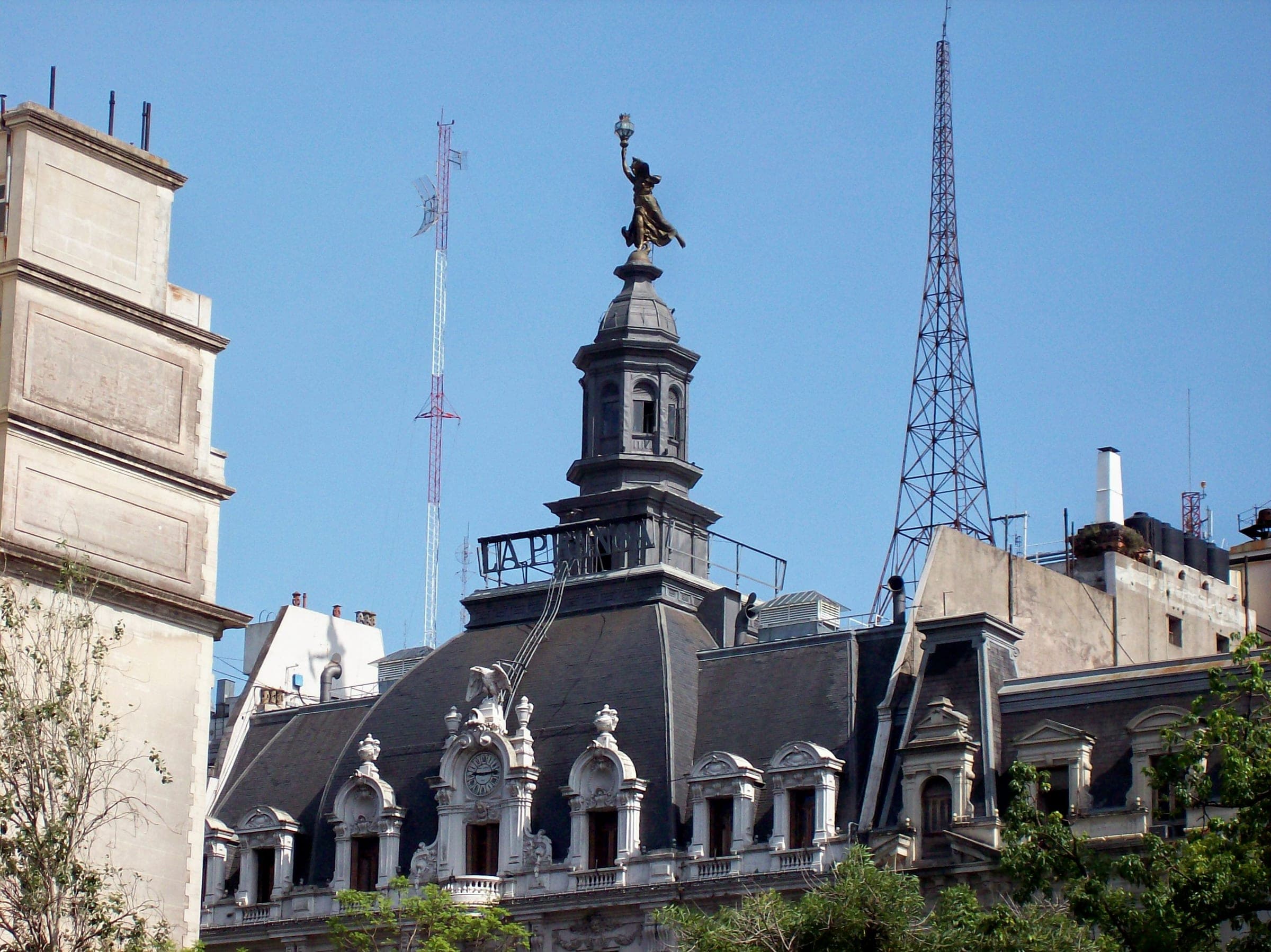
The palace a newspaper built for itself on the new avenue, whose bronze Athena was taken down when Peron seized the paper in 1951 and put back five years later.
- 6
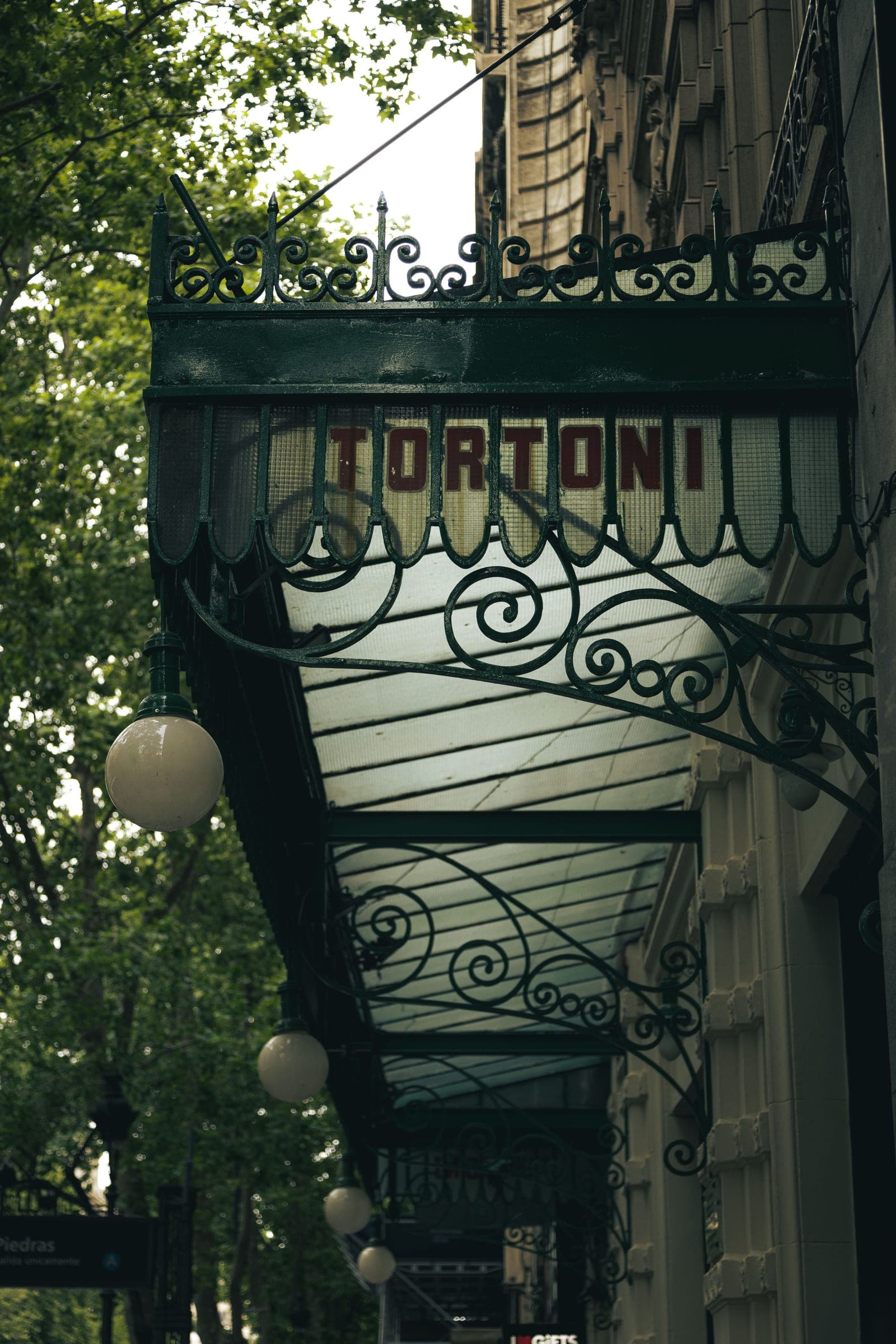
Cafe Tortoni: The Back Door That Became the Front
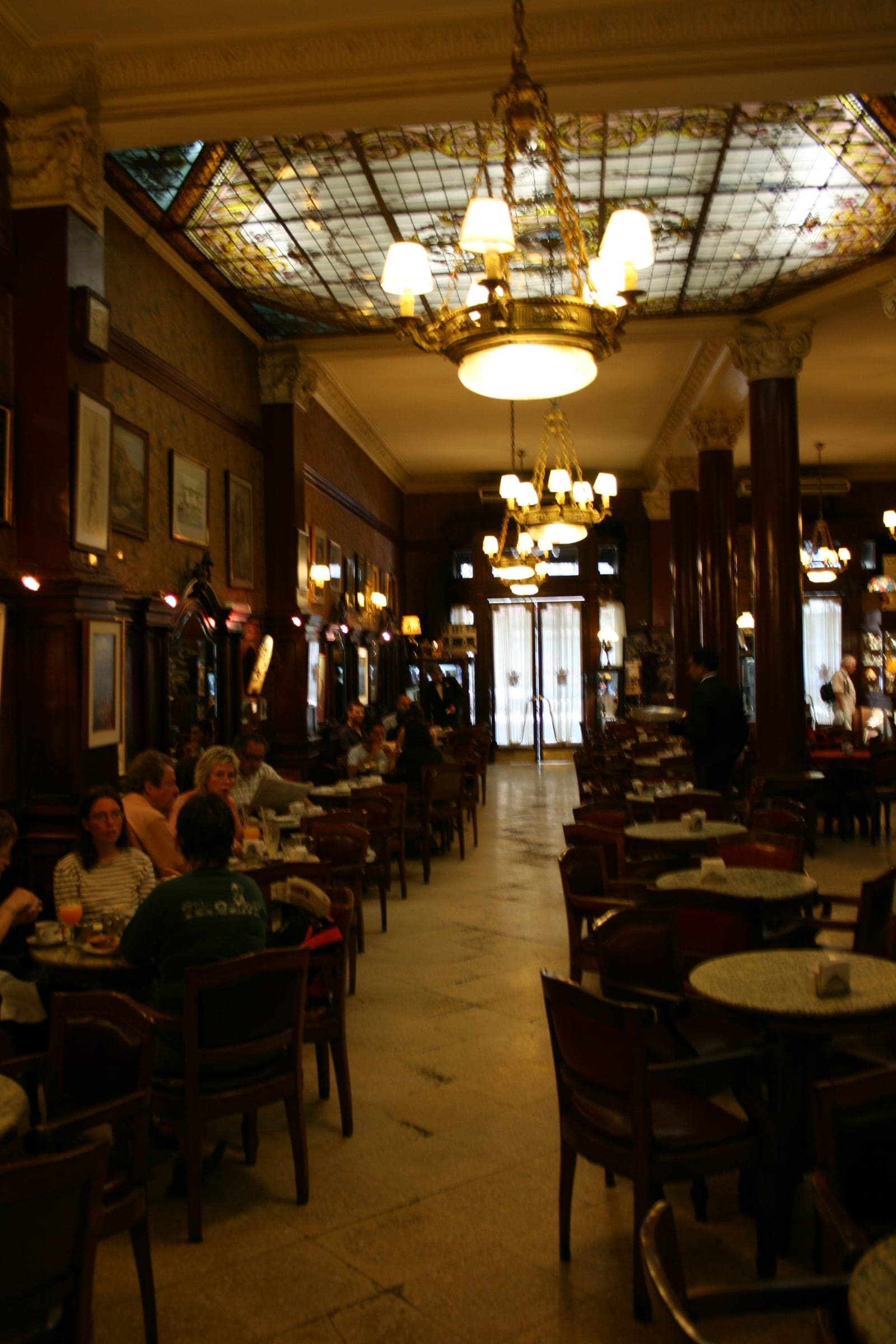
The city's most famous old cafe, which was already standing when the Avenida de Mayo was cut through the back of its block, and turned round to face it.
- 7
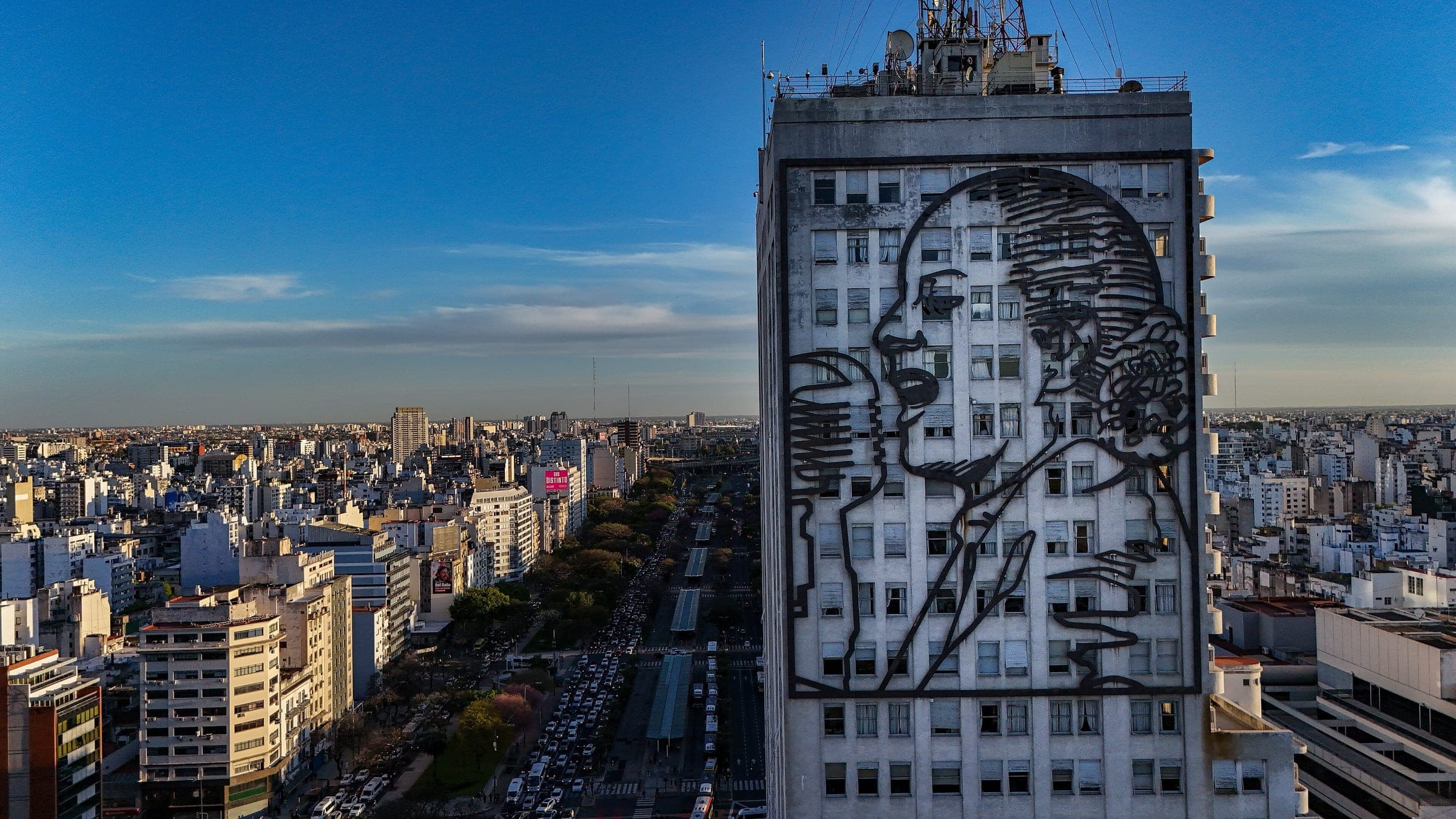
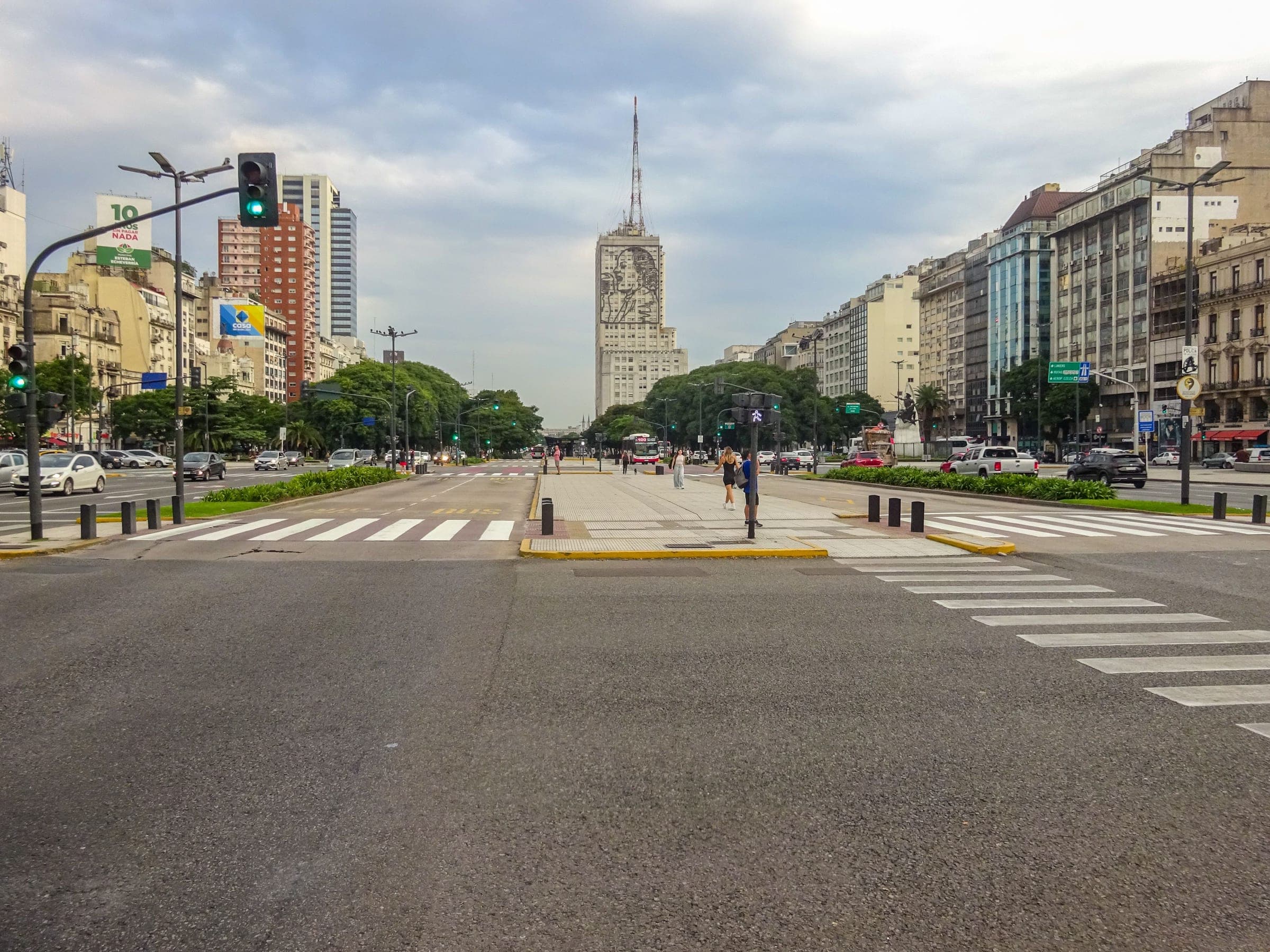
Avenida Nueve de Julio: Evita Over the Avenue
The corner of the city's widest avenue, looking down to the lone ministry tower where a 1951 rally asked Eva Peron to run for vice-president, and where her steel portrait was later hung.
- 8
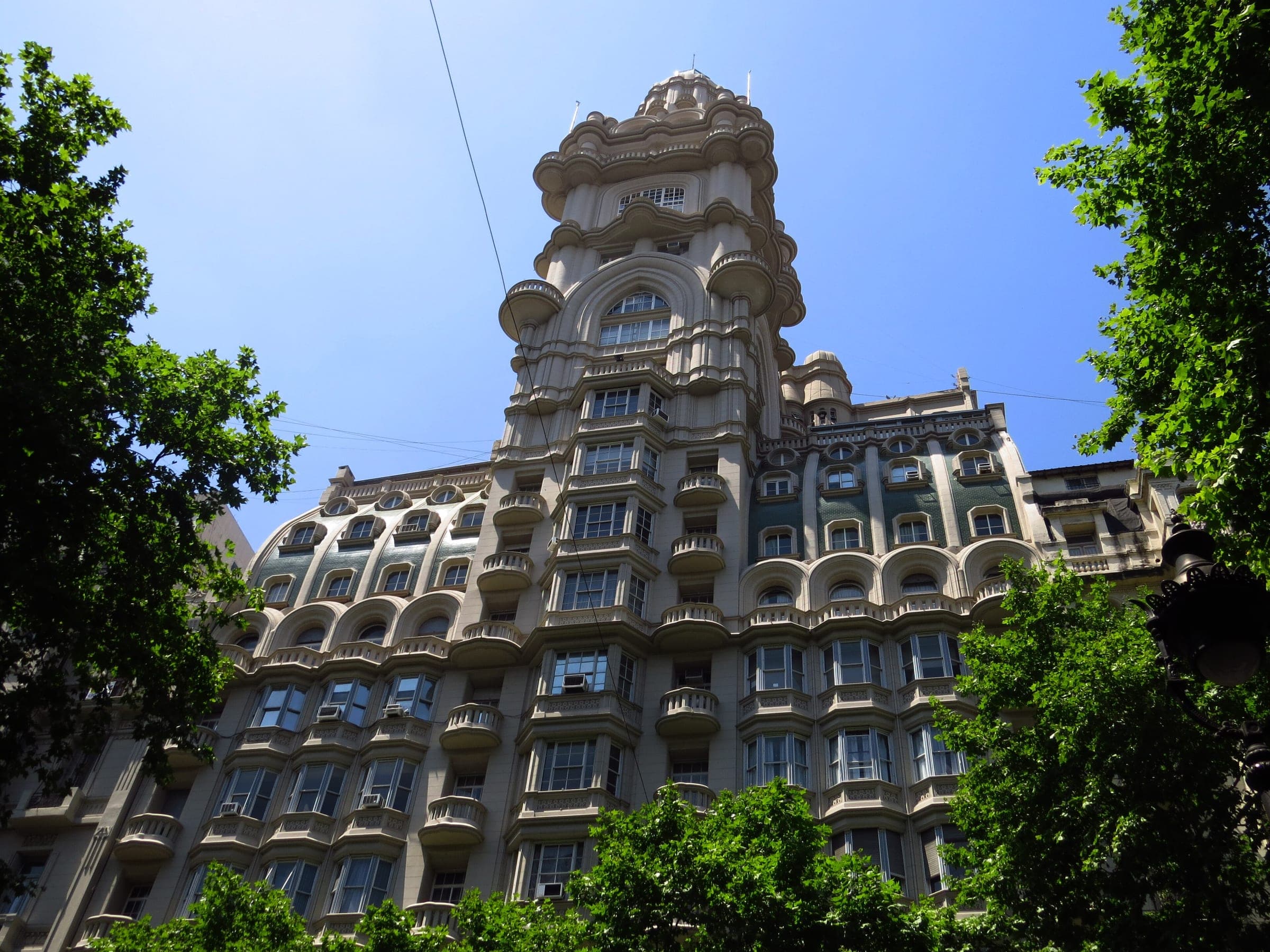
Palacio Barolo: A Tower Built on Dante
An office tower designed around Dante's Divine Comedy, with hell at street level and a lighthouse for paradise, once the tallest building in Buenos Aires.
- 9
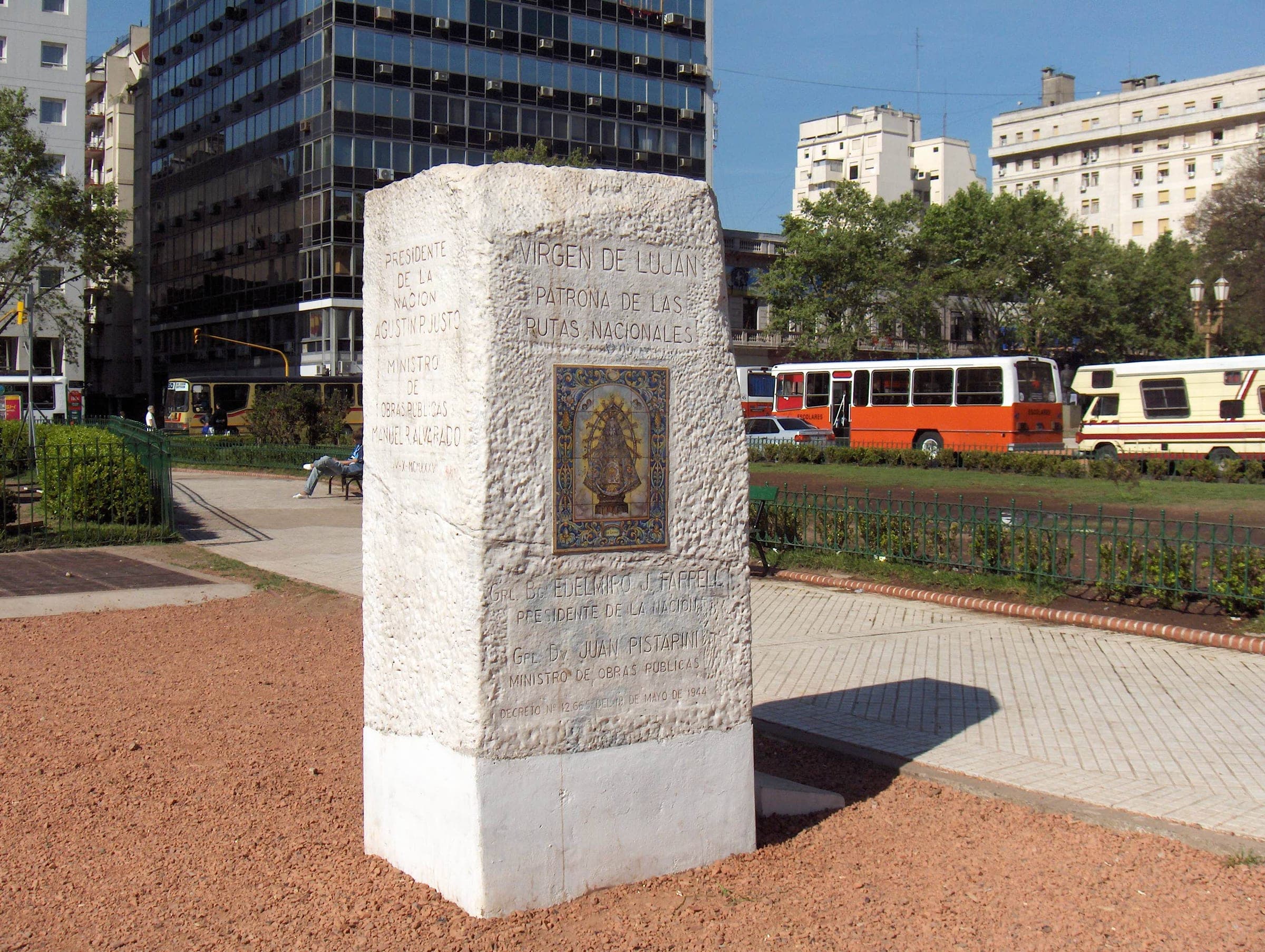
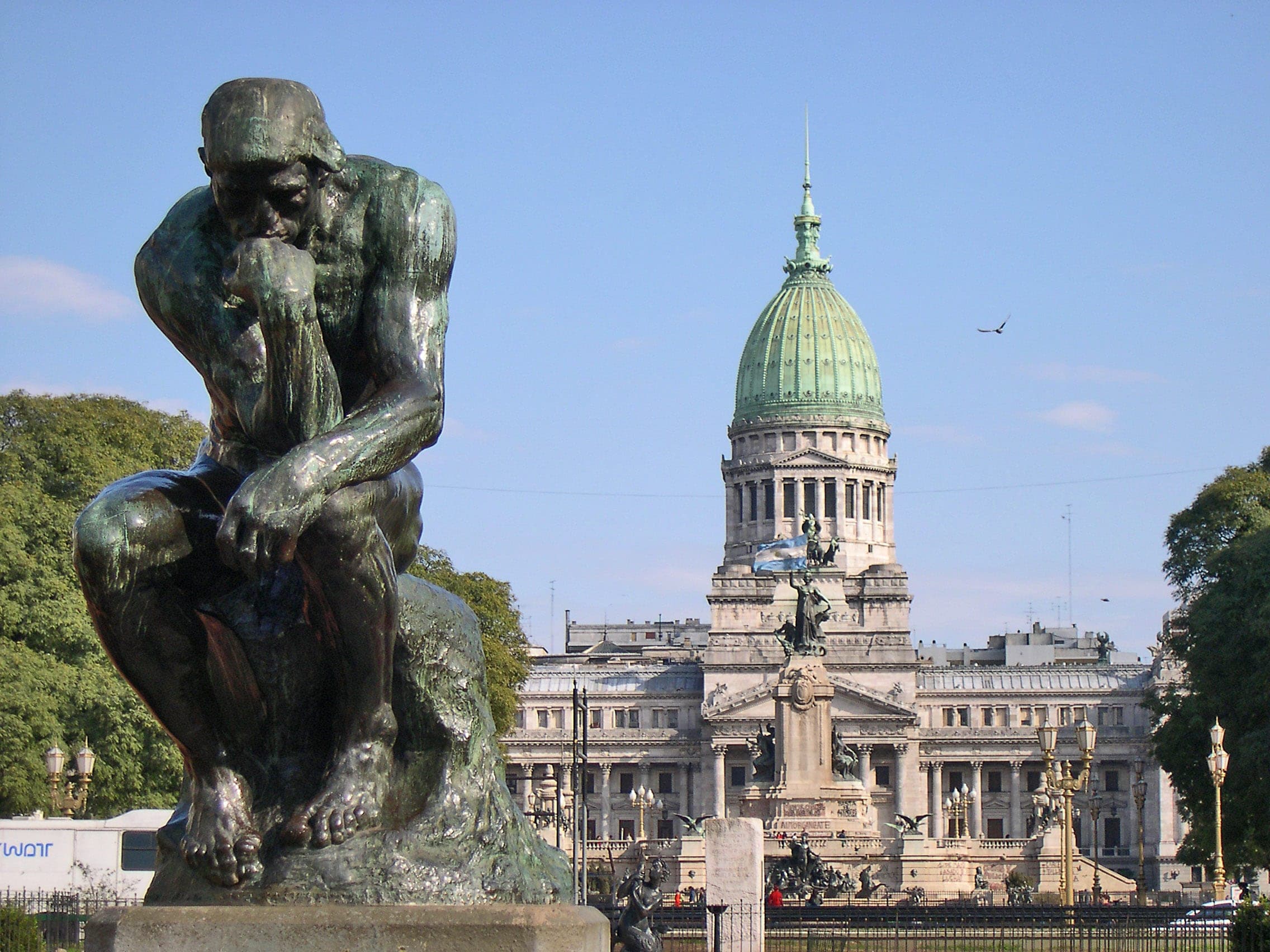
Kilometro Cero: Where the Country Is Measured From
The stone marker from which Argentina's national road distances are measured, which was nearly the May Pyramid, and a cast of Rodin's Thinker, said to have been meant for the Congress steps.
- 10
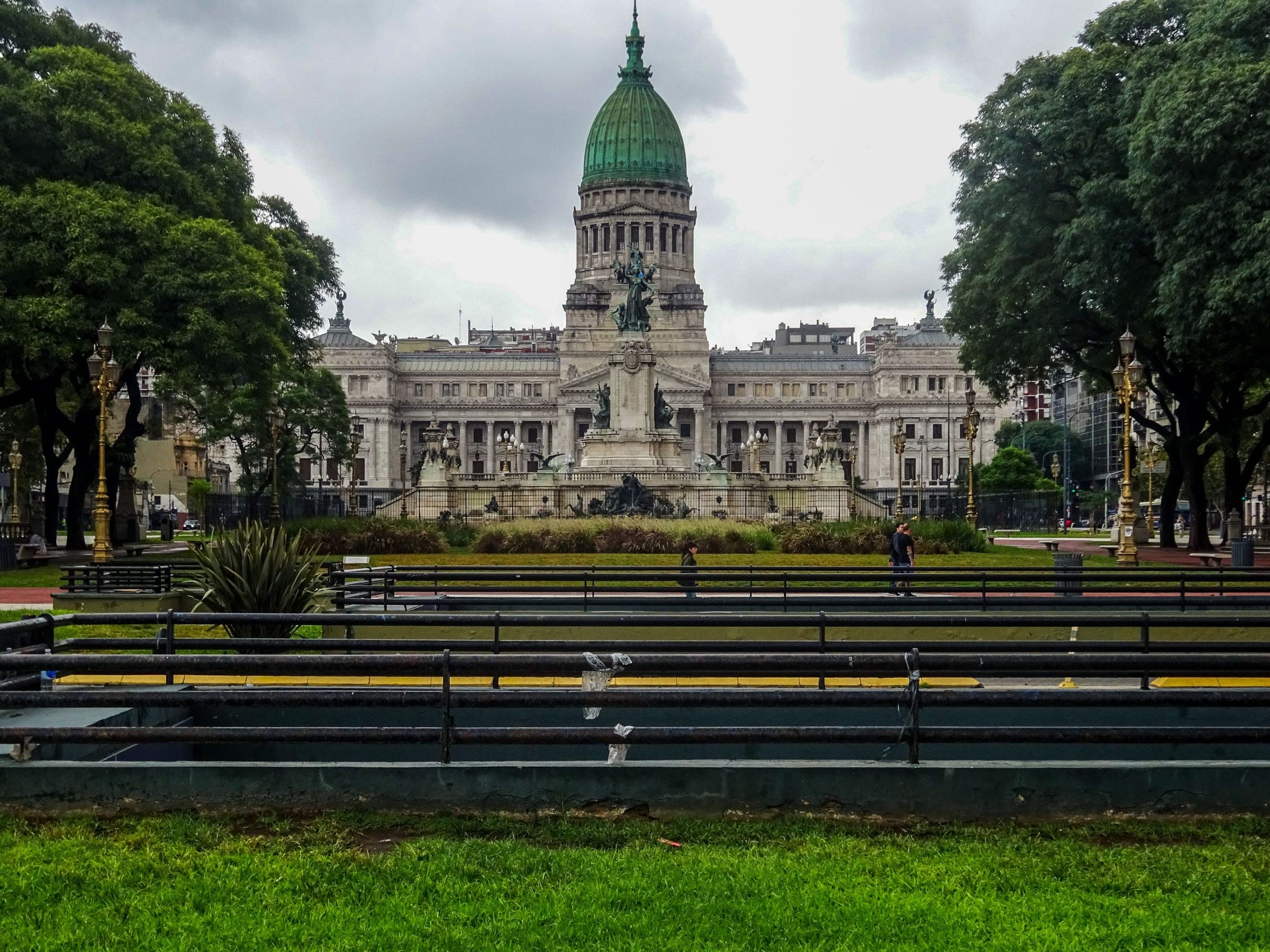
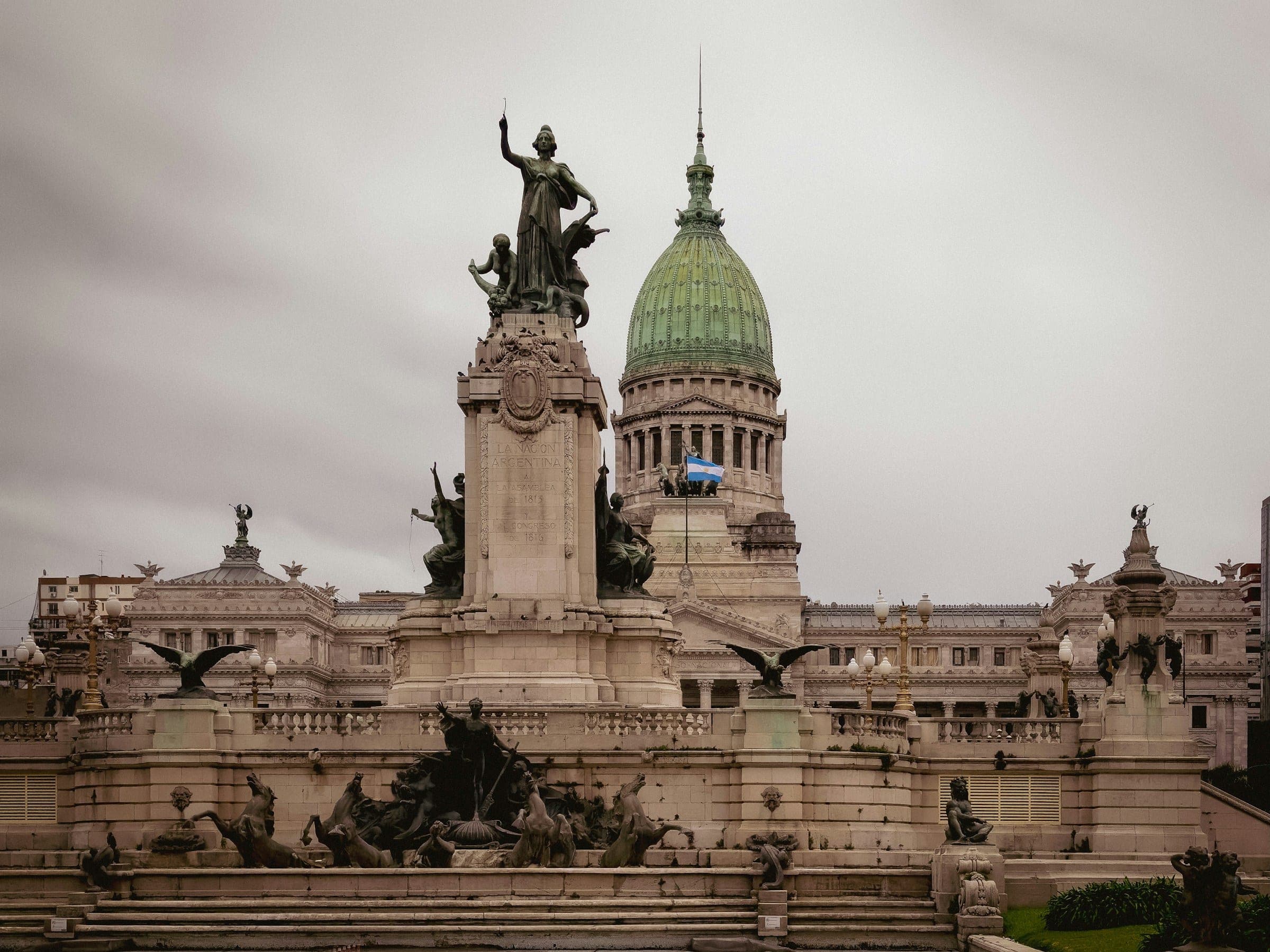
National Congress: The Other End of the Axis
The domed National Congress at the far end of the Avenida de Mayo, begun by an architect who was murdered before it opened, and the Monument to the Two Congresses in front of it.
Details
Best Time to Visit
Weekday mornings from about nine are calmest on the square and the avenue, and the light falls on the Casa Rosada's facade in the afternoon. The Mothers of the Plaza de Mayo walk round the pyramid on Thursdays at 15:30; stand back and watch respectfully, or walk with them, which they welcome. Avoid Wednesday afternoons at the Congress end, when pensioners' marches have brought fences and road closures (checked 22 September 2026). Autumn and spring, March to May and September to November, are the most comfortable walking months.
Pro Tips
- •The Evita portraits' lighting was switched off in 2024, and the government has discussed removing them; check before you go if they matter to you.
- •The Cabildo's museum, the Museo Historico Nacional del Cabildo y de la Revolucion de Mayo, is free and open Wednesday to Sunday, 10:30 to 18:00. Checked 22 September 2026.
- •The Museo Casa Rosada, behind the palace on Paseo Colon, is free and open Wednesday to Sunday, 11:00 to 18:00, and is built into the excavated remains of the old fort and customs house. Guided visits inside the Casa Rosada itself run at weekends, free, by advance booking at visitas.casarosada.gob.ar; bring your passport. Checked 22 September 2026.
- •The Metropolitan Cathedral is free. The grenadier guard at San Martin's tomb changes every two hours during the day.
- •To see the 1955 bomb marks up close, cross Hipolito Yrigoyen Street and then Balcarce at the marked crossings from stop 1, and walk along the front of the Palacio de Hacienda toward Paseo Colon to the plaque about the bombing; the marks are in that stone.
- •Palacio Barolo can only be visited on a guided tour, run by licensed operators listed on palaciobarolo.com.ar. Book ahead if you want to climb to the lighthouse. Checked 22 September 2026.
- •Free guided tours of the National Congress run through the Senate (senado.gob.ar) and the Chamber of Deputies (hcdn.gob.ar), with online registration in advance. Checked 22 September 2026.
- •Cafe Tortoni is open daily from 08:00 to 21:00, and a queue often forms at midday and at weekends, so come early or in the late afternoon. Checked 22 September 2026.
- •To get back to the start, take Line A of the underground from Congreso to Peru or Plaza de Mayo. You need a SUBE card, sold at kiosks and stations.
Safety & Precautions
- •The Plaza de Mayo and the Congress gardens are the city's main protest grounds. Marches are frequent and usually peaceful, but the police sometimes fence off the east half of the Plaza de Mayo, and the area around the Congress, often on Wednesday afternoons. If a march is under way, keep to the edges, follow police directions, and leave if things turn tense.
- •Crossing the Avenida Nueve de Julio takes several sets of lights. Cross only on the green signal and wait on the central islands between phases.
- •Phone snatching is common on the avenue, sometimes from a passing motorbike. Keep your phone in your hand only when you need it, and never leave it on a cafe table.
- •The painted headscarves around the pyramid are a memorial to the disappeared. Treat them with respect, and do not photograph the Mothers at close range without asking.
- •The cathedral is a working church. Dress modestly, keep your voice low, and stay out of the chapel during a service.
- •Summer sun from December to February is strong on the open square and the avenue. Carry water and wear a hat.
Travel advisory: Exercise Normal Precautions (Level 1).
Gallery
Related Reading
Go deeper on what you'll see, hear, and walk through.

Overview
Best Self-Guided Walking Tours in Buenos Aires (2026)
4 min
Overview
Buenos Aires Travel Guide: Days, Transport, Season, Safety, Budget
7 min
Overview
One Day in Buenos Aires: A Walkable Itinerary From Plaza de Mayo to San Telmo
8 min
Thematic
Best History Walking Tours in Buenos Aires (2026)
2 min
Thematic
Buenos Aires: The City That Keeps Rewriting Itself in Public
8 min
Companion
The White Headscarves at the Center of Plaza de Mayo
7 min
Deep dive
Casa Rosada: The Pink House That Faces the Founding Square
7 min
Read
What to Eat in Buenos Aires: Dishes, Origins, and How to Order
7 min
Read the walk
The full story of Plaza de Mayo: The Square Where a Nation Keeps Being Made, in words. Prefer to listen? Play it narrated, from home or on location.
Introduction
The Plaza de Mayo, in the heart of Buenos Aires, is where Argentina comes to say who it is. The men of eighteen ten argued their revolution here. Presidents have spoken to crowds from a pink balcony over it, and in nineteen fifty-five the country's own warplanes bombed it. Mothers walked in a circle here to demand their missing children, and their Thursday march has gone on for decades.
And each time, the country changed the place itself. It wrapped its first monument inside a bigger one. It sliced the arches off the building where the revolution was argued. It took a goddess down from a newspaper roof, and put her back. This walk follows that habit, from the square along the Avenida de Mayo to the other end of the axis, the National Congress.
It is ten stops and about two kilometres, around an hour and a half at your own pace, on flat pavements. The first four stops circle the Plaza de Mayo. Then you walk west along the avenue, across the enormous Avenida Nueve de Julio, to the gardens in front of the Congress. It is a one-way walk, and when you finish, the underground runs back beneath the avenue to where you started.
When you arrive at the south-east corner of the Plaza de Mayo, where the square meets the pink palace and Hipolito Yrigoyen Street, begin with stop one.
1. Casa Rosada: The Balcony and the Bombs
Stop here at the corner of the square. The long pink building across the railings is the Casa Rosada, the pink house, where the president works. Power has sat on this spot for more than four centuries. A Spanish fort went up here in fifteen ninety-four and was rebuilt as a castle with a moat. In the eighteen eighties two separate buildings, a post office and a government palace, were joined by the great arch at the centre of the facade, in eighteen eighty-six, and the palace was finished in eighteen ninety-eight. The government's own history credits President Sarmiento with the pink paint. The story that the colour mixes the red and white of two warring parties is tradition, and the one about ox blood is a legend.
The balconies over the square are where this country's twentieth century was performed. In October nineteen forty-five, Juan Peron spoke from here at night to a crowd that had filled the square to demand his release. Peronists count that night as the movement's birth. In May nineteen fifty-two, Eva Peron gave her last speech here, so ill that he held her at the waist. In April nineteen eighty-two, during the war over the Falklands, the dictator Leopoldo Galtieri told the crowd that if the British wanted to come, let them come. In June nineteen eighty-six the balcony belonged to Diego Maradona and the world champions. And in December two thousand and one, while police cleared the square below, a president who had just resigned was lifted off the roof by helicopter.
Now, with the pink palace in front of you, look to the right, across Hipolito Yrigoyen Street and past the end of the palace. The huge pale stone building on the far corner, beyond the street that runs south, is the Palacio de Hacienda, the economy ministry. On the sixteenth of June, nineteen fifty-five, navy and air force planes bombed this square, trying to kill Peron. The state's later investigation identified at least three hundred and eight dead. Marks from that day are still in the stone of that ministry's front. The country bombed its own square. Keep that in mind at every stop.
Now walk into the square toward the white obelisk at its centre, and stop at the low railing around it.
2. May Pyramid: The Mothers' Circle
This white obelisk is the May Pyramid, the oldest patriotic monument in the city. It went up in a hurry for the first anniversary of the twenty-fifth of May, eighteen ten, the day this city pushed the Spanish viceroy aside and set up its own government. But careful. That government still ruled in the name of the captive Spanish king. Independence was declared six years later, far to the north, in Tucuman. The nation was not born here in a single day. It has been made here, again and again.
The first pyramid, of eighteen eleven, was hollow brick, about fourteen metres tall. In eighteen fifty-six it was not pulled down. It was wrapped. The bigger pyramid you see was built around it, and the original is still inside. In nineteen twelve the whole monument was dragged sixty-three metres east on rails, to the centre of the square, where it was to be wrapped a third time, inside a grand Monument to the Revolution. That monument was never built.
Now look down at the paving around its base. The white headscarves painted there belong to the Mothers of the Plaza de Mayo. In April nineteen seventy-seven, under the military dictatorship, fourteen women whose children had been taken came here to ask where they were. The police told them to keep moving, so they walked, two by two, in a circle around this pyramid. One of them later said the police created the march. They settled on Thursdays, the story goes, because Friday was witches' day. That October, to find each other in the crowd at a pilgrimage, they wore their children's cloth nappies over their hair. The nappy became the white headscarf.
In December nineteen seventy-seven, a navy officer who had joined them, posing as a grieving brother, pointed them out. Three founding mothers were kidnapped and murdered, among them Azucena Villaflor, who had called that first meeting. Her remains were identified in two thousand and five, and her ashes were placed here, at the foot of the pyramid. When the square was renovated in two thousand and eighteen, the city lifted the painted tiles and gave them to the Mothers, and the scarves around you were painted again by the Mothers and their supporters.
Now walk to the north side of the square, toward the building with the row of tall columns, and stop at the edge of the square, facing it.
3. Metropolitan Cathedral: The General's Tilted Tomb
Across Avenida Rivadavia is the Metropolitan Cathedral, and it does not look much like a church. Twelve columns and a triangular pediment: it looks like a parliament. The front was designed in eighteen twenty-two by a French architect, Prosper Catelin, on the model of the Palais Bourbon in Paris, the seat of the French lower house. The carving in the pediment, finished in the eighteen sixties, shows the biblical Jacob meeting his son Joseph in Egypt.
Inside, off the right-hand aisle, is the tomb of Jose de San Martin, the general who led an army over the Andes to free Chile, and then carried the war to Peru by sea. He died in exile in France, and his remains came home in May eighteen eighty. His mausoleum is by the French sculptor Albert-Ernest Carrier-Belleuse, and three female figures stand around it: Argentina, Chile and Peru. Grenadiers of the mounted regiment San Martin himself founded in eighteen twelve stand guard at the chapel, and every two hours a relief marches over from the Casa Rosada. The regiment he created now guards the president, and it guards him.
Even this tomb has two versions. The coffin lies at a tilt, in a side chapel rather than in the main body of the church. A popular story says the Church kept him out because he was a Freemason. The newspaper La Nacion calls that unfounded, and says the coffin simply did not fit the space. The nation's hero is buried inside an argument.
For fifteen years the archbishop of this cathedral was Jorge Bergoglio, until his election as Pope Francis in two thousand and thirteen.
If the doors are open, the tomb is a few minutes' detour. Then follow the edge of the square round to its west side, toward the long white building with the arcade and the small bell tower, and stop facing it.
4. Cabildo: The Building the Revolution Cut Down
The long white building with the arcade and the bell tower is the Cabildo, the old town council, and this is where the revolution was argued. On the twenty-second of May, eighteen ten, the council called an open meeting of the city's leading residents. About two hundred and…
Full narration for this stop unlocks with the tour.
5. La Prensa: The Goddess Taken Off the Roof
Across the avenue is the palace a newspaper built for itself. La Prensa, the paper of the Paz family, moved into this building in eighteen ninety-eight. Look right up to the top. The bronze figure is Pallas Athena, goddess of wisdom, with a torch in one hand and a sheet of…
Full narration for this stop unlocks with the tour.
6. Cafe Tortoni: The Back Door That Became the Front
A few doors along is the Cafe Tortoni, and its best story is about which way it faces. The cafe was founded in eighteen fifty-eight by a Frenchman, and named after a famous cafe in Paris. By the time this avenue was planned, it stood on Rivadavia, the street that runs behind…
Full narration for this stop unlocks with the tour.
7. Avenida Nueve de Julio: Evita Over the Avenue
This is the Avenida Nueve de Julio, named for the ninth of July, eighteen sixteen, the day of independence. It crosses your path from north to south, well over a hundred metres wide. Find the white Obelisk, far up the avenue, and turn so that it is behind you. Now look down the…
Full narration for this stop unlocks with the tour.
8. Palacio Barolo: A Tower Built on Dante
Ahead of you, across the avenue, is the Palacio Barolo, and it was designed to be read like a poem. The architect, Mario Palanti, from Milan, built it for the businessman Luis Barolo, and it opened in nineteen twenty-three. Palanti organised it around Dante's Divine Comedy: hell…
Full narration for this stop unlocks with the tour.
9. Kilometro Cero: Where the Country Is Measured From
This stone block is Kilometro Cero, kilometre zero, the point Argentina's national roads are measured from. It was made by the brothers Jose and Maximo Fioravanti and unveiled in October nineteen thirty-five in Plaza Lorea, the small fenced garden across the avenue from where…
Full narration for this stop unlocks with the tour.
10. National Congress: The Other End of the Axis
In front of you, at the end of the gardens, is the National Congress. An Italian architect, Vittorio Meano, won the competition to design it in eighteen ninety-five. In June nineteen oh-four, with the building half built, he was shot dead at his home by a former employee who was…
Full narration for this stop unlocks with the tour.
- Palacio Barolo tower through bare branches — Linda Gerbec, Unsplash License · source
- Casa Rosada corner, pink walls and dome — Leonardo Delsabio, Pexels License · source
- 1955 bombing shrapnel and 20 mm cannon marks on the marble facade of the Ministerio de Economia (Palacio de Hacienda), Hipolito Yrigoyen, with the 1994 memorial plaque — Cambalachero, Public domain · source
- May Pyramid with Casa Rosada behind — Gustavo Papasergio, Unsplash License · source
- Painted white headscarf of the Mothers of Plaza de Mayo on the plaza paving — Banfield, Public domain · source
- Metropolitan Cathedral colonnade — Gustavo Sánchez, Unsplash License · source
- San Martin mausoleum with grenadier guard, Metropolitan Cathedral — Gabriel Ramos, Pexels License · source
- Cabildo, daylight — agostinaasuarez, Pexels License · source
- Former La Prensa building (Casa de la Cultura), Avenida de Mayo 575, Beaux-Arts facade with the lantern-bearing bronze statue on the dome — Kaled Naya, CC BY-SA 3.0 · source
- Roof of the former La Prensa building with its crowning bronze statue, Avenida de Mayo — Roberto Fiadone, Public domain · source
- Cafe Tortoni ironwork awning — Gabriel Ramos, Pexels License · source
- Cafe Tortoni interior — Whatsinaname Penarc, Public domain · source
- Steel Evita portrait (the microphone face) on the former Ministry of Public Works building above Avenida 9 de Julio, drone view 2025-10-07 — ProtoplasmaKid, CC BY-SA 4.0 · source
- Avenida 9 de Julio at street level with the former Ministry of Public Works building and its Evita portrait at the end of the avenue — Nikolai Kolosov, Pexels License · source
- Palacio Barolo, full Avenida de Mayo facade and lighthouse tower from street level — SILTRIZ, CC BY-SA 4.0 · source
- Kilometro Cero monolith, Plaza Mariano Moreno (Plaza del Congreso), photographed 2006 before it was fenced — user:Sking, CC BY-SA 3.0 · source
- Rodin's The Thinker in Plaza del Congreso with the Congress dome behind — Fabián Minetti, Copyrighted free use · source
- Congress across Plaza del Congreso — Nikolai Kolosov, Pexels License · source
- Monument to the Two Congresses and Congress dome — Ash Coronado, Unsplash License · source
Images may be cropped or resized. Other photos via Unsplash and Pexels.