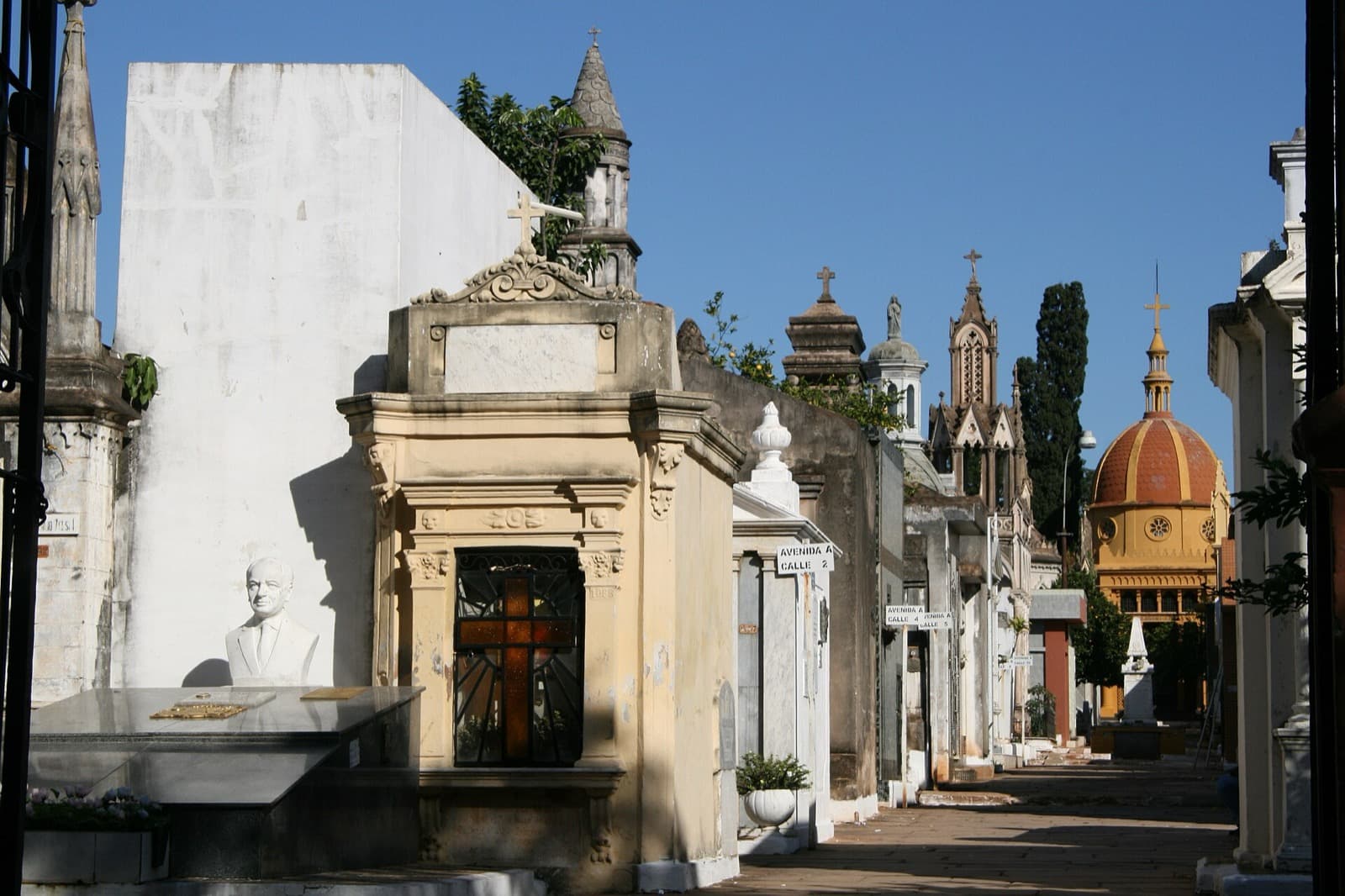
Behind a Doric gate in Buenos Aires, the landowning families of Argentina raised a marble city for their dead grander than much of the living one, and the longest queue leads to an outsider they scorned in life.
Start · Recoleta Cemetery: Through the Gate Into the City of the Dead
DirectionsStops
- 1
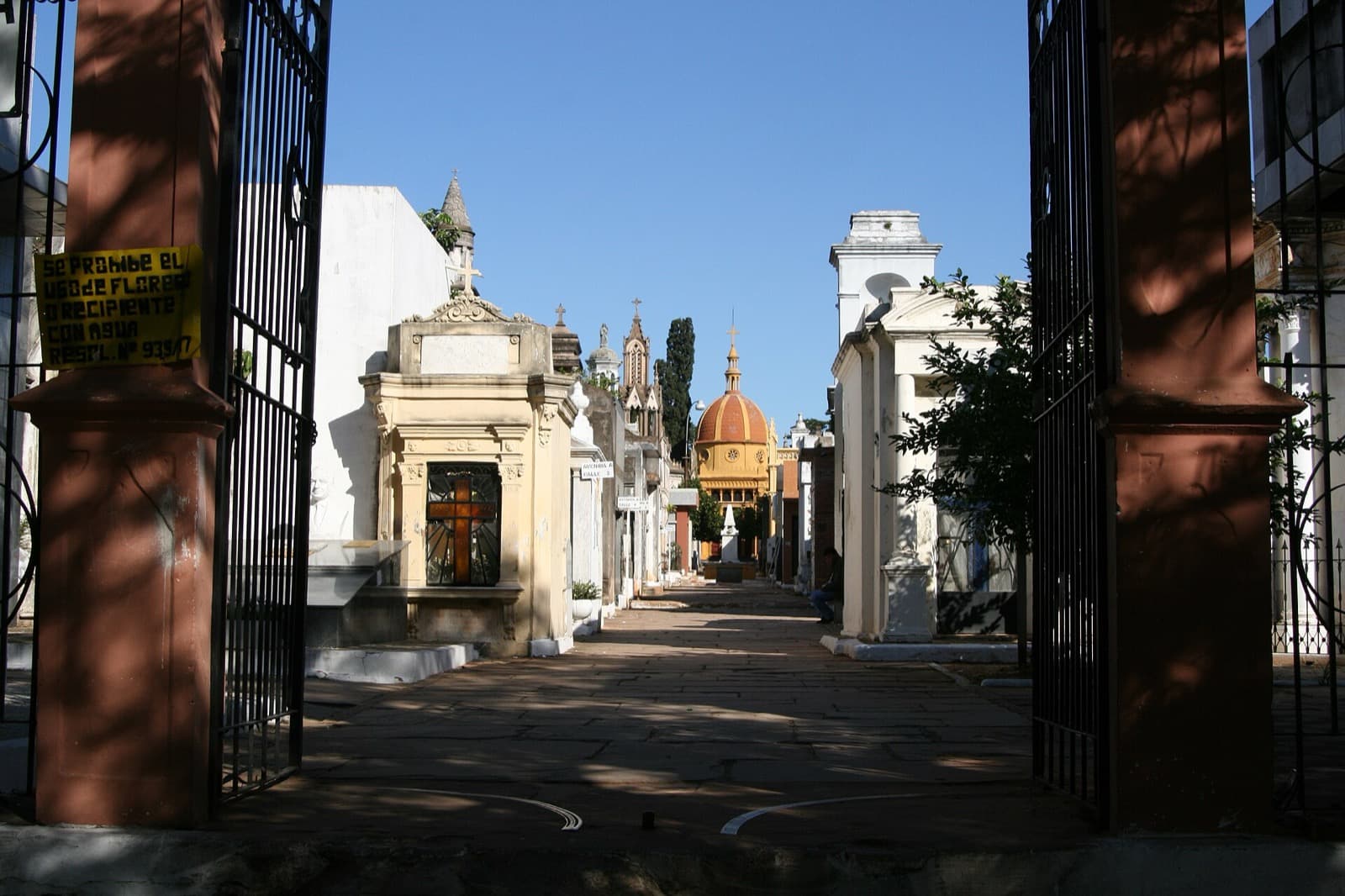
Recoleta Cemetery: Through the Gate Into the City of the Dead
The Doric entrance gate opens onto a gridded city of marble, the first public cemetery in Buenos Aires, laid out on the old garden of the Recollect friars.
- 2
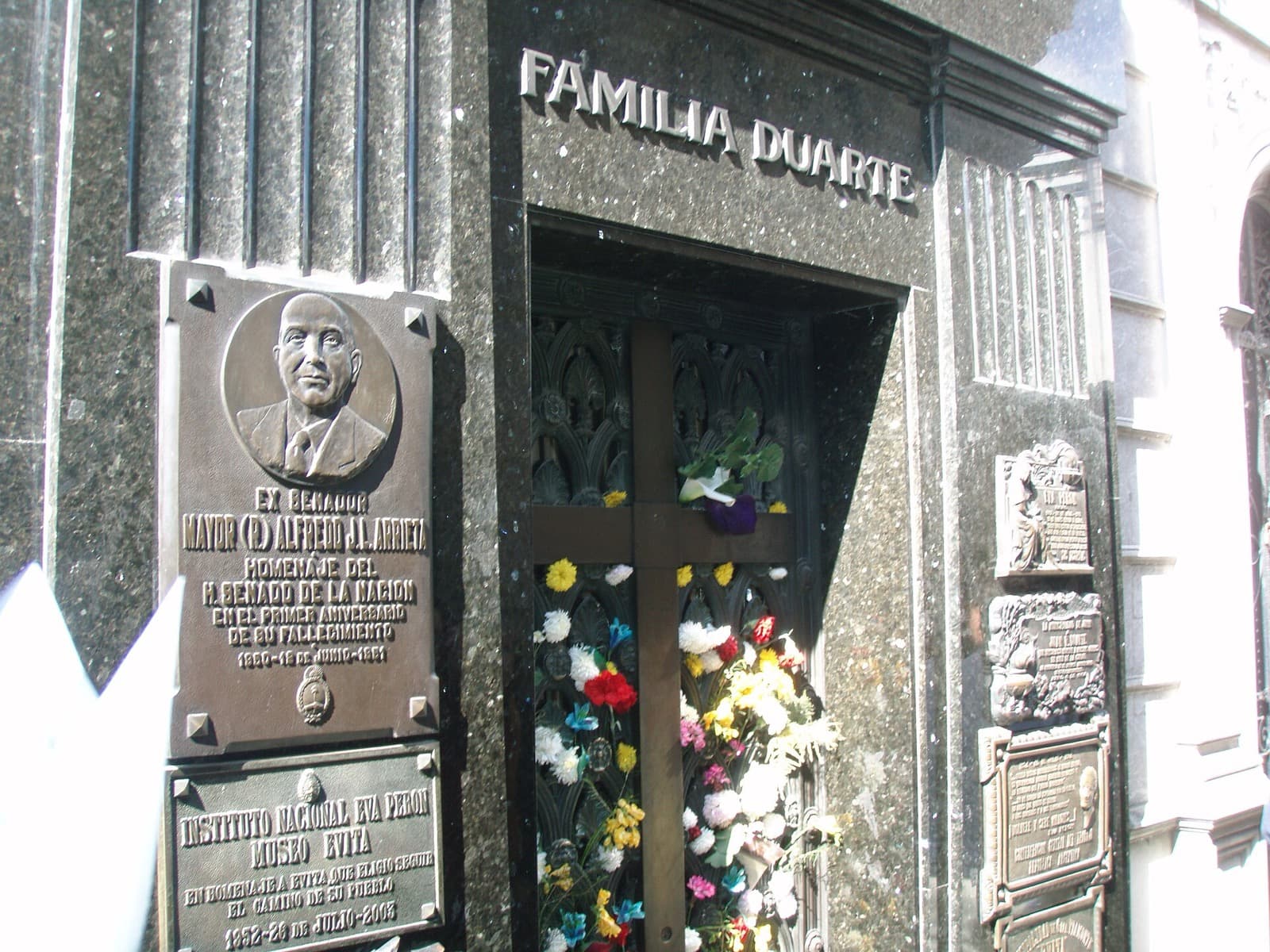
The Tomb of Eva Peron: The Outsider Among the Elite
The most visited grave in Recoleta belongs not to a president but to Eva Peron, buried in her family vault after a decades-long journey her body was forced to make.
- 3
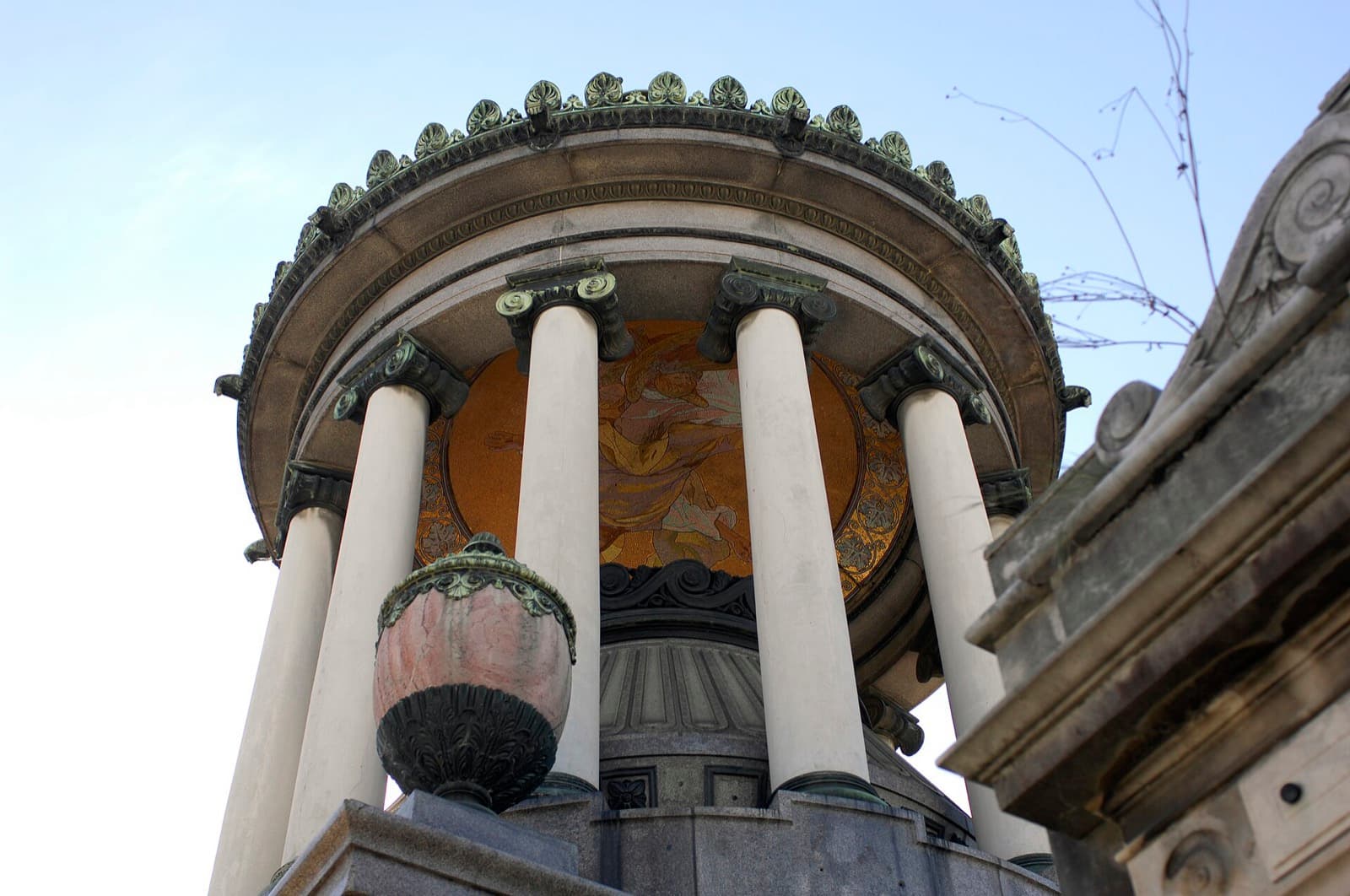
The Marble Avenues: Wealth Competing in Stone
An open-air museum of funerary architecture, where the great families spent fortunes on temples, pyramids and Art Nouveau chapels of imported marble.
- 4
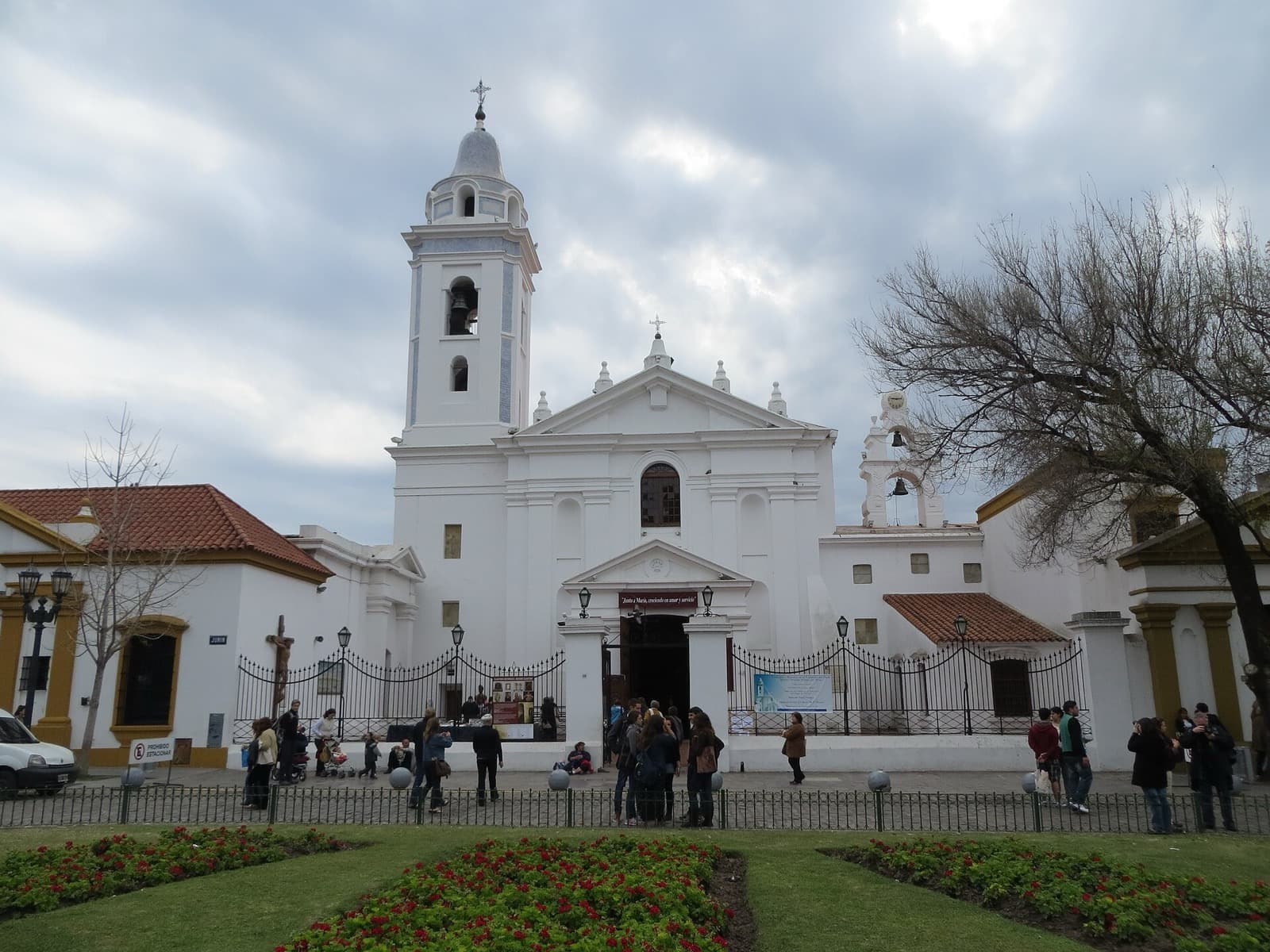
Basilica del Pilar: The Colonial Root Beneath the Fashionable Barrio
The whitewashed colonial church beside the cemetery gate, built for the Recollect friars and the second-oldest church in Buenos Aires.
- 5
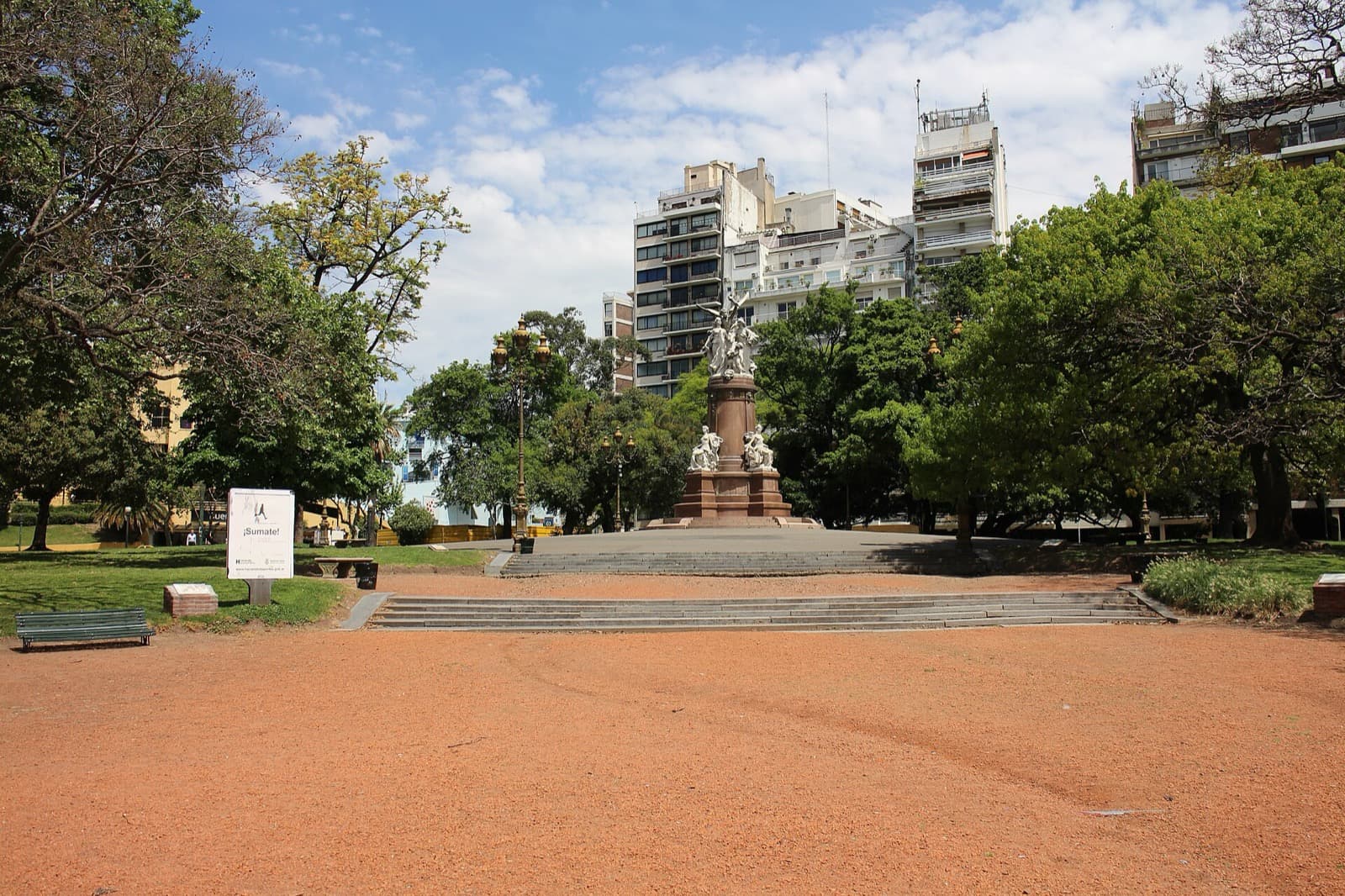
Plaza Francia and the Gran Gomero: The Living, Leisured Barrio
Green slopes facing the cemetery, home to a famous weekend craft fair and an enormous rubber tree whose branches are propped on metal supports.
- 6
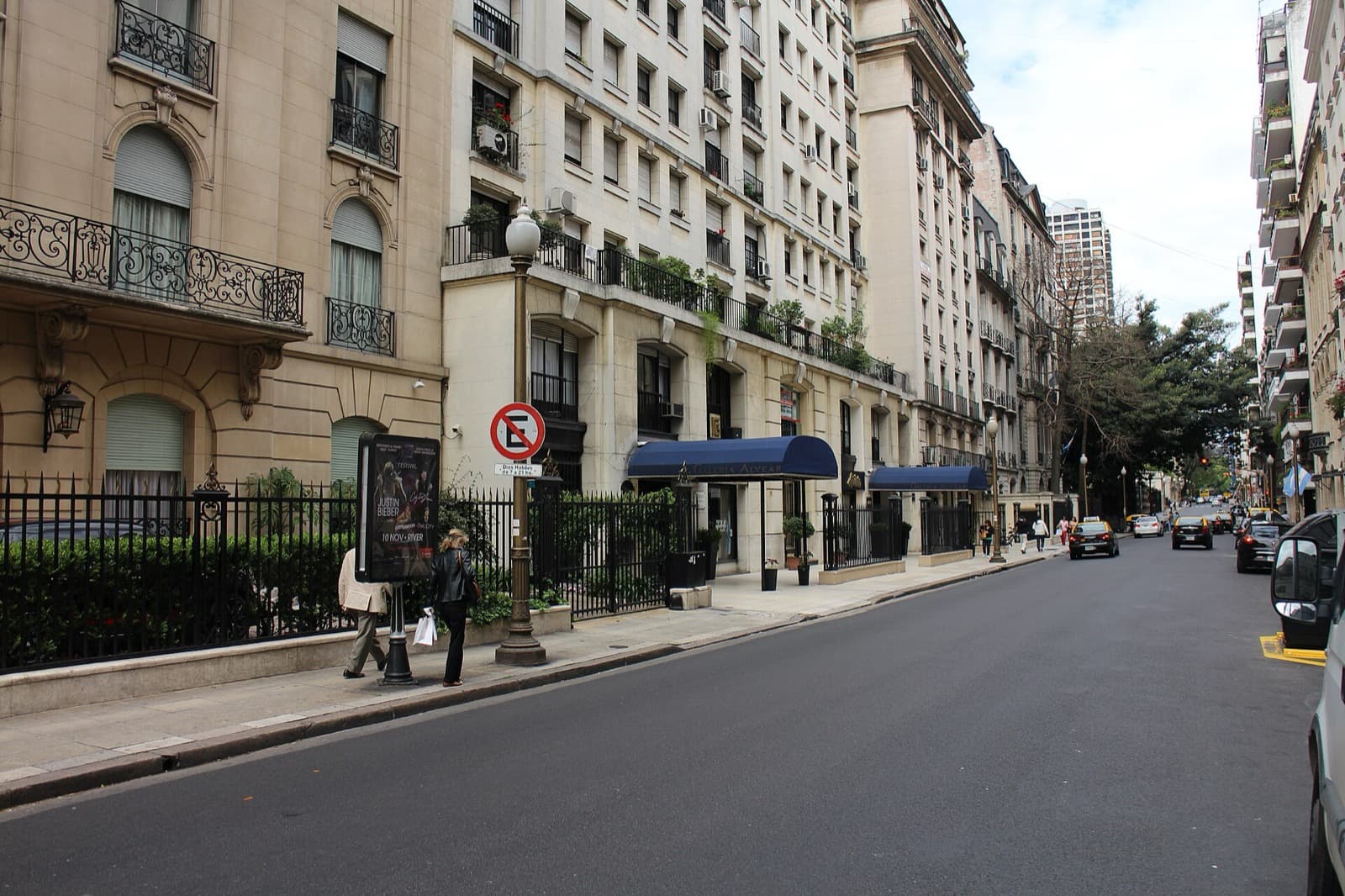
Avenida Alvear: The Fortune That Built Beauty Above Ground
The most aristocratic avenue in Buenos Aires, lined with French Belle Epoque palaces built by the landowning oligarchy in the grain-and-beef boom.
- 7
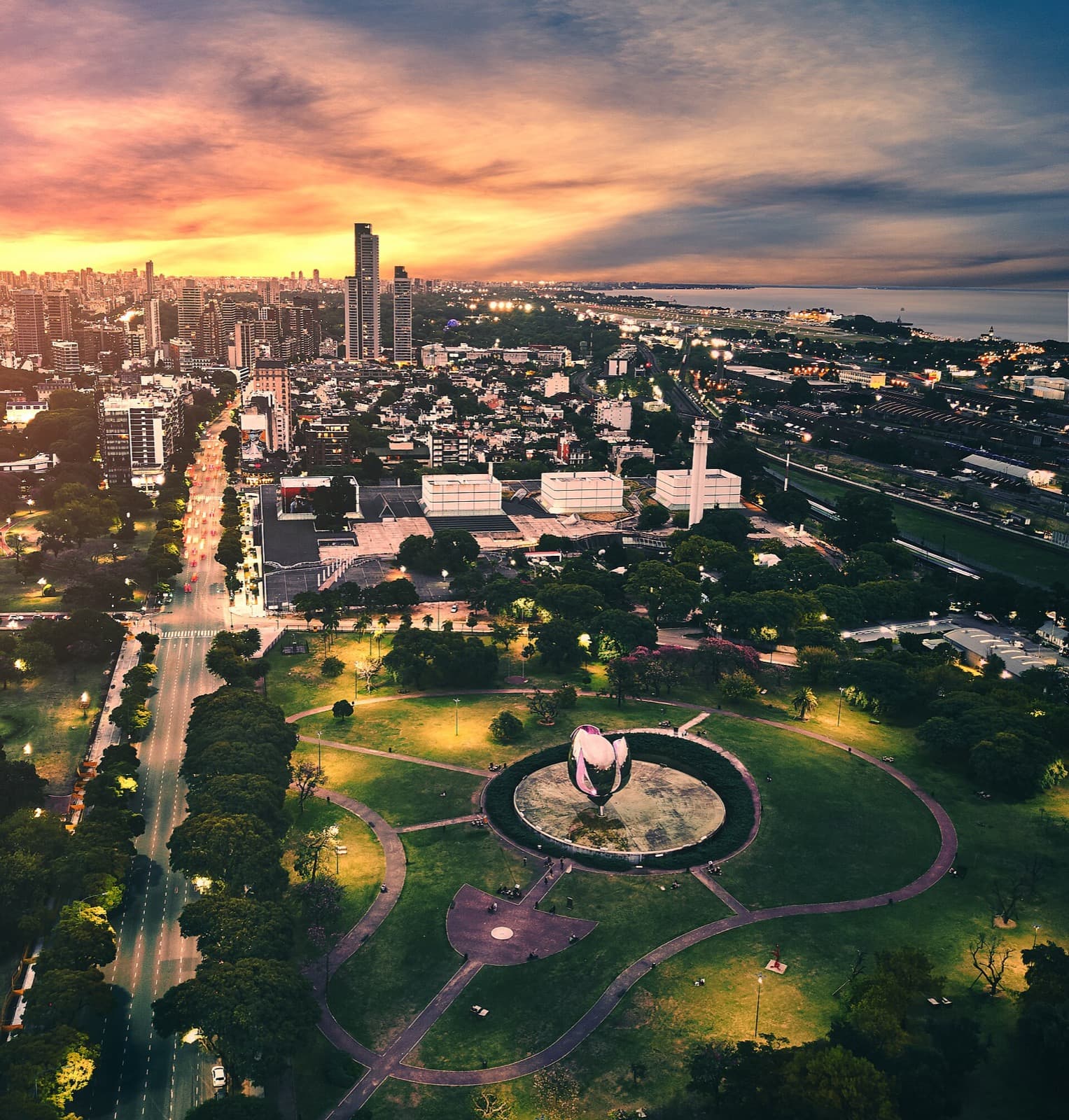
Floralis Generica: The Steel Flower and the Contemporary North
A giant stainless-steel flower on United Nations Square, engineered to open its petals each morning and close them at sunset.
- 8
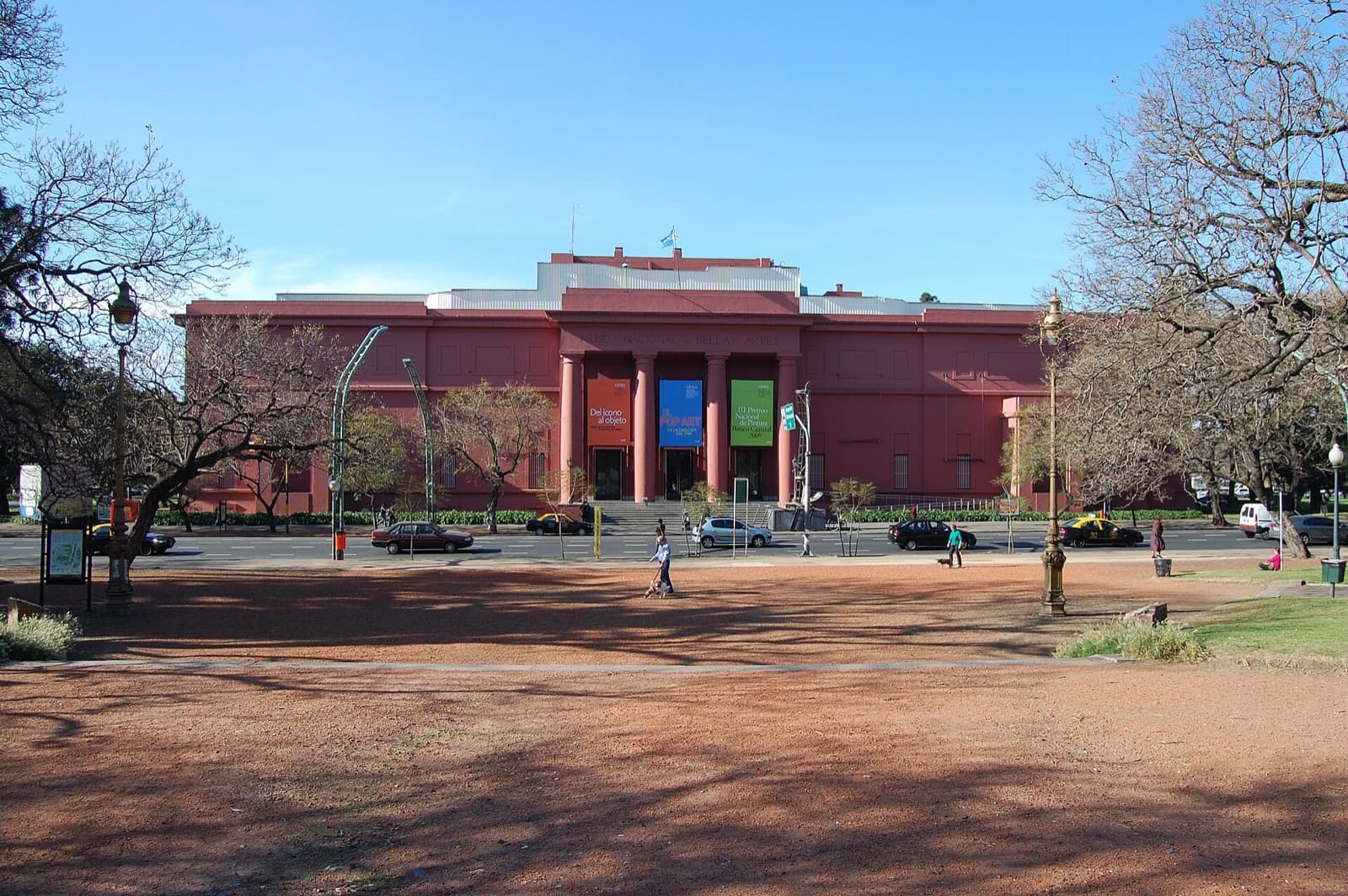
National Museum of Fine Arts: The Barrio's Beauty Made Public
Argentina's principal art museum, housed in a former waterworks pump house, holding the country's largest public collection of art, admission free.
Details
Best Time to Visit
Come on a Saturday or Sunday morning, when the craft fair fills Plaza Francia and the cemetery is open but not yet at its busiest. Late morning to early afternoon gives the best light on the marble and time to reach the museum before it closes. In the hot months from December to February, start early to avoid the midday heat.
Pro Tips
- •Pick up a cemetery map at the gate or photograph the one posted inside; the gridded avenues are genuinely maze-like and it is easy to lose the tomb you were looking for.
- •Foreign visitors pay the cemetery entry by card at the gate, so carry a working card; Argentine residents, students and retirees enter free.
- •Time your visit so the National Museum of Fine Arts is open at the end; admission is free, so it is an easy, unhurried finish to the walk.
- •The weekend craft fair on Plaza Francia is the liveliest moment in the barrio, good for handmade goods and carved mate gourds, and it doubles as a place to rest and eat.
- •The route rises gently toward the Floralis Generica and the museum in the north, so save some energy for the last two stops.
- •The steel flower's petals do not reliably open and close anymore, so treat catching it in motion as a bonus rather than the reason to go.
Safety & Precautions
- •The Basilica del Pilar is a working church; dress modestly, keep your voice low, and be discreet if a service is in progress.
- •Recoleta Cemetery is free to residents but a resting place for the dead and can get crowded; move quietly, do not climb on tombs, and give visitors at family vaults their space.
- •Keep to ordinary big-city bag awareness in the crowded weekend craft fair and busy plazas, and keep valuables discreet, especially in dense holiday crowds.
- •Strong sun and heat are common from December to February, so bring water, a hat and sunscreen; and note the currency is the Argentine peso, with many small vendors preferring cash.
Travel advisory: Exercise Normal Precautions (Level 1).
Gallery
Related Reading
Go deeper on what you'll see, hear, and walk through.

Overview
Best Self-Guided Walking Tours in Buenos Aires (2026)
4 min
Overview
Buenos Aires Travel Guide: Days, Transport, Season, Safety, Budget
7 min
Overview
One Day in Buenos Aires: A Walkable Itinerary From Plaza de Mayo to San Telmo
8 min
Thematic
Best History Walking Tours in Buenos Aires (2026)
2 min
Thematic
Buenos Aires: The City That Keeps Rewriting Itself in Public
8 min
Companion
The Tomb of Eva Perón and the Recoleta Cemetery That Outshone the Living
6 min
Deep dive
The Doric Gate of Recoleta Cemetery: Entrance to a City of the Dead
6 min
Read
What to Eat in Buenos Aires: Dishes, Origins, and How to Order
7 min
Read the walk
The full story of Recoleta Cemetery: The City of the Dead That Outshone the Living, in words. Prefer to listen? Play it narrated, from home or on location.
Introduction
There is a neighbourhood in Buenos Aires, in Argentina, where the dead were housed more grandly than the living. Recoleta grew up around a cemetery of marble mausoleums, laid out like streets, where the great landowning families competed in death as they had in life. Around that necropolis they built the barrio that wanted to be Paris: a whitewashed colonial church, leafy squares, French palaces on the most aristocratic avenue in the city, and, further north, a giant steel flower and the country's great public art museum. This walk reads that paradox one stop at a time. It runs to eight stops over roughly two hours, covering a little under three kilometres, mostly flat, with a gentle rise toward the north. The first three stops sit inside the cemetery itself: the gate, the tomb of Eva Peron, and the marble avenues. Then the route steps outside to the colonial root beneath all the grandeur, crosses the living, leisured squares, climbs the avenue of palaces, and ends among the modern, civic north where the barrio's gathered beauty is finally made public and free. Take it at your own pace. Every stop is short and skippable, and you can linger where the marble or the story holds you. Keep a little respect in reserve: much of the first half is a place of the dead, and one stop touches Argentina's most divisive memory. When you arrive at the neoclassical entrance gate of Recoleta Cemetery, begin with stop one.
1. Recoleta Cemetery: Through the Gate Into the City of the Dead
Stand a moment before the gate. Tall Doric columns frame the entrance, sober and classical, and beyond them the ground opens into what looks less like a cemetery than a small city. Paved avenues run in a grid between rows of mausoleums, some like miniature temples, some like chapels, and you could genuinely lose your way among them. This is Recoleta Cemetery, and it was inaugurated on the seventeenth of November, eighteen twenty-two, as the first public cemetery in Buenos Aires. The land had belonged to the Recollect friars, a religious community whose name gives the whole barrio its name, Recoleta. Where you are standing was once their garden and orchard, on what were then the outskirts of the city. A French civil engineer, Prospero Catelin, laid out the original grounds. Decades later, in eighteen eighty-one, the architect Juan Antonio Buschiazzo remodelled the cemetery and gave it this neoclassical gate. Consider the scale. The cemetery covers about five and a half hectares and holds roughly four thousand seven hundred above-ground vaults. Ninety-four of them are declared National Historical Monuments. The styles run from Art Deco and Art Nouveau to Baroque and Neo-Gothic, and much of the marble was imported from Paris and from Milan, mostly in the decades around nineteen hundred. Buried here are presidents, the founder of the Argentine navy, Nobel laureates, and above all the landowning families who could afford to build in stone. Keep in mind, for all its beauty, that this is a place of the dead. Walk quietly, and let the paradox settle in as you pass through: a city of the dead built grander than the living city around it.
2. The Tomb of Eva Peron: The Outsider Among the Elite
Look for the vault marked Duarte, and you may find it by the flowers and plaques left against it. Duarte was the family name of Eva Peron, known to millions as Evita, and this is one of the most visited graves in the whole cemetery. That fact carries its own quiet irony. The longest queue in this necropolis of presidents and old families leads not to a statesman but to a woman the traditional elite would never have admitted among them while she lived. Eva Peron died of cervical cancer on the twenty-sixth of July, nineteen fifty-two. She was the wife of President Juan Peron, and Peronism, the political movement bound to their name, remains deeply divisive in Argentina to this day, so it is worth telling this plainly, without celebration and without condemnation. What followed her death is extraordinary. Her embalmed body was displayed for roughly two years. Then, after Juan Peron was overthrown in the coup of nineteen fifty-five, a military commando removed the body, and it was moved in secret and eventually buried under a false name, Maria Maggi de Magistris, in Milan, in Italy. It was exhumed in nineteen seventy-one and taken to Peron, then in exile in Madrid. It returned to Argentina in nineteen seventy-four. Only in October of nineteen seventy-six was it finally interred here, in the Duarte vault, in a fortified crypt about five metres underground, sealed behind a steel door engineered to defeat any future theft. Stand here and consider the distance her body travelled to reach this ground, and the fact that the outsider now draws the crowd the old families once kept out.
3. The Marble Avenues: Wealth Competing in Stone
Give yourself a few minutes to wander these inner avenues, because this is where the paradox becomes sculpture. Turn one corner and you meet a neoclassical temple with a pediment and columns. Turn another and there is an Egyptian-style pyramid, or an Art Nouveau chapel with sinuous stone and stained glass, or a severe Art Deco facade. The materials were imported from Paris and from Milan, and the finest were shaped by noted sculptors. Ninety-four of these tombs are declared National Historical Monuments. Read the avenues as a competition. The landowning families who made their fortunes in grain and cattle spent lavishly here, each vault answering the next, wealth speaking in stone long after the people inside had died. One tomb draws many visitors for its beauty and for a story attached to it, and the story is worth telling carefully, as a story. It belongs to Rufina Cambaceres, an heiress born in eighteen eighty-three, who died young in nineteen oh two. Her tomb is a delicate Art Nouveau work in Carrara marble, showing a young woman with her hand on the door of the mausoleum. By tradition, the tale goes that she was declared dead, buried, and later found to have been buried alive, a victim of catalepsy. It is a haunting story, but I want to be clear: it is popular urban legend, disputed beyond the first account, not confirmed history. Enjoy it as folklore, not fact. What is certain is the marble itself, and the fortune it represents, spent not on the living but on memory.
4. Basilica del Pilar: The Colonial Root Beneath the Fashionable Barrio
Step out of the cemetery gate and turn to the low white church beside it. After all that imported marble, this building is a lesson in restraint. Its walls are simply whitewashed, its lines plain and colonial, and yet it is older than nearly everything around it. This is the…
Full narration for this stop unlocks with the tour.
5. Plaza Francia and the Gran Gomero: The Living, Leisured Barrio
Cross now to the green slopes that spread out in front of the cemetery and the cultural centre. Most people call this Plaza Francia, though the plaza most directly facing the cemetery is properly Plaza Intendente Alvear, named for Torcuato and Carlos Maria de Alvear. After the…
Full narration for this stop unlocks with the tour.
6. Avenida Alvear: The Fortune That Built Beauty Above Ground
Make your way now onto Avenida Alvear, and you leave the marble of the tombs for the marble of the living rich. This short avenue, only about seven blocks running from the Plazoleta Carlos Pellegrini to the Alvear Plaza, is the most aristocratic street in Buenos Aires. It was…
Full narration for this stop unlocks with the tour.
7. Floralis Generica: The Steel Flower and the Contemporary North
Head north now to the wide open space of the Plaza de las Naciones Unidas, United Nations Square, near the law faculty, and you meet something entirely different from all the historic stone behind you. Rising from a reflecting pool is a colossal flower made of metal. This is the…
Full narration for this stop unlocks with the tour.
8. National Museum of Fine Arts: The Barrio's Beauty Made Public
End your walk at the long building on Avenida del Libertador that holds the National Museum of Fine Arts. After a barrio that spent so lavishly on private tombs and private palaces, it feels fitting to close somewhere the beauty is finally shared. This is Argentina's principal…
Full narration for this stop unlocks with the tour.