Buda Castle District: Palace, Matthias Church and Fisherman's Bastion
105 min · 2.5 km · moderate
Budapest is two old cities joined across the Danube: hilly, royal Buda on the west bank and flat, grand Pest on the east. Read the city as a pair of gestures and its whole history opens up. On the Buda side, a limestone ridge carries a coronation church and a viewing terrace above a quarter where every age has chosen which past to rebuild. On the Pest side, one dead-straight boulevard runs from an opera house up to a square of bronze chieftains and a palace of thermal pools, a line a booming nation laid out for its thousandth birthday. And in the seventh district, between the two, the arc of the twentieth century is written in a handful of streets, from the largest synagogue in Europe to a sealed wartime ghetto to a nightlife reborn from the emptied houses. Three self-guided walks, three ways to read the same divided, rebuilt city.
Buda: the ridge that made an art of rising from rubble
Cross to the west bank and climb Castle Hill, and you are walking ground that has been rebuilt again and again. The visitor's eye reads an ancient, unbroken medieval capital. The ground reads catastrophe and repair. This ridge has been the royal seat of medieval Hungary, a conquered Ottoman town for a century and a half, a baroque palace quarter under the Habsburgs, and, in the winter of nineteen forty-four to forty-five, a battlefield reduced almost entirely to rubble in the siege of Budapest. It is UNESCO World Heritage ground, inscribed in nineteen eighty-seven, and almost everything on it was built, ruined, and built again.
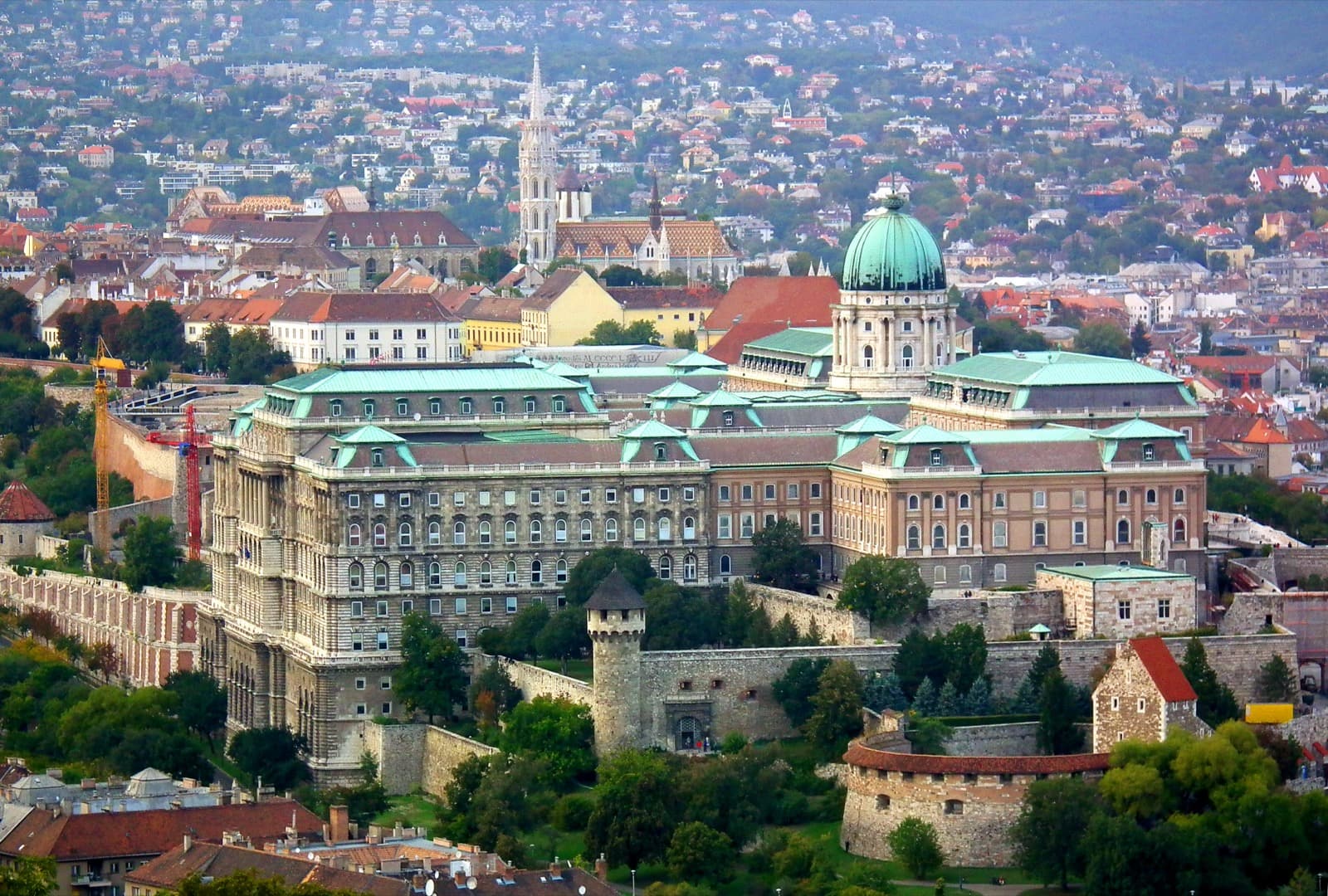
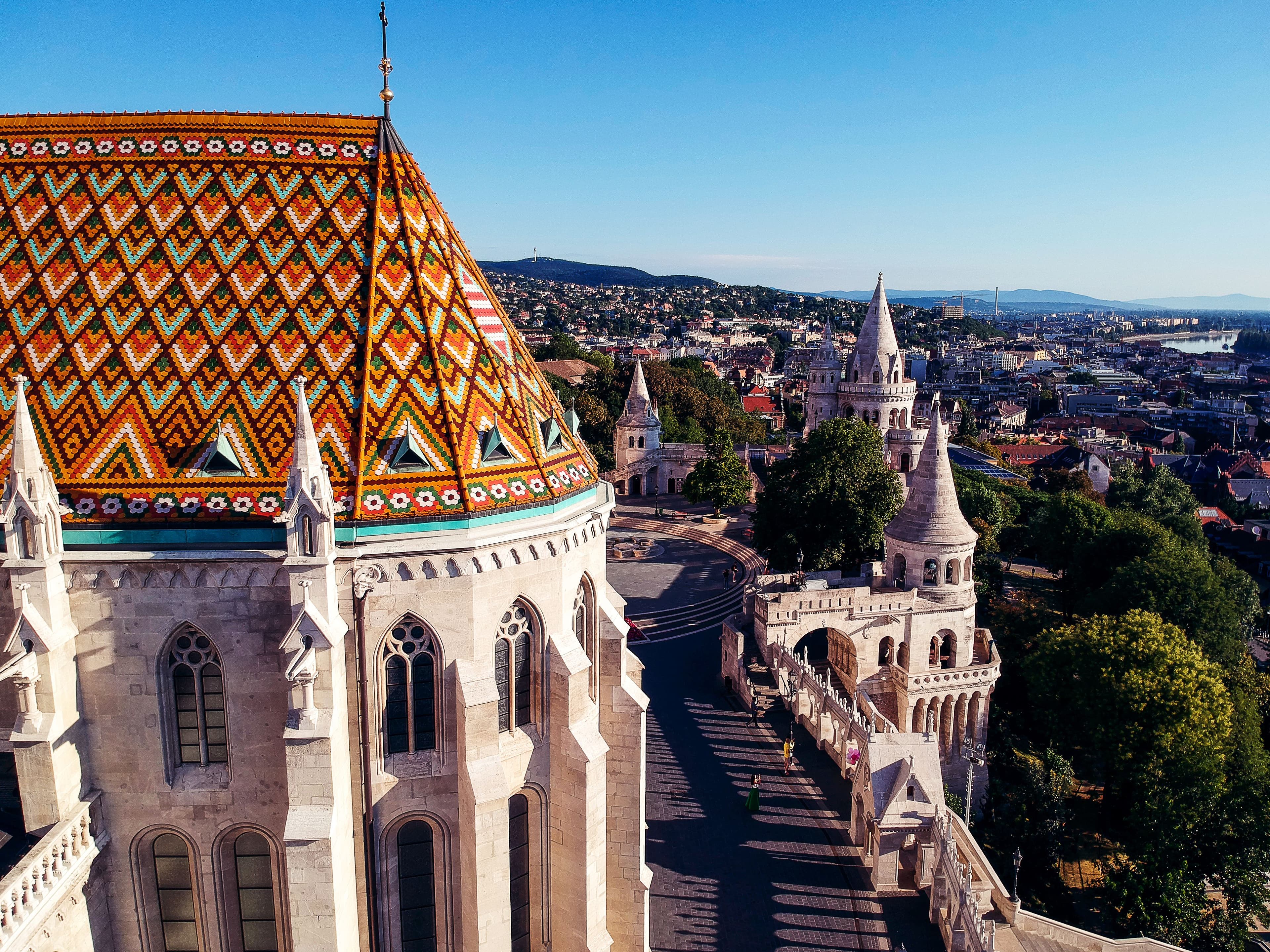
The Castle Hill walk makes that pattern legible stop by stop. Buda Castle is a modern reconstruction over an excavated medieval palace: destroyed in the great siege of sixteen eighty-six when Christian forces retook the city from the Ottomans, rebuilt in baroque, ruined again in nineteen forty-four to forty-five, then rebuilt between nineteen forty-six and nineteen sixty-six, a dig that uncovered the medieval royal halls buried beneath. Matthias Church, the coronation church where Charles the Fourth was crowned in nineteen sixteen in the last Habsburg coronation, spent roughly a century and a half as a mosque after the Ottomans took Buda in fifteen forty-one, then was reimagined in flamboyant neo-Gothic by Frigyes Schulek between eighteen seventy-four and eighteen ninety-six, who gave it the diamond-patterned Zsolnay tile roof read today as medieval.
The Fisherman's Bastion behind the church tells the honest version of the trick. Schulek built it between eighteen ninety-nine and nineteen oh five as a viewing terrace that only looks like a fortress. Its seven white towers never defended anything. The whole tour resolves at the ridge's northern gate, where the Mary Magdalene Tower stands alone: the surviving Gothic bell tower of a church shattered in nineteen forty-five, its ruined body demolished under the postwar regime, leaving one tower standing where the rest fell. Built, ruined, and standing yet. On Buda, the prettiest surface is often the newest thing of all.
Pest: a nation written as one straight line
Hear a stop from this walk
Szent György tér: Sándor Palace and the Rebuilt Riding Hall
Recross the river and the ground goes flat, the streets go grand, and Hungary writes its national story as a single sentence. In the eighteen seventies a newly self-governing Hungary drove one straight avenue through Pest, decreed in eighteen seventy, begun in eighteen seventy-two, opened in eighteen seventy-six, and aimed the whole composition at its founding myth. UNESCO added the avenue and its underground to the World Heritage list in two thousand and two.
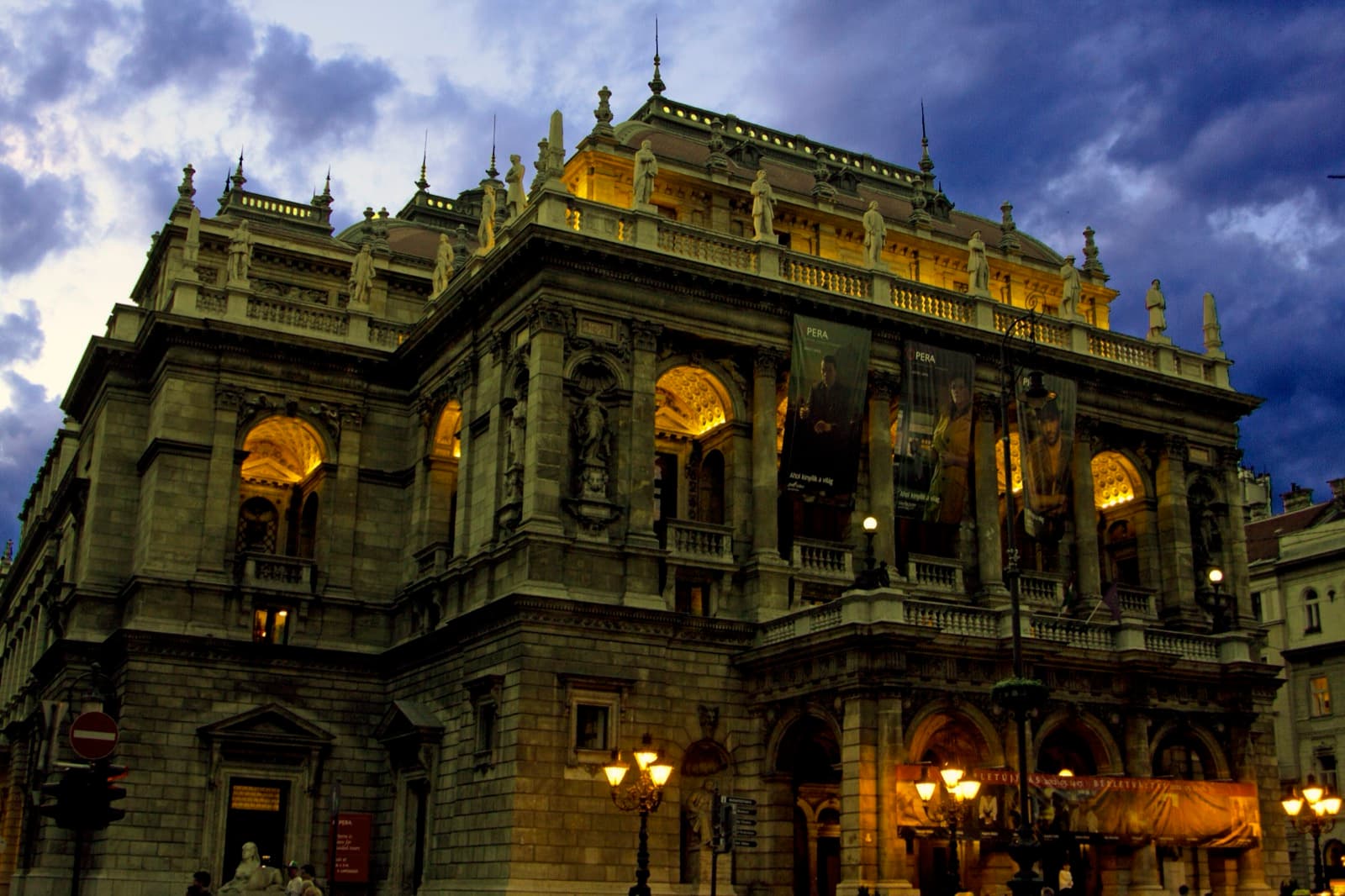
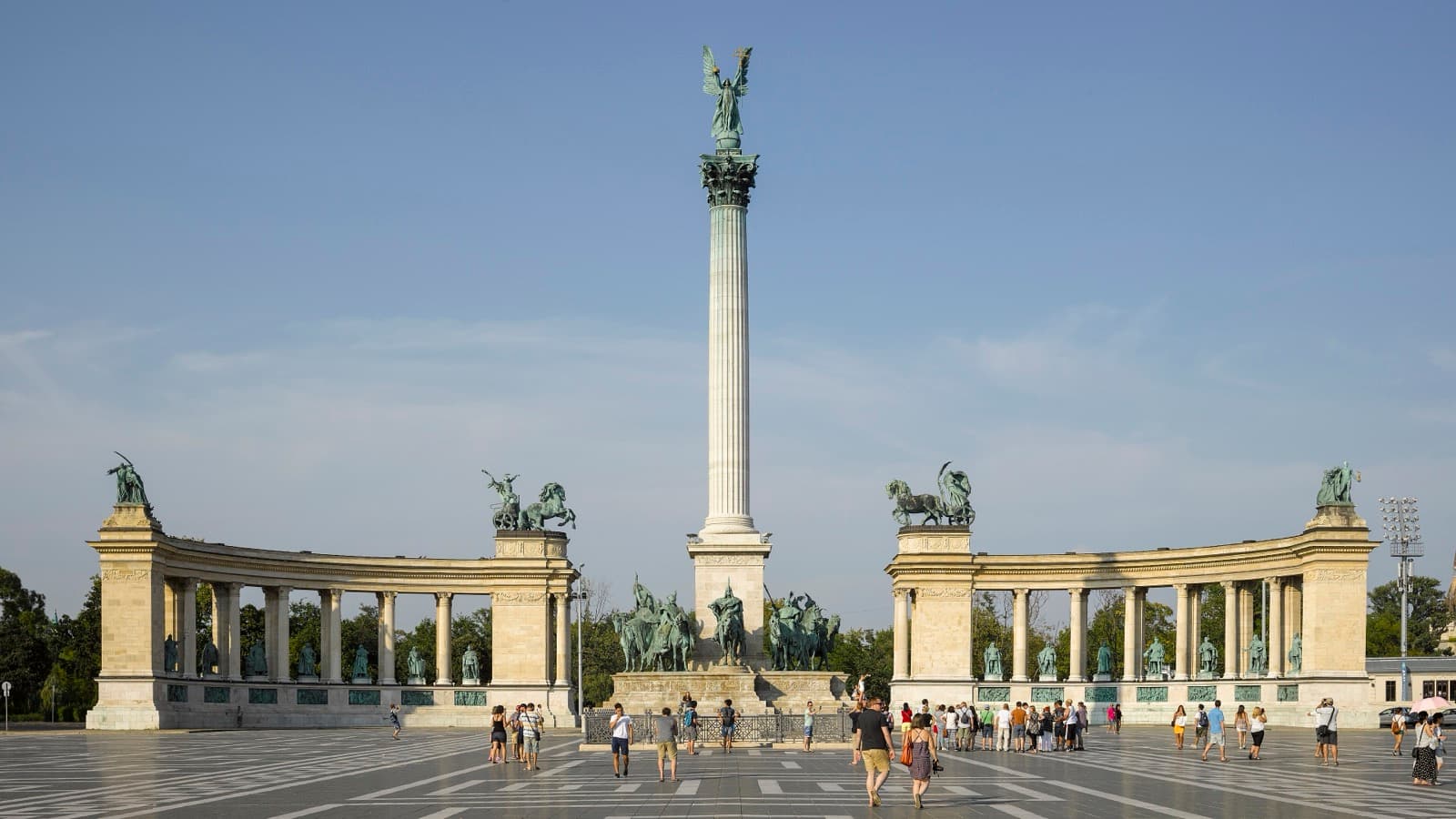
The Andrassy Avenue walk follows that line. It opens at the Hungarian State Opera House, designed by Miklos Ybl and opened in eighteen eighty-four, where Gustav Mahler served as director from eighteen eighty-eight to eighteen ninety-one. It passes the Oktogon, the eight-sided crossing where the boulevard changes from dense city street to leafy villa-lined promenade, and runs above the Millennium Underground, the oldest electric underground railway on the European mainland, opened in eighteen ninety-six to carry crowds up to the festivities. The line delivers you to Heroes' Square, where the Millennium Monument, inaugurated in nineteen oh six, sets the Archangel Gabriel above the Seven Chieftains of the Magyars led by Arpad, the people who arrived in this basin around eight ninety-five. Just beyond, in City Park, Vajdahunyad Castle fuses copies of famous Hungarian buildings into one playful pastiche, and the Szechenyi Baths, opened in nineteen thirteen and fed by thermal springs rising near seventy-four and seventy-seven degrees Celsius, close the day in warm water, a bathing tradition that runs back through Ottoman baths to the Roman town of Aquincum.
But the proud sentence breaks at one address. Andrassy ut sixty held the twentieth century's cruelty twice: headquarters of the fascist Arrow Cross in nineteen forty-four to forty-five, then of the communist state security services, now the House of Terror museum, opened in two thousand and two. Hold the pride and the wound as facts of the same boulevard.
Erzsebetvaros: destruction and rebirth in seven streets
Between the two banks lies the seventh district, Erzsebetvaros, where the whole arc of a community sits within a few hundred metres. The Jewish Quarter walk opens at the Great Synagogue on Dohany Street, the largest synagogue in Europe, built between eighteen fifty-four and eighteen fifty-nine as a confident declaration of belonging by an emancipated community. Next door, a house on the museum's site was the birthplace of Theodor Herzl in eighteen sixty, and the Heroes' Temple of nineteen thirty-one honours Jewish soldiers who died fighting for Hungary in the First World War, a portrait of people who saw themselves as fully Hungarian.
Then the walk turns dark. The Raoul Wallenberg Memorial Park holds a metal weeping willow whose leaves carry victims' names, standing over ghetto graves, and honours the Swedish diplomat Raoul Wallenberg and the Swiss vice-consul Carl Lutz, who saved tens of thousands. Klauzal ter was the centre of the sealed ghetto ordered on the thirteenth of November nineteen forty-four, where roughly seventy thousand Jews were crowded behind a wooden fence until the Red Army liberated the quarter in January nineteen forty-five. The nearby Rumbach Street Synagogue, an octagonal design by a young Otto Wagner completed in eighteen seventy-two, and the Kazinczy Street Orthodox Synagogue, a living Art Nouveau complex of nineteen twelve to thirteen, show a community that was never a single thing.
The last stops hold the paradox. Gozsdu Courtyard, a chain of seven connected courtyards from around nineteen hundred, sat derelict for decades before its early twenty-first-century revival, and the ruin-bar movement reoccupied the quarter's condemned buildings, with Szimpla Kert saving a former stove factory at fourteen Kazinczy Street in two thousand four. The courtyards now full of music are the very buildings that stood emptied after the community was destroyed.
Three walks, one city split across a river and rebuilt again and again. Start planning at Budapest walking tours, and read whichever bank calls first.
Sources
- Castle Hill self-guided walk, Roamer tour content (fact-audited), Buda Castle District: Palace, Matthias Church and Fisherman's Bastion
- Andrassy Avenue self-guided walk, Roamer tour content (fact-audited), Andrassy Avenue: The Boulevard Built for a Nation's Millennium
- Jewish Quarter self-guided walk, Roamer tour content (fact-audited), Jewish Quarter: Destruction and Rebirth in Seven Streets
- UNESCO World Heritage Centre, Budapest, including the Banks of the Danube, the Buda Castle Quarter and Andrassy Avenue, whc.unesco.org/en/list/400
- United States Holocaust Memorial Museum, Budapest and the Holocaust in Hungary, encyclopedia.ushmm.org
Frequently asked questions
- Why is Budapest called two cities?
- Budapest was formed by joining Buda and Pest, historically separate towns on opposite banks of the Danube. Buda is hilly and was the royal seat, with Castle Hill carrying the coronation church and the palace. Pest is flat and grand, laid out with wide boulevards like Andrassy Avenue. The two sides read as distinct cities even today.
- What are the best self-guided walking tours in Budapest?
- Three walks cover the city's core stories: the Castle Hill walk on the Buda side reads a ridge where every age chose which past to rebuild, the Andrassy Avenue walk follows a straight millennium boulevard from the opera house to Heroes' Square and the Szechenyi Baths, and the Jewish Quarter walk in Erzsebetvaros moves from the largest synagogue in Europe through the wartime ghetto to the ruin-bar revival.
- Is Buda Castle original or reconstructed?
- Buda Castle is a modern reconstruction built over an excavated medieval palace. The medieval palace was devastated in the siege of sixteen eighty-six, rebuilt in baroque style, ruined again in the siege of Budapest in nineteen forty-four to forty-five, then rebuilt between nineteen forty-six and nineteen sixty-six. That postwar dig uncovered the medieval royal halls now preserved beneath the palace.
- What is the House of Terror on Andrassy Avenue?
- Andrassy ut sixty is a single address that held two successive twentieth-century terrors. It served as headquarters of the fascist Arrow Cross Party in nineteen forty-four to forty-five, then as headquarters of the communist state security services after the war. It opened as the House of Terror museum on the twenty-fourth of February two thousand and two, documenting the victims of both regimes.
- What is a ruin bar and where did they start?
- Ruin bars, called romkocsma in Hungarian, are bars set up inside the emptied, condemned pre-war buildings of Budapest's old Jewish quarter, furnished with mismatched salvage. The movement began in the early two thousands and is widely credited to Szimpla Kert, which settled into a former stove factory at fourteen Kazinczy Street in two thousand four. The movement helped preserve buildings that would otherwise have been demolished.
Ready to experience it?
Buda Castle District: Palace, Matthias Church and Fisherman's Bastion
105 min · 2.5 km · moderate
More from Budapest
Explore more at your own pace.
Heroes' Square and the Boulevard That Reads Like a Sentence
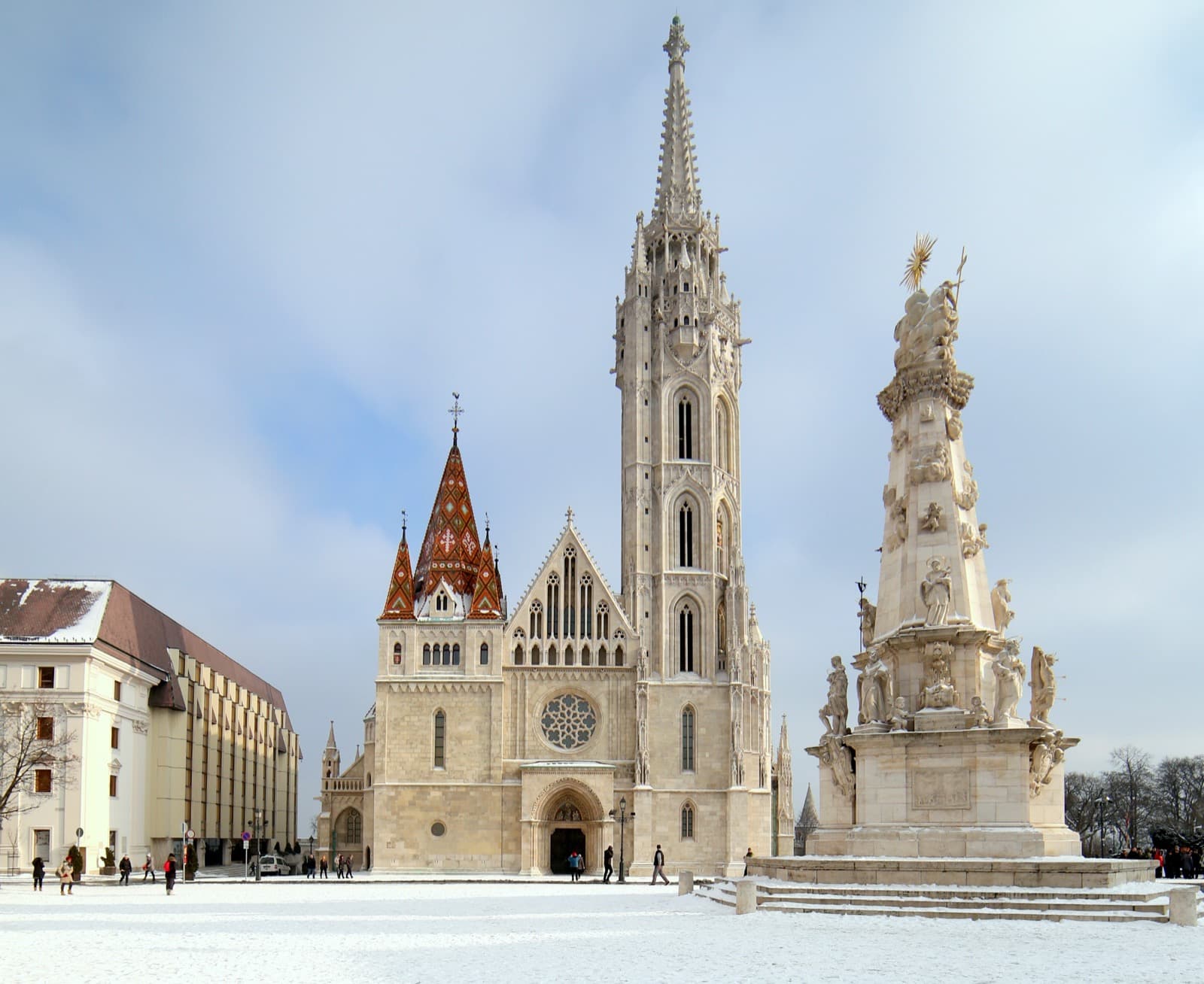
Matthias Church: Why Budapest's Prettiest Roof Is the Newest Thing on Castle Hill
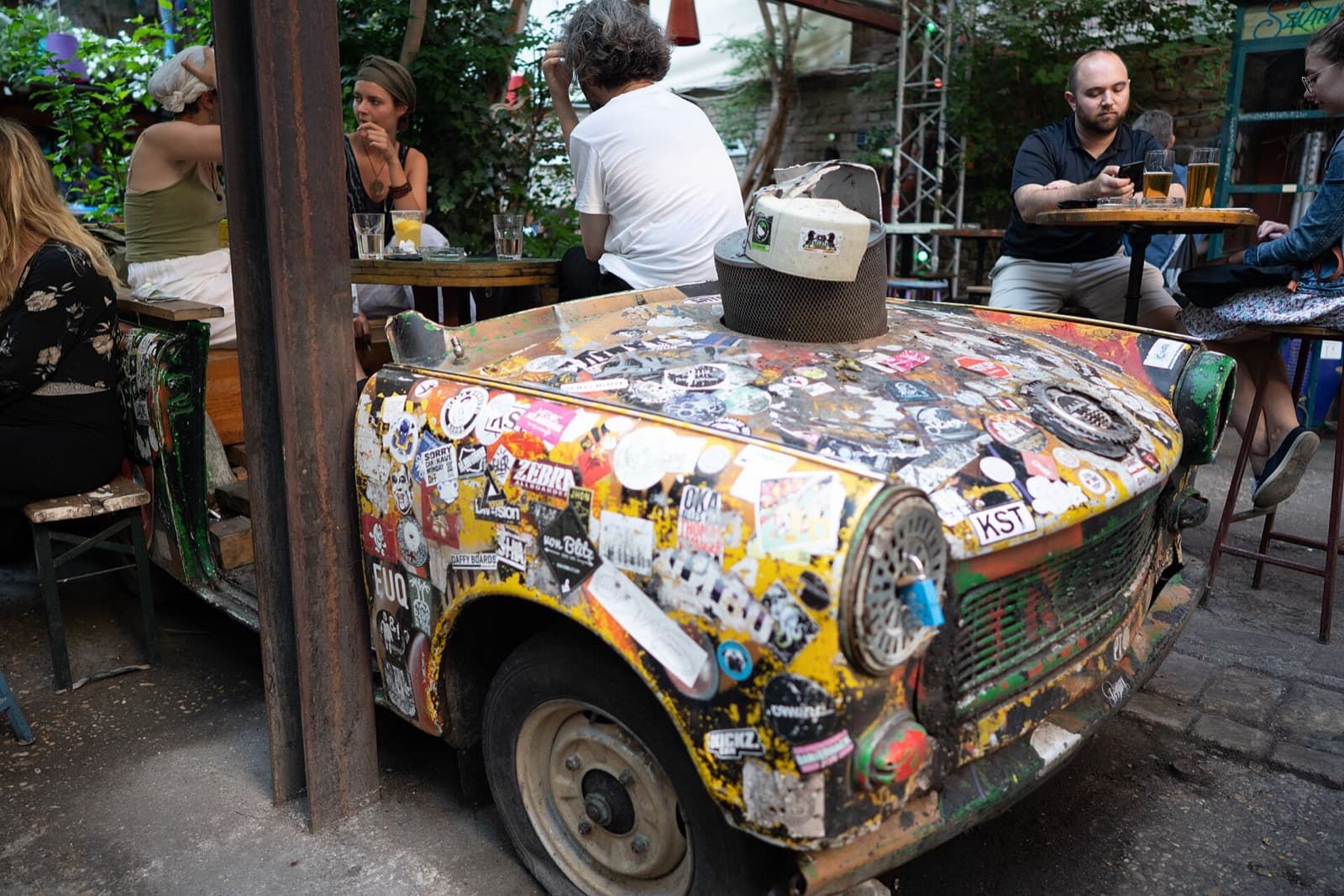
Szimpla Kert and the Ruin Bars: Why Budapest's Party Quarter Is Really a Memorial
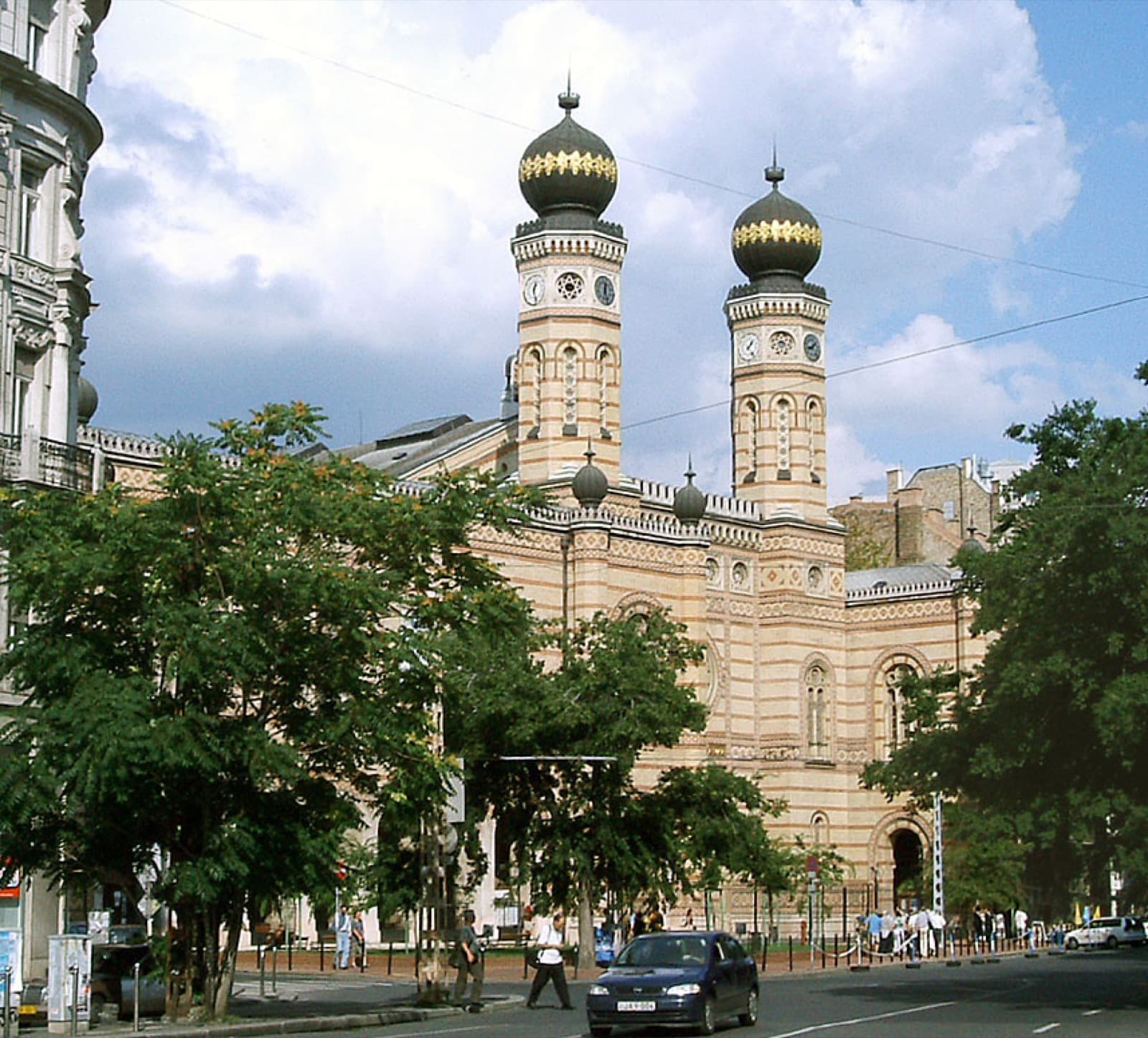
Dohany Street Synagogue: Europe's Largest, and What It Was Built to Say
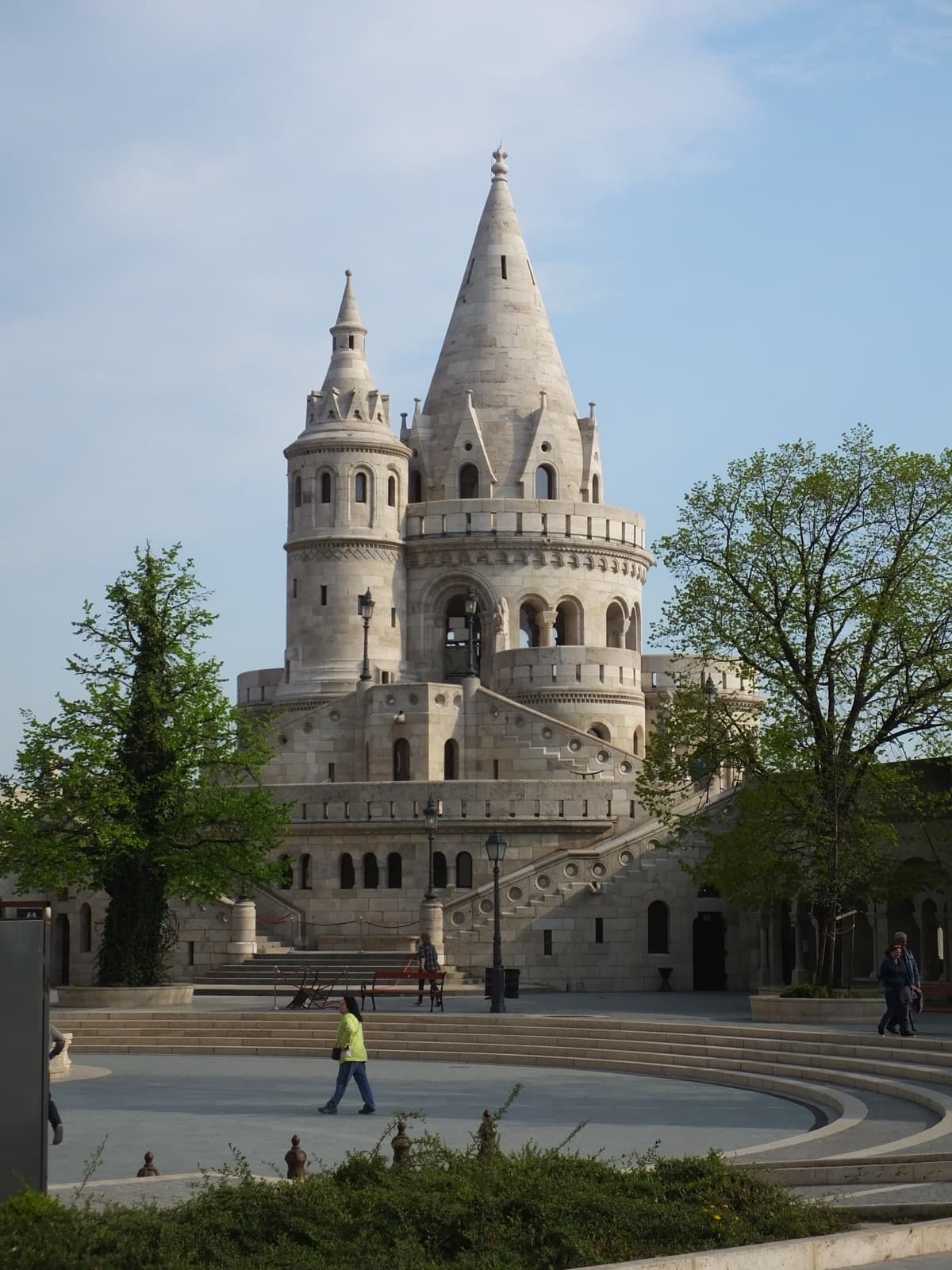
Fisherman's Bastion: The Fortress That Never Defended Anything