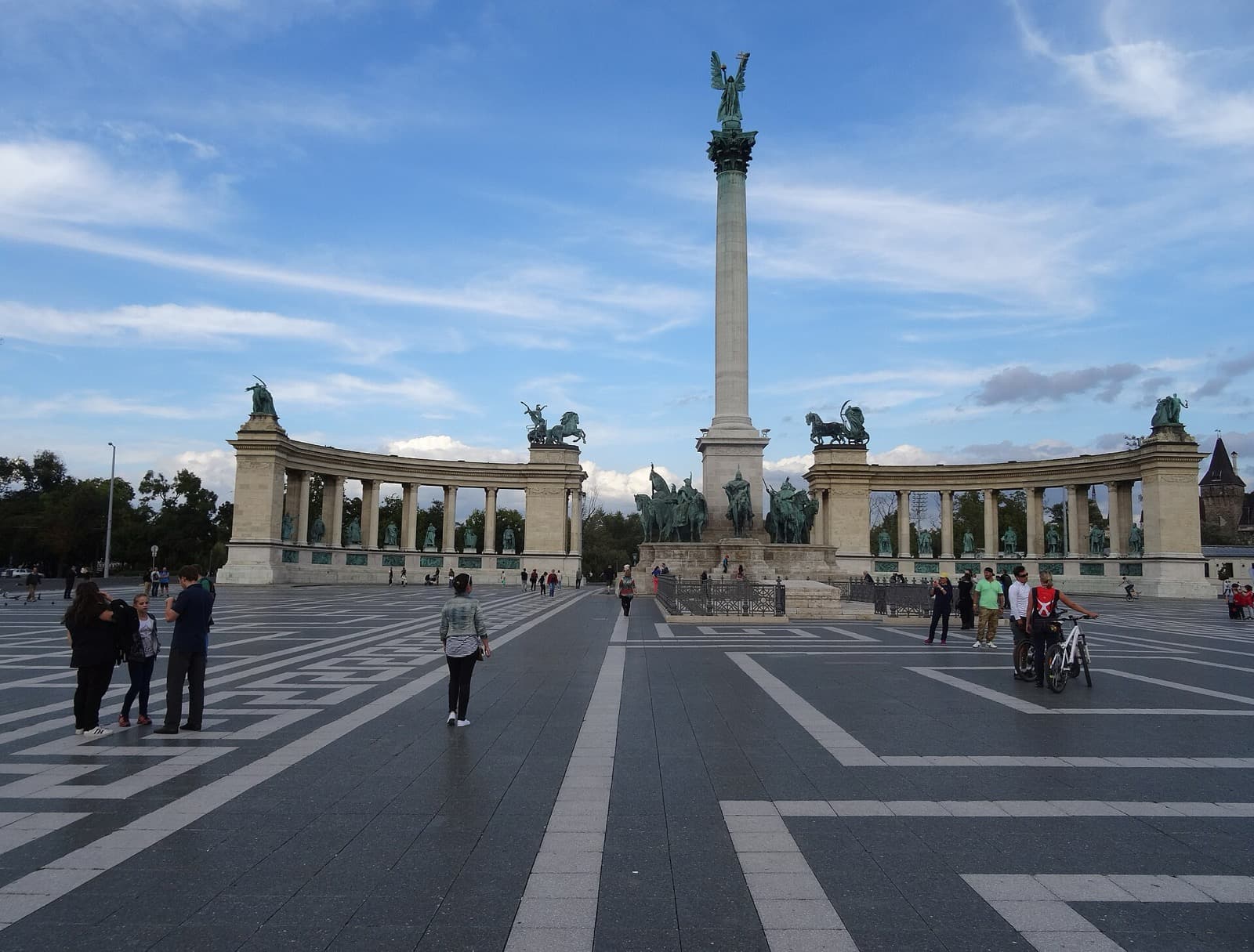
Read one straight line through Pest and you read Hungary itself: an opera house, palaces, and villas aimed at Heroes' Square for the nation's thousand-year mark, with the twentieth century's darkness held at a single address. This self-guided walk lets you take that story at your own pace.
Start · The Hungarian State Opera House: A Nation Sings Its Arrival
DirectionsStops
- 1
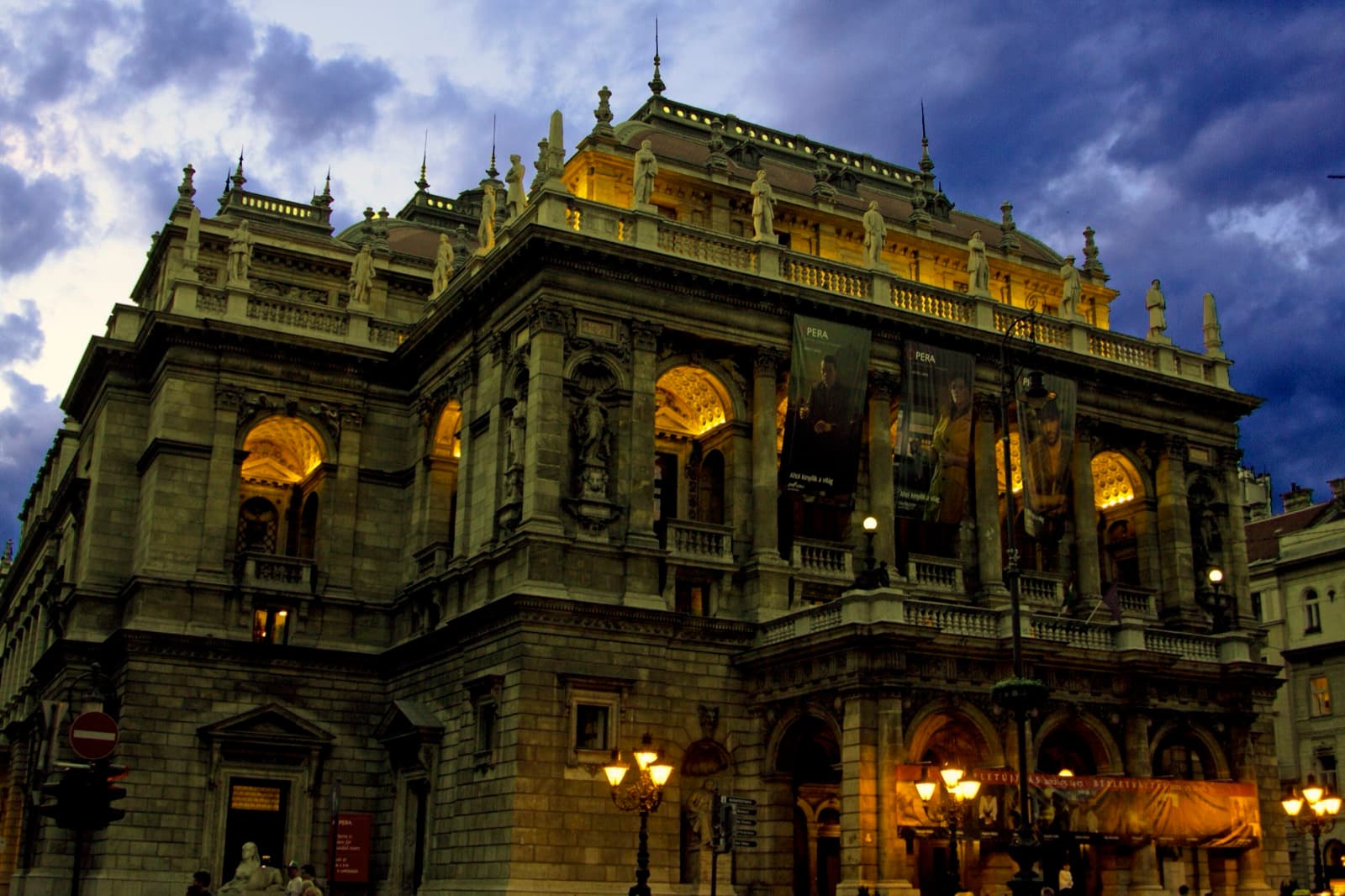
The Hungarian State Opera House: A Nation Sings Its Arrival
A neo-Renaissance opera house, funded by the city and the emperor and opened in eighteen eighty-four, that anchors the lower end of the avenue.
- 2
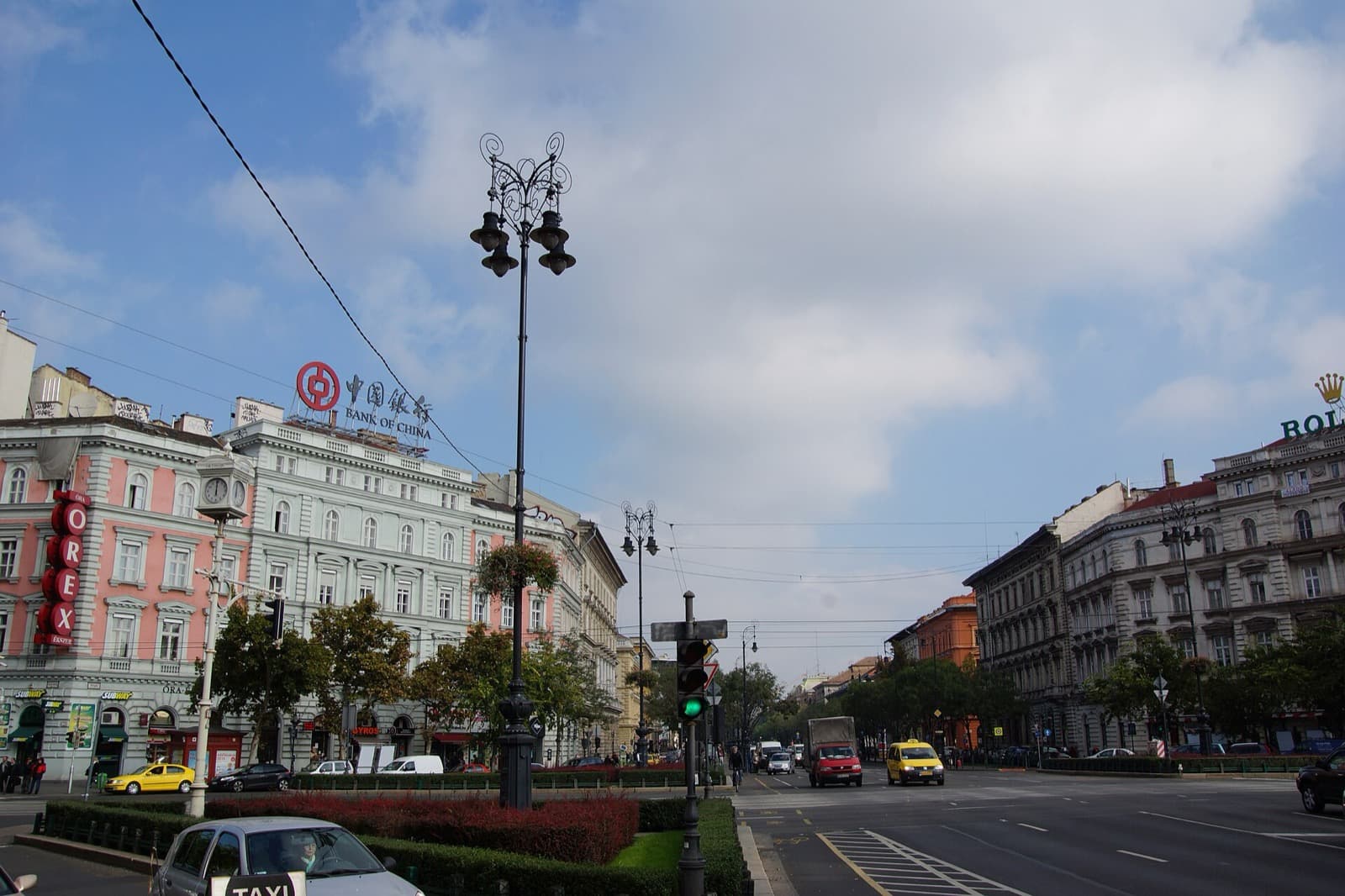
The Oktogon: The Avenue's Turning Point
The octagonal crossing of eighteen seventy-two, framed by four matching eclectic buildings, where the avenue changes character from city street to leafy boulevard.
- 3
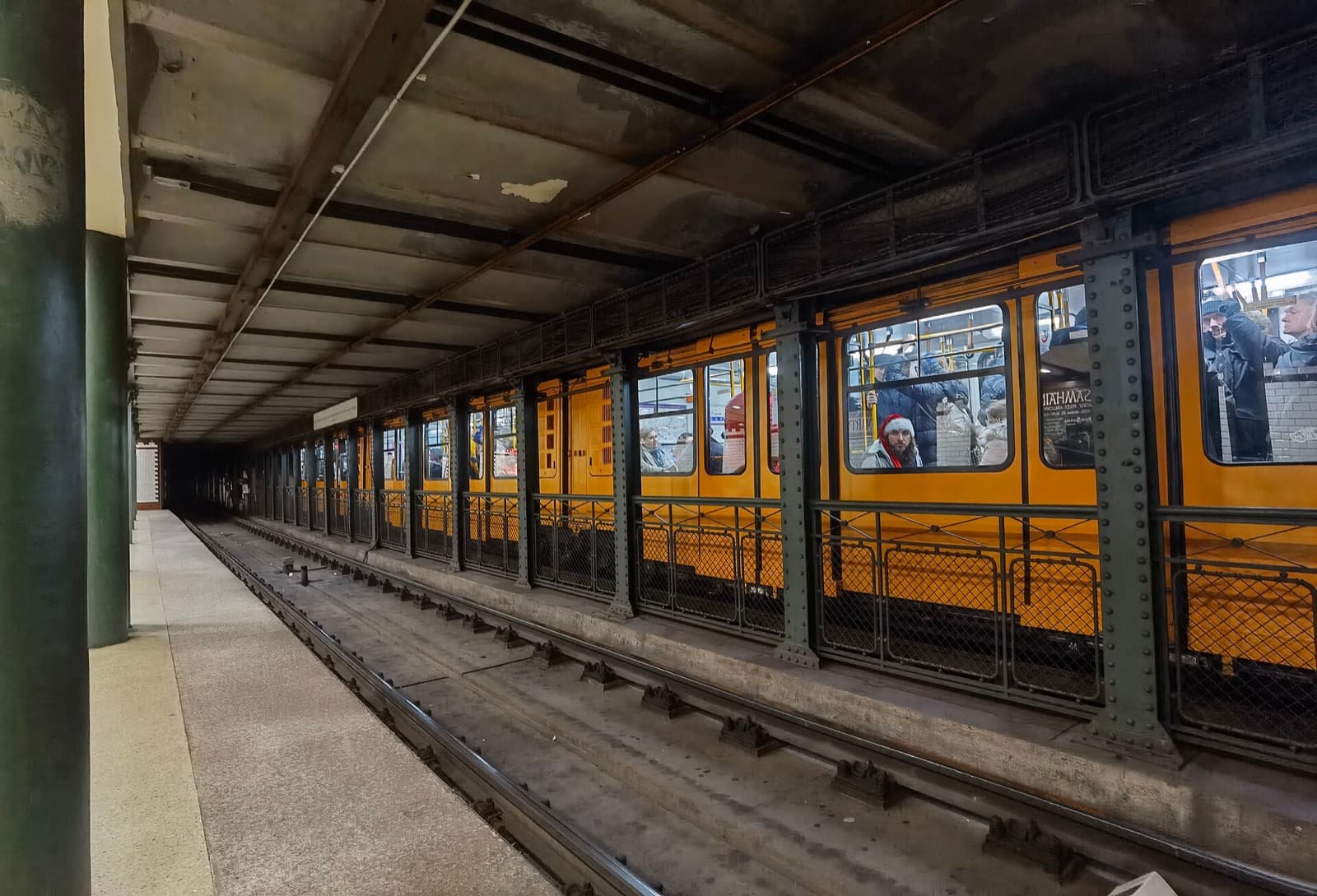
The Millennium Underground: The Boulevard's Hidden Twin
The European mainland's first electric underground railway, opened in eighteen ninety-six, running directly beneath the avenue.
- 4
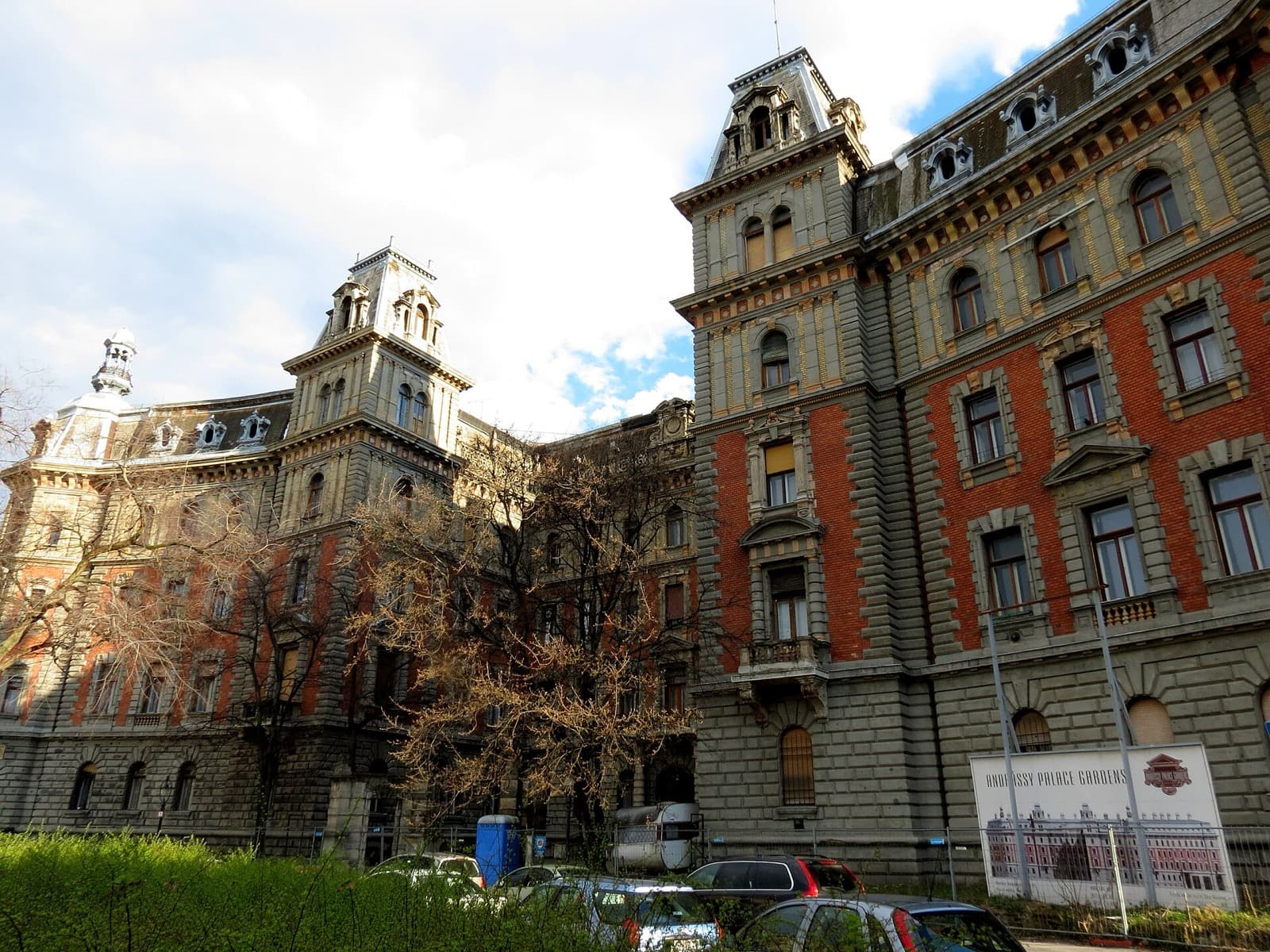
Andrassy ut Sixty: The House of Terror
A single address that housed two successive twentieth-century terrors, now a museum to their victims, opened in two thousand and two.
- 5
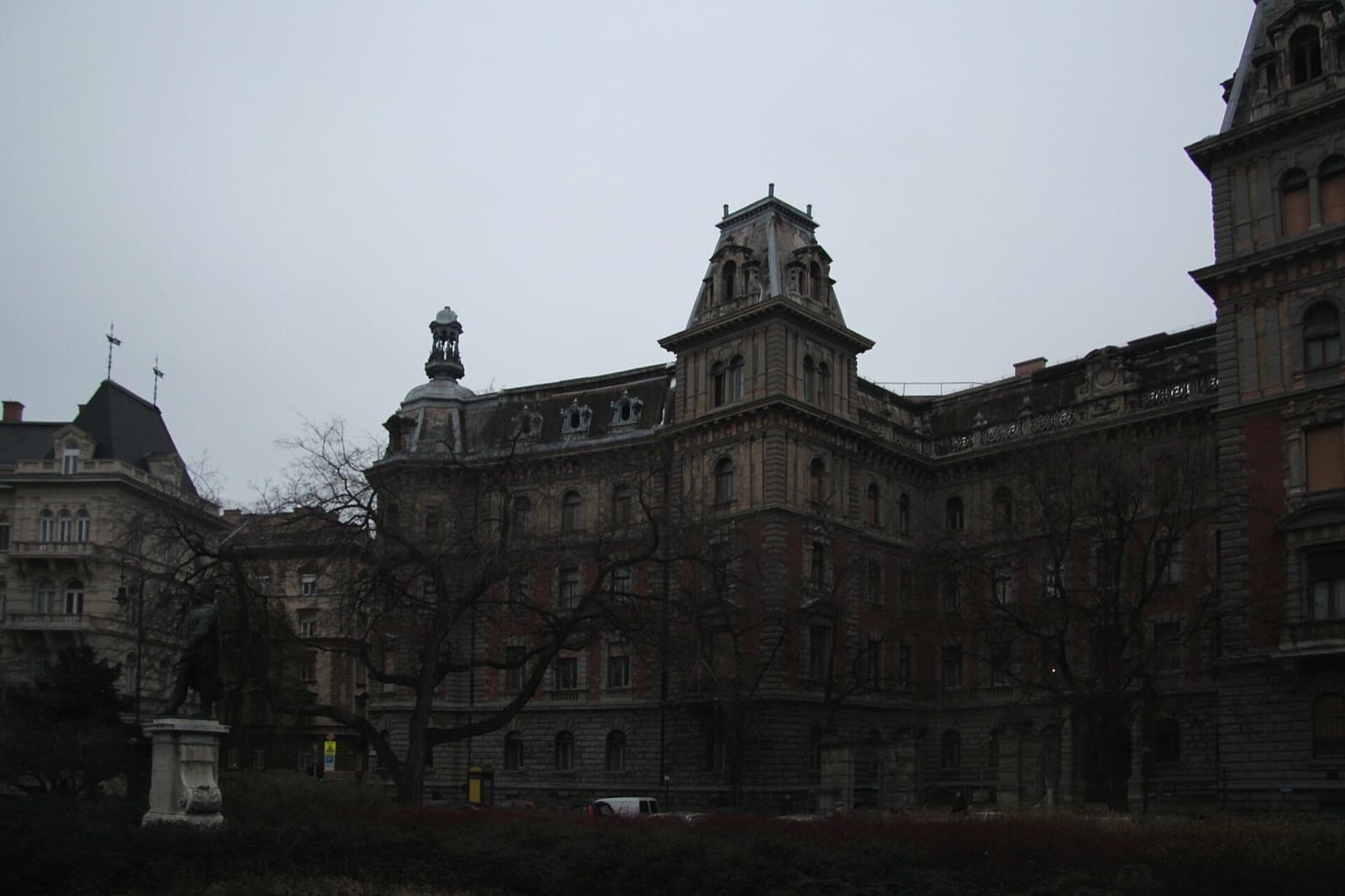
Kodaly Korond: The Boulevard at Its Grandest
A circular plaza framed by four sweeping eclectic palace facades on the avenue's most residential, elegant stretch.
- 6
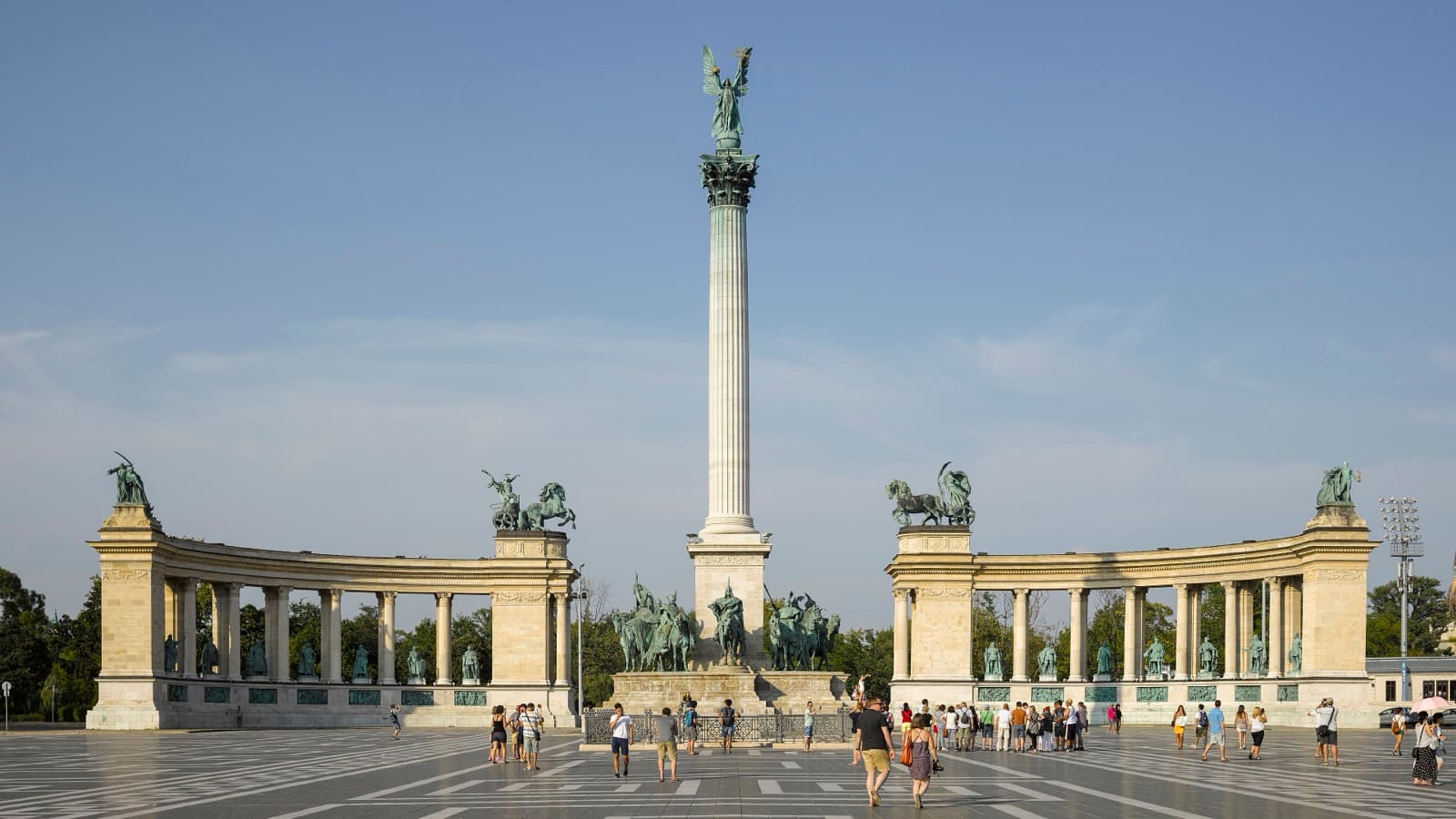
Heroes' Square: The Founding Myth Cast in Bronze
The Millennium Monument at the head of the avenue, crowned by the Archangel Gabriel and ringed by the chieftains and kings of Hungary.
- 7
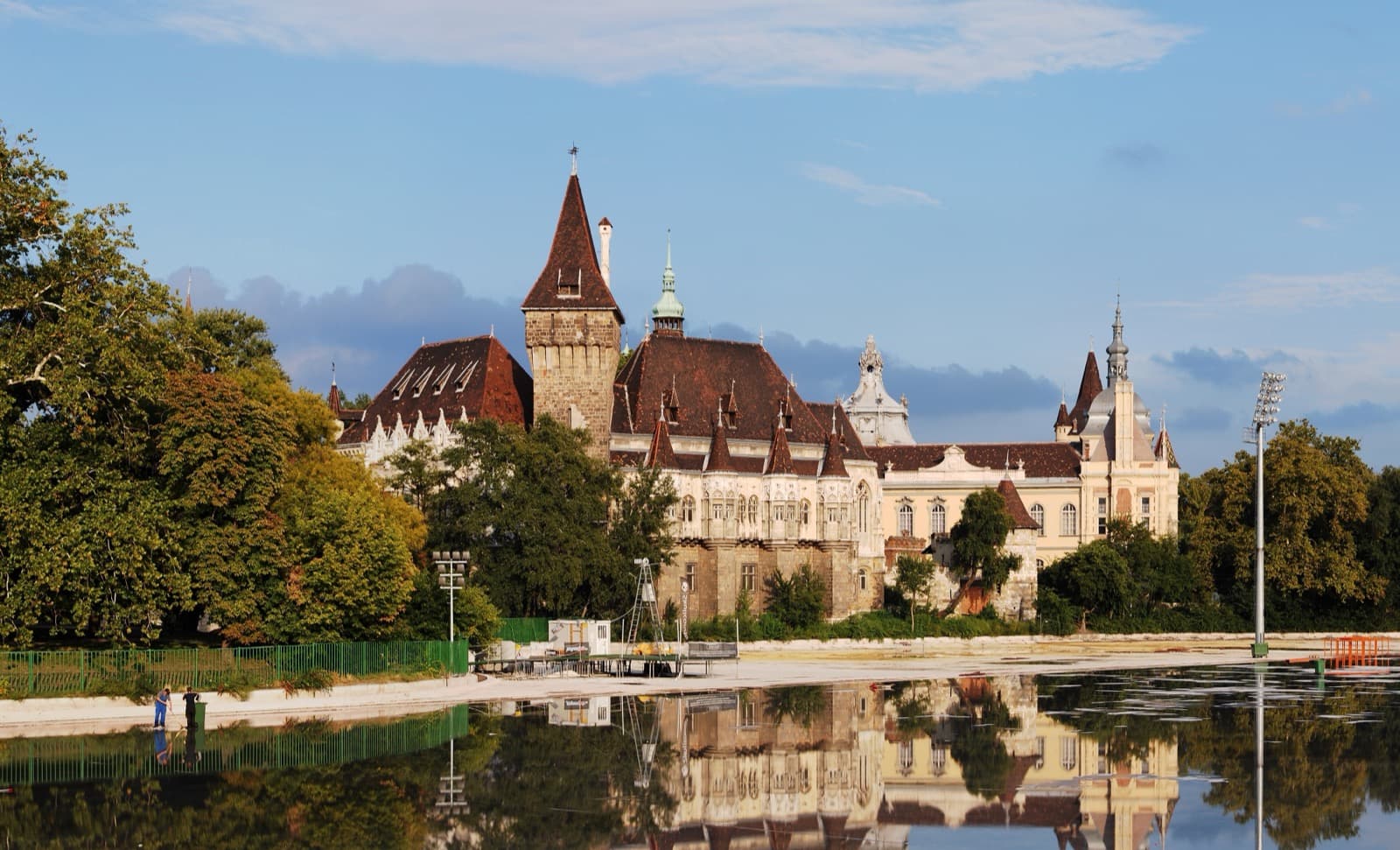
Vajdahunyad Castle: A Thousand Years in One Building
A playful eighteen ninety-six pastiche of Hungary's historic buildings, rebuilt in stone and now the Museum of Hungarian Agriculture.
- 8
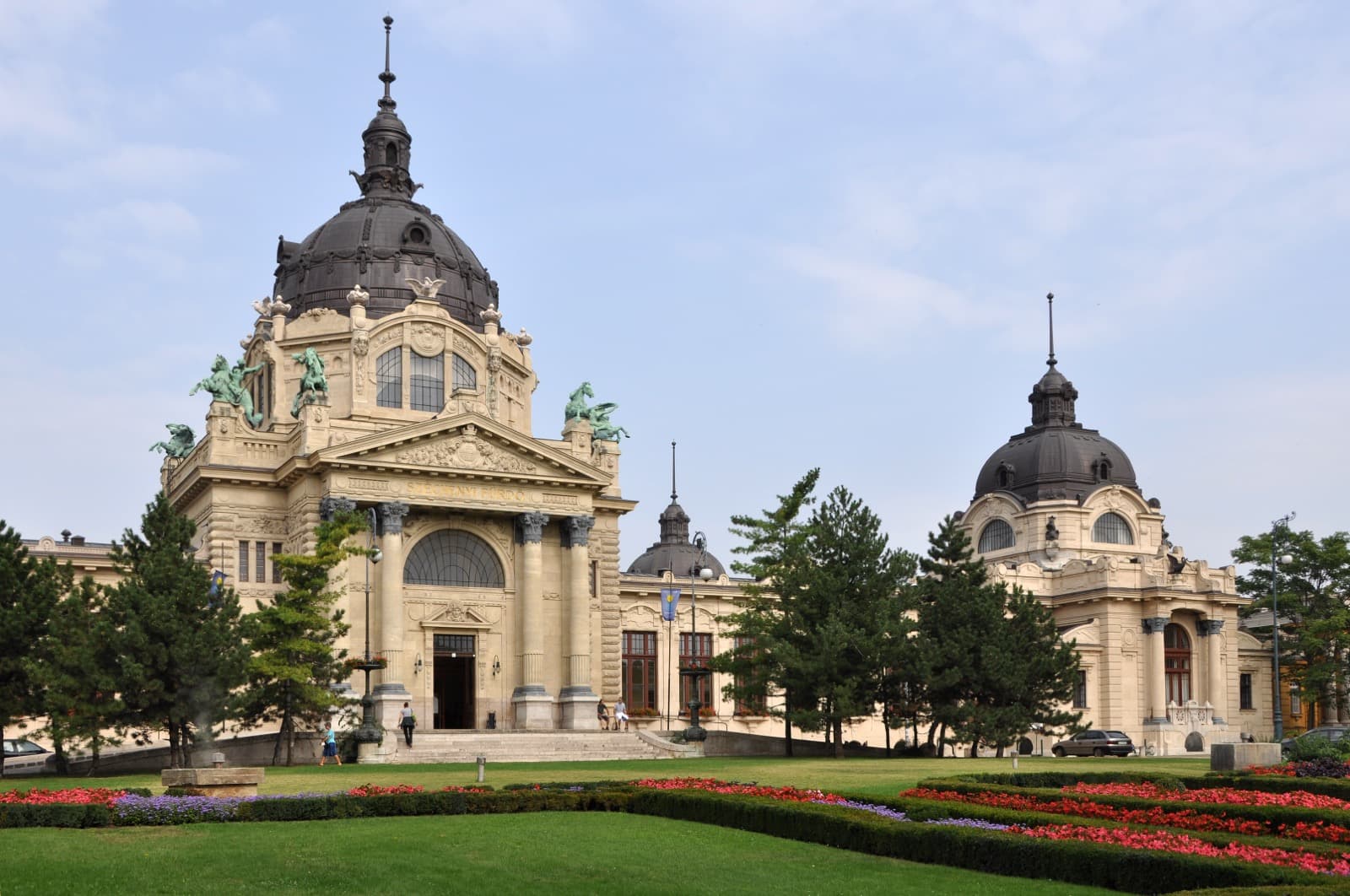
The Szechenyi Baths: A City Built on Warm Water
A grand neo-baroque thermal bath of nineteen thirteen, fed by deep hot springs, and a window onto Budapest's long bath heritage.
Details
Best Time to Visit
Late morning to mid-afternoon works best, when the opera house, museums, and baths are open and the light is soft along the plane trees. Weekdays are calmer than weekends at Heroes' Square. Autumn and late spring are ideal for the long uphill walk; in high summer, start early to avoid the strong midday sun on the open square, and in winter the steaming Szechenyi Baths are at their most memorable.
Pro Tips
- •The whole route is a gentle, straight uphill from the opera to the park, so pace yourself and use the benches and circular plazas as natural rest points.
- •The Millennium Underground runs directly beneath the avenue as metro Line One, the yellow line, so you can ride a few stops with a standard transit ticket if the weather turns or your legs tire, then rejoin the walk.
- •Buy a single transit ticket or a day pass and validate it, since the historic yellow underground is itself part of the sightseeing.
- •If you want to see inside the Hungarian State Opera House or the House of Terror, check their own opening hours and buy tickets in advance, as both keep their own schedules.
- •Carry water and a hat for Heroes' Square, which is wide open with almost no shade.
- •Leave time at the end for City Park, where Vajdahunyad Castle and the Szechenyi Baths sit close together just beyond the square.
Safety & Precautions
- •The House of Terror and the memory of the Budapest ghetto are places of remembrance, so keep your voice low, be respectful, and note that the museum has its own security and paid tickets.
- •The Hungarian State Opera House is a working venue; if you enter for a tour or performance, dress modestly, stay quiet, and expect ticketing and security checks.
- •Heroes' Square gets strong summer sun with little shade, so bring water, sunscreen, and a hat, and watch for traffic around the ceremonial roadways.
- •The currency is the Hungarian forint, not the euro; keep an eye on your belongings in crowded stations and busy plazas, and observe posted bath etiquette if you enter the Szechenyi Baths.
Travel advisory: Exercise Normal Precautions (Level 1).
Gallery
Related Reading
Go deeper on what you'll see, hear, and walk through.

Overview
Best Self-Guided Walking Tours in Budapest (2026)
4 min
Overview
Budapest in One Day: A Walkable Morning-to-Evening Itinerary
8 min
Overview
Budapest Travel Guide: How Many Days, Getting Around, Best Time, Safety, and Budget
6 min
Thematic
Best History Walking Tours in Budapest (2026)
2 min
Thematic
Two Cities Across the Danube: How to Read Budapest on Foot
7 min
Companion
Heroes' Square and the Boulevard That Reads Like a Sentence
7 min
Deep dive
The Hungarian State Opera House: The First Grand Chord of Andrassy Avenue
6 min
Read
What to Eat in Budapest: Dishes, Origins, and How to Order
7 min
Read the walk
The full story of Andrassy Avenue: The Boulevard Built for a Nation's Millennium, in words. Prefer to listen? Play it narrated, from home or on location.
Introduction
Budapest built this boulevard as a sentence. In the eighteen seventies a newly self-governing Hungary drove a single straight avenue through the city of Pest, decreed in eighteen seventy, begun in eighteen seventy-two, opened on the twentieth of August eighteen seventy-six. It lined that avenue with an opera house, palaces, and set-back villas, ran the European mainland's first electric underground beneath it, and aimed the whole composition at Heroes' Square and the great Millennium of eighteen ninety-six, the thousand-year mark of the Magyar arrival in this basin. In two thousand and two, UNESCO added the avenue and its underground to the World Heritage list. This walk follows that line for you at your own pace, over eight stops, roughly five kilometres, about two to three hours if you linger. It is a warm, gentle uphill from the opera to the park, and the stops are short and skippable, so you can pause, sit, or ride the underground beneath your feet and rejoin the story wherever you like. You will read Hungary's pride on this street, and at one address, number sixty, you will read its wounds. Hold both as facts of the same boulevard. Speak softly there, and keep your voice low inside the working opera house and the places of memory. This is a solo, unhurried reading of a city that put its whole national story into architecture. When you arrive at the Hungarian State Opera House on Andrassy ut, begin with stop one.
1. The Hungarian State Opera House: A Nation Sings Its Arrival
The boulevard opens on a statement. The Hungarian State Opera House stands at Andrassy ut twenty-two, and it was designed by the architect Miklos Ybl, the same hand behind much of monumental Pest. Construction began in eighteen seventy-five, and the house opened its doors on the twenty-seventh of September eighteen eighty-four. The city of Budapest paid for much of it, and so did the emperor Franz Joseph the First, whose crown then reached over Hungary. Ybl worked in a neo-Renaissance manner with Baroque warmth, and the result is a house celebrated for its acoustics, counted among the finest in Europe. Look to the two seated figures flanking the entrance. On one side sits Franz Liszt, the Hungarian composer and pianist whose name reaches far beyond this country. On the other sits Ferenc Erkel, who wrote the music of the Hungarian national anthem and helped found this very opera. Both were carved by the sculptor Alajos Strobl. Inside, an auditorium seats a little over twelve hundred, wrapped in gold and painted ceilings. The house has carried great names in its pit and on its podium. The composer Gustav Mahler served as director here from eighteen eighty-eight to eighteen ninety-one, in his years before Vienna. There is a quiet symmetry in the building's own story: it reopened after a careful renovation on the twenty-seventh of September nineteen eighty-four, exactly one hundred years to the day after it first raised its curtain. This is a working opera house, so if you step inside for a tour or a performance, keep your voice low and dress with a little care. From the street, it reads as the avenue's overture, the first grand chord in a composition that runs all the way to the park.
2. The Oktogon: The Avenue's Turning Point
Halfway along the line, the avenue widens into a shape you can read in its name. The Oktogon is an eight-sided crossing, formed in eighteen seventy-two, where Andrassy Avenue meets the Grand Boulevard, the great ring the locals call the Nagykorut. Four matching buildings hold the corners, all built between eighteen seventy-two and eighteen seventy-four in the neo-Renaissance designs of the architect Antal Szkalnitzky for the company that built the avenue. That was the point. The planners wanted a uniform, dignified frame at this crossing, so the four facades were designed to answer one another in the same eclectic key, a small piece of deliberate stagecraft. The square has carried several names, and its history is written in them. It began simply as Nyolcszog ter, the Octagon Square. It was renamed for a time in the nineteen thirties and forties, then given another political name in the socialist decades, before it returned to plain Oktogon after nineteen ninety. It is worth noting quietly how a city's changing rulers wrote themselves onto one small crossing, and how the old geometric name outlasted them all. Practically, the Oktogon is the avenue's pivot. Below you, the boulevard has been a dense, formal city street of shops and grand blocks. Above you, it begins to breathe. The roadway broadens, plane trees line the way, and the buildings step back from the pavement into set-back villas, embassies, and quieter palaces. Beneath your feet runs the yellow underground line, with a station here. Stand at the center of the eight sides for a moment, and you are standing on the hinge of the whole composition, the place where Budapest changes its mind about what kind of street this should be.
3. The Millennium Underground: The Boulevard's Hidden Twin
There is a second avenue here, and it runs beneath the first. Directly under Andrassy Avenue lies the Millennium Underground, which the locals call the Foldalatti, and which today is metro Line One, the yellow line. It opened on the second of May eighteen ninety-six, timed to the great Millennium celebrations, built to carry the crowds up to City Park for the festivities. Here is the careful superlative, and it matters. This was the first electrified underground railway on the European mainland, and the world's second oldest electric underground after the one in London. The London Underground opened earlier, in eighteen sixty-three, but it ran at first on steam, so the accurate distinction is this: Budapest's is the oldest electric underground on the Continent, not the oldest underground in the world. UNESCO listed it as part of the Andrassy Avenue World Heritage inscription in two thousand and two. What makes it wonderful is how gently it hides. The line runs just below the surface, so its stations are shallow, tiled period halls that feel like polished basements from the eighteen nineties, and the restored carriages still wear their historic yellow. It runs about four and a half kilometres, from the city center to the edge of the park, with a string of eleven small stations. Today it still carries tens of thousands of riders a day beneath your feet. So if the long walk up the avenue tires you, or the weather turns, you have a hidden twin. You can duck down a staircase into the eighteen nineties, ride a short way under the boulevard you have been reading, and climb back into daylight further up the line. The celebration above and the machine beneath were built as one gesture, the same city showing off in two dimensions at once.
4. Andrassy ut Sixty: The House of Terror
The avenue's proud sentence breaks at one address. Andrassy ut sixty looks, from the street, like its neighbors, but this building held the twentieth century's cruelty twice over. In nineteen forty-four and nineteen forty-five it served as the headquarters of the Arrow Cross…
Full narration for this stop unlocks with the tour.
5. Kodaly Korond: The Boulevard at Its Grandest
Above the darkness, the avenue returns to its grandest self. Kodaly Korond is a circus, a full circle in the boulevard, and the Hungarian word korond means just that, a circular plaza. Four great eclectic palace facades curve around it, each decorated with sgraffito, a technique…
Full narration for this stop unlocks with the tour.
6. Heroes' Square: The Founding Myth Cast in Bronze
The avenue delivers you to its climax, a wide ceremonial square called Hosok tere, Heroes' Square. Here the boulevard's whole argument stands cast in bronze and stone. The Millennium Monument was begun in eighteen ninety-six, its central column and colonnades taking shape over…
Full narration for this stop unlocks with the tour.
7. Vajdahunyad Castle: A Thousand Years in One Building
Just beyond the square, in the green of City Park, stands a castle that is really an argument in stone. Vajdahunyad Castle was designed by the architect Ignac Alpar and built in eighteen ninety-six for the Millennium as a temporary exhibition pavilion, thrown up in cardboard and…
Full narration for this stop unlocks with the tour.
8. The Szechenyi Baths: A City Built on Warm Water
The walk ends where Budapest has always ended its days, in warm water. In City Park stands the Szechenyi Baths, a great neo-baroque palace of pools designed by the architect Gyozo Czigler and opened in nineteen thirteen, later expanded to hold three outdoor pools and fifteen…
Full narration for this stop unlocks with the tour.