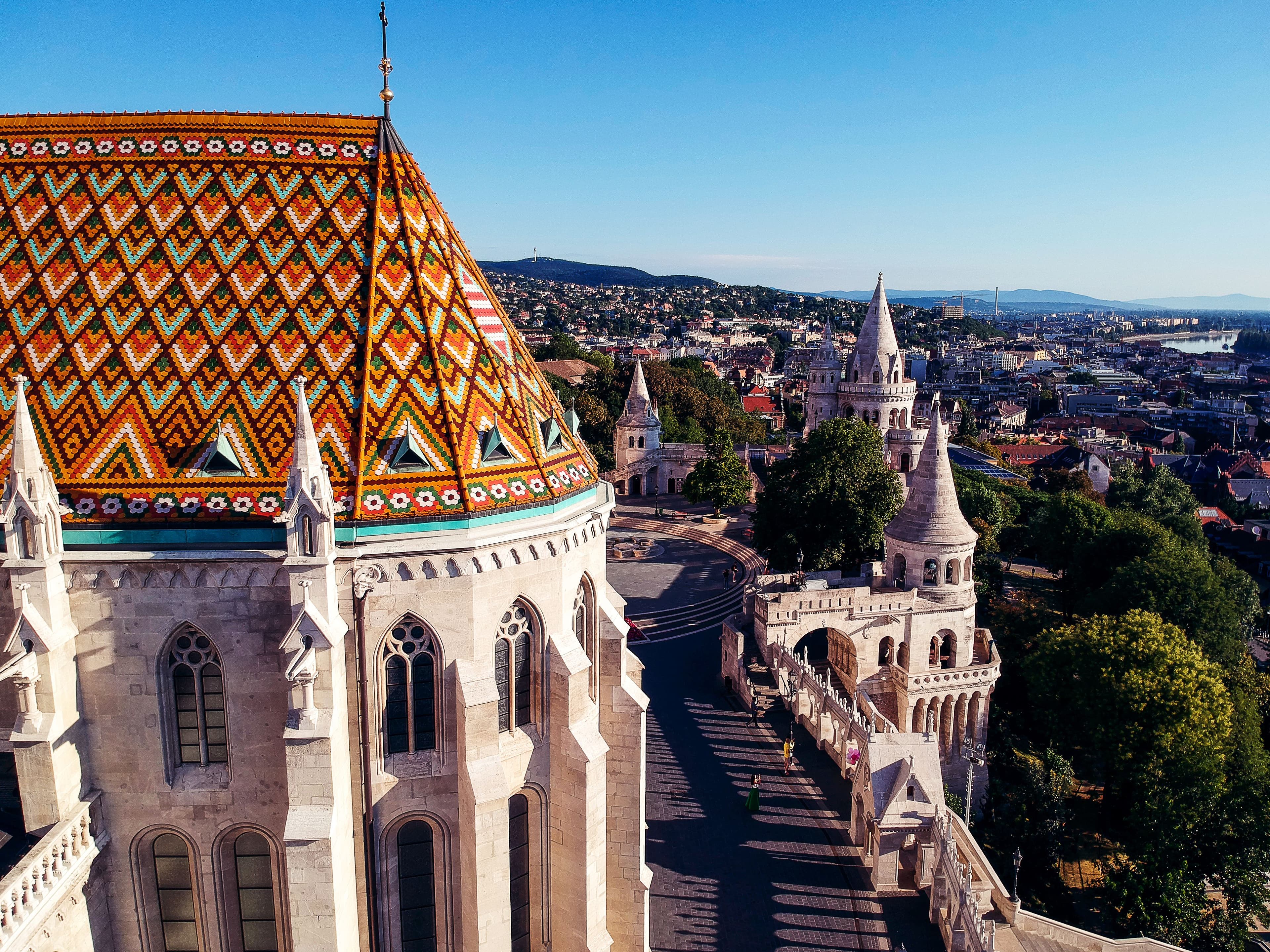
Buda Castle District: Palace, Matthias Church and Fisherman's Bastion
105 min · 2.5 km · moderate
Eat your way through Budapest by ordering the dishes the city actually built its table on: gulyas (goulash soup), porkolt, chicken paprikas, langos, and the layered cakes that came out of its old coffeehouses. Hungarian cooking runs on paprika, onions, and pork fat, and once you can tell a soup from a stew and know where to buy fried dough versus a proper sit-down plate, you can order like someone who lives here rather than someone reading a menu for the first time. This guide covers the specific regional dishes, where each tradition comes from, and the practical moves (service charge, cash tips, market hours) that make ordering simple.
The five dishes to try first
Start with gulyas. In Hungary this is a soup, not the thick brown stew that most of the world calls "goulash." Gulyas is a brothy dish of cubed beef, onions, potatoes, carrots, and small hand-pinched dumplings called csipetke, all built on sweet Hungarian paprika. The name comes from the word for a herdsman, and the dish traces back to Hungary's cattle-driving shepherds who cooked meat and onions in a kettle over an open fire.
What most visitors picture as goulash is actually porkolt: a thick paprika-and-onion braise of beef, pork, or mutton with very little liquid, usually served over nokedli (small egg dumplings) or tarhonya (toasted pasta pearls). If you want the creamy version, order chicken paprikas (paprikas csirke), the same paprika-and-onion base finished with a heavy spoonful of tejfol (sour cream) and served over nokedli.
For street food, get langos: a disc of yeast dough deep-fried until the outside crackles and the inside stays soft. The standard order is garlic (rubbed on or brushed as garlic water), a thick layer of sour cream, and grated cheese on top. It is filling, cheap, and best eaten hot and standing up.
Save room for the sweets, which get their own section below.
Where paprika comes from, and why it matters
Hear a stop from this walk
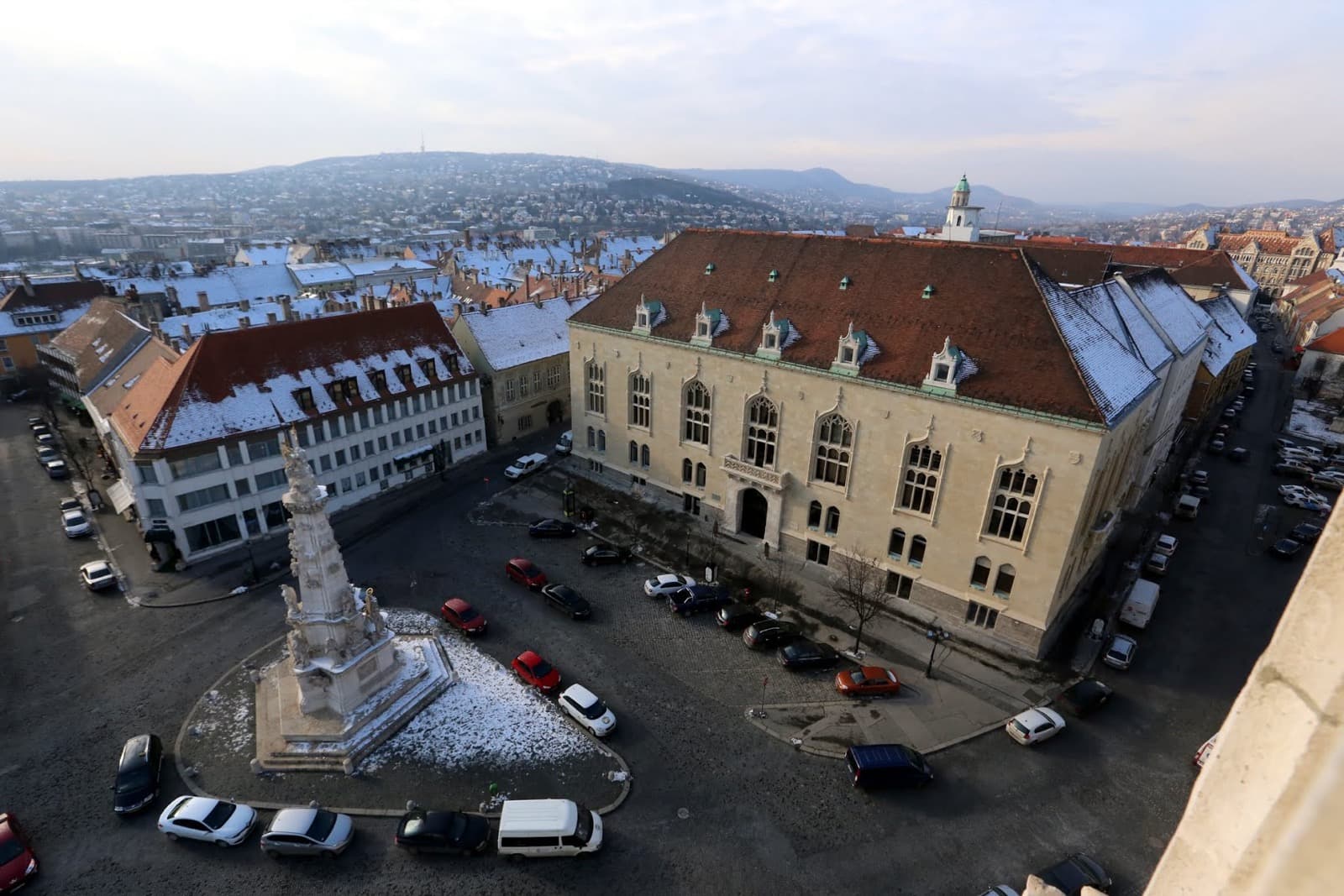
Szent György tér: Sándor Palace and the Rebuilt Riding Hall
Almost every savory dish above leans on paprika, and that is a relatively recent story. The pepper plant reached Hungary during the Ottoman period in the sixteenth and seventeenth centuries, and the plant used for the Hungarian spice was first grown in 1569. For a long time it was treated as a garden ornamental. Herdsmen and peasants adopted it first, and only by the nineteenth century did paprika become the dominant spice in Hungarian kitchens. The two great growing regions are Szeged and Kalocsa in the south, and Szeged was the first paprika region in the country. When you buy paprika as a souvenir, look for whether the tin says edes (sweet) or eros (hot), because the sweet grade is what most home cooks reach for.
The sweets: chimney cake, Dobos, and coffeehouse cakes
Two desserts are worth planning around.
Kurtoskalacs (chimney cake) is a spit cake wrapped around a wooden cylinder, rolled in sugar that caramelizes over coals, and pulled off in a hollow spiral. It is not originally a Budapest dish at all: it belongs to the Szekely Hungarians of Transylvania, where the first written record appears in 1679 and the first known recipe shows up in a 1784 cookbook credited to Countess Maria Mikes of Zabola. You will see it sold fresh from the coals at kiosks all over the tourist center.
Dobos torte is the classic Budapest cake: thin sponge layers stacked with chocolate buttercream and capped with a sheet of hard caramel. It was created by the Hungarian confectioner Jozsef C. Dobos, who built it to survive without refrigeration, and it was introduced at the National General Exhibition of Budapest in 1885. Emperor Franz Joseph the First and Empress Elisabeth were among the first to taste it.
For the full coffeehouse experience, the historic address is Cafe Gerbeaud on Vorosmarty ter, a confectionery whose business dates to 1858 (it moved to the Vorosmarty Square building in 1870). The Swiss confectioner Emile Gerbeaud took it over in 1882 and made it internationally known. The house cake, the Gerbeaud slice, layers walnut, apricot jam, and chocolate. It is a splurge and a tourist landmark, so treat it as an occasion rather than an everyday coffee stop.
Eating in the Jewish Quarter
The old Jewish Quarter (Erzsebetvaros, District VII) is one of the best eating districts in the city, and it is exactly where our Jewish Quarter self-guided walk ends, among the ruin bars and the Gozsdu Courtyard. The dish to seek out here is flodni, a dense multi-layer Hungarian-Jewish cake of walnut, poppy seed, and apple with a base of plum jam, each filling pressed between thin pastry sheets. It was originally a Purim cake and has since become a Budapest staple sold in the quarter's bakeries. Budapest is home to the largest Ashkenazi Jewish community in continental Europe, and flodni is one of the most direct ways to taste that history. The neighborhood also mixes traditional Hungarian spots, kosher bakeries, and modern bars, so it rewards wandering with an appetite.
Where to buy it: the Central Market Hall
For a single stop that covers paprika, langos, and produce, go to the Central Market Hall (Nagycsarnok / Great Market Hall) at Fovam ter, the largest and oldest indoor market in the city. Entry is free. The upstairs gallery is where the langos and hot-food stalls are; the ground floor is meat, produce, and rows of paprika and dried peppers. As of 2026 the hall is open Monday to Friday 6:00 to 18:00, Saturday 6:00 to 16:00, and Sunday 10:00 to 16:00, and it closes on public holidays. Go earlier in the day for the best selection and to beat the tour-group crush around lunch. Prices upstairs are tourist-facing, so it is a good place to try langos once rather than to eat every meal.
How to order like a local
A few habits make ordering smoother. First, know that gulyas is a soup and porkolt is the stew, so if a menu offers both, order accordingly rather than expecting one when you get the other. Second, ask for your paprika dishes with nokedli or tarhonya if the menu lets you choose the side. Third, sour cream (tejfol) is central, not a garnish, so lean into it on langos and paprikas.
On paying: Hungarian restaurants increasingly add a service charge (szervizdij), commonly around 10 to 15 percent, which by law must be printed on the menu before you order and must go toward staff wages. If a service charge is already on your bill, you are not expected to tip on top of it. If there is no service charge, 10 to 15 percent is standard, and locals often prefer to leave it in cash, handed to the server or left on the table, because cash tips reach the staff directly. Check the bill for the szervizdij line before adding anything.
Pair it with a walk
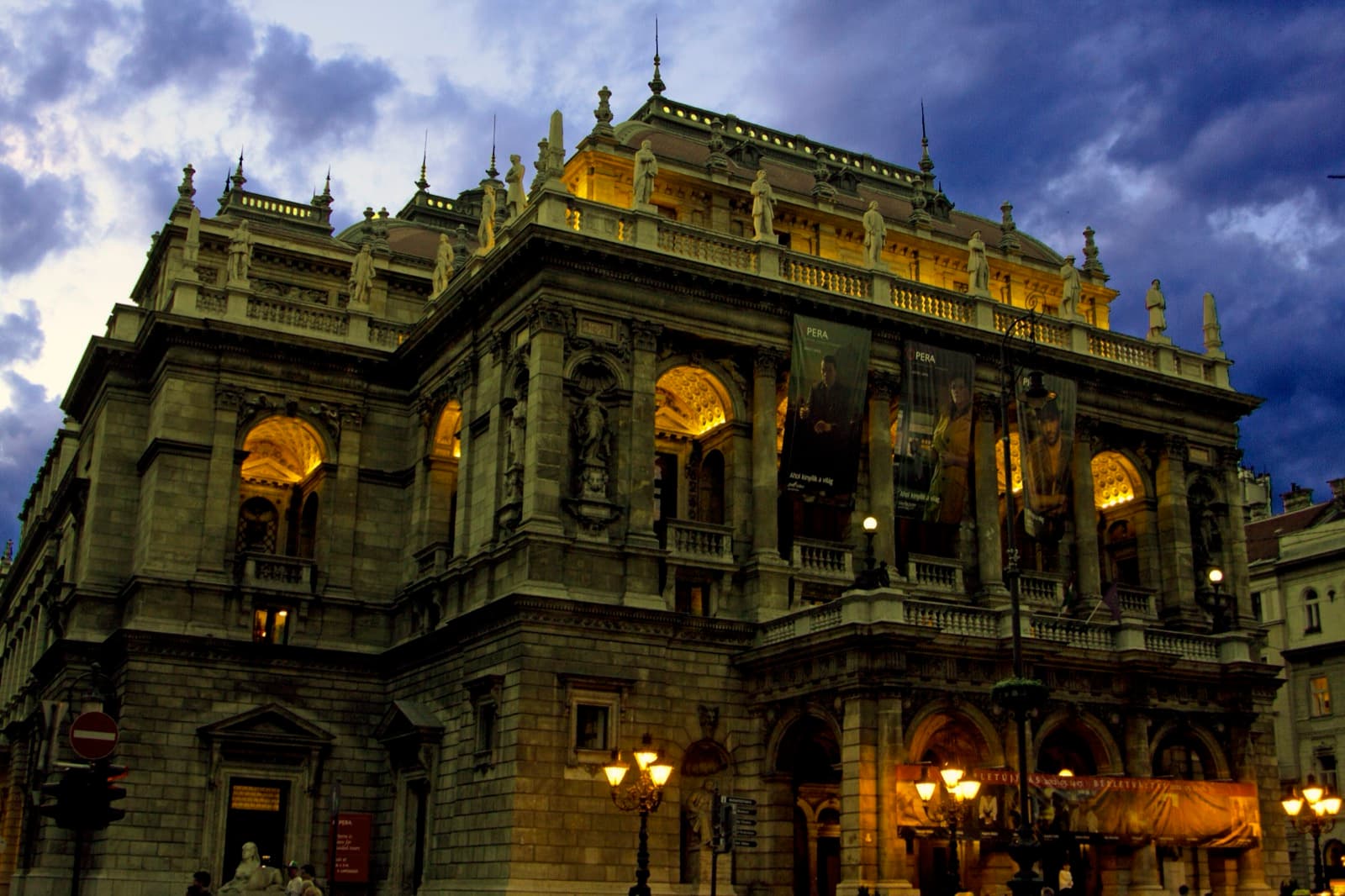
The easiest way to build an eating day is to hang it on a route. Our self-guided audio walks put the food where it naturally falls: the Jewish Quarter walk drops you into District VII's bakeries and ruin bars, the Andrassy Avenue walk runs past the Opera and the grand coffeehouse district toward Heroes' Square, and the Castle Hill walk covers the Buda side where you can pair views with a chimney cake. Browse the full set of Budapest walking tours and pick the one whose neighborhood you most want to eat through. You set the pace, so it is easy to stop for langos or coffee whenever hunger hits.
Sources
Frequently asked questions
- What food is Budapest famous for?
- Budapest is known for paprika-based dishes: gulyas (a beef-and-paprika soup), porkolt (a thick paprika stew), and chicken paprikas finished with sour cream. Street food centers on langos, a deep-fried dough disc topped with garlic, sour cream, and cheese. For dessert, the city is famous for Dobos torte and coffeehouse cakes, plus chimney cake (kurtoskalacs) sold fresh from the coals.
- Is goulash a soup or a stew in Hungary?
- In Hungary, gulyas is a soup, not the thick stew most of the world calls goulash. It is a brothy dish of cubed beef, onions, potatoes, carrots, and small csipetke dumplings built on sweet paprika. The thick stew that foreigners picture is actually porkolt, served over egg dumplings or toasted pasta pearls.
- Where can I eat langos in Budapest?
- The Central Market Hall (Nagycsarnok) at Fovam ter has langos and hot-food stalls on its upper gallery, and entry to the market is free. As of 2026 it is open Monday to Friday 6:00 to 18:00, Saturday 6:00 to 16:00, and Sunday 10:00 to 16:00, closed on public holidays. Langos is also sold at kiosks around the city center.
- How much should you tip in Budapest restaurants?
- If your bill already includes a service charge (szervizdij), typically around 10 to 15 percent, you are not expected to tip on top, and Hungarian law requires the charge to be printed on the menu and go to staff wages. If there is no service charge, 10 to 15 percent is standard. Locals often leave the tip in cash so it reaches the server directly.
- What is flodni and where do I find it?
- Flodni is a dense Hungarian-Jewish layer cake of walnut, poppy seed, and apple over a base of plum jam, each filling pressed between thin pastry. It was originally a Purim cake and is now a Budapest staple. You will find it in the bakeries of the Jewish Quarter (Erzsebetvaros, District VII), home to the largest Ashkenazi Jewish community in continental Europe.
- Is chimney cake originally from Budapest?
- No. Kurtoskalacs, or chimney cake, belongs to the Szekely Hungarians of Transylvania, not Budapest. Its first written record dates to 1679 and its first known recipe appears in a 1784 cookbook credited to Countess Maria Mikes of Zabola. It is now sold fresh from the coals at kiosks throughout Budapest's tourist center.
Ready to experience it?
Buda Castle District: Palace, Matthias Church and Fisherman's Bastion
105 min · 2.5 km · moderate
More from Budapest
Explore more at your own pace.
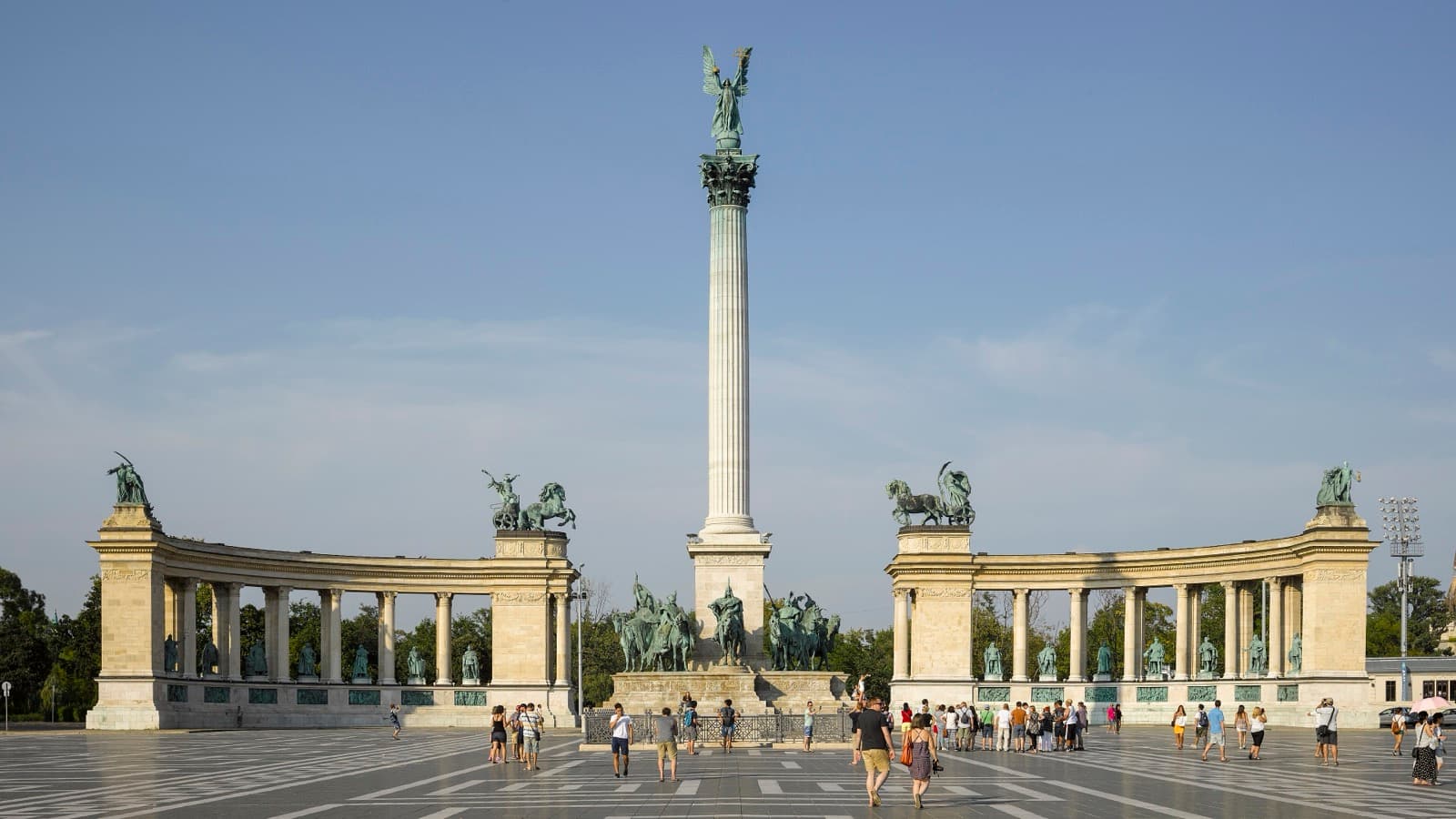
Heroes' Square and the Boulevard That Reads Like a Sentence
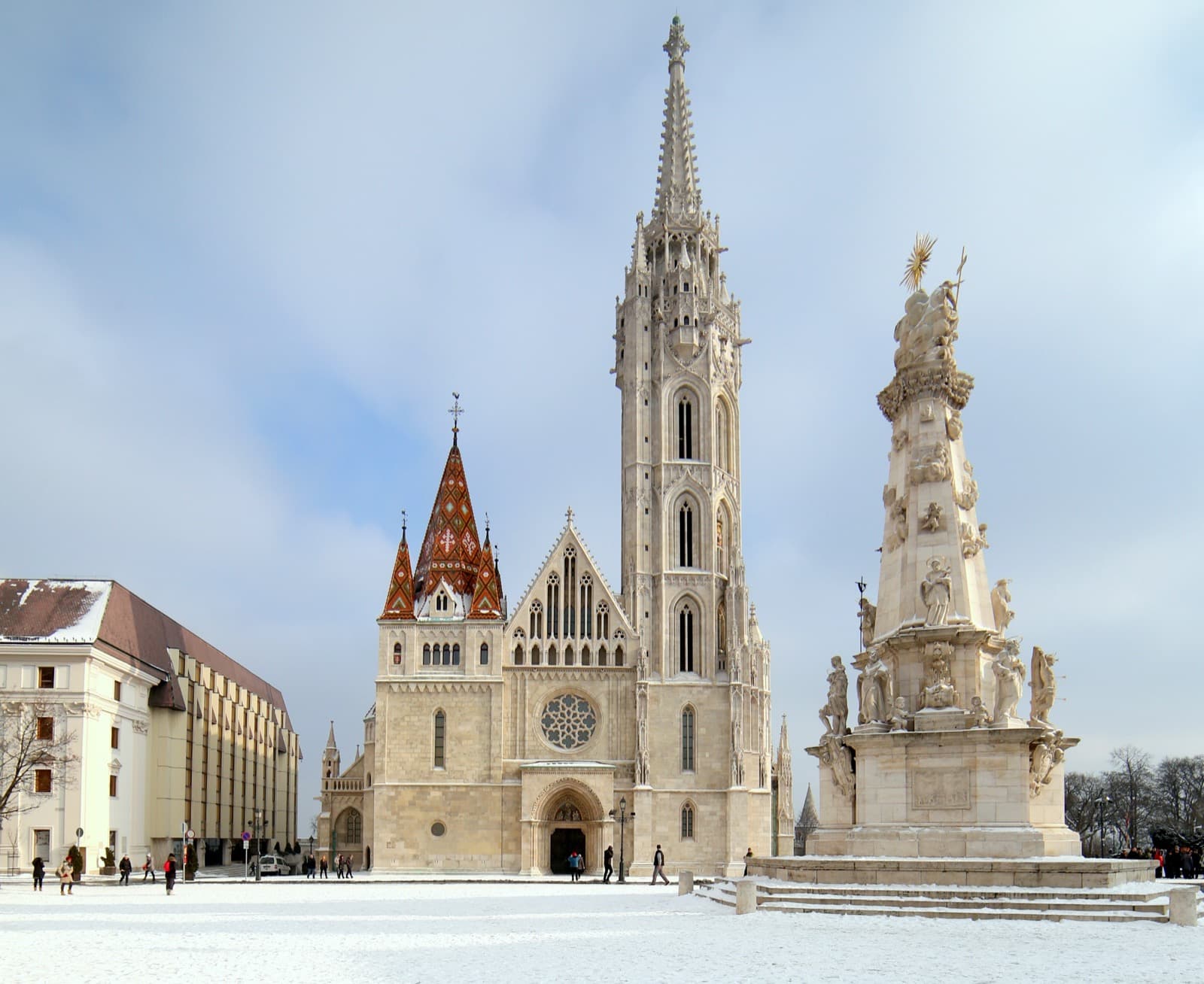
Matthias Church: Why Budapest's Prettiest Roof Is the Newest Thing on Castle Hill
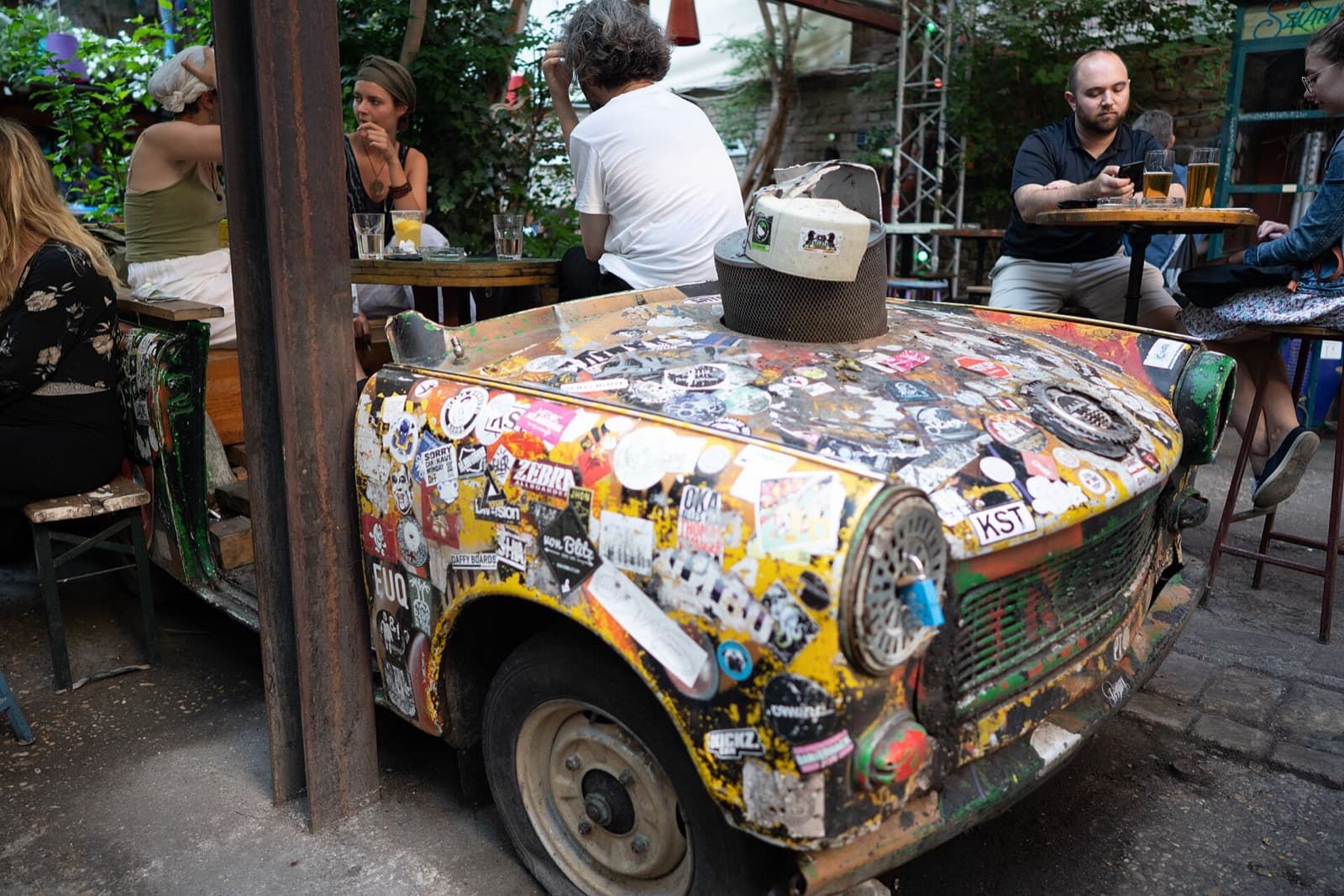
Szimpla Kert and the Ruin Bars: Why Budapest's Party Quarter Is Really a Memorial
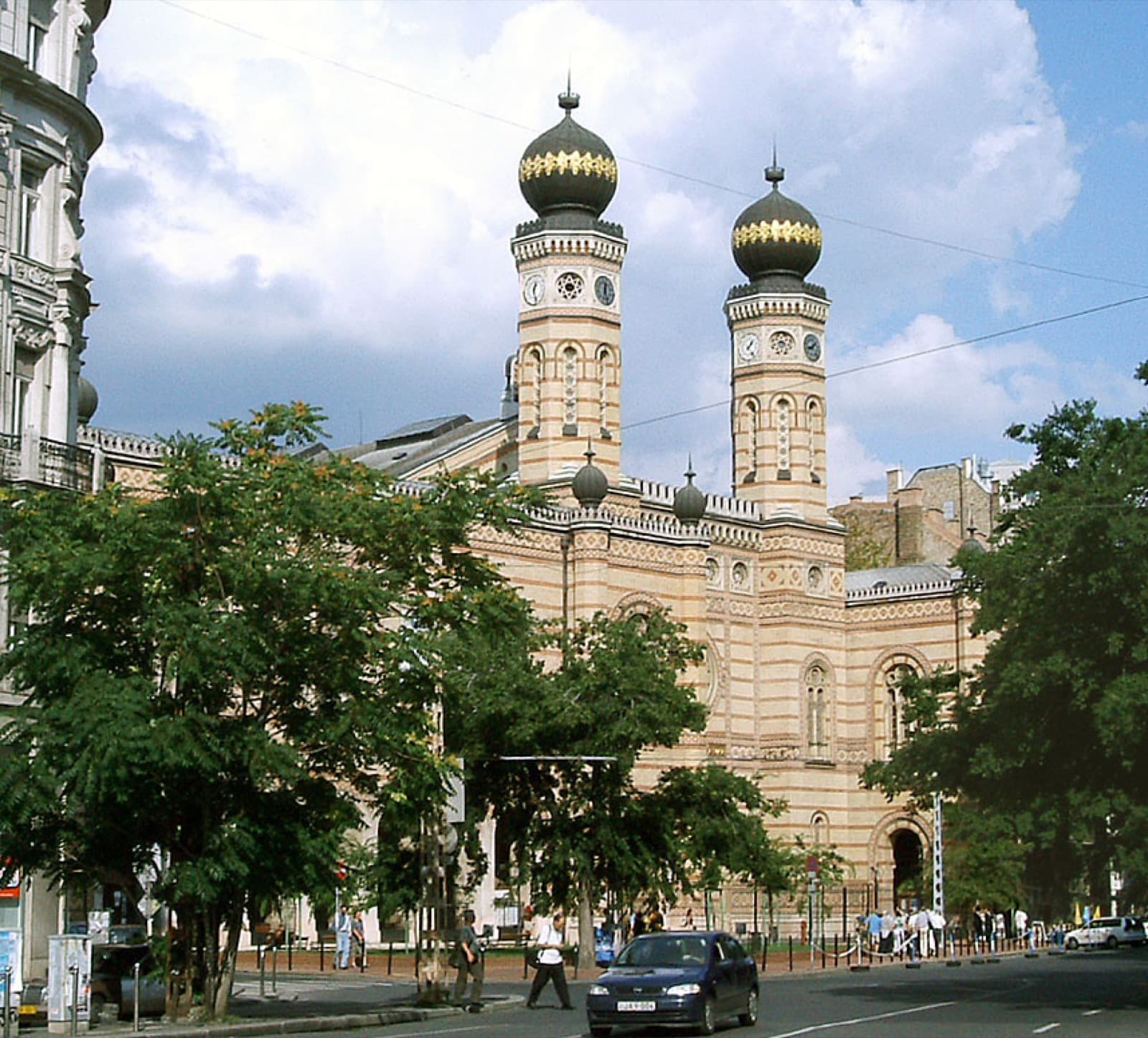
Dohany Street Synagogue: Europe's Largest, and What It Was Built to Say
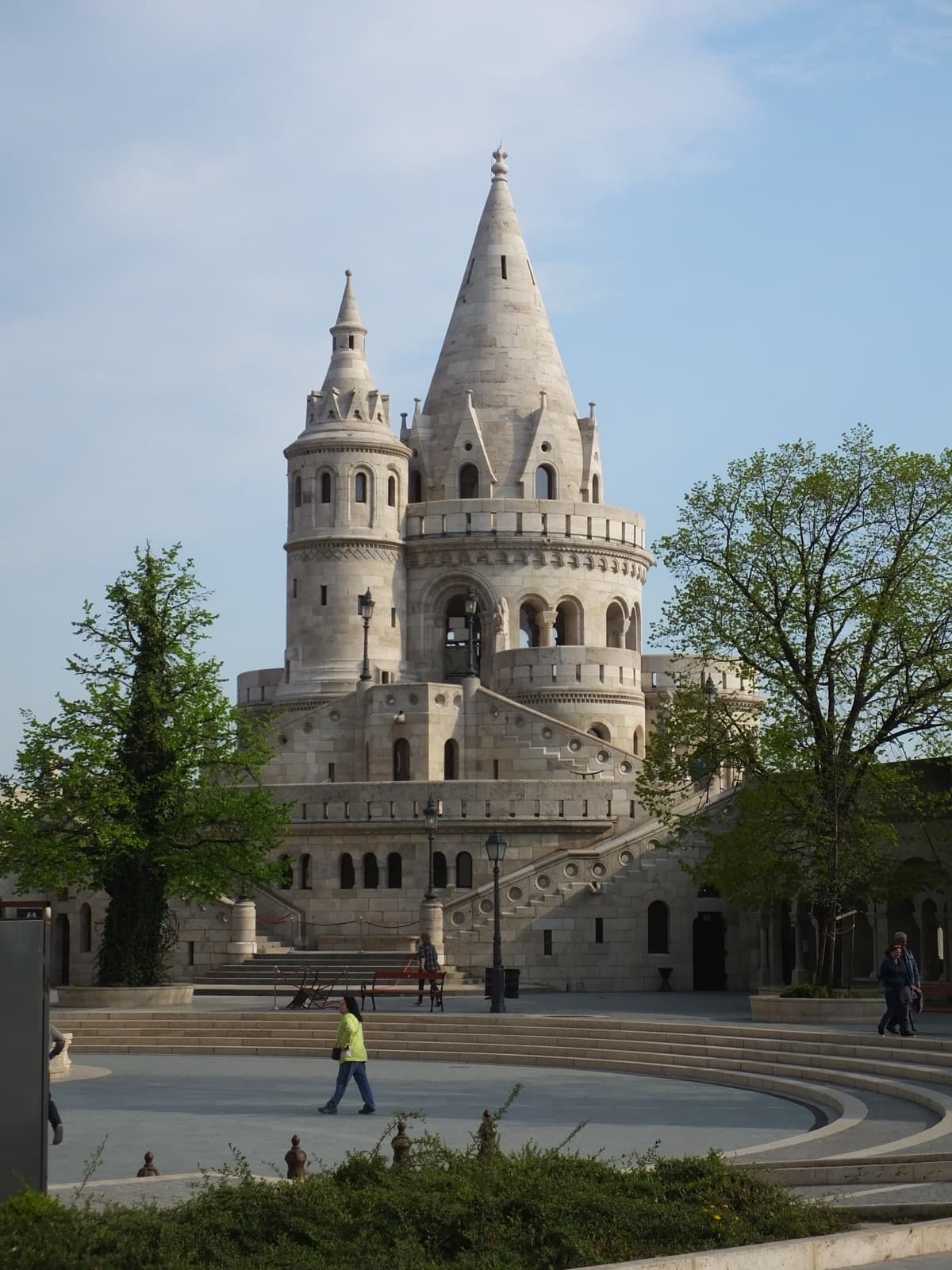
Fisherman's Bastion: The Fortress That Never Defended Anything