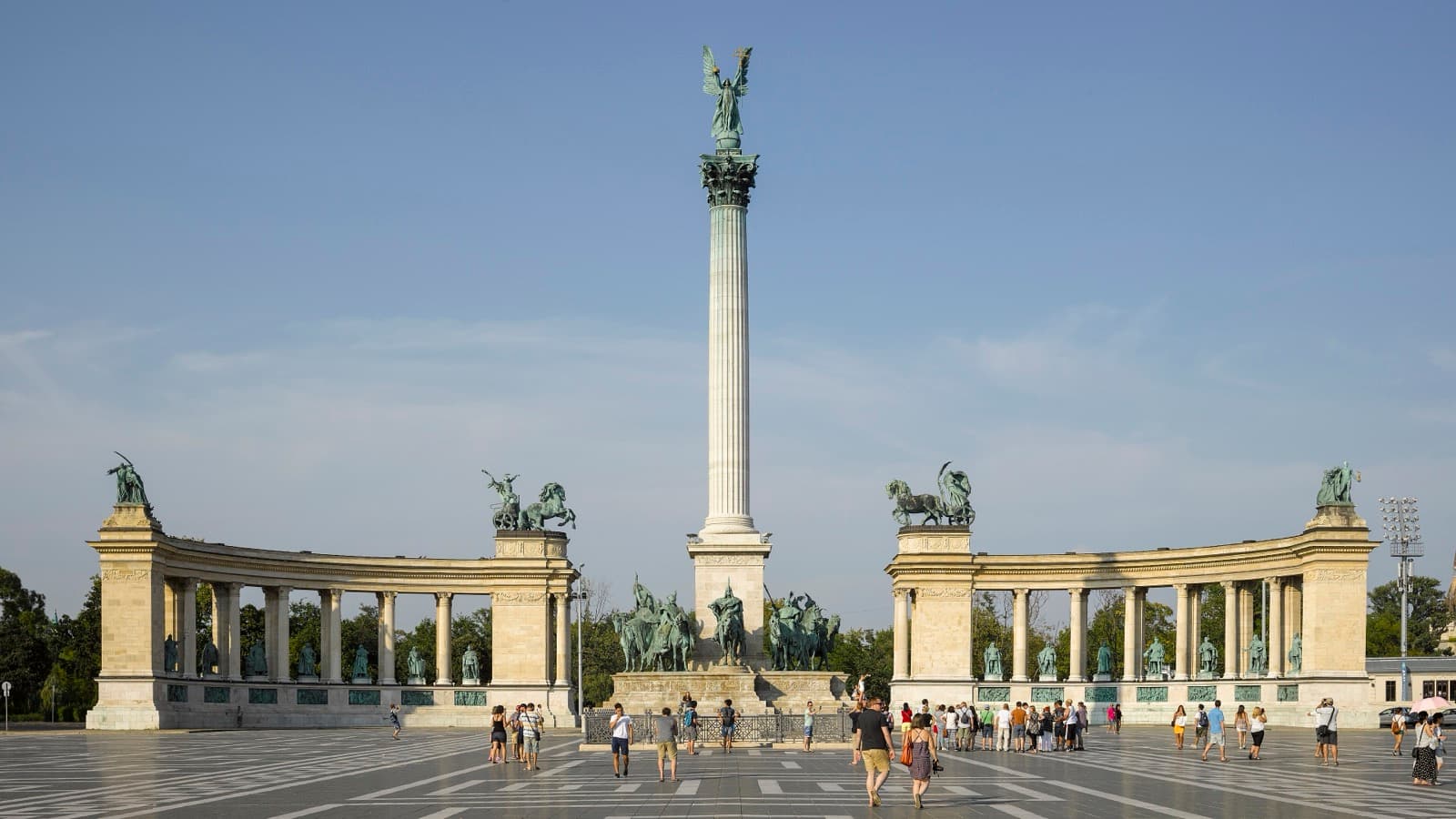
Heroes' Square is the last word in a sentence Budapest wrote across the city of Pest. The square, called Hosok tere in Hungarian, sits at the head of Andrassy Avenue, a single straight boulevard the city drove through Pest in the eighteen seventies and aimed squarely at its own founding myth. Walk up the avenue and you read that sentence in order: an opera house, palaces, two circular plazas, and finally this wide ceremonial square where the whole argument stands cast in bronze and stone. Start with the square, though, and you understand what the boulevard was for before you take a single step along it.
The Monument That Argues a Nation's Age
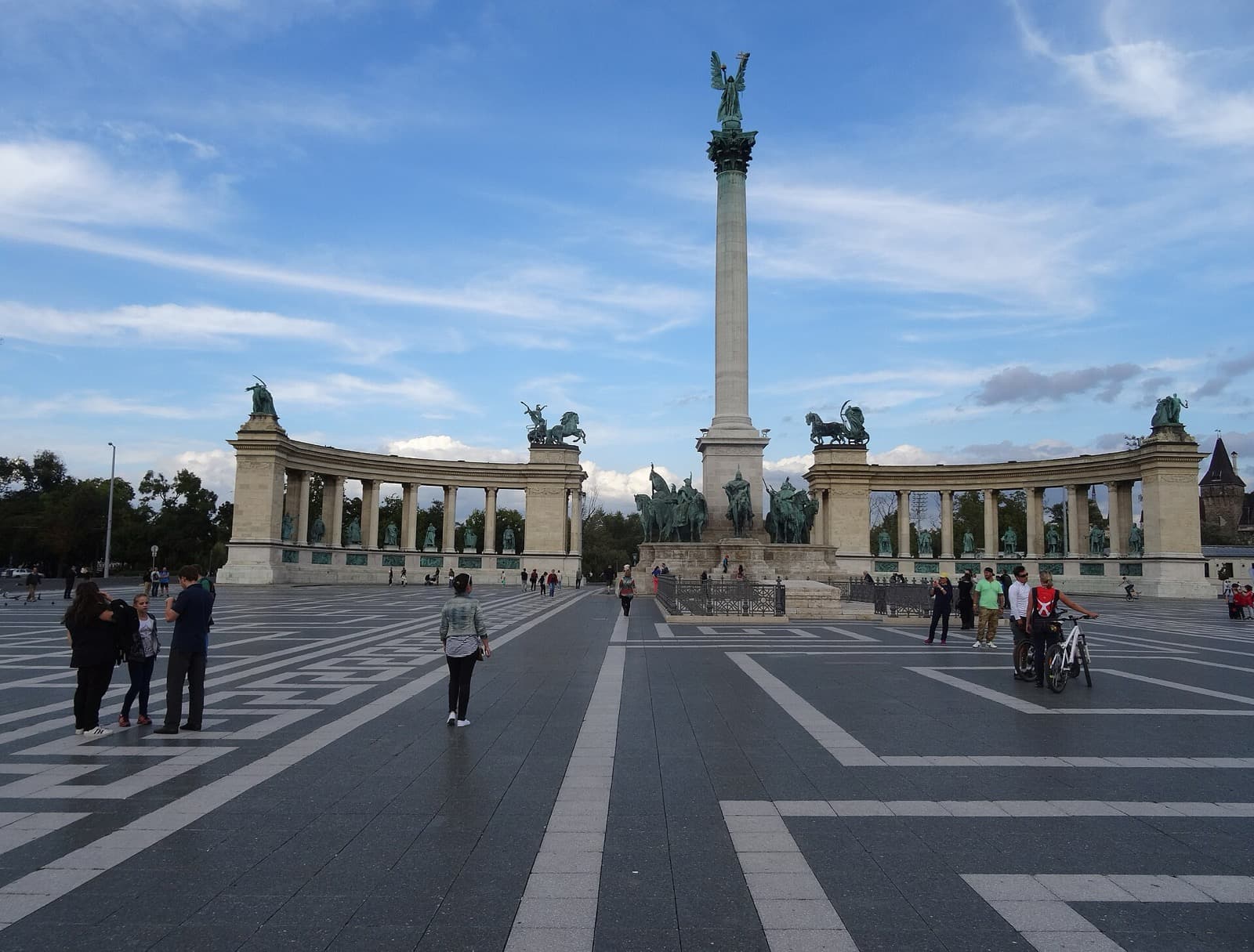
The centerpiece of Heroes' Square is the Millennium Monument, begun in eighteen ninety-six and inaugurated in nineteen oh six after roughly a decade of work. A tall central column rises from the middle of the square, and at its top stands the Archangel Gabriel, holding out the Hungarian Holy Crown and the apostolic double cross. At the column's base ride the bronze figures of the Seven Chieftains of the Magyars, the tribal leaders of the people who arrived in the Carpathian Basin, led by their prince Arpad. Two curved colonnades sweep out behind them, filled with statues of Hungarian kings and heroes. The principal sculptor was Gyorgy Zala. Before the column lies a plain memorial stone to the heroes, a cenotaph where the nation lays its wreaths, and two temples of art flank the square: the Museum of Fine Arts on one side, the Hall of Art on the other.
The date matters, because the monument was built to a deadline. Eighteen ninety-six marked the great Millennium, the thousand-year mark of the Magyar arrival in this basin around eight ninety-five to nine hundred. The Magyar arrival itself is history, and Arpad as leader of that tribal confederation is Hungary's oldest tradition. The older origin story, the Turul bird said to guide the people and the dream of the ancestress Emese, is legend rather than fact. The honest way to stand in the square is to hold both apart: solid history at the base of the column, national myth threaded through the story it tells.
The square has also been edited. The colonnades originally included Habsburg rulers, several of whom were replaced with other Hungarian figures after the Second World War. What you see is a curated national narrative, not an unchanging one, which is a useful thing to carry with you back down the avenue.
Reading the Boulevard Backward From Its Climax
Hear a stop from this walk
Heroes' Square: The Founding Myth Cast in Bronze
Once you understand that Heroes' Square is the sentence's final word, the rest of Andrassy Avenue reads as everything that builds toward it. The avenue was decreed in eighteen seventy, begun in eighteen seventy-two, and opened on the twentieth of August eighteen seventy-six, a newly self-governing Hungary showing off its confidence in a straight line of stone. In two thousand and two, UNESCO added the avenue and its underground to the World Heritage list.
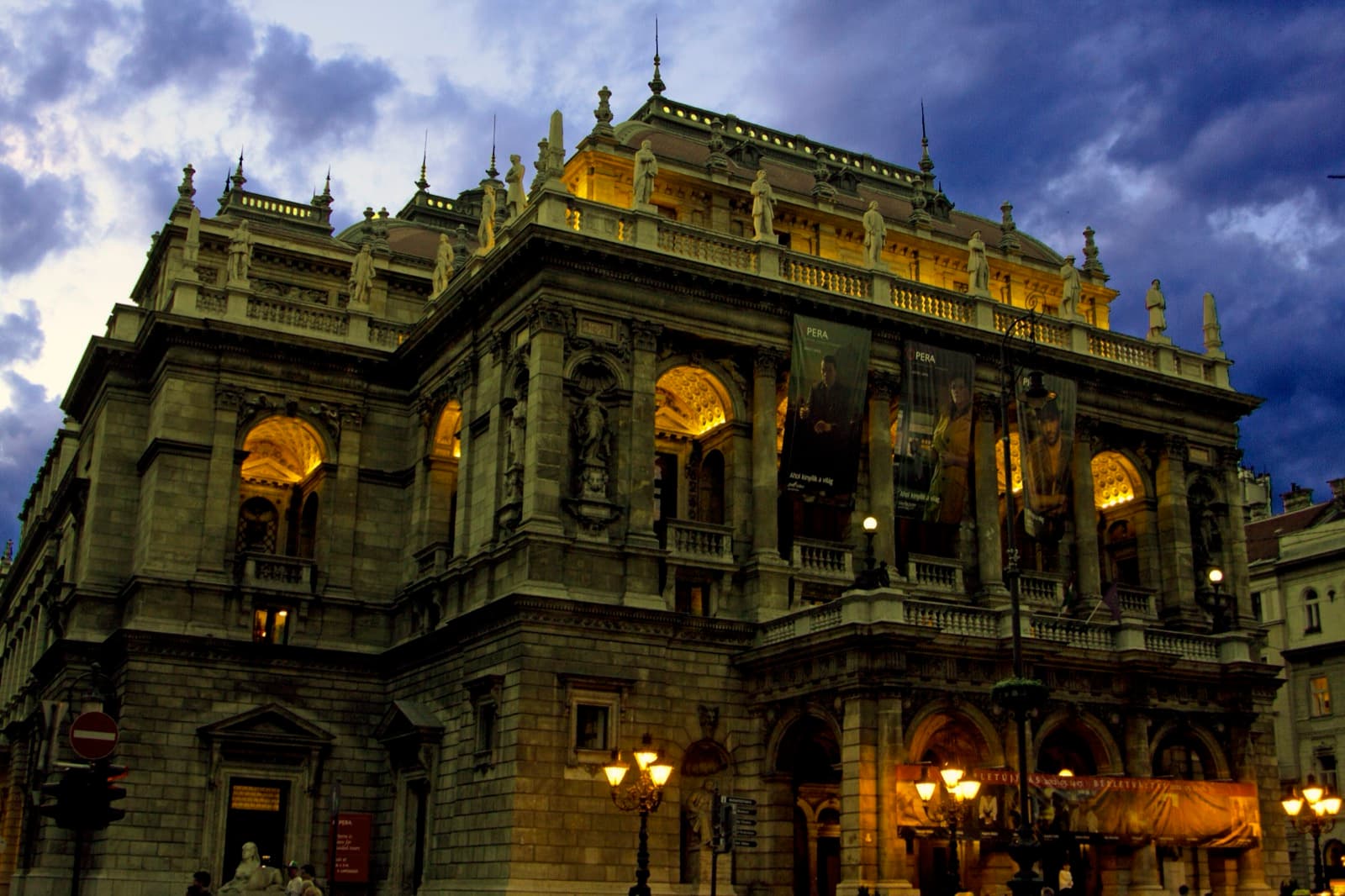
The line opens with an overture. The Hungarian State Opera House at Andrassy ut twenty-two was designed by Miklos Ybl, begun in eighteen seventy-five, and opened on the twenty-seventh of September eighteen eighty-four, paid for in large part by the city and by the emperor Franz Joseph the First. Gustav Mahler directed it from eighteen eighty-eight to eighteen ninety-one, in his years before Vienna. A century later, the house reopened after renovation on the twenty-seventh of September nineteen eighty-four, exactly one hundred years to the day after it first raised its curtain.
Halfway up, the avenue widens into the Oktogon, an eight-sided crossing formed in eighteen seventy-two where the boulevard meets the Grand Boulevard. Its four matching neo-Renaissance corners, built between eighteen seventy-two and eighteen seventy-four to the designs of Antal Szkalnitzky, were required to answer one another so the crossing would read as one dignified frame. Below the Oktogon the boulevard is a dense city street; above it, the roadway broadens, plane trees line the way, and the buildings step back into set-back villas and quieter palaces. There is a second avenue here too, running directly beneath the first: the Millennium Underground, the yellow Line One, opened on the second of May eighteen ninety-six. It is the oldest electric underground on the European mainland, second in the world only to London's, and its shallow tiled stations and restored yellow carriages still carry tens of thousands of riders a day. If your legs tire on the long uphill, you can duck into the eighteen nineties and ride a few stops toward the square.
The sentence is not all pride. At Andrassy ut sixty, the boulevard breaks. That address served as the headquarters of the Arrow Cross Party in nineteen forty-four and forty-five, then passed to the communist state security services after the war, and its basement held cells. Today it is the House of Terror, opened on the twenty-fourth of February two thousand and two. The United States Holocaust Memorial Museum records that around four hundred and forty thousand Jews were deported from Hungary between the middle of May and early July of nineteen forty-four, most to Auschwitz. The Swedish diplomat Raoul Wallenberg and the Swiss diplomat Carl Lutz issued protective papers that sheltered thousands. This is a place of memory, and it belongs to the same street as the opera house. Hold both as facts of one boulevard.
Above the darkness the avenue returns to its grandest self at Kodaly Korond, a full circle framed by four sweeping eclectic palaces decorated with sgraffito. The composer Zoltan Kodaly lived on the circus, and the plaza took his name in nineteen seventy-one. Like the Oktogon, it carries a layered history of names, having briefly borne Adolf Hitler's between nineteen thirty-eight and nineteen forty-five before reverting.
Walking It Yourself
Heroes' Square is where the boulevard resolves, but it is also a doorway. Just beyond it, in City Park, stand Vajdahunyad Castle, an eighteen ninety-six pastiche that folds a thousand years of Hungarian building into one playful whole, and the Szechenyi Baths, a neo-baroque palace of pools opened in nineteen thirteen and fed by springs that rise as hot as seventy-seven degrees Celsius. The avenue that begins with a nation singing its arrival ends with the same city sinking into warm water.
The full self-guided walk runs eight stops, roughly five kilometres, about two to three hours if you linger, a gentle uphill from the opera to the park. Taking it at your own pace lets you sit at the Oktogon, ride the underground when you like, and stand quietly at number sixty for as long as you need. To read more about the boulevard's opening chord, see our companion to the Hungarian State Opera House, and to plan the wider trip, start with Budapest.
Sources
- Heroes' Square (Budapest), Wikipedia. Detail on the Millennium Monument, the Seven Chieftains, Gyorgy Zala, and the inauguration in nineteen oh six.
- Metro Line M1 (Budapest Metro), Wikipedia. Confirms the eighteen ninety-six opening and the standing of Europe's oldest electric underground.
- House of Terror, Wikipedia, and the USHMM Holocaust Encyclopedia. Sources for the Arrow Cross and communist use of Andrassy ut sixty and the nineteen forty-four deportation figures.
- Hungarian State Opera House, Wikipedia. Miklos Ybl, the eighteen eighty-four opening, and Gustav Mahler's directorship.
- Vajdahunyad Castle and Szechenyi Thermal Bath, Wikipedia. Background on City Park's Millennium-era buildings and the thermal springs.
Ready to experience it?
Andrassy Avenue: The Boulevard Built for a Nation's Millennium
130 min · 5 km · moderate
More from Budapest
Explore more at your own pace.
Budapest Travel Guide: How Many Days, Getting Around, Best Time, Safety, and Budget
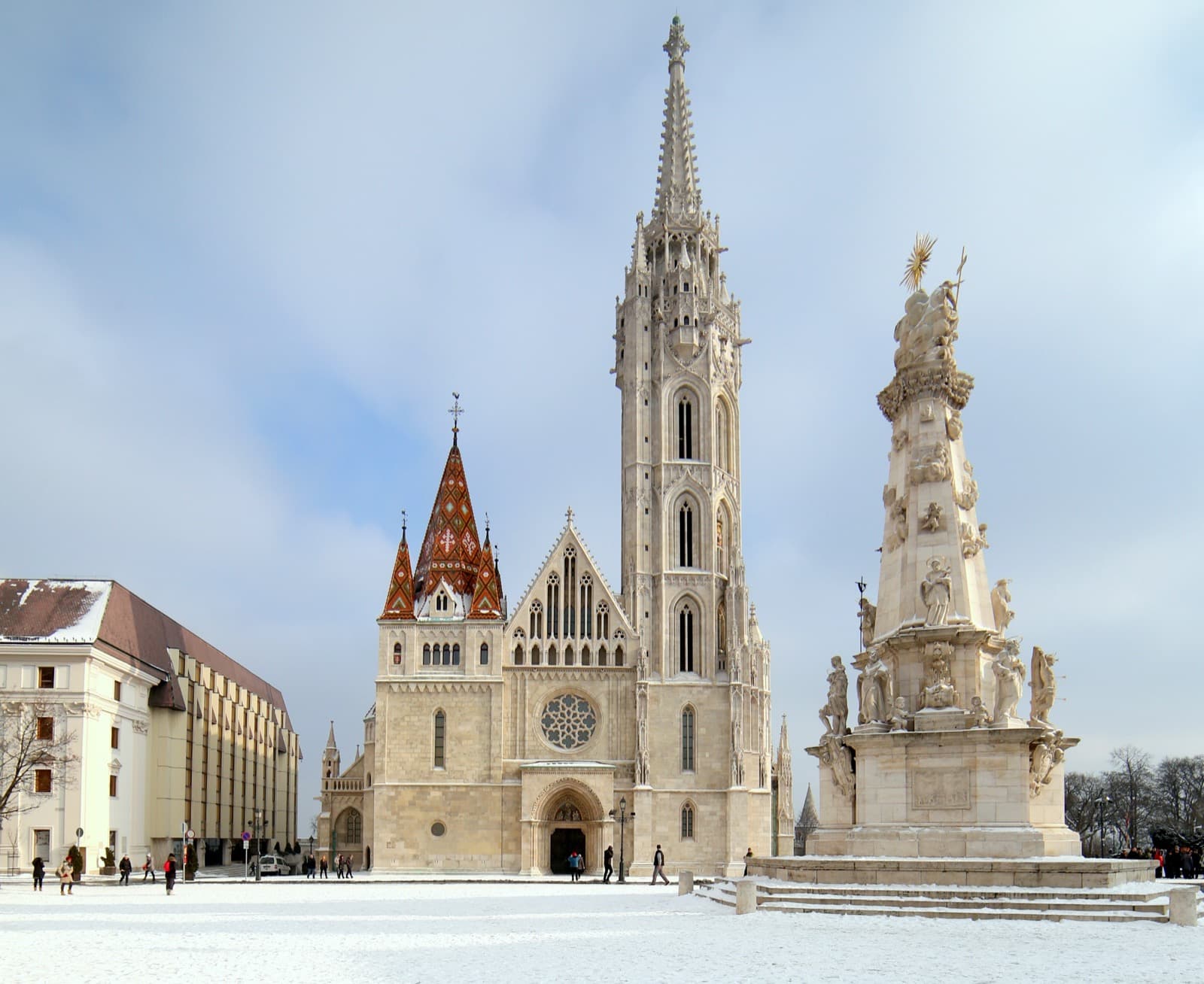
Matthias Church: Why Budapest's Prettiest Roof Is the Newest Thing on Castle Hill
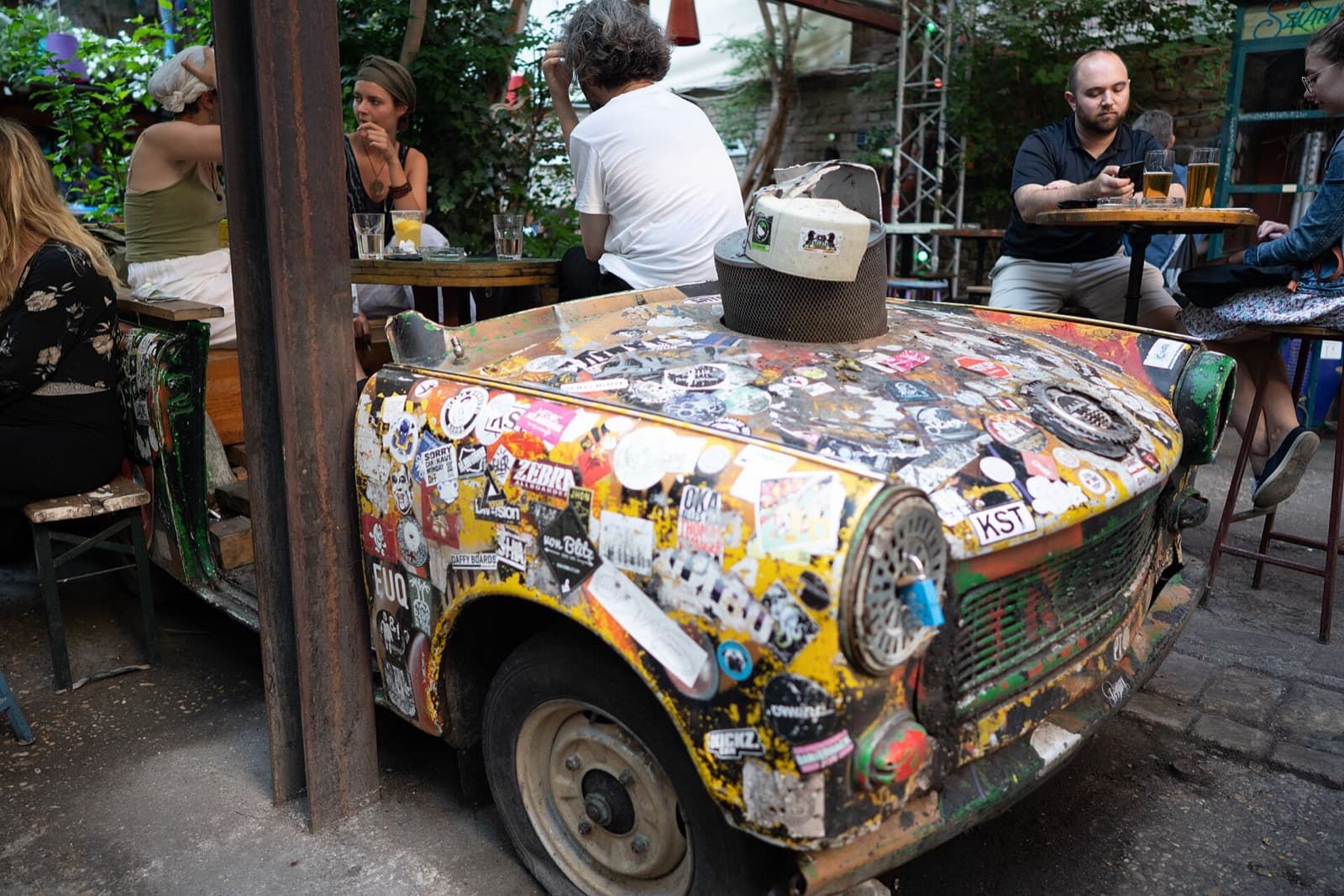
Szimpla Kert and the Ruin Bars: Why Budapest's Party Quarter Is Really a Memorial
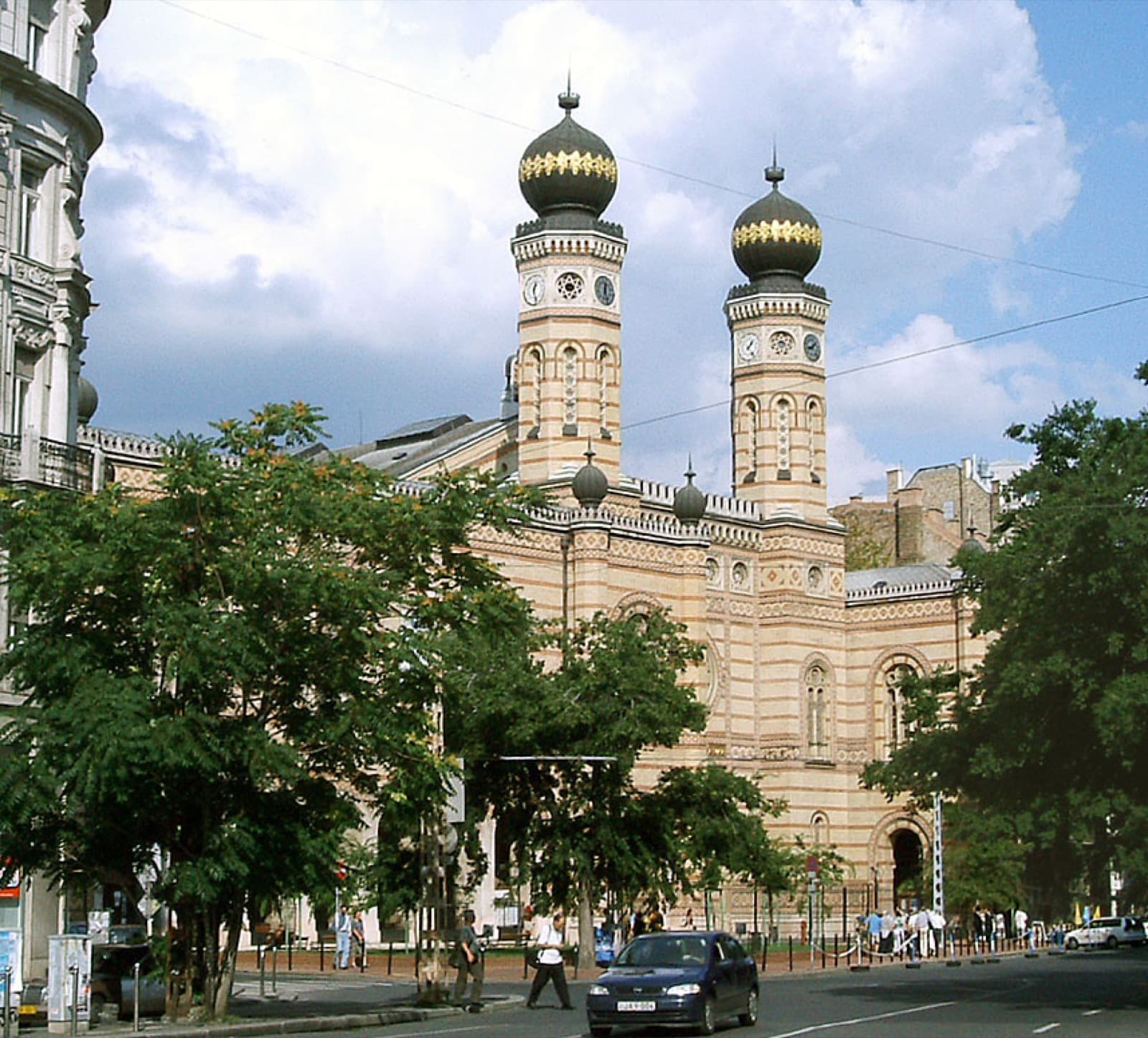
Dohany Street Synagogue: Europe's Largest, and What It Was Built to Say
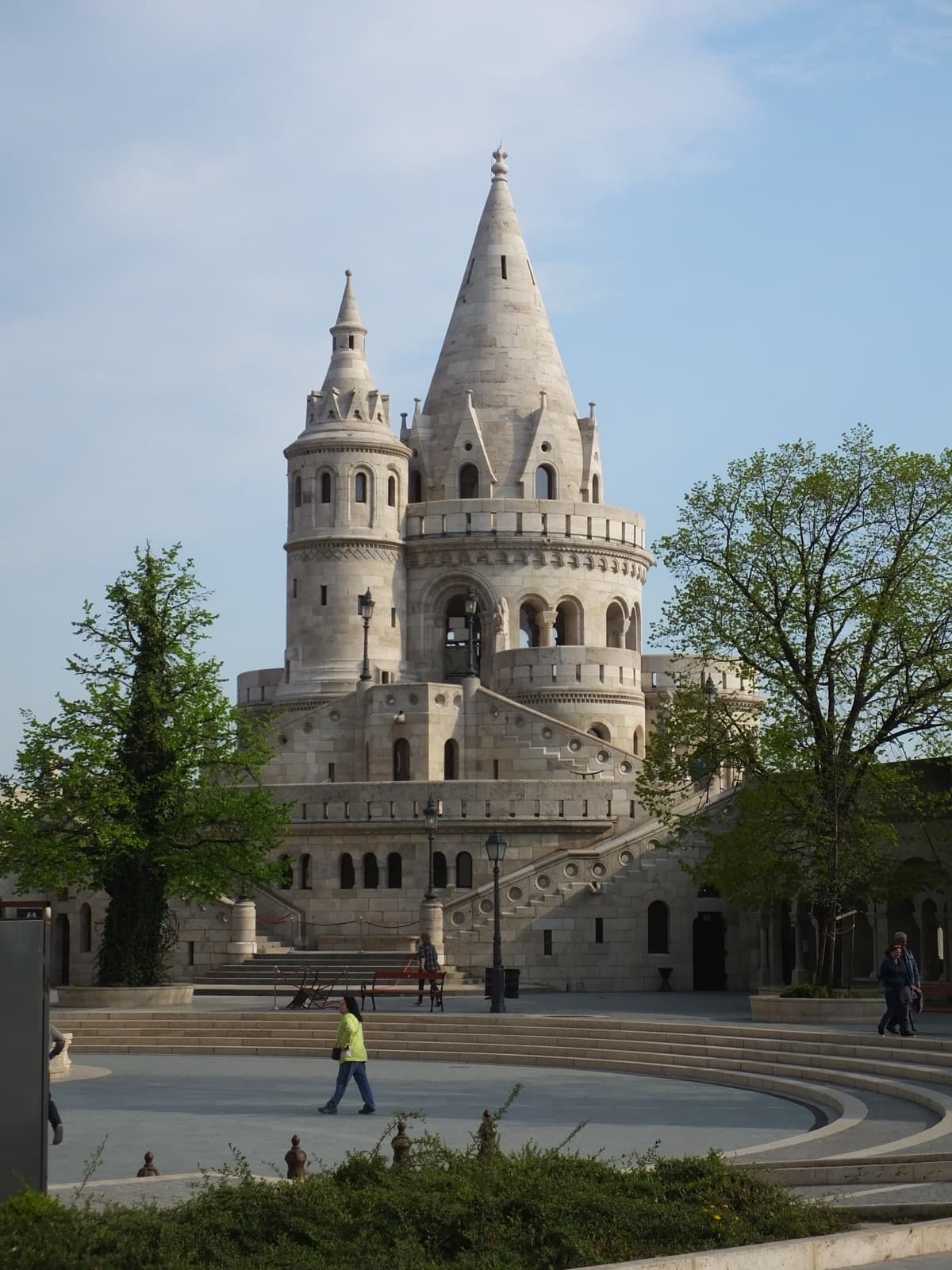
Fisherman's Bastion: The Fortress That Never Defended Anything