Buda Castle District: Palace, Matthias Church and Fisherman's Bastion
105 min · 2.5 km · moderate
You can walk Budapest's essential sights in one day by treating the city as three connected districts and moving through them in order: climb Castle Hill on the Buda side in the morning, cross the Szechenyi Chain Bridge into Pest, walk the Jewish Quarter around midday, then follow Andrassy Avenue uphill to City Park and finish in the thermal baths at dusk. The distances are short, the terrain is mostly flat once you are off the hill, and public transport fills every gap. This itinerary threads all three together into a single loop of roughly six to seven hours of actual walking, spread across a full day with stops, tickets, and rest built in.
The plan below maps directly onto the three self-guided audio walks in the Roamer app, so you can let each district's tour narrate itself while you set your own pace. See the full Budapest walking tours collection, or jump straight to the city page at /hungary/budapest.
The short answer: a three-district loop
Budapest splits neatly for a one-day walk. Castle Hill sits on the Buda bank, a limestone ridge holding the palace, the coronation church, and the Fisherman's Bastion. Across the river, Pest holds the flat, walkable center: the Jewish Quarter in the seventh district, and Andrassy Avenue running straight from the opera house up to Heroes' Square and City Park. Start high on Buda while your legs are fresh, then spend the flatter afternoon in Pest. The one river crossing, the Chain Bridge, is itself one of the walk's best moments and reopened fully to pedestrians in August 2023 after a two-year renovation.
Rough timing: the Castle Hill walk takes about an hour and three quarters on foot, more with interiors, the Jewish Quarter about ninety minutes plus museum time, and Andrassy Avenue two to three hours if you linger to the park. That is a genuine full day. If your legs tire, metro Line 1, the historic yellow underground, runs directly beneath Andrassy Avenue and can carry you most of the way up for the price of a single ticket.
Morning: Castle Hill (Buda)
Hear a stop from this walk
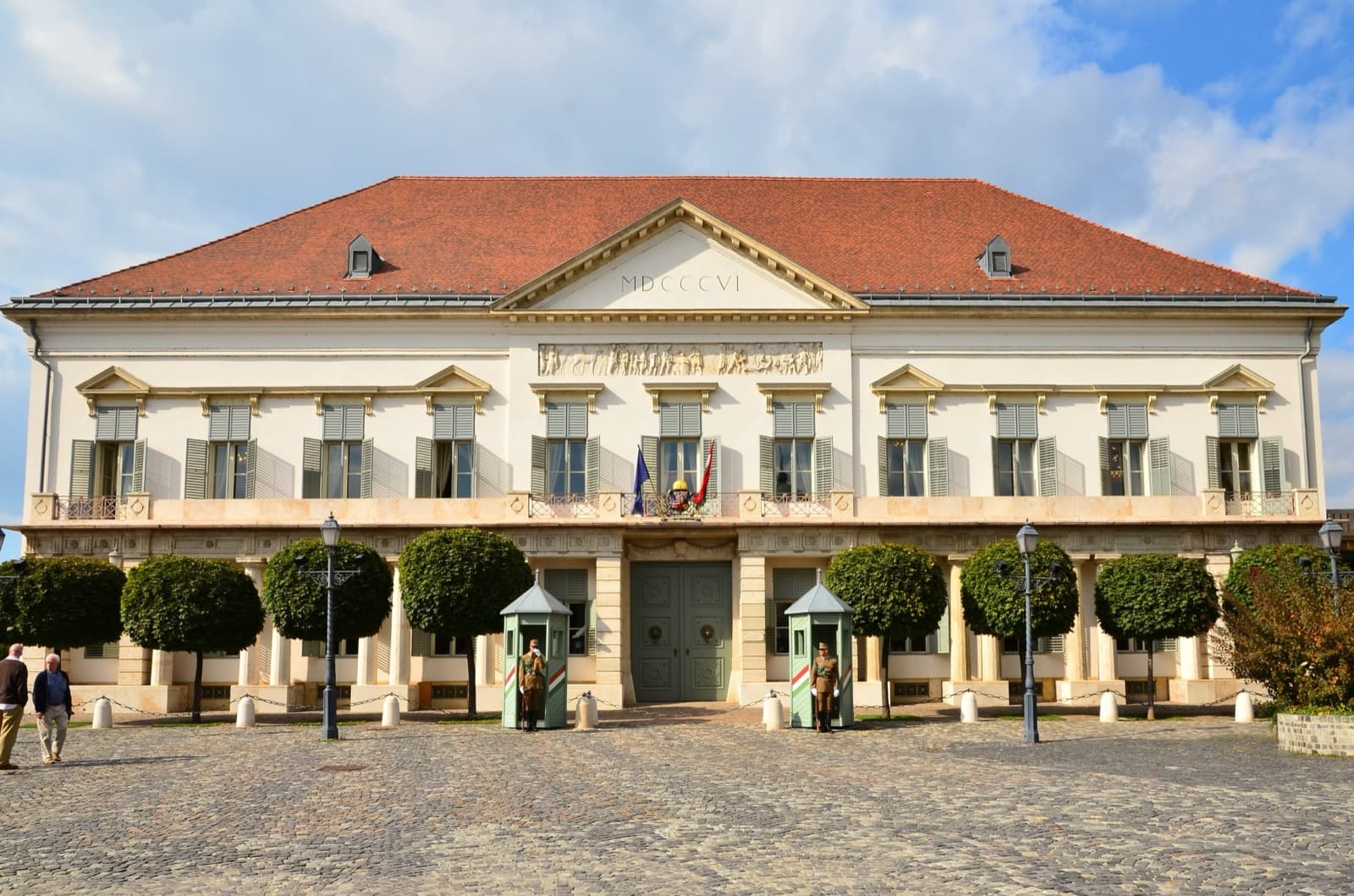
Szent György tér: Sándor Palace and the Rebuilt Riding Hall
Begin at Clark Adam ter, the square at the Buda foot of the Chain Bridge, where the Buda Castle Funicular (the Budavari Siklo) climbs the ridge. The funicular is a period experience from 1870, but it is not cheap: expect around 4,500 HUF one-way in 2026, and it runs daily from roughly 08:00 to 22:00. The free alternative is the walking ramp and stairs beside it, a short but steep climb. Either way you arrive at the palace level with the whole ridge ahead.
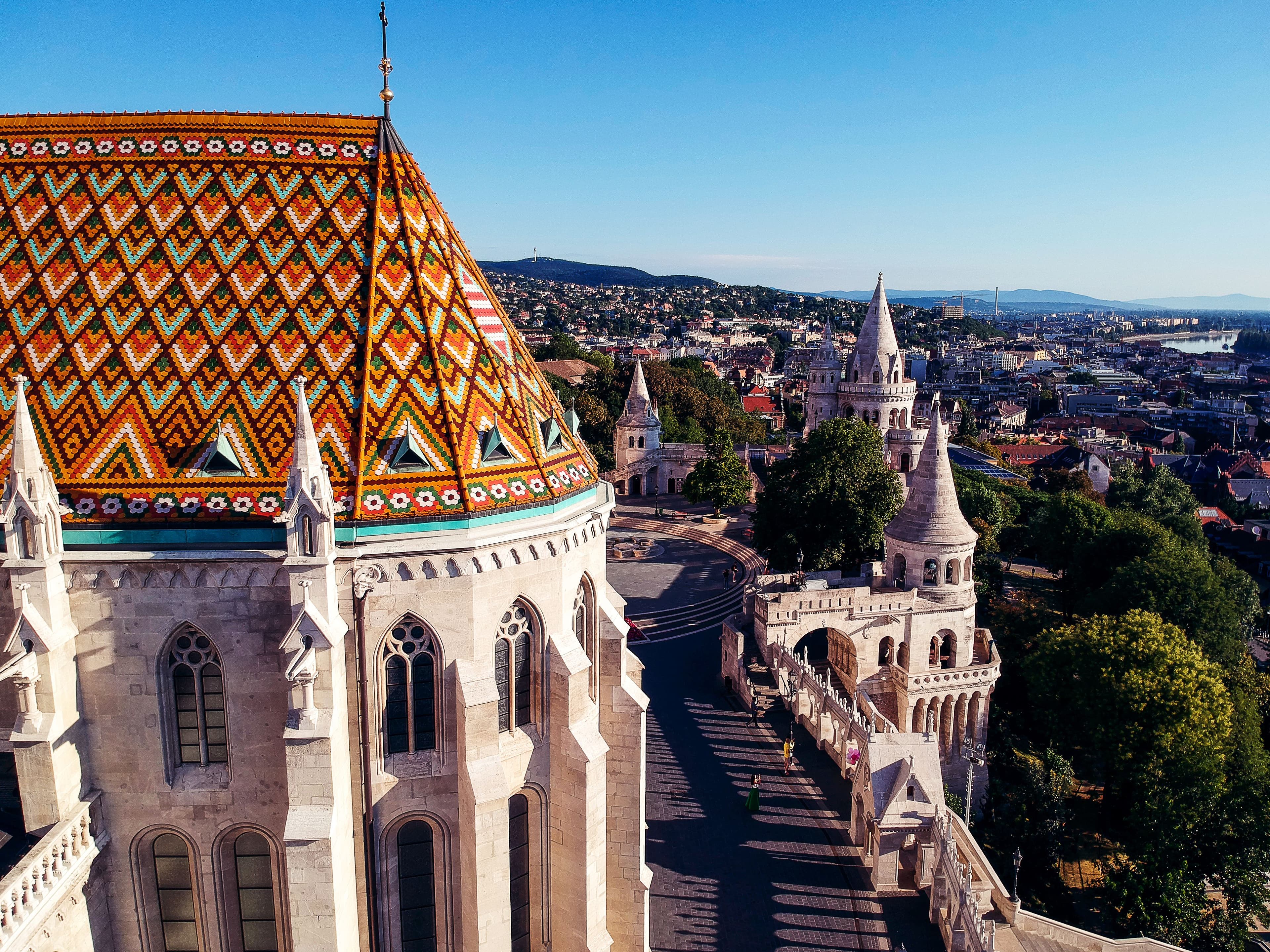
The good news for a budget day: most of Castle Hill is free. The palace courtyards and terraces, Szent Gyorgy ter with its changing of the guard at Sandor Palace (the president's residence), Holy Trinity Square with its plague column, and the lower terraces of the Fisherman's Bastion all cost nothing. You pay only for interiors. Matthias Church, the Gothic coronation church that spent a century and a half as a mosque, charges roughly 2,200 to 3,500 HUF for the interior and is open around 09:00 to 17:00, though services can close it to visitors without notice. The Fisherman's Bastion's upper decorated towers charge about 1,700 HUF for adults during ticketed hours, but the towers are free outside those hours, so arriving early in the morning or later in the evening gets you the same panorama for nothing. Finish the ridge at the Vienna Gate and the lone Mary Magdalene Tower at the northern end, then head back down toward the river.
The full Castle Hill audio walk covers all ten stops in order, from Clark Adam ter to the Mary Magdalene Tower, reading the ridge as a place where every age chose which past to rebuild.
Midday: cross the bridge, walk the Jewish Quarter (Pest)
Walk back down to the river and cross the Chain Bridge on foot into Pest. From the Pest bridgehead it is a flat walk of about fifteen minutes to the Jewish Quarter in the seventh district, Erzsebetvaros, a tight cluster of streets you can cover in an easy loop.
Start at the Great Synagogue on Dohany Street, the largest synagogue in Europe, built between 1854 and 1859. One combined ticket covers the synagogue, the Hungarian Jewish Museum on the site where Theodor Herzl was born, the Heroes' Temple, and the Raoul Wallenberg Memorial Park with its metal Tree of Life over the ghetto graves. That combined ticket runs roughly 8,500 to 13,000 HUF for adults in 2026, depending on the source and ticket type, so check the official site before you go. Note the hours carefully: the complex is closed on Saturdays for the Sabbath and closes early on Fridays, with seasonal daytime hours the rest of the week, so a weekday or Sunday visit is simplest.
From there the quarter is a wander rather than a line. Klauzal ter was the center of the sealed wartime ghetto and asks for quiet. The Rumbach Street Synagogue, designed by a young Otto Wagner and reopened in 2021, and the working Kazinczy Street Orthodox synagogue show the community's inner variety. Then the mood turns: Gozsdu Courtyard, a chain of seven connected courtyards, and the ruin bars led by Szimpla Kert fill the same buildings that once stood emptied, now with cafes and music. Most of this street-level wandering costs nothing but attention. The Jewish Quarter audio walk holds reverence and revival in the same eye across eight stops.
Afternoon into evening: Andrassy Avenue to the baths (Pest)
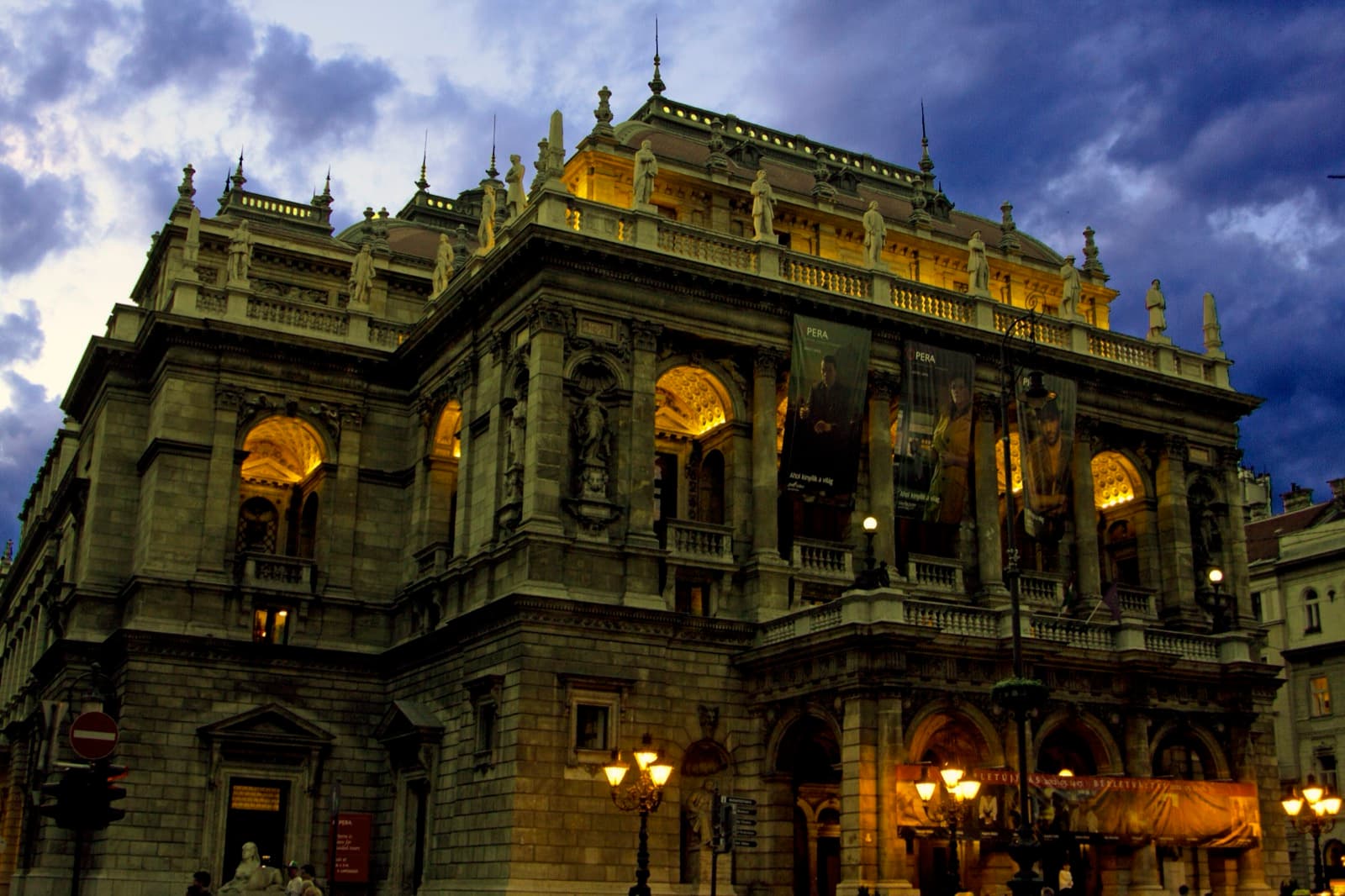
From the Jewish Quarter it is a short walk to the lower end of Andrassy Avenue and the Hungarian State Opera House. This boulevard, built in the 1870s and opened in 1876, runs straight and gently uphill to Heroes' Square, and it is a UNESCO World Heritage site along with the underground beneath it. Walk it, or ride metro Line 1, the yellow line, which shadows the avenue and is itself a sight: the oldest electric underground on the European mainland, opened in 1896.
Along the way, one address interrupts the grandeur. Andrassy ut 60, the House of Terror, occupies the building that served both the Arrow Cross fascists and the communist secret police. It is open Tuesday to Sunday, 10:00 to 18:00, and closed on Mondays; the full-price adult ticket is 4,000 HUF, and tickets are sold only at the museum, not online. You do not need to enter to understand what the address means, but it is worth the pause.
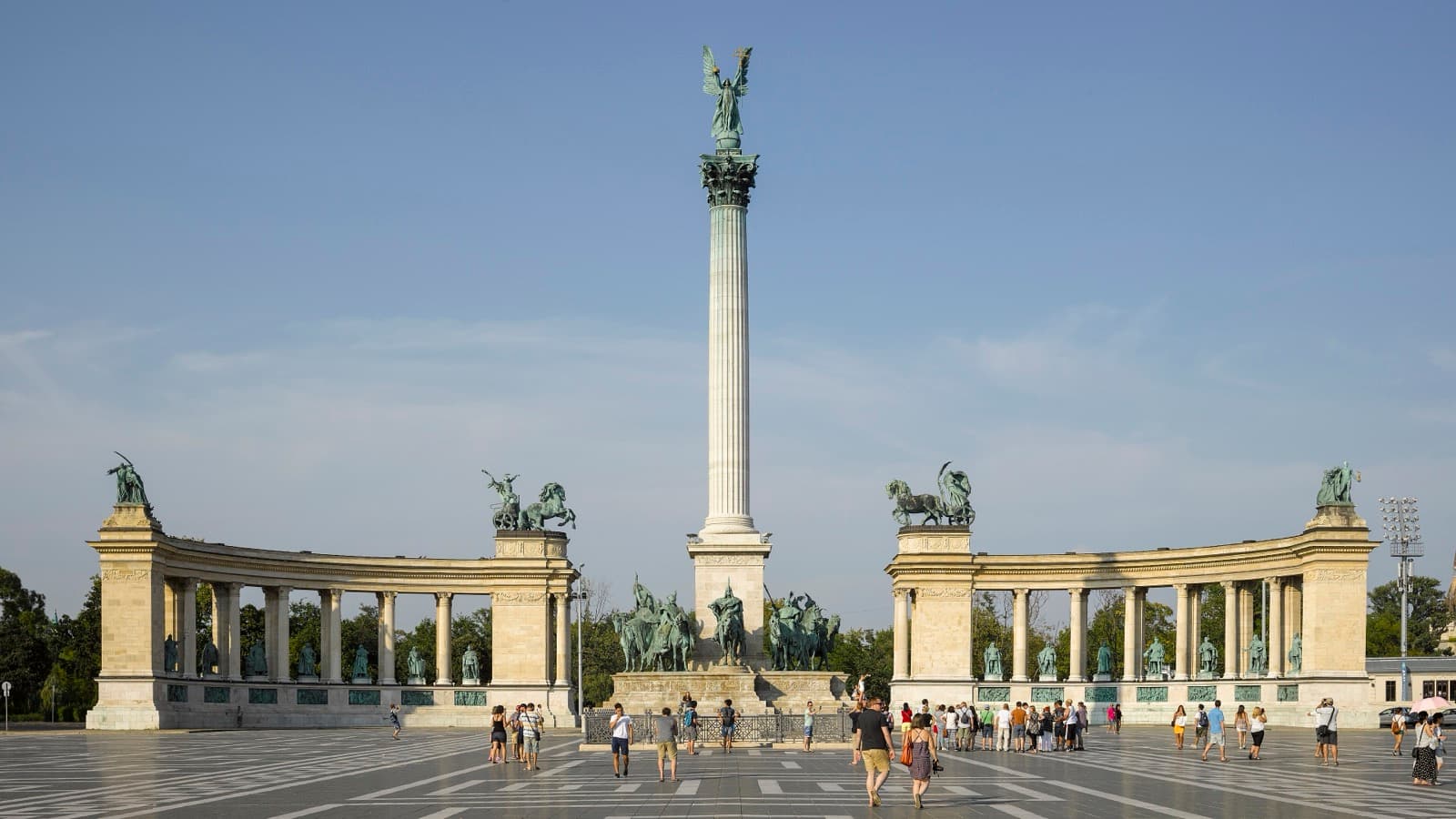
The avenue delivers you to Heroes' Square, with its Millennium Monument and the Seven Chieftains cast in bronze. Just beyond, in City Park, sit Vajdahunyad Castle and the Szechenyi Baths, the grand neo-baroque thermal complex opened in 1913 and fed by deep hot springs. Ending the day chest-deep in the warm outdoor pools, especially in cold weather when steam rises off the water, is the classic Budapest close. The Andrassy Avenue audio walk runs all eight stops from the opera to the baths.
Getting around and staying safe
For a single day, buy a 24-hour Budapest travelcard, which costs 2,750 HUF as of June 2026 and covers all metro, tram, and bus rides across the city. A single ride is 500 HUF, so if you plan to ride the yellow line even a few times the day card pays for itself, and it lets you skip the walk back over the hill or up the avenue whenever you like. The historic funicular and the Fisherman's Bastion upper terraces are separate paid attractions, not covered by transit tickets. Prices here are in Hungarian forint, not euros, so carry a card or some local cash; many small ticket desks prefer forint.
Budapest is a low-crime capital, comparable to Vienna or Prague on recent safety indexes, and this itinerary passes through busy, well-populated areas all day. The realistic risk is petty pickpocketing in crowds: the packed platforms of the metro, jammed trams, and the busiest viewpoints on Castle Hill. Keep your phone and wallet in a front or zipped pocket, wear a bag across your body in crowds, and use a reputable taxi app rather than hailing an unmarked car if you take a cab at night. That is the honest picture: a safe city where common sense about your belongings is the main thing to remember.
Sources
- Buda Castle Funicular tickets and hours, BKV
- Fisherman's Bastion prices and free-access hours, official site
- Matthias Church tickets and opening hours, budapest.org
- Dohany Street Great Synagogue tickets and hours, budapest.org
- House of Terror admission and hours, official site
- Budapest travelcard and single ticket prices, BKK
- Chain Bridge reopened to pedestrians August 2023, Wikipedia
Frequently asked questions
- Can you see Budapest's main sights in one day on foot?
- Yes. Castle Hill, the Jewish Quarter, and Andrassy Avenue sit close enough to cover in a single day, with roughly six to seven hours of actual walking spread across the day. The one river crossing, the Chain Bridge, is walkable and reopened to pedestrians in August 2023. Metro Line 1, the historic yellow underground, runs beneath Andrassy Avenue and can shorten the uphill stretch if your legs tire.
- How much does it cost to visit Castle Hill in Budapest?
- Most of Castle Hill is free, including the palace courtyards, all the squares, Holy Trinity Square, the Vienna Gate, and the lower terraces of the Fisherman's Bastion. You pay only for interiors: the Matthias Church interior runs roughly 2,200 to 3,500 HUF, and the Fisherman's Bastion upper towers charge about 1,700 HUF for adults during ticketed hours. The upper towers are free outside those hours, so arriving early in the morning or in the evening gets you the same view for nothing.
- Is the Dohany Street Great Synagogue open every day?
- No. The Great Synagogue complex is closed on Saturdays for the Sabbath and closes early on Fridays, with seasonal daytime hours the rest of the week. A weekday or Sunday visit is simplest. One combined ticket, roughly 8,500 to 13,000 HUF for adults in 2026 depending on the source and ticket type, covers the synagogue, the Hungarian Jewish Museum, the Heroes' Temple, and the Wallenberg Memorial Park.
- What is the best way to get around Budapest for a day of sightseeing?
- Buy a 24-hour Budapest travelcard, which costs 2,750 HUF as of June 2026 and covers all metro, tram, and bus rides. A single ride is 500 HUF, so the day card pays for itself quickly if you ride even a few times. Note that the Buda Castle Funicular and the Fisherman's Bastion upper terraces are separate paid attractions not covered by transit tickets.
- Is Budapest safe for tourists?
- Budapest is a low-crime capital, comparable to Vienna or Prague on recent safety indexes, and most visits are trouble-free. The main realistic risk is petty pickpocketing in crowds, especially on packed metro platforms, jammed trams, and busy viewpoints. Keep valuables in a front or zipped pocket, wear a bag across your body in crowds, and use a reputable taxi app rather than hailing an unmarked car at night.
- Where should a one-day Budapest walk end?
- A classic close is City Park at the top of Andrassy Avenue, where Vajdahunyad Castle and the Szechenyi Baths sit close together. The Szechenyi Baths, a neo-baroque complex opened in 1913 and fed by deep thermal springs, let you finish the day in warm outdoor pools. In cold weather, sitting chest-deep while steam rises off the water is the signature Budapest ending.
Ready to experience it?
Buda Castle District: Palace, Matthias Church and Fisherman's Bastion
105 min · 2.5 km · moderate
More from Budapest
Explore more at your own pace.
Heroes' Square and the Boulevard That Reads Like a Sentence
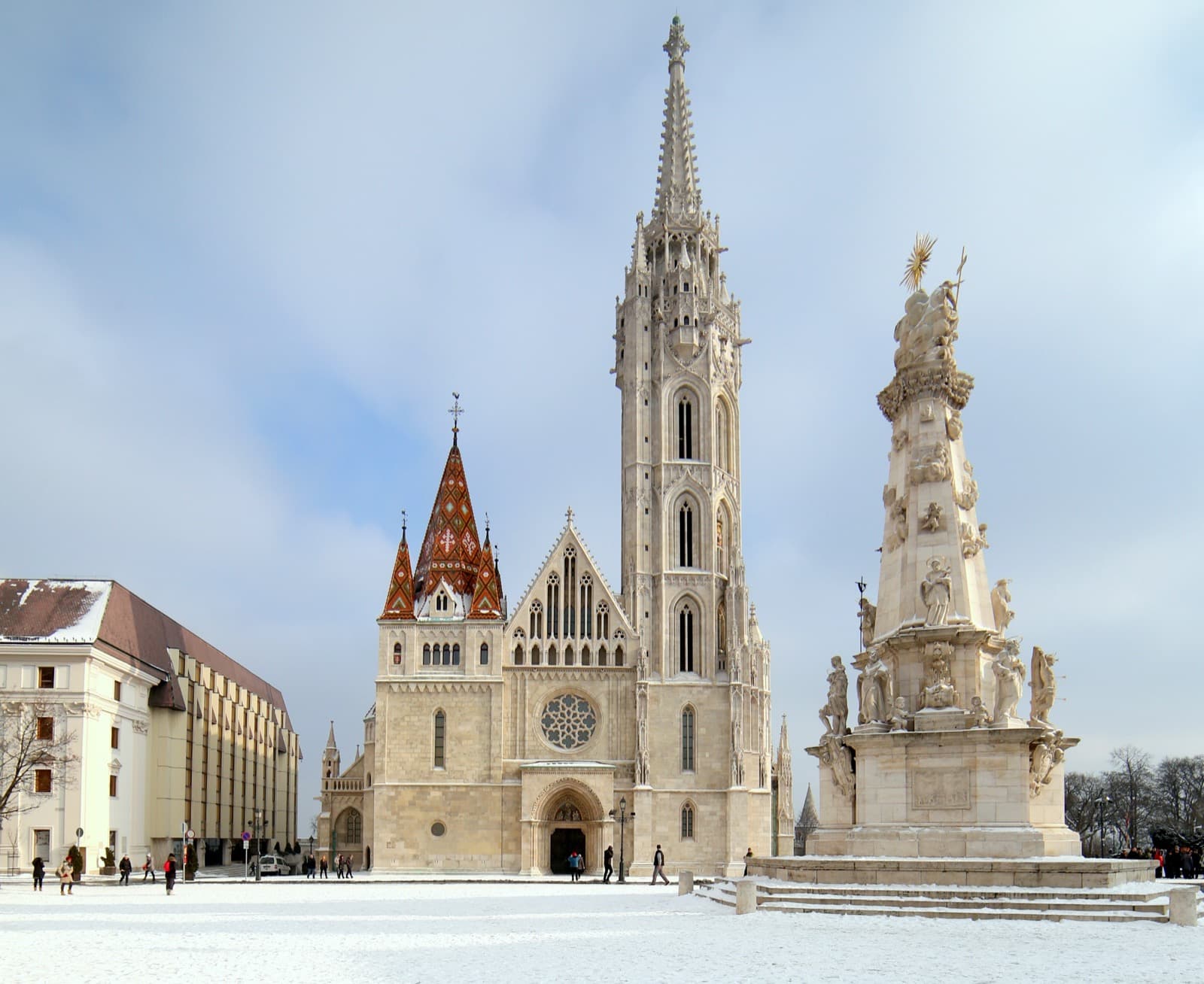
Matthias Church: Why Budapest's Prettiest Roof Is the Newest Thing on Castle Hill
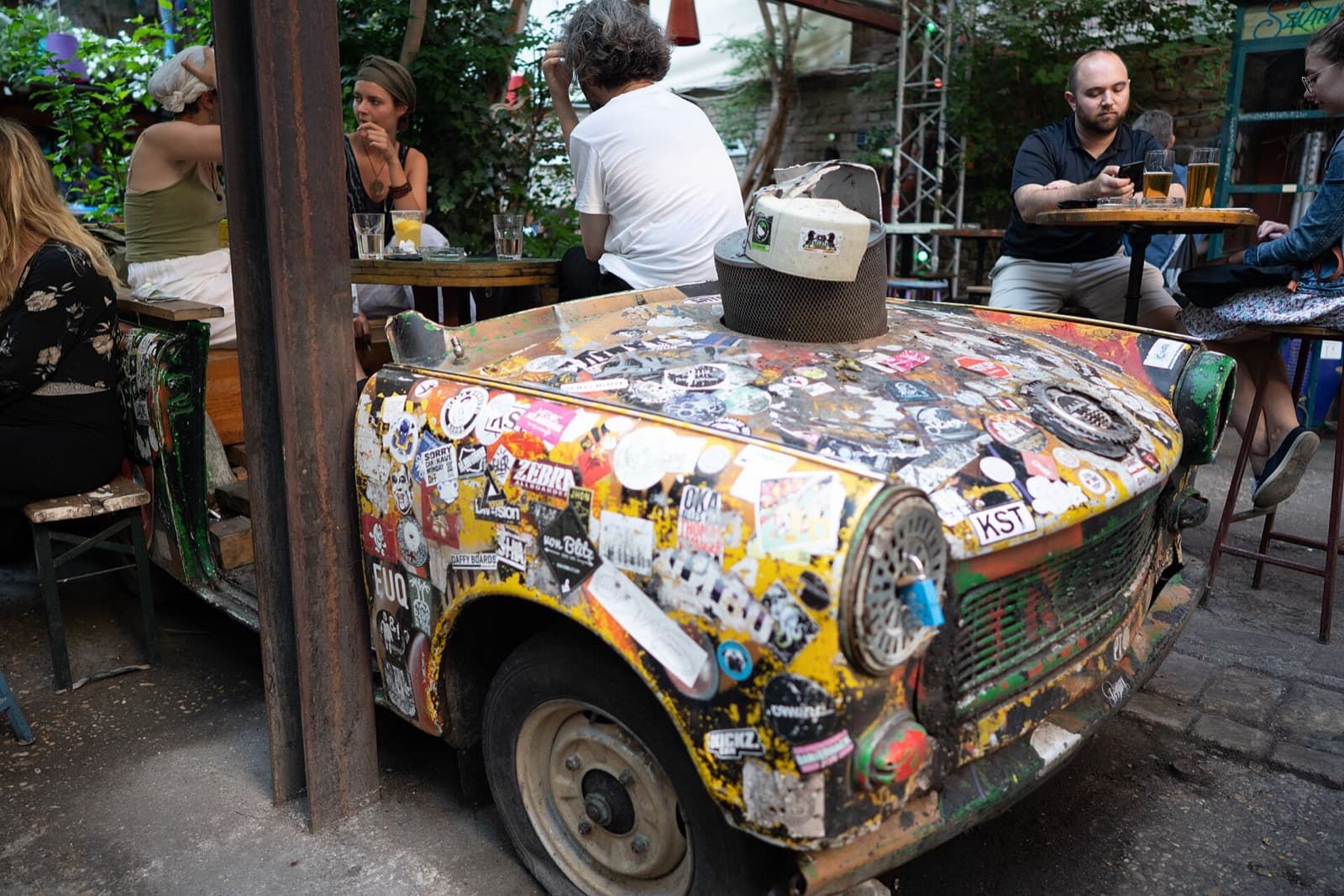
Szimpla Kert and the Ruin Bars: Why Budapest's Party Quarter Is Really a Memorial
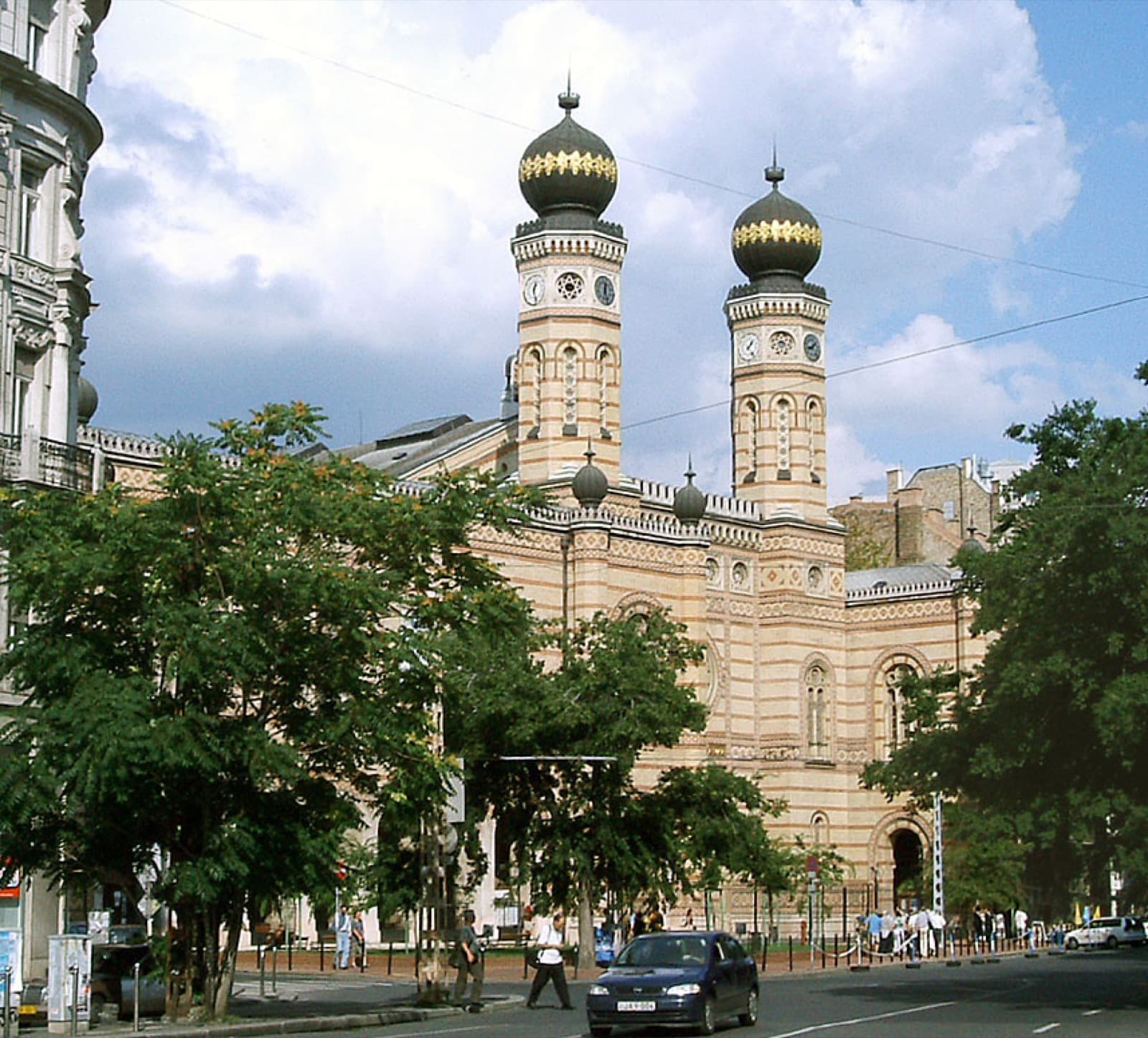
Dohany Street Synagogue: Europe's Largest, and What It Was Built to Say
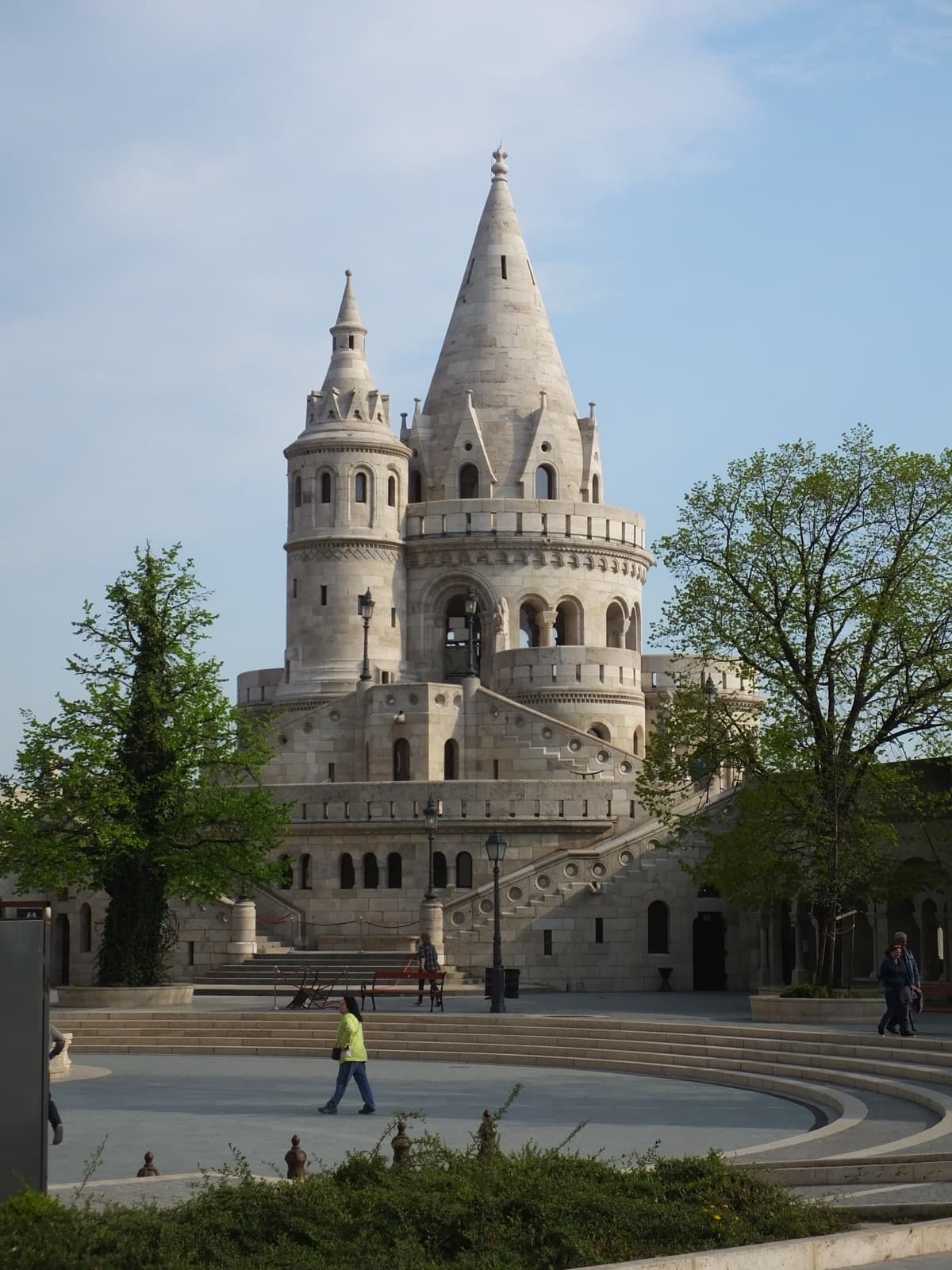
Fisherman's Bastion: The Fortress That Never Defended Anything