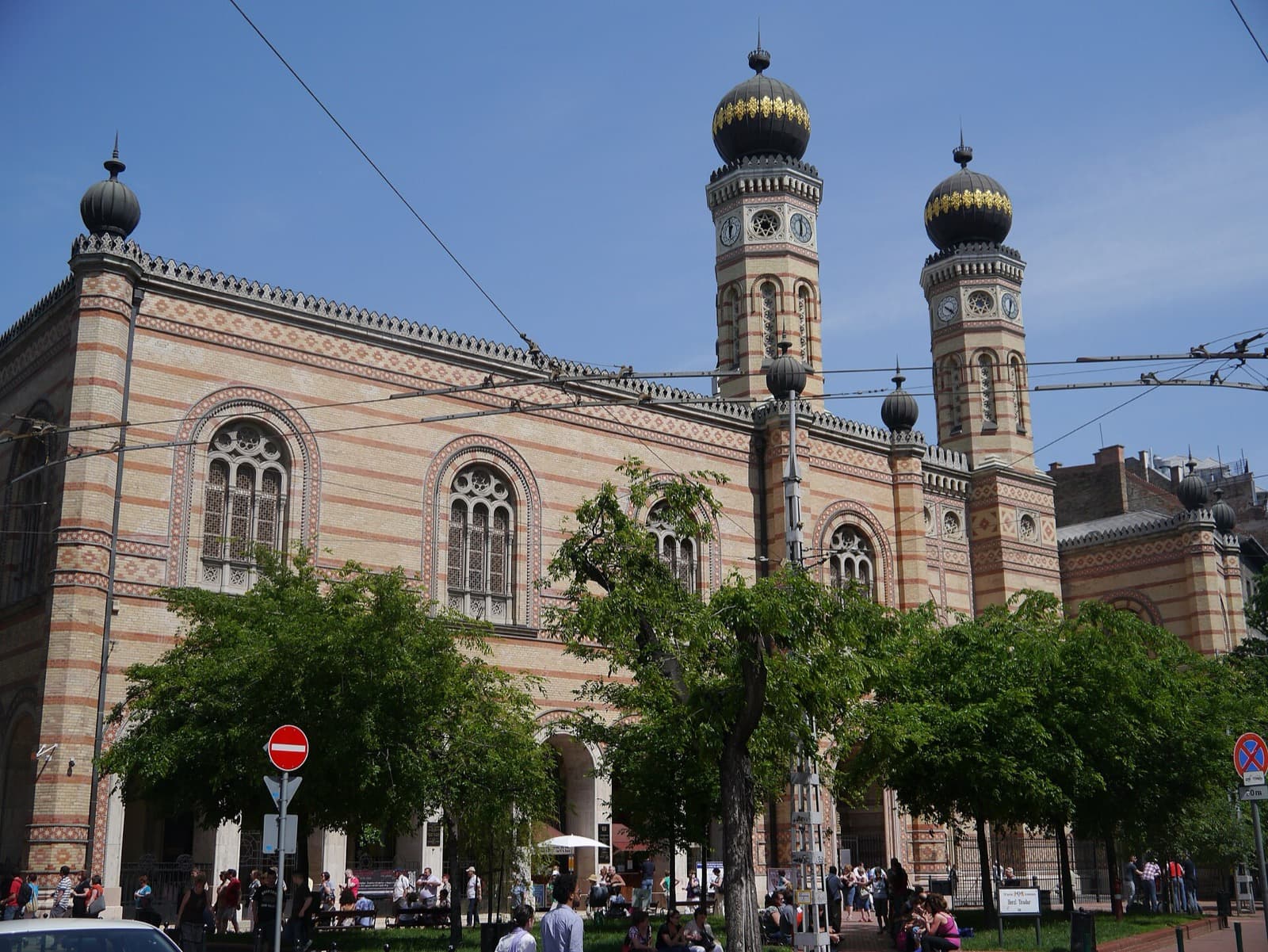
A walk through the tight grid of Erzsebetvaros, where the largest synagogue in Europe, a sealed wartime ghetto, and a nightlife reborn from decay stand within a few hundred metres of one another. Destruction and rebirth, told in stone and memory.
Start · The Great Synagogue on Dohany Street: A Statement of Belonging
DirectionsStops
- 1
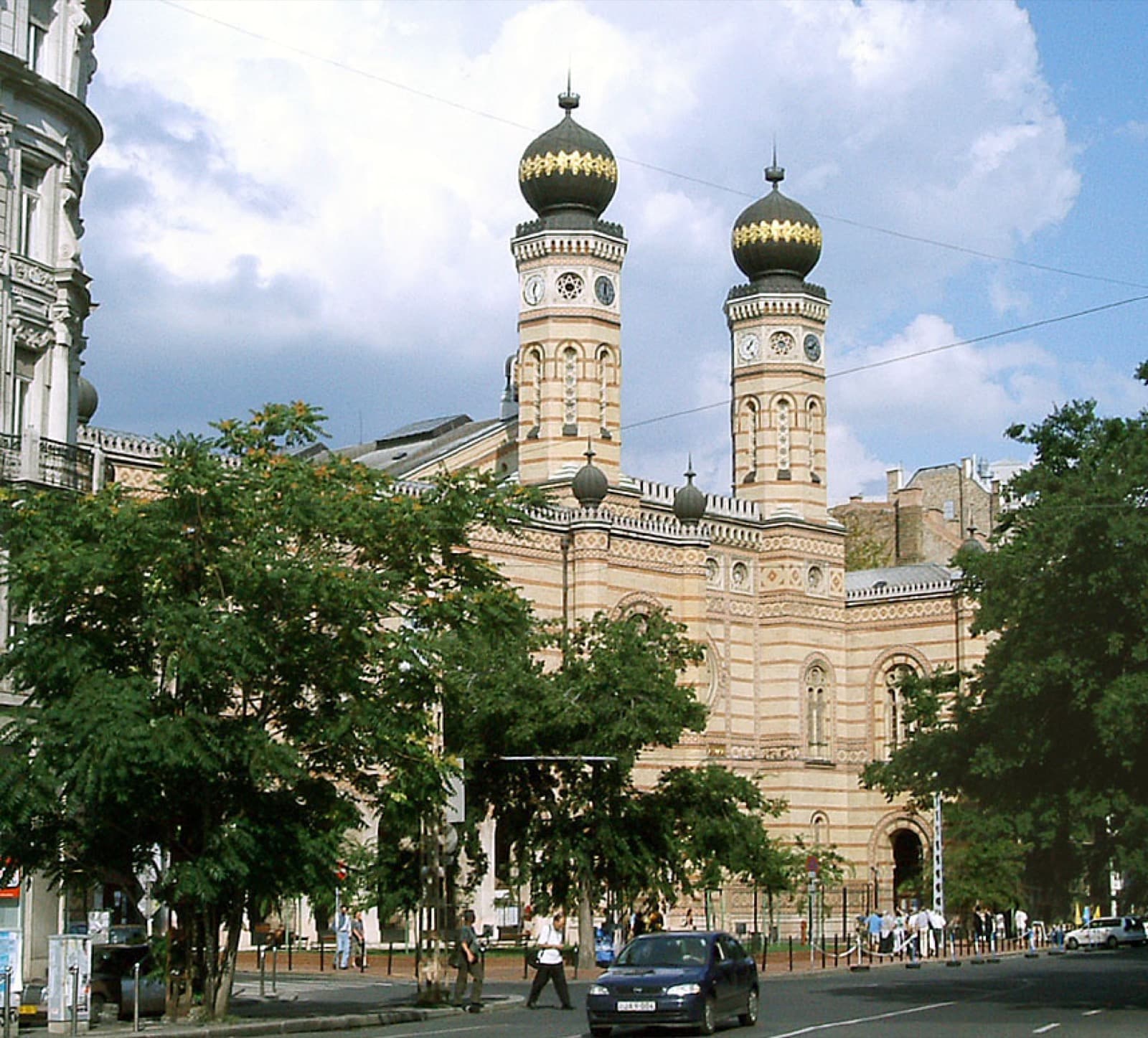
The Great Synagogue on Dohany Street: A Statement of Belonging
The largest synagogue in Europe, a grand nineteenth-century declaration that this community belonged fully to the city around it.
- 2
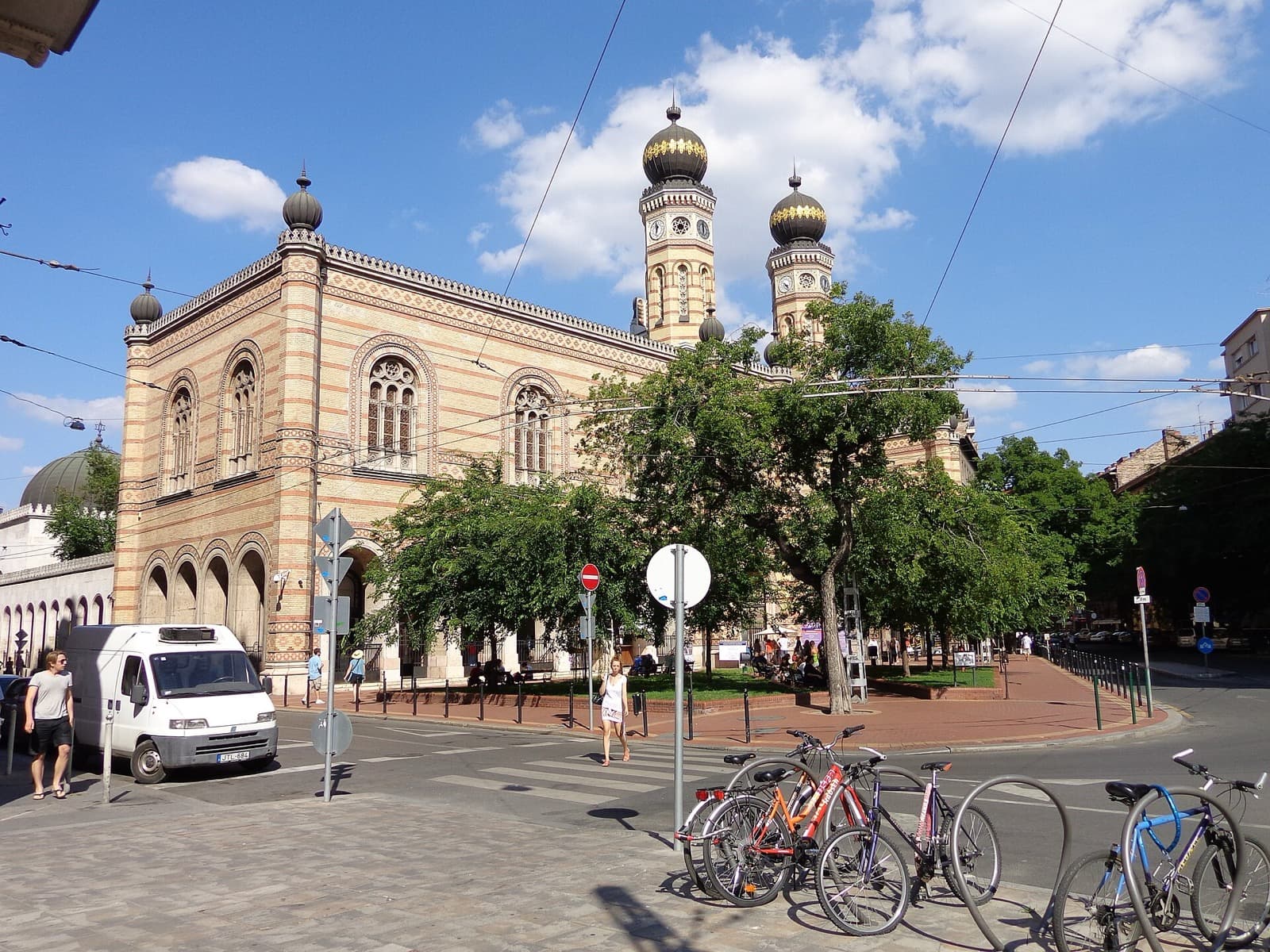
The Jewish Museum and the Heroes' Temple: A Confident, Patriotic Community
A museum on the birthplace of Theodor Herzl and a memorial temple to Jewish soldiers of the First World War, both portraits of a community that felt itself Hungarian.
- 3
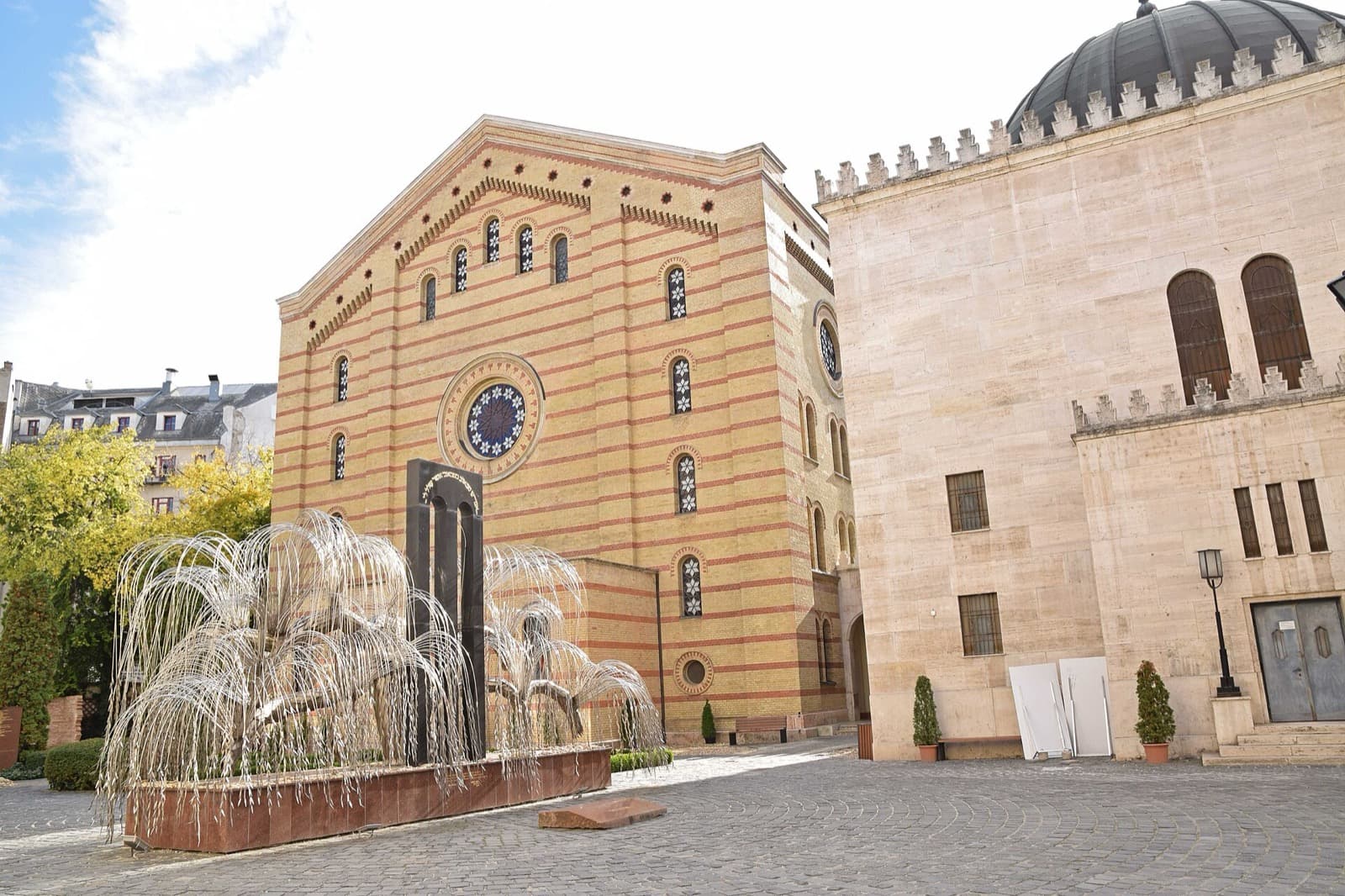
The Wallenberg Memorial Park and the Tree of Life
A metal weeping willow whose leaves carry victims' names, standing over mass graves and honouring the diplomats who saved tens of thousands.
- 4
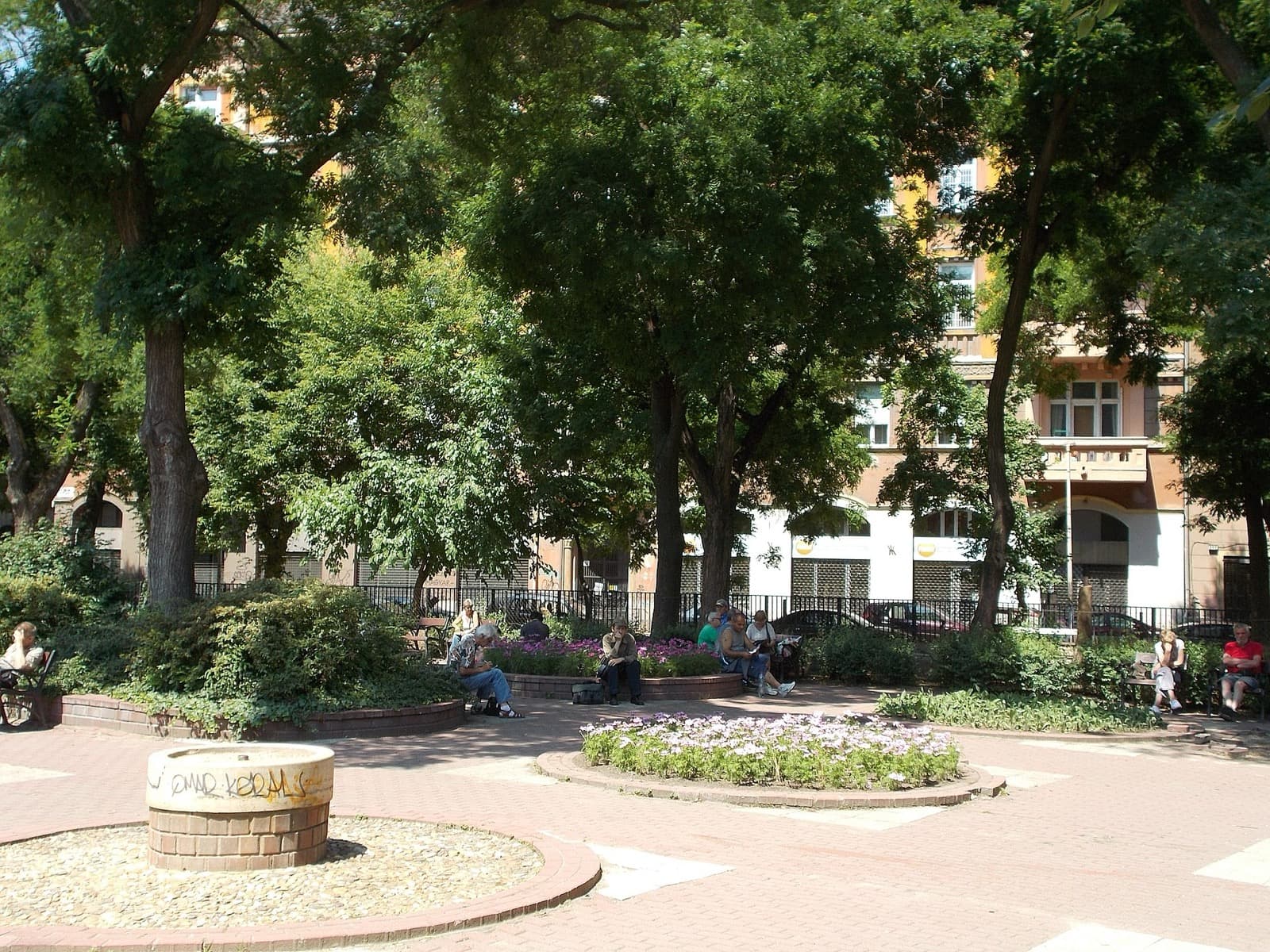
Klauzal ter: The Heart of the Sealed Ghetto
The largest square of the historic Jewish quarter, the effective centre of the sealed Budapest ghetto and the site of its temporary mass graves.
- 5
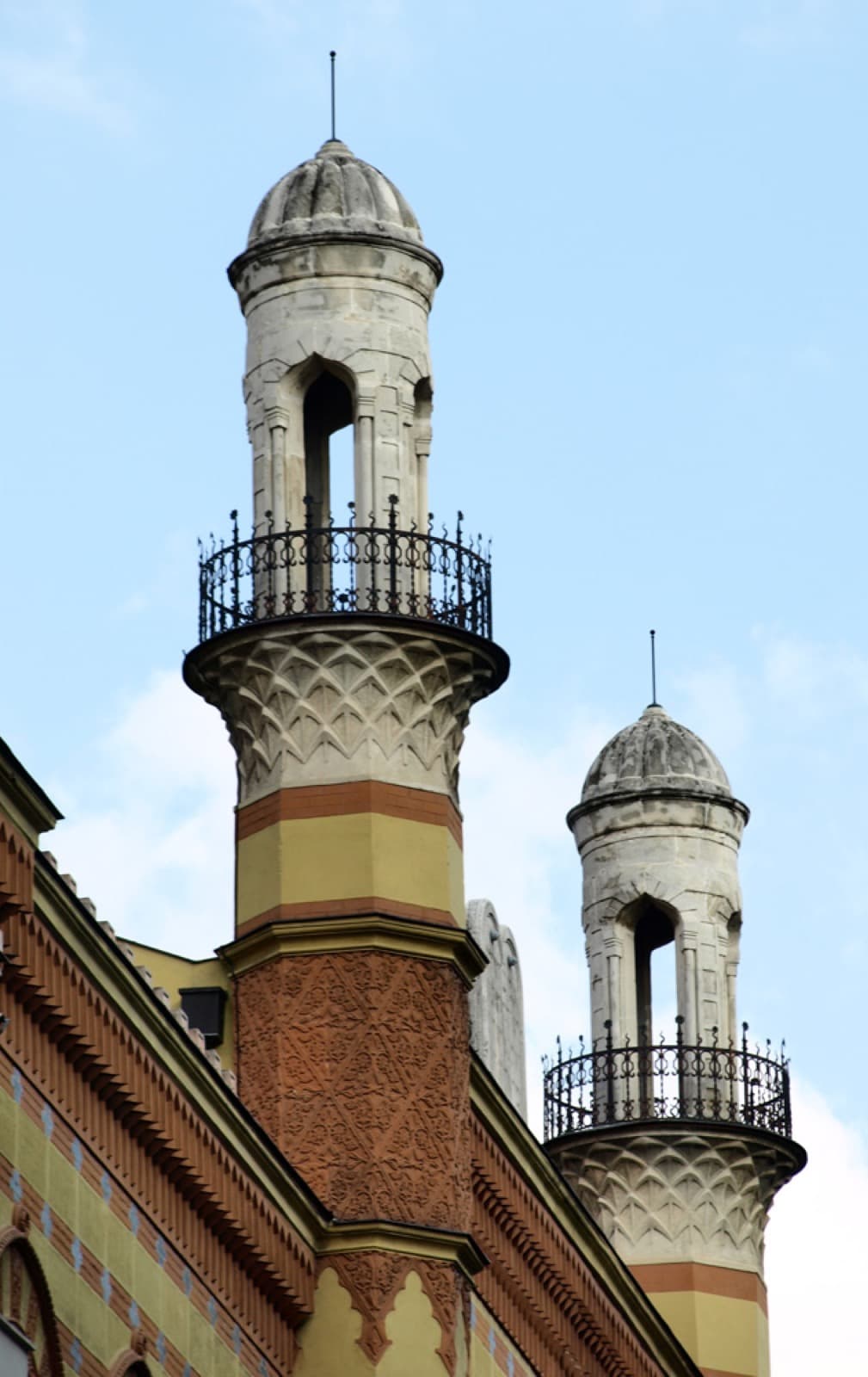
The Rumbach Street Synagogue: A Community's Inner Diversity
An octagonal Moorish Revival synagogue by a young Otto Wagner, built for the third stream of Hungarian Jewry and reopened after decades of decay.
- 6
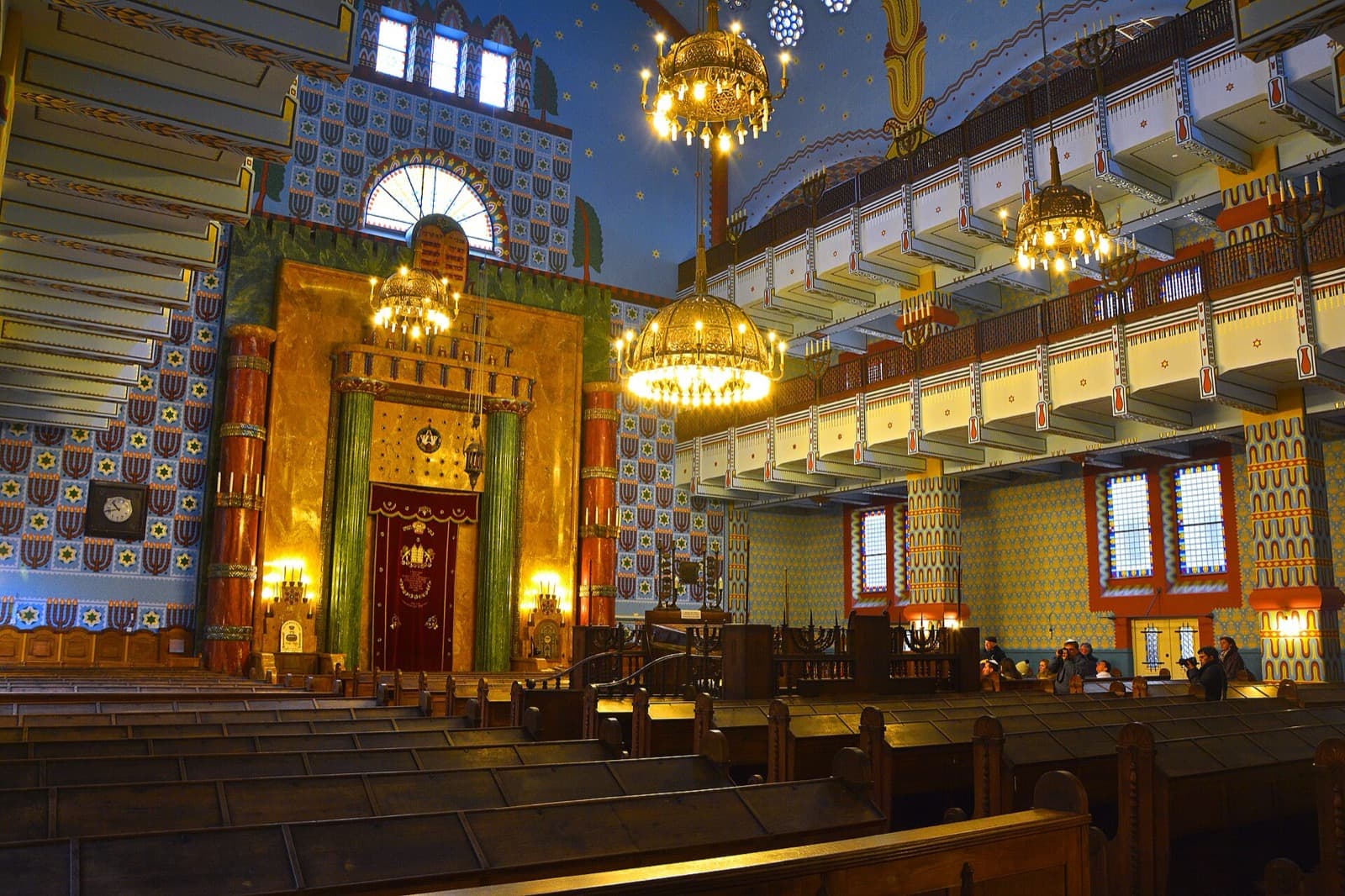
The Kazinczy Street Orthodox Synagogue: The Living Community
The main Orthodox synagogue, a Hungarian Art Nouveau landmark that still anchors a full working complex of prayer house, school, and kosher life.
- 7
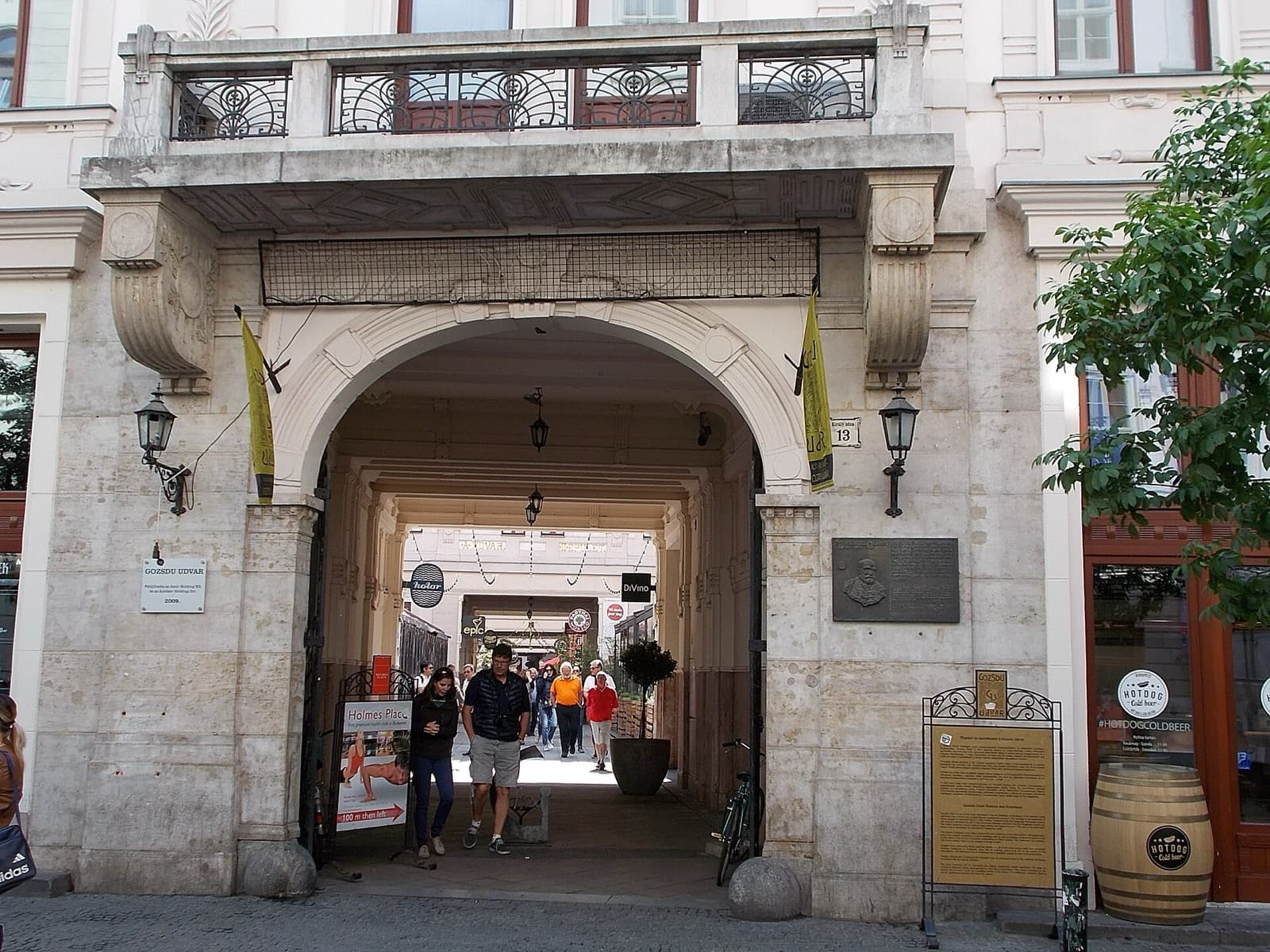
Gozsdu Courtyard: The Everyday Face of Revival
A chain of seven connected courtyards from around nineteen hundred, once derelict, now a lively passage that shows the quarter's everyday rebirth.
- 8
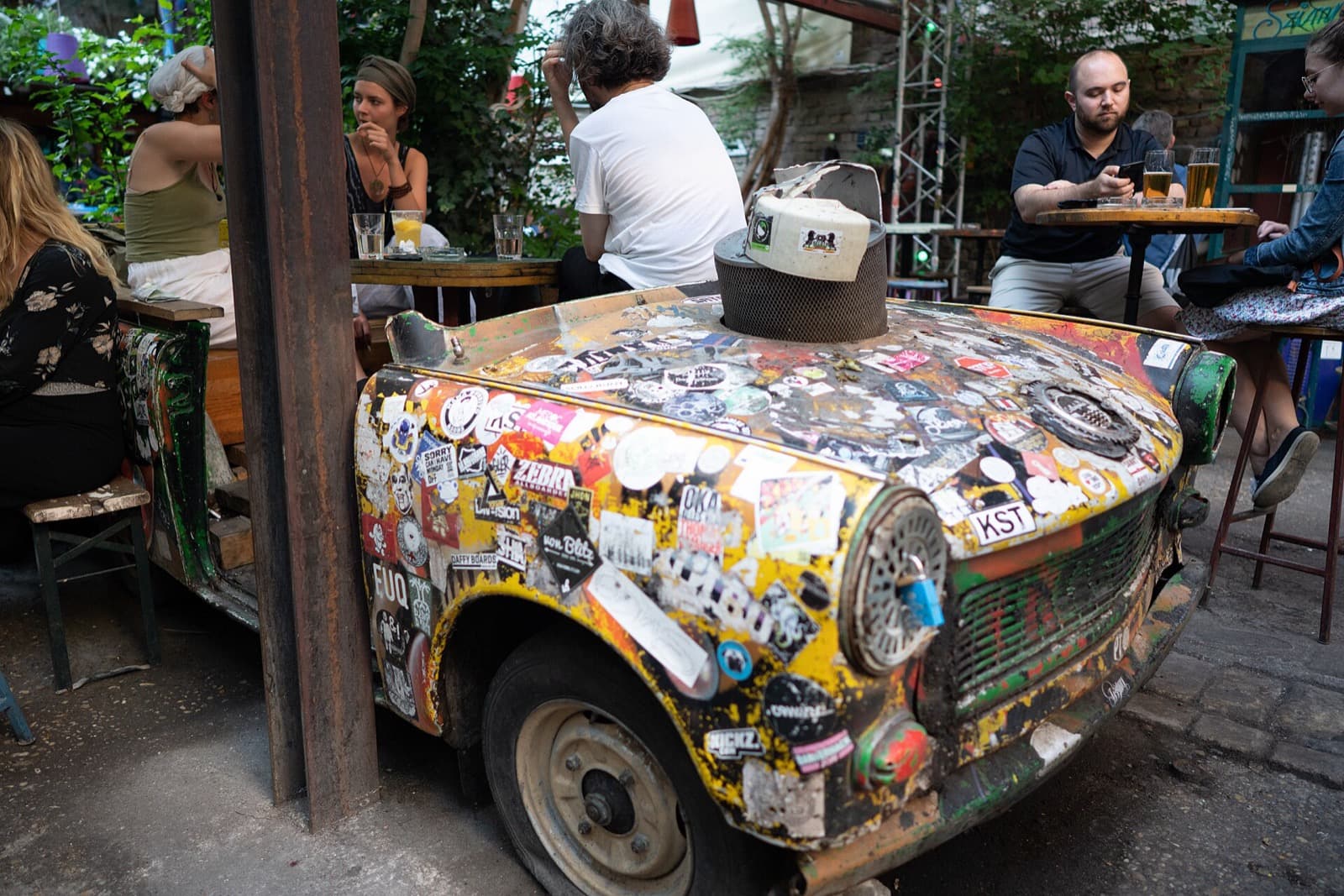
The Ruin-Bar Rebirth: Decay Turned to Renewal
The movement that reoccupied the quarter's condemned buildings as improvised bars, saving them from demolition and turning ruin into renewal.
Details
Best Time to Visit
Late morning to mid-afternoon is best for the synagogues and museums, which keep daytime hours and require tickets. Aim to reach the memorial park and Klauzal ter when they are calm, so you can give them the quiet they deserve. Note that the Great Synagogue complex and most synagogues close on Saturday for the Sabbath and on Jewish holidays, so a weekday or Sunday visit is simplest. If you want to see Gozsdu Courtyard come alive, early evening brings the light and the crowds, though the daytime keeps the courtyards calmer for looking up at the architecture. Spring and autumn offer the most comfortable walking weather.
Pro Tips
- •Buy the combined Dohany Street Synagogue complex ticket once. It covers the synagogue, the Hungarian Jewish Museum, the Heroes' Temple, and the Wallenberg Memorial Park, so the first three stops share a single entry.
- •Dress for a working synagogue before you set out: shoulders and knees covered, and men should carry a hat or cap since head covering is expected inside. This saves you from being turned away or renting a paper kippah.
- •Keep your voice low and your phone away at the Tree of Life and at Klauzal ter. These are burial grounds and places of memory, not photo stops.
- •The quarter is a tight cluster, so there is no single right order once you have done the synagogue complex. Wander between Rumbach, Kazinczy, Gozsdu, and the square as the light and the crowds suit you.
- •Carry Hungarian forint or a contactless card. Many small ticket desks and cafes in the quarter prefer local currency, and the euro is not the everyday money here.
- •Give yourself unhurried time at each memorial and each synagogue rather than rushing all eight. The walk is short enough that lingering costs little.
Safety & Precautions
- •The Great Synagogue, the museums, and the memorials have security screening and paid tickets, and the synagogues enforce modest dress with covered shoulders and knees, plus a covered head for men. Come prepared to be admitted, and expect bag checks.
- •The Wallenberg Memorial Park, the Tree of Life, and Klauzal ter are places of memory standing over ghetto graves. Treat them with quiet and respect, keep children close and calm, and avoid loud conversation or casual photography.
- •The nightlife courtyards, especially Gozsdu Courtyard in the evening, can grow crowded. Watch your bag and phone in the crush, and be aware that these are lively drinking areas after dark.
- •The currency here is the Hungarian forint, not the euro. Confirm prices and have local cash or a card ready, and be cautious of poor exchange rates at street kiosks.
Travel advisory: Exercise Normal Precautions (Level 1).
Gallery
Related Reading
Go deeper on what you'll see, hear, and walk through.

Overview
Best Self-Guided Walking Tours in Budapest (2026)
4 min
Overview
Budapest in One Day: A Walkable Morning-to-Evening Itinerary
8 min
Overview
Budapest Travel Guide: How Many Days, Getting Around, Best Time, Safety, and Budget
6 min
Thematic
Best History Walking Tours in Budapest (2026)
2 min
Thematic
Two Cities Across the Danube: How to Read Budapest on Foot
7 min
Companion
Szimpla Kert and the Ruin Bars: Why Budapest's Party Quarter Is Really a Memorial
6 min
Deep dive
Dohany Street Synagogue: Europe's Largest, and What It Was Built to Say
6 min
Read
What to Eat in Budapest: Dishes, Origins, and How to Order
7 min
Read the walk
The full story of Jewish Quarter: Destruction and Rebirth in Seven Streets, in words. Prefer to listen? Play it narrated, from home or on location.
Introduction
Seven streets in one district of Budapest, in Hungary, carry the whole arc of a community: confident nineteenth-century belonging, the sealed ghetto of the winter of nineteen forty-four to forty-five, and an improbable twenty-first-century rebirth. This is the quarter called Erzsebetvaros, the seventh district, and everything here sits within a few hundred metres. You can hold all of it at your own pace.
This walk has eight stops and covers about three and a half kilometres. Give it about ninety minutes if you linger, less if you keep moving. The stops are short and skippable, so you set the rhythm. Some are grand and observant, at synagogues and courtyards. Others are grave, at a Holocaust memorial and a preserved ghetto square, and they ask for quiet and respect. The paradox is the point: the same buildings now full of music once stood emptied, after the community that filled them was destroyed. You will move from a monument to belonging, through the last act of the Holocaust in Hungary, to a district reborn from its own ruins.
The route is a tight cluster rather than a straight line, so each stop stands on its own and you can wander between them as you like. Wear something that lets you enter a working synagogue with modesty, and remember that the memorials are places of memory. Most of the streets are flat and walkable. The Great Synagogue on Dohany utca, Dohany Street, is where the story opens. When you arrive at the Great Synagogue on Dohany Street, begin with stop one.
1. The Great Synagogue on Dohany Street: A Statement of Belonging
The building in front of you is the largest synagogue in Europe. On Dohany utca, Dohany Street, in the seventh district, it seats close to three thousand people, and its twin onion-domed towers rise more than forty metres over the street. It was built between eighteen fifty-four and eighteen fifty-nine and consecrated on the sixth of September eighteen fifty-nine. The exterior came from the Viennese architect Ludwig Forster, the interior from the Hungarian architect Frigyes Feszl.
The style is Moorish Revival, folded together with Byzantine, Romanesque, and Gothic Revival touches. That choice is worth pausing on. In the middle of the nineteenth century, the Jews of Pest had won emancipation and a place in the growing city, and they built something deliberately grand, deliberately visible, right on a public street. This is a synagogue of the Neolog movement, the reform-leaning branch of Hungarian Judaism, and its architecture speaks of confidence and of belonging. A community that felt it had arrived.
Hold that feeling, because this walk will test it. The same quarter that raised this monument would, within a lifetime, become a sealed ghetto. But at this first stop the note is optimism, not grief. Stand back on the street and take in the scale. The two towers, the rose window, the striped facade in yellow and red brick. It was made to be seen and to be proud.
If you go inside, this is a working synagogue, so modest dress and a quiet manner are expected, and men are usually asked to cover their heads. From the street the view is free, and the facade alone carries the message the builders intended.
2. The Jewish Museum and the Heroes' Temple: A Confident, Patriotic Community
Adjoining the Great Synagogue is the Hungarian Jewish Museum and Archives, built in nineteen thirty in the same architectural language and attached to the main building the following year. It stands on ground with a particular history. On this plot once stood a two-story Classicist house next to the synagogue, and in that house, on the second of May eighteen sixty, Theodor Herzl was born. Herzl would become the founder of modern political Zionism. In his own words, he was born in Budapest in a house next to the synagogue.
Inside, the museum keeps the religious and historical collection of the Pest Jewish Burial Society, ritual objects for the Sabbath and the High Holidays, and a room devoted to the Holocaust. It is a heritage institution, gathering the memory of the community into one place.
Beside it stands the Heroes' Temple, a smaller synagogue added in nineteen thirty-one, seating around two hundred and fifty. It was raised as a memorial to the Hungarian Jews who died fighting for Hungary in the First World War. That dedication tells you something essential about this quarter before the catastrophe. These were people who saw themselves as fully Hungarian, who had sent their sons to the country's wars and buried them as patriots.
That is the note to carry from here. A confident, emancipated, patriotic community, at home in its city and its nation. The museum and the memorial temple were built in the nineteen thirties, in the last years before everything changed. If you enter, treat both as the places of worship and remembrance they are, with quiet and modest dress, and let the ordinary confidence of these walls register before the walk turns darker.
3. The Wallenberg Memorial Park and the Tree of Life
Behind the Great Synagogue lies a courtyard given over to memory: the Raoul Wallenberg Holocaust Memorial Park. At its centre is a sculpture you will not forget, a metal weeping willow known as the Tree of Life, or the Emanuel Tree. It was made by the Hungarian sculptor Imre Varga and unveiled in nineteen ninety-one. Each of its metal leaves is inscribed with the name of a Holocaust victim, so that the whole tree becomes a canopy of names.
The American actor Tony Curtis funded it in memory of his Hungarian-born father, Emanuel, which is why it also carries the name the Emanuel Tree. Stand quietly here, because this ground is a grave. The tree rises over the mass graves of those who died in the ghetto in the winter of nineteen forty-four to forty-five, and the nearby complex holds the graves of more than two thousand people who died during that ghetto.
The park also honours the rescuers. Memorial stones remember Raoul Wallenberg, the Swedish diplomat who issued protective papers and set up safe houses, and Carl Lutz, the Swiss vice-consul who placed tens of thousands of Budapest Jews under Swiss protection with his certificates. The United States Holocaust Memorial Museum records their work. Both are recognised by Yad Vashem as Righteous Among the Nations.
There is no way to soften what this place holds, and it should not be softened. What the memorial does is keep two things together: the scale of the loss, in the leaves and in the graves beneath your feet, and the fact that some people chose to save lives at real risk. Move through it slowly, and keep your voice low. This is a place of mourning, not a photo stop.
4. Klauzal ter: The Heart of the Sealed Ghetto
This is the gravest stop on the walk. Klauzal ter, Klauzal Square, is the largest square in the historic Jewish quarter, and in the winter of nineteen forty-four to forty-five it was the effective centre of the sealed Budapest ghetto. The order to create the ghetto came on the…
Full narration for this stop unlocks with the tour.
5. The Rumbach Street Synagogue: A Community's Inner Diversity
On Rumbach Sebestyen utca, Rumbach Sebestyen Street, stands an octagonal, domed synagogue in Moorish Revival style, its eight-sided sanctuary drawn from the Islamic architecture that inspired the whole style, from the Alhambra in Spain to the domed monuments of the wider Islamic…
Full narration for this stop unlocks with the tour.
6. The Kazinczy Street Orthodox Synagogue: The Living Community
On Kazinczy utca, Kazinczy Street, is the main synagogue of the Orthodox community, and unlike some stops on this walk, it is not a museum piece. It is alive. Built between nineteen twelve and nineteen thirteen by the Loffler brothers, Bela and Sandor Loffler, it is a striking…
Full narration for this stop unlocks with the tour.
7. Gozsdu Courtyard: The Everyday Face of Revival
Gozsdu udvar, Gozsdu Courtyard, is a passage unlike any other in the quarter: a chain of seven connected buildings and their inner courtyards, strung together into a walkway that runs a couple of hundred metres and links Kiraly utca, Kiraly Street, with Dob utca, Dob Street.…
Full narration for this stop unlocks with the tour.
8. The Ruin-Bar Rebirth: Decay Turned to Renewal
The last stop is less a single building than a phenomenon that reoccupied this whole quarter. The ruin-bar movement, romkocsma in Hungarian, began in the early two thousands in the emptied, dilapidated pre-war buildings and courtyards of the old Jewish quarter. In the decades…
Full narration for this stop unlocks with the tour.