The White City: A Fortress Everyone Had to Have
105 min · 4.3 km · moderate
Belgrade overwrites rather than erases. The white city on the confluence has been fought over and rebuilt more than forty times, and instead of clearing the wreckage, each conqueror built on top of the last: Celts, Romans, medieval Serbs, Ottomans, Habsburgs, and then a socialist federation and the state that outlived it. Three Roamer walking tours read this one habit from three angles. An imperial fortress at the meeting of two rivers stacks empire on empire in the same walls. A museum campus on a quiet hill still tends the grave of a country that no longer exists. And a downtown ridge leaves its newest scars, the ruins of 1999, standing on purpose. Put together, they describe a capital that turned erasure into a construction method and kept the receipts.
The fortress that everyone had to have
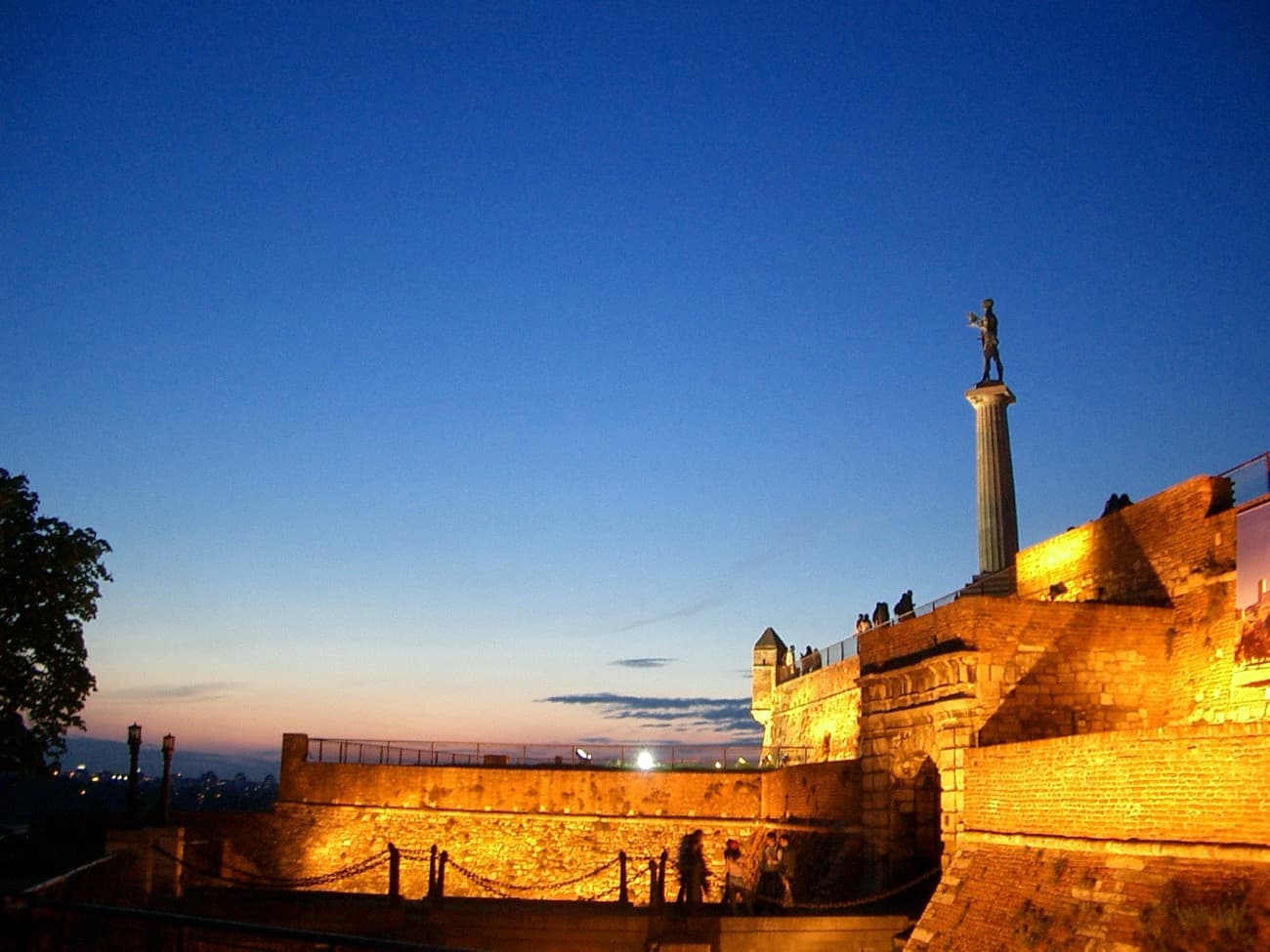
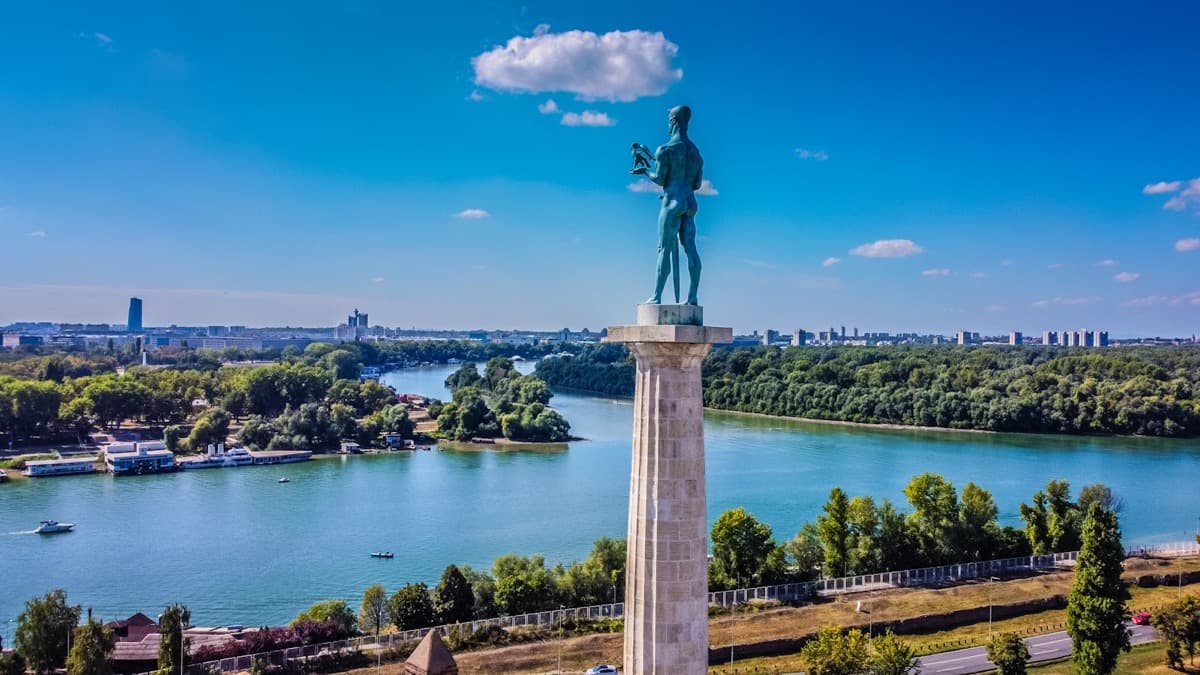
The whole story starts with geography. Belgrade sits on a single commanding ridge above the point where the Sava River pours into the Danube. Hold that hill and you hold the door between central Europe and the Balkans, control the crossing, and tax the trade. Take the confluence away and Belgrade is just another hill. That is why it was besieged and rebuilt more than forty times, and why nobody who took it ever started fresh.
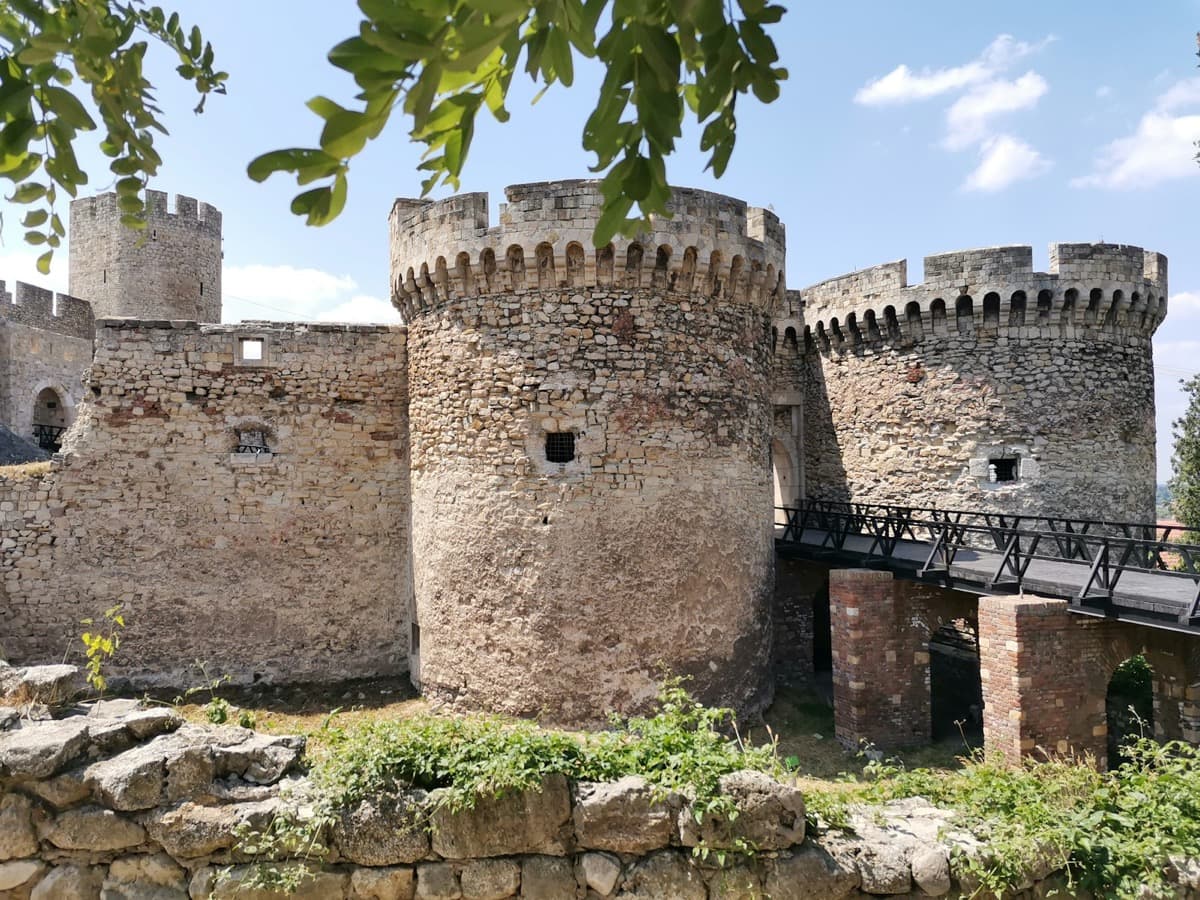
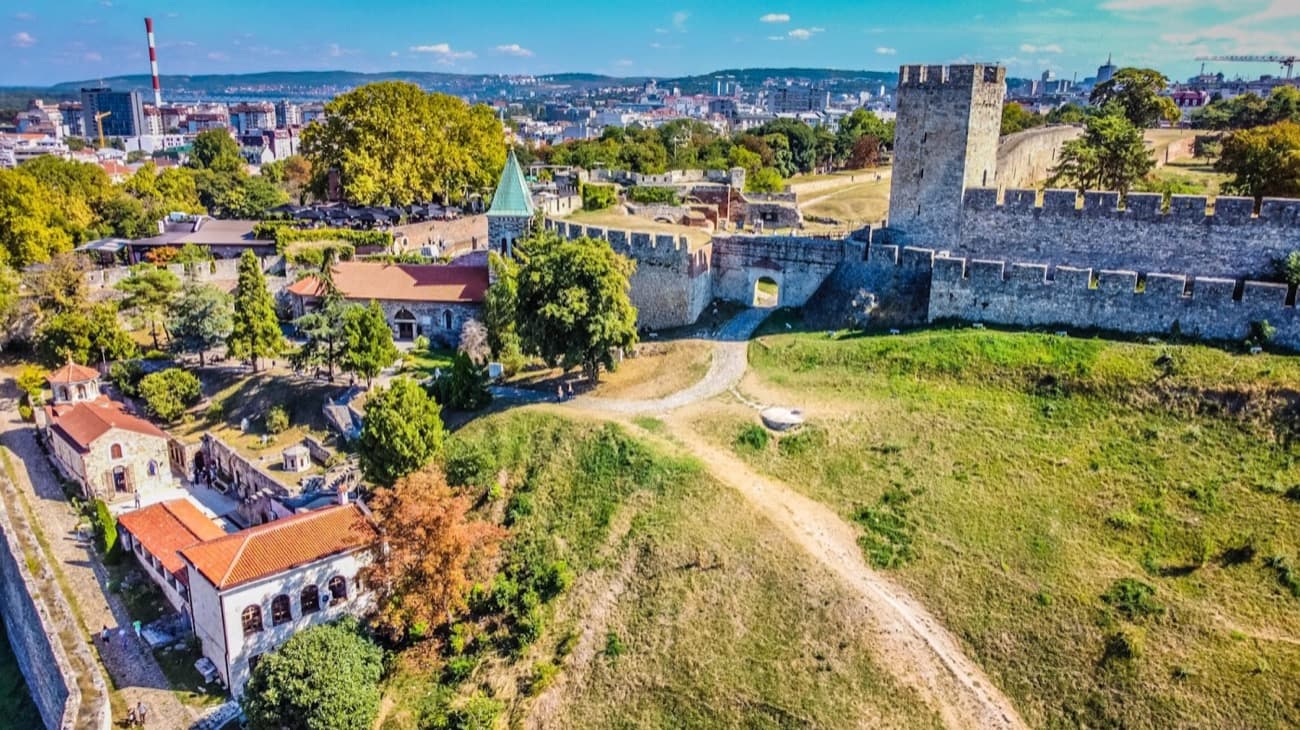
The White City fortress walk reads Kalemegdan as stacked stone. In the Upper Town, Roman, medieval Serbian, Ottoman, and Austrian walls all touch in a single view. The Celtic Scordisci fortified this ground in the third century before the common era. Rome took the area in seventy-five before the common era, and the Fourth Flavian Legion arrived in eighty-six of the common era to build a square castrum whose footprint still underlies the hill. On top of the Roman course sits medieval work: in fourteen oh three, Despot Stefan Lazarevic made Belgrade the capital of medieval Serbia and rebuilt the ramparts, a reconstruction his chronicler Constantine the Philosopher recorded, describing a city that had been "destroyed and neglected." Then came the Ottomans, who held the city from fifteen twenty-one to eighteen sixty-seven, and the Habsburgs, whose engineers reshaped the defenses in the seventeen hundreds and raised the baroque Inner Stambol Gate you still enter through today.
Nowhere is the overwriting more literal than inside Ruzica Church. The building began as an Austrian gunpowder magazine, was reconstructed as a Serbian Orthodox church after the Ottomans left, and was consecrated in nineteen twenty-five. Its chandeliers, candelabra, and metal icons were cast at the Military Technical Institute in Kragujevac from melted rifle and pistol bullets, spent shell casings, and sabres. A city that turned erasure into a method turned its weapons into light. That is scar tissue you can see hanging from the ceiling.
The grave of a country that is gone
Hear a stop from this walk
The Inner Stambol Gate: The Newest Conqueror's Front Door
If the fortress shows Belgrade absorbing empires, the second walk shows it holding on to one after the fact. On the elite Dedinje hill, the Museum of Yugoslavia keeps the tomb of Josip Broz Tito and the physical remains of the state he led, a state that dissolved decades ago.
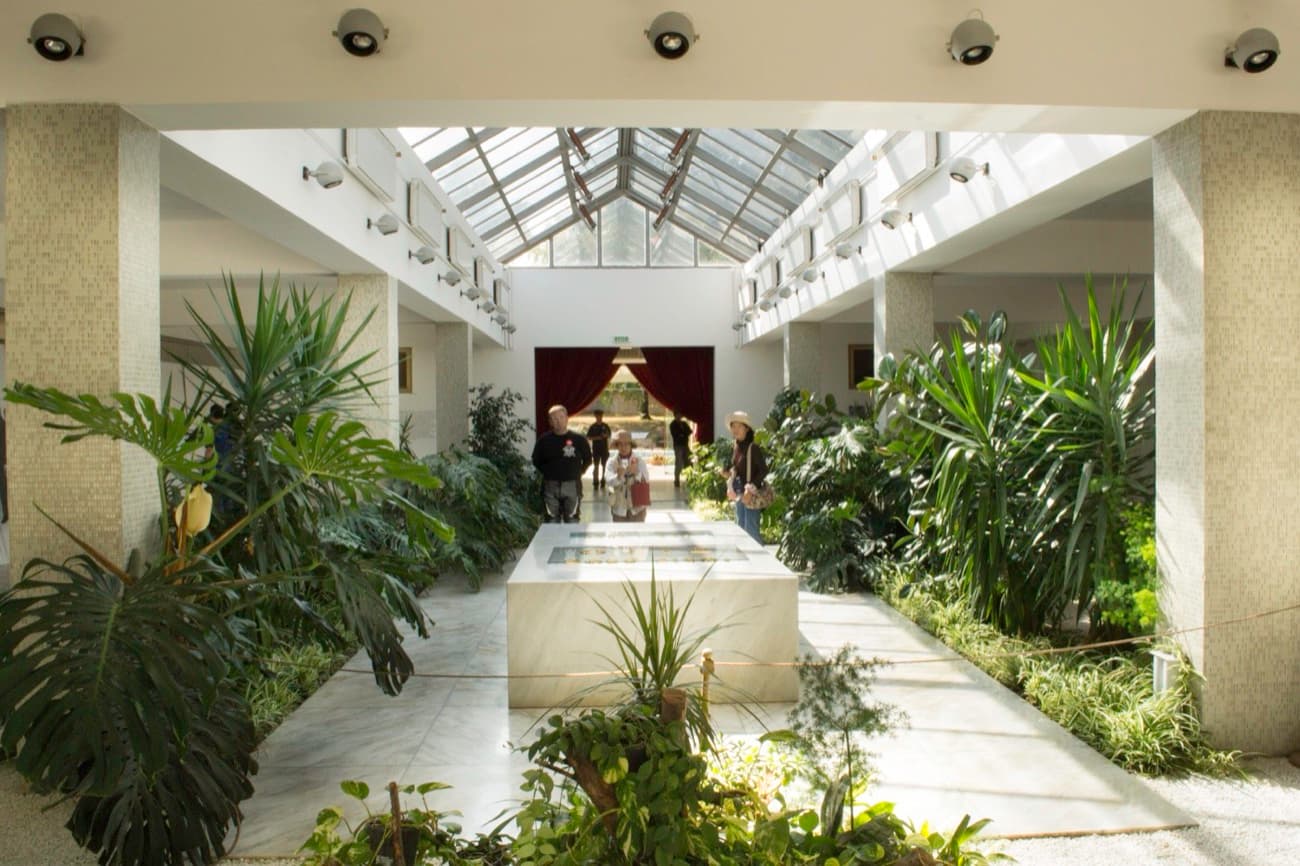
The Tito's Yugoslavia walk reads those remains without mourning or condemning them. The House of Flowers was raised in nineteen seventy-five as a winter garden, designed by architect Stjepan Kralj, and became a mausoleum only when Tito, born in eighteen ninety-two, died on the fourth of May nineteen eighty. The funeral measures the reach of the man: delegations came from one hundred and twenty-eight of the then one hundred and fifty-four member states of the United Nations, and among the mourners were four kings, six princes, twenty-two prime ministers, thirty-one presidents, and forty-seven foreign ministers. Leaders from both sides of the Cold War stood in the same garden, then went home. Today a man who commanded that funeral rests under a plain white slab.
The campus reads the machinery around the man, too. The Twenty-fifth of May Museum was built by the City of Belgrade as a seventieth-birthday gift to Tito and filled with the presents of state he had received, a museum given as a gift, to house gifts. The relay batons of the Day of Youth carried an annual birthday pledge across the country, a ritual first run in nineteen forty-five that outlived its subject, continuing until the final relay in nineteen eighty-eight. And the diplomatic gifts trace Yugoslavia's most outward-facing ambition: the first Non-Aligned Movement summit, held in Belgrade from the first to the sixth of September nineteen sixty-one, chaired by Tito and joined by Nasser, Nehru, Sukarno, and Nkrumah. The honest question the walk leaves standing is the whole point. The tomb is still visited. The country is not. Both remain true.
A downtown that leaves its scars standing
The third walk brings the overwriting into the present and refuses to smooth it over. It runs down a single downtown ridge where five states stacked on top of each other, and where the newest layer is a preserved ruin.
The Downtown Belgrade walk descends in elevation and in time. It starts high on Terazije, at the empire-and-money layer, where Hotel Moskva opened in nineteen oh eight as a Russian imperial investment. It drops through Republic Square, where the bronze Prince Mihailo, raised in eighteen eighty-two, marks the eighteen sixty-seven withdrawal of the last Ottoman garrison and the handover of the fortress keys. It passes Saint Mark's Church, a nineteen-thirties building deliberately modelled on the medieval Gracanica Monastery in Kosovo, standing in a park built over Roman-era quarries. Roman stone underfoot, a medieval echo in the architecture, a modern grid bending the church ten degrees to fit.
Then the ridge goes quiet. In Tasmajdan park, a stone carries a single carved word, "Zasto," meaning "Why," raised by the families of the sixteen employees of Radio Television of Serbia killed when the broadcaster's headquarters was struck at two oh six in the morning on the twenty-third of April, nineteen ninety-nine. The walk names the competing accounts of responsibility rather than settling them. The final stop is the former General Staff building, a masterpiece of Yugoslav modernism designed by Nikola Dobrovic, its two tracts leaning across Nemanjina Street to evoke the canyon of the Sutjeska river. It was struck during the nineteen ninety-nine bombing and has stood derelict ever since, protected as a cultural monument and a memorial since two thousand five. Here the overwriting habit inverts. A city that usually builds over its wounds has chosen, for once, to leave one open.
One city, three readings
Read together on the Belgrade walking tours hub, the three walks make one argument. The fortress shows a city absorbing every empire that wanted it, the same non-negotiable ridge rebuilt again and again. The Dedinje campus shows a state that vanished but whose grave is still tended. The downtown ridge shows the newest layers, some overwritten in stone and light, one deliberately preserved as a ruin. The white city does not forget by clearing the ground. It builds a new thing on the old and lets the seam show, which is exactly why walking it slowly, at your own pace, tells you more than any single monument can.
Sources
- Museum of Yugoslavia, official site and collection history (Twenty-fifth of May Museum, House of Flowers, Non-Aligned Movement collection).
- Belgrade Fortress (Kalemegdan) heritage documentation, Public Enterprise "Beogradska tvrdjava," on the layered Roman, medieval, Ottoman, and Austrian fortifications.
- ICTY, Final Report to the Prosecutor on the NATO Bombing Campaign Against the Federal Republic of Yugoslavia, on the RTS strike of the twenty-third of April, nineteen ninety-nine.
- Institute for the Protection of Cultural Monuments of the City of Belgrade, records on the General Staff building (Generalstab) and Terazije as protected cultural-historical units.
- Roamer tour transcripts for the three Belgrade walks (fortress, Tito's Yugoslavia, downtown), fact-audited source content.
Frequently asked questions
- Why is Belgrade called the White City?
- The name Beograd means white city in Serbian. The city sits on a commanding white limestone ridge above the point where the Sava River flows into the Danube. That confluence made the hill the strategic door between central Europe and the Balkans, which is why it was fought over and rebuilt more than forty times.
- How many empires have controlled Belgrade Fortress?
- Kalemegdan carries stacked layers from the Celtic Scordisci, Rome, medieval Serbia under Despot Stefan Lazarevic, the Ottomans, and the Habsburg Austrians. The Fourth Flavian Legion built a Roman castrum here starting around the turn of the second century, the Ottomans held the city from fifteen twenty-one to eighteen sixty-seven, and the Austrians rebuilt the defenses in the modern bastioned style in the early seventeen hundreds. Each rebuilt on the wreckage of the last on the same ridge.
- Is Tito still buried in Belgrade?
- Yes. Josip Broz Tito, who died on the fourth of May nineteen eighty, is buried in the House of Flowers on the Dedinje hill, part of the Museum of Yugoslavia campus. His wife Jovanka Broz was buried beside him in twenty thirteen. The tomb is still tended and visited by people from across the former Yugoslav republics, even though the country itself dissolved between nineteen ninety-one and nineteen ninety-two.
- What is the Why memorial in Belgrade?
- The Why memorial, inscribed with the single Serbian word Zasto, stands in Tasmajdan park. It was raised by the families of the sixteen Radio Television of Serbia employees killed when the state broadcaster's headquarters was struck at two oh six in the morning on the twenty-third of April, nineteen ninety-nine, during the NATO bombing. It lists each person's name, age, and job description.
- Which Belgrade walking tour should I start with?
- For the deep-time story, start with the White City fortress walk at Kalemegdan, which reads Roman, medieval, Ottoman, and Austrian stone in one place. For the twentieth century, the Tito's Yugoslavia walk on Dedinje reads a vanished state through its museum campus. The Downtown Belgrade walk descends a single ridge across five regimes and ends at the preserved ruins of 1999.
Ready to experience it?
The White City: A Fortress Everyone Had to Have
105 min · 4.3 km · moderate
More from Belgrade
Explore more at your own pace.
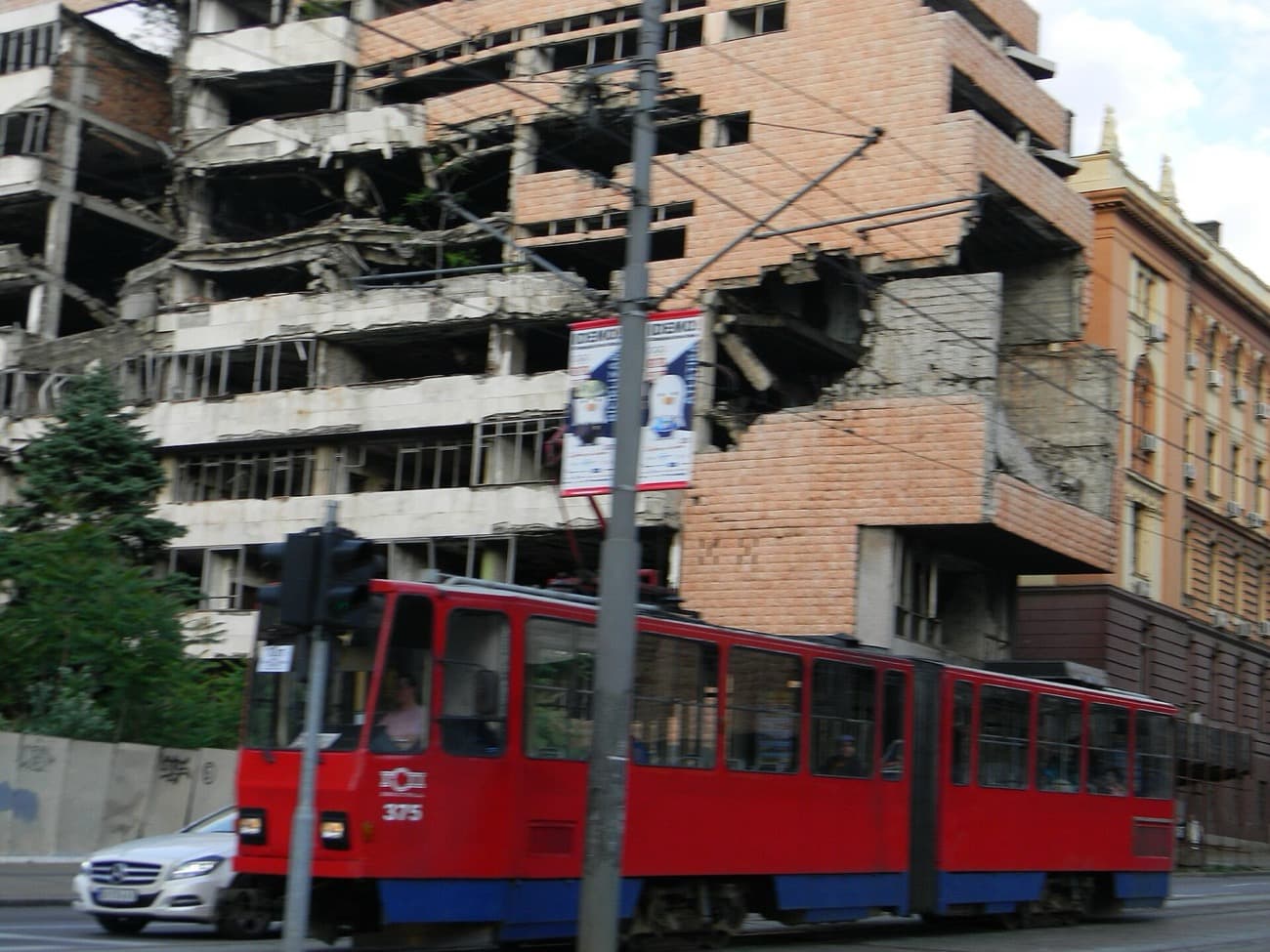
The Bombed Generalstab: How One Belgrade Ruin Holds the Whole Downtown
The House of Flowers: Why Belgrade Still Keeps Tito's Grave
The Stacked Stone of Kalemegdan: Reading Belgrade's Layered Fortifications
Skadarlija: Reading Belgrade's Bohemian Quarter, Cobblestone by Cobblestone
The Museum of Yugoslavia Entrance: Where Belgrade Still Tends a Vanished Country's Grave