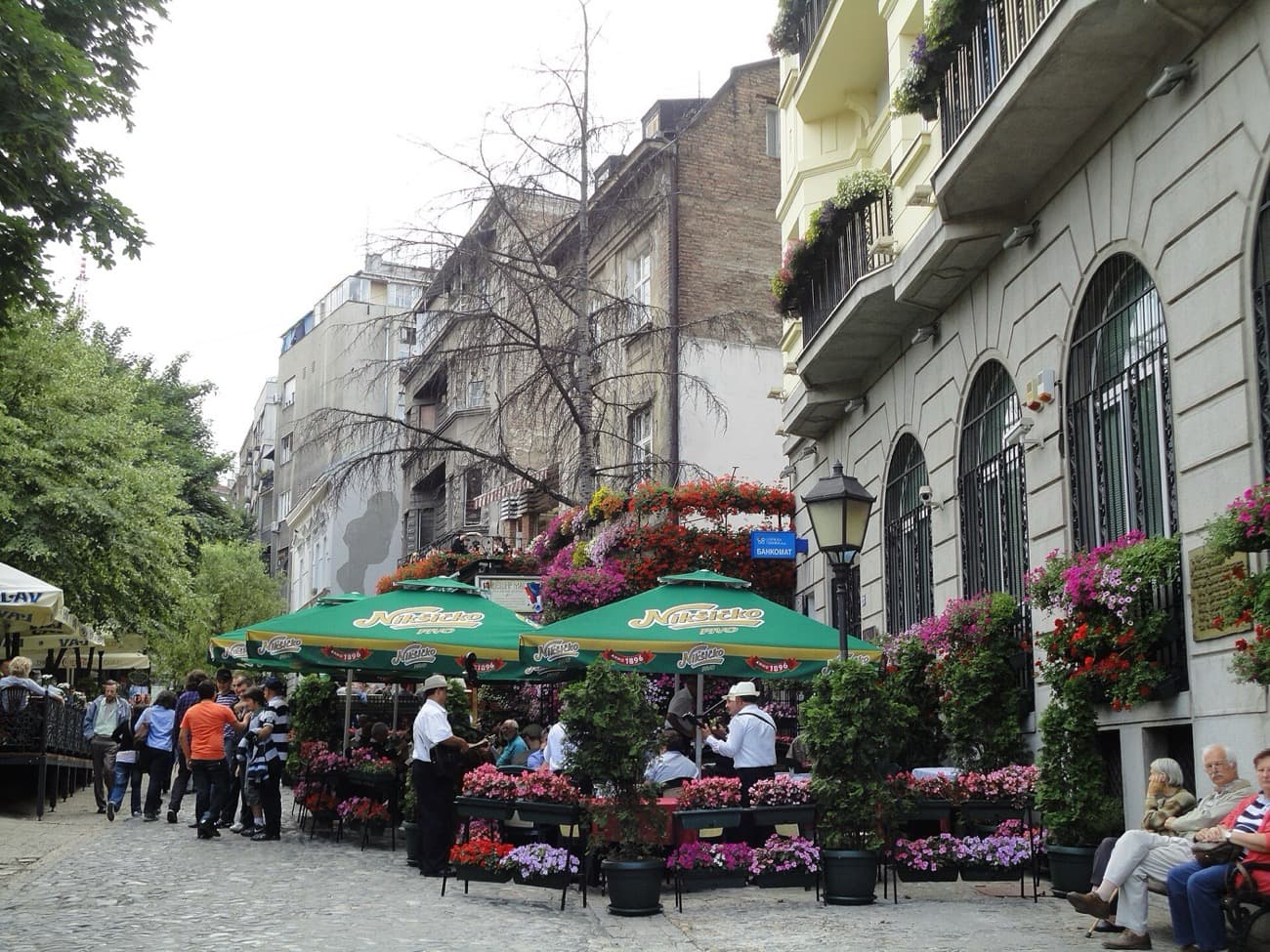
Skadarlija is a short cobbled street in downtown Belgrade that became the city's bohemian quarter, and its central fact is continuity: while regimes overwrote the squares and boulevards around it, this lane kept its name, kept its taverns, and kept its shape. Stand at the top of Skadarska Street and you are looking at one of the rare pieces of the capital that no passing state bothered to rename. That is the one thing to understand here. Belgrade is a city that overwrites rather than erases, and Skadarlija is where the overwriting stopped.
A street that outlasted its rulers
The heart of the quarter is Skadarska Street, a cobbled lane under four hundred metres long that runs a short way northwest of Terazije. It is one of only twenty-nine streets in Belgrade to have kept its name continuously since 1872, when the city's streets were first formally named. That number matters more than it first appears. Over the century and a half that followed, the ground under Belgrade changed hands and changed ideologies repeatedly: an Ottoman frontier gave way to a royal Serbian capital, then to a socialist federal one, then to the present republic. Each of those states liked to rename things, to press its own memory onto the street grid. Skadarska simply held its name through all of it.
So when you walk the cobblestones, you are not walking a reconstruction or a themed district. You are walking a specific piece of urban fabric that has carried the same address longer than most of the buildings you can see from it. In a downtown where the newest historical layer is a bombed ministry left standing as a deliberate ruin, a street that quietly kept its identity for a hundred and fifty years is its own kind of monument.
How a settlement became bohemia
Hear a stop from this walk
The RTS Building and the Why Memorial
Skadarlija did not start as an artists' quarter. It grew from a modest early settlement and turned into the city's bohemian heart over the closing decades of the nineteenth century. The institution that made it what it is was the kafana, the traditional Serbian tavern where people gathered for food, drink, music, and long argument. The kafana is the point of Skadarlija, not any single address. One of the oldest, founded in 1864, still carries the name Tri sesira, which means Three Hats, and it remains the oldest operating kafana on the lane. That a tavern founded in the eighteen sixties is still open on the same street tells you how stubbornly the quarter has held its function.
The artistic reputation deepened at a specific moment. After 1901, writers and actors relocated here following the demolition of the old Dardaneli inn, which had stood where the National Museum sits today on Republic Square. When their gathering place was torn down, the displaced intellectuals did not scatter. They moved a few minutes north and made Skadarlija their new home, and the quarter absorbed a literary and theatrical crowd that gave it its lasting character. The poet Djura Jaksic, who lived and died here, is among the figures the neighbourhood still remembers, and his house has since become a meeting place. This is worth holding onto: Skadarlija's bohemia was not designed. It arrived as people displaced by a demolition, and the street took them in.
Protected on purpose, and proud of it
The quarter's identity was eventually formalized. Skadarlija has been protected by law as a cultural and historical unit since 1967, which meant that instead of being redeveloped, it was deliberately kept as a living district. Then, on 22 October 1977, it was formally twinned with Montmartre, the bohemian quarter of Paris. That twinning tells you exactly how Skadarlija likes to see itself. It is a claim, made official, that this short cobbled lane belongs in the same sentence as the hillside where the Parisian painters gathered.
You can be a little skeptical of the comparison and still find it useful. Montmartre and Skadarlija are both places that turned an artistic past into a present-day identity, and both run the risk of becoming a performance of themselves. What keeps Skadarlija honest is the physical street: the cobblestones are real and steep, the lantern light is genuinely part of the evening, and the kafanas still serve the function they served when the writers first arrived. The twinning is a badge. The atmosphere is not manufactured for it.
What to notice when you are standing there
Skadarlija asks nothing of a visitor except attention. There is no ticket, no interior to tour, no single landmark to photograph and leave. The correct way to experience it is to slow down. Look at the surface under your feet first: the cobblestones are the oldest continuous thing here, older than the taverns' current signage, and they define the lane's steepness and its pace. Then notice the scale. Under four hundred metres is not long, which is precisely why the quarter feels dense with atmosphere rather than spread thin. Everything the street is famous for happens within a few minutes' walk.
Come in the late afternoon into early evening if you can. The lanterns come alive as the day cools, and the quarter shifts from a quiet cobbled slope into the gathering place it has always been. Wear proper shoes: Skadarska Street is steep and uneven, and the stones are unforgiving in smooth soles. And resist the urge to treat any one kafana as the destination. The tavern culture, not a particular tavern, is what carried this neighbourhood across the century.
Skadarlija sits about a third of the way through a downtown walk that reads Belgrade like layered strata, from the empire-and-money plateau of Terazije down to the ministries left as ruins after the 1999 bombing. On that walk, Skadarlija is the breath between the founding gestures of the modern state and the harder stops that follow. It is the one place on the ridge that simply persisted, keeping its name and its function while everything around it was renamed and rebuilt.
To walk it in sequence, with the founding square before it and the parliament and memorials after, take the self-guided Downtown Belgrade: Empire to Aftermath audio tour, which includes Skadarlija as its third stop. For more routes across the city, browse our Belgrade walking tours.
Sources
- Skadarlija, Wikipedia. Encyclopedia entry documenting the street's name continuity since 1872, its length under four hundred metres, the 1864 founding of Tri sesira, the 1901 Dardaneli displacement, Djura Jaksic, the 1967 protection, and the 1977 Montmartre twinning.
- Roamer tour transcript, "Downtown Belgrade: Empire to Aftermath" (Skadarlija stop). Primary source for the kafana history and the quarter's place in the downtown ridge walk.
- Tourist Organization of Belgrade. Official city tourism material on Skadarlija and its bohemian heritage.
- General Staff Building (former Yugoslav Ministry of Defence), Wikipedia. Documents the 1999 NATO bombing that left the downtown ministries standing as ruins.
Ready to experience it?
Downtown Belgrade: Empire to Aftermath
95 min · 3.4 km · moderate
More from Belgrade
Explore more at your own pace.
Belgrade Travel Guide: How Many Days, Getting Around, Safety and Budget
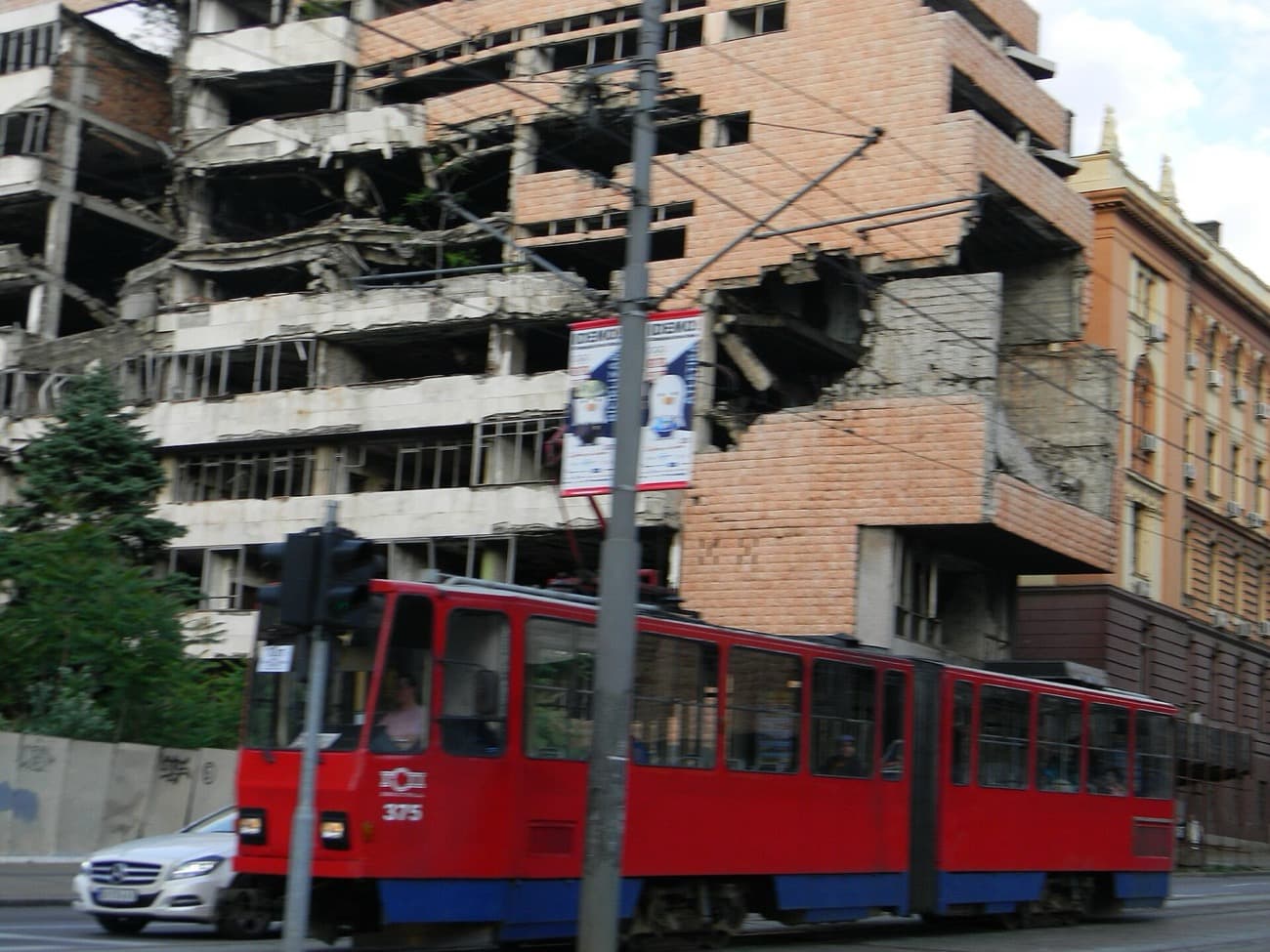
The Bombed Generalstab: How One Belgrade Ruin Holds the Whole Downtown
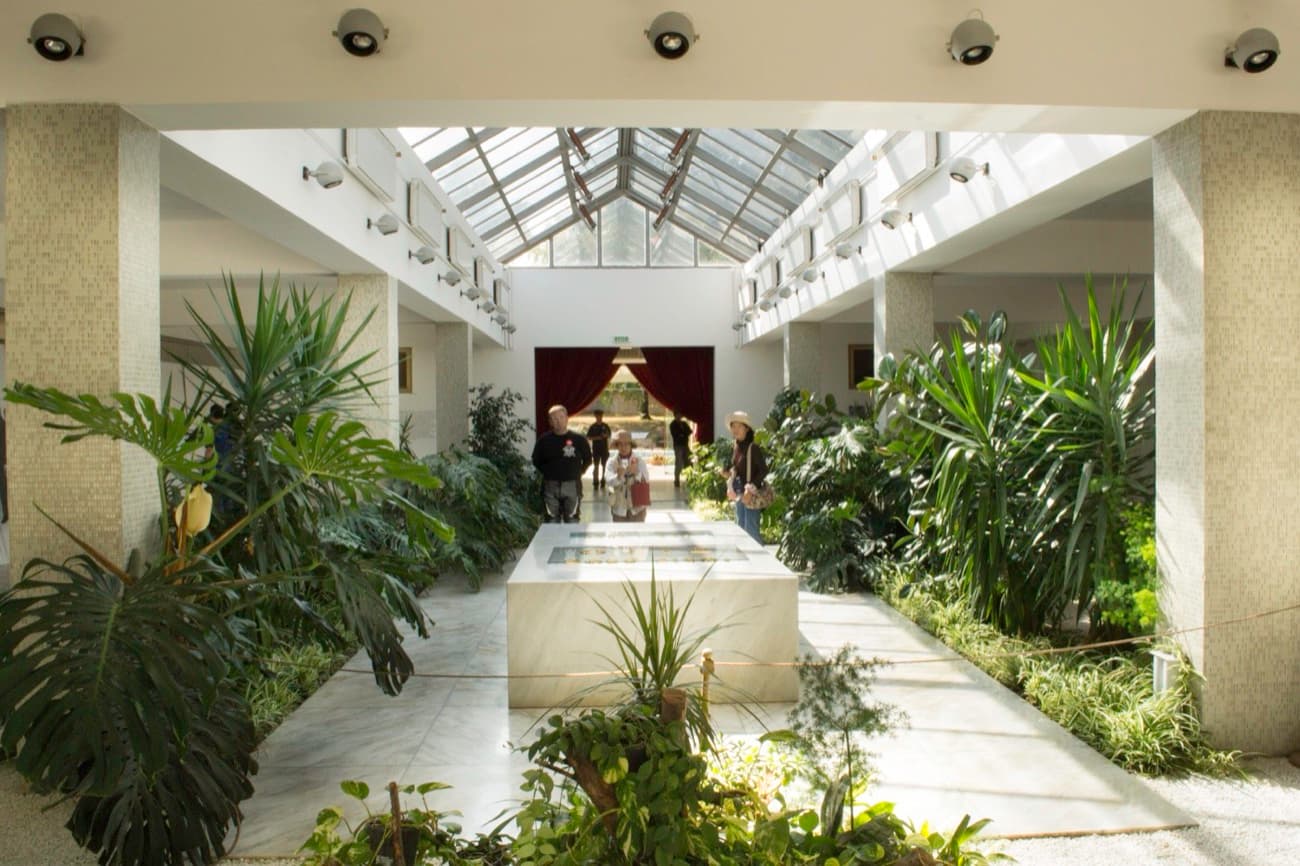
The House of Flowers: Why Belgrade Still Keeps Tito's Grave
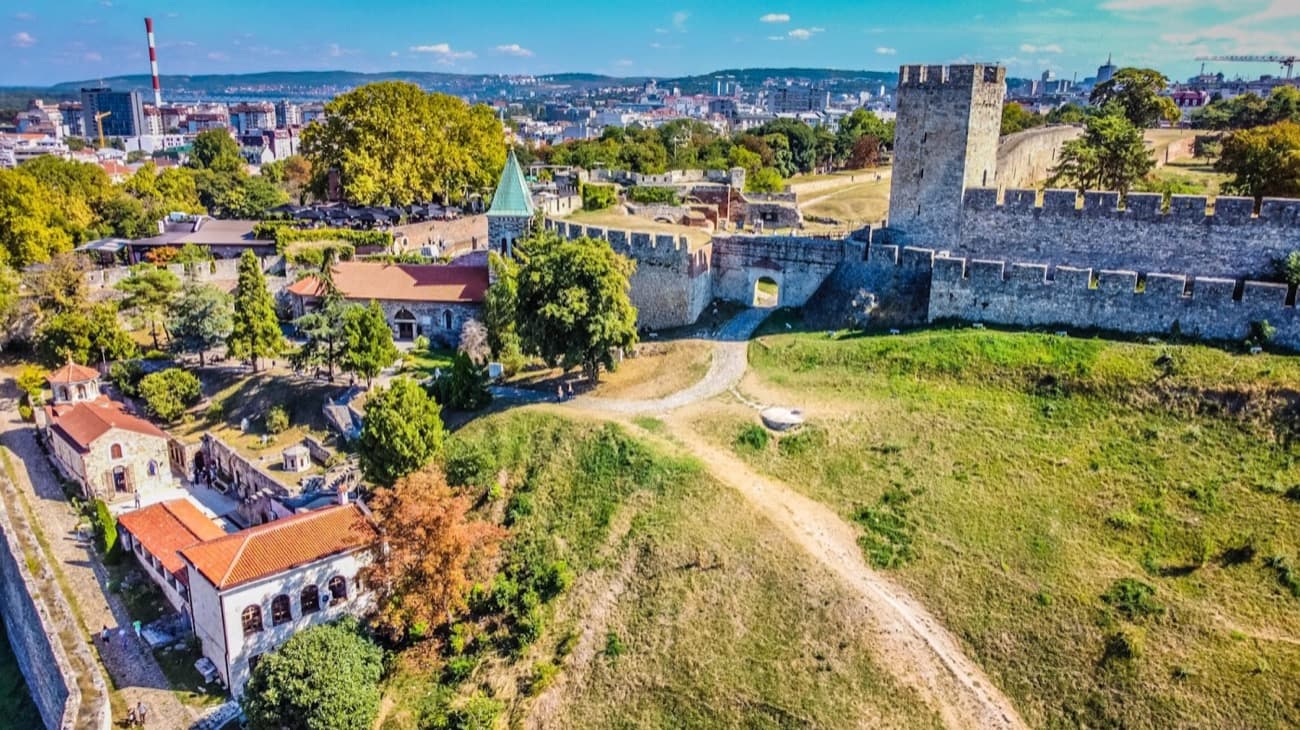
The Stacked Stone of Kalemegdan: Reading Belgrade's Layered Fortifications
The Museum of Yugoslavia Entrance: Where Belgrade Still Tends a Vanished Country's Grave