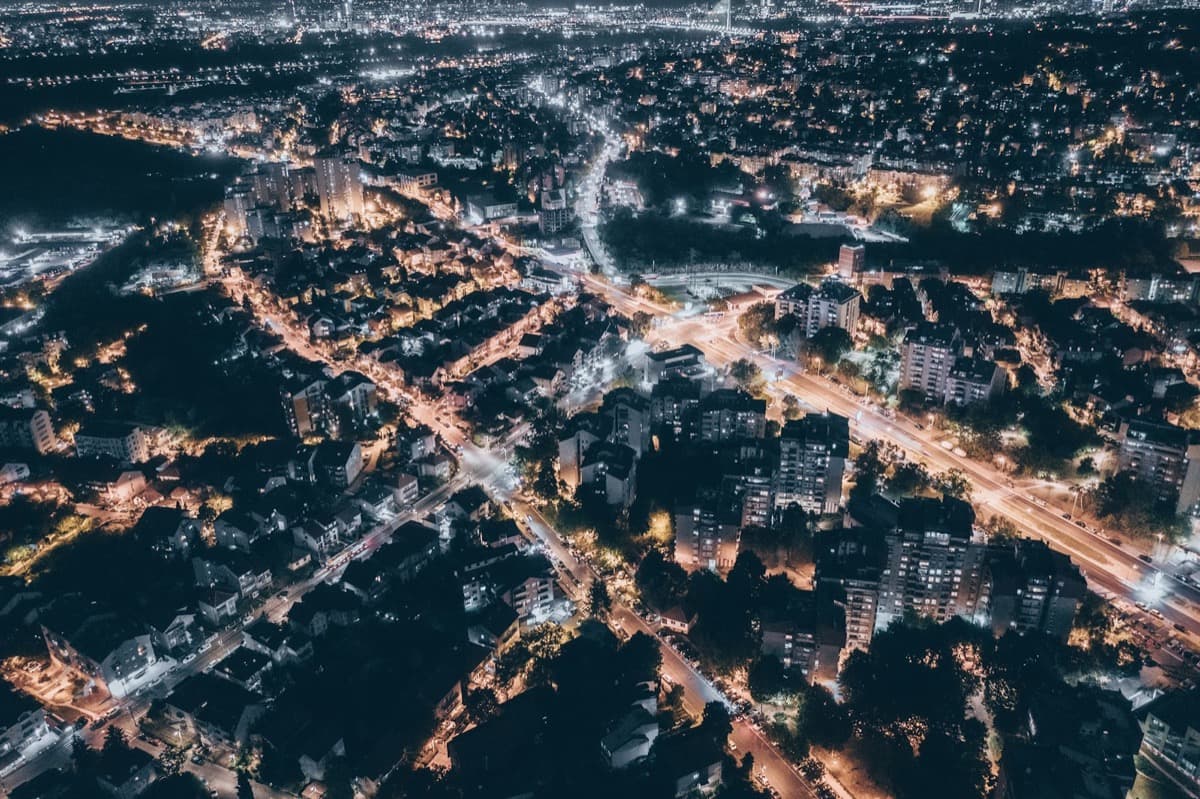
Walk one downtown ridge in Belgrade where five regimes stacked on top of each other, from an Ottoman road and a Habsburg-facing boulevard to a socialist federal capital and the ministries left standing as deliberate ruins.
Start · Terazije and Hotel Moskva: The Ridge of Money
DirectionsStops
- 1
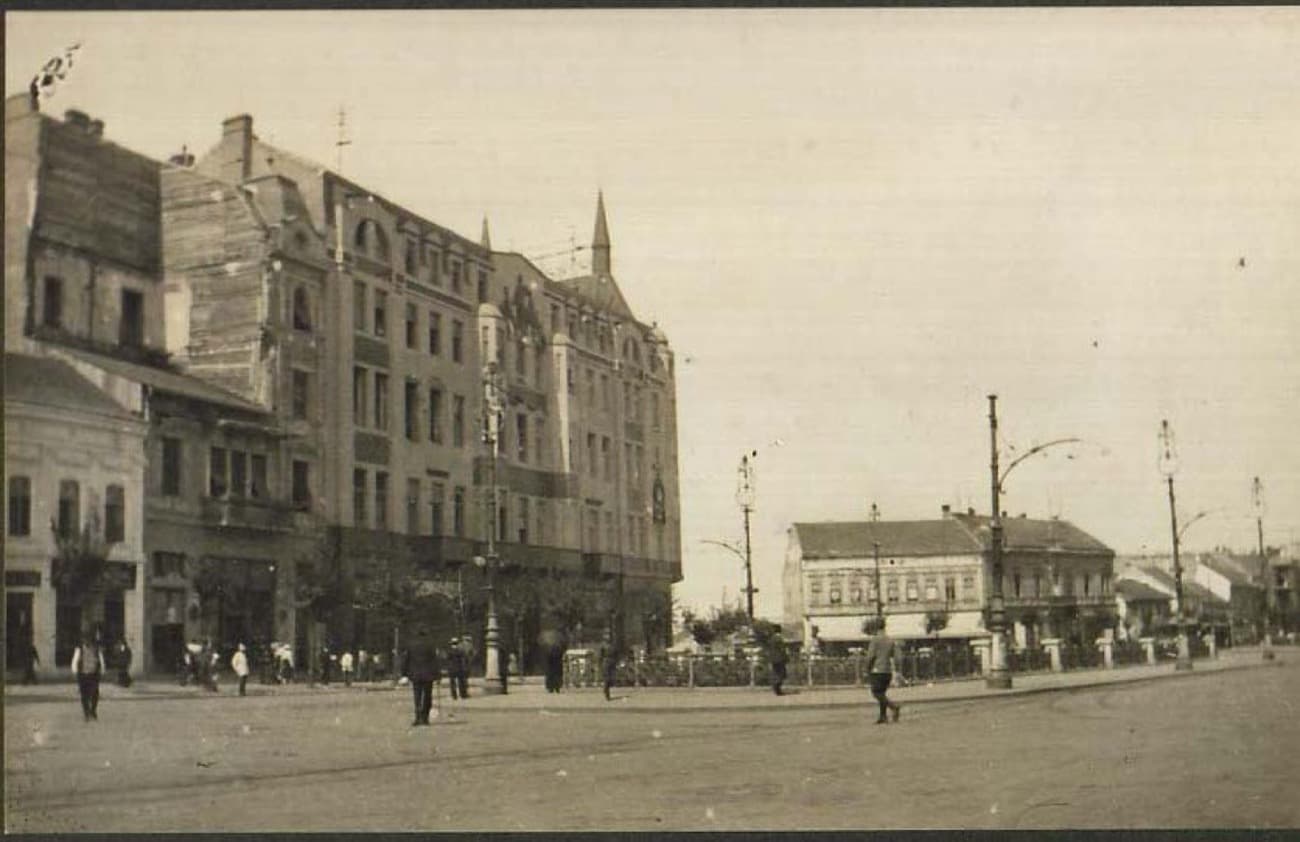
Terazije and Hotel Moskva: The Ridge of Money
The central plateau of Belgrade, on a hundred-and-seventeen-metre ridge, anchored by the grand Hotel Moskva that opened in nineteen oh eight.
- 2
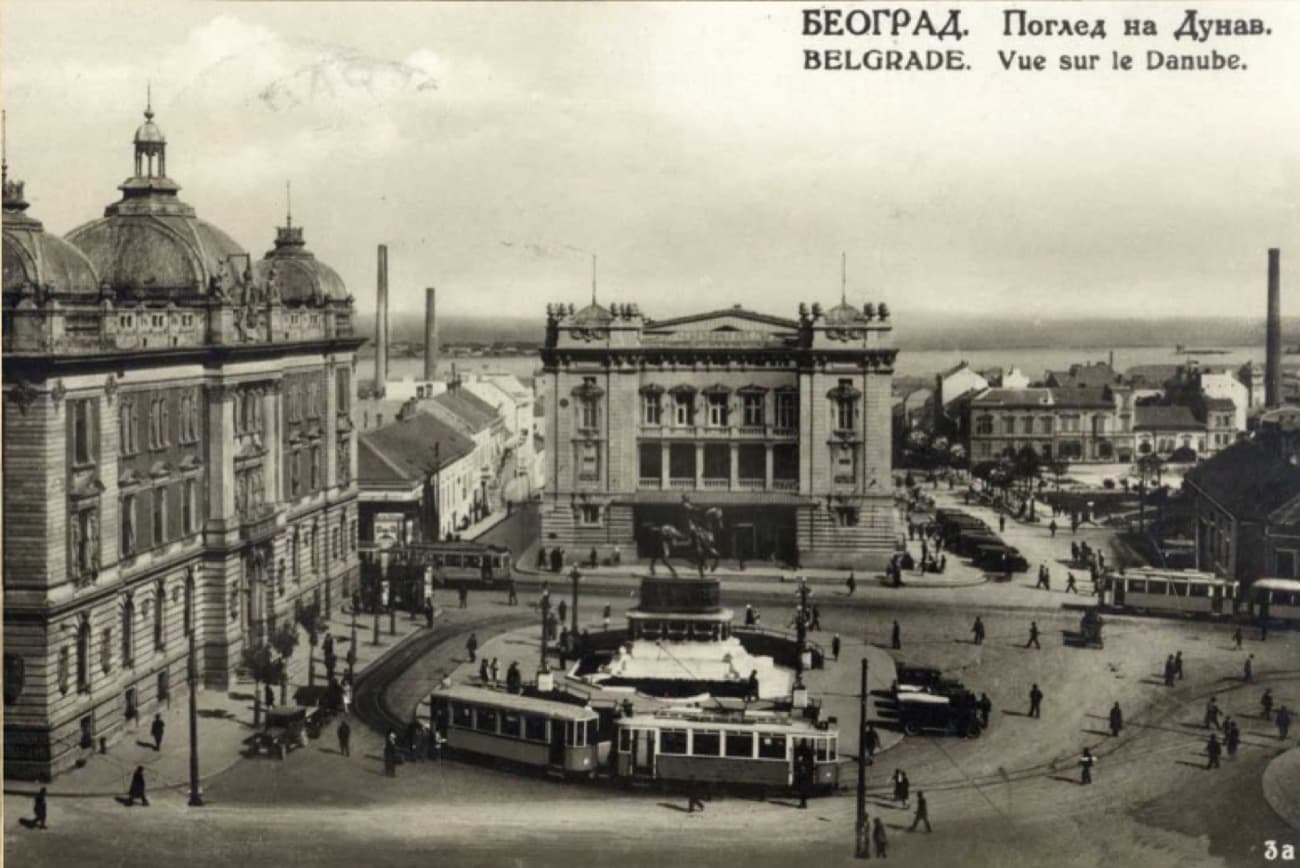
Republic Square and the Prince Mihailo Monument: The Founding Gesture
The square framed by the National Museum and National Theatre, centred on the eighteen eighty-two equestrian statue that marks the Ottoman withdrawal.
- 3
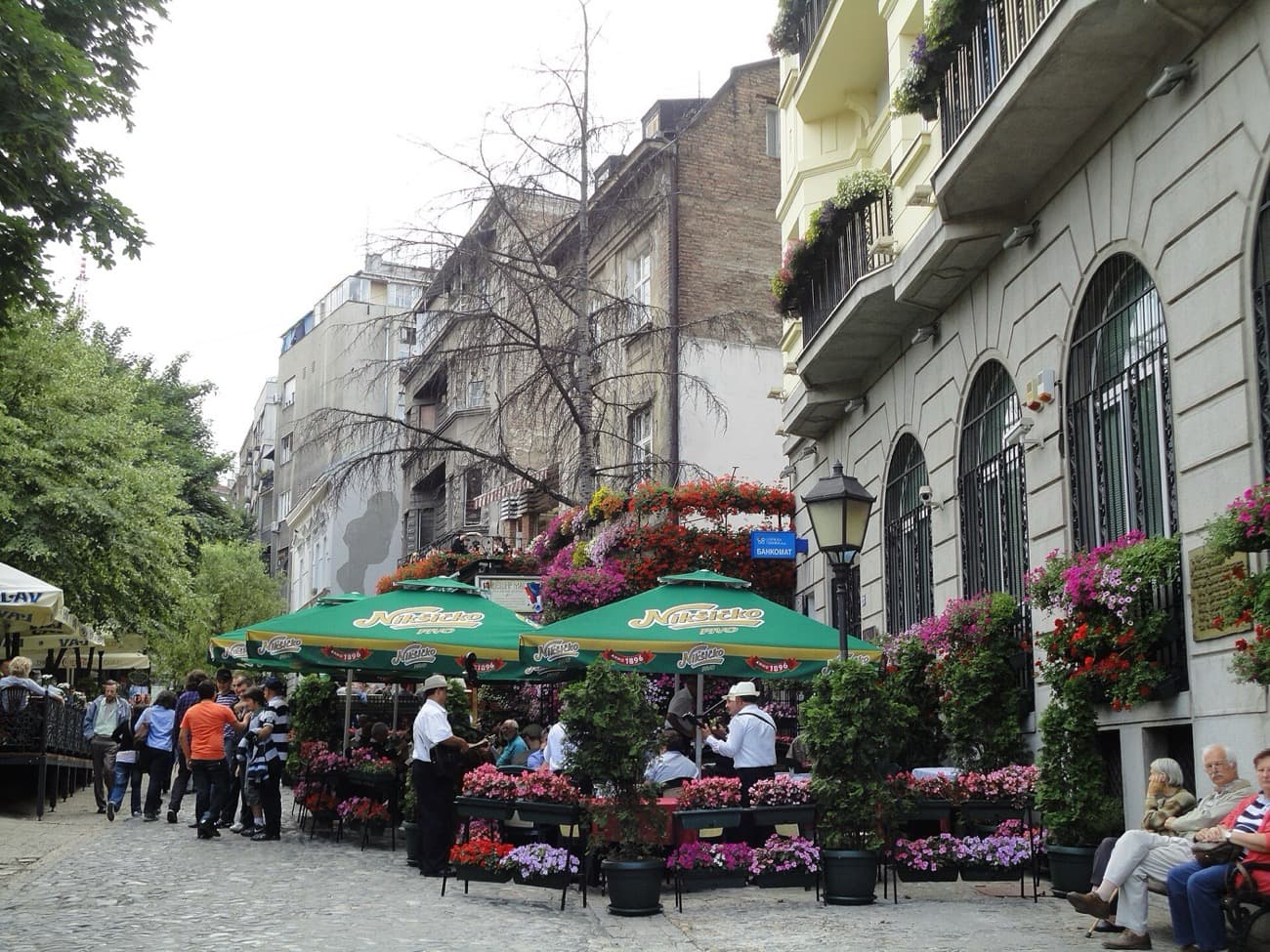
Skadarlija: The Bohemian Quarter
A short cobbled street, kept its name since eighteen seventy-two, that grew from an early settlement into Belgrade's bohemian heart.
- 4
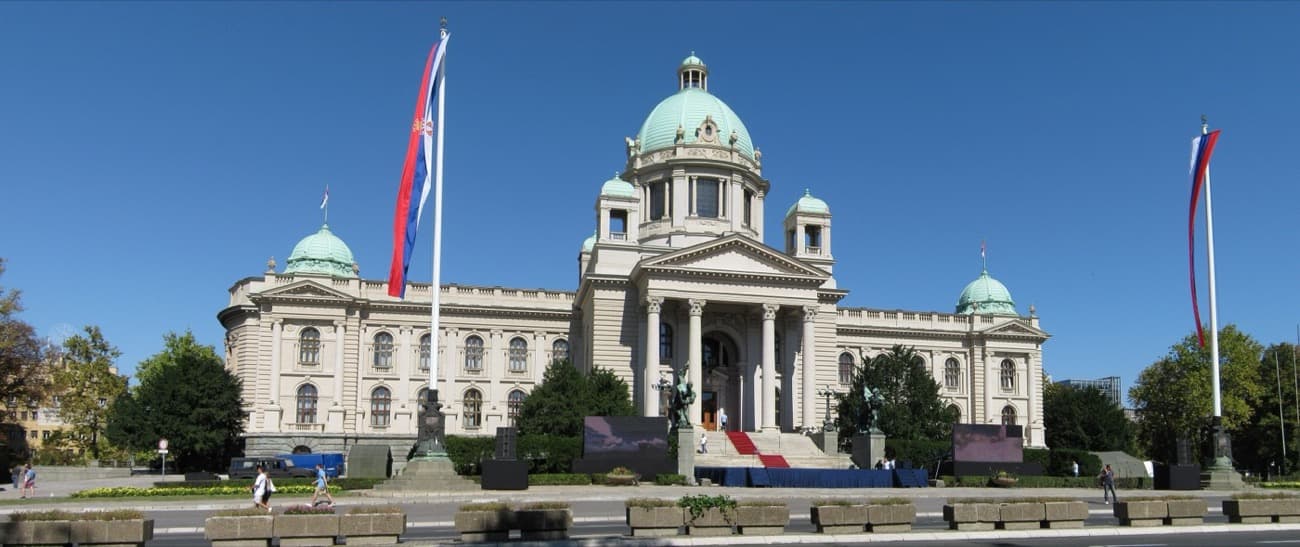
The House of the National Assembly and Nikola Pasic Square: The State Built and Contested
Serbia's parliament, begun in nineteen oh seven and completed in nineteen thirty-six, and the square where the year two thousand transition unfolded.
- 5
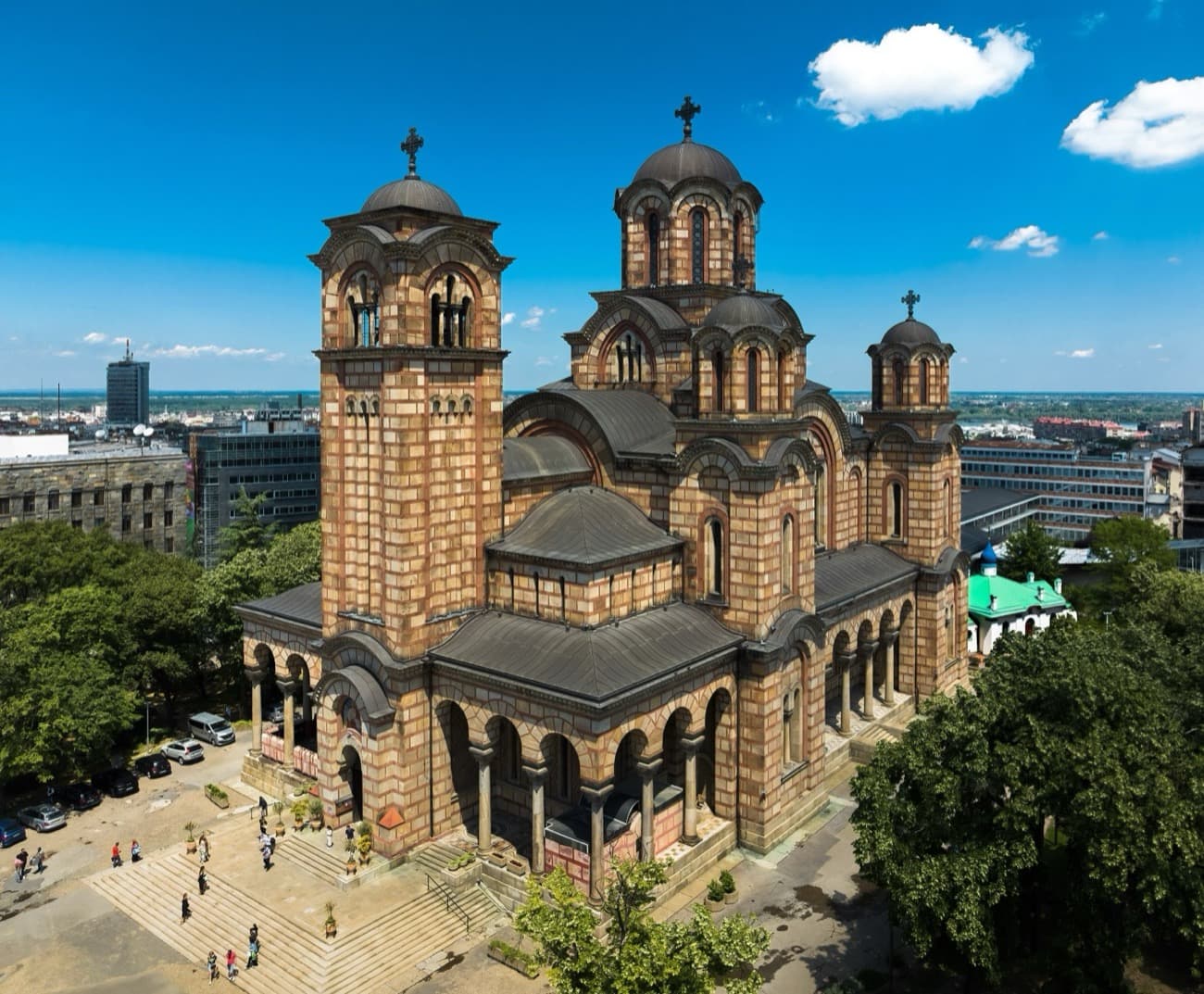
Saint Mark's Church and Tasmajdan Park: Medieval Echo Over Roman Stone
A Serbo-Byzantine church modelled on a medieval Kosovo monastery, standing in a park built over old Roman-era quarries.
- 6
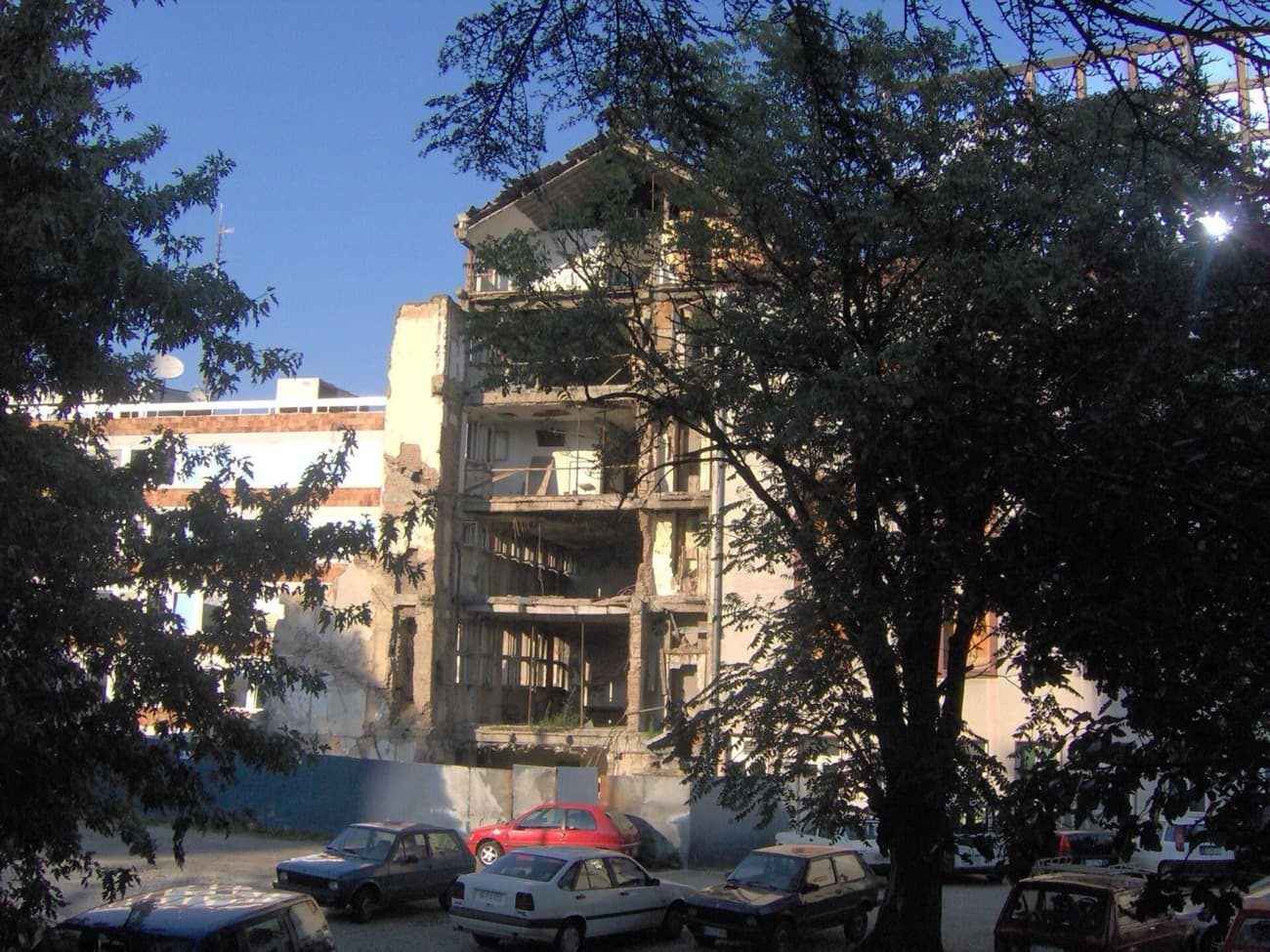
The RTS Building and the Why Memorial
A site of public memory in Tasmajdan Park marking the sixteen media workers killed when the state broadcaster's headquarters was struck in nineteen ninety-nine.
- 7
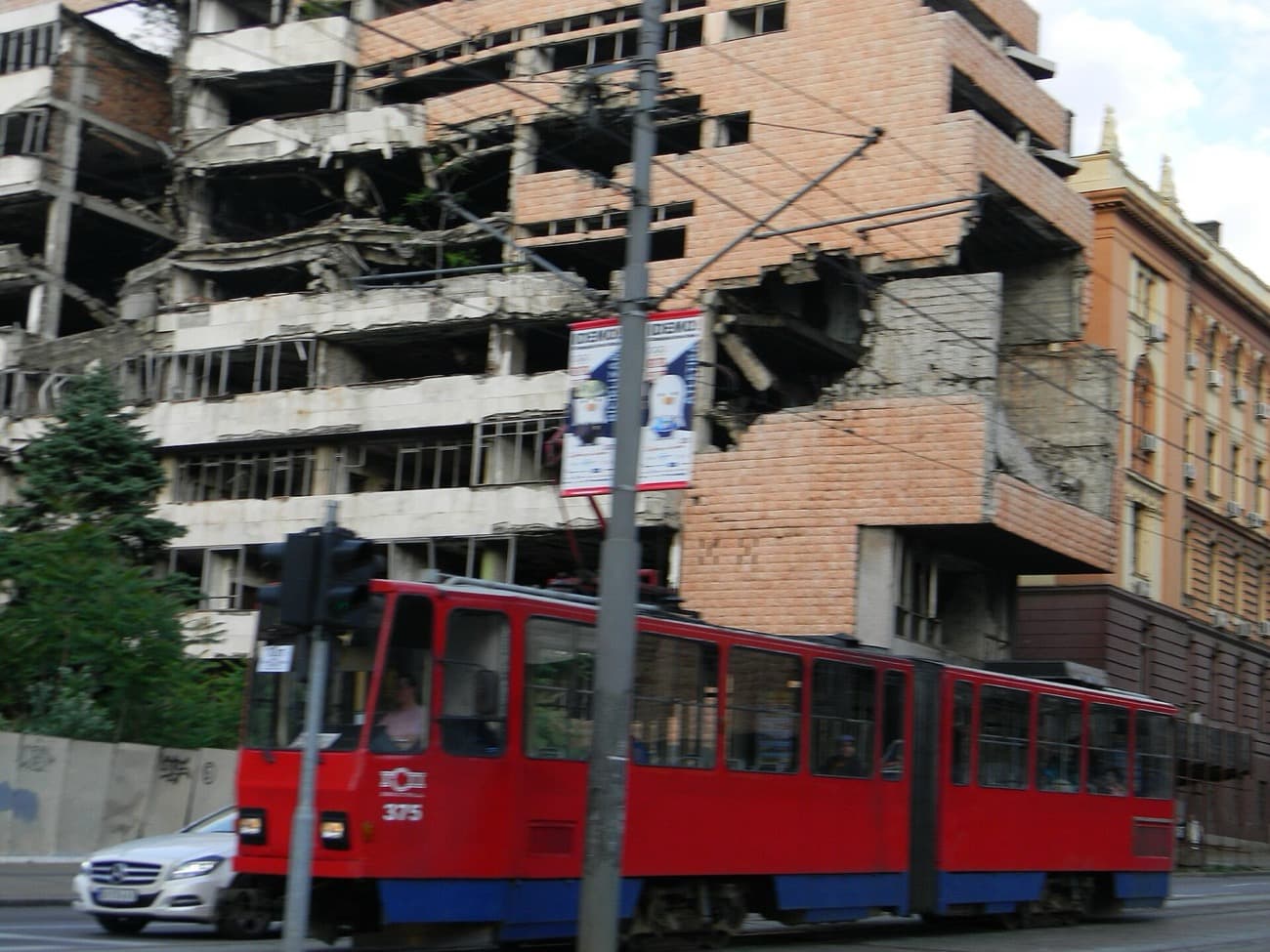
The Bombed Generalstab: Former Ministry of Defence
A preserved modernist ruin from nineteen ninety-nine, designed to evoke a mountain gorge, now protected as a monument and contested over redevelopment.
Details
Best Time to Visit
Late afternoon into early evening. The downtown ridge is walkable year-round, and the softer light of the golden hour flatters both Hotel Moskva's facade and the preserved ruins at the two final stops, while Skadarlija's lanterns come alive as the day cools. Spring and autumn are the most comfortable for the roughly two-kilometre descent; midsummer afternoons on the exposed plateau can be hot.
Pro Tips
- •Walk it in order, north to south and downhill. The route is built as a descent through time, so the emotional and historical arc only works if you start high on Terazije and end at the Generalstab.
- •Save real time for the last two stops. Stops six and seven are sites of public memory, not photo backdrops. Budget a few unhurried minutes at each rather than rushing them.
- •Read the Generalstab and the RTS memorial from the street or the park. Both are preserved ruins or memorials, not open interiors, so there is nothing to enter and no ticket to buy.
- •Every stop is skippable and self-contained. If Skadarlija's cobblestones or a hot afternoon slow you down, move on, the story still holds.
- •Wear proper shoes. Skadarska Street is steep, uneven cobblestone, and the overall route drops noticeably along the ridge.
- •The National Museum, National Theatre, and Saint Mark's Church interiors are optional extras. None is required for the walk, so treat them as detours only if you have time and interest.
Safety & Precautions
- •Stops six and seven concern the nineteen ninety-nine bombing and the deaths recorded there. Approach the Why memorial and the Generalstab quietly and respectfully. People visit these as places of mourning.
- •This tour states what the records and memorials record and names where responsibility remains contested, without assigning blame. The breakup of Yugoslavia is narrated differently by every successor nation, so hold the competing accounts in view rather than adopting one.
- •Belgrade's downtown squares and streets are busy with traffic and trams. Watch for vehicles when crossing Terazije, Nikola Pasic Square, and the wide streets around the Generalstab.
- •Redevelopment status around the Generalstab can change, and construction hoarding or restricted sightlines may appear. View the ruin from a safe public vantage and do not attempt to enter the closed interior.
- •Terazije, Republic Square, and Nikola Pasic Square are the busiest crowds on this walk and the ones where pickpockets work. Keep your phone and wallet secured, be wary of anyone who bumps you or asks for directions, and ignore street offers of a better exchange rate.
- •These same central squares are Belgrade's usual gathering points for demonstrations, which can draw large crowds and a police presence. If one forms while you are walking, route around it and check that trams and streets are running before you continue.
Travel advisory: Exercise Increased Caution (Level 2).
Gallery
Related Reading
Go deeper on what you'll see, hear, and walk through.
Overview
Belgrade Travel Guide: How Many Days, Getting Around, Safety and Budget
7 min
Overview
Best Self-Guided Walking Tours in Belgrade (2026)
3 min
Overview
One Day in Belgrade: A Walkable Morning-to-Evening Itinerary
8 min
Thematic
Best History Walking Tours in Belgrade (2026)
2 min
Thematic
The White City That Overwrites: Reading Belgrade's Stacked Empires
7 min
Companion
The Bombed Generalstab: How One Belgrade Ruin Holds the Whole Downtown
6 min
Deep dive
Skadarlija: Reading Belgrade's Bohemian Quarter, Cobblestone by Cobblestone
6 min
Read
What to Eat in Belgrade: Dishes, Origins, and How to Order Like a Local
6 min
Read the walk
The full story of Downtown Belgrade: Empire to Aftermath, in words. Prefer to listen? Play it narrated, from home or on location.
Introduction
This is a walk down a single ridge in downtown Belgrade, the capital of Serbia, and it doubles as a walk down a timeline. In a little over three kilometres, across seven stops that take about two hours, each short and skippable at your own unhurried pace, you will cross five states that each believed they were permanent. An Ottoman ridge road. A boulevard that faced the Habsburg empire across the rivers. A royal capital. A socialist federal one. And the newest layer of all, ministries left standing as ruins after the nineteen ninety-nine bombing. Belgrade is a city that overwrites rather than erases, and downtown is where those layers press closest together. You will start high, where the money and the empires gathered, drop through the founding square of the modern city, take one atmospheric breath in the old bohemian quarter, then reach the parliament, a downtown church built to echo a medieval one, and finally the two hardest stops, sites of public memory from nineteen ninety-nine. This tour is built to be read like strata. The early stops are about empire and ambition. The later ones go quiet and careful, naming only what the record and the memorials themselves record, ranking no one's suffering, assigning no collective blame. Every stop stands on its own and every stop is skippable, so linger where you want and move on where you do not. When you arrive at Terazije, the wide plateau in front of Hotel Moskva, begin with stop one.
1. Terazije and Hotel Moskva: The Ridge of Money
You are standing on Terazije, the central square of Belgrade, laid along a ridge about a hundred and seventeen metres high. This is where the city gathered its money and its ambition, and the building watching over you says so plainly. Hotel Moskva opened on the fourteenth of January, nineteen oh eight, first as a palace named Rossiya. It was a Russian Empire investment, and behind that ornate green-and-white facade it once housed both a hotel and a Russian insurance company. The style is Vienna Secession with touches of ancient Greek, and the architect was Jovan Ilkic. It sits at the meeting point of three streets, Terazije, Prizrenska, and Balkanska, a hinge in the downtown grid. Terazije itself was declared a protected cultural and historical unit in January, twenty twenty, so the whole plateau you are on is considered a monument, not just one building. Look for the tall limestone drinking fountain nearby. It was first erected in eighteen sixty, carved with the initials M O for Milos Obrenovic and that year. It was moved away to Topcider around nineteen twelve, then brought back here in December, nineteen seventy-five, a small object that itself changed addresses as the city changed hands. From the edge of the plateau, the Terazije Terrace steps down toward the Sava valley, opening a view over the flat modern city of Novi Beograd across the water. Hold that idea as you walk. You are beginning at the top of the ridge, at the empire-and-money layer, and everything from here descends, in elevation and in time, toward the newest and hardest layers of the story.
2. Republic Square and the Prince Mihailo Monument: The Founding Gesture
You have reached Republic Square, Trg Republike, framed by two of the city's grandest institutions, the National Museum and the National Theatre. In the middle rides Prince Mihailo Obrenovic, cast in bronze by the Italian sculptor Enrico Pazzi and raised here in eighteen eighty-two. This monument is the founding gesture of the modern capital, so it is worth reading closely. Look at the prince's outstretched arm. Popular memory says he is showing the Turks the way out, pointing toward Constantinople, because the statue commemorates the Ottoman withdrawal from the Serbian fortresses. Here is the verified story behind that gesture. In eighteen sixty-seven, the Ottoman garrison, the last standing Ottoman military presence in Belgrade, was withdrawn from the fortress under European diplomatic pressure, and the keys to Belgrade Fortress were handed to Prince Mihailo. That handover did not make Serbia fully independent overnight. A nominal Ottoman suzerainty lingered until full independence in eighteen seventy-eight. But it was the moment the city could begin imagining itself as a European capital rather than a frontier under a foreign garrison, and this square, with its museum and its theatre, is the built expression of that ambition. If the first stop was empire and money, this is the founding handshake of the state that replaced the empire on the ridge. Everything you passed to get here, and everything ahead of you, sits on top of this gesture.
3. Skadarlija: The Bohemian Quarter
Take a breath here, because Skadarlija is the one stop on this walk that asks nothing of you except atmosphere. This little neighbourhood sits a short way northwest of Terazije, and its heart is Skadarska Street, a cobbled lane under four hundred metres long. That street is one of only twenty-nine streets in Belgrade to have kept its name since eighteen seventy-two, so you are walking a rare piece of the city that has not been renamed by any regime that came through. Skadarlija turned into the city's bohemian quarter over the closing decades of the nineteenth century. The type of place it is famous for is the kafana, a traditional Serbian tavern where people gathered for food, drink, music, and long argument. One of the oldest, established in eighteen sixty-four, still carries the name Tri sesira, which means Three Hats. The quarter's artistic reputation deepened after nineteen oh one, when writers and actors relocated here following the demolition of the old Dardaneli inn where the National Museum now stands. The poet Djura Jaksic, who lived and died here, is among the figures the neighbourhood remembers. Skadarlija has been protected as a cultural and historical unit since nineteen sixty-seven, and in nineteen seventy-seven it was twinned with Montmartre, the artists' quarter of Paris, which tells you exactly how it likes to see itself. I am not sending you to any one tavern. The kafana is the point, not any single address. Let the cobblestones and the lantern light do their work, then move on when you are ready.
4. The House of the National Assembly and Nikola Pasic Square: The State Built and Contested
You are standing before the House of the National Assembly of Serbia, the parliament, on Nikola Pasic Square. This building took roughly three decades to raise. The cornerstone was laid on the twenty-seventh of August, nineteen oh seven, with King Peter the First present, but…
Full narration for this stop unlocks with the tour.
5. Saint Mark's Church and Tasmajdan Park: Medieval Echo Over Roman Stone
Here in Tasmajdan park stands Saint Mark's Church, Crkva Svetog Marka, one of the largest churches in Serbia and among the most striking works of Serbo-Byzantine architecture in the city. It was designed by two brothers, Petar and Branko Krstic, both professors at the University…
Full narration for this stop unlocks with the tour.
6. The RTS Building and the Why Memorial
This is the first of two careful stops, and I will keep it plain. Beside Tasmajdan park, on Aberdareva Street near Takovska, stood the headquarters of Radio Television of Serbia, the state broadcaster. During the nineteen ninety-nine NATO bombing, in the early hours of the…
Full narration for this stop unlocks with the tour.
7. The Bombed Generalstab: Former Ministry of Defence
You are looking at the former General Staff building, the old Federal Secretariat of People's Defence, in Savski Venac. It is a preserved ruin, and you read it from the street. Nemanjina Street runs straight through it, splitting it into two tracts. This was one of the most…
Full narration for this stop unlocks with the tour.